QueueSentry
QueueSentry gives engineering teams one view of stuck and aging jobs across SQS, RabbitMQ, and Redis. It suggests safe replays before customer workflows stall.
What QueueSentry is designed to solve
QueueSentry is a B2B queue monitoring and job replay platform for engineering teams that need one view of stuck and aging jobs across SQS, RabbitMQ, and Redis-based queues. It helps teams spot work that is falling behind, investigate likely causes, and decide whether a replay is safe before a customer workflow stalls.
The product’s promise is deliberately focused: make delayed or failed background work visible and help teams recover it with fewer risky manual steps. QueueSentry is not simply another infrastructure dashboard. Its opportunity is to connect queue health to the application workflows, customer impact, and recovery decisions that engineering teams must manage.
A strong implementation should answer four questions quickly:
- What is delayed, stuck, or failing?
- Which service, queue, or workflow is affected?
- How serious is the customer impact?
- What is the safest next action?
Getting those answers right is the difference between a useful operations product and a dashboard that adds more alerts without reducing incident work.
The problem with fragmented queue operations
Queues make it possible to separate work from the request that initiated it. An application can accept a task, place it in a queue, and process it later. This architecture supports asynchronous workflows such as sending notifications, generating reports, processing payments, syncing records, and handling media.
But asynchronous work also creates an observability gap. A customer may see a workflow that never finishes even though the original request succeeded. Meanwhile, the message might be waiting, repeatedly failing, stuck behind a slow consumer, or moved into a dead-letter queue.
Queue infrastructure usually exposes useful operational data, but that information can be scattered across different consoles, metrics systems, logs, and application-specific tools. Teams may need to understand the differences between:
- A temporary increase in queue depth and a growing backlog.
- Normal processing delay and a message that is aging beyond its expected service level.
- A consumer that is slow and one that has stopped making progress.
- A retry that is safe and a replay that could duplicate an irreversible action.
- A queue-level alert and a real customer-facing incident.
These distinctions matter because queue recovery is not simply a matter of clicking “replay.” A payment capture, email send, or account provisioning task may have different consequences when run twice. Engineers need context, not just a list of message identifiers.
QueueSentry can address this problem by combining cross-provider visibility with workflow-aware triage and safety checks. Its value depends on whether it can reduce the time and uncertainty involved in recognizing and responding to queue incidents.
Who QueueSentry should serve
QueueSentry is most relevant to organizations that rely on background processing and have enough operational complexity for queue issues to become difficult to track manually.
Primary users
Platform and infrastructure engineers need a consistent way to monitor queue health across services and environments. They care about integration effort, access controls, alert quality, and the operational burden of supporting another tool.
Backend engineers and service owners need to identify whether a delayed task is related to their application, a downstream dependency, or a shared queue. They need actionable details and a safe recovery path rather than a generic alert.
Site reliability engineers and incident responders need to prioritize issues based on how long work has been waiting, how quickly the backlog is growing, and which customer-facing workflows may be affected.
Engineering managers need clearer operational ownership and evidence that teams can recover from incidents consistently. They may also use queue-health reporting to find recurring reliability issues.
Best-fit customer profile
An initial ideal customer profile could include teams that:
- Run multiple queue-backed services or environments.
- Use more than one queue technology, or expect to add another.
- Process business-critical asynchronous workflows.
- Have on-call engineers who investigate queue incidents regularly.
- Need a more controlled replay process than direct console access provides.
- Already use monitoring tools but still lack queue-specific operational context.
Early adopters are likely to be software companies with established engineering teams and meaningful background workloads. However, company size alone is a weak qualification signal. A smaller business with payment, logistics, or data-processing queues may experience more acute problems than a larger company using queues only for low-priority tasks.
The buyer and the user may differ
The day-to-day user may be an engineer, while the buyer is a platform lead, engineering director, or reliability owner. This creates a product and go-to-market requirement: QueueSentry must prove both operational usefulness and organizational safety.
Users will ask whether the product makes incidents easier to resolve. Buyers will also ask how it connects to infrastructure, what data it stores, whether it can change queue state, how permissions work, and how it fits existing observability practices.
The market opportunity and product gap
The market opportunity is not based on claiming that existing monitoring tools are ineffective. Many teams already use cloud-provider dashboards, metrics systems, logs, tracing, and incident-management software. QueueSentry’s opportunity is to improve the parts of queue operations that remain fragmented across those tools.
The gap between infrastructure metrics and recovery decisions
A queue’s visible depth is useful, but depth alone may not explain whether the system is healthy. A growing backlog could be a temporary burst, a deliberate buffer, a slow consumer, a poison message repeatedly failing, or a downstream dependency that is unavailable.
Teams need to interpret several signals together:
- Queue depth and how it changes over time.
- Oldest-message age or another measure of work latency.
- Message arrival and processing rates.
- Consumer availability and error behavior.
- Retry and dead-letter activity.
- Workflow expectations, such as how long a task can wait before it becomes a customer problem.
A dedicated product can make these signals easier to compare across providers and connect them to operational action. The goal is not to replace established metrics platforms. It is to offer a queue-specific working surface that helps engineers move from detection to diagnosis and recovery.
Why cross-provider visibility may matter
A company can use SQS for one service, RabbitMQ for another, and Redis-backed job processing elsewhere. Each system has different terminology, capabilities, retention behaviors, and recovery semantics. Engineers who work across those systems must repeatedly switch context.
QueueSentry’s cross-provider approach can create value by standardizing the operational experience without pretending the underlying systems are identical. A unified interface should normalize common concepts—such as backlog, age, throughput, failure, and replay—while clearly exposing provider-specific behavior when it matters.
This distinction is critical. A misleading abstraction can be more dangerous than no abstraction at all. QueueSentry should standardize how teams inspect queues while preserving the details needed to make provider-specific decisions.
A focused position in the observability ecosystem
QueueSentry should be positioned as a queue operations and recovery product that complements broader observability platforms. It can integrate with existing monitoring and incident workflows rather than competing to replace every dashboard, log search, or tracing system.
That position gives the product a clearer message:
See delayed and stuck work across queues, understand its operational context, and recover it through a controlled process.
The strongest market validation will come from customer discovery, not assumptions about category size. Interview teams about their last queue-related incident, their current tools, the time spent identifying affected work, and the process they use before replaying messages. Those details will reveal whether the most valuable first use case is alerting, triage, recovery, or auditability.
Core features for a useful queue monitoring platform
QueueSentry should be built around a short operational loop: detect, understand, decide, act, and verify.
1. Unified queue inventory
The product should give teams a searchable inventory of connected queues across providers, accounts, regions, clusters, and environments.
Useful metadata includes:
- Provider and queue type.
- Service or team owner.
- Environment, such as production or staging.
- Consumer or worker association, when available.
- Alert status and recent health history.
- Dead-letter queue relationships.
- Tags for business function or criticality.
Queue inventory becomes more valuable when ownership is explicit. If a queue has no owner, the product should make that visible rather than silently treating it as an ordinary data-quality issue.
2. Queue health and aging-work detection
QueueSentry should detect conditions that indicate work is not progressing as expected. It should support configurable thresholds while also helping teams avoid alerts based on a single static number.
Potential signals include:
- Oldest-message age above a configured limit.
- Queue depth increasing while processing remains flat.
- Failed or retried jobs exceeding a baseline.
- Dead-letter queue growth.
- Sudden changes in arrival or completion rates.
- A queue that has remained non-empty longer than expected.
- Differences between expected and observed processing times.
A good detection system distinguishes severity from raw volume. A queue with thousands of low-priority jobs may be less urgent than a small queue containing time-sensitive account or payment work.
3. Cross-provider operational views
QueueSentry should offer a consistent way to compare queue health without flattening provider differences. The interface should identify which measurements are directly comparable and which are provider-specific.
For example, queue depth may be broadly understandable, but message visibility, acknowledgement behavior, retention, retry policy, and delivery semantics can vary. The product should explain these differences in context, especially when they affect replay safety.
4. Incident timelines and diagnostic context
When a queue begins to age, the engineer needs more than a current snapshot. QueueSentry should preserve a timeline that helps answer:
- When did the issue begin?
- Did arrival volume change?
- Did processing slow down?
- Did error or retry rates increase?
- Did a deployment or configuration change occur?
- Did another dependency show a related problem?
Integrations with logs, metrics, traces, deployment events, and incident tools can make this timeline more useful. These integrations should be introduced with a clear permission model and should not require QueueSentry to ingest more data than needed.
5. Replay recommendations with safety checks
The product’s most differentiated feature may be its ability to suggest a safe recovery action. A recommendation should be explainable, reviewable, and conservative.
Before proposing a replay, QueueSentry could evaluate details such as:
- Whether the original job appears to have completed partially.
- Whether the operation is idempotent, if the application has supplied that information.
- Whether the message has already been retried.
- Whether replaying many messages could overload a downstream service.
- Whether the message is in a dead-letter queue or still in active circulation.
- Whether the user has permission to take the proposed action.
The recommendation should communicate why it considers an action safe, what assumptions it relies on, and what could still go wrong. If the product lacks enough information, the correct recommendation may be “review manually,” not “replay now.”
Treat replay as a production action
Replaying work can create duplicate side effects, increase downstream load, or repeat a partially completed operation. QueueSentry should make the scope and consequences of any replay visible before an authorized user confirms it.
6. Controlled recovery workflows
A production-ready recovery flow should include more than a replay button. Consider supporting:
- Previewing the selected message count and scope.
- Filtering by age, error type, queue, or workflow.
- Dry-run or validation modes where supported.
- Rate-limited replay to avoid overwhelming consumers.
- Approval requirements for high-impact actions.
- A clear record of who initiated the action and when.
- Verification that the queue is making progress afterward.
The exact capabilities will vary by provider and integration. QueueSentry should be precise about which actions it performs directly and which actions it only recommends.
7. Ownership, alerting, and reporting
Alerts should route to the team able to respond, include a short explanation, and link to a useful queue view. Repeated alerts that lack context will quickly lose credibility.
Operational reporting can help teams identify recurring bottlenecks, noisy queues, missing ownership, and workflows that regularly exceed their intended processing time. These reports should support improvement rather than simply rank teams by failure counts.
What makes QueueSentry different
QueueSentry’s unique selling proposition should be cross-provider queue visibility combined with safe, context-aware recovery guidance.
A feature checklist alone is not a durable advantage. Other products may offer metrics, dashboards, alerting, or message inspection. QueueSentry can stand out if it consistently helps teams answer the harder operational question: “What should we do next, and how do we do it safely?”
Competitive positioning
| Product category | Typical strength | Common limitation QueueSentry can address |
|---|---|---|
| Cloud-provider consoles | Direct access to provider-specific queue data | Teams may need to switch tools and manually compare systems |
| General observability platforms | Broad metrics, logs, traces, and alerting | Queue recovery workflows may not be the central experience |
| Custom internal dashboards | Tailored to a team’s architecture | Ongoing maintenance and inconsistent coverage across services |
| QueueSentry | Queue-focused visibility and recovery guidance | Must earn trust through accurate integrations and safe actions |
This is a positioning framework, not a claim that every tool in a category has the same capabilities. During customer discovery, QueueSentry should compare itself against the actual tools and processes each prospect uses.
Defensible product advantages
Potential advantages can develop through:
- High-quality, reliable integrations across queue technologies.
- Consistent queue-health semantics with provider-specific precision.
- Workflow-level context and ownership mapping.
- A transparent safety model for replay recommendations.
- Strong audit trails and enterprise-grade access controls.
- Learning from recurring incident patterns without overstating automation.
The durable advantage is likely to come from operational trust and integration depth, not from a generic claim that artificial intelligence can fix queue incidents. If QueueSentry later uses machine learning to prioritize or recommend actions, it should explain its inputs and measure recommendation quality against real outcomes.
Recommended technical architecture and tech stack
QueueSentry handles infrastructure metadata and potentially sensitive operational content. Its architecture should be designed around least privilege, clear tenancy boundaries, and careful handling of message payloads.
A practical initial stack
A reasonable first version could use:
- TypeScript for shared types across the application and backend services.
- React for the web interface.
- PostgreSQL for tenants, integrations, queue metadata, policies, and audit records.
- A background job system for polling, aggregation, alert evaluation, and integration maintenance.
- A metrics or time-series storage strategy for queue-health history, chosen according to retention and query needs.
- A secrets manager for provider credentials and encryption keys.
- OpenTelemetry-compatible instrumentation for the product’s own services.
The exact framework and hosting platform should follow the team’s experience, deployment constraints, and customer security requirements. A familiar stack that the team can operate reliably is usually a better early choice than an elaborate architecture selected for hypothetical scale.
Integration patterns
QueueSentry has two broad choices for connecting to customer infrastructure:
- Read-only polling from QueueSentry’s service. This can be straightforward to deploy, but requires secure credential handling and network access.
- A customer-managed agent or connector. This may fit stricter network boundaries, but adds installation, upgrades, health monitoring, and support requirements.
The product may eventually support both. For an MVP, choose the least complex model that can satisfy the first customer segment’s security expectations.
Regardless of connection model, implement:
- Least-privilege permissions.
- Encrypted credential storage.
- Credential rotation support.
- Per-tenant isolation.
- Request rate limits and backoff.
- Connector health checks.
- Clear records of data accessed and actions taken.
- Separate authorization for reading queue state and changing it.
Build a provider adapter layer
A provider adapter layer can prevent provider-specific API details from spreading throughout the product. Each adapter should expose a deliberate set of normalized capabilities, such as:
- Discover queues.
- Read queue attributes.
- Retrieve supported health signals.
- Inspect message metadata where permitted.
- Perform explicitly supported recovery actions.
The adapter should also expose capability differences. If one provider supports an operation that another does not, the user interface should represent that limitation directly rather than imply feature parity.
A simplified TypeScript model might look like this:
type QueueHealth = {
  queueId: string;
  provider: "sqs" | "rabbitmq" | "redis";
  environment: string;
  observedAt: string;
  depth?: number;
  oldestMessageAgeSeconds?: number;
  processingRatePerMinute?: number;
  status: "healthy" | "aging" | "stalled" | "unknown";
};

type ReplayAssessment = {
  allowed: boolean;
  requiresApproval: boolean;
  reasons: string[];
  limitations: string[];
};
The model should not imply that every provider returns every field. Optional values and explicit capability reporting help prevent false precision.
Handle payload data conservatively
Message bodies may contain personal information, credentials, or commercially sensitive data. QueueSentry should avoid collecting full payloads by default unless a customer explicitly enables a feature that requires them.
A safer initial design can store operational metadata and retrieve message details only during authorized inspection. If payload access is supported, define retention, redaction, access logging, encryption, and deletion behavior before launch.
Architecture trade-offs
A polling architecture can be easier to build and explain, but polling frequency affects cost, data freshness, and provider API limits. Event-driven collection may improve responsiveness but can increase setup complexity and operational dependencies.
Similarly, a single shared service can simplify product operations but demands strong tenant isolation. Dedicated deployment options may help enterprise adoption but increase infrastructure, release, and support costs.
Avoid premature complexity. Start with a clear architecture that supports reliable collection, secure credentials, and trustworthy auditability. Scale the system based on observed customer needs and measured bottlenecks.
Monetization strategy for QueueSentry
QueueSentry should charge for ongoing operational value, not create incentives that discourage customers from monitoring important workloads.
Potential pricing models
Per monitored queue is easy to understand and can align with the product’s core unit. It may become difficult to predict if customers have many small or short-lived queues.
Per environment or connected account can make budgeting straightforward for teams with stable infrastructure. It may not reflect the operational load or value of unusually large queues.
Usage-based pricing could account for data collection volume, retention, or recovery activity. It needs careful design to avoid unpredictable bills and should not penalize customers for investigating incidents.
Tiered subscription pricing can package capabilities by team needs. For example, a lower tier might focus on visibility and alerting, while higher tiers add extended history, advanced controls, audit features, and enterprise security options.
A useful approach is to keep a clear base price and reserve variable pricing for costs that are both material and measurable. Publish what counts toward usage, provide alerts before limits are reached, and avoid surprise charges during incidents.
Packaging by operational maturity
A possible packaging structure could include:
- Starter for a limited number of integrations, core health views, and basic alerting.
- Team for multi-environment support, ownership mapping, longer history, and recovery workflows.
- Enterprise for advanced access control, audit retention, deployment flexibility, and compliance support.
These tiers should be validated with customer interviews and willingness-to-pay research. Do not assume that a feature is enterprise-only simply because it sounds advanced; auditability and secure access may be table stakes for any production customer.
Pricing metrics to test
Before settling on pricing, test how customers respond to different units:
- Number of monitored queues.
- Number of connected accounts or clusters.
- Retention period for health history.
- Number of seats or teams.
- Recovery workflow capabilities.
- Deployment and support requirements.
The best metric is one customers can forecast and associate with value. It should also scale with QueueSentry’s delivery costs without making the product difficult to adopt.
Risks and how to mitigate them
Risk 1: Unsafe replay recommendations
An inaccurate recommendation could cause duplicate actions, customer harm, or a larger incident.
Mitigation: Keep recovery actions opt-in, explain the basis for each recommendation, require confirmation, support approval policies, and begin with conservative recommendations. Measure false confidence as seriously as missed recommendations.
Risk 2: Provider differences create misleading normalization
Queue technologies do not share identical semantics. A single health score may conceal meaningful differences in delivery, acknowledgement, retry, or retention behavior.
Mitigation: Normalize only concepts that are genuinely comparable. Display provider-specific details when they affect decisions, and clearly label unknown or unavailable data.
Risk 3: Integration permissions create security concerns
Customers may hesitate to grant access to production infrastructure, especially if QueueSentry can change queue state.
Mitigation: Support read-only access as the default, separate read and write permissions, document required permissions, encrypt secrets, log sensitive operations, and provide a clear revocation process.
Risk 4: Alert fatigue
If QueueSentry alerts on every temporary increase in queue depth, engineers may ignore it.
Mitigation: Use configurable thresholds, rate-of-change signals, deduplication, suppression windows, severity levels, and ownership-aware routing. Track alert usefulness through user feedback and incident outcomes.
Risk 5: Message payloads expose sensitive information
A queue dashboard can unintentionally become a store of sensitive application data.
Mitigation: Minimize payload collection, redact where possible, limit access, define retention policies, and make payload access visible in audit logs.
Risk 6: The product becomes another dashboard
A unified view is useful only if it changes how quickly or safely teams can respond.
Mitigation: Prioritize triage and recovery workflows, measure time to identify affected work, and validate whether users can take the next step without leaving the product for avoidable tasks.
Risk 7: The target market is too broad
Serving every queue technology, framework, and company size at launch can dilute product quality.
Mitigation: Choose an initial customer segment and a narrow set of high-value integrations. Expand based on recurring customer demand rather than the theoretical size of the addressable market.
How to validate demand before building everything
QueueSentry should validate the operational problem, buyer urgency, and recovery requirements before investing in broad provider coverage.
Interview around real incidents
Ask prospective users to describe a recent queue incident from detection through resolution. Useful questions include:
- How did the team notice the problem?
- Which tools did responders use?
- How did they determine whether work was stuck or merely delayed?
- What data did they need but could not easily find?
- How did they decide whether to retry or replay?
- Who was authorized to take action?
- What was the consequence of waiting?
- Which part of the response was most time-consuming?
Avoid leading with a feature pitch. Specific examples of recent incidents are more informative than general statements that a dashboard sounds useful.
Prototype the critical workflow
A clickable prototype can test whether users understand the queue health view, trust the severity indicators, and know what to do next. Include realistic scenarios such as:
- A growing backlog with healthy processing.
- An aging queue with no consumer progress.
- A dead-letter queue that is increasing.
- A recovery action that should require approval.
- A case where the system lacks enough context to recommend replay.
The last case is especially important. A trustworthy product must make uncertainty visible.
Define measurable product outcomes
Possible measures include:
- Time from an aging-work signal to identification of the affected service.
- Time to determine the likely cause.
- Time to restore queue progress.
- Share of alerts that users consider actionable.
- Rate of recovery recommendations accepted, rejected, or escalated.
- Number of duplicate or unsafe actions prevented.
- Percentage of monitored queues with an assigned owner.
These metrics help distinguish product engagement from operational value. A high number of dashboard visits is not necessarily evidence that incidents are being resolved more effectively.
Go-to-market strategy
QueueSentry should begin with a focused message and an adoption path that does not require a large infrastructure redesign.
Start with a narrow wedge
The first version should support a small number of common queue setups and a clearly defined incident workflow. The initial wedge might focus on teams that operate several production queues and struggle to track aging work across environments.
A narrow scope helps QueueSentry deliver dependable integrations, collect useful feedback, and build trust. Reliable support for a few systems is more valuable than superficial coverage of many.
Lead with operational outcomes
Messaging should focus on the work customers need to complete:
- Find aging and stalled jobs sooner.
- See queue health across providers.
- Route incidents to the right owner.
- Review recovery options with safety context.
- Keep an auditable record of production actions.
Avoid promising that the product will eliminate incidents or automatically fix every queue problem. A credible promise is easier to validate and more likely to earn long-term trust.
Use technical content to build authority
Useful content can address real engineering questions, such as how to interpret oldest-message age, how to distinguish backlog growth from normal bursts, what to consider before replaying jobs, and how queue semantics vary across providers.
Technical guidance should be precise about trade-offs and should not imply that one monitoring threshold applies to every workload. Where the article discusses provider-specific behavior or industry statistics, cite the relevant official documentation or credible research in the published version.
Actionable implementation steps
1. Choose an initial customer segment
Select a segment based on observed queue incidents, urgency, and willingness to adopt a dedicated operational tool. Document the systems those teams use and the people involved in incident response.
2. Validate the highest-value incident workflow
Interview engineers about recent incidents and map the path from detection to recovery. Identify where context is missing and which decisions carry the most risk.
3. Build a read-only monitoring MVP
Start with queue discovery, core health signals, aging-work detection, ownership metadata, and alert routing. Keep the first release narrow enough to test data quality and user trust.
4. Add provider-specific adapters
Implement a small number of well-supported integrations. Make capability differences explicit, handle API limits, and monitor connector health as a first-class product concern.
5. Design security and auditability early
Define tenant isolation, secrets management, least-privilege permissions, retention, and access logging before adding production write actions. Treat customer security review as part of product design.
6. Test recovery recommendations with customers
Begin with explanations and suggested actions rather than automatic replay. Gather feedback on whether recommendations are understandable, accurate, and appropriately cautious.
7. Introduce controlled recovery
Add replay or other write operations only after the provider behavior, permission model, approval flow, and audit requirements are clear. Include preview, rate limits, and post-action verification where supported.
8. Measure outcomes and refine positioning
Track whether QueueSentry helps users identify affected work and restore progress. Use customer evidence to refine the product, packaging, and messaging before broadening integration coverage.
TurboStarter can help teams move faster when building the surrounding SaaS foundation, leaving more time to validate QueueSentry’s queue-specific integrations, safety model, and operational workflows.
The long-term opportunity
QueueSentry has a compelling product direction because it targets a specific, costly operational gap: teams can see queue metrics yet still struggle to understand which work is stuck, what it means for customers, and how to recover safely.
Its strongest version will not try to make every queue look identical or automate every recovery decision. Instead, it will combine consistent cross-provider visibility with honest provider-specific context, clear ownership, and controlled action.
For engineering teams, trust will be the product’s most important feature. Trust comes from accurate data, transparent recommendations, dependable permissions, and a clear record of what happened. If QueueSentry can deliver those foundations while shortening the path from detection to safe recovery, it can become a valuable layer in the modern engineering operations stack.
More 🏢 B2B Application SaaS ideas
Discover more innovative b2b application SaaS ideas that are trending in 2026. Each idea is AI-generated with market validation and growth potential to help you find your next profitable venture faster than competitors.
Your competitors are building with TurboStarter
Below are some of the SaaS ideas that have been generated and built with our starter kit.
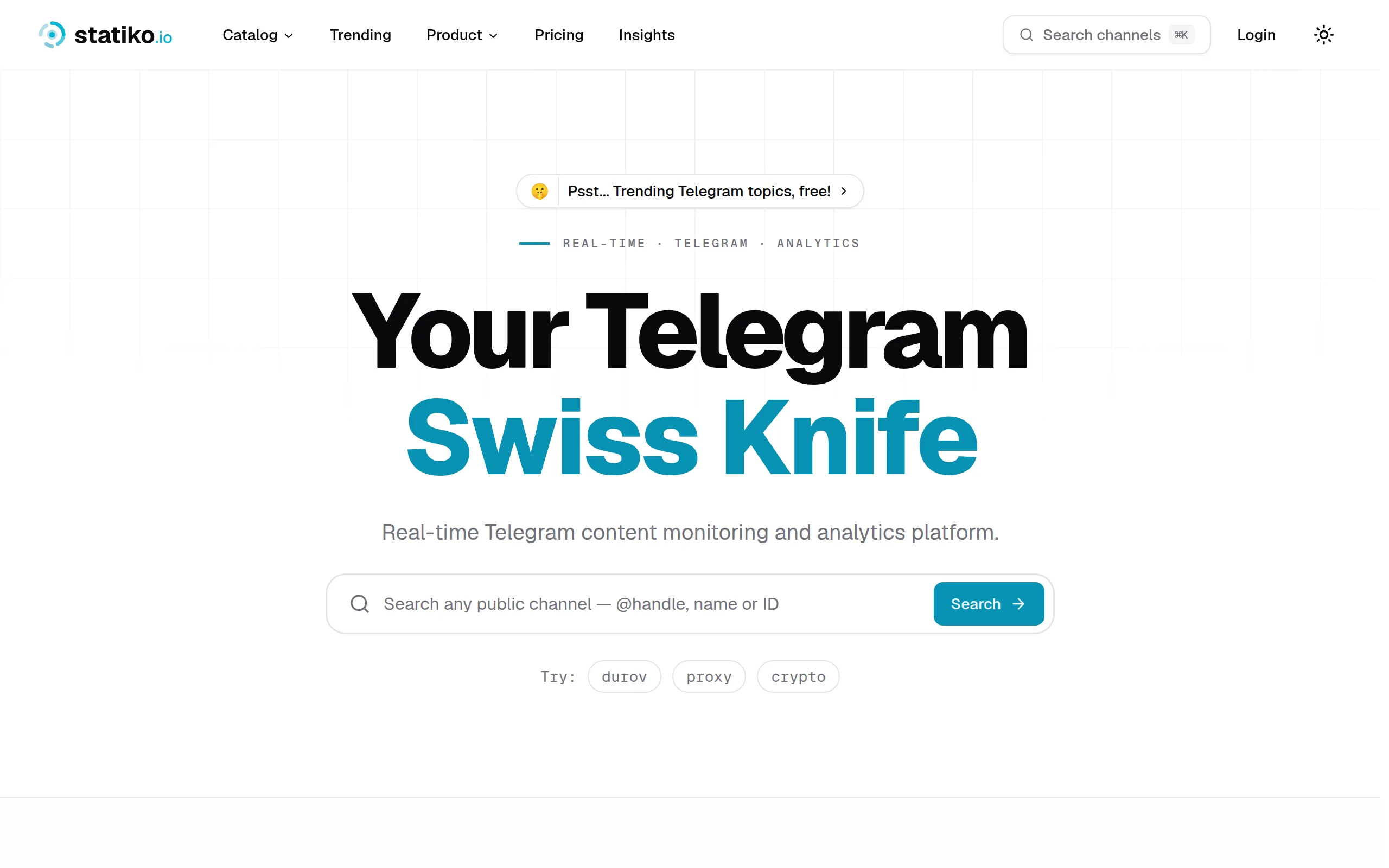
Statiko
Monitor any Telegram channel in real time - track posts, edits, deletions, and growth with AI recaps 📡

Shibui
AI website builder - describe your business, pick a niche template, edit by chatting, and publish instantly ✨

Pro Service
Find verified home service professionals, compare quotes, and pay securely through escrow - built for Brazilians across the US 🏠
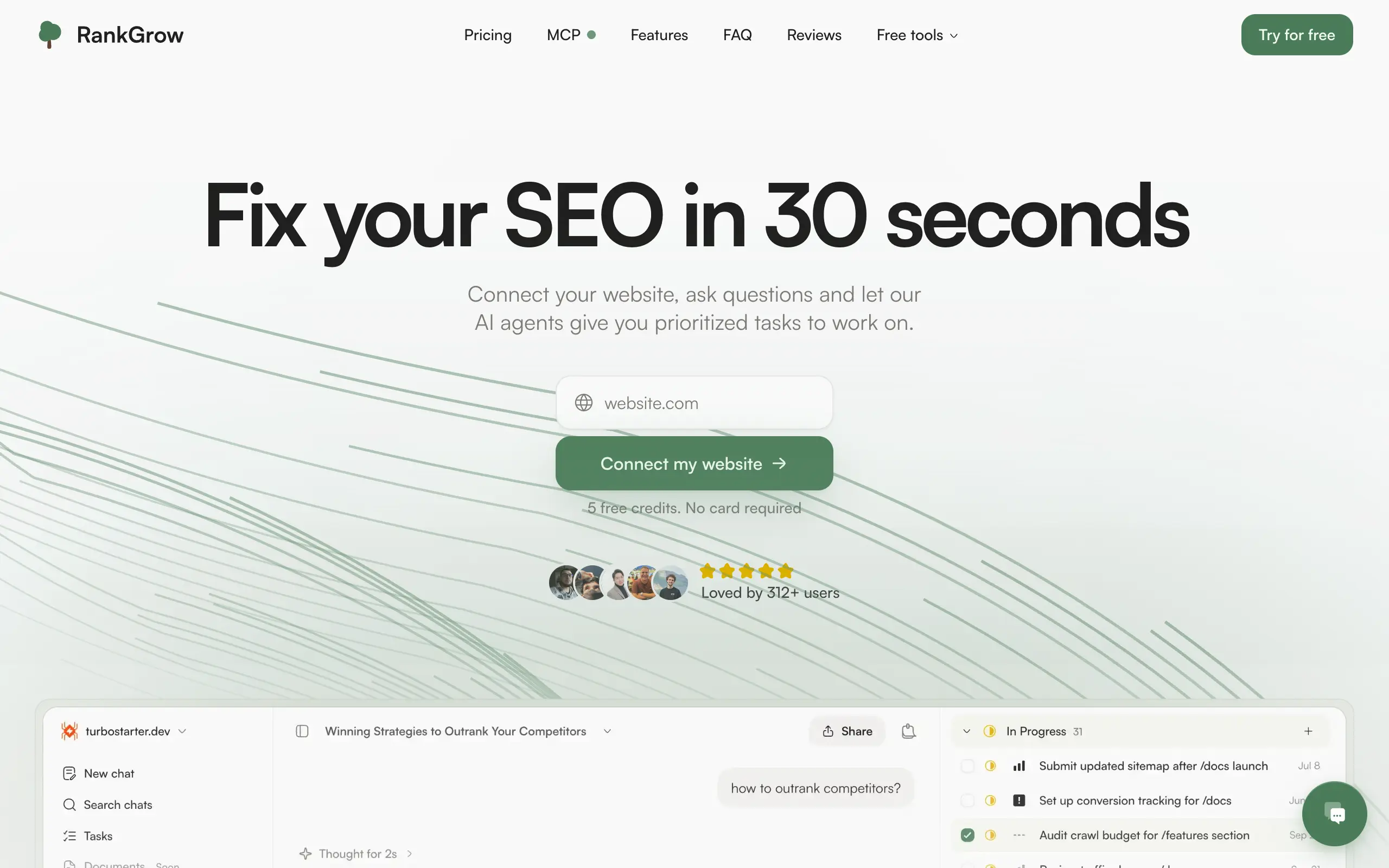
RankGrow
Fix your SEO with AI agents - connect Search Console, get prioritized tasks, and grow organic traffic 📈
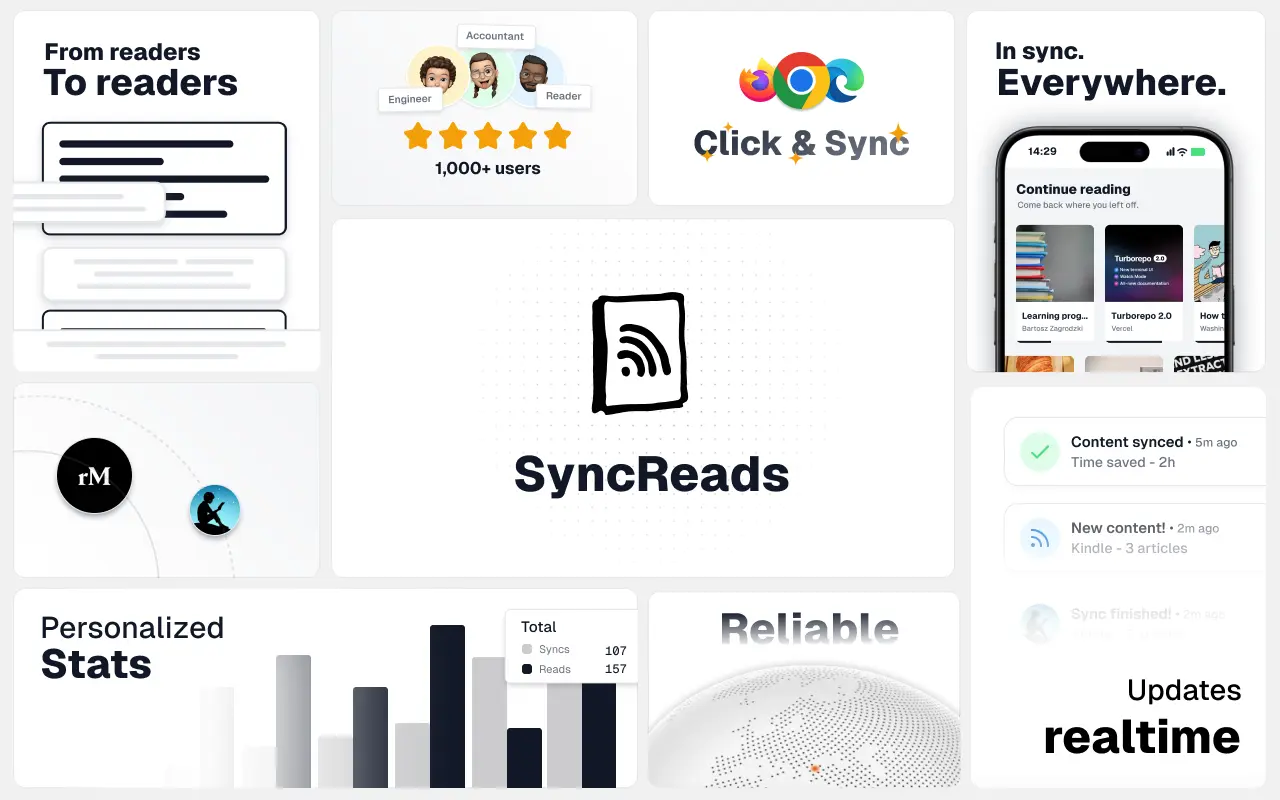
SyncReads
Sync your favorite content for distraction-free reading, save time and replace multiple apps. Anytime, anywhere 🔄
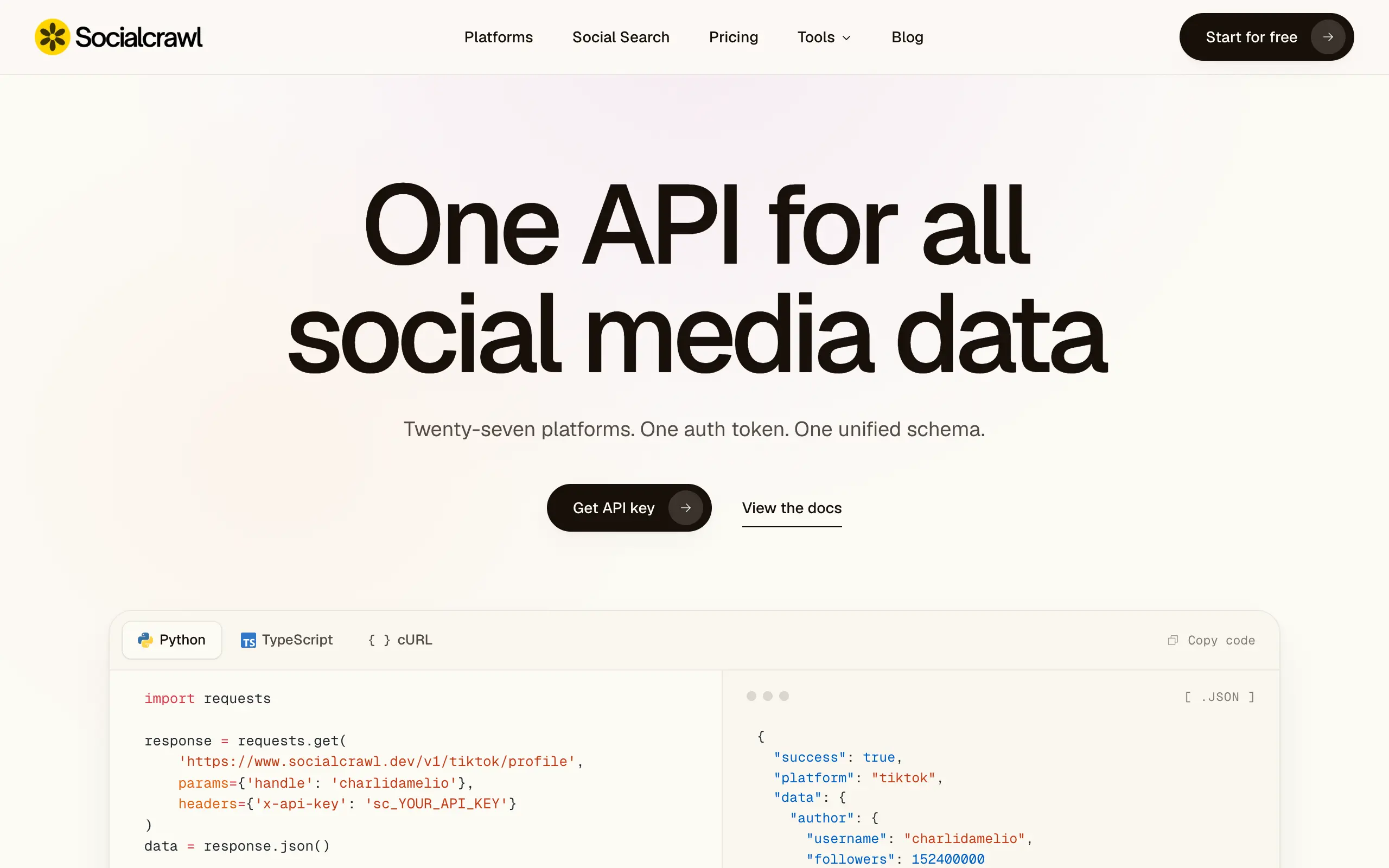
Socialcrawl
Get clean, structured data from 21 platforms like TikTok, Instagram, and YouTube with a single request 📊
Statiko
Monitor any Telegram channel in real time - track posts, edits, deletions, and growth with AI recaps 📡
Shibui
AI website builder - describe your business, pick a niche template, edit by chatting, and publish instantly ✨
Pro Service
Find verified home service professionals, compare quotes, and pay securely through escrow - built for Brazilians across the US 🏠
RankGrow
Fix your SEO with AI agents - connect Search Console, get prioritized tasks, and grow organic traffic 📈
SyncReads
Sync your favorite content for distraction-free reading, save time and replace multiple apps. Anytime, anywhere 🔄
Socialcrawl
Get clean, structured data from 21 platforms like TikTok, Instagram, and YouTube with a single request 📊
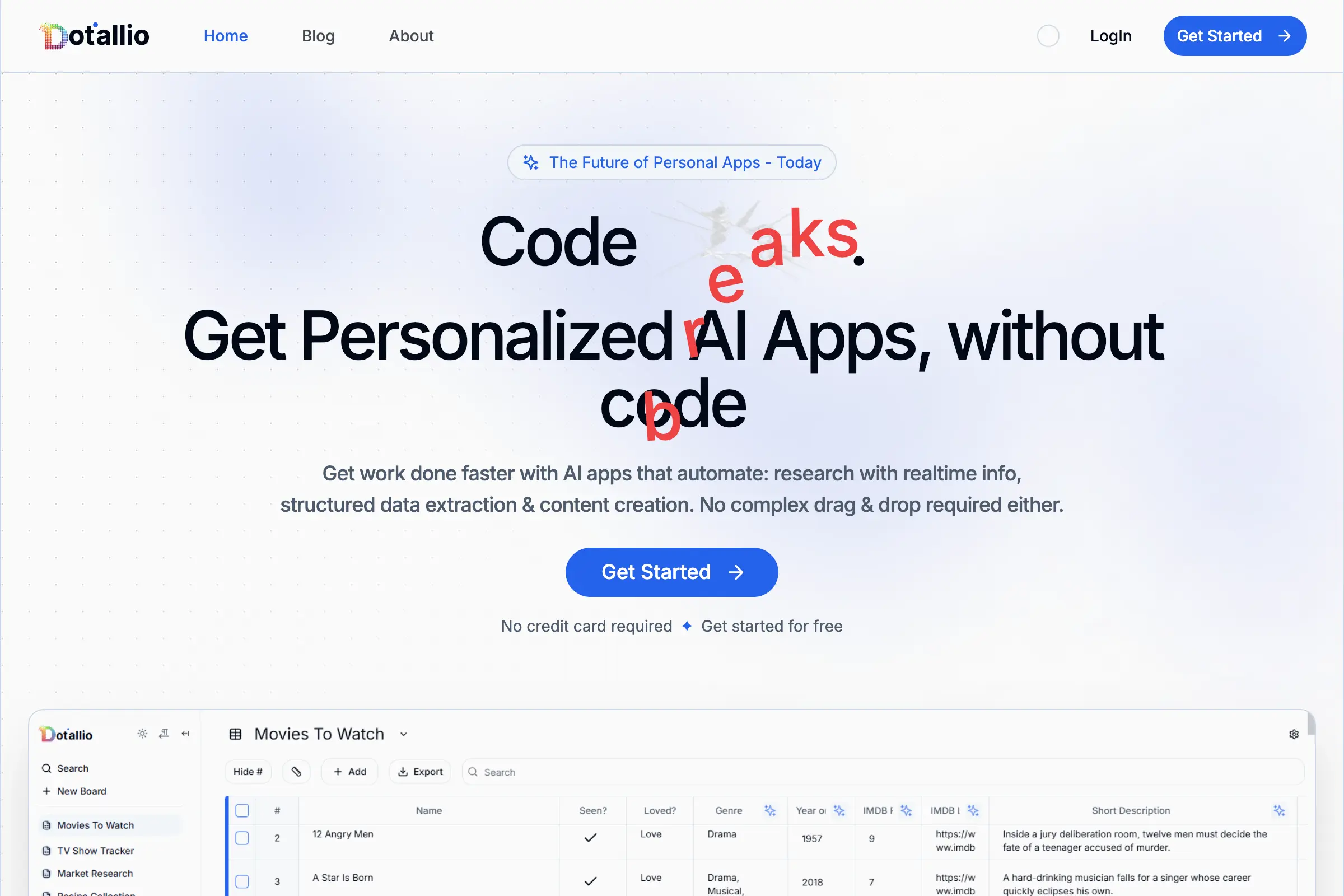
Dotallio
Personalized AI apps that automate research, data extraction, and content creation without code 🤖

Talk to Santa
Enjoy a magical live video chat or receive a unique AI-generated video greeting from Santa Claus 🎅

pozywka.pl
Scalable blog for food journalist, focused on performance and user experience 🌭
zagrodzki.me
Personal blog and portfolio of Bart Zagrodzki, where he shares his knowledge and work 💼
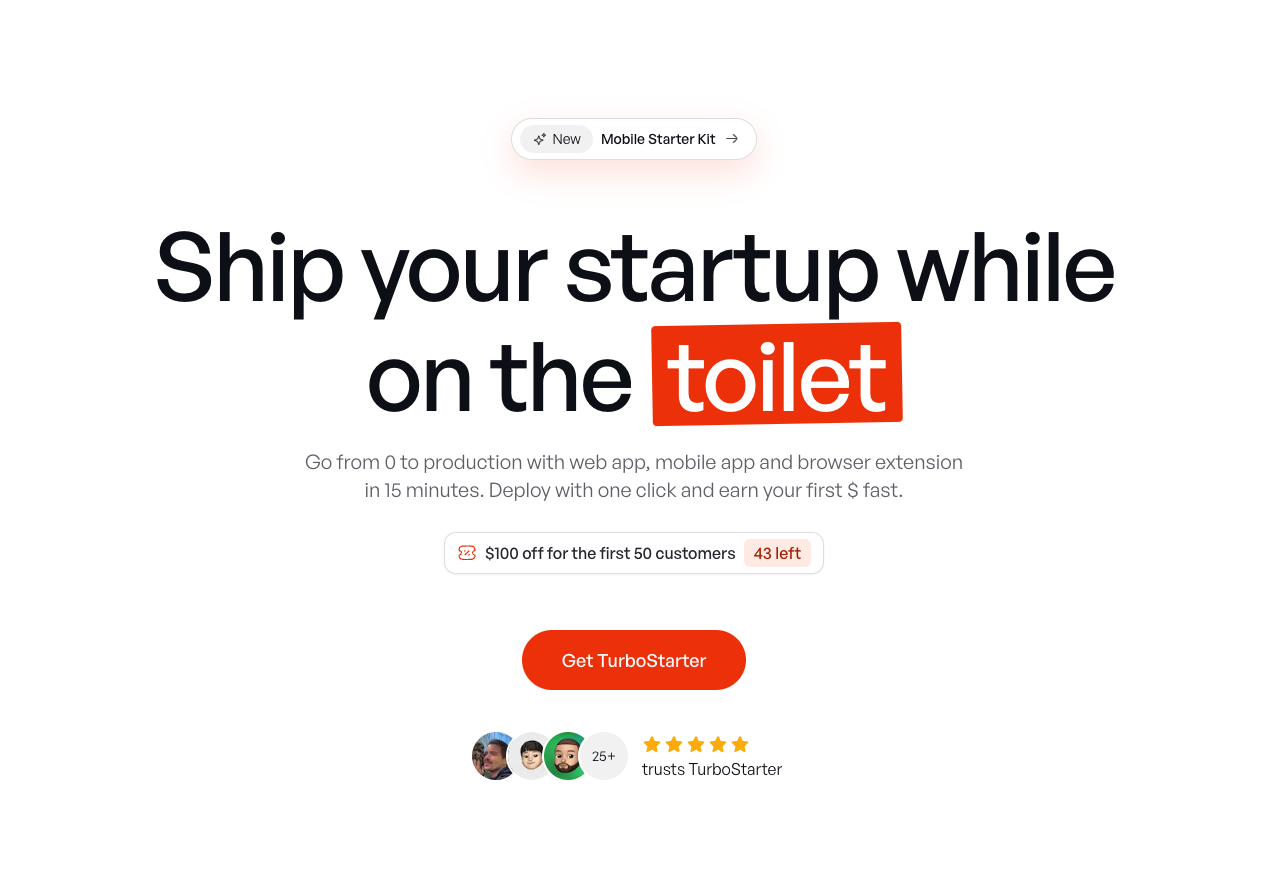
TurboStarter
Ship your startup everywhere. In minutes.
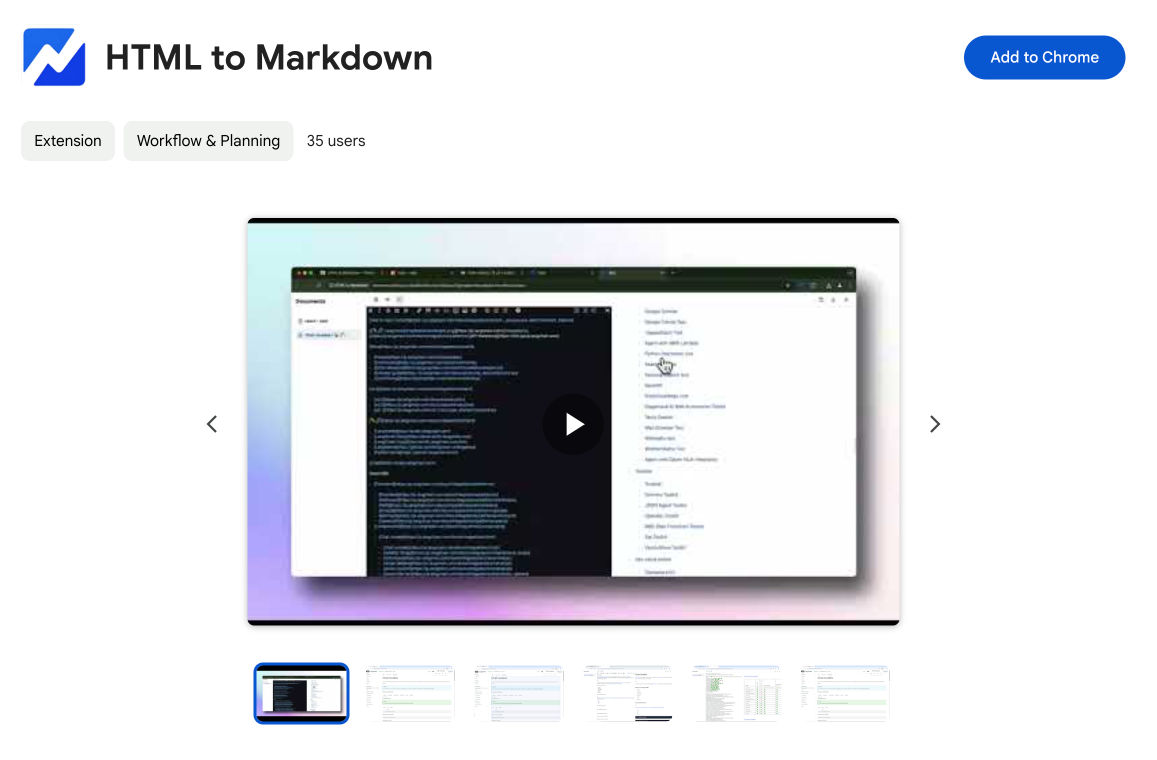
HTML to Markdown
Convert HTML to Markdown with ease, directly in your browser 📄
Dotallio
Personalized AI apps that automate research, data extraction, and content creation without code 🤖
Talk to Santa
Enjoy a magical live video chat or receive a unique AI-generated video greeting from Santa Claus 🎅
pozywka.pl
Scalable blog for food journalist, focused on performance and user experience 🌭
zagrodzki.me
Personal blog and portfolio of Bart Zagrodzki, where he shares his knowledge and work 💼
TurboStarter
Ship your startup everywhere. In minutes.
HTML to Markdown
Convert HTML to Markdown with ease, directly in your browser 📄
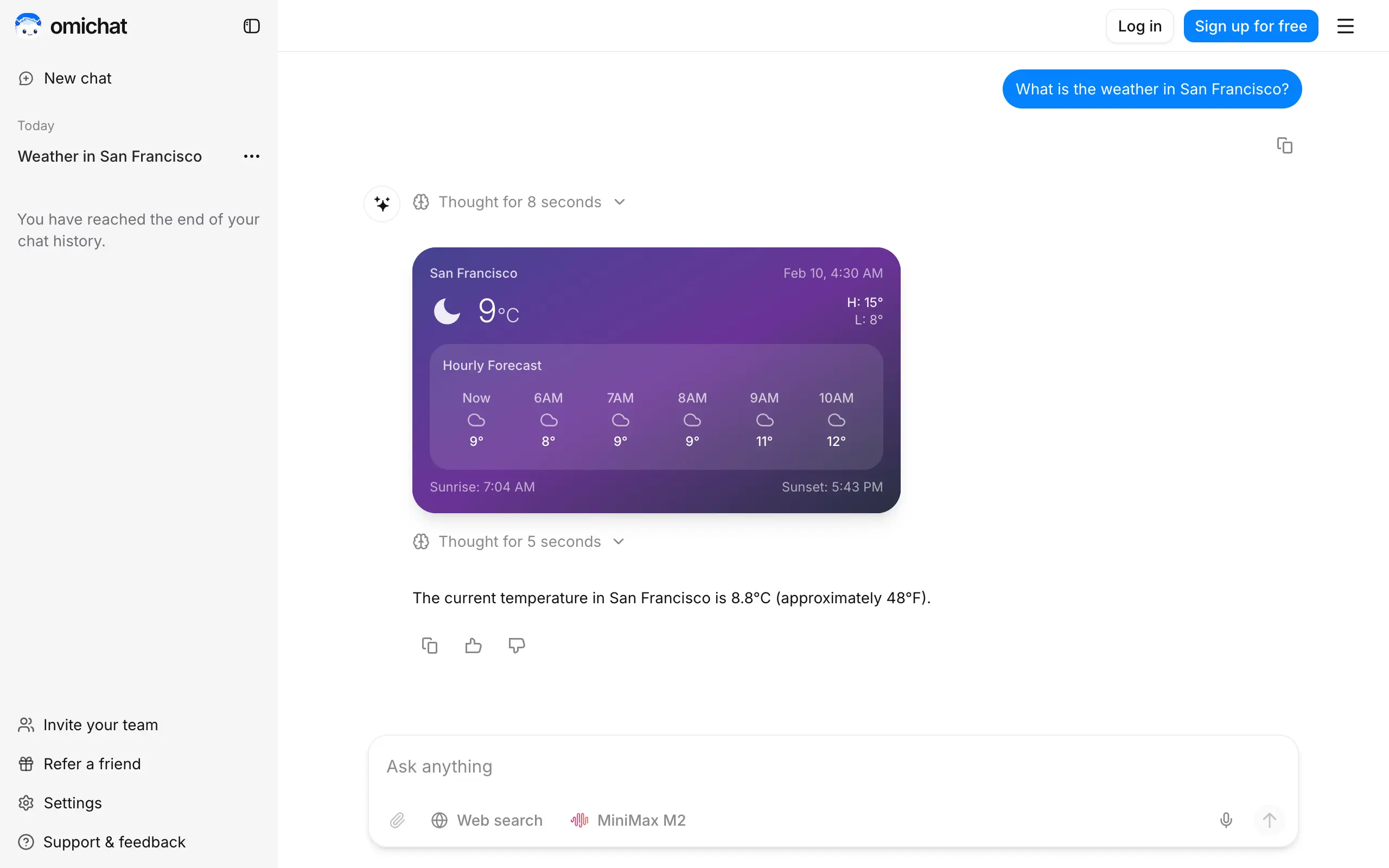
Omichat
Chat with 50+ AI models, including ChatGPT and Claude, in one place - switch models anytime without losing context 🤖
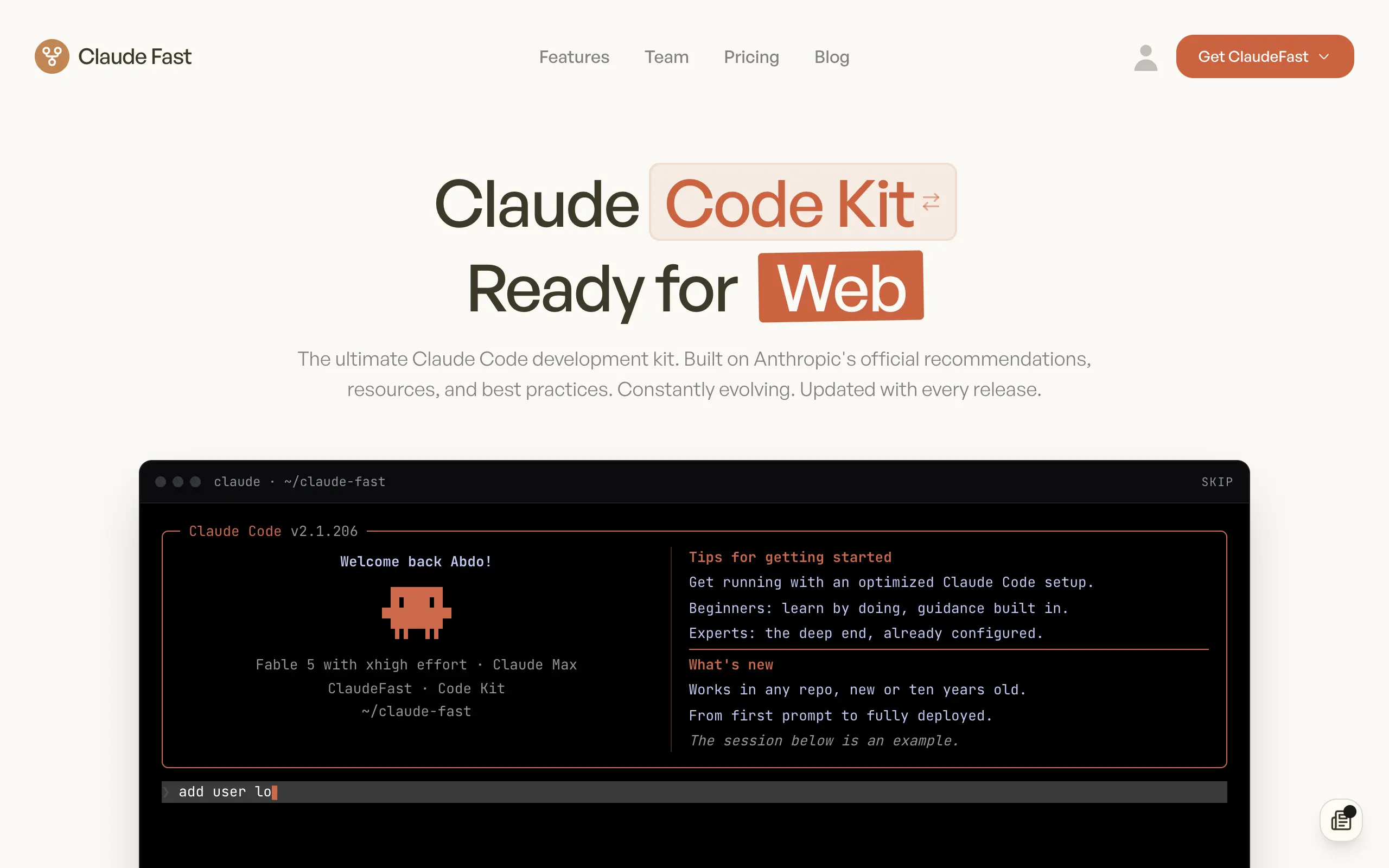
Claude Fast
Supercharge your Claude Code with 6x effective context window and specialized AI agents 🤖

EmojAI
AI-powered emoji picker with smart, context-aware suggestions 🤖
Solohacker
Autonomous company launcher - AI agents work 24/7, escalate what matters, and you stay in control 🤖

BeRawi: Storytelling Coach
Practice storytelling daily with instant feedback to sound clearer, more engaging, and confident 🎤
Omichat
Chat with 50+ AI models, including ChatGPT and Claude, in one place - switch models anytime without losing context 🤖
Claude Fast
Supercharge your Claude Code with 6x effective context window and specialized AI agents 🤖
EmojAI
AI-powered emoji picker with smart, context-aware suggestions 🤖
Solohacker
Autonomous company launcher - AI agents work 24/7, escalate what matters, and you stay in control 🤖
BeRawi: Storytelling Coach
Practice storytelling daily with instant feedback to sound clearer, more engaging, and confident 🎤

Connect with like-minded people
Join our community to get feedback, support, and grow together with 1,000+ builders on board, let's ship it!
Join usShip your startup everywhere. In minutes.
Don't burn tokens on setup and start building features on day one.