ScopeSignal
AI project scope guard for agencies that detects out-of-scope requests in email and Slack, then suggests change orders and client-ready responses.
Agency margins rarely disappear in one dramatic moment. More often, they are lost through a steady stream of “small” requests hidden in client emails, revised briefs, Slack-style project comments, meeting notes, and approval threads. A client asks for one extra landing page, a stakeholder introduces a new approval round, or a creative revision becomes a strategy change. Each request may sound reasonable in isolation. Together, they create scope creep.
ScopeSignal is a B2B scope creep monitoring software concept for agencies, consultancies, studios, and professional services teams. It monitors communications and project context to identify work that may fall outside an agreed statement of work before it damages profitability, resource planning, and delivery timelines.
The opportunity is not simply to build another project management dashboard. The opportunity is to create an intelligent early-warning system that connects the commercial agreement with the day-to-day conversations where scope changes actually emerge.
The central product thesis
Scope creep is primarily a communication intelligence problem. Agencies already have contracts, briefs, project boards, and time trackers. What they lack is a reliable way to detect when informal client requests conflict with the work they sold.
Why scope creep monitoring software matters for agencies
Scope creep is one of the most persistent operational problems in client services. Agencies can have experienced account managers, polished processes, and detailed project plans, yet still lose margin because project changes are documented too late or not documented at all.
The reason is straightforward. The original scope usually lives in a proposal, statement of work, or onboarding brief. The changing scope lives elsewhere:
- Client email threads
- Project comments and task discussions
- Shared document feedback
- Meeting summaries
- Internal account-management notes
- Change requests buried in messaging tools
- New stakeholder requests made after kickoff
This fragmentation makes manual control difficult. A project manager may recognize a risky request, but only after a team has already started work. Finance may see the impact only after the team has logged excess hours. Leadership often sees the pattern when the project is already unprofitable.
ScopeSignal would make scope governance continuous rather than retrospective. Instead of asking teams to manually review every communication, it would compare incoming requests against project commitments, detect potentially out-of-scope language, estimate operational impact, and route the issue to the right person.
The primary keyword for this product category is scope creep monitoring software. Related terms include:
- Agency profitability software
- Scope management software
- Change request tracking software
- Agency operations software
- Client request management
- Statement of work tracking
- Project margin protection
- Professional services automation
- AI project risk detection
- Agency project management tools
A strong product in this category should not merely label messages as “scope creep.” It should provide the context needed to make a commercially sound decision: accept the request, defer it, convert it into a paid change order, or clarify it with the client.
Target audience for ScopeSignal
The best initial customer is not every company that manages projects. ScopeSignal is most valuable where projects are sold at fixed fees, retainers with boundaries, or milestone-based engagements. In these environments, unplanned work directly reduces gross margin.
Primary audience: small and mid-sized agencies
The strongest early segment is likely agencies with roughly 10 to 150 employees. These teams tend to have enough client work, communication volume, and operational complexity to feel scope creep acutely, but they may not have a dedicated project controls function.
Typical agency types include:
- Digital product agencies
- Brand and creative studios
- Web development agencies
- Performance marketing agencies
- Content and SEO agencies
- Design consultancies
- Video production studios
- CRM and RevOps consultancies
Within these businesses, the economic buyer may be an agency owner, managing director, COO, head of operations, or finance leader. Daily users are more likely to be account directors, project managers, delivery leads, and client services teams.
Agency owner
Wants predictable margins, fewer write-offs, and better visibility into why projects become less profitable.
Account director
Needs evidence and context to have clear, constructive scope conversations with clients.
Project manager
Needs early warnings before extra work reaches production, design, engineering, or content teams.
Operations leader
Needs portfolio-level reporting that reveals repeat scope failure patterns across accounts and services.
Secondary audience: consultancies and professional services firms
Management consultancies, implementation partners, IT service providers, and fractional specialist firms face similar issues. Their language may differ from agency terminology, but the commercial challenge is identical.
For example, an implementation consultancy may sell a defined onboarding package. The client may later request additional integrations, data cleanup, custom workflows, new training sessions, or executive reporting. These are not necessarily bad requests. They are often signals that the original commercial agreement needs to change.
ScopeSignal can serve this market after establishing a focused agency wedge. The product should preserve configurable terminology so customers can use labels such as “change control,” “contract variance,” “engagement expansion,” or “out-of-scope work.”
Jobs to be done
The key user job is not “analyze all client messages.” It is more outcome-specific:
When a client request may create unplanned work, help me identify it early, understand why it is outside scope, and take an appropriate action without damaging the client relationship.
That job includes several practical needs:
- Detect ambiguous scope changes early
- Compare requests with contractual commitments
- Identify affected deliverables, roles, and timelines
- Keep evidence from the original communication
- Draft a professional client response
- Create an internal review workflow
- Track recurring causes of scope expansion
- Protect margins without making teams overly rigid
The market gap: project tools track work, not commercial intent
Most agencies already use a combination of project management, CRM, email, time tracking, file sharing, and communication tools. The problem is not a lack of software. The problem is that each tool sees only part of the commercial reality.
A task management platform may show a new task, but it cannot reliably determine whether that task was included in the signed scope. A time tracker can show that a project has exceeded its budget, but it is often a lagging indicator. A CRM contains deal-stage and client information, yet it is rarely the operational source of truth for delivery commitments.
| Tool category | Primary strength | Typical scope gap | When risk appears | ScopeSignal role |
|---|---|---|---|---|
| Project management | Task coordination | Limited contract awareness | After work is created | Detect request before task acceptance |
| Time tracking | Budget reporting | Lagging margin signal | After hours are logged | Predict and explain risk earlier |
| Email inbox | Client communication | No structured scope comparison | At request creation | Classify and preserve evidence |
| Contract repository | Legal recordkeeping | Disconnected from delivery activity | Only during manual review | Turn agreements into usable rules |
This gap creates a distinct positioning angle. ScopeSignal should not compete head-on as a replacement for Asana, ClickUp, Jira, Monday.com, or a professional services automation suite. It should become the commercial intelligence layer connecting scope documents to live client communications.
That category framing matters for SEO and go-to-market. Searchers looking for “agency profitability software” may be evaluating broad platforms. Searchers looking for “how to prevent scope creep” need practical guidance. ScopeSignal can win attention by addressing both the operational problem and the technology solution.
The ScopeSignal product: an early-warning system for scope creep
The core product should transform unstructured communications into clear, reviewable scope signals. It needs to be useful enough for busy account teams while being reliable enough for agency leaders to trust in margin-sensitive decisions.
1. Scope baseline ingestion
Every project needs a defined baseline before ScopeSignal can assess changes. During setup, the system should ingest and structure source materials such as:
- Statements of work
- Proposals
- Signed contracts
- Project briefs
- Retainer agreements
- Kickoff documents
- Approved estimates
- Project plans
- Deliverable lists
- Assumptions and exclusions
The platform should extract essential scope entities, including deliverables, quantities, included revision rounds, timelines, client responsibilities, approved channels, milestones, pricing model, and explicit exclusions.
For example, a web design scope may include five page templates, two revision rounds, responsive design, and developer handoff. A request for six additional campaign landing pages is materially different from a request to adjust copy within one approved template. The product must understand that distinction.
A robust scope baseline should support human review. AI extraction can accelerate setup, but a project owner should confirm critical fields before the baseline becomes active. This reduces false positives and establishes accountability.
2. Communication monitoring across key systems
The second core capability is monitoring the channels where client requests occur. A practical initial integration set might include:
- Gmail and Microsoft Outlook
- Slack Connect or shared client channels where permitted
- Asana, ClickUp, Jira, Monday.com, and Linear comments
- Notion project pages
- Google Drive and Microsoft OneDrive documents
- Meeting transcript providers
- Help desk platforms for support-heavy agencies
The product should not indiscriminately scan every internal message. That creates privacy concerns, noisy data, and adoption resistance. Instead, teams should configure monitored projects, client domains, shared channels, and designated communication locations.
A strong privacy-first design includes granular controls for:
- Included and excluded projects
- Client-facing versus internal conversations
- Data retention periods
- Role-based permissions
- Redaction for sensitive data
- Regional data processing requirements
- Audit logs for every alert and action
3. AI-powered scope change detection
This is the product’s intelligence engine. ScopeSignal should use a combination of deterministic rules, retrieval-based context, and large language model classification.
A request should be evaluated against the active project baseline rather than judged in isolation. The model needs access to relevant clauses, deliverables, exclusions, open change requests, current project phase, and previous decisions.
Useful detection categories could include:
- New deliverable requests
- Increased volume or quantity
- Additional revision cycles
- Timeline acceleration
- New stakeholder or approval requirements
- New channel, platform, region, or audience
- Technical complexity expansion
- Strategy changes after approval
- Ongoing support requests outside a defined retainer
- Client dependency delays that threaten delivery dates
A clear confidence model is essential. Not every phrase such as “could you also” represents billable scope creep. Some requests are included refinements, and others are simply questions. ScopeSignal should score risk and explain its reasoning in plain language.
For example:
Potential out-of-scope request
The client asked for “three additional email nurture sequences.” The signed scope includes a five-email launch sequence and excludes lifecycle automation. This may add copywriting, design, build, QA, and approval work. Confidence is high.
The alert is valuable because it cites the relevant scope language, identifies likely impact, and gives the account lead a next step.
4. Human review and decision workflows
The system should never automatically tell a client that something is out of scope. Client relationships require nuance, and agencies may choose to absorb certain work strategically.
Each signal should support a human decision workflow:
- Review the source message and linked scope evidence.
- Confirm, dismiss, or mark the alert as uncertain.
- Estimate delivery, timeline, and margin impact.
- Select a response path.
- Assign an owner and due date.
- Record the final outcome.
Recommended response paths include:
- Included in scope
- Clarify with client
- Create paid change request
- Defer to a future phase
- Absorb as goodwill
- Escalate internally
- Update the project baseline
This feedback loop is commercially valuable and technically important. It creates labeled training data that improves future recommendations for that agency’s terminology, services, and tolerance for variation.
5. Change request creation and client-ready responses
The product should reduce friction at the exact moment teams need to act. An alert that merely identifies risk is useful, but an alert that helps produce an approved change request is far more valuable.
ScopeSignal could generate a draft containing:
- Summary of the requested change
- Original scope reference
- Additional deliverables
- Estimated effort range
- Timeline implications
- Pricing or rate-card guidance
- Required approvals
- Assumptions and exclusions
It can also propose diplomatic language for email responses. The tone should be configurable because a creative studio, enterprise consultancy, and performance agency may communicate differently.
A useful response might say:
Thanks for sharing the additional request. The current project scope covers the approved launch assets and two revision rounds. The new nurture sequences would add a separate lifecycle workstream. We can prepare a short change request with delivery options and associated timing.
This language is not confrontational. It reframes the conversation around planning, quality, and transparent delivery.
6. Margin and portfolio intelligence
The long-term value of scope creep monitoring software is not limited to individual alerts. ScopeSignal should reveal patterns across projects and clients.
Leadership dashboards could surface:
- Scope risk by client, team, service line, and project manager
- Estimated unapproved work value
- Alert-to-change-order conversion rate
- Most common sources of scope expansion
- Projects with repeated “goodwill” work
- Margin at risk before time budgets are exceeded
- Recurring ambiguous contract clauses
- Clients or services associated with high revision volume
This reporting gives agencies a path to improve the root cause rather than merely reacting to individual incidents. If every website project generates alerts around content migration, the solution may be to improve the scope template, sales discovery process, pricing model, or onboarding checklist.
A practical AI architecture for ScopeSignal
The best technical approach is not a single generic AI prompt. Scope decisions affect revenue, delivery commitments, and client trust, so the system must be designed for traceability and controlled automation.
Retrieval-augmented analysis is the right foundation
ScopeSignal should use retrieval-augmented generation, commonly called RAG, to ground AI analysis in the right project materials. When a new email or task comment arrives, the platform retrieves relevant sections of the project baseline before asking a model to classify the request.
This architecture is better than sending a message to a model without context because it:
- Reduces generic or unsupported classifications
- Allows the system to quote source evidence
- Handles agency-specific terminology
- Makes human review faster
- Improves auditability
- Supports targeted updates when project scope changes
The data model should preserve document versioning. A scope baseline is not static. A signed change request may legitimately expand the project. Once approved, the new agreement should become part of the active context so the system does not continue flagging approved work.
Recommended technical stack
A modern TypeScript stack offers speed, maintainability, and a strong ecosystem for integrations.
| Layer | Recommended option | Why it fits | Trade-off | Implementation note |
|---|---|---|---|---|
| Web application | Next.js and React | Fast full-stack delivery | Requires disciplined server boundaries | Use React patterns for reusable review workflows |
| Database | PostgreSQL | Strong relational and audit capabilities | Vector search may need tuning | Store projects, evidence, decisions, and permissions |
| Vector retrieval | pgvector or managed vector service | Project-specific semantic search | Embedding quality affects results | Index scope chunks with document versions |
| Background jobs | Queue-based workers | Reliable webhook and analysis processing | More operational complexity | Separate ingestion from user-facing requests |
| Authentication | OAuth plus role-based access | Necessary for email and project integrations | Consent flows require careful UX | Use least-privilege scopes and tenant isolation |
For a polished SaaS foundation, a starter that includes authentication, billing architecture, team management, and application structure can shorten time to market. TurboStarter is relevant for founders who want to focus early effort on the proprietary scope intelligence and integration layer rather than rebuilding standard SaaS infrastructure.
Example alert object
A structured alert schema makes integrations, reporting, review workflows, and model evaluation more reliable.
type ScopeAlert = {
  projectId: string;
  source: "email" | "project_comment" | "meeting_note";
  sourceMessageId: string;
  category:
    | "new_deliverable"
    | "additional_revision"
    | "timeline_change"
    | "technical_expansion";
  confidence: number;
  summary: string;
  scopeEvidence: {
    documentId: string;
    documentVersion: number;
    excerpt: string;
  }[];
  estimatedImpact: {
    effortHoursLow?: number;
    effortHoursHigh?: number;
    timelineDays?: number;
    marginRisk?: "low" | "medium" | "high";
  };
  status: "needs_review" | "confirmed" | "dismissed" | "resolved";
};
The critical product principle is that every alert must have a source message, a scope reference, a confidence score, and a human-controlled resolution state.
Monetization strategy for ScopeSignal
ScopeSignal should be priced according to commercial value, not merely message volume. It protects margin and enables change-order revenue, making it more strategic than a lightweight inbox add-on.
A practical pricing model can combine a platform fee with active project or monitored-client allowances.
Suggested pricing tiers
- "Starter": for small agencies testing scope monitoring on a limited number of active client projects.
- "Growth": for agencies that need multiple integrations, collaboration workflows, and portfolio reporting.
- "Scale": for larger agencies requiring advanced permissions, custom retention rules, API access, and dedicated support.
- "Enterprise": for consultancies requiring SSO, security reviews, custom contracts, regional hosting options, and implementation support.
Usage should be simple enough that customers can predict their bill. Pricing based solely on every analyzed email may create anxiety and discourage adoption. Better value metrics include active monitored projects, active client accounts, or scope baselines under management.
Potential expansion revenue includes:
- Advanced margin forecasting
- Change request e-signature workflows
- Professional services automation integrations
- Custom scope template libraries
- AI model customization for agency service lines
- White-glove onboarding and baseline migration
- Benchmark reporting for multi-office agencies
The strongest pricing narrative is not “pay for AI monitoring.” It is “reduce unapproved work and create a repeatable change-control process.”
Competitive advantage and differentiation
The competitive landscape includes project management platforms, PSA tools, contract lifecycle management software, time tracking products, AI meeting assistants, and general-purpose workflow automation. ScopeSignal can differentiate by occupying the intersection of these categories.
The ScopeSignal USP
ScopeSignal identifies commercially risky client requests at the moment they appear, using the actual project agreement as context, then helps teams turn that insight into an informed delivery or change-order decision.
That positioning has several defensible characteristics.
Agreement-aware rather than keyword-based
Simple keyword alerts for phrases such as “one more thing” or “can you also” will produce excessive noise. ScopeSignal should compare the request against the project’s actual deliverables, exclusions, and change history.
Communication-native rather than task-native
Scope expansion begins in conversations, often before anyone creates a task. Monitoring email and comments lets the product surface risk earlier than traditional project reporting.
Designed for client diplomacy
The outcome is not a red warning badge. The outcome is a thoughtful next action and, where appropriate, a clear client communication. This is especially important in agencies where relationships and reputation drive retention.
Learning from agency decisions
A decision feedback loop helps the product adapt to the agency’s service definitions and commercial policies. Over time, the system can distinguish between typical included refinements and materially new work.
Portfolio-level operational learning
The platform can expose recurring failures in sales handoff, contract wording, estimation, client onboarding, and service packaging. This elevates ScopeSignal from a point solution into a strategic agency operations tool.
Risks and mitigation strategies
Scope creep monitoring software deals with sensitive messages and subjective commercial decisions. The product must earn trust through careful product design.
A generic AI classifier may label normal collaboration as scope creep. Mitigate this through confidence thresholds, per-project tuning, a clear dismiss workflow, and a requirement that alerts cite relevant agreement language. Start by optimizing for high-confidence signals rather than attempting to flag every possible risk.
No monitoring system will capture every scope change, particularly verbal agreements or undocumented requests. Position ScopeSignal as decision support rather than a complete control system. Encourage teams to forward important meeting summaries and include change-control checkpoints in project rituals.
Email and project comments can contain sensitive commercial information. Use tenant isolation, encryption in transit and at rest, granular permissions, retention controls, audit logs, and least-privilege OAuth scopes. Publish transparent data-handling documentation before pursuing enterprise sales.
Webhook failures, API rate limits, and disconnected accounts can cause missed signals. Build observable ingestion pipelines, retry queues, connection health checks, and visible sync status. Customers need to know what has and has not been analyzed.
Detection alone does not guarantee behavior change. Reduce this risk with response templates, escalation paths, change request workflows, and leadership reporting that rewards early clarification rather than quietly absorbing extra work.
A further risk is overpromising financial impact. The product should avoid claiming that it “guarantees margin protection.” ScopeSignal can identify and quantify risk, but agencies still control estimates, staffing, negotiations, and client decisions.
Go-to-market strategy for a scope creep SaaS
The most effective initial go-to-market motion is likely founder-led selling into a narrow agency segment. Product-led growth can follow once integrations and onboarding are simple, but early sales conversations are valuable for understanding contract language, objection patterns, and real decision workflows.
Start with one high-pain vertical
A smart initial niche could be web design and development agencies selling fixed-scope builds. Their scope artifacts are relatively structured, their projects have recognizable deliverables, and additional requests often have obvious budget implications.
After validating the core workflow, expand to creative, marketing, and consulting agencies. Each vertical may need different detection templates:
Web agencies need detection for extra templates, pages, integrations, CMS complexity, content migration, accessibility requirements, and revision rounds.
Marketing agencies need detection for additional campaigns, channels, asset quantities, reporting requests, audience segments, media management, and approval cycles.
Consultancies need detection for new workstreams, additional workshops, stakeholder groups, data analysis requests, implementation requirements, and travel-related changes.
Build content around operational pain, not only software features
SEO content should target high-intent and problem-aware searches. Useful topic clusters include:
- How to prevent scope creep in agency projects
- Scope creep examples and client response templates
- How to write a statement of work for web design
- Change request process for marketing agencies
- Agency margin erosion causes
- Fixed-price project risk management
- How to track revision rounds
- Agency project profitability metrics
This content can naturally lead readers toward ScopeSignal as the operational system that helps make best practices repeatable. For statistics about agency profitability, AI adoption, or professional services trends, cite recognized industry research in the published version and include publication dates. Avoid using unsupported numbers simply to make the content sound authoritative.
Use ROI calculators carefully
An ROI calculator can be an effective lead magnet if it uses transparent assumptions. Inputs might include:
- Number of active projects
- Average project value
- Average gross margin
- Estimated monthly unapproved hours
- Blended internal cost rate
- Percentage of recoverable change requests
The output should show a range, not a guarantee. This reinforces trust and gives agency leaders a concrete way to evaluate the cost of inaction.
Actionable implementation plan
The right MVP is narrower than the long-term vision. Do not begin by integrating every communication platform or building a fully automated contract system. Start with the workflow that creates the clearest customer value.
Define a single ideal customer profile, such as fixed-fee web agencies with 15 to 75 employees and recurring delivery margin problems.
Interview at least 15 account leaders, project managers, and agency owners. Collect anonymized examples of requests that were later considered out of scope.
Build baseline ingestion for statements of work and project briefs. Require a human reviewer to confirm extracted deliverables, exclusions, revision limits, and timeline assumptions.
Launch with one communication source, ideally Gmail or Outlook, plus one project platform integration. Prioritize reliable ingestion and source evidence over breadth.
Create high-confidence alert categories for new deliverables, additional revision rounds, timeline acceleration, and technical expansion.
Add a lightweight review queue with confirm, dismiss, clarify, and create-change-request actions. Capture feedback for model evaluation.
Pilot with design partners using weekly review sessions. Measure alert precision, time to review, recovered revenue, avoided write-offs, and user trust.
Use pilot findings to improve templates, detection logic, permissions, reporting, and onboarding before expanding integrations or pursuing broader self-serve acquisition.
The MVP success metric should not be total alerts generated. A noisy system can generate many alerts while creating little value. Better leading indicators include:
- Percentage of confirmed alerts
- Median time from request to review
- Number of approved change requests created
- Estimated hours clarified before work begins
- Reduction in untracked project changes
- Weekly active usage among account and delivery teams
Avoid a common MVP mistake
Do not build ScopeSignal as an autonomous system that automatically rejects client work. Agencies need recommendations, context, and workflow support. Human judgment must remain central to client communication and commercial decisions.
The long-term opportunity for ScopeSignal
ScopeSignal can begin as scope creep monitoring software and develop into a broader commercial operating system for client services firms. Once it understands the relationship between sold work, client requests, delivered work, and project outcomes, it can support stronger forecasting and process improvement.
Future capabilities may include:
- Scope quality scoring during proposal creation
- Risk prediction before a project is sold
- Automated handoff checks between sales and delivery
- Retainer utilization and boundary monitoring
- Suggested pricing for recurring change patterns
- Client-specific request behavior profiles
- Contract clause recommendations based on historical outcomes
- Agency benchmark insights across service lines
The key is to earn that expansion through a focused initial use case. Agencies will adopt ScopeSignal when it solves an immediate problem: spotting potentially unapproved work before teams start doing it. They will retain it when the product helps standardize better commercial decisions, protect margins, and create healthier client relationships.
Scope creep is not always a sign of a difficult client. It often indicates evolving business needs, incomplete discovery, unclear assumptions, or a missing change-control process. ScopeSignal’s advantage is that it treats these moments as valuable operational signals. By turning informal requests into visible, evidence-backed decisions, it helps agencies deliver excellent work without silently giving away the capacity that keeps their business profitable.
More 🏢 B2B Application SaaS ideas
Discover more innovative b2b application SaaS ideas that are trending in 2026. Each idea is AI-generated with market validation and growth potential to help you find your next profitable venture faster than competitors.
Your competitors are building with TurboStarter
Below are some of the SaaS ideas that have been generated and built with our starter kit.
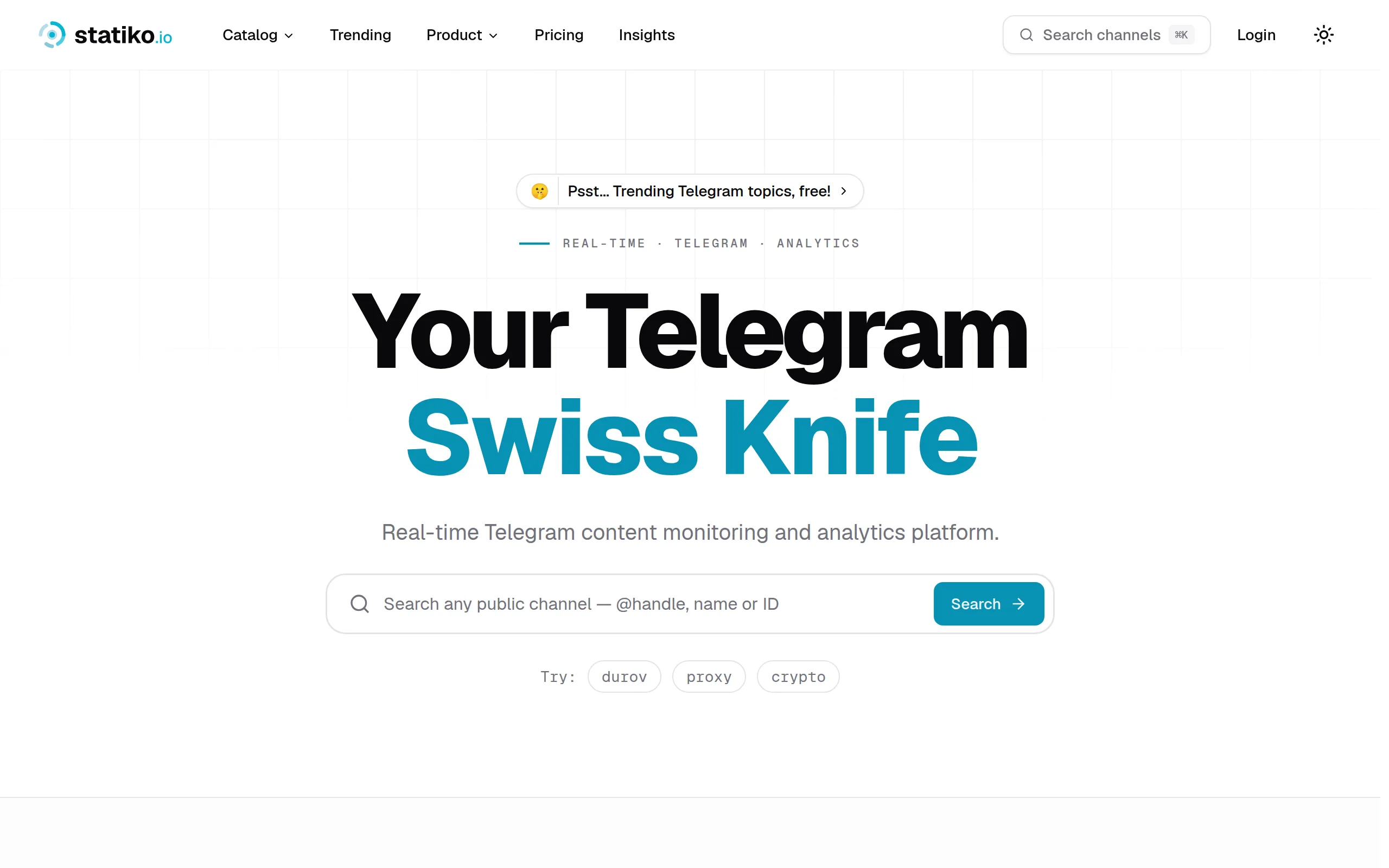
Statiko
Monitor any Telegram channel in real time - track posts, edits, deletions, and growth with AI recaps 📡

Shibui
AI website builder - describe your business, pick a niche template, edit by chatting, and publish instantly ✨

Pro Service
Find verified home service professionals, compare quotes, and pay securely through escrow - built for Brazilians across the US 🏠
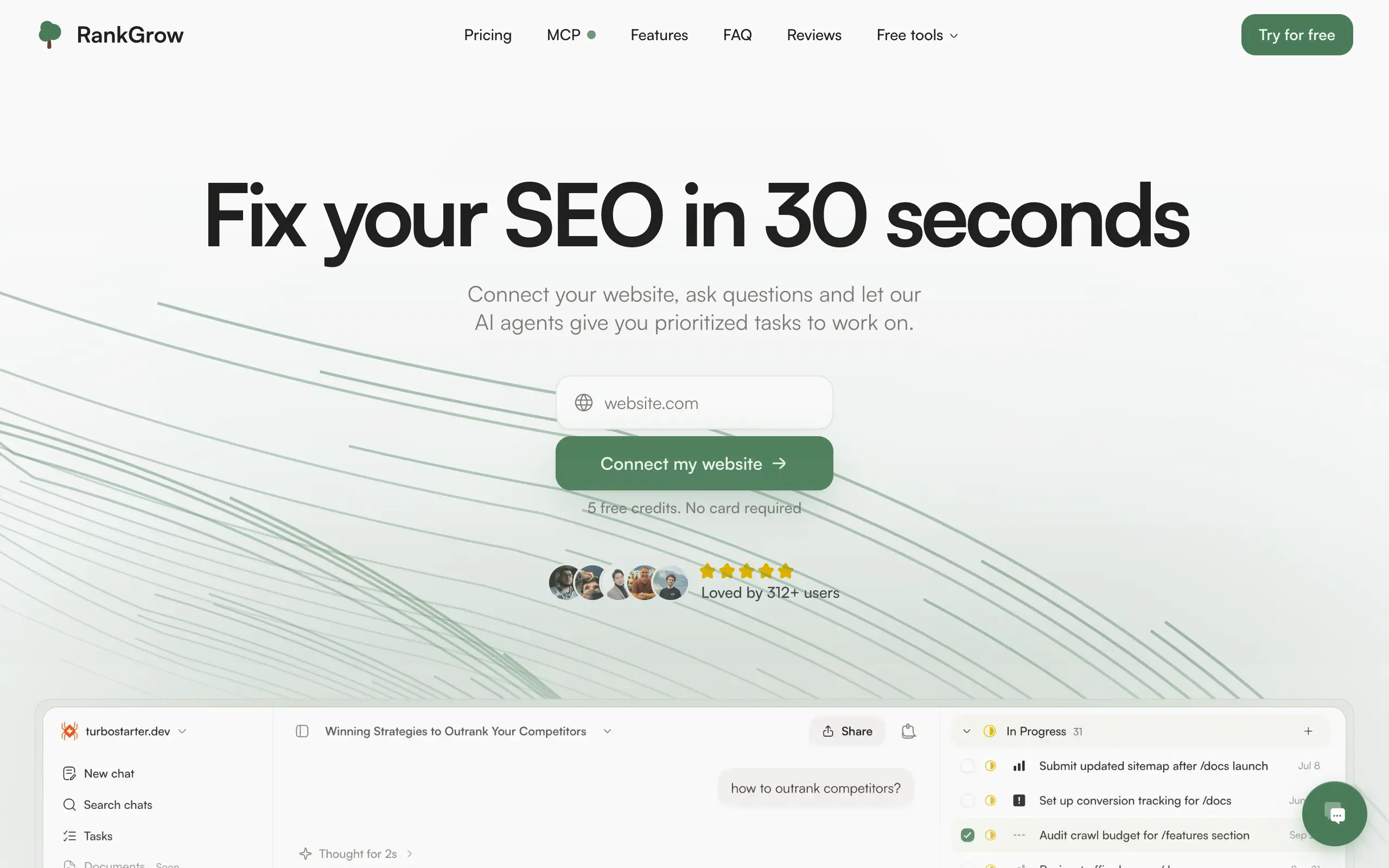
RankGrow
Fix your SEO with AI agents - connect Search Console, get prioritized tasks, and grow organic traffic 📈
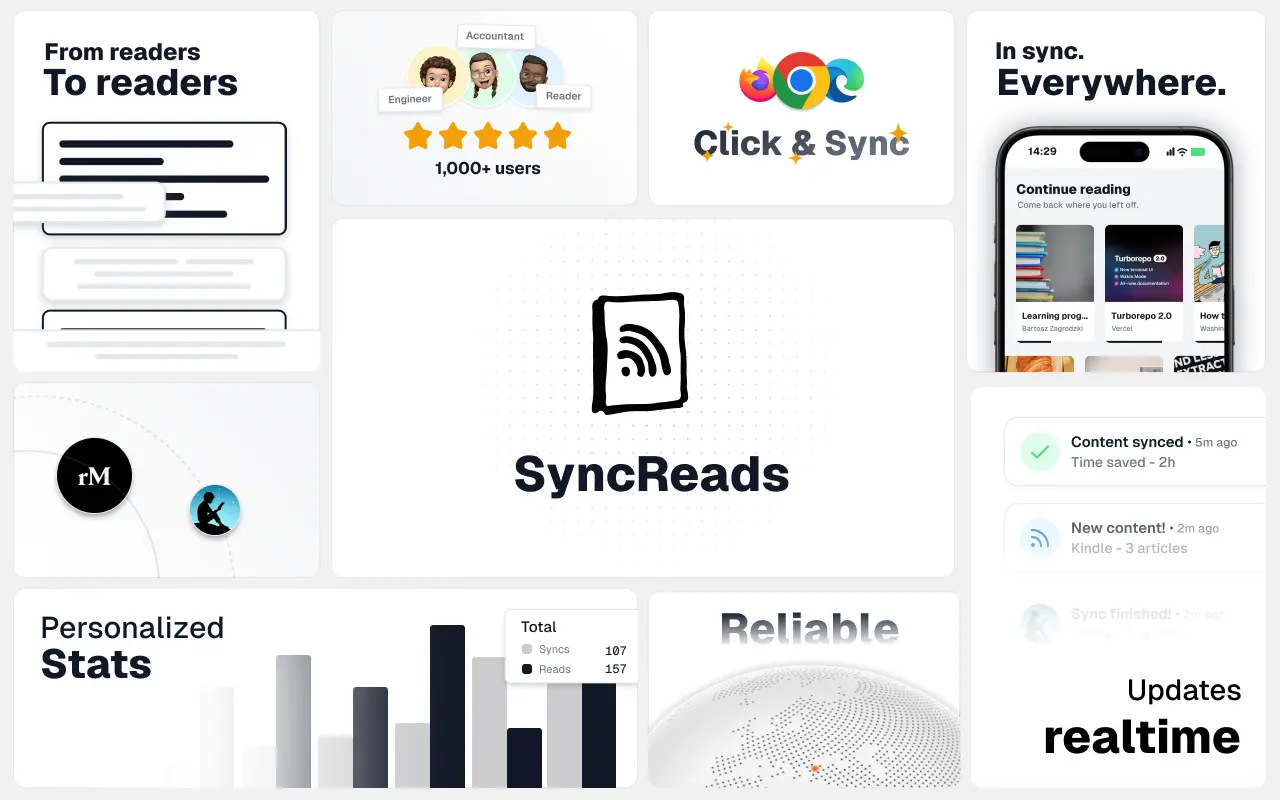
SyncReads
Sync your favorite content for distraction-free reading, save time and replace multiple apps. Anytime, anywhere 🔄
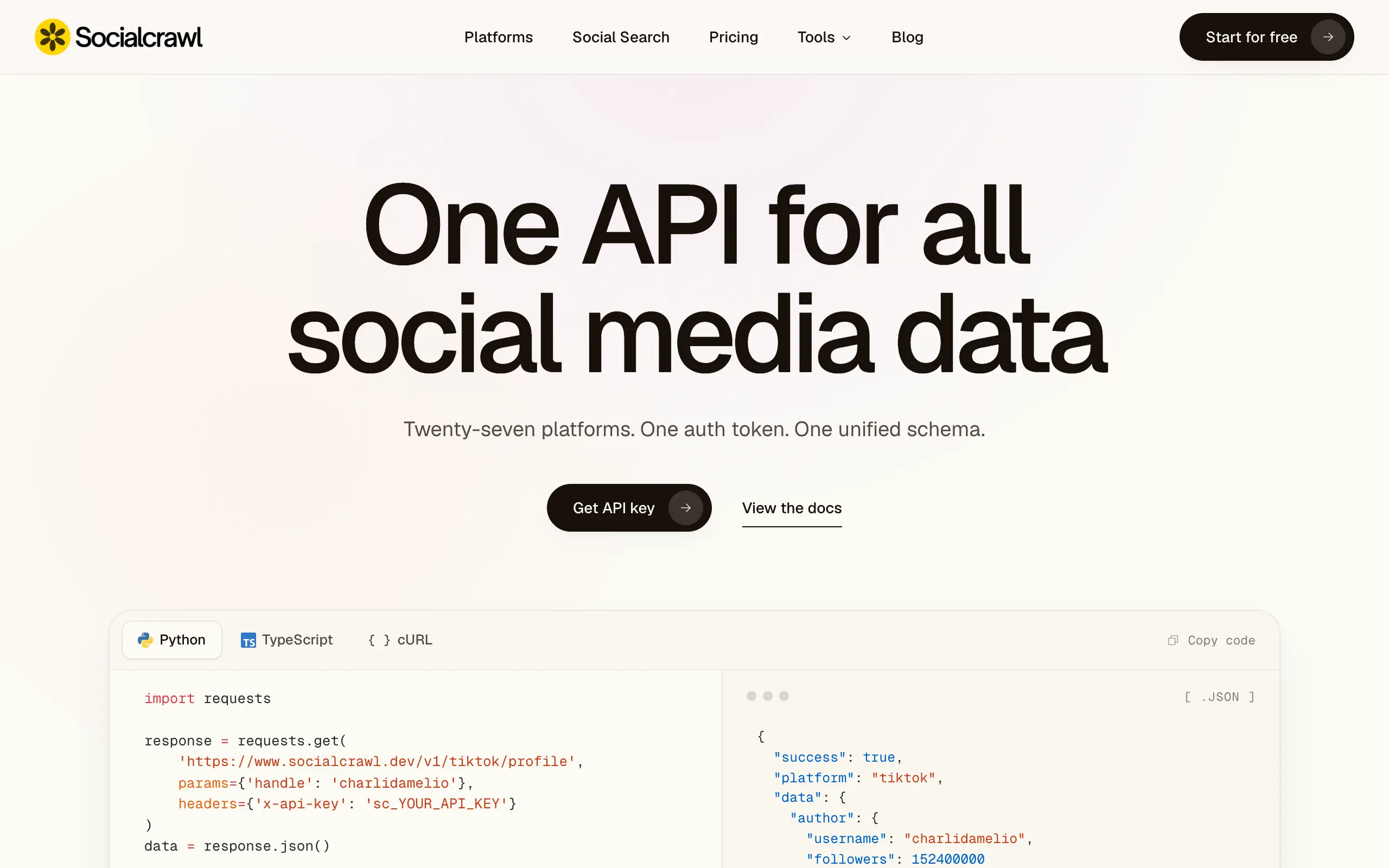
Socialcrawl
Get clean, structured data from 21 platforms like TikTok, Instagram, and YouTube with a single request 📊
Statiko
Monitor any Telegram channel in real time - track posts, edits, deletions, and growth with AI recaps 📡
Shibui
AI website builder - describe your business, pick a niche template, edit by chatting, and publish instantly ✨
Pro Service
Find verified home service professionals, compare quotes, and pay securely through escrow - built for Brazilians across the US 🏠
RankGrow
Fix your SEO with AI agents - connect Search Console, get prioritized tasks, and grow organic traffic 📈
SyncReads
Sync your favorite content for distraction-free reading, save time and replace multiple apps. Anytime, anywhere 🔄
Socialcrawl
Get clean, structured data from 21 platforms like TikTok, Instagram, and YouTube with a single request 📊
Statiko
Monitor any Telegram channel in real time - track posts, edits, deletions, and growth with AI recaps 📡
Shibui
AI website builder - describe your business, pick a niche template, edit by chatting, and publish instantly ✨
Pro Service
Find verified home service professionals, compare quotes, and pay securely through escrow - built for Brazilians across the US 🏠
RankGrow
Fix your SEO with AI agents - connect Search Console, get prioritized tasks, and grow organic traffic 📈
SyncReads
Sync your favorite content for distraction-free reading, save time and replace multiple apps. Anytime, anywhere 🔄
Socialcrawl
Get clean, structured data from 21 platforms like TikTok, Instagram, and YouTube with a single request 📊
Statiko
Monitor any Telegram channel in real time - track posts, edits, deletions, and growth with AI recaps 📡
Shibui
AI website builder - describe your business, pick a niche template, edit by chatting, and publish instantly ✨
Pro Service
Find verified home service professionals, compare quotes, and pay securely through escrow - built for Brazilians across the US 🏠
RankGrow
Fix your SEO with AI agents - connect Search Console, get prioritized tasks, and grow organic traffic 📈
SyncReads
Sync your favorite content for distraction-free reading, save time and replace multiple apps. Anytime, anywhere 🔄
Socialcrawl
Get clean, structured data from 21 platforms like TikTok, Instagram, and YouTube with a single request 📊
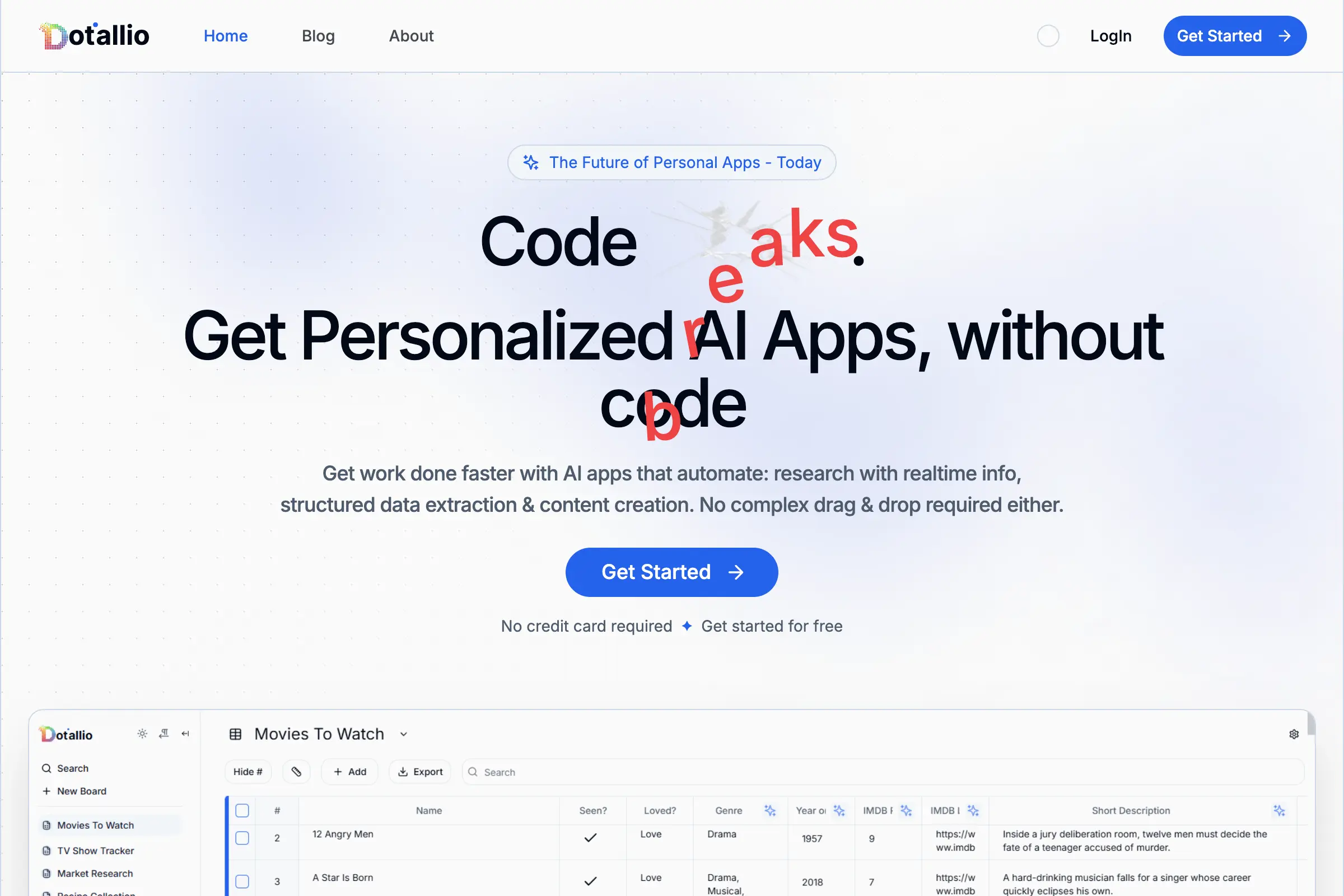
Dotallio
Personalized AI apps that automate research, data extraction, and content creation without code 🤖
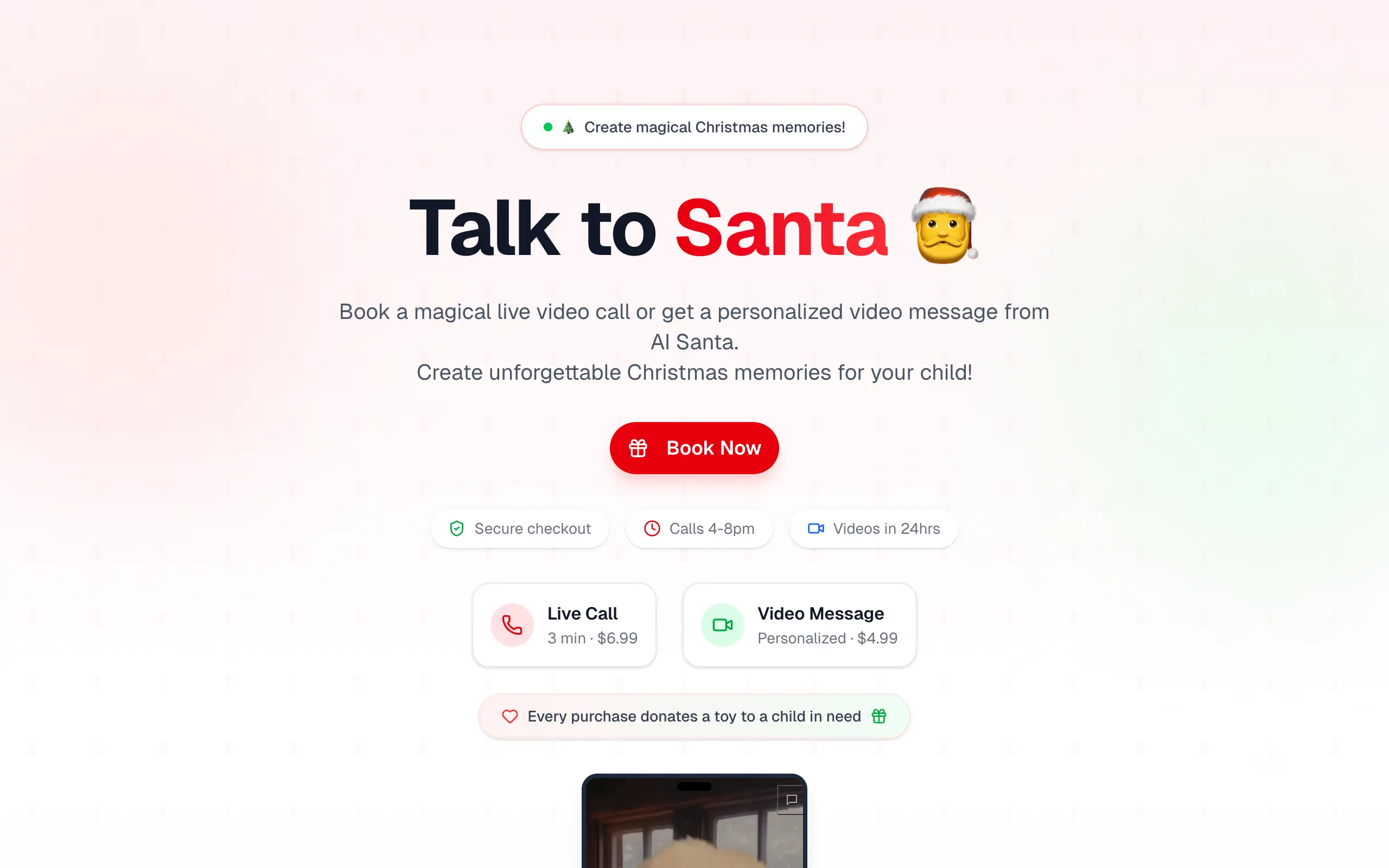
Talk to Santa
Enjoy a magical live video chat or receive a unique AI-generated video greeting from Santa Claus 🎅

pozywka.pl
Scalable blog for food journalist, focused on performance and user experience 🌭
zagrodzki.me
Personal blog and portfolio of Bart Zagrodzki, where he shares his knowledge and work 💼
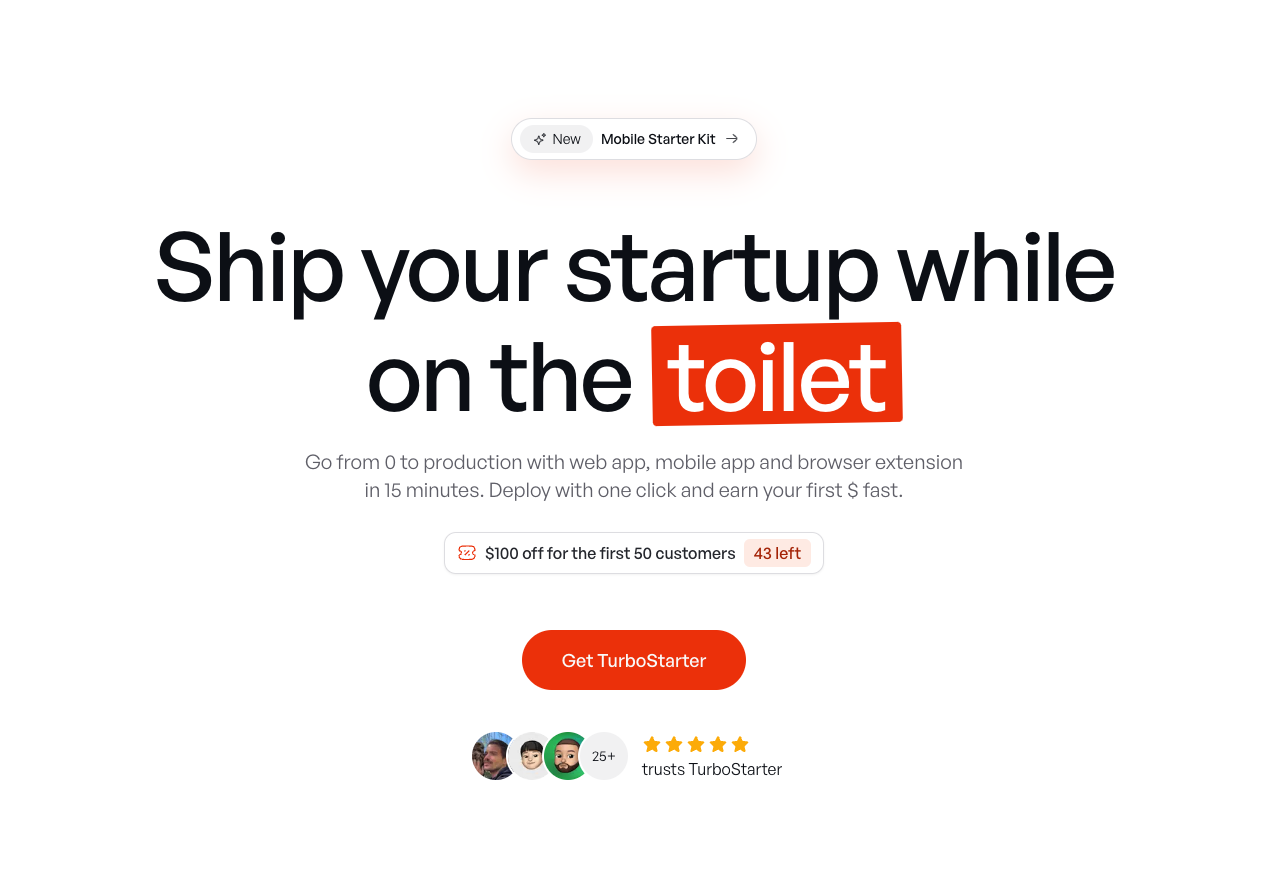
TurboStarter
Ship your startup everywhere. In minutes.
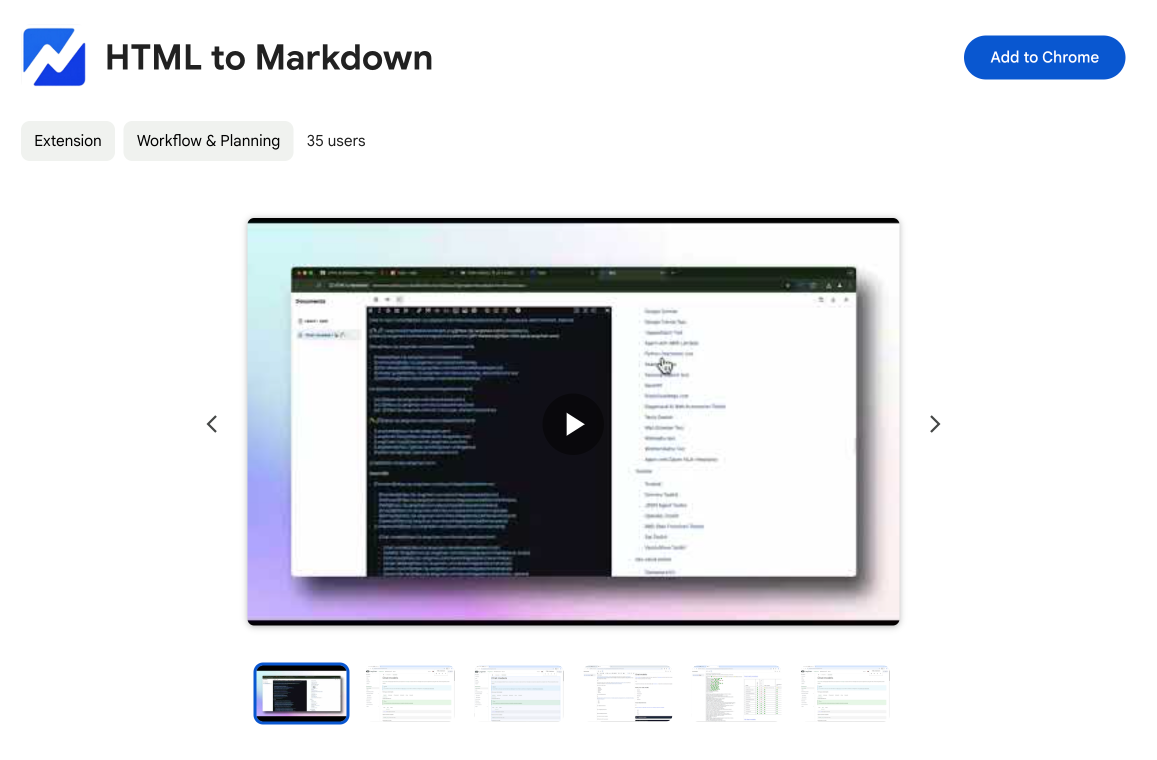
HTML to Markdown
Convert HTML to Markdown with ease, directly in your browser 📄
Dotallio
Personalized AI apps that automate research, data extraction, and content creation without code 🤖
Talk to Santa
Enjoy a magical live video chat or receive a unique AI-generated video greeting from Santa Claus 🎅
pozywka.pl
Scalable blog for food journalist, focused on performance and user experience 🌭
zagrodzki.me
Personal blog and portfolio of Bart Zagrodzki, where he shares his knowledge and work 💼
TurboStarter
Ship your startup everywhere. In minutes.
HTML to Markdown
Convert HTML to Markdown with ease, directly in your browser 📄
Dotallio
Personalized AI apps that automate research, data extraction, and content creation without code 🤖
Talk to Santa
Enjoy a magical live video chat or receive a unique AI-generated video greeting from Santa Claus 🎅
pozywka.pl
Scalable blog for food journalist, focused on performance and user experience 🌭
zagrodzki.me
Personal blog and portfolio of Bart Zagrodzki, where he shares his knowledge and work 💼
TurboStarter
Ship your startup everywhere. In minutes.
HTML to Markdown
Convert HTML to Markdown with ease, directly in your browser 📄
Dotallio
Personalized AI apps that automate research, data extraction, and content creation without code 🤖
Talk to Santa
Enjoy a magical live video chat or receive a unique AI-generated video greeting from Santa Claus 🎅
pozywka.pl
Scalable blog for food journalist, focused on performance and user experience 🌭
zagrodzki.me
Personal blog and portfolio of Bart Zagrodzki, where he shares his knowledge and work 💼
TurboStarter
Ship your startup everywhere. In minutes.
HTML to Markdown
Convert HTML to Markdown with ease, directly in your browser 📄
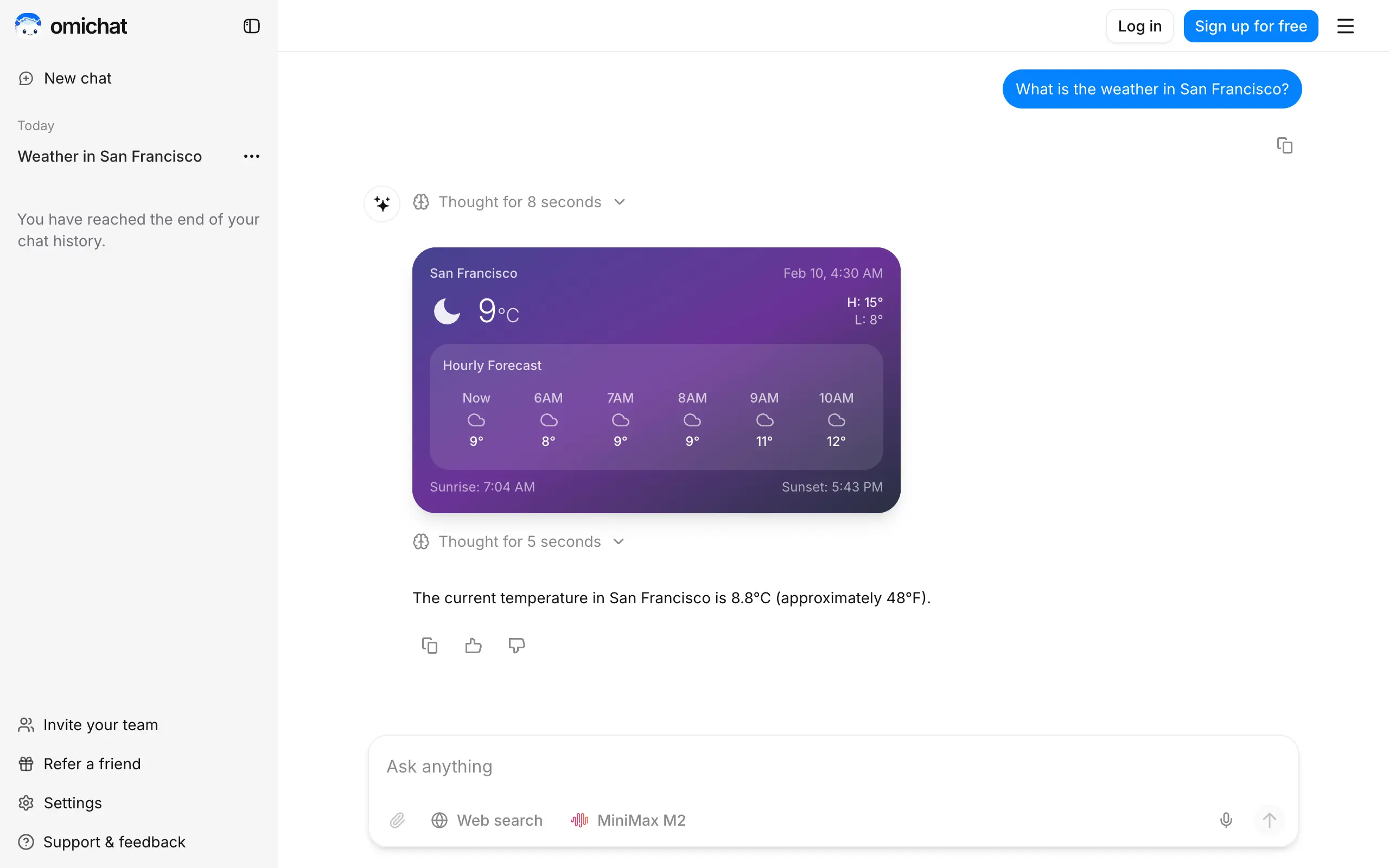
Omichat
Chat with 50+ AI models, including ChatGPT and Claude, in one place - switch models anytime without losing context 🤖
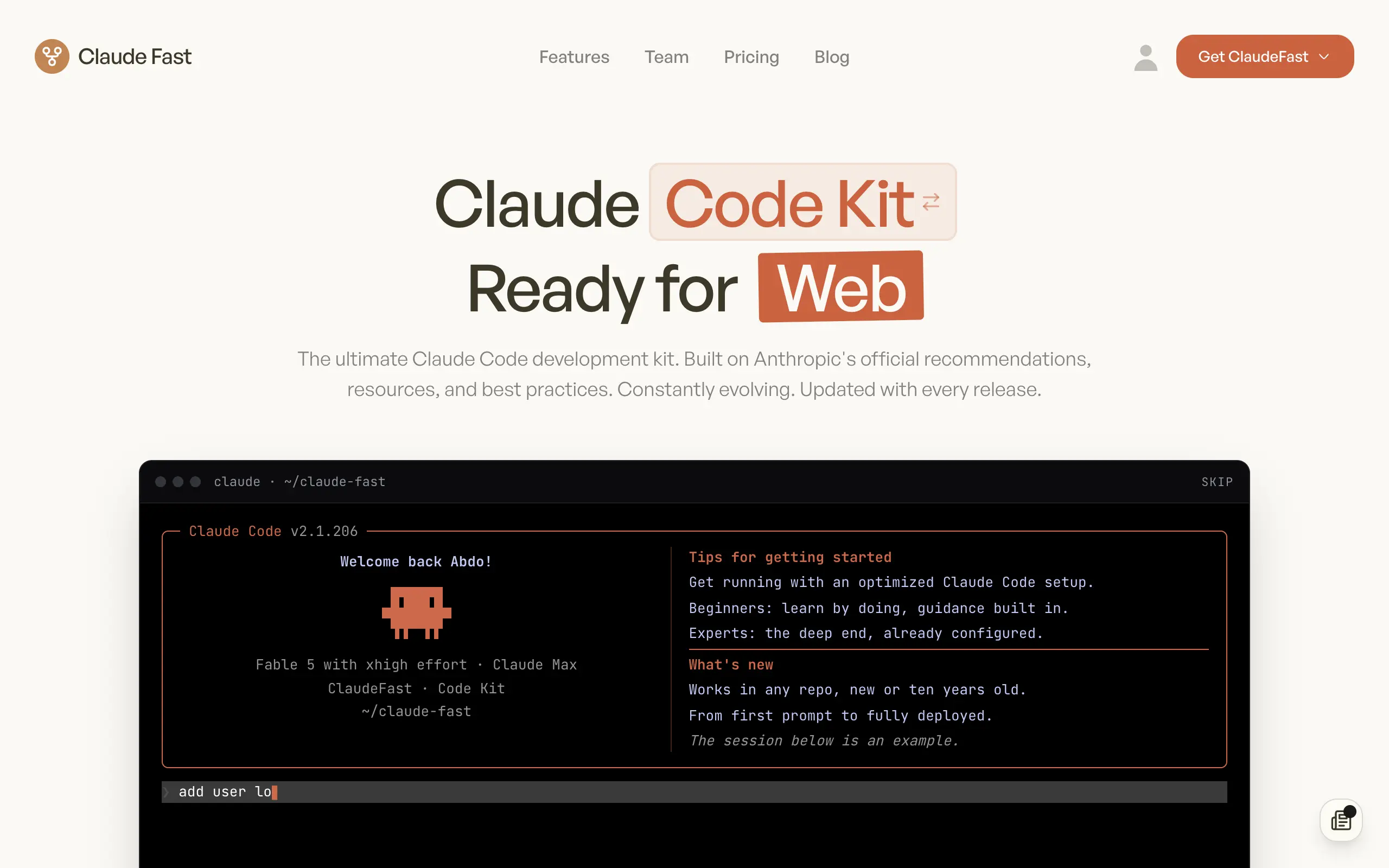
Claude Fast
Supercharge your Claude Code with 6x effective context window and specialized AI agents 🤖
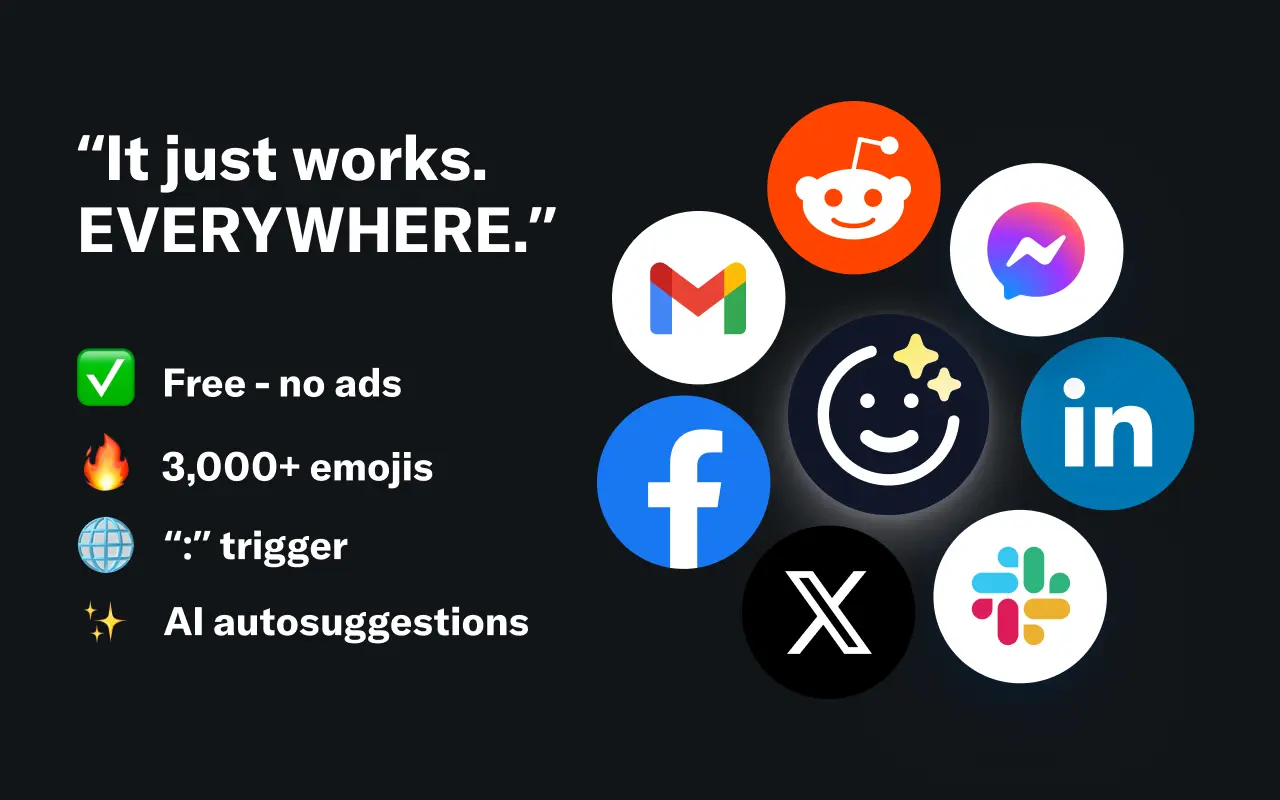
EmojAI
AI-powered emoji picker with smart, context-aware suggestions 🤖

Solohacker
Autonomous company launcher - AI agents work 24/7, escalate what matters, and you stay in control 🤖

BeRawi: Storytelling Coach
Practice storytelling daily with instant feedback to sound clearer, more engaging, and confident 🎤
Omichat
Chat with 50+ AI models, including ChatGPT and Claude, in one place - switch models anytime without losing context 🤖
Claude Fast
Supercharge your Claude Code with 6x effective context window and specialized AI agents 🤖
EmojAI
AI-powered emoji picker with smart, context-aware suggestions 🤖
Solohacker
Autonomous company launcher - AI agents work 24/7, escalate what matters, and you stay in control 🤖
BeRawi: Storytelling Coach
Practice storytelling daily with instant feedback to sound clearer, more engaging, and confident 🎤
Omichat
Chat with 50+ AI models, including ChatGPT and Claude, in one place - switch models anytime without losing context 🤖
Claude Fast
Supercharge your Claude Code with 6x effective context window and specialized AI agents 🤖
EmojAI
AI-powered emoji picker with smart, context-aware suggestions 🤖
Solohacker
Autonomous company launcher - AI agents work 24/7, escalate what matters, and you stay in control 🤖
BeRawi: Storytelling Coach
Practice storytelling daily with instant feedback to sound clearer, more engaging, and confident 🎤
Omichat
Chat with 50+ AI models, including ChatGPT and Claude, in one place - switch models anytime without losing context 🤖
Claude Fast
Supercharge your Claude Code with 6x effective context window and specialized AI agents 🤖
EmojAI
AI-powered emoji picker with smart, context-aware suggestions 🤖
Solohacker
Autonomous company launcher - AI agents work 24/7, escalate what matters, and you stay in control 🤖
BeRawi: Storytelling Coach
Practice storytelling daily with instant feedback to sound clearer, more engaging, and confident 🎤

Connect with like-minded people
Join our community to get feedback, support, and grow together with 1,000+ builders on board, let's ship it!
Join usShip your startup everywhere. In minutes.
Don't burn tokens on setup and start building features on day one.