ShipSpec
Help small suppliers meet each buyer’s packaging, labeling, and delivery rules, reducing rejected shipments, chargebacks, and costly rework.
Why ShipSpec addresses a costly supplier problem
A shipment can be physically complete and still fail a buyer’s requirements. A label may be in the wrong place, a carton may use an unapproved material, a delivery appointment may be missing, or a packing list may not match the purchase order. For a small supplier, correcting these problems can mean rework, delayed payment, chargebacks, rejected goods, and strained customer relationships.
The problem is that buyers often communicate requirements across several systems and formats: supplier portals, purchase orders, routing guides, spreadsheets, email threads, and PDF documents. The supplier has to turn those scattered instructions into consistent actions on the warehouse floor. That translation is difficult to maintain, especially when different buyers have different rules or when one buyer changes its requirements.
ShipSpec is a B2B SaaS concept for helping small suppliers meet each buyer’s packaging, labeling, and delivery rules. It would centralize buyer-specific requirements, convert them into practical shipment instructions, and help teams verify compliance before goods leave the facility.
The product’s core promise is straightforward: make the right shipment easier to prepare and the wrong shipment harder to send.
How ShipSpec could work
ShipSpec should be designed as an operational workflow tool, not merely a document library. Saving a routing guide is useful, but it does not guarantee that anyone follows it when a shipment is being packed. The product needs to connect requirements to specific orders, tasks, checks, and evidence.
A typical workflow might look like this:
- A supplier adds a buyer’s requirements from a document, portal export, or manual entry.
- ShipSpec turns those requirements into structured rules, such as carton limits, label placement, required documents, or appointment instructions.
- The supplier associates the rules with a buyer, facility, product, or order type.
- When a shipment is prepared, ShipSpec presents the relevant instructions as a checklist.
- A team member completes checks and records evidence, such as a label scan or a photo.
- ShipSpec flags missing information before dispatch and stores a shipment record for later reference.
The first version does not need to automate every step. It needs to reliably answer one important question: What must this supplier do for this buyer, on this shipment, before it leaves?
Target audience and ideal customers
ShipSpec’s initial audience should be narrow enough to support a focused product and broad enough to provide a viable market. A useful starting point is small and midsize suppliers that ship to multiple retail, wholesale, or enterprise buyers with distinct compliance requirements.
Primary customer profiles
- Small manufacturers: Teams that package finished goods and ship them to retailers, distributors, or large enterprise customers.
- Wholesale suppliers: Businesses that process frequent orders with different carton, labeling, and delivery expectations.
- Importers and distributors: Companies coordinating products across vendors, warehouses, and buyer-specific requirements.
- Contract packers: Service providers that prepare shipments on behalf of multiple brands or suppliers.
- Growing direct-to-retail brands: Businesses that have moved beyond simple parcel fulfillment and now need to meet formal retailer routing and packaging rules.
The best early customers are likely to have meaningful operational complexity but limited dedicated compliance staff. They may rely on a warehouse manager, customer service representative, or operations lead to interpret buyer instructions manually.
The people who use and buy ShipSpec
Several roles may interact with the product:
- Operations managers need a dependable process and fewer exceptions.
- Warehouse supervisors need instructions that are clear at the point of packing.
- Shipping coordinators need confidence that labels, documents, and appointments are correct.
- Owners and finance teams care about avoidable costs, delayed cash flow, and customer retention.
- Sales or account managers need to protect buyer relationships when requirements change or shipments are disputed.
The economic buyer may be an owner or operations leader, while the daily user is a shipping coordinator or warehouse employee. That distinction matters. A buyer may approve the subscription because of risk reduction, but adoption depends on whether the tool is quick and clear during a busy shift.
Early adopter signals
ShipSpec should prioritize businesses that show several of these characteristics:
- They ship to at least several buyers with different requirements.
- They have experienced rejected shipments, chargebacks, rework, or recurring compliance questions.
- Requirements live in documents, email, spreadsheets, or employee memory.
- New staff take a long time to learn buyer-specific procedures.
- Customers periodically update packaging, routing, or labeling rules.
- The supplier has a warehouse process that can be improved without a large ERP implementation.
A supplier with only one buyer and a simple parcel workflow may not feel enough pain to pay. A supplier with a large enterprise compliance department may already have a specialized platform. ShipSpec’s strongest initial fit is likely between those extremes.
Market opportunity and the gap ShipSpec can fill
Supplier compliance is a practical, recurring problem. It exists wherever a seller must meet another organization’s requirements to deliver goods successfully. The opportunity is not simply to digitize documents; it is to reduce the gap between a rule written in a guide and an action taken by a person preparing a shipment.
Many businesses already use systems for inventory, order management, warehouse management, shipping labels, or enterprise resource planning. Yet those systems may not make buyer-specific rules easy to maintain and apply. A warehouse platform can manage inventory movement, for example, without serving as a friendly repository for exceptions across dozens of buyer routing guides. A spreadsheet can record rules, but it may not connect them to a live shipment or provide a reliable audit trail.
That creates a potential product gap for a focused layer that:
- Organizes requirements by buyer and shipment context.
- Turns long documents into concise, operational instructions.
- Applies those instructions at the right point in the workflow.
- Keeps a record of who completed each check and when.
- Helps teams identify which requirements change most often.
ShipSpec should validate this gap with customer interviews rather than assume it exists in the same form across industries. A retailer supplier may struggle most with labeling and routing guides. A food or regulated-goods supplier may have additional documentation and traceability needs. A manufacturer serving industrial buyers may focus on packaging specifications and delivery appointments.
A practical way to validate demand
Before building a large platform, interview suppliers and ask about recent, specific incidents. Questions should encourage examples rather than opinions:
- “Tell me about the last shipment that was delayed, rejected, or corrected.”
- “How did your team find out what went wrong?”
- “Where do the buyer’s instructions live today?”
- “Who checks the shipment before it leaves?”
- “How often do requirements change?”
- “What is the actual process for updating your team?”
- “What would you need to see before paying for a tool like this?”
Request permission to review anonymized routing guides, packing instructions, or checklists. These artifacts can reveal how requirements are written and where ambiguity arises. They can also help the product team distinguish between rules that can be standardized and rules that require customer-specific interpretation.
Keep market sizing evidence-based. Rather than inventing an addressable market figure, define a target segment, estimate the number of businesses in that segment using credible business or industry sources, and test willingness to pay through pilots. If publishing market statistics, cite the original research organization, report title, publication date, and relevant methodology.
Core features for a useful ShipSpec product
ShipSpec should earn trust through accuracy, clarity, and ease of use. Feature development should follow the shipment workflow rather than a long list of speculative capabilities.
1. Buyer requirement profiles
Each buyer profile should contain the rules that apply to shipments for that customer. Requirements could include:
- Packaging materials and carton specifications.
- Label formats, placement, and required identifiers.
- Packing list or invoice requirements.
- Pallet configuration and shipment consolidation rules.
- Delivery appointments, carrier constraints, and routing instructions.
- Product-specific or order-specific exceptions.
- Revision date, source document, and internal owner.
Every rule should have a clear source and status. A user needs to know whether a requirement came from an official buyer document, a customer email, or an internal interpretation. That distinction helps prevent an unverified note from being treated as authoritative.
2. Document intake and structured extraction
The first version could accept PDFs, spreadsheets, and text-based documents. Users should be able to upload a file, identify its buyer, and review suggested requirements before publishing them to a team.
Language models and document extraction can reduce manual work, but the product should not silently convert uncertain instructions into operational rules. A safer process is:
- Extract candidate requirements.
- Show the supporting passage or page.
- Ask a knowledgeable user to confirm or edit the interpretation.
- Publish the approved rule with a revision history.
This human-review step is especially important when instructions are ambiguous or when a mistake could trigger financial penalties. ShipSpec should present AI as an assistant for finding and organizing information, not as an unquestionable authority.
3. Shipment-specific checklists
A checklist should be generated from the buyer profile and relevant order details. It should avoid showing irrelevant rules, since a long undifferentiated list encourages users to skip items.
For example, a checklist could include:
- Confirm carton count and dimensions.
- Apply the buyer-specific label to the required surface.
- Include the required packing document.
- Verify that the delivery appointment is recorded.
- Capture a photo of the completed pallet.
The product should allow teams to mark an item as complete, not applicable, or blocked. Any exception should have a reason and, where appropriate, an approval step.
4. Label and document validation
Over time, ShipSpec could help users catch common errors before dispatch. Depending on the customer’s workflow, validation might include barcode readability, required field presence, label dimensions, or agreement between order information and a shipping document.
The product should start with reliable checks that can be explained. If a field is missing, say which field is missing and where the user can find it. Avoid presenting a vague “compliance score” without explaining the evidence behind it.
Where barcode standards are relevant, ShipSpec could make it easier for customers to understand requirements and direct them to authoritative standards information, such as GS1’s barcode standards. The product should not imply that a basic scan replaces a buyer’s formal approval or a standards audit.
5. Evidence and audit history
Each shipment record should preserve useful evidence:
- Applicable buyer profile and rule version.
- Checklist completion timestamps.
- User or role responsible for each check.
- Uploaded photos or documents.
- Exceptions, comments, and approvals.
- Changes made to requirements over time.
A good audit trail helps teams answer “What did we know and do at the time?” It can also improve internal training by showing which instructions repeatedly cause confusion.
6. Alerts and change management
A buyer may revise a routing guide or introduce a new label requirement. ShipSpec should make changes visible and manageable rather than simply replacing an old document.
Useful controls could include:
- Notifications to affected roles.
- A summary of changed requirements.
- Effective dates and review deadlines.
- Confirmation that relevant staff have acknowledged the change.
- A comparison between current and previous versions.
Notifications should be configurable. If every update produces an urgent alert, users will learn to ignore them. ShipSpec should distinguish critical changes from routine document updates.
7. Search and operational reporting
Users need to find answers quickly. Search should support buyer names, order identifiers, requirement terms, and shipment status. Reporting can then highlight recurring failures, incomplete checks, outdated profiles, and exception patterns.
The goal is not to overwhelm a small supplier with analytics. Start with reports that support action: which buyer profiles have not been reviewed, which requirements are frequently marked blocked, and which shipment errors recur.
Recommended technology stack
ShipSpec’s technology choices should support fast iteration, secure document handling, and reliable workflows. A sensible stack for an early SaaS product could include:
- Frontend: React for a component-based interface, with a framework such as Next.js if server rendering, routing, and full-stack application features are useful.
- Styling: Tailwind CSS for consistent UI development and rapid iteration. The trade-off is that teams need conventions to keep utility-heavy markup maintainable.
- Database: PostgreSQL for relational data such as organizations, buyers, rules, shipments, users, and audit events. Its structured model suits relationships and transactional workflows.
- File storage: A managed object-storage service for uploaded guides, shipment photos, and evidence files. Store file metadata and access permissions in the application database, not in public URLs.
- Background jobs: A queue for document parsing, notifications, and other tasks that may take longer than a normal web request.
- Authentication: A proven identity provider or a well-maintained authentication library, with organization-level roles and secure account recovery.
- Payments: A billing provider such as Stripe can reduce the burden of subscription billing, though pricing, tax handling, and invoicing needs should be checked for the intended markets.
Data model and permissions
A practical first data model could include organizations, facilities, buyers, buyer profiles, requirements, source documents, orders or shipments, checklist items, evidence files, users, and audit events.
Multi-tenancy deserves attention from the beginning. Each customer’s data should be isolated by organization, and access should be checked on the server for every relevant operation. Hiding another organization’s data in the interface is not sufficient security.
Use role-based permissions where they add real value. For example, a warehouse user may complete checks, while an administrator can publish buyer requirements. Keep the initial role model simple enough that small teams can understand it.
Build versus buy trade-offs
ShipSpec should build its differentiation around the workflow and structured requirement model, not commodity infrastructure. It is usually more efficient to buy or use managed services for authentication, payments, email delivery, storage, and observability.
Document extraction is a more nuanced decision. Existing OCR and language-model services can shorten development time, but they raise questions about cost, privacy, accuracy, and data retention. Before sending customer documents to a third-party service, disclose the processing clearly, review the provider’s terms, and offer appropriate controls. Store model outputs alongside source references and human review decisions.
Competitive advantage and positioning
ShipSpec will compete indirectly with spreadsheets, shared drives, email, ERP systems, warehouse software, shipping platforms, and broad supply-chain compliance tools. Its positioning should acknowledge that customers already have systems and explain how ShipSpec complements them.
| Approach | Buyer-specific rules | Shipment checklist | Version history | Accessible to small teams | Primary limitation |
|---|---|---|---|---|---|
| Spreadsheets and shared folders | Possible | Manual | Often inconsistent | Usually | Rules are separated from execution |
| Email and paper instructions | Possible | Manual | Difficult to search | Usually | Knowledge depends on individuals |
| ERP or warehouse systems | Varies | Sometimes | Varies | Can be complex | Buyer requirements may be only one part of a broad system |
| ShipSpec concept | Central focus | Core workflow | Core workflow | Designed for accessibility | Must prove accuracy and become part of daily operations |
The table describes a positioning hypothesis, not a claim that every competing product lacks these capabilities. ShipSpec should evaluate alternatives through customer research and product trials.
ShipSpec’s potential USP
The strongest unique selling proposition is buyer-specific shipment readiness for smaller suppliers, without requiring a full-scale enterprise implementation.
That positioning has several parts:
- Contextual instructions: Show the rules that apply to a particular buyer and shipment.
- Operational follow-through: Convert stored requirements into checks that happen before dispatch.
- Clear provenance: Show where each rule came from and when it was last reviewed.
- Practical adoption: Make the workflow understandable to warehouse and shipping teams.
- Incremental integration: Start with document and checklist workflows, then connect to other systems as demand is validated.
The product should avoid promising “zero chargebacks” or guaranteed compliance. Buyer rules can be unclear, change without notice, or require judgment. A trustworthy promise is that ShipSpec helps teams make requirements visible, follow a repeatable process, and preserve evidence.
Monetization strategy options
ShipSpec’s pricing should reflect the value of the workflow while remaining understandable to smaller suppliers. Pricing can be tested through interviews and paid pilots rather than chosen solely from competitor assumptions.
Per-organization subscription
A tiered subscription based on the number of users, facilities, or active buyer profiles may be easy for customers to understand. It offers predictable revenue but requires careful selection of the pricing metric. Charging per user may discourage warehouse adoption, while charging only by buyer could underprice highly complex accounts.
Usage-based pricing
A plan based on shipment volume, processed documents, or active shipments can align price with usage. However, variable billing can feel unpredictable to small businesses. If this model is tested, include clear limits, usage visibility, and alerts before overage charges.
Tiered plans
A plausible structure might include:
- Starter: A limited number of buyer profiles, manual checklists, and basic document storage.
- Growth: More users and buyers, version history, evidence capture, and operational reporting.
- Business: Multiple facilities, advanced permissions, integrations, and priority support.
These are packaging hypotheses, not established pricing. The correct boundaries should emerge from customer usage and willingness-to-pay research.
Paid onboarding and implementation
Some suppliers may need help turning existing buyer documents into structured requirements. ShipSpec could offer paid onboarding, document setup, or workflow configuration. This can generate early revenue and expose recurring implementation needs.
The risk is becoming a consulting business that cannot scale. Standardize onboarding, identify repeatable document patterns, and use service work to inform product improvements rather than permanently replacing self-service product capabilities.
ROI-based sales conversation
A practical sales discussion can compare subscription cost with current operational exposure. Ask customers to estimate the time spent locating rules, correcting shipments, training staff, and handling disputes. Do not claim savings without customer evidence. Instead, establish a baseline during a pilot and measure whether the new workflow improves it.
Risks and how to mitigate them
Incorrect or outdated requirements
A wrong rule can create the same kind of shipment problem the product is meant to prevent.
Mitigation: Preserve the source document, show revision dates, require human approval before publishing extracted rules, and provide a clear owner for each buyer profile.
Ambiguous buyer instructions
Some routing guides are incomplete or inconsistent. Software cannot resolve every ambiguity on its own.
Mitigation: Let users flag uncertainty, record the interpretation and its approver, and make unresolved rules visible before a shipment is finalized. Encourage customers to confirm unclear requirements with the buyer.
Poor frontline adoption
A tool that is useful to managers but cumbersome on the warehouse floor may be ignored.
Mitigation: Test on real devices and shifts. Use plain-language checklists, minimize typing, support quick evidence capture, and make the most relevant instruction visible at the moment of action.
Integration complexity
Customers may request integrations with ERP, warehouse, order, and shipping systems. Each integration can introduce maintenance and support costs.
Mitigation: Start with a small number of integrations selected through customer evidence. Use a stable API and webhooks where appropriate, but ensure the core product remains useful for teams that begin with uploads and manual workflows.
Data security and confidentiality
Buyer guides, shipment records, and operational documents may be commercially sensitive.
Mitigation: Apply least-privilege access, encryption in transit and at rest, secure file handling, backups, audit logging, and clear data retention policies. Conduct a security review before handling sensitive customer records at scale. Avoid making compliance certifications or guarantees until they are actually achieved.
AI extraction errors
Automated extraction may miss exceptions, confuse a recommendation with a mandatory rule, or fail on scanned documents.
Mitigation: Show confidence and source context, require approval for consequential rules, evaluate performance on representative documents, and provide a manual editing path. Do not allow an extraction model to silently overwrite approved requirements.
Long sales cycles
Larger suppliers may require procurement, security review, and stakeholder approval.
Mitigation: Begin with owner-led or operations-led small businesses where a pilot can be approved quickly. Keep onboarding lightweight and document security practices clearly so that future procurement reviews are easier.
Unclear return on investment
If users cannot connect ShipSpec to fewer errors, less rework, or faster training, they may not renew.
Mitigation: Measure baseline conditions during onboarding. Track leading indicators such as checklist completion, profile review status, and recurring exceptions, then compare them with customer-reported outcomes. Be honest about causality and avoid presenting activity metrics as proof of financial savings.
A practical MVP scope
A focused minimum viable product should validate whether structured buyer requirements and shipment-level checklists improve daily execution. It does not need a full warehouse management system, a broad integration marketplace, or autonomous compliance decisions.
A strong MVP could include:
- Organization accounts and basic roles.
- Buyer profiles with manually entered requirements.
- Uploads for source documents.
- Requirement owner, source, and review date.
- Shipment records created manually or through a simple import.
- Buyer-specific checklists.
- Completion status, notes, and photo or document evidence.
- Basic version history and audit events.
- Search across buyers and shipments.
- A simple report for incomplete checks and outdated profiles.
Do not begin by supporting every industry and document type. Choose one customer segment and one repeatable workflow. For example, a supplier shipping packaged products to retail buyers may be a better initial focus than a product that attempts to handle every form of supplier compliance.
Actionable implementation steps
Interview suppliers before designing the full product
Speak with operators, owners, and warehouse users in one chosen segment. Collect real examples of buyer instructions and recent shipment issues. Document the current process, the people involved, and the consequences of failure.
Select one high-value workflow
Choose a narrow workflow such as preparing outbound retail shipments for several buyers. Define what information is required, who enters it, who verifies it, and what evidence is useful.
Test the concept manually
Before building complex software, create buyer profiles and shipment checklists using a lightweight prototype or concierge process. Observe whether users understand the instructions and complete checks consistently.
Define measurable pilot outcomes
Agree on a baseline with pilot customers. Possible measures include time spent locating instructions, number of incomplete checks, frequency of repeated exceptions, and time required to train a new shipping employee. Treat these as customer-specific measures, not guaranteed product outcomes.
Build the secure MVP
Implement organization-level data isolation, buyer profiles, source documents, checklists, evidence capture, and a reliable audit trail. Prioritize usability on the devices employees actually use.
Run paid or committed pilots
A customer who invests time and money provides stronger validation than someone who only expresses interest. Support a small number of pilot accounts closely, record friction points, and separate one-off requests from repeatable needs.
Expand only after repeatability is clear
Add document extraction, integrations, advanced reporting, and additional industries when pilot evidence shows which capability removes recurring friction. Review security, support load, and unit economics as the customer base grows.
The strategic case for building ShipSpec
ShipSpec targets an operational blind spot between buyer requirements and supplier execution. That is a compelling SaaS opportunity if customer discovery confirms that existing tools leave small suppliers with a painful, recurring manual process.
The product’s advantage will not come from storing more documents than a shared drive. It will come from reliably connecting a buyer’s current requirements to the shipment being prepared, making the required actions easy to follow, and preserving evidence when questions arise.
The most important product principles are:
- Make requirements actionable, not merely searchable.
- Show the source and revision behind every important rule.
- Keep human review in the loop for ambiguous or high-impact instructions.
- Design for the warehouse user as carefully as for the manager who pays.
- Measure customer outcomes before making performance claims.
For founders evaluating how to launch a SaaS product efficiently, TurboStarter can help accelerate the foundation so more effort goes toward validating ShipSpec’s distinctive workflow and customer value.
Final takeaway
ShipSpec can become a practical compliance and shipment-readiness layer for suppliers that cannot afford to let buyer-specific requirements live in scattered files and employee memory. The strongest path is to start with a defined supplier segment, prove that shipment-specific checklists and requirement history improve execution, and build integrations only when customers demonstrate a repeated need.
A disciplined launch should answer three questions with evidence: Do suppliers experience this problem often enough to pay? Will warehouse teams use the workflow under real operating conditions? Can ShipSpec maintain accurate, explainable requirements as buyer rules change? If the answer to all three is yes, the idea has a credible foundation for a focused B2B SaaS business.
More 🏢 B2B Application SaaS ideas
Discover more innovative b2b application SaaS ideas that are trending in 2026. Each idea is AI-generated with market validation and growth potential to help you find your next profitable venture faster than competitors.
Your competitors are building with TurboStarter
Below are some of the SaaS ideas that have been generated and built with our starter kit.

Statiko
Monitor any Telegram channel in real time - track posts, edits, deletions, and growth with AI recaps 📡

Shibui
AI website builder - describe your business, pick a niche template, edit by chatting, and publish instantly ✨

Pro Service
Find verified home service professionals, compare quotes, and pay securely through escrow - built for Brazilians across the US 🏠

RankGrow
Fix your SEO with AI agents - connect Search Console, get prioritized tasks, and grow organic traffic 📈
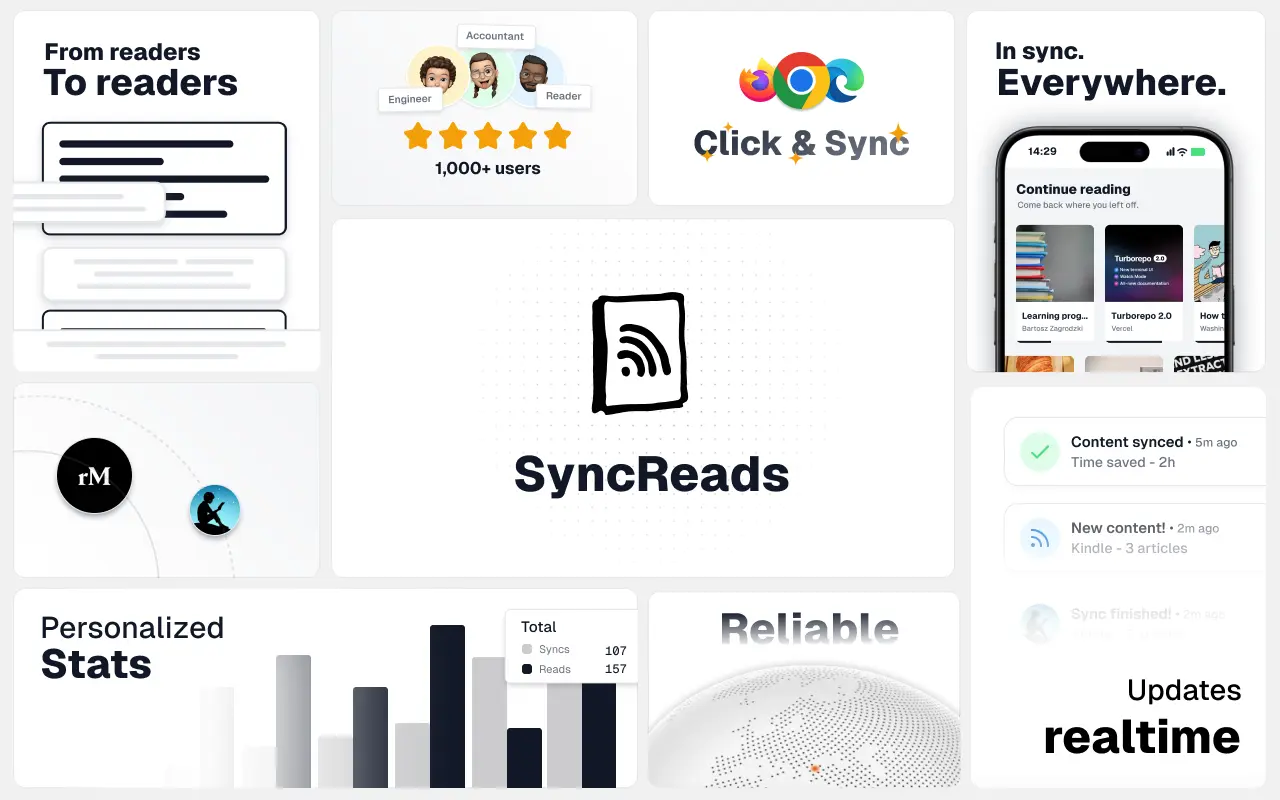
SyncReads
Sync your favorite content for distraction-free reading, save time and replace multiple apps. Anytime, anywhere 🔄

Socialcrawl
Get clean, structured data from 21 platforms like TikTok, Instagram, and YouTube with a single request 📊
Statiko
Monitor any Telegram channel in real time - track posts, edits, deletions, and growth with AI recaps 📡
Shibui
AI website builder - describe your business, pick a niche template, edit by chatting, and publish instantly ✨
Pro Service
Find verified home service professionals, compare quotes, and pay securely through escrow - built for Brazilians across the US 🏠
RankGrow
Fix your SEO with AI agents - connect Search Console, get prioritized tasks, and grow organic traffic 📈
SyncReads
Sync your favorite content for distraction-free reading, save time and replace multiple apps. Anytime, anywhere 🔄
Socialcrawl
Get clean, structured data from 21 platforms like TikTok, Instagram, and YouTube with a single request 📊

Dotallio
Personalized AI apps that automate research, data extraction, and content creation without code 🤖

Talk to Santa
Enjoy a magical live video chat or receive a unique AI-generated video greeting from Santa Claus 🎅

pozywka.pl
Scalable blog for food journalist, focused on performance and user experience 🌭
zagrodzki.me
Personal blog and portfolio of Bart Zagrodzki, where he shares his knowledge and work 💼

TurboStarter
Ship your startup everywhere. In minutes.
HTML to Markdown
Convert HTML to Markdown with ease, directly in your browser 📄
Dotallio
Personalized AI apps that automate research, data extraction, and content creation without code 🤖
Talk to Santa
Enjoy a magical live video chat or receive a unique AI-generated video greeting from Santa Claus 🎅
pozywka.pl
Scalable blog for food journalist, focused on performance and user experience 🌭
zagrodzki.me
Personal blog and portfolio of Bart Zagrodzki, where he shares his knowledge and work 💼
TurboStarter
Ship your startup everywhere. In minutes.
HTML to Markdown
Convert HTML to Markdown with ease, directly in your browser 📄
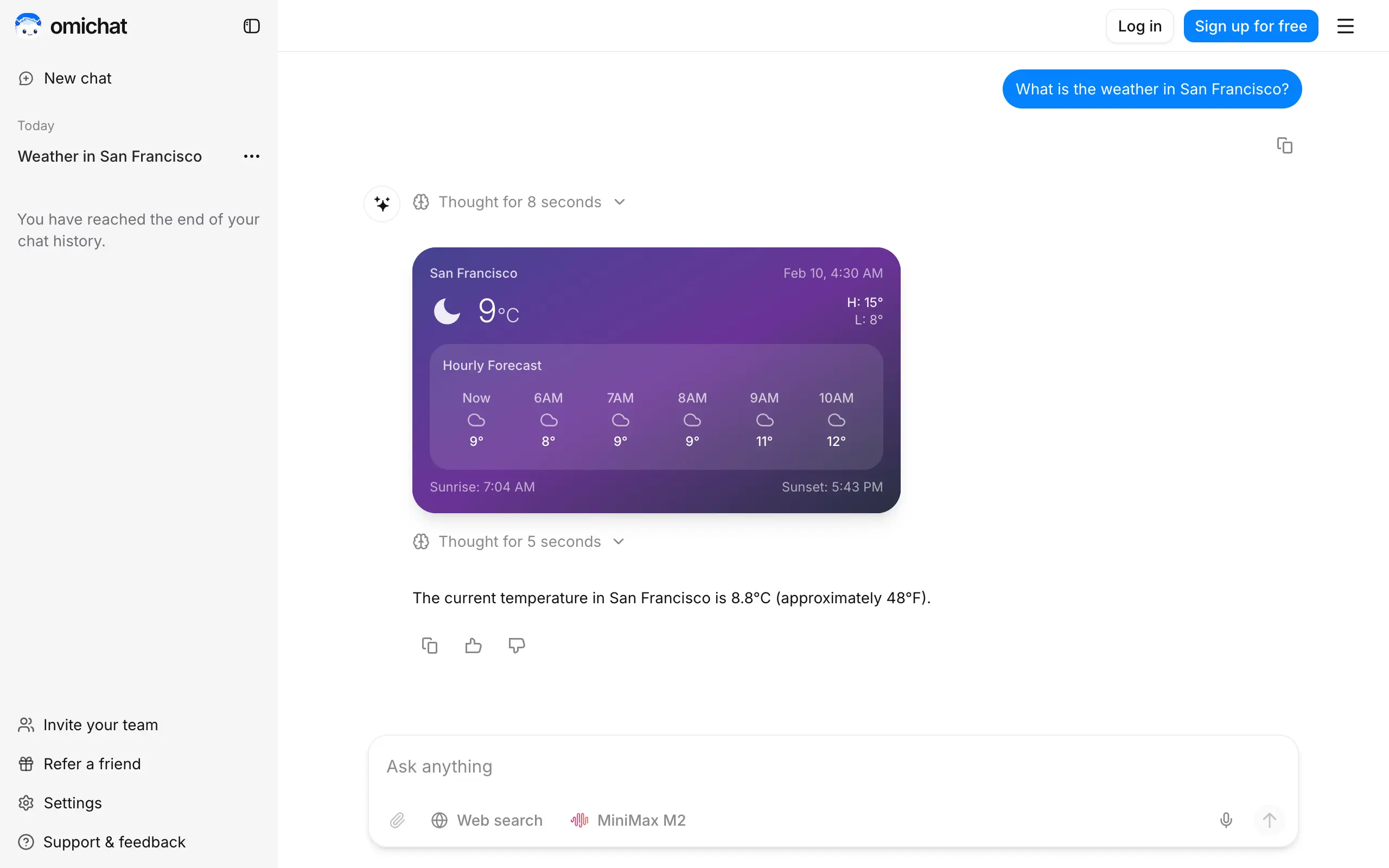
Omichat
Chat with 50+ AI models, including ChatGPT and Claude, in one place - switch models anytime without losing context 🤖
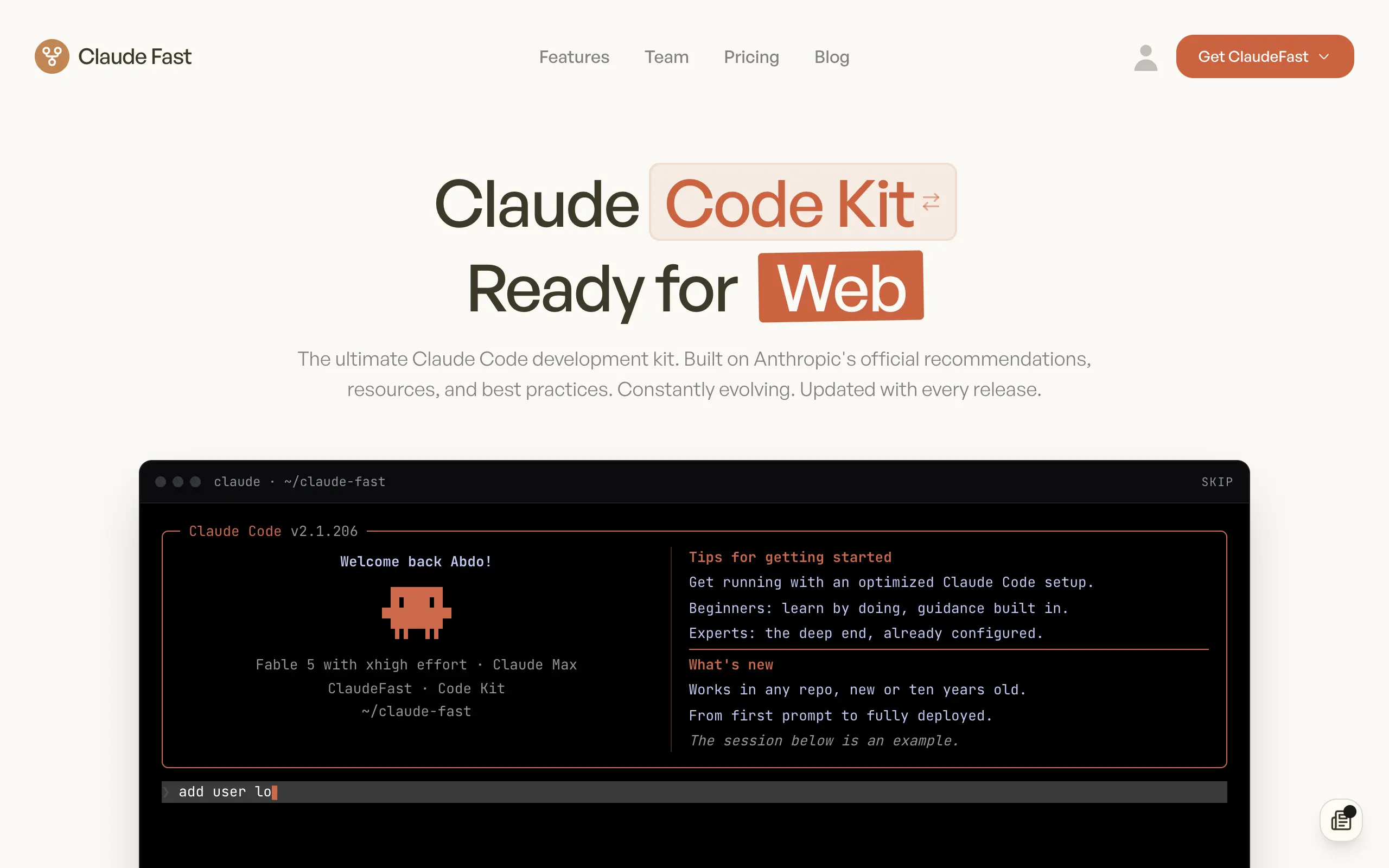
Claude Fast
Supercharge your Claude Code with 6x effective context window and specialized AI agents 🤖

EmojAI
AI-powered emoji picker with smart, context-aware suggestions 🤖

Solohacker
Autonomous company launcher - AI agents work 24/7, escalate what matters, and you stay in control 🤖

BeRawi: Storytelling Coach
Practice storytelling daily with instant feedback to sound clearer, more engaging, and confident 🎤
Omichat
Chat with 50+ AI models, including ChatGPT and Claude, in one place - switch models anytime without losing context 🤖
Claude Fast
Supercharge your Claude Code with 6x effective context window and specialized AI agents 🤖
EmojAI
AI-powered emoji picker with smart, context-aware suggestions 🤖
Solohacker
Autonomous company launcher - AI agents work 24/7, escalate what matters, and you stay in control 🤖
BeRawi: Storytelling Coach
Practice storytelling daily with instant feedback to sound clearer, more engaging, and confident 🎤

Connect with like-minded people
Join our community to get feedback, support, and grow together with 1,000+ builders on board, let's ship it!
Join usShip your startup everywhere. In minutes.
Don't burn tokens on setup and start building features on day one.