Tallybarn
Calculates feed, bedding, and vet cost per head for independent goat dairy farms selling cheese at markets. Owners get accurate per-wheel margins instead of the rough guesses they use now.
Tallybarn is a cost-tracking SaaS for independent goat dairy farms that sell cheese at markets. It turns feed, bedding and vet spend into a cost per head, then into a true margin per wheel of cheese. In 2026 it has potential because input costs are volatile, farmstead cheesemakers are pricing by gut feel, and cheap vertical software is finally easy to build and ship.
Key takeaways
- Target customer: farmstead goat dairies with roughly 10 to 150 milking does that make and sell their own cheese at farmers' markets, on-farm shops and to a few restaurants.
- Pricing angle: a flat monthly subscription in the range of $19 to $49, framed against one mispriced wheel per week.
- Biggest risk: data entry fatigue. If owners must log everything by hand, they stop after three weeks.
- Time to MVP: about 3 to 5 weeks for a solo founder starting from a TurboStarter codebase.
What problem does goat dairy cost tracking solve?
Goat dairy cost tracking solves one question: what did this wheel of cheese actually cost me to make, and what did I earn on it? Most small producers cannot answer that with confidence. They know what they paid for hay and what they charge at the market, but nothing reliable in between.
Who is Tallybarn for?
The ideal customer is a farmstead goat dairy owner-operator with a small herd, a licensed make room, and a weekly market schedule. They typically do the milking, the cheesemaking and the selling themselves, often with one part-time helper. Revenue is real but margins are thin, and a single bad feed season can erase a year of profit.
Secondary segments exist, such as small sheep dairies or creameries that buy in milk. Start with goat dairies only. A narrow customer makes your onboarding, language and templates much sharper.
What do they do today, and why does it fail?
The common workaround is a mix of a notebook, a spreadsheet someone built three years ago, and a rule of thumb like "charge about double what the milk cost." Accounting tools such as QuickBooks track money spent by category, but they do not know about animals, lactation, or cheese yield.
This fails in specific ways:
- Costs are pooled, not allocated. Feed for the whole herd is one line item, so nobody knows the cost per doe, per liter or per wheel.
- Yield changes by season. Milk fat and protein shift through lactation, so liters per kilo of cheese is not constant.
- Dry does and kids cost money too. Animals not currently milking still eat, and that cost has to land on someone's cheese.
- Prices lag costs. Owners raise prices once a year, if at all, while hay and grain prices move several times.
Why is now a good time to build farm cost software?
The gap is a tool that sits between a generic accounting package and heavy herd-management software. Incumbents in the broader dairy world, such as herd management platforms built for large cattle operations, are designed for scale, milking parlors and sensors. A 40-doe farm selling at a Saturday market is not their customer.
Several trends make 2026 a reasonable moment, assuming you treat them as tailwinds and not guarantees:
- Input cost volatility. Feed, bedding and energy costs have been unpredictable enough that owners distrust last year's prices.
- Direct-to-consumer food. Farmers' markets, farm shops and subscription boxes keep small producers relevant, and they set their own prices.
- Cheaper software building. Starter kits and AI-assisted development let one person ship a credible vertical product that would once have needed a team.
- Better input methods. Photo capture of receipts and voice notes make low-friction logging realistic, which was weak a few years ago.
The honest caveat: this is a small market. You are building a focused, profitable niche business, not a venture-scale company. That is a fine outcome if you plan for it.
What should the Tallybarn MVP include?
Build the shortest path to the aha moment: the owner enters a few weeks of costs and sees, for the first time, a margin per wheel of each cheese they sell. Everything else is optional until that moment works.
Herd and cost allocation
Log feed, bedding and vet costs against the herd, then split them across milking, dry and young animals with sensible defaults.
Batch and yield tracking
Record milk used and wheels produced per batch so each cheese gets a real cost, including a simple aging loss estimate.
Per-wheel margin view
Show cost, selling price and margin for every cheese, with a suggested price for a target margin.
Fast receipt and cost capture
Add expenses by photo, voice note or recurring entries so logging takes under a minute a week.
What should you cut from version one?
Cut anything that makes this look like full farm management. That means no breeding calendars, no pedigree records, no payroll, no inventory sync with market point-of-sale systems and no mobile offline mode on day one.
Also skip full accounting integrations at first. A CSV import of expenses from a bank export is enough to prove value, and you can add QuickBooks or Xero later if customers ask.
What is the aha moment, exactly?
It is a single screen. The owner sees their best-selling chèvre at a 38% margin and their aged tomme at 9%, and realizes they have been subsidizing one with the other. Design onboarding so users reach that screen within 20 minutes, even with estimated numbers.
How is Tallybarn different from spreadsheets and farm software?
Tallybarn's unique selling point is cost per wheel for small goat dairies, with allocation logic that understands lactation, dry animals and cheese yield. It is opinionated where spreadsheets are blank and light where herd software is heavy.
| Option | Per-wheel margin | Understands dairy animals | Setup effort | Fit for 40-doe farm |
|---|---|---|---|---|
| Tallybarn | ✅ | ✅ | Low | ✅ |
| Spreadsheet | Manual | ❌ | High | Depends |
| General accounting software | ❌ | ❌ | Medium | Partial |
| Large dairy herd software | Rarely | ✅ | High | ❌ |
| Rule of thumb pricing | ❌ | ❌ | None | Risky |
The main competitor is not a product. It is the habit of guessing. Your messaging should respect that habit, since these owners are good at their craft and are not asking to be taught cheesemaking.
How would Tallybarn make money?
Charge a simple subscription, because the buyer is a small business owner who thinks in monthly bills. Avoid per-animal pricing at first, as it punishes the farms you want and complicates the pitch.
Pricing options
- Flat monthly plan: $19 to $29 per month for one farm. Easy to explain and easy to approve.
- Two tiers: a basic plan for cost tracking and a higher plan at around $39 to $49 with multiple cheeses, exports and scenario pricing.
- Annual plan with a discount: farm cash flow is seasonal, so offering a plan billed ahead of winter, or after peak season, can improve retention and cash.
As an assumption to test: if you charge $24 per month and convert 10% of trial users, you need roughly 400 trials to reach 40 paying farms, about $960 in monthly revenue. That is modest, so keep your costs low and your support personal.
Which growth channel works first?
Start with small-producer communities and cheesemaking education. Think state or regional dairy goat associations, farmstead cheesemaker guilds, extension-style workshops and the Facebook and forum groups where these owners already trade advice. Offer a free margin worksheet as a lead magnet, then invite users into the app.
How do you validate this idea in two weeks?
Validate before writing serious code. The goal is to learn whether owners will hand over real numbers and pay to see the answer.
Interview eight to ten goat dairy owners
Ask how they set prices, what they track today and when they last changed a price. Listen for emotion around costs, as that signals urgency.
Run a manual margin report for three farms
Collect their numbers and build the per-wheel analysis in a spreadsheet yourself. If they react to the output, you have found the aha moment.
Publish a one-page site with a waitlist
State one promise, such as "Know what every wheel really costs," and add a short signup form. Share it in two or three producer communities.
Ask for a pre-sale
Offer a founding-member price, for example a discounted first year, to the farms from your manual reports. Even three to five commitments are a stronger signal than a hundred emails.
What tech stack should you use to build Tallybarn?
Use a conventional web stack with a mobile-friendly interface. The product is mostly forms, calculations and reports, so reliability and speed of iteration matter more than novelty. TurboStarter covers the undifferentiated parts: a monorepo for web and mobile, authentication, billing, database, emails, file storage, background tasks, an admin panel and analytics.
That lets you spend your time on the allocation engine and the margin screen, which are the only parts customers will pay for.
What does TurboStarter handle for you?
- Accounts and access: authentication for owners, plus invites for a helper or bookkeeper.
- Subscriptions: billing for monthly and annual plans with trials.
- Data: a typed database layer for herds, expenses and batches.
- Receipts: storage for receipt photos.
Later, the same repo supports a mobile app, which is useful when owners want to log a feed purchase from the barn.
Which database and data approach fits?
Pick Postgres if you want multi-farm accounts, reporting queries and a managed host. It is the safer default for a subscription product, and it fits the relational shape of this data.
SQLite is simple and cheap for a prototype, but you will likely outgrow it once you add background jobs, concurrent users and backups. Choose it only for a throwaway validation build.
What does the core data model look like?
Keep the model small. The key idea is that costs are allocated to batches through a simple, explainable rule.
create table expense (
  id uuid primary key,
  farm_id uuid not null,
  category text not null, -- feed, bedding, vet
  amount_cents integer not null,
  incurred_on date not null
);

create table batch (
  id uuid primary key,
  farm_id uuid not null,
  cheese_id uuid not null,
  milk_liters numeric not null,
  wheels integer not null,
  made_on date not null
);
Cost per wheel is then the allocated expense share for the period, divided by wheels produced, plus labor and packaging inputs you let the owner set. Show the formula on screen so the owner can trust and adjust it.
Where does AI help, and where does it not?
AI is useful for reading receipts and turning a voice note into an expense. It should not decide the margin math. Keep calculations deterministic, and use the AI tooling only for capture and for plain-language summaries.
What could make Tallybarn fail?
Biggest risk: owners stop logging
If data entry feels like a second job, accuracy collapses and so does trust in the margin numbers. Mitigate this with weekly, not daily, logging, receipt photos, recurring expenses and a reminder email that shows one number and one tap to confirm.
The other real risks:
- Small market ceiling. There are only so many farmstead goat dairies. Mitigate by keeping costs low, charging fairly and adding adjacent segments, such as sheep and cow micro-dairies, once the goat product is stable.
- Low willingness to pay. Owners watch every dollar. Tie the price to a concrete outcome, such as correcting a single underpriced cheese, and let them see the result in the free trial.
- Allocation logic feels wrong. If the cost split does not match how they think about the herd, they will reject it. Let users override defaults and explain every number.
- Seasonality of attention. Kidding and peak market season leave little time for software. Time your onboarding for the slower months where possible.
What are the next steps to launch in 30 days?
Week 1: talk to owners
Complete the interviews and the manual margin reports, and write down the exact cost categories they use.
Week 2: set up the base and the data model
Start from TurboStarter, configure authentication and billing, and implement herds, expenses and batches.
Week 3: build the margin screen
Ship the allocation engine, the per-wheel view and CSV import. Test with the three farms from your manual reports.
Week 4: launch to a small group
Onboard founding members, set up the trial and the reminder emails, and book a weekly call to watch them use it.
Pick one narrow promise, finish the margin screen and put it in front of real farmers quickly. The faster the first owner sees an honest number, the faster you learn if this goat dairy cost tracking tool deserves to exist.
FAQ
Interview eight to ten owners, then build their margin report by hand in a spreadsheet. If they ask to keep using it or agree to a founding-member price, you have real signal. Waitlist signups alone are a weak indicator in this market.
A flat $19 to $49 per month is a reasonable range to test, assuming the tool helps correct pricing on at least one product. Anchor the price against a single wheel sold too cheaply, not against other software.
Direct competitors are rare at this size. You will mostly compete with spreadsheets, general accounting software and large dairy herd management platforms that are too heavy for a small farmstead. Your real rival is habit.
A typed full-stack web app with Postgres, subscription billing and a mobile-friendly interface is enough. Using a starter kit such as TurboStarter saves the weeks otherwise spent on accounts, payments and emails.
A solo founder can typically ship a usable MVP in three to five weeks of focused work. Hosting, email and a database cost little at the start, so your main expense is your time and the customer interviews.
More 🏢 B2B Application SaaS ideas
Discover more innovative b2b application SaaS ideas that are trending in 2026. Each idea is AI-generated with market validation and growth potential to help you find your next profitable venture faster than competitors.
Your competitors are building with TurboStarter
Below are some of the SaaS ideas that have been generated and built with our starter kit.

Monitor any Telegram channel in real time - track posts, edits, deletions, and growth with AI recaps 📡

AI website builder - describe your business, pick a niche template, edit by chatting, and publish instantly ✨

Find verified home service professionals, compare quotes, and pay securely through escrow - built for Brazilians across the US 🏠
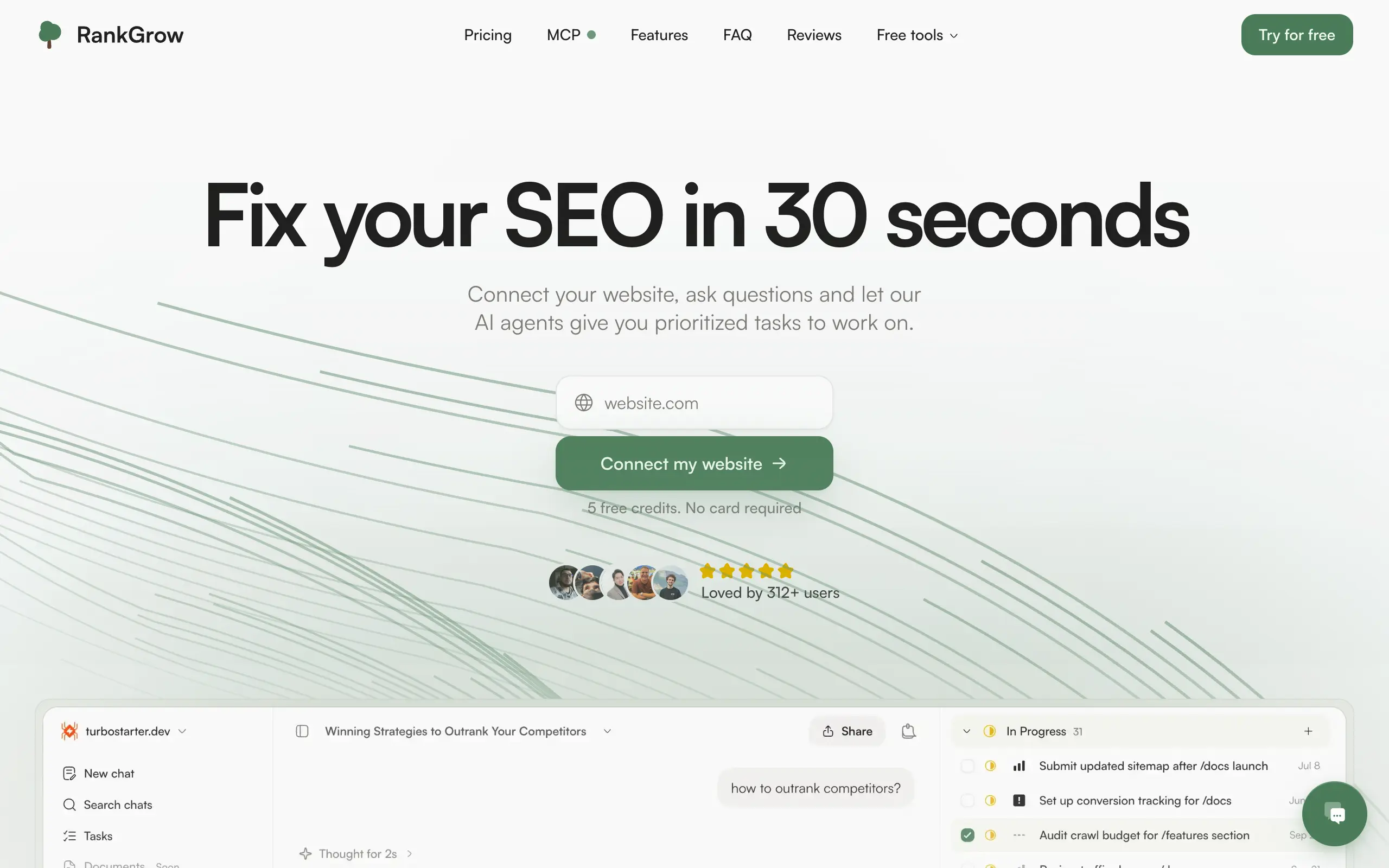
Fix your SEO with AI agents - connect Search Console, get prioritized tasks, and grow organic traffic 📈

Sync your favorite content for distraction-free reading, save time and replace multiple apps. Anytime, anywhere 🔄

Get clean, structured data from 21 platforms like TikTok, Instagram, and YouTube with a single request 📊
Monitor any Telegram channel in real time - track posts, edits, deletions, and growth with AI recaps 📡
AI website builder - describe your business, pick a niche template, edit by chatting, and publish instantly ✨
Find verified home service professionals, compare quotes, and pay securely through escrow - built for Brazilians across the US 🏠
Fix your SEO with AI agents - connect Search Console, get prioritized tasks, and grow organic traffic 📈
Sync your favorite content for distraction-free reading, save time and replace multiple apps. Anytime, anywhere 🔄
Get clean, structured data from 21 platforms like TikTok, Instagram, and YouTube with a single request 📊

Personalized AI apps that automate research, data extraction, and content creation without code 🤖

Enjoy a magical live video chat or receive a unique AI-generated video greeting from Santa Claus 🎅

Scalable blog for food journalist, focused on performance and user experience 🌭

Personal blog and portfolio of Bart Zagrodzki, where he shares his knowledge and work 💼

Ship your startup everywhere. In minutes.

Convert HTML to Markdown with ease, directly in your browser 📄
Personalized AI apps that automate research, data extraction, and content creation without code 🤖
Enjoy a magical live video chat or receive a unique AI-generated video greeting from Santa Claus 🎅
Scalable blog for food journalist, focused on performance and user experience 🌭
Personal blog and portfolio of Bart Zagrodzki, where he shares his knowledge and work 💼
Ship your startup everywhere. In minutes.
Convert HTML to Markdown with ease, directly in your browser 📄

Chat with 50+ AI models, including ChatGPT and Claude, in one place - switch models anytime without losing context 🤖

Supercharge your Claude Code with 6x effective context window and specialized AI agents 🤖

AI-powered emoji picker with smart, context-aware suggestions 🤖

Autonomous company launcher - AI agents work 24/7, escalate what matters, and you stay in control 🤖

Practice storytelling daily with instant feedback to sound clearer, more engaging, and confident 🎤
Chat with 50+ AI models, including ChatGPT and Claude, in one place - switch models anytime without losing context 🤖
Supercharge your Claude Code with 6x effective context window and specialized AI agents 🤖
AI-powered emoji picker with smart, context-aware suggestions 🤖
Autonomous company launcher - AI agents work 24/7, escalate what matters, and you stay in control 🤖
Practice storytelling daily with instant feedback to sound clearer, more engaging, and confident 🎤

Connect with like-minded people
Join our community to get feedback, support, and grow together with 1,000+ builders on board, let's ship it!
Join usShip your startup everywhere. In minutes.
Don't burn tokens on setup and start building features on day one.