ThesisLoop
A decision journal for growth teams that links marketing bets to evidence, outcomes, and reusable lessons instead of forgotten docs.
Why growth teams need a decision journal, not another document repository
Growth teams make dozens of high-impact decisions every month. They choose acquisition channels, adjust landing page copy, change pricing pages, launch lifecycle campaigns, test activation flows, and shift budget between experiments. Yet the reasoning behind those choices is often scattered across Slack threads, spreadsheets, project tools, meeting notes, analytics dashboards, and the memory of whoever was in the room.
That creates a costly pattern. Teams remember what happened, but not always why they expected it to happen, what evidence informed the bet, which assumptions were untested, or what should change next time.
A decision journal for growth teams solves that problem. Instead of treating experiments as isolated tasks, it creates a structured record that connects a marketing or product growth bet with:
- The original thesis
- Supporting evidence
- Expected outcomes
- Experiment design
- Actual performance
- Confidence changes
- Reusable lessons
ThesisLoop is a B2B SaaS concept built around this workflow. Its core value is not simply helping teams document experiments. It helps them develop institutional learning. Every campaign, test, and strategic decision becomes a searchable asset rather than a forgotten artifact.
This is particularly valuable for companies operating in fast-moving environments where growth decisions are frequent, attribution is imperfect, and team turnover can erase important context.
The core insight
A growth team does not become smarter merely by running more experiments. It becomes smarter when it can consistently compare its assumptions with outcomes and apply those lessons to future decisions.
What is a decision journal for growth teams?
A decision journal is a structured system for recording a decision before the outcome is known. In the context of growth marketing, product-led growth, and revenue operations, the journal captures the rationale behind a bet and evaluates the result after enough evidence has accumulated.
Unlike a conventional experiment tracker, a growth decision journal focuses on the complete learning loop.
Before the decision
Capture the hypothesis, target audience, expected impact, confidence level, evidence, risks, and decision owner.
During execution
Connect campaigns, experiment variants, budgets, timelines, metrics, and operational notes.
After the outcome
Compare the prediction with results, identify confounding factors, and turn findings into reusable team knowledge.
For example, a demand generation team might record the following growth thesis:
Offering an industry-specific lead magnet to operations leaders will increase paid social landing page conversion because the audience responds better to practical implementation resources than broad category education.
The entry should include the expected conversion lift, the baseline metric, the source of the insight, the campaign audience, creative assumptions, and a deadline for review. Once the campaign ends, the team records whether the hypothesis was supported, what changed, and whether the lesson applies to another segment or channel.
The difference may seem subtle, but it matters. A task tracker tells a team that a campaign was launched. An analytics platform tells the team what metrics moved. ThesisLoop would explain the decision logic connecting the two.
The growth operations problem ThesisLoop addresses
Most growth organizations already have a crowded software stack. They may use a project management tool for tasks, a product analytics platform for behavioral data, a CRM for pipeline activity, a warehouse for data modeling, and a knowledge base for documentation.
Despite this investment, a recurring gap remains between execution and learning.
Growth knowledge is fragmented
Growth knowledge is typically stored in places that are not designed for decision retrieval:
- Slack conversations disappear beneath newer messages.
- Notion pages become difficult to discover and inconsistently formatted.
- Spreadsheets track results but rarely capture the original reasoning.
- Project management tickets close after launch, not after learning.
- Analytics dashboards show performance but not the assumptions behind the work.
- Postmortems may happen only for unusually successful or unusually poor outcomes.
As a result, teams repeatedly revisit questions they should already be able to answer:
- Have we tested this audience before?
- What did we expect from the previous campaign?
- Why did the team choose this channel mix?
- Did the result fail because the hypothesis was weak or because execution was flawed?
- Which experiments produced learnings we can reuse?
- How often are our high-confidence bets actually correct?
A marketing decision journal makes these questions answerable.
Experiment velocity can hide weak learning quality
Many organizations celebrate experiment velocity. Running more tests is useful only when the team can learn from them reliably. A growth team that launches 40 experiments per quarter but cannot distinguish durable findings from one-off outcomes is accumulating activity, not compounding insight.
ThesisLoop can position itself around learning velocity, which is more strategically valuable than raw test velocity.
Learning velocity measures how quickly a company can:
- Form a clear, evidence-backed hypothesis.
- Launch a measurable test.
- Interpret results with appropriate context.
- Update confidence in the underlying belief.
- Apply the lesson in future decisions.
This positioning differentiates ThesisLoop from generic experiment management software and traditional marketing workspaces.
Institutional memory declines during team change
Growth teams often experience reorganization, agency transitions, leadership changes, and rapid hiring. When a growth lead leaves, the company can lose years of tacit knowledge about channels, customer segments, messaging, and failed ideas.
A structured decision journal creates continuity. New team members can understand not just what campaigns were run, but how the organization thinks about growth.
That is especially compelling for venture-backed SaaS companies, multi-product businesses, performance marketing agencies, and enterprise growth teams with long buying cycles.
Target audience for ThesisLoop
The strongest initial market is not every marketer. ThesisLoop should target teams that make frequent, measurable bets and feel the cost of lost context.
| Audience segment | Primary pain | Buying trigger | Core value message | Likely owner |
|---|---|---|---|---|
| B2B SaaS growth teams | Experiments and insights are scattered | Scaling paid, lifecycle, or PLG programs | Turn every growth bet into reusable knowledge | Head of Growth |
| Product-led growth teams | Product and marketing data lack shared context | Activation or conversion stalls | Link product hypotheses to business outcomes | Growth Product Manager |
| Performance marketing teams | Creative and audience learnings get lost | Rising acquisition costs | Build a searchable record of what works by segment | Paid Media Lead |
| Growth agencies | Client rationale and results are hard to retain | Managing many accounts or handoffs | Make strategy, experimentation, and reporting auditable | Agency Strategist |
Primary user personas
The product should serve multiple contributors, but the early go-to-market message should be anchored to a clear buyer.
Head of growth
A Head of Growth needs visibility into the quality of team decision-making, not just a campaign status update. They want to know where confidence is justified, where the team is relying on intuition, and which discoveries have broad strategic implications.
ThesisLoop gives this buyer a portfolio-level view of active bets, unresolved assumptions, validated lessons, and decision accuracy over time.
Growth product manager
Growth product managers work across product, marketing, data, design, and engineering. Their decisions often involve complex trade-offs and delayed outcomes. A decision journal provides a shared language for documenting hypotheses, dependencies, target metrics, and post-experiment interpretation.
Demand generation or paid acquisition lead
A paid acquisition lead needs to preserve learning across audiences, channels, creative formats, landing pages, and offers. This role benefits from a system that turns campaign-level outcomes into a searchable decision library rather than a collection of platform reports.
Marketing operations leader
Marketing operations teams are often asked to standardize processes without making marketers feel constrained. ThesisLoop can offer governed templates, consistent taxonomy, approval workflows, and data integrations while preserving flexibility for different campaign types.
The market opportunity for marketing decision journals
The market gap is created by the overlap of several mature categories:
- Experimentation platforms
- Product analytics
- Marketing analytics
- Project management software
- Knowledge management tools
- Product information systems and data warehouses
- AI meeting and documentation tools
Each category solves part of the workflow. None is purpose-built around the full lifecycle of a growth decision.
A project platform can manage a launch. A business intelligence dashboard can display outcomes. A wiki can hold a retrospective. An experimentation platform can calculate test results. But teams still need a place where a strategic belief can be stated in advance, traced to evidence, reviewed against real results, and converted into a reusable lesson.
That is ThesisLoop's market wedge.
The underserved category between analytics and execution
The opportunity is to define a category around decision intelligence for growth teams.
Rather than competing directly on dashboard depth or task management breadth, ThesisLoop can own the layer that asks:
- What did we believe?
- Why did we believe it?
- What evidence supported the belief?
- What metric outcome did we predict?
- What happened?
- What should we do differently now?
This also gives the product a clearer return on investment. The value is not merely faster documentation. It is fewer repeated mistakes, better prioritization, faster onboarding, stronger decision quality, and more useful experimentation.
Why the timing is favorable
Several trends make a decision journal product more relevant.
First, customer acquisition costs and channel volatility have increased the pressure on marketing teams to justify spend with stronger evidence. Second, AI tools are increasing content and campaign production speed, which means teams can create more activity than they can meaningfully evaluate. Third, privacy changes and imperfect attribution have made simple last-click reporting less reliable for strategic decision-making.
ThesisLoop can serve as the system where human judgment, observed data, and AI-generated summaries come together without treating automation as unquestioned truth.
For market sizing or category validation, the final content strategy should cite current reports from credible research firms, public earnings reports, analyst publications, or trusted industry surveys. Avoid relying on uncited market-size claims in sales materials.
Core ThesisLoop features and product workflow
The product should make rigorous thinking easier, not force users into academic documentation. The best workflow is structured enough to create useful data but lightweight enough to fit into a fast-paced growth cadence.
1. Structured decision entries
Every thesis should begin with a guided template. The template needs to distinguish assumptions from evidence and predictions from outcomes.
A standard growth decision entry could contain:
- "Decision statement" describing the action being taken
- "Hypothesis" explaining the causal belief being tested
- "Target segment" identifying audience, account type, or user cohort
- "Supporting evidence" linking research, qualitative feedback, or prior tests
- "Expected impact" defining predicted metric movement
- "Confidence score" showing how strongly the team believes the thesis
- "Effort and cost" estimating resources required
- "Owner and collaborators" assigning accountability
- "Review date" establishing when the result will be evaluated
- "Outcome classification" identifying supported, unsupported, inconclusive, or invalid test results
- "Reusable lesson" capturing the action the team should take next
The product should encourage specificity. “Test new messaging” is a task. “Emphasizing time-to-value for operations managers will improve demo conversion by 15% relative to the current generic headline” is a decision-ready hypothesis.
2. Evidence graph and source linking
One of ThesisLoop's most defensible features is an evidence graph that links decisions to their supporting inputs and related outcomes.
Users should be able to connect a decision to:
- Customer interview notes
- Sales call themes
- Product analytics findings
- CRM opportunity data
- Previous experiments
- Competitor observations
- Market research
- Campaign performance reports
- Internal strategy documents
Over time, the product creates an evidence network. A team can see which recurring customer insight influenced multiple bets, where assumptions have weak support, and which data sources repeatedly lead to high-quality decisions.
This turns the decision journal into more than an archive. It becomes a map of organizational reasoning.
3. Prediction scoring and calibration
A major differentiator is prediction calibration. Teams can assign probability or confidence levels to a thesis before seeing the outcome. After enough resolved entries, ThesisLoop can show whether a team’s confidence is well calibrated.
For instance, if a team marks many decisions as 80% likely to succeed but only 45% produce the expected outcome, the product can identify overconfidence. If low-confidence ideas repeatedly outperform expectations, that may indicate an opportunity for more disciplined exploration.
This feature should be presented carefully. It is not about ranking employees or creating surveillance. It is about helping teams improve collective judgment.
Protect psychological safety
Prediction accuracy should be used to improve decision processes, not to punish individual contributors. Team-level calibration is usually more useful and safer than individual scoreboards.
4. Outcome review and learning capture
A decision is not complete when a campaign ends. It is complete when the team has interpreted what happened.
The outcome review should prompt users to answer:
- Did the result meet the predicted threshold?
- Was the hypothesis supported, disproved, or inconclusive?
- Which factors may have affected validity?
- What did we learn about the audience, offer, channel, or product?
- What should be repeated, stopped, or tested next?
- Which other active decisions should be updated based on this outcome?
This review workflow prevents a common failure mode where teams see a metric change but never formalize its strategic meaning.
5. Searchable lesson library
The lesson library is the daily-use feature that makes historical documentation valuable.
Users should be able to search and filter by:
- Segment
- Channel
- Funnel stage
- Product area
- Campaign type
- Experiment status
- Metric
- Owner
- Confidence range
- Outcome
- Date range
- Evidence source
- Strategic theme
Natural-language search can make this especially useful. A user should be able to ask a question such as, “What have we learned about onboarding emails for self-serve users?” and receive cited answers linked back to the original decisions and outcomes.
The citation requirement is critical. AI summaries without traceability reduce trust. Every generated answer should show the decisions, evidence, and results used to form it.
6. Decision review dashboards
Leadership does not need another vanity dashboard. It needs a view of decision quality and learning momentum.
Useful dashboard metrics include:
- Number of active and resolved theses
- Percentage of decisions with linked evidence
- Percentage reviewed on schedule
- Experiment outcome distribution
- Confidence calibration trends
- Repeated assumptions across teams
- Highest-impact lessons
- Decisions blocked by missing data
- Time from launch to documented learning
- Areas with high activity but low evidence quality
These metrics help growth leaders identify process weaknesses before they become expensive.
Recommended tech stack for ThesisLoop
ThesisLoop should be built as a modern multi-tenant SaaS platform with strong collaboration, search, permissioning, integrations, and AI-assisted workflows.
A practical initial stack can prioritize speed while leaving room for enterprise requirements.
Frontend and application framework
Use Next.js with React and TypeScript.
This combination supports server-rendered pages, secure backend endpoints, responsive application interfaces, and a robust ecosystem. TypeScript is particularly important because decision entries, evidence relationships, workflow states, and permissions benefit from reliable domain models.
For interface development, Tailwind CSS offers fast iteration and consistent design tokens. A clean, dense workspace is important because users will work with tables, filters, timelines, and long-form decision records.
Database and search architecture
Use PostgreSQL as the primary relational database. The product has deeply relational data:
- Organizations and workspaces
- Users and teams
- Decisions and revisions
- Evidence sources
- Metrics and outcomes
- Comments and collaborators
- Tags and taxonomies
- Permissions and audit events
A relational model is better suited to this foundation than a document-only store.
For semantic retrieval, add vector search through PostgreSQL extensions or a dedicated vector database once usage justifies it. The trade-off is operational complexity. An early product can begin with PostgreSQL full-text search and embeddings stored close to the application data. A separate vector service becomes more attractive when retrieval volume, embedding size, or enterprise search requirements grow.
AI capabilities with grounded retrieval
AI should assist with summarization, classification, and retrieval rather than invent strategy.
High-value AI functions include:
- Turning raw notes into a structured hypothesis draft
- Suggesting missing fields in a decision entry
- Summarizing outcome reviews
- Detecting similar past decisions
- Identifying inconsistent metrics or unclear success criteria
- Creating weekly learning summaries
- Answering questions with citations to internal records
The implementation should use retrieval-augmented generation. The model retrieves approved, permission-aware source material before generating a response. It should never present an uncited statement as a confirmed internal fact.
A simplified service boundary may look like this:
type DecisionOutcome = "supported" | "unsupported" | "inconclusive" | "invalid";

type ThesisRecord = {
  id: string;
  workspaceId: string;
  hypothesis: string;
  confidence: number;
  primaryMetric: string;
  expectedLiftPercent: number | null;
  outcome: DecisionOutcome | null;
  lesson: string | null;
  reviewDate: Date;
};

function isReadyForReview(thesis: ThesisRecord, now: Date) {
  return !thesis.outcome && thesis.reviewDate <= now;
}
Integrations and data ingestion
The minimum viable product should avoid trying to replace analytics infrastructure. Instead, ThesisLoop should become the context layer above existing systems.
Early integration priorities include:
- Slack for decision capture and review reminders
- HubSpot for campaign and pipeline context
- Google Analytics for acquisition and conversion data
- Product analytics platforms through APIs or CSV imports
- Jira, Linear, or project tools for execution links
- Notion and Google Drive for evidence references
The early product can use links and lightweight metadata syncs rather than full bidirectional synchronization. Deep integration is valuable, but it introduces maintenance burden, permissions complexity, and inconsistent source data.
Security and enterprise readiness
Because growth decisions may include revenue data, customer research, campaign budgets, and internal strategy, security must be part of the product design from the beginning.
Core requirements include:
- Workspace-level data isolation
- Role-based access control
- Encryption in transit and at rest
- Audit logs for sensitive workspace actions
- Data retention controls
- Export and deletion workflows
- SSO and SCIM for enterprise plans
- Permission-aware AI retrieval
- Clear policies for model training and customer data
A product handling internal decision records must make trust visible. Enterprise buyers will ask where data is stored, which users can access it, how AI requests are processed, and whether records can be exported when they leave.
Monetization strategy for ThesisLoop
ThesisLoop is well suited to a tiered B2B SaaS pricing model because value grows as more decisions, users, and historical lessons accumulate within a workspace.
Recommended pricing structure
A freemium plan can support organic adoption among small teams, but the free tier should be intentionally limited to prevent it from becoming a permanent no-cost knowledge base.
- "Free plan" for a small team, limited active decisions, basic templates, and limited history
- "Team plan" for collaboration, unlimited decisions, integrations, review workflows, and advanced search
- "Business plan" for multiple teams, portfolio dashboards, data exports, AI learning summaries, and advanced permissions
- "Enterprise plan" for SSO, SCIM, audit logs, custom retention, security reviews, priority support, and custom integrations
A per-seat model works for active contributors, but a hybrid model may be stronger. Charge for editor seats while allowing a broader set of view-only stakeholders. This encourages adoption among leadership, sales, product, and operations without creating unnecessary licensing friction.
Value-based pricing opportunities
ThesisLoop can justify premium pricing when it improves the quality of expensive decisions.
For example, a paid media team spending significant monthly budget may receive substantial value from avoiding repeated creative mistakes or identifying high-performing audience insights sooner. A product-led growth team may benefit by preserving learnings that reduce the cost of poorly prioritized engineering work.
Potential premium features include:
- Cross-workspace insight analysis
- Custom taxonomy governance
- Advanced confidence calibration
- Executive decision intelligence reports
- Warehouse and business intelligence connectors
- Custom AI models or private deployment options
- Agency multi-client management
Competitive advantage and positioning
ThesisLoop should avoid positioning itself as “Notion for growth teams” or “another experiment tracker.” Those descriptions make the product seem interchangeable.
Its strongest unique selling proposition is:
ThesisLoop is the decision journal for growth teams that connects every marketing and product bet to its evidence, predicted outcome, real result, and reusable lesson.
That statement has several important elements.
It captures the decision before hindsight changes the story
Retrospectives are vulnerable to hindsight bias. Once the outcome is known, people may unintentionally rewrite their memory of what they expected. A decision journal preserves the original prediction and confidence level.
It connects evidence to action
Generic knowledge bases store information. ThesisLoop connects a source of evidence to a specific bet. That gives teams a clearer view of which research and signals are influencing strategic choices.
It makes lessons reusable
Most growth learning is trapped in individual channels, teams, or people. ThesisLoop turns it into structured organizational memory that can be searched, cited, and applied.
It improves judgment, not just documentation
The calibration layer creates a deeper competitive moat. Over time, the product can help teams understand where their confidence is justified, where assumptions lack evidence, and how decision quality changes.
Project management software organizes tasks, deadlines, and ownership. ThesisLoop organizes the reasoning behind growth bets and preserves the learning after work is completed. The two products can complement each other through integrations.
An A/B testing platform measures controlled experiment outcomes. ThesisLoop captures a wider set of strategic decisions, including campaign choices, channel investments, pricing hypotheses, positioning bets, and product growth initiatives. It can link to testing tools rather than replace them.
A wiki is flexible but unstructured. ThesisLoop uses consistent fields, workflows, outcome states, links, and analytics so that historical learning becomes comparable and actionable across many decisions.
Risks and mitigation strategies
A strong SaaS strategy should acknowledge where adoption can fail.
Risk: the product feels like extra documentation work
Growth teams are busy. If ThesisLoop feels like an additional administrative layer, adoption will decline.
Mitigation should focus on low-friction capture:
- Offer short and long decision templates.
- Let users create entries from Slack or browser extensions.
- Pre-fill campaign context from integrations.
- Use AI to draft fields from meeting notes or briefs.
- Make review reminders useful and concise.
- Surface value quickly through related-decision search.
The product should reward documentation immediately by showing relevant prior lessons while the user is creating a new thesis.
Risk: outcomes are difficult to attribute
Many growth outcomes are influenced by seasonality, channel overlap, sales follow-up, product changes, and external market conditions. ThesisLoop should not pretend all outcomes are scientifically conclusive.
Use explicit outcome states such as supported, unsupported, inconclusive, and invalid. Add fields for confounding variables, data quality, sample size notes, and confidence in the result. This promotes intellectual honesty.
Risk: teams create vague hypotheses
A vague hypothesis produces a vague lesson. Templates should nudge users toward measurable language and provide examples based on decision type.
For example, a paid media template can request audience, offer, creative angle, baseline conversion rate, expected lift, spend limit, and review period. A product growth template can request user segment, behavioral trigger, activation event, guardrail metric, and rollback condition.
Risk: AI introduces inaccurate summaries
AI-generated summaries can be useful but must be grounded in source records. Every generated insight should include links to the underlying decisions and evidence. Users should be able to inspect, edit, and reject generated content.
Risk: broad positioning delays product-market fit
“Decision intelligence” is valuable but abstract. The initial go-to-market should focus on a painful, recognizable workflow.
A strong wedge could be:
A growth experiment and decision journal for B2B SaaS teams that need to stop repeating marketing mistakes.
Once the product earns adoption in growth teams, it can expand into product strategy, revenue operations, customer success, and executive decision-making.
An actionable implementation roadmap
The best path is to launch a narrow product that demonstrates value within the first few weeks of use.
Define the initial customer profile as B2B SaaS growth teams with five to 30 contributors, recurring experiments, and fragmented documentation.
Interview growth leaders, growth product managers, and paid acquisition specialists. Ask for recent decisions that were difficult to reconstruct and identify the exact tools where context was lost.
Build the minimum decision record with hypothesis, evidence, expected metric, confidence, owner, review date, outcome, and reusable lesson.
Add decision templates for paid acquisition, lifecycle marketing, landing page conversion, onboarding, pricing, and positioning tests.
Launch Slack capture, reminders, and basic imports before building deep integrations with every analytics platform.
Create a searchable lesson library that returns related past decisions while users write new entries.
Pilot with a small number of design partners and measure decision review completion, repeat-use rate, time saved finding prior learnings, and the number of lessons reused in new work.
Add AI-assisted drafting and cited search only after the underlying decision data model and permission system are reliable.
For a faster SaaS launch, use TurboStarter to accelerate the foundational work around authentication, payments, teams, and production-ready application structure. That allows the product team to spend more time on ThesisLoop’s differentiated decision workflow, evidence graph, and learning experience.
Final perspective
ThesisLoop has the potential to become a valuable operating system for growth learning. The product does not need to replace a CRM, analytics tool, experiment platform, or project manager. Its opportunity is to connect the strategic context those systems usually miss.
The strongest version of ThesisLoop makes a growth team better at remembering, evaluating, and improving its own thinking. It captures the moment when a team commits to a belief, compares that belief with reality, and ensures the resulting lesson influences the next decision.
In a market where faster execution is increasingly accessible through automation and AI, durable competitive advantage will come from better judgment. A marketing decision journal gives growth teams the structure to build that judgment deliberately, one thesis at a time.
More 🏢 B2B Application SaaS ideas
Discover more innovative b2b application SaaS ideas that are trending in 2026. Each idea is AI-generated with market validation and growth potential to help you find your next profitable venture faster than competitors.
Your competitors are building with TurboStarter
Below are some of the SaaS ideas that have been generated and built with our starter kit.
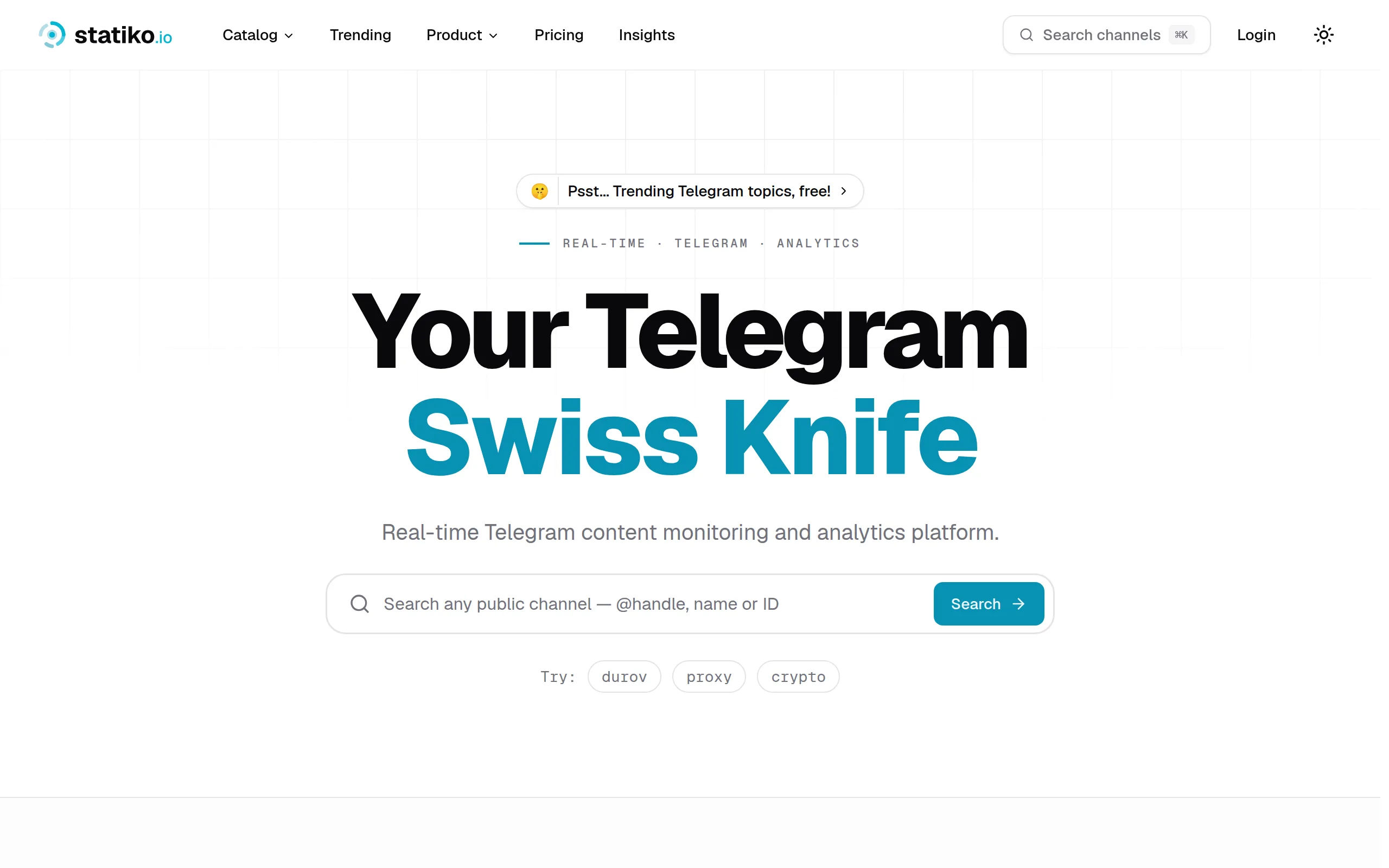
Statiko
Monitor any Telegram channel in real time - track posts, edits, deletions, and growth with AI recaps 📡

Shibui
AI website builder - describe your business, pick a niche template, edit by chatting, and publish instantly ✨

Pro Service
Find verified home service professionals, compare quotes, and pay securely through escrow - built for Brazilians across the US 🏠

RankGrow
Fix your SEO with AI agents - connect Search Console, get prioritized tasks, and grow organic traffic 📈
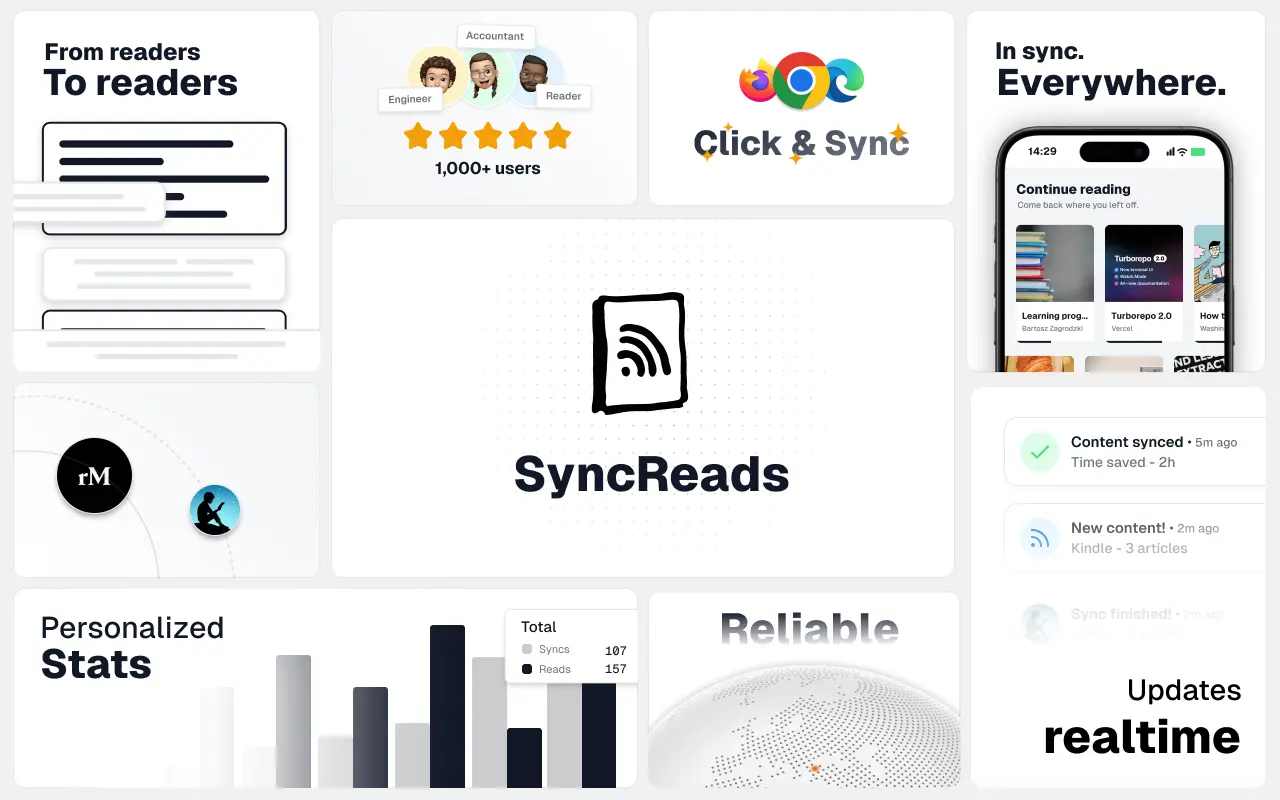
SyncReads
Sync your favorite content for distraction-free reading, save time and replace multiple apps. Anytime, anywhere 🔄
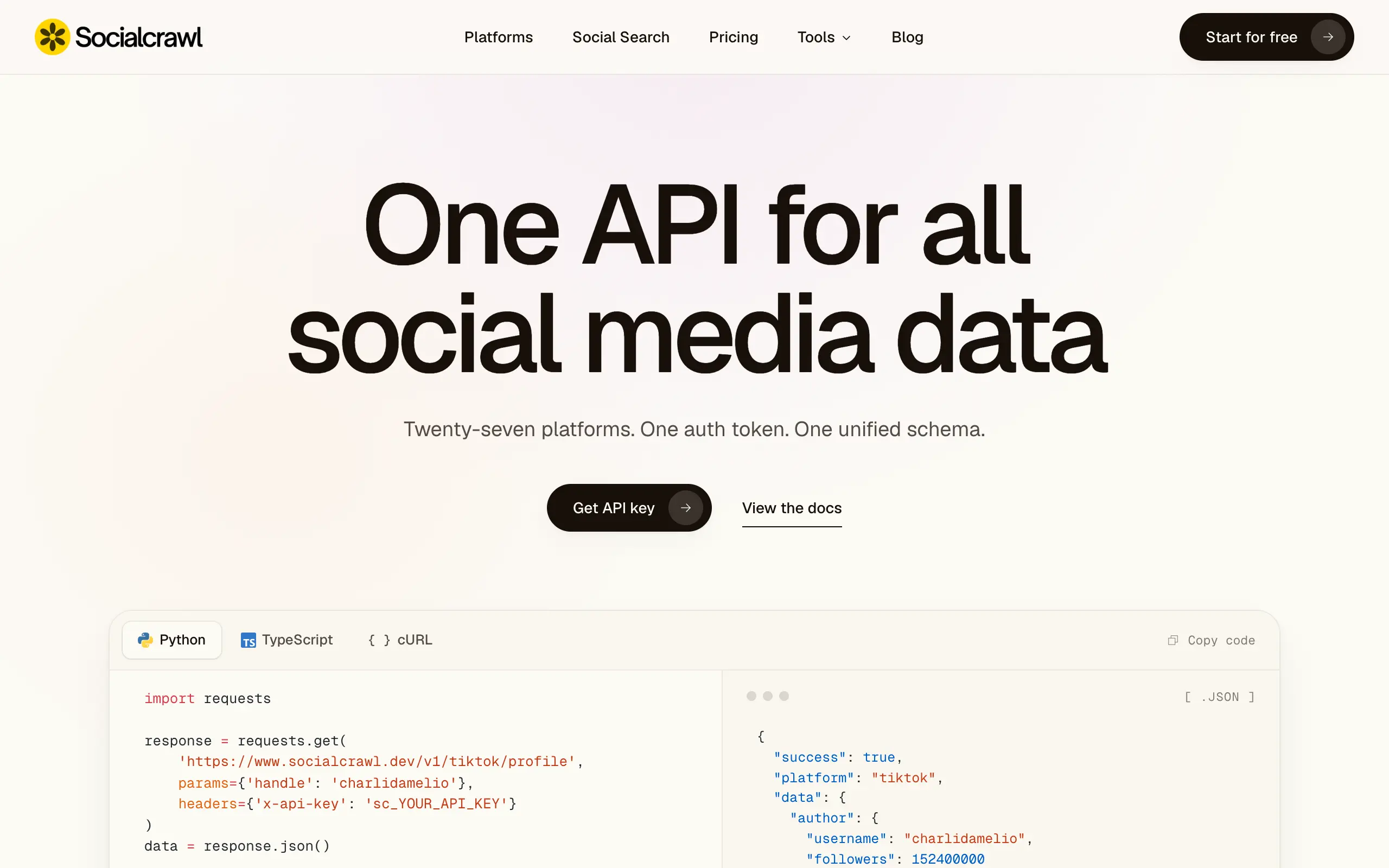
Socialcrawl
Get clean, structured data from 21 platforms like TikTok, Instagram, and YouTube with a single request 📊
Statiko
Monitor any Telegram channel in real time - track posts, edits, deletions, and growth with AI recaps 📡
Shibui
AI website builder - describe your business, pick a niche template, edit by chatting, and publish instantly ✨
Pro Service
Find verified home service professionals, compare quotes, and pay securely through escrow - built for Brazilians across the US 🏠
RankGrow
Fix your SEO with AI agents - connect Search Console, get prioritized tasks, and grow organic traffic 📈
SyncReads
Sync your favorite content for distraction-free reading, save time and replace multiple apps. Anytime, anywhere 🔄
Socialcrawl
Get clean, structured data from 21 platforms like TikTok, Instagram, and YouTube with a single request 📊
Statiko
Monitor any Telegram channel in real time - track posts, edits, deletions, and growth with AI recaps 📡
Shibui
AI website builder - describe your business, pick a niche template, edit by chatting, and publish instantly ✨
Pro Service
Find verified home service professionals, compare quotes, and pay securely through escrow - built for Brazilians across the US 🏠
RankGrow
Fix your SEO with AI agents - connect Search Console, get prioritized tasks, and grow organic traffic 📈
SyncReads
Sync your favorite content for distraction-free reading, save time and replace multiple apps. Anytime, anywhere 🔄
Socialcrawl
Get clean, structured data from 21 platforms like TikTok, Instagram, and YouTube with a single request 📊
Statiko
Monitor any Telegram channel in real time - track posts, edits, deletions, and growth with AI recaps 📡
Shibui
AI website builder - describe your business, pick a niche template, edit by chatting, and publish instantly ✨
Pro Service
Find verified home service professionals, compare quotes, and pay securely through escrow - built for Brazilians across the US 🏠
RankGrow
Fix your SEO with AI agents - connect Search Console, get prioritized tasks, and grow organic traffic 📈
SyncReads
Sync your favorite content for distraction-free reading, save time and replace multiple apps. Anytime, anywhere 🔄
Socialcrawl
Get clean, structured data from 21 platforms like TikTok, Instagram, and YouTube with a single request 📊
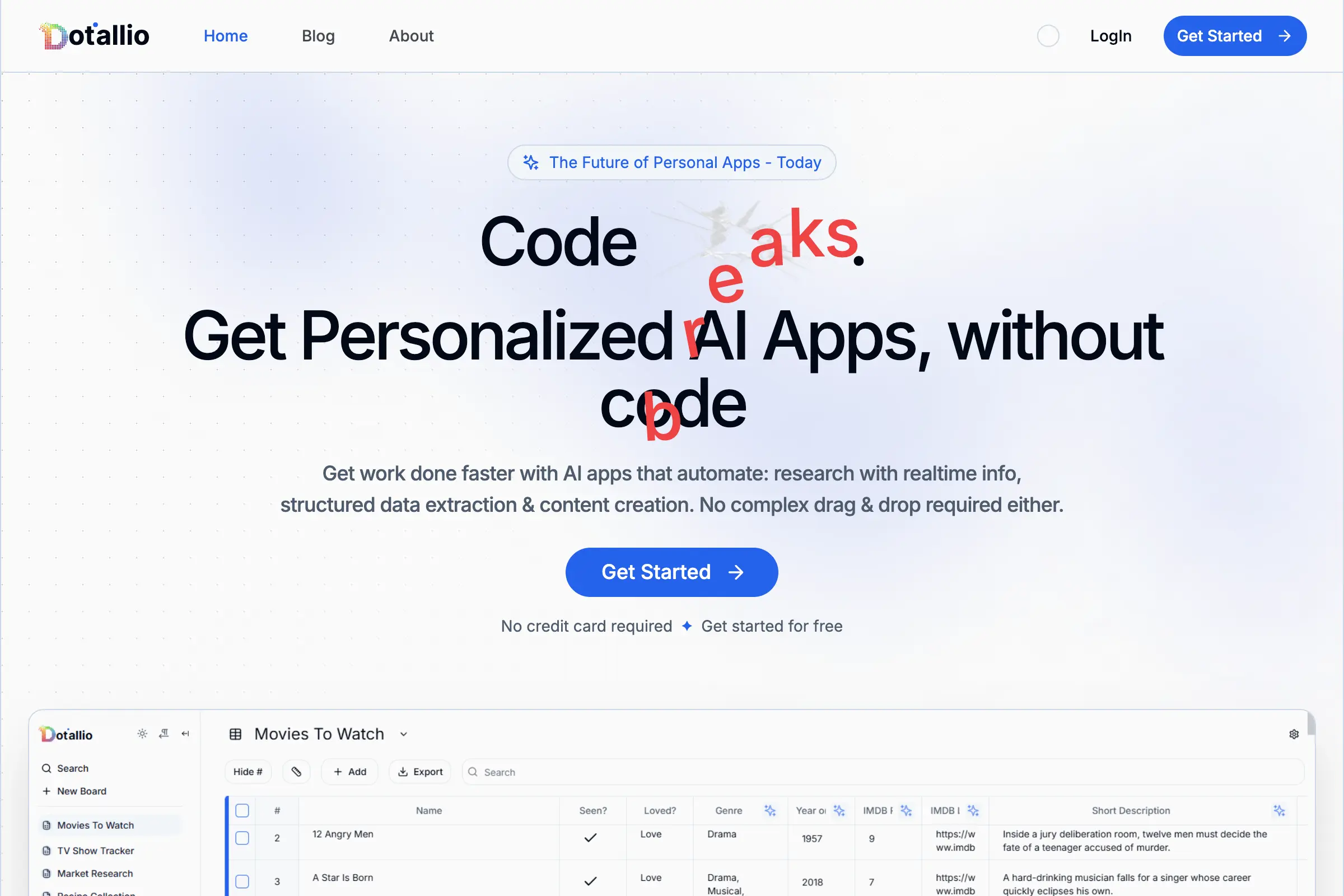
Dotallio
Personalized AI apps that automate research, data extraction, and content creation without code 🤖

Talk to Santa
Enjoy a magical live video chat or receive a unique AI-generated video greeting from Santa Claus 🎅

pozywka.pl
Scalable blog for food journalist, focused on performance and user experience 🌭
zagrodzki.me
Personal blog and portfolio of Bart Zagrodzki, where he shares his knowledge and work 💼

TurboStarter
Ship your startup everywhere. In minutes.
HTML to Markdown
Convert HTML to Markdown with ease, directly in your browser 📄
Dotallio
Personalized AI apps that automate research, data extraction, and content creation without code 🤖
Talk to Santa
Enjoy a magical live video chat or receive a unique AI-generated video greeting from Santa Claus 🎅
pozywka.pl
Scalable blog for food journalist, focused on performance and user experience 🌭
zagrodzki.me
Personal blog and portfolio of Bart Zagrodzki, where he shares his knowledge and work 💼
TurboStarter
Ship your startup everywhere. In minutes.
HTML to Markdown
Convert HTML to Markdown with ease, directly in your browser 📄
Dotallio
Personalized AI apps that automate research, data extraction, and content creation without code 🤖
Talk to Santa
Enjoy a magical live video chat or receive a unique AI-generated video greeting from Santa Claus 🎅
pozywka.pl
Scalable blog for food journalist, focused on performance and user experience 🌭
zagrodzki.me
Personal blog and portfolio of Bart Zagrodzki, where he shares his knowledge and work 💼
TurboStarter
Ship your startup everywhere. In minutes.
HTML to Markdown
Convert HTML to Markdown with ease, directly in your browser 📄
Dotallio
Personalized AI apps that automate research, data extraction, and content creation without code 🤖
Talk to Santa
Enjoy a magical live video chat or receive a unique AI-generated video greeting from Santa Claus 🎅
pozywka.pl
Scalable blog for food journalist, focused on performance and user experience 🌭
zagrodzki.me
Personal blog and portfolio of Bart Zagrodzki, where he shares his knowledge and work 💼
TurboStarter
Ship your startup everywhere. In minutes.
HTML to Markdown
Convert HTML to Markdown with ease, directly in your browser 📄

Omichat
Chat with 50+ AI models, including ChatGPT and Claude, in one place - switch models anytime without losing context 🤖
Claude Fast
Supercharge your Claude Code with 6x effective context window and specialized AI agents 🤖
EmojAI
AI-powered emoji picker with smart, context-aware suggestions 🤖

Solohacker
Autonomous company launcher - AI agents work 24/7, escalate what matters, and you stay in control 🤖

BeRawi: Storytelling Coach
Practice storytelling daily with instant feedback to sound clearer, more engaging, and confident 🎤
Omichat
Chat with 50+ AI models, including ChatGPT and Claude, in one place - switch models anytime without losing context 🤖
Claude Fast
Supercharge your Claude Code with 6x effective context window and specialized AI agents 🤖
EmojAI
AI-powered emoji picker with smart, context-aware suggestions 🤖
Solohacker
Autonomous company launcher - AI agents work 24/7, escalate what matters, and you stay in control 🤖
BeRawi: Storytelling Coach
Practice storytelling daily with instant feedback to sound clearer, more engaging, and confident 🎤
Omichat
Chat with 50+ AI models, including ChatGPT and Claude, in one place - switch models anytime without losing context 🤖
Claude Fast
Supercharge your Claude Code with 6x effective context window and specialized AI agents 🤖
EmojAI
AI-powered emoji picker with smart, context-aware suggestions 🤖
Solohacker
Autonomous company launcher - AI agents work 24/7, escalate what matters, and you stay in control 🤖
BeRawi: Storytelling Coach
Practice storytelling daily with instant feedback to sound clearer, more engaging, and confident 🎤
Omichat
Chat with 50+ AI models, including ChatGPT and Claude, in one place - switch models anytime without losing context 🤖
Claude Fast
Supercharge your Claude Code with 6x effective context window and specialized AI agents 🤖
EmojAI
AI-powered emoji picker with smart, context-aware suggestions 🤖
Solohacker
Autonomous company launcher - AI agents work 24/7, escalate what matters, and you stay in control 🤖
BeRawi: Storytelling Coach
Practice storytelling daily with instant feedback to sound clearer, more engaging, and confident 🎤

Connect with like-minded people
Join our community to get feedback, support, and grow together with 1,000+ builders on board, let's ship it!
Join usShip your startup everywhere. In minutes.
Don't burn tokens on setup and start building features on day one.