VendorChaser
Automate vendor document collection for procurement and compliance teams. It schedules reminders, validates uploads, and flags expired certificates.
Why automated vendor document collection is a growing B2B opportunity
Vendor onboarding and third-party compliance create a deceptively expensive operational problem. Procurement, compliance, finance, legal, and supplier-management teams need vendors to provide documents such as certificates of insurance, tax forms, security questionnaires, signed agreements, policy attestations, diversity certificates, and quality certifications.
The challenge is not simply receiving files. The real work includes:
- Identifying which documents each vendor must submit
- Requesting documents repeatedly without damaging supplier relationships
- Confirming that uploaded files are complete and valid
- Recording expiry dates and ownership data
- Escalating overdue or expired requirements
- Producing an audit-ready history when someone asks for proof
Many organizations still manage this process through spreadsheets, shared inboxes, calendar reminders, and folder structures. Those tools can work at a small scale, but they become fragile as supplier counts, regulatory exposure, and document requirements increase.
VendorChaser is positioned as automated vendor document collection software for procurement and compliance teams. It schedules intelligent reminders, validates vendor uploads, detects expiring certificates, and gives internal stakeholders a reliable system of record.
Its strongest value proposition is straightforward:
VendorChaser turns repetitive vendor follow-up into an automated, traceable compliance workflow.
This matters because missed certificates, outdated insurance policies, and incomplete supplier records are not merely administrative inconveniences. They can delay onboarding, interrupt purchasing, expose the business to contractual risk, and make audits unnecessarily difficult.
The core problem VendorChaser solves
A vendor document collection platform should not only send reminders. It should understand document requirements, track the status of every request, validate incoming evidence, and proactively surface risk before a document expires.
Who needs vendor document collection software
The target market for VendorChaser includes organizations with recurring supplier compliance requirements. The best early customers are likely not companies with thousands of vendors and deeply entrenched enterprise procurement suites. Instead, the strongest initial segment is often a growing or mid-market business that has outgrown spreadsheets but does not want a long, costly implementation.
Procurement and supplier onboarding teams
Procurement teams are often responsible for ensuring a supplier is ready to transact before purchase orders are issued or contracts are activated. Their daily workflows frequently involve chasing documents from vendors who are busy, unfamiliar with internal requirements, or unclear about what they need to submit.
VendorChaser can give procurement teams:
- A repeatable vendor onboarding checklist
- Automated email reminders based on due dates
- A secure vendor upload experience
- Real-time visibility into missing documents
- Internal ownership for unresolved requirements
- A clear approval state before onboarding is completed
For this audience, the outcome is faster supplier activation and less manual follow-up.
Compliance and risk management teams
Compliance teams care less about sending a reminder and more about proving that controls were followed consistently. They need to know whether a vendor has submitted valid documentation, whether the correct reviewer approved it, and whether the document remains current.
Common document categories include:
- Certificates of insurance
- Data processing agreements
- Information security certifications
- Anti-bribery or code-of-conduct attestations
- Business licenses
- Quality management certifications
- Health and safety documents
- Privacy and security questionnaires
VendorChaser should help these teams move from reactive spreadsheet reviews to ongoing third-party compliance monitoring.
Finance and accounts payable teams
Finance teams may request tax forms, banking documentation, payment setup evidence, and supplier verification documents. Incomplete records can delay vendor setup and create payment bottlenecks.
A vendor document automation workflow helps finance teams reduce back-and-forth communication, standardize vendor setup, and ensure that required records are present before payment processing begins.
Legal and contract operations teams
Legal teams may need signed agreements, certificates, policy acknowledgements, and documentation associated with contract renewals. They benefit from a structured workflow that connects requirements to vendor records and captures an audit trail.
VendorChaser does not need to replace contract lifecycle management software to create value. It can become the operational layer that makes sure external parties provide the supporting documents needed for legal and compliance processes.
High-compliance industries
The product has a particularly clear use case in industries where vendor documentation is operationally important.
Construction and facilities
Track insurance certificates, licenses, safety records, and subcontractor documentation before site access or work begins.
Healthcare and life sciences
Collect vendor compliance evidence, privacy documents, certifications, and risk assessments with an auditable workflow.
Financial services
Maintain third-party risk evidence, information security documents, and regulatory attestations across suppliers.
Manufacturing and logistics
Manage quality certificates, supplier declarations, insurance records, and documentation tied to operational readiness.
The market gap in vendor compliance workflows
The vendor management market includes broad procurement suites, contract management platforms, third-party risk tools, and document storage products. However, there is still a meaningful gap between these categories.
Large procurement and governance platforms can be powerful, but they may be expensive, complex to configure, and slow to adopt. Generic document management tools store files but do not actively chase vendors or understand expiration risk. Email automation tools can send messages but do not provide compliance validation and a complete audit record.
VendorChaser can occupy a focused middle layer:
- More structured than spreadsheets and shared inboxes
- More purpose-built than generic file-sharing tools
- Faster to implement than enterprise procurement platforms
- More proactive than passive document repositories
- More affordable and focused than broad governance suites
The opportunity is especially attractive because vendor document collection is both recurring and measurable. Teams do not solve it once. They need to request, verify, renew, and report on documents continuously.
The spreadsheet failure point
Spreadsheets are usually the incumbent competitor. They are flexible, familiar, and cheap, which makes them hard to displace with generic product messaging. The sales narrative should therefore focus on the operational cost and risk of manual coordination.
A typical spreadsheet-based process fails when:
- Multiple employees contact the same vendor.
- Reminder schedules are inconsistent or forgotten.
- Documents are stored in email attachments without a single source of truth.
- Expiration dates are not recorded consistently.
- A reviewer cannot tell whether a document is valid.
- Management asks for a compliance report that requires manual reconciliation.
- An audit reveals that the company cannot demonstrate its process.
VendorChaser should make the improvement visible in practical terms. Instead of promising vague “digital transformation,” it should show how teams can reduce manual chasing, shorten onboarding cycles, and identify compliance gaps before they become incidents.
A focused wedge before a broad platform
The initial product should avoid trying to become a complete supplier relationship management platform. That category quickly expands into sourcing, spend analytics, contract negotiation, purchase orders, invoices, risk scoring, and performance management.
A better wedge is automated vendor document collection and expiry management.
This wedge is specific enough to resonate with a buyer, broad enough to support recurring revenue, and close enough to adjacent workflows to create expansion opportunities later.
Potential future expansion paths include:
- Supplier onboarding questionnaires
- Vendor risk assessments
- Contract renewal coordination
- Internal approval workflows
- Supplier portal profiles
- Procurement system integrations
- Compliance reporting and dashboards
- AI-assisted document extraction
What VendorChaser should do in its first version
A strong minimum viable product should prove that it can replace manual follow-up with a reliable automated workflow. The goal is not feature volume. The goal is to make the core loop exceptionally dependable.
The core loop is simple:
- An internal team creates a vendor record.
- The team assigns a document requirement template.
- VendorChaser invites the vendor to upload required documents.
- The system sends reminders until submission.
- A document is validated automatically or reviewed by a team member.
- The system records an expiration date where applicable.
- VendorChaser sends renewal reminders before expiration.
- Internal stakeholders can see compliant, pending, expired, and blocked vendors.
Vendor profiles and requirement templates
Every vendor should have a profile containing core information such as organization name, contacts, category, country, owner, status, and applicable requirement template.
Requirement templates are essential because they make the product repeatable. A procurement team may need one template for standard suppliers, another for high-risk data processors, and another for contractors entering a physical site.
Each requirement should support fields such as:
- Document name and description
- Accepted file types
- Mandatory or optional status
- Due date rules
- Whether expiration tracking is required
- Reminder cadence
- Review owner
- Approval criteria
- Vendor category applicability
Templates prevent each user from reinventing a checklist. They also create a scalable foundation for reporting.
Automated reminder sequences
Reminder automation is a core differentiator. The platform should schedule messages based on the document’s request date, target due date, upload state, approval state, and expiration date.
A useful reminder system includes:
- An initial request email
- Follow-up reminders before the due date
- Escalations after a due date passes
- Renewal notifications before expiration
- Internal alerts for high-risk overdue documents
- Automatic cancellation of reminders when a valid upload is approved
Messages should remain professional and easy for vendors to understand. They should clearly identify the requested document, the required deadline, and a secure path to upload it.
The reminder experience should be configurable without becoming overly complex. Start with simple cadence presets such as gentle, standard, and urgent. Advanced timing logic can be introduced later.
Secure vendor upload portal
Vendors should not need a full product account just to submit one certificate. A secure, branded upload portal accessed through a unique link can reduce friction significantly.
The portal should show:
- The vendor’s outstanding document requests
- Clear document descriptions
- Due dates and status
- Accepted upload formats
- Upload confirmation
- A way to replace rejected or expired files
- Contact information for questions
The best vendor experience is one that makes the next action unmistakable. A supplier should immediately know what is missing, what has been accepted, and what needs correction.
Document validation and review workflows
Validation is where VendorChaser moves beyond a reminder tool. The platform should support multiple levels of document checks.
Check file type, file size, upload completeness, document presence, and whether required fields have been supplied.
Extract likely expiration dates, identify document types, detect missing pages, compare named entities, and flag suspicious or low-confidence files.
Route documents to a designated reviewer, record approval or rejection reasons, and retain the complete decision history.
Foundational validation should be available in the MVP. It is dependable, understandable, and often enough to reduce administrative work.
Advanced AI-based validation should be introduced carefully. Optical character recognition and document extraction can save time, but extracted information should be treated as a suggestion until confidence thresholds and reviewer processes have been established. In compliance workflows, false confidence can be more harmful than an obvious manual task.
Expiry tracking and compliance status
Expiry management is a major retention feature because it turns VendorChaser from an onboarding tool into an ongoing compliance system.
Each expirable document should store:
- Effective date where relevant
- Expiration date
- Date the document was uploaded
- Approval state
- Reviewer identity
- Reminder schedule
- Replacement document history
At the vendor level, a simple status model can make risk easy to understand:
- Compliant when all mandatory requirements are valid
- Pending when documents are requested or awaiting review
- At risk when a required document is nearing expiry
- Non-compliant when a mandatory requirement is overdue, rejected, or expired
- Exempt when a documented exception has been approved
This status should be visible in a dashboard, vendor profile, export, and API response.
Audit trail and reporting
Auditability is not an optional enterprise add-on. It is central to the product’s credibility.
VendorChaser should log important events, including:
- Requirement created or changed
- Vendor invitation sent
- Reminder delivered
- File uploaded
- Validation completed
- Document approved or rejected
- Expiry date edited
- Compliance status changed
- Exception granted
- User and timestamp for every action
Reports should allow teams to answer common operational questions quickly:
- Which vendors are non-compliant today?
- Which certificates expire in the next 30, 60, or 90 days?
- Which document types have the highest rejection rate?
- Which owners have unresolved items?
- How long does vendor document collection take on average?
- Which vendors have not engaged with reminders?
Competitive advantage for VendorChaser
VendorChaser should not try to win by claiming it does everything. A focused and credible competitive advantage is more persuasive.
Its differentiation can be built around five pillars.
| Capability | Spreadsheet | File storage | Enterprise suite | VendorChaser opportunity |
|---|---|---|---|---|
| Automated reminders | Manual | Limited | Available | Purpose-built and simple |
| Document expiry tracking | Fragile | Usually manual | Available | Central product workflow |
| Vendor upload experience | Inconsistent | Generic | Can be complex | Low-friction portal |
| Implementation effort | Low | Low | High | Low to moderate |
| Audit trail | Weak | Partial | Strong | Strong and focused |
Speed to value
The most compelling competitive message is not “replace your procurement stack.” It is “be live in days and stop manually chasing vendor paperwork.”
Fast time to value can come from:
- Prebuilt templates for common document types
- CSV vendor import
- Branded request emails
- Self-service vendor uploads
- A clear compliance dashboard
- Lightweight integrations with email and cloud storage
- Guided onboarding for procurement teams
Better vendor experience
Vendors are external users, and their experience directly affects completion rates. A platform that requires a complex registration process, unclear forms, or repeated email exchanges creates friction for everyone.
VendorChaser can stand out with a simple request portal, mobile-friendly uploads, clear statuses, and respectful reminder language. Better vendor completion rates are a meaningful business outcome that procurement teams can understand.
Explainable automation
Automation should make work more reliable, not opaque. Every reminder, validation flag, and compliance status change should be explainable.
For example, rather than merely marking a certificate “at risk,” VendorChaser should state that the certificate expires in 21 days, no replacement has been submitted, and the next reminder is scheduled for a specific date. This is especially important for compliance buyers who need defensible processes.
Recommended technology stack for a vendor compliance SaaS
VendorChaser handles sensitive business documents, status data, and potentially personally identifiable information. The technical stack should prioritize security, operational visibility, reliable background processing, and maintainability.
A modern TypeScript-based stack is a strong fit for an initial release.
Application and frontend stack
Use React with Next.js for the application layer. Next.js supports server-rendered pages, route handlers, secure backend logic, and a productive development workflow in one ecosystem.
Use TypeScript across frontend and backend code to reduce errors in document state transitions, permission logic, and API contracts.
For UI implementation, Tailwind CSS can support a consistent, accessible admin interface without the overhead of maintaining large custom stylesheet systems.
Recommended frontend capabilities include:
- Responsive internal dashboards
- Accessible tables and filters
- Drag-and-drop document uploads
- Vendor-facing secure request pages
- Document preview and approval interfaces
- Email template editing
- Role-aware navigation
Database and data model
PostgreSQL is a strong default database because the product requires reliable relational data, transaction support, filtering, audit records, and reporting queries.
Core entities may include:
type Vendor = {
  id: string;
  organizationId: string;
  name: string;
  primaryContactEmail: string;
  category: string;
  complianceStatus: "compliant" | "pending" | "at_risk" | "non_compliant" | "exempt";
};

type DocumentRequirement = {
  id: string;
  templateId: string;
  name: string;
  isRequired: boolean;
  expirationRequired: boolean;
  reminderPolicyId: string;
};

type VendorDocument = {
  id: string;
  vendorId: string;
  requirementId: string;
  status: "requested" | "uploaded" | "under_review" | "approved" | "rejected" | "expired";
  storageKey: string;
  expiresAt?: Date;
  approvedAt?: Date;
};
The data model should also include immutable audit events. Avoid relying solely on updatedAt fields for compliance history. An append-only event log makes it much easier to investigate how and when a vendor status changed.
File storage and security
Vendor documents should be stored in private object storage, not in a publicly accessible file system. Amazon S3 is a common choice due to its maturity, encryption options, lifecycle policies, and ecosystem support.
Important safeguards include:
- Private buckets by default
- Short-lived signed upload and download URLs
- Encryption at rest and in transit
- Malware scanning before reviewer access
- File type and size validation
- Tenant isolation checks on every file request
- Configurable document retention rules
- Audit logs for downloads and exports
Document storage is a trust boundary
Never treat vendor uploads as safe by default. Validate file signatures, scan uploads for malware, limit preview behavior, and ensure every document access request verifies organization membership and user permissions.
Background jobs and reminder reliability
Reminder scheduling, document extraction, virus scanning, and expiry monitoring should run asynchronously. Do not make these workflows depend on a user’s browser session or a single web request.
A queue-backed background job system should handle:
- Sending scheduled emails
- Retrying transient delivery failures
- Creating escalation tasks
- Recomputing compliance status
- Processing uploaded files
- Running nightly expiry checks
- Generating larger reports
The central trade-off is operational complexity. A simple cron job may be enough for a prototype, but production reminder workflows need idempotent jobs, retries, observability, and protection against duplicate emails.
Authentication and authorization
VendorChaser needs two distinct access models:
- Internal users such as procurement managers, compliance reviewers, and administrators
- External vendor contacts who should have restricted access to their own requests
Internal access should use organization-aware role-based access control. Typical roles include administrator, procurement contributor, compliance reviewer, viewer, and auditor.
External upload links should use signed, expiring tokens that are scoped to a specific vendor and request context. For higher-risk workflows, add optional email verification or one-time passcodes.
AI and document extraction trade-offs
AI can improve the product by extracting dates, insurer names, policy numbers, entity names, and document types from uploaded files. It can also identify likely missing sections or mismatches.
However, AI should augment a review process rather than replace it prematurely.
The main trade-offs are:
- Accuracy can vary by document type, scan quality, language, and template
- Cost can increase as document volume grows
- Privacy requires careful vendor and model-provider evaluation
- Explainability is essential when a system flags a document as invalid
- Human review remains necessary for high-risk requirements
A practical first approach is to use deterministic metadata collection and reviewer-confirmed expiry dates. Add OCR and extraction as an optional productivity layer once the team can measure precision, review time saved, and error patterns.
Monetization options for VendorChaser
VendorChaser is well suited to recurring SaaS pricing because document collection and renewal cycles are ongoing. Pricing should align with the value driver that customers understand and can forecast.
Tiered pricing by active vendors
The clearest pricing metric is active vendors or managed vendor records. Customers intuitively understand that managing more suppliers creates more work and more compliance exposure.
A possible structure could include:
- Starter plan for smaller teams with a limited number of active vendors
- Growth plan with higher vendor limits, templates, branded portals, and integrations
- Business plan with advanced roles, approval workflows, and reporting
- Enterprise plan with single sign-on, API access, custom retention, and dedicated support
Avoid pricing only by user seats. Procurement teams may want several internal users, while the underlying value scales with vendors and documents.
Usage-based document processing
For AI extraction, OCR, or high-volume document validation, usage-based pricing can work as an add-on. This keeps the base product accessible while protecting gross margin when processing volume rises.
The billing experience should remain simple. Customers should understand exactly what triggers usage charges and should have limits or alerts to prevent surprise invoices.
Implementation and compliance services
A service layer can accelerate early revenue and customer learning. High-value optional services may include:
- Template configuration
- Vendor data cleanup and migration
- Custom reminder sequence design
- Compliance workflow mapping
- Integration setup
- Quarterly compliance review support
These services can be particularly useful during the early stage, when product capabilities are still becoming standardized.
Risks and mitigation strategies
Building vendor document collection software involves real product, security, and go-to-market risks. Addressing them early will improve buyer trust and reduce expensive rework.
Risk of handling sensitive vendor data
Documents can include addresses, signatures, insurance details, financial information, tax identifiers, and other sensitive records.
Mitigation should include:
- Data minimization in templates and forms
- Clear access controls and permission auditing
- Encryption and secure storage practices
- Vendor data processing agreements where appropriate
- Defined retention and deletion policies
- Regular security reviews and penetration testing
- Clear incident response procedures
Compliance claims should always be evidence-based. Do not claim certifications or regulatory coverage unless the company has completed the relevant assessments and can substantiate the statement.
Risk of low vendor completion rates
Automation does not guarantee that vendors will respond. If the request process is unclear, suppliers may ignore messages or send incomplete documents.
Mitigation includes:
- Clear request language
- Mobile-friendly upload workflows
- Minimal account creation requirements
- Reminder timing controls
- Internal escalation visibility
- Vendor support contact details
- Multi-language templates when the market requires them
Measure the completion funnel from invitation sent to upload completed to document approved. This turns a vague engagement problem into an optimizable product metric.
Risk of false document validation
A document can look complete while being invalid, expired, or unrelated to the vendor. Automated rules and AI extraction can both make mistakes.
Mitigation includes:
- Confidence scores for extracted information
- Clear reviewer queues
- Mandatory human approval for high-risk document types
- Rejection reasons that vendors can understand
- Sample-based quality assurance checks
- Version history for replacement documents
Risk of competing with larger platforms
Enterprise procurement suites may already offer document collection features, especially for large customers.
VendorChaser should mitigate this risk through positioning rather than feature mimicry. Focus on speed, usability, vendor experience, implementation simplicity, and proactive expiry management. Integrations can make VendorChaser complementary to existing procurement systems rather than forcing an all-or-nothing replacement.
Risk of email deliverability failures
A reminder product depends on reliable email delivery. Spam filtering, incorrect contact data, and vendor security gateways can reduce effectiveness.
Mitigation includes:
- Domain authentication with SPF, DKIM, and DMARC
- Email event tracking
- Bounce and suppression management
- Configurable sender identities
- Internal alerts for failed deliveries
- Alternative channels such as task exports or integrations where appropriate
Go-to-market strategy for vendor document automation
The initial go-to-market motion should target a narrow operational pain point with a measurable outcome. “Vendor management” is broad. “Stop chasing expired supplier certificates in spreadsheets” is specific.
Start with a vertical or document type
VendorChaser can gain traction faster by starting with one high-frequency use case. Examples include:
- Certificate of insurance tracking for contractors
- Supplier compliance documents for facilities teams
- Security documentation for SaaS vendor onboarding
- Licensing and safety records for field service vendors
- Tax and payment documents for finance operations
A vertical focus helps define templates, language, integrations, buyer personas, and content strategy. It also makes demos more compelling because prospects see their actual workflow reflected in the product.
Build SEO content around high-intent problems
Organic content should target the questions procurement and compliance professionals search when a spreadsheet process begins to fail.
Useful topic clusters include:
- Vendor document collection checklist
- How to track vendor certificates of insurance
- Supplier compliance management process
- Vendor onboarding document requirements
- How to track expiring vendor documents
- Third-party compliance audit checklist
- Vendor document management best practices
- Procurement workflow automation
Each article should answer the operational question first, then explain how automated vendor document collection software can make the process more reliable.
Where content includes regulatory or market statistics, cite primary or respected industry sources. For example, reference formats can name the publishing organization, report title, publication year, and access date. This is more trustworthy than making unsupported numerical claims.
Use product-led proof in sales conversations
Early sales should focus on concrete before-and-after outcomes:
- Fewer manual follow-up emails
- Faster time to a complete vendor file
- Fewer expired certificates
- Better audit readiness
- Clear ownership of unresolved documents
- A simpler experience for vendors
A pilot program with a limited vendor set is often effective. It lowers adoption risk and gives the customer a measurable baseline.
Actionable implementation plan for VendorChaser
The best way to build VendorChaser is to sequence work around the core compliance loop, not around a long feature wishlist.
For founders who want to move faster, a production-ready SaaS foundation can eliminate weeks of repeated setup work around authentication, billing, organization management, and application structure. TurboStarter can provide a practical starting point so the team can focus on VendorChaser’s document workflows, security model, and customer-specific compliance value.
Final perspective on VendorChaser
VendorChaser has a strong SaaS opportunity because it addresses a recurring, expensive, and highly visible operational problem. Procurement and compliance teams are under pressure to move quickly while maintaining defensible controls. Manual vendor follow-up makes both goals harder.
The winning product does not need to become every procurement tool. It needs to become the trusted system for requesting, receiving, validating, renewing, and proving vendor documentation.
By focusing on automated reminders, secure vendor uploads, expiry tracking, transparent validation, and audit-ready reporting, VendorChaser can provide a meaningful alternative to spreadsheets and overly complex enterprise platforms. The product’s long-term advantage will come from combining workflow simplicity with compliance-grade reliability, giving internal teams less chasing to do and more confidence in every vendor record.
More 🏢 B2B Application SaaS ideas
Discover more innovative b2b application SaaS ideas that are trending in 2026. Each idea is AI-generated with market validation and growth potential to help you find your next profitable venture faster than competitors.
Your competitors are building with TurboStarter
Below are some of the SaaS ideas that have been generated and built with our starter kit.

Statiko
Monitor any Telegram channel in real time - track posts, edits, deletions, and growth with AI recaps 📡

Shibui
AI website builder - describe your business, pick a niche template, edit by chatting, and publish instantly ✨

Pro Service
Find verified home service professionals, compare quotes, and pay securely through escrow - built for Brazilians across the US 🏠
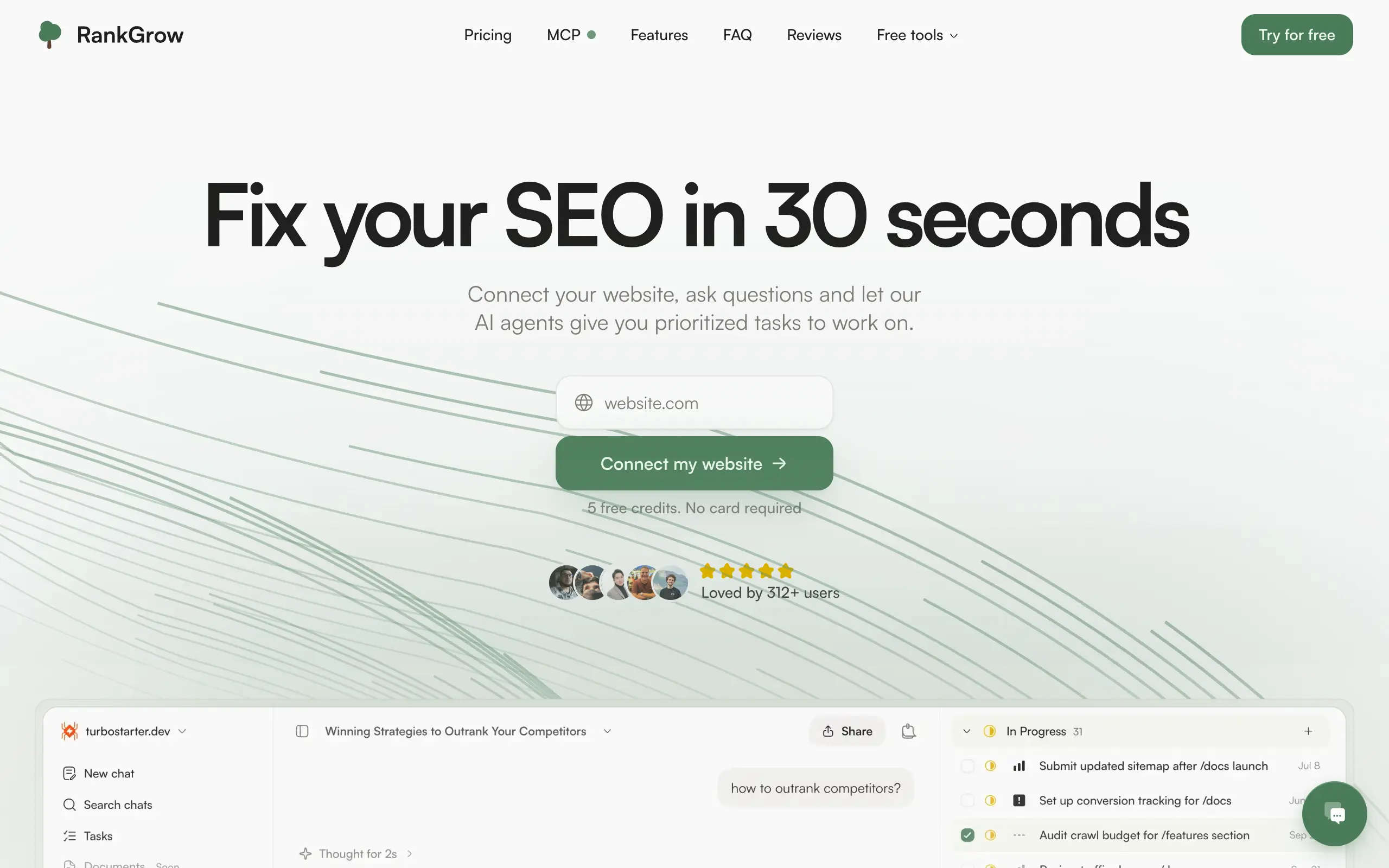
RankGrow
Fix your SEO with AI agents - connect Search Console, get prioritized tasks, and grow organic traffic 📈

SyncReads
Sync your favorite content for distraction-free reading, save time and replace multiple apps. Anytime, anywhere 🔄
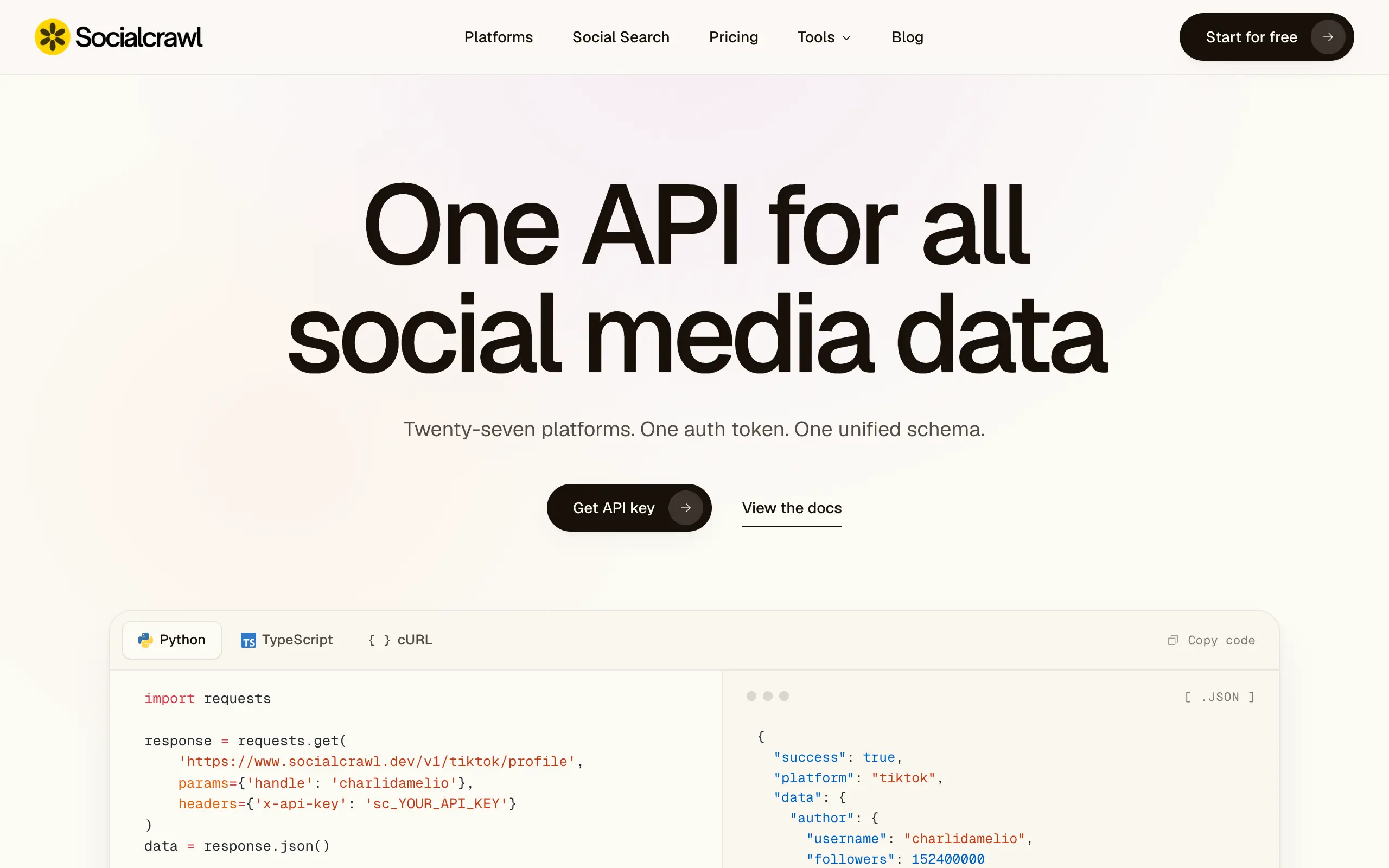
Socialcrawl
Get clean, structured data from 21 platforms like TikTok, Instagram, and YouTube with a single request 📊
Statiko
Monitor any Telegram channel in real time - track posts, edits, deletions, and growth with AI recaps 📡
Shibui
AI website builder - describe your business, pick a niche template, edit by chatting, and publish instantly ✨
Pro Service
Find verified home service professionals, compare quotes, and pay securely through escrow - built for Brazilians across the US 🏠
RankGrow
Fix your SEO with AI agents - connect Search Console, get prioritized tasks, and grow organic traffic 📈
SyncReads
Sync your favorite content for distraction-free reading, save time and replace multiple apps. Anytime, anywhere 🔄
Socialcrawl
Get clean, structured data from 21 platforms like TikTok, Instagram, and YouTube with a single request 📊
Statiko
Monitor any Telegram channel in real time - track posts, edits, deletions, and growth with AI recaps 📡
Shibui
AI website builder - describe your business, pick a niche template, edit by chatting, and publish instantly ✨
Pro Service
Find verified home service professionals, compare quotes, and pay securely through escrow - built for Brazilians across the US 🏠
RankGrow
Fix your SEO with AI agents - connect Search Console, get prioritized tasks, and grow organic traffic 📈
SyncReads
Sync your favorite content for distraction-free reading, save time and replace multiple apps. Anytime, anywhere 🔄
Socialcrawl
Get clean, structured data from 21 platforms like TikTok, Instagram, and YouTube with a single request 📊
Statiko
Monitor any Telegram channel in real time - track posts, edits, deletions, and growth with AI recaps 📡
Shibui
AI website builder - describe your business, pick a niche template, edit by chatting, and publish instantly ✨
Pro Service
Find verified home service professionals, compare quotes, and pay securely through escrow - built for Brazilians across the US 🏠
RankGrow
Fix your SEO with AI agents - connect Search Console, get prioritized tasks, and grow organic traffic 📈
SyncReads
Sync your favorite content for distraction-free reading, save time and replace multiple apps. Anytime, anywhere 🔄
Socialcrawl
Get clean, structured data from 21 platforms like TikTok, Instagram, and YouTube with a single request 📊
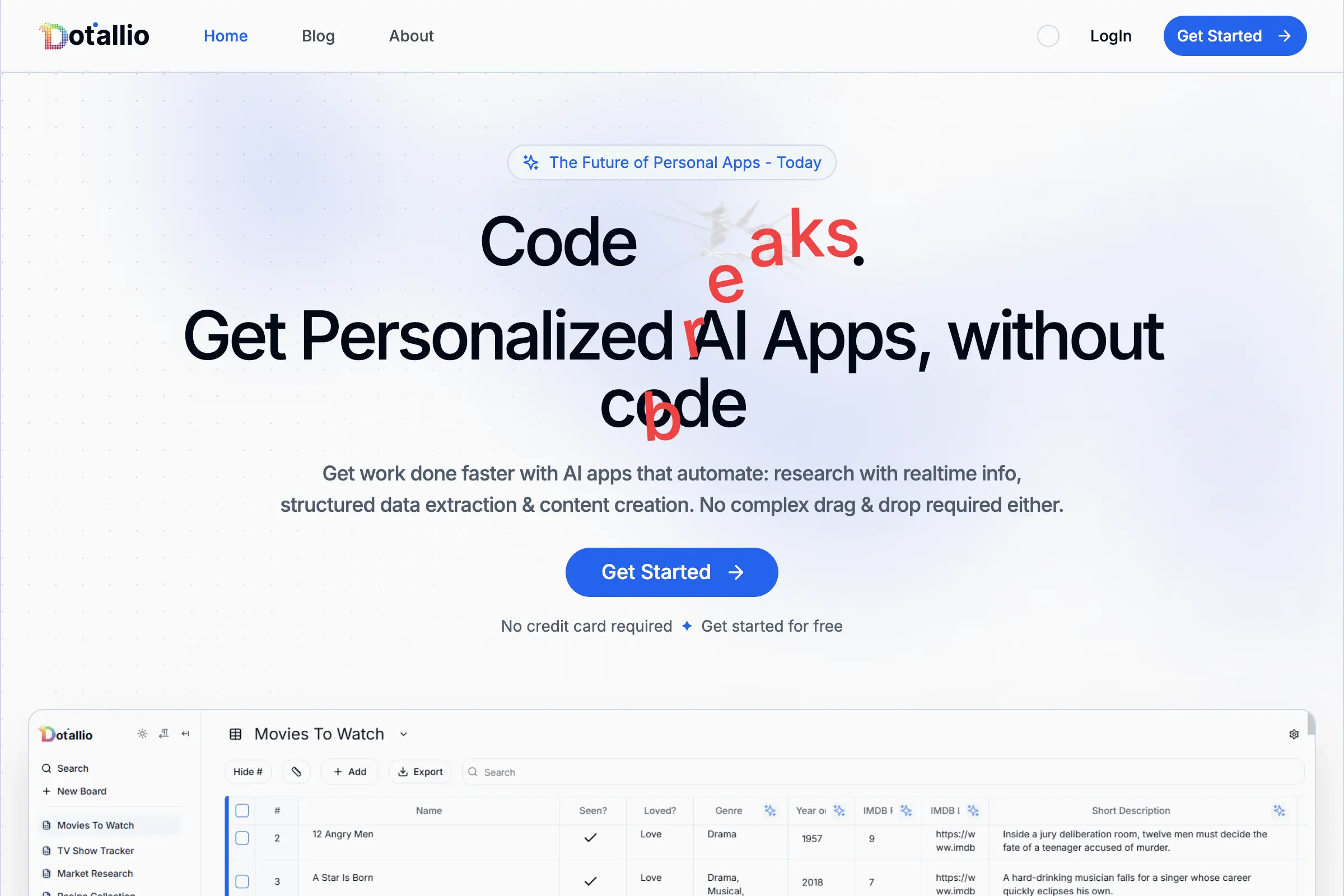
Dotallio
Personalized AI apps that automate research, data extraction, and content creation without code 🤖

Talk to Santa
Enjoy a magical live video chat or receive a unique AI-generated video greeting from Santa Claus 🎅

pozywka.pl
Scalable blog for food journalist, focused on performance and user experience 🌭
zagrodzki.me
Personal blog and portfolio of Bart Zagrodzki, where he shares his knowledge and work 💼

TurboStarter
Ship your startup everywhere. In minutes.
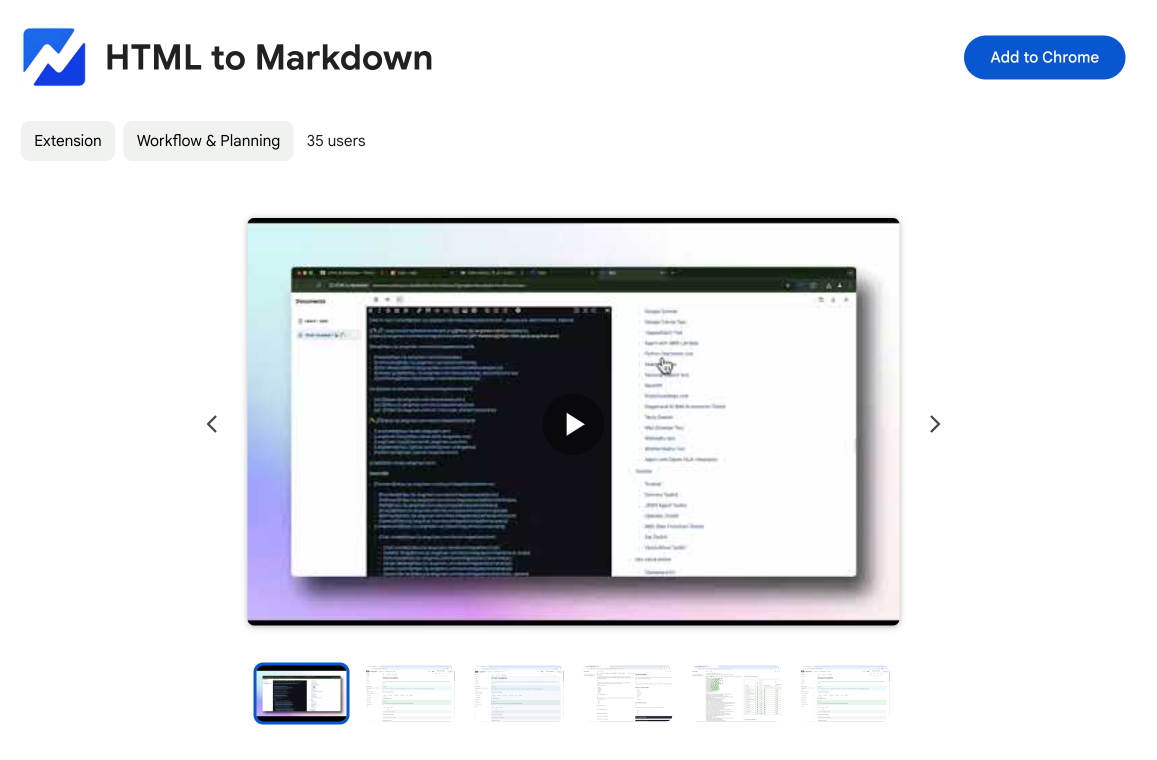
HTML to Markdown
Convert HTML to Markdown with ease, directly in your browser 📄
Dotallio
Personalized AI apps that automate research, data extraction, and content creation without code 🤖
Talk to Santa
Enjoy a magical live video chat or receive a unique AI-generated video greeting from Santa Claus 🎅
pozywka.pl
Scalable blog for food journalist, focused on performance and user experience 🌭
zagrodzki.me
Personal blog and portfolio of Bart Zagrodzki, where he shares his knowledge and work 💼
TurboStarter
Ship your startup everywhere. In minutes.
HTML to Markdown
Convert HTML to Markdown with ease, directly in your browser 📄
Dotallio
Personalized AI apps that automate research, data extraction, and content creation without code 🤖
Talk to Santa
Enjoy a magical live video chat or receive a unique AI-generated video greeting from Santa Claus 🎅
pozywka.pl
Scalable blog for food journalist, focused on performance and user experience 🌭
zagrodzki.me
Personal blog and portfolio of Bart Zagrodzki, where he shares his knowledge and work 💼
TurboStarter
Ship your startup everywhere. In minutes.
HTML to Markdown
Convert HTML to Markdown with ease, directly in your browser 📄
Dotallio
Personalized AI apps that automate research, data extraction, and content creation without code 🤖
Talk to Santa
Enjoy a magical live video chat or receive a unique AI-generated video greeting from Santa Claus 🎅
pozywka.pl
Scalable blog for food journalist, focused on performance and user experience 🌭
zagrodzki.me
Personal blog and portfolio of Bart Zagrodzki, where he shares his knowledge and work 💼
TurboStarter
Ship your startup everywhere. In minutes.
HTML to Markdown
Convert HTML to Markdown with ease, directly in your browser 📄
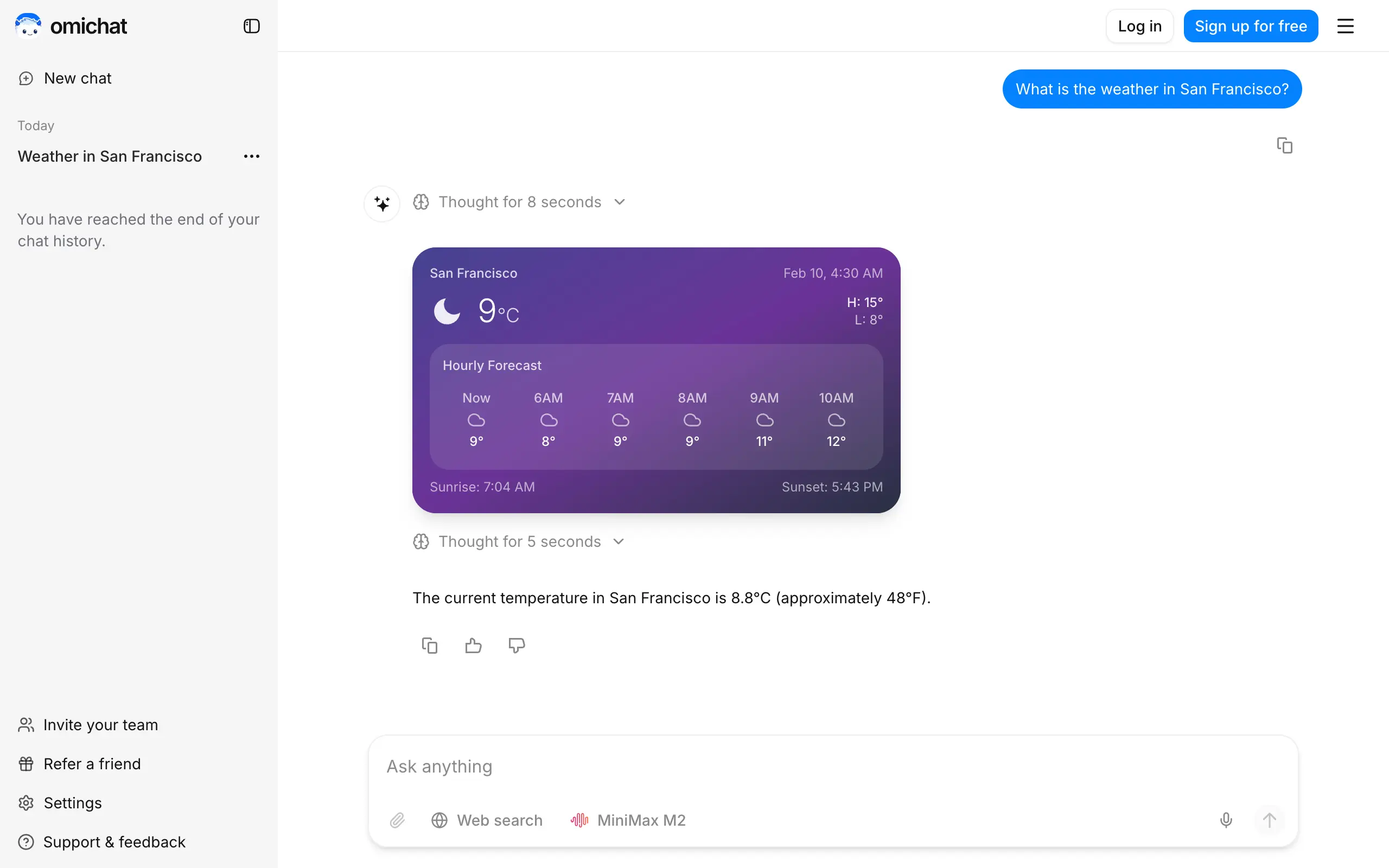
Omichat
Chat with 50+ AI models, including ChatGPT and Claude, in one place - switch models anytime without losing context 🤖
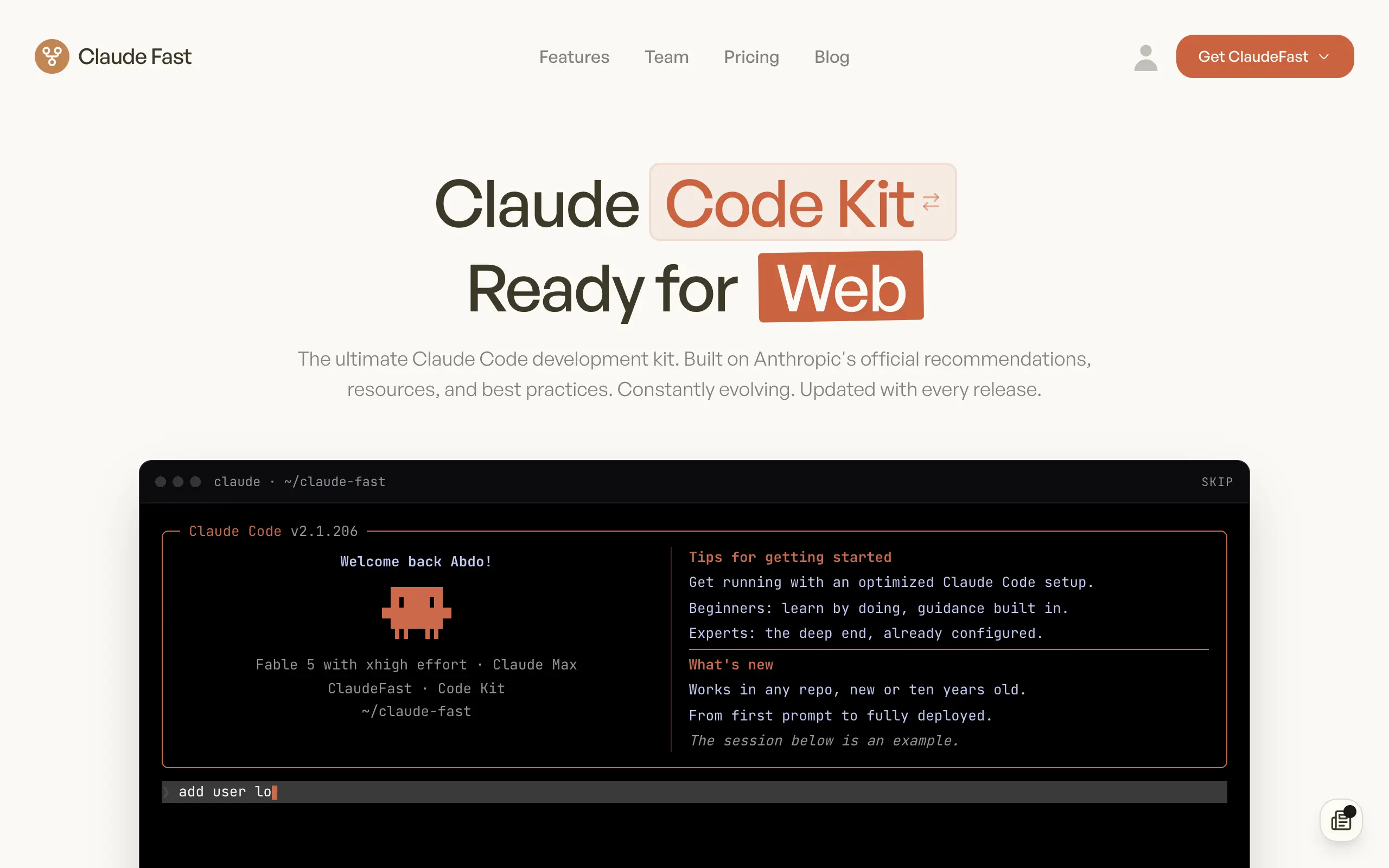
Claude Fast
Supercharge your Claude Code with 6x effective context window and specialized AI agents 🤖

EmojAI
AI-powered emoji picker with smart, context-aware suggestions 🤖

Solohacker
Autonomous company launcher - AI agents work 24/7, escalate what matters, and you stay in control 🤖

BeRawi: Storytelling Coach
Practice storytelling daily with instant feedback to sound clearer, more engaging, and confident 🎤
Omichat
Chat with 50+ AI models, including ChatGPT and Claude, in one place - switch models anytime without losing context 🤖
Claude Fast
Supercharge your Claude Code with 6x effective context window and specialized AI agents 🤖
EmojAI
AI-powered emoji picker with smart, context-aware suggestions 🤖
Solohacker
Autonomous company launcher - AI agents work 24/7, escalate what matters, and you stay in control 🤖
BeRawi: Storytelling Coach
Practice storytelling daily with instant feedback to sound clearer, more engaging, and confident 🎤
Omichat
Chat with 50+ AI models, including ChatGPT and Claude, in one place - switch models anytime without losing context 🤖
Claude Fast
Supercharge your Claude Code with 6x effective context window and specialized AI agents 🤖
EmojAI
AI-powered emoji picker with smart, context-aware suggestions 🤖
Solohacker
Autonomous company launcher - AI agents work 24/7, escalate what matters, and you stay in control 🤖
BeRawi: Storytelling Coach
Practice storytelling daily with instant feedback to sound clearer, more engaging, and confident 🎤
Omichat
Chat with 50+ AI models, including ChatGPT and Claude, in one place - switch models anytime without losing context 🤖
Claude Fast
Supercharge your Claude Code with 6x effective context window and specialized AI agents 🤖
EmojAI
AI-powered emoji picker with smart, context-aware suggestions 🤖
Solohacker
Autonomous company launcher - AI agents work 24/7, escalate what matters, and you stay in control 🤖
BeRawi: Storytelling Coach
Practice storytelling daily with instant feedback to sound clearer, more engaging, and confident 🎤

Connect with like-minded people
Join our community to get feedback, support, and grow together with 1,000+ builders on board, let's ship it!
Join usShip your startup everywhere. In minutes.
Don't burn tokens on setup and start building features on day one.