VendorLoop
Collect insurance certificates, licenses, and tax forms from contractors in one place. Expiry reminders cut property managers’ follow-up.
Property managers depend on contractors for repairs, cleaning, landscaping, inspections, and other essential work. But before a vendor can enter a property or begin a job, someone may need to confirm that the vendor has submitted current insurance certificates, licenses, tax forms, and other required documents.
That process often lives across email threads, shared drives, spreadsheets, and individual employees’ memories. When a certificate expires or a form goes missing, property teams face another round of follow-up—and may have to delay work until the paperwork is resolved.
VendorLoop is a B2B SaaS idea for bringing that process into one place. The product would help property managers collect, organize, review, and renew contractor documents, with expiry reminders that reduce manual chasing.
The opportunity is not simply to store files. A useful vendor compliance management platform should make it easier to answer practical questions: Is this contractor approved? Which documents are missing? When does coverage expire? Who needs to follow up? And can the property team demonstrate what it knew and when?
What VendorLoop could solve
VendorLoop’s core promise is straightforward: create a shared, organized workflow for contractor compliance documents.
A property manager could invite a vendor to a secure portal, request the appropriate documents, review the submission, and receive a reminder before a document expires. Staff would be able to see the status of a vendor without searching through inboxes or asking colleagues to reconstruct the history.
The product’s central workflow might look like this:
- A property manager creates a vendor record and assigns the vendor to one or more properties.
- VendorLoop requests the required documents from the vendor.
- The vendor uploads insurance certificates, licenses, tax forms, or other requested files.
- The property team reviews the submission and marks each document as accepted, rejected, or needing attention.
- VendorLoop tracks expiry dates and sends reminders before renewal deadlines.
- Staff review a dashboard to identify vendors with missing, expired, or soon-to-expire documents.
The key outcome is less manual follow-up and a more reliable view of vendor readiness. VendorLoop should not imply that document collection alone guarantees compliance or that the product replaces legal, insurance, or risk-management review. Its job is to make the process more visible, consistent, and manageable.
Target audience for contractor compliance software
The initial audience should be narrow enough to support a focused product and broad enough to contain customers with recurring needs. Property management is a promising starting point because it involves recurring vendor relationships, multiple locations, and documents that may need renewal.
Primary customers
The strongest initial customer profile is likely a property management company that:
- Oversees several buildings, communities, or commercial properties.
- Works with a recurring pool of maintenance and service contractors.
- Has multiple employees who request or review vendor documents.
- Tracks renewals in spreadsheets, email, or shared folders.
- Needs to know which vendors are ready to work at which properties.
- Has experienced delays, confusion, or duplicated follow-up because records are scattered.
Potential users within these organizations include property managers, operations leaders, maintenance coordinators, accounts payable staff, procurement teams, and compliance or risk personnel.
A single person may perform several of these jobs in a smaller company. In a larger organization, each role may care about a different part of the workflow. A property manager may want to know whether a contractor can be dispatched. An accounts payable employee may need to confirm that tax documentation is on file. An operations leader may want a portfolio-wide view of vendor readiness.
Vendors are a second user group
Contractors are not just document sources; they are users whose experience affects adoption. If a vendor has to create an account, learn an unfamiliar system, and upload the same document repeatedly for different properties, the process may feel like extra administrative work.
VendorLoop should make vendor participation as simple as possible:
- Use a clear invitation link.
- Explain exactly which documents are required and why.
- Support common file formats and mobile uploads.
- Show what has been received and what is still outstanding.
- Let vendors update an expiring document without repeating the entire onboarding process.
- Avoid asking for information that the property manager does not actually need.
A low-friction vendor experience can help property managers get better results from the platform. It also makes the product more valuable to vendors who work with multiple customers—provided that data sharing and permissions are carefully designed.
Adjacent customer segments
After validating the product with property managers, VendorLoop could explore adjacent markets with similar document workflows:
- Commercial real estate operators
- Homeowners association management firms
- Facilities management companies
- Construction and renovation businesses
- Hospitality and short-term rental operators
- Organizations coordinating recurring field-service contractors
These segments may have different document requirements, approval rules, and integrations. They should be treated as expansion opportunities, not assumptions to build into the first release.
Market opportunity and the workflow gap
VendorLoop would enter a broad category that includes vendor management, contractor management, insurance compliance, procurement, and document management. The opportunity is not to claim that these categories lack software. Rather, it is to identify a workflow that some property teams may still manage with tools that were not designed to coordinate vendor documents and renewals.
A general-purpose cloud drive can store certificates, but it may not tell a manager which document is missing or when it expires. A spreadsheet can list renewal dates, but it depends on someone keeping the information current and sending reminders. Email can handle individual requests, but it makes a portfolio-wide status view difficult to maintain.
That creates a potential gap between having documents somewhere and operating a dependable document workflow.
How to validate the gap
The market opportunity should be tested through customer research rather than inferred from the product idea alone. Interview property managers and ask them to describe the last time they collected or renewed a contractor document. Specific, recent examples are more useful than general statements that the process is frustrating.
Useful research questions include:
- How many active vendors do you work with?
- How many properties or locations do those vendors serve?
- Which documents do you collect, and who decides what is required?
- How do you record expiry dates today?
- What happens when a document is missing or expired?
- How often do employees follow up manually?
- Which systems hold the current vendor record?
- Who reviews documents and has authority to approve them?
- How do you handle a vendor who serves multiple properties?
- What would make you trust a new system with these records?
- What budget, procurement, security, or legal review would a purchase require?
Look for evidence of repeated effort, meaningful consequences, and an identifiable buyer. A few people saying that they dislike spreadsheets is not enough. Stronger evidence includes teams already paying for a workaround, recurring delays tied to missing documents, or a manager willing to run a paid pilot.
Research sources for market sizing
For a credible market estimate, define the target customer and geography before looking for a total market figure. Potential research sources include property management industry associations, government business data, public company filings, and customer interviews. If an article or pitch deck includes a specific industry statistic, cite the original report, its publication date, geographic scope, and methodology. Avoid presenting an unsourced market-size number as fact.
A practical early-stage estimate can be built from the bottom up:
- Identify the number of organizations in the chosen customer segment.
- Estimate how many fit the initial customer profile.
- Estimate a plausible annual contract value from interviews and pilot pricing.
- Explain the assumptions and uncertainty behind each estimate.
This will not prove demand, but it makes the opportunity easier to inspect and revise.
Core features for a vendor compliance management platform
The first version should solve one recurring workflow well: collect the right documents, track their status, and prompt the right person when action is needed.
Vendor records and property assignments
Each vendor should have a profile containing basic business details, contacts, document records, and a clear status. Property managers should be able to associate a vendor with one or more properties, since a contractor may work across several locations.
Keep the record model flexible. Customers may use different names for vendors, service categories, buildings, and business units. At the same time, avoid making every field customizable in the MVP. Excessive configuration can make onboarding confusing and slow development.
Document requests and vendor uploads
Property managers should be able to request documents through an invitation or secure upload link. Requests should state what is needed, when it is due, and whether there are any customer-specific instructions.
Useful first-release capabilities include:
- Uploading common file types.
- Recording the document type and relevant date.
- Replacing an older version while preserving its history.
- Showing pending, received, and rejected states.
- Recording who submitted and reviewed a file.
- Sending a clear notice when a submission needs correction.
The experience should work on mobile devices. Many contractors may be responding between jobs, so a simple upload flow can matter as much as a sophisticated administrative dashboard.
Expiry tracking and reminders
Expiry reminders are a core part of VendorLoop’s value proposition. The system should track dates, show upcoming renewals, and send configurable reminders to the vendor, the property manager, or both.
A useful reminder system should distinguish among:
- A document that has not been submitted.
- A document that was submitted but needs review.
- A document that has been accepted and is approaching expiry.
- A document that has expired.
- A document whose expiry date is unknown or needs confirmation.
This distinction prevents the dashboard from treating every issue as the same kind of problem. It also helps teams choose the right next action.
Review, approval, and audit history
Document collection is not the same as document validation. A user should be able to mark a file as accepted, rejected, or requiring attention, with a reason or internal note. VendorLoop should preserve a history of uploads and status changes so an organization can understand what happened over time.
The product should be careful about what it claims. Unless it has been designed, tested, and approved for a specific legal or insurance determination, VendorLoop should not describe a document as compliant merely because it was uploaded. Better labels are explicit and operational, such as “received,” “awaiting review,” and “accepted by your team.”
Portfolio dashboard and reporting
A dashboard should help users prioritize action, not merely display files. Useful views could include:
- Vendors with expired documents.
- Documents expiring in a selected time period.
- Vendor requests awaiting a response.
- Submissions awaiting internal review.
- Vendors assigned to a specific property.
- A downloadable record of document status and activity.
The value of a dashboard depends on the data behind it. If expiry dates are missing or statuses are unclear, the dashboard can create false confidence. Make uncertainty visible and let users correct records quickly.
Potential feature roadmap
| Capability | MVP priority | Why it matters | Later opportunity |
|---|---|---|---|
| Vendor profiles | High | Provides a central record for each contractor | Vendor self-service profile |
| Secure document upload | High | Replaces scattered email attachments | Reusable vendor document sharing |
| Expiry reminders | High | Reduces manual renewal follow-up | Configurable escalation rules |
| Review statuses | High | Makes the next action visible | Multi-step approval workflows |
| Property assignment | High | Connects vendor readiness to locations | Portfolio and regional reporting |
| Integrations | Medium | Reduces duplicate data entry | Accounting, procurement, and property systems |
| Automated document extraction | Medium | May reduce manual entry | Confidence scoring and exception queues |
What makes VendorLoop different
VendorLoop’s potential USP is property-focused vendor document operations, not generic file storage or an all-purpose procurement suite.
That focus could make the product more useful to property teams by emphasizing the questions they need answered every day:
- Which contractors are ready to work at this location?
- Which documents are missing or nearing expiry?
- Who is responsible for the next follow-up?
- What changed since the last review?
- Can an employee see the status without contacting another team member?
A focused experience may be easier for a smaller property management company to adopt than a large enterprise procurement platform. But this is a hypothesis to validate. Existing products may already serve the intended segment well, and VendorLoop must demonstrate a clear reason to switch or add another tool.
Competitive comparison
The relevant alternatives include direct software competitors, broader vendor management systems, and manual workarounds. A fair competitive analysis should assess specific workflows rather than rely on broad claims about what other products can or cannot do.
| Approach | Document storage | Expiry workflow | Vendor submission | Property context |
|---|---|---|---|---|
| Shared folders | Often available | Usually manual | Email or shared access | Usually manual |
| Spreadsheets and email | Possible but fragmented | Depends on upkeep | Email attachments | Can be recorded manually |
| General document tools | Strong file handling | May require configuration | Varies by product | May require custom setup |
| Broad vendor platforms | Often part of a wider suite | Product-dependent | Product-dependent | May support larger operations |
| VendorLoop concept | Centralized vendor records | Reminders and status tracking | Dedicated upload flow | Designed around property assignments |
This table describes categories, not a claim that every product in a category has the same capabilities. Competitor research should compare real products, pricing, onboarding requirements, integrations, and customer reviews.
Defensible advantage over time
A document upload screen is not a durable moat. Competitors can build similar screens. A stronger advantage could develop from a combination of:
- A simple, trusted vendor onboarding experience.
- Workflow templates grounded in property management interviews.
- Reliable records that connect vendors, properties, documents, and review history.
- Integrations that fit customers’ existing systems.
- Clear controls for permissions, retention, and auditability.
- A vendor experience that reduces repeated requests without exposing data improperly.
If VendorLoop eventually supports reusable vendor records across customer organizations, that could reduce repetitive work. However, it introduces important consent, ownership, security, and data-sharing questions. It should not be treated as an automatic feature or assumed network effect.
Recommended MVP and product boundaries
A focused MVP should prove that property teams will use and pay for a better way to collect and renew contractor documents. It does not need to automate every compliance decision.
A reasonable first release could include:
- Organization accounts and user roles.
- Vendor records and contact details.
- Property records and vendor-property assignments.
- Document requests and secure uploads.
- Document types, statuses, and expiry dates.
- Reminder emails with configurable timing.
- A dashboard for missing, expiring, and review-pending documents.
- A basic activity history and export.
Defer advanced insurance interpretation, complex approval chains, broad marketplace functions, and large numbers of integrations until customers demonstrate that they need them. Each deferred feature can create substantial operational, security, or support costs.
A practical status model
Use a small, understandable set of statuses rather than a long list that users must interpret. For example:
- Not requested
- Requested
- Submitted
- Needs review
- Accepted
- Rejected
- Expiring soon
- Expired
Some of these states describe a document’s review status, while others describe its date status. In a production data model, those may be better represented as separate fields rather than a single status value. That prevents a document from being “accepted” and “expiring soon” from competing as mutually exclusive states.
Recommended technology stack
The technology choices should support secure file handling, dependable reminders, clear permissions, and fast iteration. The best stack depends on the founding team’s experience and the customers’ security needs.
Application architecture
A common SaaS architecture could use:
- Frontend: React with a framework the team already knows.
- Styling: Tailwind CSS or another maintainable component approach.
- Backend: A typed application server using TypeScript, or a backend framework familiar to the team.
- Database: PostgreSQL for relational records such as organizations, users, vendors, properties, documents, and events.
- File storage: A private object-storage service with short-lived signed access links.
- Background jobs: A queue or scheduled-job system for reminders, retries, and expiry checks.
- Email: A transactional email provider with delivery monitoring and bounce handling.
- Observability: Structured logs, error tracking, and alerts for failed jobs and uploads.
The exact providers are less important than the design principles. Keep sensitive files private, isolate each customer’s records, and make background tasks observable. For technology references and implementation details, consult the official documentation for the selected tools.
Data model considerations
A minimal relational model might include:
- Organizations
- Users and organization memberships
- Vendors
- Properties
- Vendor-property relationships
- Document requests
- Document versions
- Review events
- Reminder jobs
- Audit events
Do not store all vendor information in a single unstructured text field. Separate records make it possible to filter by property, document type, status, and expiry date.
A document record should distinguish between the file itself and its metadata. Metadata may include the vendor, document type, upload time, expiry date, review status, and reviewer. The uploaded file should be stored separately with access controls rather than exposed through a public URL.
Security and privacy foundations
VendorLoop would handle business documents and potentially sensitive information. Security should be part of the MVP design, not a feature postponed until enterprise sales.
Consider:
- Tenant isolation at both the application and data-access layers.
- Role-based access for organization administrators, staff, and vendors.
- Private file storage and time-limited download links.
- Encryption in transit and at rest through appropriately configured infrastructure.
- Audit records for access, uploads, downloads, and status changes where appropriate.
- Rate limits and abuse protections for public upload links.
- Secure account recovery and multifactor authentication options.
- Document retention and deletion policies.
- Backups and a tested recovery process.
- A process for handling security incidents and customer requests.
The product’s privacy policy, terms, retention controls, and security claims should reflect actual practices. Avoid claiming a certification or standard unless it has been independently verified and is applicable to the product.
Trade-offs to consider
A managed backend can speed up the first release but may constrain customization or increase dependence on one provider. A custom backend can offer more control but requires more engineering and operational work. A relational database is a strong fit for connected vendor and property records, while file storage should be handled by a service designed for large binary objects.
Automated document extraction may reduce data entry, but extraction can be wrong. If added, it should suggest values—such as a possible expiry date—for human confirmation rather than silently making consequential decisions. Users need a way to correct extracted data and see whether a value came from a person or an automated process.
Monetization strategy
VendorLoop can test several pricing models, but pricing should be linked to customer value and operational complexity. The goal is not to charge for every possible unit. It is to create a plan customers can understand and expand without surprise.
SaaS subscription tiers
A straightforward subscription could vary by portfolio size, vendor count, or feature set:
- Starter: A small number of properties, vendors, and staff users.
- Growth: More locations, configurable workflows, reporting, and team controls.
- Business: Advanced permissions, integrations, audit features, and priority support.
The plan boundaries should reflect real differences in customer value. If customers think they are being penalized for adding vendors they need to manage, a per-vendor price may discourage adoption. Test pricing against customer budgets and buying processes rather than selecting a model solely because it is easy to calculate.
Alternative pricing models
Potential approaches include:
- A base subscription plus a property or location allowance.
- Pricing by active vendor records.
- Annual contracts for larger portfolios.
- Paid onboarding or data migration for complex accounts.
- Premium integration or support packages.
A free tier can help seed vendor participation, but it may create support costs and attract users who are not the intended buyer. A time-limited pilot with a clear success plan may be more informative than an open-ended free plan.
Who pays?
The property management company is the most natural initial payer because it receives the operational benefit. Charging vendors could create friction if contractors are required to use a platform to work with a property manager. If vendor-paid features are considered later, keep the basic submission experience accessible and be explicit about which customer is responsible for which costs.
Go-to-market strategy
Early go-to-market should be based on direct learning. VendorLoop can start with a small number of design partners and observe the full workflow, including how vendors respond to invitations.
Start with a narrow customer profile
Choose a customer segment that is easy to describe. For example, focus on independent or regional property managers with multiple locations and recurring maintenance vendors. The precise profile should come from interviews, not an arbitrary threshold.
Build a list of organizations that fit the profile. Reach out to people responsible for operations, vendor onboarding, or property management. In discovery conversations, ask them to show the current workflow if they can do so without sharing sensitive information.
Run a measurable pilot
A useful pilot should have a defined scope, such as a subset of properties and vendors, a specific document workflow, and a fixed period. Agree on success measures before the pilot begins.
Possible measures include:
- Time from request to submission.
- Percentage of invited vendors who complete the request.
- Number of documents with a known expiry date.
- Time staff spend on follow-up.
- Number of items awaiting internal review.
- User-reported confidence in the current vendor status.
These measures should be interpreted carefully. A rise in recorded expired documents may mean visibility improved, not that the product made compliance worse. Combine product analytics with customer interviews.
Build trust through implementation
For a product that handles documents, onboarding is part of the product. Explain how records are organized, who can access them, how uploads work, and how customers can export or delete data. Offer a guided setup for early accounts, but record the steps so onboarding can become repeatable instead of founder-dependent.
Risks and mitigation
VendorLoop has a clear operational use case, but it also has risks that should shape product design and sales claims.
Incorrect or incomplete documents
A file may be unreadable, outdated, or not what the customer requested. The system can help organize review but cannot assume every upload is valid.
Mitigation: Use explicit review states, show the reviewer and review date, and let customers define acceptance requirements. Make it easy to request a corrected file.
False confidence from a dashboard
A green status can suggest that a vendor is fully approved even when a requirement was never configured or a document was not reviewed.
Mitigation: Explain exactly what each status means. Distinguish “uploaded” from “reviewed” and “accepted.” Display missing requirements and unknown expiry dates rather than treating them as complete.
Reminder fatigue
Too many reminders can cause vendors and staff to ignore messages. Too few can fail to prevent last-minute renewals.
Mitigation: Let customers configure reminder timing and escalation rules. Provide a summary view and track delivery failures. Test reminder wording with real vendors before increasing volume.
Vendor adoption friction
Contractors may resist another portal, especially if they manage requests from many clients.
Mitigation: Make uploads mobile-friendly, reduce unnecessary account creation, provide clear instructions, and allow vendors to see the request status. Test the full flow with contractors, not just property managers.
Security and privacy exposure
A document platform can become a target for unauthorized access or accidental disclosure. A poorly designed sharing model could expose one customer’s documents to another.
Mitigation: Use tenant isolation, least-privilege access, private storage, short-lived links, access logging, and security reviews. Establish a documented incident response process and avoid collecting data that is not needed.
Long sales cycles and integrations
Some property management businesses may need approval from finance, IT, legal, or leadership. They may also expect integrations with existing systems.
Mitigation: Start with customers who can run a focused pilot. Support clean exports and a reliable manual workflow before building integrations. Add integrations when multiple paying customers identify the same system and use case.
Scope creep
Vendor onboarding can expand into procurement, payments, background checks, contract management, and insurance assessment. Each addition increases product complexity.
Mitigation: Keep a written product thesis. Prioritize features that improve collection, visibility, renewal, or review of vendor documents. Treat adjacent categories as separate product bets that require evidence.
Actionable implementation steps
A disciplined build plan reduces the risk of shipping a polished product for an unproven workflow.
Interview property teams and contractors
Speak with property managers, operations staff, and vendors. Ask participants to walk through a recent document request and renewal, including where delays occurred. Record the current process, stakeholders, systems, and consequences. Do not collect real customer documents during discovery unless there is a clear, secure, and consented process.
Define the first customer and workflow
Choose one initial customer profile and one high-frequency workflow. Write down the document types, user roles, status definitions, and reminder rules the MVP will support. Make unsupported assumptions explicit so they can be tested.
Prototype the request-to-renewal journey
Create a clickable prototype for the property manager and vendor experiences. Test whether users understand the request, know what to upload, can interpret statuses, and can find the next action. Pay particular attention to mobile upload usability.
Build secure foundations before adding automation
Implement organization boundaries, roles, private file storage, audit history, and controlled download access. Test that one customer cannot access another customer’s records. Add monitoring for failed uploads, reminder jobs, and email delivery.
Launch a narrow paid pilot
Set up a small number of customer accounts with an agreed property and vendor scope. Define baseline measures and a check-in schedule. Charge if possible, even at an introductory rate, because willingness to pay is stronger evidence than positive feedback alone.
Review usage and improve the workflow
Study where users abandon requests, which reminders are useful, how often records need correction, and whether staff return to spreadsheets. Improve the core workflow before investing in broad integrations or advanced automation.
Expand only when demand is repeated
Add integrations, configurable approval chains, or adjacent customer segments when multiple customers demonstrate the same need. Keep product decisions tied to observed behavior, support burden, and willingness to pay.
Metrics to track after launch
A small set of metrics can show whether VendorLoop is becoming part of the customer’s operating routine:
- Activation: Percentage of new organizations that add vendors, request documents, and complete a review.
- Vendor completion: Percentage of invited vendors who submit the requested items.
- Time to completion: Time between a request and the submission of required documents.
- Renewal coverage: Percentage of tracked documents with a known expiry date.
- Reminder effectiveness: Submission or renewal activity after reminders are sent.
- Workflow reliability: Failed uploads, bounced emails, and unsuccessful background jobs.
- Retention: Whether customers continue to use VendorLoop after their initial setup.
- Expansion: Whether customers add properties, staff, or vendor records over time.
- Support burden: How much manual assistance is needed for each account.
Metrics should be segmented by customer type and workflow. Averages can hide that one group finds the product valuable while another struggles with setup.
How to use AI responsibly
AI and document processing may eventually help VendorLoop extract fields such as vendor name, document type, and expiry date. This could reduce manual data entry, particularly when customers receive many similar documents.
But document extraction is not the same as assessing whether a document meets a customer’s requirements. A model may misread a date, overlook a page, or fail on an unfamiliar format. For that reason:
- Present extracted fields as suggestions.
- Require human confirmation for important dates and review decisions.
- Show the source document alongside extracted information.
- Provide a correction mechanism.
- Track extraction accuracy and failures.
- Do not use automated output as a legal or insurance determination without appropriate validation.
Start with basic reminders and structured workflows. Add AI only after customers demonstrate that manual entry is a significant bottleneck and the team can measure whether automation improves accuracy and completion time.
Is VendorLoop a strong SaaS idea?
VendorLoop addresses a recognizable operational problem: property teams need a dependable way to collect and track documents from recurring contractors. Its potential is strongest if research confirms that target customers experience frequent follow-up, rely on fragmented tools, and have a budget owner who values a more organized process.
The concept’s strongest positioning is vendor compliance workflow software for property managers, with a focus on collecting documents, tracking expirations, and making vendor status visible across properties. Its success will depend less on feature count than on trust, usability, accurate status tracking, vendor participation, and a clear distinction between document administration and compliance judgment.
The most important early questions are:
- Do property managers consider this problem urgent enough to change their workflow?
- Will vendors complete requests through the proposed experience?
- Which documents and reminders are essential in the first version?
- Who approves the purchase and what security review is required?
- Can the product reduce effort without creating false confidence?
- Will customers pay for the workflow after a pilot?
Answer those questions with interviews, prototypes, and paid experiments before committing to a broad platform roadmap.
Final recommendation
Build VendorLoop as a focused, secure workflow tool—not as a generic document repository and not as an automated compliance authority. Start with one property-management segment, make vendor uploads straightforward, show the difference between submitted and reviewed documents, and make expiry follow-up visible and dependable.
Then expand based on evidence. If customers repeatedly ask for the same integration, approval step, or reporting view—and use the core workflow consistently—those requests can guide the next phase.
For founders who want to move from validation to a production-ready SaaS foundation more quickly, TurboStarter can be one option to evaluate. Compare any starter kit with the project’s requirements for authentication, tenant isolation, file access, background jobs, and maintainability before choosing it.
The next step is practical: interview a small group of property managers and contractors, map one real document workflow, and test whether a simpler request-and-renewal process changes what users do. That evidence will show whether VendorLoop is merely a useful concept—or a product customers will adopt and pay for.
More 🏢 B2B Application SaaS ideas
Discover more innovative b2b application SaaS ideas that are trending in 2026. Each idea is AI-generated with market validation and growth potential to help you find your next profitable venture faster than competitors.
Your competitors are building with TurboStarter
Below are some of the SaaS ideas that have been generated and built with our starter kit.

Statiko
Monitor any Telegram channel in real time - track posts, edits, deletions, and growth with AI recaps 📡

Shibui
AI website builder - describe your business, pick a niche template, edit by chatting, and publish instantly ✨

Pro Service
Find verified home service professionals, compare quotes, and pay securely through escrow - built for Brazilians across the US 🏠
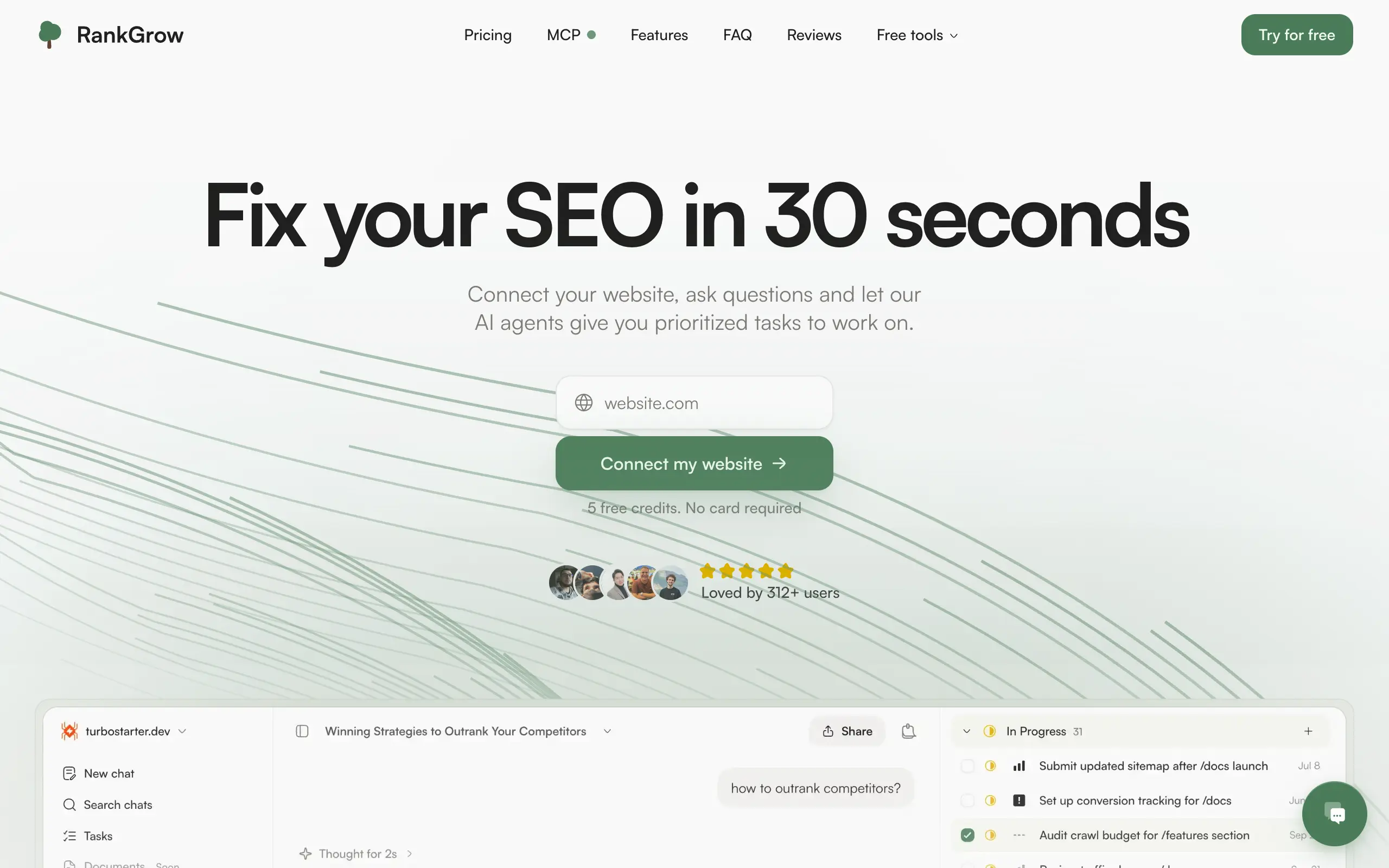
RankGrow
Fix your SEO with AI agents - connect Search Console, get prioritized tasks, and grow organic traffic 📈
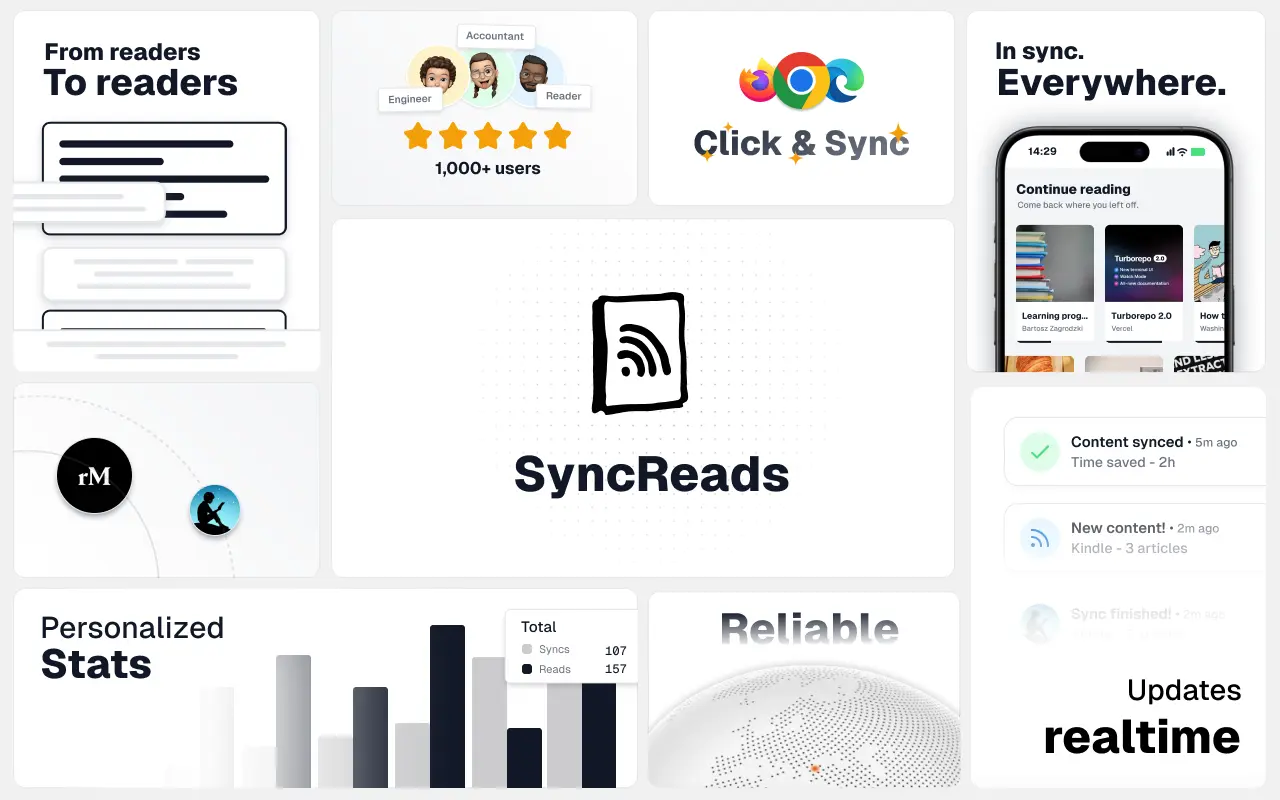
SyncReads
Sync your favorite content for distraction-free reading, save time and replace multiple apps. Anytime, anywhere 🔄

Socialcrawl
Get clean, structured data from 21 platforms like TikTok, Instagram, and YouTube with a single request 📊
Statiko
Monitor any Telegram channel in real time - track posts, edits, deletions, and growth with AI recaps 📡
Shibui
AI website builder - describe your business, pick a niche template, edit by chatting, and publish instantly ✨
Pro Service
Find verified home service professionals, compare quotes, and pay securely through escrow - built for Brazilians across the US 🏠
RankGrow
Fix your SEO with AI agents - connect Search Console, get prioritized tasks, and grow organic traffic 📈
SyncReads
Sync your favorite content for distraction-free reading, save time and replace multiple apps. Anytime, anywhere 🔄
Socialcrawl
Get clean, structured data from 21 platforms like TikTok, Instagram, and YouTube with a single request 📊
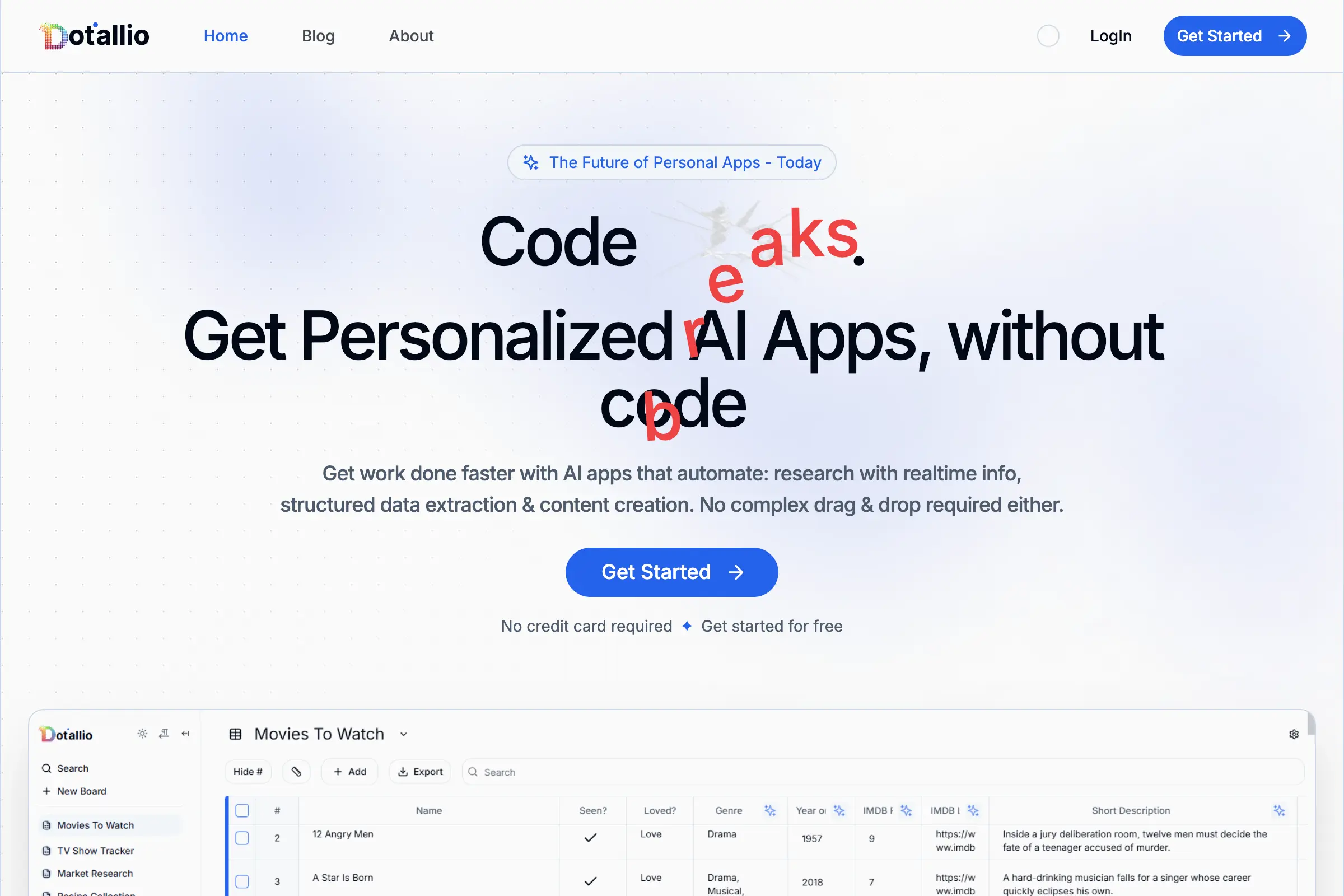
Dotallio
Personalized AI apps that automate research, data extraction, and content creation without code 🤖

Talk to Santa
Enjoy a magical live video chat or receive a unique AI-generated video greeting from Santa Claus 🎅

pozywka.pl
Scalable blog for food journalist, focused on performance and user experience 🌭
zagrodzki.me
Personal blog and portfolio of Bart Zagrodzki, where he shares his knowledge and work 💼

TurboStarter
Ship your startup everywhere. In minutes.
HTML to Markdown
Convert HTML to Markdown with ease, directly in your browser 📄
Dotallio
Personalized AI apps that automate research, data extraction, and content creation without code 🤖
Talk to Santa
Enjoy a magical live video chat or receive a unique AI-generated video greeting from Santa Claus 🎅
pozywka.pl
Scalable blog for food journalist, focused on performance and user experience 🌭
zagrodzki.me
Personal blog and portfolio of Bart Zagrodzki, where he shares his knowledge and work 💼
TurboStarter
Ship your startup everywhere. In minutes.
HTML to Markdown
Convert HTML to Markdown with ease, directly in your browser 📄
Omichat
Chat with 50+ AI models, including ChatGPT and Claude, in one place - switch models anytime without losing context 🤖
Claude Fast
Supercharge your Claude Code with 6x effective context window and specialized AI agents 🤖

EmojAI
AI-powered emoji picker with smart, context-aware suggestions 🤖

Solohacker
Autonomous company launcher - AI agents work 24/7, escalate what matters, and you stay in control 🤖

BeRawi: Storytelling Coach
Practice storytelling daily with instant feedback to sound clearer, more engaging, and confident 🎤
Omichat
Chat with 50+ AI models, including ChatGPT and Claude, in one place - switch models anytime without losing context 🤖
Claude Fast
Supercharge your Claude Code with 6x effective context window and specialized AI agents 🤖
EmojAI
AI-powered emoji picker with smart, context-aware suggestions 🤖
Solohacker
Autonomous company launcher - AI agents work 24/7, escalate what matters, and you stay in control 🤖
BeRawi: Storytelling Coach
Practice storytelling daily with instant feedback to sound clearer, more engaging, and confident 🎤

Connect with like-minded people
Join our community to get feedback, support, and grow together with 1,000+ builders on board, let's ship it!
Join usShip your startup everywhere. In minutes.
Don't burn tokens on setup and start building features on day one.