Vestline
Sends private company employees plain-English updates on equity, dilution, and funding rounds. Founders stop repeating the same cap table answers monthly.
Vestline is a B2B tool that sends private company employees plain-English updates about their equity, dilution and funding rounds, so founders stop answering the same cap table questions every month. In 2026 it has real potential because more startups grant equity broadly, employees are more financially literate about options than they were a few years ago, and cap table software still talks to investors and lawyers rather than to the people holding the options. The best framing for this idea is employee equity communication software for private companies.
Key takeaways
- Target customer: founders and people-ops leads at venture-backed startups with roughly 20 to 200 employees who grant options to most of the team.
- Pricing angle: a flat monthly fee per company, tiered by headcount, so the buyer never feels punished for granting equity broadly.
- Biggest risk: trust and accuracy. One wrong number about someone's equity is worse than no update at all.
- Time to MVP: about 4 to 6 weeks for a solo founder using a starter kit, assuming you begin with manual cap table imports instead of live integrations.
What problem does employee equity communication software solve?
Employees at private companies hold paper wealth they usually do not understand, and founders end up as the unpaid support desk. Every funding round, 409A refresh or all-hands triggers the same questions: what happened to my percentage, what is dilution, what is my strike price, when can I exercise?
The cost is not only the founder's time. Confused employees undervalue their compensation, make poor exercise decisions or quietly assume the worst. Equity is meant to retain people, and it fails at that when nobody can explain it.
Who is Vestline for?
The ideal customer is a seed to Series B startup with 30 to 150 employees, where the founder or head of people still answers equity questions personally. The buyer is typically the CEO, COO or a people lead. The users are employees who got an offer letter with a number of options and never really understood it.
Companies below roughly 15 people tend to handle this over coffee. Companies above a few hundred often have a dedicated equity team or an enterprise platform. The middle is underserved.
What do teams do today, and why does it fail?
The current workarounds are predictable:
- A one-time onboarding slide: it is forgotten within a month and never updated after a round.
- A shared FAQ doc: generic, not personalized, and rarely read.
- Founder Slack answers: accurate but repetitive, and they interrupt real work.
- Cap table platform employee portals: they show grants and vesting but seldom explain what a round means for a specific person.
The core failure is that none of these are proactive and personal. Employees have to go looking, and most do not know what to ask.
Is there a market gap for startup equity education tools in 2026?
Yes, but it is a gap between existing categories, not an empty field. Cap table management products such as Carta and Pulley are built around the company's records, compliance and investor workflows. Their employee views exist, but communication is secondary to record keeping.
Several shifts make the timing reasonable:
- Broader equity grants: more companies give options below the executive level, which widens the audience that needs explanation.
- Longer private lifetimes: companies stay private longer, so employees hold options for years and face more rounds, refreshes and exercise decisions.
- Transparency expectations: employees increasingly ask about runway, valuation and dilution, and founders want a consistent answer.
- Cheap language generation: drafting a clear, personalized explanation of a round used to require a human. Now a model can produce a first draft that a founder reviews in minutes.
The honest caveat: incumbents could add a better communication layer. Your defense is to be the best at one narrow job rather than a broader equity platform.
What should the first version of Vestline include?
Build the smallest product that makes an employee say, "Oh, that is what that round did to my stake." That is the aha moment: a personal, plain-English explanation right after a real event, with their own numbers.
Cap table import
Upload a CSV or spreadsheet export of grants, share classes and vesting so the product knows each employee's position without live integrations.
Round explainer
Turn a funding round's terms into a plain-English update, personalized with each person's before and after ownership.
Employee equity page
A private page per employee showing grants, vesting progress, a glossary and answers to common questions.
Founder review and send
A draft-then-approve flow so the founder edits and sends updates by email, with a record of what was said.
What should you cut from the MVP?
Cut live cap table integrations, tax modeling, exercise simulators, secondary sale tools and mobile apps. Each of these is a real product on its own. Start with import by CSV and a human approving every message.
Do not let the AI send anything unreviewed. The founder is the publisher, and the tool is the drafting and delivery assistant.
How is Vestline different from cap table software and spreadsheets?
The unique selling proposition is simple: Vestline is the communication layer for equity, not the system of record. It answers the question employees actually have, at the moment they have it, without the founder retyping the same explanation.
| Option | Personalized per employee | Proactive updates | Plain-English explanations | Founder time saved |
|---|---|---|---|---|
| Vestline | ✅ | ✅ | ✅ | High |
| Spreadsheet plus Slack | ❌ | ❌ | Founder writes it | Low |
| Cap table platform portal | ✅ | Limited | Mostly raw data | Medium |
| Static FAQ doc | ❌ | ❌ | Generic | Low |
| Lawyer or advisor Q&A | Sometimes | ❌ | Depends | Costly |
The position works only if you stay neutral about where the data lives. Accept exports from whichever cap table tool the company uses, and you avoid competing head on with the system of record.
How would Vestline make money?
Charge the company, not the employee. The buyer has a clear pain (founder time) and a budget line, while employees will not pay to understand their own compensation.
Pricing options
- Flat tiers by headcount: for example, assuming $99 per month up to 50 employees and $249 up to 150. It is predictable, and founders understand it instantly.
- Per-employee pricing: something like $2 to $4 per employee monthly scales with value, but it can make the founder hesitate to add people, which is the wrong incentive.
- Annual plan with onboarding: a higher annual price that includes a guided setup and a first round communication. This suits companies about to raise.
If you charge $149 per month and 40 companies subscribe, that is about $6,000 monthly revenue. Treat that as an illustration, not a forecast. What to measure is how many trials send a real update within the first two weeks.
Which growth channel works first?
Start with direct outreach to founders who just announced a round, plus referrals from startup lawyers, fractional CFOs and people-ops consultants. These people see the confusion firsthand and can recommend a tool without being sold to. Content that explains dilution in plain language also supports search over time, but it is slower.
How do you validate Vestline before building it?
You can learn most of what matters in two weeks without writing code.
Interview ten founders and people leads
Ask how often equity questions come up, who answers them and what happened after their last round. Listen for specific, recent stories rather than general agreement.
Interview five employees
Ask what they understand about their options and what they wish someone had explained. This confirms the user need, not only the buyer's complaint.
Write one real update by hand
Offer a founder who is about to announce a round a manually written, personalized update for each employee. If they find it valuable, you have the product's core.
Launch a landing page and waitlist
State one promise: stop answering the same cap table questions. Send interviewees there and measure how many join without prompting.
Ask for a pre-sale
Offer a discounted annual plan to three to five companies. A paid commitment, even small, is stronger evidence than ten enthusiastic calls.
What tech stack should you use to build Vestline?
Use a conventional full-stack TypeScript setup: a web app with a relational database, transactional email, file uploads for CSVs and an AI model for drafting. The product is mostly forms, data, permissions and email, which is exactly the undifferentiated work a starter kit handles.
TurboStarter gives you a ready-made monorepo for web and mobile apps with the foundations already wired. For Vestline, the relevant pieces are authentication for founders and employees, organizations so each company is its own tenant, billing for subscriptions and emails for delivering updates. That leaves your time for the explanation engine and the trust model.
Which AI approach fits?
Best for drafting round explanations and answering employee questions. Quality is high and setup is fast, but you must send only the minimum necessary data, keep a human approval step and check your provider's data retention terms.
Best for a first version if you want zero hallucination risk. Parameterized templates with computed numbers are fully predictable, but they feel stiff and need manual work for each new round type.
A sensible path is to compute every number deterministically in code, and let the model only write the surrounding prose. Never let it do the arithmetic.
What does the core data model look like?
create table grants (
  id uuid primary key,
  organization_id uuid not null,
  employee_id uuid not null,
  share_class text not null,
  shares_granted bigint not null,
  strike_price numeric(12,4),
  vesting_start date not null,
  cliff_months int not null default 12,
  vesting_months int not null default 48
);

create table rounds (
  id uuid primary key,
  organization_id uuid not null,
  name text not null,
  announced_at date not null,
  pre_money numeric(16,2),
  amount_raised numeric(16,2),
  post_round_fully_diluted bigint not null
);
Keep calculations in a tested pure function that takes grants and a round, and returns before and after ownership. Store every sent update so the founder can see what each person was told.
What could make Vestline fail?
Biggest risk: a wrong or misleading number
If Vestline tells an employee something inaccurate about their equity, the damage lands on the founder, and it may create legal or tax confusion. Mitigate it with deterministic calculations, mandatory founder approval before any send, clear wording that updates are informational and not tax or legal advice, and review by a startup lawyer of your templates and terms.
The other real risks:
- Incumbents add the feature: cap table platforms could ship better employee messaging. Stay tool-agnostic, move faster on wording and tone, and build workflow features they will not prioritize.
- Infrequent usage: updates cluster around rounds, so a customer may log in only a few times a year. Add recurring value, such as onboarding explanations for new hires, vesting milestone notes and an always-available Q&A page.
- Data sensitivity and sales friction: cap tables are confidential. Offer minimal data collection, role-based access, a clear security page and a simple data deletion process before asking for trust.
What is the 30-day plan to launch Vestline?
Week 1: validate
Complete the founder and employee interviews, publish the landing page and hand-write one real update for a friendly company.
Week 2: build the foundation
Set up the app with TurboStarter, configure organizations, billing and email, and design the grant and round data model.
Week 3: build the core loop
Ship CSV import, the ownership calculation, the round explainer draft and the founder review screen.
Week 4: onboard design partners
Run three to five companies through a real update, collect feedback on clarity and trust, and convert the best fits to paid plans.
Start with the narrowest version: one import, one round update, one email. If employees read it and founders stop answering the same questions, you have the beginning of a real business in employee equity communication software.
FAQ
Interview founders who raised in the last year and ask who answered equity questions afterward. Then hand-write a personalized update for one company and see whether they would pay to repeat it. A small pre-sale is the strongest signal.
Flat monthly tiers by headcount are the safest start, for example somewhere between $99 and $250 per month depending on company size. Test with design partners before fixing numbers. The right price is one a founder approves without a procurement process.
Cap table platforms such as Carta and Pulley are the nearest alternatives, along with spreadsheets, shared docs and founder explanations in Slack. Most of them focus on records and compliance rather than proactive, personalized explanation. Your edge is focus on communication.
A TypeScript web app with a relational database, transactional email, file upload and an AI model for drafting prose fits well. Starting from a kit like TurboStarter covers authentication, organizations, billing and emails so you can focus on the calculation and messaging logic.
A solo developer can usually ship a working MVP in four to six weeks if live integrations are excluded. Costs are mostly your time plus modest hosting, email and AI usage fees. Legal review of your terms and templates is the one cost worth budgeting early.
It can drift toward that if you are not careful. Keep the content informational, avoid tax recommendations, state that clearly in the product and have a startup lawyer review your templates and terms before launch.
More 🏢 B2B Application SaaS ideas
Discover more innovative b2b application SaaS ideas that are trending in 2026. Each idea is AI-generated with market validation and growth potential to help you find your next profitable venture faster than competitors.
Your competitors are building with TurboStarter
Below are some of the SaaS ideas that have been generated and built with our starter kit.

Monitor any Telegram channel in real time - track posts, edits, deletions, and growth with AI recaps 📡

AI website builder - describe your business, pick a niche template, edit by chatting, and publish instantly ✨

Find verified home service professionals, compare quotes, and pay securely through escrow - built for Brazilians across the US 🏠
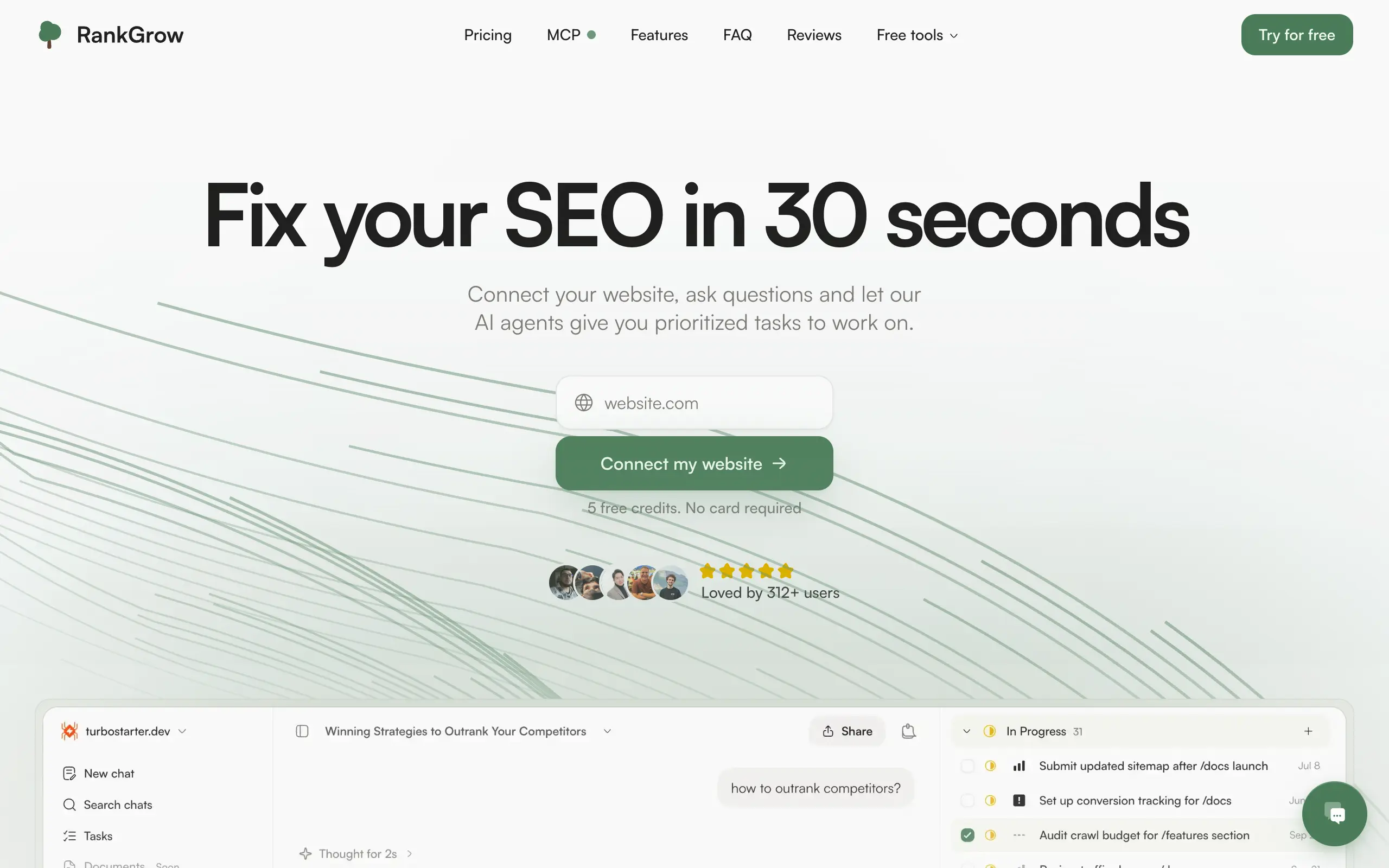
Fix your SEO with AI agents - connect Search Console, get prioritized tasks, and grow organic traffic 📈

Sync your favorite content for distraction-free reading, save time and replace multiple apps. Anytime, anywhere 🔄

Get clean, structured data from 21 platforms like TikTok, Instagram, and YouTube with a single request 📊
Monitor any Telegram channel in real time - track posts, edits, deletions, and growth with AI recaps 📡
AI website builder - describe your business, pick a niche template, edit by chatting, and publish instantly ✨
Find verified home service professionals, compare quotes, and pay securely through escrow - built for Brazilians across the US 🏠
Fix your SEO with AI agents - connect Search Console, get prioritized tasks, and grow organic traffic 📈
Sync your favorite content for distraction-free reading, save time and replace multiple apps. Anytime, anywhere 🔄
Get clean, structured data from 21 platforms like TikTok, Instagram, and YouTube with a single request 📊

Personalized AI apps that automate research, data extraction, and content creation without code 🤖

Enjoy a magical live video chat or receive a unique AI-generated video greeting from Santa Claus 🎅

Scalable blog for food journalist, focused on performance and user experience 🌭

Personal blog and portfolio of Bart Zagrodzki, where he shares his knowledge and work 💼

Ship your startup everywhere. In minutes.

Convert HTML to Markdown with ease, directly in your browser 📄
Personalized AI apps that automate research, data extraction, and content creation without code 🤖
Enjoy a magical live video chat or receive a unique AI-generated video greeting from Santa Claus 🎅
Scalable blog for food journalist, focused on performance and user experience 🌭
Personal blog and portfolio of Bart Zagrodzki, where he shares his knowledge and work 💼
Ship your startup everywhere. In minutes.
Convert HTML to Markdown with ease, directly in your browser 📄

Chat with 50+ AI models, including ChatGPT and Claude, in one place - switch models anytime without losing context 🤖

Supercharge your Claude Code with 6x effective context window and specialized AI agents 🤖

AI-powered emoji picker with smart, context-aware suggestions 🤖

Autonomous company launcher - AI agents work 24/7, escalate what matters, and you stay in control 🤖

Practice storytelling daily with instant feedback to sound clearer, more engaging, and confident 🎤
Chat with 50+ AI models, including ChatGPT and Claude, in one place - switch models anytime without losing context 🤖
Supercharge your Claude Code with 6x effective context window and specialized AI agents 🤖
AI-powered emoji picker with smart, context-aware suggestions 🤖
Autonomous company launcher - AI agents work 24/7, escalate what matters, and you stay in control 🤖
Practice storytelling daily with instant feedback to sound clearer, more engaging, and confident 🎤

Connect with like-minded people
Join our community to get feedback, support, and grow together with 1,000+ builders on board, let's ship it!
Join usShip your startup everywhere. In minutes.
Don't burn tokens on setup and start building features on day one.