BarqWatch
A community-powered electricity and water outage alert app for neighborhoods. It provides local reports, predicted restoration windows and outage-prep checklists.
Why a community-powered outage alert app matters
BarqWatch is a community-powered electricity and water outage alert app designed for neighborhoods that need faster, more trustworthy visibility into service interruptions. Instead of waiting for an official announcement, calling neighbors, or refreshing social media feeds, residents can report an outage, see nearby confirmations, review predicted restoration windows, and follow practical outage-prep checklists.
For households, small businesses, landlords, schools, pharmacies, and community organizers, outages are not merely inconvenient. A loss of power can affect heating, refrigeration, phone charging, internet connectivity, lighting, medical devices, and daily work. Water interruptions can create equally urgent problems around hygiene, food preparation, and household planning.
The primary opportunity for BarqWatch is to become the trusted local layer between residents and utility information. It does not need to replace utility providers. It can make fragmented, delayed, or hard-to-access outage information more actionable at the neighborhood level.
The core value proposition
BarqWatch helps people answer three urgent questions quickly: “Is this outage affecting others?”, “When might service return?”, and “What should I do now?”
A strong outage alert app should prioritize speed, local accuracy, transparency, and useful guidance. The product’s success depends less on building a large collection of features and more on creating a reliable information loop:
- A resident reports an outage.
- Nearby residents confirm or dispute the report.
- BarqWatch groups reports into a likely incident.
- Users receive clear status updates and a confidence-aware restoration estimate.
- Residents can prepare, communicate, and safely report changes.
This approach turns isolated frustration into structured local intelligence.
Target audience for BarqWatch
The ideal BarqWatch audience is broad because electricity and water outages affect almost everyone. However, the product should not market to every possible user with the same message. Different groups have different levels of urgency, technical confidence, and willingness to contribute reports.
Primary audience: neighborhood residents
The primary audience is residents living in urban and peri-urban neighborhoods where outages may occur with limited advance notice or where official information is difficult to find in one place.
These users want a simple answer in seconds. They are likely to search for phrases such as:
- electricity outage near me
- water outage alert app
- power outage today
- when will electricity come back
- neighborhood outage reports
- outage restoration estimate
- local utility interruption updates
For this audience, the mobile experience must be fast and low-friction. A user should be able to open BarqWatch, select electricity or water, identify their approximate location, and submit a report in under a minute.
The application should also work well on slower connections and lower-cost mobile devices. In the earliest launch market, reducing data usage and avoiding a heavy interface may matter more than sophisticated visual effects.
Secondary audience: small businesses and essential local services
Small businesses often experience a direct financial impact from outages. Grocery stores, cafés, salons, workshops, pharmacies, and home-based businesses may lose sales, struggle with payments, or risk spoiled inventory during extended power interruptions.
A small business owner is more likely to value features such as:
- outage duration tracking
- status alerts for a saved business location
- printable or shareable outage logs
- refrigeration and backup power checklists
- historical reliability patterns by neighborhood
- notifications when nearby reports indicate restoration
This audience can become an important monetization segment later, especially if BarqWatch develops a lightweight business plan with multi-location monitoring and exportable incident records.
Tertiary audience: landlords, building managers, and community leaders
Property managers and building administrators need a clearer view across multiple tenants or buildings. They may also be able to confirm whether an outage is limited to one apartment building, a street, or an entire district.
Community leaders can help solve the early-stage marketplace challenge. A neighborhood group administrator, local organization, or building manager can encourage residents to download BarqWatch and confirm reports. This creates the density needed for stronger outage detection.
High-need users who require careful product design
BarqWatch should explicitly consider users with higher safety or accessibility needs:
- people relying on powered medical equipment
- older adults living alone
- households with infants or young children
- users with mobility, vision, or connectivity limitations
- people who need electricity for remote work or education
- residents storing temperature-sensitive medication or food
The app should not imply that it can provide emergency services or guarantee restoration timelines. Instead, it should offer calm, practical guidance and point people toward appropriate official emergency channels where relevant.
The market gap in electricity and water outage information
In many markets, outage information exists but is difficult to use. Utility announcements may be posted late, delivered through fragmented social channels, limited to broad service areas, or unavailable during unplanned incidents. Residents then rely on word of mouth, neighborhood chats, calls to customer support, and assumptions.
That creates a clear gap between official utility communication and what people need in the moment.
A useful outage alert app bridges this gap by organizing local signals without pretending that crowdsourced data is automatically perfect.
| User problem | Current workaround | Weakness | BarqWatch opportunity | User benefit |
|---|---|---|---|---|
| “Is my area affected?” | Ask neighbors | Slow and fragmented | Map clustered reports | Faster local confirmation |
| “When will service return?” | Search social media | Unverified updates | Show confidence-aware estimates | Better planning |
| “What should I do now?” | Search the web | Information overload | Contextual checklists | Practical next steps |
The strongest market gap is not simply “there is no outage map.” Large maps already exist in some places. The deeper gap is a lack of hyperlocal, trust-calibrated, community-verified service information for the neighborhoods that receive the least reliable communication.
BarqWatch can differentiate by focusing on:
- neighborhood-level reports rather than only city-level announcements
- electricity and water interruptions in one familiar product
- restoration predictions that explain uncertainty
- local-language and low-bandwidth accessibility
- practical preparation guidance instead of alert fatigue
- transparent reporting confidence rather than false certainty
Why timing makes this SaaS idea relevant
Consumers increasingly expect real-time status information. They can track deliveries, transportation, banking transactions, and weather alerts from a phone. Infrastructure disruptions are one of the remaining areas where local information is often inconsistent.
At the same time, modern geospatial APIs, push notifications, serverless infrastructure, and machine learning-assisted anomaly detection make it more feasible for a small product team to build a useful outage intelligence platform.
For market validation, use credible sources such as national energy regulators, municipal water providers, civil protection agencies, the World Bank, and utility annual reports. When publishing market-size claims or reliability statistics, cite the source directly with a clear format such as:
Source: utility annual reliability report, publication year, service area, and metric definition.
Avoid using a generic outage statistic without explaining whether it measures planned shutdowns, unplanned interruptions, customer-hours affected, or reported household experiences.
The BarqWatch product solution
BarqWatch should be positioned as a local outage intelligence and preparedness platform, not merely a complaint board. Its central product experience should make reporting easy while helping users understand what the available signals mean.
Core user journey
A typical user flow can be structured around six moments:
- The user notices power or water loss.
- They open BarqWatch to see whether others nearby are affected.
- They confirm an active outage or submit a new report.
- The platform shows the incident’s size, age, category, and confidence level.
- The user subscribes to updates for their home, workplace, or family location.
- When service returns, they confirm restoration and close the local loop.
This flow produces valuable data at every stage. But it should respect users’ time. The report interface should not ask for a long form when a person is dealing with an immediate disruption.
Essential MVP features
The initial minimum viable product should solve the immediate “what is happening?” problem exceptionally well.
One-tap outage reporting
Allow residents to report electricity or water loss with location, start time, and optional notes.
Neighborhood outage map
Show active incidents through privacy-preserving geographic clusters instead of exposing exact home locations.
Community confirmation
Let nearby users confirm that service is out, restored, or partially affected.
Restoration status
Display official updates where available and a clearly labeled community-based restoration estimate.
Preparedness checklists
Provide actionable guidance for food safety, charging, water storage, lighting, and household communication.
Smart notifications
Notify users about new nearby incidents, meaningful changes, and restoration confirmations.
Outage reporting that users can trust
The report form should capture only the fields required to produce a useful signal:
- outage type, such as electricity or water
- approximate location
- report time
- whether the interruption is total or partial
- whether neighbors appear affected
- optional notes
- optional photo evidence when it is safe and appropriate
Do not make photos mandatory. Users may have limited battery, poor connectivity, safety concerns, or no need to document the outage visually.
A useful report can be represented as a structured event:
type OutageReport = {
  serviceType: "electricity" | "water"
  status: "out" | "partial" | "restored"
  geohash: string
  reportedAt: string
  confidenceSignals: {
    userReputation: number
    nearbyConfirmations: number
    recencyScore: number
  }
  note?: string
}
A geohash or similar geographic grid can help cluster nearby reports without permanently storing a user’s precise home coordinates. This is particularly important for a consumer app that handles sensitive location data.
Community verification and incident clustering
Crowdsourcing is powerful only when it is designed defensively. BarqWatch should never treat one report as confirmed fact. Instead, it should combine several confidence signals.
A likely outage incident may be created when the system detects:
- multiple independent reports in a small geographic area
- closely timed submissions
- matching service type and outage status
- recurring reports from trusted users
- confirmation from users who previously reported service restoration accurately
- an official notice that overlaps the same area and time window
The app should display understandable language, such as:
- “Reported by 14 nearby users in the last 20 minutes”
- “High confidence based on recent local confirmations”
- “Restoration estimate is community-based and may change”
- “Official confirmation not yet available”
This language is more trustworthy than claiming certainty the platform does not possess.
Predicted restoration windows
Restoration prediction is a major differentiator, but it is also the feature with the greatest trust risk. A poor prediction can create frustration or even lead users to make unsafe decisions.
The best product decision is to present a restoration window, not a precise promised time. For example:
- “Likely restoration window: 18:00–21:00”
- “Confidence: medium”
- “Based on similar local incidents, recent confirmations, and available provider updates”
The prediction system can begin with simple heuristics before introducing advanced machine learning.
Start with rule-based estimates using incident type, historical neighborhood duration, recent report velocity, and restoration confirmations from nearby users.
As BarqWatch collects reliable historical data, use supervised models to estimate likely restoration windows. Include variables such as time of day, weather context where applicable, planned maintenance records, service type, geography, and incident scale.
Never present a predicted time as a guarantee. Show a range, explain the data source, label confidence, and update the estimate when new reports arrive.
A model should be evaluated using operational metrics, not just generic accuracy. Useful measures include median absolute error, percentage of restored incidents within the predicted window, prediction calibration by confidence level, and user-reported trust after an incident closes.
Outage-prep checklists that are actually useful
Checklists should be dynamic rather than generic. A user who reports a 15-minute electrical interruption needs different advice than someone facing a multi-hour water outage.
For an electricity outage, useful checklist categories include:
- charge essential devices when safe power is available
- keep refrigerator and freezer doors closed
- use battery lights rather than candles where possible
- protect sensitive devices with surge protection after restoration
- check on family members who may need assistance
- avoid operating generators indoors or near doors and windows
For water outages, the checklist can include:
- reserve drinking water for essential use
- postpone high-water activities where possible
- store safe water in clean covered containers
- follow local boil-water or public health notices when issued
- avoid assuming water quality is unchanged after service restoration
Safety and medical guidance
BarqWatch should provide general preparedness information, not medical, electrical, or emergency-response advice. For life-threatening situations, users must contact local emergency services or qualified professionals.
Building trust, privacy, and data quality
Trust is the product. If users believe reports are unreliable, too vague, or invasive, they will return to informal neighborhood chats.
BarqWatch must build credibility through product behavior, not marketing language alone.
Use privacy-preserving location design
Precise home coordinates should not be visible to other users. The public map should show aggregated neighborhood cells, street-level clusters, or generalized service zones.
Recommended privacy principles include:
- request location only when needed
- allow manual neighborhood selection
- explain why location is collected
- display approximate locations publicly
- allow users to delete their reports where appropriate
- define data retention periods clearly
- minimize data stored for anonymous reporters
- secure account and notification data with modern encryption practices
For a market such as Tajikistan, localization is more than language translation. BarqWatch should consider local address patterns, neighborhood naming conventions, script preferences, mobile network constraints, and the channels people already use to exchange updates.
Prevent misinformation and abuse
Community systems attract both helpful contributors and bad-faith behavior. The moderation strategy should combine automation with human review.
Potential abuse scenarios include:
- false outage reports intended to create panic
- duplicate reporting from the same person
- coordinated misinformation
- political or commercial misuse of comments
- doxxing of utility workers or neighbors
- spam content and irrelevant images
- fake restoration reports
Mitigation mechanisms can include:
- rate limits by device, account, and geographic area
- account reputation scores
- anomaly detection for unusual report bursts
- report confirmation thresholds
- content moderation for free-text notes
- user reporting and blocking controls
- manual review tools for high-impact incidents
- clear community guidelines and enforcement rules
A useful quality model should favor independent local confirmations over raw report volume. Ten submissions from one device are not equivalent to ten users across multiple nearby locations.
Recommended tech stack for an outage alert app
The ideal BarqWatch architecture should support fast iteration at MVP stage while remaining capable of handling location-based queries, real-time updates, notifications, and analytics.
A practical web-first stack can use Next.js with React, then add a mobile application when demand justifies native distribution.
Frontend stack
For the initial user experience, use:
- Next.js for server-rendered pages, API routes, and performant web delivery
- React for interactive reporting, maps, and alert settings
- Tailwind CSS for consistent, fast UI development
- progressive web app capabilities for installability and offline-friendly access
- accessible components with keyboard navigation and readable contrast levels
A progressive web app is a strong MVP choice because users can access it through a link, avoid app store friction, and receive an app-like experience. However, native apps may eventually be better for robust push notifications, background location capabilities, and deeper device integrations.
Backend and data stack
For a lean implementation, Supabase is a compelling option because it combines PostgreSQL, authentication, storage, row-level security, and real-time functionality.
PostgreSQL with PostGIS support is particularly useful for geographic queries. The system needs to answer questions such as:
- Which reports occurred within a neighborhood radius?
- Are there enough recent confirmations to create an incident?
- Which users should receive an alert for this cluster?
- What is the historical restoration duration for similar incidents?
A recommended architecture could include:
- Next.js application layer
- PostgreSQL and PostGIS for structured and geospatial data
- Supabase authentication and real-time subscriptions
- background job processing for clustering, notifications, and model updates
- object storage for optional report images
- analytics warehouse or event platform for product measurement
- error monitoring and uptime alerts for operational reliability
Maps, geocoding, and notifications
Map design is central to the BarqWatch experience. A mapping provider should be selected based on coverage, pricing, geocoding quality, privacy requirements, and offline considerations.
Possible choices include:
- Mapbox for customizable maps and geospatial tooling
- OpenStreetMap data for flexible, community-maintained geographic context
- a regional mapping provider if it offers stronger local address coverage
For push alerts, build a preferences center that lets users control:
- saved locations
- electricity alerts
- water alerts
- incident start notifications
- restoration notifications
- high-confidence-only alerts
- quiet hours
The trade-off is clear. More notifications can improve awareness, but unnecessary alerts create fatigue and uninstall risk. BarqWatch should default to meaningful event updates rather than sending an alert for every single report.
Why TurboStarter can accelerate development
Launching a location-aware consumer SaaS involves much more than a map and a report form. Teams need authentication, billing foundations, application structure, UI patterns, database integration, analytics, and deployment workflows.
TurboStarter can reduce time spent assembling commodity SaaS infrastructure so the team can focus on the differentiating parts of BarqWatch, including outage clustering, trust scoring, local notifications, and neighborhood onboarding.
Monetization strategies for BarqWatch
BarqWatch should start by maximizing usefulness and data density. Charging individual residents too early can slow adoption, especially when the value of the app increases with participation.
A freemium B2C model is likely the best initial direction, with additional B2B and partnership opportunities over time.
Freemium consumer plan
The free tier should include the essential community benefit:
- view nearby active incidents
- submit outage and restoration reports
- receive basic alerts for one saved location
- access standard preparedness checklists
- view recent outage history
A premium plan can offer advanced planning and monitoring features:
- multiple saved locations
- advanced outage history and reliability insights
- earlier alert preferences and custom notification thresholds
- extended historical incident access
- business-oriented outage logs
- family sharing or household alert groups
- ad-free usage, if advertising is used on the free tier
The premium plan should not paywall critical safety information or the ability to report an outage. The community’s health depends on broad participation.
B2B subscriptions
Small businesses, property managers, and local service organizations may pay for capabilities that individual users do not need.
Potential B2B features include:
- monitoring multiple locations
- team notifications
- outage history exports
- incident duration reporting
- business continuity checklists
- API access for larger organizations
- reliability dashboards by service zone
The sales message should focus on operational continuity rather than general convenience. A business needs to know when an incident started, whether it affects nearby areas, and when it is likely safe to resume normal operations.
Utility and municipal partnerships
Partnerships can become a powerful long-term revenue and trust channel. Utilities and municipalities may value a platform that helps them understand resident-reported issues and distribute more targeted updates.
However, BarqWatch should avoid becoming dependent on a single official partner in the early stages. The product must remain useful when official data is unavailable.
Potential partnership offerings include:
- verified utility update channels
- incident communication dashboards
- anonymized aggregate outage feedback
- public preparedness campaigns
- planned maintenance notifications
- API-based integration with service status systems
Any data-sharing arrangement should be transparent. Users should understand whether anonymized aggregate data is shared and retain appropriate privacy controls.
Competitive advantage and unique selling proposition
The strongest BarqWatch USP is not just “report a power outage.” The product should be positioned as:
A privacy-conscious, community-verified outage alert app that gives neighborhoods fast local visibility, realistic restoration windows, and practical preparation guidance for electricity and water interruptions.
This positioning combines three needs that are often handled separately:
- Awareness through local incident reporting.
- Planning through restoration estimates and historical context.
- Preparedness through practical, situation-specific checklists.
How BarqWatch can stand out
| Capability | Generic social posts | Utility status page | BarqWatch advantage | Why it matters |
|---|---|---|---|---|
| Neighborhood detail | Inconsistent | Often broad | Clustered local reports | Faster situational awareness |
| Data confidence | Usually unclear | Official but delayed at times | Transparent confidence labels | More informed decisions |
| Preparedness support | Rare | Limited | Contextual checklists | Action beyond awareness |
| Restoration feedback loop | Manual discussion | Provider controlled | Resident restoration confirmations | More current local status |
The defensible advantage grows over time through a proprietary dataset of anonymized outage patterns, community trust signals, restoration durations, and local service reliability trends. This data advantage is only valuable if collection is ethical, privacy-conscious, and supported by clear user consent.
Key risks and how to mitigate them
Every outage intelligence product faces difficult operational and ethical questions. Addressing them early is essential for long-term trust.
BarqWatch needs report density to create reliable incident clusters. Launch in a small number of targeted neighborhoods, work with local community groups, and incentivize early reporting with useful non-monetary value such as local status visibility and trusted contributor badges.
Begin with broad time windows and conservative confidence labels. Measure error continuously, use official updates when available, and avoid language that implies a guaranteed restoration time.
Use approximate public map locations, minimize precise coordinate retention, provide clear consent controls, and publish a readable privacy policy before large-scale launch.
Send alerts only for meaningful changes, let users tune preferences, and provide quiet hours. A smaller number of high-value notifications is better than constant low-value activity.
Keep community reporting functional without external integrations. Design provider integrations as an enhancement, not a single point of failure.
Legal and operational considerations
Before launch, review local requirements around:
- consumer data protection
- location data handling
- emergency communication claims
- utility branding and trademark usage
- user-generated content moderation
- data retention and deletion requests
- accessibility obligations
- language and disclosure requirements
The platform should make clear that it is an independent information service unless an official partnership explicitly states otherwise. Avoid copying utility branding in ways that imply affiliation.
Metrics that validate the BarqWatch business model
A successful outage alert app should be measured by reliability of user value, not just downloads.
The most important early metrics include:
- activation rate after installation
- percentage of users who save at least one location
- report completion rate
- median time from first report to incident creation
- number of independent confirmations per incident
- restoration confirmation rate
- notification open rate
- weekly active users in launch neighborhoods
- retention after a user experiences an outage
- prediction error by confidence band
- percentage of reports flagged or removed for abuse
A powerful north-star metric could be:
The percentage of active incidents that receive sufficient independent confirmation and a restoration update within the target service area.
This reflects the product’s core promise: helping people turn uncertainty into useful local awareness.
Actionable implementation roadmap
The most effective launch strategy is narrow, local, and evidence-driven. Do not begin by trying to cover an entire country or every infrastructure category. Start where community density and recurring user need can create a meaningful feedback loop.
A practical 90-day launch plan
During the first 30 days, focus on discovery and product foundations. Conduct interviews, map the most common outage scenarios, establish data privacy requirements, and build clickable prototypes. The objective is not to confirm that outages exist. It is to learn whether residents will consistently report and confirm them in a dedicated app.
During days 31 through 60, build the core reporting loop. The first version should include location selection, new outage reports, active incident clusters, confirmation buttons, saved-location alerts, and a basic moderation dashboard. Avoid adding predictive models before there is enough real data.
During days 61 through 90, run a pilot in a limited geographic area. Personally observe how reports emerge during real service interruptions. Review false positives, duplicate reports, location accuracy, language clarity, and notification behavior. This field experience is where the most valuable product decisions will come from.
BarqWatch can become far more than an outage map if it earns neighborhood trust. By combining community verification, transparent restoration estimates, privacy-aware location design, and practical preparedness guidance, the product can help residents make better decisions during electricity and water interruptions.
The winning version of BarqWatch will not promise perfect information. It will provide the clearest, most responsible, and most useful local picture possible when people need it most.
More 👥 B2C Application SaaS ideas
Discover more innovative b2c application SaaS ideas that are trending in 2026. Each idea is AI-generated with market validation and growth potential to help you find your next profitable venture faster than competitors.
Your competitors are building with TurboStarter
Below are some of the SaaS ideas that have been generated and built with our starter kit.
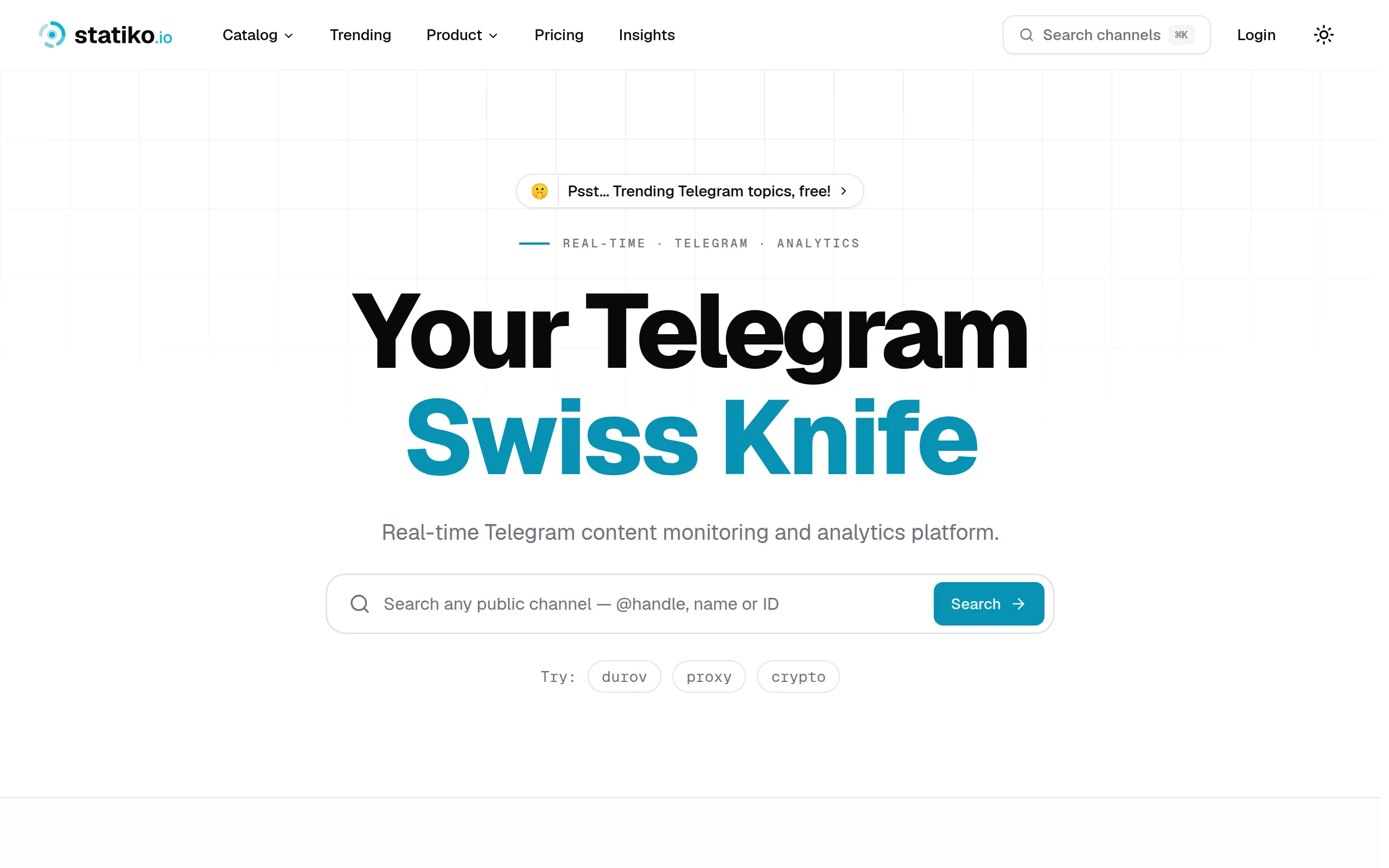
Statiko
Monitor any Telegram channel in real time - track posts, edits, deletions, and growth with AI recaps 📡
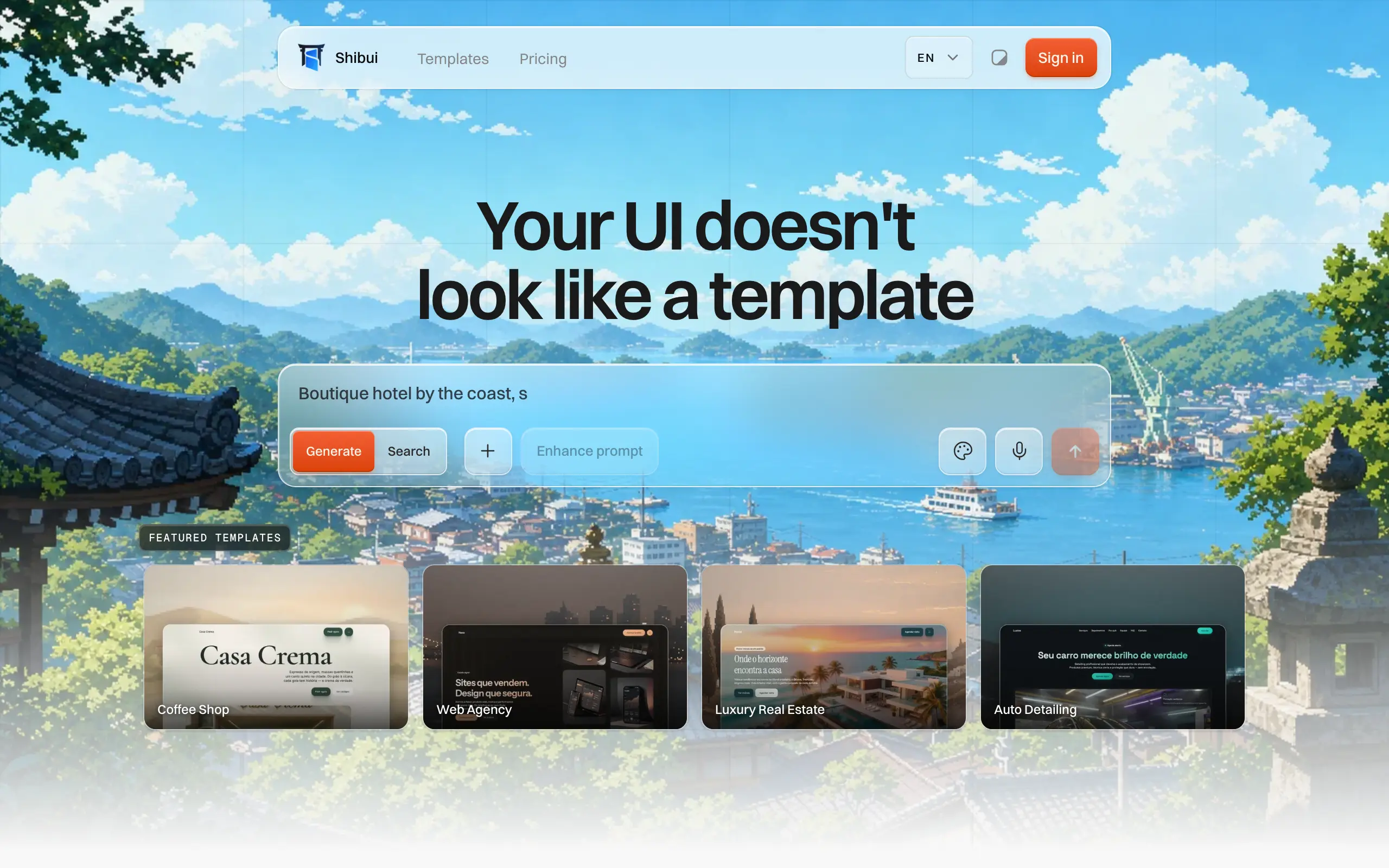
Shibui
AI website builder - describe your business, pick a niche template, edit by chatting, and publish instantly ✨
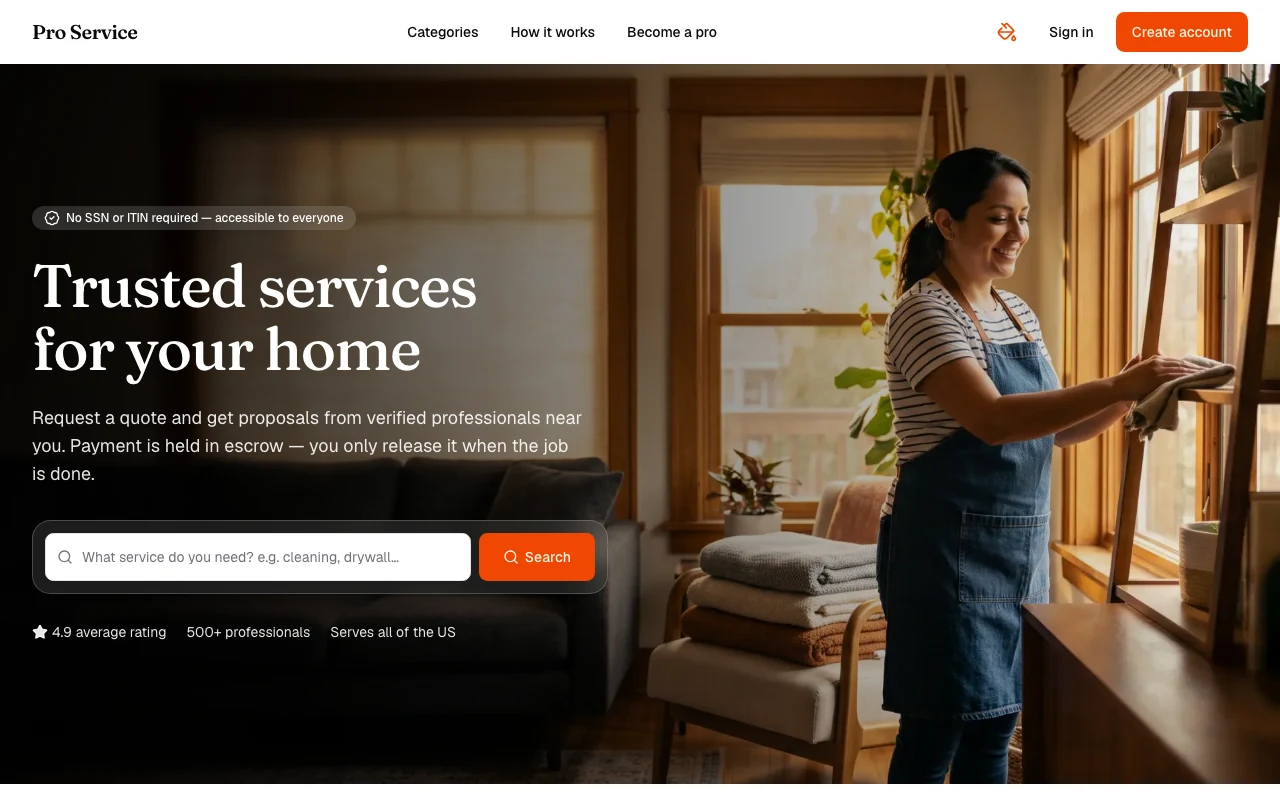
Pro Service
Find verified home service professionals, compare quotes, and pay securely through escrow - built for Brazilians across the US 🏠
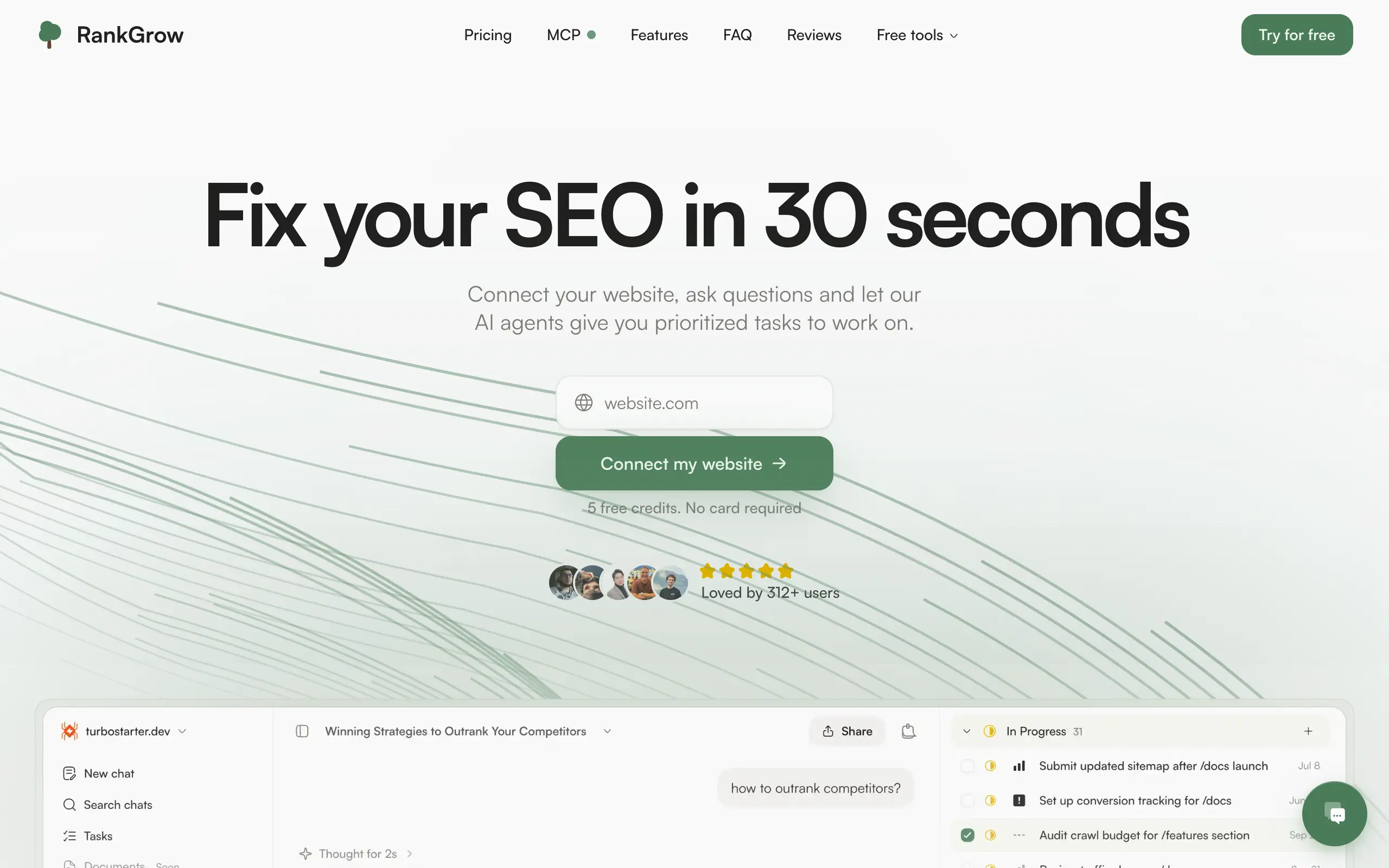
RankGrow
Fix your SEO with AI agents - connect Search Console, get prioritized tasks, and grow organic traffic 📈
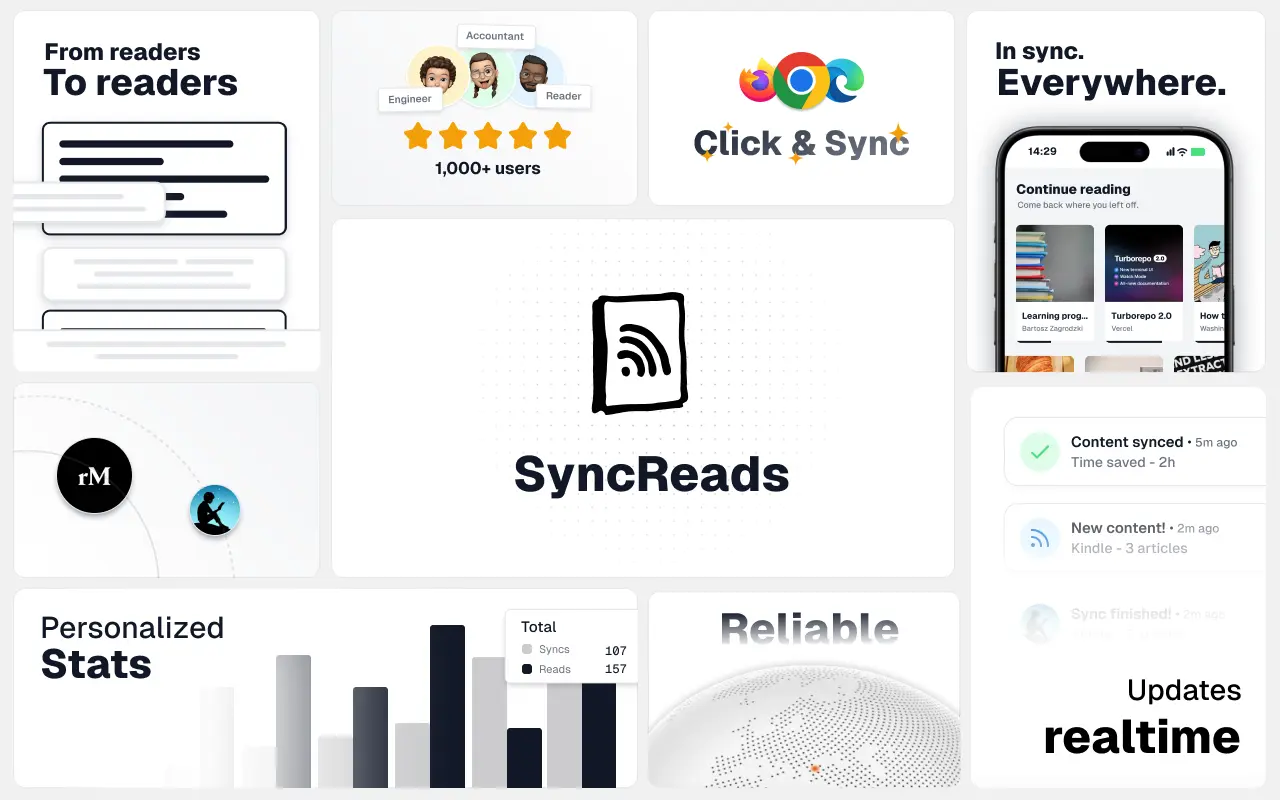
SyncReads
Sync your favorite content for distraction-free reading, save time and replace multiple apps. Anytime, anywhere 🔄
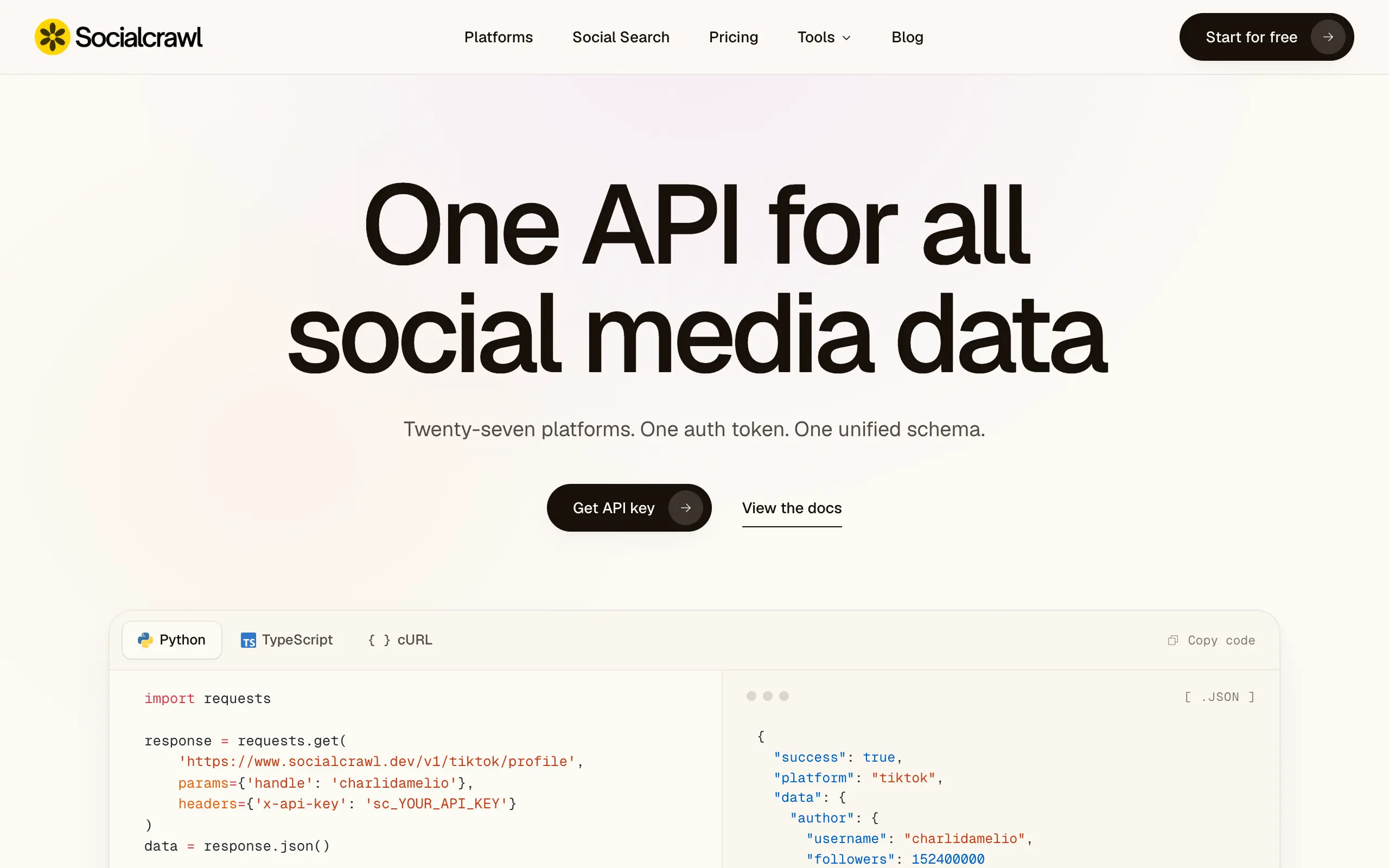
Socialcrawl
Get clean, structured data from 21 platforms like TikTok, Instagram, and YouTube with a single request 📊
Statiko
Monitor any Telegram channel in real time - track posts, edits, deletions, and growth with AI recaps 📡
Shibui
AI website builder - describe your business, pick a niche template, edit by chatting, and publish instantly ✨
Pro Service
Find verified home service professionals, compare quotes, and pay securely through escrow - built for Brazilians across the US 🏠
RankGrow
Fix your SEO with AI agents - connect Search Console, get prioritized tasks, and grow organic traffic 📈
SyncReads
Sync your favorite content for distraction-free reading, save time and replace multiple apps. Anytime, anywhere 🔄
Socialcrawl
Get clean, structured data from 21 platforms like TikTok, Instagram, and YouTube with a single request 📊
Statiko
Monitor any Telegram channel in real time - track posts, edits, deletions, and growth with AI recaps 📡
Shibui
AI website builder - describe your business, pick a niche template, edit by chatting, and publish instantly ✨
Pro Service
Find verified home service professionals, compare quotes, and pay securely through escrow - built for Brazilians across the US 🏠
RankGrow
Fix your SEO with AI agents - connect Search Console, get prioritized tasks, and grow organic traffic 📈
SyncReads
Sync your favorite content for distraction-free reading, save time and replace multiple apps. Anytime, anywhere 🔄
Socialcrawl
Get clean, structured data from 21 platforms like TikTok, Instagram, and YouTube with a single request 📊
Statiko
Monitor any Telegram channel in real time - track posts, edits, deletions, and growth with AI recaps 📡
Shibui
AI website builder - describe your business, pick a niche template, edit by chatting, and publish instantly ✨
Pro Service
Find verified home service professionals, compare quotes, and pay securely through escrow - built for Brazilians across the US 🏠
RankGrow
Fix your SEO with AI agents - connect Search Console, get prioritized tasks, and grow organic traffic 📈
SyncReads
Sync your favorite content for distraction-free reading, save time and replace multiple apps. Anytime, anywhere 🔄
Socialcrawl
Get clean, structured data from 21 platforms like TikTok, Instagram, and YouTube with a single request 📊
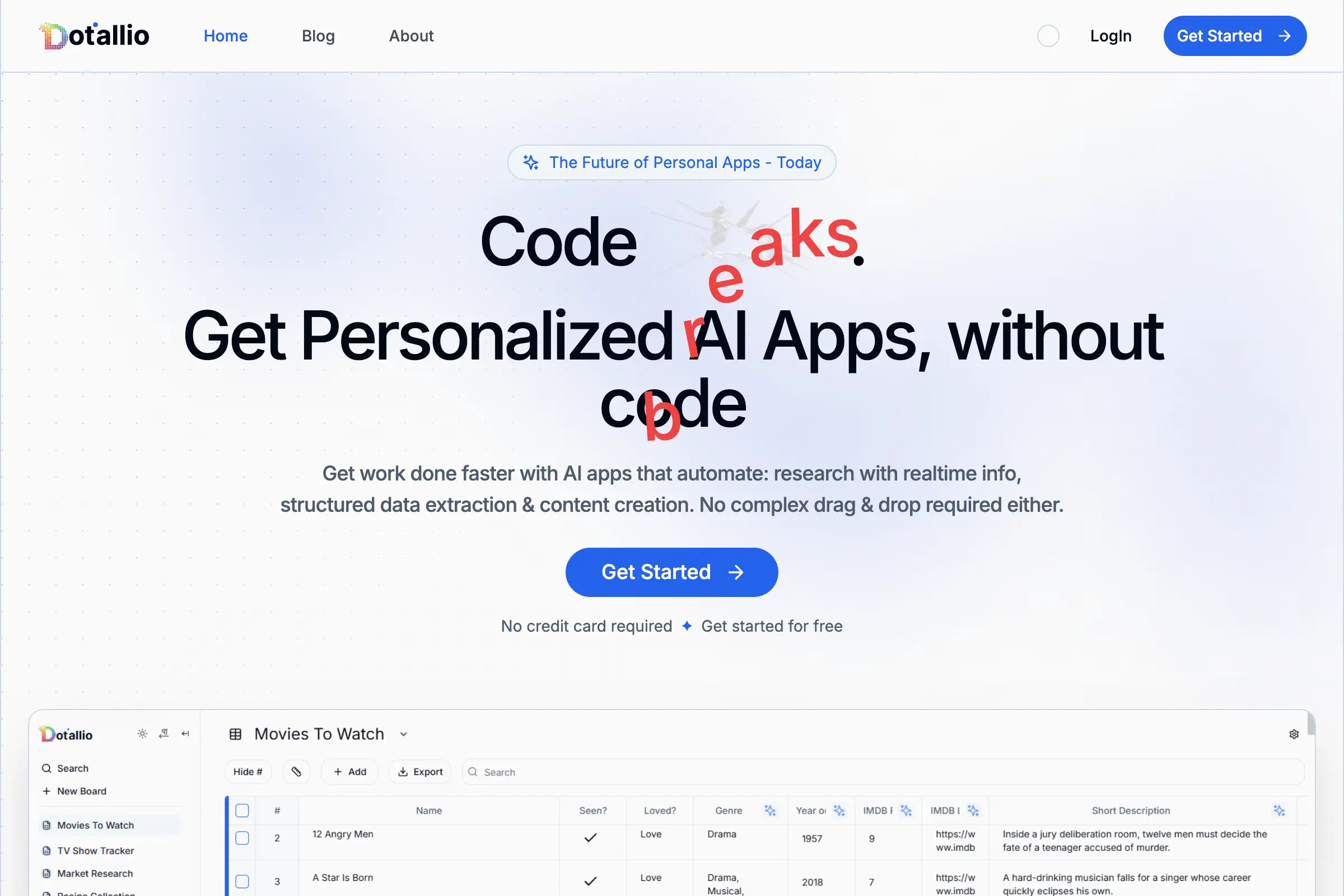
Dotallio
Personalized AI apps that automate research, data extraction, and content creation without code 🤖
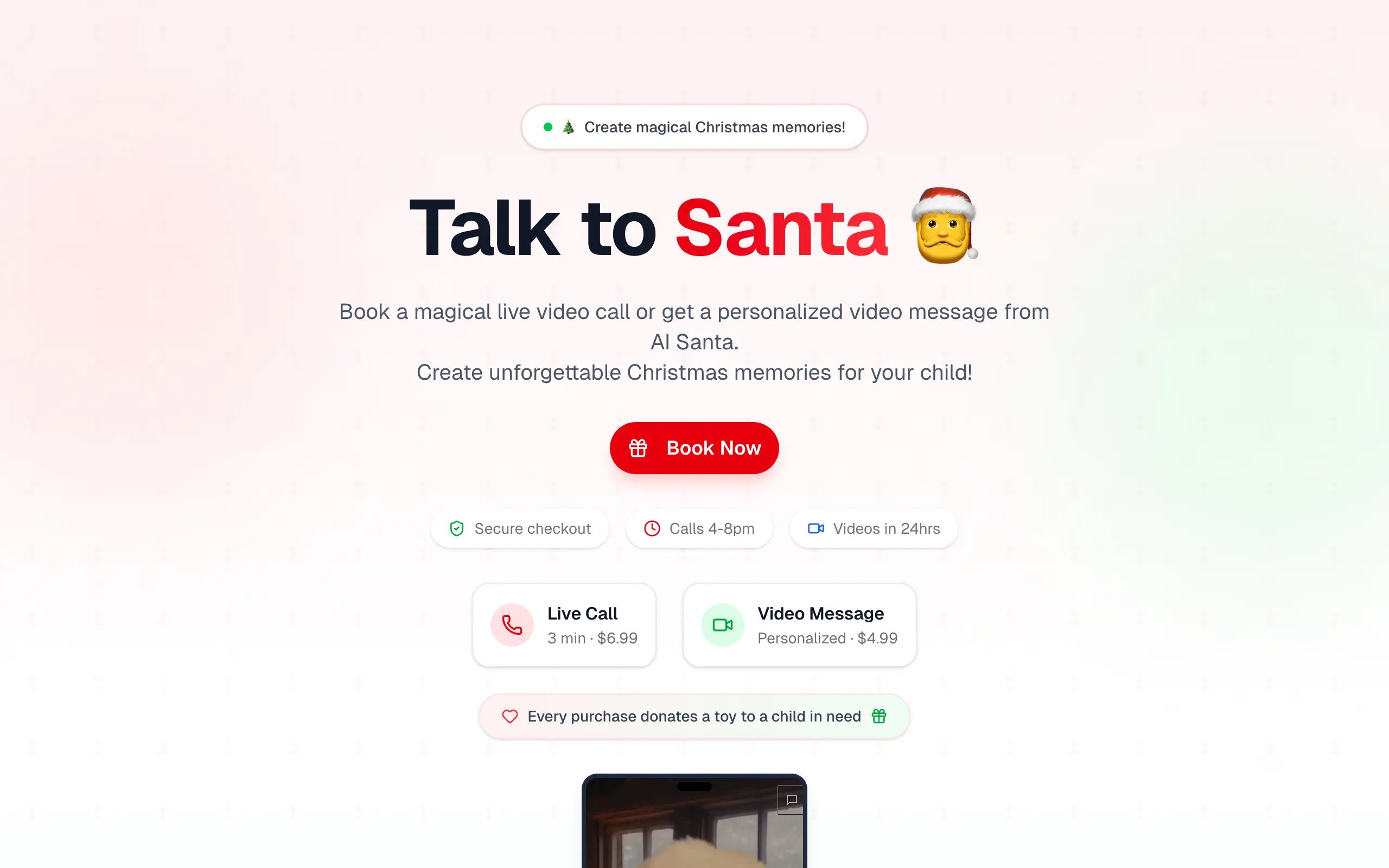
Talk to Santa
Enjoy a magical live video chat or receive a unique AI-generated video greeting from Santa Claus 🎅
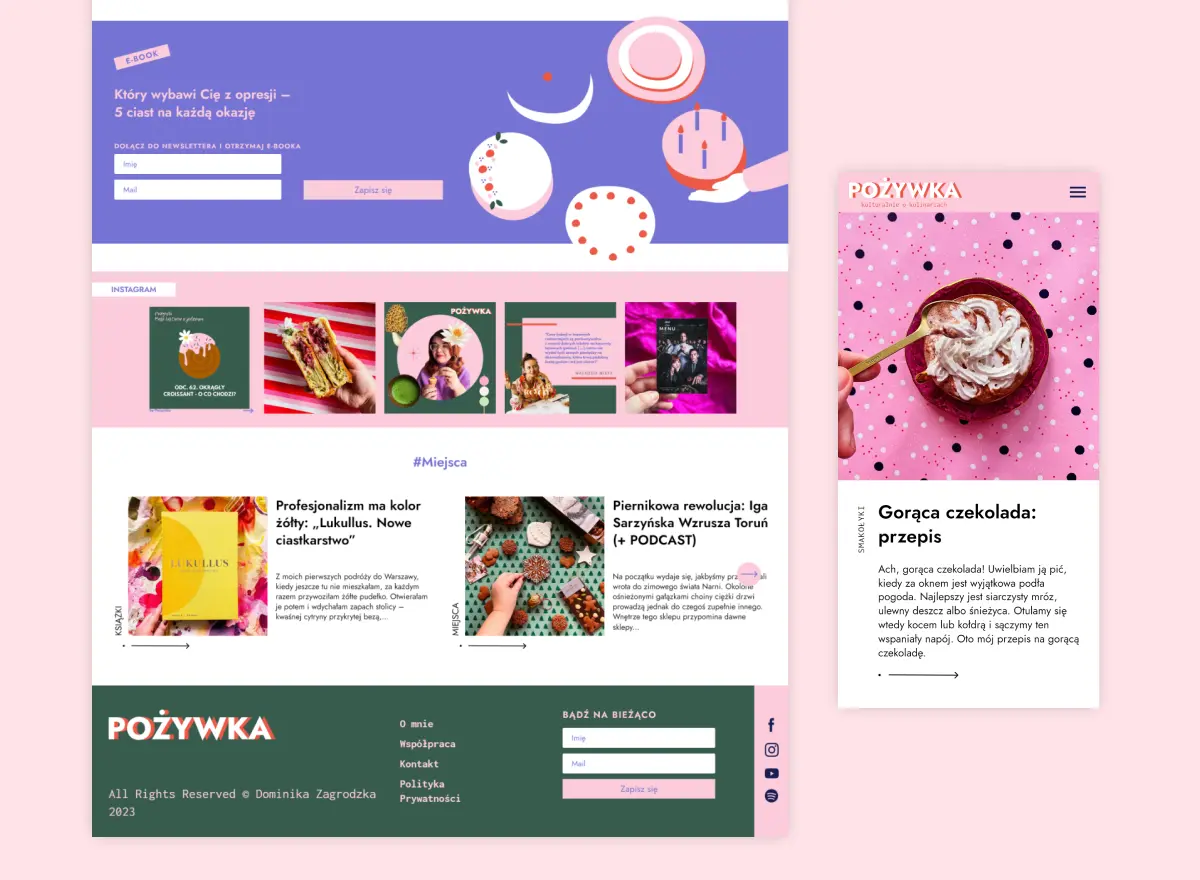
pozywka.pl
Scalable blog for food journalist, focused on performance and user experience 🌭
zagrodzki.me
Personal blog and portfolio of Bart Zagrodzki, where he shares his knowledge and work 💼
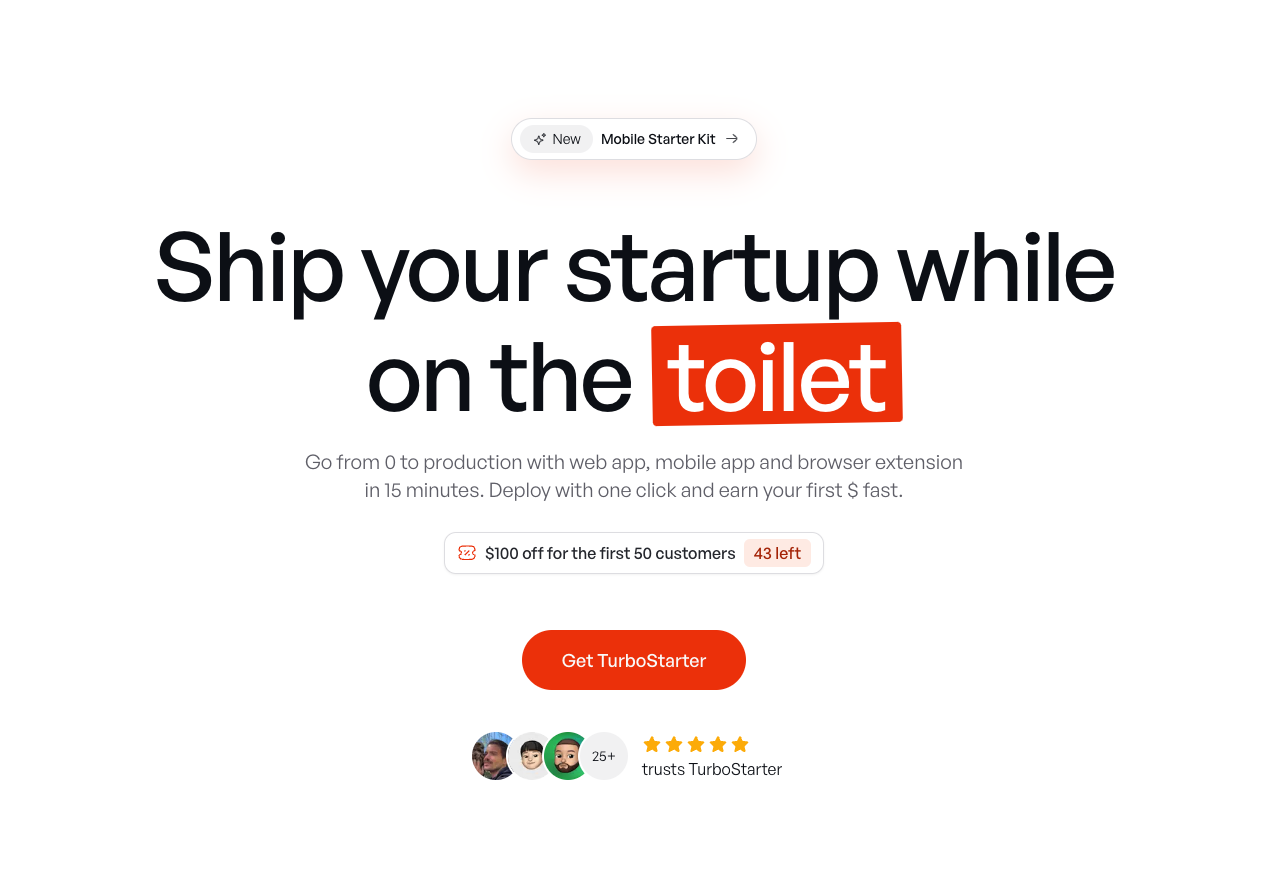
TurboStarter
Ship your startup everywhere. In minutes.
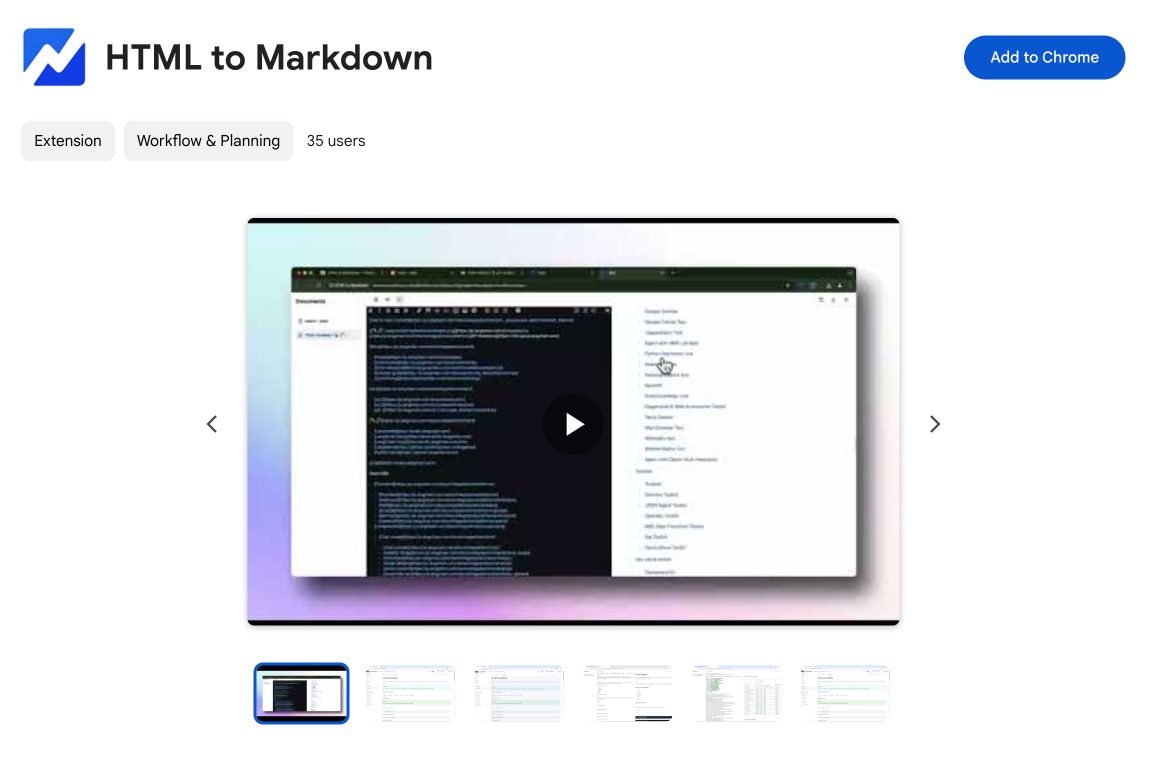
HTML to Markdown
Convert HTML to Markdown with ease, directly in your browser 📄
Dotallio
Personalized AI apps that automate research, data extraction, and content creation without code 🤖
Talk to Santa
Enjoy a magical live video chat or receive a unique AI-generated video greeting from Santa Claus 🎅
pozywka.pl
Scalable blog for food journalist, focused on performance and user experience 🌭
zagrodzki.me
Personal blog and portfolio of Bart Zagrodzki, where he shares his knowledge and work 💼
TurboStarter
Ship your startup everywhere. In minutes.
HTML to Markdown
Convert HTML to Markdown with ease, directly in your browser 📄
Dotallio
Personalized AI apps that automate research, data extraction, and content creation without code 🤖
Talk to Santa
Enjoy a magical live video chat or receive a unique AI-generated video greeting from Santa Claus 🎅
pozywka.pl
Scalable blog for food journalist, focused on performance and user experience 🌭
zagrodzki.me
Personal blog and portfolio of Bart Zagrodzki, where he shares his knowledge and work 💼
TurboStarter
Ship your startup everywhere. In minutes.
HTML to Markdown
Convert HTML to Markdown with ease, directly in your browser 📄
Dotallio
Personalized AI apps that automate research, data extraction, and content creation without code 🤖
Talk to Santa
Enjoy a magical live video chat or receive a unique AI-generated video greeting from Santa Claus 🎅
pozywka.pl
Scalable blog for food journalist, focused on performance and user experience 🌭
zagrodzki.me
Personal blog and portfolio of Bart Zagrodzki, where he shares his knowledge and work 💼
TurboStarter
Ship your startup everywhere. In minutes.
HTML to Markdown
Convert HTML to Markdown with ease, directly in your browser 📄
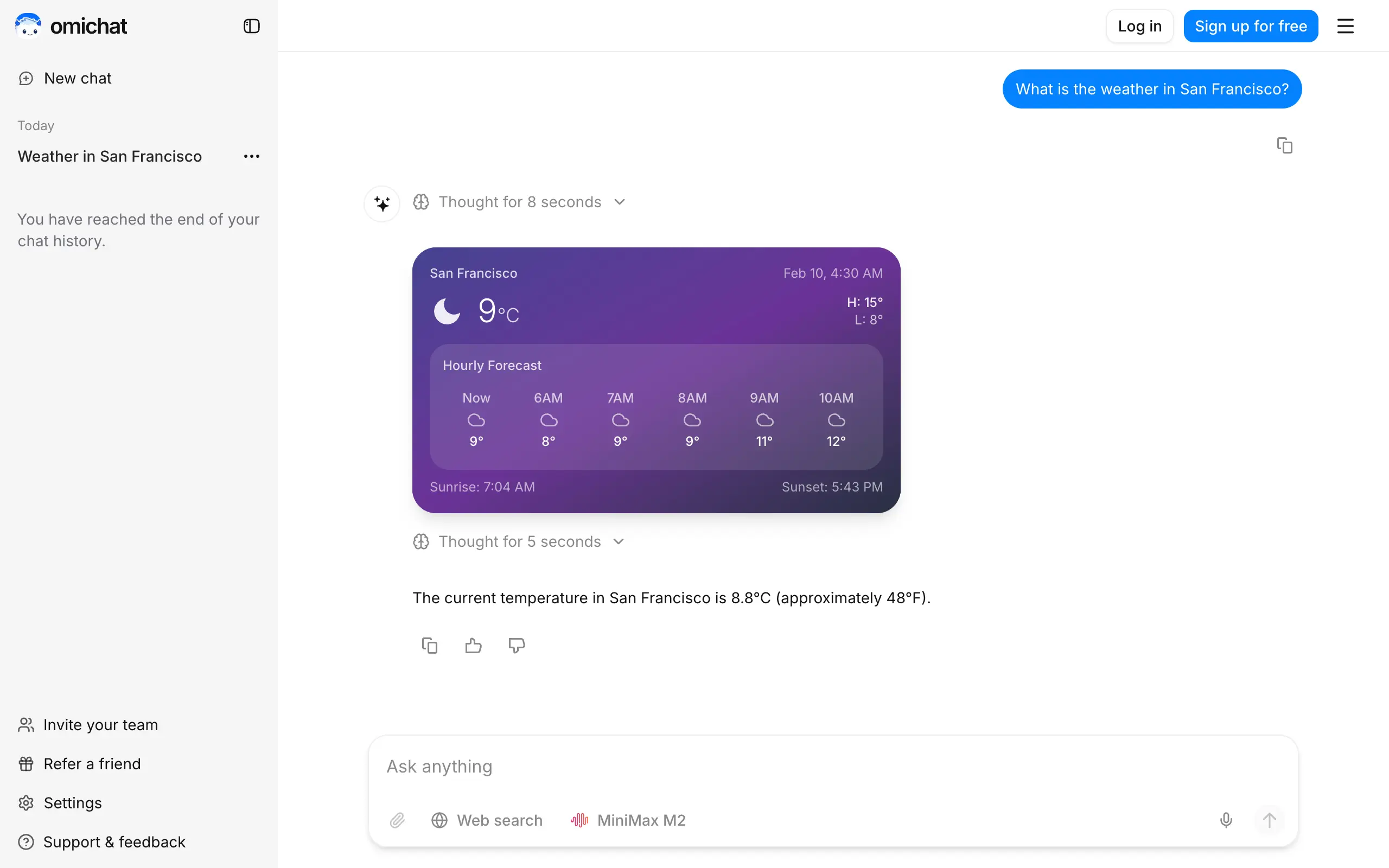
Omichat
Chat with 50+ AI models, including ChatGPT and Claude, in one place - switch models anytime without losing context 🤖
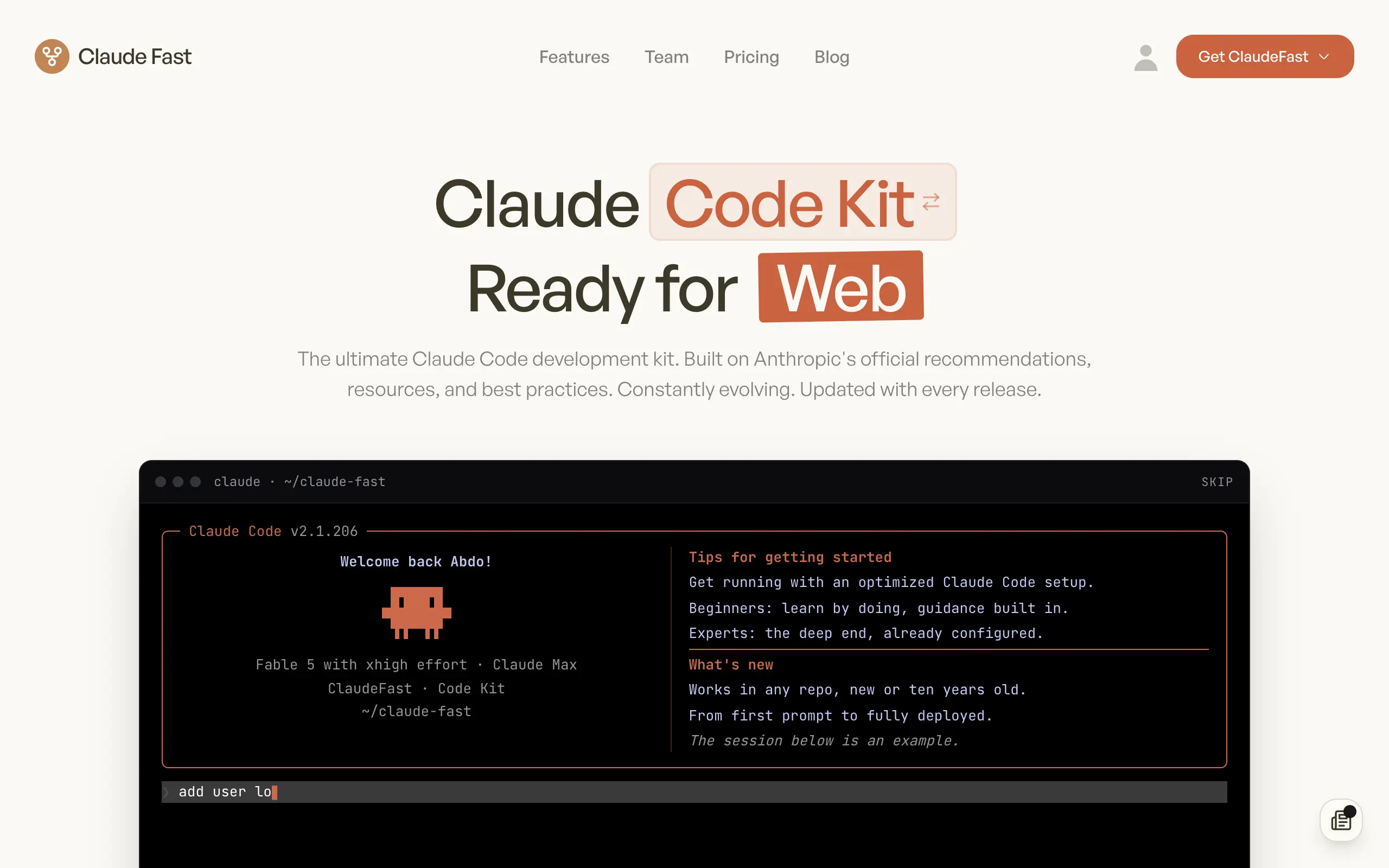
Claude Fast
Supercharge your Claude Code with 6x effective context window and specialized AI agents 🤖
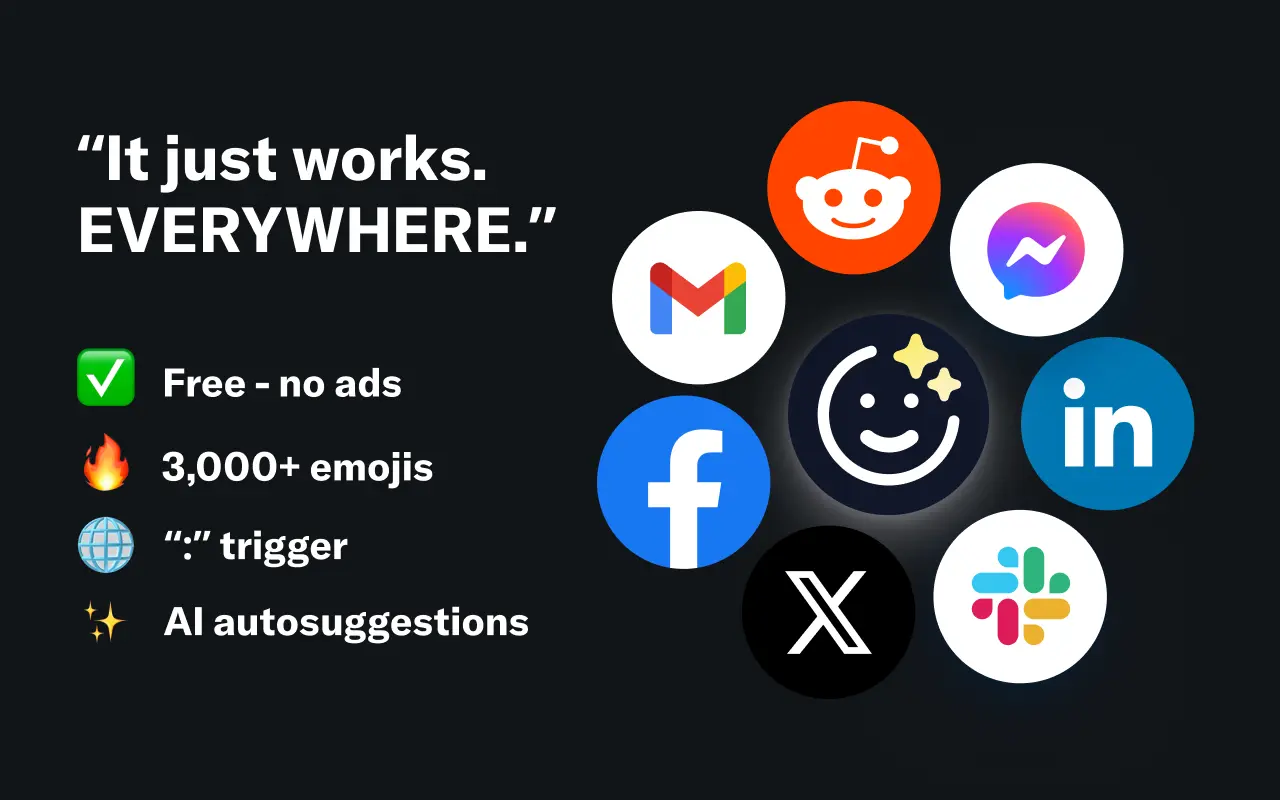
EmojAI
AI-powered emoji picker with smart, context-aware suggestions 🤖
Solohacker
Autonomous company launcher - AI agents work 24/7, escalate what matters, and you stay in control 🤖
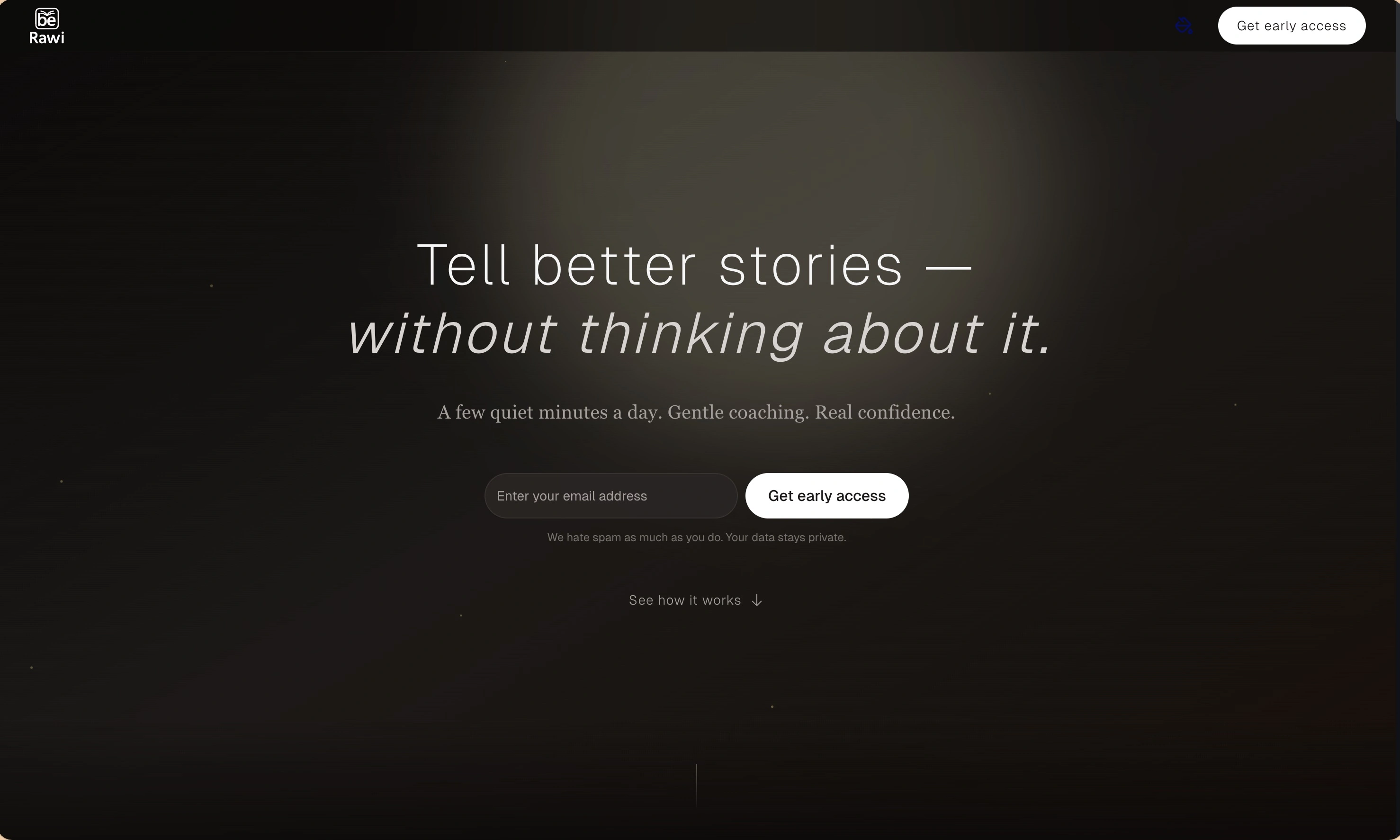
BeRawi: Storytelling Coach
Practice storytelling daily with instant feedback to sound clearer, more engaging, and confident 🎤
Omichat
Chat with 50+ AI models, including ChatGPT and Claude, in one place - switch models anytime without losing context 🤖
Claude Fast
Supercharge your Claude Code with 6x effective context window and specialized AI agents 🤖
EmojAI
AI-powered emoji picker with smart, context-aware suggestions 🤖
Solohacker
Autonomous company launcher - AI agents work 24/7, escalate what matters, and you stay in control 🤖
BeRawi: Storytelling Coach
Practice storytelling daily with instant feedback to sound clearer, more engaging, and confident 🎤
Omichat
Chat with 50+ AI models, including ChatGPT and Claude, in one place - switch models anytime without losing context 🤖
Claude Fast
Supercharge your Claude Code with 6x effective context window and specialized AI agents 🤖
EmojAI
AI-powered emoji picker with smart, context-aware suggestions 🤖
Solohacker
Autonomous company launcher - AI agents work 24/7, escalate what matters, and you stay in control 🤖
BeRawi: Storytelling Coach
Practice storytelling daily with instant feedback to sound clearer, more engaging, and confident 🎤
Omichat
Chat with 50+ AI models, including ChatGPT and Claude, in one place - switch models anytime without losing context 🤖
Claude Fast
Supercharge your Claude Code with 6x effective context window and specialized AI agents 🤖
EmojAI
AI-powered emoji picker with smart, context-aware suggestions 🤖
Solohacker
Autonomous company launcher - AI agents work 24/7, escalate what matters, and you stay in control 🤖
BeRawi: Storytelling Coach
Practice storytelling daily with instant feedback to sound clearer, more engaging, and confident 🎤

Connect with like-minded people
Join our community to get feedback, support, and grow together with 1,000+ builders on board, let's ship it!
Join usShip your startup everywhere. In minutes.
Don't burn tokens on setup and start building features on day one.