ClaimCanvas
Turn photos, receipts and policy documents into a ready-to-file insurance claim package with item values, missing evidence and deadline reminders.
Insurance claims are often delayed for reasons that have little to do with whether a loss is legitimate. Policyholders may have photos scattered across devices, receipts buried in email, incomplete inventories, unclear policy language, and no reliable system for tracking insurer deadlines. The result is a stressful, error-prone process at exactly the moment people need clarity.
ClaimCanvas is a consumer insurance claim documentation app designed to turn unstructured evidence into a ready-to-file insurance claim package. Users can upload photos, receipts, repair estimates, police reports, and policy documents. The platform then organizes the material into a structured inventory, surfaces potentially missing evidence, estimates item values, and sends deadline reminders.
The central opportunity is not to replace an insurer, adjuster, attorney, or public adjuster. It is to give policyholders a better evidence-management workflow before and during a property insurance claim.
The core product thesis
ClaimCanvas should position itself as an insurance claim preparation and evidence organization tool. The strongest promise is not “win more claims.” It is “submit a clearer, more complete claim package with less stress and less administrative work.”
Why insurance claim documentation software matters
A homeowner, renter, or vehicle owner may only file a major insurance claim once or twice in their lifetime. That means they begin with very little process knowledge. Meanwhile, insurers operate with standardized forms, deadlines, coverage rules, claims systems, and experienced adjusters.
This information imbalance creates a practical gap. Consumers need help answering basic but consequential questions:
- What evidence should I collect after water, fire, theft, storm, or accident damage?
- Which damaged items should be included in the personal property inventory?
- What receipts, photographs, serial numbers, or replacement links support each item?
- What deadlines apply to proof of loss, repair decisions, temporary housing, or supplemental claims?
- How can I create a clean insurance claim report without manually building spreadsheets and folders?
- Which items still need evidence before submission?
An insurance claim documentation app can reduce this cognitive load. Rather than forcing people to interpret a blank insurer form, ClaimCanvas can guide them through a structured workflow that turns scattered files into an organized claim packet.
The product is especially relevant as consumers increasingly use smartphones as their primary camera, document scanner, communications device, and record archive. A modern claims preparation platform can use optical character recognition, document classification, image metadata, reminders, and guided checklists to make those existing records useful.
For market context, the final published article or landing page should reference authoritative sources such as insurer annual reports, national consumer insurance organizations, government disaster recovery resources, or property-loss datasets. Use citations for any exact claims-volume, catastrophe-loss, or average-settlement statistic rather than presenting unsupported figures.
Target audience for ClaimCanvas
ClaimCanvas is a B2C SaaS product, but “consumer” is too broad to be a useful go-to-market segment. The product should focus on high-intent users who have a real documentation problem and enough financial urgency to adopt a tool quickly.
Primary audience: homeowners after a property loss
The highest-value segment is homeowners handling a recent property insurance claim involving fire, water damage, theft, storm damage, vandalism, or a burst pipe.
These users often need to document:
- Structural damage photographs and videos
- Personal property inventories
- Original purchase receipts and invoices
- Temporary repair costs
- Contractor estimates
- Communications with insurers and adjusters
- Policy declarations and endorsements
- Proof-of-loss documents
- Additional living expense records
A home claim can involve dozens or hundreds of damaged possessions. Manually listing each item, locating proof of ownership, estimating replacement cost, and tracking follow-ups can take many hours. This is where a claim inventory software workflow has immediate value.
Secondary audience: renters filing personal property claims
Renters are a strong early segment because their claims generally center on personal belongings rather than complex structural repairs. They may have less documentation discipline than homeowners and may be more likely to rely on phone photos, online order histories, and email receipts.
A renter-focused onboarding flow could ask:
- What happened?
- When did the loss occur?
- Which rooms or categories were affected?
- Do you have photos, receipts, online orders, or bank transactions?
- Has an insurance claim number already been assigned?
This segment also benefits from educational content about replacement cost value, actual cash value, deductibles, depreciation, and policy limits. Educational content should remain general and make clear that coverage depends on the individual policy and jurisdiction.
Secondary audience: auto insurance claim organizers
Auto claims can be a later expansion, especially for users managing accident photos, tow receipts, rental-car invoices, repair estimates, medical documentation, and communications.
However, auto insurance claims are operationally different from home contents claims. The initial product should avoid trying to solve every insurance category at once. A narrowly focused property claim documentation system will be easier to explain, build, market, and validate.
Referral audience: public adjusters and consumer advocates
Although ClaimCanvas is B2C, public adjusters, restoration contractors, attorneys, tenant advocates, and financial counselors could become referral partners. These professionals may not need to use the consumer product as their primary system, but they benefit when a client arrives with organized documentation.
The product should not market itself as legal representation or public adjusting. Instead, it can make professional collaboration easier through controlled sharing, exportable reports, and an audit-ready evidence timeline.
High-urgency user
A homeowner with a new water or fire loss who needs to submit photos, receipts, and an item inventory quickly.
High-volume user
A renter or homeowner with many personal items to catalog, value, and support with evidence.
High-anxiety user
A policyholder overwhelmed by insurer requests, deadlines, unfamiliar terminology, and fragmented files.
The market gap in insurance claim preparation
The insurance ecosystem already contains many tools, but most are built for insurers, repair businesses, restoration contractors, or claims professionals. Consumer-facing claim tools often fall into one of three categories:
- Generic cloud storage folders
- Basic home inventory applications used before a loss
- Broad legal or insurance-information websites
These options do not fully solve the active claim-preparation workflow.
A generic folder does not tell a user what is missing. A home inventory tool may help document belongings before a loss but may not create a claim-ready evidence package afterward. An insurer portal may accept uploads, but it is usually designed around the insurer’s intake process rather than the policyholder’s need to understand, organize, preserve, and present evidence.
ClaimCanvas can own the workflow between “I have a loss” and “I have a complete, organized package to submit or discuss with my insurer.”
Where existing workflows break down
Most people manage an insurance claim with a combination of phone albums, inbox searches, paper receipts, notes apps, spreadsheets, and insurer portals. Each system has a narrow role, but none creates a reliable source of truth.
The biggest failures are predictable:
- Evidence is collected but not connected to a specific damaged item.
- Receipts are available but not searchable.
- Users forget to document serial numbers, room context, or damage severity.
- Policy documents are uploaded but not translated into a useful checklist.
- Deadline dates live in emails and calendar reminders rather than a claim timeline.
- Claim inventories mix confirmed values with rough guesses.
- Evidence is shared without a clear record of what was sent and when.
ClaimCanvas should not merely digitize documents. It should transform them into structured claim data, while preserving the original source files.
ClaimCanvas’s unique selling proposition
The strongest USP is a guided evidence-to-package workflow:
ClaimCanvas converts photos, receipts, and policy documents into a structured insurance claim package that identifies documented items, missing evidence, estimated values, and upcoming deadlines.
This differs from simple file storage because the product gives users actionable completeness signals. It differs from an insurer portal because it is policyholder-controlled. It differs from a generic AI assistant because every output is anchored to uploaded source material, reviewable by the user, and organized for claim submission.
Core features for an insurance claim package app
The MVP should make one user outcome exceptionally easy: assemble a credible, organized personal property claim package after a covered loss event.
Claim workspace and guided intake
Each claim should have a dedicated workspace with a clear status view. During setup, ClaimCanvas can collect:
- Loss type and incident date
- Claim number, if available
- Insurance carrier name
- Policy type
- Affected address or vehicle
- Assigned adjuster contact information
- Key dates from policy documents or insurer correspondence
- Damage categories such as electronics, furniture, clothing, appliances, jewelry, and temporary expenses
The intake should be conversational and progressive. A person facing a loss should not have to complete a 40-field form before they can upload a single photo.
Intelligent document and photo ingestion
The product’s core experience begins with uploads. Users should be able to add:
- Smartphone photos and videos
- Scanned receipts
- Email receipt PDFs
- Policy declaration pages
- Policy wording and endorsements
- Repair estimates
- Police or incident reports
- Inventory spreadsheets
- Insurer letters and emails
- Temporary living expense receipts
Optical character recognition can extract merchant names, purchase dates, amounts, product names, model numbers, and visible serial numbers from documents. Image analysis can suggest item categories and identify potentially relevant photos.
Automation must be presented as a draft, not a fact. For example, ClaimCanvas can label an extracted item as “Samsung television, model uncertain” and request confirmation rather than silently creating a definitive record.
Structured personal property inventory
The inventory is the heart of the product. Every item should have a consistent record containing:
- Item name and category
- Room or location
- Damage type and condition
- Quantity
- Brand, model, and serial number where available
- Original purchase date when known
- Purchase price when documented
- Suggested replacement-value range
- Evidence links
- Notes and user confidence level
- Submission status
A user should be able to see whether an item is supported by a receipt, a photo, both, or neither. This is more useful than a static spreadsheet because the system can surface evidence gaps at the item level.
| Claim item field | Why it matters | Possible source | Automation role | User review needed |
|---|---|---|---|---|
| Item description | Makes the inventory understandable | Photo or receipt | Suggest item name | Yes |
| Purchase amount | Supports value calculation | Receipt or invoice | Extract amount | Yes |
| Replacement estimate | Helps create a current inventory | Retail listings or user input | Suggest range | Yes |
| Claim deadline | Prevents missed actions | Policy or insurer letter | Extract potential date | Yes |
Evidence gap detection
Missing evidence detection is the feature that turns ClaimCanvas from a document repository into a decision-support product.
The platform can create a completeness score based on user-configurable requirements. For example, an expensive electronic item may be stronger with a damaged-item photo, ownership proof, a model number, and a replacement-value source. A low-value household item may reasonably rely on a photo and detailed description.
The interface should explain gaps in plain language:
- “This item has a receipt but no damage photo.”
- “This receipt may support three listed items. Review the suggested matches.”
- “A deadline appears in your insurer letter. Confirm it before reminders are activated.”
- “This item has a value entered but no source. Add a receipt, comparable replacement link, or note.”
Avoid presenting a universal evidence threshold. Insurance requirements vary by policy, claim type, insurer, location, and the specifics of the loss.
Policy document extraction and deadline reminders
Policy documents are complex, and users should not be expected to interpret them alone. ClaimCanvas can parse uploaded declarations, correspondence, and policy text to identify possible signals related to deductibles, coverage categories, sublimits, duties after loss, and proof-of-loss timing.
This feature must be designed carefully. The product should say “possible deadline found” or “review this policy excerpt,” not “your legal deadline is.”
A useful deadline timeline can include:
- Date of loss
- Date claim was reported
- Insurer-requested document due dates
- Proof-of-loss due date if clearly stated and user-confirmed
- Follow-up reminder date
- Repair estimate appointment
- Temporary expense submission cadence
- Supplemental claim review date
Claim package exports
A ready-to-file insurance claim package should be easy to inspect and export. The export should include a clean summary page, inventory table, evidence index, document list, and activity record.
Useful export formats include:
- PDF claim summary for review or email
- CSV or spreadsheet inventory for insurer templates
- ZIP archive of documents with a manifest
- Shareable secure link with expiration controls
- Item-level evidence report
The export should clearly distinguish between confirmed user-entered details, extracted text, and estimated values. This preserves trust and reduces the risk that a user treats AI-generated content as verified evidence.
A strong claim package usually includes a claim summary, a detailed inventory, supporting photos, receipts or ownership evidence, estimates where relevant, policy or correspondence references, and an organized index. The exact requirements depend on the insurer, policy, loss type, and jurisdiction.
No. ClaimCanvas can organize information and highlight policy excerpts for review, but coverage decisions are made under the policy terms and applicable law. Users should confirm coverage questions with their insurer, licensed professional, attorney, or public adjuster when appropriate.
Receipt scans can be blurry, product names can be ambiguous, and policy language is context-dependent. AI should accelerate data entry and evidence discovery, while the policyholder remains responsible for reviewing final claim information.
Recommended technology stack for ClaimCanvas
ClaimCanvas handles sensitive financial, insurance, and personal-property information. The technical architecture should prioritize secure storage, transparent data processing, and reliable audit trails before adding complex automation.
Frontend and application framework
A strong web application stack could use Next.js with React and TypeScript. Next.js supports server-side rendering for SEO landing pages, authenticated application routes, API endpoints, and a mature deployment ecosystem.
For the UI layer, Tailwind CSS can speed up development of a consistent responsive interface. The product needs especially strong mobile design because users will often upload damage photos directly from a phone at a loss site.
Recommended frontend priorities include:
- Mobile-first camera and file upload flows
- Resumable uploads for large videos and PDFs
- Accessibility for stressed users and older policyholders
- Autosave for long inventory entry sessions
- Clear source links from extracted data back to the original file
- Downloadable exports that remain readable outside the app
Backend, database, and storage
Use PostgreSQL for structured claim records, users, inventory items, deadlines, permissions, and audit events. PostgreSQL is a strong choice because claim data has clear relationships and needs reliable transactions.
For file storage, use encrypted object storage such as Amazon S3 or a comparable provider. Store originals separately from generated previews and extracted metadata. Preserve file hashes to support integrity checks and avoid accidental duplication.
A queue-based job system should process OCR, thumbnail generation, document classification, and export generation asynchronously. This prevents a large PDF or photo batch from blocking the user experience.
AI and document intelligence trade-offs
The application can use a combination of OCR, structured extraction, and multimodal AI. The temptation will be to send every file to a general-purpose model and accept its output. That approach is fast to prototype but risky for a consumer claim product.
A safer production design uses layered extraction:
- Run conventional OCR for raw text and document structure.
- Use rules to detect common receipt and policy fields.
- Use AI for classification, item matching, summaries, and ambiguity resolution.
- Require user confirmation before making extracted content part of an export.
- Store the original source and extraction confidence with every derived field.
The trade-off is clear. More automation makes onboarding faster, but it also increases the chance of incorrect product identification, misread pricing, or overconfident policy interpretation. ClaimCanvas should favor explainable assistance over fully autonomous claim completion.
Security and privacy requirements
Security is not a feature to defer. Claim packages may contain addresses, claim numbers, photos of homes, financial records, and policy documents. Minimum safeguards should include:
- Encryption in transit and at rest
- Role-based access controls
- Multi-factor authentication for sensitive account actions
- Secure, expiring document-sharing links
- Audit logs for uploads, exports, sharing, and edits
- Malware scanning on uploaded files
- Data retention and account deletion controls
- Vendor review for OCR, AI, and email providers
- Incident response procedures
- Clear privacy policy and consent language
ClaimCanvas should avoid training public models on user documents by default. If any third-party AI processor receives user content, the product needs clear disclosure, contractual controls, and a privacy-conscious data-processing design.
Monetization strategy for a consumer claims SaaS
The best pricing model should match the episodic nature of insurance claims. Most consumers do not need an insurance claim organizer every month, but they may pay for meaningful help during a high-stress claim event.
Recommended model: free entry plus per-claim premium package
A freemium model can lower friction while preserving a clear upgrade path.
- "Free plan": one active claim, limited uploads, basic inventory, and standard reminders
- "Claim package": one-time payment for advanced OCR, export bundles, evidence gap analysis, and extended storage
- "Premium claim support": higher-priced package with larger storage, collaborative access, advanced exports, and priority assistance
- "Annual preparedness plan": home inventory storage, policy vault, and discounted active-claim features
A per-claim price is intuitive because users can associate the cost with a specific high-value outcome. An annual plan can work as a secondary product for proactive households, especially if it includes a pre-loss home inventory workflow.
Additional revenue opportunities
Potential future revenue streams include:
- Household plans for multiple properties
- White-label referral programs for restoration firms or tenant organizations
- Public-adjuster collaboration features with user-controlled sharing
- Secure evidence vault subscriptions
- Concierge document digitization for high-value claims
- Employer or affinity-group benefits partnerships
Avoid monetization models that create conflicts with consumer trust. For example, referral commissions tied to repair contractors, attorneys, or claim outcomes can create regulatory and reputational risk. If referral relationships exist, disclose them clearly and give users meaningful choice.
Competitive advantage and defensibility
ClaimCanvas will not win solely by having OCR or an AI chat interface. Those capabilities are increasingly available to competitors. The defensible advantage comes from building a trustworthy claim evidence workflow around real policyholder behavior.
The ClaimCanvas advantage
The product can differentiate through five connected strengths:
-
Claim-specific structure
The product understands items, evidence types, dates, policy documents, and package exports rather than treating everything as generic files. -
Evidence provenance
Every extracted field should point back to its source image, receipt, document page, or user entry. This makes the package reviewable and credible. -
Completeness guidance
Instead of merely storing evidence, ClaimCanvas tells the user what may still be missing and why it matters. -
Consumer-controlled records
Users maintain an organized record that is not locked into a single insurer portal or repair vendor system. -
Trustworthy automation
The application presents AI suggestions with confidence, context, and user approval. This is a better fit for insurance documentation than opaque automation.
Why generic AI tools are not enough
A general AI assistant may summarize a policy or list possible claim steps, but it does not provide a secure, persistent, structured system of record. It usually lacks item-level inventory logic, evidence linking, deadline tracking, controlled exports, and audit history.
ClaimCanvas should make the complex workflow simple without hiding uncertainty. That balance is especially important in insurance, where consumers can be harmed by overconfident guidance.
Risks and mitigation for an insurance claim documentation app
The opportunity is meaningful, but the product operates in a sensitive space. The launch plan must explicitly account for legal, privacy, data quality, and customer-expectation risk.
Risk: unauthorized legal or insurance advice
Users may ask whether their claim is covered, what they are entitled to, or whether an insurer’s offer is fair. If ClaimCanvas provides definitive answers, it can create legal and regulatory exposure.
Mitigation should include:
- Clear product language that the platform organizes information and is not legal, insurance, tax, or public-adjusting advice
- Guardrails that avoid coverage determinations and negotiation instructions
- Contextual prompts directing users to insurers or licensed professionals for policy-specific questions
- Legal review of onboarding, AI outputs, marketing claims, and export disclaimers
Risk: inaccurate AI extraction or valuations
A receipt might be misread, an item might be incorrectly identified, and an online price may not represent an equivalent replacement.
Mitigation should include:
- Confidence indicators
- User approval requirements
- Source-file links for every extraction
- Editable inventory fields
- Clear labels such as “suggested estimate” rather than “claim value”
- Separate treatment of documented purchase price, user-entered value, and market estimate
Risk: privacy breach or inappropriate access
Claim data can be highly sensitive. A breach would be damaging to users and to the brand.
Mitigation should include security-by-design architecture, least-privilege permissions, encrypted storage, short-lived share links, penetration testing, documented vendor assessments, and deletion controls.
Risk: insurer-specific variance
Policies and claim processes vary widely. A universal checklist may be incomplete or misleading.
Mitigation should include adaptable claim templates, configurable evidence categories, user-confirmed deadlines, and copy that emphasizes policy-specific requirements.
Risk: emotionally difficult user journeys
People may be documenting losses after a fire, theft, severe weather event, or displacement. Dense forms and aggressive upsells will feel exploitative.
Mitigation should include compassionate UX writing, save-and-return workflows, simple explanations, and pricing transparency. The product should reduce pressure, not add it.
Go-to-market strategy and SEO opportunities
The highest-intent acquisition channels will be search, referrals, and content that helps users at the moment a claim becomes urgent.
SEO content clusters for insurance claim preparation
ClaimCanvas can build topical authority around practical, non-legal claim documentation questions. High-quality articles should include reviewed checklists, templates, examples, and clearly sourced statements.
Potential content topics include:
- How to create a personal property inventory for an insurance claim
- What receipts do you need for a homeowners insurance claim?
- How to document water damage for insurance
- How to organize photos for an insurance claim
- Insurance claim proof-of-loss checklist
- How to estimate replacement cost for damaged belongings
- Renters insurance theft claim documentation
- What to do after a house fire for insurance documentation
- How to keep track of insurance claim deadlines
- How to submit supplemental evidence for an insurance claim
Each article should answer the user’s immediate question before introducing the software. This builds trust and improves the likelihood that the product is seen as a useful tool rather than a generic lead-generation site.
Partnerships and referral loops
Early partnerships can create more efficient acquisition than paid search alone:
- Restoration contractors can share ClaimCanvas with customers who need to inventory contents.
- Tenant advocacy groups can recommend it to renters after a loss.
- Disaster-preparedness organizations can include it in resource lists.
- Financial wellness platforms can offer a home-inventory benefit.
- Public adjusters can refer clients who need help organizing records before consultation.
Referral partners should not receive access to user data unless the user explicitly shares it. Privacy-preserving collaboration is part of the product’s trust advantage.
Actionable implementation plan for ClaimCanvas
The MVP should focus on one painful job: helping a user create an organized personal property inventory and export a documented claim package.
Define the initial claim category. Start with renters and homeowners handling personal property losses from water, fire, theft, or storm events. Avoid structural estimating and auto claims in the first release.
Interview recent claimants. Speak with at least 15 to 25 people who filed claims in the last year. Ask where evidence was lost, which insurer requests caused confusion, and what documents took the most time to compile.
Build the claim workspace. Include claim setup, uploads, item inventory, evidence links, deadline reminders, and PDF or CSV exports before adding advanced AI functionality.
Add trustworthy extraction. Introduce OCR for receipts and documents, then layer in AI-generated suggestions with source references and required user approval.
Create a completeness engine. Define transparent rules that identify missing photos, receipts, values, model details, or user-confirmed dates without claiming that any rule guarantees coverage.
Run a private beta. Recruit users through renters groups, homeowner communities, restoration referrals, and consumer claim forums. Measure completion rate, export rate, time saved, and the most common missing-evidence patterns.
Launch educational SEO pages. Publish practical claim documentation guides alongside product pages, with expert review and clear disclaimers where policy-specific advice would be inappropriate.
A startup team can accelerate the authenticated dashboard, billing, onboarding, and SaaS foundations by starting with TurboStarter, then investing its product effort in the specialized claim inventory, evidence provenance, document intelligence, and export workflows that make ClaimCanvas distinct.
Final perspective
ClaimCanvas addresses a real consumer problem: policyholders need a reliable way to turn scattered records into a structured insurance claim package. The opportunity is strongest when the product stays focused on organization, evidence quality, transparency, and user control.
The winning version of this insurance claim documentation software will not promise guaranteed coverage or larger settlements. It will help people document what happened, understand what information they have, identify what may be missing, and submit a clearer package with confidence.
That is a valuable, trust-centered SaaS proposition in a market where consumers are often navigating a complex process for the first time.
More 👥 B2C Application SaaS ideas
Discover more innovative b2c application SaaS ideas that are trending in 2026. Each idea is AI-generated with market validation and growth potential to help you find your next profitable venture faster than competitors.
Your competitors are building with TurboStarter
Below are some of the SaaS ideas that have been generated and built with our starter kit.
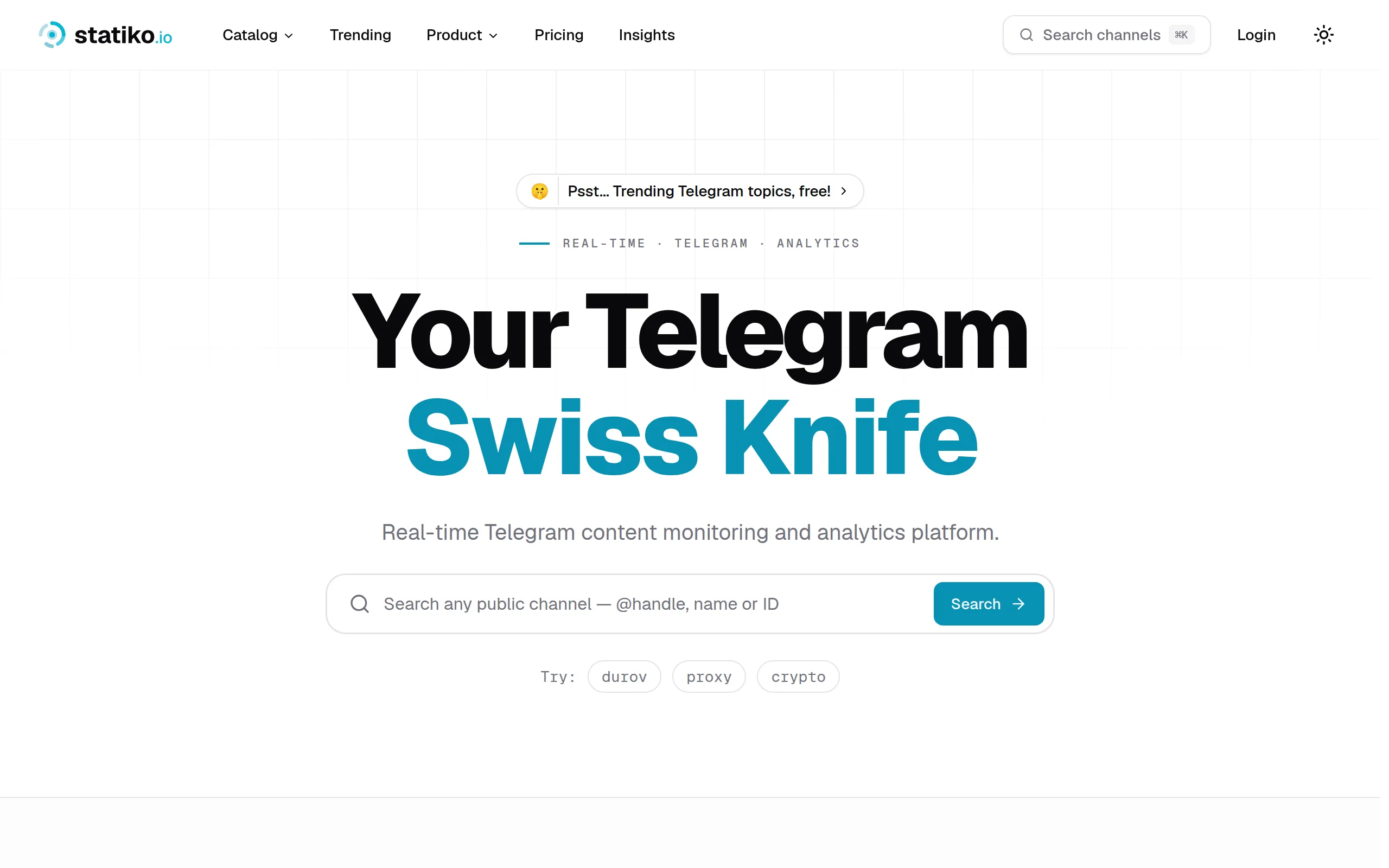
Statiko
Monitor any Telegram channel in real time - track posts, edits, deletions, and growth with AI recaps 📡

Shibui
AI website builder - describe your business, pick a niche template, edit by chatting, and publish instantly ✨
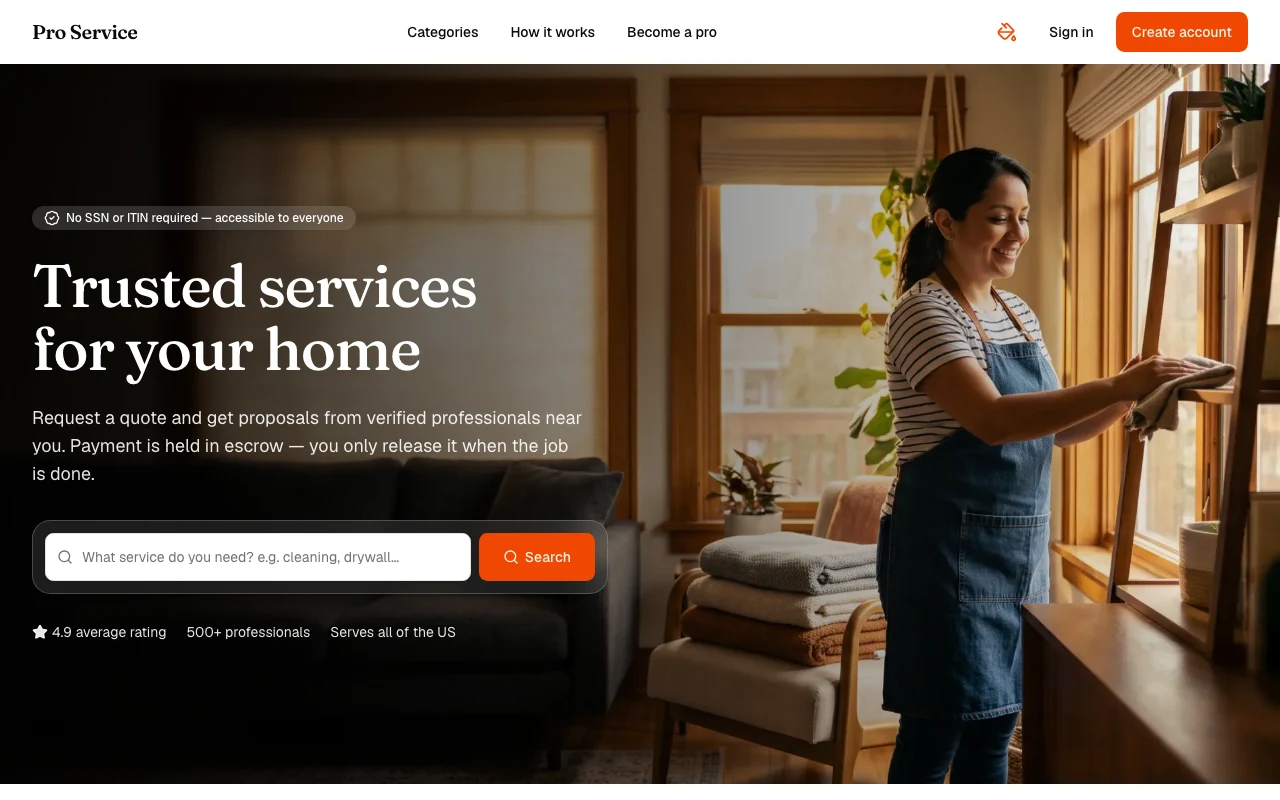
Pro Service
Find verified home service professionals, compare quotes, and pay securely through escrow - built for Brazilians across the US 🏠
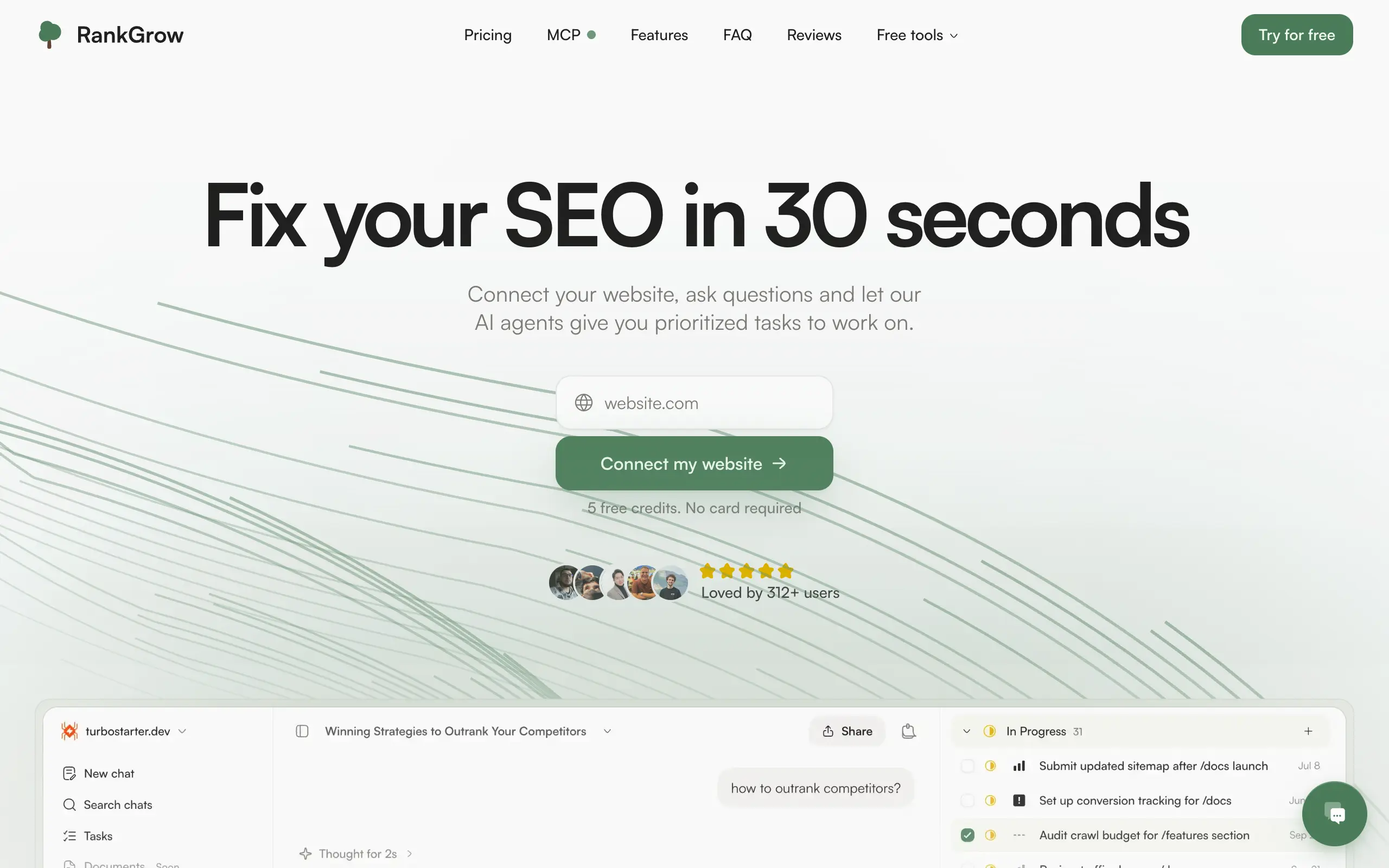
RankGrow
Fix your SEO with AI agents - connect Search Console, get prioritized tasks, and grow organic traffic 📈
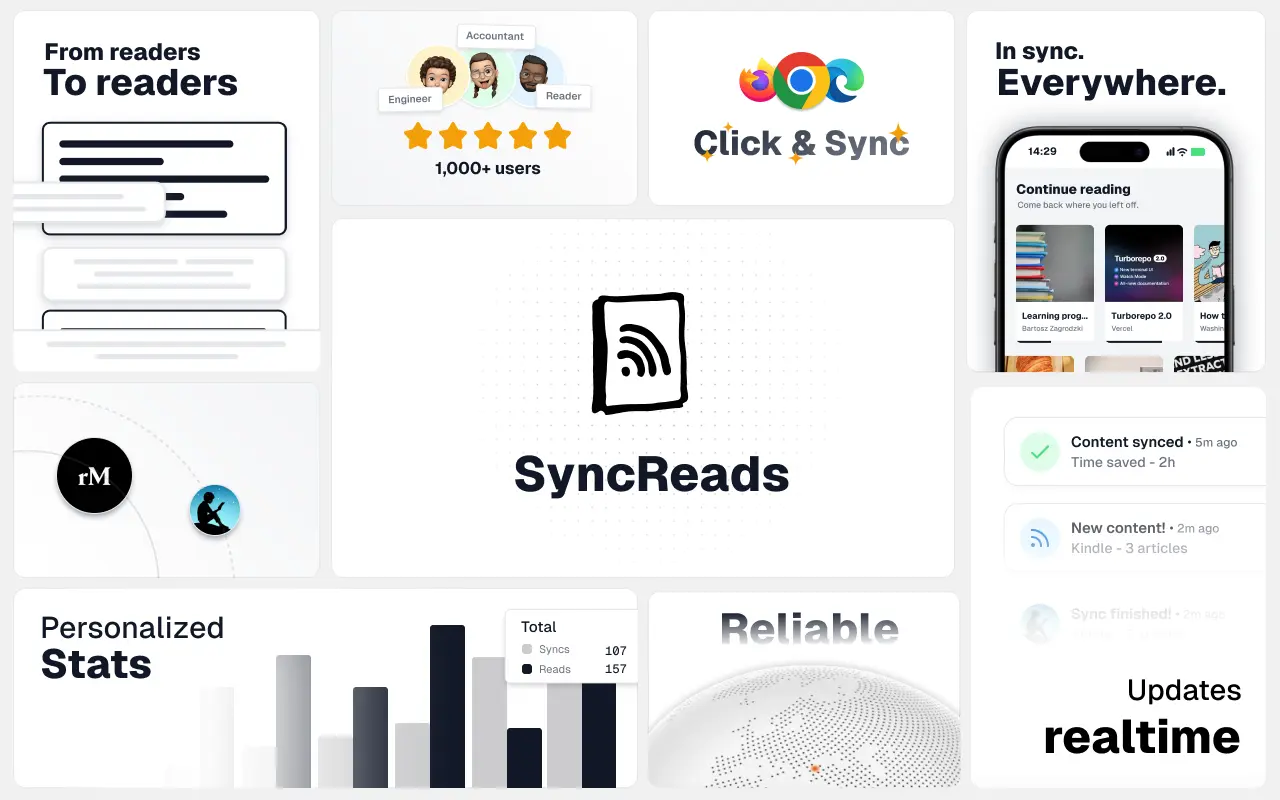
SyncReads
Sync your favorite content for distraction-free reading, save time and replace multiple apps. Anytime, anywhere 🔄
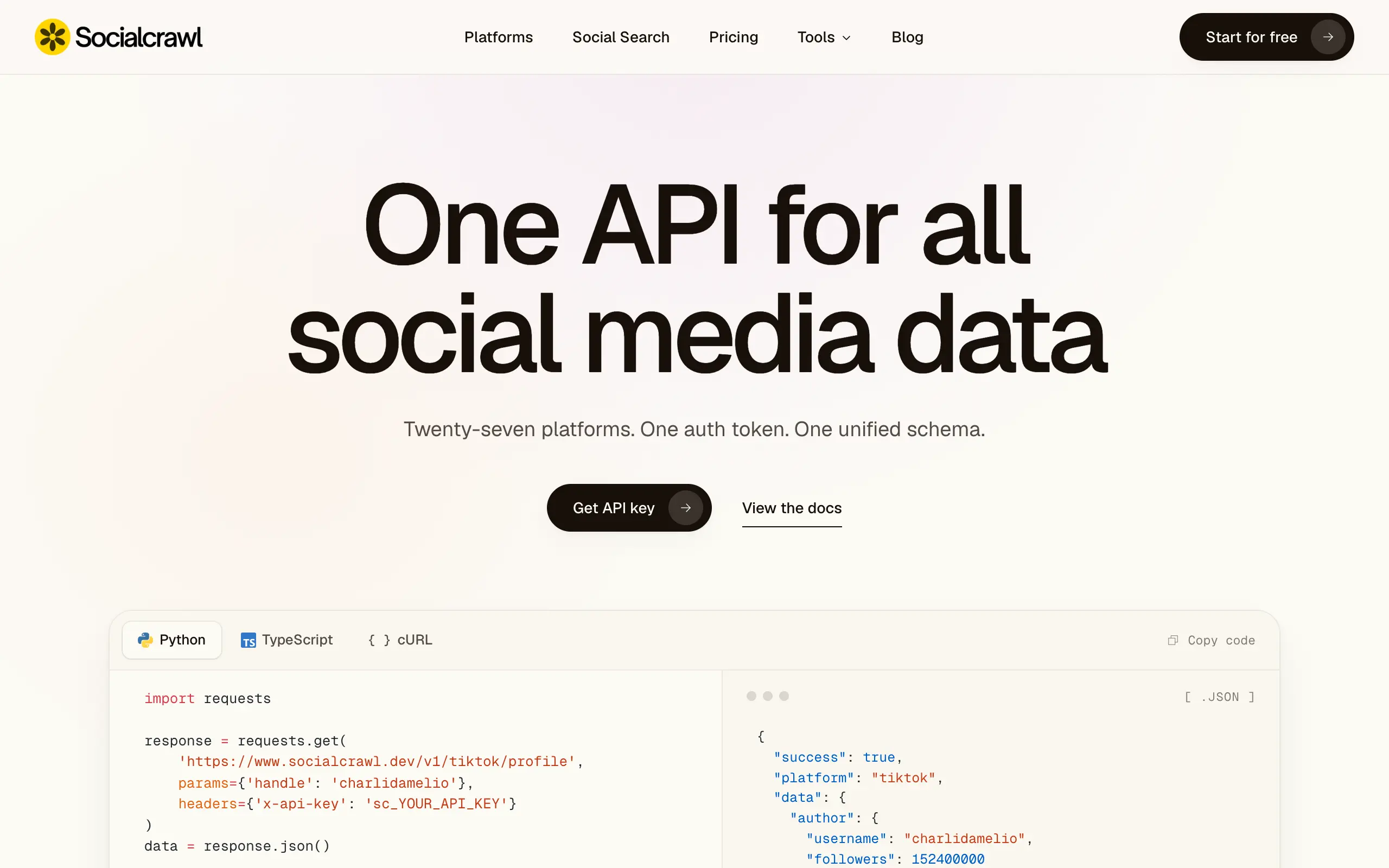
Socialcrawl
Get clean, structured data from 21 platforms like TikTok, Instagram, and YouTube with a single request 📊
Statiko
Monitor any Telegram channel in real time - track posts, edits, deletions, and growth with AI recaps 📡
Shibui
AI website builder - describe your business, pick a niche template, edit by chatting, and publish instantly ✨
Pro Service
Find verified home service professionals, compare quotes, and pay securely through escrow - built for Brazilians across the US 🏠
RankGrow
Fix your SEO with AI agents - connect Search Console, get prioritized tasks, and grow organic traffic 📈
SyncReads
Sync your favorite content for distraction-free reading, save time and replace multiple apps. Anytime, anywhere 🔄
Socialcrawl
Get clean, structured data from 21 platforms like TikTok, Instagram, and YouTube with a single request 📊
Statiko
Monitor any Telegram channel in real time - track posts, edits, deletions, and growth with AI recaps 📡
Shibui
AI website builder - describe your business, pick a niche template, edit by chatting, and publish instantly ✨
Pro Service
Find verified home service professionals, compare quotes, and pay securely through escrow - built for Brazilians across the US 🏠
RankGrow
Fix your SEO with AI agents - connect Search Console, get prioritized tasks, and grow organic traffic 📈
SyncReads
Sync your favorite content for distraction-free reading, save time and replace multiple apps. Anytime, anywhere 🔄
Socialcrawl
Get clean, structured data from 21 platforms like TikTok, Instagram, and YouTube with a single request 📊
Statiko
Monitor any Telegram channel in real time - track posts, edits, deletions, and growth with AI recaps 📡
Shibui
AI website builder - describe your business, pick a niche template, edit by chatting, and publish instantly ✨
Pro Service
Find verified home service professionals, compare quotes, and pay securely through escrow - built for Brazilians across the US 🏠
RankGrow
Fix your SEO with AI agents - connect Search Console, get prioritized tasks, and grow organic traffic 📈
SyncReads
Sync your favorite content for distraction-free reading, save time and replace multiple apps. Anytime, anywhere 🔄
Socialcrawl
Get clean, structured data from 21 platforms like TikTok, Instagram, and YouTube with a single request 📊
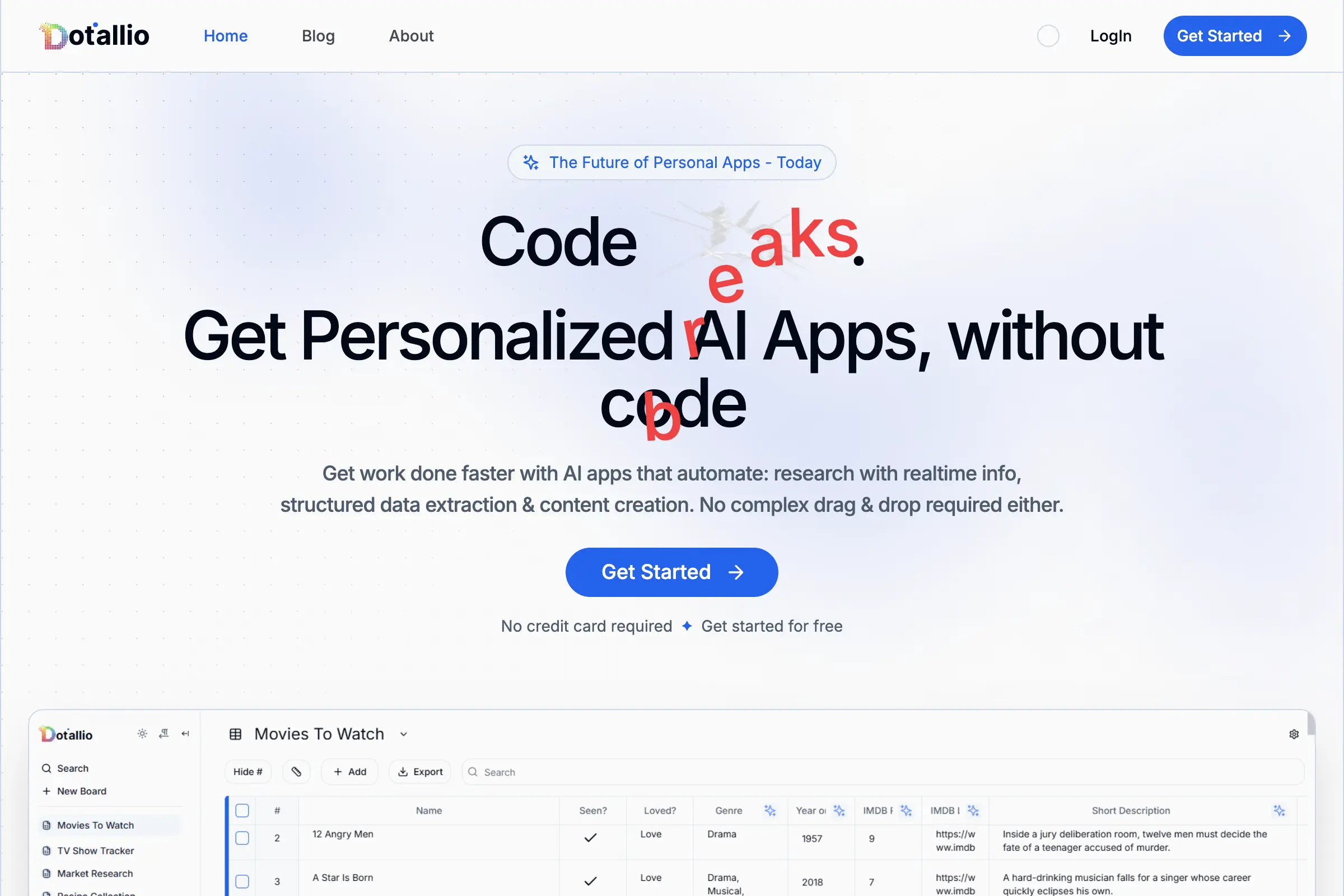
Dotallio
Personalized AI apps that automate research, data extraction, and content creation without code 🤖

Talk to Santa
Enjoy a magical live video chat or receive a unique AI-generated video greeting from Santa Claus 🎅
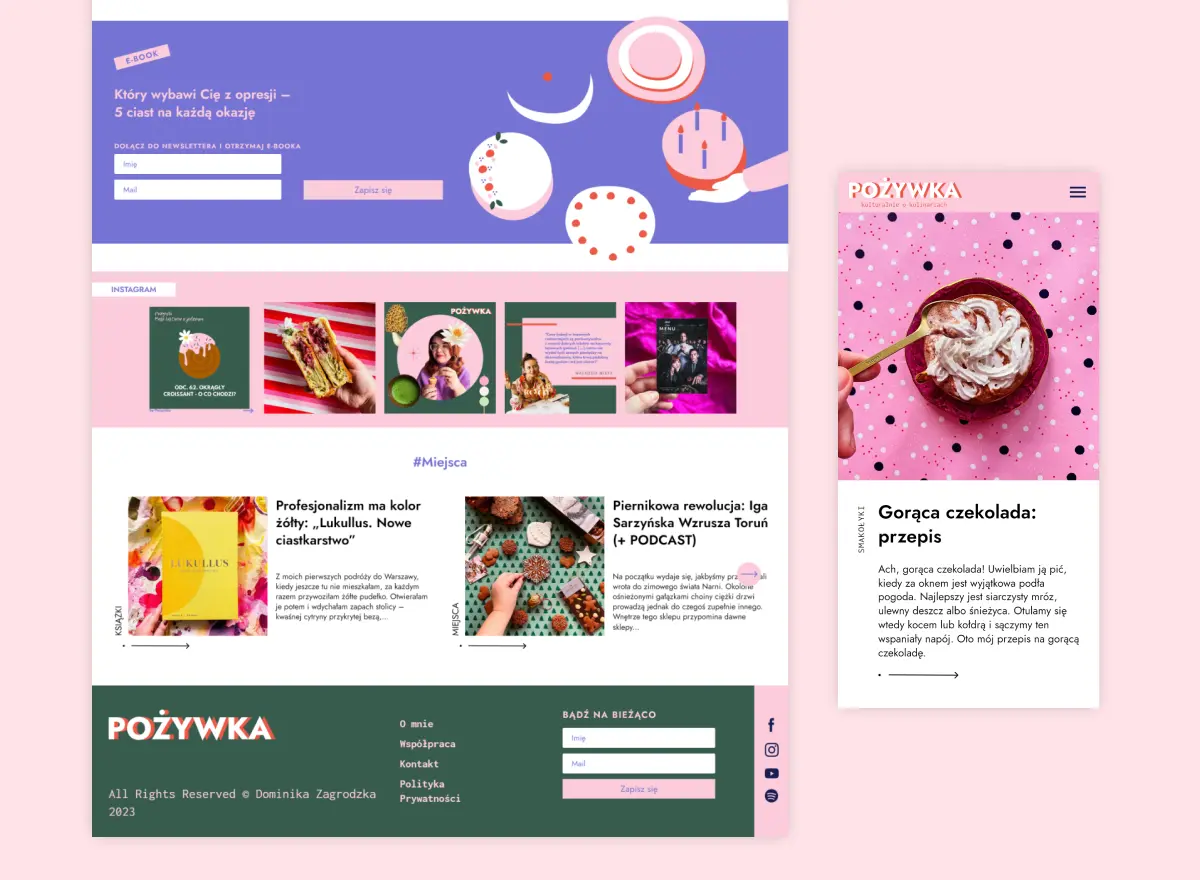
pozywka.pl
Scalable blog for food journalist, focused on performance and user experience 🌭
zagrodzki.me
Personal blog and portfolio of Bart Zagrodzki, where he shares his knowledge and work 💼
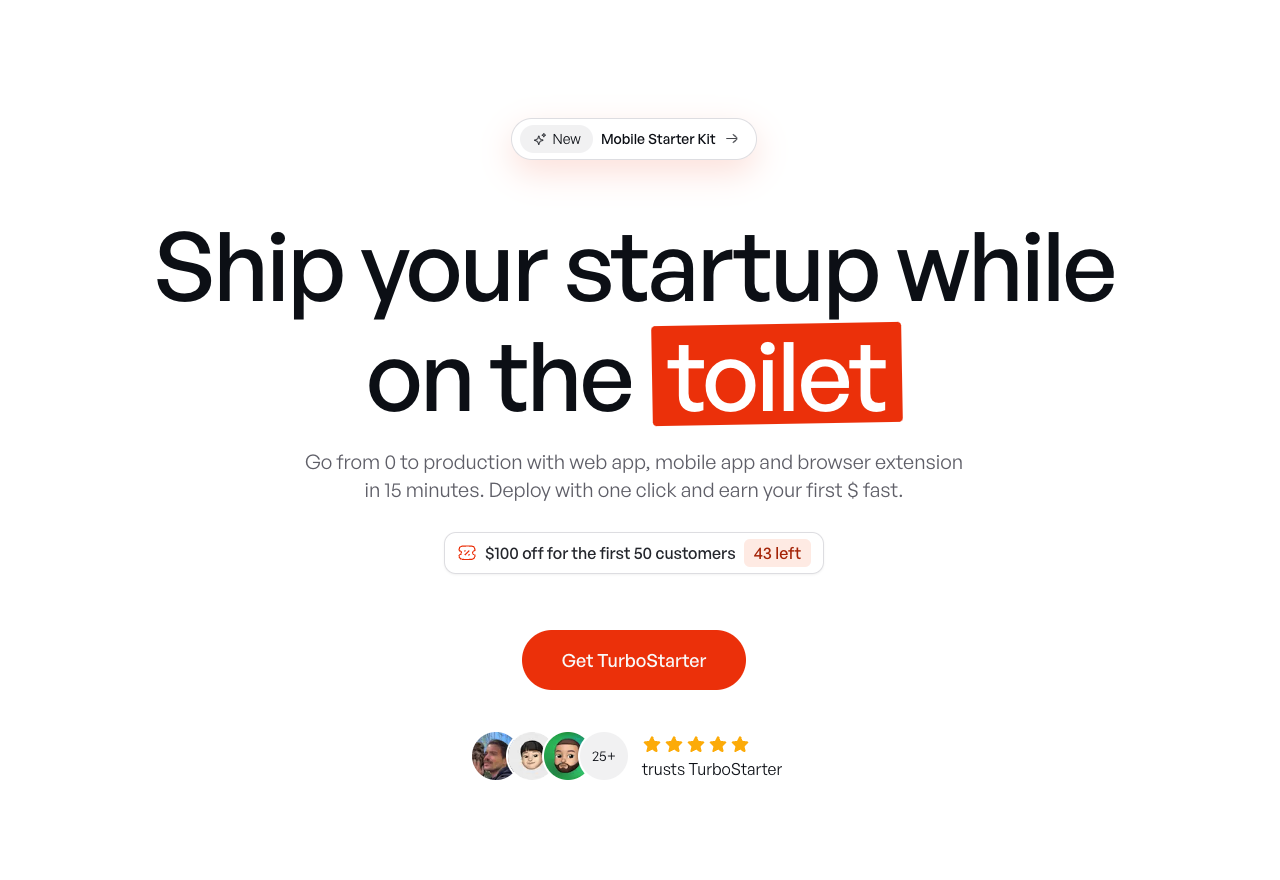
TurboStarter
Ship your startup everywhere. In minutes.
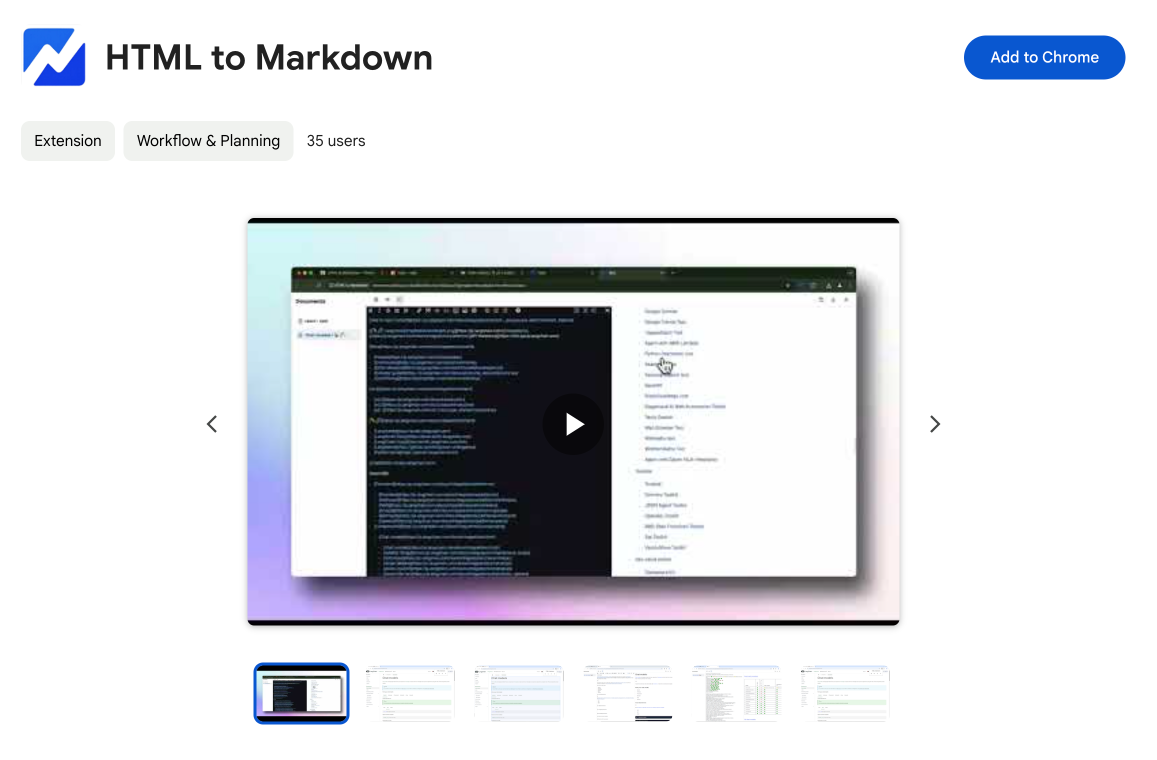
HTML to Markdown
Convert HTML to Markdown with ease, directly in your browser 📄
Dotallio
Personalized AI apps that automate research, data extraction, and content creation without code 🤖
Talk to Santa
Enjoy a magical live video chat or receive a unique AI-generated video greeting from Santa Claus 🎅
pozywka.pl
Scalable blog for food journalist, focused on performance and user experience 🌭
zagrodzki.me
Personal blog and portfolio of Bart Zagrodzki, where he shares his knowledge and work 💼
TurboStarter
Ship your startup everywhere. In minutes.
HTML to Markdown
Convert HTML to Markdown with ease, directly in your browser 📄
Dotallio
Personalized AI apps that automate research, data extraction, and content creation without code 🤖
Talk to Santa
Enjoy a magical live video chat or receive a unique AI-generated video greeting from Santa Claus 🎅
pozywka.pl
Scalable blog for food journalist, focused on performance and user experience 🌭
zagrodzki.me
Personal blog and portfolio of Bart Zagrodzki, where he shares his knowledge and work 💼
TurboStarter
Ship your startup everywhere. In minutes.
HTML to Markdown
Convert HTML to Markdown with ease, directly in your browser 📄
Dotallio
Personalized AI apps that automate research, data extraction, and content creation without code 🤖
Talk to Santa
Enjoy a magical live video chat or receive a unique AI-generated video greeting from Santa Claus 🎅
pozywka.pl
Scalable blog for food journalist, focused on performance and user experience 🌭
zagrodzki.me
Personal blog and portfolio of Bart Zagrodzki, where he shares his knowledge and work 💼
TurboStarter
Ship your startup everywhere. In minutes.
HTML to Markdown
Convert HTML to Markdown with ease, directly in your browser 📄
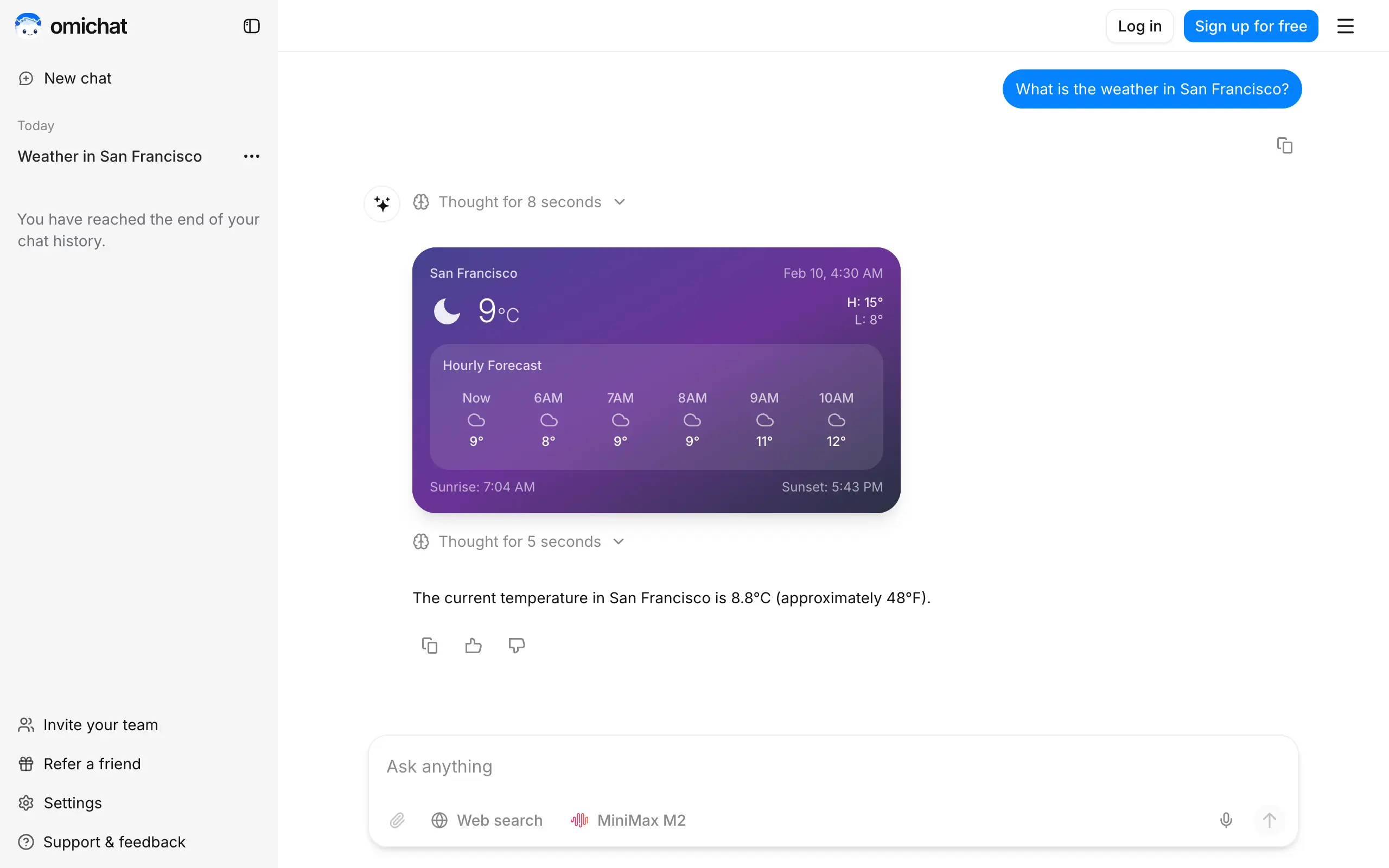
Omichat
Chat with 50+ AI models, including ChatGPT and Claude, in one place - switch models anytime without losing context 🤖
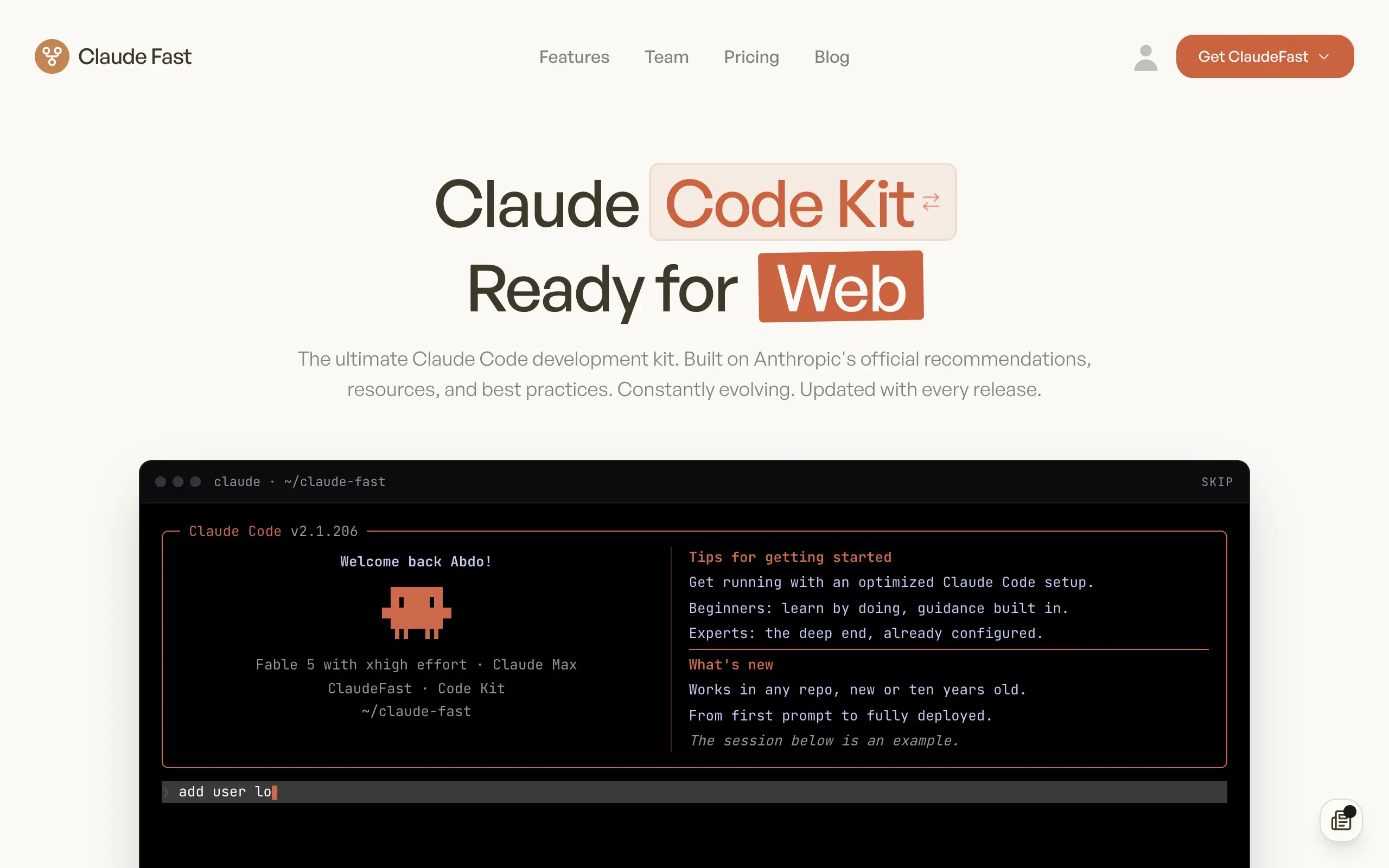
Claude Fast
Supercharge your Claude Code with 6x effective context window and specialized AI agents 🤖
EmojAI
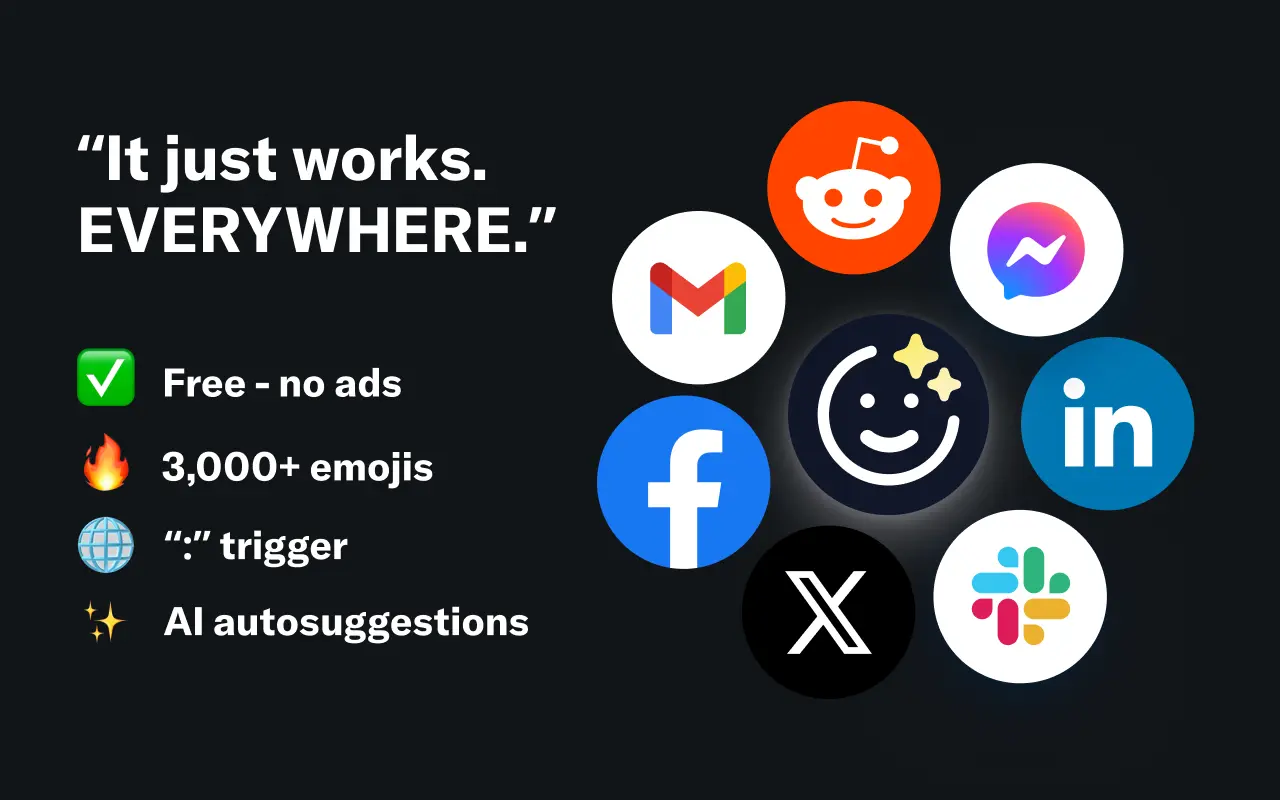
AI-powered emoji picker with smart, context-aware suggestions 🤖

Solohacker
Autonomous company launcher - AI agents work 24/7, escalate what matters, and you stay in control 🤖
BeRawi: Storytelling Coach
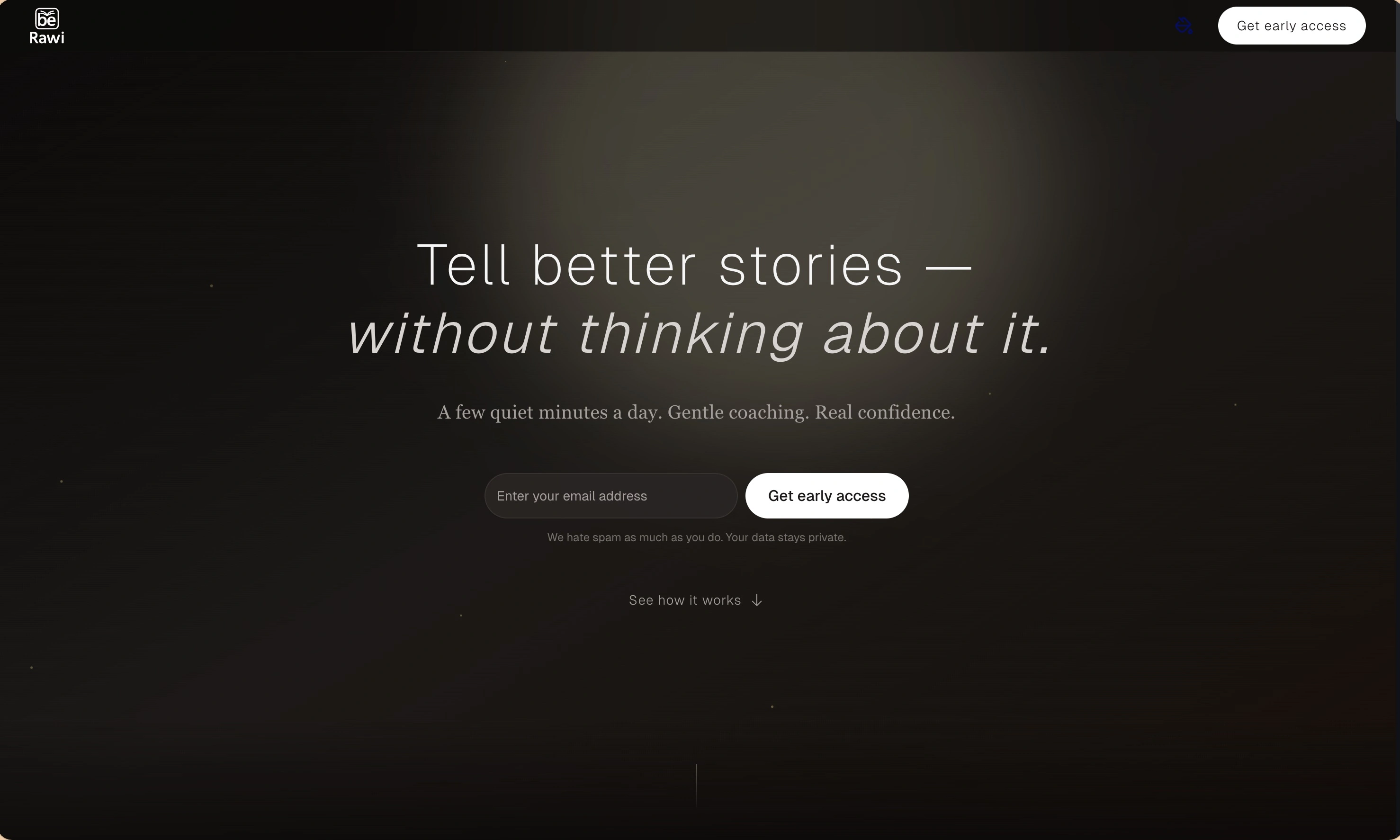
Practice storytelling daily with instant feedback to sound clearer, more engaging, and confident 🎤
Omichat
Chat with 50+ AI models, including ChatGPT and Claude, in one place - switch models anytime without losing context 🤖
Claude Fast
Supercharge your Claude Code with 6x effective context window and specialized AI agents 🤖
EmojAI
AI-powered emoji picker with smart, context-aware suggestions 🤖
Solohacker
Autonomous company launcher - AI agents work 24/7, escalate what matters, and you stay in control 🤖
BeRawi: Storytelling Coach
Practice storytelling daily with instant feedback to sound clearer, more engaging, and confident 🎤
Omichat
Chat with 50+ AI models, including ChatGPT and Claude, in one place - switch models anytime without losing context 🤖
Claude Fast
Supercharge your Claude Code with 6x effective context window and specialized AI agents 🤖
EmojAI
AI-powered emoji picker with smart, context-aware suggestions 🤖
Solohacker
Autonomous company launcher - AI agents work 24/7, escalate what matters, and you stay in control 🤖
BeRawi: Storytelling Coach
Practice storytelling daily with instant feedback to sound clearer, more engaging, and confident 🎤
Omichat
Chat with 50+ AI models, including ChatGPT and Claude, in one place - switch models anytime without losing context 🤖
Claude Fast
Supercharge your Claude Code with 6x effective context window and specialized AI agents 🤖
EmojAI
AI-powered emoji picker with smart, context-aware suggestions 🤖
Solohacker
Autonomous company launcher - AI agents work 24/7, escalate what matters, and you stay in control 🤖
BeRawi: Storytelling Coach
Practice storytelling daily with instant feedback to sound clearer, more engaging, and confident 🎤

Connect with like-minded people
Join our community to get feedback, support, and grow together with 1,000+ builders on board, let's ship it!
Join usShip your startup everywhere. In minutes.
Don't burn tokens on setup and start building features on day one.