GrowthTide
An AI growth coach for solo creators that audits landing pages and social metrics, then recommends measurable weekly marketing experiments.
What is an AI growth coach for solo creators?
An AI growth coach for solo creators helps independent creators decide what to do next to grow their audience and business. GrowthTide is a SaaS concept built around a practical loop: audit a creator’s landing page and social metrics, identify a growth opportunity, and recommend a measurable marketing experiment for the coming week.
That focus matters. Many creators already have access to analytics dashboards, content-planning tools, and AI writing assistants. The harder problem is turning scattered information into a clear, realistic action plan—and then learning whether that plan worked.
GrowthTide’s central promise should be simple:
Understand your current growth bottleneck, run one focused experiment this week, and learn from the result.
The product should not promise viral posts or guaranteed revenue. It should help creators make better decisions with the time and evidence they have.
Who GrowthTide should serve
“Solo creator” covers a wide range of people, from hobbyists to full-time independent businesses. GrowthTide will be more useful if it begins with a defined audience rather than trying to coach everyone who publishes online.
Best-fit early users
A promising initial customer profile is a creator who:
- Publishes consistently on one or two social platforms.
- Has a landing page, newsletter signup, digital product, service, or other next step for their audience.
- Checks analytics but is uncertain what the numbers imply.
- Has limited time, budget, or marketing support.
- Wants to build a sustainable audience or business rather than chase attention alone.
Potential segments include newsletter writers, independent educators, coaches, podcasters, artists, niche influencers, and creators selling digital products. These groups have different goals, so GrowthTide should avoid treating likes, email subscribers, booked calls, and sales as interchangeable measures of success.
Jobs to be done
A creator may come to GrowthTide with questions such as:
- “Why are people visiting my landing page but not signing up?”
- “Which social channel deserves my limited time?”
- “What should I test next week?”
- “Did my last campaign actually help?”
- “How can I improve without publishing more content than I can sustain?”
These questions point to a coaching product, not just another dashboard. The product needs to explain why it recommends an action, how the creator can carry it out, and which outcome would count as evidence.
Users GrowthTide should not target first
Some users may not be a good fit for the first version:
- Creators with no established offer, page, or measurable audience goal.
- Large teams that need approval workflows and enterprise analytics.
- Businesses seeking a full marketing agency or done-for-you campaign management.
- Users expecting the system to guarantee audience growth or income.
- Creators who need advanced attribution across complex advertising funnels.
A clear initial boundary reduces product complexity and helps GrowthTide build recommendations that feel specific instead of generic.
The market opportunity and product gap
The creator growth software market includes analytics dashboards, social scheduling tools, landing-page builders, email platforms, and generative AI assistants. Each category solves a real part of the workflow. The gap is often the handoff between them.
A creator may see that a post performed well, but not know whether to repeat its topic, adapt its format, improve the landing page, or focus on a different conversion goal. A dashboard can report a result without telling a user what to do next. A general-purpose AI assistant can produce suggestions without understanding the creator’s actual page, audience, and recent performance.
GrowthTide can address this gap by connecting three kinds of information:
- The creator’s objective, such as email signups or product sales.
- The creator’s assets and activity, such as their landing page and social posts.
- The outcome of previous experiments, including what changed and what happened afterward.
The product opportunity is not simply “AI for marketing.” It is a repeatable decision-making workflow for people who do not have a dedicated growth team.
A focused position in a crowded market
GrowthTide should position itself as a weekly growth decision system, not as a replacement for every marketing tool. That distinction influences both the feature set and the customer’s expectations.
A useful first promise is:
- Audit a page and a limited set of connected or uploaded performance data.
- Identify one plausible growth bottleneck.
- Recommend one experiment that can be completed within a week.
- Track the result against a defined metric.
- Use the outcome to improve future recommendations.
This keeps the product’s value understandable and makes it easier to validate whether customers will return.
Why timing may be favorable
Creators increasingly have access to generative AI, but more generated content does not necessarily produce better strategic choices. As content production becomes easier, a creator’s constraint may shift toward prioritization, positioning, conversion, and consistent measurement.
GrowthTide can benefit from this shift if it uses AI to interpret context and support a disciplined process—not merely to generate more captions. For a stronger evidence base in a published launch or investor document, cite current creator-economy and digital-adoption research from reputable organizations, including the publication date and the exact methodology. Avoid using a single market-size estimate as proof of product demand.
GrowthTide’s core features and solution
The first version should help users complete a coherent growth loop. Each feature should support a concrete decision or reduce friction in completing that loop.
1. Guided onboarding and goal selection
GrowthTide should begin by asking what the creator wants to improve. Example goals include:
- Increase qualified email signups.
- Improve landing-page conversion.
- Generate more sales for a specific offer.
- Increase meaningful engagement on a chosen channel.
- Create a more consistent publishing routine.
The onboarding flow should also collect context such as audience, offer, available weekly time, primary platform, and the creator’s current stage. This information helps the system avoid recommending actions that are irrelevant or unrealistic.
Keep onboarding short. Ask only for details that meaningfully affect recommendations, and let users refine their answers later.
2. Landing-page audit
A page audit can review a public URL or a user-provided page snapshot. The report should evaluate practical conversion factors, such as:
- Whether the page clearly explains who the offer is for.
- Whether the main value proposition is easy to understand.
- Whether the call to action is visible and consistent.
- Whether the page presents relevant evidence, examples, or trust signals.
- Whether a visitor can understand the next step without unnecessary friction.
- Whether the page’s promise aligns with the content driving visitors there.
AI can help summarize and organize observations, but the audit should distinguish visible evidence from assumptions. For instance, a page inspection might identify a vague headline; it cannot determine the actual conversion rate unless reliable performance data is available.
GrowthTide should label findings by confidence and explain what the user can verify. It should avoid presenting automated opinions as objective conversion facts.
3. Social performance review
Creators should be able to connect supported accounts where platform access and permissions allow, or upload a simple export if direct integration is unavailable. The product should begin with a narrow set of signals that map to the user’s goal.
Depending on platform and objective, useful metrics may include:
- Reach or impressions.
- Engagement actions, interpreted in context.
- Link clicks.
- Profile visits.
- Email signups or other downstream conversions.
- Posting frequency and consistency.
Metrics should be compared with the creator’s own historical baseline whenever possible. A universal benchmark can be misleading because performance varies by platform, audience, format, niche, and account size.
4. A prioritized weekly experiment
The recommendation is the product’s most important output. A useful experiment contains:
- Hypothesis: What change might improve a defined outcome?
- Action: What the creator should do.
- Audience: Who the change is intended to help.
- Primary metric: The result used to evaluate the experiment.
- Time frame: When the user should review it.
- Effort estimate: How much time or work it requires.
- Reasoning: Which available evidence led to the recommendation.
For example, GrowthTide might suggest clarifying the landing-page headline before increasing posting frequency if the page’s value proposition appears ambiguous and the creator already has relevant traffic. The point is not to prescribe that tactic universally. It is to connect a recommendation to the user’s context and make the proposed test measurable.
5. Experiment tracking and learning
A weekly plan only creates value if the creator can record what happened. GrowthTide should track:
- The original hypothesis and selected metric.
- The action taken and its completion date.
- Relevant baseline data.
- The outcome at the review point.
- Context that may have affected the result, such as a promotion or platform change.
- The user’s interpretation and next decision.
The system should help users distinguish “no clear result” from “the idea failed.” Small audiences and noisy platform metrics make certainty difficult. Good coaching teaches users to make cautious conclusions rather than overreact to a single data point.
6. A useful progress summary
A weekly summary should answer a few questions quickly:
- What did I plan?
- What did I complete?
- What changed?
- What did I learn?
- What is the next best experiment?
Keep the interface focused. A busy creator should not have to navigate a complex analytics suite just to find the next action.
How GrowthTide can stand out
GrowthTide’s competitive advantage should come from the quality of its workflow and learning loop, not from claiming that its AI is uniquely intelligent.
| Product category | Typical strength | Common limitation | GrowthTide opportunity |
|---|---|---|---|
| Social analytics tools | Show platform performance | May leave interpretation to the user | Translate selected signals into a testable next step |
| Scheduling tools | Organize publishing | Focus on execution and cadence | Connect publishing activity to a defined business outcome |
| General AI assistants | Flexible ideation and writing | Often lack verified account and page context | Ground recommendations in user-provided or connected evidence |
| Marketing agencies | Expert execution and strategy | Can be costly or unavailable to solo creators | Offer a repeatable, self-serve coaching workflow |
| Landing-page tools | Build and publish pages | May not diagnose the full growth process | Connect page observations with traffic goals and experiments |
These are strategic distinctions, not claims that every product in a category lacks a given capability. GrowthTide should validate the comparison through customer interviews and hands-on competitor research.
The defensible product asset
Over time, GrowthTide may build a valuable record of how creators’ stated goals, page characteristics, experiments, and outcomes relate. That data could improve recommendation relevance, provided it is gathered transparently and handled with strong privacy controls.
A realistic moat would be a combination of:
- A structured experiment history.
- A workflow creators return to every week.
- Carefully designed integrations.
- High-quality explanations that build user trust.
- A growing understanding of what is feasible for different creator stages.
The moat is not “AI” alone. Competitors can access similar model capabilities. Durable differentiation depends on the product’s data quality, user experience, trust, and ability to help users act.
Recommended technology stack for an MVP
The right stack depends on the team’s experience, integration requirements, and privacy commitments. For an early product, prioritize a fast, maintainable web application with secure account management, clear data boundaries, and an architecture that supports changing the recommendation process.
Web application
A practical option is Next.js with React and TypeScript. This stack supports a responsive dashboard, server-rendered pages where useful, and typed application logic.
Trade-offs include:
- The ecosystem is broad, but that can create choices that slow early development.
- Server-side and client-side responsibilities need to be separated deliberately.
- Developers should avoid adding complex state or rendering infrastructure before product needs justify it.
For a creator-facing dashboard, accessibility and mobile usability deserve early attention. Many users will review a weekly plan from a phone even if they complete detailed setup on a laptop.
Backend and data storage
A managed PostgreSQL service can store users, workspaces, goals, page audits, experiment records, and metric snapshots. Supabase is one possible option because it provides hosted Postgres and related services. Another approach is a custom backend with a managed database, which may offer greater control but requires more operational work.
A sensible data model could include:
- Users and creator profiles.
- Connected accounts and permission records.
- Goals and selected metrics.
- Audit observations with evidence and confidence.
- Experiments and their completion status.
- Metric snapshots and outcome notes.
Keep raw platform data only as long as necessary. Separate sensitive credentials from ordinary application records, and apply row-level authorization so users can access only their own data.
AI and recommendation layer
Use a model provider behind a server-side service layer rather than coupling the application directly to one model’s prompt format. The service can combine structured evidence, user goals, product rules, and model output into a recommendation.
A responsible flow might be:
- Validate and normalize user inputs.
- Retrieve only relevant page and performance evidence.
- Apply deterministic rules for safety, feasibility, and metric selection.
- Ask the model to explain or prioritize candidate recommendations.
- Validate the response against a schema.
- Show the recommendation with evidence, confidence, and limitations.
- Store the user’s decision and eventual outcome.
Do not send credentials, unnecessary personal data, or private account information to a model provider. Review the provider’s data-use terms and retention controls before launch. Keep the recommendation service replaceable so model cost, quality, or policy changes do not force a full product rewrite.
Integrations and analytics
Social-platform integrations can create meaningful value, but they also add approval, permission, rate-limit, and API-change risks. Start with one platform only if customer discovery shows it is essential. Otherwise, let early users upload exports or enter a small number of metrics manually while the product validates its coaching workflow.
Use product analytics to understand onboarding completion, experiment starts, weekly returns, and paid conversion. Analytics should measure product behavior without collecting more personal information than necessary.
Billing and deployment
A billing provider such as Stripe can support subscriptions, invoices, and payment management. Use hosted checkout or other provider-supported flows where appropriate, and avoid storing payment-card details yourself.
Deploy the application using a hosting provider that supports the chosen framework and offers suitable monitoring, backups, and environment management. Before launch, establish basic error reporting, uptime monitoring, and a documented backup-restore process.
Teams looking to accelerate the initial SaaS foundation can explore TurboStarter. Evaluate any starter kit against the product’s authentication, billing, deployment, and data-security requirements before adopting it.
A small experiment record schema
GrowthTide should represent recommendations as structured records, not just free-form chat responses. A simple TypeScript shape can help keep the workflow consistent:
type GrowthExperiment = {
  id: string;
  goal: string;
  hypothesis: string;
  action: string;
  primaryMetric: string;
  baseline?: number;
  reviewDate: string;
  effortMinutes?: number;
  evidence: string[];
  confidence: "low" | "medium" | "high";
  status: "planned" | "in_progress" | "completed" | "reviewed";
};
The application should validate incoming and generated values at runtime as well as at compile time. In particular, generated recommendations should not be allowed to invent metric baselines or claim that an action caused an outcome without supporting evidence.
Monetization strategies for GrowthTide
The best pricing model should match the recurring value GrowthTide delivers. Since the core activity is weekly coaching and experiment review, subscription pricing is a natural starting point—but only if users return and receive ongoing value.
Freemium subscription
A free plan could include a limited audit, one active experiment, or manual metric tracking. A paid plan might add recurring audits, more experiment history, integrations, or customized coaching.
Advantages:
- Lets creators experience the workflow before paying.
- Supports organic sharing and product-led acquisition.
- Creates a path for converting users as their needs grow.
Risks:
- A generous free plan can create infrastructure and support costs.
- Users may complete one audit and never return.
- Feature limits can feel arbitrary if they do not map to real value.
Set limits around ongoing value or usage costs, not features that make the product unusable.
Paid subscription from the start
A focused paid plan may be appropriate if early customers are already spending on creator tools and GrowthTide can demonstrate a recurring benefit. A simple pricing structure is easier to test than a large collection of tiers.
Possible plan dimensions include the number of connected channels, audit frequency, experiment history, or the amount of AI analysis. Avoid charging based only on vanity metrics such as follower count.
One-time audit with recurring coaching
A one-time landing-page audit can lower the barrier to purchase, while a subscription adds weekly experiments and progress tracking. This model helps test whether customers value the audit alone or the ongoing decision loop.
The product must keep these offers distinct. If the one-time report answers the user’s entire need, the subscription needs a clear reason to continue.
Annual plans and creator cohorts
Annual billing can improve cash flow, but should come after the product demonstrates retention. A cohort-based onboarding program or paid group review may help early users establish a habit and give the team richer qualitative feedback. These services can inform the software without becoming a permanent, labor-intensive requirement.
Risks and mitigation strategies
GrowthTide handles business advice, platform data, and AI-generated recommendations. Trust and careful product design are essential.
Generic or low-quality advice
Risk: Recommendations may sound polished but offer little more than generic marketing guidance.
Mitigation: Ground every suggestion in explicit user context and available evidence. Explain why an action was selected, include an effort estimate, and give users a way to reject or correct the recommendation. Track how often users complete and review experiments.
Weak or incomplete data
Risk: Platform metrics may be unavailable, inconsistent, or insufficient to support a conclusion.
Mitigation: Label missing data clearly, use the creator’s own baseline when possible, and offer manual entry or file upload. Do not imply that a page audit predicts actual conversion performance without conversion data.
Platform dependency
Risk: Social APIs can change permissions, data access, and rate limits.
Mitigation: Keep integrations modular, support manual data entry where practical, and avoid making the product dependent on one platform’s data availability. Confirm current platform policies and approval requirements before building integrations.
Privacy and security concerns
Risk: Creators may hesitate to connect accounts or share business information.
Mitigation: Request the minimum permissions needed, explain why each item is requested, encrypt sensitive data, provide deletion controls, and document retention practices. Review applicable privacy and consumer-protection requirements with qualified counsel before launch.
Overconfidence and misleading causality
Risk: A creator might interpret a small change in an unstable metric as proof that a tactic worked.
Mitigation: Use cautious language, distinguish observation from inference, and encourage repeated tests when sample sizes are small. Let users record external factors and avoid claiming causality from simple before-and-after comparisons.
Recommendation overload
Risk: Too many suggestions can increase anxiety and reduce follow-through.
Mitigation: Offer one primary experiment and, at most, a small number of alternatives. Make the time commitment explicit and let users choose a realistic action.
Poor retention
Risk: Users may complete one audit and churn before forming a weekly habit.
Mitigation: Design the experience around a recurring review, not a one-time report. Prompt users to evaluate completed experiments, capture the learning, and select a sensible next step. Validate retention through observed behavior, not stated enthusiasm alone.
How to validate GrowthTide before building too much
Early validation should test the problem, the proposed workflow, willingness to pay, and the repeat-use hypothesis.
Interview creators about recent decisions
Ask about the last time a creator tried to improve growth. Useful questions include:
- What were you trying to improve?
- What information did you use?
- What did you decide to change?
- How did you judge whether it worked?
- What was frustrating or time-consuming?
- Have you paid for help or software to solve this?
Ask about behavior and past decisions rather than whether someone “likes the idea.” Compliments are not evidence of demand.
Deliver the coaching manually
Before building extensive integrations, offer a small group of target users a structured audit and weekly experiment plan. The team can use a repeatable internal process to learn which inputs matter, which recommendations creators trust, and whether users complete the actions.
This concierge approach is not a substitute for a scalable product. It is a way to discover the right workflow before automating it.
Test willingness to pay
Show the intended offer and pricing to creators who match the target profile. Look for actions such as a paid pilot, deposit, or committed trial—not only survey responses. Document objections and identify whether the perceived value comes from the audit, the experiment planning, the accountability, or the outcome tracking.
Define evidence for product-market learning
Track a small set of meaningful indicators:
- Percentage of users who complete onboarding.
- Percentage who receive and understand a first recommendation.
- Percentage who start an experiment.
- Percentage who return to review an experiment.
- Percentage who begin another weekly cycle.
- Conversion from active use to a paid plan.
- Reasons users stop using the product.
These measures help distinguish initial curiosity from recurring utility.
Actionable implementation steps
A disciplined launch can reduce the chance of spending months on integrations before proving the core value.
1. Choose one creator segment
Select a segment with a clear growth goal, a reachable community, and a measurable conversion path. For example, begin with newsletter creators who want to improve email signups rather than trying to serve every creator type.
2. Interview and observe target users
Speak with creators about their existing workflow. Ask to see the tools, dashboards, and reports they actually use, with sensitive information removed where needed. Record recurring pain points and the language customers use to describe them.
3. Prototype the weekly growth loop
Create a lightweight flow for goal selection, evidence review, one recommendation, and an outcome review. Test whether users understand the advice and can complete the experiment without extra coaching.
4. Run a manual pilot
Work with a small group of creators for several weekly cycles. Track completion, user corrections, recommendation quality, and whether the product helps users make decisions. Use failures as product evidence rather than hiding them.
5. Build the minimum useful product
Start with account setup, one goal, a simple landing-page review, manual or limited metric input, a structured experiment record, and a weekly review. Add direct integrations only when they remove a validated source of friction.
6. Establish quality and privacy safeguards
Create a recommendation rubric, test model outputs against representative cases, provide clear uncertainty labels, and document data handling. Include a way to edit or dismiss recommendations and delete account data.
7. Measure retention and refine pricing
Observe whether users return to review experiments and start another cycle. Test pricing with active users, then refine plans based on recurring value and operating costs—not on assumptions about what creators will pay.
The long-term vision for GrowthTide
GrowthTide can become a trusted growth coach if it helps creators develop better marketing judgment, rather than making them dependent on a stream of AI-generated tactics. Its most valuable outcome may be that users learn to connect a goal, a piece of evidence, a focused action, and a measured result.
The strongest version of the product will be specific, transparent, and humble about what the data can prove. It will recommend fewer experiments, explain them clearly, and help creators understand what happened afterward.
For the initial product, prioritize a narrow audience and a complete weekly workflow over a broad feature list. If creators repeatedly use GrowthTide to choose and evaluate their next marketing experiment—and are willing to pay for that support—the concept has a solid basis for expansion.
More 👥 B2C Application SaaS ideas
Discover more innovative b2c application SaaS ideas that are trending in 2026. Each idea is AI-generated with market validation and growth potential to help you find your next profitable venture faster than competitors.
Your competitors are building with TurboStarter
Below are some of the SaaS ideas that have been generated and built with our starter kit.

Statiko
Monitor any Telegram channel in real time - track posts, edits, deletions, and growth with AI recaps 📡

Shibui
AI website builder - describe your business, pick a niche template, edit by chatting, and publish instantly ✨

Pro Service
Find verified home service professionals, compare quotes, and pay securely through escrow - built for Brazilians across the US 🏠

RankGrow
Fix your SEO with AI agents - connect Search Console, get prioritized tasks, and grow organic traffic 📈
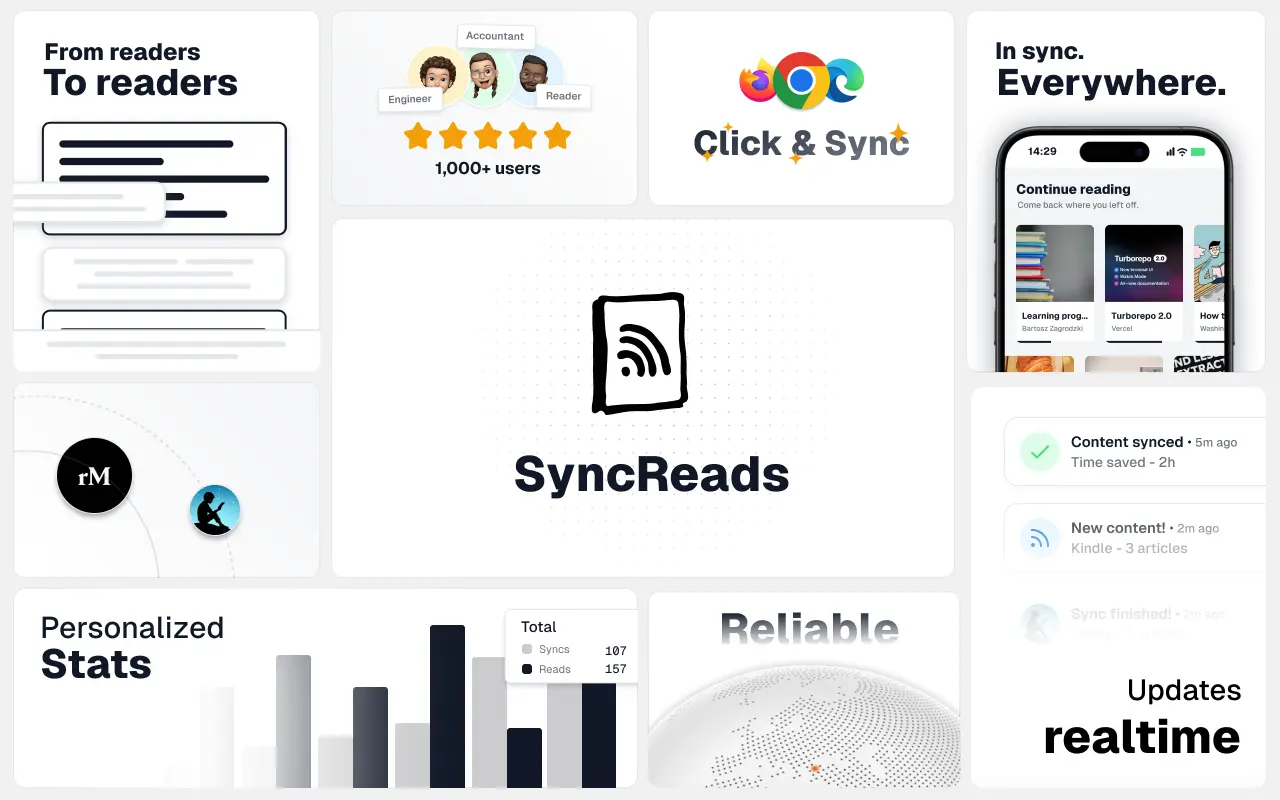
SyncReads
Sync your favorite content for distraction-free reading, save time and replace multiple apps. Anytime, anywhere 🔄
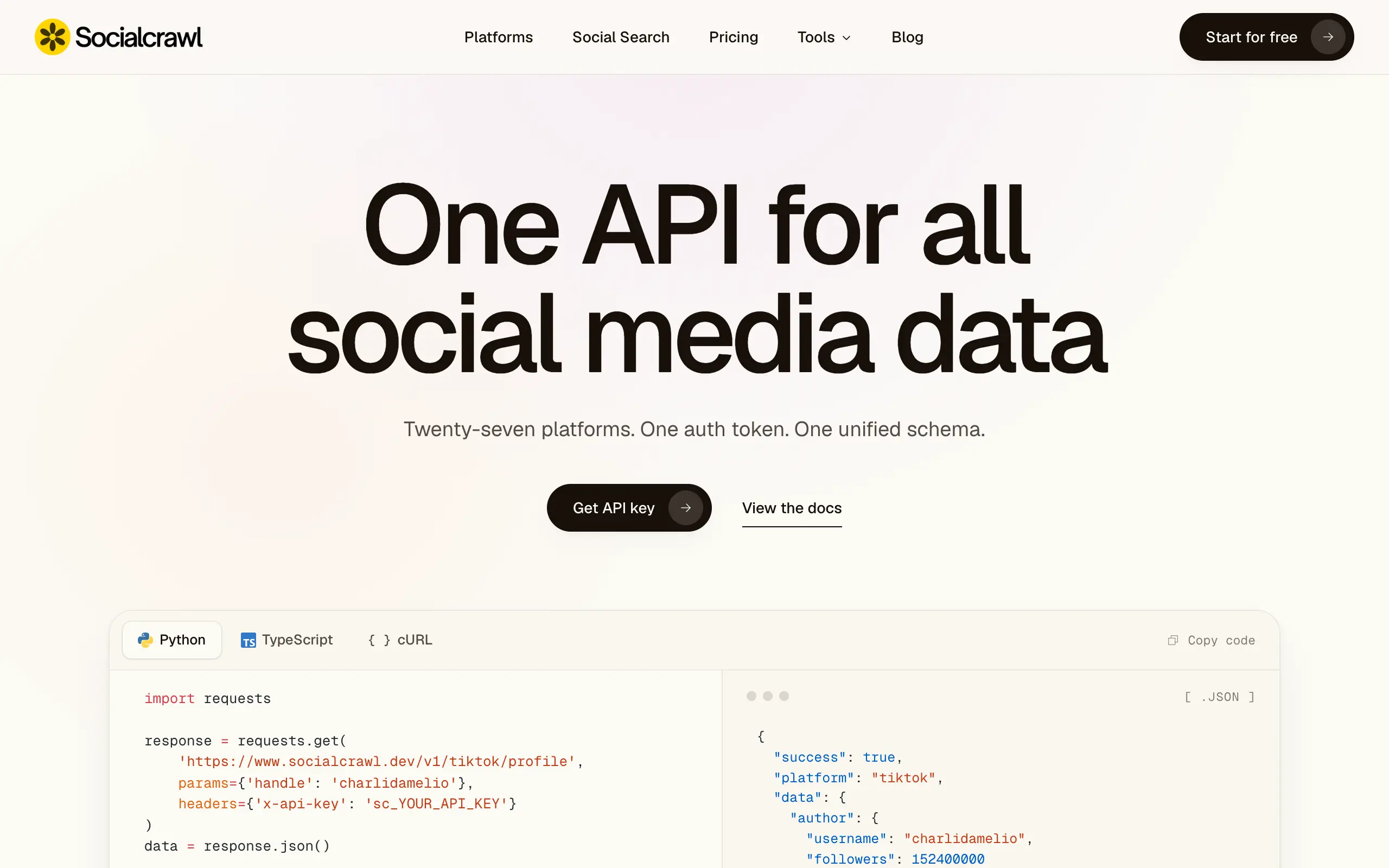
Socialcrawl
Get clean, structured data from 21 platforms like TikTok, Instagram, and YouTube with a single request 📊
Statiko
Monitor any Telegram channel in real time - track posts, edits, deletions, and growth with AI recaps 📡
Shibui
AI website builder - describe your business, pick a niche template, edit by chatting, and publish instantly ✨
Pro Service
Find verified home service professionals, compare quotes, and pay securely through escrow - built for Brazilians across the US 🏠
RankGrow
Fix your SEO with AI agents - connect Search Console, get prioritized tasks, and grow organic traffic 📈
SyncReads
Sync your favorite content for distraction-free reading, save time and replace multiple apps. Anytime, anywhere 🔄
Socialcrawl
Get clean, structured data from 21 platforms like TikTok, Instagram, and YouTube with a single request 📊
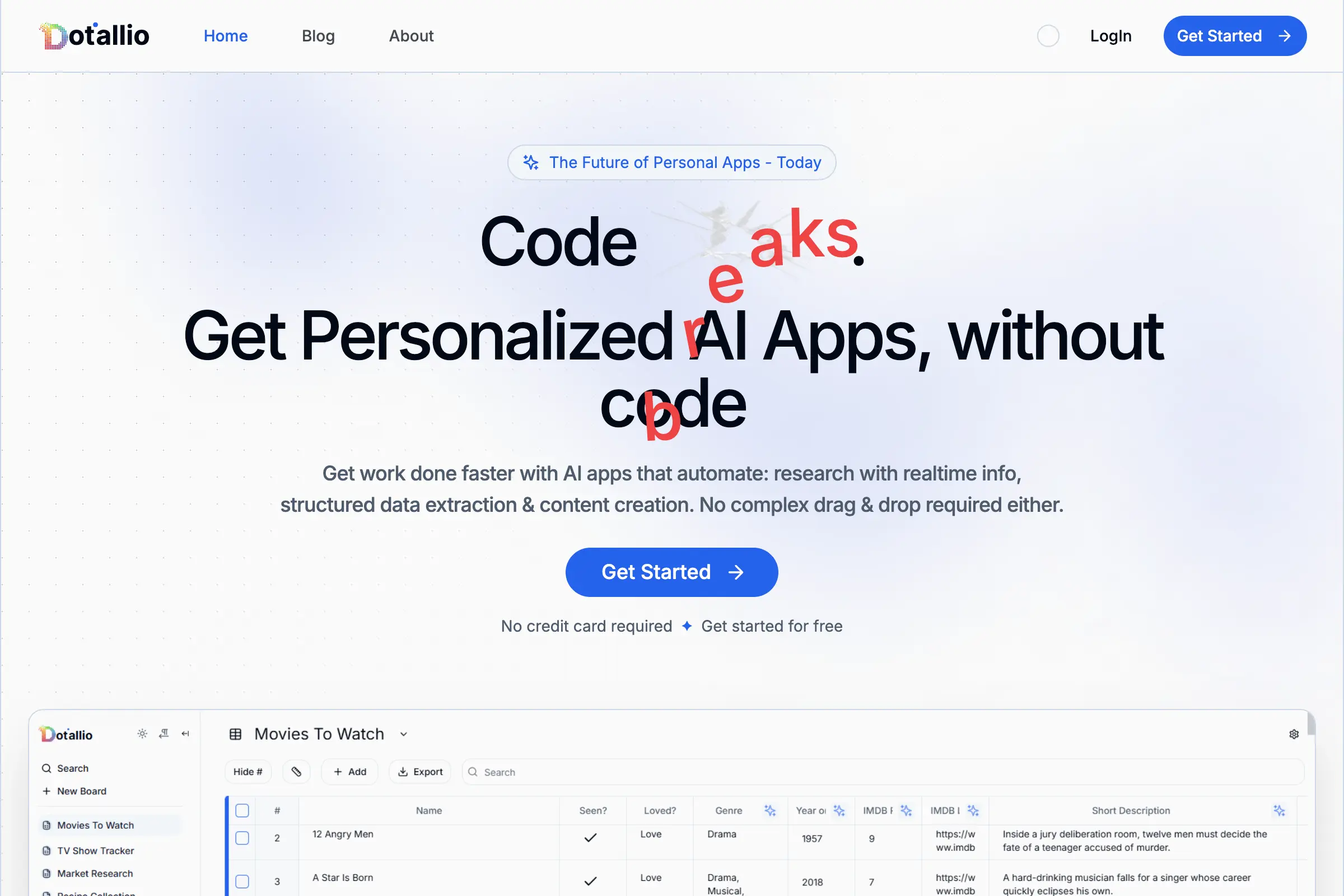
Dotallio
Personalized AI apps that automate research, data extraction, and content creation without code 🤖

Talk to Santa
Enjoy a magical live video chat or receive a unique AI-generated video greeting from Santa Claus 🎅

pozywka.pl
Scalable blog for food journalist, focused on performance and user experience 🌭
zagrodzki.me
Personal blog and portfolio of Bart Zagrodzki, where he shares his knowledge and work 💼

TurboStarter
Ship your startup everywhere. In minutes.
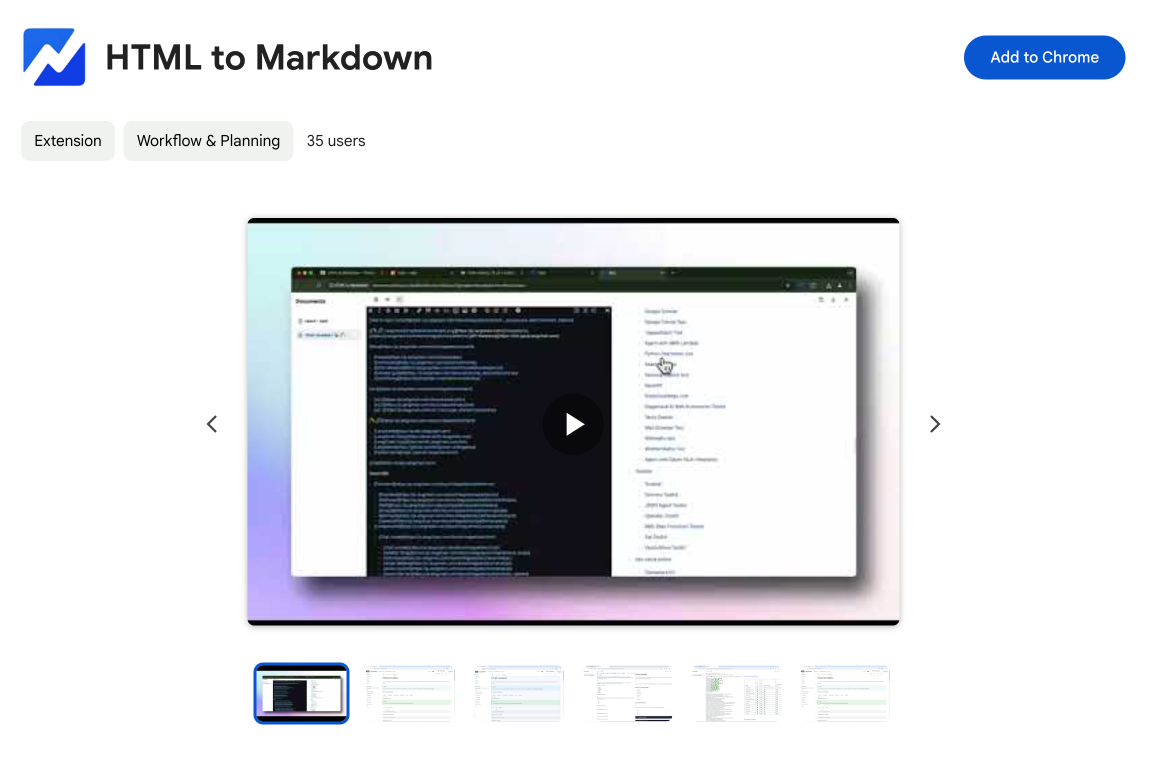
HTML to Markdown
Convert HTML to Markdown with ease, directly in your browser 📄
Dotallio
Personalized AI apps that automate research, data extraction, and content creation without code 🤖
Talk to Santa
Enjoy a magical live video chat or receive a unique AI-generated video greeting from Santa Claus 🎅
pozywka.pl
Scalable blog for food journalist, focused on performance and user experience 🌭
zagrodzki.me
Personal blog and portfolio of Bart Zagrodzki, where he shares his knowledge and work 💼
TurboStarter
Ship your startup everywhere. In minutes.
HTML to Markdown
Convert HTML to Markdown with ease, directly in your browser 📄
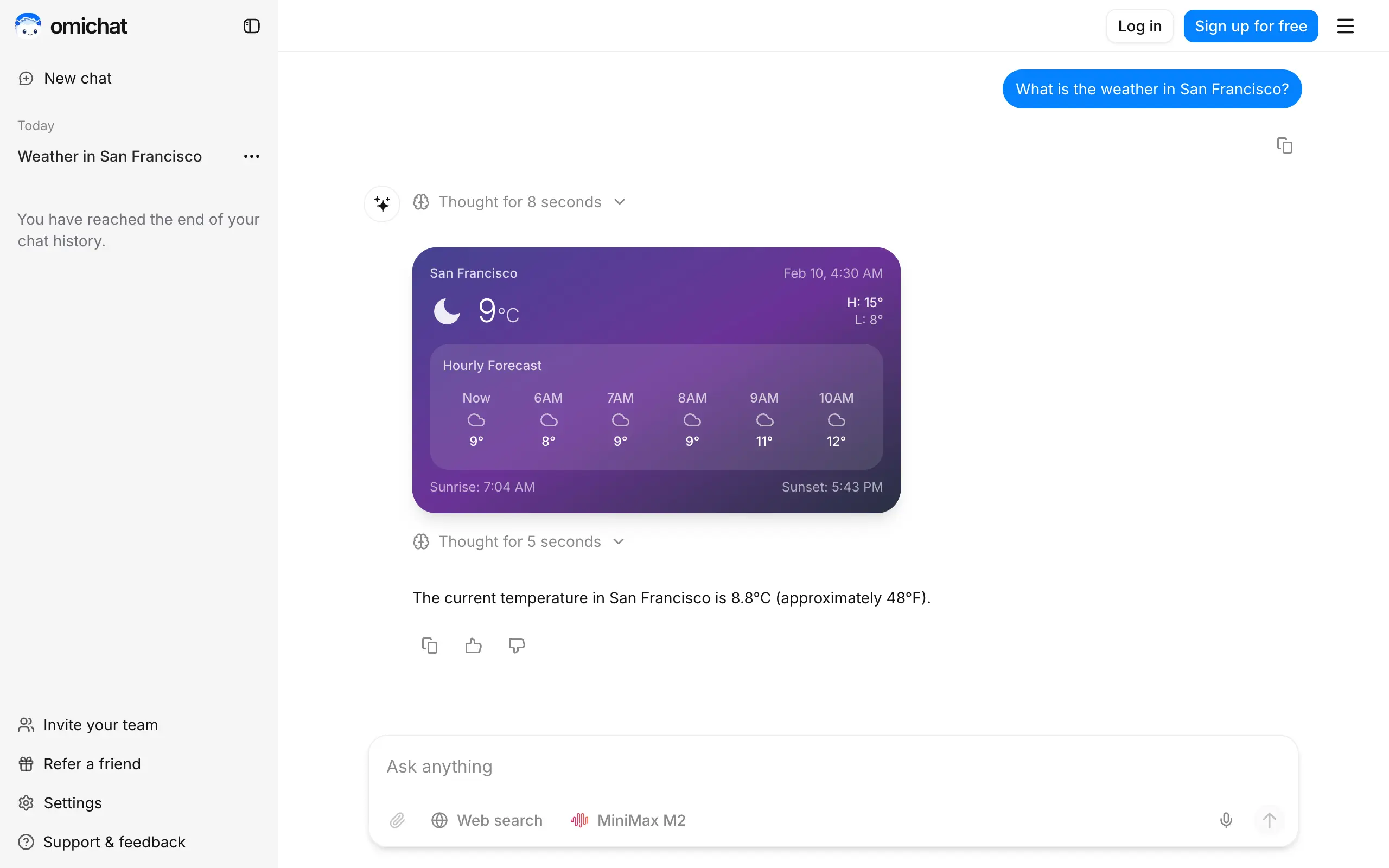
Omichat
Chat with 50+ AI models, including ChatGPT and Claude, in one place - switch models anytime without losing context 🤖
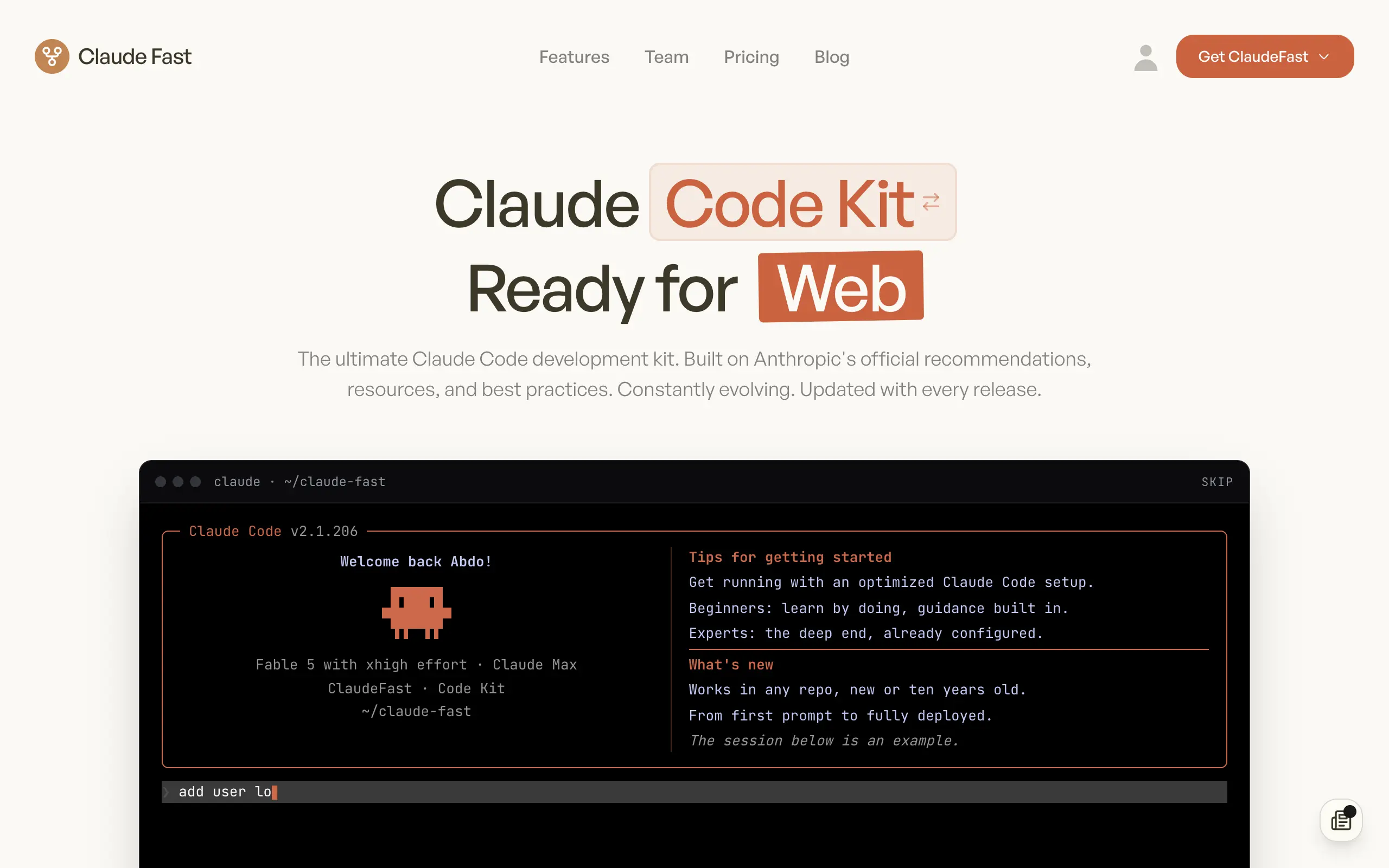
Claude Fast
Supercharge your Claude Code with 6x effective context window and specialized AI agents 🤖

EmojAI
AI-powered emoji picker with smart, context-aware suggestions 🤖

Solohacker
Autonomous company launcher - AI agents work 24/7, escalate what matters, and you stay in control 🤖

BeRawi: Storytelling Coach
Practice storytelling daily with instant feedback to sound clearer, more engaging, and confident 🎤
Omichat
Chat with 50+ AI models, including ChatGPT and Claude, in one place - switch models anytime without losing context 🤖
Claude Fast
Supercharge your Claude Code with 6x effective context window and specialized AI agents 🤖
EmojAI
AI-powered emoji picker with smart, context-aware suggestions 🤖
Solohacker
Autonomous company launcher - AI agents work 24/7, escalate what matters, and you stay in control 🤖
BeRawi: Storytelling Coach
Practice storytelling daily with instant feedback to sound clearer, more engaging, and confident 🎤

Connect with like-minded people
Join our community to get feedback, support, and grow together with 1,000+ builders on board, let's ship it!
Join usShip your startup everywhere. In minutes.
Don't burn tokens on setup and start building features on day one.