LaunchList
Discover startup jobs matched to your skills, values, and preferred stage. Get a focused shortlist instead of scrolling endless job boards.
What is LaunchList?
LaunchList is a startup job matching platform that helps people find roles at early-stage companies based on their skills, values, and preferred company stage. Instead of asking candidates to search through hundreds of loosely relevant listings, it creates a focused shortlist of opportunities that better fit what they want from their next job.
The idea addresses a familiar problem: general job boards make it easy to find openings, but not necessarily the right openings. A candidate interested in product work at a mission-driven seed-stage startup may have to sift through roles at large corporations, mature technology companies, and startups at very different stages before finding a handful worth pursuing.
LaunchList can make that process more useful by organizing startup jobs around the factors that matter to candidates, then explaining why each role is a match. The product is not simply another list of vacancies. Its value comes from connecting a person’s experience and preferences to the working environment and needs of a startup.
For founders and operators, that same focus can create a more relevant pool of applicants. If candidates understand a company’s stage, values, expectations, and role requirements before applying, both sides have a better chance of finding a suitable match.
This article explores how to develop LaunchList into a credible, useful product: who it should serve, where it could stand apart, what features belong in an initial release, how to approach its technology and business model, and how to test the idea before investing heavily in development.
The user problem behind startup job matching
Startup hiring is attractive for some candidates because it can offer broad responsibilities, close collaboration with founders, and the opportunity to help shape a company while it grows. It can also involve ambiguity, changing priorities, and a different mix of compensation and risk than a role at an established employer.
That trade-off makes context especially important. A job title alone rarely tells a candidate whether a startup role is right for them. Two companies hiring for the same function may differ in:
- Funding and operating stage.
- Team size and management structure.
- The amount of process already in place.
- Expected pace and scope of work.
- Compensation mix, including salary and equity.
- Product maturity and customer traction.
- Remote, hybrid, or in-office expectations.
- Mission, culture, and decision-making style.
Many job search experiences leave candidates to assemble this context themselves. They may jump between a job listing, a company website, social media, funding announcements, and employee profiles just to decide whether an application is worth their time.
LaunchList can reduce that research burden by bringing candidate preferences and employer context into one focused discovery experience. The product should not promise a perfect job or claim that an algorithm can determine personal fit with certainty. Instead, it should help people make better-informed choices by surfacing relevant opportunities and clearly showing the reasons behind each recommendation.
Who LaunchList should serve
A strong first version should serve a defined group particularly well rather than trying to match every job seeker with every startup. The platform’s initial audience will shape its job supply, onboarding, recommendation logic, and marketing.
Candidates exploring startup careers
Some users may be moving from larger companies into startup work. They may have valuable experience but limited knowledge of how startup roles differ from those at established employers. They need clear information about company stage, role scope, and expectations.
LaunchList can help these candidates compare opportunities without assuming that a startup is automatically a better workplace. Useful context might include the company’s current stage, the size of the relevant team, whether the role is a first hire in its function, and what the candidate is expected to accomplish in the first few months.
People with startup experience
Candidates who have already worked at startups may be looking for a particular next step: a different company stage, a new industry, a leadership role, or a more sustainable working environment. Their needs are often more specific than simply finding another early-stage company.
For these users, preference filters and transparent job details can be more valuable than a generic recommendation feed. A person who wants to join a Series A company with an established product team should be able to distinguish that opportunity from a pre-seed company hiring its first product manager.
Career changers and specialists
A person moving into a startup career may need help translating existing skills into startup job requirements. A specialist, such as a data analyst or customer success professional, may also want to see opportunities across industries rather than only within a familiar sector.
LaunchList can make transferable skills more visible, but it should avoid overstating qualifications. Recommendations should explain where a candidate appears to match a role and where there may be a gap, giving users a useful basis for deciding whether to apply.
Founders and startup hiring teams
Employers are a second important audience, even if LaunchList launches as a candidate-focused product. Early-stage teams need qualified applicants, but many do not have a large recruiting operation or a recognizable employer brand.
For these teams, LaunchList can offer a structured way to communicate what the job actually involves. A company profile that explains the role’s outcomes, team context, stage, work arrangement, and values can help set expectations before an application arrives.
A practical initial audience
An effective launch strategy could focus on one clearly defined candidate segment and a corresponding employer niche. For example, LaunchList might initially serve experienced product, design, or engineering candidates interested in seed-to-Series B technology startups. That is only a hypothesis; interviews and supply research should determine whether it is the right one.
A narrower audience has practical advantages:
- Job listings can be assessed against a more consistent set of criteria.
- Candidate preferences become easier to understand.
- Employer outreach can use more specific messaging.
- Early recommendations can be evaluated with clearer success measures.
- The product can develop a reputation in a particular community before expanding.
The market opportunity and the gap LaunchList can address
LaunchList enters a competitive market that includes general job boards, startup-focused hiring platforms, company career pages, professional networks, and recruiting services. These options already help people discover jobs. The opportunity is not to assume that candidates have no place to search; it is to identify where existing discovery experiences do not serve their specific needs well enough.
A job board can display many listings but still make candidates do substantial comparison work. A startup-focused site can offer relevant company categories but leave matching to the user. A company’s own careers page may explain the mission but does not help candidates compare it with other employers. A recruiter can offer personal guidance, but that service may not be available to every job seeker or suited to every hiring situation.
LaunchList’s potential market gap is the space between broad job discovery and individualized career guidance:
- Broad discovery provides reach but can create noise.
- One-to-one recruiting can provide context but is difficult to scale affordably.
- LaunchList can aim to combine focused discovery, useful employer context, and transparent recommendations in a self-serve product.
This position needs validation. A plausible product gap is not proof of demand, and a large number of job listings is not proof that users will return. Before building a sophisticated matching system, the team should investigate what candidates currently do, what frustrates them, and whether they would trust a specialized shortlist enough to use it regularly.
How to validate the opportunity
Start with conversations rather than feature assumptions. Interview candidates who have recently searched for startup roles, people who are currently looking, and founders or hiring managers who have filled early-stage positions.
Ask candidates questions about recent behavior:
- What prompted their last job search?
- Where did they find roles?
- How did they decide whether a startup was worth applying to?
- Which details did they have trouble finding?
- What caused them to abandon a search or ignore a listing?
- How did they decide whether a company’s stage or culture fit their needs?
- What would make them trust a recommended job?
Ask hiring teams about their recruiting process:
- Which roles are hardest to fill?
- Where do current applicants come from?
- What makes an application qualified?
- What information do candidates misunderstand?
- Which parts of recruiting take the most time?
- Would the company provide detailed information to improve candidate fit?
Avoid leading questions such as “Would you use an app that matches you to startup jobs?” People may agree with a concept without changing their behavior. Ask for examples, recent actions, and evidence of willingness to participate. A candidate who completes a detailed preference profile or returns to review a curated shortlist offers stronger validation than someone who says the idea sounds useful.
How LaunchList can stand out from job boards
LaunchList needs a clear competitive advantage that users can understand quickly. Its differentiator should be more specific than “better job recommendations.” Candidates should be able to tell what the product does differently and why that difference matters.
A useful positioning statement might be:
LaunchList helps startup-curious candidates find a manageable shortlist of roles based on their skills, preferred company stage, values, and work preferences.
This positioning emphasizes the product’s focus, its candidate-centered criteria, and the practical output: a shortlist rather than an endless feed.
| Product approach | Main strength | Common limitation | LaunchList opportunity | Candidate benefit |
|---|---|---|---|---|
| General job board | Broad reach and many listings | Can require extensive filtering | Focus discovery on startup roles and fit criteria | Less time spent sorting through unrelated jobs |
| Company career page | Direct information from an employer | Shows only one company at a time | Present comparable company and role context | Easier opportunity comparison |
| Professional network | Career connections and job discovery | Recommendations may not explain fit in detail | Show why a role matches stated preferences | More transparent decisions |
| Recruiting service | Human guidance and employer access | May not be available to every candidate | Offer self-serve, structured discovery | A repeatable search process |
| LaunchList concept | Focused startup job matching | Must earn trust and maintain listing quality | Combine relevant roles with clear explanations | A shortlist grounded in candidate priorities |
The table describes broad product categories, not a claim that every service in a category works the same way. Competitive research should examine specific products, their current features, and the audiences they serve.
Make relevance explainable
A recommendation is more useful when a candidate can see why it appeared. LaunchList should show factors such as skill overlap, preferred stage, work arrangement, industry interest, and stated values. If a role is a partial match, the product can say so rather than implying that every recommendation is equally suitable.
Explainability also helps users correct the system. If a candidate sees that a role was recommended because of their experience with a particular tool, but they no longer want to use that tool, they can update their profile or preferences.
Treat job quality as a product feature
Matching cannot compensate for inaccurate or expired job listings. LaunchList’s reputation will depend on the reliability of its job inventory, including whether roles are open, descriptions reflect actual expectations, and employer details are represented responsibly.
A smaller set of current, clearly described opportunities may be more valuable than a large collection of stale listings. The product should establish a process for checking job status, identifying missing information, and removing listings that are no longer active.
Core features for a useful LaunchList MVP
The first release should test the central promise: can LaunchList help a defined group of candidates discover suitable startup jobs more effectively than their current approach? The MVP does not need every feature that could eventually support a full hiring marketplace.
Candidate profile and preferences
A candidate profile should collect information needed to make relevant recommendations without creating unnecessary onboarding friction. Possible fields include:
- Skills, job functions, and relevant experience.
- Seniority and the kinds of responsibilities the user wants.
- Preferred company stages.
- Industries or problem areas of interest.
- Work location and remote or hybrid preferences.
- Compensation expectations, where the product can handle them responsibly.
- Values or working conditions that are important to the candidate.
- Interest in specific company types, such as mission-led or developer-focused businesses.
Let candidates distinguish between firm requirements and preferences. Someone may require remote work but merely prefer a particular industry. Treating both as equivalent can hide relevant opportunities or create a poor shortlist.
A focused, explainable job shortlist
The central experience should present a manageable set of startup jobs rather than an infinite stream. Each recommendation should include enough context for a candidate to decide whether to learn more.
A job card might display:
- Job title and primary responsibilities.
- Company name, sector, and stage.
- Location and work arrangement.
- Compensation details when supplied and appropriate.
- A brief explanation of the match.
- Important missing information or potential trade-offs.
- The listing’s last-checked date or freshness status.
The goal is not to make every result look ideal. The goal is to help the user assess fit with less guesswork.
Search and preference controls
Recommendations should not replace user control. Candidates need filters and settings that let them adjust their search, including stage, role, location, company type, and work arrangement.
A useful product allows a user to understand the effect of a setting. For example, changing a preferred stage should clearly change the opportunities shown. Avoid hiding too much of the matching logic behind a single “fit score,” especially if the score is difficult to interpret.
Employer and company context
Company profiles can add the information candidates need to evaluate a startup. Start with details that employers can provide and that users can understand:
- What the company does and who it serves.
- Its approximate company stage or funding context, where verified.
- Team size or the relevant team structure.
- The role’s reporting line and key collaborators.
- What success may look like in the first several months.
- Work practices and location expectations.
- Values or operating principles, supported by examples rather than slogans.
If LaunchList includes funding or stage information, it should clearly identify the source and date. Funding status can change, and public information may be incomplete. The platform should not present uncertain information as fact.
Saved roles and job alerts
Candidates rarely complete a job search in one session. Let users save opportunities, revisit them, and receive alerts when relevant new roles appear. Alerts should be adjustable by role type, frequency, and match criteria so that they do not become another source of noise.
Employer job submission and review
A lightweight employer workflow can help establish supply. Hiring teams should be able to submit a job, add company context, and update the role’s status. LaunchList should review submissions before they appear publicly, especially during the early stage when trust is more valuable than listing volume.
Feedback that improves recommendations
Feedback can be simple: a candidate can mark a role as relevant, not relevant, or already applied to. The product can optionally ask which factor affected the decision, such as location, stage, experience level, or compensation.
This information can improve recommendations, but it should be collected carefully. Users need to understand how their data is used, and the system should not treat a lack of engagement as proof that a candidate is unqualified.
Designing a responsible matching system
A matching system does not need to begin with machine learning. In an early product, a transparent rules-based approach can be easier to test, explain, and adjust.
For example, LaunchList could compare required skills with candidate skills, check hard constraints such as location or work arrangement, and then rank remaining roles using preferences such as company stage or industry. The resulting score should support discovery, not make consequential decisions on behalf of employers.
A conceptual scoring model might look like this:
type Candidate = {
  skills: string[];
  preferredStages: string[];
  preferredIndustries: string[];
  remoteOnly: boolean;
};

type Role = {
  requiredSkills: string[];
  companyStage: string;
  industry: string;
  isRemote: boolean;
};

function scoreRole(candidate: Candidate, role: Role) {
  const skillMatches = role.requiredSkills.filter((skill) =>
    candidate.skills.includes(skill)
  ).length;

  const skillScore =
    role.requiredSkills.length === 0
      ? 0
      : skillMatches / role.requiredSkills.length;

  const stageScore = candidate.preferredStages.includes(role.companyStage)
    ? 1
    : 0;

  const industryScore = candidate.preferredIndustries.includes(role.industry)
    ? 1
    : 0;

  const meetsRemoteRequirement =
    !candidate.remoteOnly || role.isRemote;

  if (!meetsRemoteRequirement) {
    return 0;
  }

  return skillScore * 0.6 + stageScore * 0.25 + industryScore * 0.15;
}
This example illustrates a starting point, not a production hiring decision system. A real implementation must account for skill synonyms, seniority, missing data, candidate preferences, and the possibility that a job description lists skills that are not genuinely essential.
The product should also avoid presenting a numerical score as an objective measure of a person’s suitability. A “match explanation” can be more useful and less misleading than a score alone. For example: “You match four of the five listed core skills and selected this company stage. The role’s location preference is not confirmed.”
Recommended technology stack
LaunchList is a data-driven marketplace product with two user groups, searchable listings, personal preferences, and potentially sensitive career information. The technology choices should support fast iteration while making privacy, data quality, and reliable search possible.
Application framework and interface
A web application built with React can support interactive candidate onboarding, job discovery, and employer dashboards. A framework such as Next.js can add server rendering and application routing, which can be useful for public job and company pages that need to be discoverable by search engines.
Tailwind CSS can help a small team build and revise a consistent interface quickly. The trade-off is that a utility-first styling approach still requires design discipline; it does not automatically produce an accessible or coherent product.
Because public job pages may attract organic search traffic, make sure essential job and company information is available in crawlable page content. Search visibility should not come at the expense of accurate listings, user privacy, or a clear distinction between active and expired roles.
Database and search
A relational database such as PostgreSQL is a reasonable foundation for candidate profiles, companies, job listings, saved roles, and applications or outbound clicks. Its structured data model can make it easier to maintain relationships and enforce data consistency.
For an MVP, database queries and well-designed indexes may be sufficient for search. A dedicated search service can become useful if LaunchList needs typo tolerance, advanced facets, more complex text search, or large-scale filtering. Adding that service early can increase operational complexity, so the decision should follow observed product needs rather than assumptions about future scale.
Authentication and privacy
Use established authentication practices, and collect only the personal data the product needs. Candidate profile information can include career history, preferences, and contact details, so access controls and clear privacy communication are essential.
Employers should not be able to see private candidate information simply because they have an account. If LaunchList later enables applications or candidate introductions, the product should explain what information is shared, with whom, and at what stage.
Analytics and product measurement
Product analytics can help answer whether candidates complete profiles, review recommendations, save jobs, and return. Choose measurements that support learning rather than vanity reporting. For example, a large number of sign-ups is less useful than understanding whether a relevant shortlist leads to meaningful job exploration.
Use privacy-conscious analytics practices and avoid collecting unnecessary personal data. If using session replay or similar tools, carefully assess whether sensitive information could appear in recordings and configure the tools accordingly.
Build speed and platform foundations
A startup team can also use a product foundation such as TurboStarter to accelerate common SaaS setup work. A starter kit can reduce time spent on reusable application infrastructure, but it does not replace decisions about matching quality, job verification, privacy, or marketplace strategy. Evaluate any foundation against the team’s stack, maintenance needs, and long-term customization requirements.
Monetization options for LaunchList
A monetization strategy should support trust. If candidates believe the shortlist is biased toward whoever pays the most, the product’s central promise becomes less credible. Revenue design should therefore be explicit about which features are paid and whether payment affects job ranking.
Employer-paid job listings
Employers could pay to post or promote roles. This model is familiar and can be simple to test, but paid placement should be labeled clearly. If the platform allows employers to pay for visibility, it should distinguish advertising from relevance-based recommendations.
A listing fee may work best when it includes more than exposure, such as structured company information, candidate-fit insights, or tools to manage applications.
Employer subscriptions
A subscription could provide hiring teams with a set of recruiting tools, such as multiple active roles, company profile management, applicant workflow, and basic analytics. This can create more predictable revenue than one-off listings, but it requires recurring value for employers.
The subscription should be based on a clear customer outcome. If the main promise is qualified discovery, metrics and workflow support should help employers understand whether their listings are reaching the intended audience.
Candidate premium features
Candidates might pay for optional tools such as advanced search controls, more detailed job alerts, or career-planning features. This approach requires particular care because job seekers may be financially stressed. Core job discovery should remain useful without requiring payment, and paid features should not imply guaranteed employment or privileged access unless that benefit genuinely exists.
Recruiting or placement revenue
LaunchList could eventually earn revenue when an employer hires a candidate introduced through the platform. This can align pricing with outcomes, but it adds operational complexity and may require clear agreements about attribution, timing, and candidate consent.
It can also create incentives that conflict with a candidate-first product. If the business earns more from a placement, it must still recommend jobs based on fit rather than commercial value alone.
A sensible early approach
Before selecting a permanent model, test willingness to pay with employers and candidates separately. Early revenue experiments could include paid listings with clear labels, or a small number of employer subscriptions for structured profiles and hiring tools. Avoid building several monetization models at once; each one introduces product, sales, and trust considerations.
Potential risks and how to reduce them
A job marketplace depends on more than software. LaunchList must earn trust from candidates, attract employers, and maintain enough current inventory to make the product worth revisiting.
Cold-start marketplace risk
Candidates may not return if few relevant jobs are available. Employers may not submit roles if few candidates are active. This two-sided marketplace challenge is one of the biggest risks for LaunchList.
Mitigation: Start with a narrow audience and recruit a small, relevant set of employers before making broad promises about marketplace size. Consider a curated pilot with a clear role category or company-stage focus. Measure whether users find real opportunities, not just whether they create accounts.
Stale or misleading listings
Outdated roles waste candidate time and damage credibility. Listings can also omit important information, such as location expectations or the true seniority of a role.
Mitigation: Require employers to confirm listing status, date submissions, and periodically request updates. Make it easy to report a closed or inaccurate role. Remove listings that are not confirmed after a defined period, and clearly communicate when key details have not been verified.
Poor or biased recommendations
A matching system can reproduce biased assumptions in job descriptions or profile data. A score may also create false confidence if it is based on incomplete or inconsistent information.
Mitigation: Keep early matching logic explainable. Audit recommendations for systematic differences across groups where legally and ethically appropriate. Do not use protected characteristics to rank candidates. Provide controls, disclose relevant data use, and seek qualified legal and technical guidance before introducing automated candidate ranking for employers.
Privacy and security concerns
Career data can reveal a person’s employment status, interests, and future plans. Users may not want their current employer to know they are exploring opportunities.
Mitigation: Make candidate visibility settings clear, limit employer access to information, use secure access controls, and publish a plain-language privacy policy. Collect only what is needed, and provide a straightforward path for users to manage or delete their information.
Difficulty proving match quality
If the product says a job is a strong match but candidates repeatedly reject the recommendations, they may stop trusting it. Conversely, low click-through rates do not necessarily mean a recommendation is poor; a candidate may already have applied elsewhere or may be browsing passively.
Mitigation: Gather feedback at meaningful points in the journey. Track whether users save, revisit, or apply to a role, but interpret those signals alongside direct user feedback and interviews.
Employer willingness to provide context
A high-quality company profile is valuable, but startups may not have time to complete a detailed questionnaire.
Mitigation: Ask for a concise set of essential details first. Use examples and guided prompts to help employers explain the role clearly. Offer optional depth without making the submission process so demanding that employers abandon it.
Overdependence on external job sources
If the platform relies heavily on scraped or third-party listings, it may face accuracy, licensing, or access challenges. External sources can also change their terms or data availability.
Mitigation: Prioritize direct employer submissions and partnerships. If using external data, review the source’s terms and verify that the collection and display method is permitted. Do not treat public visibility as automatic permission to reproduce content.
How to measure whether LaunchList is working
The right metrics depend on the stage of the product. Early on, the goal is to learn whether the product solves a real problem for a specific audience, not to optimize every step of a large-scale funnel.
Useful measures may include:
- Profile completion: Whether candidates provide enough information to receive meaningful results.
- Shortlist relevance: How often users describe recommended jobs as relevant.
- Job freshness: The share of active listings confirmed within the product’s chosen review period.
- Meaningful engagement: Saves, detailed job views, or return visits to a shortlist.
- Application intent: Clicks to employer applications or other clear signals of interest.
- Candidate retention: Whether users return when new relevant jobs become available.
- Employer repeat use: Whether hiring teams update listings or post another role.
- Marketplace balance: Whether the supply of jobs fits the active candidate audience.
These measures should be interpreted together. A high number of job views with few saves could indicate that the listings are interesting but insufficiently detailed. A strong save rate with few applications could reflect compensation, role quality, or application friction. Metrics identify questions; research helps explain them.
If the team shares numerical claims about market size, hiring outcomes, or product performance, it should cite the underlying source and explain the methodology. Avoid using broad industry statistics as a substitute for evidence that a specific LaunchList audience wants the product.
Actionable implementation steps
LaunchList can move from concept to evidence through a series of small, deliberate stages.
Define the initial audience
Choose a candidate segment and a corresponding set of employers to serve first. Write down which roles, company stages, industries, and locations are in scope, as well as what the product will not try to support yet.
Interview candidates and hiring teams
Speak with people who have recently searched for startup work and employers who have recently hired. Ask about actual behavior, frustrations, information gaps, and current alternatives. Record recurring patterns rather than treating individual opinions as proof.
Test the value proposition manually
Create a simple candidate intake form and curate a small shortlist by hand. Share the recommendations with a pilot group and ask users to explain which roles they would explore and why. This tests whether the core outcome is useful before investing in automated matching.
Build a reliable job supply
Recruit a focused group of employers and collect structured information about each role. Confirm that jobs are active, clarify missing details, and create a repeatable process for updating or removing listings.
Ship the smallest useful product
Build candidate profiles, preference controls, a transparent shortlist, job detail pages, saved roles, and basic employer submission. Keep the initial matching logic simple enough to explain and improve.
Measure relevance and trust
Track whether candidates complete onboarding, review recommendations, save roles, and return. Ask why recommendations did or did not fit. Monitor listing freshness and employer repeat use alongside candidate engagement.
Improve before expanding
Use pilot results to refine the audience, matching criteria, job data, and onboarding. Expand into more roles or stages only when the initial segment has a reliable supply of relevant opportunities and a clear reason to return.
The long-term advantage of a focused shortlist
LaunchList’s strongest potential advantage is not simply access to startup vacancies. Listings can be copied, filters can be recreated, and recommendation features can be added by competitors. A durable product is more likely to come from a trusted combination of focused job supply, useful employer context, candidate-controlled preferences, and transparent recommendations.
That advantage will take time to earn. Candidates need to see that the product respects their preferences and does not overwhelm them with irrelevant opportunities. Employers need to see that structured role information helps them reach people who understand the job. Both sides need confidence that listings are current and that the platform represents information honestly.
A focused shortlist is valuable only when it is both focused and credible. LaunchList should resist the temptation to compete on listing volume alone. Its product decisions should reinforce the same promise: help people find startup jobs that make sense for their skills, values, and preferred stage, then give them enough context to decide for themselves.
Frequently asked questions
LaunchList is a proposed startup job matching platform. It helps candidates discover startup roles based on factors such as skills, values, company stage, and work preferences, with the goal of presenting a focused shortlist instead of an endless job feed.
A general job board often serves a broad range of employers and roles. A startup-focused platform can organize opportunities around startup-specific context, such as company stage, team structure, role scope, and operating expectations. LaunchList’s opportunity is to make those factors part of discovery rather than leaving candidates to research each employer separately.
Not necessarily in its first version. A transparent rules-based system may be easier to test and explain. If the product later uses AI, it should disclose how recommendations are generated, protect candidate data, evaluate outcomes for bias, and avoid presenting automated recommendations as a definitive judgment of a person’s ability.
Potential models include employer-paid listings, employer subscriptions, optional candidate features, or recruiting revenue. Any paid placement should be clearly labeled, and payment should not be hidden as a relevance signal. The right model should be tested with users and designed to preserve the credibility of recommendations.
Start with a defined candidate audience, a reliable set of current startup jobs, candidate preferences, explainable recommendations, and basic feedback. Validate the shortlist manually before investing in complex automation, advanced analytics, or a large employer marketplace.
More 👥 B2C Application SaaS ideas
Discover more innovative b2c application SaaS ideas that are trending in 2026. Each idea is AI-generated with market validation and growth potential to help you find your next profitable venture faster than competitors.
Your competitors are building with TurboStarter
Below are some of the SaaS ideas that have been generated and built with our starter kit.

Statiko
Monitor any Telegram channel in real time - track posts, edits, deletions, and growth with AI recaps 📡

Shibui
AI website builder - describe your business, pick a niche template, edit by chatting, and publish instantly ✨

Pro Service
Find verified home service professionals, compare quotes, and pay securely through escrow - built for Brazilians across the US 🏠
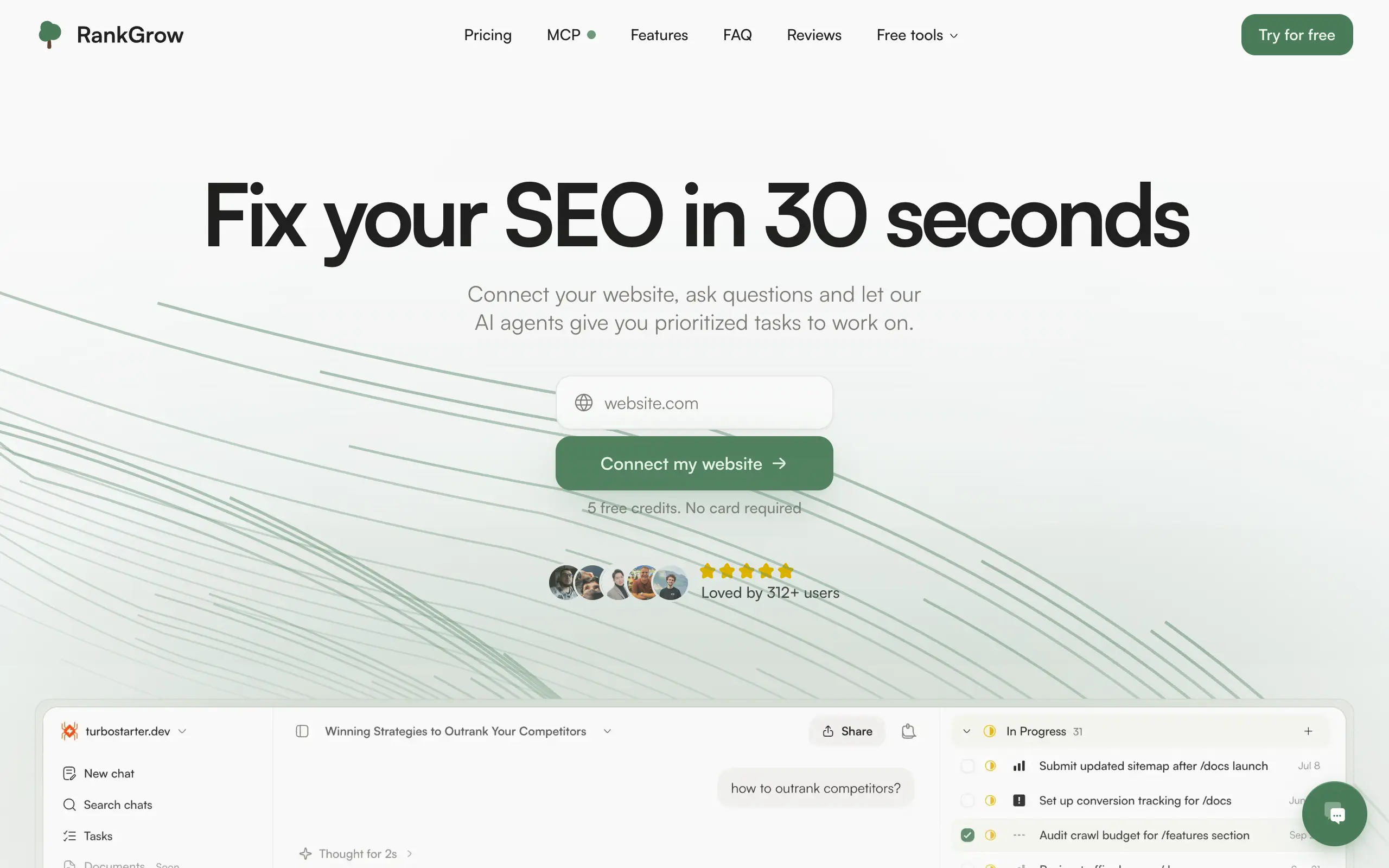
RankGrow
Fix your SEO with AI agents - connect Search Console, get prioritized tasks, and grow organic traffic 📈
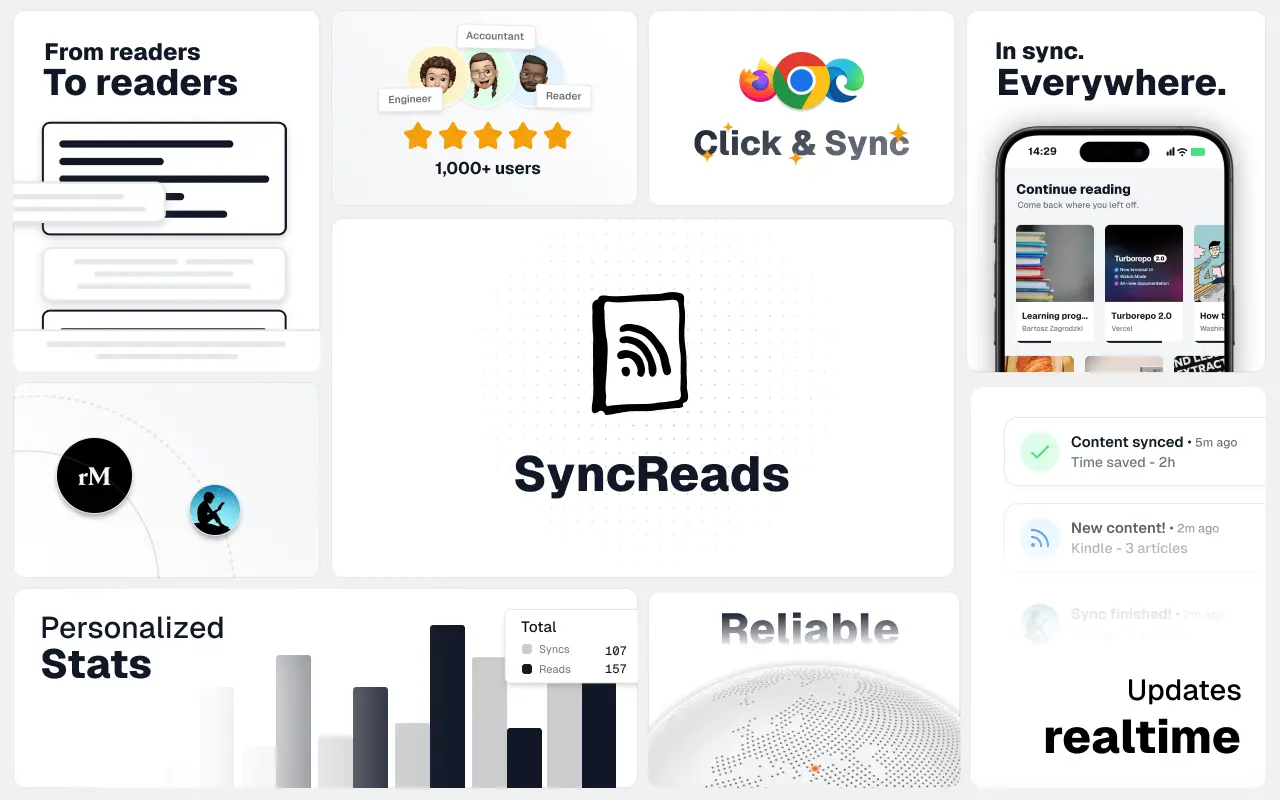
SyncReads
Sync your favorite content for distraction-free reading, save time and replace multiple apps. Anytime, anywhere 🔄
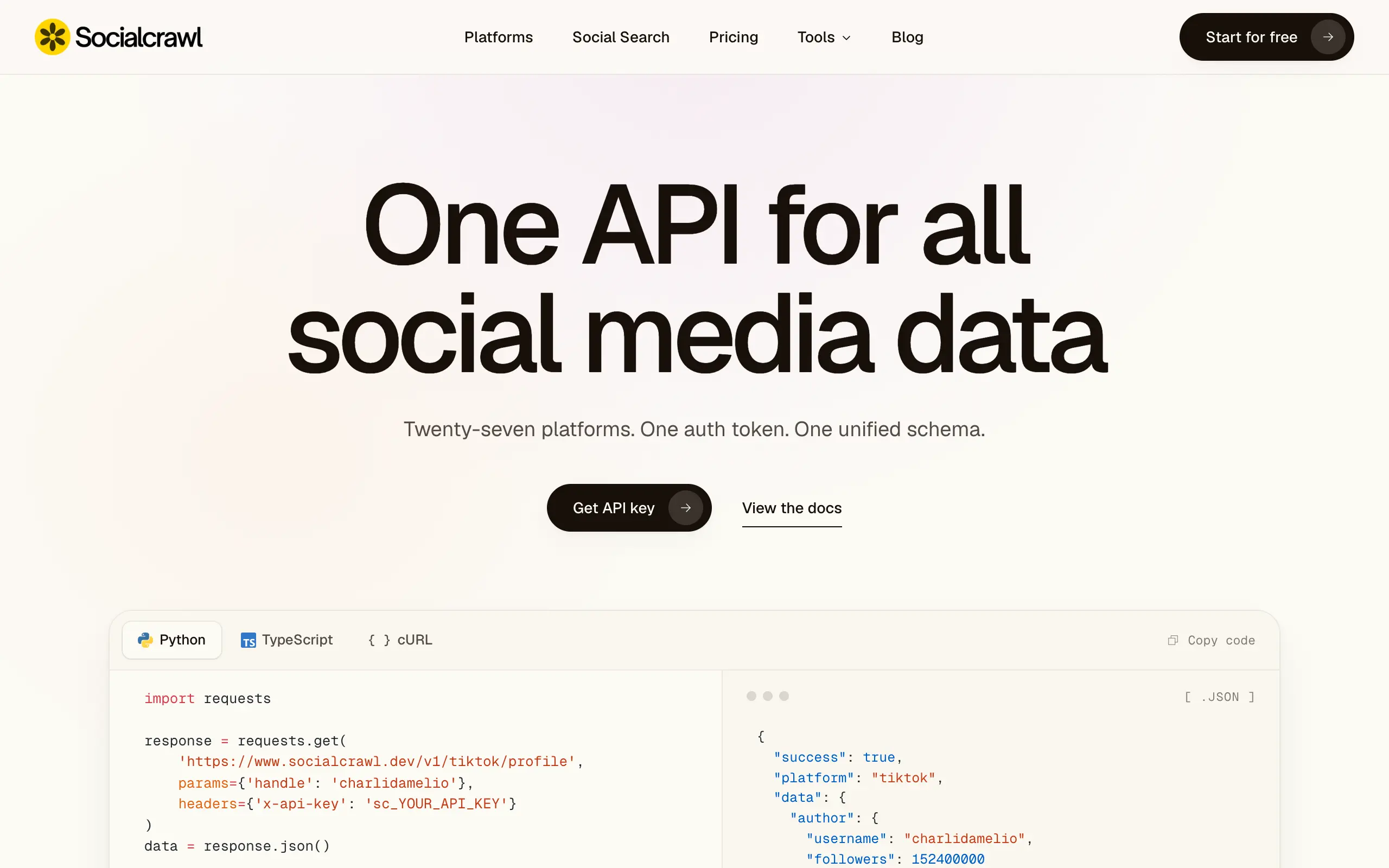
Socialcrawl
Get clean, structured data from 21 platforms like TikTok, Instagram, and YouTube with a single request 📊
Statiko
Monitor any Telegram channel in real time - track posts, edits, deletions, and growth with AI recaps 📡
Shibui
AI website builder - describe your business, pick a niche template, edit by chatting, and publish instantly ✨
Pro Service
Find verified home service professionals, compare quotes, and pay securely through escrow - built for Brazilians across the US 🏠
RankGrow
Fix your SEO with AI agents - connect Search Console, get prioritized tasks, and grow organic traffic 📈
SyncReads
Sync your favorite content for distraction-free reading, save time and replace multiple apps. Anytime, anywhere 🔄
Socialcrawl
Get clean, structured data from 21 platforms like TikTok, Instagram, and YouTube with a single request 📊
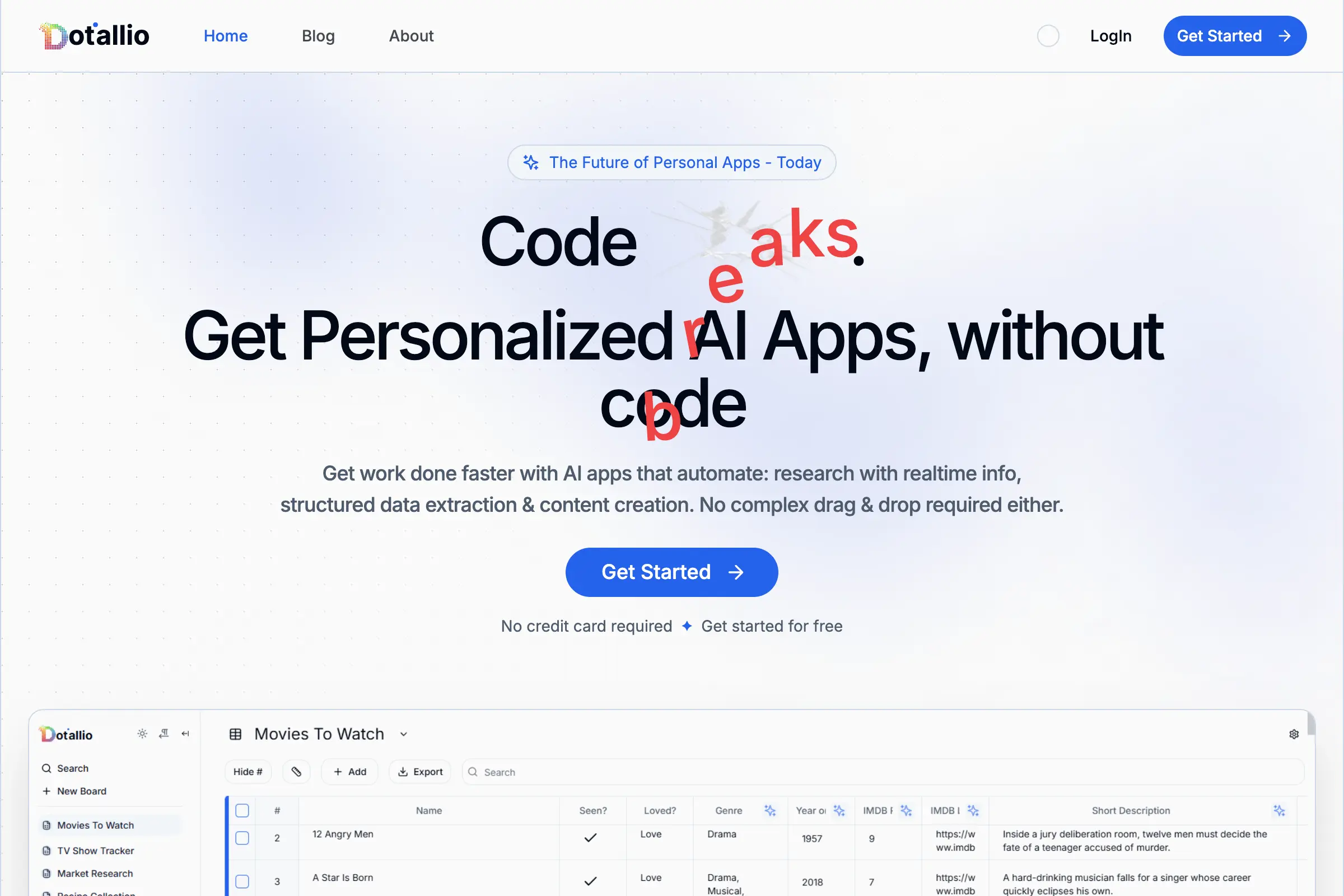
Dotallio
Personalized AI apps that automate research, data extraction, and content creation without code 🤖

Talk to Santa
Enjoy a magical live video chat or receive a unique AI-generated video greeting from Santa Claus 🎅

pozywka.pl
Scalable blog for food journalist, focused on performance and user experience 🌭
zagrodzki.me
Personal blog and portfolio of Bart Zagrodzki, where he shares his knowledge and work 💼
TurboStarter
Ship your startup everywhere. In minutes.
HTML to Markdown
Convert HTML to Markdown with ease, directly in your browser 📄
Dotallio
Personalized AI apps that automate research, data extraction, and content creation without code 🤖
Talk to Santa
Enjoy a magical live video chat or receive a unique AI-generated video greeting from Santa Claus 🎅
pozywka.pl
Scalable blog for food journalist, focused on performance and user experience 🌭
zagrodzki.me
Personal blog and portfolio of Bart Zagrodzki, where he shares his knowledge and work 💼
TurboStarter
Ship your startup everywhere. In minutes.
HTML to Markdown
Convert HTML to Markdown with ease, directly in your browser 📄
Omichat
Chat with 50+ AI models, including ChatGPT and Claude, in one place - switch models anytime without losing context 🤖
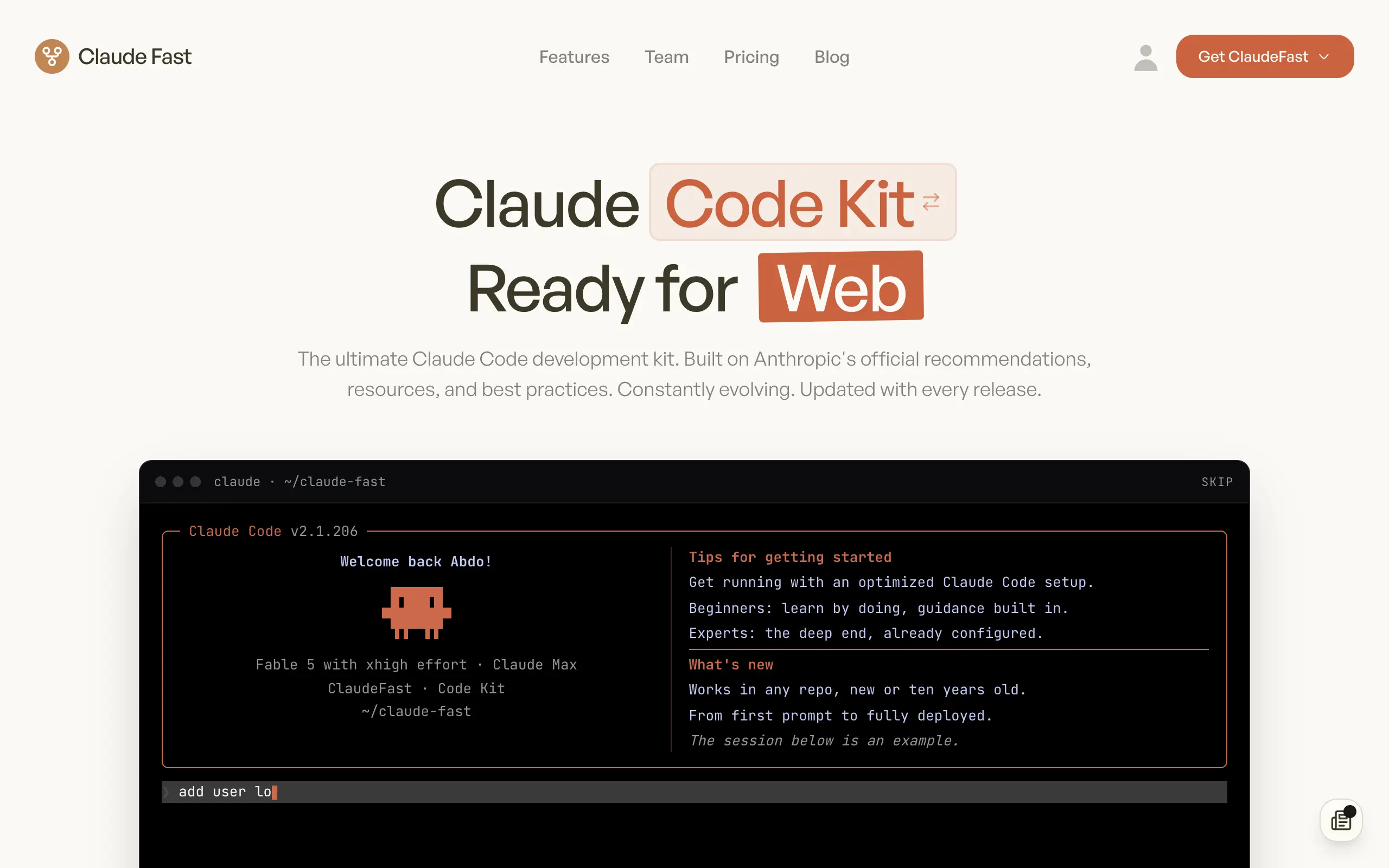
Claude Fast
Supercharge your Claude Code with 6x effective context window and specialized AI agents 🤖
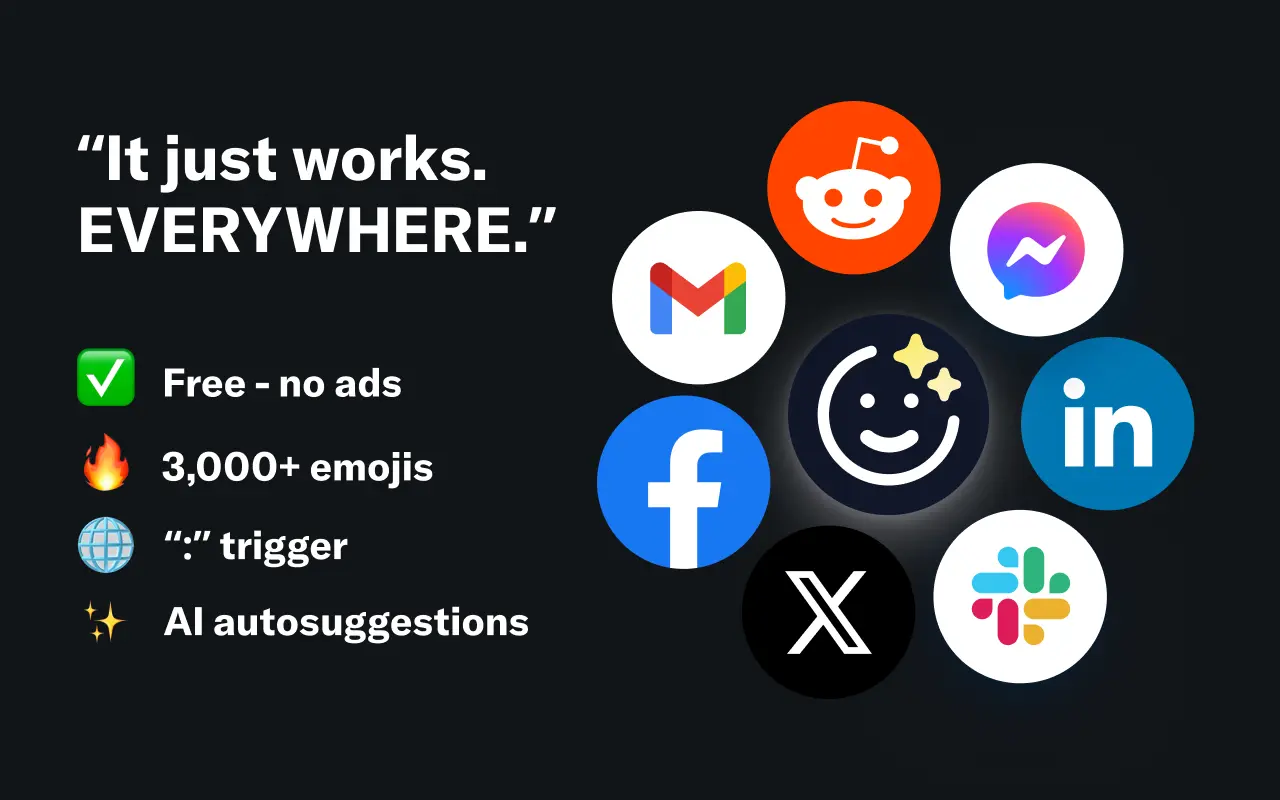
EmojAI
AI-powered emoji picker with smart, context-aware suggestions 🤖
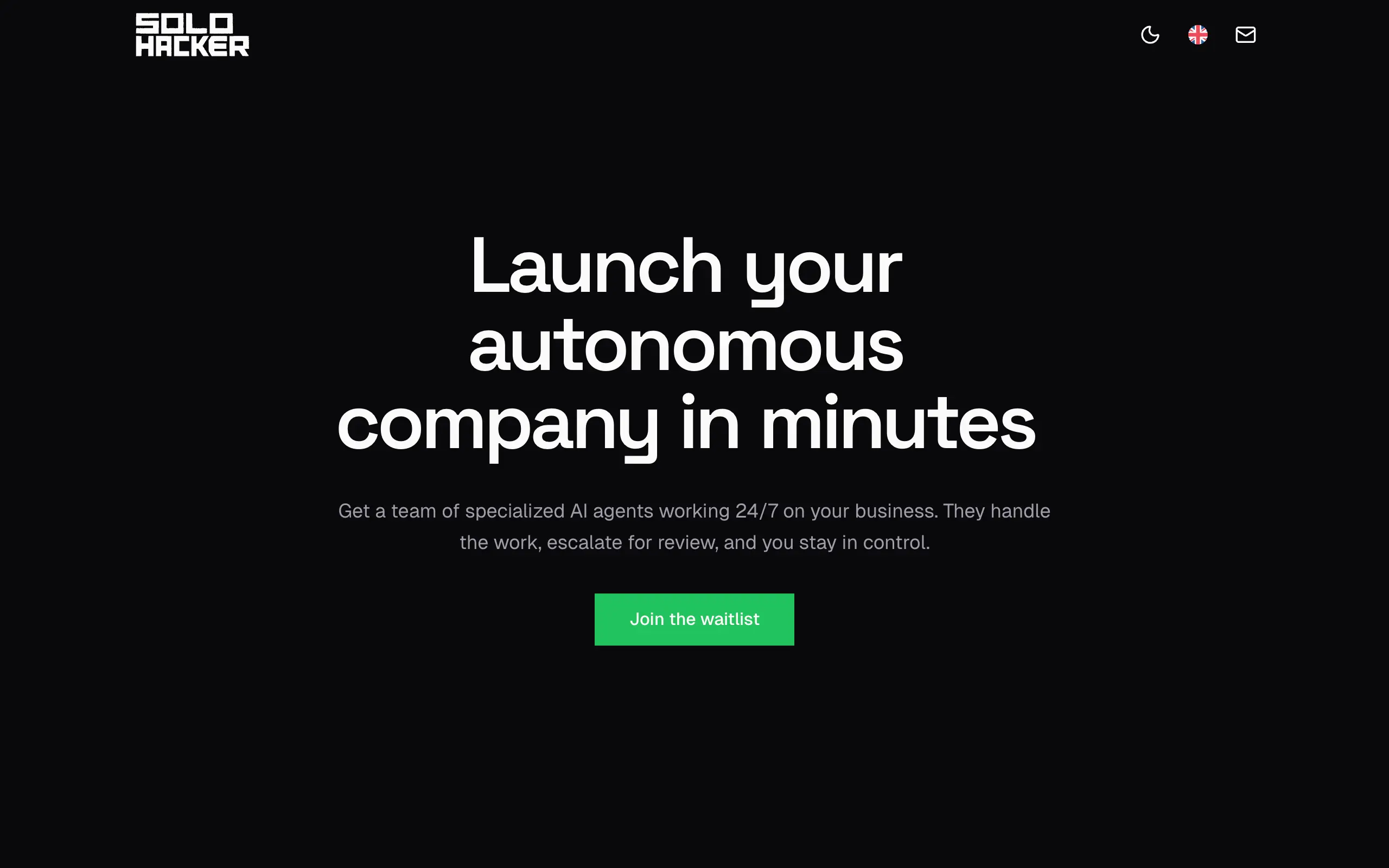
Solohacker
Autonomous company launcher - AI agents work 24/7, escalate what matters, and you stay in control 🤖

BeRawi: Storytelling Coach
Practice storytelling daily with instant feedback to sound clearer, more engaging, and confident 🎤
Omichat
Chat with 50+ AI models, including ChatGPT and Claude, in one place - switch models anytime without losing context 🤖
Claude Fast
Supercharge your Claude Code with 6x effective context window and specialized AI agents 🤖
EmojAI
AI-powered emoji picker with smart, context-aware suggestions 🤖
Solohacker
Autonomous company launcher - AI agents work 24/7, escalate what matters, and you stay in control 🤖
BeRawi: Storytelling Coach
Practice storytelling daily with instant feedback to sound clearer, more engaging, and confident 🎤

Connect with like-minded people
Join our community to get feedback, support, and grow together with 1,000+ builders on board, let's ship it!
Join usShip your startup everywhere. In minutes.
Don't burn tokens on setup and start building features on day one.