MerkatoMeter
An offline-first Addis market price notebook helps households compare community-reported staple prices and plan budgets. Earn from clearly labeled shop promotions.
MerkatoMeter is an offline-first market price notebook for Addis Ababa households. It helps people record and compare community-reported prices for staple goods, check when those prices were last updated, and plan a more informed shopping budget—even when their phone has no reliable internet connection.
The opportunity is not simply to publish a list of prices. A useful product must make local information trustworthy, easy to contribute, and practical to use at the moment someone is deciding what to buy. That means treating freshness, location, language, accessibility, and transparent shop promotions as core product requirements rather than future enhancements.
What MerkatoMeter could help households do
Household shopping often involves practical trade-offs: where to shop, what to buy today, and whether a price is still current. In a city as varied as Addis Ababa, a price that is useful in one neighborhood may not reflect what a shopper will find in another. People may also have limited mobile data, intermittent connectivity, or no reason to trust an anonymous price listing without context.
MerkatoMeter can address these challenges through a focused workflow:
- A shopper checks the recent community-reported price of a staple.
- They compare reports by area and shop, with the report date clearly visible.
- They save useful prices or add items to a budget list.
- If a price is outdated or missing, they submit a new observation.
- The app stores information locally and syncs it when a connection becomes available.
The central product promise should be straightforward: help households make better-informed shopping decisions with local price information they can understand and evaluate.
MerkatoMeter should not imply that a community-reported price is a guaranteed current offer. The product becomes more trustworthy when it explains what each price represents, when it was reported, and how much confidence a shopper should place in it.
Target audience analysis
The first audience is not “everyone who shops.” MerkatoMeter will be easier to build, test, and improve if it begins with a defined group whose shopping routines are frequent enough to generate useful feedback.
Primary users: budget-conscious households
These users want to understand the likely cost of common purchases and avoid relying entirely on memory or word of mouth. Their needs may include:
- Comparing the reported price of the same item across nearby areas.
- Keeping a simple record of prices they have personally encountered.
- Planning spending before visiting a market.
- Finding recent information without using mobile data every time.
- Understanding whether a report refers to a specific quantity, grade, or unit.
A small usability detail can make a large difference here: prices should be recorded against a clearly defined unit. A report for one kilogram cannot be fairly compared with a report for a different quantity. The app should make the unit visible in search results, saved lists, and comparison views.
Secondary users: shoppers and household budget managers
Some users may handle shopping for more than one person or plan purchases for a household. They may value reusable lists, estimated totals, and a simple way to compare a shopping plan against a spending limit.
For this audience, MerkatoMeter should be more than a lookup tool. A practical budget notebook could let users:
- Save frequently purchased items.
- Enter target quantities.
- Estimate a basket total using selected price reports.
- Mark items as purchased and record the actual amount paid.
- Compare estimates with past shopping records.
The first version does not need sophisticated financial planning. It needs transparent calculations and a low-friction way to keep useful records.
Community contributors
Community contributors provide the information that makes the product useful. They could be shoppers who submit prices after a visit, neighborhood groups that help verify reports, or local organizations that support information sharing.
A contribution flow should take seconds, not minutes. Ask for only the information needed to make a report interpretable:
- Item and unit.
- Price and currency.
- General area or market.
- Report date.
- Optional shop name or landmark.
- Optional note about quality, size, or availability.
Do not collect precise location by default. A neighborhood or market selection is usually more appropriate than publishing a contributor’s exact GPS position. This protects privacy while preserving enough context to compare reports.
Local shops and small retailers
Shops may see value in reaching nearby shoppers, particularly if they can promote a clear offer to a relevant local audience. However, merchants should not be allowed to disguise paid placements as community reports.
A shop promotion should be visibly labeled as sponsored, have a defined duration, and remain separate from organic price observations. That distinction is essential for user trust and for the credibility of the comparison experience.
Market opportunity and product gap
The product hypothesis is that households would find locally relevant, recent, and comparable staple-price information useful enough to return to the app and contribute new reports. That hypothesis needs validation; it should not be treated as proof of market demand.
Several gaps create a plausible opportunity:
- Fragmented information: Prices may be learned through personal visits, informal conversations, or isolated online posts.
- Limited local context: A citywide number can hide meaningful differences between neighborhoods, markets, shops, product grades, and units.
- Weak freshness signals: A displayed price without a report date can appear more authoritative than it is.
- Connectivity constraints: A product that requires a live connection for every search may be inconvenient for users with unreliable or costly access.
- Limited household planning: Price discovery is more useful when connected to a saved list or estimated basket.
- Trust concerns: Users need to know whether a listing is community-reported, shop-submitted, verified, or paid promotion.
These are product opportunities to investigate, not claims that no other service exists. Before building a broad catalog, the team should research local alternatives, informal tools, social channels, and existing price-reporting initiatives. Compare what users actually use, not just what appears in app-store searches.
How to validate demand before investing heavily
Begin with interviews and observed shopping routines. Ask potential users to describe their most recent shopping trip rather than asking whether they like the idea. Useful questions include:
- Which staple prices do you try to remember or compare?
- How do you decide where to shop?
- How often do prices change enough to affect your decision?
- What information would make you trust a reported price?
- When do you have internet access during a shopping trip?
- Would you contribute a price report? What would stop you?
- Would a saved shopping list or estimated basket be more valuable than a general price feed?
Then test a narrow prototype with a limited set of goods and a few defined areas. Measure whether users can find a relevant item, interpret its unit and date, compare reports, and submit a report without assistance.
Where the article or product later includes claims about inflation, food prices, mobile access, or household spending, use current, relevant sources. Suitable research candidates include publications from the Ethiopia Statistics Service, the World Bank, and GSMA. Cite the specific report, publication date, geography, and methodology; do not use a national statistic as though it describes every Addis neighborhood.
Core features for an offline-first market price notebook
The best initial feature set supports a complete, trustworthy loop: find a price, understand its context, save it, and contribute an update.
1. Searchable staple catalog
Start with a carefully chosen catalog rather than trying to list every product sold in the city. A focused catalog is easier to maintain and easier for contributors to use consistently.
Each product record should define:
- A recognizable product name.
- Common local names or spelling variants where appropriate.
- A standard unit for comparison.
- Optional grade, size, or quality distinctions.
- A category such as grains, vegetables, or cooking essentials.
If users search in Amharic, English, or another supported language, search should accommodate local terminology and common transliterations. Product names and category labels should be reviewed with local speakers rather than generated solely from machine translation.
2. Price reports with clear context
A price should never appear as an isolated number. Each observation needs enough context to prevent misleading comparisons.
A useful report includes:
- Product and standardized unit.
- Price in Ethiopian birr, with the currency clearly shown.
- Market, shop, or approximate area.
- Date and, if appropriate, time of observation.
- Contributor type, such as community member or merchant.
- Optional notes on product quality, availability, or packaging.
- A status such as recent, aging, or unverified.
Define how the app handles inconsistent units before opening submissions broadly. For example, users should not be asked to compare an unspecified “bag” with a standardized kilogram unless the package size is known.
3. Comparison that reflects local relevance
Comparison screens should let users choose a meaningful geography, such as a neighborhood or market, and understand the number of reports behind each comparison. A single reported price should not be presented with the same visual confidence as several recent observations.
Consider showing:
- The latest reported price.
- The report date.
- The number of reports in the selected period.
- A range or median where enough observations exist.
- A freshness label with an explanation.
- An option to view individual reports.
Avoid implying that an average is a guaranteed selling price. Prices can vary by quality, bargaining, quantity, and availability. The interface should make variation legible rather than smoothing it away.
4. Offline access and resilient contribution
Offline-first design means the app remains useful without a live connection; it does not mean the product can guarantee that every displayed price is current. MerkatoMeter can cache previously viewed catalogs and reports, let users create lists offline, and queue contributions for later submission.
The product should distinguish between:
- Data saved on the device.
- Data successfully synced to the server.
- Data that is pending upload.
- Data that has changed since the last synchronization.
This distinction prevents users from assuming that a queued report has already been shared with the community.
5. Household lists and budget planning
A first budgeting feature can be intentionally simple. Let users select products, enter quantities, and see an estimate based on chosen reports. Make the assumptions visible: the estimate depends on the selected prices and may differ from the amount paid.
Useful additions include:
- Reusable shopping lists.
- A user-entered spending limit.
- Estimated subtotal by item.
- A switch between nearby or recently viewed reports.
- A post-shopping field for the actual amount paid.
A clear “estimate” label is important. Do not present a calculated basket as a firm quote.
6. Promotions with visible sponsorship labels
Promotions can provide a revenue path, but they must not weaken the product’s credibility. Sponsored content should be labeled where it appears—not only in a terms page—and should not be mixed into community price statistics without a clear distinction.
A responsible promotion format could include:
- Shop or brand name.
- “Sponsored” or “Promotion” label.
- Offer details and applicable dates.
- Relevant location.
- A clear distinction between the advertised offer and community-reported prices.
Merchants should not be able to pay to change organic rankings or suppress unfavorable community reports. This separation is a product principle, not merely an advertising preference.
Trust, moderation, and data quality
Crowdsourced price information is only useful when people can assess its reliability. MerkatoMeter does not need to claim perfect accuracy; it does need to explain what it knows and what it cannot verify.
Design a practical confidence system
Start with transparent signals instead of a mysterious “accuracy score.” For example, the app could display recency, report count, and whether reports came from distinct contributors. These signals help users make their own judgment.
Possible safeguards include:
- Flagging duplicate reports from the same account or device.
- Rate-limiting repeated submissions.
- Reviewing unusual price changes before prominent display.
- Letting users flag a report as incorrect or outdated.
- Giving contributors a way to correct accidental entry errors.
- Keeping an audit trail of edits and moderation decisions.
Do not automatically remove every unusual report. A surprising price may be genuine, particularly when availability, quality, or local conditions differ. Use review workflows and contextual checks rather than treating statistical outliers as proof of fraud.
Make freshness understandable
A report becomes less useful as it ages, but the right freshness window may vary by product. A perishable item may change quickly; a packaged staple may remain more stable. Test freshness thresholds with local users and show the date even when adding a “recent” label.
The interface should avoid silently carrying old observations forward as if they were live data. If a report is outside the preferred window, keep it available only if its age is prominent and its status is clear.
Protect contributor privacy
Collect the minimum data required to provide the service. Consider whether the product needs a phone number, exact location, or a public profile at all. If accounts are required, explain why and how information is used.
Useful privacy practices include:
- Making precise location optional.
- Displaying an area rather than a contributor’s home location.
- Avoiding public exposure of personal contact details.
- Providing an accessible way to delete an account or request data removal.
- Setting retention rules for old or unnecessary records.
- Restricting administrator access and recording sensitive moderation actions.
Competitive advantage and unique selling proposition
MerkatoMeter’s strongest potential differentiator is the combination of local comparison, offline-first access, practical household budgeting, and transparent sponsored placements.
It should not compete by claiming to be the most complete price database on launch. A small but well-explained set of recent reports can be more useful than a large catalog of stale or ambiguous numbers.
| Product dimension | MerkatoMeter opportunity | What the product must prove |
|---|---|---|
| Local relevance | Compare prices by market or area | Users can find a location that matches their shopping routine |
| Offline access | Browse cached data and save work without a connection | The app remains understandable when reports are stale or pending sync |
| Household planning | Connect price discovery to lists and estimates | Users return to use the planning features |
| Community contribution | Let shoppers report observed prices | Reports are easy to submit and sufficiently useful to other shoppers |
| Trust and transparency | Show dates, units, report counts, and sponsorship labels | Users understand the limits of each price |
| Merchant revenue | Offer clearly labeled local promotions | Advertising does not distort organic information |
The defensible advantage is not the app’s name or a particular interface. It is the quality of the local data network and the trust built through consistent handling of that data. If shoppers contribute because they see value in the reports, and merchants can reach relevant customers without buying editorial influence, the product can serve both sides without blurring their interests.
Recommended technology stack
A suitable stack should support local storage, predictable synchronization, multiple language experiences, and a modest operational footprint. Choose technology based on the team’s experience and the pilot’s requirements rather than adopting a complex architecture prematurely.
Mobile application
For a cross-platform app, React Native with Expo and TypeScript is a reasonable option. It can support Android and iOS development from a shared codebase, while Expo provides tools for building and testing mobile applications.
For local persistence, SQLite is a strong fit for structured catalogs, saved lists, and queued reports. See the official SQLite documentation. A local database is generally more robust for this use case than relying only on in-memory state or a cache that can be cleared without warning.
Trade-offs: A cross-platform framework can speed up early development, but the team still needs to test on real devices with different screen sizes, storage constraints, and connectivity conditions. Device capabilities and platform-specific behavior may require native configuration. If the team already has strong native Android expertise and the initial audience is Android-first, a native Android application may be a better first release.
Backend and data storage
A conventional backend could use PostgreSQL for structured records and an API service for authentication, catalog updates, reporting, and moderation. A managed platform such as Supabase can reduce infrastructure work for an early team, but it does not eliminate the need to design authorization, backups, data validation, and operational monitoring.
The server should be the authoritative source for accepted community reports. The mobile client should be able to store pending submissions locally and sync them safely when connectivity returns.
Trade-offs: A managed backend can accelerate development but introduces vendor and platform dependency. A custom API offers more control, at the cost of additional engineering and maintenance. Avoid splitting the first release across multiple services unless a real requirement justifies the complexity.
Synchronization model
A robust offline-first system needs explicit rules for conflicts and retries. For example, a queued price report can have a unique client-generated identifier so that a retry does not create duplicate records. Catalog data can be versioned, while user-created lists can be merged according to clear rules.
A simplified client-side submission shape could look like this:
type PriceReportDraft = {
  clientId: string;
  productId: string;
  amount: number;
  currency: "ETB";
  unitId: string;
  areaId: string;
  observedAt: string;
  syncStatus: "pending" | "synced" | "needs_review";
};

async function queuePriceReport(draft: PriceReportDraft) {
  await localDatabase.priceReports.put(draft);
}

async function syncPendingReports() {
  const pending = await localDatabase.priceReports
    .where("syncStatus")
    .equals("pending")
    .toArray();

  for (const report of pending) {
    const result = await api.submitPriceReport(report);

    if (result.ok) {
      await localDatabase.priceReports.update(report.clientId, {
        syncStatus: "synced",
      });
    }
  }
}
This is illustrative, not production-ready synchronization code. A real implementation needs robust error handling, authentication, retry backoff, validation, idempotency on the server, and clear behavior for rejected or edited reports.
Admin and analytics tools
A lightweight web dashboard can help the team review reports, manage the product catalog, investigate flags, and monitor activity. If using React for the dashboard, link to its official documentation at React.
Analytics should answer product questions, not collect unnecessary personal data. Useful measures include successful searches, report submissions, sync failures, return usage, and the percentage of reports that are recent enough to be useful. Define retention and access rules before collecting event data.
Monetization strategy options
MerkatoMeter’s stated revenue direction—clearly labeled shop promotions—fits the product better than selling price rankings. Several models can be tested, ideally one at a time.
Sponsored shop promotions
Charge participating shops for time-limited placements targeted to a defined area or product category. Keep the promotion clearly labeled and distinguish it from community reports.
Potential pricing approaches include:
- A flat fee for a limited campaign.
- A monthly listing subscription with defined placement rules.
- A campaign fee based on a geographic area and duration.
The initial goal should be to test whether shops find the audience valuable, not to maximize advertising inventory. Too many promotions can reduce usability and weaken trust.
Merchant tools
A later version could offer opt-in tools such as a basic promotion manager or campaign performance summary. This may provide more durable value than selling a one-off listing, but it requires reliable merchant onboarding and clear reporting.
Do not provide analytics that expose individual shoppers or sensitive household behavior. Aggregate campaign results only where the data volume and privacy protections support responsible reporting.
Community or institutional partnerships
A local organization, research project, or public-interest partner may support data collection or distribution. Such partnerships can help fund a pilot, but the app should disclose sponsorship and preserve editorial independence. Partner funding should not be presented as proof that reported prices are officially verified.
Revenue principles to establish early
Write down the rules before launching paid placements:
- Paid promotions are labeled wherever users encounter them.
- Merchants cannot pay to alter community-submitted reports.
- Sponsored items are excluded from organic comparisons unless users can clearly distinguish them.
- Advertisers do not receive personally identifiable household data.
- The product explains who is responsible for an advertised offer.
Risks and mitigation
Stale or inaccurate reports
Risk: Users act on an old price or an incorrect entry.
Mitigation: Display dates and units prominently, show report counts, establish product-specific freshness rules, and allow users to flag questionable information. Treat the result as community-reported information, not a guaranteed quote.
Low contribution volume
Risk: Users search but do not contribute, leaving the catalog too sparse to be useful.
Mitigation: Start with a small geography and focused product set. Reduce submission steps, explain how contributions help, and test whether users are more willing to report after a shopping trip than while in a market. Do not launch with an enormous empty catalog.
Deliberate manipulation
Risk: A contributor or merchant submits false reports to influence a comparison.
Mitigation: Use rate limits, duplicate detection, moderation queues for suspicious patterns, and transparent sponsorship rules. Keep controls proportionate; overly strict verification can prevent legitimate community contributions.
Unit and product ambiguity
Risk: Two prices appear comparable but refer to different package sizes or product grades.
Mitigation: Define standardized units, keep product attributes visible, and provide a clear “not directly comparable” state when reports differ. Make units required fields rather than optional details.
Connectivity and synchronization failures
Risk: Users lose reports, see confusing sync states, or create duplicate submissions after retrying.
Mitigation: Persist drafts locally, use idempotent submissions, show pending and synced states, and test airplane-mode, intermittent-network, and app-restart scenarios. Make local data recovery and conflict behavior part of the product specification.
Trust damage from advertising
Risk: Users suspect that prices or recommendations are shaped by paid placements.
Mitigation: Label promotions in context, separate ad inventory from community data, document ranking rules, and avoid selling influence over comparison results.
Scope creep
Risk: The team builds payments, advanced forecasting, a full retailer marketplace, and complex social features before validating the core use case.
Mitigation: Prioritize the core loop: search, compare, save, report, and sync. Add capabilities only when user research or pilot behavior reveals a concrete need.
Actionable implementation steps
A disciplined launch can move from research to a measurable pilot without pretending that a full citywide dataset can be created overnight.
1. Define the pilot audience and geography
Choose a small set of users and locations to research. Record why those areas are appropriate, how products will be selected, and what would count as useful coverage. Avoid presenting pilot coverage as representative of all Addis Ababa.
2. Interview shoppers and observe current workflows
Speak with household budget managers, frequent shoppers, and potential contributors. Ask about real shopping decisions, internet availability, units, language preferences, and trust. Use observed behavior to refine the feature list.
3. Establish a product and data vocabulary
Define the initial catalog, product categories, units, location hierarchy, report statuses, and rules for old data. Review language and terminology with people who will use the app. Write down how promotional listings differ from community reports.
4. Prototype the core experience
Build and test the smallest useful flow: search for an item, compare a small number of reports, save it to a list, and submit a price while offline. Test the interface on real devices and ask users to explain what a displayed price means.
5. Build local storage and synchronization
Persist catalog data, saved lists, and pending reports on the device. Add clear sync states and safe retry behavior. Test duplicate prevention, app restarts, intermittent connections, and server-side validation before expanding the pilot.
6. Add moderation and privacy controls
Provide a way to flag a report, handle suspicious submissions, and correct mistakes. Minimize personal data collection, make location sharing optional where possible, and define how administrators access and retain records.
7. Run a measured pilot
Track whether people can complete key tasks and whether the available reports are sufficiently fresh and comparable. Useful indicators include successful item searches, repeat usage, contribution completion, pending-sync failures, and user understanding of sponsorship labels.
8. Test monetization only after trust is visible
Invite a small number of shops to test clearly labeled promotions. Ask users whether the placement is understandable and whether it affects their confidence in organic comparisons. Keep paid placements separate if the distinction is not immediately clear.
9. Expand based on evidence
Add products, areas, or merchant tools only when the pilot shows that users need them and the team can maintain data quality. Review both positive and negative feedback before claiming that the service represents local prices broadly.
A useful launch criterion
Launch when a user can tell what a price refers to, when it was reported, whether it is sponsored, and whether it is stored locally or synced. A large catalog is not a substitute for those fundamentals.
For a faster starting point on the application foundation, TurboStarter can help teams accelerate SaaS development. Evaluate any starter against MerkatoMeter’s specific needs, especially offline persistence, mobile behavior, localization, data permissions, and the separation of community reports from paid promotions.
Frequently asked questions
MerkatoMeter is a proposed offline-first market price notebook for Addis Ababa households. It is designed to help users compare community-reported staple prices, save shopping information, plan an estimated budget, and submit new observations when a connection is available.
An offline-first app stores useful information on the device so users can continue browsing saved data or preparing a report without a live connection. It also needs to show whether information is old, pending upload, or successfully synced. Offline access improves availability; it does not make a price automatically current or verified.
The clearest initial option is to sell explicitly labeled, time-limited shop promotions. Promotions should not change community price reports or organic rankings, and the product should avoid selling personally identifiable household data.
It can show summaries when there are enough comparable reports, but it should also show the report date, unit, area, and number of observations. A single average can hide differences in quality, quantity, and location, so users should be able to inspect the underlying reports.
A focused catalog, price reports with standardized units, area-based comparisons, saved lists, offline storage, queued submissions, visible sync states, and basic report moderation are a strong starting point. Advanced forecasting and a large merchant marketplace can wait until the core workflow is validated.
The opportunity for MerkatoMeter
MerkatoMeter has a promising product direction because it connects a real household task—understanding and planning around staple prices—with an approach designed for imperfect connectivity. Its success will depend less on a long feature list than on the quality and clarity of the information users see.
The strongest path is to start locally, standardize units, make report dates impossible to miss, and give users a practical reason to contribute. Offline functionality should make the product dependable, while transparent promotions can provide a path to revenue without compromising the community data.
Build trust into the data model, interface, moderation process, and business rules from the beginning. If a pilot shows that shoppers return, understand the limits of reports, and contribute useful updates, MerkatoMeter will have a stronger foundation for expanding its catalog and reach.
More 👥 B2C Application SaaS ideas
Discover more innovative b2c application SaaS ideas that are trending in 2026. Each idea is AI-generated with market validation and growth potential to help you find your next profitable venture faster than competitors.
Your competitors are building with TurboStarter
Below are some of the SaaS ideas that have been generated and built with our starter kit.

Statiko
Monitor any Telegram channel in real time - track posts, edits, deletions, and growth with AI recaps 📡

Shibui
AI website builder - describe your business, pick a niche template, edit by chatting, and publish instantly ✨

Pro Service
Find verified home service professionals, compare quotes, and pay securely through escrow - built for Brazilians across the US 🏠

RankGrow
Fix your SEO with AI agents - connect Search Console, get prioritized tasks, and grow organic traffic 📈
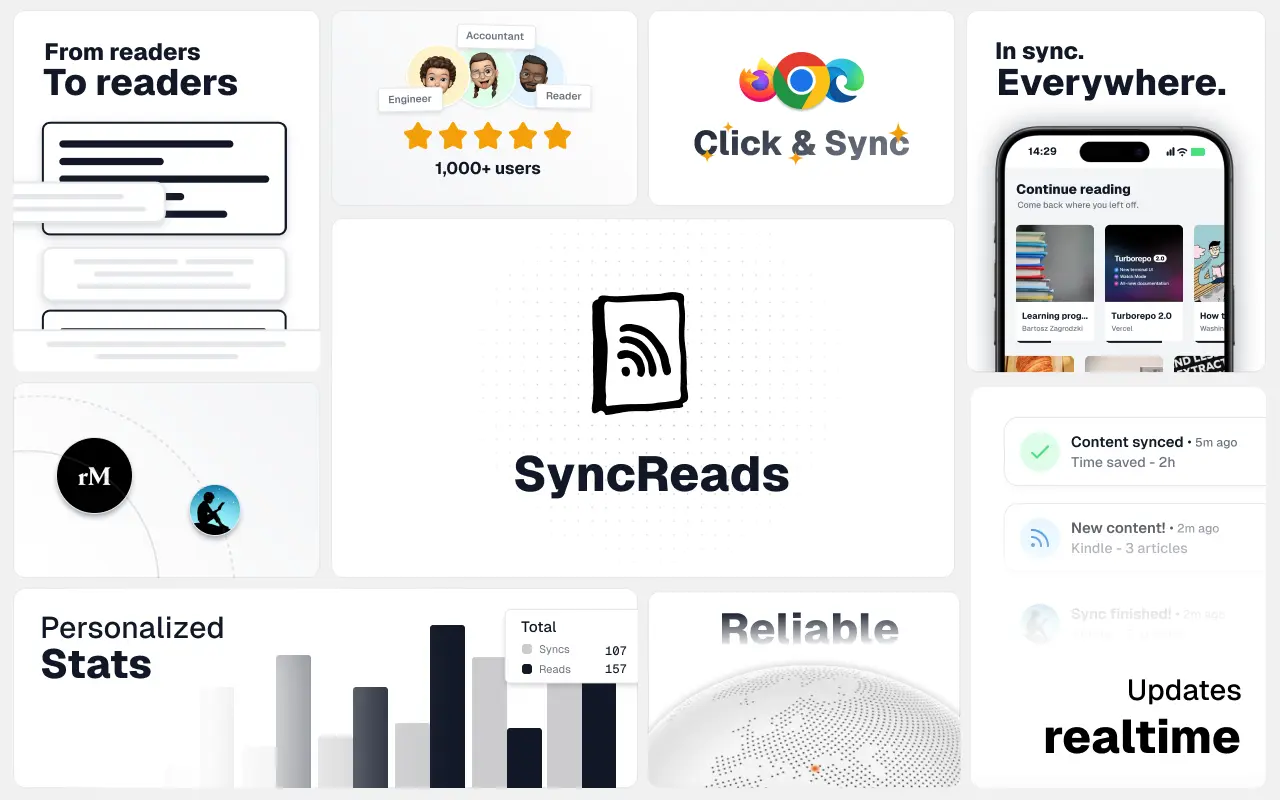
SyncReads
Sync your favorite content for distraction-free reading, save time and replace multiple apps. Anytime, anywhere 🔄
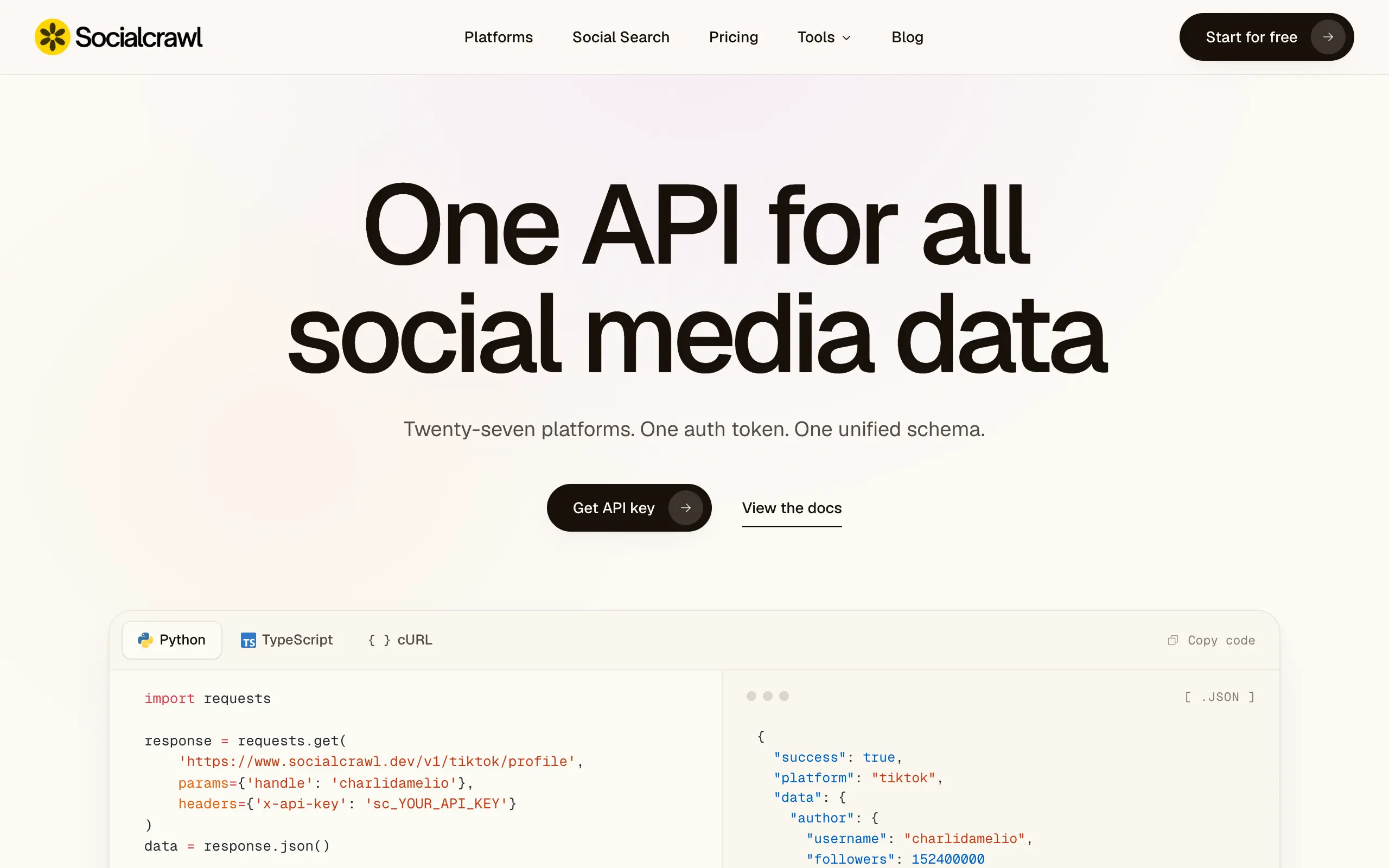
Socialcrawl
Get clean, structured data from 21 platforms like TikTok, Instagram, and YouTube with a single request 📊
Statiko
Monitor any Telegram channel in real time - track posts, edits, deletions, and growth with AI recaps 📡
Shibui
AI website builder - describe your business, pick a niche template, edit by chatting, and publish instantly ✨
Pro Service
Find verified home service professionals, compare quotes, and pay securely through escrow - built for Brazilians across the US 🏠
RankGrow
Fix your SEO with AI agents - connect Search Console, get prioritized tasks, and grow organic traffic 📈
SyncReads
Sync your favorite content for distraction-free reading, save time and replace multiple apps. Anytime, anywhere 🔄
Socialcrawl
Get clean, structured data from 21 platforms like TikTok, Instagram, and YouTube with a single request 📊
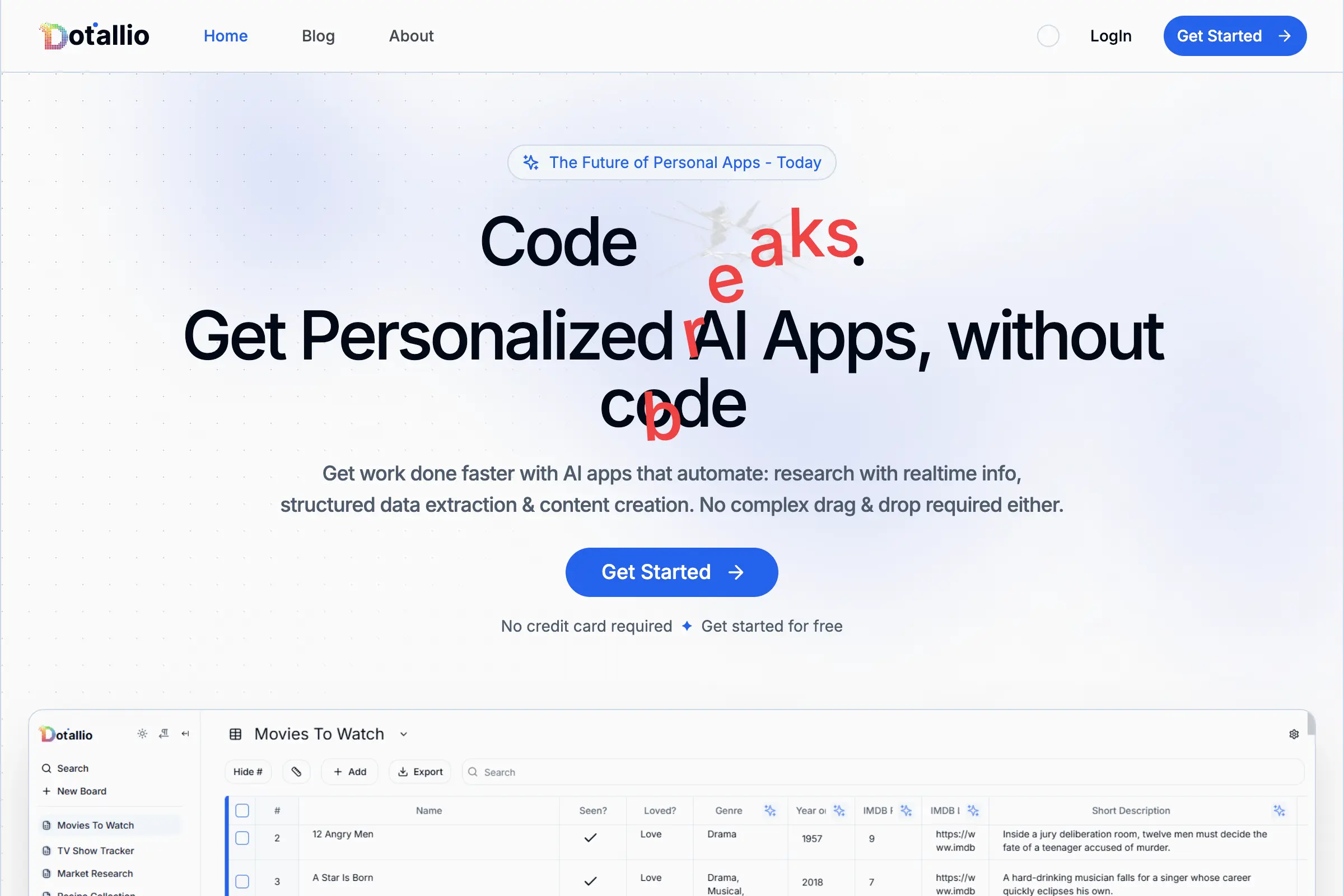
Dotallio
Personalized AI apps that automate research, data extraction, and content creation without code 🤖

Talk to Santa
Enjoy a magical live video chat or receive a unique AI-generated video greeting from Santa Claus 🎅

pozywka.pl
Scalable blog for food journalist, focused on performance and user experience 🌭
zagrodzki.me
Personal blog and portfolio of Bart Zagrodzki, where he shares his knowledge and work 💼
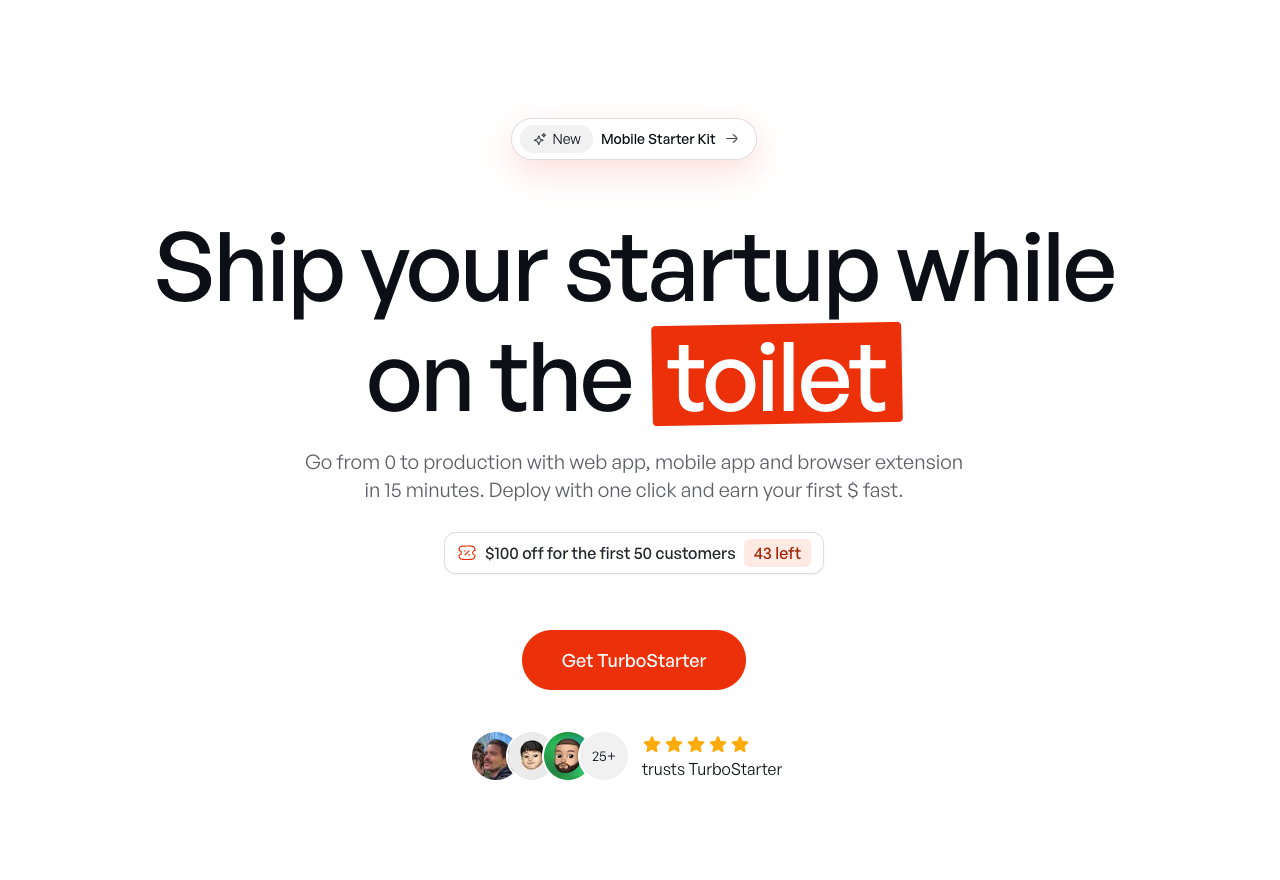
TurboStarter
Ship your startup everywhere. In minutes.
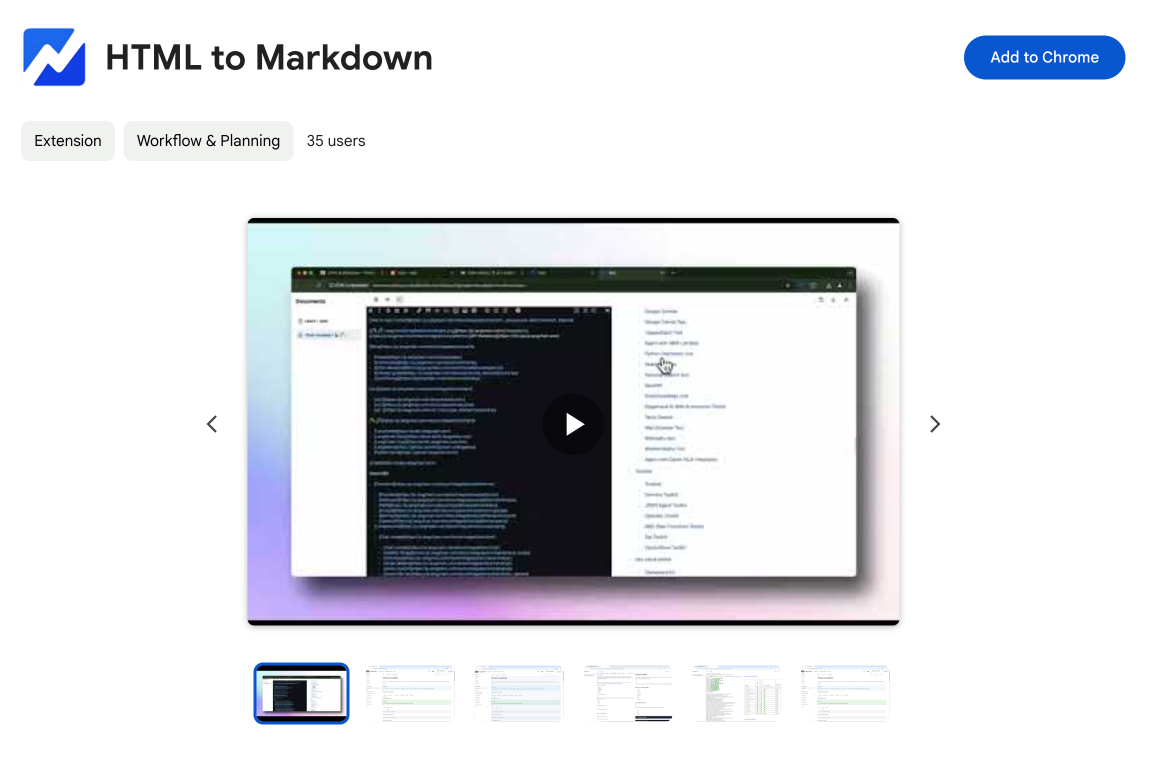
HTML to Markdown
Convert HTML to Markdown with ease, directly in your browser 📄
Dotallio
Personalized AI apps that automate research, data extraction, and content creation without code 🤖
Talk to Santa
Enjoy a magical live video chat or receive a unique AI-generated video greeting from Santa Claus 🎅
pozywka.pl
Scalable blog for food journalist, focused on performance and user experience 🌭
zagrodzki.me
Personal blog and portfolio of Bart Zagrodzki, where he shares his knowledge and work 💼
TurboStarter
Ship your startup everywhere. In minutes.
HTML to Markdown
Convert HTML to Markdown with ease, directly in your browser 📄
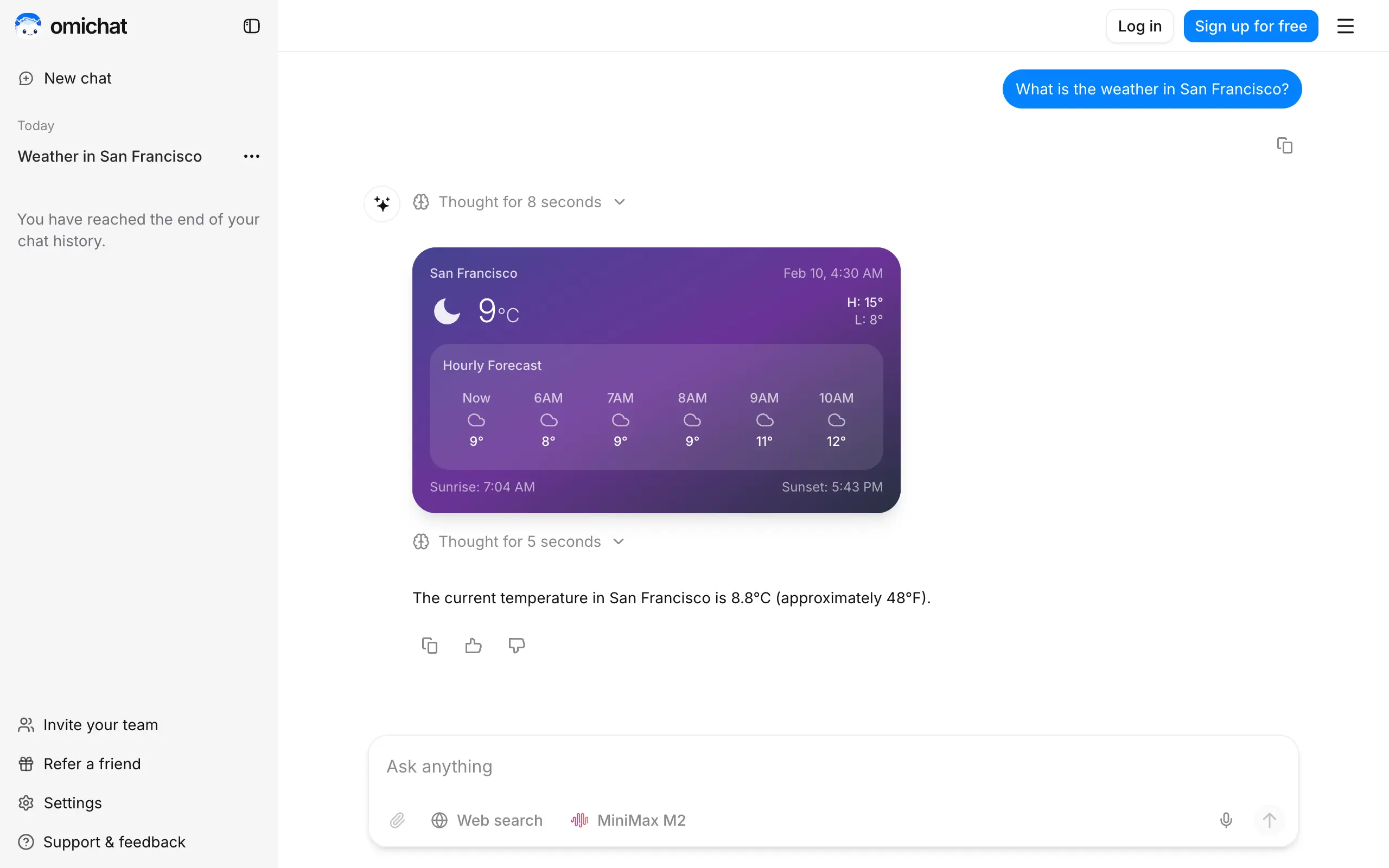
Omichat
Chat with 50+ AI models, including ChatGPT and Claude, in one place - switch models anytime without losing context 🤖
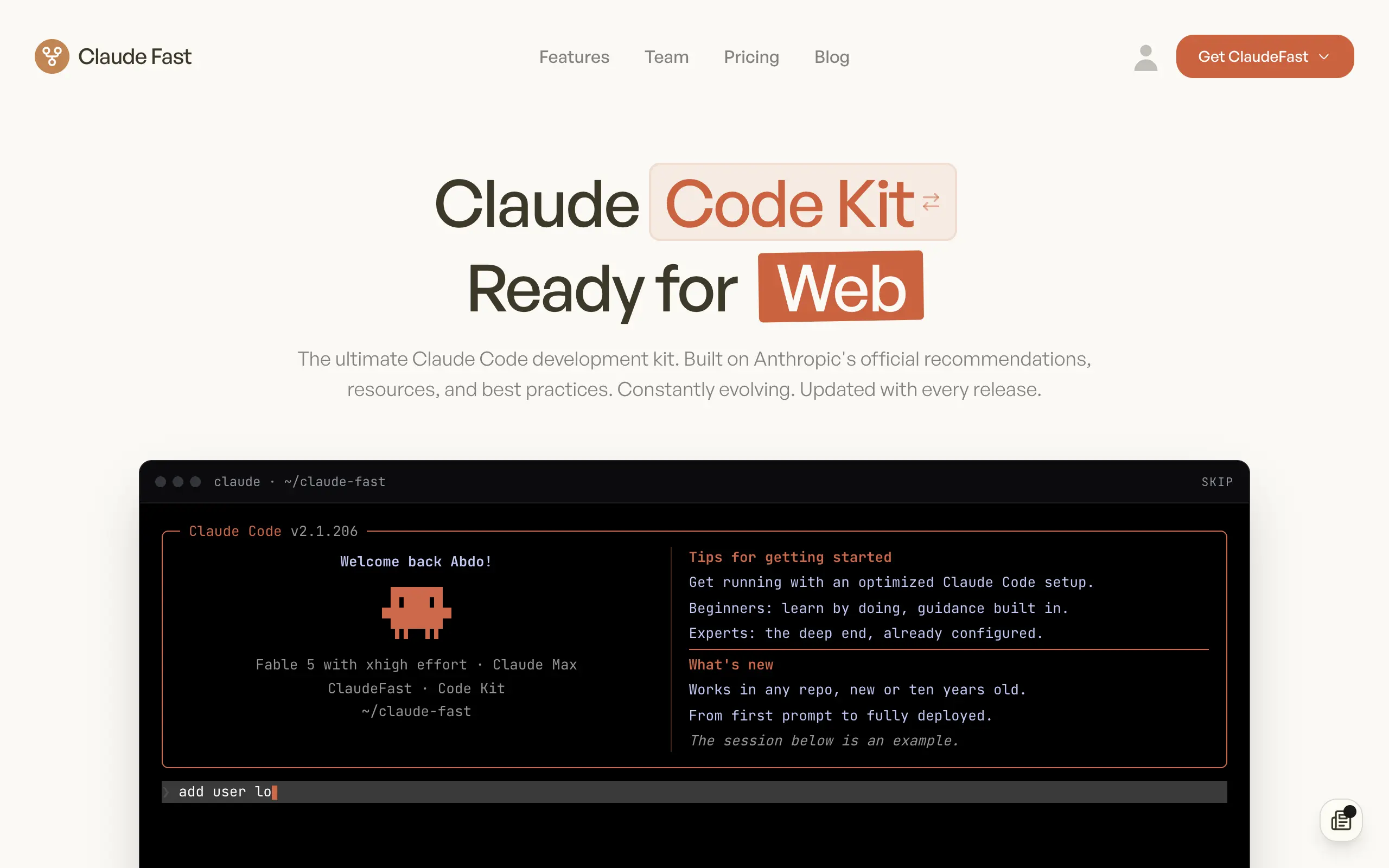
Claude Fast
Supercharge your Claude Code with 6x effective context window and specialized AI agents 🤖

EmojAI
AI-powered emoji picker with smart, context-aware suggestions 🤖

Solohacker
Autonomous company launcher - AI agents work 24/7, escalate what matters, and you stay in control 🤖

BeRawi: Storytelling Coach
Practice storytelling daily with instant feedback to sound clearer, more engaging, and confident 🎤
Omichat
Chat with 50+ AI models, including ChatGPT and Claude, in one place - switch models anytime without losing context 🤖
Claude Fast
Supercharge your Claude Code with 6x effective context window and specialized AI agents 🤖
EmojAI
AI-powered emoji picker with smart, context-aware suggestions 🤖
Solohacker
Autonomous company launcher - AI agents work 24/7, escalate what matters, and you stay in control 🤖
BeRawi: Storytelling Coach
Practice storytelling daily with instant feedback to sound clearer, more engaging, and confident 🎤

Connect with like-minded people
Join our community to get feedback, support, and grow together with 1,000+ builders on board, let's ship it!
Join usShip your startup everywhere. In minutes.
Don't burn tokens on setup and start building features on day one.