NarxNow
NarxNow lets Tajik shoppers compare crowdsourced food and household prices across nearby bazaars and stores. Save money with low-data alerts in Tajik and Russian.
NarxNow addresses a practical, high-frequency problem for households in Tajikistan: finding affordable food and household essentials without spending hours visiting multiple bazaars and stores. A Tajikistan price comparison app can turn scattered, local knowledge into a useful everyday service by showing what staple products cost nearby, when prices change, and where a shopper can save money.
The strongest version of NarxNow is not simply a directory of stores or a generic grocery app. It is a crowdsourced bazaar price intelligence platform designed around local purchasing behavior, variable connectivity, Tajik and Russian language preferences, and the reality that prices can differ sharply between neighborhoods, markets, and small retailers.
For shoppers, the promise is straightforward: compare prices before leaving home. For local communities, the platform creates greater price transparency. For retailers and market vendors, it can become a channel for promoting verified offers to nearby customers without requiring an expensive e-commerce operation.
The core opportunity
NarxNow should optimize for useful local price signals, not perfect national price data. A shopper deciding whether to buy potatoes, cooking oil, flour, or detergent today needs a recent and credible nearby price, even if the platform does not yet cover every shop in Tajikistan.
Why a Tajikistan price comparison app has real consumer demand
In many markets, consumers can open a supermarket website, compare standardized products, and order online. Tajikistan’s retail environment often works differently. Bazaars, neighborhood shops, open markets, wholesalers, and formal grocery stores can all sell the same category of goods at different prices, with availability and quality changing quickly.
This makes price discovery costly. A shopper may know that one bazaar is usually cheaper for produce, while another has better pricing on household cleaning products. But this knowledge is often informal, outdated, location-specific, and shared only through relatives, friends, or neighborhood groups.
NarxNow can convert that fragmented knowledge into a searchable, continually refreshed database.
The key user search intent behind a bazaar price comparison app is typically practical rather than informational. Users are not researching retail economics. They want answers to questions such as:
- Where can I find cheaper flour near me?
- Is the price of onions lower at this bazaar than at a nearby store?
- Which market has the best price for cooking oil this week?
- Has the price of eggs increased since my last purchase?
- Can I receive alerts when a staple product becomes cheaper?
- Which submitted prices are recent enough to trust?
A successful product must answer these questions in seconds, with minimal data usage and a low learning curve.
Target audience for NarxNow
NarxNow is a B2C platform, but its consumer market should not be treated as one broad segment. Different groups experience price volatility, travel constraints, digital confidence, and shopping routines differently.
Budget-conscious household shoppers
The primary audience is households that buy food and essentials weekly or multiple times per week. These users are highly sensitive to recurring price differences because small savings across staples add up over a month.
Their highest-priority categories may include:
- Flour, rice, sugar, pasta, and cooking oil
- Potatoes, onions, tomatoes, carrots, and seasonal produce
- Eggs, dairy products, poultry, and meat
- Soap, detergent, diapers, toilet paper, and basic hygiene products
- Tea, bread, spices, and other frequently purchased pantry items
For these shoppers, NarxNow should prioritize fast price comparison, recent updates, plain language, and trusted community reports.
Families managing a tight monthly budget
Household managers often make purchase decisions based on total basket cost rather than the price of a single item. They may travel farther for a worthwhile saving, but only if the expected benefit is greater than transportation cost and time.
This segment benefits from a shopping basket comparison feature. Instead of showing only that one store has cheap rice, NarxNow can estimate the total cost of a saved list across nearby locations.
The product should be careful about overpromising. A basket estimate should clearly explain that it is based on recently reported prices and may vary by product brand, quality, seller, and time of day.
Students, young professionals, and mobile-first users
Younger users are likely to be more comfortable contributing price reports, sharing deals, and enabling mobile notifications. They can become an important supply-side community because crowdsourced platforms need a steady flow of fresh data.
This audience may respond well to:
- Fast one-tap price submissions
- Points, contribution streaks, and badges
- Local deal notifications
- Shareable price comparisons for family chats
- A lightweight progressive web app or Android-first mobile experience
Gamification should remain secondary. The product’s real reward is saving money and helping other people make better local shopping decisions.
Older adults and lower-digital-literacy users
Older shoppers may have strong knowledge of local pricing but less comfort with complex interfaces. NarxNow should not exclude them by assuming every user will scan barcodes, create detailed profiles, or understand map controls.
Accessible design should include:
- Large tap targets and readable text
- Tajik and Russian language switching
- Simple category icons with clear labels
- Optional voice-assisted or guided flows in future versions
- Low-bandwidth pages that load quickly on modest devices
- Family sharing, where a younger relative can help set alerts
Small retailers and bazaar vendors
Although NarxNow is consumer-first, retailers can become a secondary audience. Small stores may want to appear when customers search for specific products nearby. Vendors may also value a way to publish verified offers, especially for fast-moving products or seasonal inventory.
The platform must protect consumer trust. Paid placement should always be labeled, and sponsored listings should never overwrite organic price comparisons.
Consumer value
Find recent local prices, compare nearby markets, and receive alerts for essentials that matter to a household budget.
Community value
Turn local knowledge into a shared price database that increases transparency across neighborhoods and bazaars.
Retailer value
Give verified stores a measurable, location-based channel to promote genuine offers without becoming a full marketplace.
The market gap in local bazaar price transparency
The market gap is not that people lack information entirely. People often have information, but it is fragmented, inconsistent, difficult to search, and quickly outdated.
Common alternatives currently include asking friends, calling relatives, visiting several stores, following community chat groups, or relying on memories from past purchases. These methods can work, but they have obvious limitations:
- Information is not structured by product, unit, location, and date.
- A message in a group chat is difficult to find later.
- Reported prices may omit quality, package size, or seller details.
- Users cannot easily see historical movement over time.
- There is no consistent way to judge freshness or credibility.
- The information usually stays inside one social circle.
A well-designed crowdsourced price comparison app solves these problems through structured submissions and transparent confidence signals.
Why existing global comparison models do not fully fit
Many international price comparison products assume large e-commerce catalogs, universal barcodes, standardized SKUs, reliable inventory feeds, and card-based online checkout. Those assumptions are weak fits for bazaar-based retail.
NarxNow should be designed for local realities:
- Products may be sold by kilogram, liter, piece, packet, or informal bundle.
- The same product category can vary substantially in grade or quality.
- A vendor may not have a permanent digital catalog.
- Prices can change several times in a week, especially for produce.
- Connectivity, data cost, and device storage limitations matter.
- Language and script preferences must be treated as core product requirements.
The competitive advantage is not copying a supermarket comparison website. It is creating a reliable local data model for informal and semi-formal retail.
NarxNow’s unique selling proposition
NarxNow’s unique selling proposition is hyperlocal, crowdsourced price intelligence for Tajik shoppers, delivered in a low-data Tajik and Russian experience.
That positioning combines several advantages that are difficult to replicate at once:
-
Local coverage over generic catalogs
NarxNow can focus on the places people actually shop, including bazaars, neighborhood stores, and small retailers. -
Freshness over static listings
Every price record should show when it was reported, enabling users to distinguish a current signal from old information. -
Community reporting with verification
The product can use reputation scoring, duplicate detection, receipt evidence, and anomaly flags to improve accuracy over time. -
Low-data accessibility
A lightweight interface, cached product data, compressed assets, and restrained notification payloads make the service more usable in constrained network conditions. -
Bilingual product design
Tajik and Russian should be supported from the first release, including search synonyms, category names, alerts, onboarding, and help content. -
Useful decisions instead of abstract data
NarxNow should help users decide where to shop, when to buy, and whether a listed price is credible.
Core features for a bazaar price comparison app
The first version of NarxNow should focus on features that create a reliable data flywheel. Consumers need enough price coverage to find value, and the platform needs enough contributors to keep information fresh.
Search by product and location
Users should be able to search for familiar terms such as rice, flour, potatoes, eggs, oil, detergent, or diapers. Results should prioritize nearby locations, recent reports, and comparable units.
A useful search result includes:
- Product name and translated aliases
- Price and normalized unit
- Store or bazaar name
- Neighborhood or approximate location
- Time since the price was reported
- Number of confirmations or supporting reports
- Quality or brand information when relevant
- Confidence level based on freshness and verification
For example, a price for potatoes should not be represented as a single universal number. It should be shown as a local report such as “Potatoes, standard quality, per kilogram, reported 2 hours ago at a named bazaar.”
Structured crowdsourced price submissions
The submission flow is the heart of NarxNow. If contributing a price is difficult, price coverage will remain thin. If it is too unrestricted, data quality will deteriorate.
A strong submission form asks for the minimum information required to make a report useful:
- Product category and item name
- Price amount in Tajik somoni
- Unit of sale, such as kilogram, liter, piece, or package
- Location, selected from a known store or market list
- Optional brand, quality, or size details
- Optional photo or receipt evidence
- Timestamp and approximate location captured automatically with permission
The product should use smart defaults. If a user previously reported prices at a specific bazaar, NarxNow can preselect that location. If they select cooking oil, common package sizes can appear as quick options.
Price normalization and unit comparison
Price comparison is only useful when users can compare like with like. A 1-liter bottle of oil cannot be directly compared with a 900-milliliter bottle without clear unit normalization. Similarly, “one bag” of rice is not actionable unless the bag size is known.
NarxNow should maintain a product measurement system that supports:
- Price per kilogram
- Price per liter
- Price per unit
- Price per 100 grams or 100 milliliters when appropriate
- Pack size conversion for packaged goods
- Separate labels for wholesale, retail, premium, and standard grades
The interface should show both the original submitted price and the normalized comparison price. This preserves transparency and prevents users from believing the app has changed what the seller charged.
Nearby market and store comparison
A map is helpful, but a map should not be the only interface. Some users may prefer a simple list because it loads faster and is easier to understand.
NarxNow can provide:
- A list view sorted by lowest price
- A list view sorted by nearest location
- A map view for users who want visual context
- Filters for bazaars, grocery stores, wholesalers, and verified retailers
- Distance estimates and directions through installed map applications
- Hours and contact information when available and verified
Distance should be part of the recommendation logic. Saving one somoni may not justify a long journey. A “best value nearby” label can combine price, distance, freshness, and data confidence without hiding the raw details.
Low-data price alerts in Tajik and Russian
Alerts are one of NarxNow’s most valuable retention features. Users should be able to follow specific items or categories and receive a concise notification when a notable price change is detected.
Examples include:
- “Cooking oil is reported cheaper near you today.”
- “Your saved basket may cost less at this nearby market.”
- “The price of eggs at your selected bazaar has fallen.”
- “A recent report confirms a lower rice price in your area.”
Alerts should be configurable to avoid notification fatigue. Users can choose item-level alerts, weekly summaries, a specific neighborhood, or only large price drops.
Low-data delivery matters. Notifications should be text-first, compact, and should not require downloading large images or opening a heavy screen. SMS may be worth evaluating as an opt-in fallback for users without stable mobile data, though it adds operational cost and requires clear consent management.
Price history and trend visualization
A simple price history chart can make NarxNow significantly more useful. Shoppers may delay a non-urgent purchase if they see a temporary spike, while household planners can recognize recurring seasonal patterns.
Early trend views should be conservative. They must avoid presenting crowdsourced data as official inflation measurement.
Use language such as:
- “Reported price trend based on recent community submissions”
- “Coverage is limited in this area”
- “This is not an official market index”
- “Prices may vary by quality, seller, and time”
For national economic statistics or formal food price indicators, NarxNow’s editorial content can suggest citing authoritative organizations such as the national statistics agency, the World Bank, FAO, or WFP. Product claims should remain distinct from official data.
Trust scoring and data quality controls
Crowdsourcing succeeds only if users can understand why a price is worth trusting. NarxNow needs a layered approach rather than a single “verified” badge.
| Signal | What it measures | User-facing treatment | Operational value | Risk addressed |
|---|---|---|---|---|
| Freshness | How recently a price was submitted | Show report age | Prioritizes current data | Stale prices |
| Consensus | Whether nearby reports agree | Show confidence level | Detects unusual entries | Outliers |
| Evidence | Receipt or photo availability | Mark as evidence-supported | Improves moderation accuracy | Fabricated data |
| Contributor reputation | Historical submission quality | Use carefully behind the scenes | Rewards reliable contributors | Repeat abuse |
A trust score should never be opaque enough to mislead users. The app can say “High confidence: 4 recent reports agree” instead of assigning unexplained numerical scores.
Recommended technology stack for NarxNow
NarxNow needs a stack that supports mobile-first performance, multilingual interfaces, geospatial data, notifications, and operational simplicity. The best initial stack is not necessarily the most advanced one. For an early-stage B2C product, speed of iteration and low maintenance burden are strategic advantages.
Recommended application architecture
A practical architecture could include:
- Next.js for the web application and landing pages
- React for component-driven user interfaces
- TypeScript for safer data models and application logic
- Tailwind CSS for rapid, consistent responsive design
- Supabase for PostgreSQL, authentication, file storage, and real-time capabilities
- PostgreSQL with PostGIS for geographic queries
- Expo and React Native for an Android-first mobile app when native distribution is justified
- Firebase Cloud Messaging for push notifications
- MapLibre for flexible map rendering without unnecessary vendor lock-in
This architecture gives NarxNow a solid foundation for web access, a future mobile app, and reliable relational data modeling.
Why PostgreSQL and PostGIS fit price intelligence
Price comparison platforms are data-intensive. Each submission is connected to products, locations, users, units, timestamps, verification status, and potentially evidence images. A relational database handles these relationships clearly.
PostGIS is especially useful because NarxNow needs geographic queries such as:
- Find stores within a selected radius
- Identify the nearest recent price reports
- Group reports by market or neighborhood
- Detect duplicate submissions from the same place
- Aggregate trends by city or district
Document databases can support a prototype, but a relational model is often easier to govern as price histories, normalized product catalogs, and moderation workflows become more complex.
Progressive web app versus native mobile app
A progressive web app can be the fastest way to validate NarxNow. Users can access it through a browser without an app-store installation step, which is valuable in markets where storage limits or app download friction affect adoption.
A native Android app becomes attractive when NarxNow needs deeper mobile capabilities:
- More reliable background notifications
- Better offline submission queues
- Camera and image compression workflows
- Improved location permission handling
- Home-screen presence and repeat engagement
A PWA is usually the best validation choice. It lowers distribution friction, supports search visibility, and allows the team to test product-market fit before investing heavily in multiple native clients.
Native Android development can be justified earlier if the target audience strongly prefers installed apps, the product depends on offline capture, or push notifications are central to weekly engagement.
A sensible roadmap is to launch a responsive PWA first, then use retention and usage data to decide whether an Android app should become the primary experience.
Data model essentials
The database should not treat a “price” as only a number. Each record needs context.
type PriceReport = {
  id: string
  productId: string
  locationId: string
  reporterId?: string
  priceSomoni: number
  saleUnit: "kg" | "g" | "l" | "ml" | "piece" | "pack"
  quantityPerUnit?: number
  normalizedPrice: number
  normalizedUnit: "kg" | "l" | "piece"
  qualityGrade?: "standard" | "premium" | "wholesale"
  submittedAt: string
  evidenceUrl?: string
  verificationStatus: "pending" | "trusted" | "flagged" | "rejected"
}
The important design decision is retaining both the submitted price and a normalized price. The original value supports transparency; the normalized value enables fair comparisons.
Performance and low-data engineering
For NarxNow, performance is not a cosmetic concern. Slow pages can prevent the product from being useful precisely when a shopper needs it.
Engineering priorities should include:
- Server-rendered initial pages for fast first loads
- Compressed and resized user-uploaded photos
- Lazy-loaded maps rather than loading map scripts on every page
- Cached product categories and common searches
- Minimal third-party scripts
- Offline-friendly saved lists and recently viewed prices
- Background sync for queued submissions when connectivity returns
- Lightweight language bundles for Tajik and Russian
Test the product regularly on lower-cost Android devices and slower connections, not only on high-end development hardware.
Monetization strategies that protect consumer trust
NarxNow should avoid monetization models that compromise its core value: helping shoppers identify accurate, nearby prices. The platform’s early objective should be liquidity, meaning enough recent data in a focused geography to make the app useful repeatedly.
Once trust and usage grow, several revenue paths are viable.
Freemium consumer subscriptions
A free tier can cover essential browsing and price reporting. A paid tier may include:
- Unlimited saved shopping lists
- Advanced basket comparisons
- Price history beyond a limited period
- More alert rules and custom thresholds
- Family account sharing
- Ad-free browsing
- Downloadable monthly spending insights
Consumer subscriptions can work, but pricing must match local willingness to pay. The team should test whether users value alerts and basket planning enough to pay regularly before building a complex premium tier.
Verified retailer profiles
Retailers can pay for a verified profile that includes accurate address details, business hours, contact information, and the ability to confirm store-submitted offers.
The rules must remain clear:
- Verified status confirms business identity, not that every price is the lowest.
- Sponsored placement must be visibly labeled.
- Retailers cannot suppress genuine community price reports.
- Promotional pricing should include validity dates where possible.
Local promotion and sponsored offers
Location-based promotions can become a meaningful revenue source once NarxNow has enough local traffic. This works best for categories where discounts are clear and short-lived, such as household goods, packaged foods, or seasonal products.
The platform should separate “community-reported price” from “paid offer” visually and verbally. Blurring those categories would damage trust.
Aggregated market intelligence
Over time, anonymized and aggregated trend data may be useful to retailers, distributors, researchers, or consumer organizations. This is a more advanced model and requires rigorous privacy standards.
NarxNow should never sell individual user location histories or personally identifiable contributor behavior. Aggregated reporting should use privacy-preserving thresholds and be reviewed for re-identification risk.
Competitive advantage and defensibility
A new price comparison product can be copied at the interface level. The defensible advantage comes from local data density, user trust, operational workflows, and a product model tuned to Tajikistan.
Build density city by city
Trying to cover the whole country immediately can create an empty product. NarxNow should instead build high-quality data density in one launch area, likely beginning with a concentrated urban area and a limited number of high-traffic bazaars and stores.
A focused launch creates stronger user value:
- More recent reports per product
- More reliable confidence scoring
- Faster community moderation
- Better local marketing
- More meaningful price alerts
- Easier retailer onboarding
Once a city has repeat contributors and useful coverage across core products, NarxNow can expand neighborhood by neighborhood.
Build a localized product catalog
Product terminology is not universal. The same item can be described differently based on language, region, package type, brand, or household habit. NarxNow’s catalog should support synonyms, translations, and category-specific attributes.
For example, a product record may require distinct handling for:
- Loose produce versus packaged produce
- Local and imported products
- Branded goods versus generic goods
- Per-kilogram goods versus per-piece goods
- Retail packs versus wholesale packs
This localized taxonomy becomes a compounding asset. It improves search relevance, data normalization, analytics, and the contributor experience.
Create a trusted contributor network
The best long-term moat may be a network of reliable contributors. NarxNow can encourage participation through recognition, useful feedback, and carefully designed incentives.
Potential approaches include:
- Contribution streaks for fresh reports
- Neighborhood contributor badges
- Early access to premium features
- Monthly recognition for verified helpful reports
- Referral rewards with fraud safeguards
- Partnerships with consumer groups or local community organizations
Direct cash rewards can increase submission volume, but they also increase fraud risk. If used, incentives should be modest, delayed until verification, and monitored closely.
Risks and mitigation strategies
Every crowdsourced consumer platform carries risk. NarxNow should treat trust, privacy, and data coverage as product requirements from day one.
Use anomaly detection, evidence requests for suspicious reports, contributor reputation signals, duplicate checks, community confirmations, and human moderation for high-impact categories. Clearly display report age and confidence rather than claiming all prices are exact.
Launch narrowly with a defined set of markets and staple categories. Recruit early contributors through community partnerships, field campaigns, and referral loops. Do not expand geography until existing coverage is consistently useful.
Explain that NarxNow reports consumer-observed prices and offers retailers a fair process to claim profiles, correct factual business information, and publish clearly labeled verified offers. Do not allow commercial pressure to alter organic data.
Collect only necessary location precision, provide clear consent, strip metadata from uploaded images where practical, limit retention, and offer account deletion controls. Avoid publishing a contributor's identity alongside a report by default.
Let users set thresholds, preferred categories, and quiet hours. Prioritize meaningful price changes rather than sending alerts for every small update.
Legal and policy considerations
NarxNow should obtain local legal advice before launch, particularly around consumer protection, data privacy, advertising disclosures, promotional claims, and user-generated content moderation.
Key policy documents should include:
- Terms of service
- Privacy policy
- Community reporting guidelines
- Retailer verification policy
- Sponsored content policy
- Content moderation and appeals process
Price information should include appropriate disclaimers. NarxNow can report what users observed, but it should not imply guarantees about availability, seller behavior, or final checkout price.
Go-to-market plan for NarxNow
The product should launch with a strategy designed to solve the chicken-and-egg problem. Shoppers need data before they return, but the platform needs shoppers to submit data.
Start with a narrow product scope
The first launch should prioritize a small set of high-frequency, highly comparable staples. Avoid launching with hundreds of vague categories.
A practical initial catalog could cover:
- Rice
- Flour
- Cooking oil
- Sugar
- Eggs
- Potatoes
- Onions
- Tomatoes
- Chicken
- Milk
- Detergent
These products offer frequent purchasing behavior and clear household relevance. They also make it easier to measure whether NarxNow helps users find lower prices.
Seed the first dataset responsibly
Crowdsourcing should not mean waiting for users to create all initial value. The founding team can conduct a small, documented field data collection effort with transparent labels indicating source and collection date.
Early data should be clearly marked as:
- Team-collected
- Community-reported
- Retailer-confirmed
- Expired or low-confidence
This transparency is better than populating the product with unverified placeholder prices.
Recruit trusted local contributors
Early contributors can include students, community organizers, neighborhood volunteers, and frequent shoppers. The focus should be on report quality and consistency rather than raw registration numbers.
Train contributors on:
- Selecting the correct product and unit
- Recording the actual displayed or paid price
- Adding useful quality notes
- Avoiding duplicate reports
- Respecting vendor privacy and market rules
- Uploading photos only when appropriate
Use content marketing around real shopping questions
Search-focused content can support acquisition when it solves practical needs. Useful article and landing page topics include:
- Weekly staple price guides for a specific city
- How to compare market prices fairly by unit
- Tips for reducing a household grocery budget
- Seasonal produce buying guides
- Explanations of reported price trends
Editorial content should never present a small crowdsourced sample as a definitive national statistic. It should explain coverage, reporting period, and methodology.
Actionable implementation steps
The fastest route to validation is building a narrow, trustworthy minimum viable product rather than attempting a complete national retail platform.
For a fast SaaS foundation, TurboStarter can help teams avoid spending early development time rebuilding common application infrastructure such as authentication, billing foundations, dashboards, and production-ready deployment patterns.
Metrics that prove NarxNow is working
Vanity metrics such as total signups are not enough. NarxNow should monitor whether the marketplace has useful, trustworthy liquidity.
The most important early metrics include:
-
Fresh coverage rate
The percentage of top products with at least one recent report in each launch location. -
Search success rate
The percentage of product searches that return a relevant, recent local result. -
Price report verification rate
The share of submitted reports that pass automated and human quality checks. -
Contributor retention
The percentage of contributors who submit again in the following week or month. -
Shopper retention
The percentage of users who return to compare prices or view alerts. -
Alert usefulness
Open rates, follow-through behavior, and user feedback on whether alerts were valuable. -
Median report age
A direct indicator of whether price data is fresh enough to be actionable. -
Basket savings estimate engagement
How often users save lists, compare baskets, and select a suggested market.
A healthy NarxNow marketplace will show improving freshness and coverage before it shows large national user counts.
Final perspective
NarxNow can become more than a price lookup tool. It has the potential to become a trusted consumer utility for everyday household decisions in Tajikistan.
Its success depends on disciplined execution. The company should begin with a focused geographic area, staple products with clear comparison value, a frictionless contribution flow, and transparent trust indicators. It should optimize for low-data use and bilingual accessibility from the start, rather than treating them as later enhancements.
The winning product will not claim to know every price everywhere. It will consistently help users make better nearby buying decisions with recent, understandable, and credible community data. By building trust one verified price report at a time, NarxNow can create a durable local advantage in the Tajikistan price comparison market.
More 👥 B2C Application SaaS ideas
Discover more innovative b2c application SaaS ideas that are trending in 2026. Each idea is AI-generated with market validation and growth potential to help you find your next profitable venture faster than competitors.
Your competitors are building with TurboStarter
Below are some of the SaaS ideas that have been generated and built with our starter kit.

Statiko
Monitor any Telegram channel in real time - track posts, edits, deletions, and growth with AI recaps 📡

Shibui
AI website builder - describe your business, pick a niche template, edit by chatting, and publish instantly ✨
Pro Service
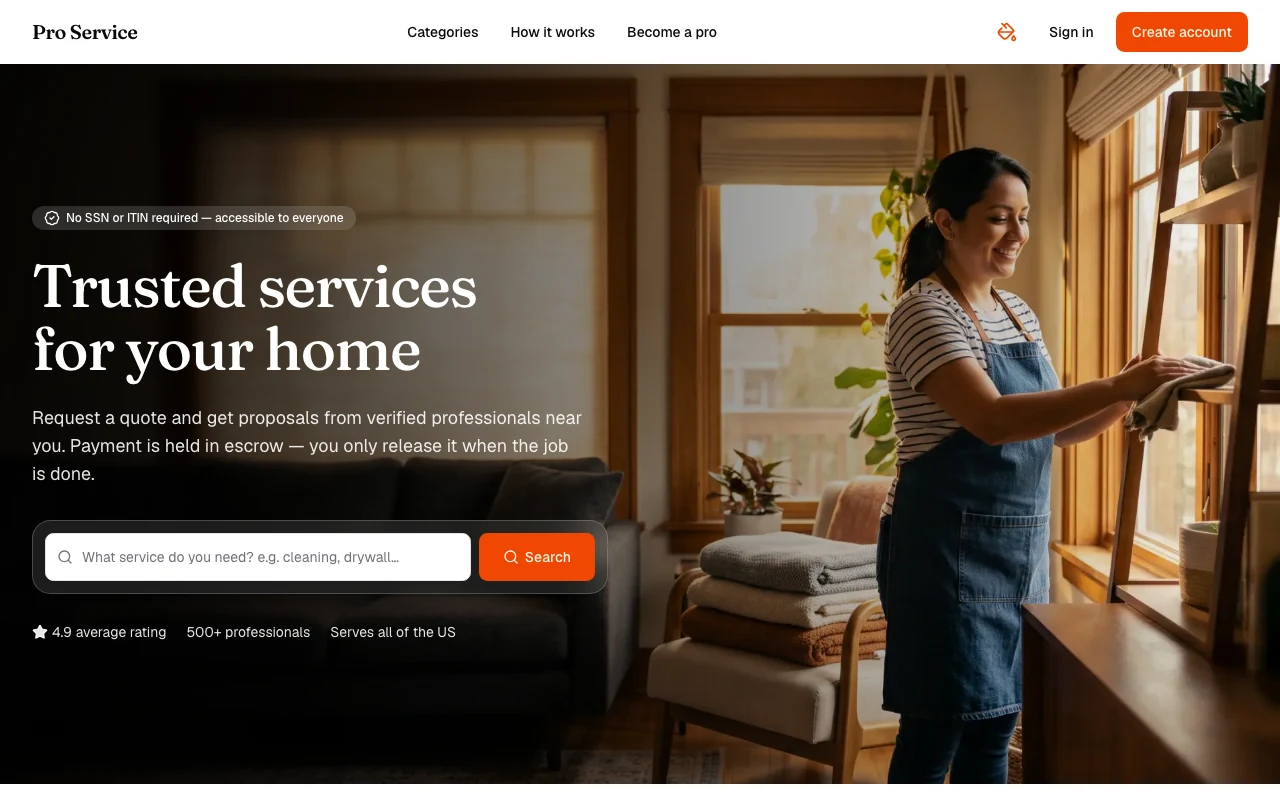
Find verified home service professionals, compare quotes, and pay securely through escrow - built for Brazilians across the US 🏠
RankGrow
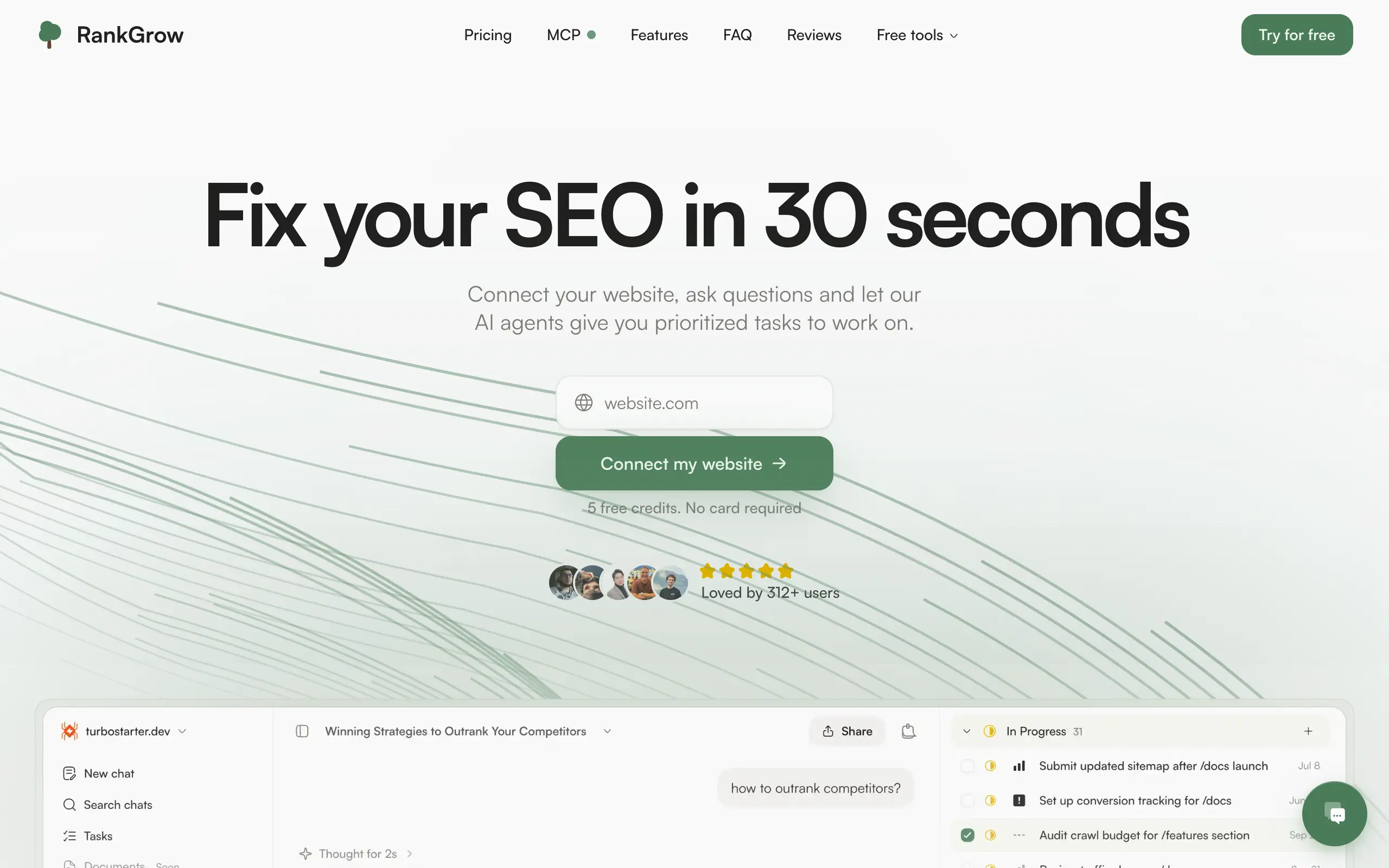
Fix your SEO with AI agents - connect Search Console, get prioritized tasks, and grow organic traffic 📈
SyncReads
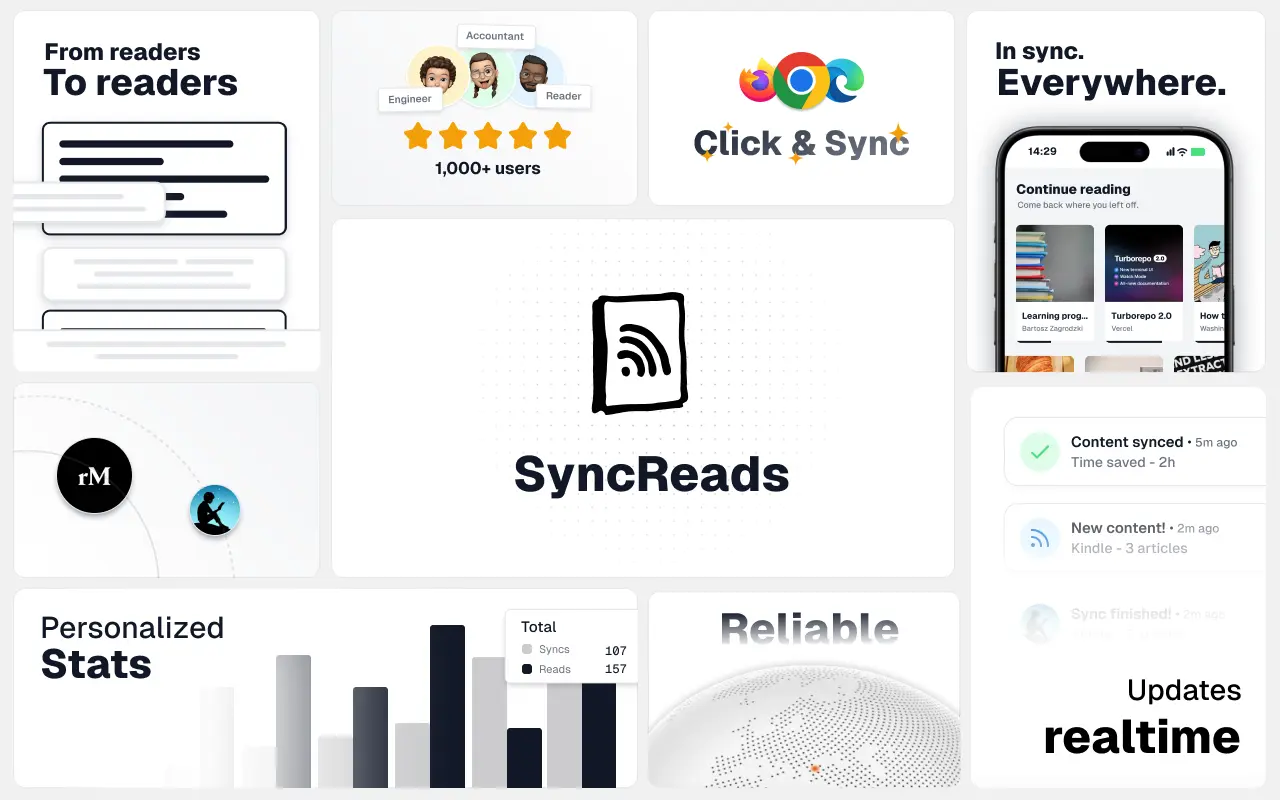
Sync your favorite content for distraction-free reading, save time and replace multiple apps. Anytime, anywhere 🔄
Socialcrawl
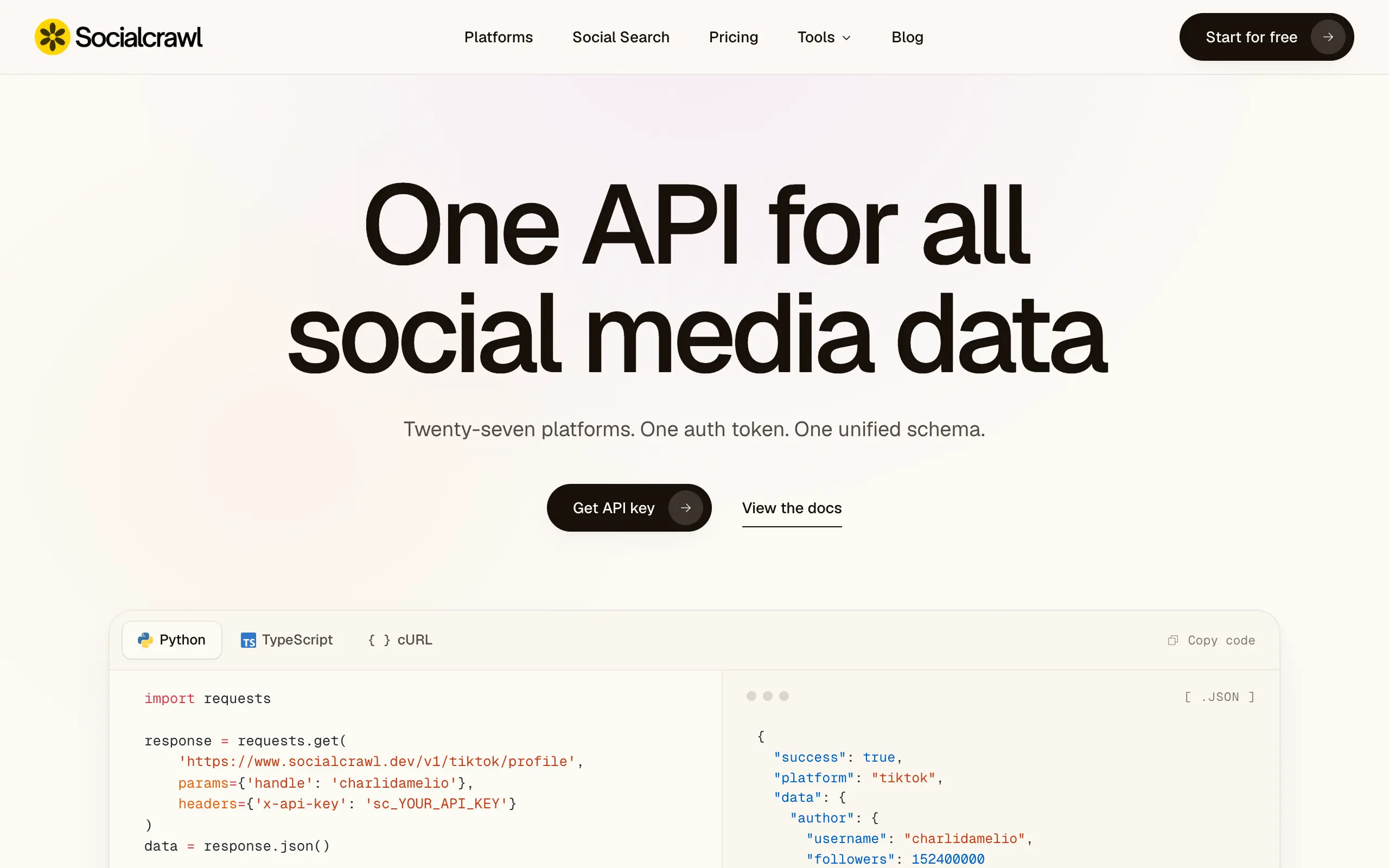
Get clean, structured data from 21 platforms like TikTok, Instagram, and YouTube with a single request 📊
Statiko
Monitor any Telegram channel in real time - track posts, edits, deletions, and growth with AI recaps 📡
Shibui
AI website builder - describe your business, pick a niche template, edit by chatting, and publish instantly ✨
Pro Service
Find verified home service professionals, compare quotes, and pay securely through escrow - built for Brazilians across the US 🏠
RankGrow
Fix your SEO with AI agents - connect Search Console, get prioritized tasks, and grow organic traffic 📈
SyncReads
Sync your favorite content for distraction-free reading, save time and replace multiple apps. Anytime, anywhere 🔄
Socialcrawl
Get clean, structured data from 21 platforms like TikTok, Instagram, and YouTube with a single request 📊
Statiko
Monitor any Telegram channel in real time - track posts, edits, deletions, and growth with AI recaps 📡
Shibui
AI website builder - describe your business, pick a niche template, edit by chatting, and publish instantly ✨
Pro Service
Find verified home service professionals, compare quotes, and pay securely through escrow - built for Brazilians across the US 🏠
RankGrow
Fix your SEO with AI agents - connect Search Console, get prioritized tasks, and grow organic traffic 📈
SyncReads
Sync your favorite content for distraction-free reading, save time and replace multiple apps. Anytime, anywhere 🔄
Socialcrawl
Get clean, structured data from 21 platforms like TikTok, Instagram, and YouTube with a single request 📊
Statiko
Monitor any Telegram channel in real time - track posts, edits, deletions, and growth with AI recaps 📡
Shibui
AI website builder - describe your business, pick a niche template, edit by chatting, and publish instantly ✨
Pro Service
Find verified home service professionals, compare quotes, and pay securely through escrow - built for Brazilians across the US 🏠
RankGrow
Fix your SEO with AI agents - connect Search Console, get prioritized tasks, and grow organic traffic 📈
SyncReads
Sync your favorite content for distraction-free reading, save time and replace multiple apps. Anytime, anywhere 🔄
Socialcrawl
Get clean, structured data from 21 platforms like TikTok, Instagram, and YouTube with a single request 📊
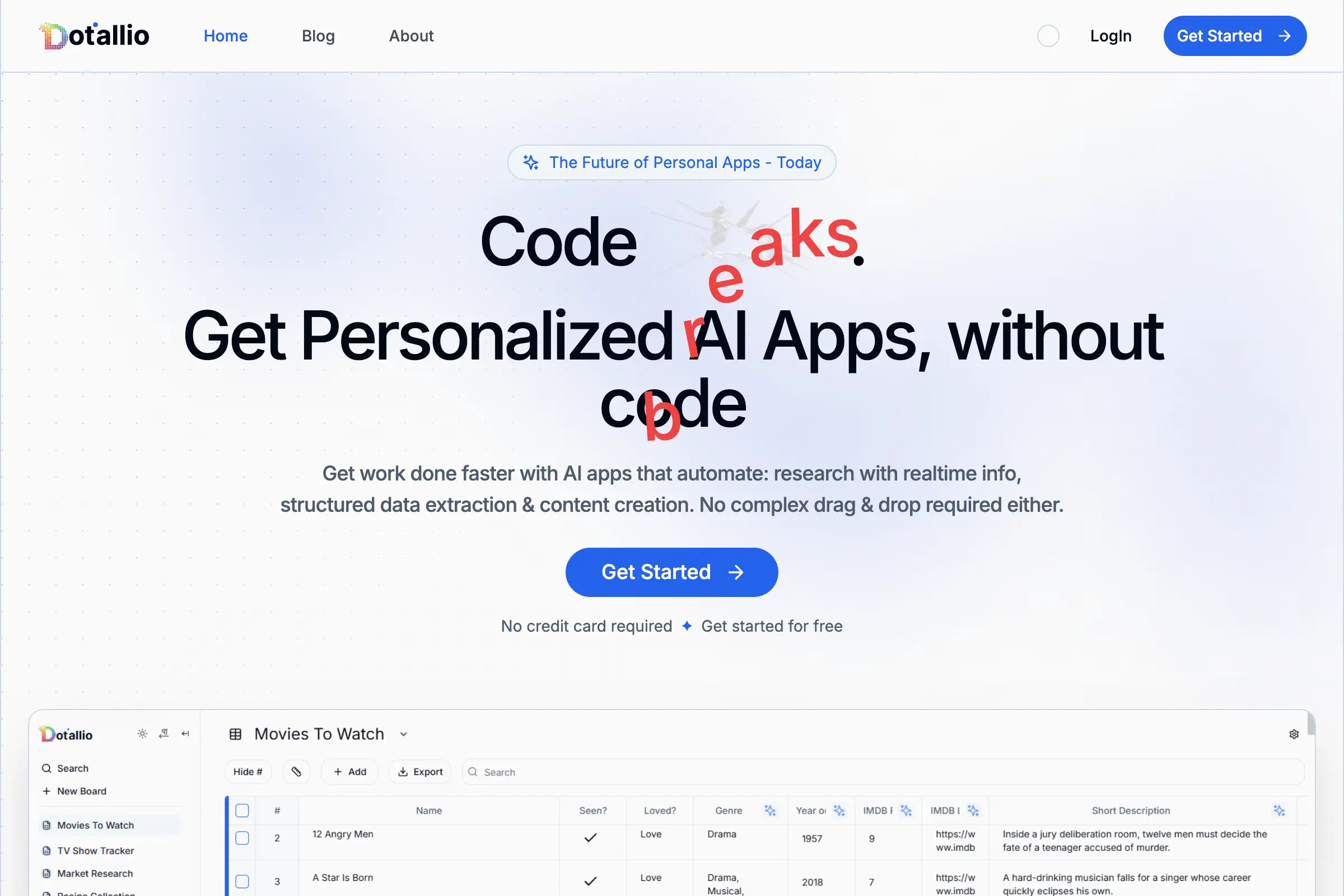
Dotallio
Personalized AI apps that automate research, data extraction, and content creation without code 🤖

Talk to Santa
Enjoy a magical live video chat or receive a unique AI-generated video greeting from Santa Claus 🎅
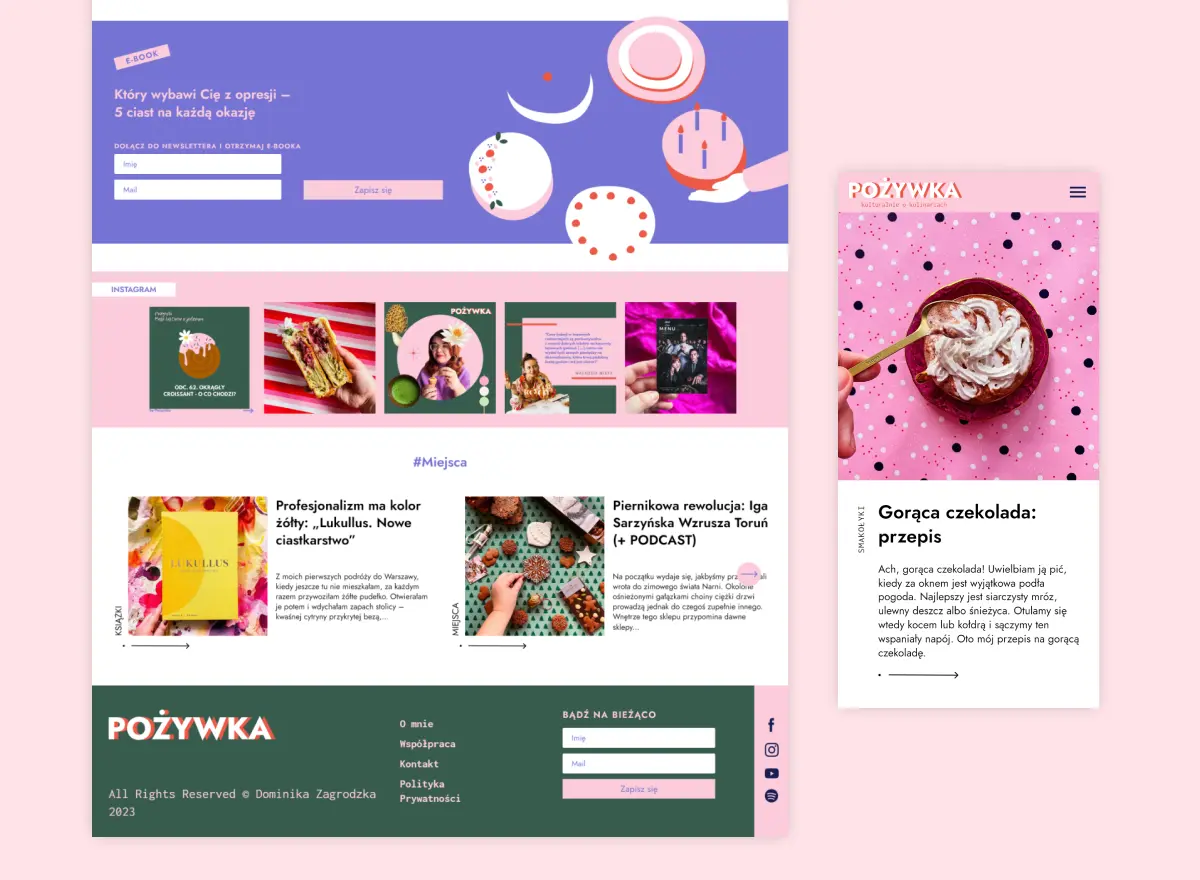
pozywka.pl
Scalable blog for food journalist, focused on performance and user experience 🌭
zagrodzki.me
Personal blog and portfolio of Bart Zagrodzki, where he shares his knowledge and work 💼
TurboStarter
Ship your startup everywhere. In minutes.
HTML to Markdown
Convert HTML to Markdown with ease, directly in your browser 📄
Dotallio
Personalized AI apps that automate research, data extraction, and content creation without code 🤖
Talk to Santa
Enjoy a magical live video chat or receive a unique AI-generated video greeting from Santa Claus 🎅
pozywka.pl
Scalable blog for food journalist, focused on performance and user experience 🌭
zagrodzki.me
Personal blog and portfolio of Bart Zagrodzki, where he shares his knowledge and work 💼
TurboStarter
Ship your startup everywhere. In minutes.
HTML to Markdown
Convert HTML to Markdown with ease, directly in your browser 📄
Dotallio
Personalized AI apps that automate research, data extraction, and content creation without code 🤖
Talk to Santa
Enjoy a magical live video chat or receive a unique AI-generated video greeting from Santa Claus 🎅
pozywka.pl
Scalable blog for food journalist, focused on performance and user experience 🌭
zagrodzki.me
Personal blog and portfolio of Bart Zagrodzki, where he shares his knowledge and work 💼
TurboStarter
Ship your startup everywhere. In minutes.
HTML to Markdown
Convert HTML to Markdown with ease, directly in your browser 📄
Dotallio
Personalized AI apps that automate research, data extraction, and content creation without code 🤖
Talk to Santa
Enjoy a magical live video chat or receive a unique AI-generated video greeting from Santa Claus 🎅
pozywka.pl
Scalable blog for food journalist, focused on performance and user experience 🌭
zagrodzki.me
Personal blog and portfolio of Bart Zagrodzki, where he shares his knowledge and work 💼
TurboStarter
Ship your startup everywhere. In minutes.
HTML to Markdown
Convert HTML to Markdown with ease, directly in your browser 📄
Omichat
Chat with 50+ AI models, including ChatGPT and Claude, in one place - switch models anytime without losing context 🤖
Claude Fast
Supercharge your Claude Code with 6x effective context window and specialized AI agents 🤖

EmojAI
AI-powered emoji picker with smart, context-aware suggestions 🤖

Solohacker
Autonomous company launcher - AI agents work 24/7, escalate what matters, and you stay in control 🤖

BeRawi: Storytelling Coach
Practice storytelling daily with instant feedback to sound clearer, more engaging, and confident 🎤
Omichat
Chat with 50+ AI models, including ChatGPT and Claude, in one place - switch models anytime without losing context 🤖
Claude Fast
Supercharge your Claude Code with 6x effective context window and specialized AI agents 🤖
EmojAI
AI-powered emoji picker with smart, context-aware suggestions 🤖
Solohacker
Autonomous company launcher - AI agents work 24/7, escalate what matters, and you stay in control 🤖
BeRawi: Storytelling Coach
Practice storytelling daily with instant feedback to sound clearer, more engaging, and confident 🎤
Omichat
Chat with 50+ AI models, including ChatGPT and Claude, in one place - switch models anytime without losing context 🤖
Claude Fast
Supercharge your Claude Code with 6x effective context window and specialized AI agents 🤖
EmojAI
AI-powered emoji picker with smart, context-aware suggestions 🤖
Solohacker
Autonomous company launcher - AI agents work 24/7, escalate what matters, and you stay in control 🤖
BeRawi: Storytelling Coach
Practice storytelling daily with instant feedback to sound clearer, more engaging, and confident 🎤
Omichat
Chat with 50+ AI models, including ChatGPT and Claude, in one place - switch models anytime without losing context 🤖
Claude Fast
Supercharge your Claude Code with 6x effective context window and specialized AI agents 🤖
EmojAI
AI-powered emoji picker with smart, context-aware suggestions 🤖
Solohacker
Autonomous company launcher - AI agents work 24/7, escalate what matters, and you stay in control 🤖
BeRawi: Storytelling Coach
Practice storytelling daily with instant feedback to sound clearer, more engaging, and confident 🎤

Connect with like-minded people
Join our community to get feedback, support, and grow together with 1,000+ builders on board, let's ship it!
Join usShip your startup everywhere. In minutes.
Don't burn tokens on setup and start building features on day one.