Narxona
A community price tracker for groceries, medicine, and fuel across Tajikistan’s markets and shops. Families can compare nearby prices and report changes.
Why Narxona solves a real consumer problem in Tajikistan
Narxona is a community-powered Tajikistan price tracker app for groceries, medicines, and fuel. It helps families compare prices at nearby markets, shops, pharmacies, and fuel stations, while enabling users to report changes as they happen.
For many households, price comparison is not a convenience feature. It is a practical budgeting tool. When staple food, medicine, or fuel prices change across neighborhoods and cities, people often rely on word of mouth, repeated store visits, social media posts, or outdated information. That creates friction, wastes time, and makes it difficult to make confident purchasing decisions.
A dedicated price comparison platform can make local market information more transparent. Narxona can turn scattered observations into a searchable, location-aware database that serves ordinary consumers first while creating valuable market intelligence over time.
The central value proposition is simple.
Find the current price of essential goods near you, compare alternatives, and help your community keep the information accurate.
Unlike generic marketplace apps, Narxona is built around everyday price visibility. Its focus is not only on where to buy products, but on helping users answer urgent questions such as:
- Where is cooking oil cheapest near me?
- Which pharmacy has a medicine in stock at a fair price?
- Did fuel prices increase this week?
- Is the price at my neighborhood market higher than nearby options?
- What was the average price of flour last month?
- Can I trust the price shown in the app?
This makes Narxona a strong B2C SaaS and mobile-first opportunity for Tajikistan, especially if it launches with a focused local area, trusted data collection workflows, and a clear reason for users to contribute.
Core positioning
Narxona should position itself as a trusted local price intelligence network, not merely a directory of shops. The product’s value depends on freshness, verification, and local relevance.
The Tajikistan price tracker market opportunity
A grocery price tracker in Tajikistan addresses an information gap that affects households, small retailers, delivery services, researchers, and community organizations. Consumer prices vary for several reasons, including location, supply availability, seasonality, wholesale transport costs, exchange-rate movements, and store-level pricing decisions.
In a market where people often buy essentials from bazaars, neighborhood stores, pharmacies, and independent vendors, pricing data is rarely centralized. Even when prices are posted in messaging groups or discussed in communities, the information can become stale quickly and is difficult to search by product, unit, district, or date.
Narxona can become the organized layer between fragmented local commerce and consumer decision-making.
The gap in local price transparency
Global price comparison platforms are generally designed for large retail chains, online stores, or standardized product catalogs. They are less effective where:
- Product prices are negotiated or updated frequently
- Independent sellers use different naming conventions
- The same item is sold in different package sizes
- Availability changes throughout the day
- Shoppers care about distance and transport costs
- Consumers prefer local languages and familiar units of measure
- Internet access may be mobile-first or intermittent
A Tajikistan-focused price tracker has the opportunity to account for the behavior of local markets instead of forcing users into a retail model that does not match how they shop.
For example, one shop may list rice by kilogram, another may sell a branded package, and a bazaar vendor may offer a different grade at a different price. Narxona should not treat these entries as identical without context. It should help users compare equivalent products while showing the source, unit, package size, condition, and time of the report.
Why groceries, medicine, and fuel are the right initial categories
These three categories combine frequent need, financial sensitivity, and a strong reason to check current prices.
Groceries
Staple food prices affect household budgets continuously. Products such as flour, rice, oil, sugar, eggs, potatoes, onions, and dairy can build daily user habits.
Medicine
Users need help finding essential products nearby, comparing pharmacy prices, and seeing whether an item was recently reported as available.
Fuel
Fuel prices are highly visible, location-specific, and valuable to drivers, delivery workers, small businesses, and intercity travelers.
Groceries are likely the most effective category for building broad consumer adoption. Medicine can create high-value use cases but requires stricter moderation and careful communication. Fuel has a smaller catalog than groceries, which makes it suitable for an early structured dataset and reliable price alerts.
A practical market-validation approach
Before building a fully featured national platform, Narxona should validate the demand at a city and category level. Start with one dense location, such as Dushanbe, then test one or two high-frequency product groups.
The validation goal is not simply to collect signups. It is to prove that users will return because the data saves them money, time, or uncertainty.
Useful early validation questions include:
- Which products do people check prices for most often?
- How far are users willing to travel to save money?
- Which source produces the most trustworthy reports?
- Will users submit a price after receiving useful comparison results?
- Are users more motivated by rewards, community impact, or convenience?
- Which languages and units do users expect by default?
- How quickly do prices become outdated in each category?
For credible market sizing, Narxona should cite official population, internet-access, consumer-price, and household-expenditure datasets where available. Potential references may include reports from Tajikistan’s official statistical bodies, the World Bank, the International Telecommunication Union, and reputable development organizations. Any published figures should include the report name, publication date, and methodology rather than relying on unsupported claims.
Target users for Narxona
The best price comparison app for Tajikistan will not serve every user with the same interface. Narxona should prioritize several clear audience segments and tailor its experience around their needs.
Budget-conscious households
This is Narxona’s largest potential audience. Families managing limited or fixed budgets need practical ways to compare staple prices without traveling between multiple stores.
Their priorities include:
- Accurate prices for everyday essentials
- A simple view of nearby locations
- Local-language support
- Clear package and unit comparisons
- Confidence that a reported price is recent
- Low mobile-data usage
- Notifications when key items become cheaper or more expensive
For this audience, the app should avoid financial jargon. The language should be direct and action-oriented, such as “Last reported 2 hours ago” or “Cheaper nearby by 6 somoni.”
Drivers and fuel-dependent workers
Taxi drivers, delivery couriers, small logistics operators, and families with vehicles benefit from fuel price comparisons. They may use the product frequently, particularly when traveling across districts or between cities.
They need:
- Fuel station locations on a map
- Fuel type and per-liter pricing
- Last-updated timestamps
- Route-friendly station discovery
- Alerts for meaningful price changes
- Reporting flows that take less than one minute
A fuel experience should make it clear that a low headline price does not always mean the lowest total cost. Distance, queue time, and availability may matter. Later versions could help users account for route deviation.
Pharmacy customers and caregivers
People seeking medicine often have higher urgency and lower tolerance for bad information. Caregivers may be searching for a prescribed product and need to know which pharmacy recently stocked it.
This audience requires a careful product design that separates price information from medical advice. Narxona should never diagnose conditions, recommend treatment, or imply that a lower-priced medicine is clinically interchangeable with another.
The app can safely support:
- Exact medicine name searches
- Brand and generic-name fields where appropriate
- Dosage and package-size details
- Pharmacy locations
- User-reported availability
- Report timestamps
- A prompt to confirm details with a licensed pharmacist
Community contributors
Community reporting is the engine of the product. Contributors may be students, neighborhood organizers, frequent shoppers, taxi drivers, pharmacists, local bloggers, or users motivated by rewards.
They need a contribution process that feels fair and worthwhile. If reporting takes too long, requires too many permissions, or produces no visible community benefit, participation will decline.
Narxona should give contributors:
- One-tap reporting for common items
- Reputation scores based on verified reports
- Points or badges for useful updates
- Personal impact summaries
- The ability to correct errors
- Clear privacy controls
- Feedback when a report has been verified or challenged
The Narxona product experience and core features
A successful community price tracking app needs to make three activities easy: searching, comparing, and contributing. Each workflow should be fast enough for someone standing in a market aisle with limited time and inconsistent connectivity.
Search and browse by product, location, and category
The home screen should offer immediate search, popular categories, and nearby prices. A user searching for “rice,” “fuel,” or a medicine name should receive relevant results even if spelling, transliteration, or language differs.
Search needs normalization for:
- Tajik Cyrillic and Latin transliteration
- Russian product names where locally relevant
- Common colloquial product names
- Brand names and generic medicine names
- Unit variations such as kilogram, liter, piece, and package
- Misspellings and abbreviated entries
Each result should show the most decision-relevant facts first:
- Product name and normalized category
- Current reported price
- Unit or package size
- Store, market stall, pharmacy, or fuel station
- Approximate distance
- Report freshness
- Verification status
- Price history preview
Nearby price comparison
Comparison is Narxona’s central consumer feature. Users should be able to sort results by lowest price, nearest location, most recently confirmed price, and highest community confidence.
A price should never appear without enough context. Showing “20 somoni” alone is misleading if one report is for one kilogram and another is for a smaller package.
A normalized comparison card could include:
type PriceReport = {
  productName: string
  category: "grocery" | "medicine" | "fuel"
  listedPriceTjs: number
  unitLabel: string
  normalizedUnitPriceTjs?: number
  locationName: string
  reportedAt: Date
  confidenceScore: number
}
The normalizedUnitPriceTjs field is especially important for groceries. It lets Narxona compare different package sizes using a common basis, while preserving the original price and unit entered by the contributor.
Fast price reporting
The reporting experience should be designed for speed and reliability. A user should not need to complete a long form for a common item.
A practical flow is:
Photos can increase trust but should be optional. Many users will have limited data, poor lighting, or privacy concerns. Narxona should compress uploads, strip unnecessary metadata, and let users report without a photo.
Price history and trend visibility
A single current price is useful. A price trend is more valuable because it helps users understand whether a change is unusual or part of a normal seasonal pattern.
Price history should include:
- Daily, weekly, and monthly views
- Median price by location or district
- Minimum and maximum observed price
- Number of recent reports
- A freshness indicator
- Clear methodology notes
- Warnings where data volume is too low
Avoid presenting a thin dataset as a definitive market trend. If only two reports exist for a product in a district, Narxona should say so clearly. Transparent uncertainty is more trustworthy than false precision.
Alerts for meaningful changes
Users should be able to watch specific products, nearby sellers, and categories. Alerts may notify them when:
- A watched item drops below a chosen price
- A price rises beyond a selected percentage
- A nearby location receives a new verified report
- A medicine is recently reported in stock
- Fuel at a preferred station changes
- A previously stale listing receives a fresh confirmation
Alerts must be useful, not noisy. Default notification rules should be conservative, and users should control frequency. A digest option can work well for grocery shoppers who do not need real-time updates.
Trust signals and data quality controls
Community data is valuable only if users believe it. Narxona’s competitive advantage will depend heavily on its data-quality system.
Use visible trust indicators rather than a hidden moderation process. A report might be marked as:
- Recently reported
- Community confirmed
- Photo supported
- Verified partner data
- Needs reconfirmation
- Expired or potentially outdated
A confidence score can combine report recency, contributor reputation, agreement from independent users, image evidence, and source type. It should not expose sensitive details about reporters.
Do not promise perfect accuracy
Prices can change after a report is submitted. Narxona should display clear timestamps and explain that users should confirm final prices at the point of purchase.
Building a reliable pricing data model
The hard part of a price tracker is not rendering a list of prices. It is maintaining a clean, comparable dataset while accepting messy real-world input.
Product catalog normalization
A structured catalog should include a canonical product identity, category, aliases, unit rules, and attributes. For example, “sunflower oil” may require brand, volume, and packaging fields. A medicine may require active ingredient, dosage, form, and pack count.
Narxona should begin with a curated set of high-demand items rather than allowing unlimited free-form product creation. This improves search quality and prevents duplicate entries.
A sensible first catalog might include:
- Staple grains and flour
- Cooking oil and sugar
- Dairy and eggs
- Common produce
- Household essentials
- Major fuel types
- A carefully reviewed medicine taxonomy
Over time, user-submitted items can enter a moderation queue. This balances catalog growth with quality.
Location and seller records
Seller data should distinguish between formal businesses and informal market vendors. Not every seller needs a public business profile at launch, but every price needs a usable location reference.
Location records may include:
- Store or pharmacy name
- Market name and section
- District and city
- Map coordinates with privacy-aware precision
- Opening hours when confirmed
- Seller type
- Reporting frequency
- Last verified date
For market stalls, avoid publishing overly precise personal information without consent. A market-zone label may be enough to help shoppers locate the seller.
Freshness rules by category
Not all prices age at the same speed. Fuel may require expiration within a few days. Fresh produce may change more frequently. Some packaged groceries can remain useful for longer, although promotions and supply changes still matter.
Narxona should define category-specific freshness windows and explain them openly.
| Category | Suggested freshness | Primary source | Verification priority | User value |
|---|---|---|---|---|
| Fuel | 1 to 3 days | Drivers and stations | High | Very high |
| Fresh groceries | 1 to 7 days | Shoppers and markets | High | High |
| Packaged groceries | 7 to 14 days | Shoppers and retailers | Medium | High |
| Medicine availability | Same day to 3 days | Pharmacies and users | Very high | Very high |
Recommended technology stack for Narxona
Narxona should be built as a mobile-first product with a responsive web experience. The technical priority is not architectural complexity. It is fast loading, dependable offline behavior, secure user data, and a backend that can support location-based search and moderation.
Frontend and mobile delivery
A strong initial web stack could use React with Next.js for a fast, search-friendly web application. Tailwind CSS can help the team create a consistent design system quickly.
For mobile, there are two viable routes.
A progressive web app is faster to launch and easier to share through a link. It can support caching, install prompts, and low-bandwidth optimization. This is often the best MVP choice when validating demand across multiple devices.
A cross-platform app using React Native can provide deeper device integration, stronger push-notification support, and a more app-like experience. It requires more release-management effort and should be justified by engagement data.
For Narxona, a responsive web application with PWA capabilities is a practical first step. It lowers friction because users can access it without visiting an app store. A native mobile app can follow after the core reporting loop and retention metrics are proven.
Backend, database, and geospatial search
The backend should use a relational database because price reports, products, sellers, users, verifications, and historical trends have clear relationships. PostgreSQL with PostGIS is a strong choice for location queries and geographic indexing.
A typical request flow can include:
- A web or mobile client
- API routes or a dedicated backend service
- PostgreSQL for primary data
- PostGIS for nearby-store and district queries
- Object storage for report photos
- A background job queue for moderation and notifications
- Analytics events for product decisions
Managed platforms such as Supabase can speed up an MVP with authentication, database hosting, storage, and row-level security. The trade-off is greater dependence on a third-party platform and potential complexity when highly specialized workflows emerge. For many early-stage teams, the faster iteration cycle is worth it.
Maps and geocoding considerations
Map quality matters, but map implementation needs local validation. Use a provider whose coverage, language rendering, geocoding accuracy, and licensing suit Tajikistan. Do not assume that a global mapping tool will accurately identify every market entrance, bazaar section, or local business.
The product should remain usable even if map precision is imperfect. Offer district filters, landmark-based location names, and text search alongside pin-based discovery.
Offline-first and low-bandwidth design
A Tajikistan price tracker should be designed for real mobile constraints from the beginning.
Key tactics include:
- Cache recently viewed categories and locations
- Defer nonessential images
- Compress uploaded report photos
- Use lightweight map previews
- Save incomplete reports locally for later submission
- Keep forms short and resilient to network drops
- Load product results in small batches
- Avoid autoplay video and heavy animations
The app’s best experience should not depend on a high-end phone or constant fast connectivity.
Security and privacy fundamentals
Narxona will handle location information, user accounts, submitted photos, and potentially sensitive searches related to medicine. Security should be part of the first release.
Important safeguards include:
- Collect only the data required for the feature
- Provide clear consent for location access
- Allow approximate location where precise location is unnecessary
- Hash passwords using trusted authentication services
- Apply role-based access for moderators and administrators
- Rate-limit reporting and login endpoints
- Scan uploads and restrict accepted file types
- Keep audit logs for moderation actions
- Publish a plain-language privacy policy
- Give users a way to delete their account and personal data
Monetization strategies for Narxona
Narxona should prioritize trust before aggressive monetization. If users suspect that paid sellers receive unfairly favorable rankings, the product will lose its core value.
The best revenue strategy is likely a layered model that keeps basic consumer price comparison free.
Free consumer access with premium convenience
The free version should include search, nearby comparisons, basic price history, and community reporting. A paid plan can offer convenience features for highly engaged users.
Possible premium benefits include:
- Unlimited product watchlists
- Advanced price-history ranges
- Personalized household shopping lists
- Multi-location comparisons
- Exportable spending and price trend summaries
- Early access to new features
- Fewer promotional placements
Consumer subscriptions must remain affordable and optional. The platform should never make essential price information inaccessible to people who need it most.
Verified business profiles
Retailers, pharmacies, and fuel stations can pay for verified profiles that let them manage details, publish official prices, respond to reported inaccuracies, and update opening hours.
The ranking rules must remain transparent. Verification should mean that the business identity and submitted data source have been validated, not that the business is automatically ranked as cheapest.
A verified partner may receive:
- A claimed business profile
- Official price-update tools
- Inventory or availability updates
- Analytics on profile views
- Reputation insights
- Promotional opportunities that are clearly labeled
Business intelligence and aggregate insights
Over time, anonymized and aggregated price trend data can become valuable to retailers, researchers, logistics firms, and consumer organizations. This should be a later-stage product, not an MVP distraction.
Potential B2B offerings include:
- Category-level regional pricing dashboards
- Competitor price monitoring for participating businesses
- Historical trend reports
- Demand indicators from anonymized searches
- API access for approved partners
Any analytics product should protect user privacy and avoid exposing contributor identities or precise private behavior.
Ethical sponsorships and local promotions
Sponsored placements can work if they are clearly labeled and never interfere with organic sorting. For example, a pharmacy could sponsor a placement within a relevant local search category, but Narxona should still show factual price, distance, and freshness information.
The business model should follow one rule: advertising cannot rewrite reality.
Competitive advantage and defensibility
Narxona’s strongest advantage is not simply being first. Its defensibility comes from building a localized, trusted, continuously refreshed price dataset that becomes more useful as more people participate.
Narxona versus generic directories
Generic directories can list businesses. They rarely answer whether an essential item is available now, what it costs today, and how that price compares nearby.
Narxona can win through:
- Localized product and unit normalization
- Current community-reported pricing
- Transparent freshness and confidence signals
- Support for groceries, pharmacies, and fuel in one experience
- Search behavior tuned to local language patterns
- Low-bandwidth, mobile-first design
- Neighborhood-level market coverage
- A contributor reputation network
The data network effect
Every accurate report improves the app for the next shopper. More users create more reports. More reports improve comparison quality. Better results create more trust and more returning users.
However, this network effect is not automatic. Narxona must reward quality rather than quantity. A system that pays or rewards every submission equally can attract spam and duplicate reports. Reputation should increase when reports are confirmed by others, match trusted patterns, include useful evidence, or remain accurate after review.
Building trust as a brand moat
Price data affects real household decisions, so trust is a product feature and a brand asset. Narxona should publish a transparent methodology explaining:
- How reports are collected
- How prices are normalized
- How stale reports are handled
- What verification labels mean
- How sponsored content is identified
- How users can report incorrect information
- What the platform does not guarantee
This approach helps the company earn trust from consumers, businesses, journalists, and potential institutional partners.
Risks and how to mitigate them
Every community marketplace data product faces quality, adoption, and operational risks. Narxona should plan for these early rather than treating moderation as a future problem.
Use contributor reputation, duplicate detection, photo support, anomaly checks, rate limits, community confirmation, and moderator review. Show timestamps prominently and expire old data automatically.
Launch in one city and seed a narrow catalog through field collection, local ambassadors, and early business partnerships. A smaller accurate dataset is better than nationwide empty search results.
Treat medicine information as pricing and availability data only. Avoid medical advice, use strong disclaimers, require structured product fields, and provide a clear route for pharmacies to correct listings.
Give businesses a fair way to claim profiles, submit official updates, and correct errors. Keep organic rankings based on transparent user value rather than payment status.
Let people submit reports without public identity exposure, minimize location precision where appropriate, explain photo handling, and provide deletion controls.
Additional operational risks include language mismatch, map inaccuracies, regulatory changes, and customer-support load. These are manageable when the launch scope is intentionally narrow and the team measures real user behavior before expanding.
Go-to-market strategy for a Tajikistan price comparison app
The early go-to-market plan should focus on creating a useful local density of data. It is better for Narxona to be excellent in a few districts than barely useful across the entire country.
Start with a focused launch market
Choose an initial city or set of neighborhoods based on:
- Population density
- Number of accessible markets and pharmacies
- Frequency of fuel usage
- Strong local community networks
- Availability of field research support
- Mobile internet usage patterns
- Potential partnerships with local merchants or organizations
Dushanbe may be a logical launch environment because it can provide dense user demand and a manageable number of initial locations. Expansion should follow demonstrated coverage and retention, not only geographic ambition.
Seed the first valuable dataset
The classic cold-start challenge is that users will not contribute if the app has no useful data, while the platform cannot have useful data without contributors.
Solve this by seeding a small, high-quality dataset:
- Identify the top 50 to 100 essential products.
- Map priority markets, pharmacies, shops, and fuel stations.
- Collect first-party observations with clear timestamps.
- Recruit trusted local contributors.
- Invite a small group of users to validate and correct listings.
- Launch public reporting only after search results have baseline utility.
Local ambassadors can be especially effective. They understand the geography, naming conventions, and shopping habits that a remote product team may miss.
Create reasons to return
The first visit may be driven by curiosity. Retention comes from recurring utility.
Narxona should build repeat use through:
- Saved shopping lists
- Watchlists for staple products
- Weekly local price summaries
- Price-drop notifications
- Contributor streaks based on verified quality
- “Last updated near you” prompts
- Seasonal shopping guides based on observed data
- A clear view of money or travel time potentially saved
Actionable implementation roadmap
A disciplined rollout will help Narxona avoid building features before its core data loop works.
Phase one: research and product definition
Interview shoppers, drivers, pharmacists, and store owners in the target city. Observe how people currently compare prices and what information they trust. Create a localized product taxonomy and define the initial category boundaries.
Key deliverables should include:
- User interview notes
- A top-product list
- Location taxonomy
- Language and transliteration rules
- Price freshness policy
- Initial moderation guidelines
- Privacy and consent requirements
Phase two: build the minimum viable product
The MVP should include only the workflows required to prove user value.
Prioritize:
- Account creation with low-friction onboarding
- Product search and category browsing
- Nearby location results
- Structured price reporting
- Timestamped comparison cards
- Basic report moderation
- Admin tools for products and locations
- Simple analytics events
- Responsive, low-bandwidth design
Avoid building advanced AI recommendations, national dashboards, complex loyalty systems, or broad B2B analytics before the basic loop is healthy.
Phase three: test data quality and retention
Track product metrics that reveal whether Narxona is becoming useful.
Important indicators include:
- Search-to-result success rate
- Percentage of listings with fresh reports
- Report submission completion rate
- Repeat contributor rate
- Price report verification rate
- Weekly active users
- Watchlist creation rate
- Notification engagement
- Time from report submission to publication
- Customer-support issues per active user
Set thresholds before expanding. For example, a new district should only launch when the existing area maintains sufficient freshness for its most-searched product categories.
Phase four: expand categories and partnerships
Once the consumer experience is trusted, add verified business tools, additional cities, and new categories. Expand based on evidence from search behavior and contributor requests.
A structured SaaS starter can reduce the time spent rebuilding routine infrastructure such as authentication, billing, dashboards, emails, and user management. TurboStarter can be a practical foundation for teams that want to focus development effort on Narxona’s differentiated features, including price normalization, geospatial search, trust scoring, and moderation workflows.
Final perspective
Narxona has the potential to become more than a list of local prices. It can become a trusted public utility for everyday purchasing decisions in Tajikistan.
The opportunity is strongest when the product remains focused on the fundamentals: current information, clear comparisons, transparent data quality, local relevance, and respect for user privacy. Groceries create recurring household value, fuel creates frequent location-based utility, and medicine availability addresses urgent consumer needs when handled responsibly.
The winning version of Narxona will not try to solve all commerce problems at once. It will start by making one simple promise reliably: users can find recent, comparable prices for essential products near them. Once that promise is consistently true, community contributions, business participation, and durable monetization become much easier to build.
More 👥 B2C Application SaaS ideas
Discover more innovative b2c application SaaS ideas that are trending in 2026. Each idea is AI-generated with market validation and growth potential to help you find your next profitable venture faster than competitors.
Your competitors are building with TurboStarter
Below are some of the SaaS ideas that have been generated and built with our starter kit.

Statiko
Monitor any Telegram channel in real time - track posts, edits, deletions, and growth with AI recaps 📡
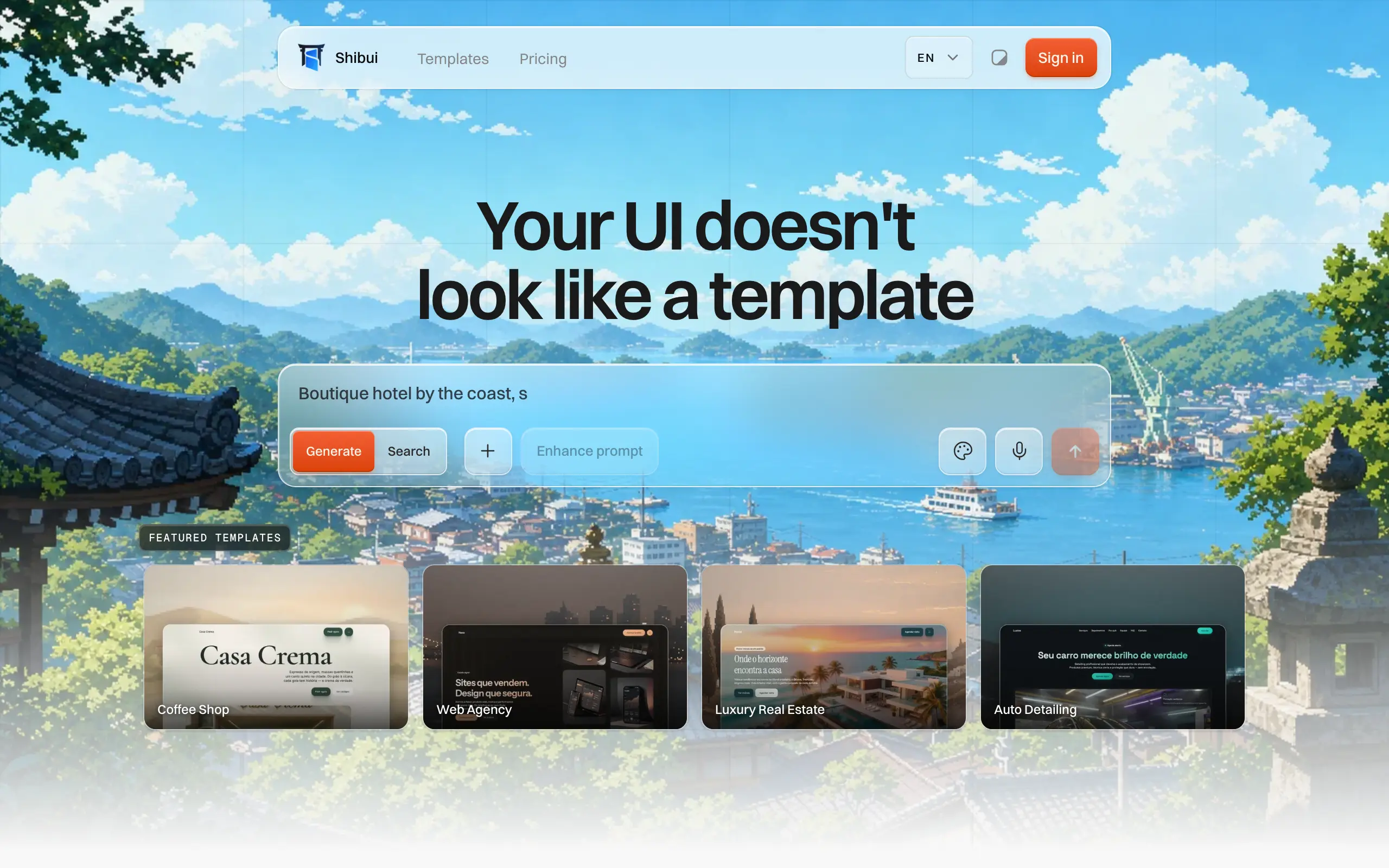
Shibui
AI website builder - describe your business, pick a niche template, edit by chatting, and publish instantly ✨
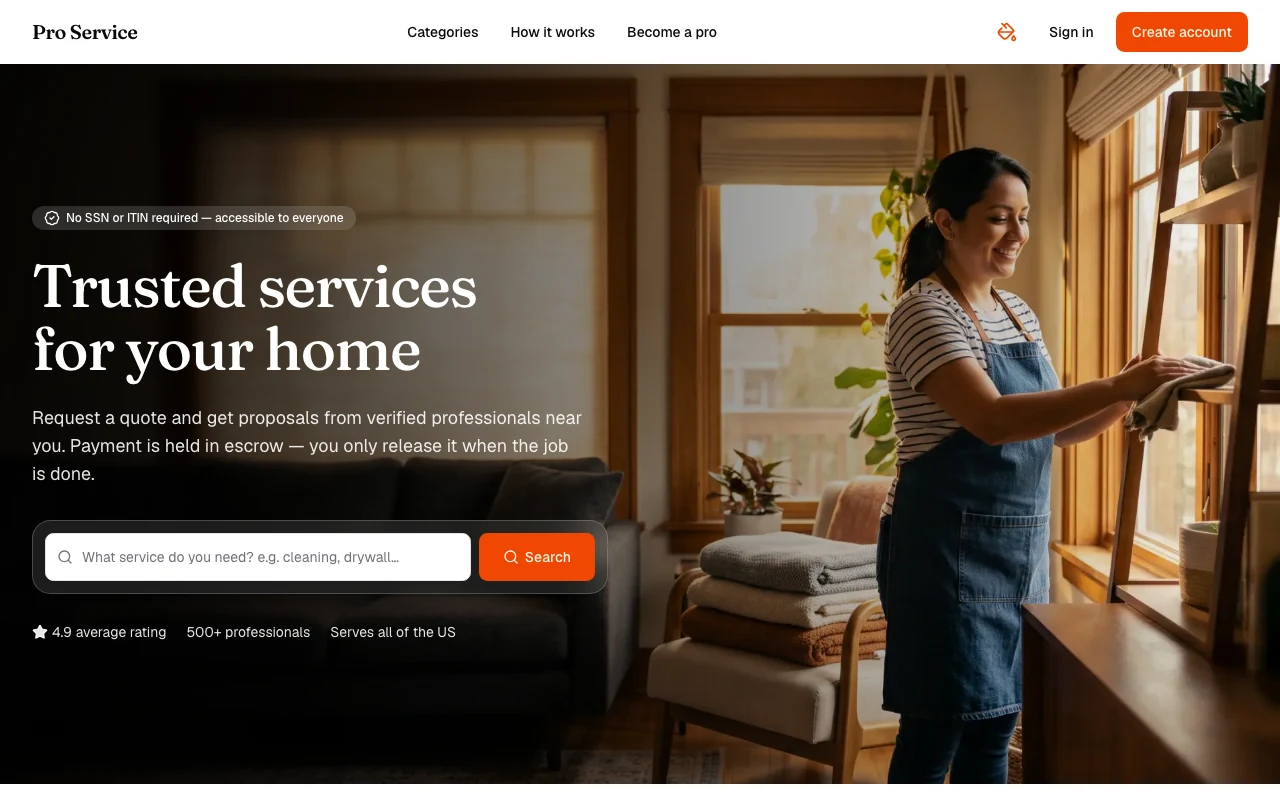
Pro Service
Find verified home service professionals, compare quotes, and pay securely through escrow - built for Brazilians across the US 🏠
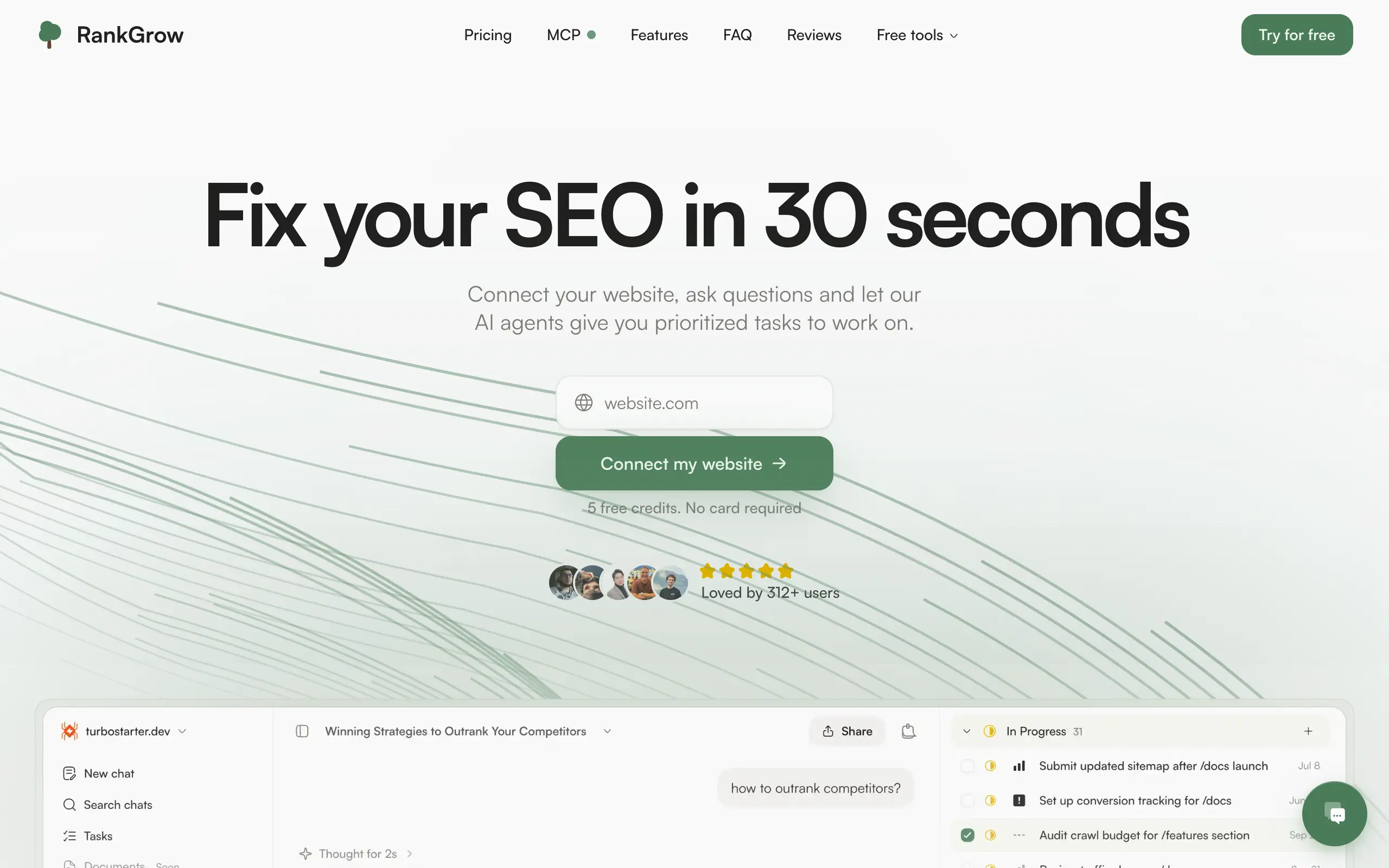
RankGrow
Fix your SEO with AI agents - connect Search Console, get prioritized tasks, and grow organic traffic 📈
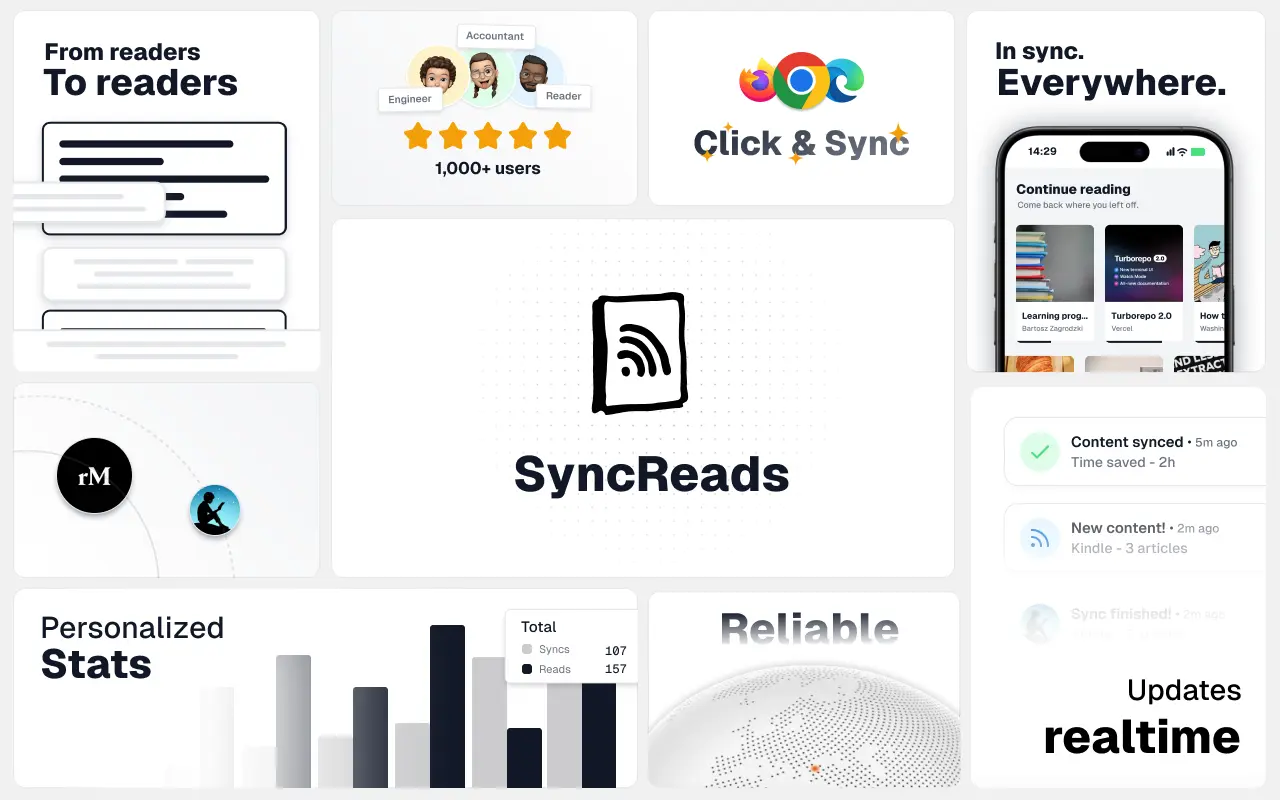
SyncReads
Sync your favorite content for distraction-free reading, save time and replace multiple apps. Anytime, anywhere 🔄
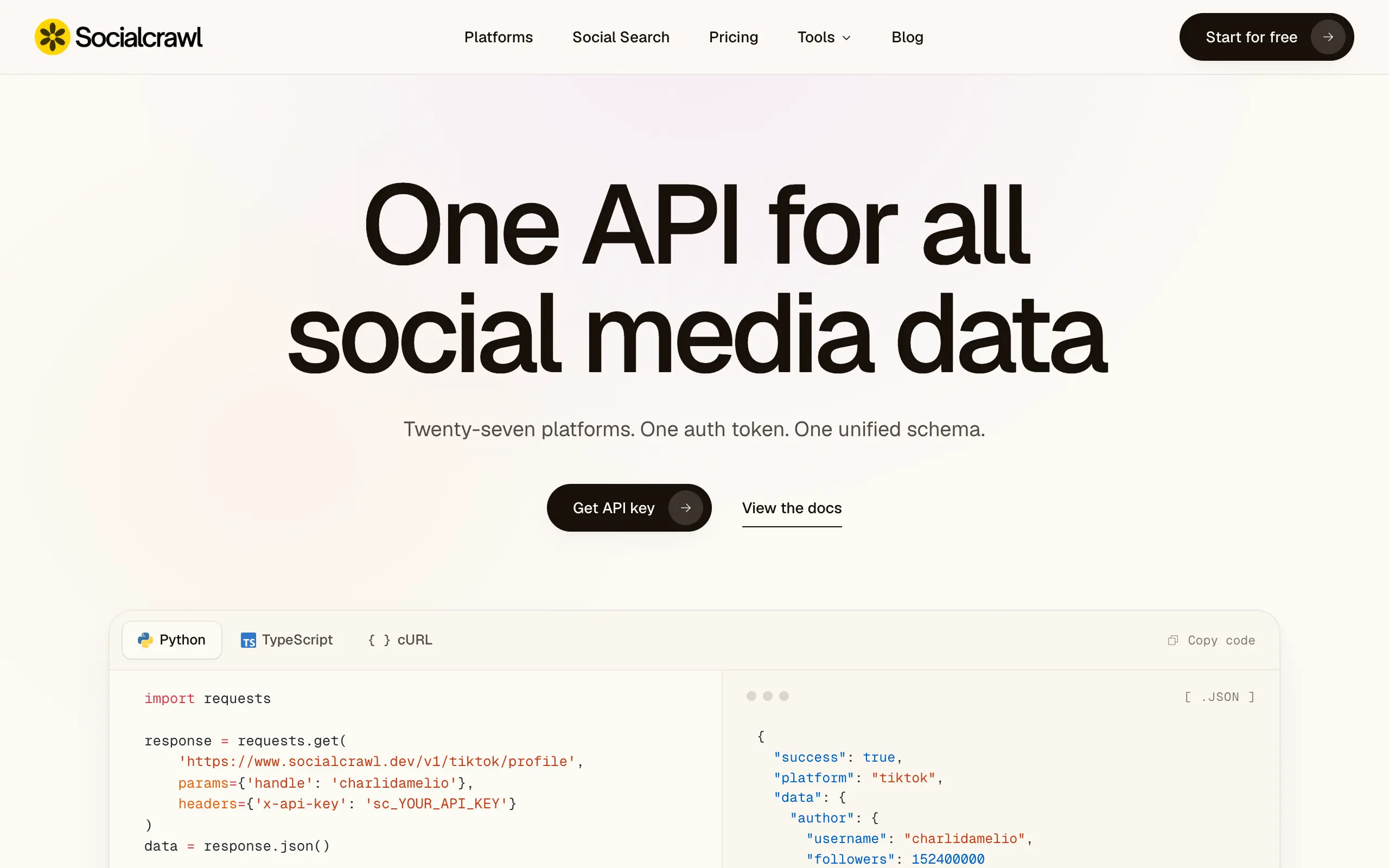
Socialcrawl
Get clean, structured data from 21 platforms like TikTok, Instagram, and YouTube with a single request 📊
Statiko
Monitor any Telegram channel in real time - track posts, edits, deletions, and growth with AI recaps 📡
Shibui
AI website builder - describe your business, pick a niche template, edit by chatting, and publish instantly ✨
Pro Service
Find verified home service professionals, compare quotes, and pay securely through escrow - built for Brazilians across the US 🏠
RankGrow
Fix your SEO with AI agents - connect Search Console, get prioritized tasks, and grow organic traffic 📈
SyncReads
Sync your favorite content for distraction-free reading, save time and replace multiple apps. Anytime, anywhere 🔄
Socialcrawl
Get clean, structured data from 21 platforms like TikTok, Instagram, and YouTube with a single request 📊
Statiko
Monitor any Telegram channel in real time - track posts, edits, deletions, and growth with AI recaps 📡
Shibui
AI website builder - describe your business, pick a niche template, edit by chatting, and publish instantly ✨
Pro Service
Find verified home service professionals, compare quotes, and pay securely through escrow - built for Brazilians across the US 🏠
RankGrow
Fix your SEO with AI agents - connect Search Console, get prioritized tasks, and grow organic traffic 📈
SyncReads
Sync your favorite content for distraction-free reading, save time and replace multiple apps. Anytime, anywhere 🔄
Socialcrawl
Get clean, structured data from 21 platforms like TikTok, Instagram, and YouTube with a single request 📊
Statiko
Monitor any Telegram channel in real time - track posts, edits, deletions, and growth with AI recaps 📡
Shibui
AI website builder - describe your business, pick a niche template, edit by chatting, and publish instantly ✨
Pro Service
Find verified home service professionals, compare quotes, and pay securely through escrow - built for Brazilians across the US 🏠
RankGrow
Fix your SEO with AI agents - connect Search Console, get prioritized tasks, and grow organic traffic 📈
SyncReads
Sync your favorite content for distraction-free reading, save time and replace multiple apps. Anytime, anywhere 🔄
Socialcrawl
Get clean, structured data from 21 platforms like TikTok, Instagram, and YouTube with a single request 📊
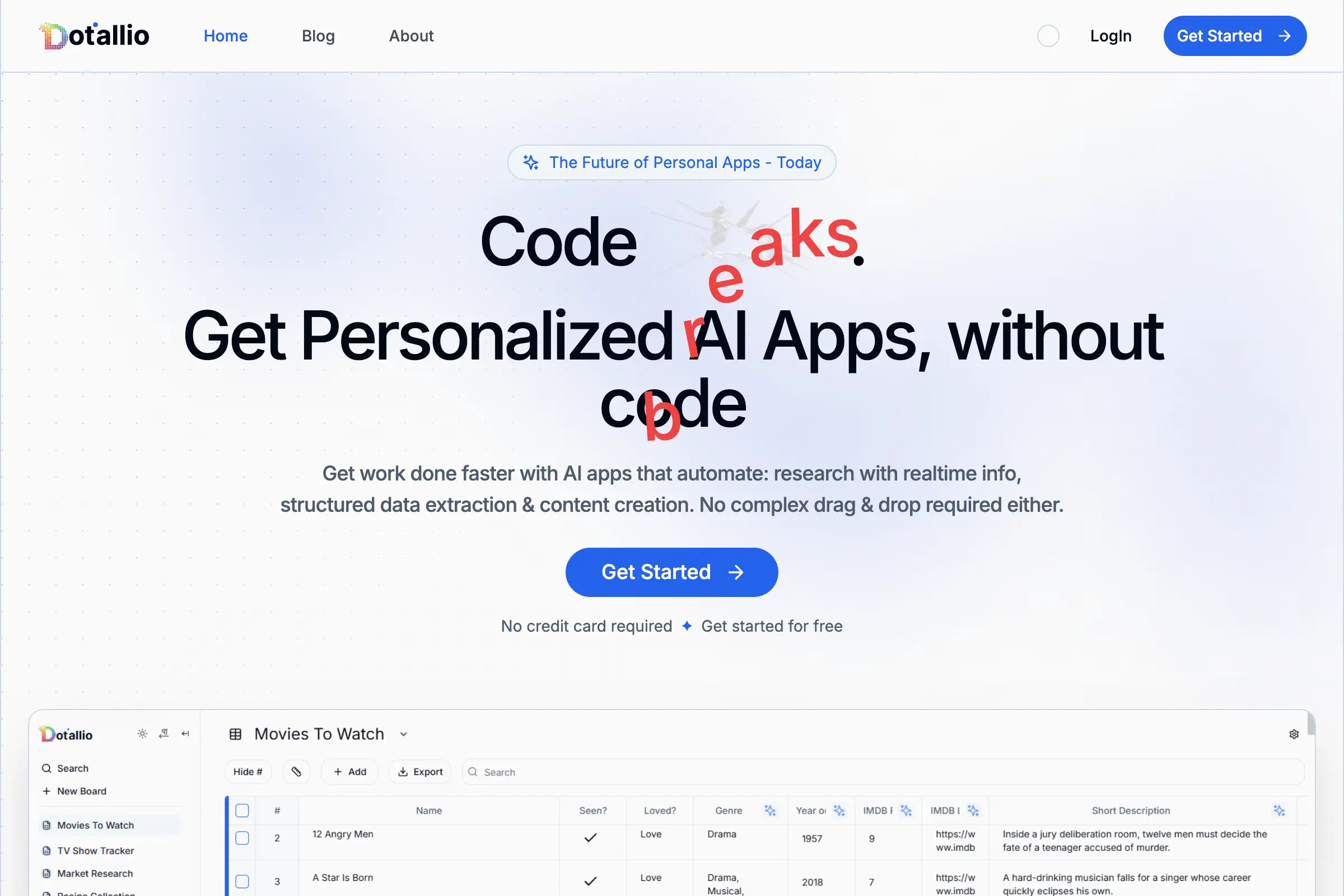
Dotallio
Personalized AI apps that automate research, data extraction, and content creation without code 🤖
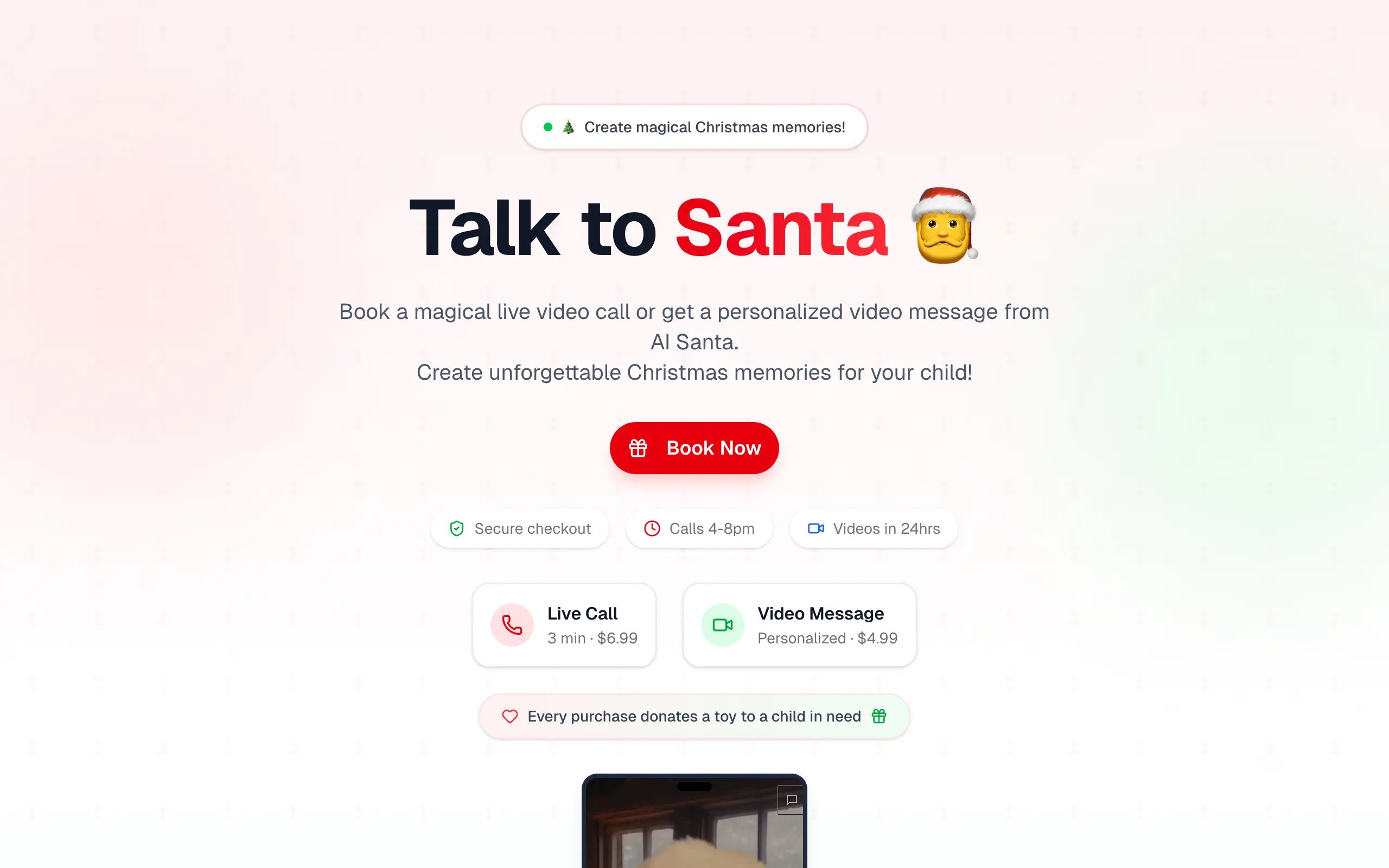
Talk to Santa
Enjoy a magical live video chat or receive a unique AI-generated video greeting from Santa Claus 🎅
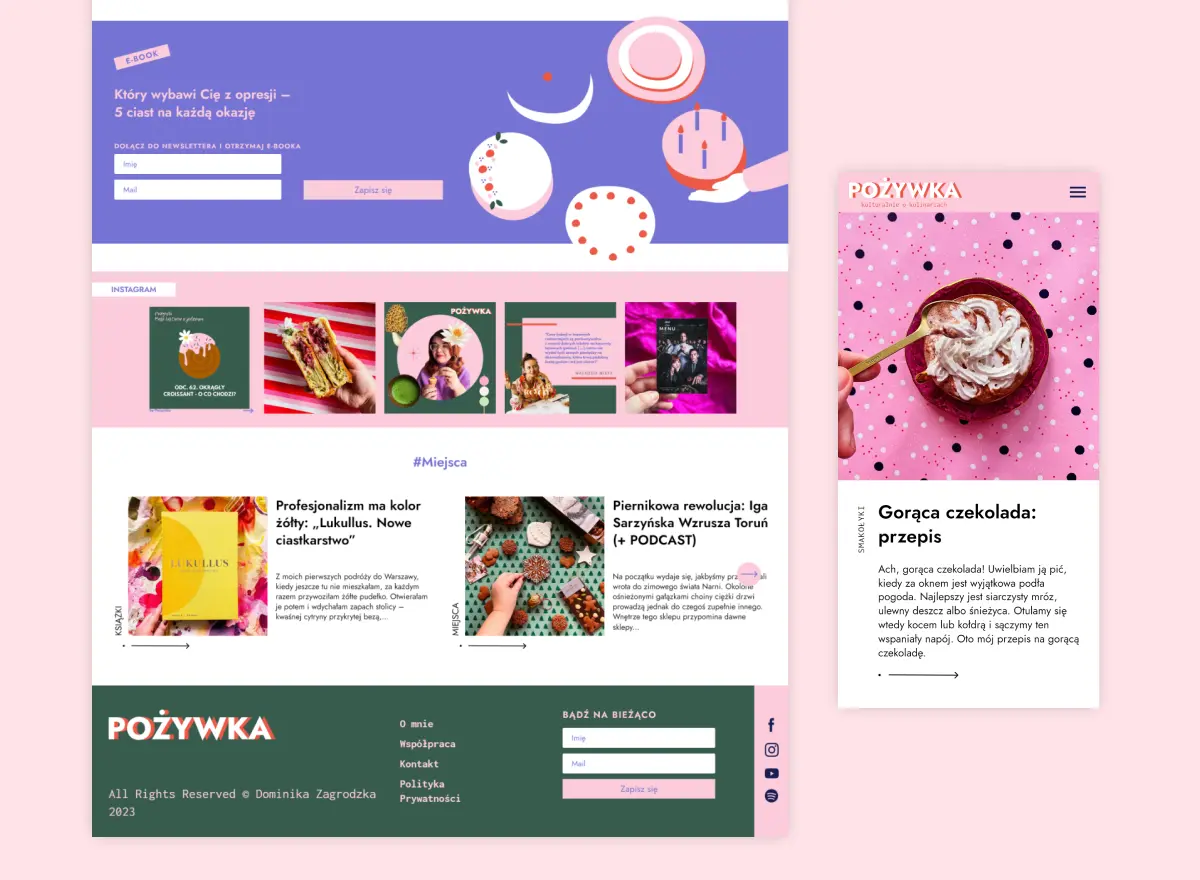
pozywka.pl
Scalable blog for food journalist, focused on performance and user experience 🌭
zagrodzki.me
Personal blog and portfolio of Bart Zagrodzki, where he shares his knowledge and work 💼
TurboStarter
Ship your startup everywhere. In minutes.
HTML to Markdown
Convert HTML to Markdown with ease, directly in your browser 📄
Dotallio
Personalized AI apps that automate research, data extraction, and content creation without code 🤖
Talk to Santa
Enjoy a magical live video chat or receive a unique AI-generated video greeting from Santa Claus 🎅
pozywka.pl
Scalable blog for food journalist, focused on performance and user experience 🌭
zagrodzki.me
Personal blog and portfolio of Bart Zagrodzki, where he shares his knowledge and work 💼
TurboStarter
Ship your startup everywhere. In minutes.
HTML to Markdown
Convert HTML to Markdown with ease, directly in your browser 📄
Dotallio
Personalized AI apps that automate research, data extraction, and content creation without code 🤖
Talk to Santa
Enjoy a magical live video chat or receive a unique AI-generated video greeting from Santa Claus 🎅
pozywka.pl
Scalable blog for food journalist, focused on performance and user experience 🌭
zagrodzki.me
Personal blog and portfolio of Bart Zagrodzki, where he shares his knowledge and work 💼
TurboStarter
Ship your startup everywhere. In minutes.
HTML to Markdown
Convert HTML to Markdown with ease, directly in your browser 📄
Dotallio
Personalized AI apps that automate research, data extraction, and content creation without code 🤖
Talk to Santa
Enjoy a magical live video chat or receive a unique AI-generated video greeting from Santa Claus 🎅
pozywka.pl
Scalable blog for food journalist, focused on performance and user experience 🌭
zagrodzki.me
Personal blog and portfolio of Bart Zagrodzki, where he shares his knowledge and work 💼
TurboStarter
Ship your startup everywhere. In minutes.
HTML to Markdown
Convert HTML to Markdown with ease, directly in your browser 📄
Omichat
Chat with 50+ AI models, including ChatGPT and Claude, in one place - switch models anytime without losing context 🤖
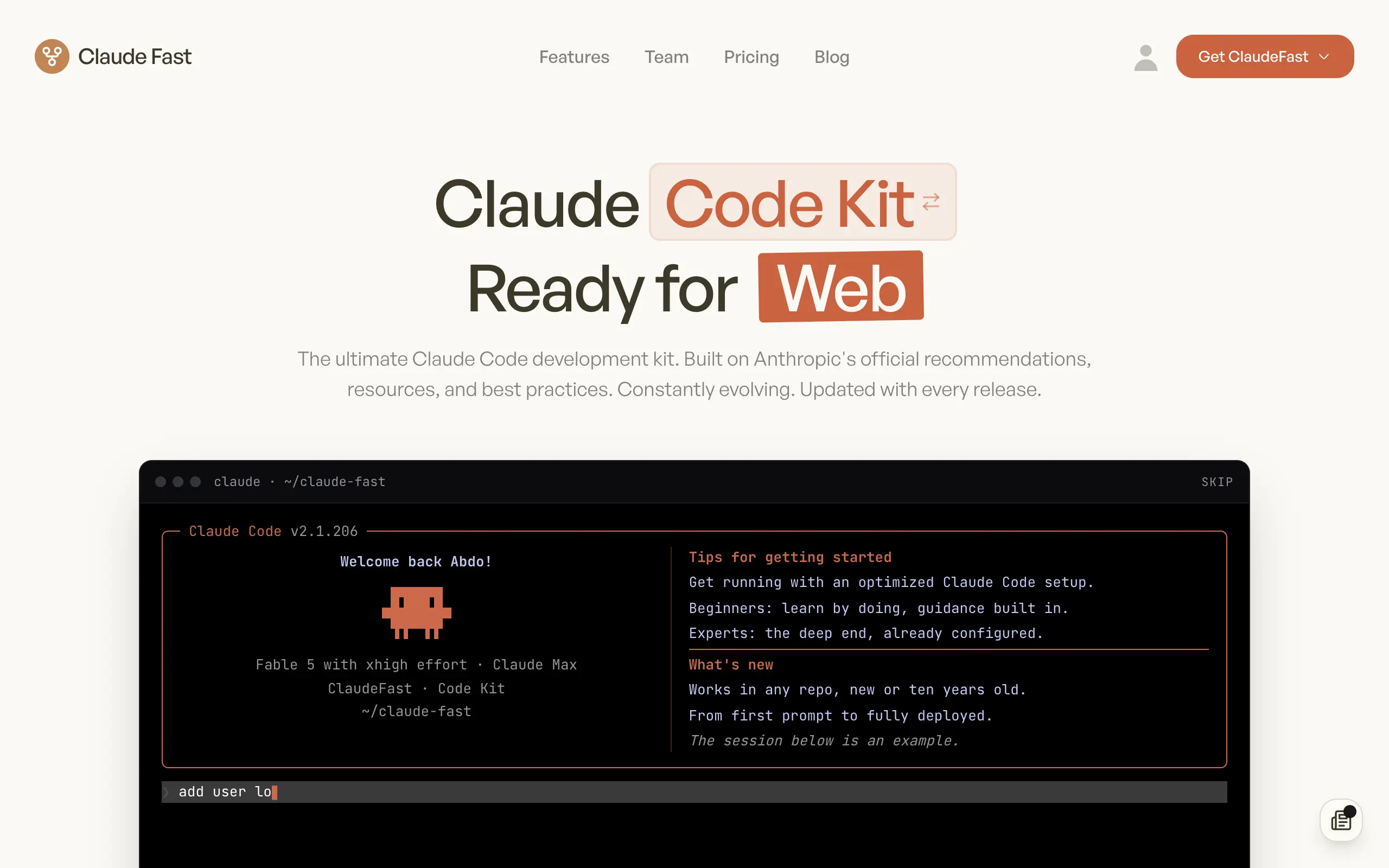
Claude Fast
Supercharge your Claude Code with 6x effective context window and specialized AI agents 🤖

EmojAI
AI-powered emoji picker with smart, context-aware suggestions 🤖
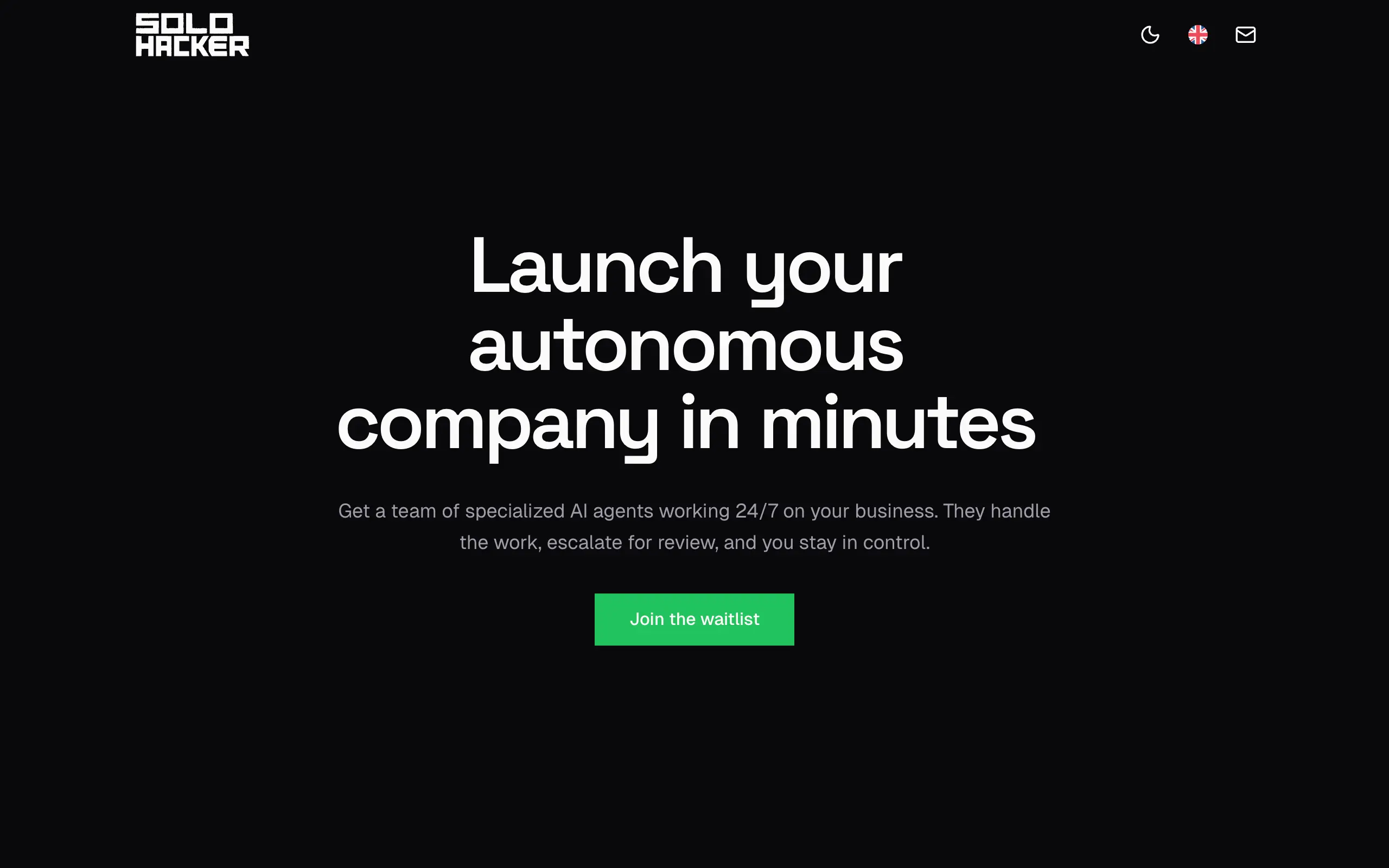
Solohacker
Autonomous company launcher - AI agents work 24/7, escalate what matters, and you stay in control 🤖

BeRawi: Storytelling Coach
Practice storytelling daily with instant feedback to sound clearer, more engaging, and confident 🎤
Omichat
Chat with 50+ AI models, including ChatGPT and Claude, in one place - switch models anytime without losing context 🤖
Claude Fast
Supercharge your Claude Code with 6x effective context window and specialized AI agents 🤖
EmojAI
AI-powered emoji picker with smart, context-aware suggestions 🤖
Solohacker
Autonomous company launcher - AI agents work 24/7, escalate what matters, and you stay in control 🤖
BeRawi: Storytelling Coach
Practice storytelling daily with instant feedback to sound clearer, more engaging, and confident 🎤
Omichat
Chat with 50+ AI models, including ChatGPT and Claude, in one place - switch models anytime without losing context 🤖
Claude Fast
Supercharge your Claude Code with 6x effective context window and specialized AI agents 🤖
EmojAI
AI-powered emoji picker with smart, context-aware suggestions 🤖
Solohacker
Autonomous company launcher - AI agents work 24/7, escalate what matters, and you stay in control 🤖
BeRawi: Storytelling Coach
Practice storytelling daily with instant feedback to sound clearer, more engaging, and confident 🎤
Omichat
Chat with 50+ AI models, including ChatGPT and Claude, in one place - switch models anytime without losing context 🤖
Claude Fast
Supercharge your Claude Code with 6x effective context window and specialized AI agents 🤖
EmojAI
AI-powered emoji picker with smart, context-aware suggestions 🤖
Solohacker
Autonomous company launcher - AI agents work 24/7, escalate what matters, and you stay in control 🤖
BeRawi: Storytelling Coach
Practice storytelling daily with instant feedback to sound clearer, more engaging, and confident 🎤

Connect with like-minded people
Join our community to get feedback, support, and grow together with 1,000+ builders on board, let's ship it!
Join usShip your startup everywhere. In minutes.
Don't burn tokens on setup and start building features on day one.