OfferLens
AI home-offer coach that analyzes listings, local comps, and buyer finances to suggest a competitive bid and negotiation plan.
Why an AI home-offer coach solves a high-stakes buyer problem
Buying a home is one of the few consumer decisions where a single offer can affect years of household finances. Buyers must rapidly interpret asking prices, comparable sales, local market conditions, mortgage constraints, contingencies, and seller incentives. Most do so with incomplete information and intense emotional pressure.
OfferLens is an AI home-offer coach designed to make that process more structured. It analyzes a property listing, nearby comparable transactions, buyer financial inputs, and market signals to recommend a competitive offer range and a practical negotiation plan.
The core value proposition is not simply “use AI to name a price.” A responsible AI home-offer coach helps buyers understand the trade-offs behind an offer:
- The likelihood that a lower offer may lose in a competitive market
- The financial impact of bidding above a buyer’s initial comfort zone
- The value of contingencies, closing flexibility, and seller-friendly terms
- The evidence supporting a proposed purchase price
- The questions buyers should take to their real estate agent or attorney
This distinction matters. Homebuyers do not need another opaque automated valuation estimate. They need a decision-support product that explains what to offer, why that number is reasonable, what risks to consider, and how to negotiate without abandoning financial discipline.
Positioning opportunity
OfferLens should be positioned as a buyer decision-support and negotiation-planning platform, not as a replacement for a licensed real estate professional, appraiser, lender, or attorney.
The product addresses search intent from users asking questions such as:
- “How much should I offer on a house?”
- “How do I make a competitive offer?”
- “How much above asking price should I bid?”
- “Can AI help me analyze a home listing?”
- “How do I compare homes before making an offer?”
- “What contingencies should I include in my offer?”
By combining pricing guidance with buyer-specific affordability analysis, OfferLens can occupy a more useful category than a generic real estate AI tool or home value calculator.
Target audience for an AI home-offer coach
OfferLens is a B2C SaaS product, but not every homebuyer has the same urgency, knowledge level, or willingness to pay. The strongest early product-market fit will come from buyers who face a meaningful information gap and have a near-term transaction timeline.
First-time buyers navigating an unfamiliar process
First-time buyers are likely the largest and most accessible audience. They may understand mortgage pre-approval at a high level, but they often struggle to translate that pre-approval amount into a sensible bid for a specific property.
Their common concerns include:
- Whether the listing price is fair
- Whether offering over asking is financially safe
- Which comparable sales are truly relevant
- How appraisal gaps work
- Whether waiving an inspection is ever wise
- How closing costs affect their actual cash requirement
- How to communicate confidently with their agent
For this segment, the product must avoid jargon-heavy outputs. A clear “recommended offer strategy” is more valuable than a spreadsheet full of unexplained valuation variables.
Relocating buyers with limited local knowledge
Relocating buyers may have strong finances but weak familiarity with neighborhood-level pricing behavior. A buyer moving from one metro area to another may not understand whether local sellers commonly expect escalation clauses, appraisal-gap coverage, rent-back agreements, or unusually fast closing timelines.
OfferLens can create value by translating local market behavior into an understandable negotiation brief. The product should explain how the relevant micro-market behaves, rather than relying only on broad city-level trends.
Repeat buyers seeking a disciplined second opinion
Experienced buyers often have an agent and a clearer sense of their priorities, yet they may still want an independent framework before increasing a bid by tens of thousands of dollars. This audience is especially valuable for a paid plan because it understands the financial cost of poor decision-making.
They may use OfferLens to validate assumptions, compare several homes, and discuss a data-backed strategy with their agent.
Buyers in competitive metropolitan markets
High-demand markets create the clearest pain point because buyers need to make decisions quickly. In these markets, a tool that turns listing data, recent comparable sales, and financing constraints into a clear offer plan can save hours of manual research.
However, OfferLens should not market itself as a tool that guarantees a winning offer. Winning is not always the right outcome if the winning price exceeds the buyer’s budget, comfort level, or long-term housing needs.
Primary early adopter
A first-time or relocating buyer who is pre-approved, actively touring homes, and wants a clearer way to decide what to offer.
High-value use case
A buyer considering multiple homes in a competitive market who needs consistent, property-specific analysis before each offer.
Future expansion
A co-branded agent workspace that helps agents deliver transparent buyer education while retaining professional judgment.
The market gap in home offer analysis
The real estate technology market already includes listing portals, mortgage calculators, automated valuation models, and agent-provided comparative market analyses. Yet buyers still face a fragmented experience.
A listing portal may show an estimate of value. A mortgage calculator may show a monthly payment. An agent may provide local insight. A lender may explain financing. None of these tools consistently combine the relevant inputs into a buyer-centered offer decision.
That gap is where an AI home-offer coach can stand out.
Existing tools answer only part of the question
Most existing consumer tools focus on one of the following:
- Property discovery
- General home-value estimates
- Mortgage affordability
- Market trends
- Agent matching
- Basic calculators
The buyer’s actual decision is more complex. They need to assess a specific property at a specific moment under their unique financial constraints.
A useful offer recommendation needs to consider:
- Recent closed comparable sales
- Active and pending competing listings
- Listing age and price-change history
- Property condition and renovation cues
- Local inventory and buyer demand
- Buyer cash to close
- Loan type and down payment
- Appraisal-risk tolerance
- Contingency preferences
- Desired closing timeline
- Personal walk-away price
The product opportunity is to turn these disconnected factors into a transparent recommendation, not to pretend that a model can predict seller behavior perfectly.
The emotional cost of unstructured decisions
Buyers frequently anchor on asking price, a number that may be strategic rather than purely indicative of market value. In a bidding situation, buyers can also become vulnerable to fear of missing out. That can lead to overbidding without a clear understanding of future payment obligations, likely appraisal outcomes, or resale implications.
OfferLens can introduce a repeatable framework. Instead of asking, “What is the highest number we can offer?” it can help buyers ask:
- What does the available market evidence support?
- What can we comfortably afford each month and at closing?
- Which non-price terms could strengthen our offer?
- What is our walk-away point?
- What would need to be true for a higher offer to be rational?
This approach improves trust and makes the product more defensible than a simplistic “bid this amount” experience.
A timely opportunity for explainable consumer AI
Consumers have become more comfortable using AI for research, comparison, and drafting. At the same time, they are increasingly skeptical of black-box recommendations in high-impact domains.
OfferLens should embrace explainable AI as a core product principle. Every recommendation should show the major inputs, evidence quality, assumptions, confidence level, and circumstances that could change the outcome.
For market and housing data claims, the content and product teams should cite authoritative sources such as local multiple listing services where available, public records, government housing agencies, and reputable industry research. When publishing specific market statistics, use a traceable reference format that includes publisher, report title, publication date, geography, and retrieval date.
How OfferLens should work for buyers
The best OfferLens workflow is simple on the surface but rigorous underneath. A buyer should be able to paste a listing URL or enter a property address, connect financial details, and receive an actionable offer analysis.
Start with the listing and property facts
The initial analysis should capture as much structured information as possible:
- Address and listing price
- Bedrooms, bathrooms, square footage, and lot size
- Year built and property type
- HOA details where applicable
- Days on market and price history
- Listing description and disclosed upgrades
- Photos or user-provided notes about condition
- Local school, transit, or neighborhood context when reliable data is available
AI can extract details from listing descriptions, but it must distinguish between verified structured facts and inference. For example, “newly renovated kitchen” is not equivalent to a confirmed full renovation with permits.
Build a transparent comparable-sales analysis
Comparable sales are the foundation of responsible offer guidance. OfferLens should rank comps based on characteristics such as:
- Geographic proximity
- Sale recency
- Property type similarity
- Square footage similarity
- Bed and bath count
- Lot size where relevant
- Age and condition
- Renovation level
- School district or neighborhood boundaries
- Unique features such as pools, views, parking, or accessory units
The product should never present every nearby home as equally comparable. A sale across a major boundary, a distressed transaction, or a home with a significantly different condition level may be useful context but should receive less weight.
A buyer-friendly output could display a valuation band rather than one false-precision number:
- Conservative value range based on closely matched closed sales
- Market-competitive range based on current demand and likely bid pressure
- Stretch range that may improve competitiveness but increases financial and appraisal risk
- Walk-away threshold based on buyer-defined financial and emotional limits
Incorporate buyer finances without acting as a lender
OfferLens should collect only the minimum financial inputs necessary to provide useful scenario planning. The product should let buyers enter or import:
- Purchase budget
- Down payment amount or percentage
- Estimated interest rate
- Loan type
- Maximum monthly payment comfort level
- Estimated closing cost budget
- Available cash reserves
- Existing debt obligations if the buyer chooses to include them
- Preferred contingency structure
The platform should clearly state that estimates are illustrative and that final loan qualification, rate, payment, and cash-to-close figures must be confirmed with a licensed lender.
A major differentiator is connecting offer advice to financial reality. A bid may be “competitive” but still be a poor fit if it leaves the buyer with inadequate reserves or creates a monthly payment that conflicts with their stated budget.
Generate a negotiation plan, not only a number
The negotiation plan should be the heart of the OfferLens experience. It can recommend several strategy options based on risk tolerance.
A balanced offer prioritizes fair market evidence, reasonable contingencies, and affordability. It is appropriate when the buyer wants to remain competitive without taking unnecessary appraisal or inspection risk.
A competitive offer may use a stronger price, cleaner terms, flexible closing timing, or a carefully limited escalation approach. The product should show exactly which trade-offs improve competitiveness.
A protective offer prioritizes due diligence, financing safeguards, and a firm walk-away threshold. It may be best for homes with uncertain condition, thin comparable data, or a buyer with tight cash reserves.
A strong negotiation plan can include:
- Suggested opening offer and maximum offer
- Rationale tied to weighted comparable sales
- Suggested earnest money range
- Recommended contingency posture
- Appraisal-gap considerations
- Seller-friendly non-price terms where appropriate
- Questions to ask the listing agent through the buyer’s agent
- A negotiation script for counteroffers
- A decision deadline and walk-away rule
Core features that make OfferLens valuable
An MVP should focus on the decision moments that cause buyers the most uncertainty. It does not need to replicate a full listing portal on day one.
Offer score with an explanation layer
A single score is easy to understand, but it should never be the only output. OfferLens can provide an offer competitiveness score alongside a detailed explanation of the factors driving it.
For example, a score could reflect relative price strength, financing certainty, contingencies, closing flexibility, and market momentum. Buyers should see which inputs are controllable and which are uncertain.
The language must be careful. “Estimated competitiveness” is more trustworthy than “chance of winning,” because seller preferences and undisclosed offers cannot be known with certainty.
Comparable sales explorer
The comparable-sales view should allow buyers to inspect why each property was included. Key capabilities include:
- Map and list views
- Distance and recency filters
- Similarity scoring
- Side-by-side property comparison
- Manual inclusion or exclusion with a recorded rationale
- Price-per-square-foot context
- Adjustable weights for condition and location factors
- Notes from the buyer or agent
This feature helps turn the product from an AI answer generator into a credible research workspace.
Affordability and downside scenarios
OfferLens should calculate scenarios that buyers can understand before making an offer:
- Estimated monthly principal and interest
- Property taxes and homeowner insurance assumptions
- HOA estimates where relevant
- Cash required at closing
- Estimated reserve balance after closing
- Payment changes under different interest-rate assumptions
- Appraisal-shortfall scenarios
- Renovation budget buffers
- Resale sensitivity under conservative market assumptions
The objective is not to alarm buyers. It is to make the cost of each decision visible before they become emotionally committed.
AI negotiation coach
The negotiation coach can transform the product from a calculator into an ongoing buyer companion. It can help users draft questions, interpret counteroffers, and prepare for conversations with their agent.
Useful prompts might include:
- “What should I ask my agent about this property?”
- “Explain this counteroffer in plain English.”
- “What is the risk if we waive the appraisal contingency?”
- “Help me compare two offer structures.”
- “Draft a concise note explaining our preferred closing date.”
The AI should be constrained by a retrieval-backed property record and should cite the information it used. It should also decline to provide legal, lending, or tax advice.
Shared decision workspace
Home purchases are often made by couples, families, or other co-buyers. OfferLens should support collaboration through shared property analyses, comments, checklists, and decision logs.
A decision log can be especially valuable. It gives buyers a record of why they chose a specific offer amount and terms, reducing hindsight anxiety after an accepted or rejected offer.
Avoid building nationwide listing search, direct offer submission, mortgage origination, and a complex agent marketplace in the first release. These features increase operational complexity and can delay validation of the core offer-analysis workflow.
Trust comes from clear source attribution, comparable-sales transparency, adjustable assumptions, confidence indicators, and explicit statements of what the model cannot know.
Yes. The ideal workflow complements an agent relationship by helping buyers arrive at conversations better prepared, with clear questions and documented priorities.
Recommended tech stack for an AI real estate SaaS
OfferLens requires a modern SaaS foundation, secure handling of sensitive user data, reliable geospatial queries, and an AI architecture that can explain its reasoning.
Frontend and application framework
A practical starting point is Next.js with React and TypeScript. This combination supports fast server-rendered experiences, secure server-side data access, API endpoints, and a polished interactive dashboard.
Tailwind CSS is a strong choice for building a consistent product interface quickly. A finance- and housing-oriented application benefits from highly readable tables, mobile-responsive scenario cards, and clear data visualizations.
For mapping, a provider with robust geocoding and map rendering is necessary. The key trade-off is cost versus flexibility. A simple map implementation is enough for an MVP, but location search, map tiles, geocoding, and routing costs can rise materially as usage grows.
Database and geospatial data model
Use PostgreSQL as the core relational database, ideally with the PostGIS extension for geographic queries. This is well suited to storing properties, comparable sales, user scenarios, neighborhood boundaries, and model outputs.
The data model should preserve snapshots. Listing prices, market conditions, and mortgage assumptions change frequently. Every offer recommendation should be reproducible from the data available when the analysis was created.
Essential entities include:
- Users and households
- Properties and listings
- Listing snapshots
- Comparable-sale records
- Buyer financial profiles
- Offer scenarios
- Assumptions and data-source metadata
- Negotiation plans
- Audit events and consent records
AI architecture and retrieval strategy
An LLM should not be asked to invent a property valuation from an unstructured prompt. OfferLens should calculate pricing inputs through deterministic services and use AI primarily for explanation, comparison, summarization, and guided questioning.
A reliable architecture follows this sequence:
This approach reduces hallucinations and enables quality assurance. A model can help explain why a recent, nearby sale was weighted more heavily than an older, less similar property, but it should not fabricate facts about either home.
Example offer scenario data structure
type OfferScenario = {
  propertyId: string;
  listingPrice: number;
  suggestedOfferLow: number;
  suggestedOfferTarget: number;
  buyerWalkAwayPrice: number;
  estimatedMonthlyPayment: number;
  estimatedCashToClose: number;
  appraisalGapExposure: number;
  confidence: "low" | "medium" | "high";
  assumptions: string[];
  comparableSaleIds: string[];
};
Build versus buy trade-offs
Property data is one of the most difficult parts of this business. Nationwide listing data is fragmented, subject to licensing restrictions, and often controlled by MLS organizations or commercial data vendors.
For an MVP, OfferLens can reduce risk by allowing users to submit listing URLs, enter property details manually, or upload listing documents. It can then combine public-record data where legally permitted with buyer-provided information.
Long term, licensed data partnerships may improve coverage and freshness. However, they can add contractual constraints, usage limits, and substantial cost. The product strategy should validate willingness to pay before committing to expensive broad-market data access.
For rapid implementation, TurboStarter can provide a SaaS-oriented foundation for authentication, billing, application structure, and production-ready workflows, allowing the team to focus on the proprietary offer-analysis experience.
Monetization strategy for OfferLens
Homebuyers have a clear, time-bound need. This makes traditional monthly SaaS pricing possible, but it also creates churn after a purchase closes. Monetization should match the episodic nature of the homebuying journey.
Consumer pricing options
A hybrid model is likely the strongest fit:
| Plan | Best for | Core access | Revenue model | Main risk |
|---|---|---|---|---|
| Free preview | Early researchers | One simplified property analysis | Lead generation | Low conversion if preview is too complete |
| Offer pack | Active buyers | Detailed analysis for a limited number of homes | One-time purchase | Revenue can be uneven |
| Buyer subscription | Buyers making repeated offers | Unlimited scenarios and negotiation coaching | Monthly subscription | Natural post-purchase churn |
A one-time offer pack aligns particularly well with user psychology. Buyers may gladly pay for a detailed report before submitting an offer, even if they do not want an ongoing subscription.
Professional and partnership revenue
After validating the consumer experience, OfferLens can expand into professionally supported distribution:
- Agent teams seeking a branded buyer-education tool
- Buyer’s agents who want consistent offer-analysis reports
- Mortgage professionals who want affordability scenario tools
- Relocation providers supporting employee moves
- Homebuyer education programs
- Financial wellness platforms
Partnerships must be designed carefully. If a lender, agent, or referral partner pays for distribution, OfferLens should disclose the relationship clearly and protect the integrity of recommendations. A buyer should never be led to believe that an offer strategy is independent if commercial incentives have influenced the experience.
Competitive advantage and unique selling proposition
OfferLens competes indirectly with listing portals, home-value estimators, spreadsheets, agent-provided analyses, and generic AI chat tools. Its advantage is the combination of property-specific valuation context, buyer-specific financial guardrails, and explainable negotiation guidance.
The OfferLens USP
OfferLens helps buyers turn a listing into a confident, evidence-backed offer strategy that fits their finances and risk tolerance.
This positioning is stronger than “AI real estate assistant” because it describes a specific high-value outcome. It is also more differentiated than “home value estimate” because it includes the decision mechanics buyers actually need before making an offer.
Product defensibility
A language model alone is not a moat. Durable differentiation comes from the system around it:
- A structured property and comp-ranking methodology
- Buyer financial scenario models
- Transparent offer-strength logic
- Localized negotiation pattern data over time
- User feedback loops from accepted, rejected, and countered offers
- Trustworthy data provenance and audit trails
- A polished workflow that buyers can share with agents and co-buyers
The product should build a proprietary dataset only with appropriate consent and privacy controls. Over time, anonymized outcome signals could improve market-specific guidance, but the platform must avoid making unsupported predictive claims.
Risks, compliance concerns, and mitigation
Real estate, finance, and consumer AI each create meaningful trust and compliance obligations. These are product design concerns, not legal footnotes to add later.
Risk of inaccurate valuations or misleading advice
Property valuation is inherently uncertain, especially for unusual homes, rural areas, rapidly changing markets, and listings with limited comparable sales.
Mitigation should include:
- Show ranges rather than false-precision prices
- Display a confidence level and explain it
- Identify missing or stale data
- Encourage review with a licensed professional
- Avoid guarantees about winning, appraisal outcomes, or future appreciation
- Make user assumptions easy to edit
Fair housing and discriminatory outcomes
The product must not recommend strategies based on protected characteristics or use language that could enable discriminatory behavior. This includes avoiding demographic profiling and carefully reviewing neighborhood-related features.
The team should establish a formal fairness review process, document feature sources, test outputs across geographic and demographic contexts, and obtain specialist legal guidance before expanding into sensitive recommendations.
Privacy and financial data security
Buyers may enter income, savings, debt, loan details, and household preferences. OfferLens should minimize data collection, encrypt sensitive data in transit and at rest, implement role-based access controls, and provide clear deletion controls.
Avoid collecting highly sensitive information unless it is necessary. A buyer does not need to upload full bank statements or tax returns for an MVP offer coach.
Data licensing and listing-data restrictions
Listing data terms may restrict scraping, display, storage, derivative analysis, and commercial use. This is a serious operational risk.
The mitigation is straightforward in principle but demanding in practice:
- Use properly licensed data sources
- Maintain data-source metadata
- Respect display and attribution requirements
- Do not scrape sources that prohibit it
- Build an initial workflow that can operate with user-provided listing details
- Obtain legal review for each data-provider agreement
Overreliance on AI
Buyers may treat a polished recommendation as certainty. Product language, interface design, and onboarding must actively resist this tendency.
Trust requirement
OfferLens should clearly state that it provides educational decision support. It is not an appraisal, legal opinion, lending decision, tax recommendation, or guarantee that an offer will be accepted.
Go-to-market strategy for an AI offer analysis platform
The strongest early acquisition strategy is educational SEO combined with high-intent property analysis tools.
Build content around immediate buyer questions
OfferLens can attract buyers through detailed guides and interactive resources targeting high-intent searches:
- How to make an offer on a house
- How much over asking price to offer
- How to analyze comparable sales
- What is an appraisal gap
- Should I waive an inspection contingency
- How to respond to a seller counteroffer
- How much cash do I need to close on a house
- Offer strategy by market competitiveness
Each article should lead naturally to a property analysis workflow. The content should be written and reviewed by qualified real estate, lending, or legal professionals where appropriate, with clear author information and update dates.
Use a free analysis as the activation event
A free preview should give users real value while reserving the most actionable output for a paid plan. For example, the free experience might show listing facts, a limited comp overview, and general questions to consider. A paid analysis unlocks detailed offer ranges, downside scenarios, negotiation scripts, and multiple property comparisons.
Partner with professionals without losing buyer trust
Agents and lenders can become powerful distribution channels, but the consumer experience must remain transparent. A partner program should emphasize education and workflow support rather than referral pressure.
The best initial partners are likely buyer-focused agents who already value data-driven communication. They can provide qualitative feedback about local offer practices and identify where the analysis is genuinely useful or misleading.
Actionable implementation roadmap
A disciplined rollout reduces the risk of investing heavily in data integrations and AI features before proving that buyers will pay for offer guidance.
Phase one: validate the buyer problem
Interview active buyers, buyer’s agents, and recent purchasers. Focus on specific decisions they struggled with rather than abstract opinions about AI.
Test these questions:
- Which part of making an offer felt most confusing?
- What information did you wish you had before deciding?
- How did you determine your maximum offer?
- Did you trust online home-value estimates?
- Would you pay for a structured offer analysis?
- Would you share the analysis with your agent?
Create a clickable prototype showing a listing summary, comparable-sales rationale, affordability scenarios, and three offer strategies.
Phase two: launch a narrow MVP
Start with one or a few markets where data quality and buyer demand are manageable. Let users enter an address, listing price, basic financing assumptions, and comparable properties if automated data is limited.
The MVP should deliver:
- A transparent valuation range
- A buyer affordability summary
- Three risk-based offer strategies
- A downloadable or shareable negotiation brief
- An AI question-and-answer experience grounded in the user’s property record
Phase three: measure decision value
Track metrics that indicate genuine utility, not only signups:
- Percentage of users completing an offer analysis
- Time from first analysis to paid conversion
- Number of properties compared per household
- Share rate with agents or co-buyers
- User-reported confidence before and after analysis
- Recommendation edits by users or agents
- Refund rate and trust-related support tickets
- Conversion by market and buyer segment
A particularly useful qualitative metric is whether users say the product helped them make a better decision, even if they chose not to offer. That outcome supports the product’s mission of informed, financially responsible homebuying.
Phase four: expand data depth and local intelligence
Once the core workflow converts, invest in licensed data partnerships, better comp-selection models, market-specific negotiation insights, and agent collaboration features. Expand only when the team can preserve transparency and accuracy across new geographies.
Final perspective
OfferLens has a compelling opportunity because it addresses a high-anxiety, high-value decision that current consumer real estate tools only partially solve. The winning product will not be the one that claims to know the exact perfect bid. It will be the one that helps buyers understand the evidence, quantify trade-offs, protect their financial boundaries, and negotiate with greater confidence.
An effective AI home-offer coach should make the homebuying process feel less like a guess under pressure and more like a well-informed decision. By combining transparent comparable-sales analysis, buyer-specific affordability planning, and practical negotiation support, OfferLens can become a trusted layer between browsing a home and committing to an offer.
More 👥 B2C Application SaaS ideas
Discover more innovative b2c application SaaS ideas that are trending in 2026. Each idea is AI-generated with market validation and growth potential to help you find your next profitable venture faster than competitors.
Your competitors are building with TurboStarter
Below are some of the SaaS ideas that have been generated and built with our starter kit.

Statiko
Monitor any Telegram channel in real time - track posts, edits, deletions, and growth with AI recaps 📡

Shibui
AI website builder - describe your business, pick a niche template, edit by chatting, and publish instantly ✨

Pro Service
Find verified home service professionals, compare quotes, and pay securely through escrow - built for Brazilians across the US 🏠
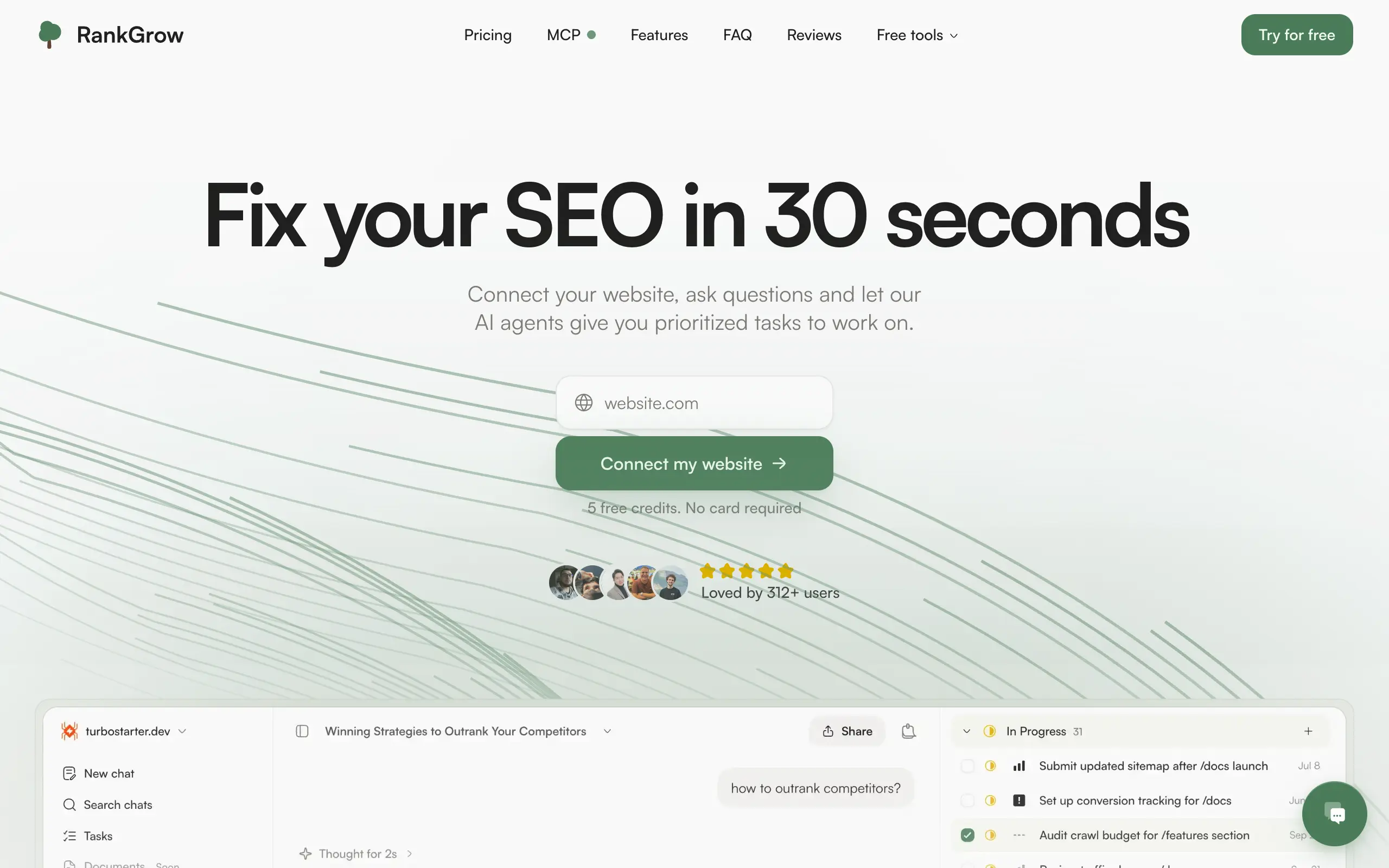
RankGrow
Fix your SEO with AI agents - connect Search Console, get prioritized tasks, and grow organic traffic 📈
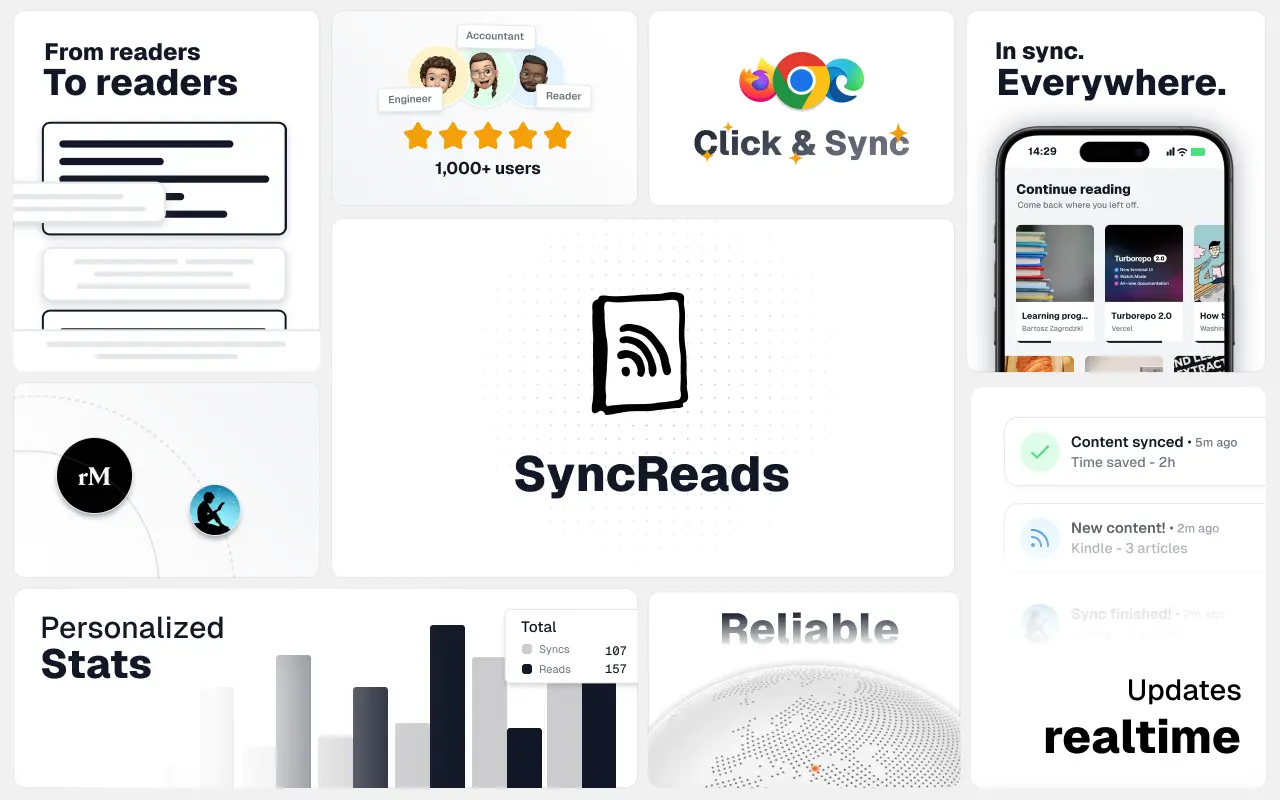
SyncReads
Sync your favorite content for distraction-free reading, save time and replace multiple apps. Anytime, anywhere 🔄
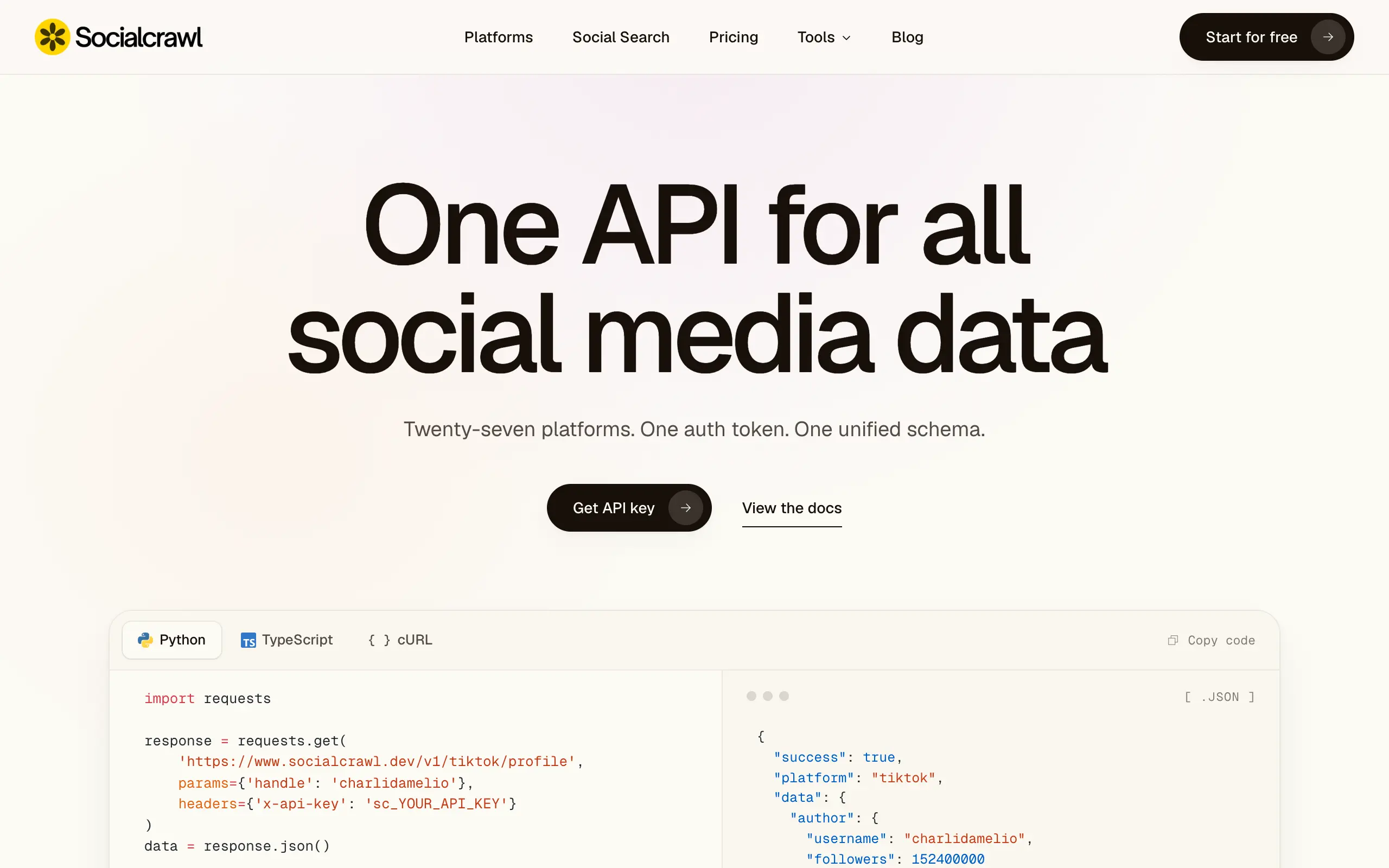
Socialcrawl
Get clean, structured data from 21 platforms like TikTok, Instagram, and YouTube with a single request 📊
Statiko
Monitor any Telegram channel in real time - track posts, edits, deletions, and growth with AI recaps 📡
Shibui
AI website builder - describe your business, pick a niche template, edit by chatting, and publish instantly ✨
Pro Service
Find verified home service professionals, compare quotes, and pay securely through escrow - built for Brazilians across the US 🏠
RankGrow
Fix your SEO with AI agents - connect Search Console, get prioritized tasks, and grow organic traffic 📈
SyncReads
Sync your favorite content for distraction-free reading, save time and replace multiple apps. Anytime, anywhere 🔄
Socialcrawl
Get clean, structured data from 21 platforms like TikTok, Instagram, and YouTube with a single request 📊
Statiko
Monitor any Telegram channel in real time - track posts, edits, deletions, and growth with AI recaps 📡
Shibui
AI website builder - describe your business, pick a niche template, edit by chatting, and publish instantly ✨
Pro Service
Find verified home service professionals, compare quotes, and pay securely through escrow - built for Brazilians across the US 🏠
RankGrow
Fix your SEO with AI agents - connect Search Console, get prioritized tasks, and grow organic traffic 📈
SyncReads
Sync your favorite content for distraction-free reading, save time and replace multiple apps. Anytime, anywhere 🔄
Socialcrawl
Get clean, structured data from 21 platforms like TikTok, Instagram, and YouTube with a single request 📊
Statiko
Monitor any Telegram channel in real time - track posts, edits, deletions, and growth with AI recaps 📡
Shibui
AI website builder - describe your business, pick a niche template, edit by chatting, and publish instantly ✨
Pro Service
Find verified home service professionals, compare quotes, and pay securely through escrow - built for Brazilians across the US 🏠
RankGrow
Fix your SEO with AI agents - connect Search Console, get prioritized tasks, and grow organic traffic 📈
SyncReads
Sync your favorite content for distraction-free reading, save time and replace multiple apps. Anytime, anywhere 🔄
Socialcrawl
Get clean, structured data from 21 platforms like TikTok, Instagram, and YouTube with a single request 📊
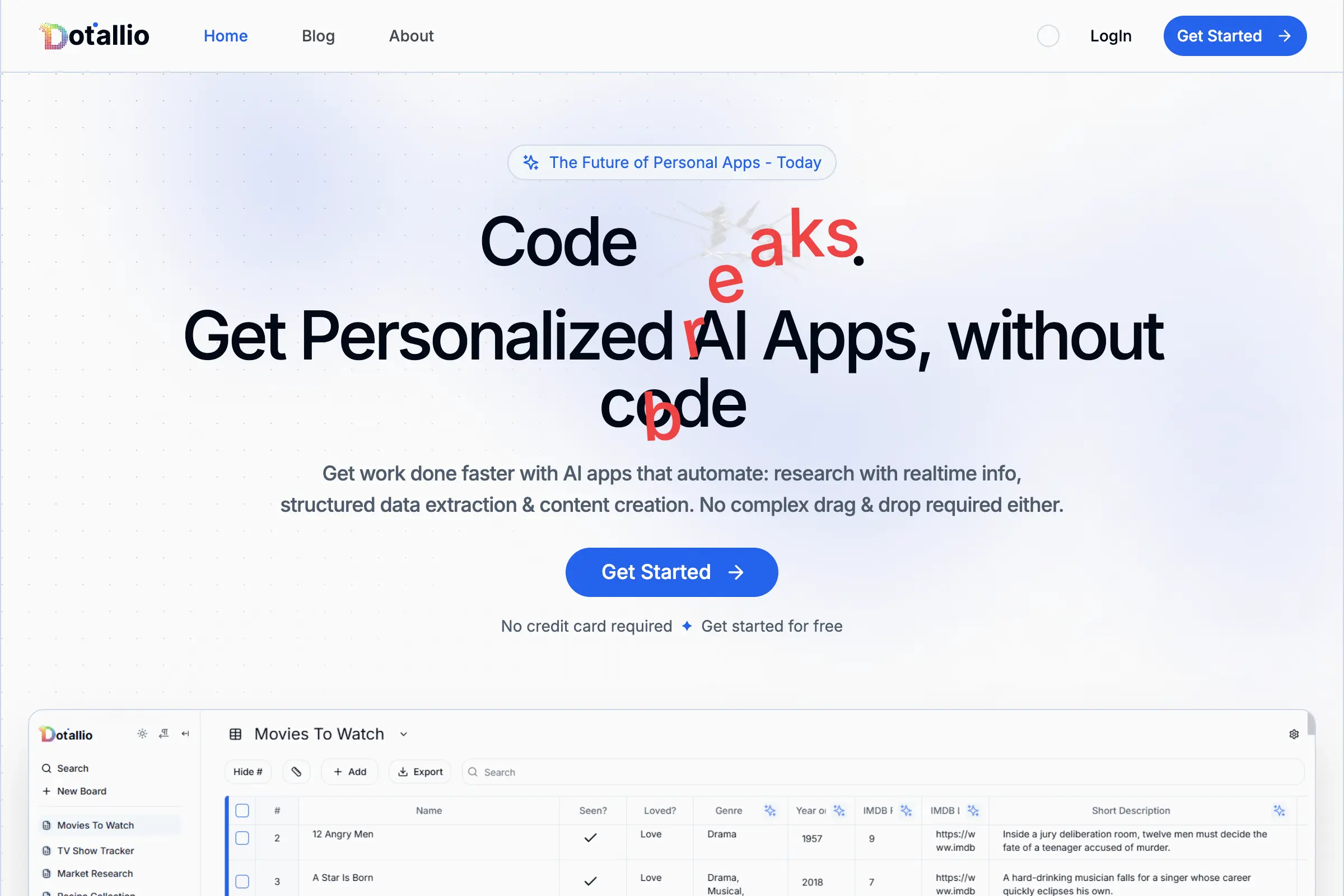
Dotallio
Personalized AI apps that automate research, data extraction, and content creation without code 🤖

Talk to Santa
Enjoy a magical live video chat or receive a unique AI-generated video greeting from Santa Claus 🎅

pozywka.pl
Scalable blog for food journalist, focused on performance and user experience 🌭
zagrodzki.me
Personal blog and portfolio of Bart Zagrodzki, where he shares his knowledge and work 💼
TurboStarter
Ship your startup everywhere. In minutes.
HTML to Markdown
Convert HTML to Markdown with ease, directly in your browser 📄
Dotallio
Personalized AI apps that automate research, data extraction, and content creation without code 🤖
Talk to Santa
Enjoy a magical live video chat or receive a unique AI-generated video greeting from Santa Claus 🎅
pozywka.pl
Scalable blog for food journalist, focused on performance and user experience 🌭
zagrodzki.me
Personal blog and portfolio of Bart Zagrodzki, where he shares his knowledge and work 💼
TurboStarter
Ship your startup everywhere. In minutes.
HTML to Markdown
Convert HTML to Markdown with ease, directly in your browser 📄
Dotallio
Personalized AI apps that automate research, data extraction, and content creation without code 🤖
Talk to Santa
Enjoy a magical live video chat or receive a unique AI-generated video greeting from Santa Claus 🎅
pozywka.pl
Scalable blog for food journalist, focused on performance and user experience 🌭
zagrodzki.me
Personal blog and portfolio of Bart Zagrodzki, where he shares his knowledge and work 💼
TurboStarter
Ship your startup everywhere. In minutes.
HTML to Markdown
Convert HTML to Markdown with ease, directly in your browser 📄
Dotallio
Personalized AI apps that automate research, data extraction, and content creation without code 🤖
Talk to Santa
Enjoy a magical live video chat or receive a unique AI-generated video greeting from Santa Claus 🎅
pozywka.pl
Scalable blog for food journalist, focused on performance and user experience 🌭
zagrodzki.me
Personal blog and portfolio of Bart Zagrodzki, where he shares his knowledge and work 💼
TurboStarter
Ship your startup everywhere. In minutes.
HTML to Markdown
Convert HTML to Markdown with ease, directly in your browser 📄
Omichat
Chat with 50+ AI models, including ChatGPT and Claude, in one place - switch models anytime without losing context 🤖
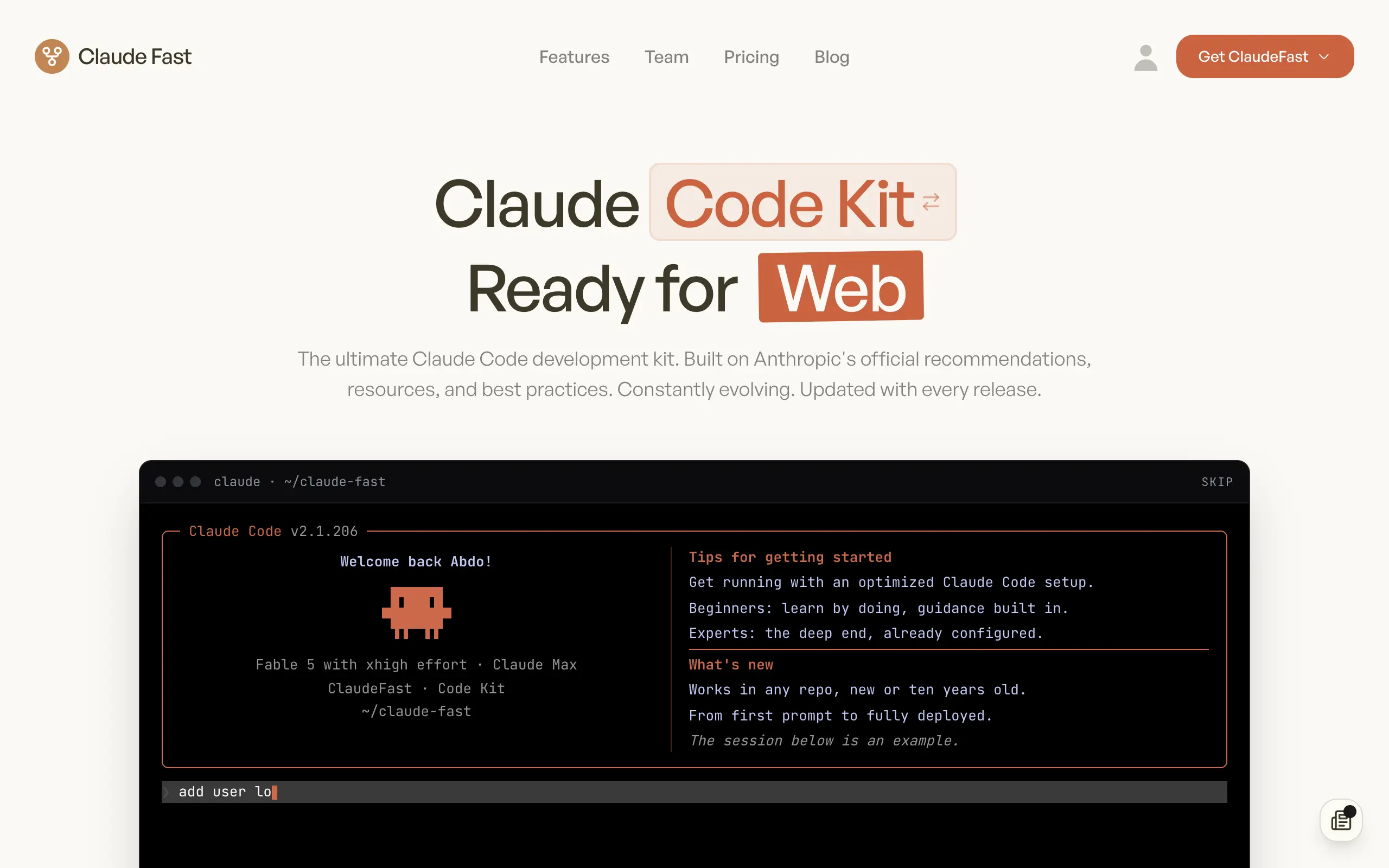
Claude Fast
Supercharge your Claude Code with 6x effective context window and specialized AI agents 🤖

EmojAI
AI-powered emoji picker with smart, context-aware suggestions 🤖

Solohacker
Autonomous company launcher - AI agents work 24/7, escalate what matters, and you stay in control 🤖

BeRawi: Storytelling Coach
Practice storytelling daily with instant feedback to sound clearer, more engaging, and confident 🎤
Omichat
Chat with 50+ AI models, including ChatGPT and Claude, in one place - switch models anytime without losing context 🤖
Claude Fast
Supercharge your Claude Code with 6x effective context window and specialized AI agents 🤖
EmojAI
AI-powered emoji picker with smart, context-aware suggestions 🤖
Solohacker
Autonomous company launcher - AI agents work 24/7, escalate what matters, and you stay in control 🤖
BeRawi: Storytelling Coach
Practice storytelling daily with instant feedback to sound clearer, more engaging, and confident 🎤
Omichat
Chat with 50+ AI models, including ChatGPT and Claude, in one place - switch models anytime without losing context 🤖
Claude Fast
Supercharge your Claude Code with 6x effective context window and specialized AI agents 🤖
EmojAI
AI-powered emoji picker with smart, context-aware suggestions 🤖
Solohacker
Autonomous company launcher - AI agents work 24/7, escalate what matters, and you stay in control 🤖
BeRawi: Storytelling Coach
Practice storytelling daily with instant feedback to sound clearer, more engaging, and confident 🎤
Omichat
Chat with 50+ AI models, including ChatGPT and Claude, in one place - switch models anytime without losing context 🤖
Claude Fast
Supercharge your Claude Code with 6x effective context window and specialized AI agents 🤖
EmojAI
AI-powered emoji picker with smart, context-aware suggestions 🤖
Solohacker
Autonomous company launcher - AI agents work 24/7, escalate what matters, and you stay in control 🤖
BeRawi: Storytelling Coach
Practice storytelling daily with instant feedback to sound clearer, more engaging, and confident 🎤

Connect with like-minded people
Join our community to get feedback, support, and grow together with 1,000+ builders on board, let's ship it!
Join usShip your startup everywhere. In minutes.
Don't burn tokens on setup and start building features on day one.