Sardor
A family money planner for households receiving remittances, helping users split incoming funds into bills, savings goals, and shared spending plans.
Families that receive remittances often have a financial challenge that traditional budgeting apps do not address well. Money may arrive irregularly, be sent by more than one relative, be received in different currencies, and need to cover urgent household needs before anything else. A generic expense tracker can record what happened, but it rarely helps a family agree on what should happen next.
Sardor can fill this gap as a family remittance money planner built for households that rely on money sent from relatives abroad. Rather than treating an incoming transfer as a single account balance, Sardor helps families divide it into essential bills, savings goals, shared household spending, debt repayments, and flexible personal funds.
The strongest opportunity is not simply to build another personal finance app. It is to create a trusted financial coordination tool for remittance-receiving households that need clarity, shared visibility, and practical planning around every incoming payment.
Core positioning
Sardor should position itself as a family planning companion for remittance income, not as a bank, investment advisor, or generic expense tracker. The product promise is simple: every transfer gets a household plan before it disappears into day-to-day spending.
Why a family remittance money planner matters
Remittances play a central role in the economic lives of millions of families. In many households, funds sent by relatives are used for rent, food, healthcare, education, utilities, housing repairs, and emergency needs. Yet the income is often unpredictable.
A household may receive one large monthly transfer, several smaller payments throughout the month, or funds that vary based on seasonal work, exchange rates, and the sender’s employment situation. This creates a planning problem that is fundamentally different from managing a fixed salary.
A family remittance money planner should answer questions such as:
- How much of this transfer is already committed to bills?
- Can the household safely spend on groceries this week?
- Is there enough money reserved for school fees next month?
- Which savings goal should receive the remaining amount?
- Has a relative sent money specifically for a medical expense or home repair?
- Can family members see the same plan without exposing sensitive banking information?
- What happens if the next transfer arrives later than expected?
The traditional budgeting category has products for individual expense categorization, envelope budgeting, and savings tracking. However, there is a meaningful gap for shared remittance budgeting. Families need a lightweight, culturally adaptable workflow that recognizes collective decision-making and irregular income.
Sardor’s unique value lies in converting uncertain incoming funds into a clear, agreed household allocation plan.
Target audience for Sardor
The ideal Sardor user is not defined only by income level or geography. The most important shared characteristic is that a household depends on money sent from outside the home, often by relatives working in another city or country.
Primary audience: remittance-receiving households
The primary users are household financial organizers. In many families, this may be a parent, spouse, adult child, or another trusted person responsible for managing household expenses.
Their common needs include:
- Planning around irregular incoming transfers
- Coordinating spending across several family members
- Protecting money meant for essential bills
- Building savings despite inconsistent cash flow
- Communicating financial priorities with relatives abroad
- Avoiding conflict caused by unclear expectations about money
These users may have limited experience with formal budgeting apps. Therefore, Sardor must be designed for immediate comprehension, with simple language, familiar categories, and clear visual feedback.
Secondary audience: remittance senders abroad
Senders are an equally important audience, even if they are not the first paying users. A migrant worker, overseas student, or family member living in another city may want reassurance that their transfer is being used according to shared priorities.
For senders, Sardor can provide value through:
- Shared plans for each transfer
- Optional visibility into goal progress
- Confirmation that critical bills are funded
- A better way to discuss future needs before sending money
- Less need for repeated messages asking where money went
The product should be careful not to make senders feel like financial supervisors. The best experience supports transparency by mutual consent, not surveillance.
Tertiary audience: community and financial partners
Over time, Sardor may appeal to organizations that serve remittance-receiving communities:
- Credit unions and community banks
- Mobile wallets and digital payment providers
- Money transfer operators
- Financial literacy programs
- Nonprofits supporting migrant families
- Employers with internationally distributed workforces
These organizations may become distribution partners, but the first product should remain focused on earning household trust.
Household organizer
Needs a simple way to reserve incoming transfer money for essentials, goals, and daily spending.
Family sender
Wants shared clarity around household priorities without controlling every transaction.
Financial partner
Can offer Sardor as a practical financial wellness layer for remittance customers.
The market gap in remittance budgeting
The remittance economy is large, but the software experience around it remains fragmented. Transfer providers focus primarily on sending and receiving money. Banks focus on accounts and transactions. Personal finance apps generally assume regular income, one primary account holder, and individual spending behavior.
That leaves an underserved workflow between receiving money and spending it.
Existing solutions solve only part of the problem
A family receiving money may currently use several disconnected tools:
- Messaging apps to discuss upcoming needs
- Paper notebooks to track bills
- Spreadsheets for savings goals
- Separate bank or mobile wallet apps to check balances
- Cash envelopes to separate money physically
- Informal memory to decide what remains available
Each method has strengths, but together they create friction. The household has no reliable shared source of truth.
A remittance planning app such as Sardor can become that source of truth by helping people decide where each incoming transfer belongs before money is spent.
The key gap is allocation, not transaction categorization
Many finance apps are retrospective. They help users see past spending after connecting a bank account or manually recording transactions.
Sardor should be proactive. Its primary workflow should begin with the question:
“A transfer has arrived. What does this money need to do for the family?”
That distinction is strategically important. Users do not need perfect transaction data to benefit from allocation planning. They can manually enter an incoming transfer, create a plan, and immediately understand which funds are reserved.
This approach also reduces early dependencies on bank integrations, which may be difficult across different local markets, financial institutions, and remittance channels.
Why shared planning is the defensible opportunity
The product opportunity becomes stronger when Sardor supports multiple trusted household participants. A shared family budget can reduce misunderstandings, make goals visible, and create accountability around major commitments.
However, shared access must be permission-based. Different users should not automatically see every detail.
For example:
- A household organizer may manage all categories.
- A spouse may view bills and approve major plan changes.
- A sender may view agreed goals and transfer allocations.
- An adult child may see a limited personal spending allowance.
- A trusted relative may be invited only for a temporary medical fund.
This family-centric permissions model is more valuable than a standard single-user budgeting dashboard.
Sardor’s core product promise
Sardor should help a family turn every remittance into a usable plan in minutes.
The core workflow can be summarized in five actions:
- Record or confirm an incoming transfer.
- Convert the transfer into the household’s preferred currency.
- Allocate amounts across bills, savings, shared spending, and special goals.
- Share the plan with the right family members.
- Track whether each allocation remains available, spent, or completed.
This is simple enough for first-time budgeters while remaining useful for financially organized households.
Essential product features for the MVP
The MVP should prioritize planning clarity over feature volume.
| Feature | User problem | MVP priority | Why it matters | Later expansion |
|---|---|---|---|---|
| Transfer entry | Income arrives irregularly | High | Starts the planning workflow | Automatic transfer detection |
| Allocation buckets | Money is spent without a plan | High | Creates immediate clarity | Rules and smart suggestions |
| Shared household access | Families lack one source of truth | High | Supports coordination and trust | Granular role templates |
| Savings goals | Irregular income makes saving difficult | High | Keeps long-term priorities visible | Goal forecasting |
| Expense logging | Reserved funds lose visibility | Medium | Shows remaining available amounts | Receipt scan and bank sync |
Incoming transfer planning
The incoming transfer experience is Sardor’s most important screen. It should not feel like accounting software.
A user should enter:
- Transfer amount
- Sending currency
- Received currency
- Approximate exchange rate when relevant
- Sender name or optional sender label
- Date received
- Optional purpose note
Once the amount is entered, Sardor should display a large, calming prompt such as “Make a plan for this transfer.” The user can then split the funds among predefined categories or custom household buckets.
Useful default allocation buckets include:
- Essential bills
- Groceries and household needs
- Education
- Healthcare
- Debt repayment
- Emergency savings
- Long-term savings
- Home repairs
- Personal spending
- Family support
The app should show the unallocated remainder continuously. This prevents accidental over-allocation and gives users a clear stopping point.
Shared household plans and permissions
Family finance is sensitive. Sardor needs to make visibility intentional.
Every household should have an owner and configurable member roles. Instead of rigid labels that may not fit family structures, use practical permissions such as:
- Can view plans
- Can add expenses
- Can edit allocations
- Can approve changes
- Can view selected goals only
- Can receive plan updates
A transparent activity log is also useful. It can record events such as a transfer being added, a category allocation changing, or a goal contribution being made. The log should be readable and nonjudgmental.
Avoid language that implies blame. For example, use “The groceries allocation was updated” instead of “A user removed money from groceries.”
Savings goals designed for irregular income
Saving on inconsistent income requires a different experience from recurring automatic deposits.
Sardor should allow a family to create goals with:
- Goal name
- Target amount
- Target date if known
- Priority level
- Preferred funding method
- Members who can view the goal
- Notes on why the goal matters
Instead of asking users to save a fixed amount every month, Sardor can encourage flexible contributions from each transfer. If a transfer is larger than expected, the app can suggest adding a percentage to emergency savings or a high-priority goal.
Examples include:
- School supplies for the next term
- Medical treatment fund
- Home roof repair
- Emergency reserve
- Wedding or family event
- Travel document renewal
- Small business equipment
This design aligns savings with the reality of remittance-dependent households.
Bills calendar and protected funds
Bills are often the first source of stress when transfers arrive late. Sardor should include a simple calendar or timeline for recurring obligations.
For each bill, users can record:
- Name of the bill
- Typical amount
- Due date
- Frequency
- Payment status
- Whether funds have been reserved
- Optional reminder preference
The app should distinguish between a bill that is merely listed and a bill that is actually funded. This matters because a household may know rent is due without having enough reserved from the latest transfer.
A “protected” status can help users understand that a portion of available money is already committed. This mimics the psychological benefit of envelope budgeting while keeping the experience digital and collaborative.
A practical user journey for the Sardor app
A strong onboarding flow is especially important because financial products can feel intimidating. Sardor should demonstrate value before asking users to complete lengthy forms or connect financial accounts.
The product should generate a quick first insight after setup. For example, it may show that 65% of the latest transfer is committed to essential needs, 20% is available for shared household spending, and 15% can move toward a priority goal.
That moment of clarity is Sardor’s activation event.
Suggested home dashboard
The dashboard should answer only the most important questions:
- How much money is currently available?
- How much has been reserved for essentials?
- What bills are due next?
- Which savings goal is closest to completion?
- Is the household plan fully allocated?
- Has a new transfer arrived or been expected?
Avoid overwhelming users with dense financial charts. For early versions, clear progress bars, category totals, and simple status labels are more useful than elaborate analytics.
Recommended tech stack for Sardor
Sardor should be developed as a secure, mobile-first web application. Remittance recipients may primarily access the product from lower-cost Android devices, shared devices, or inconsistent mobile networks. Performance, localization, and offline resilience are not optional details.
Frontend stack
A modern frontend can be built with Next.js and React. This combination supports a fast, responsive user experience, server rendering when needed, and a mature ecosystem for product development.
For styling, Tailwind CSS is a practical choice. It enables a consistent design system and makes it easier to create accessible mobile-first interfaces without maintaining large custom stylesheet files.
For forms and validation, consider:
- React Hook Form for performant user input handling
- Zod for schema validation
- TypeScript for safer application logic
A family finance app contains many form-driven flows, including transfer creation, allocation edits, bill setup, goal creation, and member invitations. Strong validation protects users from common mistakes such as negative allocations, duplicate bills, or plans that exceed a transfer amount.
Backend and database options
For an early-stage Sardor MVP, Supabase is a strong option because it combines authentication, PostgreSQL, row-level security, storage, and real-time capabilities.
The core data model could include:
type Household = {
  id: string;
  name: string;
  baseCurrency: string;
  createdAt: string;
};

type Transfer = {
  id: string;
  householdId: string;
  amountReceived: number;
  currency: string;
  receivedAt: string;
  senderLabel?: string;
};

type Allocation = {
  id: string;
  transferId: string;
  categoryId: string;
  amount: number;
  status: "available" | "spent" | "reserved";
};
A relational database is preferable to a document-only database for this use case because Sardor will need dependable relationships among households, users, roles, transfers, plans, expenses, recurring bills, and audit events.
Security trade-offs and data protection
Financial planning data is highly sensitive, even when Sardor does not hold customer funds. The product should treat household budgets, transfer histories, and family relationships as protected personal data.
Key safeguards should include:
- Row-level access controls so users can only access authorized household data
- Encryption in transit and at rest
- Secure session management
- Multi-factor authentication for accounts with sensitive sharing enabled
- Clear consent flows before inviting household members
- Audit logs for permissions and material plan changes
- Data export and account deletion options
- Minimal data collection during onboarding
Do not build the first version around storing bank credentials or facilitating money movement. Those choices increase regulatory complexity, security exposure, and support requirements. Sardor can provide significant value as a planning layer before adding financial integrations.
Avoid premature financial integrations
Connecting to banks, wallets, or transfer providers can improve convenience, but it also introduces operational, legal, and security obligations. Validate manual planning behavior first. Add integrations only where they clearly increase retention and where reliable local coverage is available.
Localization requirements
For a product such as Sardor, localization is core product functionality rather than a final translation task.
The application should support:
- Multiple languages relevant to target communities
- Local scripts where applicable
- Currency formatting and conversion preferences
- Flexible date formats
- Plain-language financial terminology
- Optional voice-friendly or low-literacy design patterns
- Right-to-left readiness if expansion markets require it
The interface should also avoid assumptions that every user has an individual bank account, email address, or private smartphone.
Monetization strategies for Sardor
Trust should come before monetization. Users planning essential family money are highly sensitive to fees, hidden incentives, and financial product cross-selling. Sardor’s pricing needs to be transparent and aligned with household outcomes.
Freemium household subscription
The most straightforward model is a free tier with a paid household plan.
The free tier could include:
- One household
- Manual transfer planning
- Core categories
- A limited number of savings goals
- Basic bill reminders
- One additional household member
A premium plan could include:
- Unlimited household members
- Advanced savings goal forecasting
- Multiple currencies and exchange-rate history
- Custom categories and templates
- Enhanced reminders
- Downloadable reports
- More detailed household activity history
- Priority support
The pricing should be affordable relative to the local market. Monthly pricing may not fit irregular-income households, so consider annual discounts, flexible regional pricing, or the ability to pay after a transfer arrives.
Family sponsor plan
A sender living abroad may be willing to pay for premium coordination features on behalf of the household. This model should be framed carefully.
The value proposition is not “pay to monitor your family.” It is “help your family plan together and prepare for important goals.”
A sponsor plan could fund premium access for a household while preserving permission controls set by household members.
B2B2C partnerships
In later stages, Sardor could sell to financial service providers, remittance platforms, employers, or community organizations as a financial wellness benefit.
Potential partnership models include:
- Branded financial planning access for transfer customers
- Referral arrangements with carefully selected providers
- Employee financial wellness programs
- Financial literacy curricula paired with Sardor accounts
- Co-funded subscriptions for community members
The product should disclose all commercial relationships clearly. Financial trust is too important to risk with opaque recommendations.
Ethical monetization boundaries
Sardor should avoid revenue models that undermine user welfare, including:
- Selling sensitive personal financial data
- Aggressive lending offers based on household hardship
- Hidden fees attached to budgeting tools
- Dark patterns that pressure users into paid plans
- Advertisements that interrupt critical planning flows
Trust can become Sardor’s most durable growth asset.
Competitive advantage for a remittance planning app
Sardor can compete successfully by owning a narrow but important category. It should not try to outperform every banking app, accounting tool, or expense tracker at their primary job.
Its advantage comes from being purpose-built for family remittance planning.
Sardor compared with generic budgeting apps
Generic budgeting tools often assume:
- One person controls the budget
- Income arrives regularly
- Transactions are automatically imported
- Financial decisions are individual
- Credit cards and bank accounts are universal
- Budgeting terminology is familiar
Sardor should make different assumptions:
- Financial decisions may involve several people
- Income may be irregular and transfer-based
- Manual entry must be quick and useful
- Essential funds may need explicit protection
- Goals may be family-wide rather than personal
- Privacy varies by household member and situation
This specialization creates a clearer product narrative and a more relevant user experience.
Sardor’s defensible product moat
The strongest long-term differentiators are likely to be:
-
Household planning data
Over time, Sardor can understand recurring bill patterns, goal progress, transfer timing, and allocation habits at the household level. -
Permission-aware collaboration
Building safe and intuitive family financial sharing is harder than adding a simple “invite user” feature. -
Localized planning templates
Categories, language, reminders, and money habits can be adapted for specific remittance corridors and communities. -
Trust-centered brand design
A product known for privacy, clarity, and respectful language can build stronger retention than one built around growth tactics alone. -
Partner distribution
Once the core experience is proven, Sardor can become a valuable companion layer for remittance and financial wellness partners.
Risks and mitigation strategies
Every financial software product has risks. Sardor’s risks are manageable when addressed deliberately from the beginning.
Manual tracking can feel burdensome. Mitigate this by making transfer entry fast, offering reusable allocation templates, remembering recurring bills, and showing immediate value after each update. Do not require detailed expense tracking to benefit from planning.
Shared money data can expose disagreements. Use consent-based invitations, role-based permissions, private notes where appropriate, and neutral activity language. Never make financial visibility mandatory for every household member.
The product must state clearly that it is a planning tool. Avoid language suggesting funds are held, insured, invested, or transferred by Sardor unless the business later obtains the required infrastructure and regulatory support.
Trust is earned through transparent privacy practices, clear onboarding, responsive support, localized language, and a product that works well without requesting unnecessary financial credentials.
Different remittance corridors have distinct languages, payment rails, regulations, and household norms. Start with one well-defined market segment, validate behavior, and expand only after finding repeatable retention.
Metrics that validate the Sardor opportunity
A successful MVP should be evaluated by meaningful household behavior, not only downloads or account creations.
Important product metrics include:
- Percentage of users who create their first transfer plan
- Time from signup to first completed allocation
- Percentage of transfer value allocated within 24 hours
- Number of active household members per account
- Savings goal contribution rate
- Bill funding rate before due dates
- Weekly and monthly retained households
- Percentage of households using repeat allocation templates
- Invitation acceptance rate
- Qualitative reports of reduced money-related confusion
The strongest validation signal is repeated planning behavior. If a household returns every time a transfer arrives and consistently allocates funds, Sardor is becoming part of its financial routine.
For market sizing or remittance volume claims, cite authoritative institutions such as the World Bank, national central banks, or reputable migration research organizations. Use the most recent available reports and clearly distinguish total remittance flows from the addressable number of digitally active households.
Go-to-market strategy for Sardor
The initial go-to-market plan should focus on trust-rich communities rather than broad paid acquisition. Financial planning adoption often depends on recommendation and demonstrated usefulness.
Start with one remittance corridor
Choose an initial market based on clear criteria:
- Large and active remittance-receiving population
- Smartphone and mobile internet availability
- A strong shared-family financial culture
- Language and localization feasibility
- Access to community partners
- Limited availability of purpose-built planning alternatives
Rather than launching globally, Sardor should first learn deeply from a specific corridor, such as families in one country receiving money from workers in a specific destination region.
Build through education, not only advertising
Useful early content can include:
- How to plan an irregular transfer
- How families can agree on savings priorities
- How to reserve money for recurring bills
- How to create an emergency fund with variable income
- How to discuss money with relatives abroad respectfully
This content can support organic search traffic around terms such as remittance budgeting, family money planning, irregular income budget, shared household budget, and how to save money from remittances.
The educational approach also supports E-E-A-T. Sardor should publish expert-reviewed guidance, explain product limitations clearly, and avoid presenting generalized content as personalized financial advice.
Leverage community feedback loops
Early adopters should be recruited for more than acquisition. They should shape the product.
Interview participants after they have used Sardor for at least one complete transfer cycle. Ask practical questions:
- What part of planning felt easiest?
- Where did they hesitate?
- Did the household discuss money differently?
- Which categories were missing?
- Did they trust the shared access model?
- What would make them return when the next transfer arrives?
These conversations will reveal whether the product needs better education, better language, different defaults, or deeper integrations.
Actionable implementation plan
The best path to launch is a focused MVP that proves Sardor can become a repeat behavior.
Phase one: validate the problem
Before writing substantial code, conduct structured interviews with remittance recipients and senders. Speak with people across different household roles, ages, and comfort levels with technology.
Validate these assumptions:
- Transfers are difficult to allocate consistently.
- Families need clearer visibility into essential commitments.
- Users are comfortable manually recording transfers initially.
- Shared planning offers value when privacy controls are clear.
- Savings goals are motivating even when income is irregular.
Create clickable prototypes of the transfer allocation flow and test whether users can understand it without explanation.
Phase two: build the focused MVP
The first release should include:
- Secure user accounts
- Household creation
- Transfer recording
- Allocation categories
- Bill setup
- Savings goals
- Basic member invitations
- Permission-aware household sharing
- Simple dashboard summaries
- Mobile-first localized interface
Do not prioritize automated bank sync, credit products, complex investing tools, or a large marketplace in the MVP.
Phase three: measure retention and improve planning behavior
Launch with a small beta group and watch how users behave around actual transfers. The product should help users make plans rapidly, not demand daily financial administration.
Improve based on evidence:
- Add templates if households repeat category splits.
- Improve reminders if bills are frequently underfunded.
- Simplify sharing if invitations are rarely accepted.
- Add better explanations if users leave funds unallocated.
- Introduce currency support if exchange conversion creates confusion.
Phase four: expand through proven value
Once Sardor demonstrates recurring household engagement, expand thoughtfully into advanced features such as transfer notifications, payment provider integrations, forecasting, financial education modules, and partner distribution.
A production-ready SaaS foundation can accelerate this process. TurboStarter can help teams begin with common SaaS infrastructure such as authentication, billing, application structure, and deployment foundations, leaving more development time for Sardor’s unique household planning experience.
Final perspective
Sardor has the potential to become more than a budgeting interface. It can become a practical financial coordination system for families whose income arrives through remittances and whose priorities must be balanced together.
The winning product will not be the one with the most charts or financial jargon. It will be the one that helps a household confidently answer a simple question whenever money arrives:
“What should this transfer do for our family before we spend it?”
By focusing on shared planning, irregular income, protected essentials, flexible goals, respectful permissions, and localized trust, Sardor can create a differentiated position in the family finance and remittance technology market.
More 👥 B2C Application SaaS ideas
Discover more innovative b2c application SaaS ideas that are trending in 2026. Each idea is AI-generated with market validation and growth potential to help you find your next profitable venture faster than competitors.
Your competitors are building with TurboStarter
Below are some of the SaaS ideas that have been generated and built with our starter kit.
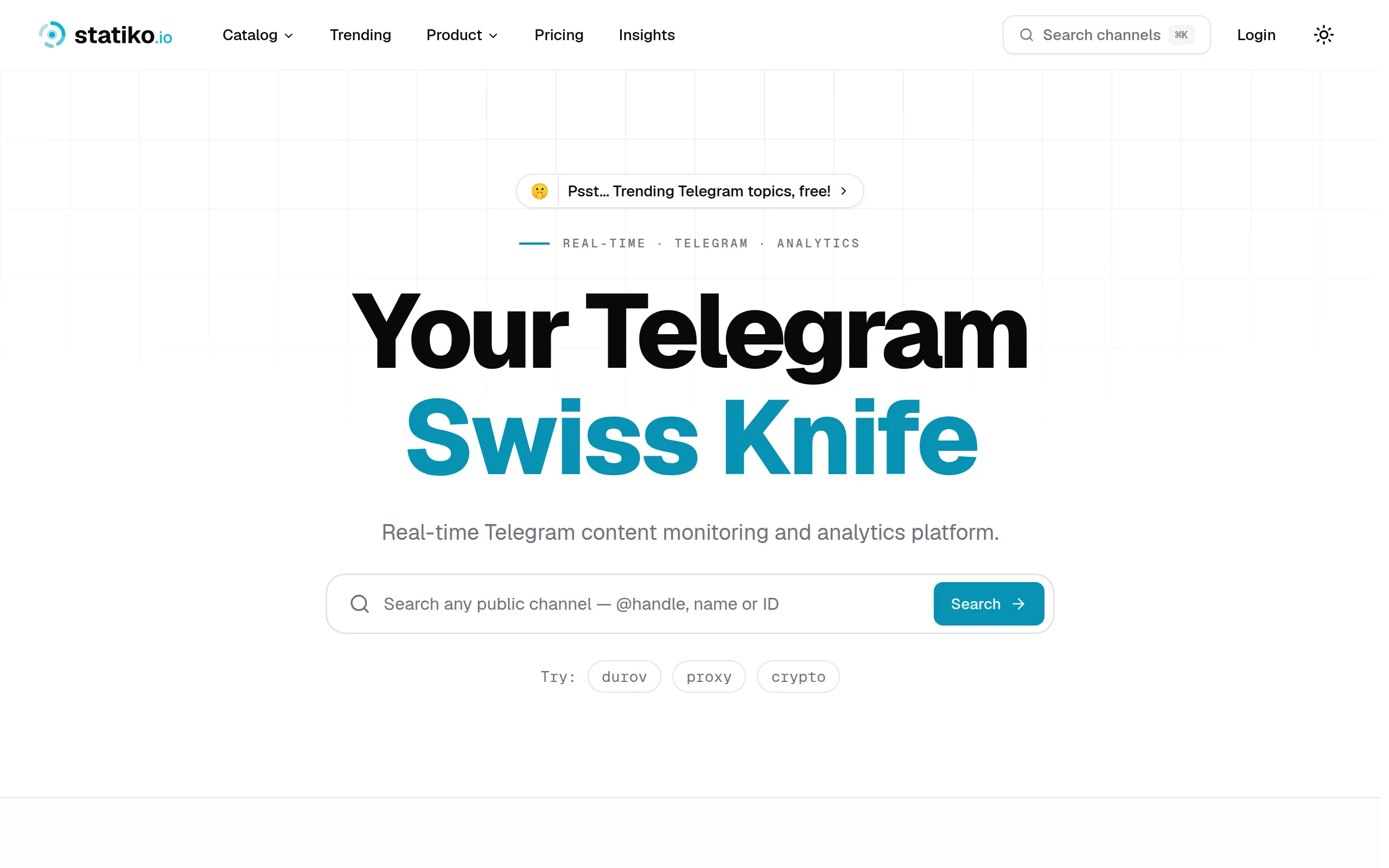
Statiko
Monitor any Telegram channel in real time - track posts, edits, deletions, and growth with AI recaps 📡

Shibui
AI website builder - describe your business, pick a niche template, edit by chatting, and publish instantly ✨

Pro Service
Find verified home service professionals, compare quotes, and pay securely through escrow - built for Brazilians across the US 🏠

RankGrow
Fix your SEO with AI agents - connect Search Console, get prioritized tasks, and grow organic traffic 📈
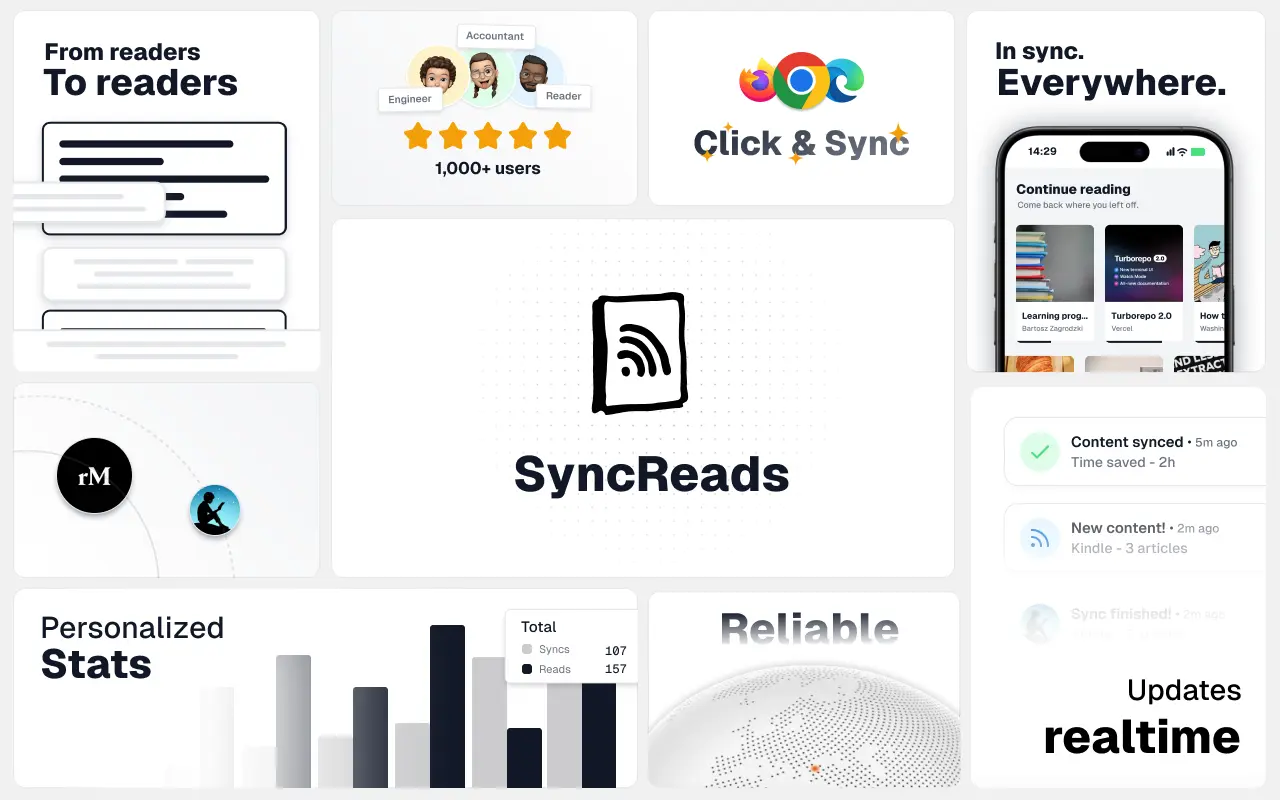
SyncReads
Sync your favorite content for distraction-free reading, save time and replace multiple apps. Anytime, anywhere 🔄
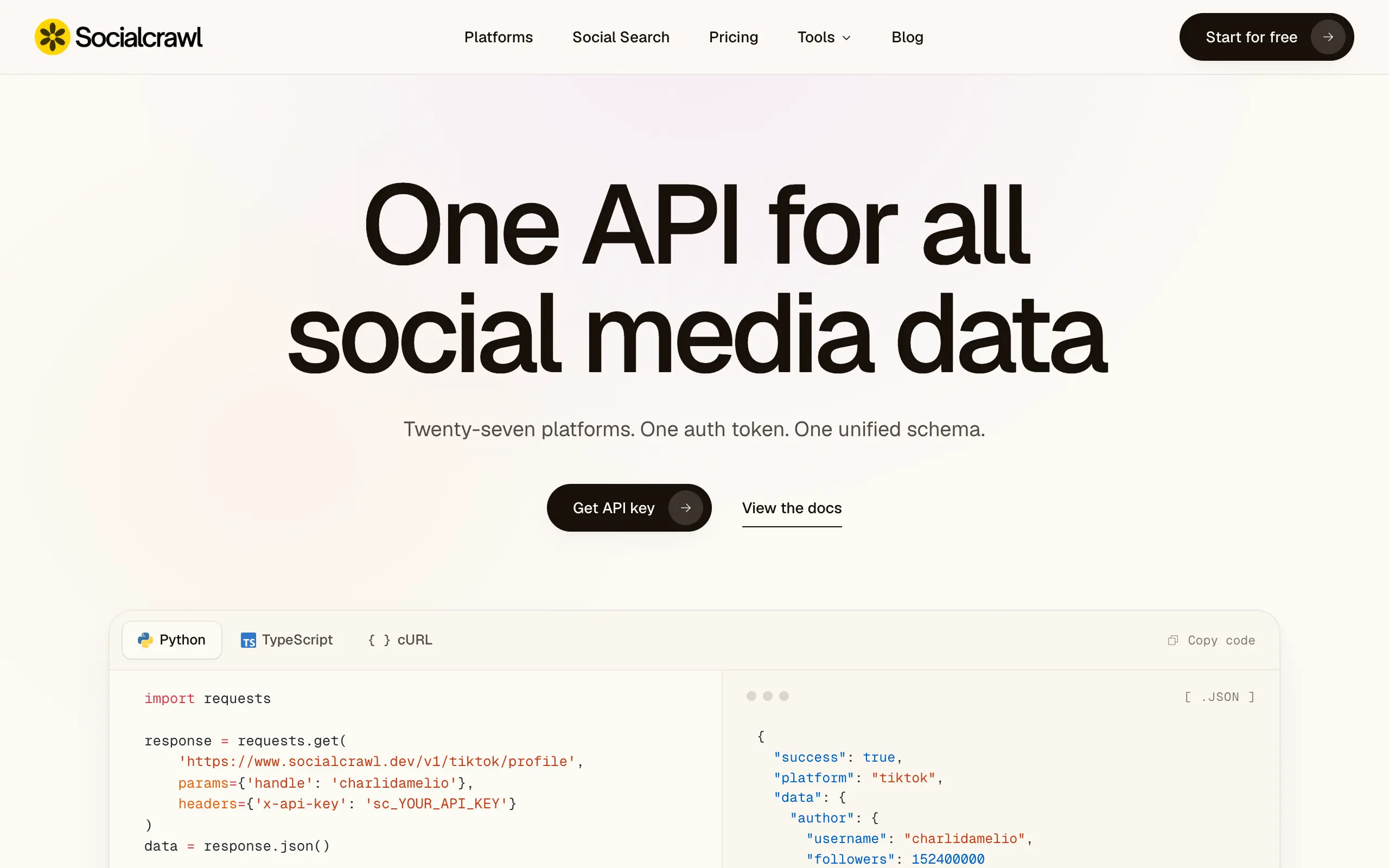
Socialcrawl
Get clean, structured data from 21 platforms like TikTok, Instagram, and YouTube with a single request 📊
Statiko
Monitor any Telegram channel in real time - track posts, edits, deletions, and growth with AI recaps 📡
Shibui
AI website builder - describe your business, pick a niche template, edit by chatting, and publish instantly ✨
Pro Service
Find verified home service professionals, compare quotes, and pay securely through escrow - built for Brazilians across the US 🏠
RankGrow
Fix your SEO with AI agents - connect Search Console, get prioritized tasks, and grow organic traffic 📈
SyncReads
Sync your favorite content for distraction-free reading, save time and replace multiple apps. Anytime, anywhere 🔄
Socialcrawl
Get clean, structured data from 21 platforms like TikTok, Instagram, and YouTube with a single request 📊
Statiko
Monitor any Telegram channel in real time - track posts, edits, deletions, and growth with AI recaps 📡
Shibui
AI website builder - describe your business, pick a niche template, edit by chatting, and publish instantly ✨
Pro Service
Find verified home service professionals, compare quotes, and pay securely through escrow - built for Brazilians across the US 🏠
RankGrow
Fix your SEO with AI agents - connect Search Console, get prioritized tasks, and grow organic traffic 📈
SyncReads
Sync your favorite content for distraction-free reading, save time and replace multiple apps. Anytime, anywhere 🔄
Socialcrawl
Get clean, structured data from 21 platforms like TikTok, Instagram, and YouTube with a single request 📊
Statiko
Monitor any Telegram channel in real time - track posts, edits, deletions, and growth with AI recaps 📡
Shibui
AI website builder - describe your business, pick a niche template, edit by chatting, and publish instantly ✨
Pro Service
Find verified home service professionals, compare quotes, and pay securely through escrow - built for Brazilians across the US 🏠
RankGrow
Fix your SEO with AI agents - connect Search Console, get prioritized tasks, and grow organic traffic 📈
SyncReads
Sync your favorite content for distraction-free reading, save time and replace multiple apps. Anytime, anywhere 🔄
Socialcrawl
Get clean, structured data from 21 platforms like TikTok, Instagram, and YouTube with a single request 📊
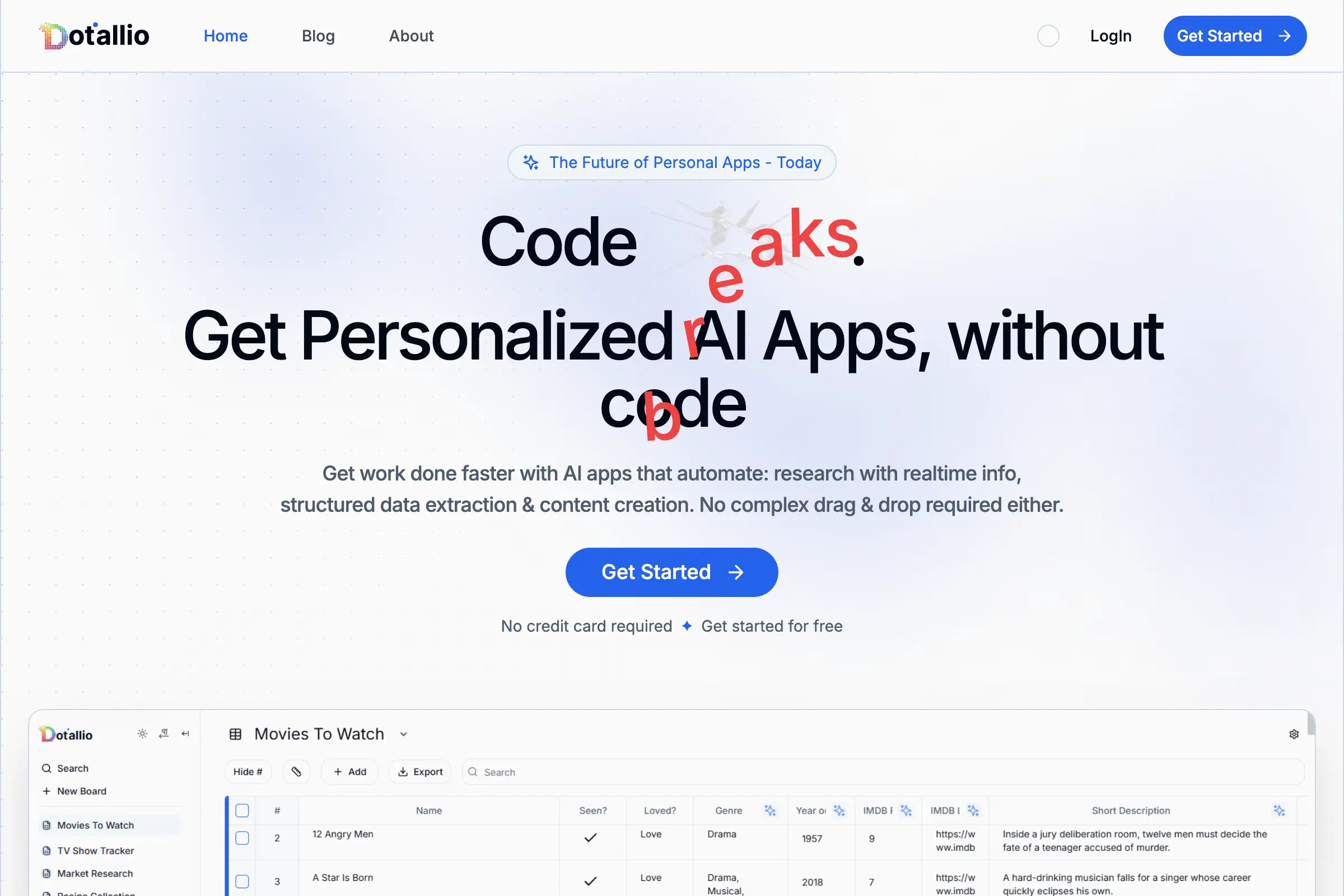
Dotallio
Personalized AI apps that automate research, data extraction, and content creation without code 🤖

Talk to Santa
Enjoy a magical live video chat or receive a unique AI-generated video greeting from Santa Claus 🎅
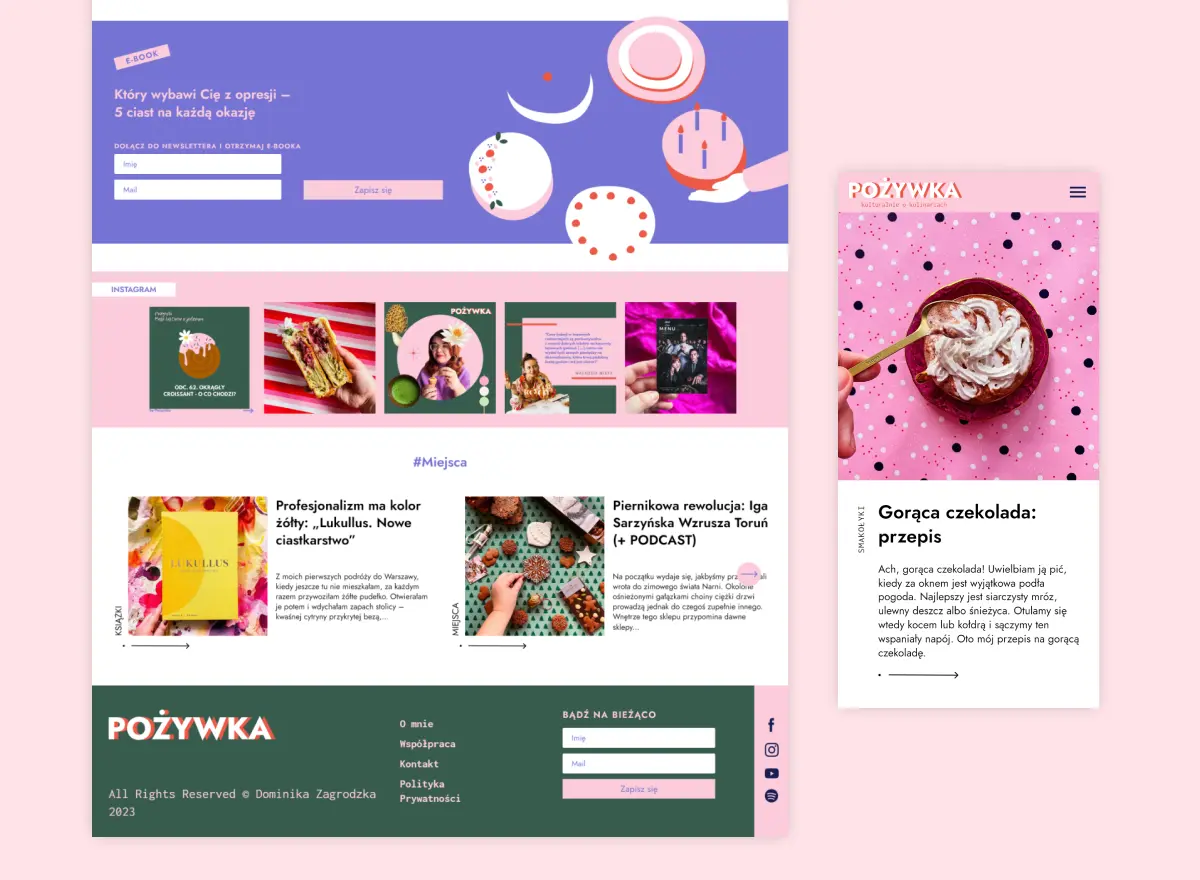
pozywka.pl
Scalable blog for food journalist, focused on performance and user experience 🌭
zagrodzki.me
Personal blog and portfolio of Bart Zagrodzki, where he shares his knowledge and work 💼
TurboStarter
Ship your startup everywhere. In minutes.
HTML to Markdown
Convert HTML to Markdown with ease, directly in your browser 📄
Dotallio
Personalized AI apps that automate research, data extraction, and content creation without code 🤖
Talk to Santa
Enjoy a magical live video chat or receive a unique AI-generated video greeting from Santa Claus 🎅
pozywka.pl
Scalable blog for food journalist, focused on performance and user experience 🌭
zagrodzki.me
Personal blog and portfolio of Bart Zagrodzki, where he shares his knowledge and work 💼
TurboStarter
Ship your startup everywhere. In minutes.
HTML to Markdown
Convert HTML to Markdown with ease, directly in your browser 📄
Dotallio
Personalized AI apps that automate research, data extraction, and content creation without code 🤖
Talk to Santa
Enjoy a magical live video chat or receive a unique AI-generated video greeting from Santa Claus 🎅
pozywka.pl
Scalable blog for food journalist, focused on performance and user experience 🌭
zagrodzki.me
Personal blog and portfolio of Bart Zagrodzki, where he shares his knowledge and work 💼
TurboStarter
Ship your startup everywhere. In minutes.
HTML to Markdown
Convert HTML to Markdown with ease, directly in your browser 📄
Dotallio
Personalized AI apps that automate research, data extraction, and content creation without code 🤖
Talk to Santa
Enjoy a magical live video chat or receive a unique AI-generated video greeting from Santa Claus 🎅
pozywka.pl
Scalable blog for food journalist, focused on performance and user experience 🌭
zagrodzki.me
Personal blog and portfolio of Bart Zagrodzki, where he shares his knowledge and work 💼
TurboStarter
Ship your startup everywhere. In minutes.
HTML to Markdown
Convert HTML to Markdown with ease, directly in your browser 📄
Omichat
Chat with 50+ AI models, including ChatGPT and Claude, in one place - switch models anytime without losing context 🤖
Claude Fast
Supercharge your Claude Code with 6x effective context window and specialized AI agents 🤖

EmojAI
AI-powered emoji picker with smart, context-aware suggestions 🤖

Solohacker
Autonomous company launcher - AI agents work 24/7, escalate what matters, and you stay in control 🤖

BeRawi: Storytelling Coach
Practice storytelling daily with instant feedback to sound clearer, more engaging, and confident 🎤
Omichat
Chat with 50+ AI models, including ChatGPT and Claude, in one place - switch models anytime without losing context 🤖
Claude Fast
Supercharge your Claude Code with 6x effective context window and specialized AI agents 🤖
EmojAI
AI-powered emoji picker with smart, context-aware suggestions 🤖
Solohacker
Autonomous company launcher - AI agents work 24/7, escalate what matters, and you stay in control 🤖
BeRawi: Storytelling Coach
Practice storytelling daily with instant feedback to sound clearer, more engaging, and confident 🎤
Omichat
Chat with 50+ AI models, including ChatGPT and Claude, in one place - switch models anytime without losing context 🤖
Claude Fast
Supercharge your Claude Code with 6x effective context window and specialized AI agents 🤖
EmojAI
AI-powered emoji picker with smart, context-aware suggestions 🤖
Solohacker
Autonomous company launcher - AI agents work 24/7, escalate what matters, and you stay in control 🤖
BeRawi: Storytelling Coach
Practice storytelling daily with instant feedback to sound clearer, more engaging, and confident 🎤
Omichat
Chat with 50+ AI models, including ChatGPT and Claude, in one place - switch models anytime without losing context 🤖
Claude Fast
Supercharge your Claude Code with 6x effective context window and specialized AI agents 🤖
EmojAI
AI-powered emoji picker with smart, context-aware suggestions 🤖
Solohacker
Autonomous company launcher - AI agents work 24/7, escalate what matters, and you stay in control 🤖
BeRawi: Storytelling Coach
Practice storytelling daily with instant feedback to sound clearer, more engaging, and confident 🎤

Connect with like-minded people
Join our community to get feedback, support, and grow together with 1,000+ builders on board, let's ship it!
Join usShip your startup everywhere. In minutes.
Don't burn tokens on setup and start building features on day one.