SecondTurn
Shop retailer-certified open-box and refurbished goods with clear condition, warranty, and delivery details. ERP and 3PL integrations surface eligible stock and coordinate fulfillment.
Why SecondTurn has a timely opportunity
SecondTurn is a B2C marketplace for retailer-certified open-box and refurbished goods. It helps shoppers compare products that might otherwise be difficult to evaluate online by making condition, warranty, and delivery information clear before checkout. Behind the storefront, ERP and third-party logistics (3PL) integrations surface eligible inventory and coordinate fulfillment.
The core proposition is simple: make buying an open-box or refurbished product feel as informed and dependable as buying new.
That proposition addresses a real friction in secondhand commerce. Shoppers may be interested in a discounted product but hesitate when they cannot tell what “open box” means, whether a warranty applies, or when the item will arrive. Retailers, meanwhile, may have valuable returned or excess stock but lack a consistent way to expose it to customers across multiple sales channels.
SecondTurn can bridge those needs with a curated, retailer-backed shopping experience. Rather than trying to become a general resale platform for every used item, it can focus on goods with traceable provenance, defined condition grades, and clear fulfillment responsibility.
The opportunity is not simply to offer lower prices. It is to reduce uncertainty at the point of purchase.
What SecondTurn is—and what it is not
SecondTurn should be positioned as a retailer-certified open-box and refurbished marketplace, not as an unmoderated peer-to-peer resale site.
That distinction matters. A peer-to-peer marketplace typically depends on individual sellers to describe products, package them, and resolve issues. SecondTurn’s model instead relies on participating retailers or authorized refurbishers to certify inventory and provide structured product data. The platform can then make that data understandable and comparable to shoppers.
The marketplace could support several inventory types:
- Open-box goods that have been opened, returned, or displayed but remain in working condition.
- Refurbished goods that have been inspected and repaired or restored according to a defined process.
- Certified pre-owned goods that meet a retailer’s or brand’s inspection requirements.
- Overstock and end-of-line products where the item is new but sold outside the retailer’s primary merchandising channel.
These categories should not be blended into one vague “pre-loved” label. They represent different shopper expectations and different levels of inspection, repair, and warranty coverage.
SecondTurn also is not a retailer’s inventory management system. ERP and 3PL integrations should help the marketplace receive product availability and fulfillment updates, but the product’s system of record will often remain with the retailer or logistics partner. A clear boundary between the marketplace and partner systems will make the platform easier to integrate and operate.
Target audience analysis
A successful marketplace needs to serve both sides of the transaction: shoppers and inventory partners. SecondTurn’s product design, sales strategy, and operating model should reflect the different motivations of each group.
Value-conscious shoppers
These shoppers want a lower price without taking on too much risk. They may compare an open-box item with a new equivalent and need to understand exactly what the discount buys them.
SecondTurn should help them answer practical questions quickly:
- What is the item’s condition?
- Has it been tested or inspected?
- Are all essential parts included?
- Is the product eligible for a warranty?
- Who handles delivery, returns, and support?
- How much is saved compared with a clearly identified reference price?
The platform should show these details close to the price and purchase button, rather than hiding them in policy pages.
Sustainability-minded consumers
Some shoppers are motivated by the prospect of extending a product’s useful life and avoiding unnecessary waste. Sustainability messaging may help explain why open-box and refurbished goods matter, but it must not substitute for product information.
SecondTurn should avoid unsupported claims such as a specific amount of carbon or waste saved unless it has a transparent methodology and credible evidence. If the company later reports environmental impact, it should explain its assumptions—for example, what product category is measured, what baseline is used, and whether the figures are estimated or verified.
Deal hunters and product researchers
These customers are often comfortable comparing specifications and prices. They may be willing to buy a refurbished product if the listing explains its condition and gives them confidence in the seller.
For this audience, useful capabilities include:
- Comparison between new, open-box, and refurbished offers.
- Clear specifications and model numbers.
- Filters for condition, warranty, seller, and delivery timing.
- Price history or price-drop notifications, if the data is reliable.
- Saved searches for particular brands or product categories.
Retailers and authorized refurbishers
The supply side includes retailers with returns, display stock, excess inventory, and products that cannot easily be resold through their primary storefront. Authorized refurbishers may also have certified goods to sell through a new channel.
These partners need more than a product listing page. They need a dependable way to:
- Share eligible inventory without exposing unsuitable stock.
- Keep availability and pricing synchronized.
- Define condition grades and warranty rules.
- Route orders to the right warehouse or 3PL.
- Receive order, cancellation, and return updates.
- Understand sales performance and operational exceptions.
For partners, the strongest value proposition is not simply “another place to list products.” It is a channel that can make eligible inventory discoverable while reducing manual work and preserving control over product standards.
Gift buyers and risk-averse shoppers
Some customers may be willing to buy open-box goods for themselves but reluctant to purchase them as gifts. SecondTurn can address that concern through excellent merchandising, gift-appropriate filters, easy-to-understand condition labels, and clear return policies.
These shoppers should not have to infer whether a product is suitable as a gift from a technical condition code. The listing should translate operational details into a plain-language description.
The market opportunity and the gap SecondTurn can address
The broader opportunity comes from the overlap between online retail, returns processing, refurbished goods, and consumer demand for better value. SecondTurn does not need to prove that every consumer wants used goods. It needs to show that a meaningful group will buy a non-new product when the value and risk are explained clearly.
The most promising initial gap is trustworthy, comparable product information. Many listings use inconsistent language. One seller’s “open box” may mean an item was opened but never used; another’s may mean it was returned and inspected. Shoppers cannot easily compare offers if condition labels, warranty terms, included accessories, and delivery expectations vary from listing to listing.
SecondTurn can create value by standardizing the shopping layer while allowing partners to retain their own inspection processes. That requires a structured condition model, not merely a text field in which each seller writes a description.
A practical marketplace listing should communicate at least five things:
- Condition grade with a plain-language definition.
- Inspection or refurbishment status describing what was actually checked or repaired.
- Included components such as accessories, packaging, and manuals.
- Warranty coverage including duration, provider, and exclusions.
- Fulfillment details including shipping origin where relevant, estimated delivery, and return rules.
This is a meaningful opportunity because customer confidence can influence both conversion and support volume. Better information may reduce pre-purchase questions, misaligned expectations, and avoidable returns. Those outcomes should be tested with real data rather than assumed.
Start with a focused category
Launching as a broad marketplace may appear attractive, but it creates a difficult supply and trust problem. Product categories have different inspection requirements, shipping costs, return patterns, and warranty expectations.
SecondTurn should select an initial category using criteria such as:
- A dependable supply of eligible open-box or refurbished products.
- Product specifications that are easy to standardize.
- A clear price difference between new and non-new inventory.
- Manageable shipping and return costs.
- Partner willingness to provide accurate inventory data.
- A product lifecycle where shoppers already understand refurbished options.
The ideal first category is not necessarily the largest one. It is the category where SecondTurn can deliver a complete experience with the fewest operational exceptions. After proving that the platform can maintain accurate stock, communicate condition, and resolve fulfillment issues, it can expand into adjacent categories.
Core features for a retailer-certified marketplace
The product should be built around trust, inventory accuracy, and operational clarity. A polished storefront matters, but the marketplace’s long-term defensibility will depend on the quality of its supply and transaction systems.
Structured condition and certification data
SecondTurn should define its own marketplace condition taxonomy while letting partners map their internal grades to it. A retailer’s “Grade B” should not appear to customers without a clear explanation of what it means.
A condition record might include:
- Exterior appearance.
- Functional test status.
- Battery or consumable status, when applicable.
- Missing or substituted accessories.
- Repair history, if available and appropriate to disclose.
- Packaging condition.
- Inspection date or certification source.
The platform should distinguish condition from certification. Condition describes the item’s state; certification describes who inspected it and what process was followed. Keeping these concepts separate makes listings more precise and gives the marketplace room to support different partner standards.
Transparent warranty and return details
Warranty information should be a first-class field in the product experience, not a generic statement attached to the entire site. Shoppers need to know who provides coverage, how long it lasts, and where to go if there is a problem.
SecondTurn should also make return policies visible before checkout. Where partners have different terms, the marketplace should summarize the relevant policy on each listing and at the point of purchase. If the platform cannot standardize a particular policy, it should still make differences easy to understand.
Product comparison and discovery
A shopper comparing several versions of the same item needs a consistent view of the trade-offs. SecondTurn can show new, open-box, and refurbished offers side by side when it has reliable data to do so.
Useful search and filter options may include:
- Product type and brand.
- Condition grade.
- Warranty length or provider.
- Price and discount range.
- Seller or certification source.
- Delivery estimate.
- Included accessories.
- Availability for a particular location.
Search results should not imply that two products are equivalent when model numbers or included components differ. Product matching requires careful catalog normalization, especially when sellers provide inconsistent titles or identifiers.
Retailer and 3PL integrations
Integrations are central to the idea because inventory can change quickly. A marketplace that displays an item as available after it has sold elsewhere will lose customer confidence.
SecondTurn should support partner-specific connections to ERP, commerce, warehouse, and 3PL systems. Depending on each partner’s technical maturity, the first integration may use a scheduled file feed, an API, or a connector. A pragmatic platform should not assume every retailer has a modern, well-documented API.
The integration layer should handle:
- Product and inventory ingestion.
- Price and availability updates.
- Order routing and acknowledgements.
- Shipment status and tracking updates.
- Cancellation and refund events.
- Return authorization and exception reporting.
A useful principle is to treat integrations as reliable workflows, not one-time data imports. Every important event should be logged, monitored, and recoverable. If a partner’s system is unavailable, the marketplace needs a defined fallback rather than silently showing stale stock.
Trustworthy checkout and order support
The checkout experience should identify who is fulfilling the order and what happens after purchase. If an order contains products from multiple partners, customers should understand whether items will ship separately and whether different return terms apply.
Customer support tools should give agents a consolidated view of:
- The listing and condition details shown at purchase.
- The source partner and relevant policy.
- Payment and order status.
- Shipment events and tracking information.
- Return or warranty case history.
This record is important for resolving disputes fairly. It also helps SecondTurn identify recurring issues, such as a particular condition mapping leading to unexpected returns.
Partner operations dashboard
Retailer partners need visibility into the marketplace’s performance and exceptions. A partner portal could provide inventory status, orders, feed errors, and sales reporting.
The first version should focus on operational usefulness rather than a large collection of charts. Partners should be able to identify which products are live, which have been rejected, which orders require attention, and why a listing is unavailable.
Competitive advantage and positioning
SecondTurn will compete indirectly with general marketplaces, retailer outlet sections, recommerce specialists, and refurbished-product programs. Its differentiation should not depend on claiming that no competitor sells refurbished goods. The stronger argument is that SecondTurn can combine multi-retailer discovery, consistent condition disclosure, and integrated fulfillment in one focused experience.
| Capability | General resale marketplace | Individual retailer outlet | SecondTurn opportunity |
|---|---|---|---|
| Multi-retailer product discovery | Often available, but listings vary | Usually limited to one retailer | Curated cross-retailer catalog |
| Condition terminology | Can vary by seller | Defined by the retailer | Shared customer-facing taxonomy |
| Warranty visibility | Depends on seller and listing | Often available for that retailer’s products | Structured and prominent listing data |
| Inventory integration | Varies widely | Usually connected to internal systems | Partner integrations designed for eligible stock |
| Fulfillment coordination | Often seller-dependent | Managed by the retailer | Unified order status across partners |
| Trust model | Seller reputation and platform rules | Retailer’s existing reputation | Retailer certification plus transparent marketplace standards |
The table describes a positioning opportunity, not a claim that every competing platform lacks these capabilities. SecondTurn should validate the comparison through customer research and competitor analysis before using it in public marketing.
The unique selling proposition
A strong initial USP could be:
Shop retailer-certified open-box and refurbished products with clear condition, warranty, and delivery details—across participating retailers in one place.
This is specific enough to guide product decisions. It says what the marketplace sells, what makes it easier to shop, and why its supply model differs from peer-to-peer resale.
The defensibility will come from execution:
- A trusted condition and certification standard.
- Reliable relationships with retailers and refurbishers.
- Integrations that reduce partner effort.
- Accurate inventory and fulfillment data.
- A useful catalog that makes offers comparable.
- Customer service that resolves problems across partner boundaries.
A marketplace brand alone is not a durable advantage. The operating system behind the brand is what can make the value proposition hard to replicate.
Recommended technology stack
SecondTurn’s technology should support a fast consumer experience and dependable partner operations. The team should avoid building every integration from scratch before validating demand, but it should also avoid a design that makes inventory accuracy impossible to improve later.
Frontend and application layer
A React-based application can support a responsive storefront, product search, comparison pages, and a partner dashboard. React is a common choice for component-driven interfaces, while Next.js can provide application routing and server-side rendering capabilities that are useful for search-friendly product pages.
The trade-off is operational complexity. A server-rendered application introduces deployment and caching decisions that a simple client-rendered storefront may not need. The team should choose the rendering approach based on page performance, SEO requirements, and the developers’ ability to operate it.
For a team seeking a prebuilt foundation, TurboStarter can help accelerate the initial SaaS application setup. SecondTurn should still model marketplace-specific requirements carefully, particularly partner permissions, order events, and inventory synchronization.
Database and inventory model
A relational database such as PostgreSQL is a strong fit for products, sellers, condition records, offers, orders, and audit events. These entities have relationships and constraints that benefit from transactional consistency.
The data model should separate:
- A canonical product from a seller’s offer.
- A condition report from a product description.
- A stock record from a catalog record.
- A customer order from partner fulfillment events.
- A warranty policy from the general marketplace policy.
That separation allows several retailers to offer the same product without overwriting one another’s condition or inventory details.
Integration and event processing
Partner integrations should use a modular adapter pattern. Each partner connector can translate a retailer’s data format into SecondTurn’s internal product, inventory, and order events. This makes it possible to add partners without putting partner-specific logic throughout the application.
The platform should consider a queue or event-processing service for inventory and order updates. The right tool depends on the team’s volume and operational expertise. The key requirement is not a particular vendor; it is retry handling, idempotency, monitoring, and a clear record of failed events.
For example, when a partner sends the same order acknowledgement twice, SecondTurn should not create duplicate fulfillment work. Each event needs an identifier or idempotency key, and the processing logic should be safe to retry.
Payments and financial operations
A payment provider such as Stripe may support checkout and payment processing, but marketplace payment flows require careful review. The business must determine who is the seller of record, who collects and remits applicable taxes, how refunds are funded, and whether partner payouts are needed.
Payment architecture should follow the actual legal and commercial relationship between SecondTurn and its partners. It should not be selected solely because a provider offers a marketplace feature. The team should consult qualified legal, tax, and payments specialists before launch.
Infrastructure, observability, and security
A cloud platform such as AWS can provide hosting and managed infrastructure, but the initial deployment should remain as simple as the team can safely operate. Monitoring should cover storefront performance, feed freshness, order event failures, and checkout errors.
Security requirements include:
- Role-based access for retailer accounts and internal staff.
- Least-privilege credentials for partner integrations.
- Secure storage and rotation of API keys.
- Audit logs for listing, price, and inventory changes.
- Data retention rules for customer and order information.
- A documented process for security incidents.
A marketplace is a high-trust service. Security and privacy should be part of the product design, not work deferred until after launch.
Monetization strategy options
SecondTurn can test several revenue models, but should start with one that aligns incentives between the marketplace and its retail partners.
Commission on completed orders
A transaction commission is a natural starting point. SecondTurn earns revenue when it generates a sale, which makes the value proposition easy to explain. The commission rate should reflect category economics, partner fulfillment costs, payment fees, support burden, and return rates.
The company should define whether commission is calculated on the item price, shipping, or another agreed basis. Contract terms should also explain how refunds, cancellations, and partial returns affect the commission.
Partner subscription or software fees
A subscription could fund integration tools, inventory management features, analytics, or access to the partner dashboard. This model may create predictable revenue, but it can be difficult to sell before SecondTurn proves that it generates meaningful demand or reduces operational costs.
A sensible path is to begin with transaction-based pricing or a pilot arrangement, then introduce software fees when partners can identify ongoing value beyond individual sales.
Sponsored placements
Retailers may pay for additional visibility, but sponsored listings must be clearly labeled. Trust is central to the marketplace, so paid placement should not obscure condition, warranty, or value information.
Sponsored ranking should also avoid implying that a promoted product is the best match if its condition or price is materially worse than comparable offers.
Fulfillment and integration services
SecondTurn may later charge for optional services such as onboarding, custom data mapping, or advanced reporting. These fees make sense when they correspond to real partner costs and outcomes. They should not become a substitute for building a product that is easy to integrate.
Risks and mitigation strategies
Inventory becomes stale
A listing may remain available after a partner has sold the item elsewhere. This is especially damaging when products are unique or limited in quantity.
Mitigation: Define freshness expectations for each integration, monitor feed age, and automatically suppress or flag listings when stock data exceeds an agreed threshold. For high-risk inventory, use frequent updates or a reservation mechanism where the partner supports it.
Condition descriptions are inconsistent
Retailers may use different grading systems or omit details. Customers may then interpret a listing differently from the partner that certified it.
Mitigation: Require a minimum set of structured fields, map partner grades to plain-language marketplace definitions, and review a sample of listings during onboarding. Track returns and complaints by condition grade to find unclear definitions.
Returns undermine unit economics
Shipping, inspection, customer support, and return handling can make low-priced products unprofitable. A product that appears to have a strong margin may become unattractive after reverse logistics.
Mitigation: Measure contribution margin by category, partner, condition, and fulfillment route. Pilot return policies with partners and make shipping and restocking responsibilities explicit in contracts. Do not expand into categories until return costs are understood.
Partners resist integration work
Retailers may have legacy systems, limited engineering resources, or competing priorities. A technically elegant integration that takes months to complete can delay marketplace validation.
Mitigation: Offer several onboarding paths, such as a structured feed, a managed file import, or an API connector. Begin with a narrow data contract and expand only when the partner sees measurable value.
The marketplace has a cold-start problem
Shoppers need enough quality inventory to return, while retailers want evidence of customer demand before committing their best stock.
Mitigation: Secure a small group of committed supply partners and launch with a focused product category. Curate the initial assortment for completeness and quality rather than maximizing SKU count. Use partner-backed campaigns and customer research to generate early demand.
Warranty and consumer obligations are unclear
Different products and jurisdictions may involve different warranty, return, labeling, and consumer protection requirements. The exact obligations depend on the marketplace’s role and the transaction structure.
Mitigation: Obtain legal advice for the target markets and product categories. Document who is responsible for product descriptions, warranties, refunds, taxes, and customer support. Make the seller and policy details clear to shoppers.
Environmental messaging overreaches
Second-hand and refurbished products may support longer product use, but broad environmental claims can be misleading without a defined method.
Mitigation: Begin with factual product information. If the company later makes impact claims, publish the methodology and retain evidence for each calculation. Prefer carefully bounded statements over sweeping promises.
How to validate SecondTurn before building too much
The early objective is not to build a fully automated marketplace. It is to test whether retailers will supply suitable inventory, whether shoppers trust the information, and whether transactions can be fulfilled profitably.
Conduct partner discovery
Interview retailers, refurbishers, and operations teams. Ask how they currently handle eligible stock, which systems hold inventory data, how they define condition, and what makes an item unsuitable for resale.
Avoid asking only whether they “like the idea.” Look for evidence of commitment, such as access to a sample feed, agreement to test a pilot, or a named operational contact.
Test the condition language
Show prospective shoppers sample listings with different condition descriptions. Ask them to explain what they believe is included, what warranty they expect, and what information they still need.
This test can reveal whether labels are intuitive or whether the marketplace needs examples, inspection details, or more prominent policy information.
Run a concierge pilot
Before automating every partner workflow, SecondTurn can manually coordinate a limited assortment with one or two supply partners. A concierge pilot should still use real orders and measure fulfillment performance, but humans can handle some data mapping and exceptions behind the scenes.
The pilot should track:
- Listing accuracy.
- Inventory synchronization delay.
- Conversion by condition grade.
- Customer questions before purchase.
- Cancellation and return rates.
- Fulfillment time and delivery performance.
- Gross margin after support and logistics costs.
- Partner effort per live product and per order.
These metrics help distinguish a demand problem from an operations problem.
Establish clear launch gates
Set criteria for expansion before the pilot begins. For example, SecondTurn might require reliable stock updates, a target level of listing completeness, acceptable cancellation rates, and positive contribution margin in its first category.
The actual thresholds should come from the business model and pilot data. The important point is to avoid expanding based only on top-line order volume.
Actionable implementation steps
A useful launch principle
SecondTurn should automate only after it understands the workflow. Manual handling in a controlled pilot can reveal which data, exceptions, and partner responsibilities need to be built into the product.
What success should look like
SecondTurn’s early success should be measured through a combination of shopper trust, partner value, and operational reliability.
Useful indicators include:
- The share of listings with complete condition, warranty, and delivery information.
- Inventory freshness and the rate of orders cancelled because stock was unavailable.
- Conversion differences between condition grades and product categories.
- Customer support contacts per order.
- Return and refund rates by partner and listing type.
- Time required to onboard a new partner.
- Partner effort required to keep inventory live.
- Contribution margin after payment, fulfillment, returns, and service costs.
- Repeat purchase and saved-search engagement.
No single metric proves product-market fit. For example, high conversion paired with high return rates may indicate that listings are attractive but misleading. Fast partner onboarding paired with poor inventory accuracy may indicate that the integration standard is too permissive. Metrics should be interpreted together and reviewed by cohort.
The long-term case for SecondTurn
SecondTurn has a compelling opportunity if it can make open-box and refurbished shopping easier to understand and more dependable to complete. Its strongest position is not “the biggest place to find used products.” It is the trusted marketplace where shoppers can compare retailer-certified non-new goods with clear condition, warranty, and delivery information.
That position requires discipline. SecondTurn should begin with a focused category, prove partner supply, standardize the customer experience, and validate unit economics before expanding. It should treat ERP and 3PL integrations as core marketplace infrastructure, not a technical afterthought. Most importantly, it should make every trust-related promise visible in the product data and operational workflow.
For founders, the practical sequence is clear: validate the supply, define the condition standard, pilot real orders, measure the full cost of fulfillment and returns, then invest in automation where it removes proven friction. A focused launch can establish the trust and operational foundations needed to grow into a broader retailer-certified marketplace.
Frequently asked questions
It is a shopping platform for products that are not sold as new, where participating retailers or authorized refurbishers provide condition, inspection, warranty, and fulfillment information. The retailer or refurbisher’s certification process should be explained rather than left as an undefined badge.
SecondTurn is designed around retailer-backed inventory and structured product information. A peer-to-peer marketplace commonly relies on individual sellers to create listings and manage fulfillment, while SecondTurn’s opportunity is to standardize condition details and connect retailer inventory and logistics systems.
A focused category is usually a better starting point because product inspection, shipping, warranties, and returns vary substantially across categories. SecondTurn should expand when it has evidence that its first category can be sourced, fulfilled, and supported with sustainable economics.
The most important capability is a trustworthy product listing that combines accurate stock with clear condition, certification, warranty, included components, delivery, and return information. If those details are unreliable, a polished storefront will not solve the core customer problem.
A commission on completed orders is a practical starting point because revenue is tied to transactions. Partner subscriptions, sponsored placements, and integration services may be added later if they provide clear value and do not weaken shopper trust.
More 👥 B2C Application SaaS ideas
Discover more innovative b2c application SaaS ideas that are trending in 2026. Each idea is AI-generated with market validation and growth potential to help you find your next profitable venture faster than competitors.
Your competitors are building with TurboStarter
Below are some of the SaaS ideas that have been generated and built with our starter kit.

Statiko
Monitor any Telegram channel in real time - track posts, edits, deletions, and growth with AI recaps 📡

Shibui
AI website builder - describe your business, pick a niche template, edit by chatting, and publish instantly ✨

Pro Service
Find verified home service professionals, compare quotes, and pay securely through escrow - built for Brazilians across the US 🏠

RankGrow
Fix your SEO with AI agents - connect Search Console, get prioritized tasks, and grow organic traffic 📈
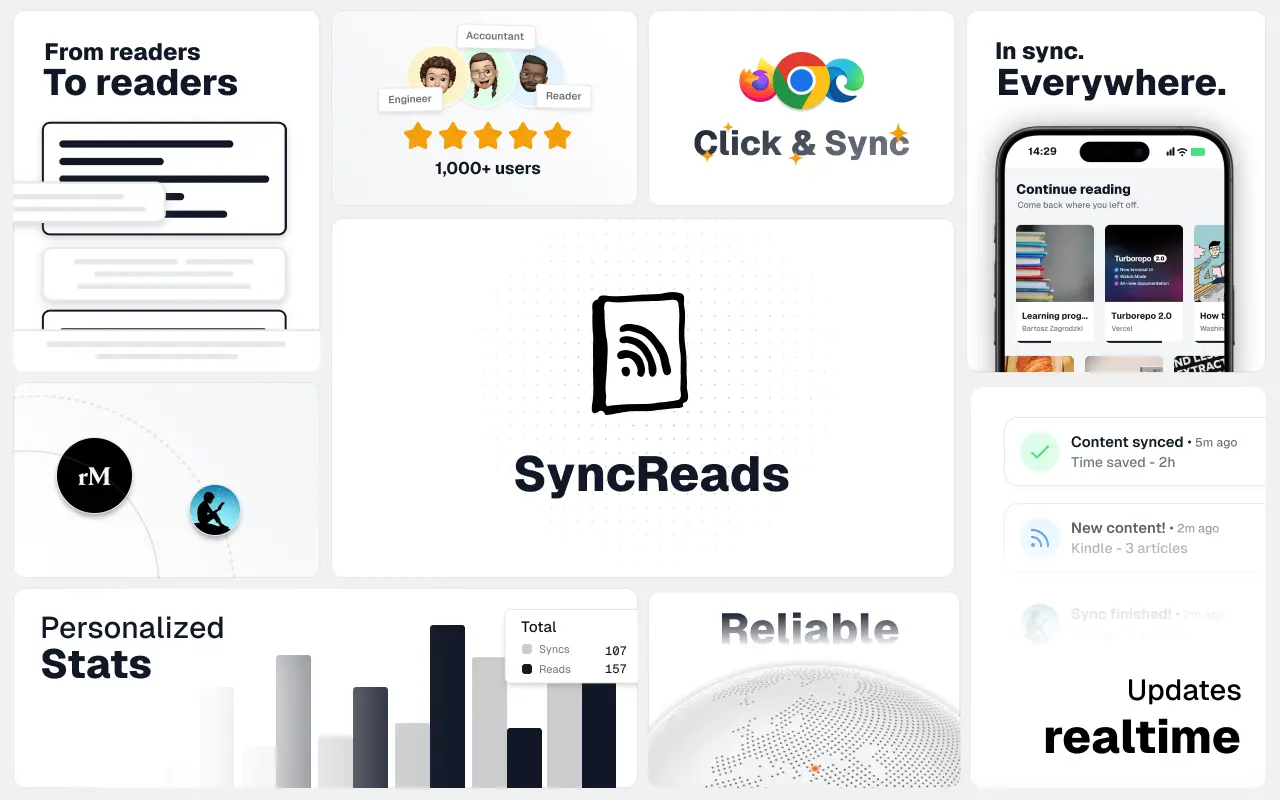
SyncReads
Sync your favorite content for distraction-free reading, save time and replace multiple apps. Anytime, anywhere 🔄

Socialcrawl
Get clean, structured data from 21 platforms like TikTok, Instagram, and YouTube with a single request 📊
Statiko
Monitor any Telegram channel in real time - track posts, edits, deletions, and growth with AI recaps 📡
Shibui
AI website builder - describe your business, pick a niche template, edit by chatting, and publish instantly ✨
Pro Service
Find verified home service professionals, compare quotes, and pay securely through escrow - built for Brazilians across the US 🏠
RankGrow
Fix your SEO with AI agents - connect Search Console, get prioritized tasks, and grow organic traffic 📈
SyncReads
Sync your favorite content for distraction-free reading, save time and replace multiple apps. Anytime, anywhere 🔄
Socialcrawl
Get clean, structured data from 21 platforms like TikTok, Instagram, and YouTube with a single request 📊
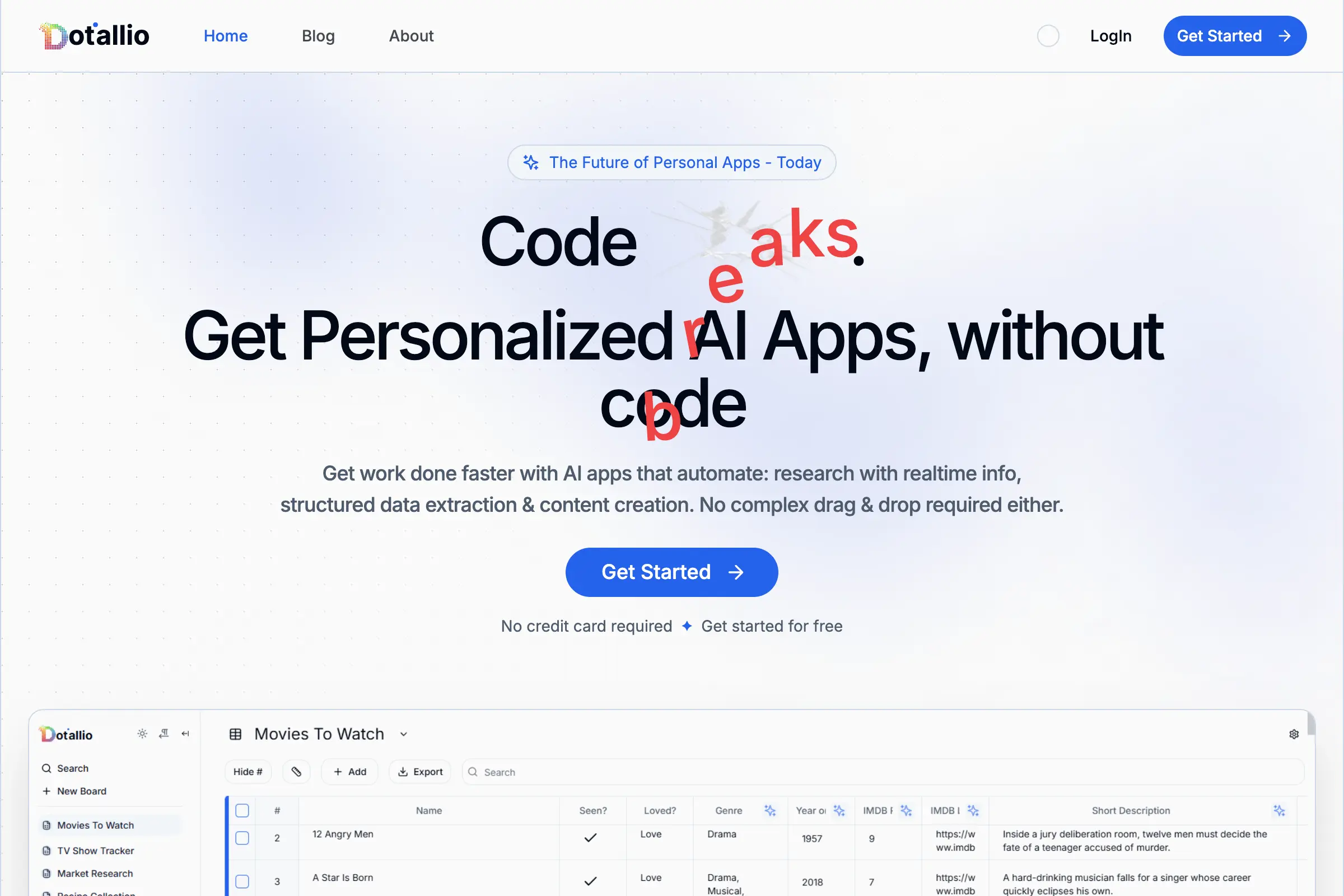
Dotallio
Personalized AI apps that automate research, data extraction, and content creation without code 🤖

Talk to Santa
Enjoy a magical live video chat or receive a unique AI-generated video greeting from Santa Claus 🎅

pozywka.pl
Scalable blog for food journalist, focused on performance and user experience 🌭
zagrodzki.me
Personal blog and portfolio of Bart Zagrodzki, where he shares his knowledge and work 💼
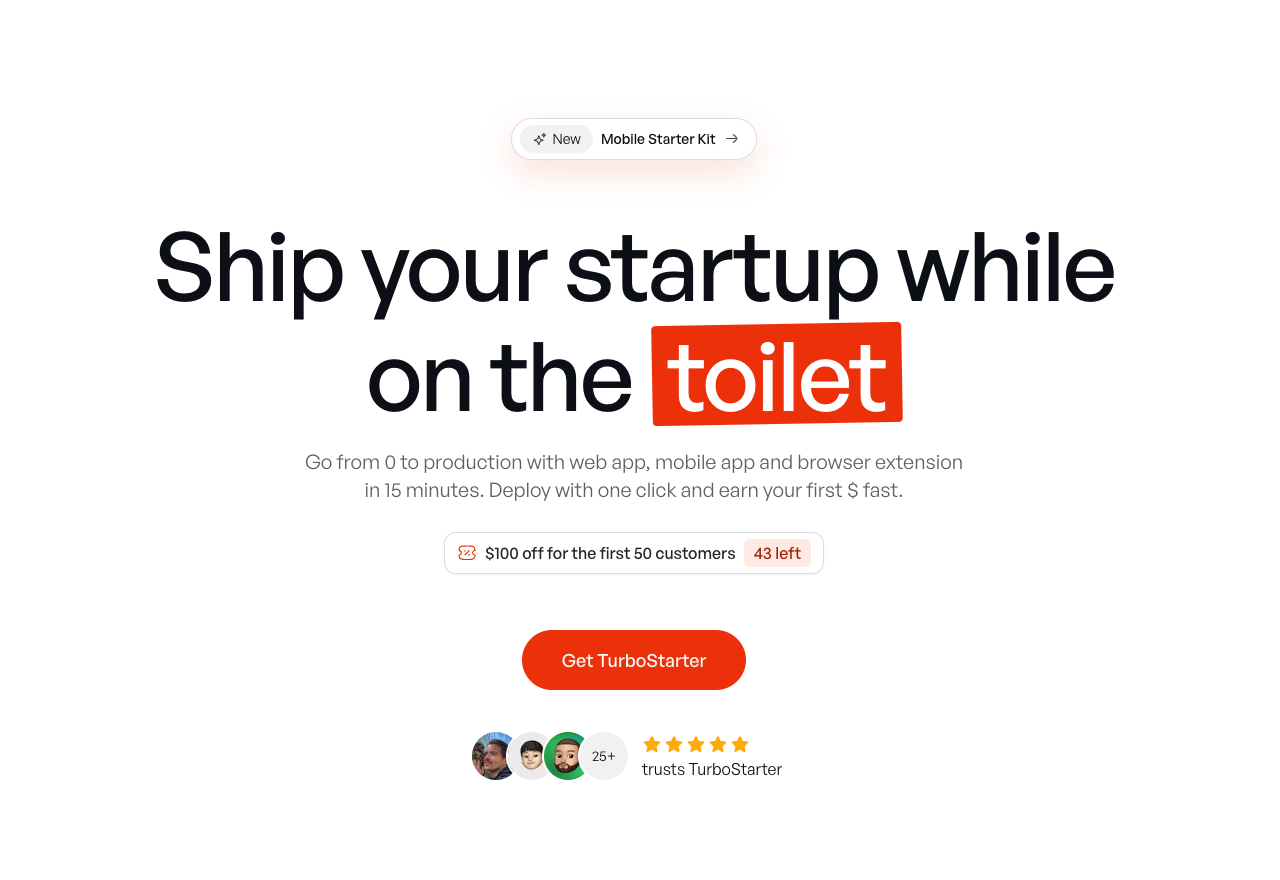
TurboStarter
Ship your startup everywhere. In minutes.
HTML to Markdown
Convert HTML to Markdown with ease, directly in your browser 📄
Dotallio
Personalized AI apps that automate research, data extraction, and content creation without code 🤖
Talk to Santa
Enjoy a magical live video chat or receive a unique AI-generated video greeting from Santa Claus 🎅
pozywka.pl
Scalable blog for food journalist, focused on performance and user experience 🌭
zagrodzki.me
Personal blog and portfolio of Bart Zagrodzki, where he shares his knowledge and work 💼
TurboStarter
Ship your startup everywhere. In minutes.
HTML to Markdown
Convert HTML to Markdown with ease, directly in your browser 📄
Omichat
Chat with 50+ AI models, including ChatGPT and Claude, in one place - switch models anytime without losing context 🤖
Claude Fast
Supercharge your Claude Code with 6x effective context window and specialized AI agents 🤖

EmojAI
AI-powered emoji picker with smart, context-aware suggestions 🤖

Solohacker
Autonomous company launcher - AI agents work 24/7, escalate what matters, and you stay in control 🤖

BeRawi: Storytelling Coach
Practice storytelling daily with instant feedback to sound clearer, more engaging, and confident 🎤
Omichat
Chat with 50+ AI models, including ChatGPT and Claude, in one place - switch models anytime without losing context 🤖
Claude Fast
Supercharge your Claude Code with 6x effective context window and specialized AI agents 🤖
EmojAI
AI-powered emoji picker with smart, context-aware suggestions 🤖
Solohacker
Autonomous company launcher - AI agents work 24/7, escalate what matters, and you stay in control 🤖
BeRawi: Storytelling Coach
Practice storytelling daily with instant feedback to sound clearer, more engaging, and confident 🎤

Connect with like-minded people
Join our community to get feedback, support, and grow together with 1,000+ builders on board, let's ship it!
Join usShip your startup everywhere. In minutes.
Don't burn tokens on setup and start building features on day one.