TrueCart
Compare the real checkout cost of products across stores, including shipping, taxes, and likely fees. Get alerts when a better total price appears.
What TrueCart is and why it matters
TrueCart is a consumer price-comparison service designed to answer a more useful question than “Which store has the lowest listed price?” It helps shoppers compare the estimated checkout cost of a product across retailers, including the item price, shipping, taxes, and likely fees. It can also alert users when a better total price becomes available.
That distinction matters. A product that appears cheaper in search results may cost more after delivery charges, local taxes, or other fees are added. Shoppers often have to visit multiple retailer sites, add products to carts, enter a delivery location, and work through checkout before they can compare the actual amount they may pay.
TrueCart’s central promise is to make that comparison faster and clearer: show shoppers the likely total cost before they commit to a purchase.
For founders evaluating the idea, TrueCart sits at the intersection of shopping search, product price tracking, and consumer decision support. Its opportunity is not simply to collect prices. It is to make different offers comparable by accounting for the costs that are easy to overlook.
The problem with comparing product prices
Online shoppers are accustomed to comparing headline prices. Search engines, marketplaces, and retailer pages make those numbers easy to see. But the listed price is only one part of the purchase decision.
The final cost can vary based on:
- Shipping charges and delivery method
- The shopper’s location and applicable tax
- Minimum-order requirements
- Membership or subscription eligibility
- Handling, service, or marketplace fees
- Whether the item is in stock and available to ship
- Whether a discount or coupon applies
- Whether an offer is sold directly by the retailer or by a third-party seller
These details can make comparisons difficult even when a shopper knows exactly which product they want. Two listings may show the same model at different prices, but the lower offer may have a higher delivery charge or may not include a required accessory. A third listing may be cheaper only for members.
The result is a fragmented buying journey. A shopper may search for a product, open several tabs, inspect delivery details, and manually calculate the most relevant total. That process takes time and still leaves room for mistakes.
TrueCart aims to reduce that effort by presenting a more complete comparison. Rather than treating price as a single number, it can help users understand what makes up the likely cost and how confident the estimate is.
The target audience for TrueCart
A consumer price comparison product needs to serve shoppers with a real reason to compare, not just people who enjoy browsing prices. The strongest early audience is likely to include shoppers making considered purchases where a small difference in total cost can justify a few minutes of research.
Deal-conscious shoppers
These users actively look for discounts, compare retailers, and may wait for a price drop before buying. They are a natural fit for price alerts and saved product lists.
Their main needs include:
- Finding a lower total price without checking every store manually
- Seeing whether a price is genuinely competitive
- Getting notified when a better offer appears
- Understanding whether waiting is worthwhile
For this audience, a reliable alert is more valuable than a large volume of noisy notifications. TrueCart should let users choose meaningful thresholds, such as a target total price or a percentage change.
Busy households and repeat buyers
Households often buy the same products repeatedly, from appliances and electronics to home supplies and children’s products. They may care about affordability but have limited time to inspect every retailer’s checkout process.
TrueCart can serve these users with saved searches, product lists, and reminders when a lower delivered price appears. Repeat purchasing also creates a reason to return, which can improve retention beyond one-time comparison sessions.
High-consideration shoppers
People buying electronics, furniture, outdoor equipment, or other expensive items may compare prices carefully because the potential savings are more meaningful. They may also care about delivery dates, return policies, warranty coverage, and seller reputation.
For this segment, the product should make the comparison transparent. A lower price is not always the best offer if it comes from an unfamiliar seller, has a long delivery window, or carries a restrictive return policy.
Gift shoppers
Gift buyers often work against a deadline. The cheapest offer may not be useful if it arrives too late or has uncertain availability. TrueCart can help them weigh price against delivery timing and stock status.
Who may not be an ideal initial user
Shoppers who make small, low-cost purchases with little research may not need a dedicated comparison tool. Likewise, users who buy exclusively from one preferred retailer may see less value unless TrueCart supports that retailer and can show a meaningful savings opportunity.
This is why a focused launch is preferable to trying to compare every product category and retailer from day one.
The market opportunity and product gap
Price comparison is a familiar behavior, but the quality of the comparison depends on the data available. Many shopping experiences emphasize the listed price because it is easier to display consistently than a location-specific checkout total.
The opportunity for TrueCart is to own a more specific position: a product comparison experience centered on estimated out-the-door cost.
That focus addresses a gap between several existing behaviors:
- Search results help shoppers discover products but may not normalize all purchase costs.
- Retailer sites show the final amount for their own store, but not a convenient cross-store comparison.
- Deal communities surface promotions, but shoppers may still have to verify whether a deal applies to their location or situation.
- Price trackers can show historical changes, but may not explain the likely delivered cost across competing stores.
- Coupon tools can find discounts, but a coupon is only useful when the final purchase terms are clear.
These categories overlap, so TrueCart should not assume that its value proposition is automatically unique. The product must demonstrate that it saves time and improves decisions compared with a shopper’s current combination of search, retailer checkout pages, and alerts.
A focused minimum viable product can test that proposition. For example, TrueCart could begin with a few product categories and a limited set of retailers where the relevant pricing and shipping data can be collected reliably. That creates a manageable environment for testing whether users trust and act on total-cost comparisons.
The key validation questions
Before expanding coverage, the team should investigate:
- Do shoppers understand and value the difference between listed price and estimated checkout cost?
- How often do hidden or variable charges change which offer is best?
- Which product categories generate enough comparison intent to support repeat use?
- What level of price and availability freshness do users expect?
- Will shoppers sign up for alerts after seeing a useful comparison?
- Which data sources provide reliable, permitted access to retailer offers?
- Are users willing to click through to a retailer, and do they trust the explanation of the estimate?
Interviewing shoppers is useful, but observed behavior is stronger evidence. A prototype test can reveal whether people compare the total-cost figure, inspect its components, save products, and return for an alert.
How TrueCart should compare the real checkout cost
A useful comparison requires more than adding a few numbers together. The product must explain what is known, what is estimated, and what can change at checkout.
A basic total-cost model might be represented as:
Estimated total =
  item price
  + estimated shipping
  + estimated tax
  + known fees
  - applicable discounts
That formula is simple. Gathering trustworthy inputs is the harder part.
Separate confirmed values from estimates
TrueCart should clearly distinguish between:
- Confirmed information, such as a displayed item price or a shipping charge returned for a supported destination
- Estimated information, such as tax calculated from a location and product category
- Unknown information, such as a fee that is only revealed after the shopper signs in or reaches a later checkout step
Presenting an estimate as a guaranteed final total can undermine trust. The interface should label uncertainty, indicate when the offer was last checked, and explain that the retailer may update the final price.
A comparison card might show the estimated total prominently, with a breakdown and a confidence indicator beneath it. The confidence indicator should be based on actual data quality, not used as a decorative badge.
Make offers comparable
Products that appear similar may not be identical. Model numbers, sizes, colors, bundles, refurbished condition, and seller type can all change the value of an offer.
TrueCart should distinguish between exact matches and close alternatives. If an offer is not an exact match, the interface should say so. Product identity is especially important for electronics and appliances, where a small model-number difference can represent a meaningful feature change.
Explain the location effect
Shipping and taxes can depend on where a shopper lives. TrueCart should request only the location information needed to improve the comparison, such as a postal or ZIP code where appropriate. It should explain why the location is needed and avoid asking for more precise personal information than the service requires.
The product can also allow users to compare offers before providing a location, while marking delivery and tax values as incomplete. That gives users a low-friction first experience without presenting a misleading total.
Keep data fresh
Retailer prices and stock status can change quickly. TrueCart should store a timestamp for each offer and define refresh rules based on category, retailer, and observed change frequency.
A shopper should be able to tell whether an offer was checked recently. For alerts, the system should verify that a qualifying price is still available before sending a notification whenever possible.
Core features for a TrueCart MVP
The first version should prove the core value proposition before expanding into a broad shopping platform.
Product search and offer comparison
Users need a fast way to search for a product or paste a product URL. Results should group offers for the same product and show the estimated total cost, retailer, availability, delivery estimate, and last-checked time.
The comparison interface should prioritize a few decision-making details:
- Estimated total cost
- Item price and known additional costs
- Shipping or delivery information
- Seller and retailer identity
- Stock status
- Data freshness
- Whether the listing is an exact product match
Price alerts
Alerts give shoppers a reason to return after the first comparison. Users should be able to set a target total price or choose a percentage decrease from the current estimate.
Useful alert controls include:
- A target price
- A maximum alert frequency
- A selected retailer or any supported retailer
- A preferred delivery option
- A pause or unsubscribe control
The alert should state why it was sent, which offer changed, when the information was checked, and whether the amount is an estimate.
Saved products and comparison history
A saved list helps shoppers monitor multiple products without repeating a search. A basic history can show changes in the estimated total and help users decide whether a current offer is unusually attractive.
Price history should be presented carefully. A short or incomplete record should not imply a long-term market trend. The interface can disclose the period covered and the number of observed price points.
Retailer and seller context
Price is not the only measure of value. A comparison should help users identify whether the offer is sold by the retailer or by a marketplace seller, where that information is available. Links to retailer policies, delivery details, or return information can help users assess the trade-off.
TrueCart should avoid making unsupported claims about retailer reliability. If it provides ratings or quality indicators, the method should be transparent and based on explainable signals.
Clear retailer handoff
TrueCart will usually direct the shopper to complete the purchase with the retailer. The handoff should preserve trust by clearly showing which retailer the user is opening and avoiding misleading buttons that imply TrueCart itself is processing the order.
If the final checkout total differs from the estimate, users need a simple way to report the discrepancy. Those reports can help identify stale data, unsupported conditions, or retailer changes.
Competitive advantage and positioning
TrueCart’s strongest potential advantage is not that it compares prices. That feature is already understood by consumers and appears in many forms. The differentiator is how it defines and communicates a comparable price.
A strong positioning statement could be:
TrueCart helps shoppers compare what a product is likely to cost at checkout, not just the price shown on the product page.
That position is clear, specific, and easy to test. It also gives the product a useful standard for prioritization. Features that improve total-cost accuracy, transparency, or alert usefulness support the core promise. Features that add shopping complexity without improving the comparison may be distractions.
Potential sources of differentiation
- Total-cost-first results that make the estimated checkout amount the primary comparison metric
- Transparent breakdowns showing which components are confirmed, estimated, or unavailable
- Location-aware comparisons that improve the relevance of shipping and tax estimates
- Product matching quality that avoids comparing different models as if they were identical
- Actionable alerts based on meaningful changes in total cost rather than every small listed-price movement
- Data freshness signals that help users judge how much confidence to place in an offer
The advantage will depend on execution. If the estimates are frequently wrong, the central differentiator becomes a liability. Accuracy, clarity, and careful limits are more defensible than a claim of universal coverage.
Recommended technology stack
The best stack depends on the team’s skills, retailer data access, and the product’s initial scope. For a web-first MVP, a conventional TypeScript stack can support a fast interface and a maintainable backend.
Frontend
React is a practical option for building interactive search, comparison, and saved-product experiences. It has a mature ecosystem and works well for responsive web interfaces.
Tailwind CSS can help a small team develop and refine interface layouts quickly. The trade-off is that teams need conventions for shared components and design tokens to avoid inconsistent styling as the product grows.
A web app should prioritize mobile usability because shoppers may compare offers while browsing on a phone. A progressive web app can be considered later if installability or lightweight mobile features are valuable, but it should not replace a strong responsive web experience.
Backend and data processing
A TypeScript or Python backend can handle product search, offer normalization, account management, alert rules, and retailer data ingestion. TypeScript can make it easier to share types across the frontend and backend. Python can be useful where the team’s data-processing or machine-learning tooling already depends on it.
A relational database such as PostgreSQL is a strong starting point for users, products, retailers, offers, price observations, and alert preferences. Its structured data model suits relationships between products and retailer offers. A cache such as Redis can help with frequently requested comparisons and rate-limited background work, but introducing it before there is a measurable need can add operational complexity.
Search and product matching
A basic MVP may begin with database search and normalized product identifiers. As catalog coverage grows, a dedicated search service can improve typo tolerance, filtering, and relevance.
Product matching can start with a mix of identifiers, such as retailer product IDs, manufacturer part numbers, UPCs, and normalized titles. Machine-learning or language-model assistance may help with ambiguous titles, but it should not be the sole basis for declaring two products equivalent. Incorrect matches can produce a misleading “best price,” so uncertain matches should be labeled or excluded.
Data collection and integrations
Retailer data access is a strategic and operational dependency. The team should investigate official APIs, affiliate product feeds, and other permitted data sources before building a scraping-heavy system.
Automated collection can be brittle. Retailers may change page structure, restrict automated access, or impose terms that limit how data is collected and displayed. The product architecture should make each retailer integration replaceable, with monitoring for failures and stale offers.
Notifications and analytics
Email is a practical first channel for price alerts. Push notifications or mobile integrations can be added if user demand justifies the added permissions and engineering work.
Product analytics should measure meaningful behavior without collecting unnecessary personal data. Useful events include searches, offer comparisons, saved products, alert creation, alert clicks, and retailer handoffs. The team should document event definitions so that changes in product behavior can be interpreted consistently.
A possible starting architecture
A lean initial system might include:
- A responsive React frontend
- A typed application API
- PostgreSQL for core product and account data
- A background job queue for offer refreshes and alert delivery
- A transactional email provider
- A small set of retailer data integrations
- Monitoring for ingestion failures, stale prices, and notification errors
The main trade-off is between building broad coverage and maintaining trustworthy data. For TrueCart, a smaller number of reliable integrations is usually more valuable than a large catalog with inconsistent estimates.
Monetization strategies for TrueCart
TrueCart’s business model should protect user trust. Since the product influences purchase decisions, monetization must be transparent and should not quietly distort rankings.
Affiliate commissions
TrueCart could earn a commission when a user clicks through and purchases from a participating retailer. This aligns revenue with purchase intent, but it creates a potential conflict if paid relationships influence which offers are shown.
To mitigate that risk, TrueCart should:
- Label affiliate links clearly
- Rank offers using disclosed, user-centered criteria
- Avoid allowing commission rate to silently override total cost
- Explain when an offer is sponsored or otherwise commercially prioritized
Affiliate revenue may also vary by retailer, category, and program terms, so it should not be assumed to cover operating costs at launch.
Freemium features
Core search and comparison could remain free, while a paid plan offers additional tools such as more saved products, advanced alert controls, longer history, or household sharing.
The free tier should still deliver the promised core value. If the basic total-cost comparison is too limited, users may not trust the product enough to consider paying.
Subscription
A subscription may work for highly engaged deal seekers, frequent buyers, or households tracking many products. Potential premium features include more alert rules, deeper price history, or custom tracking lists.
The challenge is demonstrating recurring value. A shopper who makes only occasional purchases may not want another subscription. Before launching one, test whether users return frequently and whether premium features solve an ongoing problem.
Advertising or sponsored placement
Advertising can produce revenue, but it may weaken confidence in a tool that claims to surface the best total cost. If used, sponsored placements should be unmistakable and kept separate from organic comparison results.
A useful rule is that commercial placement should never make a higher-cost offer appear to be the objectively cheapest option.
Risks and how to reduce them
Inaccurate checkout estimates
The largest product risk is showing an estimated total that differs materially from the retailer’s checkout amount.
Mitigation: Show the estimate’s components and timestamp, distinguish confirmed data from estimates, request only the location detail needed, and provide a discrepancy-reporting path. Start with retailers and categories where the team can maintain sufficient data quality.
Incomplete retailer coverage
A comparison service may disappoint users if it lacks the stores they already use.
Mitigation: Select an initial category based on user research and data access. Make supported retailers visible, collect requests for missing stores, and expand coverage based on demand and operational feasibility rather than catalog size alone.
Product matching errors
A misleading comparison between similar but non-identical products can lead to poor decisions and lost trust.
Mitigation: Use exact identifiers where available, display model details, mark close matches clearly, and avoid collapsing uncertain listings into one product group.
Retailer dependency and data access
Changes to feeds, APIs, page structure, or commercial terms can interrupt data collection.
Mitigation: Avoid depending on a single source for all offers. Keep integrations modular, monitor ingestion health, maintain data provenance, and review the applicable retailer and partner terms with qualified counsel.
Privacy and location handling
Location can improve shipping and tax estimates, but it is sensitive context.
Mitigation: Ask for the least precise location that can still support a useful estimate. Explain the purpose, provide controls to change or remove it, limit retention, and apply sound security practices to account and preference data.
Alert fatigue
Too many notifications can cause users to disable alerts or leave the service.
Mitigation: Let users control thresholds and frequency. Notify only when an offer meets the user’s criteria, and avoid treating tiny changes or uncertain data as significant savings.
Trust and monetization conflicts
Affiliate or advertising relationships can create a perception that rankings are biased.
Mitigation: Disclose commercial relationships, separate sponsored placements, and keep ranking logic aligned with the product’s stated comparison criteria. Review ranking outcomes for unexplained differences between organic and monetized offers.
Legal and compliance uncertainty
Price display, affiliate disclosure, privacy, consumer protection, and data collection requirements can vary by market and operating model.
Mitigation: Treat legal review as part of launch planning, not as a final checkbox. This article is strategic guidance, not legal advice. Founders should consult qualified professionals about the markets and data sources they intend to use.
How to measure whether TrueCart is working
A useful product metric should connect the experience to the user’s original job: finding a better purchase decision with less effort.
Possible metrics include:
- Search-to-comparison completion rate
- Share of searches with at least one usable offer
- Percentage of offers with fresh data
- Saved-product and alert creation rates
- Alert open and retailer click-through rates
- Reported price discrepancy rate
- Repeat use by cohort
- User-reported confidence in the comparison
- Retailer handoff conversion, where measurement is permitted
“Offers found” alone is not enough. A high number of offers can mask stale prices, poor product matching, or irrelevant retailers. Pair coverage metrics with quality measures.
For example, the team can review a sample of comparisons against retailer checkout flows under clearly defined test conditions. This does not guarantee that all estimates will match every shopper’s final checkout, but it can expose systematic errors and help prioritize improvements.
Actionable implementation steps
A disciplined launch can reduce both product risk and data risk. The goal is to prove that shoppers value a trustworthy total-cost comparison before investing in broad coverage.
Choose a narrow starting category
Select one category where shoppers commonly compare offers, product identity can be established with reasonable accuracy, and relevant retailer data is accessible. Interview potential users and observe how they currently compare the same products.
Define the total-cost rules
Document exactly which price components TrueCart will include, how location affects estimates, and how unknown values will appear. Decide what qualifies as an exact product match and what data freshness is acceptable for each retailer.
Confirm data access and operating constraints
Evaluate official APIs, affiliate feeds, and other permitted sources. Record the limitations, update frequency, and required attribution for each source. Seek legal guidance where data rights or consumer disclosures are unclear.
Build a focused prototype
Create search, offer comparison, a transparent cost breakdown, and a simple retailer handoff. Use test data or a limited set of live integrations to validate the experience before attempting broad catalog coverage.
Test trust and usability
Ask users to compare offers while explaining what they believe the total includes. Watch for confusion around estimates, seller identity, delivery costs, and product matching. Revise the interface based on observed misunderstandings, not only stated preferences.
Add alerts after the comparison works
Let users save a product and set a target total price. Verify qualifying offers before sending alerts where possible, and give users controls over frequency and channel.
Measure quality and expand carefully
Track stale data, matching errors, reported checkout discrepancies, and retailer handoffs. Add more retailers or categories only when the team can maintain a consistent standard for accuracy and transparency.
For teams that want to move from validation into implementation, TurboStarter can help accelerate the SaaS foundation so developers can spend more time on TrueCart’s product experience and data workflows.
The long-term opportunity for TrueCart
TrueCart has a focused opportunity to improve online shopping by making the likely checkout cost easier to compare. Its best version is not just another list of product links. It is a decision tool that tells shoppers what is known, what is estimated, and why one offer may be more valuable than another.
The product’s success will depend on execution in three areas:
- Useful coverage across retailers and categories that matter to the initial audience
- Trustworthy estimates with clear handling of uncertainty and fresh data
- Helpful alerts that surface meaningful savings without creating noise
If TrueCart can deliver those reliably, its total-cost-first approach can become a memorable alternative to headline-price comparison. The best path is to start narrow, validate the shopper’s behavior, and expand only when the data and user experience support the promise.
More 👥 B2C Application SaaS ideas
Discover more innovative b2c application SaaS ideas that are trending in 2026. Each idea is AI-generated with market validation and growth potential to help you find your next profitable venture faster than competitors.
Your competitors are building with TurboStarter
Below are some of the SaaS ideas that have been generated and built with our starter kit.

Statiko
Monitor any Telegram channel in real time - track posts, edits, deletions, and growth with AI recaps 📡

Shibui
AI website builder - describe your business, pick a niche template, edit by chatting, and publish instantly ✨

Pro Service
Find verified home service professionals, compare quotes, and pay securely through escrow - built for Brazilians across the US 🏠

RankGrow
Fix your SEO with AI agents - connect Search Console, get prioritized tasks, and grow organic traffic 📈
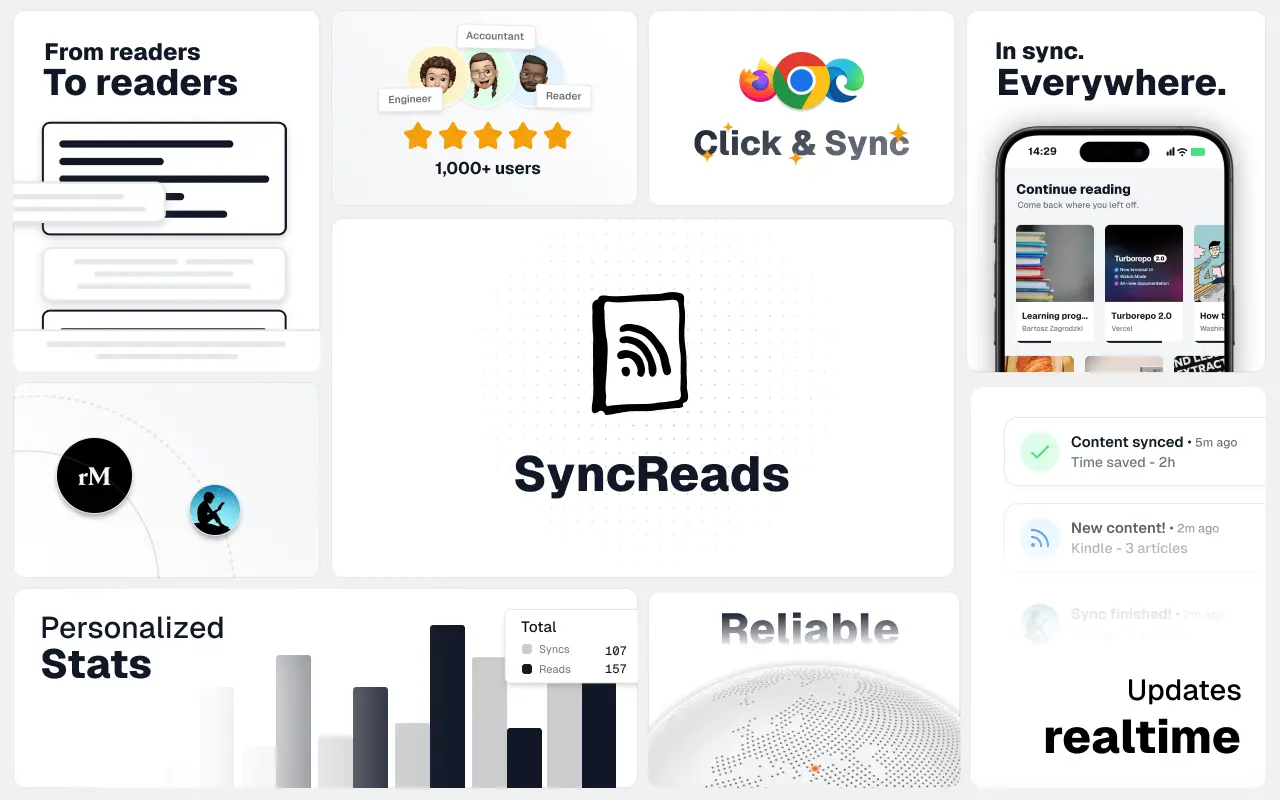
SyncReads
Sync your favorite content for distraction-free reading, save time and replace multiple apps. Anytime, anywhere 🔄
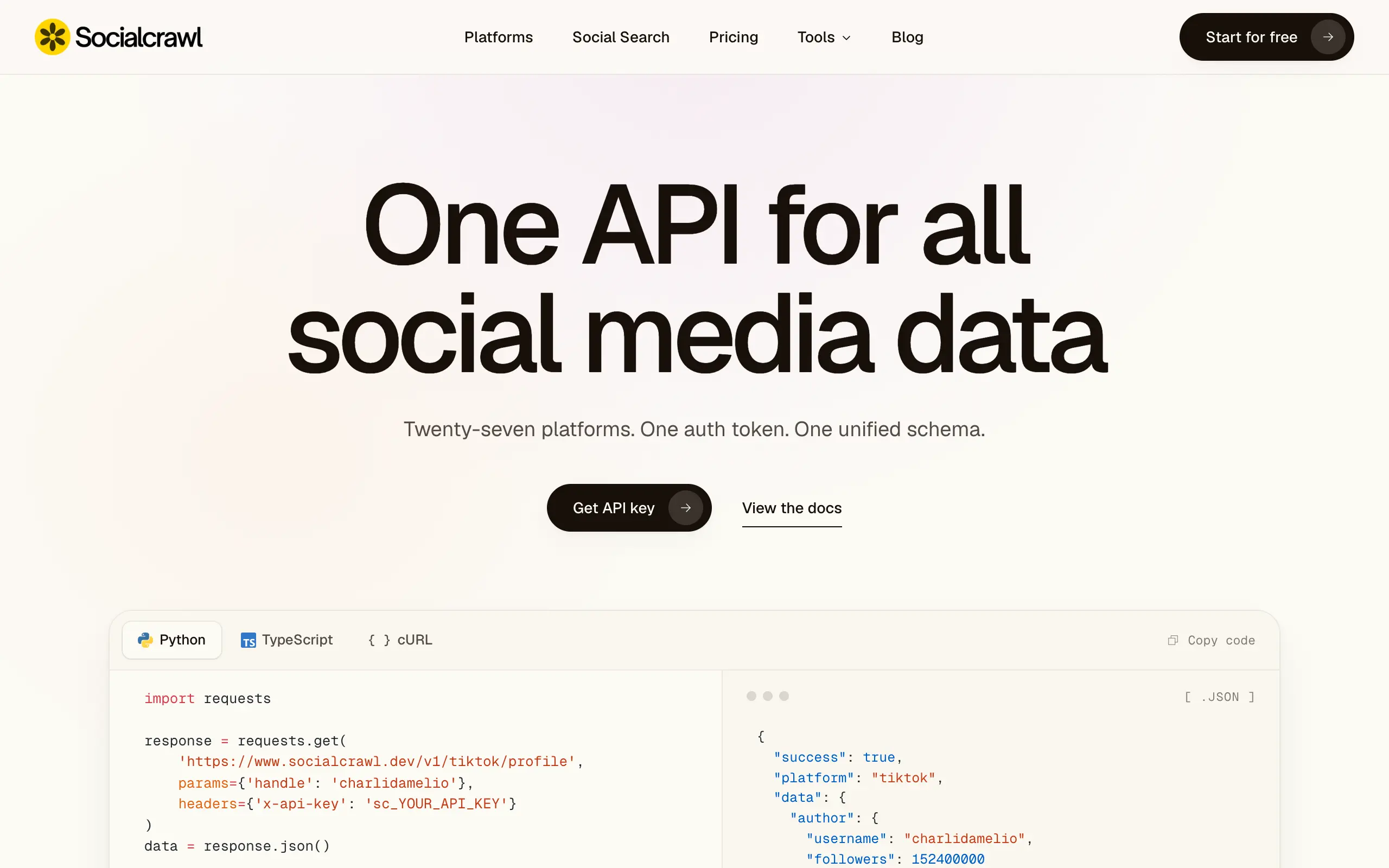
Socialcrawl
Get clean, structured data from 21 platforms like TikTok, Instagram, and YouTube with a single request 📊
Statiko
Monitor any Telegram channel in real time - track posts, edits, deletions, and growth with AI recaps 📡
Shibui
AI website builder - describe your business, pick a niche template, edit by chatting, and publish instantly ✨
Pro Service
Find verified home service professionals, compare quotes, and pay securely through escrow - built for Brazilians across the US 🏠
RankGrow
Fix your SEO with AI agents - connect Search Console, get prioritized tasks, and grow organic traffic 📈
SyncReads
Sync your favorite content for distraction-free reading, save time and replace multiple apps. Anytime, anywhere 🔄
Socialcrawl
Get clean, structured data from 21 platforms like TikTok, Instagram, and YouTube with a single request 📊
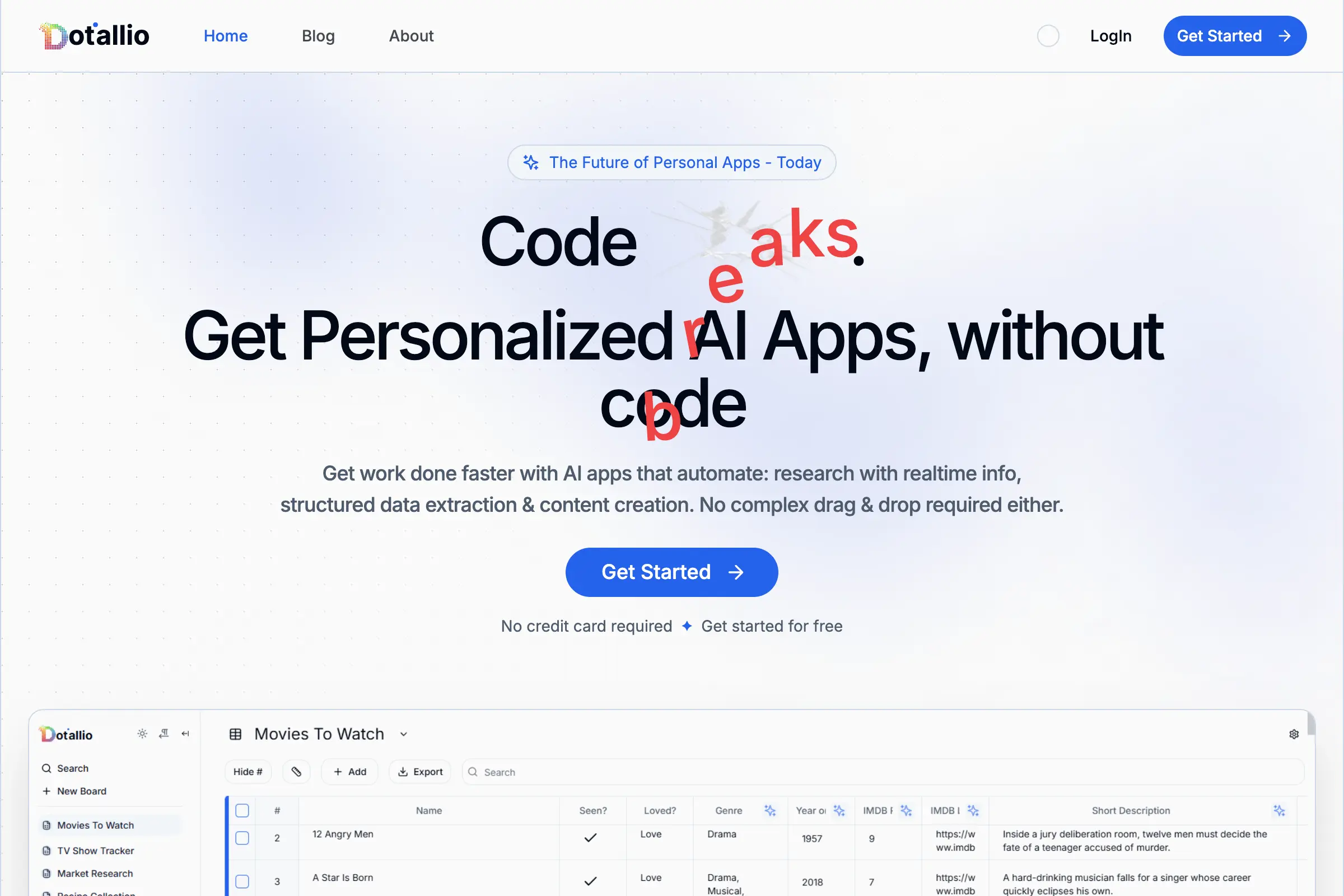
Dotallio
Personalized AI apps that automate research, data extraction, and content creation without code 🤖

Talk to Santa
Enjoy a magical live video chat or receive a unique AI-generated video greeting from Santa Claus 🎅

pozywka.pl
Scalable blog for food journalist, focused on performance and user experience 🌭
zagrodzki.me
Personal blog and portfolio of Bart Zagrodzki, where he shares his knowledge and work 💼

TurboStarter
Ship your startup everywhere. In minutes.
HTML to Markdown
Convert HTML to Markdown with ease, directly in your browser 📄
Dotallio
Personalized AI apps that automate research, data extraction, and content creation without code 🤖
Talk to Santa
Enjoy a magical live video chat or receive a unique AI-generated video greeting from Santa Claus 🎅
pozywka.pl
Scalable blog for food journalist, focused on performance and user experience 🌭
zagrodzki.me
Personal blog and portfolio of Bart Zagrodzki, where he shares his knowledge and work 💼
TurboStarter
Ship your startup everywhere. In minutes.
HTML to Markdown
Convert HTML to Markdown with ease, directly in your browser 📄
Omichat
Chat with 50+ AI models, including ChatGPT and Claude, in one place - switch models anytime without losing context 🤖
Claude Fast
Supercharge your Claude Code with 6x effective context window and specialized AI agents 🤖

EmojAI
AI-powered emoji picker with smart, context-aware suggestions 🤖

Solohacker
Autonomous company launcher - AI agents work 24/7, escalate what matters, and you stay in control 🤖

BeRawi: Storytelling Coach
Practice storytelling daily with instant feedback to sound clearer, more engaging, and confident 🎤
Omichat
Chat with 50+ AI models, including ChatGPT and Claude, in one place - switch models anytime without losing context 🤖
Claude Fast
Supercharge your Claude Code with 6x effective context window and specialized AI agents 🤖
EmojAI
AI-powered emoji picker with smart, context-aware suggestions 🤖
Solohacker
Autonomous company launcher - AI agents work 24/7, escalate what matters, and you stay in control 🤖
BeRawi: Storytelling Coach
Practice storytelling daily with instant feedback to sound clearer, more engaging, and confident 🎤

Connect with like-minded people
Join our community to get feedback, support, and grow together with 1,000+ builders on board, let's ship it!
Join usShip your startup everywhere. In minutes.
Don't burn tokens on setup and start building features on day one.