UstoLink
A trusted local-service app for finding plumbers, electricians, tutors, and repair specialists in Tajikistan. Book via chat, ratings, and clear prices.
Finding a reliable plumber, electrician, tutor, or appliance repair specialist is still harder than it should be in Tajikistan. Most people rely on relatives, neighborhood chats, Telegram groups, or informal recommendations. These methods can work, but they rarely provide consistent pricing, verified quality, clear availability, or recourse when a job goes wrong.
UstoLink is positioned as a trusted local-service app for Tajikistan that makes service discovery and booking simpler. Customers can find qualified specialists, compare ratings and prices, chat before booking, and make informed decisions. At the same time, independent professionals gain a practical digital channel for building their reputation and receiving qualified work requests.
The strongest opportunity is not simply building another directory. It is creating a trust and transaction layer for a fragmented offline service economy.
Why a local service app in Tajikistan has a real market opportunity
The core problem behind local services is trust. A customer does not just need an electrician; they need an electrician who will arrive on time, understand the job, communicate clearly, charge fairly, and leave the property safe. In a market where referrals remain dominant, this trust is often personal rather than systematized.
A local-service marketplace such as UstoLink can make that trust visible and repeatable.
For customers, the value is immediate:
- Search for nearby service professionals without asking multiple contacts
- Compare specialists by reviews, price ranges, completed jobs, and response time
- Explain the job through chat before committing
- Book at a time that fits their schedule
- Keep a record of conversations, prices, and service history
- Report problems or request support when expectations are not met
For service providers, the platform creates a professional identity that is more durable than word of mouth alone:
- A searchable profile with service categories and geographic coverage
- A portfolio of completed work and customer reviews
- New leads without needing sophisticated digital marketing skills
- Tools to communicate with customers and manage bookings
- Potential access to repeat clients and business customers
- A pathway to formalize a reputation-based microbusiness
This is particularly relevant in cities such as Dushanbe, Khujand, Bokhtar, Kulob, and other growing urban areas where households increasingly expect on-demand convenience but local service discovery remains informal.
The key insight
UstoLink should be designed as a trust-first marketplace, not just a listing website. Search listings are easy to copy. Verified profiles, reliable booking flows, reputation data, service standards, and dispute handling are much harder to replicate.
The target audience for UstoLink
A strong go-to-market strategy begins by narrowing the audience. “Everyone who needs a repair” is too broad for an early product. UstoLink should prioritize customer and provider groups with urgent demand, repeat use cases, and a strong need for trust.
Urban households seeking reliable home services
The first customer segment is apartment dwellers, homeowners, and families in dense urban areas. Their most common needs tend to be urgent, practical, and difficult to delay.
Typical requests include:
- Plumbing repairs such as leaks, blocked drains, faucet replacement, and water heater installation
- Electrical work such as outlet repairs, wiring issues, lighting installation, and circuit troubleshooting
- Appliance maintenance for washing machines, refrigerators, air conditioners, and kitchen equipment
- Handyman tasks including furniture assembly, mounting, painting, and small renovations
- Cleaning, moving help, locksmith work, and seasonal maintenance
This group values speed, transparent expectations, and basic assurances that the provider is legitimate. They are often willing to pay a modest convenience premium when the alternative is spending hours calling unknown contacts.
Families looking for tutors and education support
Tutoring is a strategically attractive category because it has recurring demand and higher lifetime value than one-off repair work. Parents may seek tutors for school subjects, university entrance preparation, language study, computer skills, or music instruction.
Unlike emergency home repairs, tutor selection is based heavily on credibility, qualifications, safety, lesson format, and reviews. UstoLink can support this category with provider bios, subject tags, experience levels, languages, hourly rates, lesson location, and availability calendars.
A parent should be able to answer practical questions quickly:
- Does this tutor teach my child’s subject and grade level?
- Can lessons happen at home, online, or at a learning center?
- What is the hourly rate?
- Does the tutor have verified credentials or strong parent reviews?
- Is the tutor available after school or on weekends?
Independent specialists who need a better client pipeline
The supply side includes self-employed tradespeople, small teams, tutors, repair specialists, and aspiring professionals who currently depend on referrals. Many have strong technical skill but limited ability to market themselves online, track inquiries, or prove their work quality to new customers.
UstoLink should not assume that every provider is comfortable with complex software. The provider experience needs to be mobile-first, language-accessible, and optimized for low administrative effort.
The promise to providers should be simple: build a trusted profile, respond to suitable jobs, earn reviews, and grow repeat business.
Small businesses and property managers
After initial consumer traction, UstoLink can expand into B2B-lite demand. Cafes, retail stores, clinics, offices, landlords, and property managers regularly need electricians, cleaners, repair technicians, IT support, and maintenance workers.
This segment can create predictable, higher-value demand. However, it often requires invoices, service-level expectations, recurring scheduling, multiple-user accounts, and more formal dispute resolution. It should be a second-phase opportunity rather than the first version of the product.
The service marketplace gap UstoLink can fill
Many markets have social media groups, classified listings, and messaging channels where people advertise services. These tools solve visibility, but they do not solve the complete customer journey.
A generic classifieds post usually lacks:
- Consistent service categories
- Verified identity signals
- Standardized reviews
- Upfront or estimated prices
- Availability and scheduling
- Job records
- Customer support
- Provider accountability
- Structured resolution when there is a disagreement
UstoLink fills the gap between informal referrals and a fully managed service platform. It can preserve the familiarity of chat-based communication while adding the structure people need to book with confidence.
| Customer need | Informal referrals | Classified listings | UstoLink model | Business impact |
|---|---|---|---|---|
| Find a suitable specialist | Slow and limited | Many unstructured options | Category and location search | Faster matching |
| Assess trust | Personal only | Usually unclear | Reviews, verification, portfolio | Higher conversion |
| Understand pricing | Often unknown | Inconsistent | Price ranges and quotes | Fewer disputes |
| Arrange the work | Calls and messages | External communication | In-app chat and booking | Trackable workflow |
The primary keyword opportunity is local service app in Tajikistan. Supporting keyword themes can include “find a plumber in Tajikistan,” “electrician booking app,” “trusted repair specialists,” “home services marketplace,” “tutor booking platform,” and “on-demand local services.” These terms should appear naturally across landing pages, location pages, service-category pages, and educational content.
UstoLink’s unique selling proposition
UstoLink’s USP is straightforward: it helps people in Tajikistan find and book trusted local specialists through a transparent, chat-first marketplace with ratings and clear price expectations.
That positioning combines four elements that matter in local service transactions:
Local relevance
Service categories, languages, payment behavior, and customer expectations are designed for Tajikistan rather than copied blindly from a foreign marketplace.
Practical trust signals
Profiles, verification tiers, portfolios, job history, ratings, and response behavior give customers evidence before they book.
Chat-first booking
Customers can describe uncertain jobs with photos and messages, while providers can clarify scope before accepting work.
Price clarity
Starting prices, common-job ranges, call-out fees, and written quotes reduce surprise charges and improve confidence.
The phrase “clear prices” deserves careful product design. Many repair jobs cannot be quoted exactly until a specialist inspects the issue. UstoLink should avoid promising fixed prices where they are unrealistic. Instead, it can provide transparent pricing in layers:
- Starting fee or visit fee
- Typical price range for standard jobs
- What is included and excluded
- Whether materials are included
- Estimated duration
- Written quote requirement for larger work
- Customer approval before work beyond an agreed threshold
This approach is more trustworthy than displaying artificially precise prices.
Core UstoLink features for a trusted local-service app
The minimum viable product should focus on completing the most important marketplace loop: customer request, provider response, confirmed booking, completed job, review.
Customer discovery and search
Customers need fast ways to find an appropriate provider. The search experience should support both browsing and urgent intent.
Core filters should include:
- Service category and subcategory
- City, district, or service radius
- Available now, today, or scheduled date
- Price range or starting price
- Rating and completed jobs
- Languages spoken
- Home visit, remote service, or provider location
- Verification level
- Individual specialist or service company
For an early release, avoid overbuilding map functionality if reliable address data is inconsistent. Location can begin with city and neighborhood selection, then expand to map pins and service-radius matching as marketplace density improves.
Provider profiles that establish credibility
A profile is a provider’s digital storefront. It needs to answer the questions that customers would normally ask through a personal referral.
Each provider profile should include:
- Name or business name
- Professional photo or logo
- Service categories and skills
- Cities or neighborhoods served
- Years of experience
- Languages spoken
- Starting prices or price ranges
- Working hours and response time
- Before-and-after portfolio photos where appropriate
- Verification badge and what it means
- Customer rating, written reviews, and completed job count
- Cancellation and no-show history where meaningful
- Contact and booking options controlled through the platform
A provider should be able to edit basic details, but sensitive data such as verification status, dispute outcomes, and review moderation must remain platform-controlled.
Chat, photos, and job scoping
Chat is essential because local service requests are often ambiguous. A customer may say “the washing machine does not work” without knowing whether the issue is electrical, mechanical, or plumbing-related. The ability to send photos, video, location details, and voice notes can dramatically improve quote quality.
The conversation should be connected to a service request rather than existing as an unstructured inbox. Each request can have a status such as:
- New request
- Provider replied
- Quote sent
- Booking confirmed
- Provider on the way
- Job in progress
- Completed
- Reviewed or disputed
This workflow improves visibility for both parties and creates operational data for UstoLink.
Booking and availability management
Booking should support two modes:
- Urgent request for services needed as soon as possible
- Scheduled booking for tutoring, installations, maintenance, and non-urgent work
At launch, availability can be lightweight. Providers can set working days, general hours, and temporary unavailability. As the platform matures, add calendar synchronization, appointment buffers, recurring bookings, and route-aware scheduling.
Ratings and reviews that users can trust
Reviews are a major defensibility layer, but only if they reflect real transactions. UstoLink should allow reviews only after a completed booking recorded on the platform.
A useful review system includes:
- A five-point overall rating
- Category ratings such as punctuality, communication, workmanship, and price clarity
- Optional written feedback
- A provider response feature
- Photo attachments when appropriate
- Fraud detection and moderation
- A process for reporting abusive or irrelevant reviews
Do not display raw ratings without context. A 5.0 rating from two jobs is not equivalent to a 4.8 rating from 150 completed jobs. Show both the average rating and review volume.
Trust and safety controls
Trust features should be visible but proportionate. Heavy verification can reduce supply in the beginning, while weak verification can damage the brand after a small number of bad experiences.
A tiered verification model is a practical compromise:
- Basic profile for providers who complete phone verification and profile requirements
- Identity verified for providers who submit approved identity documentation
- Business verified for registered businesses or qualified professionals with supporting documents
- Top performer for providers who meet quality, reliability, and completed-job thresholds
UstoLink should clearly explain what every badge represents. A badge should never imply guarantees that the company cannot realistically provide.
Building a marketplace that works locally
A marketplace is not a standard SaaS product. It has a cold-start problem because customers want choice while providers want demand. UstoLink needs enough quality supply in a narrow area before it spends heavily on customer acquisition.
Start with a focused category and city strategy
Launching every category across Tajikistan at once would spread operational resources too thin. A better approach is to start in Dushanbe with a small number of high-intent categories.
A sensible early category mix could be:
- Plumbing
- Electrical repairs
- Appliance repair
- Handyman services
- Home cleaning
- School tutoring
These categories balance urgency, frequency, customer willingness to seek help, and manageable verification requirements. Medical, legal, childcare, and high-risk construction services should be considered later because they require stronger credential checks, insurance considerations, and more rigorous policy design.
Recruit supply before scaling demand
The first 50 to 150 providers are not merely users; they are the foundation of the product experience. UstoLink should recruit them directly through local outreach, trade networks, referral programs, repair shops, training centers, and targeted social campaigns.
Supply onboarding should include real human assistance. Help providers set up profiles, photograph completed work, define service areas, create pricing guidance, and understand response expectations. This is operationally intensive, but it creates higher-quality marketplace inventory than an open self-serve signup alone.
Build density instead of vanity metrics
The meaningful early metric is not total registrations. It is whether a customer in a target district can receive useful responses quickly.
Monitor:
- Percentage of requests receiving a provider response
- Median time to first response
- Quote-to-booking conversion rate
- Booking completion rate
- Repeat booking rate
- Customer satisfaction after completed jobs
- Provider acceptance rate
- Cancellation and no-show rate
- Contribution margin per completed booking
These metrics reveal whether UstoLink is creating a dependable local-service experience.
Recommended technology stack for UstoLink
The right stack should support rapid iteration, reliable mobile experiences, secure messaging, and an operational dashboard. It should also avoid unnecessary infrastructure complexity before product-market fit.
A modern web-first architecture can work well for the initial launch. A responsive progressive web app can give customers and providers an app-like experience without requiring immediate iOS and Android app installs.
Recommended initial stack
- Frontend using Next.js and React for server-rendered SEO pages, fast interfaces, and reusable components
- Styling with Tailwind CSS for consistent, rapid UI development
- Backend using Node.js with TypeScript
- Database using PostgreSQL for transactional booking records, profiles, reviews, and payments
- ORM using Prisma for typed database access and migration workflows
- Authentication using Auth.js or a purpose-built phone authentication service appropriate to local requirements
- File storage using Cloudflare R2 or Amazon S3 for portfolio images, job photos, and verification documents
- Monitoring using Sentry for error tracking and production diagnostics
- Analytics using PostHog for product analytics, funnels, feature flags, and session insights
The web application should include a customer interface, provider workspace, and internal operations console. These can share a design system while enforcing strict role-based access.
Trade-offs between a web app and native mobile apps
A progressive web app is usually the fastest route to market. It lowers acquisition friction because a customer can open a link, search for a specialist, and submit a request without downloading anything.
However, native apps become valuable when UstoLink needs:
- More reliable push notifications
- Background location features
- Better camera and media handling
- Offline capabilities
- Higher provider engagement through a dedicated daily workflow
- App-store distribution and brand presence
The recommended sequence is web-first validation, then a provider-focused native app once booking volume justifies it. Providers are likely to benefit from native notifications earlier than occasional customers.
Data model essentials
The product architecture should treat a booking as the central object. Everything important should connect to it: customer, provider, service category, messages, quote, schedule, status changes, payment state, review, refund, and dispute.
A simplified TypeScript model might look like this:
type BookingStatus =
  | "REQUESTED"
  | "QUOTED"
  | "CONFIRMED"
  | "ON_THE_WAY"
  | "IN_PROGRESS"
  | "COMPLETED"
  | "CANCELLED"
  | "DISPUTED";

type Booking = {
  id: string;
  customerId: string;
  providerId: string;
  serviceCategoryId: string;
  status: BookingStatus;
  requestedAt: Date;
  scheduledFor?: Date;
  quotedAmount?: number;
  currency: "TJS";
  customerApprovedQuote: boolean;
  completionConfirmedAt?: Date;
};
A clear state model prevents common marketplace failures, such as allowing reviews before work is complete or charging a commission on cancelled requests.
Monetization options for UstoLink
The best monetization model should align with trust, provider economics, and the local payment environment. Charging too early or too aggressively can reduce supply quality. Waiting too long can make unit economics difficult to establish.
Commission on completed bookings
The most direct model is a percentage fee charged on completed bookings. It aligns revenue with customer value and keeps entry barriers low for providers.
This works best when UstoLink can reliably track booking completion and payment. The main challenge is off-platform leakage: after a customer and provider connect, they may complete future jobs outside the platform to avoid fees.
Mitigation includes offering enough value to remain on-platform:
- Verified reviews only for platform bookings
- Easier repeat booking
- Booking history and warranty records
- Support for disputes
- Provider scheduling tools
- Promotional visibility for reliable providers
- Payment convenience where applicable
Paid provider subscriptions
A provider subscription can unlock professional tools rather than charging merely for basic visibility. This model is attractive for tutors, repair shops, and service companies that receive recurring leads.
Possible premium benefits include:
- Priority placement in search
- More service categories
- Advanced analytics
- Portfolio enhancements
- Automated customer follow-ups
- Team accounts
- Branded business profile
- Lower commission rates
- Booking calendar and invoicing tools
A freemium model is often safer at launch. Providers should be able to earn their first jobs before being asked to pay.
Lead fees
UstoLink can charge providers for qualified customer leads, especially in categories where jobs are high value and prices are often negotiated. However, lead fees create frustration when a lead is low quality, duplicated, or does not answer messages.
If this model is used, UstoLink should define a qualified lead clearly and provide credits for invalid requests. Commission on completed work is generally more trust-aligned, though it is operationally harder.
Sponsored placement and local advertising
Once the platform has meaningful search traffic, qualified providers can pay for clearly labeled promoted placement. This should never allow low-quality providers to outrank trusted providers indiscriminately.
Sponsored listings should be labeled and constrained by minimum quality standards. Search relevance, verified status, response time, and customer satisfaction should remain meaningful ranking signals.
Risks and mitigation for a Tajikistan local service marketplace
Every marketplace faces operational risk. A credible UstoLink strategy acknowledges those risks early rather than assuming software alone will solve them.
Begin with transparent provider profiles, human-assisted onboarding, clear support channels, verified reviews, and strong communication around what UstoLink verifies. Use early customer stories only with permission and avoid exaggerated safety claims.
Keep platform bookings valuable through repeat-booking tools, trusted review records, promotional ranking, customer support, quotes, and service history. Avoid excessive fees that make bypassing the marketplace irresistible.
Create category-specific standards, monitor complaint rates, pause providers with repeated issues, and use a structured dispute workflow. High-risk categories should require stronger verification before scale.
Launch in a limited geographic area, recruit supply manually, and pause demand acquisition in neighborhoods where response rates are weak. Marketplace density is more important than broad coverage.
Start with cash or agreed local payment methods if necessary, but record quotes and completion confirmations in the app. Add integrated payments only after validating provider and customer readiness.
Privacy is another critical consideration. UstoLink will handle names, phone numbers, addresses, chat messages, images, and potentially identity documents. The platform should minimize data collection, encrypt sensitive data in transit and at rest where feasible, restrict internal access, define retention periods, and maintain a clear privacy policy.
Verification documents should be stored separately from public profile data. Only the verification status—not the documents themselves—should be visible to customers.
Competitive advantage analysis for UstoLink
UstoLink’s durable advantage will not come from its interface alone. A competitor can recreate category pages and messaging features. The defensible parts of the business are the local network, reputation graph, operating standards, and accumulated transaction data.
Trust data becomes a marketplace moat
Over time, UstoLink can learn which providers respond quickly, complete work reliably, price transparently, receive repeat bookings, and handle disputes well. This allows better search ranking and better customer outcomes.
A reliable ranking model should consider more than star ratings:
- Relevance to the requested service
- Distance or service area match
- Verification tier
- Response time
- Booking acceptance rate
- Completion rate
- Cancellation rate
- Review quality and review volume
- Repeat customer rate
- Price clarity
- Recent activity
This makes the marketplace more useful with every completed transaction.
Local operational knowledge is difficult to copy
Tajikistan-specific knowledge matters. UstoLink needs to understand how customers describe services, which languages are used in conversation, how people expect prices to be discussed, where address systems are inconsistent, and which categories need stronger provider screening.
A global marketplace template may provide technology, but it will not automatically provide local trust. UstoLink can win by being operationally close to its users.
Category expansion creates cross-sell opportunities
A customer who uses UstoLink to find a plumber may later need an electrician, cleaner, tutor, or appliance technician. This lowers customer acquisition costs over time if the experience is positive.
The platform can responsibly use past service behavior to offer useful reminders:
- Seasonal air conditioner servicing
- Water heater maintenance
- Annual home safety checks
- Follow-up cleaning after renovations
- Tutor renewals before school exams
These recommendations should be opt-in, relevant, and privacy-conscious.
SEO strategy for UstoLink and local service discovery
Organic search can become a high-intent acquisition channel because customers often search when they have a specific problem. The website should be structured around useful local landing pages rather than thin, duplicate pages created solely for keywords.
Examples of valuable page types include:
- Plumber services in Dushanbe
- Electrician booking in Dushanbe
- Washing machine repair in Khujand
- Math tutors in Tajikistan
- Air conditioner repair near me
- How much does a plumber cost in Dushanbe?
- How to choose a reliable electrician for home repairs
Every page should contain real, helpful information. Include service descriptions, what customers should prepare, expected price factors, provider availability, safety guidance, and clear booking calls to action.
Build topical authority with practical guides
A content strategy should answer real customer questions, not only target transactional keywords. Helpful guides increase trust and can attract users before they are ready to book.
Useful topics include:
- What to do before calling a plumber for a leak
- Questions to ask before hiring an electrician
- How to compare tutor profiles for your child
- Typical factors that affect appliance repair costs
- Signs that a water heater needs professional servicing
- How UstoLink verifies service providers
- What customers should include in a repair request
For factual claims about internet adoption, labor markets, urbanization, or consumer behavior, cite authoritative sources in the editorial workflow. Good reference categories include national statistical bodies, the World Bank, the International Telecommunication Union, and reputable market research publications. Avoid publishing precise market-size claims without a dated, verifiable source.
Actionable implementation roadmap
The goal is to validate the marketplace’s core promise quickly: can UstoLink help a customer find a trustworthy provider and complete a satisfactory booking better than informal alternatives?
A fast, maintainable SaaS foundation can reduce the time spent wiring up authentication, billing, dashboards, and core product infrastructure. TurboStarter can be a useful starting point for teams that want to focus their effort on UstoLink’s marketplace workflows, trust systems, and local operating model rather than rebuilding common SaaS foundations.
Final perspective on UstoLink
UstoLink can become more than a place to search for a plumber or tutor. It can become the trusted digital layer for local services in Tajikistan: a place where customers know what to expect and skilled professionals can build reputations that travel beyond personal referrals.
The opportunity is strongest when the product remains focused on real-world outcomes. Customers should get reliable help faster. Providers should receive fair access to work and a credible way to demonstrate quality. The platform should make pricing clearer, communication easier, and accountability more visible.
The winning version of UstoLink will not be the one with the most categories on launch day. It will be the one that consistently delivers successful bookings in a focused market, learns from every completed job, and earns the trust required to expand city by city and category by category.
More 👥 B2C Application SaaS ideas
Discover more innovative b2c application SaaS ideas that are trending in 2026. Each idea is AI-generated with market validation and growth potential to help you find your next profitable venture faster than competitors.
Your competitors are building with TurboStarter
Below are some of the SaaS ideas that have been generated and built with our starter kit.
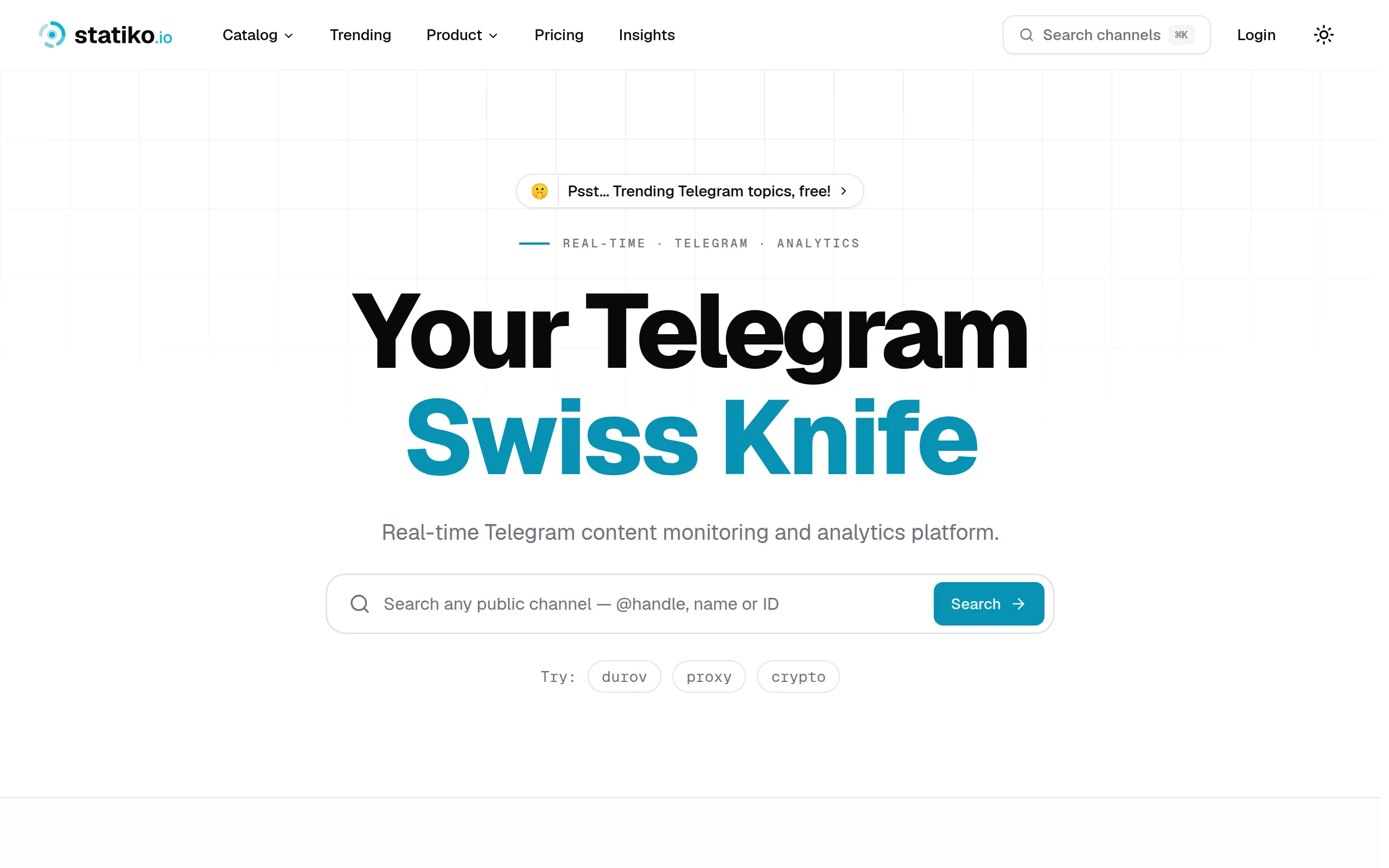
Statiko
Monitor any Telegram channel in real time - track posts, edits, deletions, and growth with AI recaps 📡
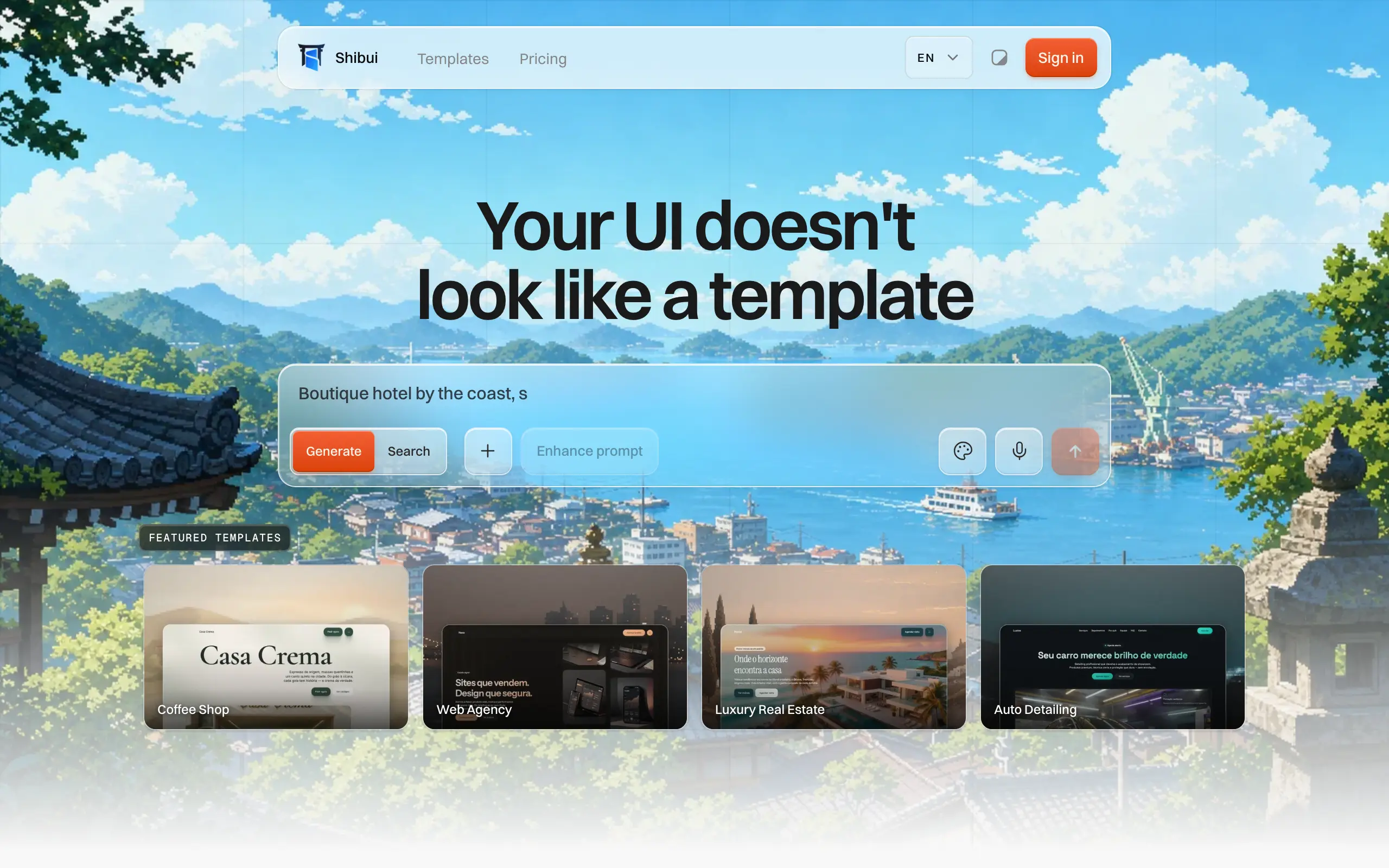
Shibui
AI website builder - describe your business, pick a niche template, edit by chatting, and publish instantly ✨
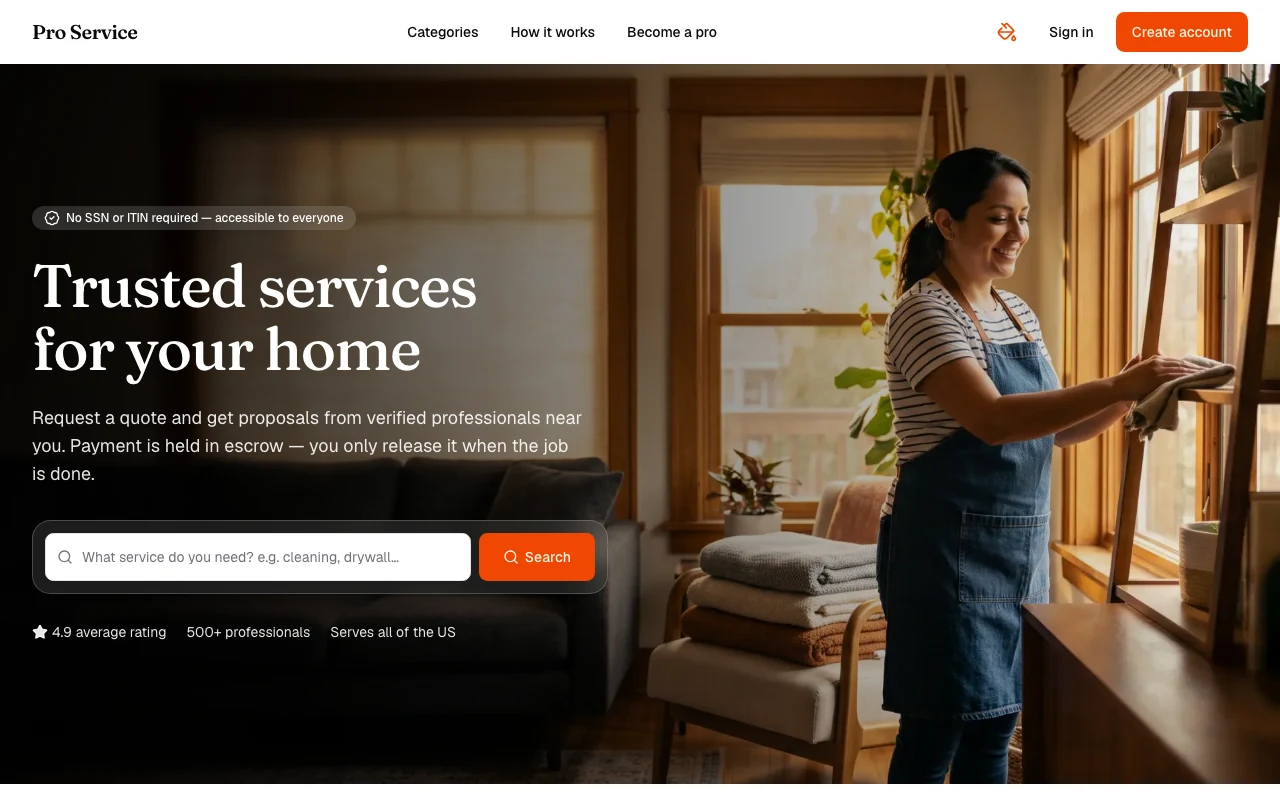
Pro Service
Find verified home service professionals, compare quotes, and pay securely through escrow - built for Brazilians across the US 🏠
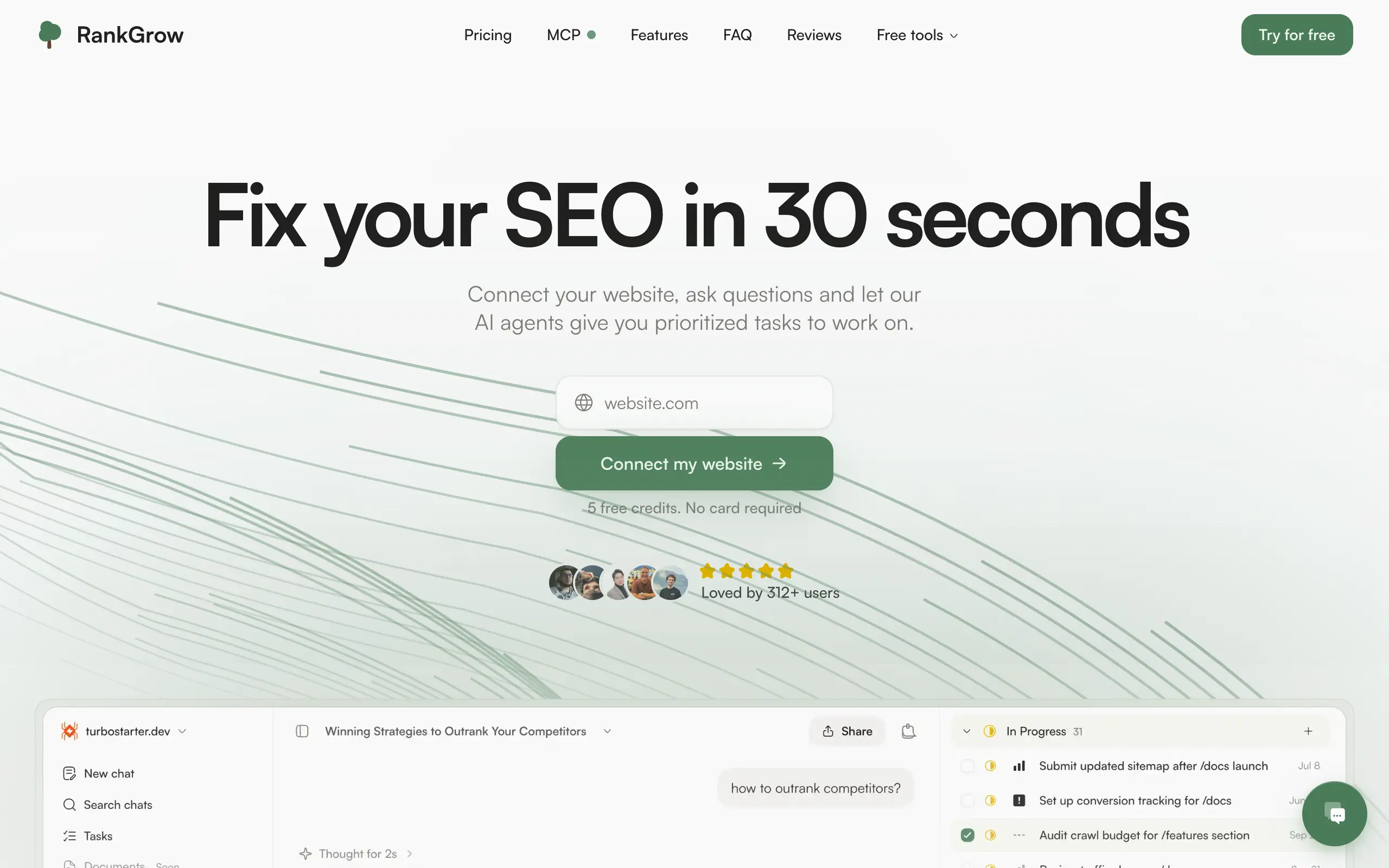
RankGrow
Fix your SEO with AI agents - connect Search Console, get prioritized tasks, and grow organic traffic 📈
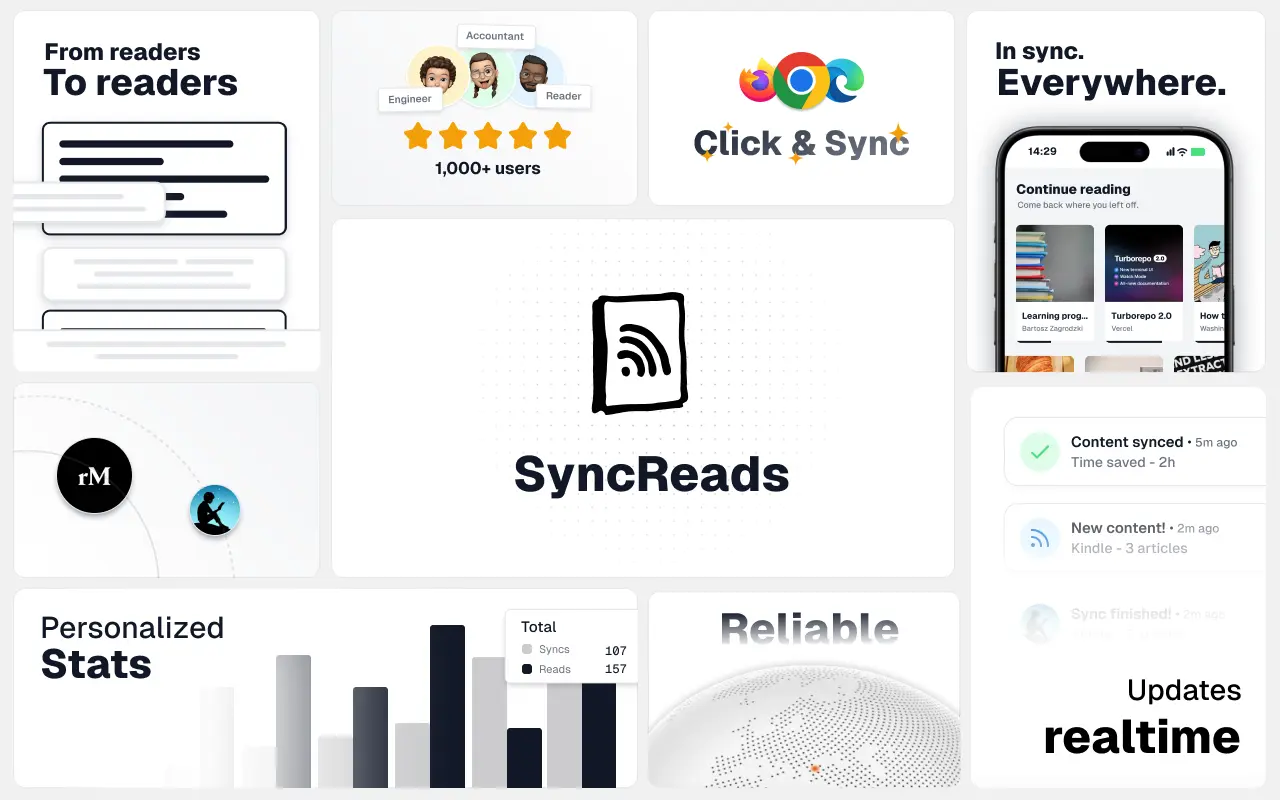
SyncReads
Sync your favorite content for distraction-free reading, save time and replace multiple apps. Anytime, anywhere 🔄
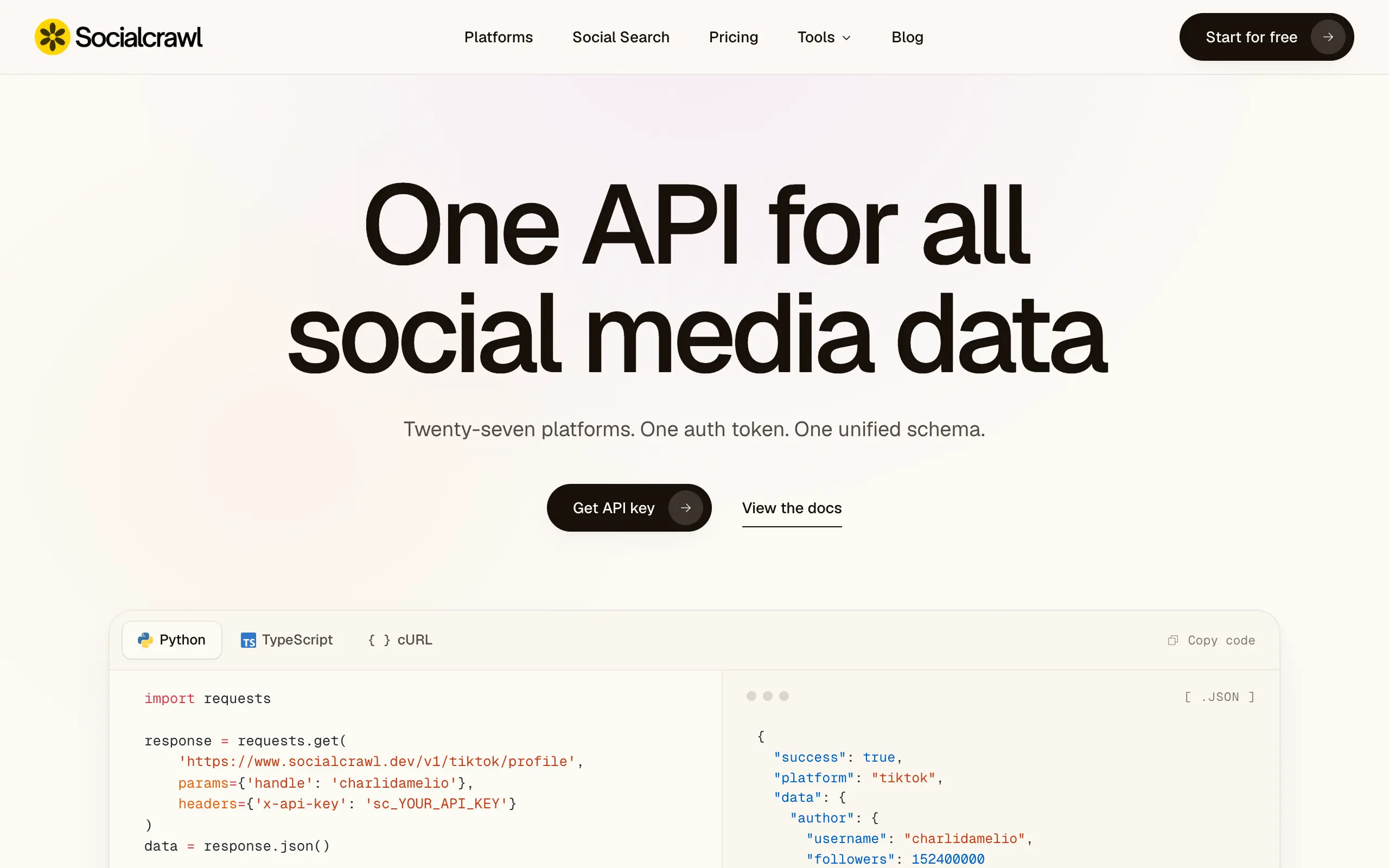
Socialcrawl
Get clean, structured data from 21 platforms like TikTok, Instagram, and YouTube with a single request 📊
Statiko
Monitor any Telegram channel in real time - track posts, edits, deletions, and growth with AI recaps 📡
Shibui
AI website builder - describe your business, pick a niche template, edit by chatting, and publish instantly ✨
Pro Service
Find verified home service professionals, compare quotes, and pay securely through escrow - built for Brazilians across the US 🏠
RankGrow
Fix your SEO with AI agents - connect Search Console, get prioritized tasks, and grow organic traffic 📈
SyncReads
Sync your favorite content for distraction-free reading, save time and replace multiple apps. Anytime, anywhere 🔄
Socialcrawl
Get clean, structured data from 21 platforms like TikTok, Instagram, and YouTube with a single request 📊
Statiko
Monitor any Telegram channel in real time - track posts, edits, deletions, and growth with AI recaps 📡
Shibui
AI website builder - describe your business, pick a niche template, edit by chatting, and publish instantly ✨
Pro Service
Find verified home service professionals, compare quotes, and pay securely through escrow - built for Brazilians across the US 🏠
RankGrow
Fix your SEO with AI agents - connect Search Console, get prioritized tasks, and grow organic traffic 📈
SyncReads
Sync your favorite content for distraction-free reading, save time and replace multiple apps. Anytime, anywhere 🔄
Socialcrawl
Get clean, structured data from 21 platforms like TikTok, Instagram, and YouTube with a single request 📊
Statiko
Monitor any Telegram channel in real time - track posts, edits, deletions, and growth with AI recaps 📡
Shibui
AI website builder - describe your business, pick a niche template, edit by chatting, and publish instantly ✨
Pro Service
Find verified home service professionals, compare quotes, and pay securely through escrow - built for Brazilians across the US 🏠
RankGrow
Fix your SEO with AI agents - connect Search Console, get prioritized tasks, and grow organic traffic 📈
SyncReads
Sync your favorite content for distraction-free reading, save time and replace multiple apps. Anytime, anywhere 🔄
Socialcrawl
Get clean, structured data from 21 platforms like TikTok, Instagram, and YouTube with a single request 📊
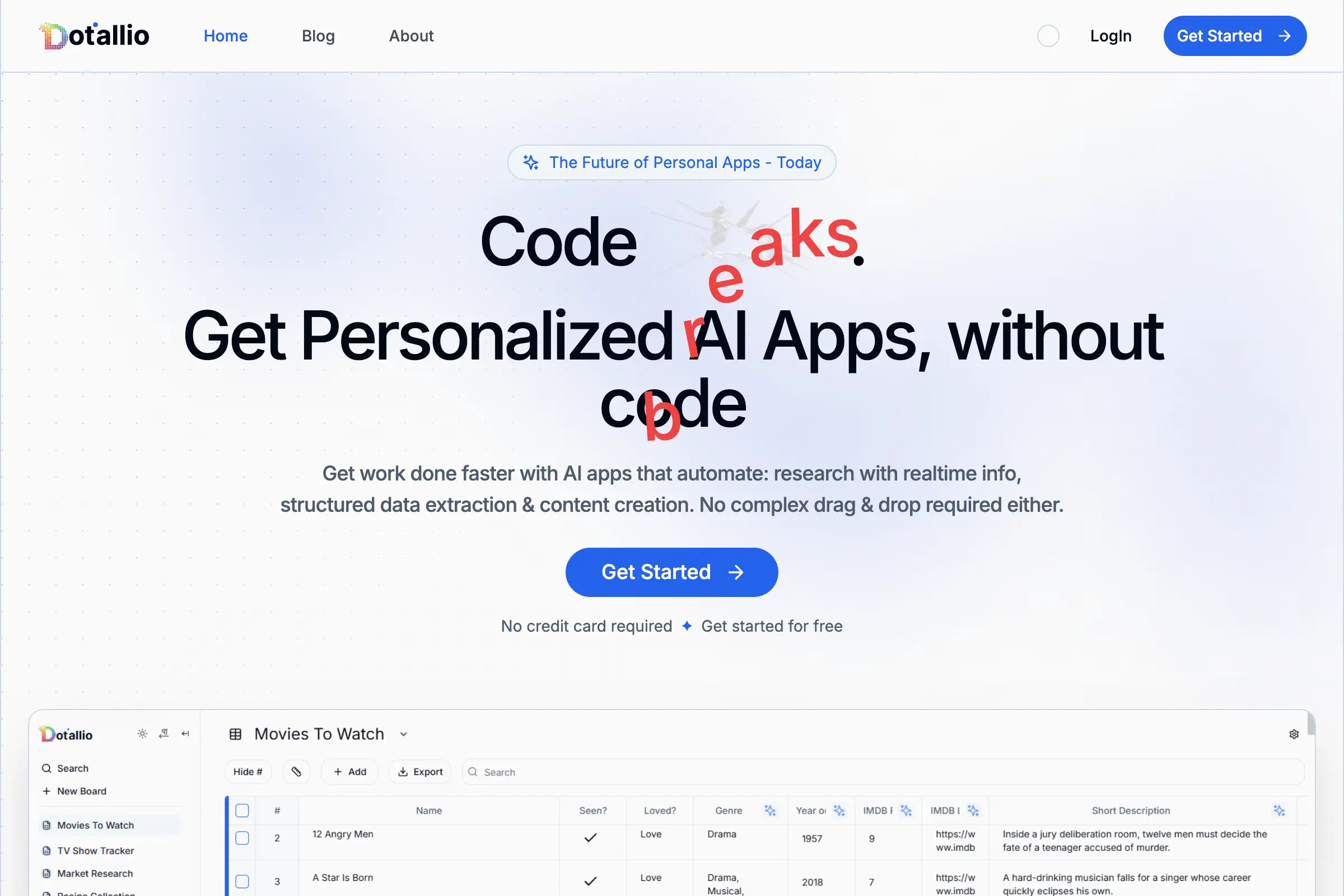
Dotallio
Personalized AI apps that automate research, data extraction, and content creation without code 🤖
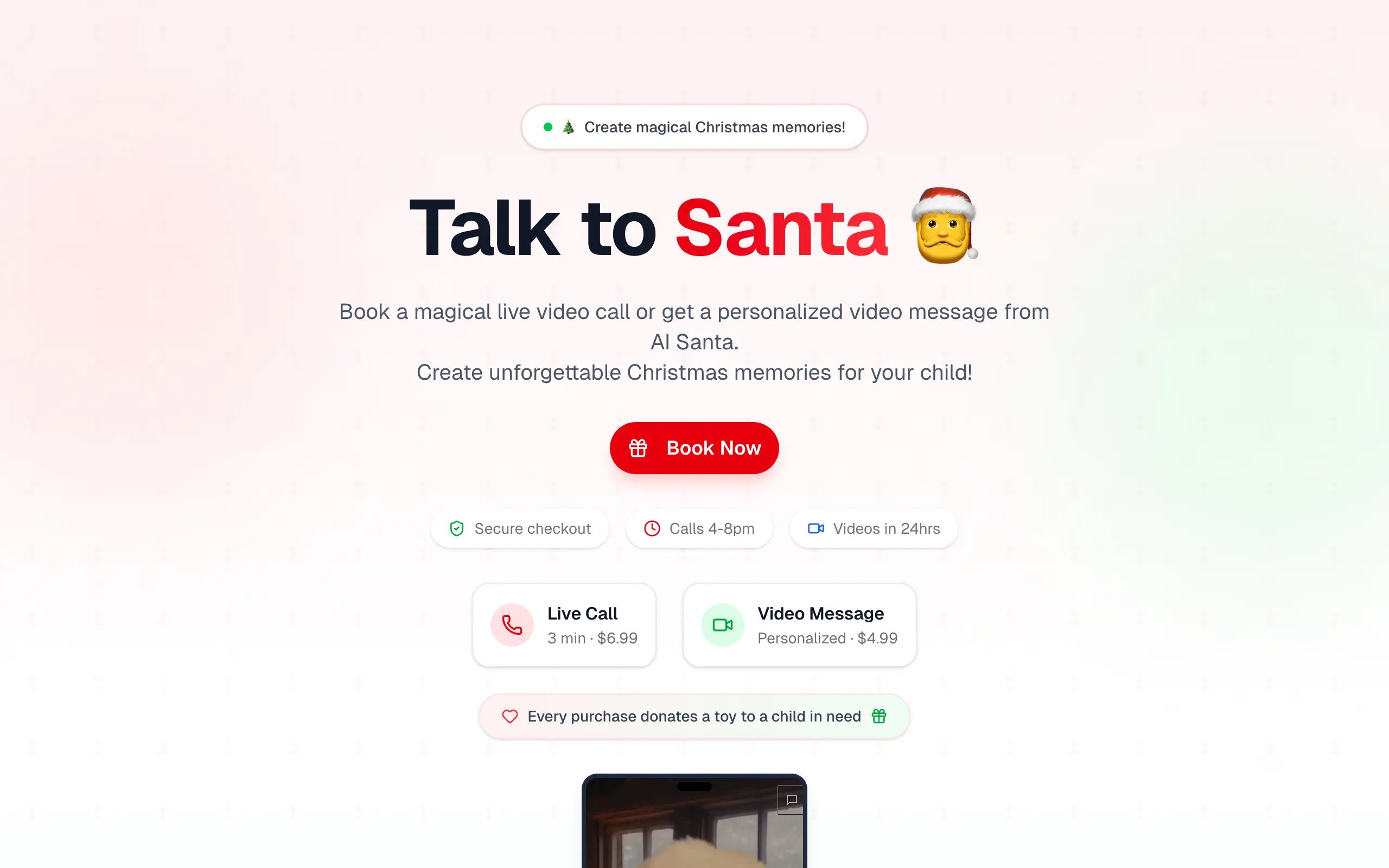
Talk to Santa
Enjoy a magical live video chat or receive a unique AI-generated video greeting from Santa Claus 🎅
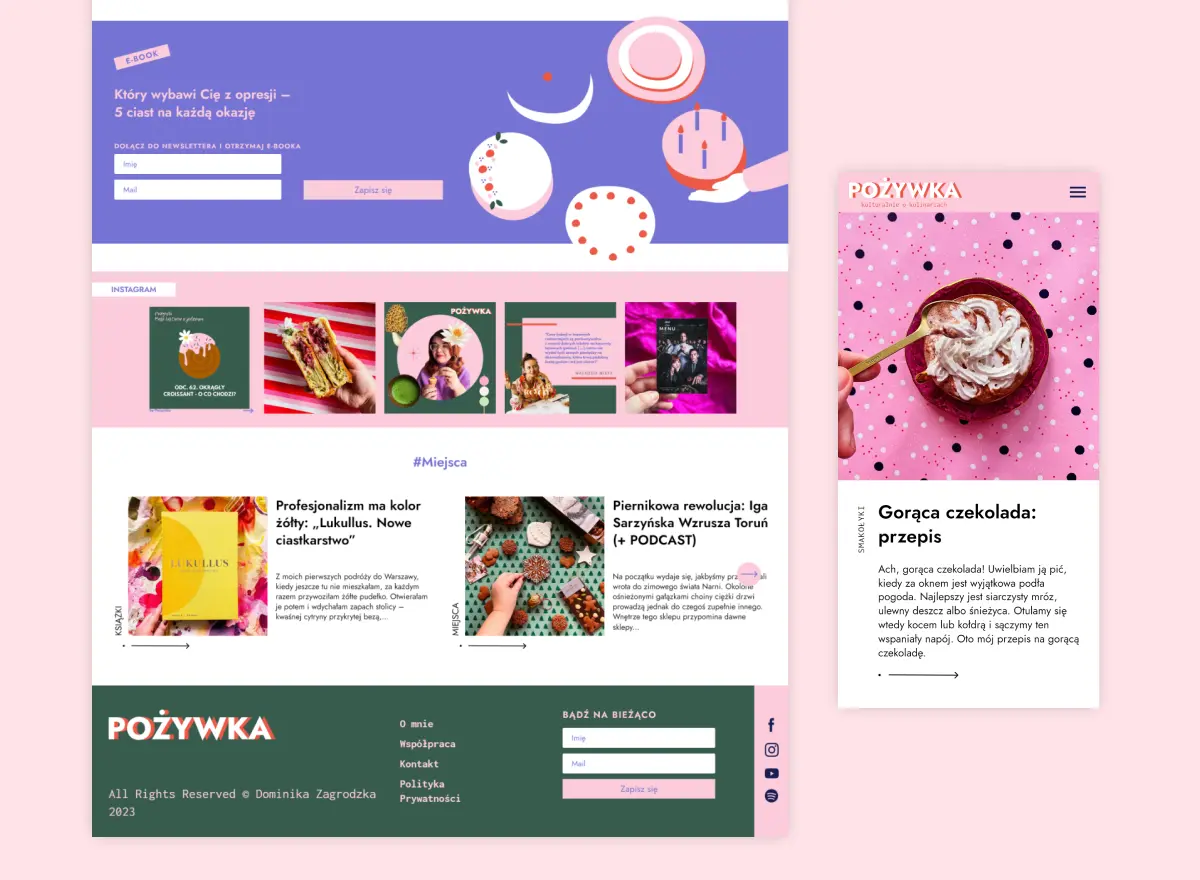
pozywka.pl
Scalable blog for food journalist, focused on performance and user experience 🌭
zagrodzki.me
Personal blog and portfolio of Bart Zagrodzki, where he shares his knowledge and work 💼
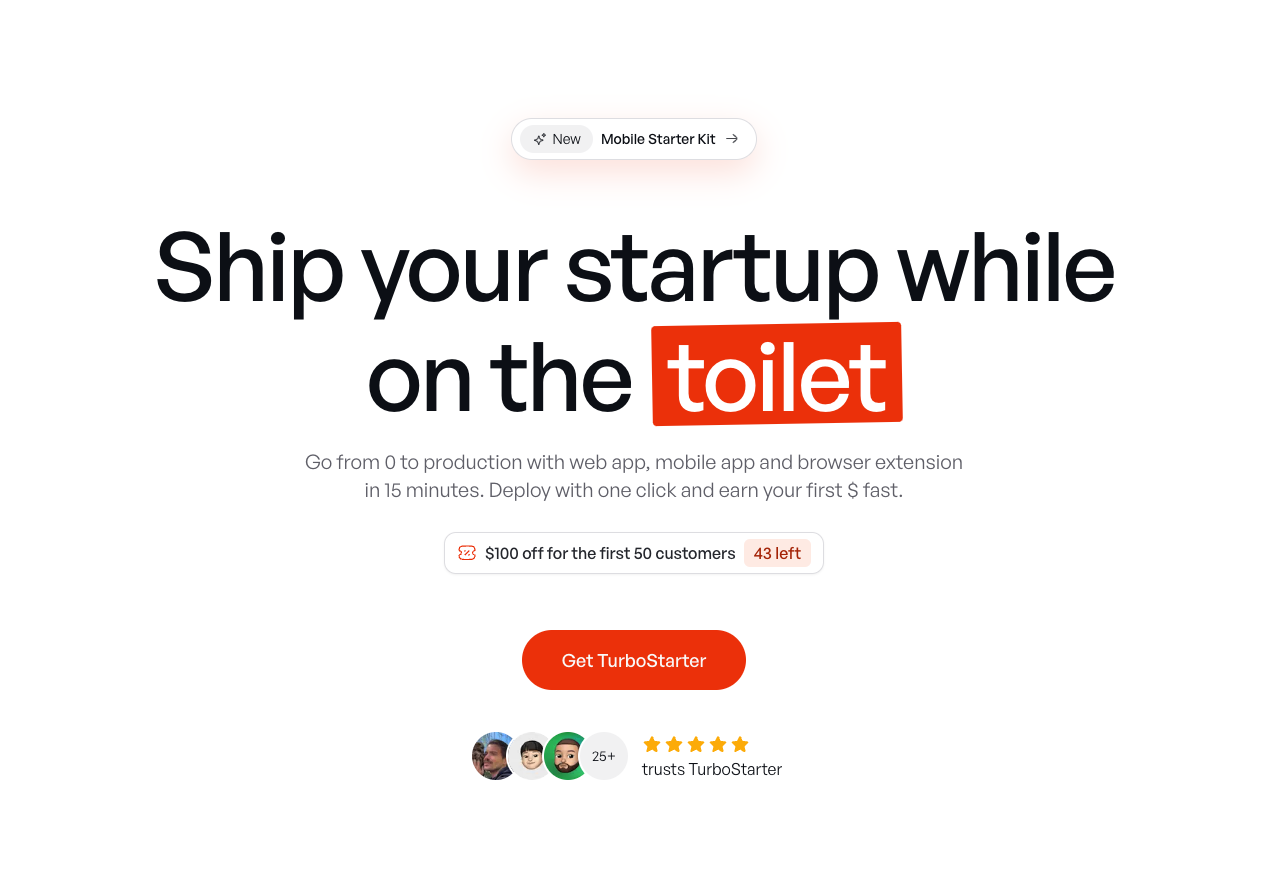
TurboStarter
Ship your startup everywhere. In minutes.
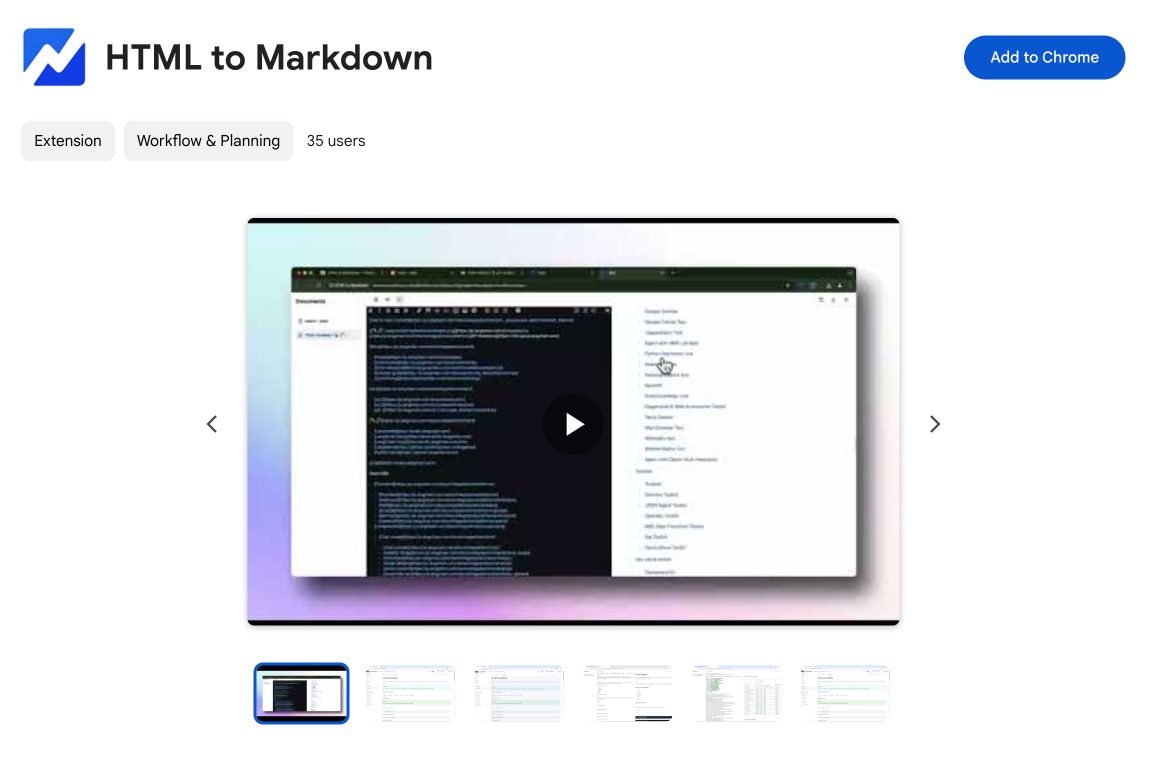
HTML to Markdown
Convert HTML to Markdown with ease, directly in your browser 📄
Dotallio
Personalized AI apps that automate research, data extraction, and content creation without code 🤖
Talk to Santa
Enjoy a magical live video chat or receive a unique AI-generated video greeting from Santa Claus 🎅
pozywka.pl
Scalable blog for food journalist, focused on performance and user experience 🌭
zagrodzki.me
Personal blog and portfolio of Bart Zagrodzki, where he shares his knowledge and work 💼
TurboStarter
Ship your startup everywhere. In minutes.
HTML to Markdown
Convert HTML to Markdown with ease, directly in your browser 📄
Dotallio
Personalized AI apps that automate research, data extraction, and content creation without code 🤖
Talk to Santa
Enjoy a magical live video chat or receive a unique AI-generated video greeting from Santa Claus 🎅
pozywka.pl
Scalable blog for food journalist, focused on performance and user experience 🌭
zagrodzki.me
Personal blog and portfolio of Bart Zagrodzki, where he shares his knowledge and work 💼
TurboStarter
Ship your startup everywhere. In minutes.
HTML to Markdown
Convert HTML to Markdown with ease, directly in your browser 📄
Dotallio
Personalized AI apps that automate research, data extraction, and content creation without code 🤖
Talk to Santa
Enjoy a magical live video chat or receive a unique AI-generated video greeting from Santa Claus 🎅
pozywka.pl
Scalable blog for food journalist, focused on performance and user experience 🌭
zagrodzki.me
Personal blog and portfolio of Bart Zagrodzki, where he shares his knowledge and work 💼
TurboStarter
Ship your startup everywhere. In minutes.
HTML to Markdown
Convert HTML to Markdown with ease, directly in your browser 📄
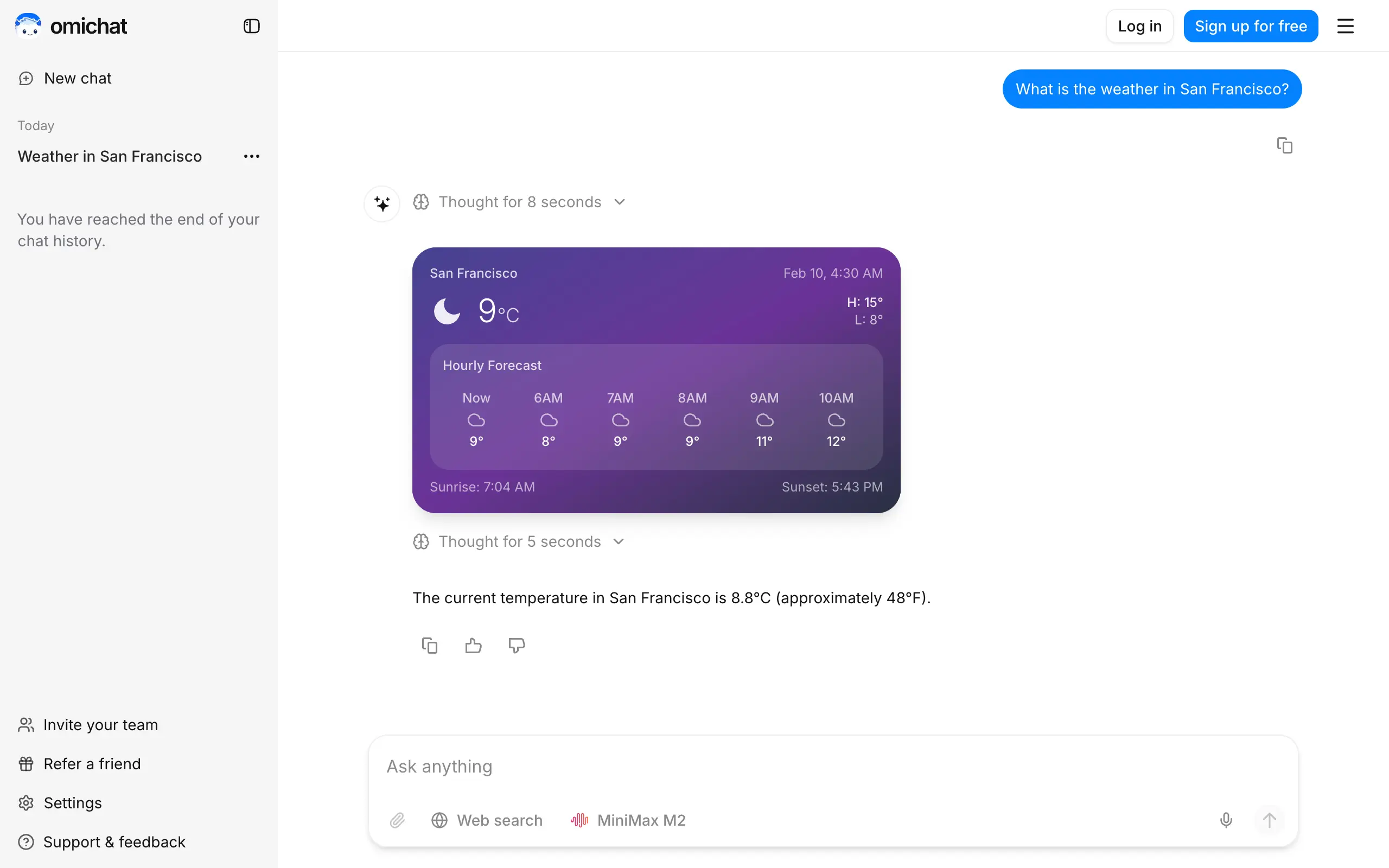
Omichat
Chat with 50+ AI models, including ChatGPT and Claude, in one place - switch models anytime without losing context 🤖
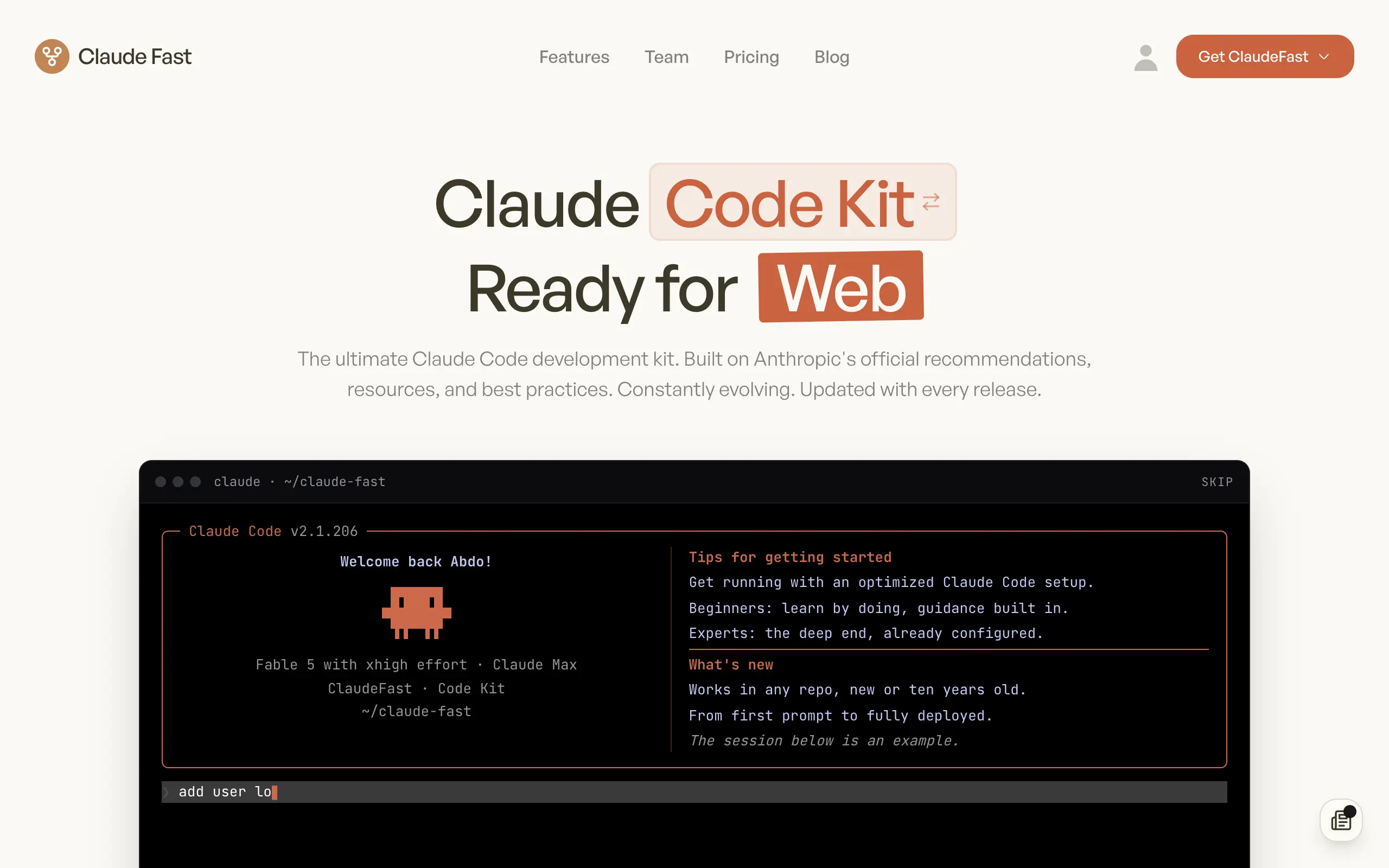
Claude Fast
Supercharge your Claude Code with 6x effective context window and specialized AI agents 🤖
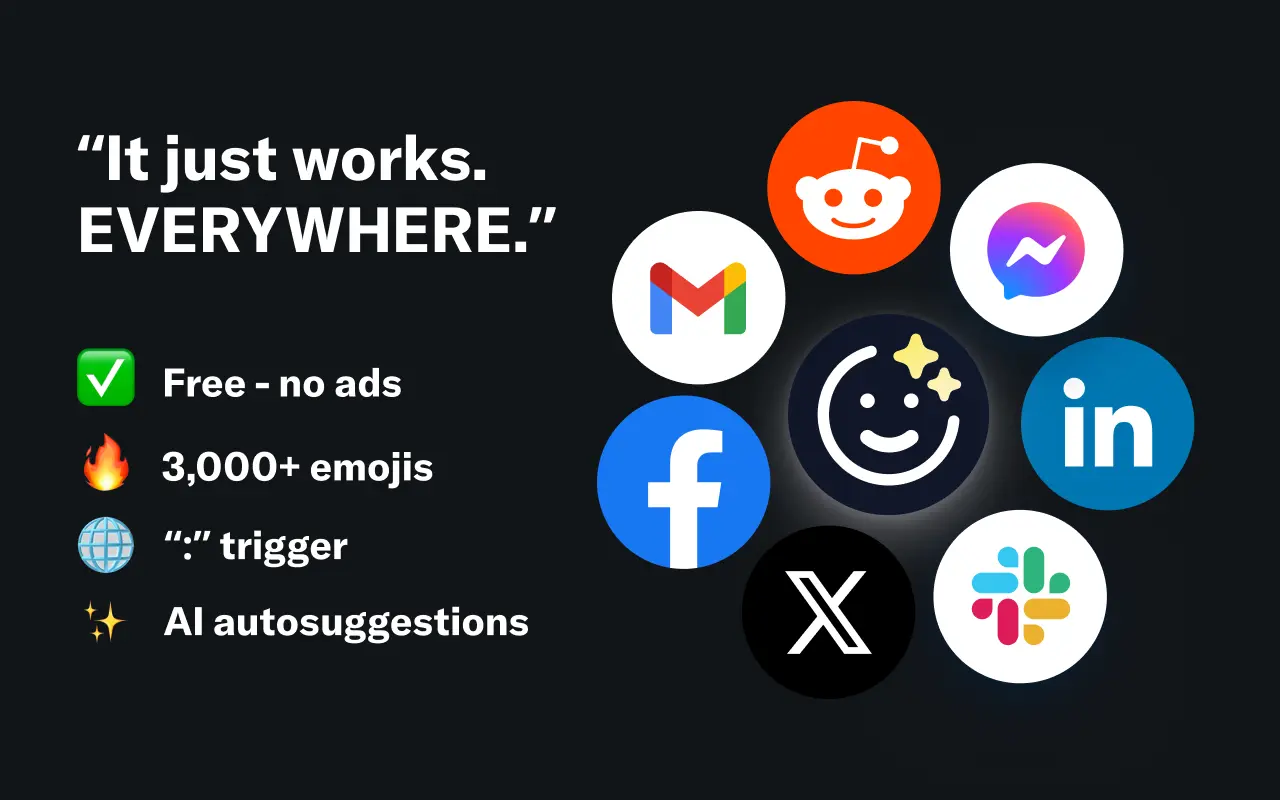
EmojAI
AI-powered emoji picker with smart, context-aware suggestions 🤖
Solohacker
Autonomous company launcher - AI agents work 24/7, escalate what matters, and you stay in control 🤖
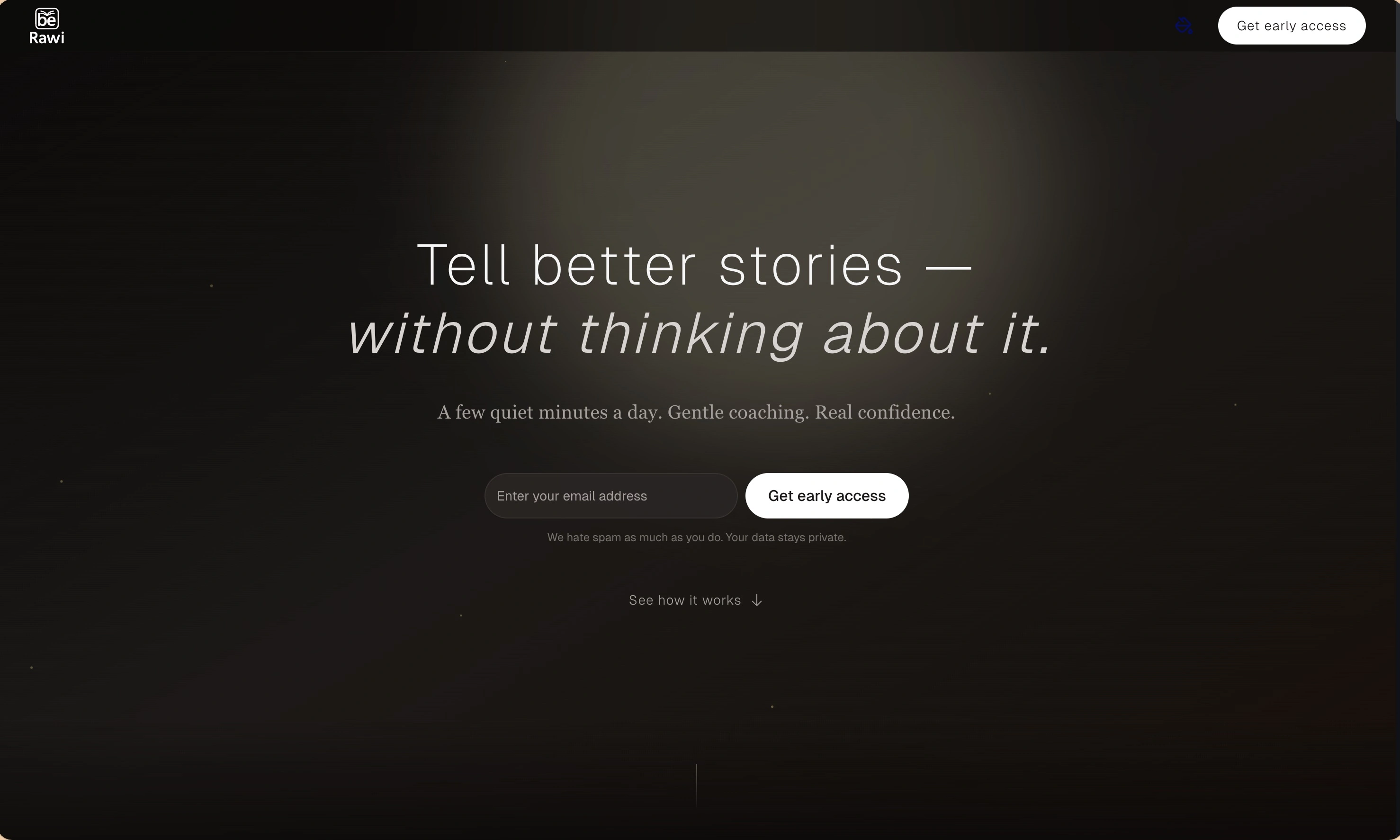
BeRawi: Storytelling Coach
Practice storytelling daily with instant feedback to sound clearer, more engaging, and confident 🎤
Omichat
Chat with 50+ AI models, including ChatGPT and Claude, in one place - switch models anytime without losing context 🤖
Claude Fast
Supercharge your Claude Code with 6x effective context window and specialized AI agents 🤖
EmojAI
AI-powered emoji picker with smart, context-aware suggestions 🤖
Solohacker
Autonomous company launcher - AI agents work 24/7, escalate what matters, and you stay in control 🤖
BeRawi: Storytelling Coach
Practice storytelling daily with instant feedback to sound clearer, more engaging, and confident 🎤
Omichat
Chat with 50+ AI models, including ChatGPT and Claude, in one place - switch models anytime without losing context 🤖
Claude Fast
Supercharge your Claude Code with 6x effective context window and specialized AI agents 🤖
EmojAI
AI-powered emoji picker with smart, context-aware suggestions 🤖
Solohacker
Autonomous company launcher - AI agents work 24/7, escalate what matters, and you stay in control 🤖
BeRawi: Storytelling Coach
Practice storytelling daily with instant feedback to sound clearer, more engaging, and confident 🎤
Omichat
Chat with 50+ AI models, including ChatGPT and Claude, in one place - switch models anytime without losing context 🤖
Claude Fast
Supercharge your Claude Code with 6x effective context window and specialized AI agents 🤖
EmojAI
AI-powered emoji picker with smart, context-aware suggestions 🤖
Solohacker
Autonomous company launcher - AI agents work 24/7, escalate what matters, and you stay in control 🤖
BeRawi: Storytelling Coach
Practice storytelling daily with instant feedback to sound clearer, more engaging, and confident 🎤

Connect with like-minded people
Join our community to get feedback, support, and grow together with 1,000+ builders on board, let's ship it!
Join usShip your startup everywhere. In minutes.
Don't burn tokens on setup and start building features on day one.