ReefRitual
Dopĺňacie balíčky pre morské akváriá: testy vody, dávkovacie roztoky a soľ. Predplatné a vlastná značka cielia na náročných akvaristov v SR a ČR.
ReefRitual’s opportunity in the marine aquarium market
ReefRitual is a subscription-first ecommerce concept for marine aquarium keepers in the Czech Republic and Slovakia. It helps reef hobbyists replenish the products they regularly use to maintain stable water conditions: test kits, dosing solutions, salt, and related consumables.
The idea addresses a practical problem. A reef aquarium depends on consistent maintenance, but the products that support that routine are often purchased separately, from different brands, and at different times. When a hobbyist runs out of a test reagent or dosing solution, the result is more than an inconvenient shopping trip. It can disrupt a carefully managed maintenance schedule.
ReefRitual can make that routine easier with replenishment packs, flexible subscriptions, and products under its own brand. Its best opportunity is not simply to sell aquarium supplies online. It is to become a dependable maintenance partner for serious reef keepers: one that helps customers buy the right consumables at the right interval, understand how to use them, and keep a record of what they have ordered.
That distinction matters. In a specialized hobby, expertise and trust can be as important as price. A customer who is responsible for a living reef may be cautious about switching products, changing dosing routines, or relying on a new supplier. ReefRitual therefore needs to pair convenience with careful product information, transparent quality standards, and service that respects the complexity of marine aquariums.
Who ReefRitual should serve
The clearest initial audience is the experienced saltwater aquarium keeper who already tests water, doses supplements, and buys consumables on a recurring basis. This is a more focused starting point than trying to serve every aquarium owner.
Primary customers: committed reef keepers
These customers typically understand that reef systems need regular monitoring and maintenance. They may keep corals, use dosing equipment, or follow a consistent testing schedule. Their needs are specific:
- Reliable access to the products they already use
- Clear information about product contents, compatibility, and storage
- Fewer last-minute orders for essential consumables
- Replenishment intervals that reflect actual usage
- Confidence that repeat purchases will be consistent
A generic “monthly aquarium box” may not fit this audience. Two reef tanks can differ significantly in size, livestock, dosing routine, and product consumption. ReefRitual should treat subscriptions as adjustable purchasing plans, not fixed mystery boxes.
Secondary customers: advancing hobbyists
A newer saltwater hobbyist may be ready to move beyond occasional testing but still need help choosing a sensible maintenance routine. This segment could be valuable, but it requires more education and careful onboarding.
For these customers, ReefRitual could offer starter bundles that explain what each item is for and how it fits into a routine. It should avoid presenting a bundle as a substitute for understanding aquarium parameters or following product instructions. The goal is to make a responsible first purchase easier, not to imply that one standardized kit is right for every aquarium.
Potential business customers
Small aquarium stores, maintenance professionals, and local reef clubs may also become useful partners. Their purchasing needs are different from those of individual hobbyists. They may require larger pack sizes, predictable stock availability, invoices, or a simple way to reorder for clients.
These customers could help ReefRitual build credibility and learn how products are used in practice. However, business-to-business sales should not distract from the initial direct-to-consumer offer. A focused launch can first establish product quality, repeat purchasing, and customer support.
The market gap: convenience without losing specialist credibility
ReefRitual sits between two familiar shopping behaviors. One is buying each product individually from specialist aquarium retailers. The other is ordering general aquarium supplies through a broader online store. Both can work, but neither necessarily helps a customer plan recurring reef maintenance.
The gap is not proof that customers will subscribe. It is a hypothesis to validate: reef keepers may value a coordinated supply of products they repeatedly consume, provided the service is flexible and trustworthy.
Why replenishment could be useful
Many reef maintenance products have a predictable role, but their consumption rate varies. A household may use test reagents at a different pace depending on testing frequency. Dosing solutions may be consumed according to tank needs and equipment settings. Salt use depends on water-change practices and tank volume.
This creates an opportunity for a smarter model than a fixed monthly shipment:
- The customer chooses products and pack sizes.
- ReefRitual asks about expected use or a preferred delivery interval.
- The customer can pause, skip, adjust, or cancel before the next shipment.
- Order reminders give the customer time to change the contents.
- Purchase history makes future reordering easier.
Subscriptions work best when they remove a chore without taking control away from the customer. ReefRitual should make the recurring option convenient, but one-time purchases should remain available for customers who prefer to manage their own schedule.
A specialist brand can earn trust through clarity
The private-label opportunity is potentially valuable, but it comes with higher responsibility. A house-brand product can improve margins and give ReefRitual greater control over packaging and bundle design. It can also make the business more memorable than a reseller carrying many unrelated brands.
However, customers will want to know what they are buying. Product pages should clearly state:
- Product purpose and intended use
- Net quantity and dosing or preparation instructions, where applicable
- Ingredient or composition information when required or relevant
- Storage guidance and shelf-life information
- Batch or lot identification where appropriate
- Safety warnings and handling instructions
- The manufacturer, responsible distributor, or other required business details
For water tests, dosing products, and aquarium salt, accuracy and consistency are central to customer confidence. ReefRitual should work with qualified manufacturers, establish documented quality checks, and avoid claims that cannot be substantiated.
The core positioning principle
ReefRitual should sell confidence in a dependable maintenance routine—not just a box of aquarium consumables. Convenience earns the first order; product quality, transparency, and reliable service earn the repeat order.
The ReefRitual product and service model
A strong launch does not need a huge catalog. It needs a coherent assortment that solves a recurring problem and can be fulfilled reliably.
Start with a focused product assortment
The initial range could be organized around three product groups:
- Testing consumables such as selected water test kits or replacement reagents
- Dosing products such as clearly specified solutions for commonly used maintenance routines
- Salt and water-change supplies in practical sizes that can be shipped economically
The exact selection should come from customer interviews, supplier research, and the economics of shipping—not from an assumption that every category must launch at once. Heavy or bulky products, including some salt formats, may be harder to ship profitably than smaller consumables. ReefRitual should test packaging and delivery costs before making them the centerpiece of a subscription.
Build bundles around jobs to be done
Instead of organizing the store only by product category, ReefRitual can offer packs based on customer tasks. Examples might include a water-testing refill pack, a dosing replenishment pack, or a water-change supply pack.
The pack should explain what is included and why. It should not suggest that every aquarist needs every component. A useful bundle is specific, transparent, and easy to customize.
For example, a customer might be able to:
- Choose a testing frequency
- Select only the relevant test products
- Add or remove dosing products
- Choose a one-time purchase or recurring delivery
- Set a reminder interval based on their own usage
This approach preserves the convenience of a bundle without pretending that marine aquariums follow one universal maintenance schedule.
Make subscription controls prominent
Subscription ecommerce can create frustration when customers cannot easily change their orders. ReefRitual should make account controls a core product feature rather than a hidden support task.
Customers should be able to:
- View the next order date and shipment contents
- Skip or delay an upcoming shipment
- Change the delivery interval
- Replace or remove items
- Update payment and shipping details
- Cancel without contacting support
- Receive a clear reminder before renewal
These controls help set expectations and may reduce avoidable cancellations, charge disputes, and support tickets.
Pair commerce with practical education
ReefRitual can differentiate itself through concise product education. Useful content could include guides on selecting a test kit, storing reagents, interpreting product instructions, preparing saltwater, or building a repeatable testing log.
Education should be carefully bounded. The company can explain how to use its products according to their labels and provide general hobby guidance, but it should not imply that an online article can diagnose every aquarium problem. It should encourage customers to follow manufacturer instructions and seek qualified help when a situation is uncertain.
Essential features for a ReefRitual ecommerce MVP
A first version should focus on product discovery, accurate product information, subscription management, and dependable fulfillment. Advanced personalization can come later.
1. Clear product pages
Every product page should answer the practical questions that influence purchase decisions. Include product size, use case, compatibility notes, storage information, delivery details, and relevant safety instructions. If a product has limitations, state them plainly.
For private-label products, consistent naming and packaging are especially important. Customers should be able to distinguish similar products and reorder the correct item without guessing.
2. Replenishment reminders and editable plans
The MVP can begin with simple customer-selected delivery intervals rather than trying to predict consumption automatically. A customer may select a preferred frequency and adjust it over time.
Later, ReefRitual could use order history to suggest a reorder window. Any recommendation should be presented as a suggestion, not as a claim that the system knows how quickly a particular tank consumes a product.
3. One-time purchases alongside subscriptions
Not every customer wants a subscription. Some may want to try a product first, stock up before a project, or buy only when they need something. Offering one-time purchases makes the store more accessible and provides a useful way to test product demand.
4. Customer account and order history
A customer should be able to find previous orders, repeat a purchase, and see the products included in a subscription. This is particularly useful when products have similar names or when a customer maintains several tanks.
5. Inventory and batch traceability
Inventory control is not just an operational concern. For consumable and formulated products, ReefRitual should be able to track stock and relevant batch information. A lightweight process at launch can be supported by order and inventory records, but it must be reliable enough to identify affected stock if a supplier or quality issue arises.
6. Czech and Slovak customer experience
A business targeting customers in the Czech Republic and Slovakia should make language, currency, shipping, and support feel local. Product labels and legally required information must be handled appropriately for the markets where products are sold. Customer service should be able to respond in the languages used in the storefront.
Localization is more than translating buttons. It includes using familiar units, setting realistic delivery expectations, explaining returns, and making payment methods and shipping options suitable for each market.
Recommended technology stack and trade-offs
ReefRitual can begin with a hosted ecommerce platform or build a more customized storefront. The right choice depends on how much differentiation is required in subscriptions, product configuration, and customer records.
Hosted ecommerce for a faster launch
A hosted platform such as Shopify can reduce the amount of infrastructure the team must operate. That can be useful when the early priority is validating product demand, supplier reliability, and repeat purchases.
The trade-off is that advanced subscription flows or specialized product logic may depend on third-party applications or platform-specific customization. Before choosing a platform, test the exact customer journey: can a buyer edit a shipment, skip a renewal, and manage multiple recurring products in the way ReefRitual expects?
Payment support should also be evaluated for the target countries and chosen business model. Stripe’s documentation is one reference for understanding payment integration options, but actual availability and configuration should be checked against the business’s legal location, payment needs, and chosen storefront.
A custom application for differentiated workflows
If ReefRitual needs a highly tailored account area, product recommender, or aquarium-specific replenishment logic, a custom storefront may offer more control. Next.js can support a modern web application, while React provides the component model for building interactive interfaces.
A custom stack brings more responsibility. The team must maintain application security, performance, checkout reliability, integrations, and operational monitoring. It may also require more development time before the first sale. Customization is most valuable when it improves a core customer workflow—not merely because it is technically possible.
Data and subscription architecture
A structured relational database such as PostgreSQL can store customers, products, orders, subscription plans, and relevant inventory records. The system should treat payment data carefully and use a payment provider’s supported methods rather than storing sensitive card information directly.
At the data-model level, keep distinct records for:
- Products and product variants
- Customer-selected subscription preferences
- Subscription orders and payment events
- Inventory quantities and supplier references
- Product batches or lots when needed
- Customer consent and communication preferences
Separating these records makes it easier to support changes, troubleshoot a failed order, and produce useful operational reports.
Practical stack recommendation
For an early-stage business, the most sensible stack is often the simplest one that supports the required customer experience:
- Use a hosted ecommerce platform if subscriptions and account management fit its supported workflows.
- Use a custom web application only when a validated requirement cannot be served well by the hosted option.
- Connect payment, email, shipping, analytics, and inventory tools through established integrations where possible.
- Keep ownership of customer and order data clear, and plan how data can be exported if the business changes platforms.
T urboStarter is a starting point for teams exploring a SaaS-style application foundation. For ReefRitual, it would be most relevant if the business later builds a custom customer portal or a product that extends beyond a conventional ecommerce storefront. The platform choice should follow the customer workflow, not the other way around.
Monetization strategy and unit economics
ReefRitual can combine recurring revenue with flexible one-time sales. The key is to understand the economics of each shipment before scaling acquisition.
Subscription revenue
Recurring plans can make revenue more predictable and help customers maintain a routine. Possible structures include:
- A recurring order for a customer-selected set of products
- A discount for eligible subscription items
- A minimum order threshold for free or reduced shipping
- A replenishment plan with adjustable delivery intervals
Avoid making the discount so large that each renewal loses money after payment fees, packaging, shipping support, and product costs. Subscription pricing should reward convenience and loyalty while preserving a sustainable contribution margin.
One-time purchases and starter bundles
One-time orders are useful for customer acquisition and product trials. Starter packs can introduce customers to the brand, while refill packs can encourage repeat purchases. The store should make it easy for customers to move from a one-time order to a subscription only when the recurring option fits their needs.
Private-label margin
A private-label range may provide stronger control over the product assortment and positioning, but it also introduces sourcing, labeling, testing, and inventory commitments. The business should compare the total cost of a private-label product with the full cost of reselling an established brand. Product margin alone does not reveal the costs of storage, quality assurance, packaging, returns, or unsold inventory.
Useful metrics to track
ReefRitual should track a small set of metrics from the beginning:
- Contribution margin per order after product, packaging, payment, and shipping costs
- Subscription renewal rate by product group and customer cohort
- Average order value for one-time and recurring orders
- Repeat purchase rate for consumables
- Subscription skip and cancellation rates
- Customer acquisition cost by channel
- Refunds, delivery issues, and product-related support requests
- Inventory turnover and stockout frequency
These figures help distinguish healthy growth from growth that depends on unprofitable discounts or overstocking. For formal market sizing or financial forecasts, use primary research and clearly document assumptions instead of relying on generic ecommerce benchmarks.
Competitive advantage and positioning
ReefRitual is unlikely to win by offering the widest catalog or the lowest price across every aquarium category. Established retailers may already have broader assortments and supplier relationships. A more defensible position comes from being unusually good at a narrower job.
Potential points of differentiation
A maintenance-focused catalog. The store can make it easier to buy the consumables that reef keepers repeatedly use, rather than presenting an overwhelming assortment without guidance.
Flexible replenishment. Customers can choose their own items and intervals, then change their plans without friction.
A focused Czech and Slovak experience. Local-language product education, clear delivery information, and responsive support can matter to customers who want to buy from a specialist that understands their market.
A transparent private label. ReefRitual can build a recognizable brand through consistent product information, clear packaging, documented quality practices, and realistic claims.
Useful post-purchase support. Reorder reminders, product guides, and accessible customer service extend the relationship beyond checkout.
Competitive analysis framework
Before launch, compare ReefRitual with specialist aquarium stores, general ecommerce marketplaces, and product brands that sell directly. The goal is not to copy competitors. It is to identify where customers still experience friction.
| Competitive dimension | What to investigate | ReefRitual opportunity |
|---|---|---|
| Product selection | Are recurring reef consumables easy to find? | Curate a focused range around maintenance routines |
| Reordering | Can customers quickly repeat an order? | Offer order history, reminders, and editable subscriptions |
| Product education | Are use, storage, and compatibility clearly explained? | Create concise, product-specific guidance |
| Local service | Are language, shipping, and support tailored to Czech and Slovak buyers? | Build a distinctly local customer experience |
| Private label | Are product specifications and quality expectations transparent? | Earn trust through clear documentation and consistent products |
The strongest USP is not “aquarium products delivered monthly.” It is a flexible, locally focused replenishment service built around the recurring needs of serious reef keepers. That positioning is specific enough to guide product selection, marketing, and customer support.
Marketing ReefRitual to serious aquarists
A specialist customer is more likely to respond to useful knowledge and proof of reliability than to broad promotional language. Marketing should demonstrate that ReefRitual understands the practical realities of maintaining a marine aquarium.
Search-focused educational content
Create pages that answer specific questions customers already ask. Examples include:
- How to choose replacement reagents for a water test
- How to store aquarium testing products
- How to compare saltwater mixing products
- What to consider when setting a replenishment interval
- How to organize a repeatable reef tank maintenance routine
Content should be accurate, reviewed against product instructions, and updated when products or requirements change. Avoid implying that a single article can recommend a dosing regimen for every tank.
Community and specialist partnerships
Reef clubs, experienced aquarists, and local aquarium shops can help the company learn what customers actually buy and how they prefer to receive it. A sampling or feedback program can be useful if participants are clearly told what is being tested and are not pressured to provide positive reviews.
Partnerships should be evaluated for practical value. A credible recommendation from a respected hobbyist may matter more than a large but poorly targeted advertising campaign.
Lifecycle communication
Email can support reminders, order updates, and educational follow-up. Keep messages relevant to the customer’s selected products and preferences. Subscription reminders should be timely and clear, and promotional communication should follow applicable consent and privacy requirements.
Risks and how to mitigate them
Product quality and customer trust
A quality issue can harm customer confidence quickly, especially when a product is used as part of aquarium maintenance. ReefRitual should qualify suppliers, document product specifications, establish incoming-stock checks, and maintain a process for handling complaints or suspected defects.
Private-label sourcing should not begin with packaging alone. The team needs to understand who manufactures the product, what quality controls exist, and which labeling obligations apply in each target market.
Subscriptions that do not match real usage
A rigid schedule may send customers products before they need them or after they have run out. That can create cancellations and unnecessary inventory at home.
Mitigate this by letting customers choose intervals, giving advance notice before renewal, and making skips and changes easy. Start with customer-selected schedules. Consider more sophisticated recommendations only after collecting enough reliable usage feedback.
Shipping cost and product damage
Salt, liquids, and glass or plastic test components can have different shipping and packaging requirements. A basket that looks profitable before shipping may become unprofitable after packing materials, delivery charges, and damage claims.
Run packaging tests for each product type. Model shipping costs by parcel weight, size, and destination. Set clear thresholds and delivery policies, and avoid promising delivery times the fulfillment operation cannot consistently meet.
Regulatory and labeling obligations
Products sold in the Czech Republic and Slovakia may be subject to rules covering consumer information, chemical classification and labeling, packaging, product safety, and distance selling. The details depend on product composition, claims, packaging, and the business’s role in placing the product on the market.
Before selling private-label liquids or other formulated products, consult qualified regulatory and legal professionals. Do not assume that requirements for one supplier or product category automatically apply to another. Maintain accurate documentation and make sure translations and safety information are appropriate for the markets served.
Inventory risk
Subscriptions can create a false sense of predictable demand. If too much stock is purchased before customer behavior is understood, cash can become tied up in slow-moving products or products with limited shelf life.
Start with a narrow assortment and small, controlled purchase quantities where supplier terms allow. Track sell-through, lead times, and reorder points. Add products in response to observed demand rather than expanding the catalog simply to look comprehensive.
Customer acquisition costs
Specialist ecommerce can require education before a customer is ready to buy. Paid advertising may be expensive if the target audience is small or if the product is unfamiliar.
Use a mix of organic search, community engagement, useful email, and carefully measured paid tests. Evaluate campaigns against contribution margin and repeat purchase behavior, not just clicks or initial order volume.
Actionable implementation steps
A disciplined launch can reduce the risk of building an attractive storefront around an unvalidated offer.
Interview target customers
Speak with experienced reef keepers in the Czech Republic and Slovakia. Ask what they buy repeatedly, how they track product usage, what causes them to run out, and what would make them trust a new supplier. Ask about actual past behavior rather than only whether they like the idea of a subscription.
Validate the assortment and suppliers
Identify a small number of products that solve clear replenishment needs. Confirm supplier terms, product documentation, lead times, storage requirements, and shipping constraints. Get qualified advice on labeling and regulatory obligations before placing private-label products on the market.
Model the economics of a shipment
Calculate product cost, packaging, payment fees, delivery, customer support, expected discounts, and the cost of returns or damage. Test the economics for both one-time orders and recurring orders at realistic basket sizes.
Build a focused storefront
Launch with clear product pages, local-language content, one-time purchases, and subscription controls that customers can actually manage. Make delivery, returns, cancellation, and renewal terms easy to find.
Run a small pilot
Invite a limited group of customers to place real orders. Observe where they hesitate, which products they reorder, how they use subscription controls, and what questions they ask. Treat feedback as evidence to investigate, not as a substitute for purchase behavior.
Improve retention before expanding
Review renewal, skip, cancellation, support, and inventory data after each cohort has had time to reorder. Fix product or service problems before adding many new categories. Expand only when the existing range can be supplied consistently and profitably.
How to know whether the idea is working
Early success should be measured by evidence of a repeatable customer problem and a reliable operating model—not by social engagement alone.
Promising signs include customers reordering without heavy discounting, subscriptions that remain active after the initial trial, low rates of preventable delivery issues, and clear demand for specific refill products. It is also encouraging when customers can explain why they chose ReefRitual over their previous way of buying.
Warning signs include customers subscribing only to receive a large first-order discount, frequent cancellations caused by excess product, recurring stockouts, confusing product selection, or shipping costs that erase margin. Each problem points to a different response. A cancellation caused by poor interval controls is a product issue; a cancellation caused by product quality is a supplier issue; weak contribution margin may require changes to packaging, pricing, or assortment.
The long-term potential of ReefRitual
ReefRitual can grow from a focused ecommerce store into a more useful maintenance platform, but that expansion should follow customer behavior. Potential later capabilities include personalized reorder suggestions based on purchase history, multi-tank customer profiles, maintenance logs, or business accounts for aquarium professionals.
These ideas should not be treated as launch requirements. The first proof point is simpler: can ReefRitual reliably supply products that serious reef keepers already need, make reordering easier, and earn enough trust to become part of their routine?
If the answer is yes, the business can build a meaningful advantage through a combination of specialist curation, local service, flexible replenishment, and a transparent private-label range. The opportunity is not to automate aquarium care or make universal promises. It is to remove avoidable friction from the routine while helping customers make informed choices.
For founders building the storefront or a future custom customer portal, TurboStarter can be considered as one possible foundation. Choose the tools that support the validated customer experience, keep product and subscription operations understandable, and invest first in the parts of the business that create trust.
Frequently asked questions about ReefRitual
ReefRitual is a proposed ecommerce business for marine aquarium supplies, focused on recurring products such as water tests, dosing solutions, and salt. Its model combines one-time purchases, flexible replenishment subscriptions, and a potential private-label range for customers in the Czech Republic and Slovakia.
The initial ideal customer is an experienced reef keeper who already uses testing and dosing products and wants a more convenient way to replenish them. Newer hobbyists and aquarium professionals may be relevant later, but the initial offer should be designed around a clearly defined customer group.
No. One-time orders are important for product trials, occasional purchases, and customers who prefer to manage their own stock. Subscriptions should be optional, editable, and easy to pause or cancel.
The business should validate customer demand, supplier reliability, product specifications, quality controls, storage and shipping needs, unit economics, and applicable labeling and regulatory obligations. Qualified professional advice is important because requirements depend on the product and how it is sold.
Its most promising advantage is a flexible, locally focused replenishment experience built around recurring reef aquarium maintenance. Specialist product curation, transparent information, and reliable service can make that position more credible than a generic monthly box or an undifferentiated catalog.
More 🛒 E-commerce SaaS ideas
Discover more innovative e-commerce SaaS ideas that are trending in 2026. Each idea is AI-generated with market validation and growth potential to help you find your next profitable venture faster than competitors.
Your competitors are building with TurboStarter
Below are some of the SaaS ideas that have been generated and built with our starter kit.

Statiko
Monitor any Telegram channel in real time - track posts, edits, deletions, and growth with AI recaps 📡

Shibui
AI website builder - describe your business, pick a niche template, edit by chatting, and publish instantly ✨

Pro Service
Find verified home service professionals, compare quotes, and pay securely through escrow - built for Brazilians across the US 🏠

RankGrow
Fix your SEO with AI agents - connect Search Console, get prioritized tasks, and grow organic traffic 📈
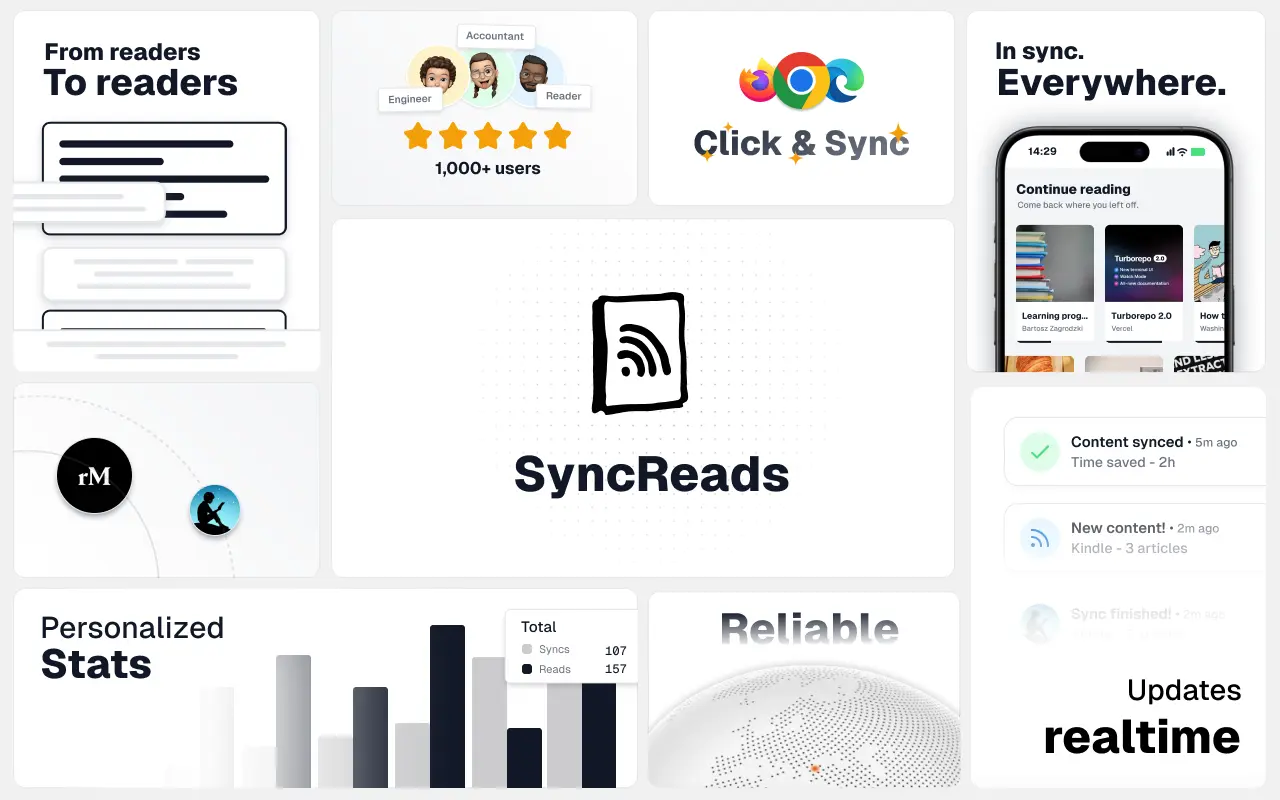
SyncReads
Sync your favorite content for distraction-free reading, save time and replace multiple apps. Anytime, anywhere 🔄

Socialcrawl
Get clean, structured data from 21 platforms like TikTok, Instagram, and YouTube with a single request 📊
Statiko
Monitor any Telegram channel in real time - track posts, edits, deletions, and growth with AI recaps 📡
Shibui
AI website builder - describe your business, pick a niche template, edit by chatting, and publish instantly ✨
Pro Service
Find verified home service professionals, compare quotes, and pay securely through escrow - built for Brazilians across the US 🏠
RankGrow
Fix your SEO with AI agents - connect Search Console, get prioritized tasks, and grow organic traffic 📈
SyncReads
Sync your favorite content for distraction-free reading, save time and replace multiple apps. Anytime, anywhere 🔄
Socialcrawl
Get clean, structured data from 21 platforms like TikTok, Instagram, and YouTube with a single request 📊

Dotallio
Personalized AI apps that automate research, data extraction, and content creation without code 🤖

Talk to Santa
Enjoy a magical live video chat or receive a unique AI-generated video greeting from Santa Claus 🎅

pozywka.pl
Scalable blog for food journalist, focused on performance and user experience 🌭
zagrodzki.me
Personal blog and portfolio of Bart Zagrodzki, where he shares his knowledge and work 💼

TurboStarter
Ship your startup everywhere. In minutes.
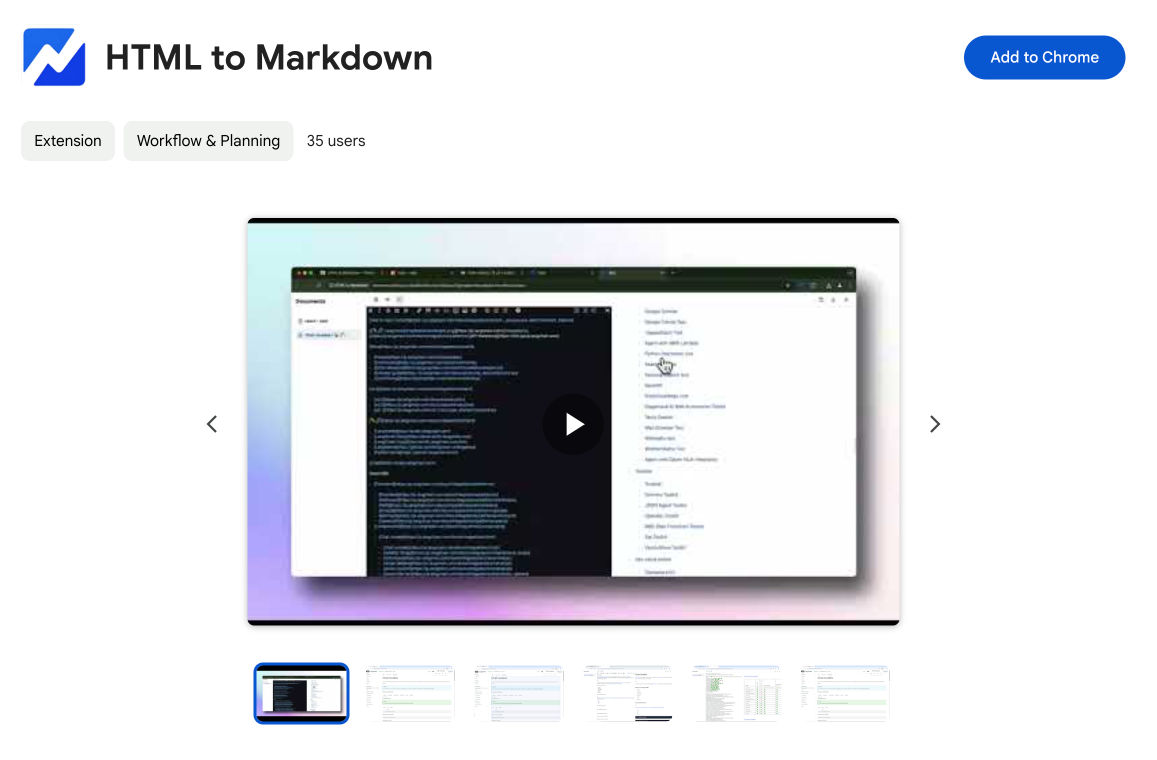
HTML to Markdown
Convert HTML to Markdown with ease, directly in your browser 📄
Dotallio
Personalized AI apps that automate research, data extraction, and content creation without code 🤖
Talk to Santa
Enjoy a magical live video chat or receive a unique AI-generated video greeting from Santa Claus 🎅
pozywka.pl
Scalable blog for food journalist, focused on performance and user experience 🌭
zagrodzki.me
Personal blog and portfolio of Bart Zagrodzki, where he shares his knowledge and work 💼
TurboStarter
Ship your startup everywhere. In minutes.
HTML to Markdown
Convert HTML to Markdown with ease, directly in your browser 📄
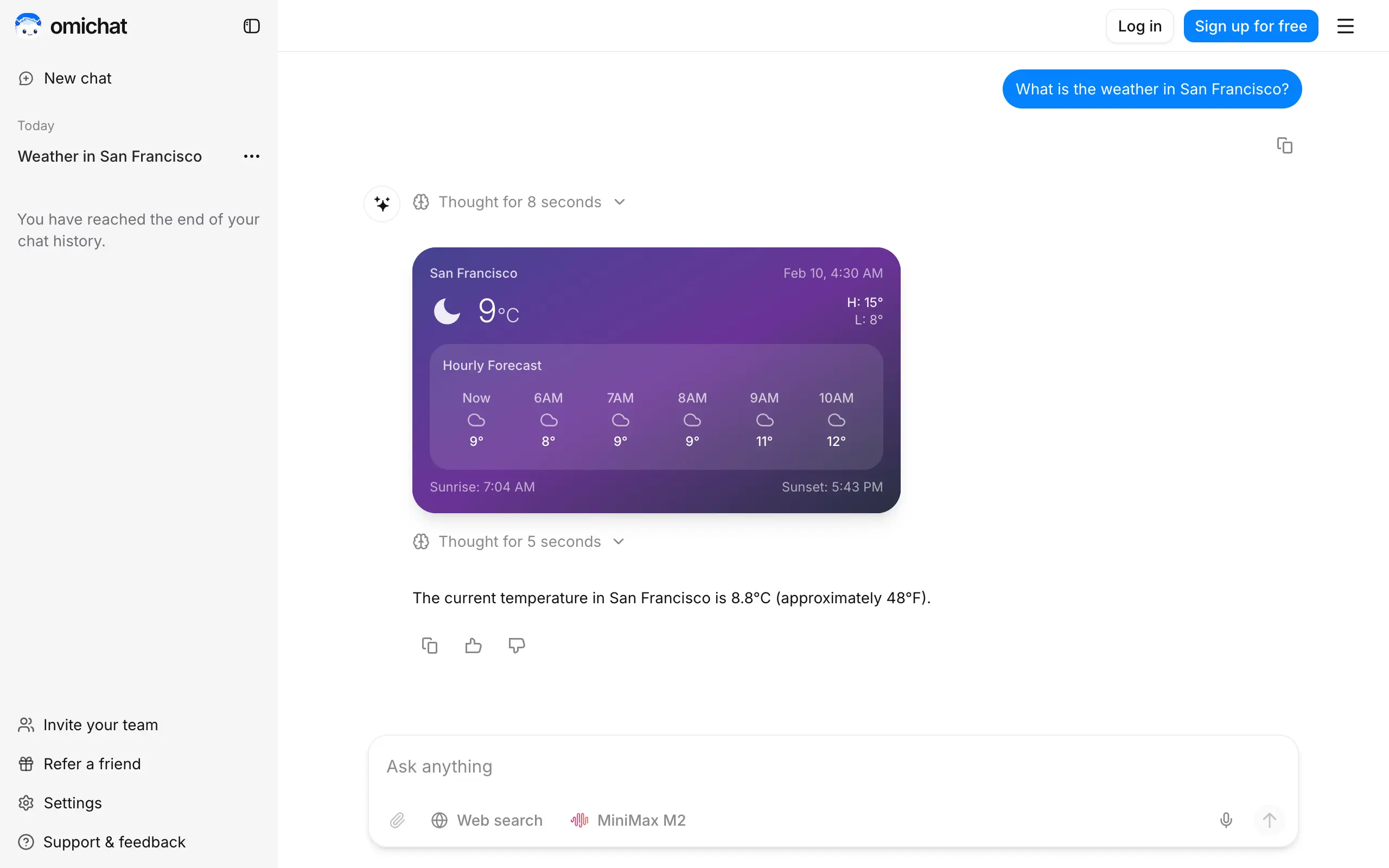
Omichat
Chat with 50+ AI models, including ChatGPT and Claude, in one place - switch models anytime without losing context 🤖

Claude Fast
Supercharge your Claude Code with 6x effective context window and specialized AI agents 🤖

EmojAI
AI-powered emoji picker with smart, context-aware suggestions 🤖

Solohacker
Autonomous company launcher - AI agents work 24/7, escalate what matters, and you stay in control 🤖

BeRawi: Storytelling Coach
Practice storytelling daily with instant feedback to sound clearer, more engaging, and confident 🎤
Omichat
Chat with 50+ AI models, including ChatGPT and Claude, in one place - switch models anytime without losing context 🤖
Claude Fast
Supercharge your Claude Code with 6x effective context window and specialized AI agents 🤖
EmojAI
AI-powered emoji picker with smart, context-aware suggestions 🤖
Solohacker
Autonomous company launcher - AI agents work 24/7, escalate what matters, and you stay in control 🤖
BeRawi: Storytelling Coach
Practice storytelling daily with instant feedback to sound clearer, more engaging, and confident 🎤

Connect with like-minded people
Join our community to get feedback, support, and grow together with 1,000+ builders on board, let's ship it!
Join usShip your startup everywhere. In minutes.
Don't burn tokens on setup and start building features on day one.