UniChannel Sync
A smart marketplace connector that syncs products, inventory, and orders across Amazon, eBay, Etsy, and Shopify in real time with conflict resolution.
Why unified commerce is breaking without real-time sync
Selling across Amazon, eBay, Etsy, and Shopify is no longer a growth experiment — it’s the default strategy for modern ecommerce brands. Customers discover products everywhere, expect consistent pricing and availability, and abandon sellers the moment something feels unreliable.
Yet behind the scenes, many merchants are still running their operations on manual exports, delayed syncs, or brittle connectors that weren’t designed for today’s multi-channel complexity.
This is the problem UniChannel Sync exists to solve.
UniChannel Sync is a smart marketplace connector that syncs products, inventory, and orders in real time across Amazon, eBay, Etsy, and Shopify — with built-in conflict resolution. Instead of reacting to oversells, price mismatches, and order chaos, merchants regain control with a single source of truth.
In this article, we’ll explore:
- The real market gap in multi-channel ecommerce synchronization
- Who UniChannel Sync is for and what problems it solves
- Core features and technical architecture
- Competitive landscape and differentiation
- Monetization strategies, risks, and mitigation
- Step-by-step guidance to implement and launch the product
This guide is written for founders, operators, and technical leaders evaluating or building a serious ecommerce SaaS — not a surface-level plugin.
Understanding the target audience for UniChannel Sync
Primary audience: multi-channel ecommerce sellers
The core users of UniChannel Sync are small to mid-sized ecommerce businesses selling on more than one platform. Typically, they fall into these profiles:
- Amazon-first sellers expanding to Shopify or Etsy
- Shopify brands adding Amazon and eBay for reach
- Handmade or niche sellers scaling from Etsy into marketplaces
- Dropshippers or private-label sellers managing shared inventory
Common traits include:
- Monthly GMV between $20k–$500k
- Catalog sizes from 20 to 5,000 SKUs
- Lean teams with limited operational bandwidth
- Heavy reliance on automation to avoid hiring ops staff
Secondary audience: agencies and aggregators
Beyond merchants themselves, there is a growing ecosystem of:
- Ecommerce agencies managing stores for multiple clients
- Brand aggregators operating portfolios of marketplace brands
- Virtual assistants and operations managers needing reliable tooling
For these users, reliability, auditability, and permissioned access matter as much as sync speed.
User intent insight
Most users searching for “multi-channel inventory sync” or “Amazon Shopify inventory sync” are not browsing casually. They are already experiencing lost revenue due to overselling, delayed fulfillment, or account warnings.
UniChannel Sync’s messaging must directly address pain, urgency, and risk reduction, not just features.
The market opportunity: why existing solutions fall short
The multi-channel commerce problem is getting worse
As marketplaces evolve, synchronization has become more complex:
- Marketplaces enforce stricter inventory accuracy policies
- APIs introduce rate limits, partial failures, and async behavior
- Sellers adopt bundles, variants, and kitted products
- Pricing strategies vary by channel (fees, promotions, taxes)
Most existing tools were built for batch-based sync, not real-time conflict-aware systems.
Common failure points in current tools
Here’s where many competitors struggle:
- ❌ Inventory sync runs every 15–60 minutes
- ❌ No deterministic conflict resolution when two channels update simultaneously
- ❌ Poor handling of partial order failures
- ❌ Weak logging and no audit trail
- ❌ One-size-fits-all sync logic
This creates real business risks:
- Overselling → marketplace penalties or account suspension
- Price mismatches → customer complaints and refunds
- Order duplication → fulfillment errors
- Stock buffers → artificially limited growth
Market size and validation
While exact figures change yearly, consider:
- Millions of active sellers across Amazon, eBay, Etsy, and Shopify
- A growing shift toward direct-to-consumer + marketplace hybrid models
- Increasing willingness to pay for reliability and compliance tooling
Rather than competing on “cheapest connector,” UniChannel Sync targets mission-critical infrastructure, similar to payment or tax software.
What makes UniChannel Sync different
The core promise
One source of truth for products, inventory, and orders — synced in real time, with deterministic conflict resolution.
This isn’t just another connector. UniChannel Sync is designed as an event-driven commerce synchronization engine.
Unique selling proposition (USP)
UniChannel Sync differentiates itself through:
- Real-time sync (not scheduled polling)
- Explicit conflict resolution rules
- Channel-aware logic
- Full auditability
- Scalability from day one
Instead of hiding edge cases, the system embraces complexity and makes it manageable.
Core features of UniChannel Sync
Real-time product synchronization
Product data is notoriously inconsistent across platforms. UniChannel Sync normalizes:
- Titles and descriptions
- Variants and options
- SKUs and identifiers
- Images and metadata
Key capabilities:
- Field-level mapping per channel
- Selective sync (e.g., push price but not description)
- Draft vs live product control
Inventory synchronization with conflict resolution
Inventory is where most tools fail.
UniChannel Sync uses:
- Event-based inventory updates
- Optimistic locking
- Configurable priority rules
Example conflict strategies:
- Shopify as the master source
- Lowest-available-stock wins
- Marketplace-specific buffers
- Manual override on conflict
Without explicit conflict handling, simultaneous updates can overwrite each other, causing inventory drift. Deterministic rules ensure the same input always produces the same output.
Order synchronization and lifecycle management
Orders flow into a central system, regardless of origin:
- Amazon orders
- eBay orders
- Etsy orders
- Shopify orders
Features include:
- Unified order schema
- Status propagation (paid, shipped, canceled)
- Fulfillment tracking sync
- Partial and split order handling
Smart logging, alerts, and audit trails
For trust and compliance:
- Every sync event is logged
- Errors are explainable, not generic
- Webhooks and email alerts for failures
- Downloadable audit trails for disputes
How UniChannel Sync works under the hood
Event-driven architecture overview
Rather than cron-based polling, UniChannel Sync relies on:
- Marketplace webhooks where available
- API delta fetching where required
- Internal event queues
This allows:
- Near real-time updates
- Reduced API usage
- Better scalability under load
Recommended tech stack
A modern, scalable stack might include:
Frontend
- React for UI
- TailwindCSS for styling
- TypeScript for safety
Backend
- Node.js with TypeScript
- Event queues (e.g., managed message queues)
- Stateless services
Data layer
- Relational database for transactional data
- Event store or append-only logs
- Caching layer for hot inventory paths
Integrations
- Official marketplace APIs
- OAuth-based authentication
- Webhook verification and retries
Trade-off to consider
Real-time systems are harder to build and test than batch systems. However, they drastically reduce downstream operational costs and customer support burden.
Competitive landscape analysis
Who UniChannel Sync competes with
The market includes:
- General-purpose inventory tools
- Marketplace-specific connectors
- Enterprise ERPs retrofitted for ecommerce
Here’s how UniChannel Sync positions itself:
| Feature | Generic connectors | ERPs | UniChannel Sync | Manual processes |
|---|---|---|---|---|
| Real-time sync | ❌ | ❌ | ✅ | ❌ |
| Conflict resolution | ❌ | ✅ | ✅ | ❌ |
Sustainable competitive advantages
UniChannel Sync builds defensibility through:
- Deep domain logic
- Accumulated edge-case handling
- Switching costs (data history + rules)
- Trust and reliability over time
Monetization strategy options
Tiered SaaS pricing (recommended)
Pricing based on:
- Number of connected channels
- Monthly order volume
- SKU count
Example tiers:
- Starter (1–2 channels, low volume)
- Growth (4 channels, higher volume)
- Pro (advanced rules, priority support)
Add-on revenue streams
- Advanced analytics and reporting
- Additional marketplaces
- Agency/white-label plans
- Dedicated infrastructure
Why usage-based pricing can work
Usage-based elements (orders or events) align revenue with value, but must be capped to avoid unpredictable bills.
Risks and mitigation strategies
API instability and policy changes
Risk: Marketplaces change APIs or rules.
Mitigation: Abstract integrations and monitor deprecations early.
Data inconsistency
Risk: Partial failures cause drift.
Mitigation: Idempotent operations and reconciliation jobs.
Trust and onboarding friction
Risk: Merchants fear breaking their stores.
Mitigation: Sandbox mode, dry-run syncs, and clear rollback paths.
Go-to-market strategy
SEO-driven acquisition
High-intent keywords include:
- “multi-channel inventory sync”
- “Amazon Shopify inventory sync”
- “real-time ecommerce inventory management”
Educational content and comparisons convert well.
Partnerships
- Ecommerce agencies
- Fulfillment providers
- Accounting and tax SaaS platforms
Product-led growth
- Free trial with limited SKUs
- Self-serve onboarding
- In-app upgrade prompts
Step-by-step implementation roadmap
At this stage, many founders choose to accelerate development using a production-ready SaaS foundation like TurboStarter to avoid rebuilding auth, billing, and infrastructure from scratch.
Why UniChannel Sync can win long term
UniChannel Sync is not chasing feature parity — it’s solving the hard, systemic problem of keeping distributed commerce systems in sync under real-world conditions.
By focusing on:
- Real-time data
- Explicit conflict resolution
- Transparency and trust
…it positions itself as infrastructure, not a plugin.
Final thoughts and next actions
If you’re building or evaluating a multi-channel ecommerce synchronization platform, UniChannel Sync represents a modern, technically sound approach aligned with where ecommerce is heading.
The next steps are clear:
- Talk to merchants already feeling sync pain
- Validate conflict scenarios with real data
- Build reliability before adding breadth
If you execute well, UniChannel Sync can become the default backbone for serious multi-channel sellers.
More 🛒 E-commerce SaaS ideas
Discover more innovative e-commerce SaaS ideas that are trending in 2026. Each idea is AI-generated with market validation and growth potential to help you find your next profitable venture faster than competitors.
Your competitors are building with TurboStarter
Below are some of the SaaS ideas that have been generated and built with our starter kit.
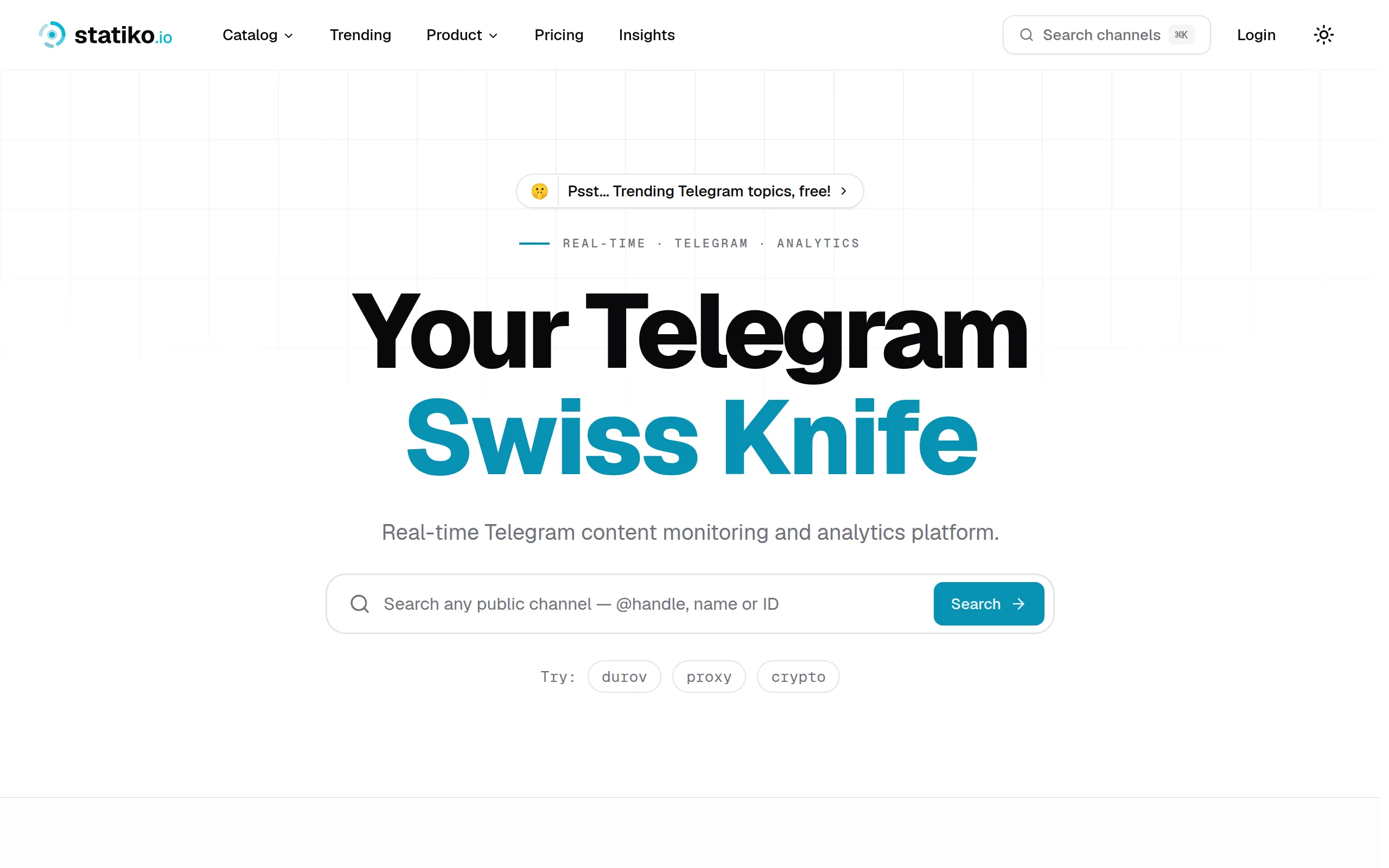
Statiko
Monitor any Telegram channel in real time - track posts, edits, deletions, and growth with AI recaps 📡

Shibui
AI website builder - describe your business, pick a niche template, edit by chatting, and publish instantly ✨

Pro Service
Find verified home service professionals, compare quotes, and pay securely through escrow - built for Brazilians across the US 🏠
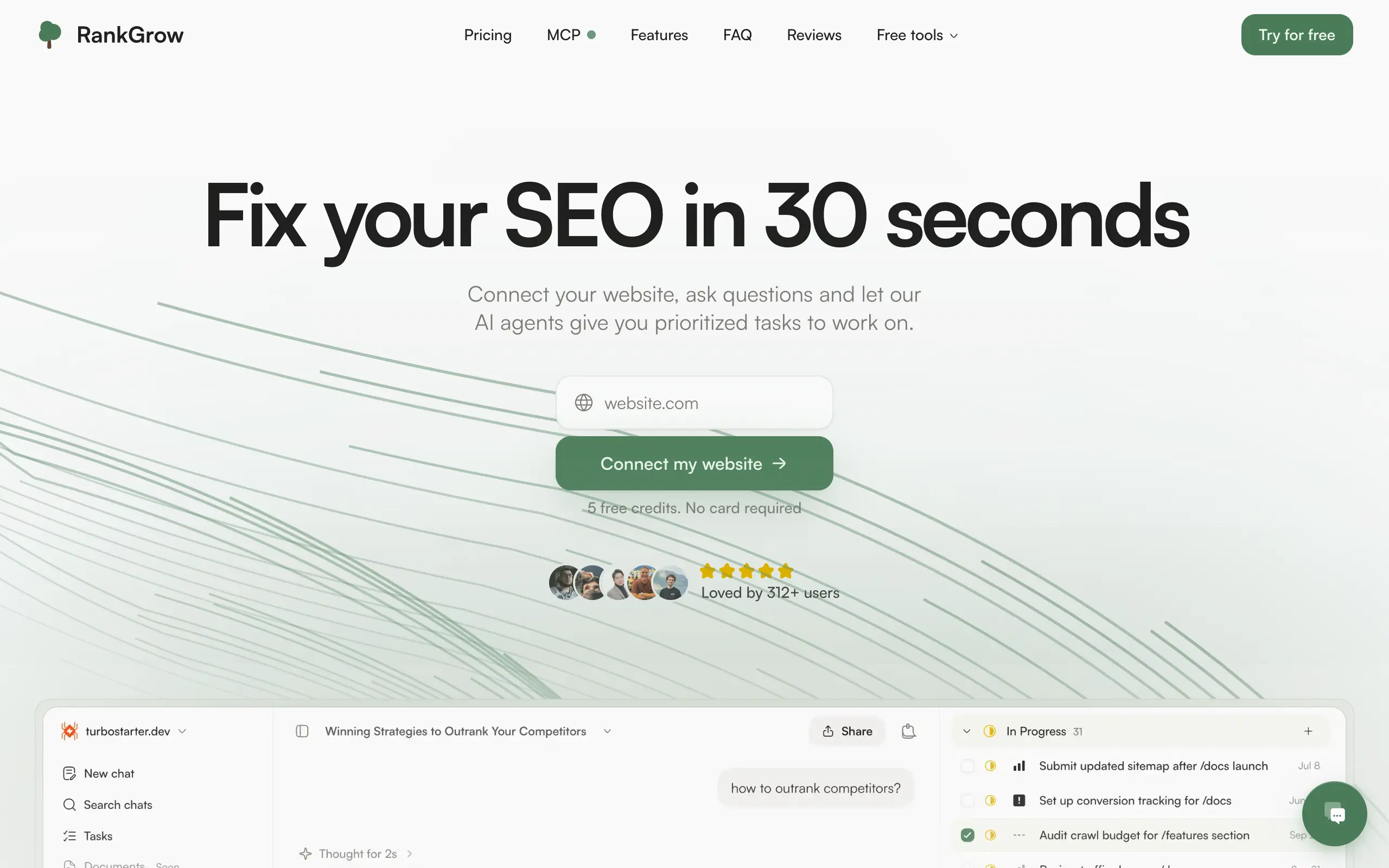
RankGrow
Fix your SEO with AI agents - connect Search Console, get prioritized tasks, and grow organic traffic 📈
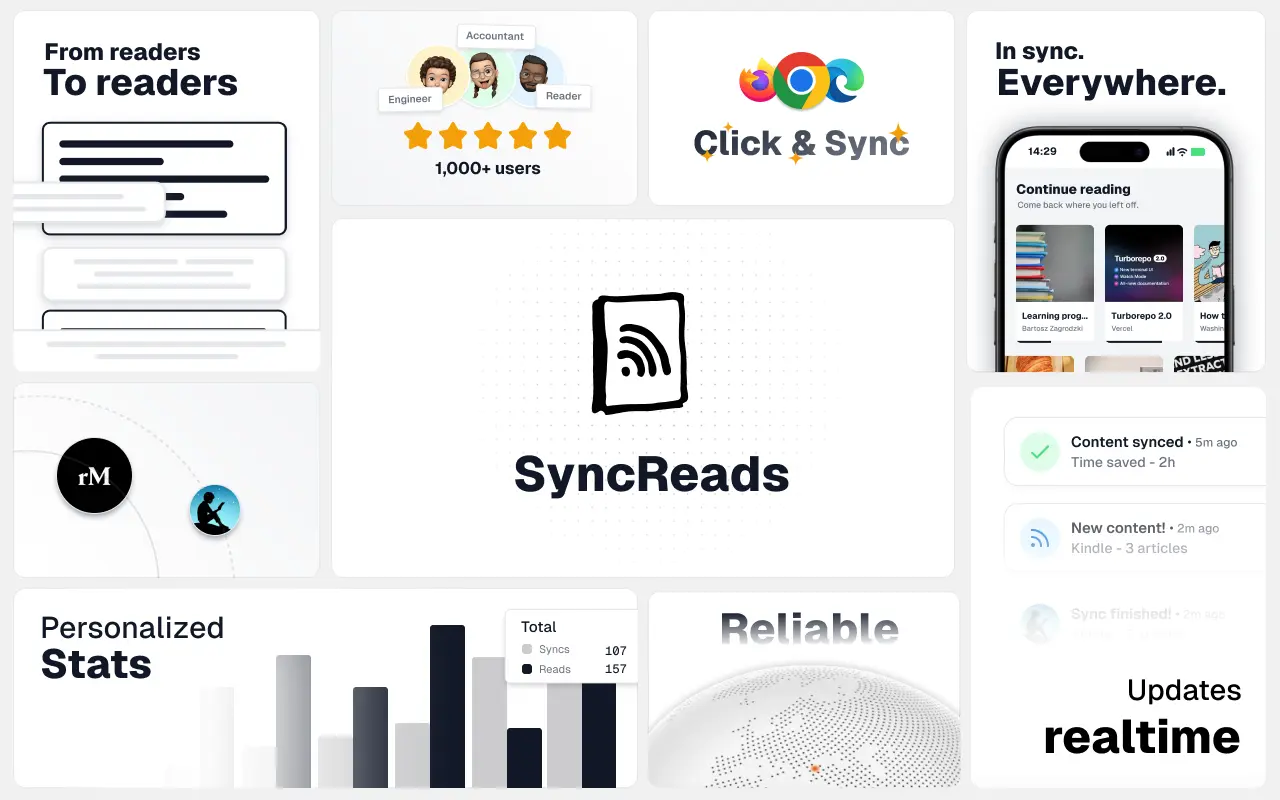
SyncReads
Sync your favorite content for distraction-free reading, save time and replace multiple apps. Anytime, anywhere 🔄
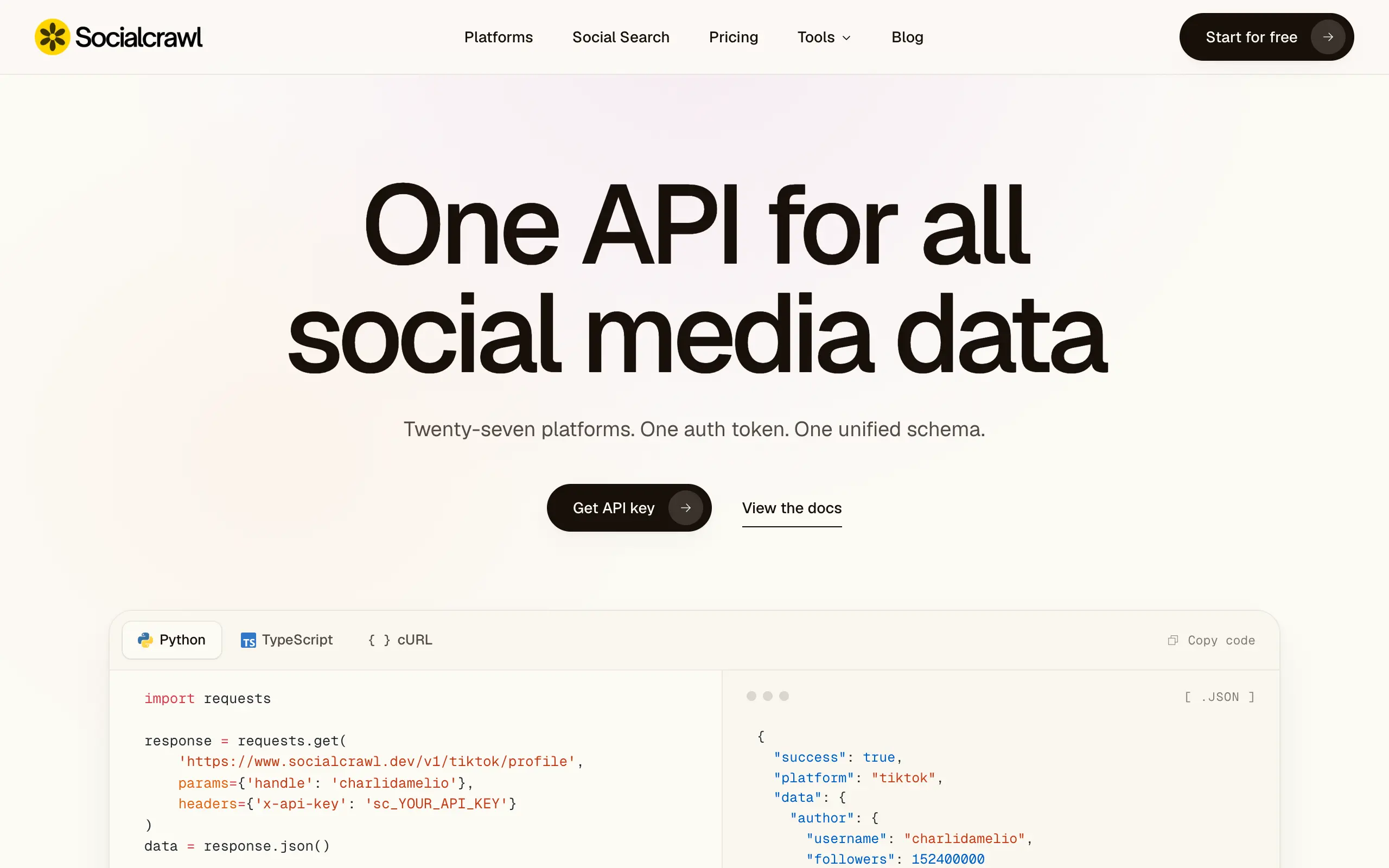
Socialcrawl
Get clean, structured data from 21 platforms like TikTok, Instagram, and YouTube with a single request 📊
Statiko
Monitor any Telegram channel in real time - track posts, edits, deletions, and growth with AI recaps 📡
Shibui
AI website builder - describe your business, pick a niche template, edit by chatting, and publish instantly ✨
Pro Service
Find verified home service professionals, compare quotes, and pay securely through escrow - built for Brazilians across the US 🏠
RankGrow
Fix your SEO with AI agents - connect Search Console, get prioritized tasks, and grow organic traffic 📈
SyncReads
Sync your favorite content for distraction-free reading, save time and replace multiple apps. Anytime, anywhere 🔄
Socialcrawl
Get clean, structured data from 21 platforms like TikTok, Instagram, and YouTube with a single request 📊
Statiko
Monitor any Telegram channel in real time - track posts, edits, deletions, and growth with AI recaps 📡
Shibui
AI website builder - describe your business, pick a niche template, edit by chatting, and publish instantly ✨
Pro Service
Find verified home service professionals, compare quotes, and pay securely through escrow - built for Brazilians across the US 🏠
RankGrow
Fix your SEO with AI agents - connect Search Console, get prioritized tasks, and grow organic traffic 📈
SyncReads
Sync your favorite content for distraction-free reading, save time and replace multiple apps. Anytime, anywhere 🔄
Socialcrawl
Get clean, structured data from 21 platforms like TikTok, Instagram, and YouTube with a single request 📊
Statiko
Monitor any Telegram channel in real time - track posts, edits, deletions, and growth with AI recaps 📡
Shibui
AI website builder - describe your business, pick a niche template, edit by chatting, and publish instantly ✨
Pro Service
Find verified home service professionals, compare quotes, and pay securely through escrow - built for Brazilians across the US 🏠
RankGrow
Fix your SEO with AI agents - connect Search Console, get prioritized tasks, and grow organic traffic 📈
SyncReads
Sync your favorite content for distraction-free reading, save time and replace multiple apps. Anytime, anywhere 🔄
Socialcrawl
Get clean, structured data from 21 platforms like TikTok, Instagram, and YouTube with a single request 📊
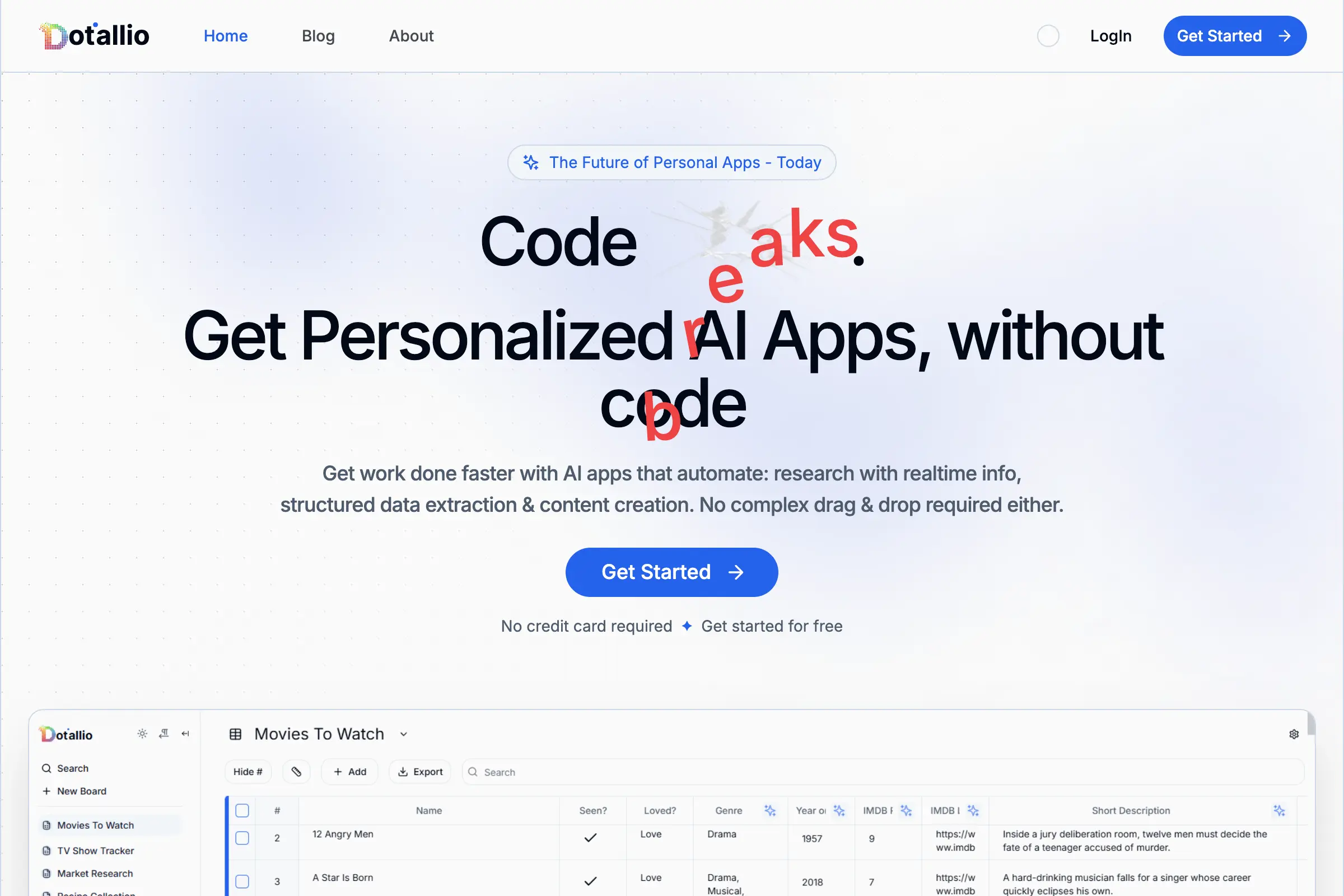
Dotallio
Personalized AI apps that automate research, data extraction, and content creation without code 🤖
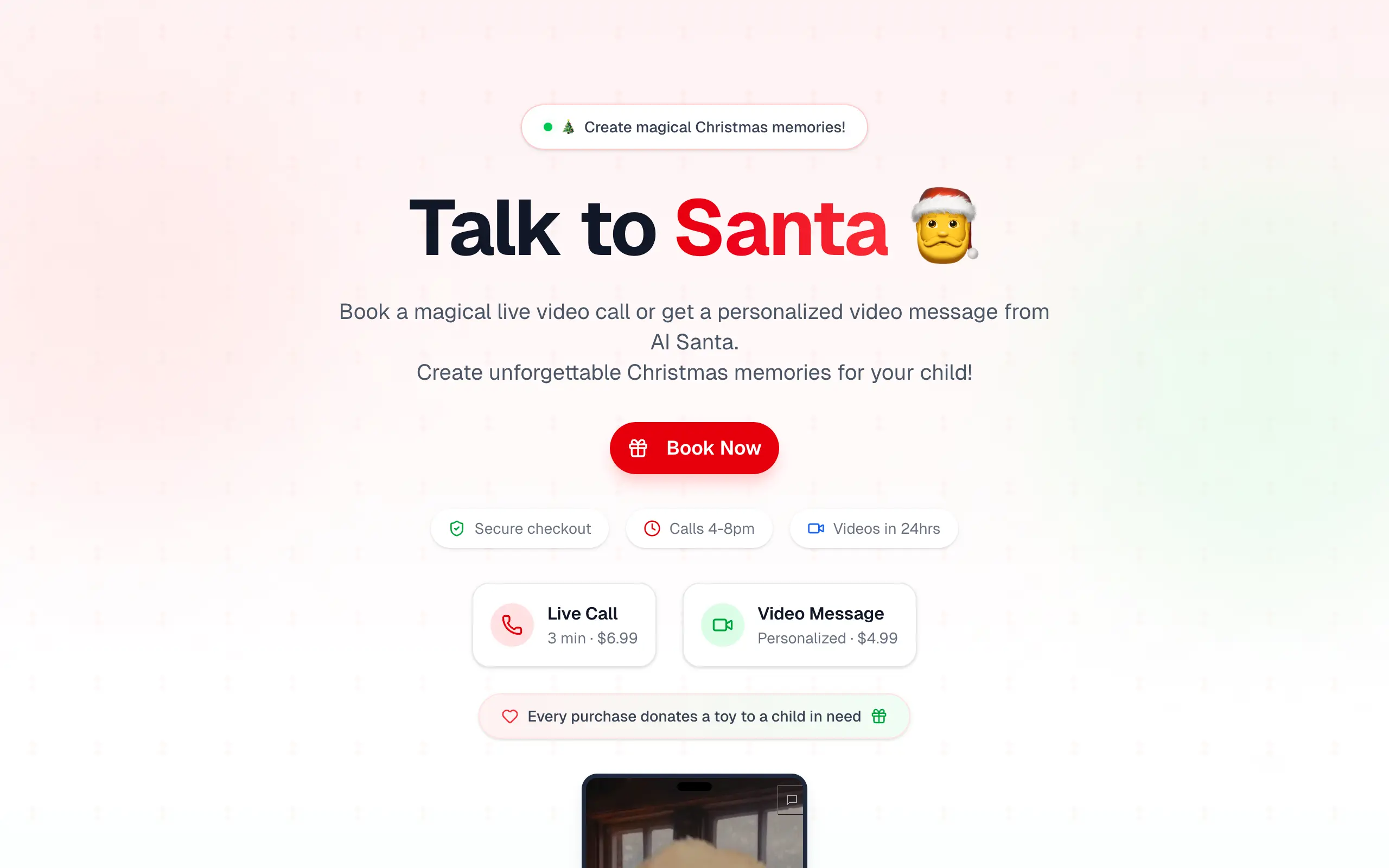
Talk to Santa
Enjoy a magical live video chat or receive a unique AI-generated video greeting from Santa Claus 🎅

pozywka.pl
Scalable blog for food journalist, focused on performance and user experience 🌭
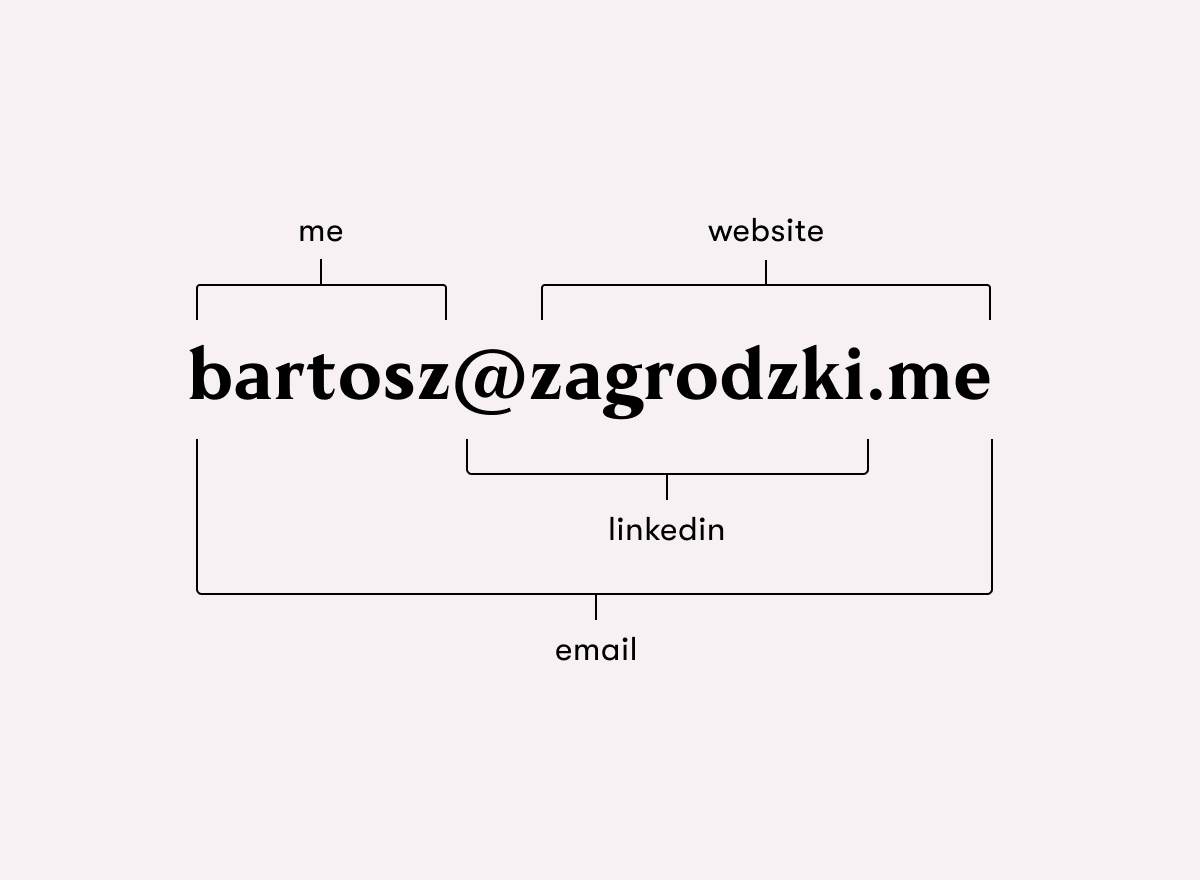
zagrodzki.me
Personal blog and portfolio of Bart Zagrodzki, where he shares his knowledge and work 💼
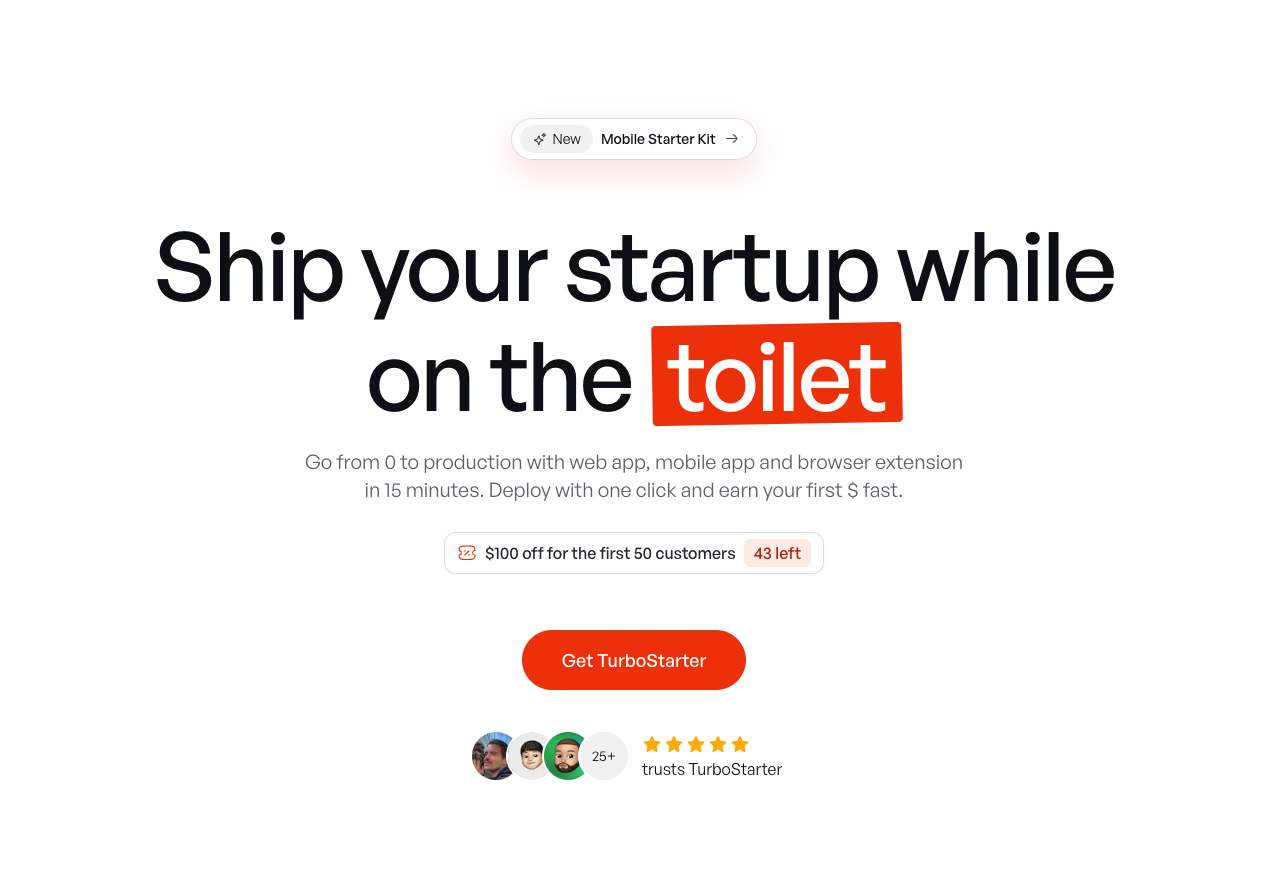
TurboStarter
Ship your startup everywhere. In minutes.
HTML to Markdown
Convert HTML to Markdown with ease, directly in your browser 📄
Dotallio
Personalized AI apps that automate research, data extraction, and content creation without code 🤖
Talk to Santa
Enjoy a magical live video chat or receive a unique AI-generated video greeting from Santa Claus 🎅
pozywka.pl
Scalable blog for food journalist, focused on performance and user experience 🌭
zagrodzki.me
Personal blog and portfolio of Bart Zagrodzki, where he shares his knowledge and work 💼
TurboStarter
Ship your startup everywhere. In minutes.
HTML to Markdown
Convert HTML to Markdown with ease, directly in your browser 📄
Dotallio
Personalized AI apps that automate research, data extraction, and content creation without code 🤖
Talk to Santa
Enjoy a magical live video chat or receive a unique AI-generated video greeting from Santa Claus 🎅
pozywka.pl
Scalable blog for food journalist, focused on performance and user experience 🌭
zagrodzki.me
Personal blog and portfolio of Bart Zagrodzki, where he shares his knowledge and work 💼
TurboStarter
Ship your startup everywhere. In minutes.
HTML to Markdown
Convert HTML to Markdown with ease, directly in your browser 📄
Dotallio
Personalized AI apps that automate research, data extraction, and content creation without code 🤖
Talk to Santa
Enjoy a magical live video chat or receive a unique AI-generated video greeting from Santa Claus 🎅
pozywka.pl
Scalable blog for food journalist, focused on performance and user experience 🌭
zagrodzki.me
Personal blog and portfolio of Bart Zagrodzki, where he shares his knowledge and work 💼
TurboStarter
Ship your startup everywhere. In minutes.
HTML to Markdown
Convert HTML to Markdown with ease, directly in your browser 📄
Omichat
Chat with 50+ AI models, including ChatGPT and Claude, in one place - switch models anytime without losing context 🤖
Claude Fast
Supercharge your Claude Code with 6x effective context window and specialized AI agents 🤖
EmojAI
AI-powered emoji picker with smart, context-aware suggestions 🤖
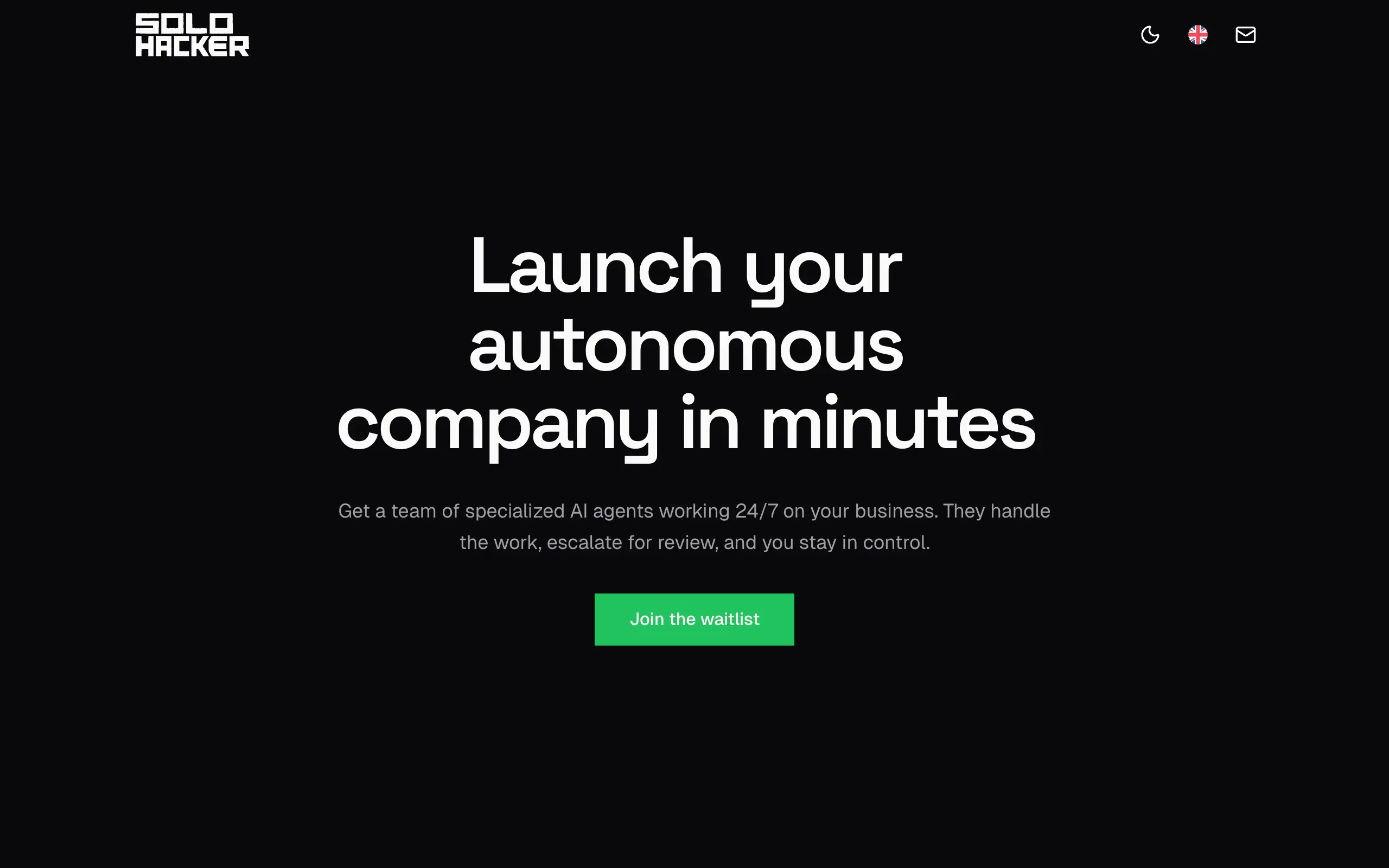
Solohacker
Autonomous company launcher - AI agents work 24/7, escalate what matters, and you stay in control 🤖

BeRawi: Storytelling Coach
Practice storytelling daily with instant feedback to sound clearer, more engaging, and confident 🎤
Omichat
Chat with 50+ AI models, including ChatGPT and Claude, in one place - switch models anytime without losing context 🤖
Claude Fast
Supercharge your Claude Code with 6x effective context window and specialized AI agents 🤖
EmojAI
AI-powered emoji picker with smart, context-aware suggestions 🤖
Solohacker
Autonomous company launcher - AI agents work 24/7, escalate what matters, and you stay in control 🤖
BeRawi: Storytelling Coach
Practice storytelling daily with instant feedback to sound clearer, more engaging, and confident 🎤
Omichat
Chat with 50+ AI models, including ChatGPT and Claude, in one place - switch models anytime without losing context 🤖
Claude Fast
Supercharge your Claude Code with 6x effective context window and specialized AI agents 🤖
EmojAI
AI-powered emoji picker with smart, context-aware suggestions 🤖
Solohacker
Autonomous company launcher - AI agents work 24/7, escalate what matters, and you stay in control 🤖
BeRawi: Storytelling Coach
Practice storytelling daily with instant feedback to sound clearer, more engaging, and confident 🎤
Omichat
Chat with 50+ AI models, including ChatGPT and Claude, in one place - switch models anytime without losing context 🤖
Claude Fast
Supercharge your Claude Code with 6x effective context window and specialized AI agents 🤖
EmojAI
AI-powered emoji picker with smart, context-aware suggestions 🤖
Solohacker
Autonomous company launcher - AI agents work 24/7, escalate what matters, and you stay in control 🤖
BeRawi: Storytelling Coach
Practice storytelling daily with instant feedback to sound clearer, more engaging, and confident 🎤

Connect with like-minded people
Join our community to get feedback, support, and grow together with 1,000+ builders on board, let's ship it!
Join usShip your startup everywhere. In minutes.
Don't burn tokens on setup and start building features on day one.