Nile Noir
An AI-powered Arabic co-op mystery game set in a fictional Cairo, where player voice choices reshape cases, neighborhoods, and weekly stories.
Why an AI-powered Arabic co-op mystery game has a real market opening
Nile Noir sits at the intersection of several durable entertainment trends: social co-op play, narrative mystery games, voice-driven interaction, live-service storytelling, and demand for culturally resonant Arabic content. Its core proposition is straightforward but differentiated: players collaborate in Arabic to investigate crimes in a fictional Cairo, while AI interprets voice choices and changes the future of cases, neighborhoods, characters, and weekly storylines.
The primary keyword for this concept is AI-powered Arabic co-op mystery game. Related search terms include:
- Arabic narrative game
- Arabic multiplayer mystery game
- voice-driven detective game
- AI story game
- Cairo mystery game
- co-op investigation game
- interactive Arabic storytelling
- live-service mystery game
- Arabic voice game
- branching detective game
The strongest opportunity is not merely “making a game in Arabic.” It is creating an experience designed around Arabic language, regional social dynamics, local humor, dialect awareness, and the emotional texture of a fictional Cairo. That distinction matters. Localization translates an existing game. Nile Noir can make Arabic expression and collective storytelling the game’s central mechanic.
The strategic thesis
Nile Noir should position itself as a social detective drama first and an AI feature showcase second. Players return because they want to solve cases with friends, protect their neighborhood, and see the consequences of their decisions unfold over time.
The target audience for Nile Noir
A successful AI-powered Arabic co-op mystery game needs a precise audience strategy. Nile Noir should not try to appeal to every player at launch. Instead, it should focus on a high-intent core audience that values narrative, social play, voice interaction, and regional representation.
Primary audience: Arabic-speaking social gamers
The primary player group is Arabic-speaking gamers aged roughly 18 to 35 who already play multiplayer titles, story-rich games, party games, role-playing games, or social deduction games.
They are likely to discover Nile Noir through:
- Twitch, YouTube, TikTok, and short-form gaming clips
- Discord communities and local gaming groups
- Arabic gaming creators and streamers
- Word-of-mouth among friend groups
- Steam, console storefronts, and mobile discovery channels
- Regional game events and university gaming communities
This audience is not homogeneous. A player from Egypt may appreciate details that feel native to Cairo, while players from Saudi Arabia, the Gulf, North Africa, the Levant, and diaspora communities may be more interested in a distinctively Arab story world than in strict geographic realism. The game must balance authenticity with accessibility.
Secondary audience: global mystery and co-op players
Nile Noir can also attract non-Arabic-speaking players who enjoy detective fiction, branching narratives, and socially reactive worlds. A bilingual presentation with high-quality English subtitles, optional localized interfaces, and clear onboarding can open a broader market without diluting the Arabic-first identity.
For these players, the appeal is similar to consuming international noir films or crime dramas. They want a fresh setting, unfamiliar social rituals, and a mystery structure that does not feel like another generic Victorian mansion or cyberpunk megacity.
Tertiary audience: creators and communities
Streamers, roleplay communities, and virtual social groups can become a major acquisition channel. Nile Noir has several creator-friendly hooks:
- Each voice choice can produce unpredictable outcomes.
- Weekly cases create recurring content.
- Different co-op teams can reach different conclusions.
- Neighborhood outcomes make community discussions meaningful.
- Players can compare evidence boards, suspect theories, and moral decisions.
A mystery game that creates “you will not believe what our group did” moments has a built-in content loop. This should influence the design of every major system.
Core player
Arabic-speaking players who want social co-op, strong stories, and representation that feels intentional rather than translated.
Growth player
Global detective-game fans drawn to a fictional Cairo, asymmetric collaboration, and evolving weekly cases.
Amplifier
Creators, friend groups, and community organizers who turn dramatic choices into shareable moments.
The market gap: Arabic games need more than translation
Arabic game markets have significant player demand, but many globally popular games treat Arabic as a late-stage localization checkbox. Even when menus and subtitles are available, the underlying narratives, humor, relationships, and player choices are usually built around another culture’s assumptions.
Nile Noir can occupy a different category: an Arabic-first interactive mystery world.
What current alternatives often miss
Existing alternatives tend to fall into one of several groups:
- International detective games with limited Arabic support
- Mobile social games that prioritize monetization over story depth
- Visual novels with limited multiplayer systems
- Social deduction games where conversation is central but the world has little persistence
- Traditional RPGs with branching dialogue but no voice-aware co-op collaboration
- AI story tools that generate text but lack authored mystery logic and quality control
The gap is the combination of all of the following:
| Capability | Localized mystery games | Social deduction games | AI story apps | Nile Noir opportunity | Player value |
|---|---|---|---|---|---|
| Arabic-first dialogue | Sometimes | Rarely | Varies | Core design principle | Authentic expression |
| Co-op case solving | Limited | Strong | Limited | Structured investigation | Shared ownership |
| Voice-responsive choices | Rare | Conversation only | Common but unreliable | Bounded AI interaction | Natural agency |
| Persistent neighborhood outcomes | Rare | Rare | Usually absent | Weekly evolving world | Reasons to return |
The phrase bounded AI interaction is important. Purely generative story games can sound impressive but often struggle with continuity, reliable mystery clues, character consistency, moderation, and satisfying endings. Nile Noir should use AI where it creates expressive flexibility, while retaining authored narrative structure where player trust depends on logic.
Why Cairo is a compelling fictional setting
Cairo is visually, socially, and emotionally rich. It can support noir themes without copying European or American noir conventions. A fictionalized city allows the studio to create original districts, institutions, histories, and characters while drawing inspiration from the energy of a real metropolitan environment.
Potential neighborhood identities may include:
- A historic district where old family reputations matter more than official evidence
- A nightlife corridor shaped by music, gossip, and informal information networks
- A riverside financial zone where corruption is disguised as progress
- A dense residential quarter where every witness knows someone involved
- A new satellite district where digital surveillance and private security reshape daily life
The game should avoid treating Cairo as aesthetic wallpaper. Each district needs social rules, economic tensions, recurring characters, and case types that arise organically from its identity.
Nile Noir’s unique selling proposition
Nile Noir’s USP is not simply “an AI game in Arabic.” Its defensible proposition is:
A co-op detective game where Arabic voice choices shape an evolving fictional Cairo, combining authored mystery logic with AI-powered social interaction.
That proposition has four connected advantages.
Arabic voice is a gameplay system, not just an interface option
Players should be able to discuss leads, confront suspects, negotiate with witnesses, and make group decisions using natural speech. This creates a more immersive co-op loop than selecting static dialogue options alone.
However, the system should not require perfect speech recognition or assume every player speaks the same dialect. The experience needs support for:
- Modern Standard Arabic
- Egyptian Arabic where appropriate to the setting
- Dialect-tolerant intent recognition
- Text alternatives for accessibility and privacy
- Push-to-talk or hold-to-speak controls
- Clear confirmation prompts before irreversible choices
- On-screen summaries of important spoken outcomes
A player should never lose a case because their microphone failed, a dialect was misunderstood, or a noisy environment caused an accidental action.
Co-op investigation creates social tension without player elimination
Many social games depend on deception, voting, and eliminating other players. Nile Noir can create tension in a more collaborative way. Players may have different evidence, unequal relationships with witnesses, conflicting ethical priorities, or separate leads that must be reconciled.
For example, one player may discover that a suspect is lying, while another learns that exposing the lie could endanger a vulnerable neighborhood informant. The team must decide what to pursue, what to conceal, and which consequences they can accept.
Weekly stories turn cases into a living city
A single mystery can be satisfying, but an evolving neighborhood makes player choices feel consequential. Nile Noir should structure live content around weekly or biweekly story arcs, not disposable missions.
A case outcome could affect:
- Which businesses remain open in a district
- Whether an informant trusts the players later
- How local media frames the investigation
- Which factions gain influence
- What rumors appear in future episodes
- Whether certain witnesses become allies, rivals, or unavailable
- The visual atmosphere of the neighborhood
This is more compelling than a generic battle pass because it makes engagement feel narratively meaningful.
Authored mystery logic protects the player experience
Good mysteries require fairness. Players need enough information to form theories, identify contradictions, and feel that the answer was discoverable. An unbounded language model should never invent critical clues, overwrite canonical facts, or make a killer change halfway through an episode.
Nile Noir should use a layered narrative model:
- Authored canon defines the culprit logic, evidence, timelines, locations, and mandatory clues.
- Structured state systems record what each player knows, what choices were made, and how characters should react.
- AI dialogue orchestration adapts delivery, tone, incidental reactions, and allowed conversational paths.
- Moderation and safety systems filter harmful voice input and prevent exploitative prompts from reaching game characters.
This balance can make the game feel spontaneous while preserving the integrity of the mystery.
Core features for an AI-powered Arabic co-op mystery game
The first version should focus on a polished, repeatable case-solving loop rather than trying to simulate an entire city at launch.
The core gameplay loop
A strong session loop might follow this sequence:
The session should be accessible in 30 to 60 minutes for casual groups while allowing longer, more intricate cases for committed players.
Shared evidence board
The evidence board is the heart of trust and collaboration. It needs to convert complex narrative information into something readable and fair.
Essential functions include:
- Evidence cards with source, timestamp, and reliability context
- Character relationship maps
- Timeline reconstruction
- Pinned questions and team hypotheses
- Private observations that can be voluntarily shared
- Contradiction detection for known facts
- A recap mode for players who join late
- Search and filters for larger investigations
AI can help summarize lengthy conversations, but summaries should link back to verifiable source material. A player must be able to review exactly what a witness said before relying on an AI-generated recap.
Voice choice engine
The voice engine should detect intent, not attempt to generate unrestricted gameplay from every spoken sentence. A practical design uses supported conversational goals, such as:
- Ask for an alibi
- Present evidence
- Challenge a contradiction
- Build rapport
- Apply pressure
- Offer a deal
- End an interview
- Ask a character-specific follow-up
Players can say these actions naturally, while the system maps them to a controlled set of narrative actions. If confidence is low, the game should offer a short confirmation interface such as “Did you want to challenge the alibi?”
This approach reduces frustration, lowers model cost, and keeps the game testable.
Character memory and reputation
Memorable recurring characters should remember broad, relevant history without pretending to have perfect memory of every conversation.
Useful persistent variables include:
- Trust in the player team
- Fear of a faction or institution
- Prior promises made by players
- Whether the player embarrassed or helped them publicly
- Awareness of player reputation in a neighborhood
- Relationship to victims, suspects, and recurring allies
The key is to expose enough of this system that players understand cause and effect. If a character refuses to cooperate, the game should make the likely reason legible through dialogue, evidence, or local rumors.
Weekly story operations
Live operations need reliable production discipline. The team should avoid promising endless procedural cases before it has established a repeatable content pipeline.
A practical initial rhythm could include:
- One flagship case arc every four to six weeks
- Smaller weekly neighborhood developments
- Rotating optional side investigations
- Community-wide outcome events
- Seasonal story chapters with new districts or factions
- Limited-time cases that later enter an archive after balancing
Weekly content does not need to mean a completely new cinematic episode every week. It can mean a new consequence, a faction response, a rotating lead, or an evolving community investigation.
Designing Arabic language support responsibly
Arabic language support is both a product advantage and a technical challenge. Arabic is not one uniform spoken experience, and Nile Noir should not overpromise universal dialect understanding from day one.
Start with a clear language scope
The initial release should define its supported voice experience openly. For example, the game might prioritize Egyptian Arabic and Modern Standard Arabic, then expand based on user testing and gameplay telemetry.
The UI should explain what players can do when recognition is uncertain:
- Repeat the phrase
- Choose from suggested intents
- Switch to text
- Let another teammate submit the choice
- Use quick communication prompts
This is better than silently failing or producing an inaccurate interpretation.
Build cultural authenticity into the writing room
Authenticity requires more than a translation vendor. The narrative team should include Arabic-speaking writers, cultural consultants, sensitivity reviewers, voice directors, and community testers with lived familiarity across relevant regions.
A useful review process includes:
- Script review for dialect consistency
- Cultural context review for institutions and social dynamics
- Sensitivity review for crime, class, gender, religion, and political implications
- Voice performance review for emotional credibility
- Closed testing with Arabic-speaking players from multiple regions
The fictional setting gives creative room, but it does not eliminate the need for care. A fictional Cairo should still avoid flattening real people into crime stereotypes or exotic visual shorthand.
Avoid the dialect trap
Do not market “understands every Arabic dialect perfectly” before extensive testing. A transparent, high-quality initial scope earns more trust than a broad promise that fails during real co-op sessions.
Recommended technology stack for Nile Noir
Nile Noir is a game product with a live-service backend, AI orchestration layer, voice pipeline, and analytics requirements. The best stack depends on target platforms, team skills, funding, and the desired visual quality.
Client and game engine options
For a 3D narrative co-op mystery game, Unity is often the most practical first choice. Its ecosystem, cross-platform tooling, and availability of experienced developers make it suitable for a small-to-medium studio.
Unreal Engine is a strong alternative when cinematic visuals, advanced facial animation, and high-fidelity environments are central to the product promise. The trade-off is a potentially heavier production workflow and higher technical complexity for a lean team.
A browser-first companion experience, account portal, community hub, or internal narrative tool can be built with React and Next.js. For a fast marketing site and operational dashboard, Tailwind CSS can accelerate a consistent UI system.
Backend architecture
A sensible architecture separates real-time game state from durable player data and AI processing.
- Game session service manages lobbies, matchmaking, reconnects, synchronized case state, and player presence.
- Narrative state service stores decisions, evidence visibility, character reputation, and world consequences.
- AI orchestration service validates requests against case rules, retrieves approved context, and returns constrained outputs.
- Voice service handles speech-to-text, confidence scoring, language detection, and moderation.
- Analytics pipeline tracks funnel performance, session quality, case completion, churn signals, and voice fallback usage.
- Content management system allows narrative designers to publish dialogue, branching rules, clue data, and live operations without engineering deployments.
For the backend, Node.js can be productive for web services and content tooling. PostgreSQL is a reliable choice for relational player data, narrative states, and transactional systems. Redis can support presence, temporary session state, matchmaking queues, and rate limiting.
AI implementation approach
AI should be treated as a controlled production system, not an unconstrained creative dependency.
The AI pipeline should include:
- Input transcription and language classification.
- Intent extraction against approved gameplay actions.
- Safety and moderation screening.
- Retrieval of case-allowed facts, character state, and scene constraints.
- Response generation within a strict narrative schema.
- Validation that the generated response does not reveal restricted clues or contradict canon.
- Logging, quality review, and rapid rollback for problematic content.
A simplified TypeScript contract for a controlled interrogation request could look like this:
type InterrogationIntent =
  | "ask_alibi"
  | "present_evidence"
  | "challenge_statement"
  | "build_rapport"
  | "end_interview";

type VoiceChoiceRequest = {
  caseId: string;
  sceneId: string;
  suspectId: string;
  playerId: string;
  intent: InterrogationIntent;
  evidenceIds: string[];
  transcript: string;
};

type NarrativeResponse = {
  spokenLine: string;
  evidenceUnlocked: string[];
  trustDelta: number;
  nextActions: InterrogationIntent[];
  requiresConfirmation: boolean;
};
The architecture should enforce allowed fields rather than trusting free-form model output. This protects the core detective experience and makes testing possible.
Build versus buy trade-offs
Building core narrative state, clue logic, and AI guardrails in-house creates the strongest long-term differentiation. It also demands experienced engineering, robust test coverage, and ongoing operational investment.
Managed speech, cloud, analytics, and authentication services can speed up launch. The trade-off is vendor cost, potential data residency concerns, and less control over latency or model behavior.
A hybrid approach is usually best for an early-stage team. Own the mystery engine, content schemas, player progression, and safety rules while relying on proven infrastructure for commodity functions.
Monetization options that protect player trust
Monetization in a narrative mystery game is delicate. Players will reject systems that make important clues, fair outcomes, or core social access feel paywalled.
The best model is likely a premium-first or season-pass hybrid rather than aggressive free-to-play mechanics.
Premium game with seasonal expansions
Players buy the base game, receive a complete starter story, and can purchase high-quality seasonal expansions.
This model works well when Nile Noir emphasizes:
- A polished core experience
- Strong writing and voice acting
- Fair investigations
- No pay-to-win advantages
- Optional cosmetic personalization
- Meaningful new neighborhoods and story arcs
The challenge is maintaining content revenue between major releases.
Free entry with paid case seasons
A free onboarding episode can reduce adoption friction, especially for players unfamiliar with premium Arabic narrative games. Players can experience the voice and co-op loop before purchasing a season.
A fair structure might include:
- Free tutorial case and rotating trial case
- Paid seasonal case archive
- Cosmetic detective profiles, office decor, and emotes
- Optional premium community events
- Friend pass access for invited players during limited periods
Critical evidence, good endings, and gameplay power should remain accessible to all players in the same active case.
Community membership
A membership tier can work if it offers convenience and social value rather than exclusive story truth.
Possible benefits include:
- Early access to community investigations
- Expanded case archive access
- Cosmetic rewards
- Monthly behind-the-scenes developer briefings
- Private community events
- Priority access to test servers
Avoid locking canon-critical revelations behind a subscription. That creates resentment and fragments the player community.
Competitive advantage and defensibility
The biggest competitive threat is not necessarily another Arabic mystery game. It is a large global platform adding Arabic localization, a generic AI narrative product claiming similar features, or a social game copying the surface-level concept.
Nile Noir’s durable advantage comes from compound systems that are difficult to recreate quickly.
A proprietary narrative state model
The game’s most valuable asset is the system that connects authored clues, voice intents, character memories, neighborhood changes, and future case conditions. This should become a reusable internal framework, not a one-off script structure.
Over time, the studio can build a library of tested story components:
- Reliable interrogation patterns
- Arabic intent examples and dialect variation data
- Character trust models
- Mystery pacing templates
- Evidence graph structures
- Moderation rules for social play
- Neighborhood consequence systems
A trusted Arabic creative brand
If Nile Noir delivers high-quality Arabic writing, voice performance, and cultural specificity, it can become a brand that players associate with premium regional storytelling. That is far harder to copy than a visual style or a chatbot interface.
Community-generated lore and social proof
Persistent neighborhoods encourage players to discuss their versions of the city. This creates organic community artifacts:
- Theory videos
- Case recap threads
- Fan-made evidence boards
- Character relationship debates
- Creator-led community investigations
- Seasonal “what happened in your district” comparisons
The more players identify with their local version of Nile Noir, the stronger retention and word-of-mouth can become.
Key risks and how to mitigate them
Risk: AI breaks mystery logic
If an AI character contradicts a known clue, invents evidence, or accidentally reveals the answer, players lose confidence in the entire experience.
Mitigation: Restrict models to approved knowledge, use structured response schemas, validate outputs, maintain canonical case data, and provide fallbacks to authored dialogue when confidence is low.
Risk: Arabic speech recognition creates frustration
Voice recognition is not equally reliable across accents, microphones, noise levels, and dialects.
Mitigation: Support text and quick actions from day one, use confidence thresholds, ask for confirmation on important actions, and gather opt-in examples from real test sessions to improve intent handling.
Risk: live content becomes too expensive
Weekly stories can turn into an unsustainable writing, art, engineering, and QA burden.
Mitigation: Build modular case templates, reuse neighborhoods intelligently, distinguish between major episodes and lightweight world updates, and create tools that let writers configure approved narrative changes without code.
Risk: moderation failures damage the community
Voice-enabled multiplayer can expose players to harassment, hate speech, threats, or explicit content.
Mitigation: Offer reporting, muting, private friend-only lobbies, automated detection, human escalation pathways, age-appropriate policies, and clear community standards. Moderation must be designed before launch, not added after a public incident.
Risk: cultural representation feels superficial or exploitative
A fictional Cairo can attract scrutiny if it relies on stereotypes, misuses sensitive themes, or presents Arabic culture as a marketing aesthetic.
Mitigation: Hire regional creative leadership, compensate cultural consultants, involve diverse playtesters, publish thoughtful design principles, and create feedback loops that influence production decisions.
No. Fully generative mysteries make it difficult to guarantee fair clues, consistent motives, satisfying solutions, and moderation safety. Use authored case structures with AI-powered variations in dialogue, reactions, summaries, and optional social interactions.
Usually not. Start with the platform where the team can best validate co-op retention and voice interaction. PC is often the practical first market for an early build, with console and mobile expansion guided by audience behavior and technical performance.
Build a vertical slice featuring one neighborhood, one complete case, Arabic voice intent recognition for a narrow set of actions, and a shared evidence board. Test it with real friend groups, not only individual players.
Go-to-market strategy for Nile Noir
The launch strategy should lead with emotion and intrigue rather than technical jargon. “AI-powered” can attract attention, but “your group’s choices change Cairo” is the stronger player promise.
Positioning message
A concise positioning direction could be:
Solve crimes with friends in a fictional Cairo where every Arabic conversation can change the city.
This message communicates co-op, mystery, setting, voice, and consequence without requiring players to understand the underlying architecture.
Content marketing opportunities
High-intent SEO content can support discovery before launch. Relevant article and landing page topics include:
- How Arabic voice choices work in Nile Noir
- Why co-op detective games are better with shared evidence
- Building a fictional Cairo for a mystery game
- Arabic dialects in interactive storytelling
- Behind the scenes of a live mystery game
- How Nile Noir keeps AI mysteries fair
- Meet the neighborhoods of Nile Noir
The brand should also publish developer diaries showing the human craft behind the AI system. This supports E-E-A-T by demonstrating real production knowledge, testing practices, cultural consultation, and technical accountability.
For claims about regional gaming behavior, player demographics, or market size, cite current reports from recognized industry research firms, platform reports, or official regional digital economy publications. Avoid using unsupported market-size claims simply because they sound persuasive.
Creator strategy
Give creators playable moments rather than generic sponsorship scripts. A creator event can feature several teams solving the same case, then comparing consequences. This naturally highlights replayability and social storytelling.
Useful creator assets include:
- Streamer-safe voice and moderation settings
- Overlay-friendly evidence board views
- Spoiler-safe case briefings
- Viewer prediction polls
- Replay clips of major choices
- Custom private lobbies
- Clear spoiler embargoes for new episodes
Actionable implementation plan
The fastest route to validation is a disciplined vertical slice. Do not begin by building a massive city, dozens of AI characters, or an endless weekly content roadmap.
Phase one: validate the player promise
Build a 20 to 30 minute playable case with:
- One visually distinct neighborhood
- Three suspects
- One central crime
- A shared evidence board
- Two to four player co-op support
- A narrow voice intent set
- Text fallback for every voice action
- Two meaningful endings
- A short consequence scene
The goal is to answer three questions:
- Do players enjoy solving a case together in Arabic?
- Does voice interaction feel easier or more memorable than static dialogue alone?
- Do players want to return to see consequences in the same neighborhood?
Phase two: test with real social groups
Recruit groups of friends rather than isolated testers. Co-op games live or die based on group dynamics.
Track qualitative feedback such as:
- Whether players understood why an outcome happened
- Whether the evidence board reduced confusion
- Whether voice recognition felt trustworthy
- Whether quiet players still had useful roles
- Whether players argued productively about the final decision
- Whether the ending made them discuss a second session
Track product metrics such as completion rate, replay intent, voice fallback rate, disconnection rate, time spent in evidence review, and invitations sent after a session.
Phase three: build the content operating system
Once the case loop works, invest in internal tools for writers, designers, and live operators. The goal is not merely to ship content faster. It is to ship content safely and consistently.
The internal system should make it easy to:
- Define clue dependencies
- Set character memory rules
- Author supported voice intents
- Test forbidden knowledge boundaries
- Review AI response logs
- Schedule neighborhood updates
- Roll back a broken live event
- Measure case-level retention and confusion points
A product foundation such as TurboStarter can help accelerate the surrounding web operations, including waitlist flows, account-facing pages, dashboards, subscription infrastructure, and launch marketing surfaces, while the game team focuses its custom engineering effort on the core mystery experience.
Final recommendation
Nile Noir has the potential to become more than an Arabic-localized game. It can define a new category of AI-powered Arabic co-op mystery game built around authentic voice interaction, collaborative detective work, and a world that remembers what players do.
Its strongest path is not unlimited AI generation. It is a carefully designed hybrid of human-authored mysteries, controlled AI dialogue, culturally grounded writing, transparent voice support, and persistent neighborhood consequences.
Start small with one exceptional case. Make every clue fair, every voice action understandable, every outcome meaningful, and every social interaction worth discussing after the session ends. If players leave the first investigation arguing over who they trusted, what they missed, and how they changed the neighborhood, Nile Noir will have validated the experience that can grow into a lasting live narrative world.
More 🎮 Game SaaS ideas
Discover more innovative game SaaS ideas that are trending in 2026. Each idea is AI-generated with market validation and growth potential to help you find your next profitable venture faster than competitors.
Your competitors are building with TurboStarter
Below are some of the SaaS ideas that have been generated and built with our starter kit.
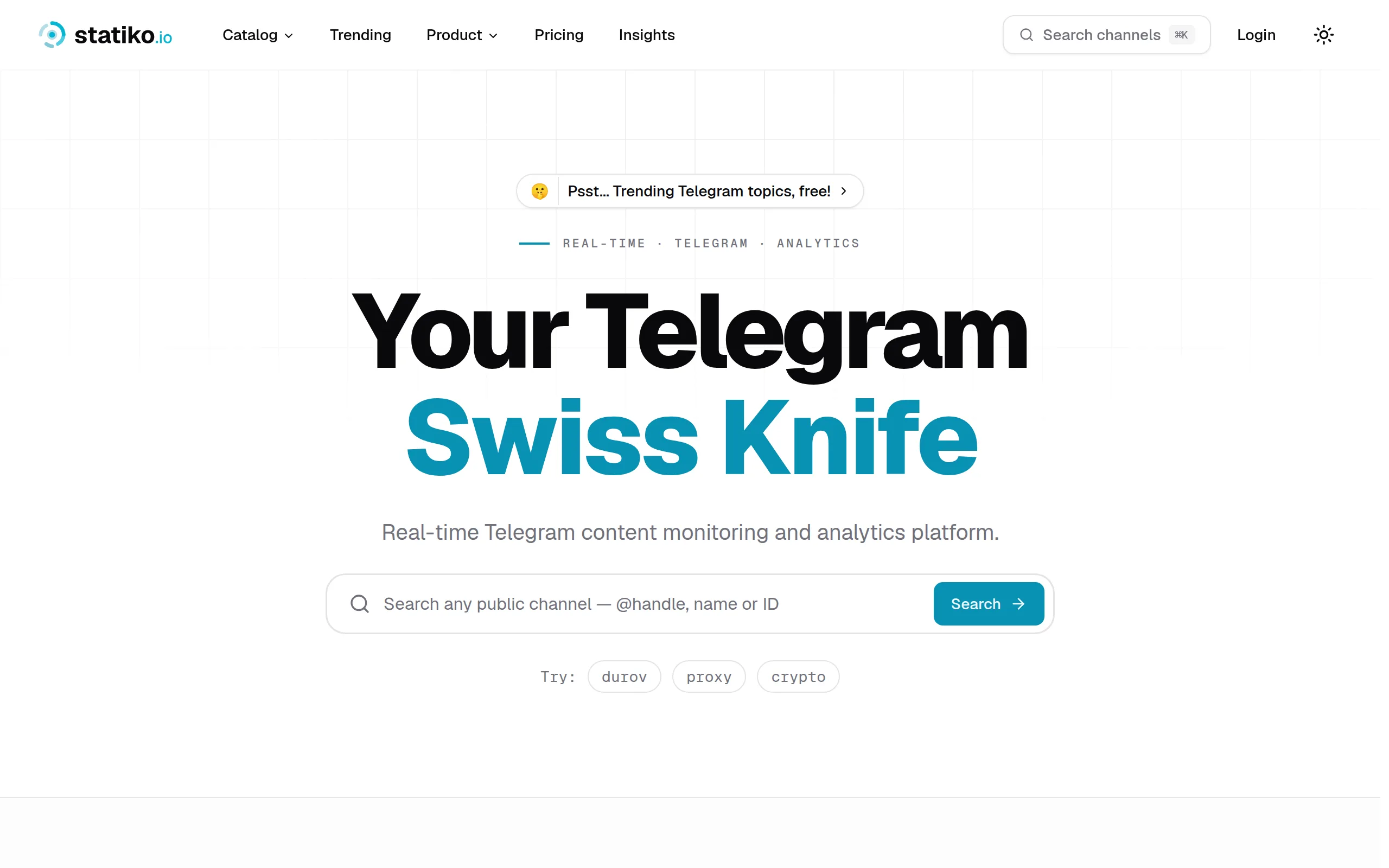
Statiko
Monitor any Telegram channel in real time - track posts, edits, deletions, and growth with AI recaps 📡

Shibui
AI website builder - describe your business, pick a niche template, edit by chatting, and publish instantly ✨

Pro Service
Find verified home service professionals, compare quotes, and pay securely through escrow - built for Brazilians across the US 🏠

RankGrow
Fix your SEO with AI agents - connect Search Console, get prioritized tasks, and grow organic traffic 📈
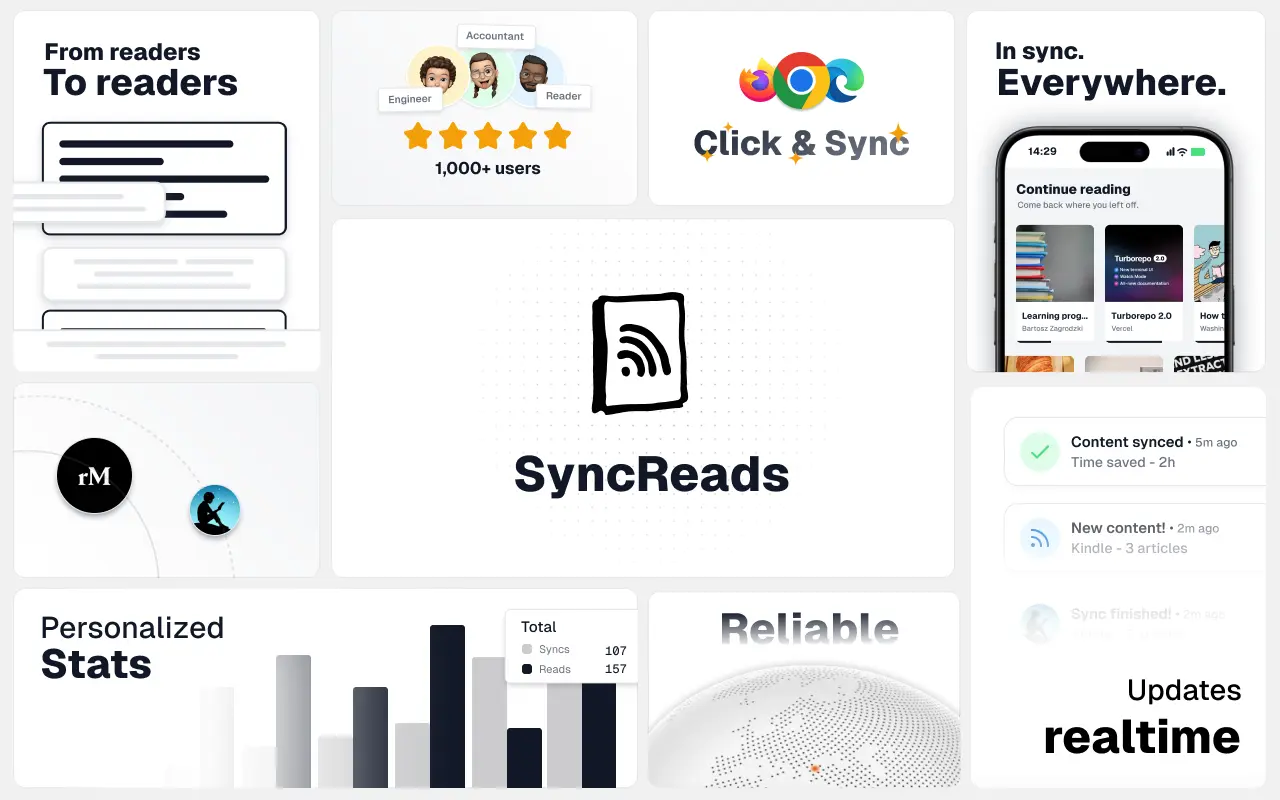
SyncReads
Sync your favorite content for distraction-free reading, save time and replace multiple apps. Anytime, anywhere 🔄
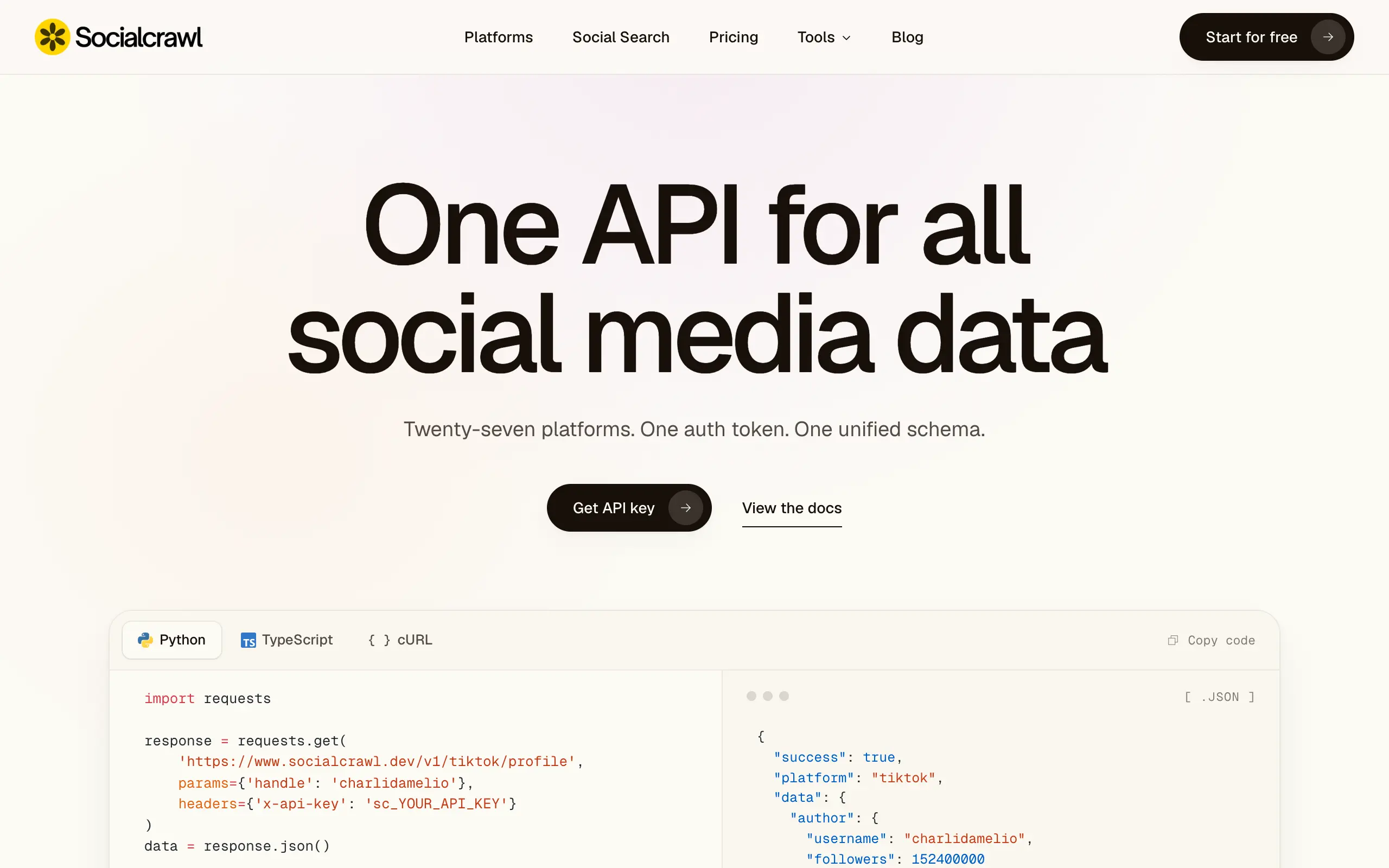
Socialcrawl
Get clean, structured data from 21 platforms like TikTok, Instagram, and YouTube with a single request 📊
Statiko
Monitor any Telegram channel in real time - track posts, edits, deletions, and growth with AI recaps 📡
Shibui
AI website builder - describe your business, pick a niche template, edit by chatting, and publish instantly ✨
Pro Service
Find verified home service professionals, compare quotes, and pay securely through escrow - built for Brazilians across the US 🏠
RankGrow
Fix your SEO with AI agents - connect Search Console, get prioritized tasks, and grow organic traffic 📈
SyncReads
Sync your favorite content for distraction-free reading, save time and replace multiple apps. Anytime, anywhere 🔄
Socialcrawl
Get clean, structured data from 21 platforms like TikTok, Instagram, and YouTube with a single request 📊
Statiko
Monitor any Telegram channel in real time - track posts, edits, deletions, and growth with AI recaps 📡
Shibui
AI website builder - describe your business, pick a niche template, edit by chatting, and publish instantly ✨
Pro Service
Find verified home service professionals, compare quotes, and pay securely through escrow - built for Brazilians across the US 🏠
RankGrow
Fix your SEO with AI agents - connect Search Console, get prioritized tasks, and grow organic traffic 📈
SyncReads
Sync your favorite content for distraction-free reading, save time and replace multiple apps. Anytime, anywhere 🔄
Socialcrawl
Get clean, structured data from 21 platforms like TikTok, Instagram, and YouTube with a single request 📊
Statiko
Monitor any Telegram channel in real time - track posts, edits, deletions, and growth with AI recaps 📡
Shibui
AI website builder - describe your business, pick a niche template, edit by chatting, and publish instantly ✨
Pro Service
Find verified home service professionals, compare quotes, and pay securely through escrow - built for Brazilians across the US 🏠
RankGrow
Fix your SEO with AI agents - connect Search Console, get prioritized tasks, and grow organic traffic 📈
SyncReads
Sync your favorite content for distraction-free reading, save time and replace multiple apps. Anytime, anywhere 🔄
Socialcrawl
Get clean, structured data from 21 platforms like TikTok, Instagram, and YouTube with a single request 📊
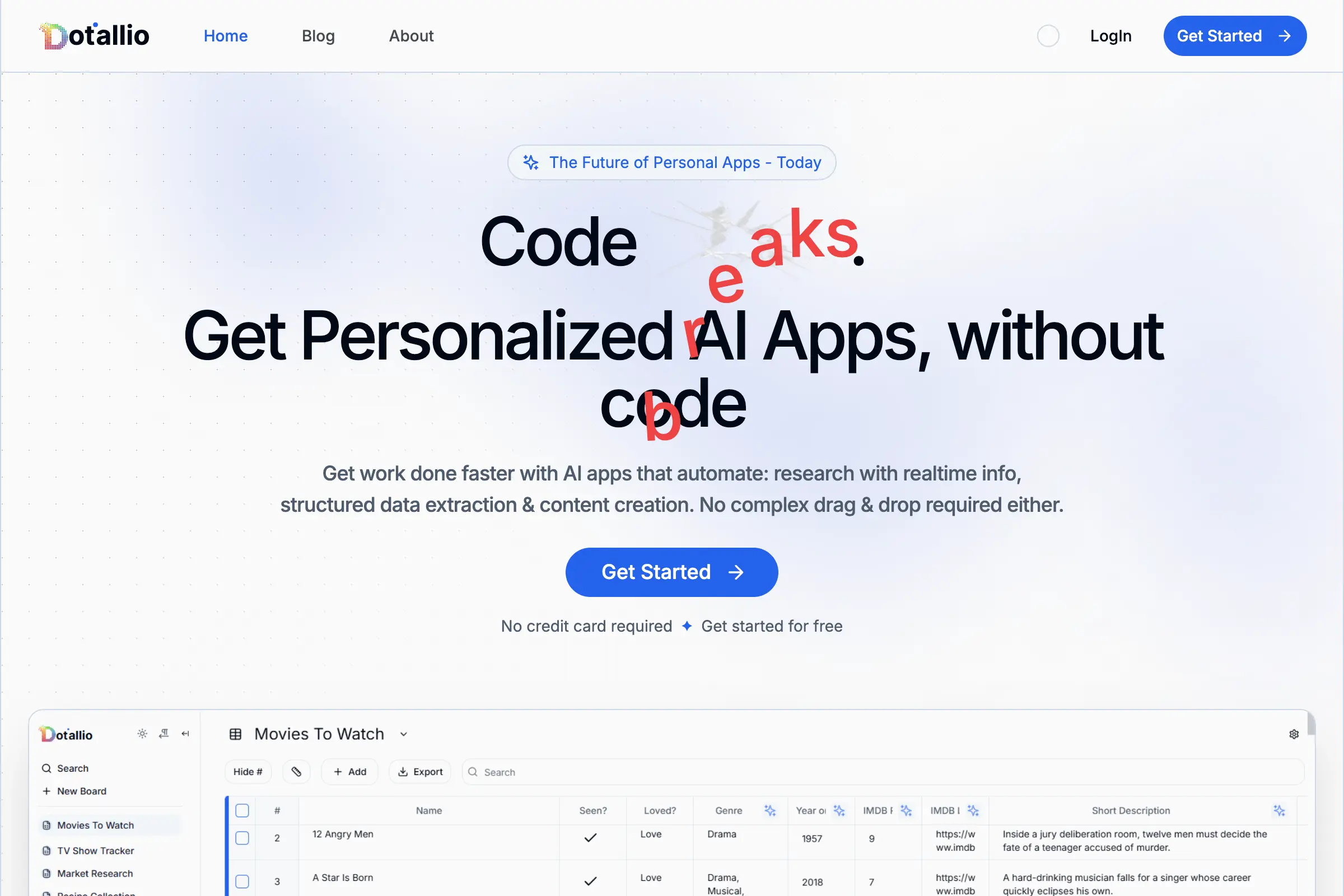
Dotallio
Personalized AI apps that automate research, data extraction, and content creation without code 🤖
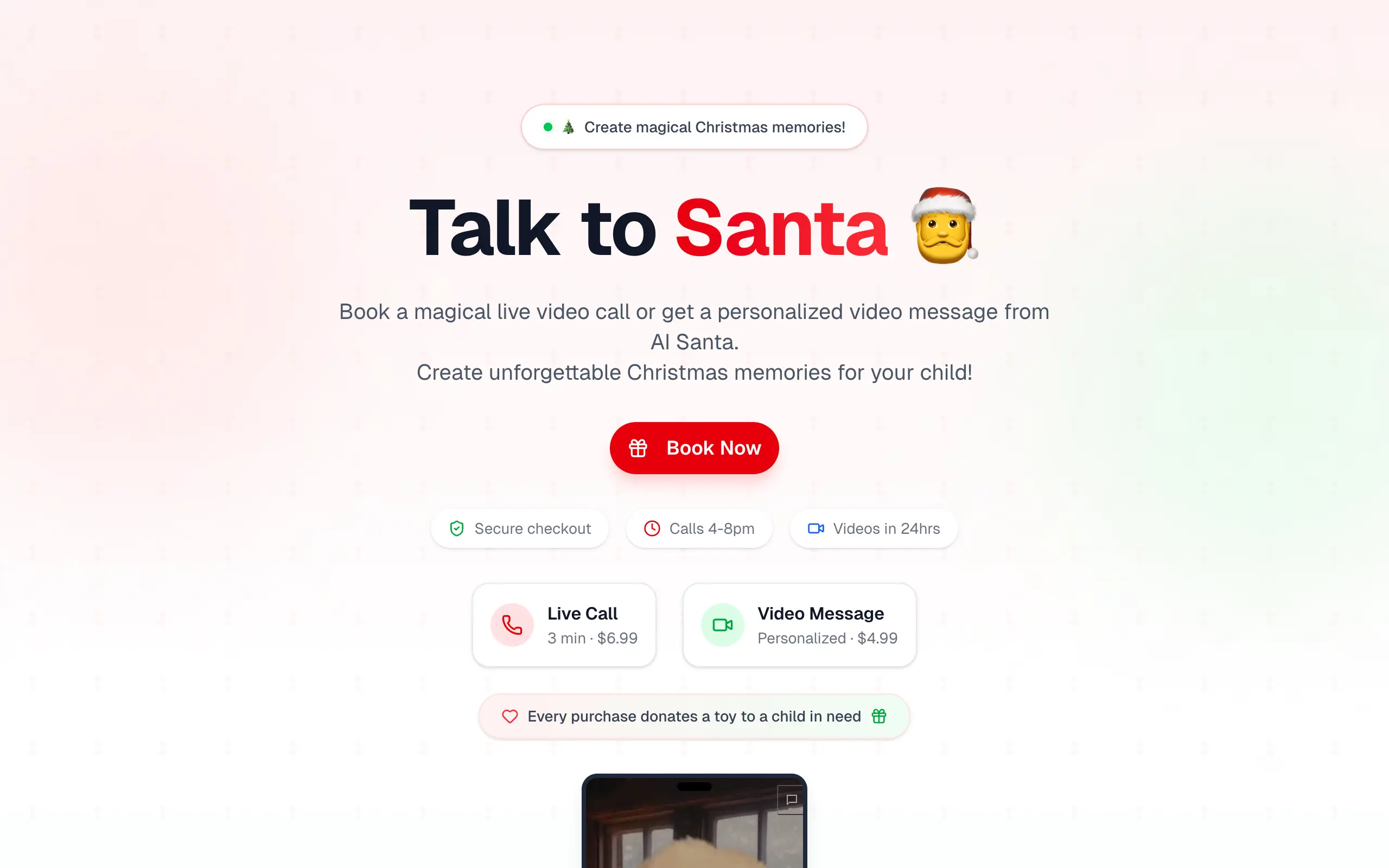
Talk to Santa
Enjoy a magical live video chat or receive a unique AI-generated video greeting from Santa Claus 🎅

pozywka.pl
Scalable blog for food journalist, focused on performance and user experience 🌭
zagrodzki.me
Personal blog and portfolio of Bart Zagrodzki, where he shares his knowledge and work 💼
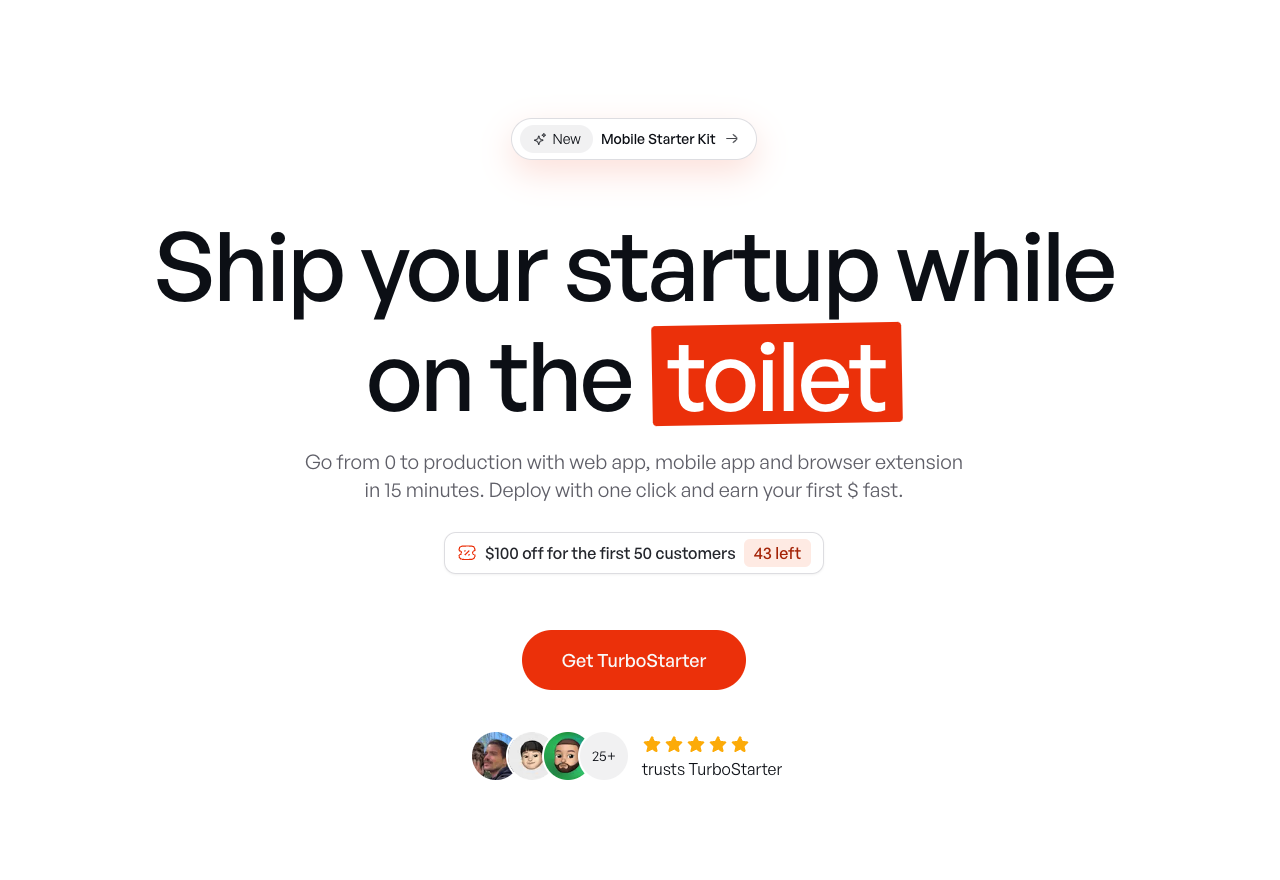
TurboStarter
Ship your startup everywhere. In minutes.
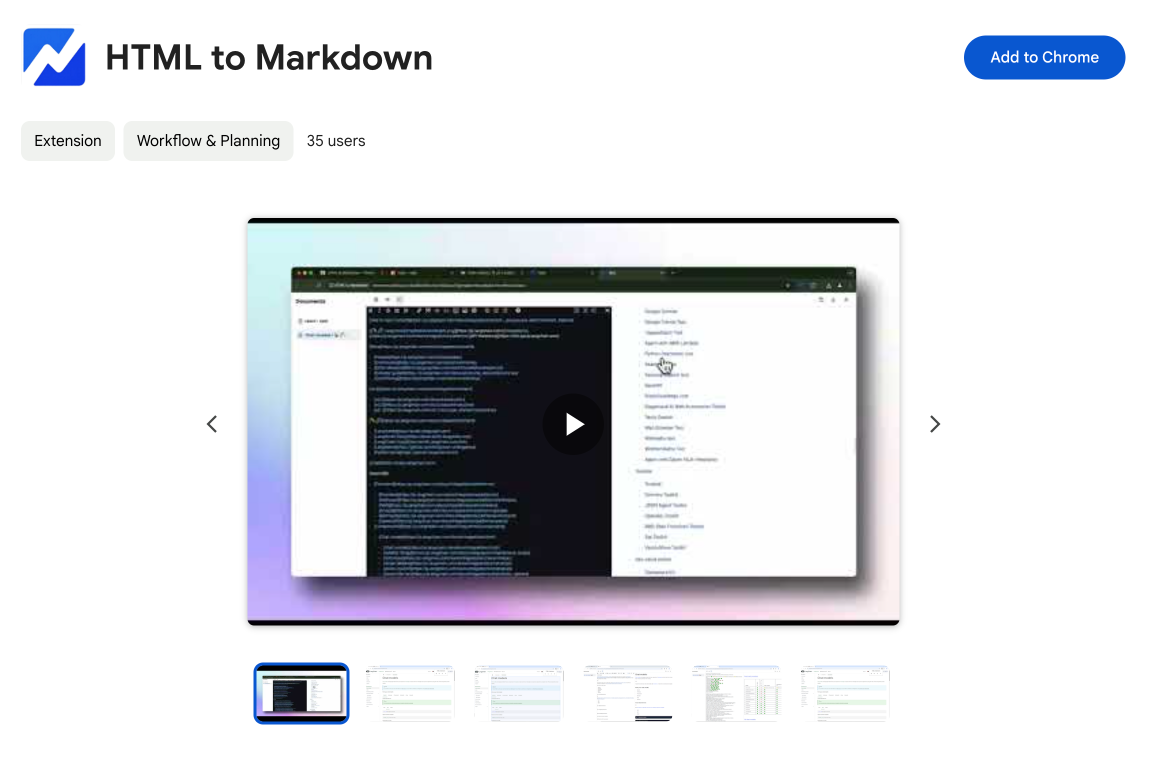
HTML to Markdown
Convert HTML to Markdown with ease, directly in your browser 📄
Dotallio
Personalized AI apps that automate research, data extraction, and content creation without code 🤖
Talk to Santa
Enjoy a magical live video chat or receive a unique AI-generated video greeting from Santa Claus 🎅
pozywka.pl
Scalable blog for food journalist, focused on performance and user experience 🌭
zagrodzki.me
Personal blog and portfolio of Bart Zagrodzki, where he shares his knowledge and work 💼
TurboStarter
Ship your startup everywhere. In minutes.
HTML to Markdown
Convert HTML to Markdown with ease, directly in your browser 📄
Dotallio
Personalized AI apps that automate research, data extraction, and content creation without code 🤖
Talk to Santa
Enjoy a magical live video chat or receive a unique AI-generated video greeting from Santa Claus 🎅
pozywka.pl
Scalable blog for food journalist, focused on performance and user experience 🌭
zagrodzki.me
Personal blog and portfolio of Bart Zagrodzki, where he shares his knowledge and work 💼
TurboStarter
Ship your startup everywhere. In minutes.
HTML to Markdown
Convert HTML to Markdown with ease, directly in your browser 📄
Dotallio
Personalized AI apps that automate research, data extraction, and content creation without code 🤖
Talk to Santa
Enjoy a magical live video chat or receive a unique AI-generated video greeting from Santa Claus 🎅
pozywka.pl
Scalable blog for food journalist, focused on performance and user experience 🌭
zagrodzki.me
Personal blog and portfolio of Bart Zagrodzki, where he shares his knowledge and work 💼
TurboStarter
Ship your startup everywhere. In minutes.
HTML to Markdown
Convert HTML to Markdown with ease, directly in your browser 📄
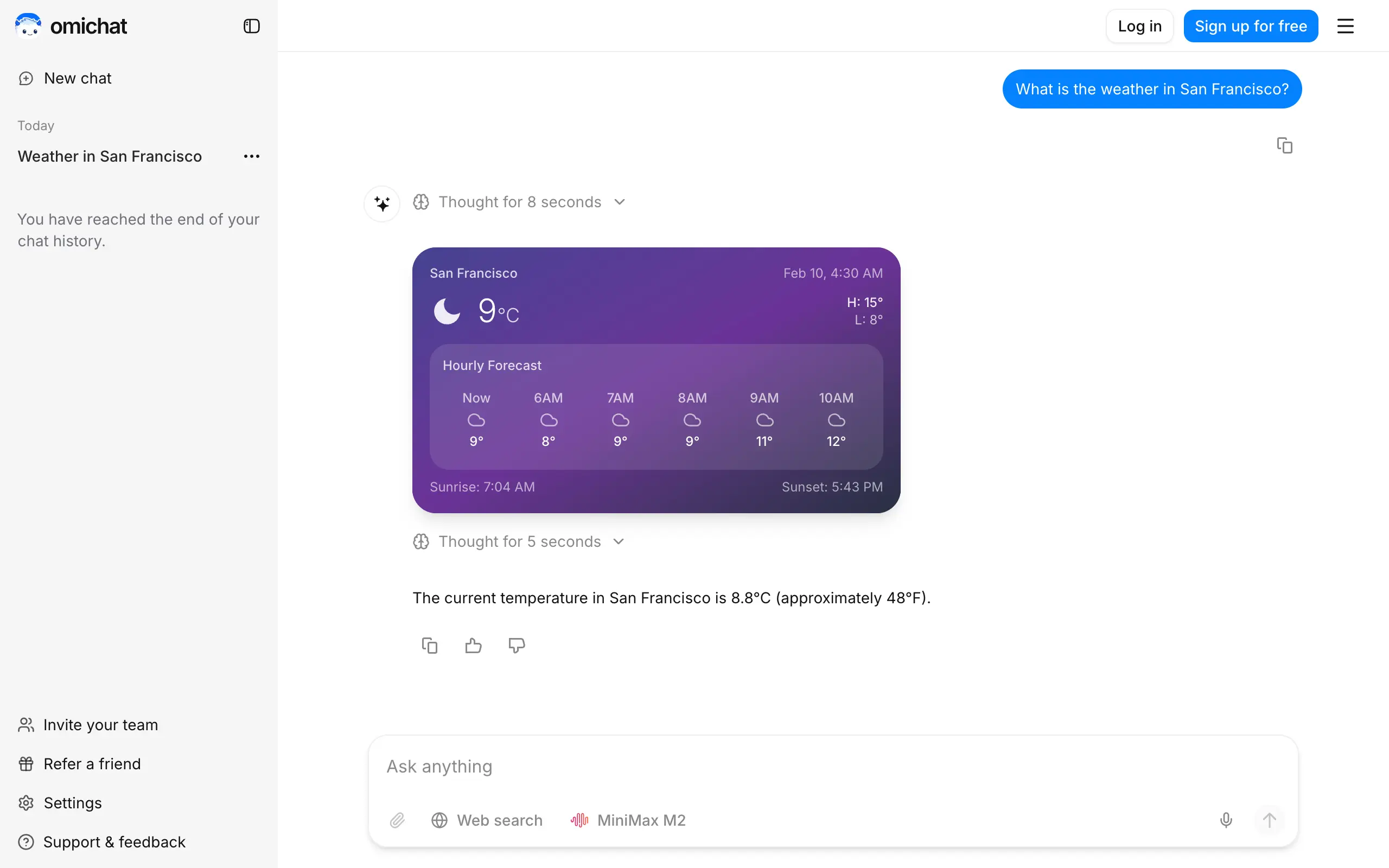
Omichat
Chat with 50+ AI models, including ChatGPT and Claude, in one place - switch models anytime without losing context 🤖
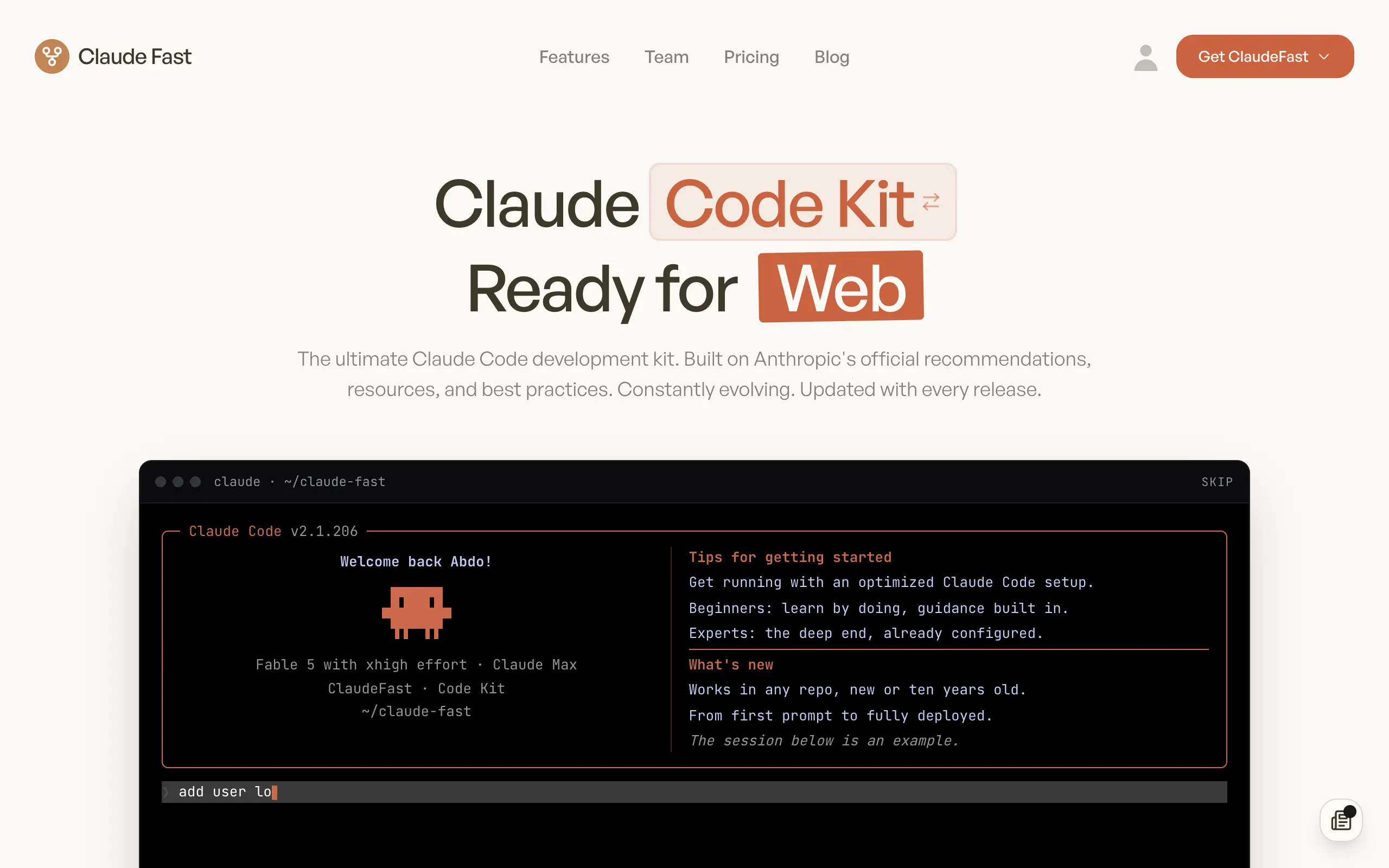
Claude Fast
Supercharge your Claude Code with 6x effective context window and specialized AI agents 🤖
EmojAI
AI-powered emoji picker with smart, context-aware suggestions 🤖
Solohacker
Autonomous company launcher - AI agents work 24/7, escalate what matters, and you stay in control 🤖
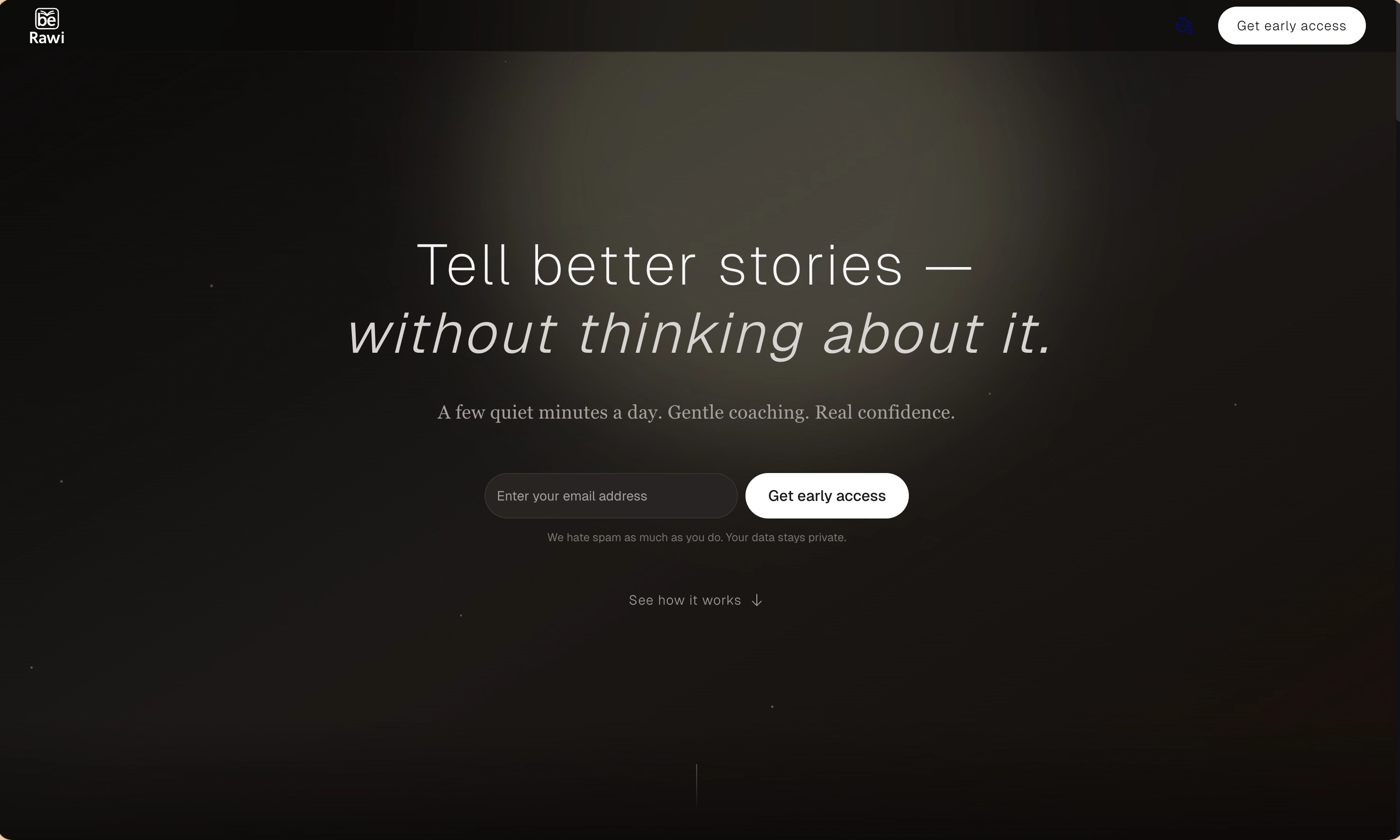
BeRawi: Storytelling Coach
Practice storytelling daily with instant feedback to sound clearer, more engaging, and confident 🎤
Omichat
Chat with 50+ AI models, including ChatGPT and Claude, in one place - switch models anytime without losing context 🤖
Claude Fast
Supercharge your Claude Code with 6x effective context window and specialized AI agents 🤖
EmojAI
AI-powered emoji picker with smart, context-aware suggestions 🤖
Solohacker
Autonomous company launcher - AI agents work 24/7, escalate what matters, and you stay in control 🤖
BeRawi: Storytelling Coach
Practice storytelling daily with instant feedback to sound clearer, more engaging, and confident 🎤
Omichat
Chat with 50+ AI models, including ChatGPT and Claude, in one place - switch models anytime without losing context 🤖
Claude Fast
Supercharge your Claude Code with 6x effective context window and specialized AI agents 🤖
EmojAI
AI-powered emoji picker with smart, context-aware suggestions 🤖
Solohacker
Autonomous company launcher - AI agents work 24/7, escalate what matters, and you stay in control 🤖
BeRawi: Storytelling Coach
Practice storytelling daily with instant feedback to sound clearer, more engaging, and confident 🎤
Omichat
Chat with 50+ AI models, including ChatGPT and Claude, in one place - switch models anytime without losing context 🤖
Claude Fast
Supercharge your Claude Code with 6x effective context window and specialized AI agents 🤖
EmojAI
AI-powered emoji picker with smart, context-aware suggestions 🤖
Solohacker
Autonomous company launcher - AI agents work 24/7, escalate what matters, and you stay in control 🤖
BeRawi: Storytelling Coach
Practice storytelling daily with instant feedback to sound clearer, more engaging, and confident 🎤

Connect with like-minded people
Join our community to get feedback, support, and grow together with 1,000+ builders on board, let's ship it!
Join usShip your startup everywhere. In minutes.
Don't burn tokens on setup and start building features on day one.