Torqly
Gives high school physics teachers a puzzle game for force and motion practice. Teachers see exactly which concept each student misses.
Torqly is a puzzle game for high school physics classes where students practice force and motion, and teachers see exactly which concept each student keeps missing. The potential in 2026 comes from a gap between two kinds of products: entertaining games that teach nothing measurable, and drill platforms that measure everything but feel like homework. A physics puzzle game for high school teachers that produces concept-level diagnostics sits between them.
Key takeaways
- Target customer: high school physics teachers (grades 9 to 12) who teach Newtonian mechanics and want fast, per-concept insight without grading problem sets by hand.
- Pricing angle: free for a single classroom, paid per teacher or per school for rosters, reports and multi-class analytics.
- Biggest risk: school purchasing cycles and student privacy rules can stall adoption, so teacher-led bottom-up adoption has to work first.
- Time to MVP: about 6 to 8 weeks for a solo founder with a starter kit, assuming 15 to 20 well-designed levels instead of a full curriculum.
What problem does a physics puzzle game solve for teachers?
Physics teachers can rarely tell, mid-unit, which specific idea each student is confused about. They see a wrong answer on a quiz, but not whether the student misunderstood Newton's third law, mixed up mass and weight, or forgot that friction opposes motion. Torqly exists to turn that vague "they're struggling" into "these seven students think a moving object needs a continuous force."
Who is Torqly for?
The ideal customer is a public or private high school physics teacher with roughly 100 to 150 students across four or five sections, teaching mechanics in the first half of the year. They are comfortable with a laptop cart or Chromebooks, have limited prep time, and already use tools like Google Classroom.
Secondary buyers are department heads who want consistent formative data across sections, and homeschool or tutoring teachers who want a structured practice tool. Start with the individual teacher, because they can adopt a free tool without a procurement process.
What do teachers do today, and why does it fail?
The common workarounds are:
- Worksheets and problem sets: slow to grade, and feedback arrives days after the confusion formed.
- Clicker or quiz tools: good for checking answers, but multiple choice rewards guessing and rarely reveals the underlying misconception.
- Simulations: interactive, but often open-ended with no scoring or per-student data.
- Generic edtech games: engaging, but built around points and speed, not physics concepts.
The failure is the same in each case: the teacher gets a score, not a diagnosis. A grade of 6 out of 10 does not say which concept broke.
Why is now a good time for educational physics games in 2026?
The opportunity is real because teachers increasingly expect digital formative assessment, yet most tools measure correctness, not conceptual understanding. Several trends point the same way, though you should treat them as directional rather than guaranteed.
- Devices are normal in classrooms. Most schools in many regions have one-to-one laptops or tablets, which removes the biggest hardware barrier for browser games.
- Teachers are time-poor. Anything that replaces grading, not adds to it, gets a hearing.
- Misconception-focused teaching is mainstream. Physics education research has long emphasized common misconceptions, and teachers are receptive to tools framed that way.
- Browser tech is good enough. Modern 2D physics engines run smoothly in the browser, so you do not need a native app or a game studio.
What does the competitive landscape look like?
The existing categories are well known. Quiz and review tools such as Kahoot and Quizizz own fast classroom engagement. PhET simulations from the University of Colorado Boulder are free and respected for exploration. Learning management systems such as Google Classroom handle assignments and rosters. Platforms such as Khan Academy cover practice and instruction.
None of these is built around a game where each level maps to a named physics concept and where the output is a per-student misconception report. That is the wedge, but it is also a warning: incumbents could add similar reporting, so your advantage must be the quality of the concept mapping, not the game shell.
What should the Torqly MVP include?
Build the smallest version that lets a teacher assign a short set of puzzles and see a per-concept breakdown within one class period. The aha moment is the teacher opening the dashboard after one 20-minute session and seeing a grid of students against concepts, with the weakest cells highlighted.
The four core features
Concept-tagged puzzle levels
Each level targets one idea, such as net force, inertia or friction, so every attempt produces concept-level evidence.
Misconception tracking
Wrong attempts are mapped to likely misconceptions, so the teacher sees why a student failed, not only that they did.
Teacher dashboard
A class grid of students by concept with simple filters, so the next lesson can be planned in minutes.
Join by class code
Students enter a code and play without long account setup, which keeps friction low in a 45-minute period.
What to cut from version one
Cut anything that does not improve the diagnostic signal:
- Level editors and user-generated content.
- Leaderboards and competitive modes, which can reward speed over thinking.
- Native mobile apps. A responsive web game on Chromebooks covers the classroom.
- Full curriculum coverage. Fifteen to twenty levels on forces and motion is enough to test the idea.
- LMS integrations beyond a simple share link.
The hardest part is not the code. It is writing levels where a specific wrong move reliably signals a specific misconception. Plan to design those with a working teacher.
How is Torqly different from quiz tools and simulations?
Torqly's unique selling proposition is simple: a game students want to play that gives teachers a concept-level diagnosis. The game is the delivery method, and the misconception data is the product.
| Option | Engaging for students | Concept-level diagnosis | Low teacher prep |
|---|---|---|---|
| Torqly | ✅ | ✅ | ✅ |
| Worksheets | ❌ | Depends on grading effort | ❌ |
| Quiz tools | ✅ | Usually only right or wrong | ✅ |
| Open simulations | ✅ | ❌ | ❌ |
| DIY spreadsheet tracking | ❌ | Manual | ❌ |
The honest caveat: the table favors Torqly because it is built for this job. The question teachers will ask is whether the diagnosis is accurate, so show them how each level maps to a concept and let them correct the mapping.
How would Torqly make money?
The most realistic model is freemium for teachers, paid for schools. Teachers adopt for free, and the school or department pays when they want shared data and administration.
Pricing options
- Free classroom plan, paid teacher plan: one class free, then something like $8 to $12 per month or a yearly fee for unlimited classes and exportable reports. Teachers often pay out of pocket for tools that save them time, but many will not, so treat this as a secondary stream.
- School or department license: a flat annual fee per school with rosters, multiple teachers and shared analytics. If you charge $400 per school per year and convert 1 in 20 active schools, you need to know how many schools you can reach before this becomes a business. Treat those numbers as assumptions to test.
- Level packs or curriculum add-ons: later packs for energy, momentum or circuits sold to existing users. This only works after the first unit proves retention.
Which growth channel works first?
Teacher communities and direct outreach. Physics teachers share tools in subject-specific forums, social groups and conference circles, and a free, useful tool spreads through trust. Start by recruiting ten teachers personally, then ask each to introduce one colleague.
How do you validate Torqly before building it?
Validate over two weeks, with the goal of proving that teachers will assign the game and care about the report. Do not build levels until you have talked to teachers.
Interview eight physics teachers
Ask how they currently find out who misunderstood a concept and what they do with that information. Listen for time spent grading and whether they already track misconceptions.
Test a paper or clickable prototype
Show three puzzle mockups and a fake dashboard. Ask which part they would use on Monday, and watch which part they ignore.
Publish a focused landing page
Promise one outcome: see which force and motion concept each student misses. Collect emails for a pilot waitlist.
Ask for a pilot commitment
Request that three teachers agree to run a 20-minute session with one class once the MVP is ready. A real commitment is a stronger signal than a waitlist signup.
Check the privacy constraints
Ask teachers what their school requires for student data. This tells you whether anonymous class codes are enough or whether you need more formal agreements early.
What tech stack should you use to build a physics game SaaS?
Build the game as a browser app with a 2D physics engine, and wrap it in a standard SaaS layer for teachers. Starting from TurboStarter removes the undifferentiated work: a ready-made monorepo for web and mobile, authentication, billing, database, emails, file storage, organizations and teams, an admin panel and analytics are already there. That leaves your time for the puzzle design and the diagnostic engine, which is the actual product.
How should the pieces fit together?
- Teacher app: dashboard, class management and reports, using authentication for teacher accounts and organizations for schools and departments.
- Student game client: a web game joined by class code, built with React and a canvas or a 2D physics library.
- Event pipeline: every attempt is stored as an event with the level, the concept tag and the outcome.
- Billing: billing handles the free-to-paid upgrade and school subscriptions.
- Data: database stores classes, students, levels and attempts.
A minimal data model for diagnosis
The key design choice is storing attempts as events tagged by concept, so reports are simple aggregations.
type Attempt = {
  id: string;
  studentId: string;
  classId: string;
  levelId: string;
  concept: "net-force" | "inertia" | "friction" | "action-reaction";
  misconception?: string; // e.g. "motion-requires-force"
  correct: boolean;
  durationMs: number;
  createdAt: Date;
};
Which physics approach should you pick?
Use an established open source 2D engine such as Matter.js. You ship faster and get stable collisions, but you accept some behavior that is not physically exact, which can confuse a physics lesson if you do not tune it.
Write simple deterministic equations for the specific scenarios in each level. This gives you precise, explainable physics and clean misconception detection, but costs more build time per level. It is a good choice once you know which levels matter.
For most founders, start with an existing engine for the first levels, and move to custom logic only where accuracy affects the diagnosis.
What could make Torqly fail?
Most failure modes are about adoption and credibility, not code.
Biggest risk: the diagnosis is not trusted
If teachers do not believe that a wrong move really signals a specific misconception, the dashboard is just another score and the product has no reason to exist. Mitigate this by designing levels with practicing physics teachers, showing the concept mapping openly, letting teachers override tags, and reviewing real attempt data after each pilot.
- Slow school purchasing: start with free teacher adoption, and sell to schools only after several teachers in the same building use it.
- Student privacy rules: minimize collected data, use class codes instead of personal details where possible, and research the rules in your target region before selling to schools.
- Games that teach little: if students can win by trial and error, the signal is weak. Add constraints so success requires the right reasoning.
- Content cost: each new level needs pedagogical design. Keep the first release small and expand only the units teachers ask for.
What should you do in the first 30 days?
Aim for one real class using Torqly by the end of the month.
- Week 1: interview teachers, define the 4 to 5 core concepts and the misconceptions for each.
- Week 1 to 2: publish the landing page and recruit three pilot teachers.
- Week 2 to 3: set up the app on TurboStarter, then build the class code flow and the first five levels.
- Week 3: add attempt tracking and a basic class grid dashboard.
- Week 4: run a pilot session with one class, then review the data and teacher feedback.
- End of week 4: fix the weakest levels, decide on pricing for the paid tier and invite the pilot teachers to introduce a colleague.
Start with the smallest game that proves the diagnosis, and let teacher feedback decide the next unit. If you want a physics puzzle game for high school teachers to exist, the fastest route is a narrow first release in a real classroom.
FAQ
Interview teachers before building and test a clickable prototype of the dashboard. The strongest signal is a teacher agreeing to run a 20-minute session with a real class, not just joining a waitlist.
Start free for a single classroom and charge for multiple classes, exports and school-wide analytics. Teacher-paid plans are typically small, while school licenses are larger but slower to close, so test both with real buyers.
Quiz platforms like Kahoot and Quizizz, simulations like PhET, and practice platforms like Khan Academy are the closest alternatives. None centers on a concept-tagged puzzle game with per-student misconception reports, but you must prove that your diagnosis is more useful than their scores.
A React web app with a 2D physics library for the game and a standard SaaS backend for accounts, classes and billing works well. Using a starter kit like TurboStarter covers authentication, billing, database and emails so you can spend your time on levels and diagnostics.
A solo founder can typically ship a first version in 6 to 8 weeks with 15 to 20 levels, class codes and a basic dashboard. Level design and teacher testing usually take longer than the engineering.
More 🎮 Game SaaS ideas
Discover more innovative game SaaS ideas that are trending in 2026. Each idea is AI-generated with market validation and growth potential to help you find your next profitable venture faster than competitors.
Your competitors are building with TurboStarter
Below are some of the SaaS ideas that have been generated and built with our starter kit.

Monitor any Telegram channel in real time - track posts, edits, deletions, and growth with AI recaps 📡

AI website builder - describe your business, pick a niche template, edit by chatting, and publish instantly ✨

Find verified home service professionals, compare quotes, and pay securely through escrow - built for Brazilians across the US 🏠
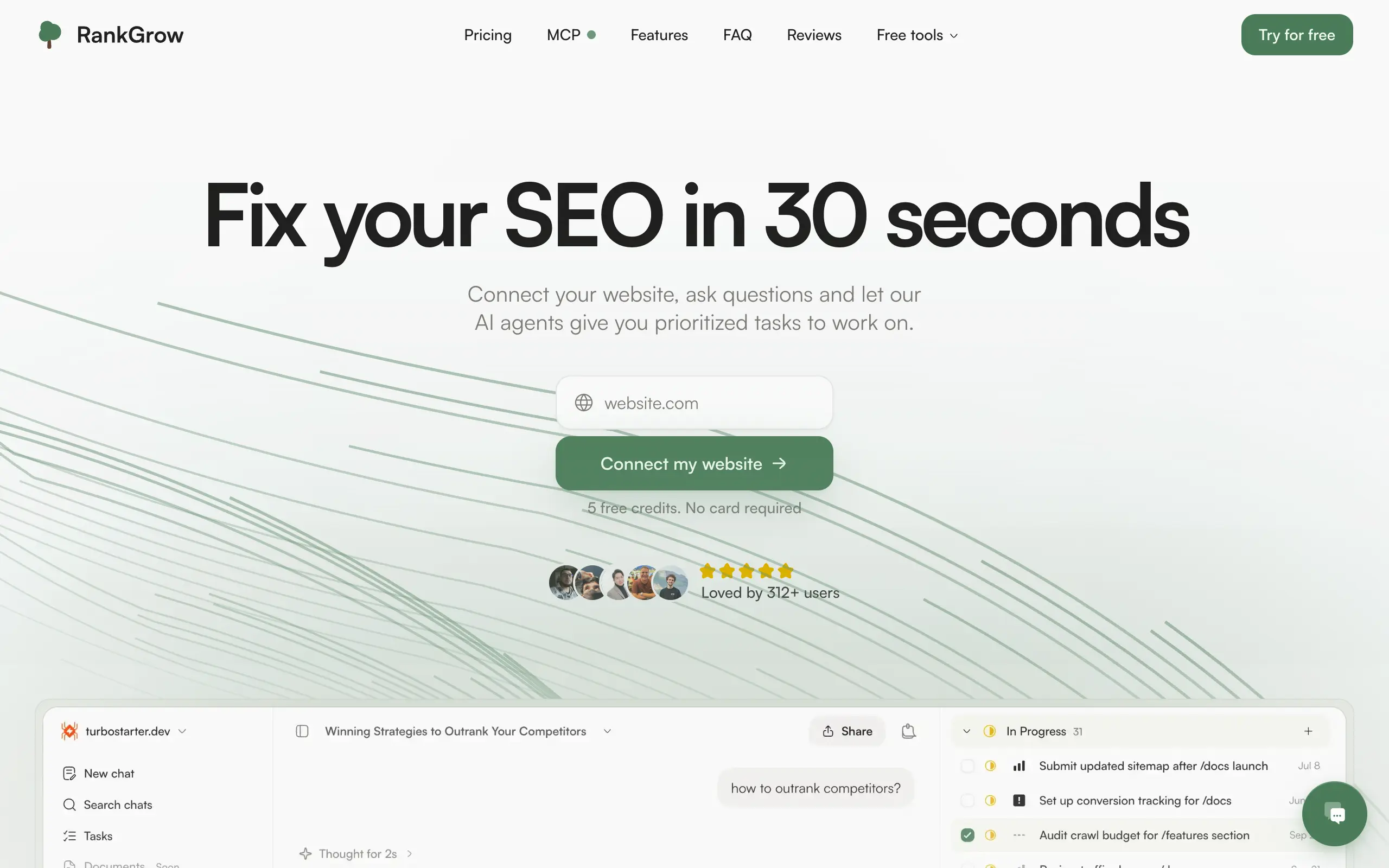
Fix your SEO with AI agents - connect Search Console, get prioritized tasks, and grow organic traffic 📈

Sync your favorite content for distraction-free reading, save time and replace multiple apps. Anytime, anywhere 🔄

Get clean, structured data from 21 platforms like TikTok, Instagram, and YouTube with a single request 📊
Monitor any Telegram channel in real time - track posts, edits, deletions, and growth with AI recaps 📡
AI website builder - describe your business, pick a niche template, edit by chatting, and publish instantly ✨
Find verified home service professionals, compare quotes, and pay securely through escrow - built for Brazilians across the US 🏠
Fix your SEO with AI agents - connect Search Console, get prioritized tasks, and grow organic traffic 📈
Sync your favorite content for distraction-free reading, save time and replace multiple apps. Anytime, anywhere 🔄
Get clean, structured data from 21 platforms like TikTok, Instagram, and YouTube with a single request 📊

Personalized AI apps that automate research, data extraction, and content creation without code 🤖

Enjoy a magical live video chat or receive a unique AI-generated video greeting from Santa Claus 🎅

Scalable blog for food journalist, focused on performance and user experience 🌭

Personal blog and portfolio of Bart Zagrodzki, where he shares his knowledge and work 💼

Ship your startup everywhere. In minutes.

Convert HTML to Markdown with ease, directly in your browser 📄
Personalized AI apps that automate research, data extraction, and content creation without code 🤖
Enjoy a magical live video chat or receive a unique AI-generated video greeting from Santa Claus 🎅
Scalable blog for food journalist, focused on performance and user experience 🌭
Personal blog and portfolio of Bart Zagrodzki, where he shares his knowledge and work 💼
Ship your startup everywhere. In minutes.
Convert HTML to Markdown with ease, directly in your browser 📄

Chat with 50+ AI models, including ChatGPT and Claude, in one place - switch models anytime without losing context 🤖

Supercharge your Claude Code with 6x effective context window and specialized AI agents 🤖

AI-powered emoji picker with smart, context-aware suggestions 🤖

Autonomous company launcher - AI agents work 24/7, escalate what matters, and you stay in control 🤖

Practice storytelling daily with instant feedback to sound clearer, more engaging, and confident 🎤
Chat with 50+ AI models, including ChatGPT and Claude, in one place - switch models anytime without losing context 🤖
Supercharge your Claude Code with 6x effective context window and specialized AI agents 🤖
AI-powered emoji picker with smart, context-aware suggestions 🤖
Autonomous company launcher - AI agents work 24/7, escalate what matters, and you stay in control 🤖
Practice storytelling daily with instant feedback to sound clearer, more engaging, and confident 🎤

Connect with like-minded people
Join our community to get feedback, support, and grow together with 1,000+ builders on board, let's ship it!
Join usShip your startup everywhere. In minutes.
Don't burn tokens on setup and start building features on day one.