FlowProof
Convert app journeys into realistic backend simulations and automated edge-case tests. Validate auth, errors, and offline behavior before release.
Why mobile teams need backend simulation and edge-case testing
A mobile app can pass its happy-path tests and still fail in the hands of real users. A sign-in request may time out on a weak connection. A payment may succeed on the server while the app displays an error. A user may lose connectivity halfway through an upload, reopen the app, and find that their work has disappeared.
These failures are difficult to catch with a small set of manual test accounts or a backend that is always available and predictable. They depend on timing, network conditions, account state, server responses, and the sequence of actions a person takes. Reproducing them consistently can consume more time than fixing them.
FlowProof is a mobile testing platform concept that converts app journeys into realistic backend simulations and automated edge-case tests. Instead of testing only whether a screen renders or an API returns a successful response, FlowProof would help teams ask more consequential questions:
- What happens when a user’s access token expires halfway through a journey?
- Does the app recover correctly when a request times out but the server completes the operation?
- Can a user safely retry a payment or form submission?
- Does the app preserve useful state when it goes offline and reconnects?
- How does the product respond to malformed, delayed, or unexpected backend data?
The core idea is not simply “more automated mobile tests.” It is a way to make the backend conditions that produce hard-to-reproduce bugs repeatable, observable, and testable before release.
What FlowProof should be
FlowProof should be positioned as a mobile app backend simulation and edge-case testing platform. It would let a team define or capture an app journey, connect that journey to simulated backend behavior, and run the resulting tests against the mobile app.
A basic journey might be:
- A new user opens the app.
- The user creates an account.
- The user confirms their email.
- The app fetches a profile and dashboard.
- The user edits a setting while the network is unstable.
FlowProof would make it possible to test that same journey under multiple conditions: normal responses, expired authentication, delayed requests, server errors, duplicate submissions, offline transitions, and recovery after reconnecting.
The product’s promise should be specific: help mobile teams verify that user journeys remain correct when backend behavior and connectivity are imperfect. It should not claim that simulation replaces production monitoring, real-device testing, backend integration testing, or security review. Instead, it can fill the space between unit tests and expensive, inconsistent end-to-end testing.
That distinction matters. A mocked response can help validate app behavior, but it cannot prove that the production backend has the correct configuration or that every real device behaves identically. FlowProof’s value comes from making failure conditions reproducible and connecting those conditions to meaningful user journeys.
Who FlowProof is for
FlowProof has several potential customer groups. A strong initial product should focus on one group whose testing pain is frequent, expensive, and easy to demonstrate.
Mobile engineering teams
Mobile engineers are likely to be the primary users. They need to build and maintain authentication flows, data synchronization, uploads, payments, and other interactions that rely on remote services.
For these teams, the pain is not merely that a bug exists. It is that a bug may depend on a rare sequence of events, such as an expired session combined with a retry after a network timeout. Engineers need a way to set up that situation repeatedly without relying on production data or manually manipulating the backend.
FlowProof could help these users:
- Define a repeatable sequence of screens and user actions.
- Specify backend responses for each request in a journey.
- Simulate failures without modifying a shared development environment.
- Re-run a failing scenario after a code change.
- Attach the scenario to a pull request or continuous integration pipeline.
Quality assurance and test engineering teams
QA teams often coordinate tests across devices, operating systems, environments, accounts, and release candidates. A backend simulation layer could reduce the effort required to prepare a particular account state or reproduce an unusual response.
These users would value:
- Reusable test scenarios that do not depend on manually prepared accounts.
- Clear evidence of which step failed and what response the app received.
- Test data that can be reset between runs.
- Coverage reports tied to user journeys and failure conditions.
- A shared library of scenarios across QA, mobile, and backend teams.
FlowProof should avoid treating QA as a secondary audience. Test engineers can be important champions because they understand the cost of flaky tests and the practical difficulty of reproducing state-dependent defects.
Startups and growing product teams
Smaller teams may not have dedicated mobile test infrastructure or a full-time test automation engineer. They still need reliable sign-in, billing, and offline behavior, but may rely heavily on manual testing.
For these teams, the product needs a short path to value. A developer should be able to connect a sample app, create a scenario, and see a useful result without spending days configuring a testing platform. Templates for common flows—such as login, account recovery, checkout, and file upload—could make onboarding much easier.
Regulated and high-trust businesses
Fintech, healthcare, insurance, and other high-trust products may have especially strong reasons to validate authentication, authorization, error handling, and data recovery. These teams may also have more demanding requirements around data handling, auditability, access controls, and security review.
FlowProof should not market itself as a compliance solution unless it can support the relevant evidence, controls, and independent assessments. It can, however, help teams create more repeatable tests for security-sensitive journeys. The OWASP Mobile Application Security Verification Standard is a useful reference for considering mobile security requirements and testing scope.
The market opportunity and product gap
Mobile teams already use a range of tools for device testing, UI automation, API mocking, backend integration testing, and production monitoring. The opportunity is not to claim that these categories do not exist. It is to make a specific workflow easier: testing how a mobile app journey behaves under controlled backend and network conditions.
A team may already have a UI automation framework, a set of API tests, and a staging backend. The gaps often appear between those tools:
- A UI test can verify that a screen displays an error, but may not make it easy to produce the exact timeout and retry sequence that triggers that screen.
- An API mock can return a particular status code, but may not connect that response to the full user journey and its expected recovery behavior.
- A staging backend can provide realistic integration coverage, but may be shared, changeable, slow, or difficult to reset.
- A device farm can provide access to many devices, but device availability alone does not define the backend state each test requires.
FlowProof’s market hypothesis is that mobile teams will pay for a product that reduces the setup and maintenance burden across these layers. That hypothesis should be validated before building a broad platform.
How to validate the opportunity
Interview developers, test engineers, and engineering managers who ship mobile apps. Ask them to describe the last backend-dependent mobile bug that was hard to reproduce. Avoid asking only whether they “like the idea.” More useful questions include:
- What exact user actions and backend conditions caused the defect?
- How did the team reproduce it?
- How many people were involved in diagnosing it?
- Which tools were used, and where did those tools fall short?
- How often does the team test expired tokens, timeouts, retries, or offline transitions?
- What does the team currently do when a test depends on a particular account state?
- Which mobile platforms and app frameworks are in scope?
- What evidence would the team need before trusting an automated test result?
- Who would own the budget for a solution?
Look for repeated workflows rather than isolated complaints. If several teams independently describe the same high-friction tasks—such as setting up a deterministic authentication failure or reproducing a duplicate submission—those patterns can guide the first product release.
Do not publish a market-size estimate without a defensible method and current sources. If FlowProof later includes market sizing, document the target geography, company segment, definition of the addressable category, and the source and date of each input. A useful research plan could include analyst reports, public company filings, app development ecosystem data, and interviews with prospective buyers.
Core features for an effective FlowProof product
The first release should solve a narrow, frequent problem instead of trying to become a complete mobile development platform. The most promising feature set centers on journeys, backend behavior, reproducible execution, and useful debugging evidence.
Journey capture and authoring
A journey is a named sequence of actions and expected outcomes. FlowProof could support both code-first and visual authoring:
- Code-first journeys for developers who want scenarios in version control.
- Visual journey editing for QA teams that want to assemble or inspect flows without writing all the test logic.
- Recorded journeys as a starting point, with a developer reviewing and converting the recording into a stable test.
A recording alone is not enough. User interfaces change, selectors become stale, and a visually successful step does not necessarily prove that the underlying product state is correct. A good journey authoring experience should encourage stable selectors, meaningful assertions, and clear links between a user action and its network behavior.
Each journey should make it possible to define:
- Starting app state and test account requirements.
- User actions and screen checkpoints.
- Network requests that are expected during the flow.
- Backend responses or simulated service behavior.
- Expected state changes and recovery behavior.
- Cleanup steps that restore the test environment.
Backend response simulation
The central differentiator is controlled backend behavior. A team should be able to describe how a service responds under particular conditions, such as:
- Successful responses with representative data.
- Authentication failures, including expired or invalid credentials.
- Permission errors for accounts with different roles.
- Server errors and service-unavailable responses.
- Slow responses and request timeouts.
- Empty, malformed, or unexpected response bodies.
- Duplicate requests and idempotency scenarios.
- Rate limits and retry-after behavior.
- Partial success across multiple dependent requests.
Simulation should support predictable test runs. If two runs use the same app build, journey, and scenario configuration, they should produce meaningfully comparable results. Randomized behavior can be useful for exploratory testing, but it should be opt-in and include a way to record the random seed or conditions used.
Network and offline conditions
“Offline testing” should be more nuanced than switching connectivity off. Mobile apps encounter transitions, not just static network states. A useful simulation layer should account for situations such as:
- The app starts offline and reconnects later.
- A request begins online but times out before the app receives a response.
- The app receives a server response after the user navigates away.
- Connectivity returns while the app is in the background.
- A retry occurs while the first request may still be processing.
- A queued write is replayed after reconnection.
These scenarios can expose synchronization bugs, duplicate writes, confusing UI state, and data loss. They also illustrate why deterministic scenarios are valuable: intermittent network behavior is difficult to diagnose if the conditions cannot be recreated.
FlowProof should clearly distinguish between what it simulates and what it tests on a real device. For example, a controlled network profile can verify app behavior under defined latency or failure conditions, but it does not reproduce every carrier, router, operating-system, or hardware condition.
Authentication and authorization testing
Authentication should be a first-class feature because it affects both app access and user trust. Common cases include expired access tokens, failed refresh requests, revoked sessions, missing permissions, account switching, and sign-out during an active request.
The platform should help teams verify expected user-facing behavior without exposing real credentials. That requires careful test-fixture design. Teams should be able to use synthetic accounts and scoped test secrets, with clear separation between local development, CI, and production environments.
Authorization tests should also confirm what the app does when an account has a valid session but lacks permission for a resource. A user should not see private data simply because the UI assumes that a request will succeed.
Replay, debugging, and test evidence
A failed test is only useful if the team can understand why it failed. FlowProof should capture a concise, secure record of the run, including:
- Journey step and app build.
- Device or simulator details.
- Relevant request and response metadata.
- Simulated condition and timing.
- Screenshots or video where appropriate.
- Logs and assertion failures.
- A replayable scenario configuration.
Sensitive data should be redacted by default. Teams need controls for headers, tokens, personal data, and request bodies. The product should avoid collecting more data than is necessary to diagnose a test.
A particularly valuable feature would be a shareable failure artifact. Instead of sending a vague message such as “login failed intermittently,” an engineer could share a run that shows the exact sequence: a token refresh request timed out, the app retried, the second response was unauthorized, and the UI remained stuck on a loading state.
CI integration and test governance
A useful testing product needs to fit into the development workflow. FlowProof should provide a command-line interface and CI-friendly outputs, while keeping the local authoring experience approachable.
Teams will likely need:
- Pull request checks for selected critical journeys.
- Scheduled runs for broader scenario suites.
- Test annotations or tags, such as
auth,offline, orpayments. - Clear pass, failure, and flaky-run classification.
- Configurable retry policies that do not hide genuine defects.
- Exportable test results and audit history.
- Access controls for projects, environments, and secrets.
Test retries require special care. Retrying a failure can help identify instability, but a product that silently turns red tests green risks creating false confidence. FlowProof should preserve the initial result and show whether a pass occurred only after a retry.
A practical technical approach
FlowProof’s architecture should be designed around determinism, isolation, and compatibility with existing mobile stacks. A reasonable early version could consist of a web console, a test orchestration service, a scenario and fixture store, and a lightweight local or CI runner.
Client and runner architecture
The test runner should execute close to the app under test, either on a developer’s machine, a CI worker, or a managed device environment. Running tests near the app gives teams flexibility and can limit the need to upload source code or sensitive build artifacts.
A local runner could:
- Start or connect to a simulator or device.
- Install a specified app build.
- Configure the scenario’s simulated backend behavior.
- Execute the journey.
- Collect results and diagnostic artifacts.
- Report a structured result to the FlowProof service.
The service can handle team management, scenario metadata, run history, dashboards, and access control. Separating orchestration from execution makes it easier to support different environments without requiring every app build to be sent to a central service.
Recommended stack options
There is no single correct stack. The right choices depend on the team’s experience and on whether FlowProof starts with iOS, Android, React Native, Flutter, or several targets.
- Web dashboard: React is a practical option for a component-based dashboard. A team that prioritizes static typing can use TypeScript with React, while a server-rendered framework can simplify routing and authentication.
- Styling: Tailwind CSS can help a small team build a consistent interface quickly. The trade-off is that teams need conventions to keep utility-heavy markup readable as the product grows.
- Mobile automation: An integration with Appium may provide broad platform and language flexibility. The trade-off is that cross-platform abstraction can involve setup and maintenance overhead. A platform-specific or framework-specific integration may offer a tighter experience for a narrower initial audience.
- iOS test execution: Apple’s Xcode documentation is the authoritative starting point for simulator and test workflows. Native platform constraints mean that execution and signing behavior need to be understood early.
- Android test execution: The Android Developers documentation explains emulator workflows. Emulator coverage is useful, but should not be presented as equivalent to validation on physical devices.
- Backend services: A conventional API service backed by a relational database can store projects, scenario definitions, permissions, and run metadata. A job queue can manage longer-running test sessions and artifact processing.
- Artifact storage: Object storage is suitable for larger logs, screenshots, and recordings, with explicit retention and access policies.
- Scenario definitions: JSON or YAML can work for declarative fixtures, while code-based tests provide greater flexibility. Supporting both from day one may expand scope, so an initial product should choose one primary authoring model and leave a clean path to the other.
For teams building the SaaS itself, TurboStarter can be considered as a starting point for common SaaS foundations. It does not replace the specialized work of building a reliable mobile test runner, backend simulation layer, or secure artifact pipeline.
Designing a scenario format
A declarative format can make scenarios reviewable and reusable. For example, a team might describe an expired-session test like this:
name: refresh-session-after-expiry
journey: account-dashboard
conditions:
  network:
    latencyMs: 300
    disconnectAfterRequest: profile
backend:
  - match:
      method: GET
      path: /profile
    respond:
      status: 401
      body:
        error: token_expired
  - match:
      method: POST
      path: /auth/refresh
    respond:
      status: 200
      body:
        accessToken: test-access-token
assertions:
  - screen: dashboard
  - textVisible: Account overview
  - requestNotRepeated: /profile
This example is illustrative, not a claim that every API or app should use this exact schema. The important product decisions are how requests are matched, how state is isolated, how conflicts are reported, and how the scenario remains understandable when an app’s API evolves.
Competitive advantage and positioning
FlowProof will operate alongside existing testing tools, so the product needs a clear reason to be adopted rather than asking teams to replace everything they already use.
| Product category | What it typically helps with | Potential gap FlowProof can address |
|---|---|---|
| Unit and component testing | Validating isolated code and view behavior | Does not usually reproduce a full backend-dependent journey |
| UI automation | Verifying screens and user actions | Can be brittle when backend state and timing are uncontrolled |
| API testing | Checking endpoint behavior and contracts | May not verify how a mobile app recovers from those responses |
| Device testing services | Running apps on a range of devices | Device coverage does not itself define realistic backend scenarios |
| Staging environments | Testing against integrated services | Shared state and changing data can make failures hard to reproduce |
| Production monitoring | Detecting issues after release | Finds real-world problems but cannot replace pre-release validation |
FlowProof’s strongest possible advantage is the combination of user journey, backend condition, and reproducible evidence. A test should communicate not only that a screen failed, but which backend behavior caused the failure and whether the app recovered correctly.
That proposition can become more defensible through product quality rather than a single technical feature:
- A scenario library that reflects real mobile failure modes.
- Reliable, low-flake execution.
- Strong developer ergonomics and version-control workflows.
- Integrations that complement existing UI and device testing tools.
- Secure handling of credentials and test artifacts.
- Clear reporting that turns failures into actionable engineering work.
The product should avoid positioning itself as “one tool that replaces all mobile testing.” That claim is broad and difficult to support. A more credible position is that FlowProof makes backend-dependent mobile journeys and edge cases easier to reproduce and validate.
Monetization strategy
FlowProof could use a tiered SaaS model, but pricing should align with the value customers receive and the costs of running mobile tests.
Free or developer tier
A free tier can reduce adoption friction. It might include a limited number of projects, local runs, basic scenario simulation, and a small amount of run history. The purpose is to let a developer prove that the workflow is useful before involving a larger team.
Avoid making the free tier so restrictive that users cannot test a real journey. If the product’s value depends on replaying a scenario and inspecting its result, those capabilities should be present in the first-use experience.
Team subscription
A paid team plan could include collaboration, shared scenario libraries, CI integration, longer history, role-based access, and higher run limits. Pricing could be based on a combination of active seats and test execution volume, depending on which cost drivers are most predictable.
Potential pricing dimensions include:
- Concurrent test runs.
- Managed device minutes, if FlowProof provides device infrastructure.
- Test result retention.
- Number of projects or collaborators.
- Advanced integrations and reporting.
Enterprise plan
Larger customers may need single sign-on, custom retention, audit logs, private runners, organization-level controls, dedicated support, and procurement documentation. Enterprise features should be developed in response to validated customer requirements rather than treated as a checklist.
Usage-based infrastructure pricing
If FlowProof operates device farms or long-running hosted test sessions, usage-based pricing may better reflect infrastructure costs. However, unpredictable bills can discourage adoption. The product should provide usage estimates, limits, alerts, and clear reporting before a run begins.
Risks and how to reduce them
Flaky tests can undermine trust
Mobile test automation can fail for reasons unrelated to the app defect being investigated: device startup, animation timing, selectors, network setup, or simulator instability. If FlowProof produces noisy results, teams will stop treating its failures as meaningful.
Mitigation: Track flakiness explicitly, keep scenario execution deterministic, separate infrastructure failures from app assertion failures, and provide run artifacts. Do not use retries to conceal instability.
Simulation may create false confidence
A simulated backend can be internally consistent while differing from the real service. An app could pass every simulated scenario and still fail because of a contract mismatch or deployment configuration issue.
Mitigation: Treat simulation as one layer in a broader test strategy. Support contract validation against documented API schemas where practical, and encourage teams to run a smaller set of integration tests against a controlled real backend.
Network interception may be difficult
Intercepting or altering network behavior can vary across platforms, app architectures, certificate configurations, and security controls. Some applications use pinning or custom transport layers that complicate interception.
Mitigation: Test compatibility early across target frameworks. Offer different integration modes, such as a local proxy, SDK-assisted hooks, or an app-configured test environment, while clearly documenting the trade-offs. Do not assume a universal interception method will work for every application.
Sensitive information could be exposed
Test logs, screenshots, request payloads, and recordings may contain personal data, credentials, or proprietary business information.
Mitigation: Default to synthetic test data, redact common secret fields, let customers configure retention, restrict artifact access, and document where data is processed. Security controls should be part of the core architecture, not a late enterprise add-on.
Compatibility scope can grow too quickly
Supporting native iOS, native Android, React Native, Flutter, multiple automation frameworks, device providers, and custom network stacks is a large undertaking.
Mitigation: Select an initial target based on customer interviews and existing team expertise. Publish a compatibility matrix, test the most common combinations, and expand only when demand and reliability justify it.
A crowded tool landscape can make the product hard to explain
Prospective customers may assume that existing mocks, test frameworks, or device platforms already solve the problem.
Mitigation: Demonstrate a concrete scenario rather than relying on abstract messaging. Show how FlowProof reproduces a specific failure, identifies the relevant request, and verifies the app’s recovery path. Compare workflows honestly and explain what the product complements.
Actionable implementation steps
The best first release is a narrow product that proves the core workflow with real teams. Avoid starting with a large dashboard, a broad device-farm strategy, or dozens of integrations before confirming which failure scenarios customers need most.
Interview teams and select a first use case
Speak with mobile engineers and QA leads at companies that ship apps regularly. Identify one recurring, costly scenario—such as expired authentication, request timeout and retry, or offline form submission. Choose the use case based on frequency, severity, and the team’s ability to test it with a focused prototype.
Define the first supported environment
Choose one app platform or framework, one execution path, and one backend simulation approach. Document exactly what the first release can and cannot test. A narrow compatibility promise that works reliably is more valuable than a long list of unsupported combinations.
Build a vertical slice
Implement the smallest complete workflow:
- Create a project and define a journey.
- Configure a simulated backend response.
- Run the app journey on a supported simulator or device.
- Assert the expected recovery behavior.
- Inspect a report that explains the result.
The vertical slice should prove the product’s central value, not just demonstrate a polished interface.
Test with design partners
Give a small number of target teams access to the prototype. Observe them setting up scenarios, interpreting failures, and integrating runs into existing workflows. Track setup time, successful completion rate, flaky-run rate, and the number of findings that teams consider actionable.
Ask participants to show their current process rather than relying only on their descriptions. Direct observation can reveal steps and workarounds that are easy to omit in an interview.
Harden security and repeatability
Before expanding access, review secret handling, data retention, artifact permissions, and environment isolation. Test that the same scenario can be rerun with predictable outcomes. Make the distinction between test failures and runner failures clear in both the interface and CI output.
Add integrations based on observed demand
Prioritize the integrations that design partners actually use, such as a specific mobile automation framework, CI provider, or issue-tracking workflow. Avoid building integrations simply because they are common in product comparison lists.
Measure adoption and expand carefully
Evaluate whether teams repeat runs, add new journeys, invite colleagues, and use FlowProof findings to change app code or test coverage. If they do, expand the supported failure conditions and environments. If they do not, investigate whether the setup is too difficult, the reports are not actionable, or the chosen scenario is not valuable enough.
What success should look like
FlowProof should measure product outcomes that reflect reliability and usefulness, not merely the number of tests created. Useful early indicators include:
- Time required to create and run the first meaningful scenario.
- Percentage of runs that complete without infrastructure failure.
- Percentage of failures that engineers can diagnose from the available evidence.
- Repeat usage across releases and pull requests.
- Number of distinct edge conditions teams test consistently.
- Time needed to reproduce a previously intermittent bug.
- Whether teams retain FlowProof in their release workflow after the initial trial.
These measures do not prove that an app is defect-free. They show whether the product is making a difficult part of mobile testing more repeatable and efficient.
Final perspective
FlowProof has a credible product opportunity if it focuses on a specific gap: the distance between a mobile UI test and the backend conditions that shape a real user journey. Its strongest value is not generating more test cases. It is helping teams reproduce important failures—expired sessions, slow or failed requests, duplicate submissions, and offline transitions—and verify that their apps respond safely.
The key strategic choices are to start with a narrow customer segment, support a small set of reliable scenarios, keep test evidence actionable, and treat privacy and determinism as core product requirements. The competitive advantage will come from making the workflow trustworthy and easy to adopt, not from claiming to replace every testing tool a mobile team already uses.
For teams planning the SaaS foundation, TurboStarter may help accelerate common product infrastructure while the team focuses on FlowProof’s specialized runner, simulation engine, and mobile testing experience.
More 📱 Mobile App SaaS ideas
Discover more innovative mobile app SaaS ideas that are trending in 2026. Each idea is AI-generated with market validation and growth potential to help you find your next profitable venture faster than competitors.
Your competitors are building with TurboStarter
Below are some of the SaaS ideas that have been generated and built with our starter kit.

Statiko
Monitor any Telegram channel in real time - track posts, edits, deletions, and growth with AI recaps 📡

Shibui
AI website builder - describe your business, pick a niche template, edit by chatting, and publish instantly ✨

Pro Service
Find verified home service professionals, compare quotes, and pay securely through escrow - built for Brazilians across the US 🏠

RankGrow
Fix your SEO with AI agents - connect Search Console, get prioritized tasks, and grow organic traffic 📈
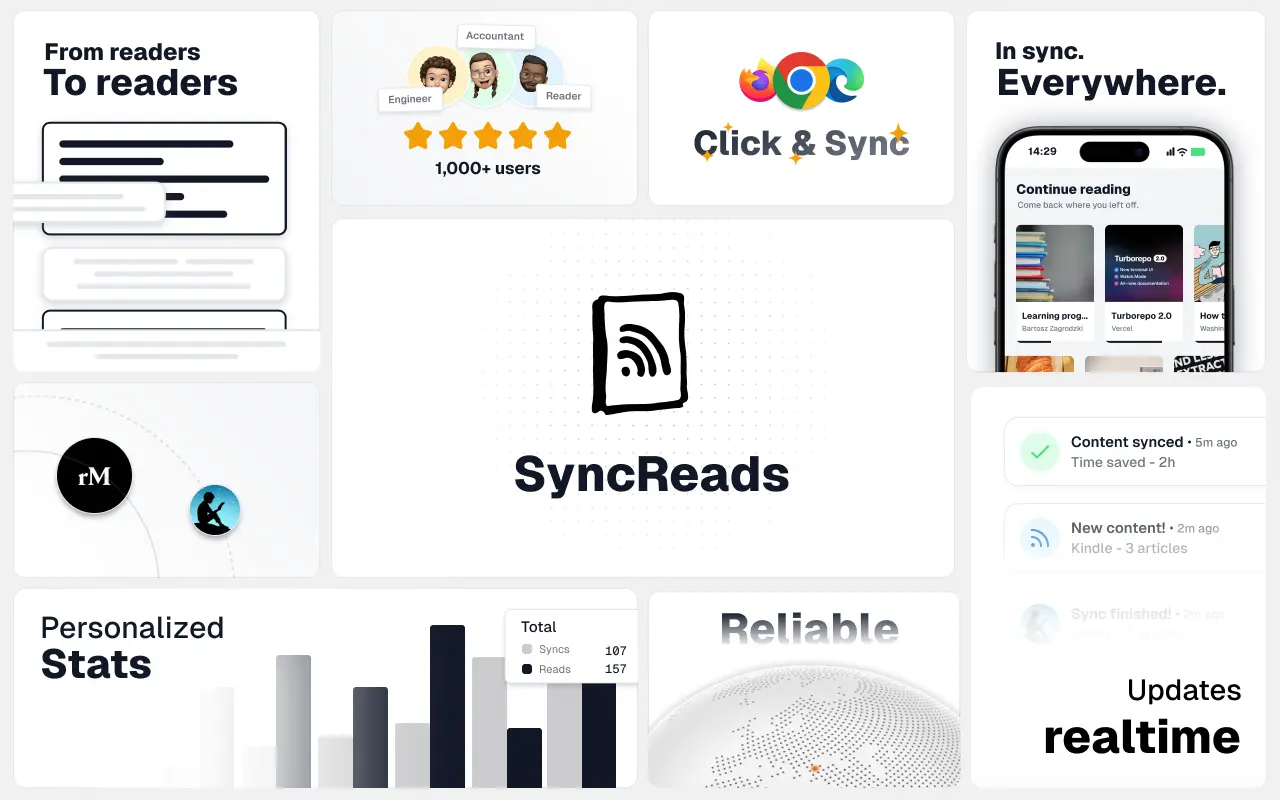
SyncReads
Sync your favorite content for distraction-free reading, save time and replace multiple apps. Anytime, anywhere 🔄
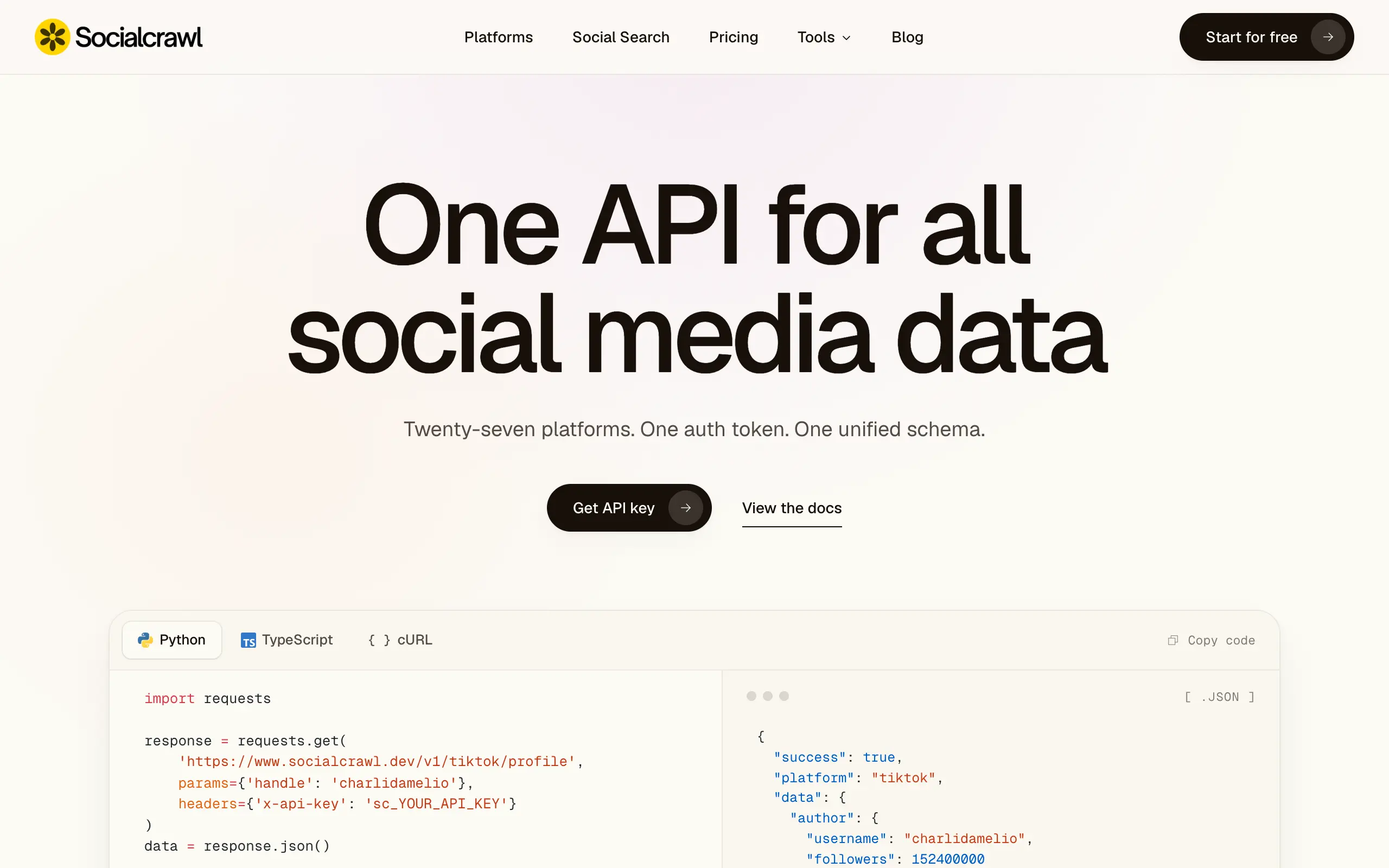
Socialcrawl
Get clean, structured data from 21 platforms like TikTok, Instagram, and YouTube with a single request 📊
Statiko
Monitor any Telegram channel in real time - track posts, edits, deletions, and growth with AI recaps 📡
Shibui
AI website builder - describe your business, pick a niche template, edit by chatting, and publish instantly ✨
Pro Service
Find verified home service professionals, compare quotes, and pay securely through escrow - built for Brazilians across the US 🏠
RankGrow
Fix your SEO with AI agents - connect Search Console, get prioritized tasks, and grow organic traffic 📈
SyncReads
Sync your favorite content for distraction-free reading, save time and replace multiple apps. Anytime, anywhere 🔄
Socialcrawl
Get clean, structured data from 21 platforms like TikTok, Instagram, and YouTube with a single request 📊
Statiko
Monitor any Telegram channel in real time - track posts, edits, deletions, and growth with AI recaps 📡
Shibui
AI website builder - describe your business, pick a niche template, edit by chatting, and publish instantly ✨
Pro Service
Find verified home service professionals, compare quotes, and pay securely through escrow - built for Brazilians across the US 🏠
RankGrow
Fix your SEO with AI agents - connect Search Console, get prioritized tasks, and grow organic traffic 📈
SyncReads
Sync your favorite content for distraction-free reading, save time and replace multiple apps. Anytime, anywhere 🔄
Socialcrawl
Get clean, structured data from 21 platforms like TikTok, Instagram, and YouTube with a single request 📊
Statiko
Monitor any Telegram channel in real time - track posts, edits, deletions, and growth with AI recaps 📡
Shibui
AI website builder - describe your business, pick a niche template, edit by chatting, and publish instantly ✨
Pro Service
Find verified home service professionals, compare quotes, and pay securely through escrow - built for Brazilians across the US 🏠
RankGrow
Fix your SEO with AI agents - connect Search Console, get prioritized tasks, and grow organic traffic 📈
SyncReads
Sync your favorite content for distraction-free reading, save time and replace multiple apps. Anytime, anywhere 🔄
Socialcrawl
Get clean, structured data from 21 platforms like TikTok, Instagram, and YouTube with a single request 📊
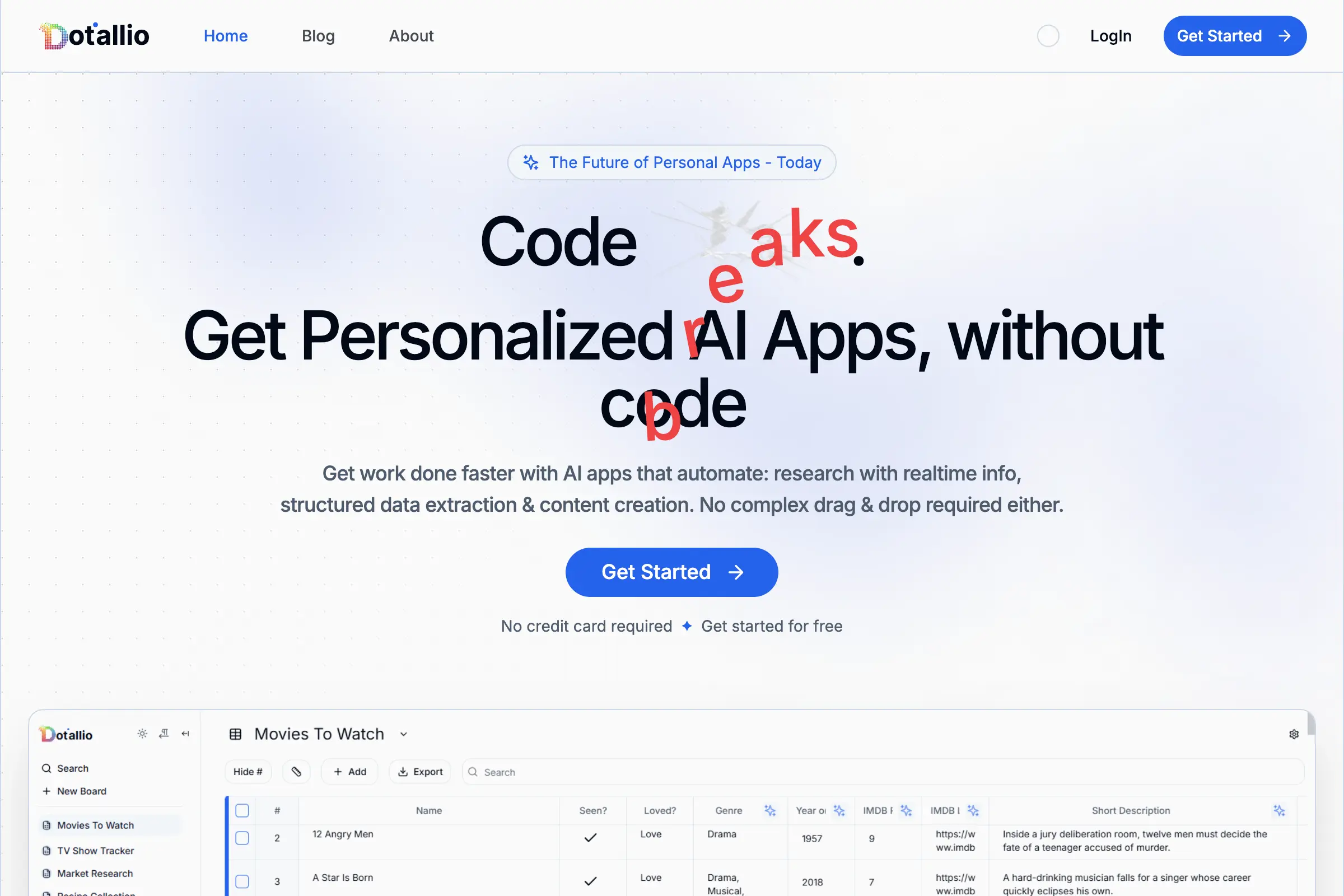
Dotallio
Personalized AI apps that automate research, data extraction, and content creation without code 🤖

Talk to Santa
Enjoy a magical live video chat or receive a unique AI-generated video greeting from Santa Claus 🎅

pozywka.pl
Scalable blog for food journalist, focused on performance and user experience 🌭
zagrodzki.me
Personal blog and portfolio of Bart Zagrodzki, where he shares his knowledge and work 💼
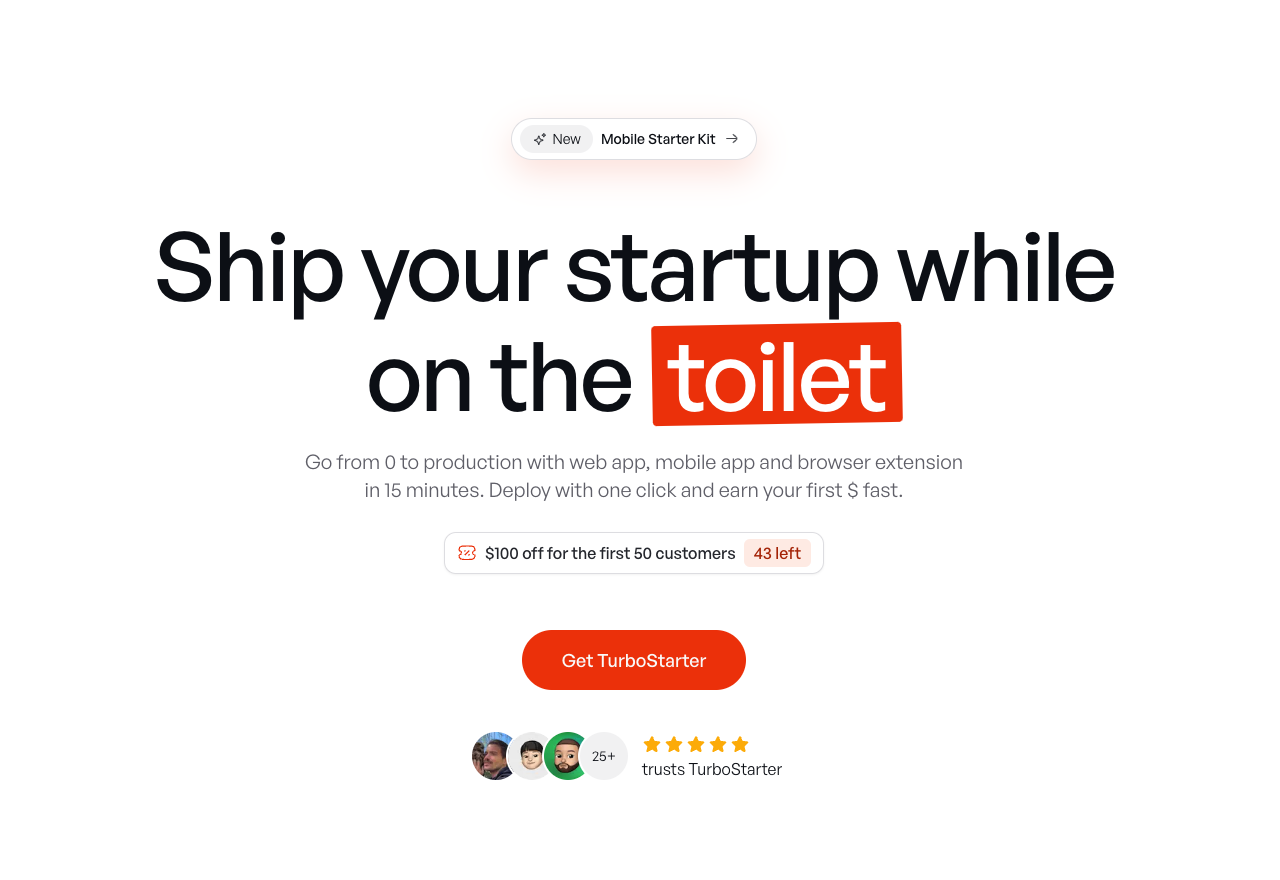
TurboStarter
Ship your startup everywhere. In minutes.
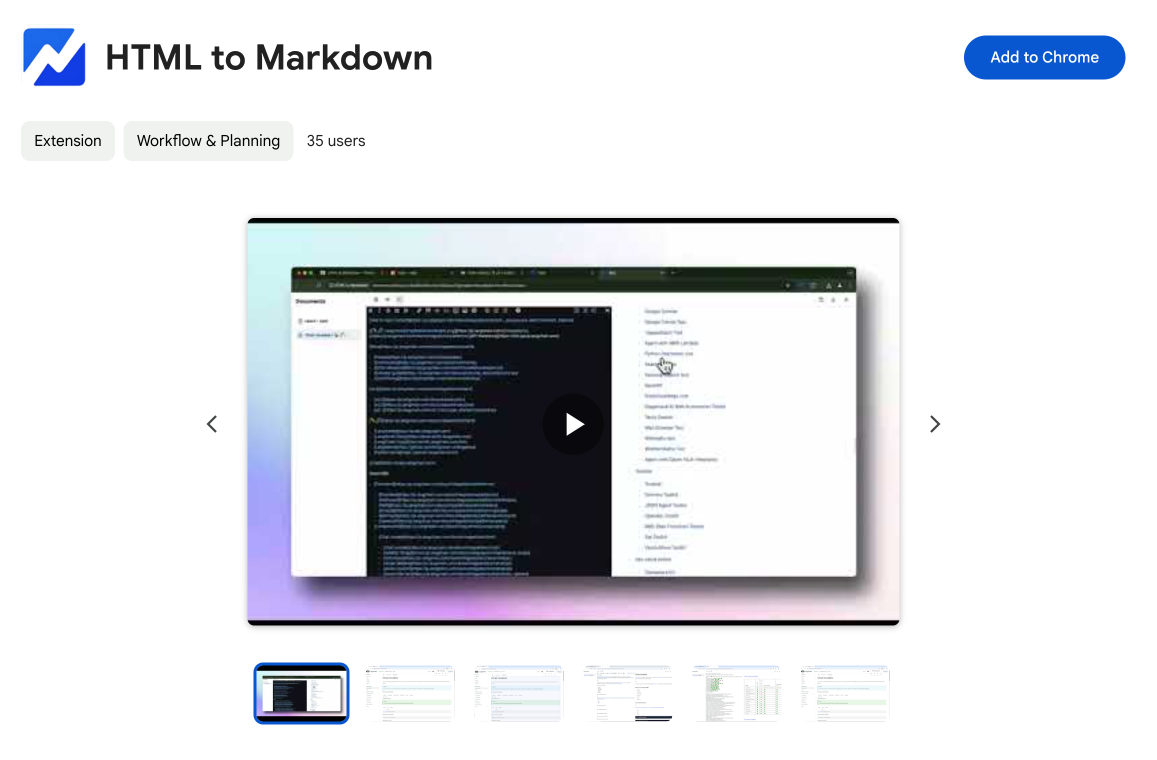
HTML to Markdown
Convert HTML to Markdown with ease, directly in your browser 📄
Dotallio
Personalized AI apps that automate research, data extraction, and content creation without code 🤖
Talk to Santa
Enjoy a magical live video chat or receive a unique AI-generated video greeting from Santa Claus 🎅
pozywka.pl
Scalable blog for food journalist, focused on performance and user experience 🌭
zagrodzki.me
Personal blog and portfolio of Bart Zagrodzki, where he shares his knowledge and work 💼
TurboStarter
Ship your startup everywhere. In minutes.
HTML to Markdown
Convert HTML to Markdown with ease, directly in your browser 📄
Dotallio
Personalized AI apps that automate research, data extraction, and content creation without code 🤖
Talk to Santa
Enjoy a magical live video chat or receive a unique AI-generated video greeting from Santa Claus 🎅
pozywka.pl
Scalable blog for food journalist, focused on performance and user experience 🌭
zagrodzki.me
Personal blog and portfolio of Bart Zagrodzki, where he shares his knowledge and work 💼
TurboStarter
Ship your startup everywhere. In minutes.
HTML to Markdown
Convert HTML to Markdown with ease, directly in your browser 📄
Dotallio
Personalized AI apps that automate research, data extraction, and content creation without code 🤖
Talk to Santa
Enjoy a magical live video chat or receive a unique AI-generated video greeting from Santa Claus 🎅
pozywka.pl
Scalable blog for food journalist, focused on performance and user experience 🌭
zagrodzki.me
Personal blog and portfolio of Bart Zagrodzki, where he shares his knowledge and work 💼
TurboStarter
Ship your startup everywhere. In minutes.
HTML to Markdown
Convert HTML to Markdown with ease, directly in your browser 📄
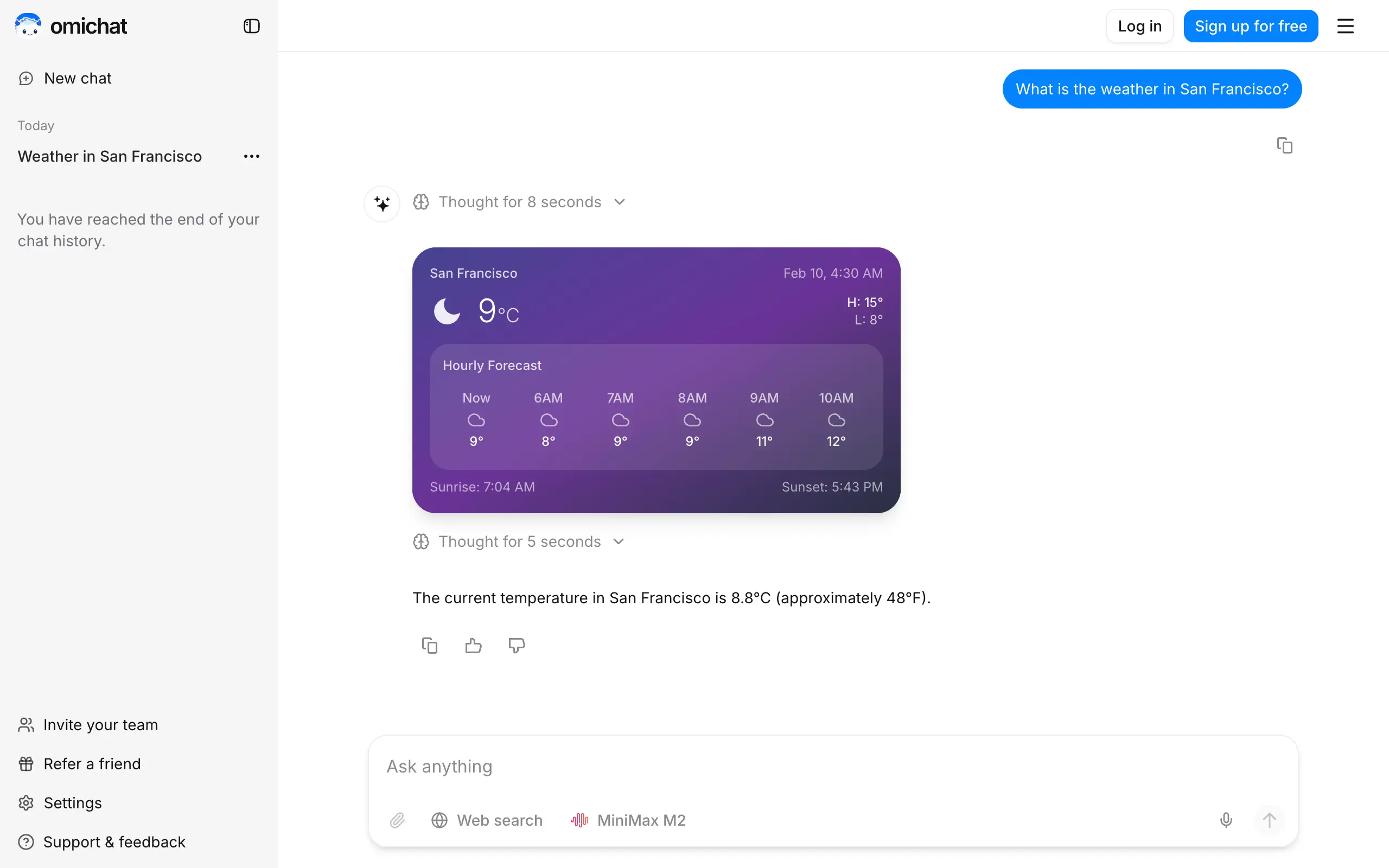
Omichat
Chat with 50+ AI models, including ChatGPT and Claude, in one place - switch models anytime without losing context 🤖
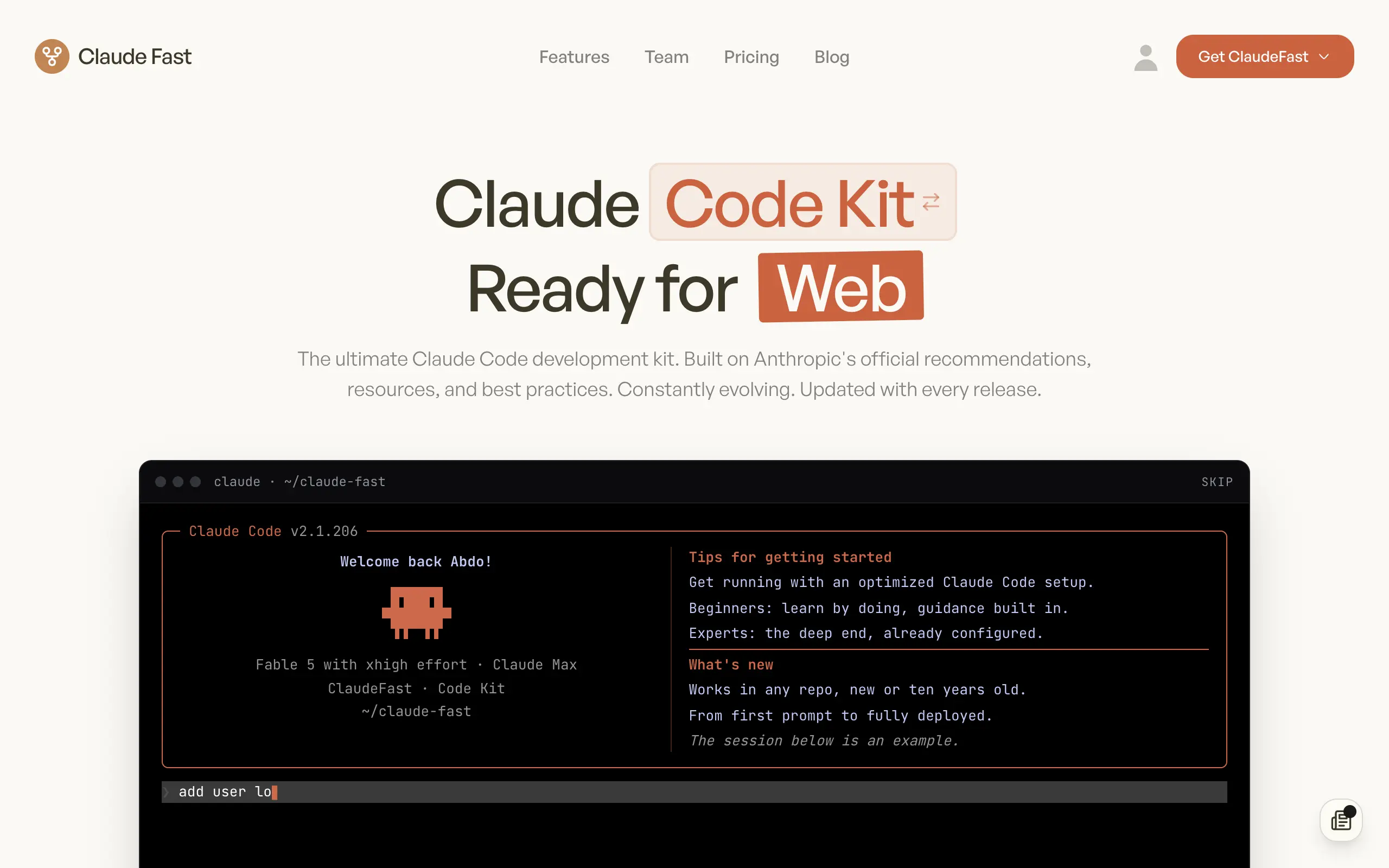
Claude Fast
Supercharge your Claude Code with 6x effective context window and specialized AI agents 🤖
EmojAI
AI-powered emoji picker with smart, context-aware suggestions 🤖
Solohacker
Autonomous company launcher - AI agents work 24/7, escalate what matters, and you stay in control 🤖

BeRawi: Storytelling Coach
Practice storytelling daily with instant feedback to sound clearer, more engaging, and confident 🎤
Omichat
Chat with 50+ AI models, including ChatGPT and Claude, in one place - switch models anytime without losing context 🤖
Claude Fast
Supercharge your Claude Code with 6x effective context window and specialized AI agents 🤖
EmojAI
AI-powered emoji picker with smart, context-aware suggestions 🤖
Solohacker
Autonomous company launcher - AI agents work 24/7, escalate what matters, and you stay in control 🤖
BeRawi: Storytelling Coach
Practice storytelling daily with instant feedback to sound clearer, more engaging, and confident 🎤
Omichat
Chat with 50+ AI models, including ChatGPT and Claude, in one place - switch models anytime without losing context 🤖
Claude Fast
Supercharge your Claude Code with 6x effective context window and specialized AI agents 🤖
EmojAI
AI-powered emoji picker with smart, context-aware suggestions 🤖
Solohacker
Autonomous company launcher - AI agents work 24/7, escalate what matters, and you stay in control 🤖
BeRawi: Storytelling Coach
Practice storytelling daily with instant feedback to sound clearer, more engaging, and confident 🎤
Omichat
Chat with 50+ AI models, including ChatGPT and Claude, in one place - switch models anytime without losing context 🤖
Claude Fast
Supercharge your Claude Code with 6x effective context window and specialized AI agents 🤖
EmojAI
AI-powered emoji picker with smart, context-aware suggestions 🤖
Solohacker
Autonomous company launcher - AI agents work 24/7, escalate what matters, and you stay in control 🤖
BeRawi: Storytelling Coach
Practice storytelling daily with instant feedback to sound clearer, more engaging, and confident 🎤

Connect with like-minded people
Join our community to get feedback, support, and grow together with 1,000+ builders on board, let's ship it!
Join usShip your startup everywhere. In minutes.
Don't burn tokens on setup and start building features on day one.