PuddlePal
Scan tiny urban discoveries with AI and grow a collectible 3D ecosystem. Every walk becomes a playful nature quest.
What PuddlePal could become
PuddlePal is a mobile app concept that turns an ordinary walk into a playful nature quest. Users scan small discoveries—such as a leaf, flower, insect, bird, or interesting patch of moss—and use AI to identify what they found. Each observation then becomes part of a personal, collectible 3D ecosystem that grows with every walk.
The idea combines three appealing behaviors:
- Exploring nearby places rather than planning a special trip
- Learning about nature through real-world observations
- Collecting and nurturing digital rewards tied to those discoveries
That combination gives PuddlePal a stronger premise than a generic photo-identification app or a location-based game. The physical world supplies the content, AI helps make it understandable, and a personal digital habitat gives users a reason to keep coming back.
The opportunity is not to turn every sidewalk into a competition. It is to make noticing nature feel approachable, rewarding, and safe—especially for people who may not think of themselves as naturalists.
The user problem PuddlePal addresses
People encounter nature in small, unplanned moments: a tiny flower in a pavement crack, a bird on a fence, a mushroom after rain, or a tree they pass on the way to work. These encounters can be delightful, but many people do not know what they are seeing or what to do with the moment.
Existing ways to engage with nature can leave gaps:
- Field guides can be informative but require users to know where to start.
- Species-identification tools can answer “What is this?” without providing an ongoing reason to explore.
- Nature journals support reflection but often demand consistent manual effort.
- Location-based games can make exploration fun but may focus more on virtual objectives than on learning about the real environment.
- General wellness apps may encourage outdoor time without helping users notice what is around them.
PuddlePal can connect these activities in one simple loop: discover something, scan it, learn a little, and see the discovery become part of a growing collection.
The product should treat AI as a helpful guide, not an unquestionable authority. A photo-based identification can be uncertain because of poor lighting, unusual angles, seasonal variation, or similar-looking species. PuddlePal should communicate that uncertainty clearly and help users learn from it.
Target audience for an AI nature discovery app
PuddlePal is most promising for users who want lightweight, rewarding outdoor experiences. The product can serve different audiences, but the first version should focus on one core group rather than trying to be a field guide, classroom platform, family game, and conservation network at once.
Primary audience: curious urban walkers
These users live in or near cities and regularly walk for errands, exercise, commuting, or leisure. They may enjoy nature but lack specialized knowledge or easy access to parks and wilderness.
PuddlePal can help them:
- Find small discoveries in familiar neighborhoods
- Understand what they have photographed
- Build a record of what they see over time
- Make routine walks feel more intentional
- Explore without needing equipment or prior expertise
For this group, the core value is not an exhaustive scientific explanation. It is a fast, satisfying answer and an invitation to notice one more thing.
Secondary audience: families and caregivers
Parents, guardians, and caregivers can use PuddlePal to make walks more engaging for children. A collectible ecosystem can give younger users a tangible sense of progress, while short explanations can turn observations into small learning moments.
Family-friendly design needs extra care. The app should avoid exposing a child’s precise location, should not encourage unsupervised exploration, and should offer strong privacy defaults. If the product is designed for children or collects their data, the team should consult applicable privacy and child-safety regulations before launch.
Education groups and informal learning programs
Teachers, after-school clubs, libraries, and nature centers may use PuddlePal for guided activities. For this audience, the product could support class challenges, observation prompts, and educator-created collections.
Institutional adoption is a separate product motion, however. It may require administration tools, consent workflows, accessibility support, reporting, and procurement processes. It is better treated as a later expansion unless early customer research shows that educators are the strongest initial buyers.
Casual collectors and cozy-game players
Some users are drawn less by biology and more by collecting, customization, and steady progress. PuddlePal’s ecosystem gives this audience a reason to engage even when they are not seeking a formal learning experience.
The challenge is to ensure that game mechanics reinforce real-world curiosity. If users can earn the same rewards without making meaningful observations, the app risks becoming another checklist game.
Market opportunity and product gap
PuddlePal sits at the intersection of mobile learning, outdoor activity, casual gaming, and AI-assisted identification. That gives it several possible entry points, but also means it must explain its value simply.
A useful positioning statement is:
PuddlePal helps everyday walkers identify small urban nature discoveries and turn them into a personal, collectible ecosystem.
This is more specific than “an app for nature” and more emotionally engaging than “an AI species identifier.” It describes the action, the setting, and the reward.
Why the gap is meaningful
A strong product opportunity can exist even in a market with established tools. The goal is not necessarily to replace field guides, citizen-science platforms, or location games. PuddlePal can occupy a distinct space by combining:
- Low-friction discovery — users can begin with a photo rather than prior knowledge.
- Personal continuity — each observation contributes to a persistent collection.
- Approachable learning — information is presented in short, understandable layers.
- Urban relevance — small everyday finds count, not just rare or remote species.
- Playful presentation — the ecosystem gives the experience warmth and visual progress.
The product’s defensible value will not come from the novelty of “AI plus collectibles” alone. Those features can be copied. A more durable advantage could come from a thoughtfully designed observation experience, reliable identification guidance, high-quality educational content, and trust earned through responsible handling of location and nature data.
How to validate the opportunity
Before building a full application, test the riskiest assumptions:
- Do people notice nature on routine walks, or do they need prompts?
- Will they take and submit photos when identification is not guaranteed?
- Does a 3D ecosystem make users more likely to return?
- Do users value learning, collection progress, social sharing, or all three?
- Which nature categories are most compelling in the intended launch region?
- Will users pay for customization or premium learning features?
- Do parents and educators consider the privacy model acceptable?
Use interviews, clickable prototypes, short walk-along tests, and a small field pilot. Ask participants to use the concept outdoors rather than only reviewing screenshots. PuddlePal depends on real-world behavior, so usability should be tested in sunlight, with one hand, under variable connectivity, and while users are moving.
Core features and how the experience should work
The product should make the first discovery quick and the longer-term ecosystem meaningful. A helpful design principle is to make the app rewarding even when the identification is uncertain.
1. Camera-first nature scanning
The scan flow should guide users to take a useful photo without making photography feel like a technical task. Helpful cues can include:
- A simple framing guide
- Advice to capture the whole subject or a distinctive detail
- A reminder to avoid disturbing wildlife or plants
- A clear explanation when the image is too blurry or too distant
- An option to select an existing photo
The app should avoid implying that users should touch, collect, feed, or approach an organism. For insects, nests, fungi, and wildlife, respectful distance matters.
2. AI-assisted identification with confidence and context
After a scan, PuddlePal can return a likely identification, confidence level, and a short explanation of what features informed the result. When confidence is low, it should say so plainly and offer a useful next step, such as retaking the photo or comparing a few plausible matches.
A responsible identification screen might include:
- A common name and scientific name when available
- A confidence description written for non-experts
- Visual clues that support the result
- Similar possibilities when the result is uncertain
- A brief “learn more” section
- A report or correction option
The app should distinguish between AI suggestions and verified observations. If a user corrects an identification, that correction can improve their personal record, but it should not automatically become authoritative public data.
3. A collectible 3D ecosystem
Each accepted observation can add a plant, creature, habitat feature, or seasonal detail to the user’s digital world. The ecosystem should respond to activity without punishing users who take breaks.
Possible collection mechanics include:
- New discoveries adding objects or inhabitants
- Seasonal visual changes based on the time of year
- Habitat themes tied to broad observation types
- Personal milestones for consistency or variety
- Optional customization of the collection space
- Gentle animations that make progress feel tangible
The ecosystem should reward curiosity rather than rarity alone. A system that prizes rare sightings could encourage users to disturb wildlife, trespass, or travel to sensitive habitats. Better rewards can recognize careful observation, diversity of finds, learning progress, or repeat visits to ordinary places.
4. Walk prompts and discovery challenges
Prompts can help users notice details they might otherwise overlook. For example, a challenge could invite someone to find a leaf with an unusual edge, observe a pollinator from a respectful distance, or notice how a plant changes after rain.
Challenges should be:
- Optional and easy to skip
- Suitable for the local season and environment
- Designed to avoid disturbing living things
- Flexible enough for different mobility needs
- Available without requiring users to visit a specific location
PuddlePal can also offer “micro-quests” that take only a few minutes. This helps the app fit into ordinary routines instead of demanding a dedicated nature outing.
5. A personal observation journal
The observation history gives users a reason to look back and see how their surroundings change. Useful fields may include the image, suggested identification, date, broad location, notes, and confidence status.
A journal can support patterns such as:
- Which discoveries recur in a user’s neighborhood
- How observations change across seasons
- Which categories the user has explored
- What they have learned or corrected over time
Location precision should be configurable. Many users may want a neighborhood-level record without storing an exact coordinate. For sensitive species or vulnerable habitats, the app should avoid publicizing precise locations.
6. Social features that support safe discovery
Social sharing can help users celebrate observations, but public maps and leaderboards introduce risks. A safer first release could focus on sharing a discovery card that omits precise location by default.
Later social features might include:
- Private groups for friends or families
- Class or club challenges
- Moderated community collections
- Sharing a learning milestone rather than a live location
- Local discovery themes without exact coordinates
Avoid ranking users by rare species, total scans, or distance traveled. Such metrics can create unhealthy competition and may reward behavior that is not good for wildlife or user safety.
A practical MVP feature set
An MVP should prove the core loop before investing in an elaborate ecosystem or social platform. A focused first release could include:
- Account creation with a guest or low-friction onboarding option
- Camera capture and image upload
- AI-assisted identification for a limited set of common categories
- Clear confidence messaging and correction controls
- A personal observation journal
- A simple 3D habitat with a small number of collectible elements
- A few low-risk discovery prompts
- Privacy settings for location and sharing
- Basic analytics for activation, repeat use, and scan completion
A deliberately limited species or region scope can improve quality. Launching with a well-supported set of common local observations is more trustworthy than claiming broad coverage and returning weak guesses.
Recommended technology stack for PuddlePal
The right stack depends on the team’s existing skills, target platforms, and visual ambitions. For an early mobile product, prioritize iteration speed, reliable media handling, and clear separation between the app, identification services, and collection logic.
Mobile application
React Native with Expo is a practical option for a small team that wants to ship on iOS and Android while sharing much of its application code. It can support camera workflows, authentication, notifications, and native integrations through Expo’s ecosystem.
The trade-off is that a highly customized 3D experience or specialized camera pipeline may require native modules or a more tailored rendering approach. Validate these requirements with a technical prototype before committing to the full stack. See the official React Native documentation and Expo.
If the 3D habitat is central to the product, evaluate the rendering approach early. A lightweight 3D scene can be attractive, but it must perform well on older devices, conserve battery, and remain usable for people who prefer reduced motion or simpler visuals.
Backend and database
A managed backend can reduce operational work during early development. Supabase is one option for authentication, a PostgreSQL database, storage, and server-side functions. Its relational data model is a natural fit for users, observations, species references, collections, and privacy permissions. Review the official Supabase documentation.
A managed platform can accelerate an MVP, but the team should still plan for:
- Data migrations and backups
- Storage costs for user-submitted images
- Role-based access controls
- Abuse prevention and rate limits
- Retention and deletion workflows
- A path to move or extend services if product needs change
AI identification service
Treat identification as a backend capability rather than hard-coding one model provider into the mobile app. A service layer lets the team change models, compare results, add region-specific rules, and log quality signals without releasing a new app version.
The identification pipeline could include:
- Image validation and resizing
- Detection of whether the image contains a relevant subject
- Candidate identification
- Confidence calibration or a conservative uncertainty threshold
- A response that includes user-friendly guidance
- Optional human review for flagged or disputed cases
Do not present a raw model score as a calibrated probability unless it has been tested and calibrated for the product’s actual use cases. Track performance across lighting, image quality, seasons, regions, and categories. If the product offers educational claims, have qualified reviewers evaluate the content and escalation process.
Analytics and observability
Use privacy-conscious product analytics to understand where users struggle. Important events include onboarding completion, first scan, identification result, correction, collection update, return session, and deletion request completion.
Track performance and failure states as well as engagement. For example, a high number of scans is not a success if users frequently receive confusing or incorrect results. Keep analytics data separate from sensitive location data where practical, and define a clear retention policy.
Product scaffolding and speed
Founders can reduce time spent on common SaaS infrastructure by starting with a reusable foundation rather than assembling every account, billing, and deployment workflow from scratch. TurboStarter is one option to consider for accelerating the foundational parts of a product. The team should evaluate whether its architecture fits the app’s mobile, backend, and growth requirements before adopting it.
Example data model for observations
A simple early data model can keep user observations distinct from the app’s reference information. That distinction matters because an AI suggestion is not the same thing as a confirmed species record.
type Observation = {
  id: string;
  userId: string;
  imageUrl: string;
  suggestedTaxonId?: string;
  userConfirmedTaxonId?: string;
  identificationConfidence?: number;
  observedAt: string;
  locationPrecision: "none" | "neighborhood" | "precise";
  latitude?: number;
  longitude?: number;
  privacy: "private" | "group" | "public";
  status: "processing" | "identified" | "needs_review" | "failed";
};
In production, the team should validate this model against privacy requirements, retention policies, and the chosen database. Exact coordinates should not be stored by default if the product can deliver value with less precise location data.
Monetization strategies
PuddlePal can earn revenue without making basic nature discovery feel paywalled. The strongest approach is likely a free core experience with paid options for users who want additional depth, customization, or structured programs.
Freemium subscription
A free plan could include a capped number of scans, basic identification, a small ecosystem, and a personal journal. A paid plan might offer:
- More scans or expanded identification history
- Advanced seasonal insights
- Additional ecosystem themes and customization
- Family profiles or private group spaces
- Guided learning collections
- Offline access to saved educational content
Be cautious about placing core safety information, privacy settings, or essential identification uncertainty behind a paywall. Premium features should extend the experience, not make the free version misleading.
Cosmetic purchases
Optional themes, habitat decorations, and visual customization can fit a collectible ecosystem. Cosmetic purchases are a better match than selling competitive advantages or rewards tied to rare real-world species.
Keep purchases transparent and age-appropriate. Avoid manipulative countdowns, pressure tactics, or mechanics that make children feel they must spend to keep up with friends.
Education and organization plans
Schools, libraries, nature centers, and community groups may pay for managed challenges, educator tools, or group reporting. This can create a business-to-business revenue stream, but it adds requirements around account management, consent, support, and data governance.
Validate institutional willingness to pay separately from consumer interest. A teacher enjoying a prototype does not automatically mean a school has budget or procurement capacity.
Sponsorships and partnerships
Local nature organizations, parks programs, or educational institutions may sponsor seasonal learning content. Any partnership should be clearly labeled and should not encourage harmful interactions with wildlife or commercialize sensitive locations.
Advertising is a weaker early option. Ads can interrupt outdoor use, complicate child safety, and create pressure to collect more behavioral data. If advertising is considered later, make the privacy and audience implications explicit.
Competitive advantage and positioning
PuddlePal’s potential advantage is the combination of a real-world observation loop and a persistent, playful collection. Each element exists in adjacent products, but the experience can stand out if it is designed around small, everyday nature discoveries rather than expert-only identification or high-intensity gamification.
| Product dimension | PuddlePal opportunity | Common product risk |
|---|---|---|
| Nature discovery | Make ordinary urban finds feel worth noticing | Overemphasizing rare sightings |
| AI identification | Offer approachable guidance and visible uncertainty | Presenting guesses as facts |
| Collection system | Turn observations into a personal ecosystem | Rewarding quantity over care |
| Location use | Support local context with privacy controls | Revealing precise sensitive locations |
| Learning | Deliver short, useful explanations | Overloading casual users with jargon |
The most defensible differentiators are likely to be:
- A distinctive low-friction loop from scan to collection
- A trustworthy identification experience that explains uncertainty
- A strong visual identity that makes the ecosystem memorable
- Respectful behavior design that encourages observation without disturbance
- A growing library of thoughtful, regionally relevant content
The product should not claim scientific authority merely because it uses AI. Trust can be built by being precise about what the app does, showing where suggestions come from when appropriate, supporting corrections, and giving users control over their data.
Risks and how to mitigate them
Incorrect or overconfident identification
A wrong identification can undermine trust and teach users something inaccurate. Use conservative confidence thresholds, explain ambiguity, and make correction simple. Measure quality by category and operating region rather than relying on one overall accuracy figure.
For claims about model performance, publish the evaluation method and test set characteristics. If statistics are used in marketing, cite the evaluation date, geographic coverage, and limitations. Avoid broad claims such as “identifies every species.”
Privacy and location exposure
Photos may contain faces, homes, or metadata that users did not intend to share. Exact locations can also expose sensitive habitats or reveal a child’s routine.
Mitigations include:
- Strip unnecessary image metadata
- Make observations private by default
- Offer coarse or no location storage
- Remove exact coordinates from shared cards
- Provide clear deletion controls
- Limit access to location data by service and role
- Review data practices with privacy counsel
Harm to wildlife and habitats
Gamified discovery could unintentionally encourage users to approach animals, handle organisms, enter restricted areas, or reveal sensitive species locations.
Design the app to reward respectful observation. Avoid “find the rarest” challenges, discourage touching or collecting, and use obscured locations for sensitive categories. Prompts should be reviewed for ecological and safety implications.
Seasonal and regional bias
An identification system or content library may work better in some locations and seasons than others. The experience can feel broken if users repeatedly encounter unsupported species.
Start with a limited, well-tested geographic scope. Communicate coverage honestly, collect opt-in feedback, and create a process for adding regions only when the product can support them responsibly.
Retention without pressure
A streak system can increase short-term engagement but may make the experience feel like an obligation. Outdoor access, weather, disability, work, and caregiving responsibilities all affect a person’s ability to participate.
Prefer flexible milestones, seasonal collections, and forgiving progress. A user should be able to return after a break without losing their ecosystem or feeling punished.
Cost and technical complexity
Image processing, storage, and 3D rendering can create meaningful costs. Heavy models or large assets may also affect battery life and app performance.
Control costs through image resizing, caching, model routing, storage lifecycle rules, and limits that are understandable to users. Test the 3D experience on a range of devices and provide a simpler visual mode where needed.
Metrics that show whether the product is working
Measure product quality as well as growth. A healthy early dashboard might include:
- Activation — percentage of new users who complete a first scan
- Time to first value — how long it takes to see a useful identification or collection update
- Identification recovery — percentage of uncertain results that lead to a successful retake or useful next step
- Repeat discovery — whether users make a second observation within a reasonable period
- Learning engagement — whether users open or save educational details
- Correction rate — frequency and categories of user corrections
- Retention by use case — differences between solo walkers, families, and other cohorts
- Trust and safety signals — privacy complaints, harmful challenges, and reported identification issues
- Cost per useful scan — processing and storage costs associated with successful experiences
Do not optimize only for time in app. The desired behavior may be a short scan followed by a longer walk with the phone put away.
Actionable implementation steps
Define the first audience and launch area
Choose one initial user segment, such as curious urban walkers, and one geographic area where the team can test local species coverage. Write down what the product will not attempt to support in its first release.
Test the core loop before building the full app
Create a clickable prototype or concierge pilot that takes users from photo capture to identification to a simple collection reward. Observe people using it outdoors and note where they hesitate, misunderstand results, or abandon the flow.
Establish trust and safety requirements
Before collecting real user photos or location data, define privacy defaults, retention rules, sensitive-location handling, correction workflows, and the language used to communicate uncertainty. Review child-safety and regulatory requirements if children are part of the intended audience.
Build the smallest credible identification system
Select a limited set of supported categories and test them with realistic images from the launch region. Create clear fallback states for unclear images, unsupported subjects, and low-confidence results.
Prototype the collectible ecosystem
Test whether users understand how observations affect their ecosystem and whether rewards encourage respectful curiosity. Keep the first version visually appealing but technically lightweight.
Launch a private beta and learn from behavior
Invite a small group of target users. Track first-scan completion, repeat use, correction patterns, and trust feedback. Conduct follow-up interviews rather than relying only on in-app analytics.
Refine, then expand deliberately
Improve the scan experience and content quality before adding social competition, broad geographic coverage, or a large set of monetization features. Expand only when the team can maintain identification quality and safety standards.
A useful launch principle
PuddlePal should make users better at noticing nature, not more dependent on their phones. Keep scans brief, explanations clear, and rewards connected to careful observation.
Final perspective
PuddlePal has the ingredients for a memorable mobile product: a clear real-world action, an accessible use of AI, and a collectible ecosystem that can make progress visible. Its strongest opportunity is to help people discover that nature is present in ordinary places—not only in parks, forests, or carefully planned outings.
The idea will succeed or fail on execution. Identification needs to be honest about uncertainty. The reward system must encourage care rather than competition. Location and image privacy must be designed into the product from the start. And the first version should prove that people genuinely want to repeat the scan-to-discovery-to-collection loop.
Start with one audience, one launch area, and a narrow set of reliable discoveries. Test the experience outdoors. Measure trust alongside retention. If users finish a walk more curious about the world around them—and choose to take another—the product will have validated its most important promise.
More 📱 Mobile App SaaS ideas
Discover more innovative mobile app SaaS ideas that are trending in 2026. Each idea is AI-generated with market validation and growth potential to help you find your next profitable venture faster than competitors.
Your competitors are building with TurboStarter
Below are some of the SaaS ideas that have been generated and built with our starter kit.

Statiko
Monitor any Telegram channel in real time - track posts, edits, deletions, and growth with AI recaps 📡

Shibui
AI website builder - describe your business, pick a niche template, edit by chatting, and publish instantly ✨

Pro Service
Find verified home service professionals, compare quotes, and pay securely through escrow - built for Brazilians across the US 🏠
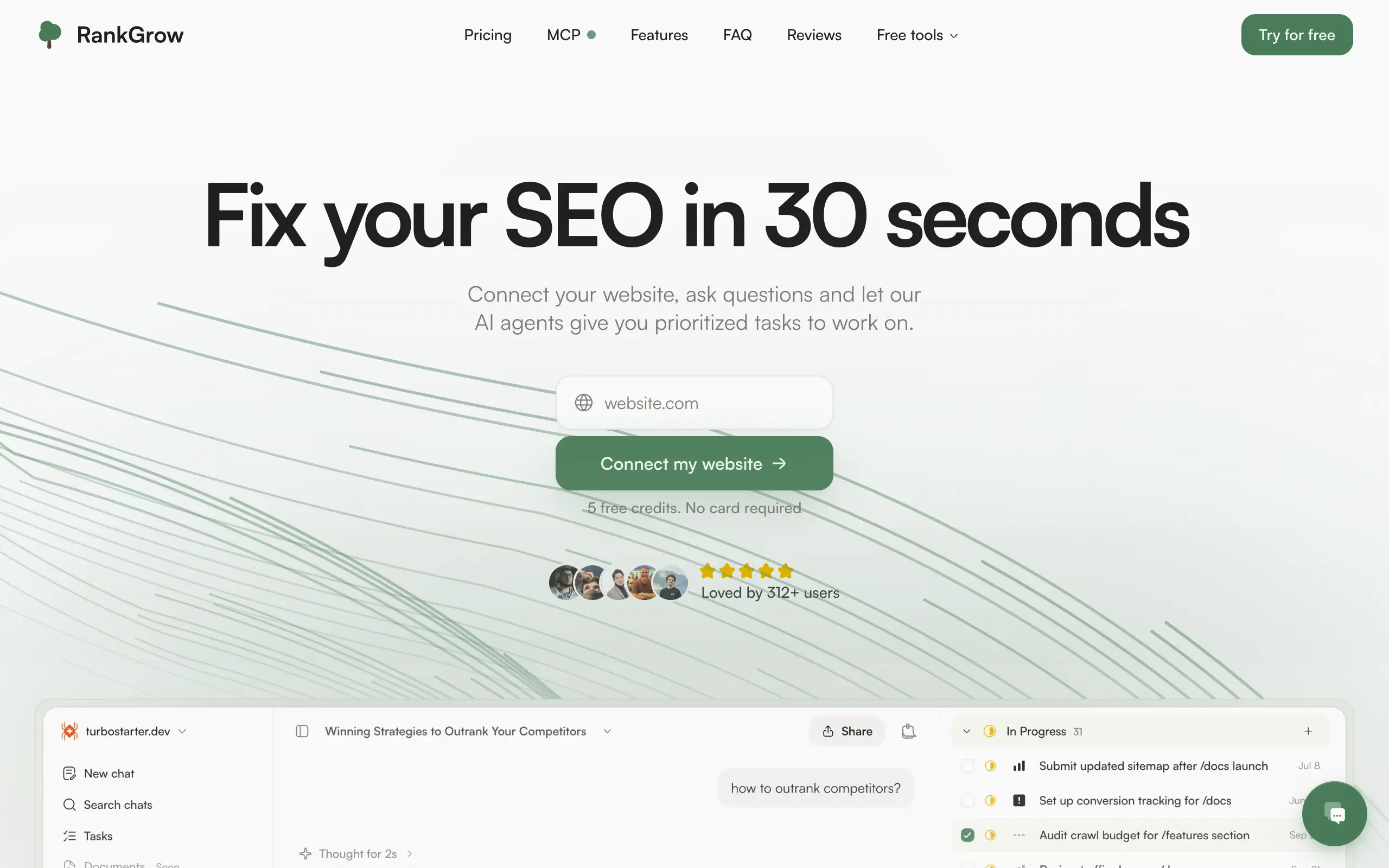
RankGrow
Fix your SEO with AI agents - connect Search Console, get prioritized tasks, and grow organic traffic 📈
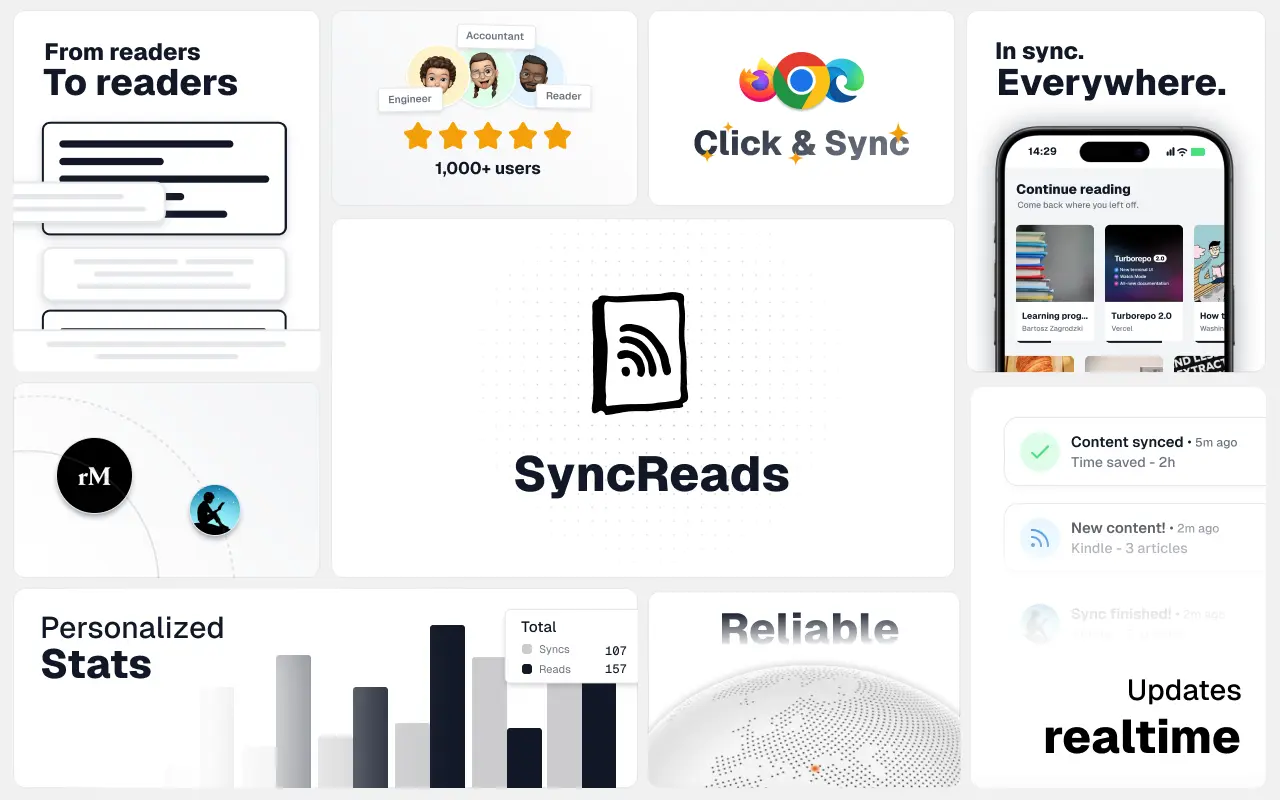
SyncReads
Sync your favorite content for distraction-free reading, save time and replace multiple apps. Anytime, anywhere 🔄
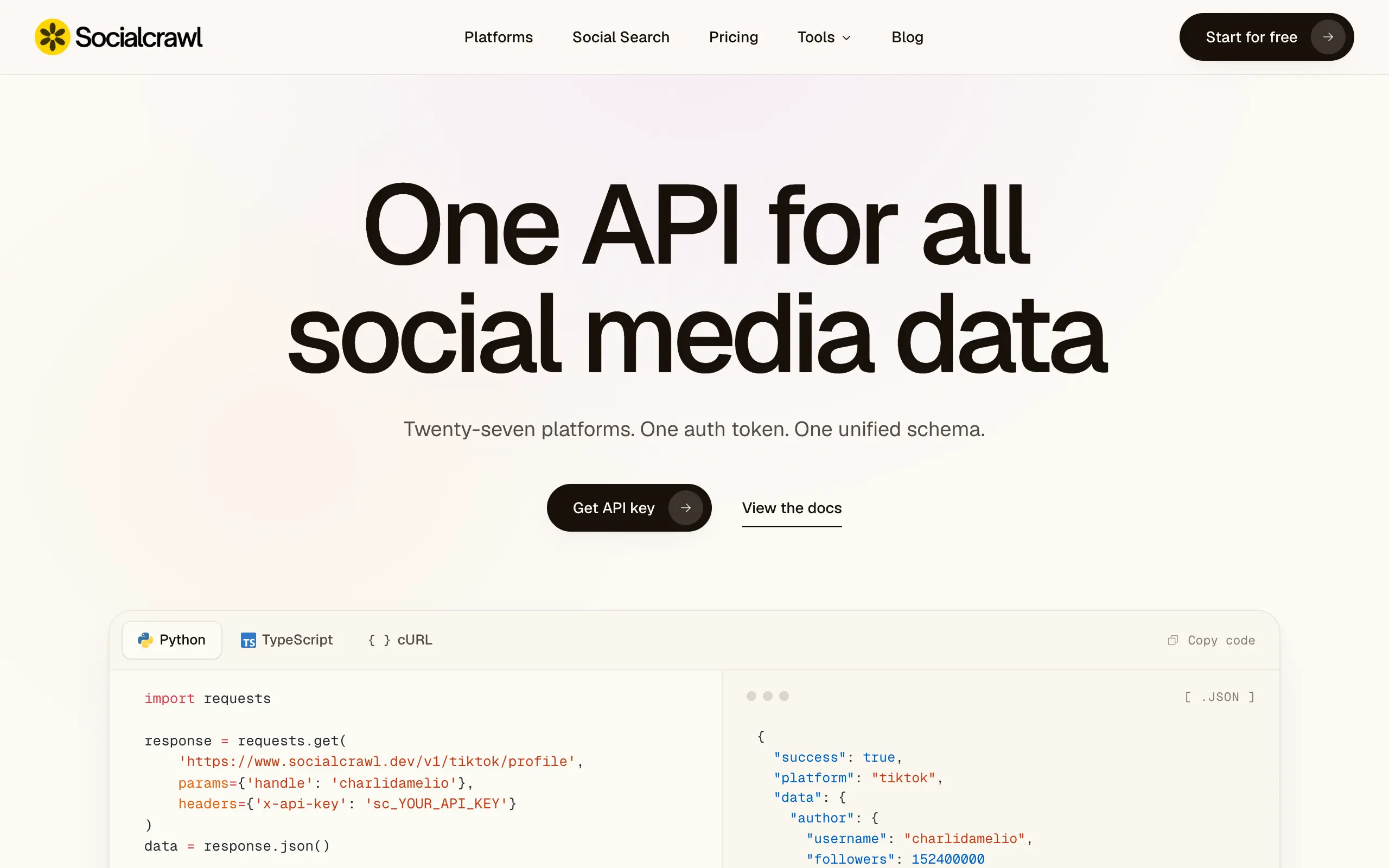
Socialcrawl
Get clean, structured data from 21 platforms like TikTok, Instagram, and YouTube with a single request 📊
Statiko
Monitor any Telegram channel in real time - track posts, edits, deletions, and growth with AI recaps 📡
Shibui
AI website builder - describe your business, pick a niche template, edit by chatting, and publish instantly ✨
Pro Service
Find verified home service professionals, compare quotes, and pay securely through escrow - built for Brazilians across the US 🏠
RankGrow
Fix your SEO with AI agents - connect Search Console, get prioritized tasks, and grow organic traffic 📈
SyncReads
Sync your favorite content for distraction-free reading, save time and replace multiple apps. Anytime, anywhere 🔄
Socialcrawl
Get clean, structured data from 21 platforms like TikTok, Instagram, and YouTube with a single request 📊
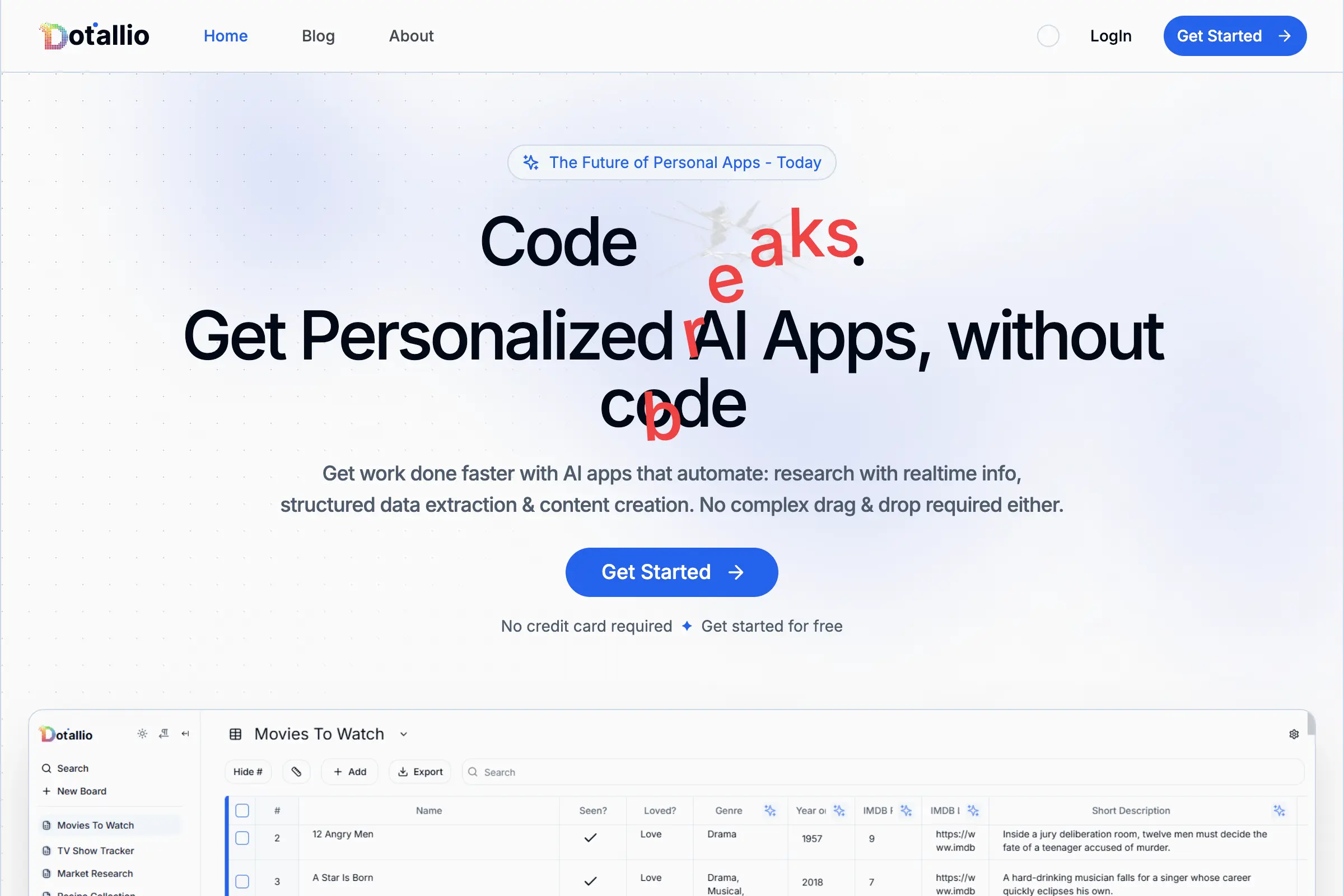
Dotallio
Personalized AI apps that automate research, data extraction, and content creation without code 🤖
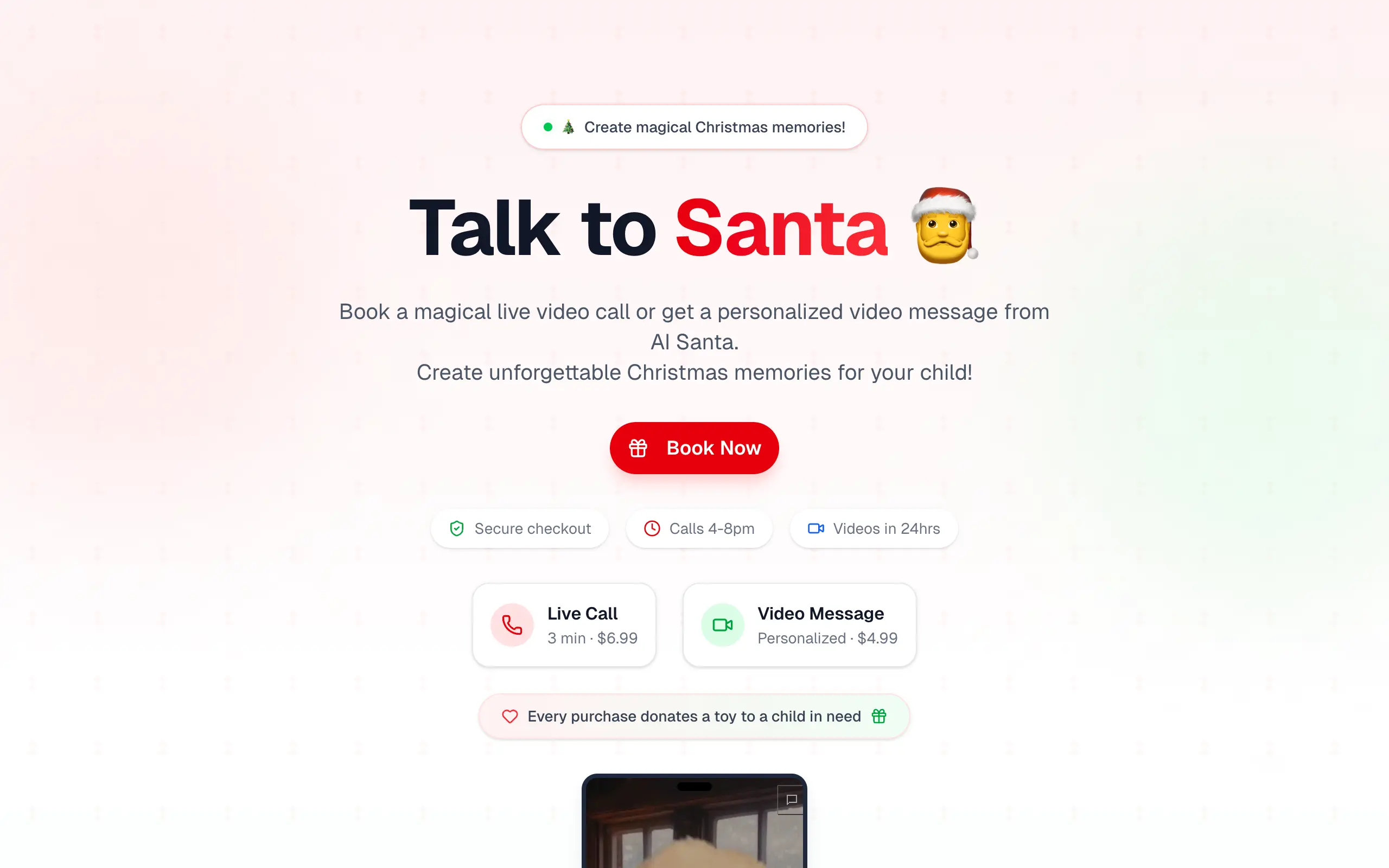
Talk to Santa
Enjoy a magical live video chat or receive a unique AI-generated video greeting from Santa Claus 🎅
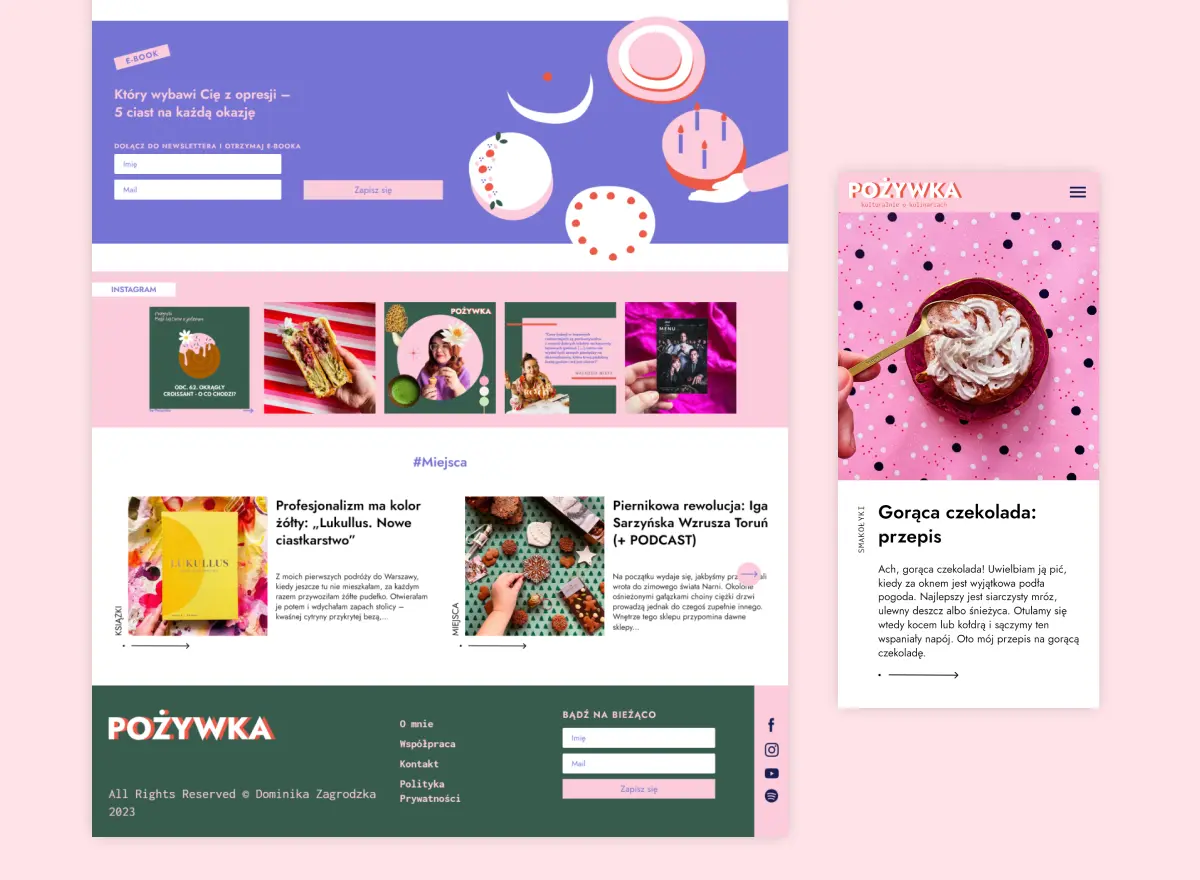
pozywka.pl
Scalable blog for food journalist, focused on performance and user experience 🌭
zagrodzki.me
Personal blog and portfolio of Bart Zagrodzki, where he shares his knowledge and work 💼
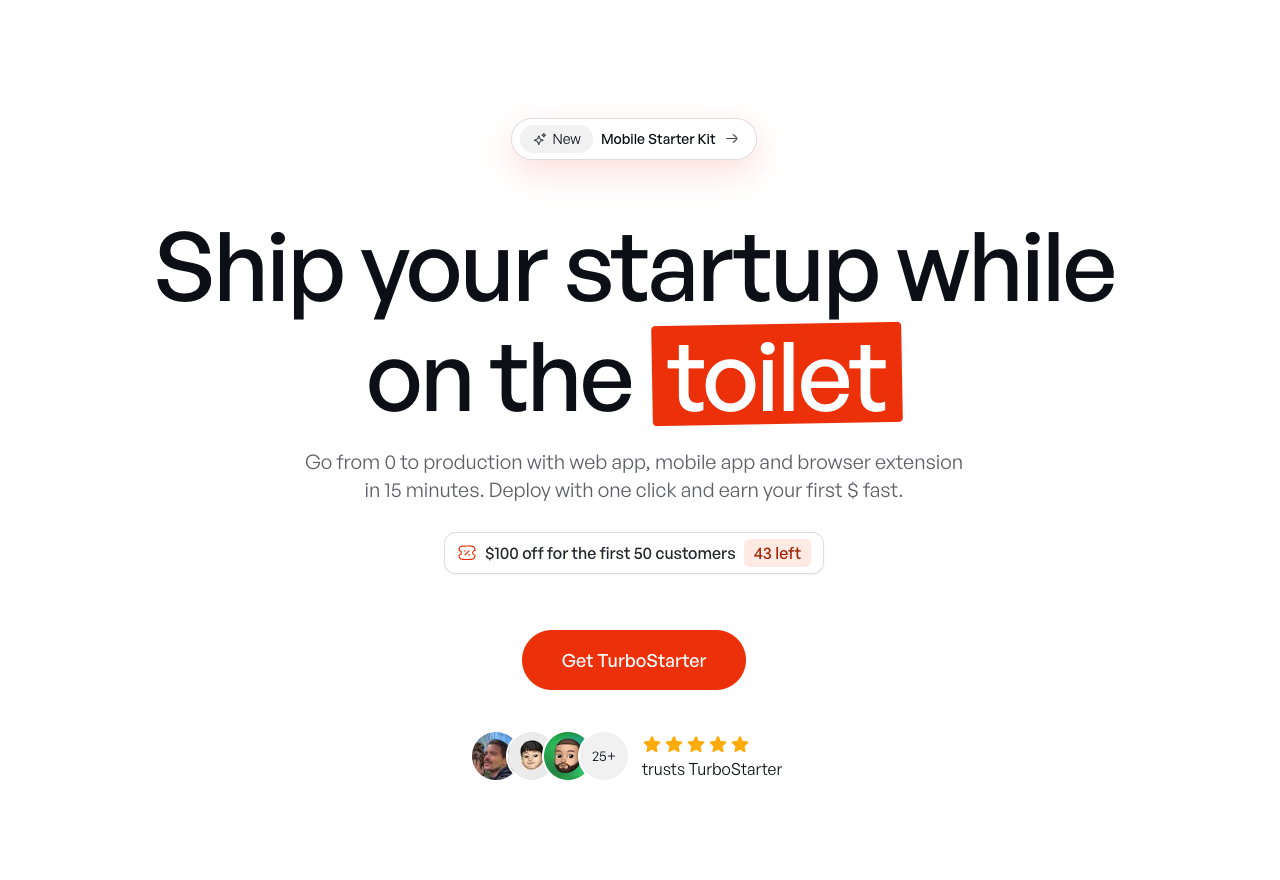
TurboStarter
Ship your startup everywhere. In minutes.
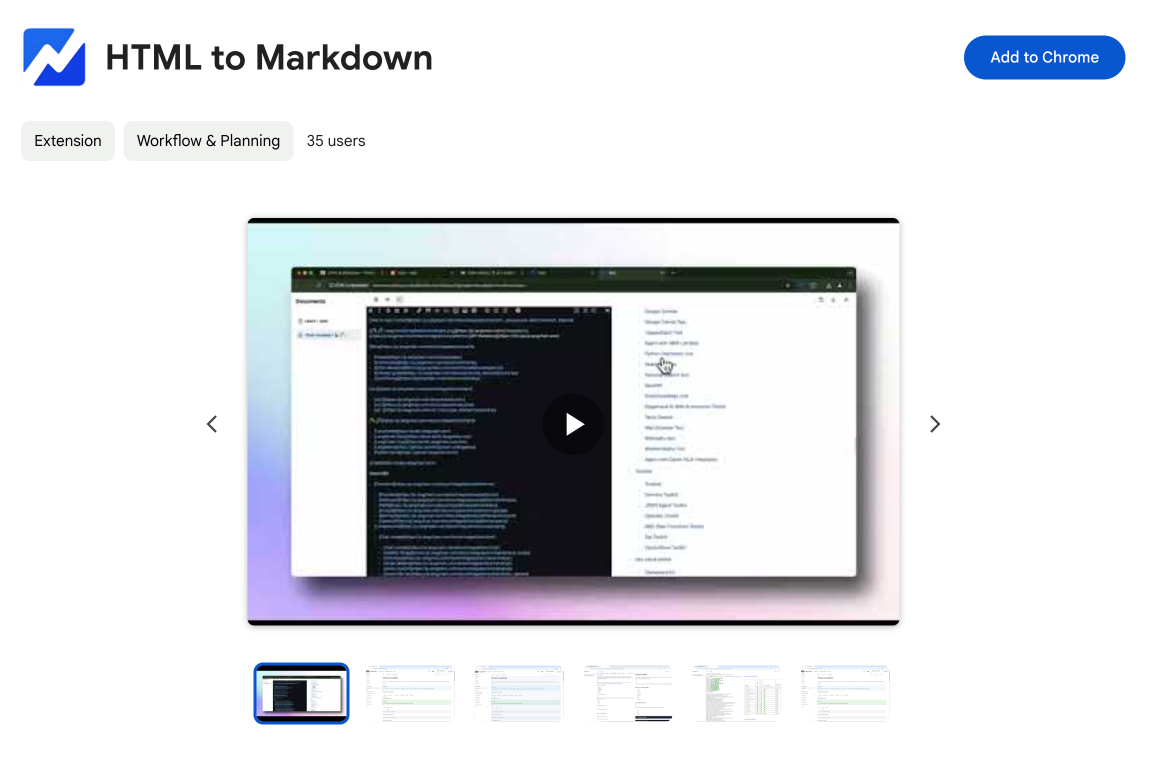
HTML to Markdown
Convert HTML to Markdown with ease, directly in your browser 📄
Dotallio
Personalized AI apps that automate research, data extraction, and content creation without code 🤖
Talk to Santa
Enjoy a magical live video chat or receive a unique AI-generated video greeting from Santa Claus 🎅
pozywka.pl
Scalable blog for food journalist, focused on performance and user experience 🌭
zagrodzki.me
Personal blog and portfolio of Bart Zagrodzki, where he shares his knowledge and work 💼
TurboStarter
Ship your startup everywhere. In minutes.
HTML to Markdown
Convert HTML to Markdown with ease, directly in your browser 📄
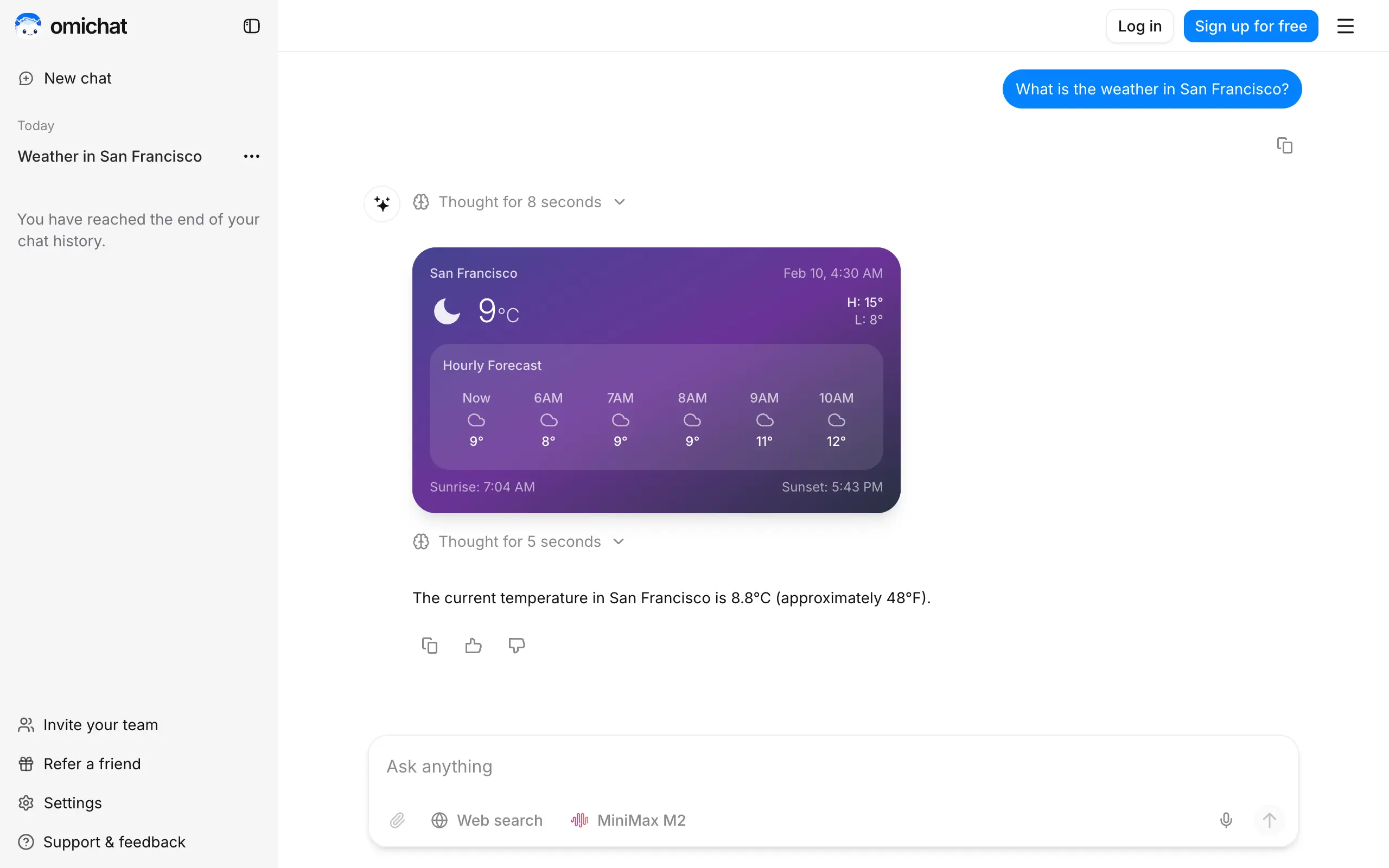
Omichat
Chat with 50+ AI models, including ChatGPT and Claude, in one place - switch models anytime without losing context 🤖
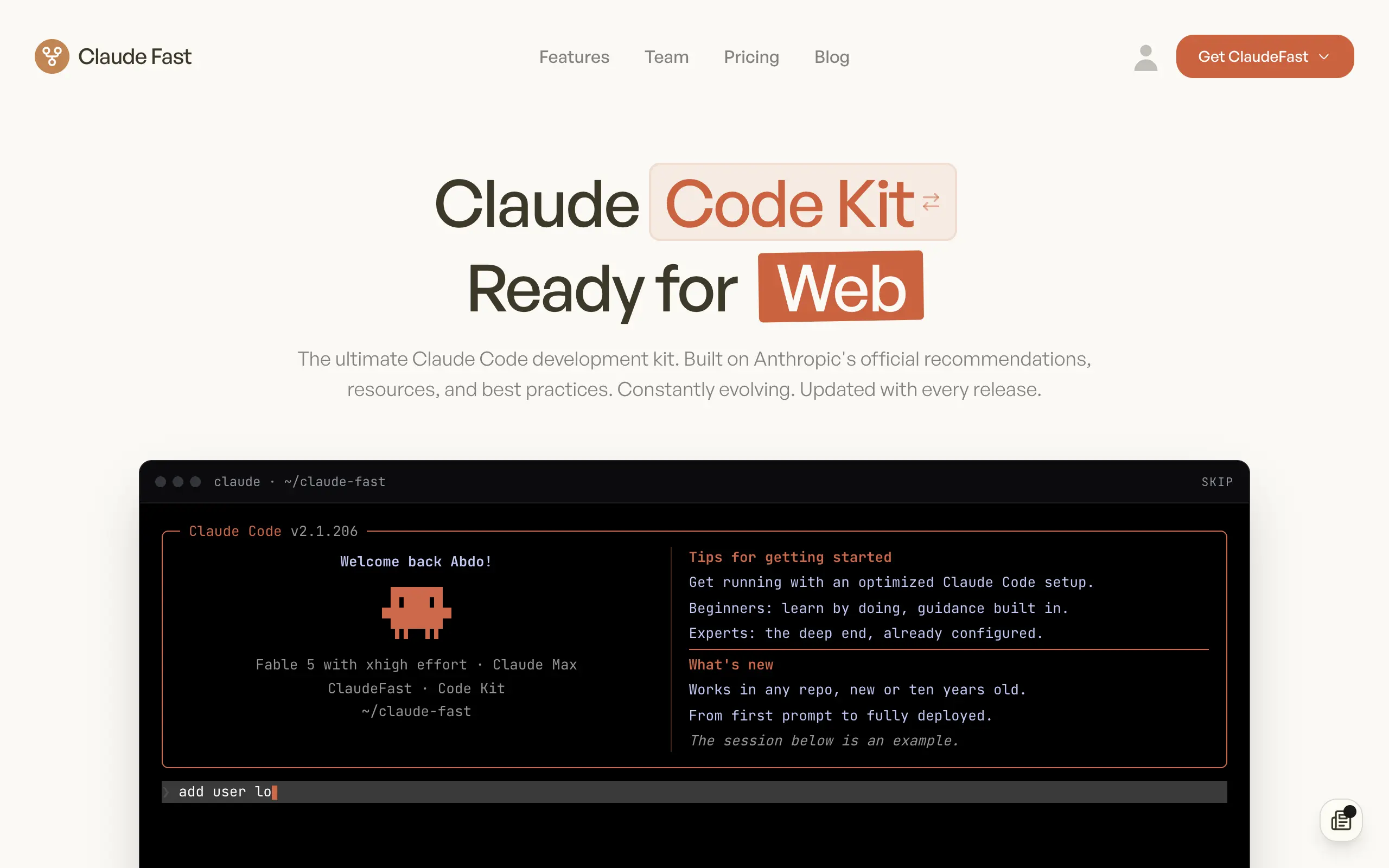
Claude Fast
Supercharge your Claude Code with 6x effective context window and specialized AI agents 🤖
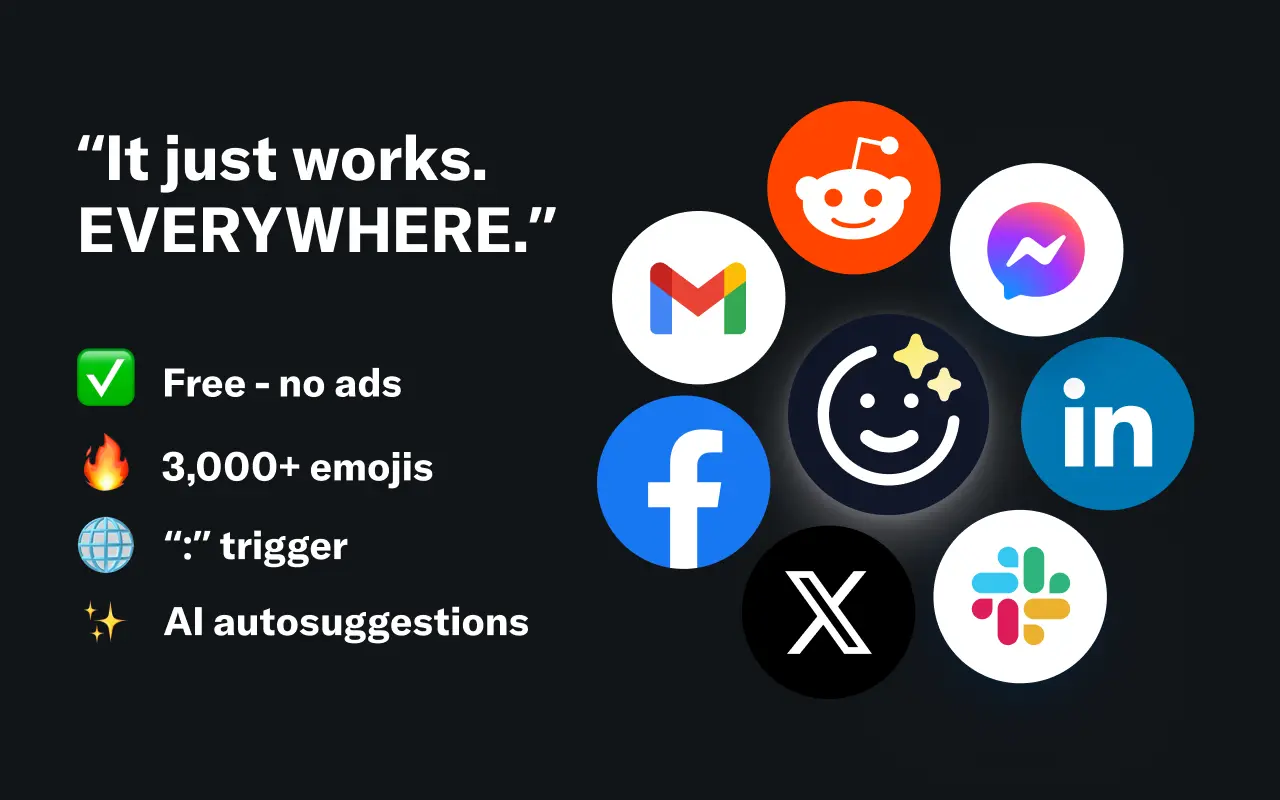
EmojAI
AI-powered emoji picker with smart, context-aware suggestions 🤖

Solohacker
Autonomous company launcher - AI agents work 24/7, escalate what matters, and you stay in control 🤖
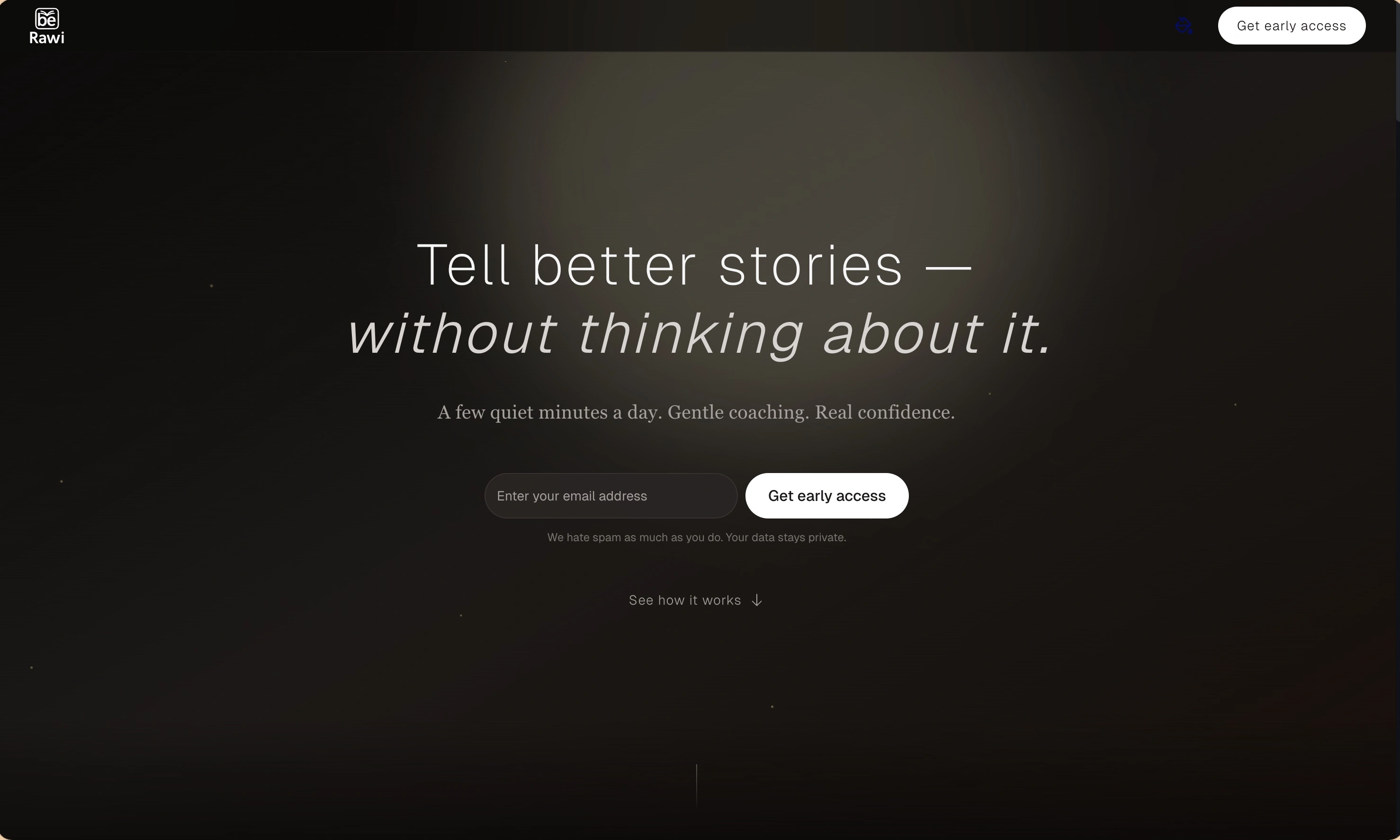
BeRawi: Storytelling Coach
Practice storytelling daily with instant feedback to sound clearer, more engaging, and confident 🎤
Omichat
Chat with 50+ AI models, including ChatGPT and Claude, in one place - switch models anytime without losing context 🤖
Claude Fast
Supercharge your Claude Code with 6x effective context window and specialized AI agents 🤖
EmojAI
AI-powered emoji picker with smart, context-aware suggestions 🤖
Solohacker
Autonomous company launcher - AI agents work 24/7, escalate what matters, and you stay in control 🤖
BeRawi: Storytelling Coach
Practice storytelling daily with instant feedback to sound clearer, more engaging, and confident 🎤

Connect with like-minded people
Join our community to get feedback, support, and grow together with 1,000+ builders on board, let's ship it!
Join usShip your startup everywhere. In minutes.
Don't burn tokens on setup and start building features on day one.