StressSnap AR
Mobile AR field app that captures pipe routes, supports and dimensions, then builds a stress-model-ready survey package for engineers.
What StressSnap AR solves for piping and plant engineering teams
StressSnap AR is a mobile augmented reality field app for capturing pipe routes, supports, equipment connections, and critical dimensions, then turning that field evidence into a stress-model-ready survey package.
The primary market need is straightforward. Pipe stress engineers need accurate as-built information before they can model a system with confidence. Yet the information they receive is often fragmented across outdated isometrics, marked-up PDFs, disconnected photos, handwritten notes, laser scan exports, and site conversations. A designer or field engineer may spend hours gathering evidence, while the analyst still has to interpret what each photo shows and rebuild the system manually in a pipe stress analysis tool.
That workflow creates avoidable uncertainty. Missing support details, unclear orientations, undocumented offsets, unknown branch locations, and inconsistent dimensions can all produce costly rework. In a live industrial environment, inaccurate field information may also affect schedule planning, outage preparation, procurement, safety review, and the quality of the final stress analysis.
StressSnap AR addresses this gap by giving teams a structured way to document piping systems where the work happens. Instead of treating photos and measurements as separate artifacts, the app can organize them around pipe segments, supports, equipment interfaces, dimensions, coordinates, and engineering annotations.
The result is a practical bridge between field capture and engineering analysis.
The core value proposition
StressSnap AR is not just an AR measuring tool. Its differentiated value is converting field observations into an organized, traceable package that reduces the time and interpretation required to build a pipe stress model.
Who needs an AR pipe stress survey app
The best customers for an AR pipe stress survey app are organizations that repeatedly work with complex piping assets and have meaningful costs associated with site surveys, model creation, design changes, or unplanned field visits.
Pipe stress engineers and analysis teams
Pipe stress engineers are the most direct user group. They need dependable geometry, support locations, restraint conditions, nozzle orientations, elevations, and connection details before building models in platforms such as CAESAR II, AutoPIPE, ROHR2, or in-house analysis workflows.
Their main challenge is not always running the analysis. In many projects, the harder issue is determining whether the input model represents reality.
StressSnap AR can help them receive survey packages that include:
- Pipe route captures with identifiable segments and nodes
- Field dimensions tied to specific components or locations
- Photos with annotations and directional context
- Support types and approximate support coordinates
- Equipment nozzle references and connection notes
- Uncertainty markers for dimensions that need verification
- Revision history for changed field conditions
- Export-ready geometry records for downstream model building
For this audience, the strongest message is less time interpreting field data, fewer assumptions in the stress model, and more traceability during review.
Field engineers and site survey crews
Field engineers, mechanical designers, and site survey crews often collect the initial data. They work around access limitations, insulation, operating equipment, safety restrictions, poor lighting, congestion, and limited shutdown windows.
They need a mobile workflow that is faster than manually annotating photos while remaining more structured than a generic camera roll.
An effective AR piping survey application should make it easy to:
- Create a project and select a piping system
- Capture a pipe route in sequence
- Attach dimensions to a segment or fitting
- Identify support types from a controlled library
- Flag inaccessible or obscured locations
- Add voice-to-text notes where typing is inconvenient
- Record confidence levels for each observation
- Sync the package when a reliable connection is available
This audience values speed and usability. If the app adds too much administrative work, adoption will fail regardless of how powerful its analysis export becomes.
EPC firms and industrial engineering consultancies
Engineering, procurement, and construction firms are a high-value B2B segment because they frequently coordinate between client sites, design offices, subcontractors, and specialist stress analysts.
For an EPC business, survey inefficiency creates compounding problems. Poor field capture can delay model development. Delayed models can affect support design, material procurement, construction sequencing, and commissioning plans.
StressSnap AR can become a standardized survey method across project teams. It can offer managers more consistency in deliverables while enabling technical reviewers to see the evidence behind each modeled decision.
The strongest enterprise positioning is:
- Standardized field survey templates
- Faster handoffs between disciplines
- Reviewable and auditable survey evidence
- Reduced travel and repeat site visits
- Better quality control across multi-site projects
Owner-operators in process industries
Owner-operators in oil and gas, chemicals, power generation, pharmaceuticals, food processing, mining, pulp and paper, and district energy systems often manage aging facilities with incomplete or outdated documentation.
These organizations may have a large archive of drawings that do not fully reflect decades of modifications. The engineering team may need as-built validation before debottlenecking, rerating, replacing equipment, assessing vibration, or planning a turnaround.
For owner-operators, StressSnap AR should be positioned as a digital field capture layer for piping integrity and modification projects. The product does not need to replace an enterprise asset management system. It can integrate with the existing engineering information ecosystem while making site survey data more usable.
The market gap in pipe route capture and stress model preparation
The market contains many useful tools, but there is still a meaningful workflow gap between general-purpose field capture and pipe stress model creation.
Laser scanning and point clouds can be highly accurate, especially when collected and registered by experienced teams. However, they can involve expensive hardware, specialist workflows, large file sizes, processing time, and substantial interpretation effort. A point cloud shows geometry, but it does not automatically tell a stress engineer which support is a line stop, which connection is a spring hanger, or where a surveyed route should begin and end in the analytical model.
At the opposite end, manual field surveys are accessible but inconsistent. Technicians typically use a combination of tape measurements, photos, marked-up drawings, notebooks, spreadsheets, and personal judgment. This can work well for experienced individuals, but the output is difficult to standardize and validate at scale.
StressSnap AR occupies the middle layer.
It can provide a practical, mobile-first workflow for capturing the engineering context that a stress model requires. Rather than competing directly with high-end reality capture, it can complement scans and drawings by adding structured semantic information.
| Approach | Speed in the field | Geometry detail | Engineering context | Typical limitation |
|---|---|---|---|---|
| Manual notes and photos | High | Variable | Variable | Hard to interpret and audit later |
| Laser scanning | Moderate | Very high | Low without tagging | Cost and processing complexity |
| Generic AR measurement apps | High | Moderate | Low | Not built for piping engineering workflows |
| StressSnap AR | High | Fit-for-purpose | High | Must clearly communicate measurement confidence |
The market opportunity is strongest where engineering teams do not need survey-grade reality capture for every job but do need better structured data than a photo folder can provide.
The unique selling proposition of StressSnap AR
The unique selling proposition for StressSnap AR is its focus on the deliverable, not merely the capture experience.
Many AR products emphasize visual measurement or immersive visualization. StressSnap AR should emphasize a measurable engineering outcome:
Capture a piping system once, package it correctly, and give the stress engineer a faster path to a defensible model.
This proposition differentiates the product in several ways.
It captures piping semantics, not only spatial data
A pipe route is more than a 3D line. It includes elbows, reducers, tees, flanges, valves, branches, expansion loops, equipment nozzles, supports, restraints, and operating constraints.
StressSnap AR should allow a user to classify elements as they capture them. For example, a field user can select whether an observed support is a shoe, guide, line stop, hanger, spring support, anchor, trunnion, or an unknown support requiring review.
That semantic layer is what makes the output useful for engineering.
It keeps the evidence connected to the model input
Every important data point should have traceability. A downstream engineer should be able to select a node or segment in the exported survey package and see:
- The source photo or short video frame
- The captured dimension
- The user who recorded it
- The timestamp
- The confidence indicator
- The notes and follow-up questions
- The source drawing reference when available
This is important for technical review and for resolving disagreements without automatically scheduling another site visit.
It supports hybrid accuracy workflows
Mobile AR is useful, but it should not pretend to replace every precision measurement method. A credible product will let teams combine AR capture with manual tape dimensions, laser distance meter readings, total station data, or point cloud references.
The app should label the origin of each value so engineers can understand what is approximate and what has been verified.
Fast field capture
Document routes, supports, dimensions, and observations in the sequence engineers need to understand the piping system.
Traceable evidence
Connect photos, notes, confidence scores, and field measurements to each survey object and decision.
Analysis-ready handoff
Export a structured package designed to reduce manual interpretation before stress model creation.
Core features for a stress model survey application
A successful MVP should focus on the field-to-engineering workflow instead of attempting to build a full pipe stress solver. The purpose is to improve data quality before analysis, not compete with mature engineering analysis products from day one.
AR pipe route capture
The app should enable users to place and connect route points while walking a piping system. The capture interface should support straight runs, direction changes, elevation changes, fittings, and branches.
Useful features include:
- Route node placement using AR anchors
- Segment lengths with editable values
- Relative elevation and orientation indicators
- Fitting selection for elbows, tees, reducers, and flanges
- Diameter and schedule metadata fields
- Direction arrows to clarify flow or modeling orientation
- Automatic route sequence numbering
- A visual map showing incomplete sections
Because industrial environments are complex, every captured route should remain editable after collection. Users must be able to adjust a node, split a segment, merge segments, or mark a portion as estimated.
Support and restraint capture
Support documentation is often one of the highest-value elements of an as-built survey. A stress engineer needs to know not just that a support exists, but how it behaves.
StressSnap AR should include a configurable support taxonomy. For each support, users should capture:
- Support category and subtype
- Pipe contact or attachment location
- Approximate support elevation
- Direction of restraint when known
- Whether vertical movement appears permitted
- Whether axial or lateral movement appears permitted
- Associated steelwork or structure reference
- Condition observations such as corrosion, damage, or missing hardware
- Photos from multiple angles
The interface should include an “unknown” state. Forcing users to choose a support type when they are uncertain can create false confidence and degrade the quality of the survey package.
Dimensioning and calibration controls
AR measurements vary based on device sensors, lighting, tracking quality, surfaces, distance, and user behavior. The product must therefore treat measurement quality as a product feature, not an afterthought.
Recommended capabilities include:
- Manual entry for laser distance meter or tape readings
- Measurement source labels
- Device-specific calibration prompts
- Confidence or tolerance indicators
- Duplicate measurement checks
- Alerts for dimensions outside expected ranges
- A “verified” state for reviewed values
- Clearly visible warnings when AR tracking quality is poor
A practical rule is to position AR dimensions as rapid preliminary capture or contextual geometry unless they have been validated against field measurement standards. The product can then support more rigorous workflows by recording verified measurements in the same package.
Equipment connection and nozzle survey
Nozzle movements and equipment connections can be critical in pipe stress analysis. StressSnap AR should include workflows for pumps, compressors, vessels, heat exchangers, tanks, skid interfaces, and package equipment.
The user should be able to capture:
- Equipment tag and service
- Nozzle tag or identifier
- Nominal size and connection type
- Nozzle orientation
- Centerline elevation
- Connection point location
- Nearby supports and restraints
- Clearance concerns
- Drawing or datasheet references
This feature can create major value for revamp projects where equipment replacement or piping rerouting is being evaluated.
Survey package generation
The central output should be a clean, reviewable survey package. At a minimum, export options should include PDF, CSV, JSON, and a project archive containing photos and annotations.
A strong package structure might include:
- Project summary and scope
- System boundaries and line identifiers
- Route diagram with node numbering
- Pipe segment table
- Fitting and component register
- Support and restraint register
- Dimensions and measurement sources
- Equipment connection records
- Photo log and annotations
- Open questions and data gaps
- Assumptions and confidence report
- Revision log
For enterprise adoption, integrations can later extend to document management systems, common data environments, and engineering databases.
Recommended technology stack for StressSnap AR
The right technical architecture needs to balance AR performance, offline reliability, secure enterprise workflows, and long-term maintainability.
Mobile application framework
A native-first approach is recommended for the initial product because mobile AR depends heavily on device-level capabilities.
For iOS, ARKit provides robust support for motion tracking, plane detection, world tracking, and scene understanding. For Android, ARCore is the relevant platform for motion tracking and environmental understanding on supported devices.
There are two main implementation paths.
A native-first build using Swift for iOS and Kotlin for Android offers the deepest access to AR capabilities, device sensors, camera controls, and performance tuning. This is the best option when measurement reliability and advanced AR workflows are central to the product.
The trade-off is higher development effort because platform-specific code must be maintained.
A cross-platform application using React Native can accelerate general UI development, authentication flows, project management views, and data synchronization. AR functionality may still require native modules for ARKit and ARCore.
The trade-off is that advanced AR behavior can become more complex to implement and debug than it would be in a fully native application.
A pragmatic approach is to use React Native for shared application screens and build the AR capture module as native code. This preserves development speed without sacrificing the quality of the core capture experience.
Backend and data architecture
The backend should store structured survey data separately from large media files.
A practical SaaS architecture includes:
- PostgreSQL for relational project, asset, user, and survey data
- PostGIS if geospatial or spatial querying becomes important
- Object storage for images, videos, exports, and offline synchronization assets
- A secure API layer for mobile and web clients
- Background workers for report generation and media processing
- Event logging for audit history and synchronization diagnostics
A relational model is particularly useful because piping survey data has interconnected entities. A project contains systems. Systems contain routes. Routes contain segments and nodes. Segments reference components. Components can have supports, photos, measurements, notes, and review statuses.
An example JSON payload for a captured segment could look like this:
{
  "segmentId": "SEG-014",
  "lineNumber": "P-102-A",
  "startNode": "N-023",
  "endNode": "N-024",
  "nominalDiameterMm": 150,
  "routeLengthMm": 2840,
  "measurementSource": "laser-distance-meter",
  "confidence": "verified",
  "attachments": ["photo-8821", "photo-8822"],
  "notes": "Insulated run. Centerline inferred from support shoe."
}
Web portal and reporting interface
The web portal is where the SaaS product becomes valuable for reviewers, project managers, and stress engineers who do not need to capture data in the field.
A web stack built with Next.js, React, and Tailwind CSS is a strong choice for an engineering SaaS portal. It supports authenticated project spaces, searchable registers, review workflows, report previews, and administrative controls.
The portal should prioritize:
- Fast review of survey completeness
- Side-by-side viewing of photos and structured data
- Comments and approval workflows
- Data-gap filtering
- Export configuration
- User and project permissions
- Clear audit trails
For a faster launch, a production-ready SaaS foundation such as TurboStarter can reduce time spent building commodity capabilities like authentication, billing foundations, organization management, dashboards, and standard application infrastructure.
Offline-first synchronization
Industrial plants frequently have poor connectivity, restricted Wi-Fi, no cellular signal, or cybersecurity controls that limit network access. An offline-first design is not optional.
The mobile application should save capture sessions locally, queue uploads securely, preserve edit history, and show synchronization status clearly. Conflicts should be rare because the application can use record versioning and project-level locking for sensitive reviews.
A field user must never lose a survey because a connection dropped.
Monetization options for StressSnap AR
The most suitable business model is B2B SaaS with pricing aligned to team size, project scale, and enterprise governance needs.
Seat-based subscriptions
A seat-based subscription works well for engineering consultancies and recurring internal users.
Possible tiers include:
- Starter plans for small engineering teams
- Professional plans with unlimited projects, exports, and advanced reporting
- Enterprise plans with SSO, API access, custom data retention, and audit controls
Field-only licenses can be priced differently from reviewer or administrator seats. This lowers adoption friction for large crews while preserving value-based pricing for engineering users.
Project-based pricing
Project pricing suits turnaround contractors, specialist stress consultancies, and infrequent users. A customer might purchase a survey package allowance for a defined number of systems, line items, or capture days.
This model is useful during early market validation because buyers can test the product without making a long-term platform commitment.
Enterprise platform agreements
Large owner-operators may prefer annual platform agreements that include a fixed number of users, sites, storage limits, onboarding support, and custom integrations.
Enterprise pricing can reflect value drivers such as:
- Number of facilities
- Number of active projects
- Data storage volume
- Required integrations
- Support response levels
- Training and implementation services
Professional services and partner channels
There is also a strong services opportunity. StressSnap AR can be paired with field surveying, stress model preparation, data migration, custom report templates, and implementation consulting.
However, the product strategy should avoid becoming dependent on services revenue. The core workflow must remain repeatable enough to scale as software.
Competitive advantage and defensibility
StressSnap AR can develop a defensible position by becoming the workflow system of record for stress-survey evidence.
The most durable advantages are unlikely to come from AR alone. AR frameworks are increasingly accessible. The defensibility comes from domain-specific workflow depth, structured data, and customer trust.
Domain-specific data model
A generic AR measurement app can record a distance. StressSnap AR can record that a dimension belongs to a 6-inch insulated suction line, measured from a pump nozzle to the centerline of an elbow, with a verified laser reading and a photo reference.
That structure is difficult for a generic tool to replicate without deep piping and stress engineering expertise.
Engineering templates and quality rules
The platform can build proprietary value through templates for common asset types and survey scenarios.
Examples include:
- Pump connection surveys
- Steam line walkdowns
- Heat exchanger replacement surveys
- Expansion loop verification
- Pipe rack route documentation
- Spring hanger condition surveys
- Turnaround piping modification capture
Quality rules can flag missing or inconsistent information before the survey leaves the field. For example, a high-temperature line with several supports but no identified anchors may warrant a review prompt.
Trust through transparent uncertainty
Engineering teams will reject a product that overstates AR accuracy. StressSnap AR can earn trust by making measurement source, confidence, limitations, and verification status visible throughout the workflow.
This is a strategic advantage. A product that helps users identify uncertainty is more valuable than one that quietly hides it.
Risks and mitigation strategies
Risk of inaccurate AR measurements
AR measurements can drift or become unreliable in reflective, dark, repetitive, or cluttered industrial environments.
Mitigation should include explicit confidence scoring, calibration workflows, manual measurement entry, device support policies, and warnings when tracking quality degrades. The product should communicate that critical dimensions require verification according to the customer’s engineering procedures.
Risk of slow field adoption
Field personnel may perceive structured data entry as extra work.
Mitigation depends on excellent interaction design. Use large controls, minimal typing, support libraries, voice notes, repeatable templates, barcode or QR scanning for equipment tags, and smart defaults. The app must be faster than the current process, not merely more sophisticated.
Risk of integration expectations
Enterprise buyers may expect compatibility with existing CAD, document control, asset management, and stress analysis tools.
Mitigation should start with high-quality universal exports such as PDF, CSV, JSON, and image packages. Build direct integrations only after validating the most requested downstream workflows. Early over-investment in proprietary export formats can delay product-market fit.
Risk of data security concerns
Plant documentation can be sensitive, particularly in critical infrastructure, energy, defense-related, or regulated manufacturing environments.
Mitigation should include encryption in transit and at rest, role-based permissions, audit logs, configurable retention policies, secure mobile sessions, and enterprise identity support. For high-security customers, consider regional data hosting and an option for dedicated deployment architecture.
Risk of competing with established survey methods
Some customers will compare the product to laser scans, conventional survey teams, or existing digital twin programs.
Mitigation is to avoid claiming that StressSnap AR replaces every method. Position it as the fast, structured engineering capture layer that complements drawings, scans, and verified manual measurements.
No. The product should distinguish between AR-derived observations and verified field measurements. Its core value is structured, traceable capture for engineering workflows. Accuracy claims should be supported by repeatable testing across supported devices and real operating environments.
No. StressSnap AR should improve the data collection and model preparation stages. Mature stress analysis tools remain responsible for code calculations, sustained and occasional load cases, thermal expansion analysis, nozzle load checks, and formal engineering results.
A specialist pipe stress consultancy or an EPC mechanical team with frequent brownfield surveys is an ideal early customer. These users understand the cost of incomplete field information and can provide direct feedback on survey-package usability.
How to validate the StressSnap AR opportunity
Before building a broad feature set, validate the most expensive customer problem. The key question is not whether engineers like AR. It is whether structured mobile capture materially reduces survey-to-model time and prevents repeat work.
Start with interviews across three roles:
- Field survey personnel who collect evidence
- Pipe stress engineers who consume the output
- Engineering managers who pay for productivity and risk reduction
Ask for recent examples of failed or delayed surveys. Look for recurring patterns such as missing support information, ambiguous photos, inaccessible areas, outdated isometrics, repeated travel, and time spent clarifying field notes.
Then run a concierge pilot. Instead of building every automation feature, use a lightweight prototype to capture a small number of systems and manually assemble the engineering package. Measure whether the receiving stress engineer can build a preliminary model faster than with the customer’s normal input set.
Useful validation metrics include:
- Survey time per line or system
- Hours required to convert field data into a model
- Number of follow-up questions per survey
- Number of repeat site visits
- Percentage of records marked complete on first review
- Time between field capture and engineering review
- User confidence in support and dimension data
For market research, cite recognized industry sources where appropriate rather than relying on unsupported claims. Potential references may include annual reports from engineering software providers, industrial digitalization research from major consultancies, and technical guidance from professional engineering bodies. Any published accuracy benchmark should specify device, environment, method, sample size, and measurement conditions.
A practical implementation roadmap
The first release should aim to solve one narrow but high-value workflow well. Avoid starting with complex automatic pipe recognition, full point-cloud processing, or direct native model generation for every stress analysis platform.
Define a target use case such as brownfield pump connection surveys, steam line support surveys, or piping modification walkdowns.
Interview at least 15 field engineers, stress analysts, and project managers to map the current survey-to-model workflow.
Design the survey data model around routes, nodes, components, supports, dimensions, photos, confidence, and review status.
Build an offline-first mobile prototype with photo capture, manual dimensions, basic AR route points, and support tagging.
Create a web review portal that generates a structured PDF and CSV survey package before investing in complex direct integrations.
Run pilots on real projects and compare model-preparation time, data completeness, and repeat-visit rates against the existing process.
Use pilot feedback to prioritize advanced AR capture, quality checks, equipment workflows, and analysis-software export formats.
The MVP success criterion should be clear. A stress engineer should receive a survey package that is materially easier to interpret than a folder of photos and handwritten notes.
Final perspective on building an AR pipe stress survey SaaS
StressSnap AR has a strong opportunity because it solves a costly and under-served transition point in industrial engineering. Pipe stress analysis depends on field reality, but field reality is still frequently captured in informal, inconsistent formats.
The winning product will not be the one with the most visually impressive AR demo. It will be the one that helps teams produce more complete, reviewable, and trustworthy engineering inputs under real site conditions.
By focusing on structured pipe route capture, support documentation, measurement provenance, offline reliability, and stress-model-ready reporting, StressSnap AR can create a credible category between generic field apps and heavyweight reality-capture systems.
Its strongest long-term position is as the trusted workflow layer that turns site observations into engineering decisions.
More 📱 Mobile App SaaS ideas
Discover more innovative mobile app SaaS ideas that are trending in 2026. Each idea is AI-generated with market validation and growth potential to help you find your next profitable venture faster than competitors.
Your competitors are building with TurboStarter
Below are some of the SaaS ideas that have been generated and built with our starter kit.

Statiko
Monitor any Telegram channel in real time - track posts, edits, deletions, and growth with AI recaps 📡

Shibui
AI website builder - describe your business, pick a niche template, edit by chatting, and publish instantly ✨

Pro Service
Find verified home service professionals, compare quotes, and pay securely through escrow - built for Brazilians across the US 🏠
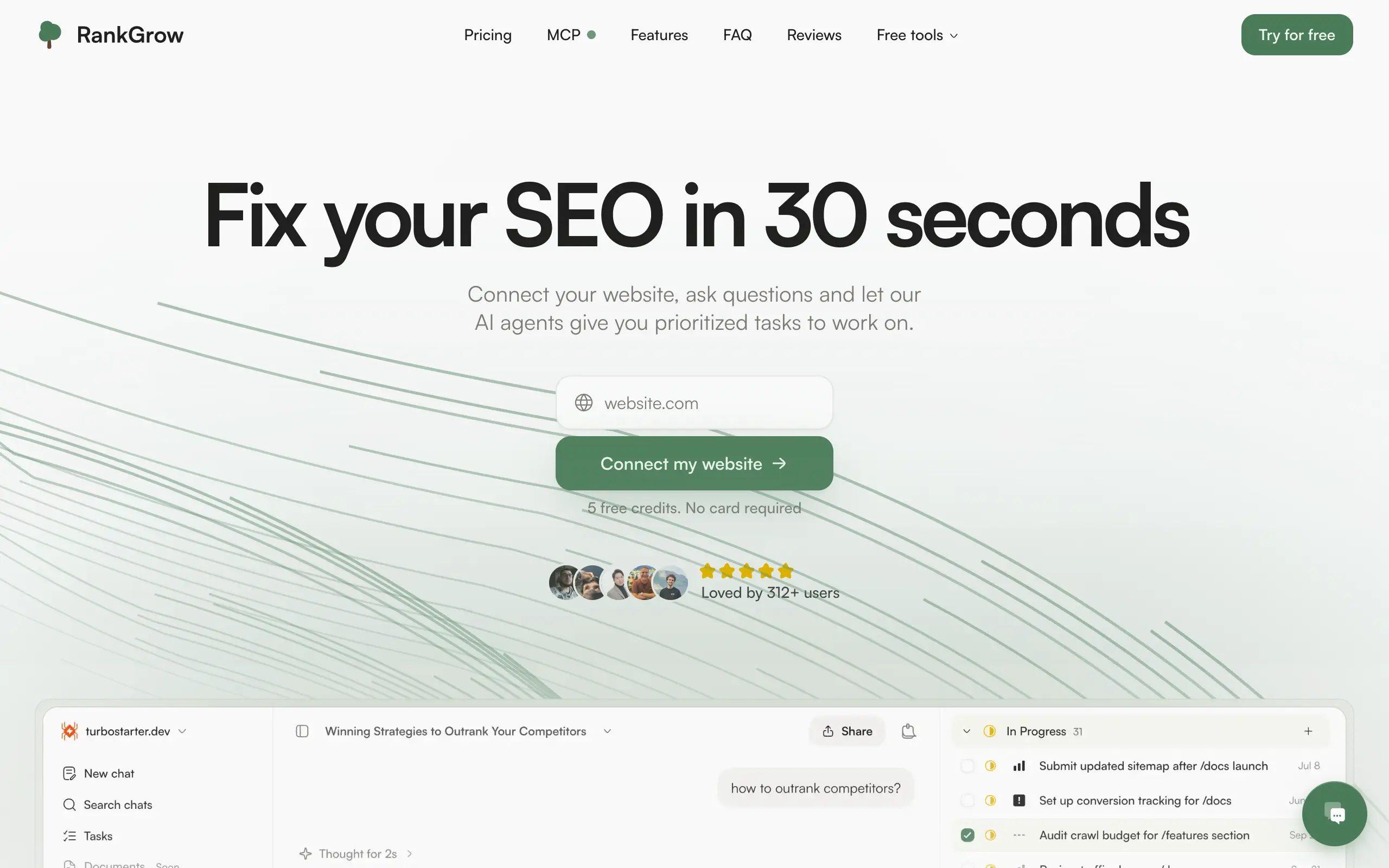
RankGrow
Fix your SEO with AI agents - connect Search Console, get prioritized tasks, and grow organic traffic 📈
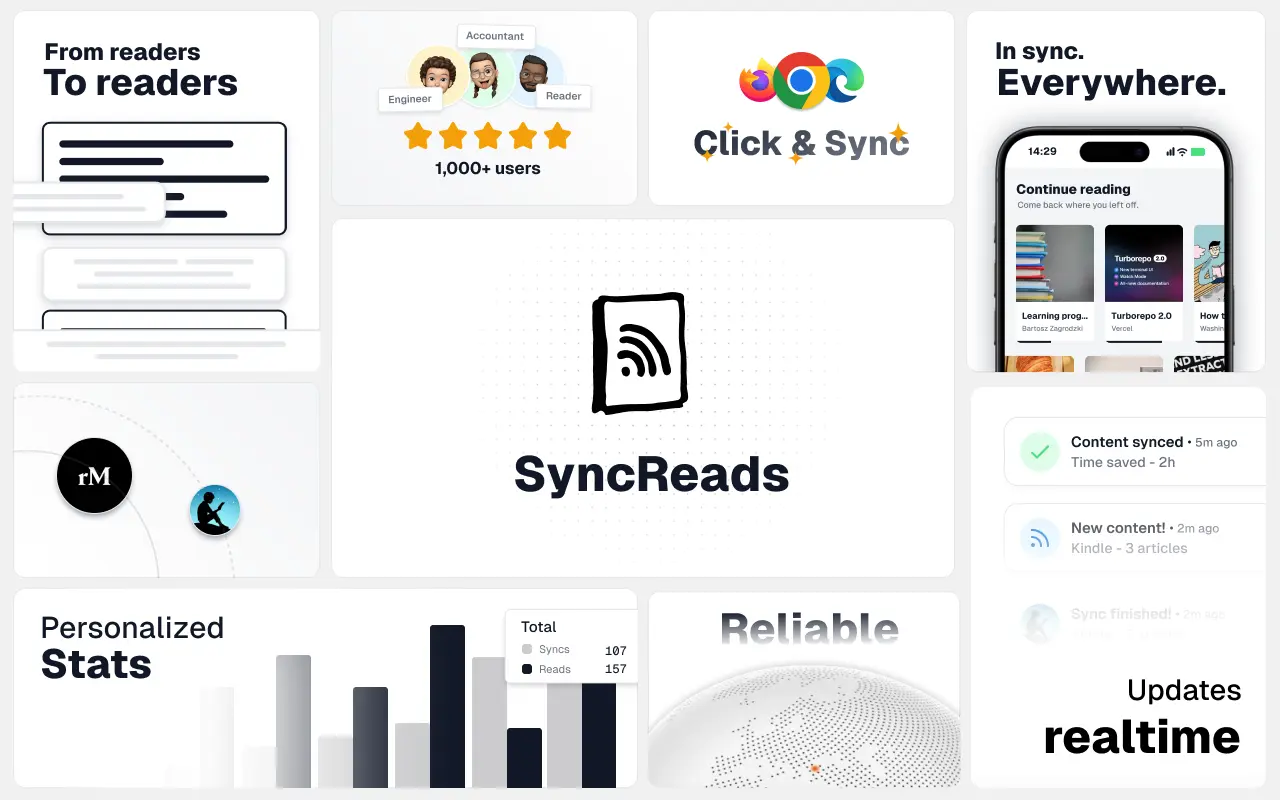
SyncReads
Sync your favorite content for distraction-free reading, save time and replace multiple apps. Anytime, anywhere 🔄
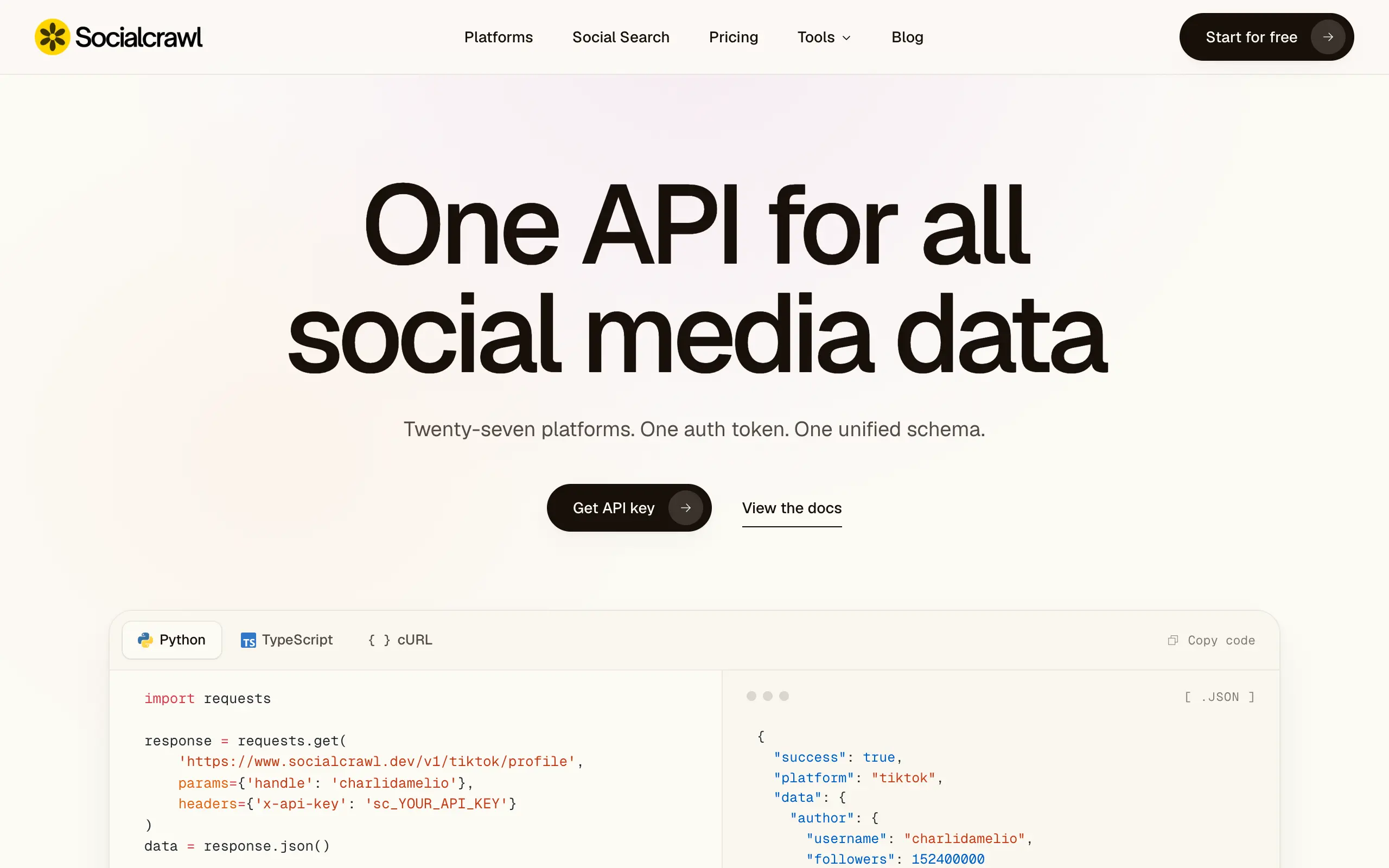
Socialcrawl
Get clean, structured data from 21 platforms like TikTok, Instagram, and YouTube with a single request 📊
Statiko
Monitor any Telegram channel in real time - track posts, edits, deletions, and growth with AI recaps 📡
Shibui
AI website builder - describe your business, pick a niche template, edit by chatting, and publish instantly ✨
Pro Service
Find verified home service professionals, compare quotes, and pay securely through escrow - built for Brazilians across the US 🏠
RankGrow
Fix your SEO with AI agents - connect Search Console, get prioritized tasks, and grow organic traffic 📈
SyncReads
Sync your favorite content for distraction-free reading, save time and replace multiple apps. Anytime, anywhere 🔄
Socialcrawl
Get clean, structured data from 21 platforms like TikTok, Instagram, and YouTube with a single request 📊
Statiko
Monitor any Telegram channel in real time - track posts, edits, deletions, and growth with AI recaps 📡
Shibui
AI website builder - describe your business, pick a niche template, edit by chatting, and publish instantly ✨
Pro Service
Find verified home service professionals, compare quotes, and pay securely through escrow - built for Brazilians across the US 🏠
RankGrow
Fix your SEO with AI agents - connect Search Console, get prioritized tasks, and grow organic traffic 📈
SyncReads
Sync your favorite content for distraction-free reading, save time and replace multiple apps. Anytime, anywhere 🔄
Socialcrawl
Get clean, structured data from 21 platforms like TikTok, Instagram, and YouTube with a single request 📊
Statiko
Monitor any Telegram channel in real time - track posts, edits, deletions, and growth with AI recaps 📡
Shibui
AI website builder - describe your business, pick a niche template, edit by chatting, and publish instantly ✨
Pro Service
Find verified home service professionals, compare quotes, and pay securely through escrow - built for Brazilians across the US 🏠
RankGrow
Fix your SEO with AI agents - connect Search Console, get prioritized tasks, and grow organic traffic 📈
SyncReads
Sync your favorite content for distraction-free reading, save time and replace multiple apps. Anytime, anywhere 🔄
Socialcrawl
Get clean, structured data from 21 platforms like TikTok, Instagram, and YouTube with a single request 📊
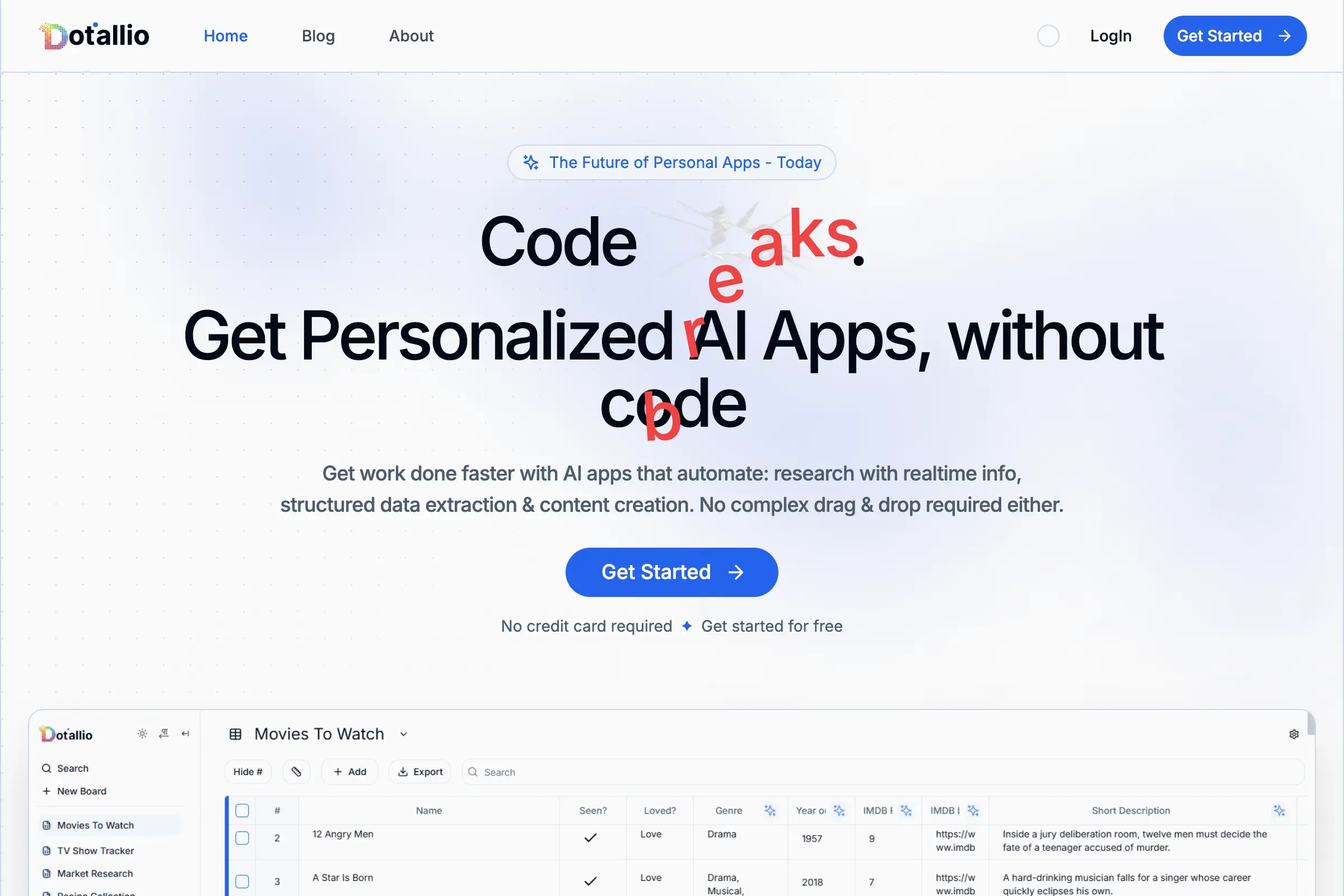
Dotallio
Personalized AI apps that automate research, data extraction, and content creation without code 🤖

Talk to Santa
Enjoy a magical live video chat or receive a unique AI-generated video greeting from Santa Claus 🎅
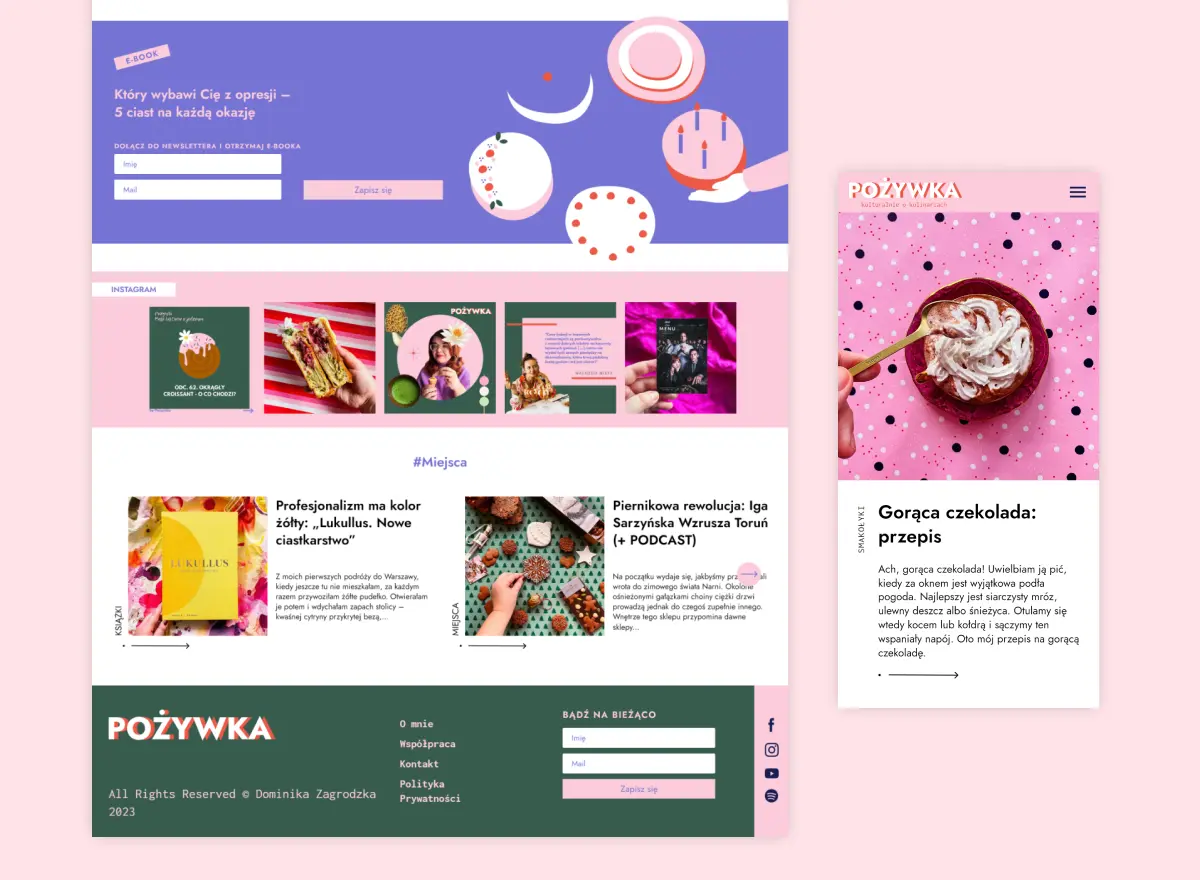
pozywka.pl
Scalable blog for food journalist, focused on performance and user experience 🌭
zagrodzki.me
Personal blog and portfolio of Bart Zagrodzki, where he shares his knowledge and work 💼
TurboStarter
Ship your startup everywhere. In minutes.
HTML to Markdown
Convert HTML to Markdown with ease, directly in your browser 📄
Dotallio
Personalized AI apps that automate research, data extraction, and content creation without code 🤖
Talk to Santa
Enjoy a magical live video chat or receive a unique AI-generated video greeting from Santa Claus 🎅
pozywka.pl
Scalable blog for food journalist, focused on performance and user experience 🌭
zagrodzki.me
Personal blog and portfolio of Bart Zagrodzki, where he shares his knowledge and work 💼
TurboStarter
Ship your startup everywhere. In minutes.
HTML to Markdown
Convert HTML to Markdown with ease, directly in your browser 📄
Dotallio
Personalized AI apps that automate research, data extraction, and content creation without code 🤖
Talk to Santa
Enjoy a magical live video chat or receive a unique AI-generated video greeting from Santa Claus 🎅
pozywka.pl
Scalable blog for food journalist, focused on performance and user experience 🌭
zagrodzki.me
Personal blog and portfolio of Bart Zagrodzki, where he shares his knowledge and work 💼
TurboStarter
Ship your startup everywhere. In minutes.
HTML to Markdown
Convert HTML to Markdown with ease, directly in your browser 📄
Dotallio
Personalized AI apps that automate research, data extraction, and content creation without code 🤖
Talk to Santa
Enjoy a magical live video chat or receive a unique AI-generated video greeting from Santa Claus 🎅
pozywka.pl
Scalable blog for food journalist, focused on performance and user experience 🌭
zagrodzki.me
Personal blog and portfolio of Bart Zagrodzki, where he shares his knowledge and work 💼
TurboStarter
Ship your startup everywhere. In minutes.
HTML to Markdown
Convert HTML to Markdown with ease, directly in your browser 📄
Omichat
Chat with 50+ AI models, including ChatGPT and Claude, in one place - switch models anytime without losing context 🤖
Claude Fast
Supercharge your Claude Code with 6x effective context window and specialized AI agents 🤖

EmojAI
AI-powered emoji picker with smart, context-aware suggestions 🤖

Solohacker
Autonomous company launcher - AI agents work 24/7, escalate what matters, and you stay in control 🤖

BeRawi: Storytelling Coach
Practice storytelling daily with instant feedback to sound clearer, more engaging, and confident 🎤
Omichat
Chat with 50+ AI models, including ChatGPT and Claude, in one place - switch models anytime without losing context 🤖
Claude Fast
Supercharge your Claude Code with 6x effective context window and specialized AI agents 🤖
EmojAI
AI-powered emoji picker with smart, context-aware suggestions 🤖
Solohacker
Autonomous company launcher - AI agents work 24/7, escalate what matters, and you stay in control 🤖
BeRawi: Storytelling Coach
Practice storytelling daily with instant feedback to sound clearer, more engaging, and confident 🎤
Omichat
Chat with 50+ AI models, including ChatGPT and Claude, in one place - switch models anytime without losing context 🤖
Claude Fast
Supercharge your Claude Code with 6x effective context window and specialized AI agents 🤖
EmojAI
AI-powered emoji picker with smart, context-aware suggestions 🤖
Solohacker
Autonomous company launcher - AI agents work 24/7, escalate what matters, and you stay in control 🤖
BeRawi: Storytelling Coach
Practice storytelling daily with instant feedback to sound clearer, more engaging, and confident 🎤
Omichat
Chat with 50+ AI models, including ChatGPT and Claude, in one place - switch models anytime without losing context 🤖
Claude Fast
Supercharge your Claude Code with 6x effective context window and specialized AI agents 🤖
EmojAI
AI-powered emoji picker with smart, context-aware suggestions 🤖
Solohacker
Autonomous company launcher - AI agents work 24/7, escalate what matters, and you stay in control 🤖
BeRawi: Storytelling Coach
Practice storytelling daily with instant feedback to sound clearer, more engaging, and confident 🎤

Connect with like-minded people
Join our community to get feedback, support, and grow together with 1,000+ builders on board, let's ship it!
Join usShip your startup everywhere. In minutes.
Don't burn tokens on setup and start building features on day one.