TraceTutor
Turn code into step-by-step execution traces, memory diagrams, and quiz cards to help CSE students master debugging and data structures.
CSE students rarely struggle with programming because they cannot memorize syntax. They struggle because they cannot reliably answer the questions that matter during debugging:
- What does each variable contain right now?
- Which function call is currently active?
- Why did this loop stop or repeat?
- Where did the pointer, reference, or index go wrong?
- How does a data structure change after every operation?
TraceTutor is a mobile code execution trace app designed to make those invisible runtime changes visible. It converts code into step-by-step execution traces, memory diagrams, stack visualizations, and adaptive quiz cards. The result is a learning experience that helps computer science and engineering students build durable debugging intuition rather than relying on trial and error.
This article evaluates the TraceTutor SaaS opportunity, target market, feature set, technical architecture, pricing, risks, and launch plan. It is intended for founders, product teams, educators, and developers exploring a mobile-first programming education product.
Primary opportunity
TraceTutor can occupy a valuable space between code editors, passive tutorial platforms, and heavyweight desktop debuggers by offering an interactive, visual, mobile-first environment for learning program execution.
Why a code execution trace app solves a real learning problem
A code execution trace is a chronological record of what a program does while it runs. It typically shows the current line of code, variable values, function calls, conditions, loops, input and output, and memory changes.
For experienced developers, mentally tracing code becomes almost automatic. For beginners, it is a high-effort cognitive task. A student may understand what a for loop is in theory yet still be unable to predict why an array traversal skips an item, why a recursive call never terminates, or why a linked list node is disconnected.
Traditional learning materials often leave a gap:
- Video tutorials explain concepts but are passive.
- IDE debuggers are powerful but intimidating for novices.
- Online judges confirm whether an answer is correct but rarely explain the execution path.
- Textbooks contain static diagrams that cannot react to student code.
- AI chat tools can explain code, but their explanations may be generic, inconsistent, or detached from an exact program state.
TraceTutor addresses that gap through guided program visualization. Instead of showing learners only the final output, it exposes the chain of state changes that produced it.
A student should be able to paste a short Python, C++, Java, or JavaScript snippet and immediately explore:
- The highlighted line being executed
- The call stack and local variables
- Heap objects and references
- Array, string, stack, queue, tree, or linked-list changes
- Conditional evaluations
- A plain-language explanation of each step
- Quiz prompts generated from meaningful execution moments
This is especially relevant for data structures and algorithms courses, where students must reason about state transitions under time pressure.
Target audience for TraceTutor
TraceTutor should not initially target every person who writes code. A focused audience improves onboarding, curriculum design, messaging, and retention.
Primary users: CSE students learning foundational programming
The strongest initial audience is undergraduate computer science and engineering students in introductory programming, data structures, algorithms, and object-oriented programming courses.
Typical users include:
- First-year students learning variables, loops, functions, arrays, and conditions
- Second-year students studying linked lists, stacks, queues, trees, graphs, recursion, and sorting
- Students preparing for lab exams, coding assessments, and technical interviews
- Learners who understand lecture content but freeze when asked to dry-run code
- Students transitioning from Python to C++, Java, or C
Their core job to be done is simple: help me understand exactly what this code does, step by step, before my exam or while I debug.
Secondary users: teaching assistants and instructors
Teaching assistants often repeat the same explanations in office hours:
- “What is the value of
iat this iteration?” - “Draw the recursion tree.”
- “What happens when this pointer is reassigned?”
- “Can you trace this linked-list insertion on paper?”
- “Why is this base case necessary?”
TraceTutor can reduce repetitive support work by giving instructors reusable visual trace assignments. A teacher could share a trace link, assign a quiz, review common misconception data, and see which concepts cause the most confusion.
Tertiary users: self-taught developers and bootcamp learners
Bootcamp learners and career switchers are also good candidates, particularly those who encounter algorithm problems but lack formal foundations in memory models, recursion, and data structures.
This segment may have a higher willingness to pay for structured practice, though the product language should remain educational rather than overly academic.
Student value
Turn confusing source code into an understandable sequence of program states, diagrams, and recall exercises.
Instructor value
Create visual assignments and identify the concepts, lines, and trace steps where learners struggle most.
Institution value
Support better outcomes in foundational computing courses without requiring instructors to manually create every visualization.
Market gap in visual debugging and programming education
The programming education market is crowded, but much of it is fragmented. Coding platforms focus on exercises, learning platforms focus on content libraries, and developer tools focus on professional workflows.
TraceTutor’s market gap sits at the intersection of three needs:
- Visual learning
- Debugging practice
- Mobile-accessible repetition
A novice does not necessarily need a full IDE debug session. They need a constrained, legible explanation of execution state. Professional debugging tools include breakpoints, watches, process inspection, and complex environment configuration. These capabilities are essential for software engineers, but they can create unnecessary friction for a student learning why recursion changes the call stack.
The underserved “dry run” workflow
Many CSE students are taught to dry-run code manually on paper. This is pedagogically useful because it forces active reasoning. However, it has limitations:
- Students can make tracing mistakes without realizing it.
- They may not know what information to write down.
- They cannot easily visualize heap allocation or object references.
- Instructors cannot observe where the learner’s reasoning diverged.
- Paper tracing is inconvenient for frequent, short study sessions.
TraceTutor can preserve the value of manual reasoning while adding immediate feedback. Rather than simply animating the correct answer, the product should repeatedly ask the learner to predict the next state.
That distinction matters. A passive animation may feel clear in the moment but fail to build transfer. An interactive code tracing app should use retrieval practice, prediction, feedback, and spaced repetition.
Why mobile is a strategic advantage
A mobile app is not intended to replace a laptop-based development environment. It is a companion for short, high-frequency learning moments:
- Reviewing recursion before class
- Practicing a linked-list trace on a commute
- Revising sorting algorithms before an assessment
- Completing five debugging flashcards between lectures
- Checking why a code snippet fails without opening a full IDE
The mobile format supports habit formation. Quick sessions, notifications, streaks, saved weak topics, and quiz cards can make debugging practice more consistent.
TraceTutor’s unique selling proposition
TraceTutor’s unique selling proposition is:
A mobile-first code execution trace tutor that transforms programs into interactive state visualizations and adaptive recall exercises.
The strongest version of the product is not just “AI that explains code” and not just “a code visualizer.” It combines deterministic execution with learner-centric pedagogy.
The differentiation comes from four connected layers:
-
Execution fidelity
The product should trace code through a controlled runtime or interpreter rather than inventing execution states from a language model response. -
Visual state representation
Variables, call frames, heap objects, arrays, pointers, and data structures should update at each meaningful step. -
Active learning interactions
Users should predict values, identify the next line, repair bugs, and answer quiz cards. -
Progressive personalization
The app should identify weak concepts such as off-by-one errors, recursion base cases, reference aliasing, or tree traversal order.
This positioning makes TraceTutor useful for both “explain my code” moments and longer-term mastery.
Core TraceTutor features and solution design
The minimum viable product should center on a narrow but complete learning loop. Avoid launching with every language and advanced data structure at once.
Step-by-step code execution traces
This is the product’s core feature. A user pastes code, selects a language, adds optional input, and starts the trace.
Each trace step should show:
- Current line and source context
- Current function or method
- Variable values before and after execution
- Condition results
- Standard output changes
- Function entry and return events
- Errors, exceptions, or invalid operations where supported
A timeline slider allows users to move forward and backward through execution. A “why did this happen?” option can provide a concise explanation grounded in the actual program state.
For example, when i += 1 executes, the app should show the previous value, the operation, and the new value. When a condition evaluates to false, it should show the operands and comparison result.
Memory diagrams for references and data structures
Memory diagrams are especially valuable when students learn object references, pointers, linked lists, trees, and graphs.
TraceTutor should offer different diagram modes based on the code structure:
- Arrays as indexed cells
- Strings as character sequences
- Linked lists as nodes and arrows
- Stacks and queues as ordered containers
- Binary trees as parent-child diagrams
- Hash maps as key-value entries
- Objects as heap boxes with fields
- Recursion as a call-stack view
The interface must distinguish between values and references. For example, if two variables reference the same object, the diagram should make aliasing obvious. This can prevent common misunderstandings around mutation.
Guided debugging mode
A dedicated debugging mode can make TraceTutor more engaging than a standard program visualizer.
The learner receives a buggy snippet and a target behavior. Instead of revealing the complete trace immediately, the app asks them to find the failure point.
Useful debugging prompts include:
- “Which line first produces an unexpected value?”
- “What will
countequal after this loop iteration?” - “Which condition causes the infinite loop?”
- “Which node reference is lost after this assignment?”
- “What change fixes the off-by-one error?”
The system can reveal hints progressively:
- Highlight suspicious state changes
- Show a comparison between expected and actual values
- Explain the root cause
- Present a similar variation for retry
Quiz cards and spaced repetition
Quiz cards convert an execution trace into durable practice material. Each card should be linked to a specific concept and user mistake pattern.
Examples include:
- “What is the value of
sumafter line 8?” - “Which function returns first?”
- “What is the base case in this recursive function?”
- “Where does
headpoint after deletion?” - “How many comparisons occur in this pass of bubble sort?”
A spaced repetition engine can schedule cards using recall confidence, response accuracy, response time, and the learner’s chosen exam date.
Learning design principle
Do not let users only watch traces. Ask for a prediction before revealing a state change. Prediction followed by feedback creates a much stronger learning loop than passive viewing.
Concept paths and curriculum templates
Students often do not know what to practice next. TraceTutor should provide guided paths such as:
- Programming fundamentals
- Loop tracing and boundary conditions
- Function calls and scope
- Recursion and call stacks
- Arrays and two-pointer techniques
- Linked lists and pointer manipulation
- Stack and queue operations
- Sorting algorithm traces
- Binary tree traversal
- Graph traversal fundamentals
Each path can contain short lessons, canonical examples, trace challenges, and mastery checks.
Shareable traces for instructors and peers
Trace links can support collaboration and education workflows. An instructor may generate a trace assignment and share it with a class. A student can share a confusing snippet with a tutor while retaining the exact sequence of states.
Privacy controls are essential. Users should be able to keep traces private, unlisted, shared by link, or visible to a classroom group.
A feature prioritization framework for the MVP
The first release should optimize for clarity and reliability rather than broad language coverage. Python is an excellent first language because its syntax is beginner-friendly and it is widely used in introductory courses. JavaScript may be the next logical addition due to its accessibility and web-native execution environment.
| Feature | Student value | Build complexity | MVP priority | Reason |
|---|---|---|---|---|
| Python execution trace | High | Medium | High | Core learning promise |
| Variable and call-stack view | High | Medium | High | Supports debugging intuition |
| Array and linked-list diagrams | High | Medium | High | Strong data structures differentiation |
| AI explanations | Medium | Low | Medium | Useful when grounded in trace data |
| Multi-language support | Medium | High | Later | Can dilute execution accuracy early |
| Instructor analytics portal | High | High | Later | Best after proving student retention |
Recommended tech stack for a mobile code execution trace app
TraceTutor needs a stack that supports an excellent mobile interface, secure code execution, event-based trace generation, and scalable user analytics.
Mobile application layer
For a cross-platform MVP, React Native is a practical choice. It enables shared application logic for iOS and Android while preserving a native mobile experience.
Expo can accelerate development through managed build tooling, notifications, over-the-air updates, and device APIs. This is particularly useful for a small SaaS team that wants to validate product-market fit before investing in fully separate native applications.
For visual styling, NativeWind offers a Tailwind-inspired workflow for React Native. The key trade-off is that complex dynamic visualizations may require custom styling and animation work beyond utility classes.
Recommended client-side building blocks include:
- React Native for iOS and Android delivery
- Expo for rapid mobile development and release operations
- TypeScript for safer trace-event contracts
- Zustand or React Context for local trace playback state
- React Navigation for application routing
- Shopify FlashList for efficient large trace timelines
Backend and data layer
A TypeScript backend keeps domain models consistent between the mobile app and API. Node.js with NestJS is a strong option when the team needs modular services, background jobs, authentication guards, and well-defined APIs.
For a leaner early-stage build, a Next.js web application can host an admin portal, landing pages, classroom features, and API endpoints. A separate worker service can handle trace processing.
For the database, PostgreSQL is a dependable choice for users, courses, subscriptions, quizzes, trace metadata, and analytics. Prisma can improve development speed with type-safe database access.
A managed backend such as Supabase may reduce initial infrastructure work by bundling PostgreSQL, authentication, storage, and real-time capabilities. The trade-off is that specialized code execution infrastructure will still need to live outside the typical managed backend flow.
Secure code execution architecture
Code execution is the highest-risk technical area. Never run untrusted user code directly inside the main application server.
A safer architecture uses isolated execution workers:
- The mobile client submits code, language, input, and trace settings.
- The API validates payload size, rate limits the request, and stores an execution job.
- A queue sends the job to a sandboxed worker.
- The worker executes code under strict CPU, memory, network, filesystem, and time limits.
- The worker returns structured trace events rather than raw process output alone.
- The API persists the trace and streams it back to the client.
Container-based isolation can be implemented with Docker, but Docker alone is not sufficient as a complete security boundary. Production teams should consider stronger isolation technologies, dedicated sandbox providers, restrictive seccomp profiles, no-network containers, resource quotas, and regular security review.
For early support of Python, a custom instrumented interpreter approach may be more reliable than attempting to observe arbitrary code at the operating-system level. The product can parse the abstract syntax tree, insert safe tracing hooks, and emit events at expressions, assignments, branches, calls, and returns.
A simplified trace event contract might look like this:
type TraceEvent = {
  step: number;
  line: number;
  event: "call" | "line" | "return" | "exception";
  functionName: string;
  locals: Record<string, unknown>;
  globals: Record<string, unknown>;
  stdout: string[];
  heapSnapshot?: Record<string, unknown>;
  explanationKey?: string;
};
The primary trade-off is important: supporting unrestricted language features gives users flexibility but makes traces harder to produce, secure, and explain. An MVP should clearly document supported syntax and progressively expand compatibility.
AI layer: use it for explanation, not source-of-truth execution
Generative AI can improve usability, but it should not be responsible for determining execution state. The trace engine should be the source of truth.
Appropriate AI uses include:
- Translating a trace event into beginner-friendly language
- Generating multiple quiz question variations
- Adapting explanations to a learner’s selected level
- Creating debugging hints without immediately revealing the answer
- Summarizing patterns in a student’s mistakes
- Suggesting related practice exercises
The application should pass structured state to the model, such as the current line, before-and-after local values, call stack, and learning objective. This grounding reduces hallucinations.
Monetization strategy for TraceTutor
A freemium model is suitable because students need to experience the visualization quality before paying. The product’s value becomes obvious after a learner resolves a concept that previously felt opaque.
Freemium plan
The free plan should provide enough value for recurring usage without allowing unlimited expensive execution workloads.
Possible free-plan limits include:
- A limited number of custom traces per week
- Access to core Python concept paths
- Basic variable and call-stack visualization
- A capped number of AI explanations
- Limited saved trace history
- Daily quiz cards
Student premium plan
A low-cost monthly or annual plan can unlock:
- Unlimited or high-volume traces within fair-use limits
- Advanced data structure diagrams
- Full quiz-card generation and spaced repetition
- Multi-language access
- Exam-focused learning paths
- Personalized weakness reports
- Offline saved trace review
- No advertisements, if advertising is ever considered
Student pricing should be localized where possible. A purchasing-power-aware model can improve accessibility and conversion in regions with large engineering student populations.
Classroom and institution plan
The highest long-term contract value may come from instructors, bootcamps, and universities.
An educator plan can include:
- Classroom creation and roster management
- Shared assignments and templates
- Student completion analytics
- Concept mastery dashboards
- LMS-friendly export options
- Privacy and administrative controls
- Priority support
Institutional sales cycles are slow, so this should follow a successful student-led launch rather than precede it.
Additional revenue options
Other monetization paths include:
- Paid interview-preparation packs
- Premium algorithm visualization modules
- White-label licensing for bootcamps
- Content partnerships with educators
- API access for edtech platforms
Avoid charging separately for every trace. A confusing token economy can damage trust, especially among students. Clear plan boundaries are better than opaque usage credits.
Competitive advantage analysis
TraceTutor will compete indirectly with coding practice platforms, AI assistants, IDE debuggers, textbook content, and general code visualizers. The advantage is not that no alternatives exist. It is that few alternatives combine precise trace playback, mobile usability, data-structure diagrams, and active recall in one focused product.
Where TraceTutor can win
-
Pedagogy over generic explanation
The product is designed around novice misconceptions, not only developer productivity. -
Deterministic state plus AI coaching
Runtime states are generated by an execution engine, while AI makes them easier to understand. -
Mobile-first study behavior
Students can practice code tracing in short sessions instead of needing a full laptop environment. -
Data structure-specific visuals
Linked lists, trees, stacks, queues, and references deserve tailored diagrams rather than a generic variable table. -
Learning analytics
Over time, TraceTutor can identify recurring error patterns at the individual, classroom, and curriculum levels.
Defensibility through data and content
The defensible asset is not simply the trace renderer. Competitors can replicate basic visualization. TraceTutor becomes stronger as it accumulates:
- An anonymized taxonomy of beginner debugging mistakes
- High-quality concept templates
- Question-generation patterns tied to trace states
- Personalized mastery models
- Instructor-created content libraries
- Interaction data showing where learners hesitate or answer incorrectly
This requires strong privacy practices. Student code and learning data should be protected, minimized, and governed through clear retention controls.
Risks and mitigation strategies
Every code education SaaS product faces product, technical, and commercial risks. The best approach is to identify them early and design explicit mitigations.
Incorrect traces undermine trust immediately, especially when students use the product for assessed coursework. Start with a restricted, thoroughly tested language subset. Build a corpus of canonical programs and edge cases. Display unsupported-language feedback clearly rather than silently producing a misleading result.
Users may submit malicious, resource-heavy, or abusive code. Use isolated workers, strict execution timeouts, memory limits, disabled network access, rate limits, logging, and abuse monitoring. Keep execution infrastructure separate from core user data systems.
A polished animation can become entertainment rather than learning. Require prediction checkpoints, offer hide-and-reveal modes, and use quiz cards based on the learner’s own mistakes.
Do not allow AI to invent trace states. Provide models with structured event data, constrain output formats, run quality evaluation, and allow users to report confusing explanations.
Supporting Python, C, C++, Java, JavaScript, and advanced structures from day one creates large quality and security costs. Begin with one language, a small set of data structures, and a validated learner segment.
Students are price-sensitive and may use the app only before exams. Build free recurring utility through daily practice, offer low-cost annual plans, and pursue instructor distribution after retaining individual learners.
Metrics that validate the TraceTutor business model
Vanity metrics such as installs and signups are not enough. TraceTutor should measure whether users actually understand and return to practice.
Key product metrics include:
- Activation rate, measured by users who complete their first trace and answer at least one question
- Time to first meaningful insight, such as completing a guided trace within the first session
- Trace completion rate
- Prediction-question participation rate
- Quiz-card review frequency
- Week-one and week-four retention
- Number of concepts mastered per active learner
- Error recovery rate after a debugging hint
- Free-to-paid conversion
- Classroom assignment completion rate
A particularly valuable metric is repeat trace behavior. If students return with new code snippets or revisit weak concepts after the first novelty session, the product is solving an ongoing need.
For educational outcome claims, run controlled pilots. Compare pre-assessment and post-assessment performance for students using interactive trace practice versus students using static examples. Any public claim should cite the study methodology, sample size, and limitations. Consider referencing peer-reviewed computer science education research from organizations such as ACM or IEEE when publishing learning-impact content.
Go-to-market strategy for a mobile debugging tutor
TraceTutor should launch where the pain is already visible: programming students searching for help with loops, recursion, pointers, and data structures.
Build an SEO content engine around debugging intent
Organic content can target high-intent searches such as:
- How to trace code step by step
- How to dry run a program
- How recursion uses the call stack
- How to debug an infinite loop
- Linked list insertion explained visually
- Bubble sort pass-by-pass explanation
- How pointers work in C++
- How to trace a binary tree traversal
Each article should include a concise concept explanation, common mistakes, annotated examples, and an invitation to practice the concept interactively in TraceTutor.
Avoid shallow keyword pages. Educational content needs trustworthy examples, accurate diagrams, and instructor-level explanations. Publishing source-code walkthroughs that solve a specific learning problem is more valuable than generating hundreds of thin pages.
Reach students through educator communities
Early distribution channels can include:
- University programming clubs
- Teaching assistant communities
- Bootcamps and coding academies
- Student ambassador programs
- YouTube educators who teach data structures
- Discord communities for CSE cohorts
- Hackathons and coding events
A campus ambassador program can work well when ambassadors receive premium access, share trace challenges, and collect structured feedback from classmates.
Use a viral classroom loop
The product should make it easy to share a trace, not just a screenshot. A shared trace can preserve code, inputs, selected steps, annotations, and quiz checkpoints.
The loop looks like this:
- A student creates a useful trace.
- They share it with classmates who have the same assignment.
- Peers open the trace and create accounts to interact with it.
- An instructor notices repeated use and creates a classroom.
- The classroom generates more reusable trace content.
Actionable implementation steps
A disciplined launch plan gives TraceTutor the best chance of reaching product-market fit without overbuilding.
Interview 20 to 30 students who recently struggled with loops, recursion, arrays, or linked lists. Ask for real assignments, screenshots of debugging attempts, and the exact moment they became confused.
Choose one initial language, preferably Python, and define a supported syntax subset. Build a reliable trace engine for assignments, conditions, loops, functions, lists, dictionaries, and basic recursion.
Design a mobile prototype around one complete learning loop: paste code, view the trace, predict the next state, receive feedback, and save a quiz card.
Create high-quality templates for ten foundational problems, including loop boundaries, array traversal, recursion, stack operations, linked-list insertion, and sorting.
Run a closed beta with one or two student groups. Record completion, confusion points, trace failures, repeat usage, and willingness to pay.
Add a freemium paywall only after users repeatedly receive value from traces and quiz cards. Test annual student pricing alongside a short free trial for premium features.
Launch educational SEO pages and shareable trace links. Use real learner questions to decide which concepts and content pages to build next.
Expand carefully into JavaScript, Java, C++, instructor tools, and class analytics only after the first language demonstrates strong retention.
A production-ready SaaS foundation can reduce time spent on authentication, billing, dashboards, and deployment plumbing. TurboStarter is worth evaluating for teams that want to move faster on the business layer while focusing product engineering effort on TraceTutor’s execution engine and learning experience.
Final perspective on the TraceTutor opportunity
TraceTutor has a compelling opportunity because code tracing is a recurring, high-friction learning task with clear emotional urgency. Students do not search for better debugging help because they want another tool in their stack. They search because they are stuck, preparing for an exam, or trying to understand why code behaves differently than expected.
The winning product will make program execution concrete. It will show the current line, reveal the changing state, explain the reason behind the change, and ask the learner to think before moving on.
Start narrow. Make one language trace exceptionally trustworthy. Build visual explanations for the concepts students find hardest. Use interactive prediction and quiz cards to turn short-term clarity into long-term skill. Then use learner behavior and instructor feedback to expand TraceTutor into a durable platform for debugging mastery and data structures education.
More 📱 Mobile App SaaS ideas
Discover more innovative mobile app SaaS ideas that are trending in 2026. Each idea is AI-generated with market validation and growth potential to help you find your next profitable venture faster than competitors.
Your competitors are building with TurboStarter
Below are some of the SaaS ideas that have been generated and built with our starter kit.

Statiko
Monitor any Telegram channel in real time - track posts, edits, deletions, and growth with AI recaps 📡

Shibui
AI website builder - describe your business, pick a niche template, edit by chatting, and publish instantly ✨

Pro Service
Find verified home service professionals, compare quotes, and pay securely through escrow - built for Brazilians across the US 🏠

RankGrow
Fix your SEO with AI agents - connect Search Console, get prioritized tasks, and grow organic traffic 📈
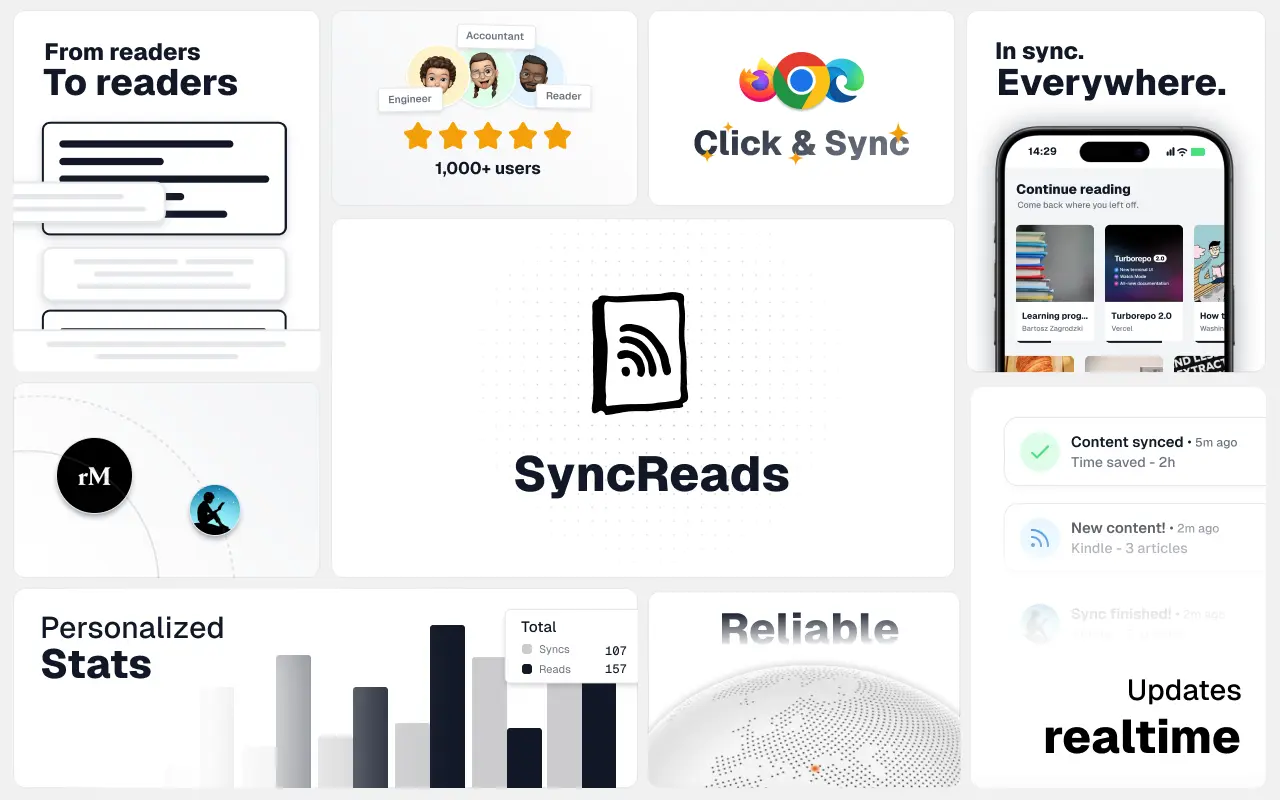
SyncReads
Sync your favorite content for distraction-free reading, save time and replace multiple apps. Anytime, anywhere 🔄
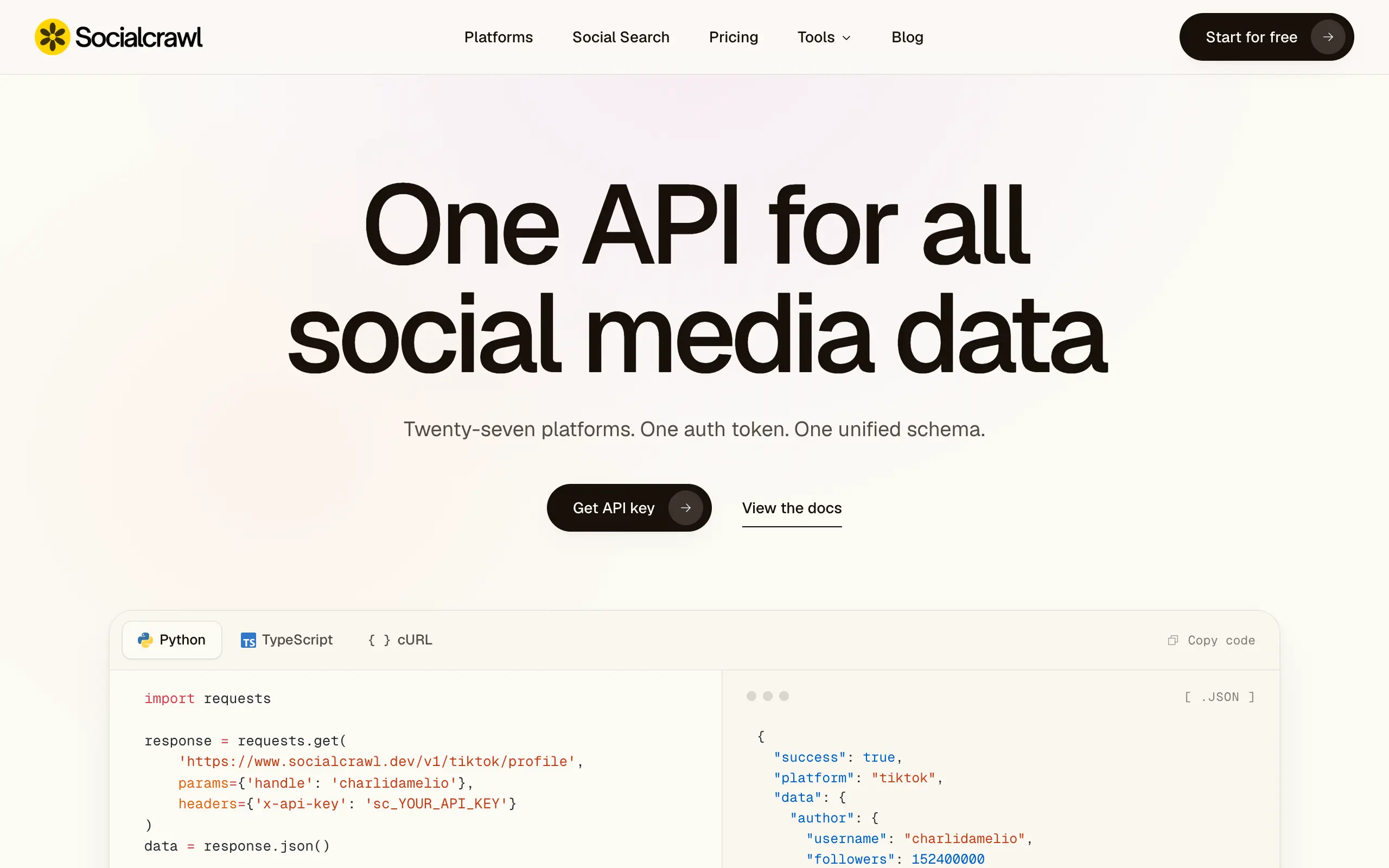
Socialcrawl
Get clean, structured data from 21 platforms like TikTok, Instagram, and YouTube with a single request 📊
Statiko
Monitor any Telegram channel in real time - track posts, edits, deletions, and growth with AI recaps 📡
Shibui
AI website builder - describe your business, pick a niche template, edit by chatting, and publish instantly ✨
Pro Service
Find verified home service professionals, compare quotes, and pay securely through escrow - built for Brazilians across the US 🏠
RankGrow
Fix your SEO with AI agents - connect Search Console, get prioritized tasks, and grow organic traffic 📈
SyncReads
Sync your favorite content for distraction-free reading, save time and replace multiple apps. Anytime, anywhere 🔄
Socialcrawl
Get clean, structured data from 21 platforms like TikTok, Instagram, and YouTube with a single request 📊
Statiko
Monitor any Telegram channel in real time - track posts, edits, deletions, and growth with AI recaps 📡
Shibui
AI website builder - describe your business, pick a niche template, edit by chatting, and publish instantly ✨
Pro Service
Find verified home service professionals, compare quotes, and pay securely through escrow - built for Brazilians across the US 🏠
RankGrow
Fix your SEO with AI agents - connect Search Console, get prioritized tasks, and grow organic traffic 📈
SyncReads
Sync your favorite content for distraction-free reading, save time and replace multiple apps. Anytime, anywhere 🔄
Socialcrawl
Get clean, structured data from 21 platforms like TikTok, Instagram, and YouTube with a single request 📊
Statiko
Monitor any Telegram channel in real time - track posts, edits, deletions, and growth with AI recaps 📡
Shibui
AI website builder - describe your business, pick a niche template, edit by chatting, and publish instantly ✨
Pro Service
Find verified home service professionals, compare quotes, and pay securely through escrow - built for Brazilians across the US 🏠
RankGrow
Fix your SEO with AI agents - connect Search Console, get prioritized tasks, and grow organic traffic 📈
SyncReads
Sync your favorite content for distraction-free reading, save time and replace multiple apps. Anytime, anywhere 🔄
Socialcrawl
Get clean, structured data from 21 platforms like TikTok, Instagram, and YouTube with a single request 📊
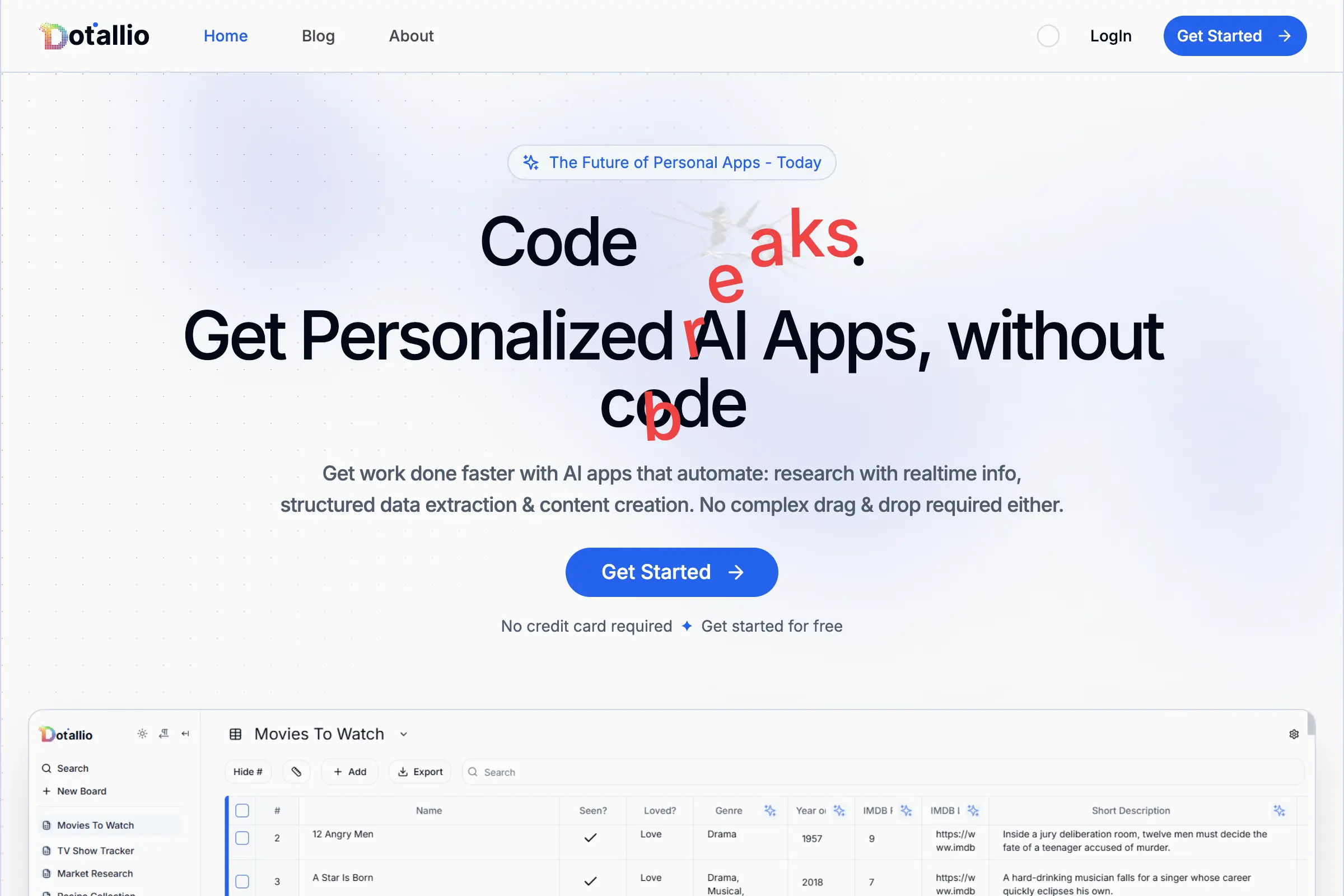
Dotallio
Personalized AI apps that automate research, data extraction, and content creation without code 🤖

Talk to Santa
Enjoy a magical live video chat or receive a unique AI-generated video greeting from Santa Claus 🎅

pozywka.pl
Scalable blog for food journalist, focused on performance and user experience 🌭
zagrodzki.me
Personal blog and portfolio of Bart Zagrodzki, where he shares his knowledge and work 💼
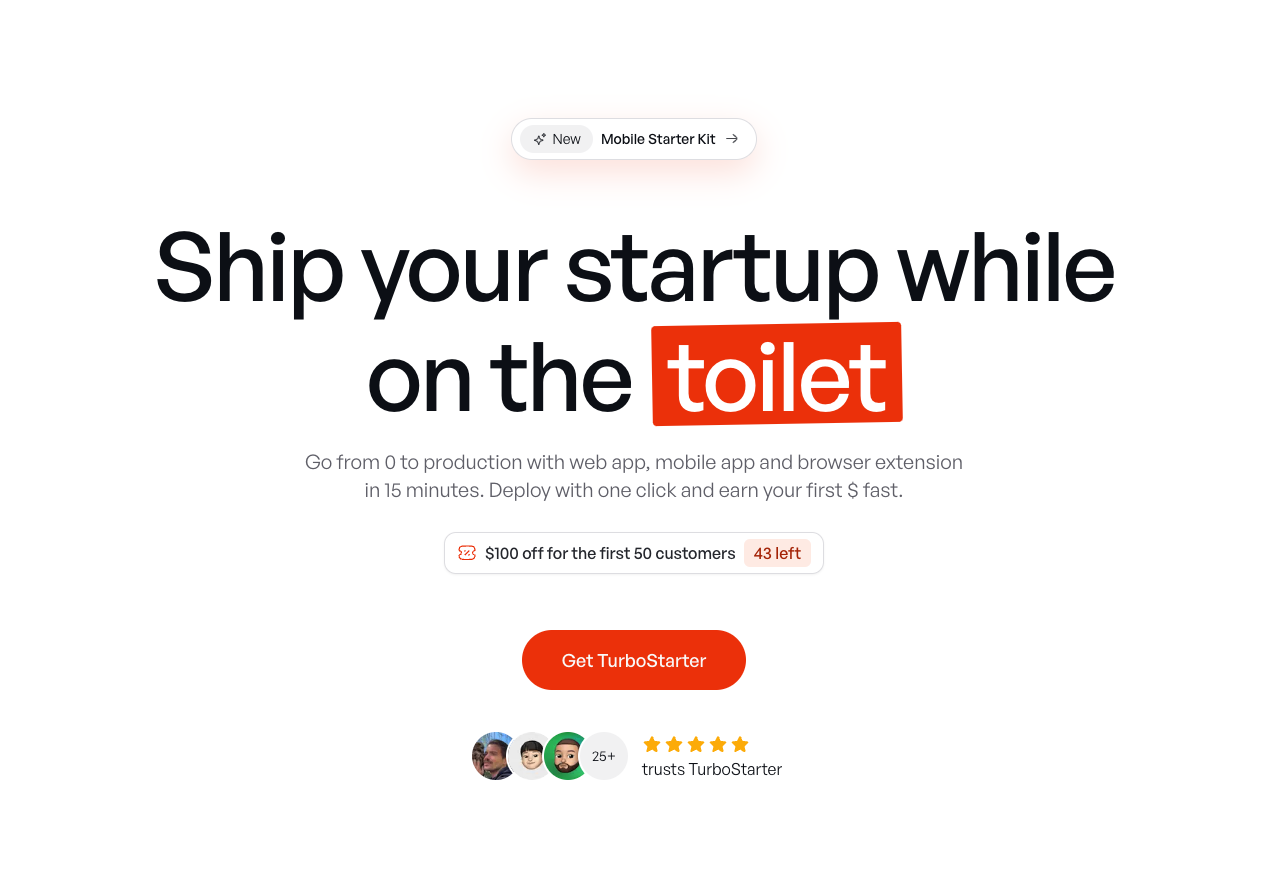
TurboStarter
Ship your startup everywhere. In minutes.
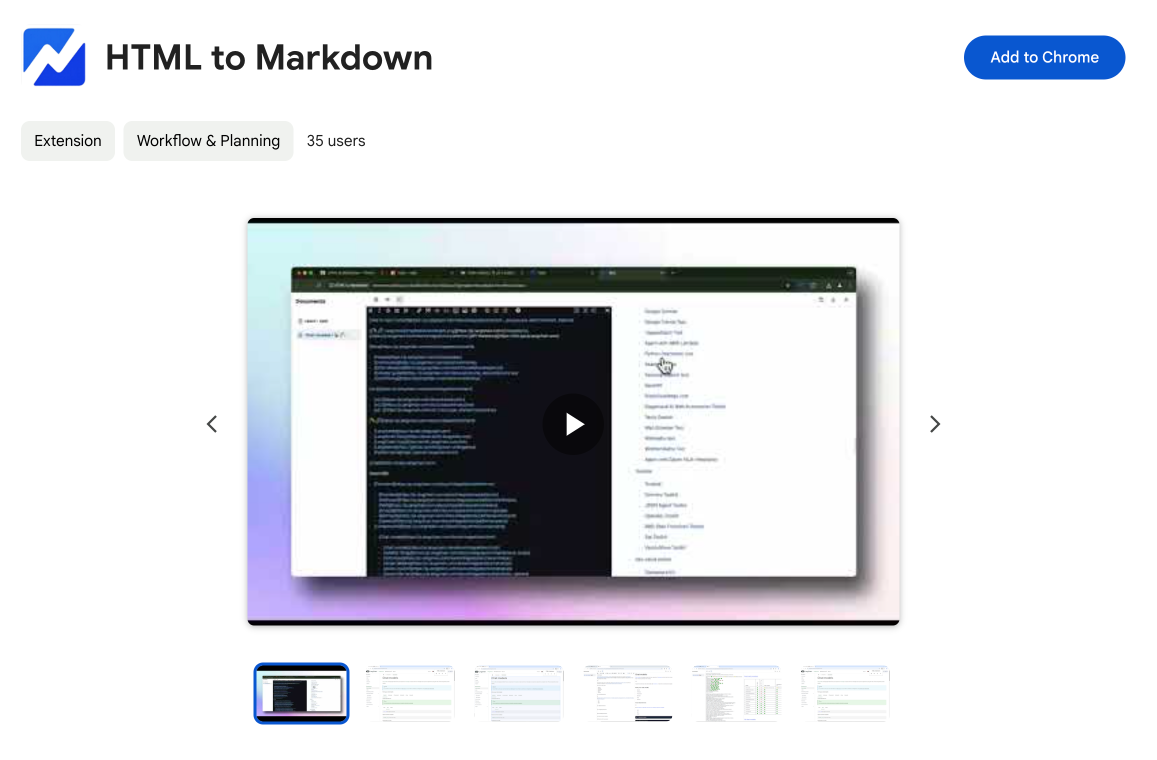
HTML to Markdown
Convert HTML to Markdown with ease, directly in your browser 📄
Dotallio
Personalized AI apps that automate research, data extraction, and content creation without code 🤖
Talk to Santa
Enjoy a magical live video chat or receive a unique AI-generated video greeting from Santa Claus 🎅
pozywka.pl
Scalable blog for food journalist, focused on performance and user experience 🌭
zagrodzki.me
Personal blog and portfolio of Bart Zagrodzki, where he shares his knowledge and work 💼
TurboStarter
Ship your startup everywhere. In minutes.
HTML to Markdown
Convert HTML to Markdown with ease, directly in your browser 📄
Dotallio
Personalized AI apps that automate research, data extraction, and content creation without code 🤖
Talk to Santa
Enjoy a magical live video chat or receive a unique AI-generated video greeting from Santa Claus 🎅
pozywka.pl
Scalable blog for food journalist, focused on performance and user experience 🌭
zagrodzki.me
Personal blog and portfolio of Bart Zagrodzki, where he shares his knowledge and work 💼
TurboStarter
Ship your startup everywhere. In minutes.
HTML to Markdown
Convert HTML to Markdown with ease, directly in your browser 📄
Dotallio
Personalized AI apps that automate research, data extraction, and content creation without code 🤖
Talk to Santa
Enjoy a magical live video chat or receive a unique AI-generated video greeting from Santa Claus 🎅
pozywka.pl
Scalable blog for food journalist, focused on performance and user experience 🌭
zagrodzki.me
Personal blog and portfolio of Bart Zagrodzki, where he shares his knowledge and work 💼
TurboStarter
Ship your startup everywhere. In minutes.
HTML to Markdown
Convert HTML to Markdown with ease, directly in your browser 📄
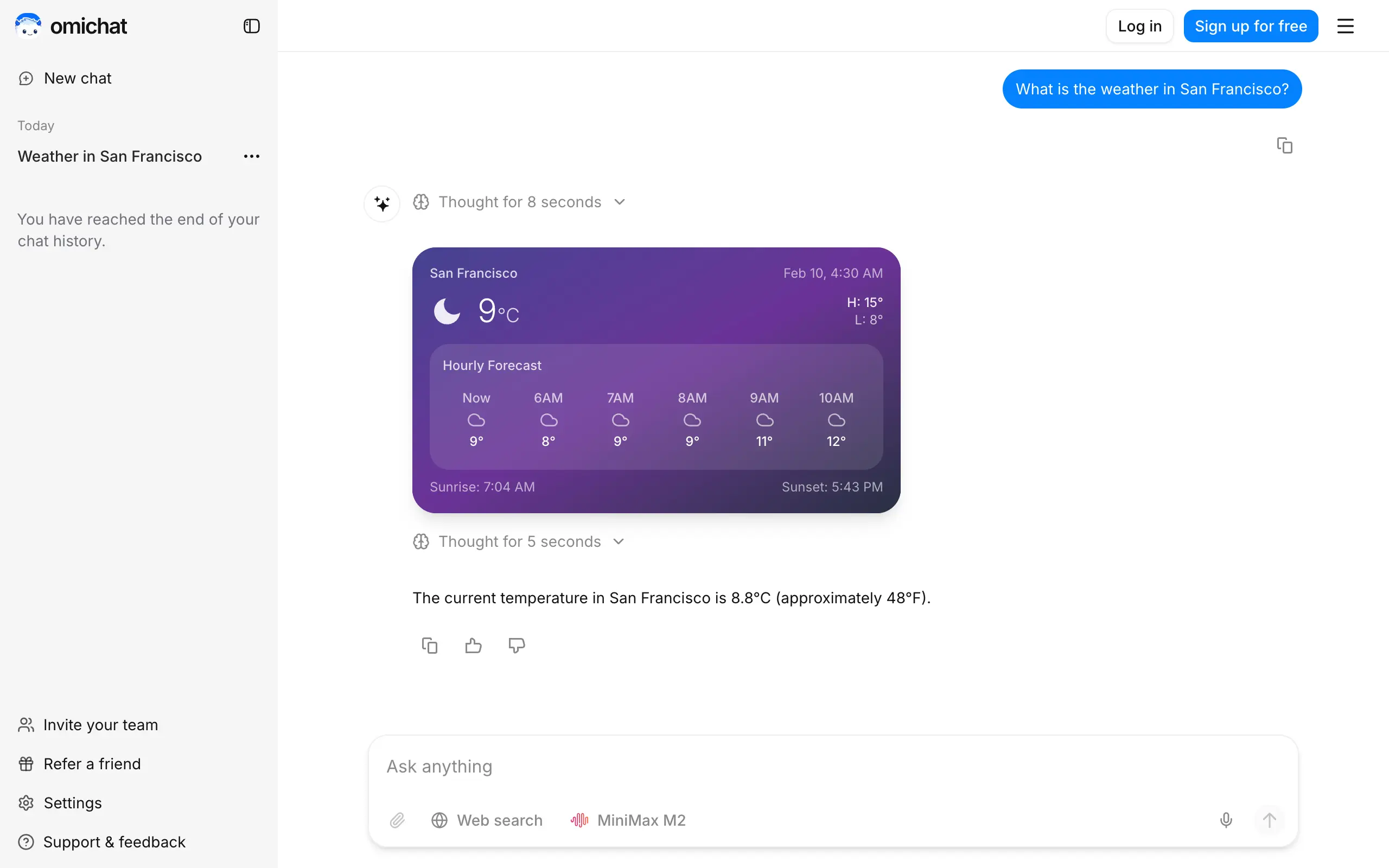
Omichat
Chat with 50+ AI models, including ChatGPT and Claude, in one place - switch models anytime without losing context 🤖
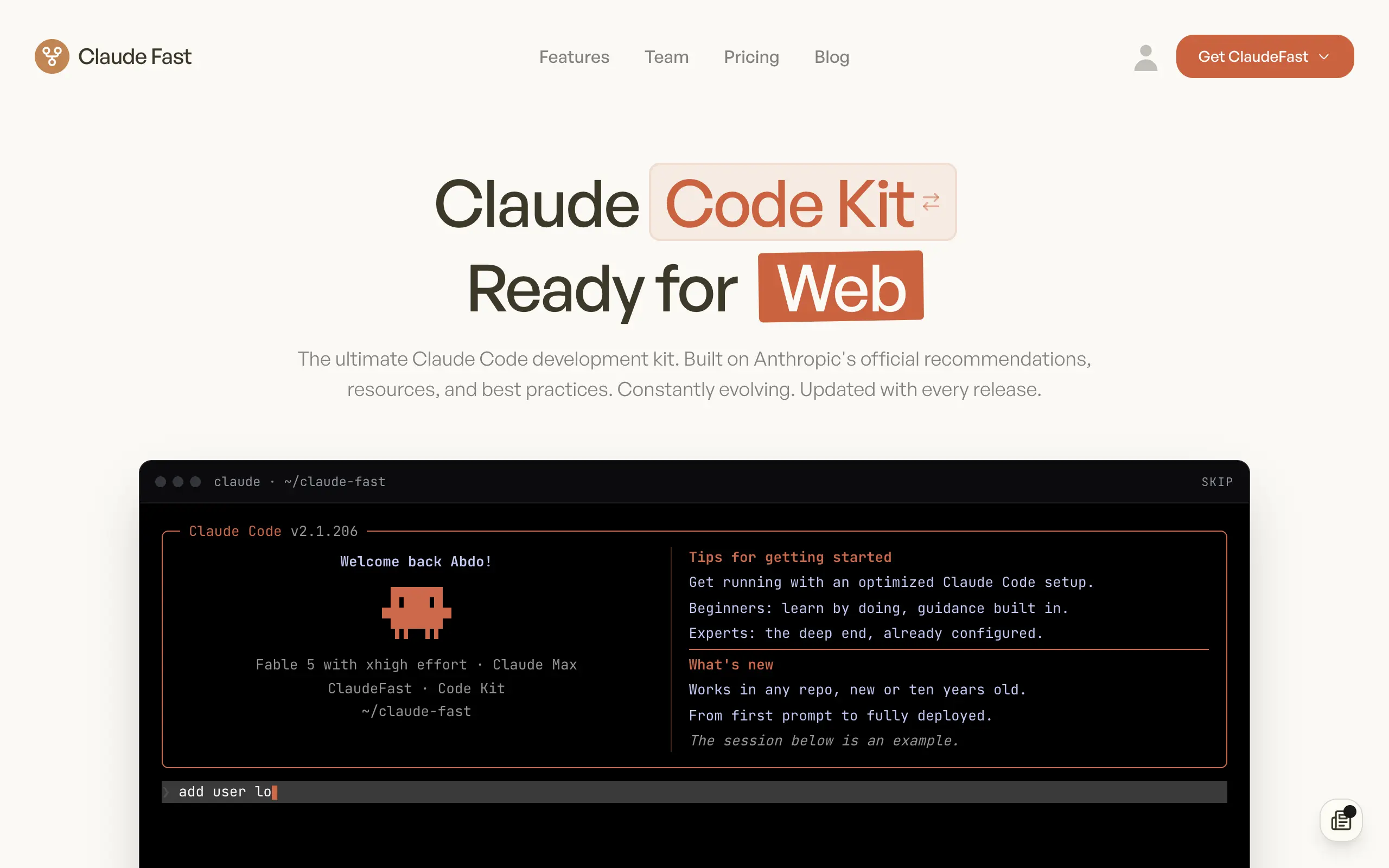
Claude Fast
Supercharge your Claude Code with 6x effective context window and specialized AI agents 🤖
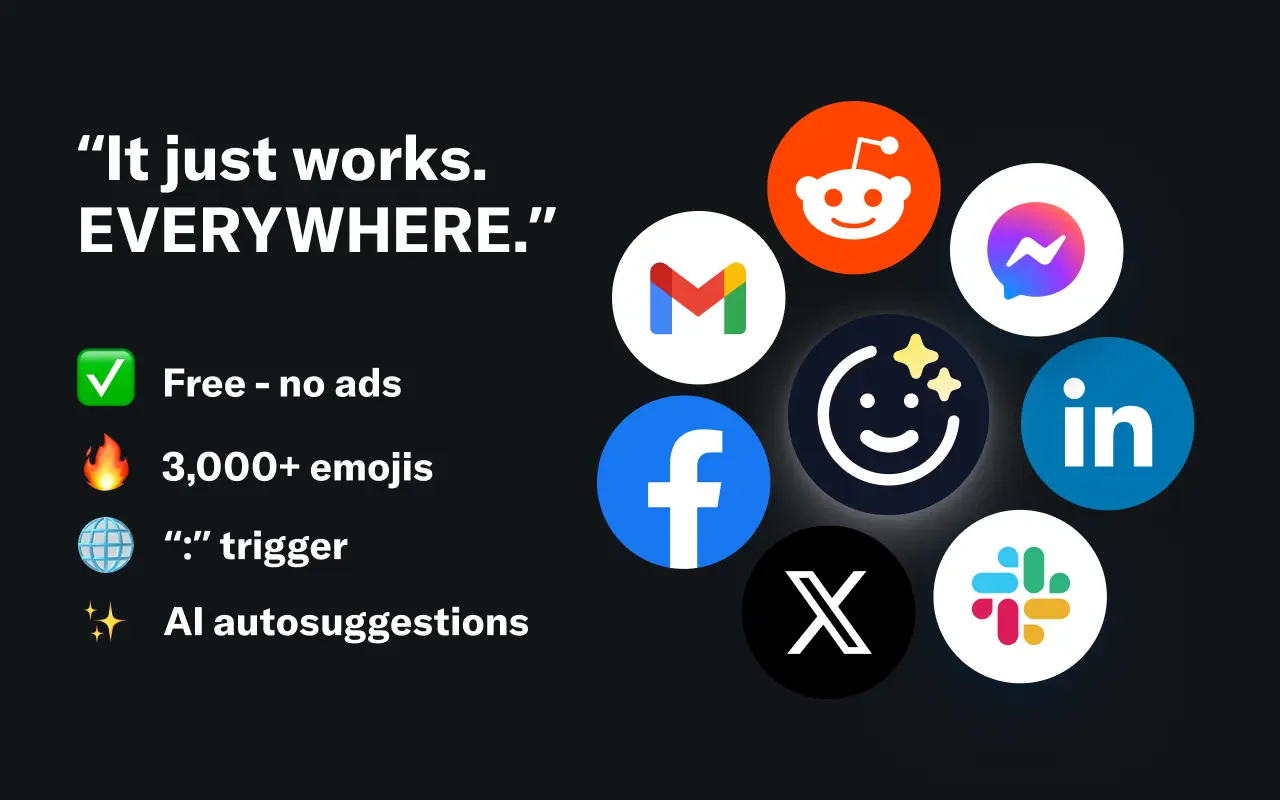
EmojAI
AI-powered emoji picker with smart, context-aware suggestions 🤖
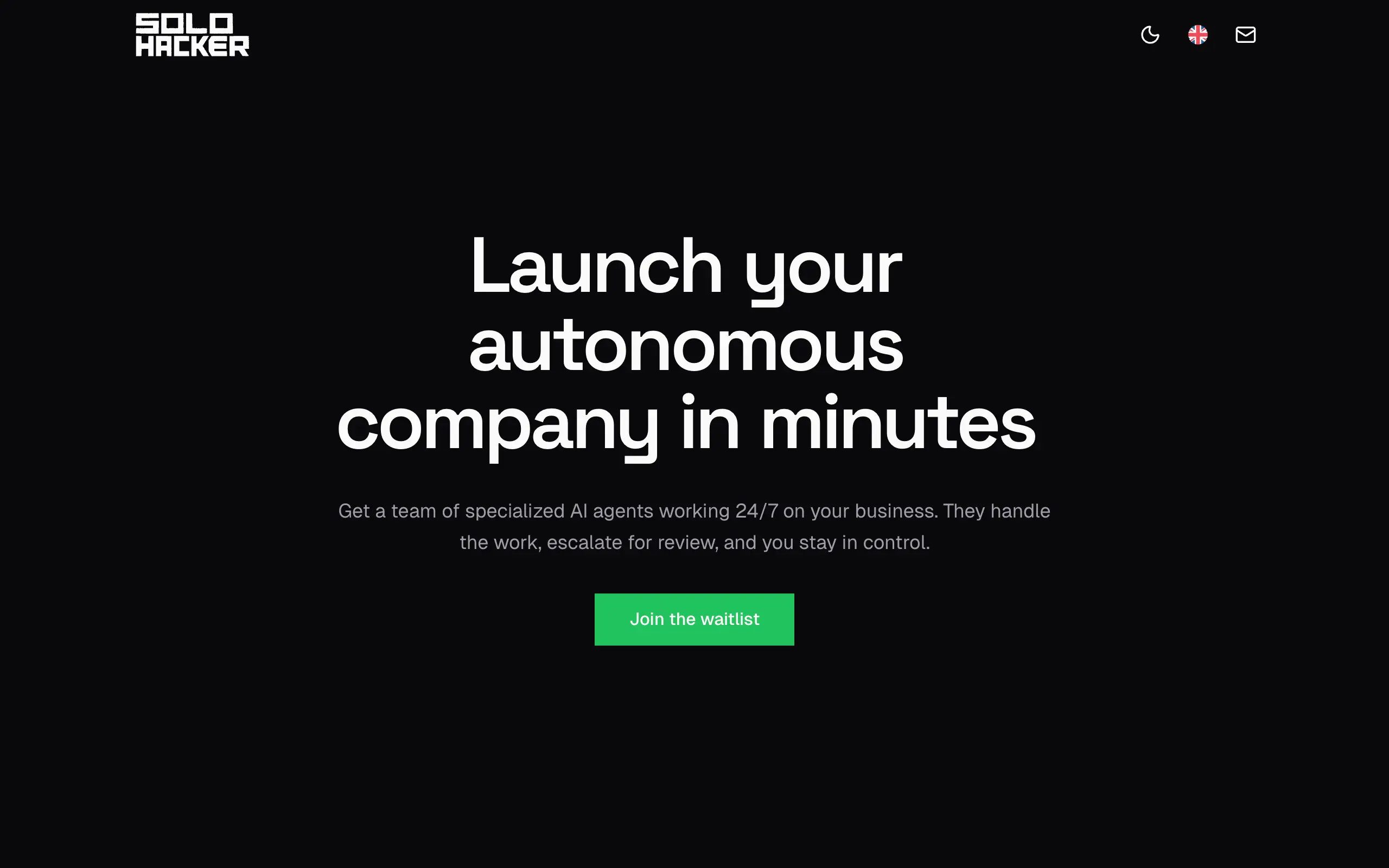
Solohacker
Autonomous company launcher - AI agents work 24/7, escalate what matters, and you stay in control 🤖
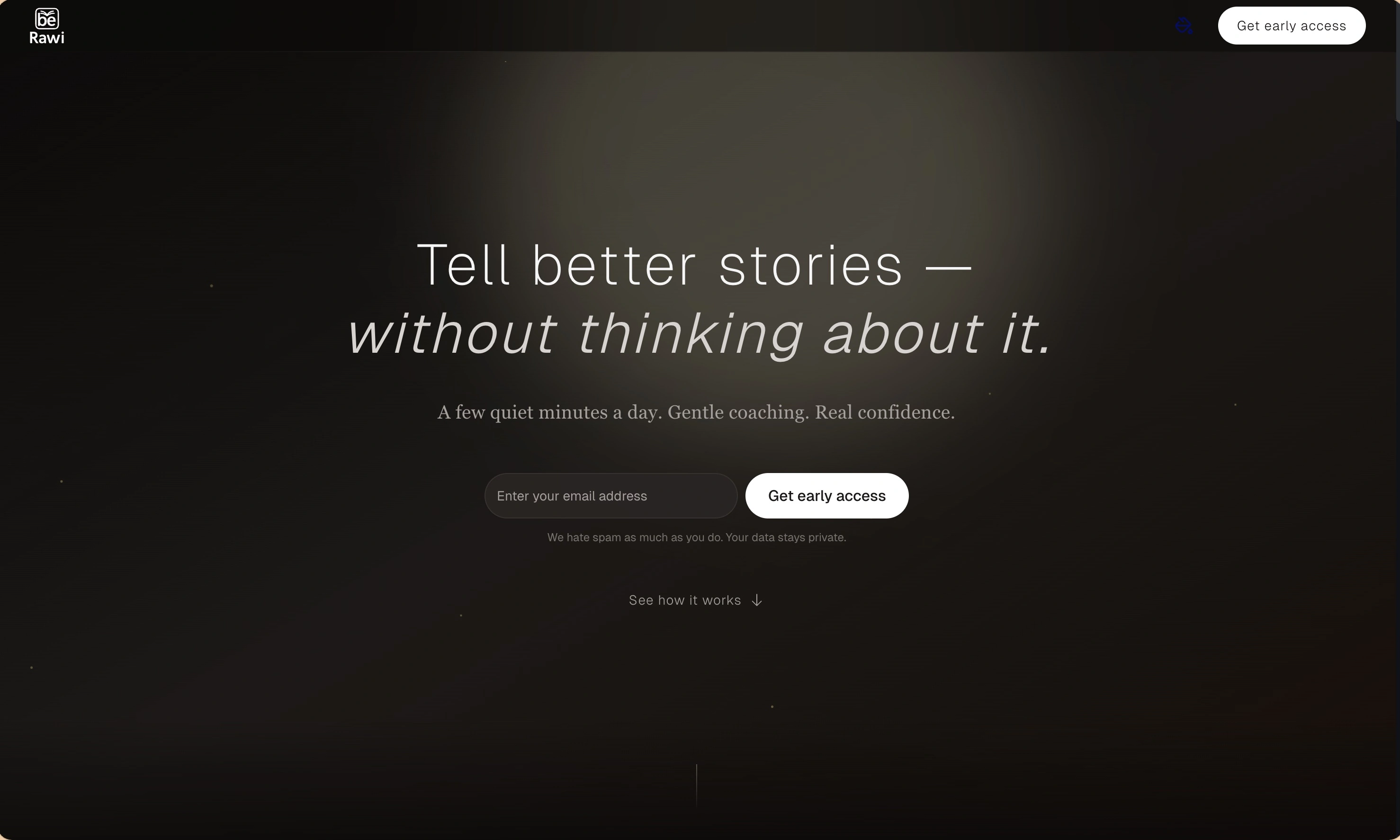
BeRawi: Storytelling Coach
Practice storytelling daily with instant feedback to sound clearer, more engaging, and confident 🎤
Omichat
Chat with 50+ AI models, including ChatGPT and Claude, in one place - switch models anytime without losing context 🤖
Claude Fast
Supercharge your Claude Code with 6x effective context window and specialized AI agents 🤖
EmojAI
AI-powered emoji picker with smart, context-aware suggestions 🤖
Solohacker
Autonomous company launcher - AI agents work 24/7, escalate what matters, and you stay in control 🤖
BeRawi: Storytelling Coach
Practice storytelling daily with instant feedback to sound clearer, more engaging, and confident 🎤
Omichat
Chat with 50+ AI models, including ChatGPT and Claude, in one place - switch models anytime without losing context 🤖
Claude Fast
Supercharge your Claude Code with 6x effective context window and specialized AI agents 🤖
EmojAI
AI-powered emoji picker with smart, context-aware suggestions 🤖
Solohacker
Autonomous company launcher - AI agents work 24/7, escalate what matters, and you stay in control 🤖
BeRawi: Storytelling Coach
Practice storytelling daily with instant feedback to sound clearer, more engaging, and confident 🎤
Omichat
Chat with 50+ AI models, including ChatGPT and Claude, in one place - switch models anytime without losing context 🤖
Claude Fast
Supercharge your Claude Code with 6x effective context window and specialized AI agents 🤖
EmojAI
AI-powered emoji picker with smart, context-aware suggestions 🤖
Solohacker
Autonomous company launcher - AI agents work 24/7, escalate what matters, and you stay in control 🤖
BeRawi: Storytelling Coach
Practice storytelling daily with instant feedback to sound clearer, more engaging, and confident 🎤

Connect with like-minded people
Join our community to get feedback, support, and grow together with 1,000+ builders on board, let's ship it!
Join usShip your startup everywhere. In minutes.
Don't burn tokens on setup and start building features on day one.