HostelLoop
A private hostel issue tracker for students to report maintenance, water, mess, and safety concerns with transparent status updates.
Why a private hostel issue tracker solves a real campus operations problem
Hostel accommodation is a high-frequency, high-emotion service environment. Students rely on it every day for water, food, electricity, hygiene, internet access, security, and a safe place to sleep. When one of those essentials fails, an informal reporting process quickly becomes frustrating.
In many hostels, students currently report issues through:
- WhatsApp groups that become noisy and unsearchable
- Personal calls to wardens or student representatives
- Paper complaint registers with no visible follow-up
- Conversations with maintenance staff that lack accountability
- Social media posts or public complaints after repeated inaction
This process is inefficient for everyone. Students do not know whether their complaint was seen. Wardens and hostel administrators cannot easily prioritize recurring issues. Maintenance teams receive incomplete reports. Hostel leadership lacks data to identify systemic problems, such as repeated water shortages in one wing or frequent electrical failures on a particular floor.
HostelLoop is a private hostel issue tracker designed to replace fragmented reporting with a structured, transparent workflow. Students can report maintenance, water, mess, hygiene, and safety concerns. Hostel staff can assign ownership, update status, communicate progress, and use issue data to improve hostel operations over time.
For a residential campus like Banasthali, the opportunity is not simply to build another complaint form. The opportunity is to build a trusted operational layer between students, wardens, service providers, and management.
Core value proposition
HostelLoop gives students a clear way to report hostel problems and gives administrators a measurable system for resolving them before they become repeated complaints or safety risks.
Who needs a hostel issue tracker like HostelLoop
The strongest products begin with a precise view of their users. A hostel complaint management system has multiple user groups, each with different incentives, permissions, and definitions of success.
Students need visibility and psychological safety
Students are the primary reporters. They need a process that is simple, mobile-friendly, and safe to use.
Their most common needs include:
- Reporting an issue in under one minute
- Knowing whether a complaint has been received
- Avoiding repeated calls, follow-ups, or public escalation
- Sharing photos when a physical problem requires proof
- Receiving updates without having to ask repeatedly
- Reporting sensitive safety or hygiene issues privately
- Seeing that similar complaints are not being ignored
For students, the product promise is not merely “submit a ticket.” It is “your concern has a traceable path to resolution.”
A good hostel issue tracker should not require users to understand internal administrative structures. A student should be able to select a category such as “water supply,” write a short description, attach a photo, choose a location, and submit.
Wardens need prioritization and accountable workflows
Wardens are often the operational bridge between students and the people who can fix a problem. They may oversee hundreds of residents and receive a constant stream of messages across calls, in-person requests, and chat applications.
HostelLoop can reduce administrative load by helping wardens:
- View newly reported issues in one place
- Identify urgent safety incidents immediately
- Assign complaints to maintenance teams or vendors
- Request clarification when reports are incomplete
- Track overdue issues
- Close issues with documented resolution notes
- Identify repeated problems by hostel, block, floor, and category
The dashboard should focus on decisions, not raw volume. A warden does not simply need to know there are 48 open tickets. They need to know which six require attention today.
Maintenance and service teams need complete, actionable tasks
Maintenance teams work best when they receive enough context to act the first time. A vague message such as “fan not working” creates extra travel, calls, and delays. A structured issue report can include the room or location, category, severity, photo, description, and time reported.
For maintenance workers, HostelLoop should provide:
- A clear queue of assigned work
- Location details and issue history
- Before-and-after image support
- Status changes such as assigned, in progress, blocked, and resolved
- A way to add service notes
- An audit trail for work completion
This helps distinguish between a reported issue, an acknowledged issue, and an actually resolved issue.
Hostel management needs operational intelligence
At the institutional level, the data generated by a hostel maintenance management platform becomes valuable. Management can identify patterns that are invisible in scattered WhatsApp messages.
Examples include:
- A water pump issue creating recurring complaints in one hostel building
- A mess vendor receiving unusually high food quality complaints
- Certain rooms repeatedly reporting electrical faults
- Delays caused by specific repair categories or external vendors
- Safety complaints that require preventive action rather than one-off responses
This makes HostelLoop relevant not only as a student grievance platform, but also as a data-driven hostel operations system.
Students
Fast issue reporting, privacy controls, real-time status visibility, and less follow-up stress.
Wardens
A single operational dashboard for triage, assignment, escalation, and communication.
Service teams
Structured work orders with location details, evidence, and documented completion.
Management
Trend reporting that reveals recurring failures, service bottlenecks, and vendor performance.
The market gap in hostel complaint management software
There is no shortage of generic help desk software. However, generic ticketing products are usually designed for IT support, customer service, or enterprise employees. Their terminology, pricing, configuration burden, and workflows can feel excessive for a hostel environment.
At the other end of the market, colleges often use informal systems that are accessible but not reliable. WhatsApp and spreadsheets are easy to start with, but they do not create durable accountability.
The gap is a focused platform that understands how campus residential operations actually work.
Generic ticketing software is often too complex
Products built for enterprise IT service management may have powerful automation, service level agreement rules, and integrations. But hostel teams may not have dedicated system administrators or lengthy implementation windows.
A specialized hostel issue tracker should offer useful defaults:
- Categories for water, electricity, plumbing, mess, sanitation, internet, safety, and room maintenance
- Location structures for campus, hostel, block, floor, and room
- Roles tailored to students, wardens, maintenance workers, and administrators
- Clear urgency choices rather than complex enterprise priority matrices
- Mobile-first issue submission
- Privacy-first reporting for sensitive issues
The goal is to remove setup friction without removing operational control.
Informal reporting lacks transparency
A complaint may be acknowledged in a WhatsApp chat, but there is rarely a dependable answer to questions such as:
- Who owns this issue now?
- When was it assigned?
- Is someone already working on it?
- Why is the issue delayed?
- Has the same issue been reported before?
- Was the problem resolved or merely marked as done?
Transparency is the product category’s clearest differentiator. Students need visibility without needing direct access to internal staff conversations or sensitive resident data.
Existing college portals are not always resident-centered
Some institutions have broad student portals, but hostel reporting is often just one form within a larger system. It may not include meaningful status updates, photo evidence, mobile notifications, or issue-level communication.
HostelLoop can win by being purpose-built around the recurring, physical, location-based nature of hostel concerns.
What HostelLoop should include in its first version
The minimum viable product should solve the complete reporting loop: submit, triage, assign, update, resolve, and measure. Avoid adding every possible campus feature before validating usage and operational adoption.
Student issue reporting with categories and location context
The reporting flow is the most important part of the product. It must be fast enough that students use it instead of returning to informal channels.
A report form should include:
- Issue category
- Optional subcategory
- Hostel building and room or common-area location
- Short issue title
- Detailed description
- Severity selection
- Photo or video attachment support
- Preferred contact method if follow-up is needed
- An anonymous or confidential reporting option for eligible categories
Recommended categories can include:
- Water supply and drinking water
- Plumbing and bathroom maintenance
- Electrical issues
- Room maintenance
- Wi-Fi and connectivity
- Mess food quality and hygiene
- Cleaning and sanitation
- Security and safety
- Harassment or sensitive welfare concerns
- Other hostel services
Use structured fields where consistency matters, but always preserve a free-text description. A student may know that a “washroom tap is leaking,” but may not know the internal category staff use for plumbing maintenance.
Transparent issue status updates
A clear status model reduces uncertainty and cuts repetitive follow-up messages. Keep it understandable.
A practical workflow could be:
Recommended public-facing statuses include:
- Submitted for a report awaiting review
- Acknowledged for a report seen by hostel staff
- Assigned when a responsible person or team has been selected
- In progress when work has started
- Waiting when a dependency, part, vendor, or student response is required
- Resolved when the responsible team reports completion
- Closed after verification or an appropriate waiting period
The distinction between “resolved” and “closed” matters. It gives students an opportunity to indicate whether a problem persists while still allowing staff to maintain a manageable workflow.
Priority, urgency, and safety escalation
Not every report should receive the same response target. A dripping tap and an exposed electrical wire are both important, but they create different risks.
HostelLoop should use simple urgency levels:
| Priority | Typical examples | Recommended response | Visibility | Escalation |
|---|---|---|---|---|
| Critical | Fire risk, electrical hazard, immediate safety threat | Immediate triage | Restricted | Notify designated safety contacts |
| High | No water, major plumbing leak, security concern | Same-day action | Role-based | Escalate if unassigned |
| Normal | Broken fixture, room repair, mess feedback | Scheduled resolution | Standard | Overdue reminder |
Do not present emergency reporting as a replacement for local emergency procedures. For immediate physical danger, the product should show a clear notice directing the student to contact campus security, emergency services, or the designated hostel authority. This is a critical trust and safety requirement.
Internal notes, student updates, and communication boundaries
Not all communications should be visible to every user. HostelLoop should support at least two note types:
- Student-visible updates for progress messages, resolution notes, and requests for clarification
- Internal notes for staff handoffs, vendor information, and operational discussion
This prevents staff from relying on private messaging apps while still protecting sensitive operational details.
For sensitive categories, the platform can restrict access to designated welfare or safety officers. A student should know who can view their report before they submit it.
Search, duplicate detection, and recurring issue tracking
Recurring issues are common in residential facilities. If ten students report poor water pressure in the same block, the platform should help staff see that these reports may represent one underlying infrastructure problem.
Useful functionality includes:
- Search by location, category, title, status, and date
- Similar issue suggestions during submission
- A “follow this issue” option for students affected by an existing problem
- Parent-child issue linking for related reports
- Recurrence flags for problems that return after closure
- Heatmaps by building, floor, issue category, and time period
This turns HostelLoop into a preventive operations tool rather than a digital complaint register.
A privacy-first approach is essential for HostelLoop
A private hostel issue tracker handles personally identifiable information, location data, potentially sensitive photographs, and occasionally serious welfare or safety disclosures. Trust is not a branding exercise; it is a product requirement.
Build role-based access control from day one
Students should see their own submissions and appropriately anonymized public updates. Wardens should see the issues within their assigned hostel areas. Maintenance staff should only see the reports necessary to complete their work. Administrators can have broader reporting access.
A sensible permission model includes:
- Student
- Student representative
- Maintenance worker
- Service supervisor
- Warden
- Welfare or safety officer
- Hostel administrator
- Platform administrator
Avoid giving broad administrative access by default. Least-privilege access is safer and easier to audit.
Handle anonymous reporting carefully
Anonymous reporting can make students more willing to report harassment, safety, or hygiene problems. However, complete anonymity can make investigation harder and enable misuse.
A balanced design can provide:
- Anonymous-to-general-staff reporting
- Identity visibility limited to designated welfare officers
- Optional contact channels for follow-up
- Clear explanation of the limits of anonymity
- Rate limits and moderation signals to reduce spam
- Secure audit logs for authorized investigations
The product should never promise anonymity it cannot technically or operationally provide.
Establish retention and audit policies
HostelLoop should document what data it collects, why it collects it, who can access it, and how long it is retained. Institutions may have their own policy requirements, and the platform should support configurable retention periods.
Security practices should include:
- Encryption in transit through HTTPS
- Encryption at rest for sensitive stored data where available
- Secure file upload validation
- Signed URLs for private attachments
- Multi-factor authentication for administrators
- Activity logs for assignment, status, and permission changes
- Regular backups and restoration tests
- Clear incident response procedures
For India-focused deployments, product teams should seek legal guidance on applicable institutional policy and privacy obligations. Legal requirements can vary based on the organization, data categories, contracts, and deployment model.
Avoid public complaint feeds by default
A transparent workflow does not require public exposure of every complaint. Publish aggregated trends or anonymized updates only when they improve trust without compromising student privacy or safety.
Recommended technology stack for a hostel issue tracker
The right HostelLoop stack should prioritize reliable delivery, mobile responsiveness, access control, and maintainability. This product does not need an overly complex architecture in its first phase, but it does need strong foundations around authentication and data access.
Frontend and application framework
A modern TypeScript application is a strong fit for HostelLoop.
Recommended technologies include:
- Next.js for full-stack React application development, server rendering, routing, and API capabilities
- React for reusable user interface components
- TypeScript for safer domain models and fewer integration errors
- Tailwind CSS for a consistent responsive design system
- Zod for schema validation on forms and server boundaries
Next.js is especially useful when one product needs multiple role-specific experiences. Students need a streamlined mobile portal, while staff need dense dashboard views and reporting tools. Shared components can keep the visual system consistent while role-aware routes keep workflows focused.
Backend, database, and file storage
For the core transactional system, use a relational database. Hostel issues have important relationships among users, hostels, locations, assignments, attachments, comments, and status histories.
A recommended backend foundation is:
- PostgreSQL for relational data integrity and flexible reporting
- Prisma for type-safe database access and migrations
- Supabase when a managed Postgres platform, authentication, storage, and real-time updates accelerate delivery
A relational model is preferable to a document-only database for most implementations because HostelLoop needs reliable joins and reports. For example, a manager may need to filter unresolved plumbing issues in one building, assigned to one vendor, during a specific date range.
Store attachments separately from transactional records. Object storage is generally better suited to images and videos than placing file data directly in a database.
Authentication and notifications
Authentication should support institutional needs without creating barriers for students.
Possible sign-in approaches include:
- Campus email verification
- Invite-only registration tied to a hostel roster
- Single sign-on where the institution supports it
- Passwordless email links for lower support burden
- Administrator-enforced multi-factor authentication
For notifications, begin with in-app and email notifications. Add SMS or WhatsApp only when there is a clear consent model, reliable delivery provider, and operational need. Messaging integrations can be useful, but they should not become the system of record.
Real-time updates versus simplicity
Real-time status updates improve trust, but they are not mandatory for the first release. Polling or refresh-on-navigation may be sufficient initially. As usage grows, real-time updates can improve the experience for staff dashboards and student issue timelines.
The trade-off is straightforward:
Use a conventional web app with server-rendered pages, email notifications, a relational database, and periodic data refreshes. This approach is simpler to test and maintain.
Add real-time subscriptions, queue-based background jobs, granular analytics events, and robust observability when multiple hostels and service teams use the product daily.
A practical issue data model
A clear domain model makes later features easier to build. At minimum, design entities around users, residences, issues, assignments, comments, attachments, and audit events.
type IssueStatus =
  | "submitted"
  | "acknowledged"
  | "assigned"
  | "in_progress"
  | "waiting"
  | "resolved"
  | "closed";

type IssuePriority = "critical" | "high" | "normal" | "low";

interface HostelIssue {
  id: string;
  reporterId: string | null;
  hostelId: string;
  locationId: string;
  categoryId: string;
  title: string;
  description: string;
  priority: IssuePriority;
  status: IssueStatus;
  assigneeId: string | null;
  isConfidential: boolean;
  createdAt: Date;
  updatedAt: Date;
}
The model should also preserve a status history. Current status alone is not enough for accountability. A timestamped event trail makes it possible to calculate response time, assignment time, resolution time, reopen rate, and service-level performance.
How HostelLoop can make money without compromising student trust
The strongest monetization model is business-to-institution rather than charging students. Students are the end users, but hostels, colleges, residential schools, and accommodation operators receive the operational value.
Institution subscription plans
A SaaS subscription can be priced by:
- Number of beds or residents
- Number of hostel buildings
- Number of active staff users
- Number of issues processed per month
- Feature tier and reporting depth
A simple tiered offering might include:
- Starter for one hostel building and basic issue tracking
- Professional for multiple hostels, automation, analytics, and role-based workflows
- Enterprise for single sign-on, custom reporting, dedicated support, and integrations
Avoid overly complicated pricing in the earliest stage. Buyers should be able to understand what they receive and predict their annual cost.
Paid onboarding and configuration
Many institutions need help importing hostel structures, configuring categories, training wardens, and launching the system. A one-time implementation fee can be both commercially sensible and beneficial for adoption.
Paid onboarding can include:
- Hostel and location hierarchy setup
- Role and permission configuration
- Complaint category customization
- Staff training sessions
- Launch communications for students
- Historical data import where appropriate
- First-month workflow review
Premium analytics and vendor performance reporting
Once HostelLoop has reliable operational data, advanced reporting becomes a high-value add-on. Management teams may pay for dashboards that show:
- Median time to acknowledge and resolve issues
- Open issue backlog by hostel
- Repeat issue rate
- Category trends over time
- Vendor response performance
- Service quality insights for mess and cleaning operations
- High-risk location patterns
Do not sell student data or use personally identifiable complaint data for advertising. The business model should align with the platform’s trust promise.
Competitive advantage: why HostelLoop can stand out
HostelLoop’s advantage is not that it has ticket statuses. Many tools can create tickets. Its advantage comes from combining privacy, operational clarity, and hostel-specific workflows.
The product is purpose-built for residential campus operations
A generic help desk sees a request. HostelLoop sees a residence-specific issue that may involve location, shared facilities, safety sensitivity, recurring infrastructure failures, and multiple affected students.
That distinction supports better defaults, better reporting, and faster adoption.
Transparency reduces unnecessary escalation
A student who sees that an issue is acknowledged, assigned, and scheduled is less likely to make repeated calls or publicly escalate a concern. Staff benefit because they can communicate once through the issue timeline rather than responding individually across multiple channels.
Transparency should be practical, not performative. The platform needs to show useful progress, expected next actions, and reasons for delays.
Location and recurrence data create a defensible operational dataset
Over time, HostelLoop can provide insights that informal systems cannot. The platform can identify repeated failures in a room, bathroom, block, or facility. This historical dataset can improve preventive maintenance planning and vendor management.
That creates a meaningful retention advantage. Once a hostel has organized issue history, workflows, staff usage habits, and performance reporting in one system, switching to a generic tool becomes less attractive.
Risks and mitigation strategies for HostelLoop
Every campus SaaS product faces adoption, workflow, security, and governance risks. The goal is not to assume these risks will disappear, but to design for them early.
If staff treat HostelLoop as an extra task, students will lose trust. Mitigate this by making mobile updates fast, assigning clear ownership, sending overdue reminders, and giving wardens a daily exception view. Track status-update compliance by team rather than relying on informal reminders.
Students will use the fastest trusted channel. Make the reporting form faster than sending a long message, use QR codes in hostel common areas, and allow staff to convert reported chat issues into tickets during the transition. The official workflow must consistently produce visible updates.
Use rate limits, authenticated accounts for standard reports, duplicate suggestions, moderation tools, and a documented policy for misuse. Avoid punitive designs that discourage genuine safety reporting.
Implement role-based access control, confidential categories, secure attachments, audit logs, and clear staff training. Test permissions as carefully as core reporting features.
A tracker cannot fix under-resourced operations by itself. Use service-level targets, escalation workflows, backlog reports, and leadership dashboards so unresolved work is visible and can be resourced appropriately.
Metrics that prove a hostel issue tracker is working
Do not measure success only by the number of submitted complaints. An increase in reports during launch may be healthy because it shows students trust the process more than the old informal channels.
Track metrics across adoption, responsiveness, resolution quality, and satisfaction.
Key product and operational metrics include:
- Active student reporters as a percentage of residents
- Issue submission completion rate
- Percentage of issues acknowledged within the target window
- Median time to first response
- Median time to assignment
- Median time to resolution by category
- Percentage of overdue open issues
- Reopen rate after resolution
- Repeat issue rate by location
- Staff update compliance
- Student satisfaction after closure
- Number of emergency or high-priority escalations handled within policy targets
For credible reporting, define each metric precisely. For example, “resolution time” should be measured from submission to resolved status, not from assignment to closure, unless both metrics are intentionally tracked.
Where external statistics support a business case, reference published institutional facilities research, student housing surveys, or government and education-sector reports. Cite the publisher, report name, publication date, and page number rather than relying on uncited claims.
A focused implementation plan for HostelLoop
The best launch strategy is a controlled pilot, not an immediate campus-wide rollout. Start with one hostel or a small number of blocks where wardens and maintenance staff are willing to participate actively.
Phase one: validate the workflow
Interview students, wardens, cleaners, maintenance staff, and hostel administrators before designing the final workflow. Ask what happens after a complaint is made today, where delays occur, and which categories create the most frustration.
Build the first release around:
- Authenticated student access
- Issue reporting with categories and location
- Photo attachments
- Staff dashboard
- Assignment and status updates
- Student notifications
- Basic resolution analytics
- Role-based access controls
- Audit history
Phase two: run a pilot and measure behavior
Run the pilot for several weeks with a clearly communicated feedback loop. Do not judge the product only by interface feedback. Observe whether the workflow changes real behavior.
Questions to answer include:
- Are students using the portal instead of informal channels?
- Do staff acknowledge reports quickly?
- Which categories are hardest to route?
- Are issue descriptions detailed enough for maintenance teams?
- Which status labels confuse users?
- Are confidential reporting controls understood?
- Do students trust closed issues?
Phase three: improve operations before adding complexity
After the pilot, refine the most important bottlenecks. This may mean better category definitions, clearer ownership rules, improved notification timing, or a simplified mobile form.
Only then consider advanced capabilities such as:
- Vendor portals
- QR-code issue reporting by location
- Preventive maintenance schedules
- Asset inventory linking
- Multilingual interfaces
- Automated routing rules
- Campus single sign-on
- Advanced analytics
- Integrations with institutional systems
For founders building this kind of SaaS, speed matters, but reliable foundations matter more. TurboStarter can help accelerate the initial SaaS setup so the team can focus on HostelLoop’s domain-specific workflows, permissions, issue lifecycle, and campus adoption strategy.
Final takeaway
HostelLoop addresses a simple but persistent problem: students need a dependable way to report hostel issues, and hostel teams need a system that turns those reports into accountable action.
The winning version of a hostel complaint management system will not be the one with the most features. It will be the one that makes reporting effortless, protects sensitive information, gives staff a manageable workflow, shows students meaningful progress, and turns recurring complaints into operational insight.
Start with one hostel, one clear issue lifecycle, and one measurable promise: every report receives visibility, ownership, and a documented next step.
More 💡 Other SaaS ideas
Discover more innovative other SaaS ideas that are trending in 2026. Each idea is AI-generated with market validation and growth potential to help you find your next profitable venture faster than competitors.
Your competitors are building with TurboStarter
Below are some of the SaaS ideas that have been generated and built with our starter kit.
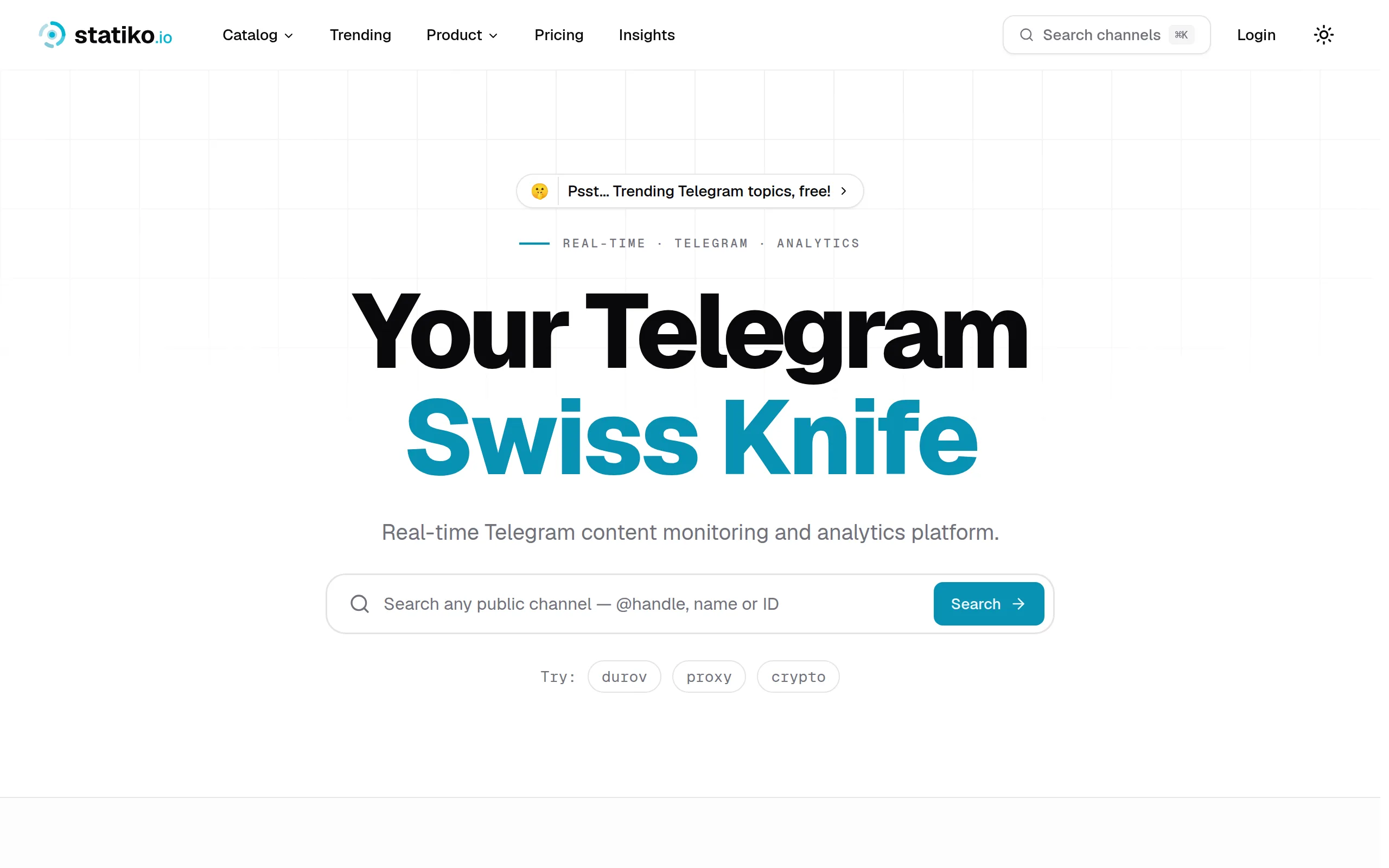
Statiko
Monitor any Telegram channel in real time - track posts, edits, deletions, and growth with AI recaps 📡

Shibui
AI website builder - describe your business, pick a niche template, edit by chatting, and publish instantly ✨
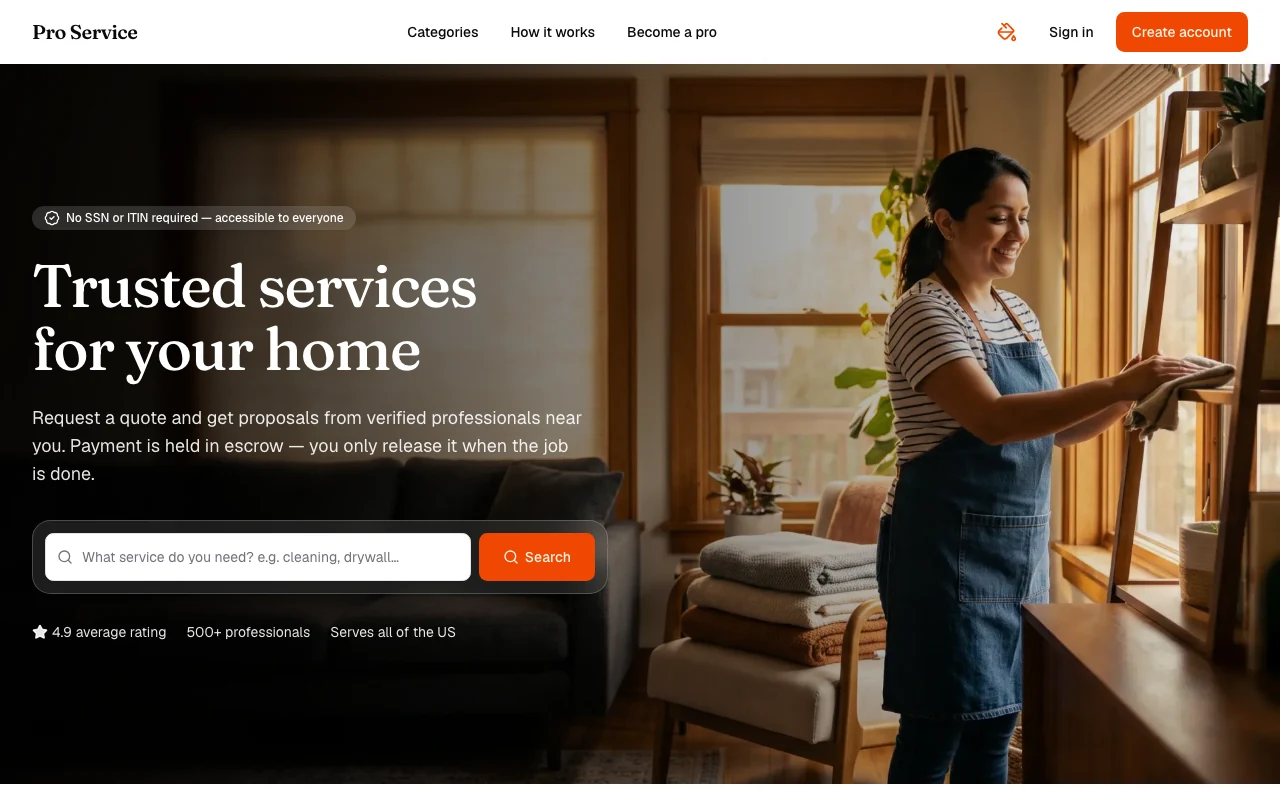
Pro Service
Find verified home service professionals, compare quotes, and pay securely through escrow - built for Brazilians across the US 🏠
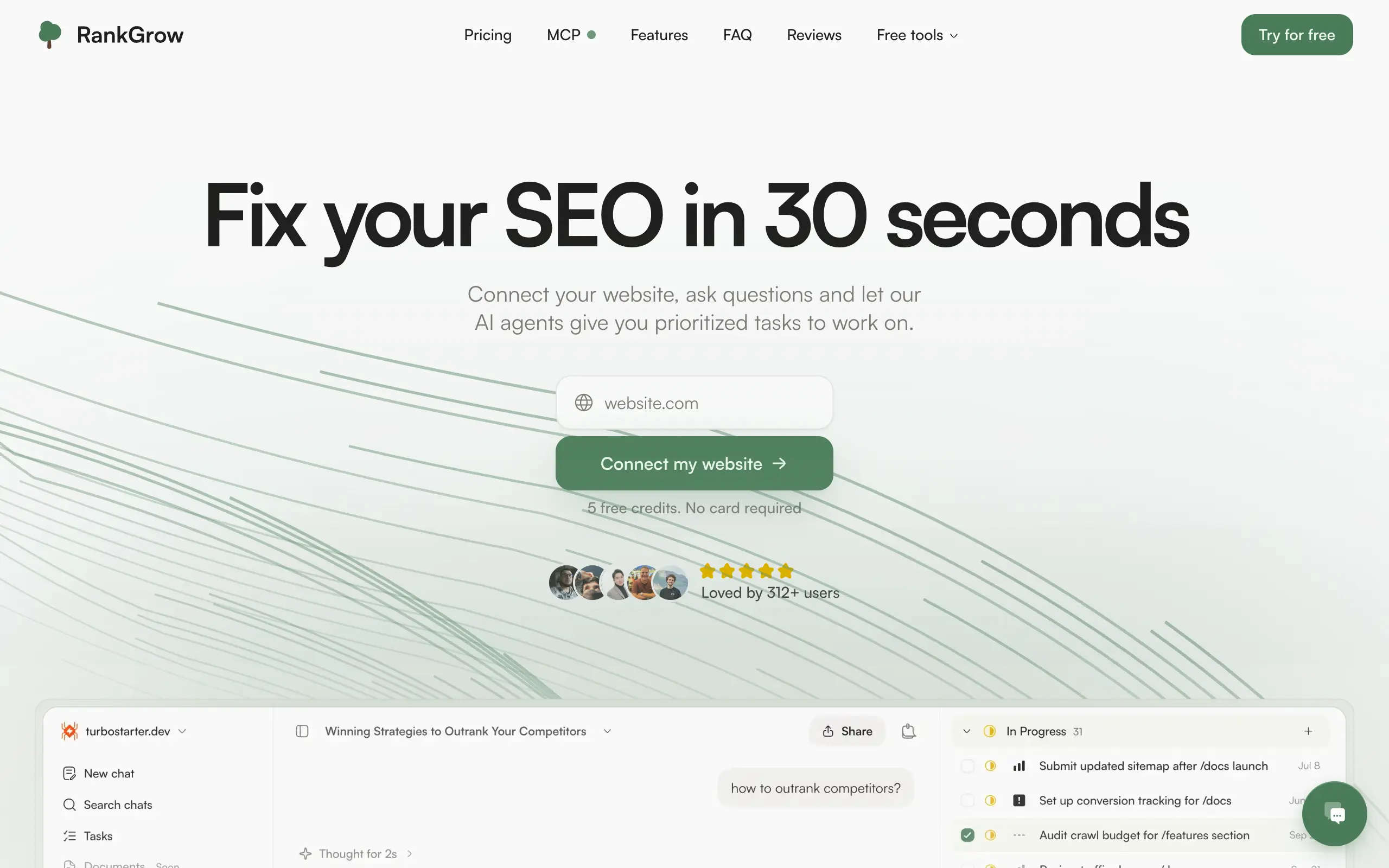
RankGrow
Fix your SEO with AI agents - connect Search Console, get prioritized tasks, and grow organic traffic 📈
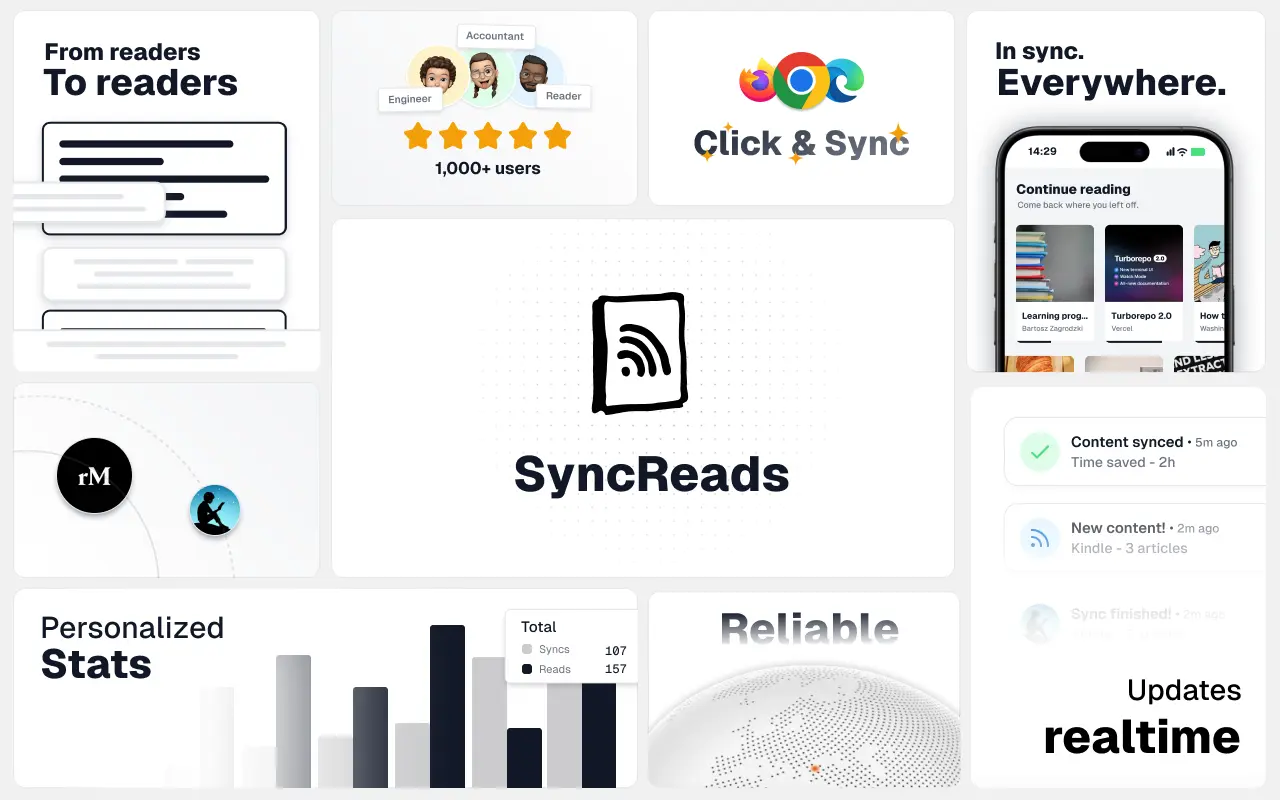
SyncReads
Sync your favorite content for distraction-free reading, save time and replace multiple apps. Anytime, anywhere 🔄
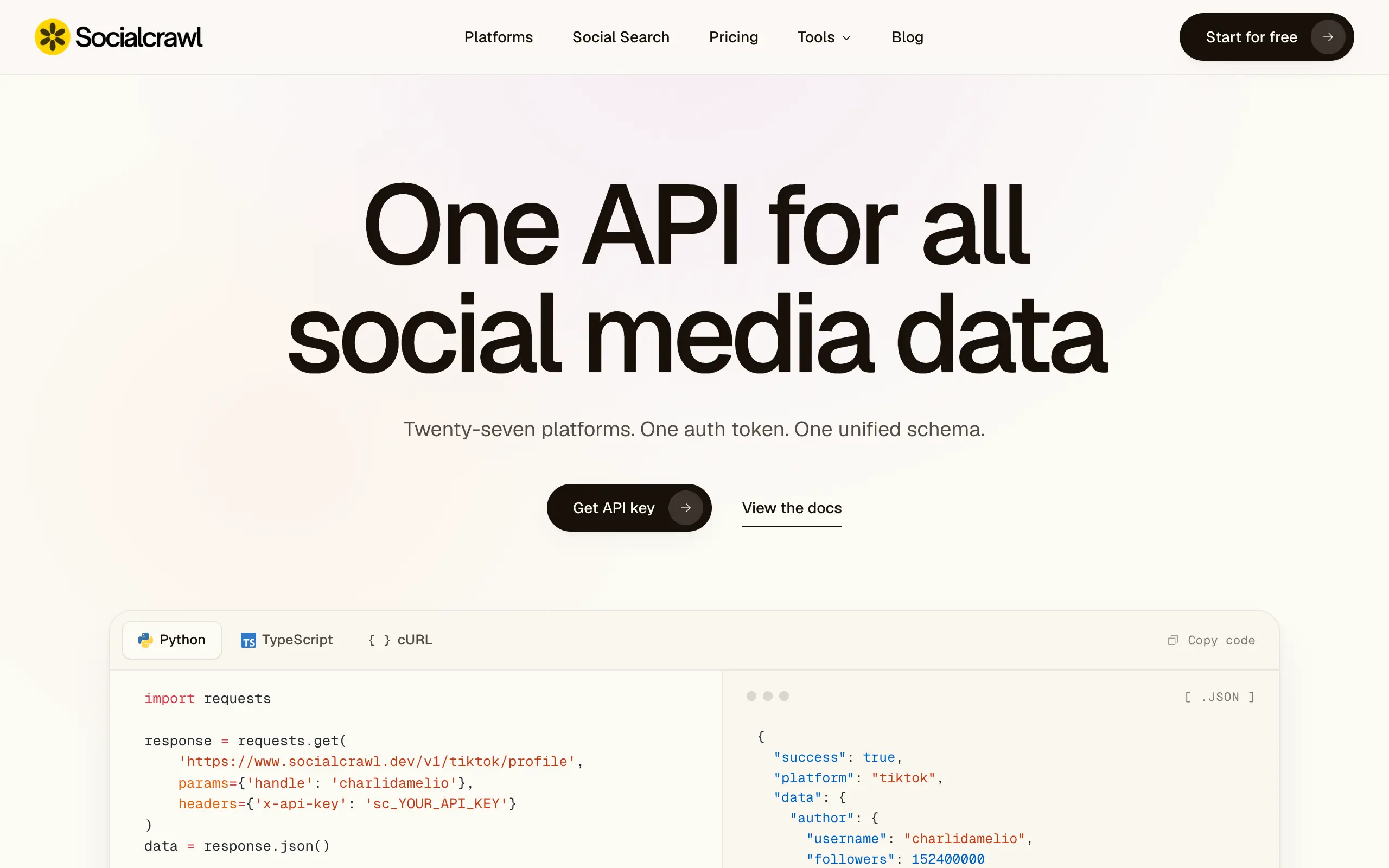
Socialcrawl
Get clean, structured data from 21 platforms like TikTok, Instagram, and YouTube with a single request 📊
Statiko
Monitor any Telegram channel in real time - track posts, edits, deletions, and growth with AI recaps 📡
Shibui
AI website builder - describe your business, pick a niche template, edit by chatting, and publish instantly ✨
Pro Service
Find verified home service professionals, compare quotes, and pay securely through escrow - built for Brazilians across the US 🏠
RankGrow
Fix your SEO with AI agents - connect Search Console, get prioritized tasks, and grow organic traffic 📈
SyncReads
Sync your favorite content for distraction-free reading, save time and replace multiple apps. Anytime, anywhere 🔄
Socialcrawl
Get clean, structured data from 21 platforms like TikTok, Instagram, and YouTube with a single request 📊
Statiko
Monitor any Telegram channel in real time - track posts, edits, deletions, and growth with AI recaps 📡
Shibui
AI website builder - describe your business, pick a niche template, edit by chatting, and publish instantly ✨
Pro Service
Find verified home service professionals, compare quotes, and pay securely through escrow - built for Brazilians across the US 🏠
RankGrow
Fix your SEO with AI agents - connect Search Console, get prioritized tasks, and grow organic traffic 📈
SyncReads
Sync your favorite content for distraction-free reading, save time and replace multiple apps. Anytime, anywhere 🔄
Socialcrawl
Get clean, structured data from 21 platforms like TikTok, Instagram, and YouTube with a single request 📊
Statiko
Monitor any Telegram channel in real time - track posts, edits, deletions, and growth with AI recaps 📡
Shibui
AI website builder - describe your business, pick a niche template, edit by chatting, and publish instantly ✨
Pro Service
Find verified home service professionals, compare quotes, and pay securely through escrow - built for Brazilians across the US 🏠
RankGrow
Fix your SEO with AI agents - connect Search Console, get prioritized tasks, and grow organic traffic 📈
SyncReads
Sync your favorite content for distraction-free reading, save time and replace multiple apps. Anytime, anywhere 🔄
Socialcrawl
Get clean, structured data from 21 platforms like TikTok, Instagram, and YouTube with a single request 📊
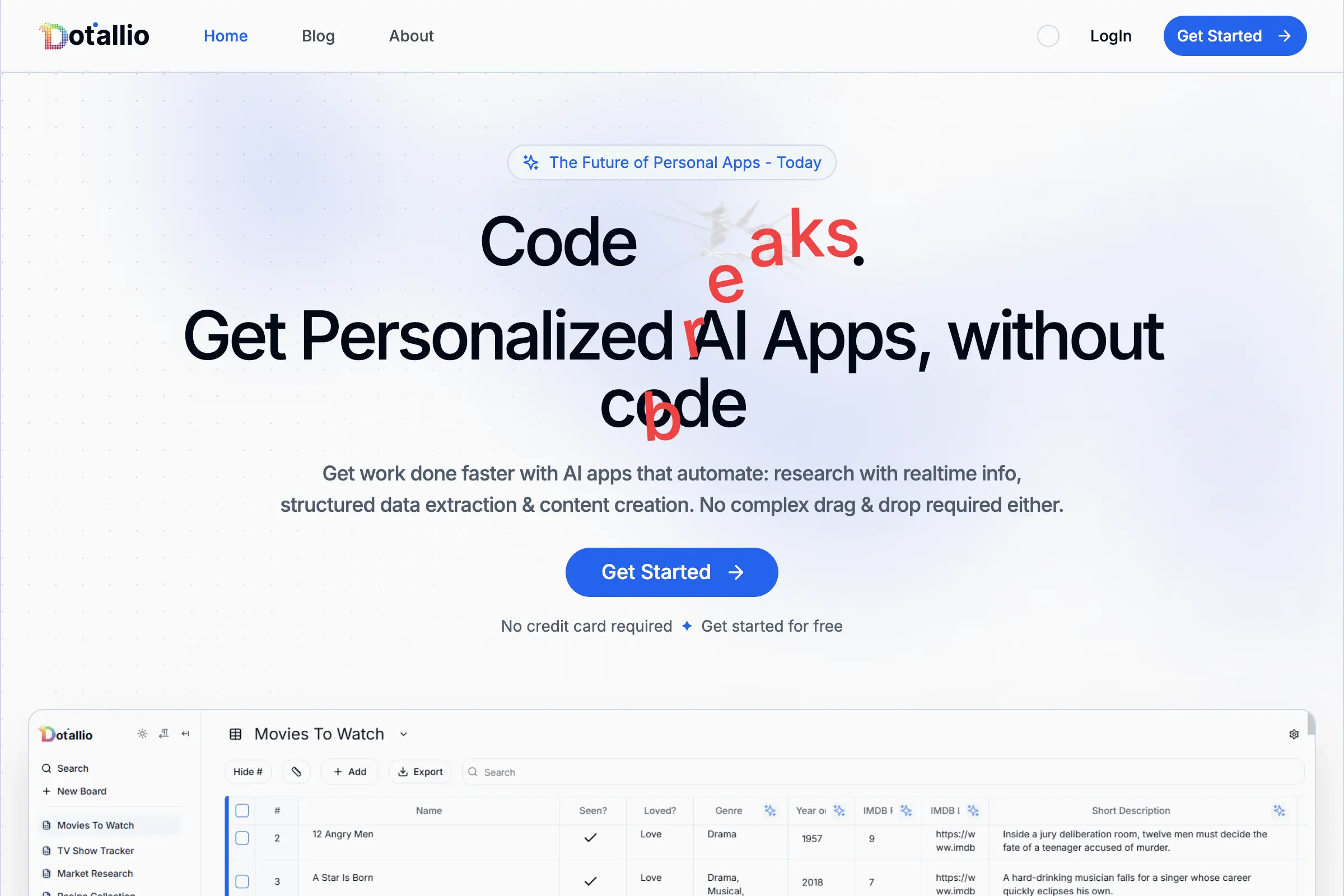
Dotallio
Personalized AI apps that automate research, data extraction, and content creation without code 🤖
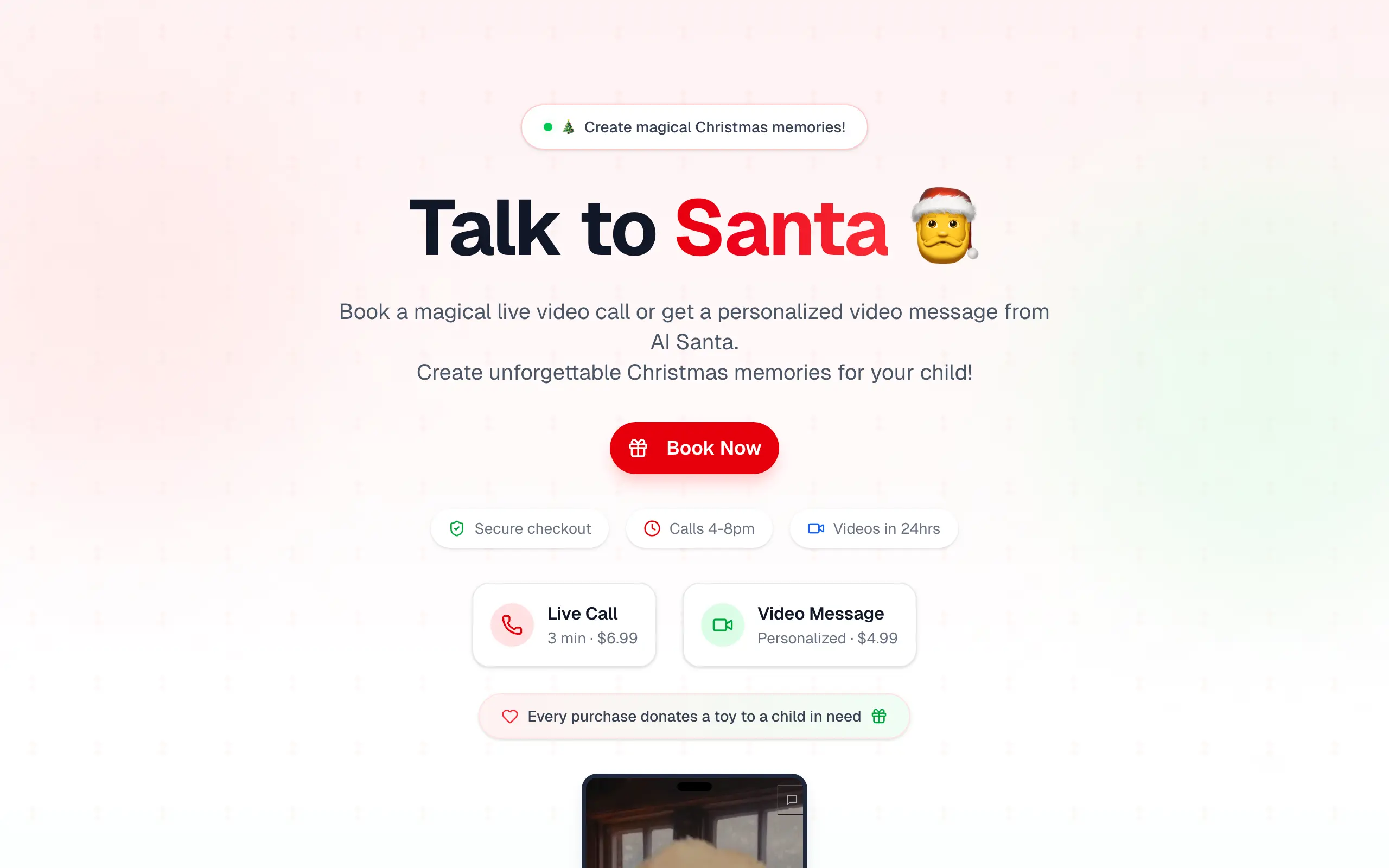
Talk to Santa
Enjoy a magical live video chat or receive a unique AI-generated video greeting from Santa Claus 🎅
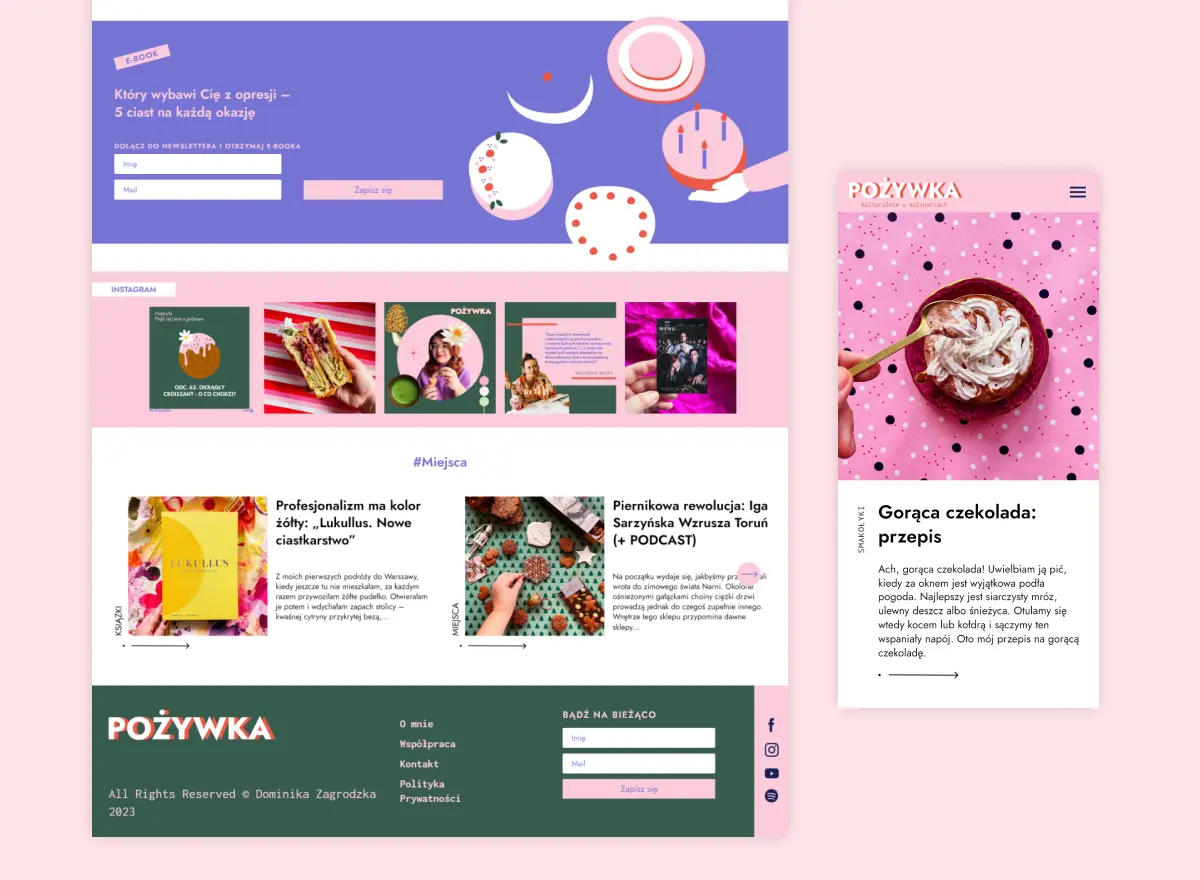
pozywka.pl
Scalable blog for food journalist, focused on performance and user experience 🌭
zagrodzki.me
Personal blog and portfolio of Bart Zagrodzki, where he shares his knowledge and work 💼
TurboStarter
Ship your startup everywhere. In minutes.
HTML to Markdown
Convert HTML to Markdown with ease, directly in your browser 📄
Dotallio
Personalized AI apps that automate research, data extraction, and content creation without code 🤖
Talk to Santa
Enjoy a magical live video chat or receive a unique AI-generated video greeting from Santa Claus 🎅
pozywka.pl
Scalable blog for food journalist, focused on performance and user experience 🌭
zagrodzki.me
Personal blog and portfolio of Bart Zagrodzki, where he shares his knowledge and work 💼
TurboStarter
Ship your startup everywhere. In minutes.
HTML to Markdown
Convert HTML to Markdown with ease, directly in your browser 📄
Dotallio
Personalized AI apps that automate research, data extraction, and content creation without code 🤖
Talk to Santa
Enjoy a magical live video chat or receive a unique AI-generated video greeting from Santa Claus 🎅
pozywka.pl
Scalable blog for food journalist, focused on performance and user experience 🌭
zagrodzki.me
Personal blog and portfolio of Bart Zagrodzki, where he shares his knowledge and work 💼
TurboStarter
Ship your startup everywhere. In minutes.
HTML to Markdown
Convert HTML to Markdown with ease, directly in your browser 📄
Dotallio
Personalized AI apps that automate research, data extraction, and content creation without code 🤖
Talk to Santa
Enjoy a magical live video chat or receive a unique AI-generated video greeting from Santa Claus 🎅
pozywka.pl
Scalable blog for food journalist, focused on performance and user experience 🌭
zagrodzki.me
Personal blog and portfolio of Bart Zagrodzki, where he shares his knowledge and work 💼
TurboStarter
Ship your startup everywhere. In minutes.
HTML to Markdown
Convert HTML to Markdown with ease, directly in your browser 📄
Omichat
Chat with 50+ AI models, including ChatGPT and Claude, in one place - switch models anytime without losing context 🤖
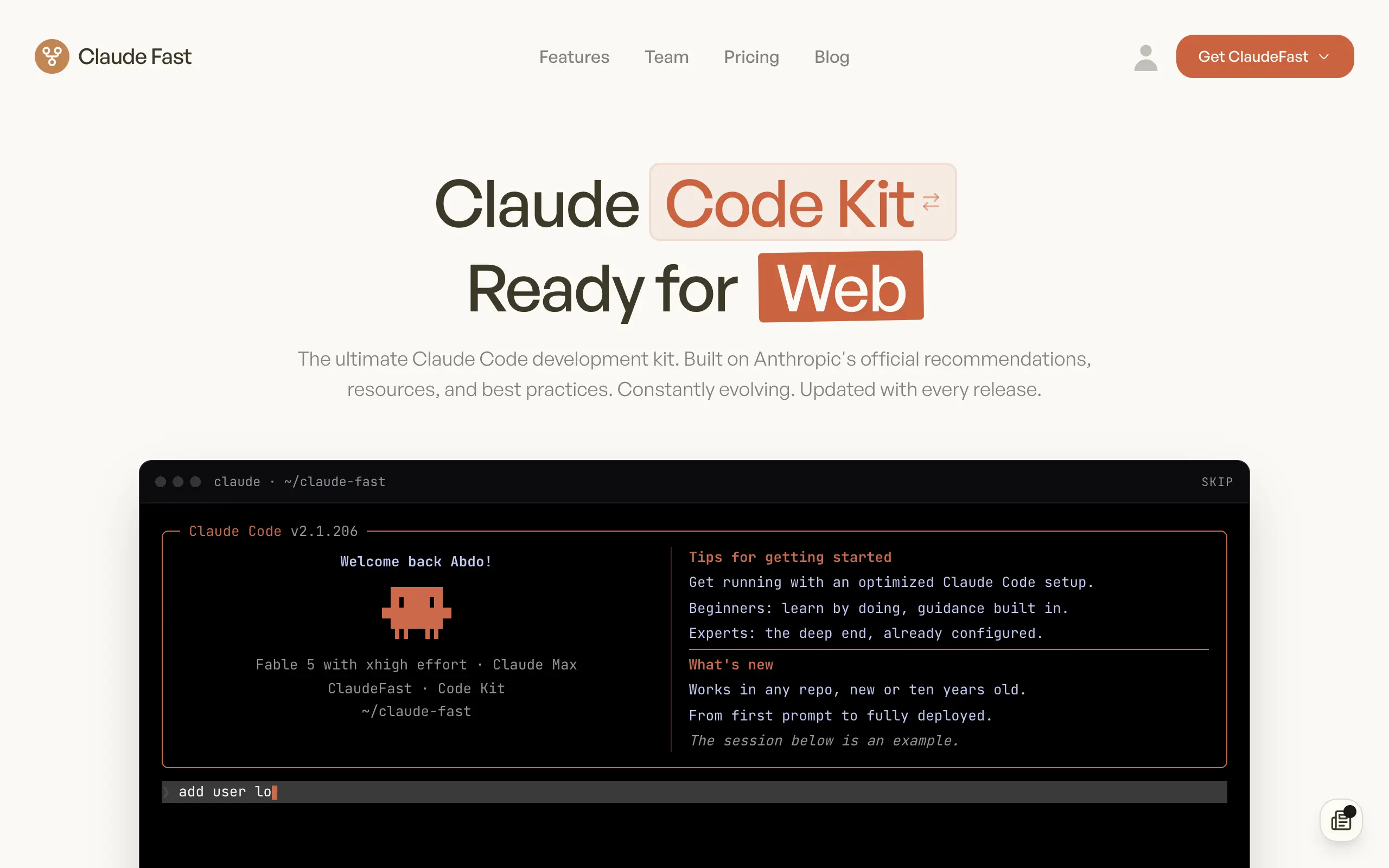
Claude Fast
Supercharge your Claude Code with 6x effective context window and specialized AI agents 🤖

EmojAI
AI-powered emoji picker with smart, context-aware suggestions 🤖
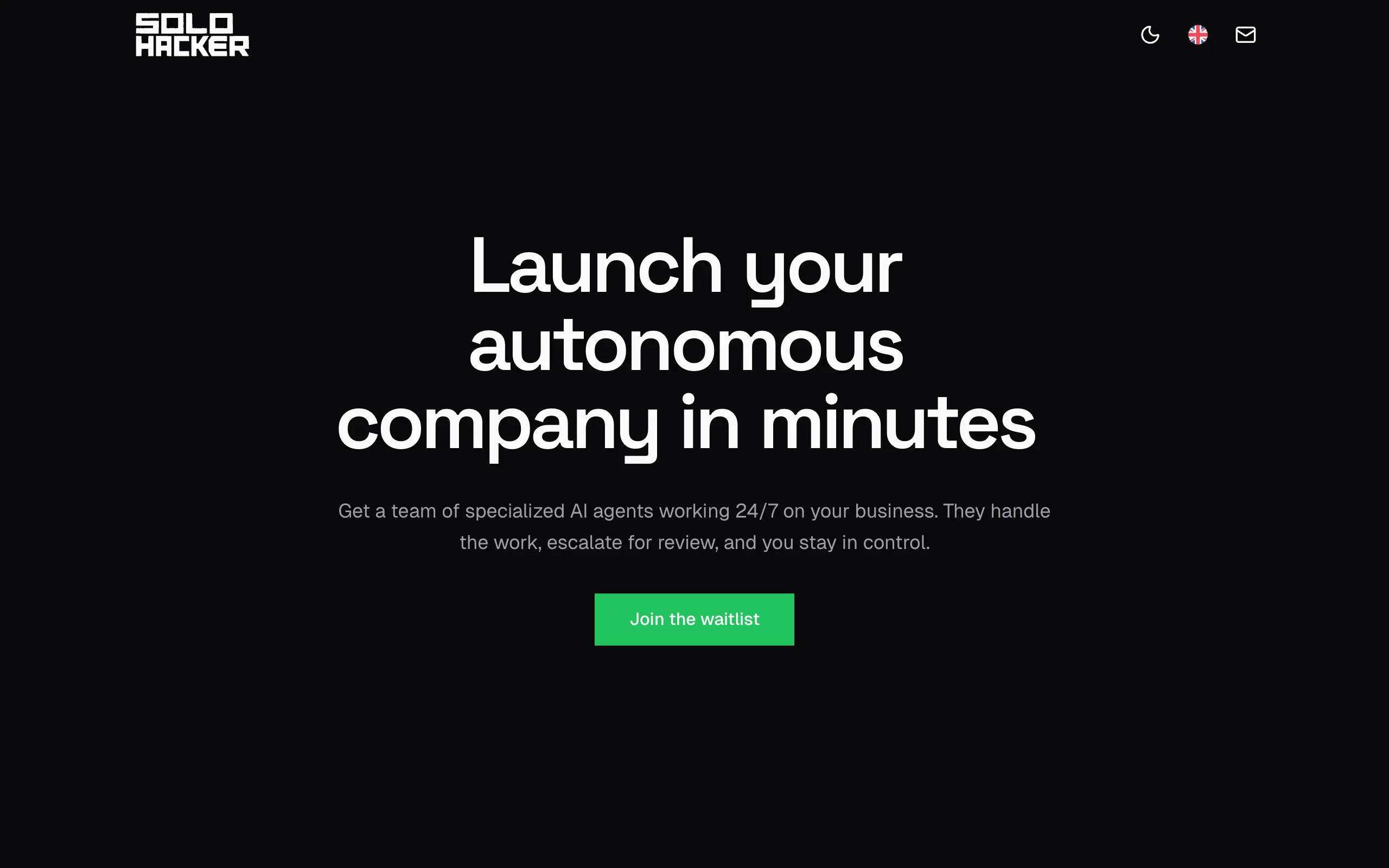
Solohacker
Autonomous company launcher - AI agents work 24/7, escalate what matters, and you stay in control 🤖
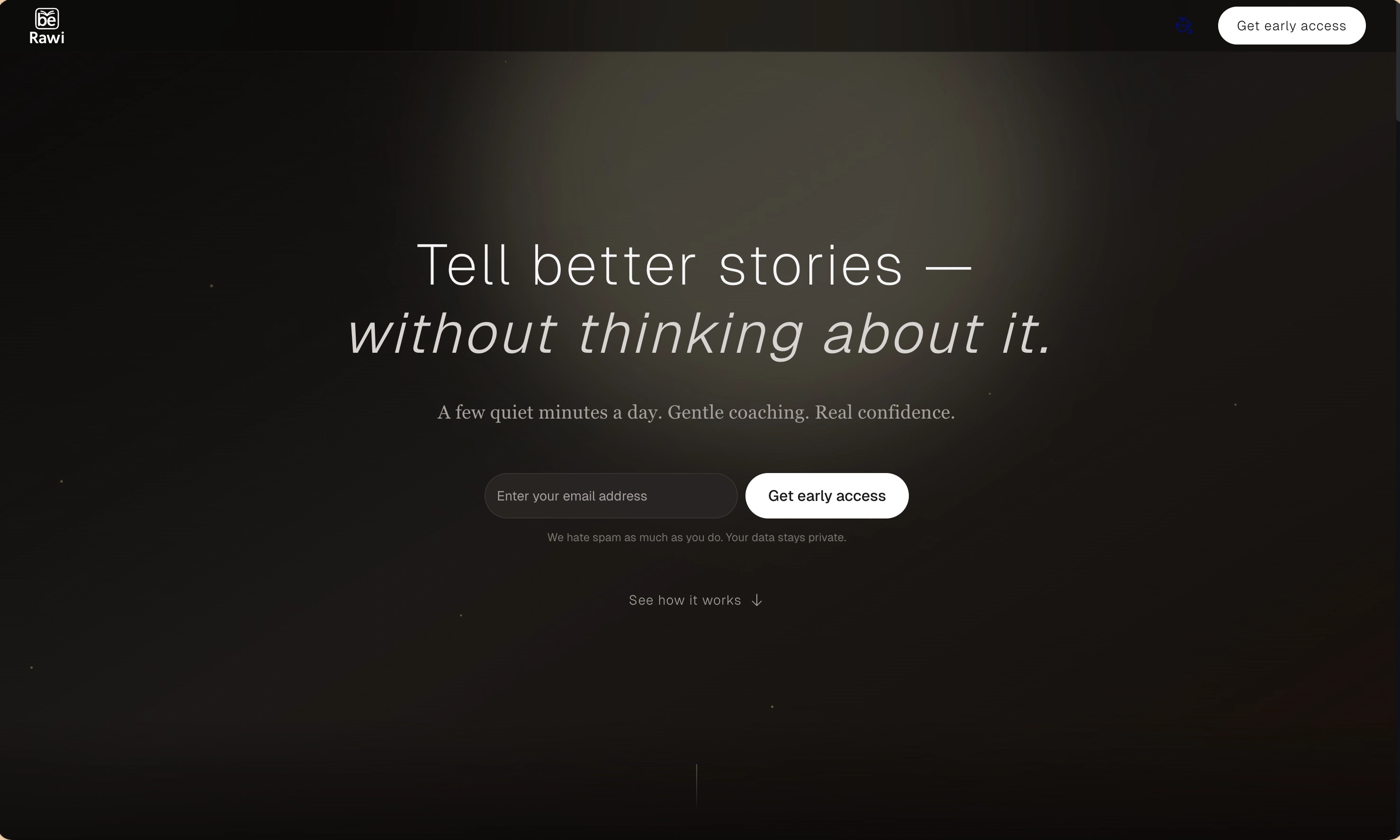
BeRawi: Storytelling Coach
Practice storytelling daily with instant feedback to sound clearer, more engaging, and confident 🎤
Omichat
Chat with 50+ AI models, including ChatGPT and Claude, in one place - switch models anytime without losing context 🤖
Claude Fast
Supercharge your Claude Code with 6x effective context window and specialized AI agents 🤖
EmojAI
AI-powered emoji picker with smart, context-aware suggestions 🤖
Solohacker
Autonomous company launcher - AI agents work 24/7, escalate what matters, and you stay in control 🤖
BeRawi: Storytelling Coach
Practice storytelling daily with instant feedback to sound clearer, more engaging, and confident 🎤
Omichat
Chat with 50+ AI models, including ChatGPT and Claude, in one place - switch models anytime without losing context 🤖
Claude Fast
Supercharge your Claude Code with 6x effective context window and specialized AI agents 🤖
EmojAI
AI-powered emoji picker with smart, context-aware suggestions 🤖
Solohacker
Autonomous company launcher - AI agents work 24/7, escalate what matters, and you stay in control 🤖
BeRawi: Storytelling Coach
Practice storytelling daily with instant feedback to sound clearer, more engaging, and confident 🎤
Omichat
Chat with 50+ AI models, including ChatGPT and Claude, in one place - switch models anytime without losing context 🤖
Claude Fast
Supercharge your Claude Code with 6x effective context window and specialized AI agents 🤖
EmojAI
AI-powered emoji picker with smart, context-aware suggestions 🤖
Solohacker
Autonomous company launcher - AI agents work 24/7, escalate what matters, and you stay in control 🤖
BeRawi: Storytelling Coach
Practice storytelling daily with instant feedback to sound clearer, more engaging, and confident 🎤

Connect with like-minded people
Join our community to get feedback, support, and grow together with 1,000+ builders on board, let's ship it!
Join usShip your startup everywhere. In minutes.
Don't burn tokens on setup and start building features on day one.