ShipKit
Create reliable CI/CD pipelines from your repository and deployment target, then catch missing tests, secrets, and environment settings. A guided release workflow for solo builders and small teams.
What ShipKit should solve
ShipKit is a guided CI/CD platform for solo builders and small software teams. It helps users create a reliable release workflow from their repository and deployment target, then checks for common gaps such as missing tests, secrets, and environment settings.
The idea addresses a practical problem: getting an application to run locally is often straightforward, but turning that application into a repeatable, dependable release process can be confusing. A developer may need to understand workflow configuration, deployment credentials, environment variables, test commands, build settings, and production safeguards—all before their first successful deployment.
ShipKit’s opportunity is to make that work easier to understand and safer to repeat. Rather than requiring users to become CI/CD specialists, it can guide them through the decisions that matter and turn those decisions into a working pipeline.
The strongest positioning is not “another way to write YAML.” It is a deployment-readiness and release-guidance layer for small teams. That distinction gives ShipKit a clearer value proposition than a generic workflow generator.
How CI/CD works, and where developers get stuck
Continuous integration and continuous delivery are practices for automating the process of checking, building, and releasing software. A typical pipeline might run tests when code changes, build an application after the checks pass, and deploy it to a hosting provider.
The tools themselves are well established. For example, GitHub Actions and GitLab CI/CD let teams define and run automated workflows. The challenge for an early-stage team is often not access to automation. It is knowing what to automate, how to configure it, and how to tell whether the result is safe to ship.
Common friction points include:
- Unclear starting points: A new project may not have a test command, a production build command, or even a clear deployment target.
- Configuration complexity: Workflow files can include syntax and conventions that are unfamiliar to developers who have never configured CI/CD.
- Hidden prerequisites: A deployment may depend on secrets, environment variables, database configuration, or provider-specific settings that are not documented in the repository.
- False confidence: A pipeline that passes may still omit meaningful tests or fail to check important release requirements.
- Maintenance burden: A working workflow can become outdated as dependencies, deployment targets, and project requirements change.
ShipKit can reduce these problems by helping users create a useful first pipeline and explaining what that pipeline does—and does not—verify.
Who ShipKit should serve
The initial audience should be narrow enough to support excellent onboarding, but large enough to include several types of early customers. The best starting point is people who want to ship web software without hiring a dedicated platform or DevOps engineer.
Solo developers and indie builders
Solo builders frequently make decisions across the whole product lifecycle. They may write application code, choose a hosting provider, configure a database, and manage releases themselves.
For this audience, ShipKit should emphasize speed and clarity. Users need a working path from repository to deployment, plus concise explanations of where to add credentials and how to confirm a release is healthy. Avoid presenting a long checklist of enterprise controls during initial setup.
Small product teams
A team of two to twenty developers may already have a deployment process, but it may rely on manual steps, undocumented knowledge, or a single person who understands the configuration.
ShipKit can help these teams make release practices more visible and repeatable. Useful features include shared project checklists, environment comparisons, change history, and clear ownership of deployment settings.
Agencies and consultants
Agencies often repeat similar setup work across client projects. Each repository and deployment target may differ, but the basic discovery process is familiar: identify the framework, locate test and build commands, configure secrets, and establish a release workflow.
For agencies, ShipKit could save time through reusable templates and client handoff reports. The product should be careful not to imply that a template automatically meets a client’s regulatory or security requirements.
Startup founders without platform specialists
Early-stage founders may need to understand whether their release process is sufficient before bringing in more infrastructure expertise. ShipKit can provide a structured baseline and point out unresolved decisions.
It should not claim to replace an experienced security or platform review. Its value is making common requirements discoverable and actionable, not guaranteeing that software is secure or production-ready.
The market opportunity and product gap
The broad CI/CD market already includes mature providers, cloud platforms, and deployment services. ShipKit should not compete by claiming that existing workflow runners are inadequate. Instead, it can focus on a different layer of the experience: setup guidance, readiness checks, and understandable release planning for smaller teams.
The gap between tools and outcomes
CI/CD platforms execute workflows, while hosting platforms make deployment possible. Developers still need to connect those pieces and decide what should happen before a release.
That leaves room for a product that answers questions such as:
- Does the repository have a test command, and is it being run?
- Are required deployment credentials configured in the right place?
- Do development, preview, and production environments have the expected settings?
- Is the build step explicit and repeatable?
- Can a user understand why a deployment failed and what to check next?
ShipKit can create value by converting these questions into a guided workflow. The product should show both the result and the reasoning behind it. A warning that says “missing environment configuration” is less useful than a finding that names the missing variable, explains where it is used, and gives the user a safe next step.
Why small teams are an attractive first segment
Small teams often have enough technical capability to act on recommendations, but not enough spare time to investigate every release concern from scratch. They are also likely to value a product that reduces setup friction without requiring a broad platform migration.
That makes a focused product easier to validate. ShipKit can begin by supporting a limited combination of repository providers, frameworks, and deployment targets. A clear, well-supported path is more valuable than a large catalog of shallow integrations.
How to validate demand before expanding
The opportunity should be tested through observed behavior, not just positive reactions to a product description. Before building many integrations, interview target users and ask them to walk through their most recent deployment setup.
Useful validation signals include:
- Users complete a guided setup with a real repository.
- They follow the recommendations and successfully create or improve a pipeline.
- They return to check a later release or a second project.
- They invite a teammate to review a configuration or readiness report.
- They are willing to pay for ongoing monitoring, team controls, or reusable project templates.
A useful interview question is, “Show me the last time a deployment failed or took longer than expected. What did you do next?” This is more informative than asking whether someone likes the general idea.
ShipKit’s competitive advantage
ShipKit’s advantage should come from a focused user experience, not from claiming to replace the tools that run builds and deployments.
| Product category | Runs workflows | Helps configure pipelines | Checks release prerequisites | Explains gaps to small teams | Replaces existing CI/CD |
|---|---|---|---|---|---|
| CI/CD provider | ✅ | ✅ | Varies | Varies | Often |
| Hosting platform | ✅ | ✅ | Varies | Varies | Sometimes |
| General infrastructure tool | Varies | ✅ | Varies | Varies | Varies |
| ShipKit’s intended role | No, initially | ✅ | ✅ | ✅ | No |
The table describes the intended product position, not a claim that every competing product has the same capabilities. Capabilities vary by provider, plan, and configuration.
A strong ShipKit experience could combine three things:
- A guided setup flow that maps a repository and deployment target to a starter pipeline.
- A readiness review that finds missing or ambiguous release prerequisites.
- Actionable explanations that help users fix issues without needing to decode unfamiliar configuration.
That combination is the product’s unique selling proposition. ShipKit can fit alongside existing CI/CD providers instead of asking customers to replace their current build system.
Positioning to test
Position ShipKit as “a guided way to set up and check a dependable release workflow,” rather than as a universal CI/CD platform. This sets a realistic scope and makes the first customer benefit easier to understand.
Core features for a useful first version
The first version should help a user reach one concrete outcome: a working, understandable release workflow for a supported repository and deployment target.
Repository and deployment discovery
ShipKit should gather the minimum information needed to recommend a workflow. With user consent, it can inspect repository metadata and identify signals such as:
- Programming language and framework
- Package manager and dependency files
- Existing test and build scripts
- Current workflow files
- Deployment configuration
- Likely environment variable references
Automated detection should be presented as a suggestion, not as a fact that cannot be corrected. Users need a simple way to confirm or change what ShipKit has inferred.
Guided pipeline generation
After discovery, ShipKit can produce a pipeline template tailored to the user’s choices. A first release might support one repository provider and a small set of common deployment destinations.
Generated workflows should be:
- Readable and editable by the customer
- Stored in the customer’s repository, where practical
- Minimal enough to understand
- Explicit about assumptions and required settings
- Validated before ShipKit recommends using them
The product should explain each stage in plain language. For example, users should know whether a workflow installs dependencies, runs tests, creates a production build, or deploys an artifact.
Test and build checks
A pipeline should not imply strong verification merely because it runs. ShipKit can help users identify available test and build commands, then ask them to confirm which commands should block a release.
A helpful check might show:
- Whether a test command is configured
- Whether it ran successfully in the latest workflow
- Whether the build command completed
- Whether the workflow runs on the intended branches or pull requests
If no tests exist, ShipKit should report that clearly and suggest a next action without pretending that an automated scan can determine the ideal test suite.
Secret and environment guidance
Secrets and environment settings are frequent sources of deployment failures. ShipKit should identify likely references and help users distinguish between local development settings and deployment-provider settings.
The product should follow a strict rule: do not collect or display secret values unless the feature genuinely requires it and has a carefully reviewed security design. In many cases, ShipKit can report whether a required secret appears to be configured without ever reading its value.
Environment guidance might include:
- Which variables appear to be required
- Which environment each variable applies to
- Whether a production variable appears to be missing
- Where the user should configure it in the relevant provider
- Which values should never be committed to source control
For security guidance, ShipKit can point users to established resources such as OWASP’s Secrets Management Cheat Sheet.
Release readiness dashboard
A readiness dashboard should summarize the state of a project without reducing a complex system to a misleading score. Consider grouping findings into categories such as:
- Configured: The product found an expected setting or workflow.
- Needs attention: A likely prerequisite is missing or unclear.
- Not checked: ShipKit does not have enough information to assess the item.
Each finding should include a reason, an impact statement, and a next step. A numerical score may be useful later, but it should not be the first or only way to communicate risk. A score can create false confidence if users do not understand what it measures.
Change history and team collaboration
For teams, ShipKit can record when checks run, what was detected, and which recommendations were acknowledged. This helps users understand whether a project has drifted from its earlier configuration.
A useful collaboration layer might include:
- Shared project workspaces
- Comments or notes on readiness findings
- A record of dismissed or resolved issues
- Notifications when critical configuration changes
- A handoff report for a client or teammate
These features are valuable, but they should follow a reliable individual setup flow. Adding collaboration before the core checks are trusted risks increasing product complexity without proving the central benefit.
A practical technical architecture
ShipKit should be designed as a secure orchestration and guidance product, not as an unnecessary replacement for mature workflow runners. The initial architecture can keep the core product relatively small while allowing integrations to expand over time.
Frontend and application layer
A TypeScript-based web application is a practical option for a dashboard and setup wizard. React provides a mature component model, while Next.js offers routing and server-side application patterns for teams that want them.
The trade-off is that a framework can make product development faster while also introducing conventions and deployment assumptions. Choose the framework your team can maintain, and keep the business logic separate from framework-specific UI code.
Database and background jobs
A relational database such as PostgreSQL is a strong fit for users, organizations, projects, integrations, findings, workflow metadata, and billing records. Its relational model can help preserve clear relationships between a customer, repository, deployment target, and scan result.
Background jobs are important because repository checks and provider API calls may take longer than a normal web request. Use a job queue or managed task system for tasks such as:
- Repository discovery
- Workflow-file validation
- Scheduled readiness checks
- Webhook processing
- Notification delivery
Make jobs idempotent where possible. If a webhook is delivered twice, ShipKit should not create duplicated findings or trigger unsafe duplicate actions.
Integrations and permission design
Repository integrations should request the smallest set of permissions that supports the product’s features. Explain those permissions in the connection flow and provide a way to disconnect an integration.
ShipKit should prefer read access for analysis and only request write access when a user explicitly chooses an action that needs it, such as creating a workflow file. Separate those permissions in the product design rather than requesting broad access upfront.
For deployment targets, begin with a narrow integration set. Each additional provider creates ongoing work for authentication, API changes, error handling, documentation, and support. Measure customer demand before adding more.
Workflow execution and validation
Initially, ShipKit can generate or improve workflow configuration that runs on a customer’s existing CI/CD provider. This avoids the operational and security burden of running arbitrary customer code itself.
If ShipKit later runs customer workloads directly, it will need a much more demanding security model. That includes strong isolation, resource limits, network controls, audit logging, abuse prevention, and a clear incident-response process. Running untrusted build scripts is a materially different risk from analyzing configuration files.
For workflow syntax and behavior, ShipKit should validate generated output against the relevant provider’s documented format. It should also test representative project templates in automated integration tests.
Security and privacy fundamentals
A product that connects to source repositories and deployment systems must treat trust as a core feature. Important safeguards include:
- Encrypting integration credentials in transit and at rest
- Limiting access to secrets and sensitive repository data
- Maintaining audit logs for privileged operations
- Providing clear disconnect and data deletion controls
- Avoiding the storage of source files that are not needed
- Documenting retention periods and data usage
- Testing authorization boundaries between customer accounts
A security program should evolve with product capability and customer risk. The NIST Secure Software Development Framework is a useful reference for thinking about secure development practices. It is a framework, not a certification or a substitute for product-specific security review.
Recommended MVP scope
A focused minimum viable product should prove that ShipKit can reliably guide users from a repository to a better release workflow.
Include in the first release
- Account creation and project setup
- One repository-provider integration
- A limited number of framework detections
- Detection of existing build, test, and workflow configuration
- A guided checklist for secrets and environment settings
- One or two pipeline templates
- Workflow validation and clear setup instructions
- A project readiness report with evidence and next steps
- A way to disconnect integrations and delete project data
Defer until usage supports them
- A large catalog of cloud and deployment integrations
- Full workflow execution on ShipKit infrastructure
- AI-generated pipeline changes without explicit approval
- Complex compliance reporting
- Automated secret creation or rotation
- Broad policy-management features
- Enterprise identity and governance controls
A small, dependable feature set is easier to secure and easier to explain. The MVP should be judged by whether users successfully configure a useful workflow and understand its limitations—not by the number of integrations listed on a landing page.
Monetization strategies for ShipKit
ShipKit’s pricing should reflect the ongoing value it provides, while keeping the first successful setup easy to try.
Freemium for individual builders
A free plan can support a limited number of personal projects, a basic readiness checklist, and starter workflow templates. This gives solo builders a low-friction way to evaluate the product.
The free plan should deliver a genuine outcome. If users can only see warnings but cannot understand or resolve them, the plan may generate frustration rather than adoption.
Subscription plans for teams
Paid team plans can charge per organization, per project, or by a combination of usage and team size. Potential paid features include:
- Multiple team members
- Shared project dashboards
- Scheduled checks
- Advanced environment comparisons
- Custom templates
- Audit history
- Notifications and collaboration
- Priority support
Pricing should be tested against the customer’s perceived value. For a solo developer, saving setup time may be valuable but price-sensitive. For a small team, shared visibility and reduced release risk may justify a higher recurring fee.
Agency and consultant plans
Agencies may pay for reusable templates, multi-client workspaces, client-ready reports, and repeatable handoff workflows. This plan should be designed around their actual operating model rather than simply offering a higher project limit.
Usage-based components
Usage pricing may make sense for costly activities such as frequent scans or advanced checks, but it can make the product harder to predict. If the core experience depends on regular readiness checks, customers should be able to understand their expected monthly cost before enabling them.
A sensible approach is to start with simple tiers, observe how customers use the product, and add usage-based pricing only when infrastructure costs or customer value vary significantly with usage.
Risks and how to reduce them
Risk of trying to support too many stacks
Every framework, repository host, and deployment target adds testing and maintenance work. Broad support can make the product appear comprehensive while leaving users with unreliable setup instructions.
Mitigation: Begin with a narrow, documented support matrix. Clearly label unsupported or partially supported configurations, then prioritize new integrations based on repeated customer requests and successful activation data.
Risk of overpromising “production readiness”
No automated checklist can prove that an application is safe, compliant, or resilient in every context. Users may interpret a green status as a guarantee.
Mitigation: Use specific language. Explain what ShipKit checked, what it did not check, and what evidence supports each finding. Avoid unsupported claims such as “fully secure” or “guaranteed production-ready.”
Risk of exposing secrets or private source code
Repository and deployment integrations may provide access to sensitive information. A security mistake could seriously damage customer trust.
Mitigation: Minimize permissions and data retention. Avoid collecting secret values where possible. Apply encryption, access controls, logging, and regular security review from the beginning. Explain data handling plainly.
Risk of generating brittle workflows
A generated configuration may work for one repository but fail after a dependency, provider, or project structure changes.
Mitigation: Keep templates small, version them, test them against representative projects, and make generated files easy to inspect and edit. Treat workflow generation as an assistive feature, not a substitute for validation.
Risk of competing with platform providers
Some cloud and repository platforms already provide automation, templates, or deployment guidance. ShipKit could be perceived as redundant if its value is not distinct.
Mitigation: Focus on cross-step guidance, readiness checks, clear explanations, and an approachable experience for small teams. Integrate with existing tools instead of forcing users into a new execution platform.
Risk of customers not returning
A setup assistant may solve a one-time problem. If ShipKit has no continuing value, subscriptions may be difficult to sustain.
Mitigation: Offer useful ongoing checks that detect configuration drift, changes in workflow status, and newly introduced release gaps. Make recurring value tangible without sending noisy alerts.
How ShipKit should measure success
The most important early metric is not the number of repositories connected. It is the number of users who complete a meaningful setup and successfully use it.
Useful product metrics include:
- Activation rate: The share of new users who connect a repository and complete a first readiness review.
- Time to first useful result: How long it takes a user to understand a finding or configure a starter workflow.
- Workflow adoption: The share of users who apply a recommended workflow or complete a documented setup action.
- Repeat use: Whether users return for later checks, releases, or additional projects.
- Finding resolution: Whether users act on recommendations and whether those actions resolve the reported issue.
- Integration health: The frequency of failed connections, stale permissions, and provider API errors.
- Customer retention: Whether teams continue using the product after the initial setup period.
Metrics need context. A high number of detected issues may mean ShipKit is finding useful gaps, or it may mean its checks are noisy. Pair quantitative measures with user interviews and support-ticket analysis.
Actionable implementation steps
A disciplined launch plan can help ShipKit test its core value before investing in a broad integration catalog.
Interview target users
Speak with solo developers, small product teams, and agencies that recently configured a release workflow. Ask them to demonstrate their process, describe the last deployment problem they faced, and explain which parts they would pay to improve.
Select a narrow support matrix
Choose one repository provider, a small set of common project types, and one or two deployment destinations. Publish the supported combinations so early users know what to expect.
Prototype the readiness review
Before building complex automation, test whether users understand and act on a checklist covering tests, build configuration, secrets, and environment settings. Validate that each finding includes evidence and a practical next step.
Build a safe integration flow
Implement minimum-permission repository access, clear consent, secure credential handling, and account-level data separation. Test authorization boundaries before inviting customers to connect real projects.
Generate and validate a starter workflow
Create a small set of understandable templates. Test them against sample repositories, explain each workflow stage, and let users review changes before applying them.
Run a guided beta
Invite a small group of target users and observe their setup sessions. Track where they hesitate, which findings they resolve, and whether the generated workflow fits their real project.
Improve reliability before adding breadth
Fix confusing guidance, detection errors, and integration failures. Add new frameworks or providers only when customer evidence shows that the current scope is limiting adoption.
Why a starter kit can help the product team move faster
ShipKit’s early engineering work will involve more than its core checks. The team also needs a dependable foundation for authentication, billing, user accounts, project settings, and the product dashboard.
A starter kit can reduce the time spent rebuilding standard SaaS infrastructure, leaving more room to test the workflow-generation and readiness-check experience. TurboStarter is one option for teams evaluating a faster starting point. The important decision is to choose a foundation that matches the team’s stack and avoids locking critical product logic into infrastructure that is difficult to change.
The strongest version of ShipKit
ShipKit has a credible opportunity if it helps small teams answer a simple but important question: “What do I need to configure and verify before I can release this application with confidence?”
The product will stand out by making CI/CD more understandable, not by pretending that pipelines are effortless or that a checklist can guarantee safety. Its strongest first version will focus on a limited set of integrations, explain every recommendation, handle repository access carefully, and help users take a concrete next step.
Build the guided readiness review first, validate it with real repositories, and let customer behavior determine what to automate next. If users repeatedly rely on ShipKit to catch release gaps and keep their workflow understandable, the product can grow from a helpful setup guide into an ongoing release-readiness platform.
More 💡 Other SaaS ideas
Discover more innovative other SaaS ideas that are trending in 2026. Each idea is AI-generated with market validation and growth potential to help you find your next profitable venture faster than competitors.
Your competitors are building with TurboStarter
Below are some of the SaaS ideas that have been generated and built with our starter kit.
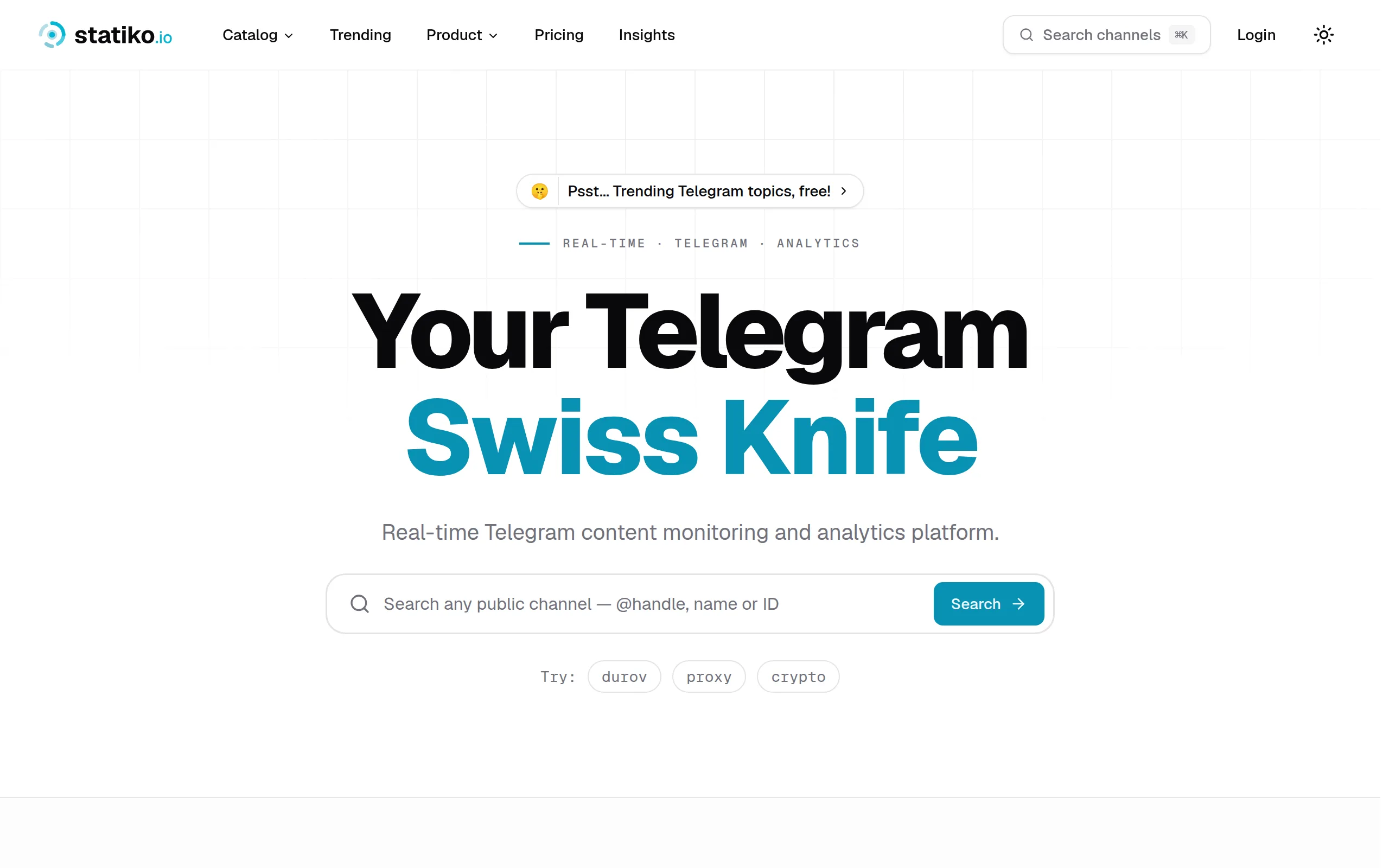
Statiko
Monitor any Telegram channel in real time - track posts, edits, deletions, and growth with AI recaps 📡

Shibui
AI website builder - describe your business, pick a niche template, edit by chatting, and publish instantly ✨

Pro Service
Find verified home service professionals, compare quotes, and pay securely through escrow - built for Brazilians across the US 🏠
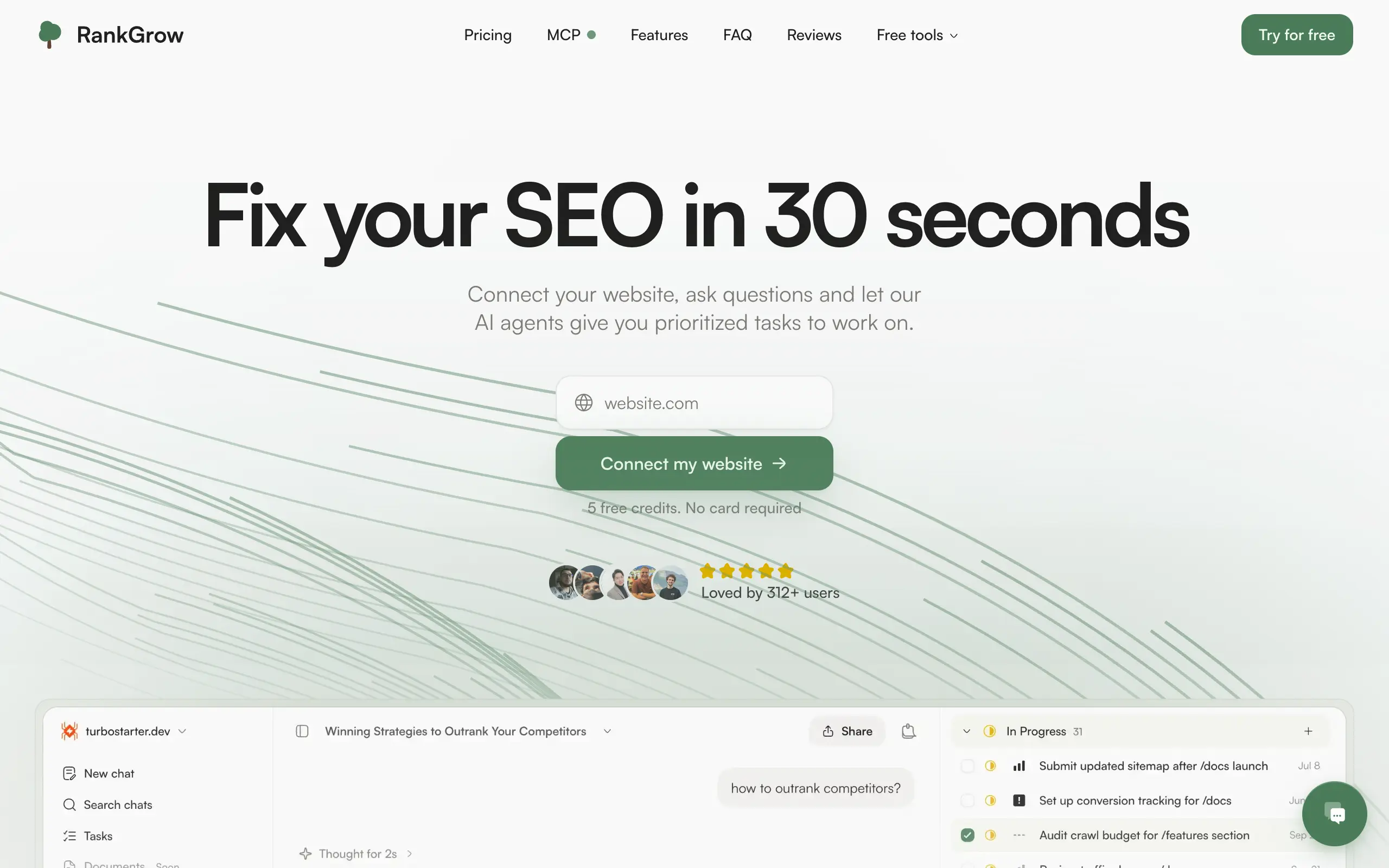
RankGrow
Fix your SEO with AI agents - connect Search Console, get prioritized tasks, and grow organic traffic 📈
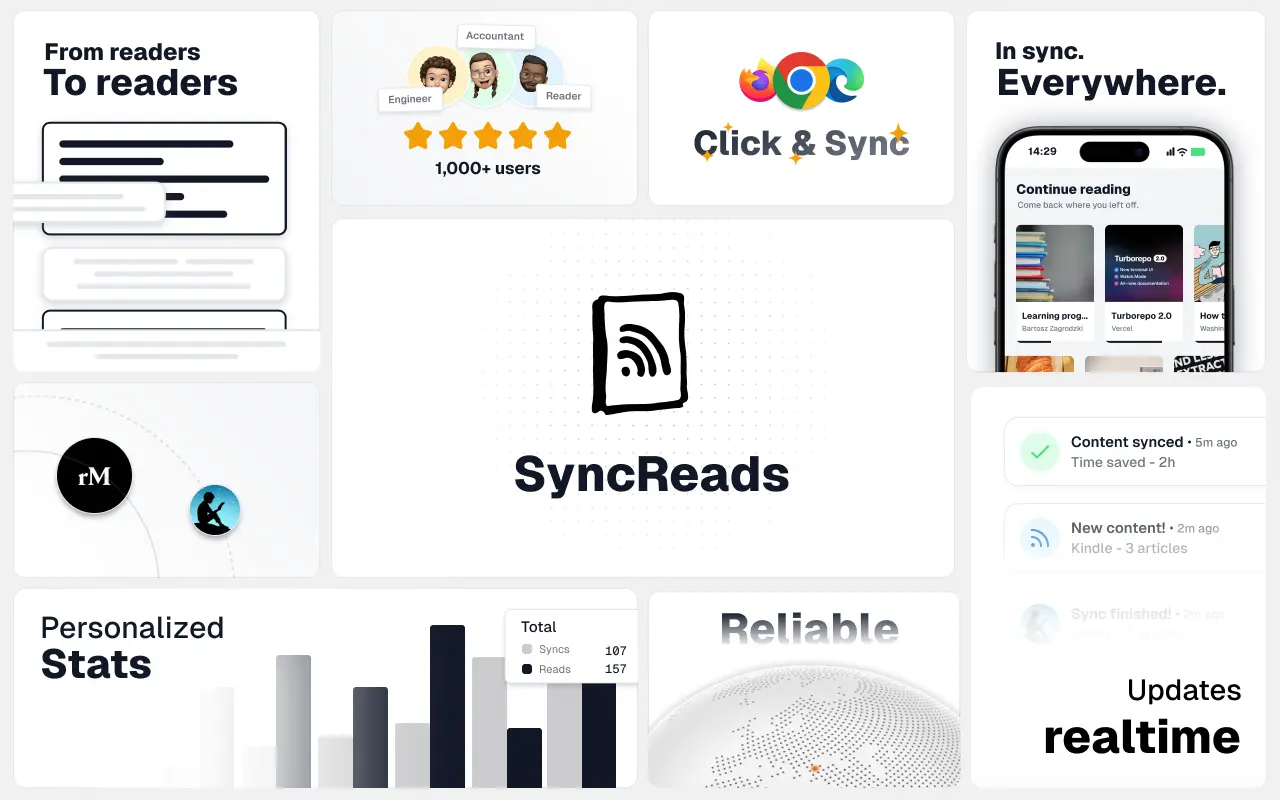
SyncReads
Sync your favorite content for distraction-free reading, save time and replace multiple apps. Anytime, anywhere 🔄
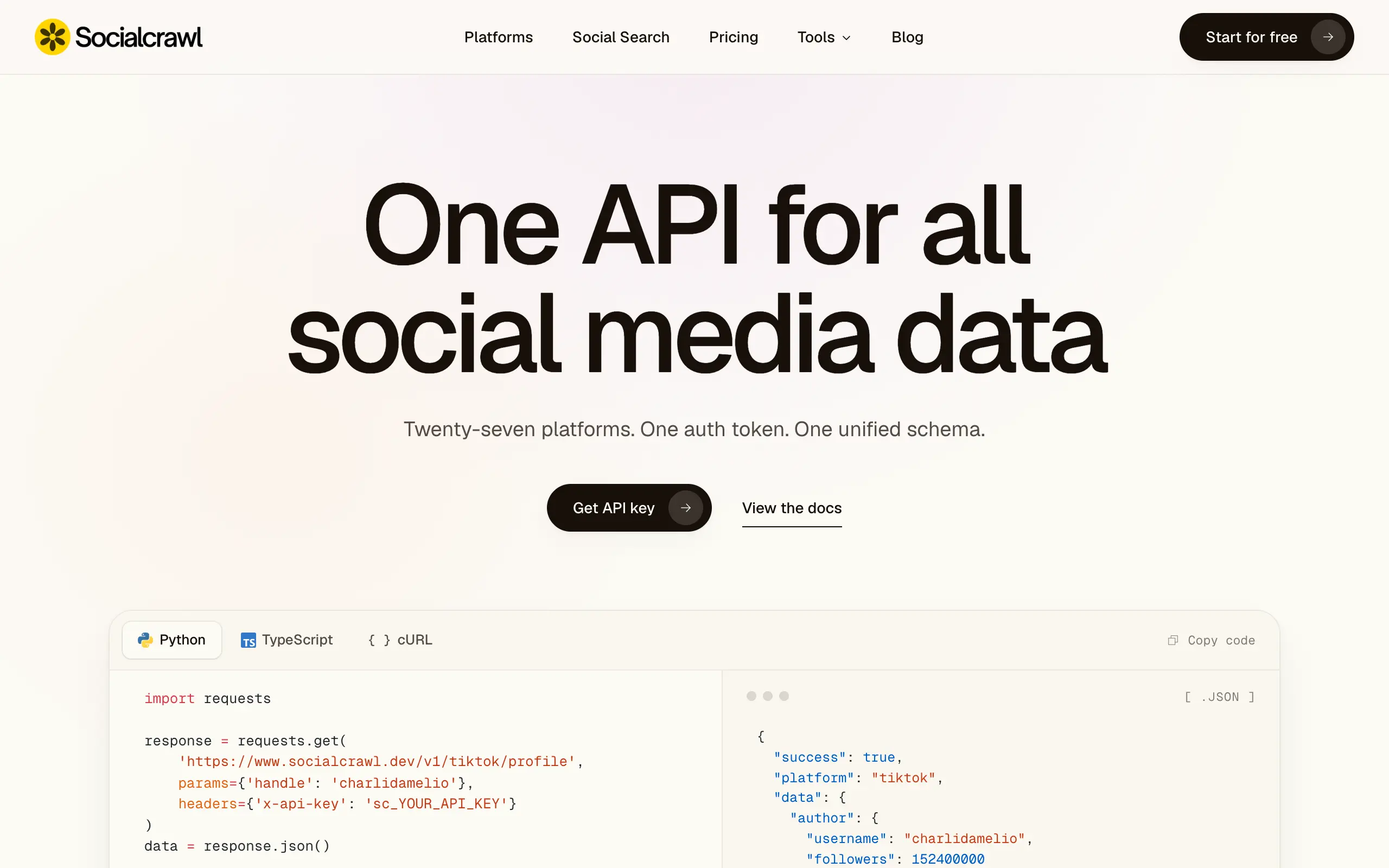
Socialcrawl
Get clean, structured data from 21 platforms like TikTok, Instagram, and YouTube with a single request 📊
Statiko
Monitor any Telegram channel in real time - track posts, edits, deletions, and growth with AI recaps 📡
Shibui
AI website builder - describe your business, pick a niche template, edit by chatting, and publish instantly ✨
Pro Service
Find verified home service professionals, compare quotes, and pay securely through escrow - built for Brazilians across the US 🏠
RankGrow
Fix your SEO with AI agents - connect Search Console, get prioritized tasks, and grow organic traffic 📈
SyncReads
Sync your favorite content for distraction-free reading, save time and replace multiple apps. Anytime, anywhere 🔄
Socialcrawl
Get clean, structured data from 21 platforms like TikTok, Instagram, and YouTube with a single request 📊
Statiko
Monitor any Telegram channel in real time - track posts, edits, deletions, and growth with AI recaps 📡
Shibui
AI website builder - describe your business, pick a niche template, edit by chatting, and publish instantly ✨
Pro Service
Find verified home service professionals, compare quotes, and pay securely through escrow - built for Brazilians across the US 🏠
RankGrow
Fix your SEO with AI agents - connect Search Console, get prioritized tasks, and grow organic traffic 📈
SyncReads
Sync your favorite content for distraction-free reading, save time and replace multiple apps. Anytime, anywhere 🔄
Socialcrawl
Get clean, structured data from 21 platforms like TikTok, Instagram, and YouTube with a single request 📊
Statiko
Monitor any Telegram channel in real time - track posts, edits, deletions, and growth with AI recaps 📡
Shibui
AI website builder - describe your business, pick a niche template, edit by chatting, and publish instantly ✨
Pro Service
Find verified home service professionals, compare quotes, and pay securely through escrow - built for Brazilians across the US 🏠
RankGrow
Fix your SEO with AI agents - connect Search Console, get prioritized tasks, and grow organic traffic 📈
SyncReads
Sync your favorite content for distraction-free reading, save time and replace multiple apps. Anytime, anywhere 🔄
Socialcrawl
Get clean, structured data from 21 platforms like TikTok, Instagram, and YouTube with a single request 📊
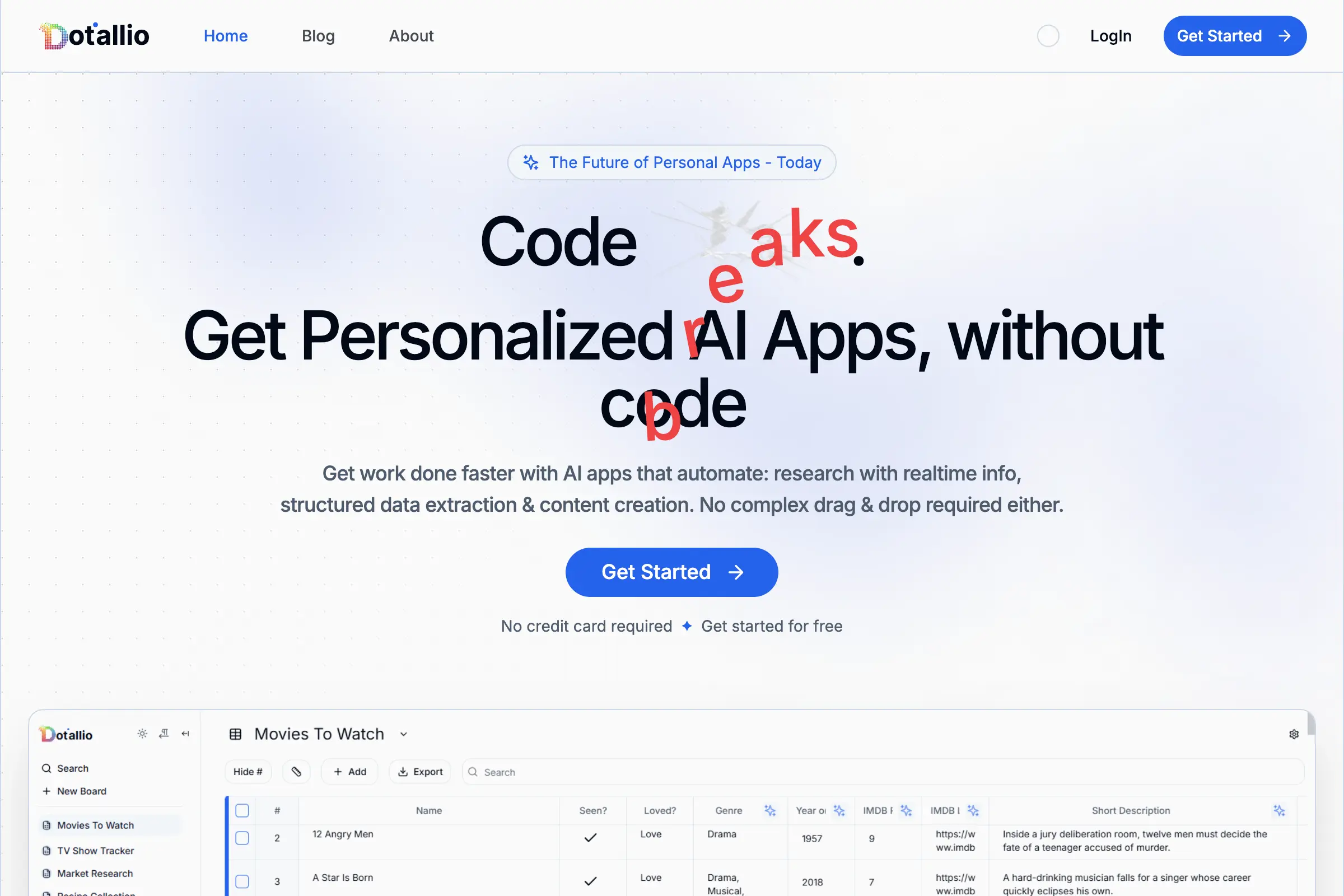
Dotallio
Personalized AI apps that automate research, data extraction, and content creation without code 🤖

Talk to Santa
Enjoy a magical live video chat or receive a unique AI-generated video greeting from Santa Claus 🎅

pozywka.pl
Scalable blog for food journalist, focused on performance and user experience 🌭
zagrodzki.me
Personal blog and portfolio of Bart Zagrodzki, where he shares his knowledge and work 💼
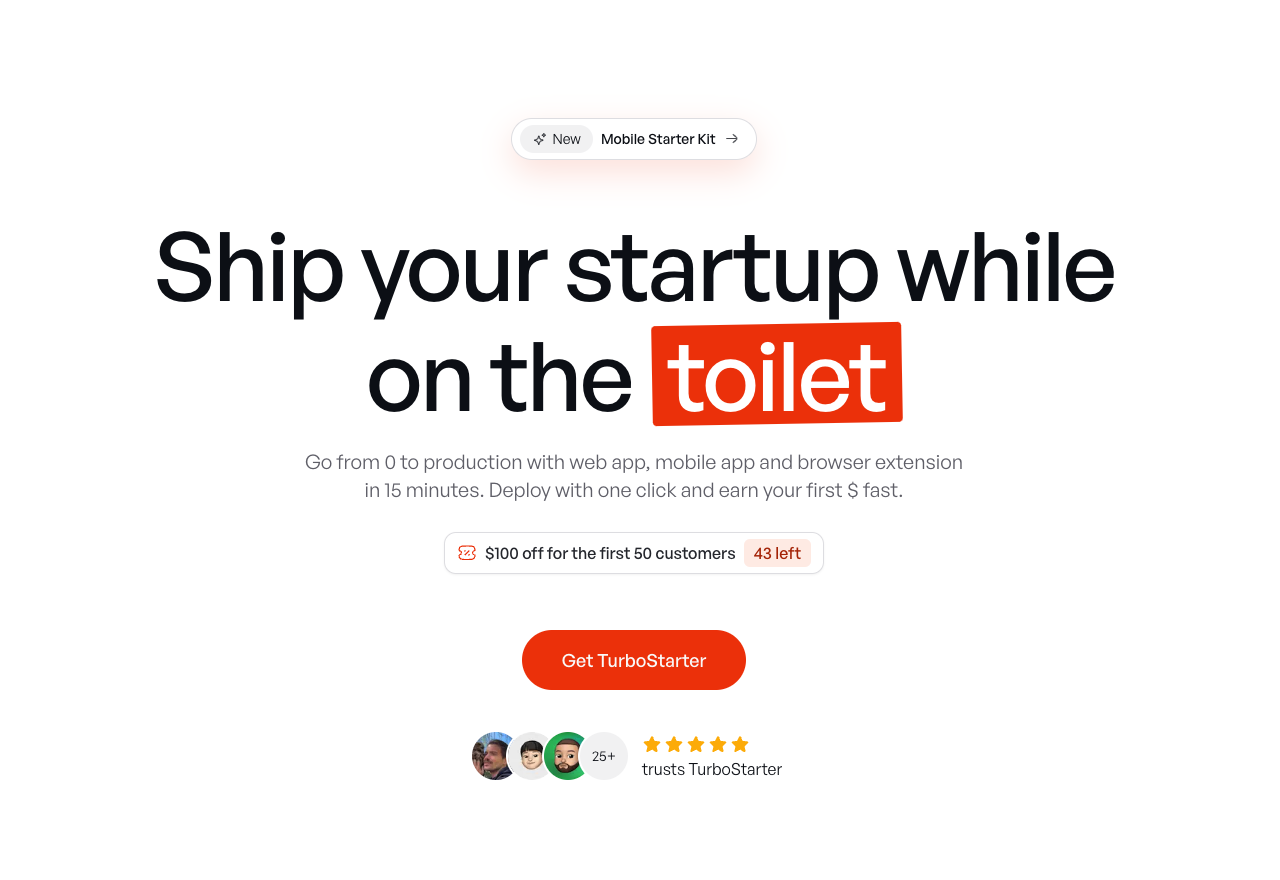
TurboStarter
Ship your startup everywhere. In minutes.
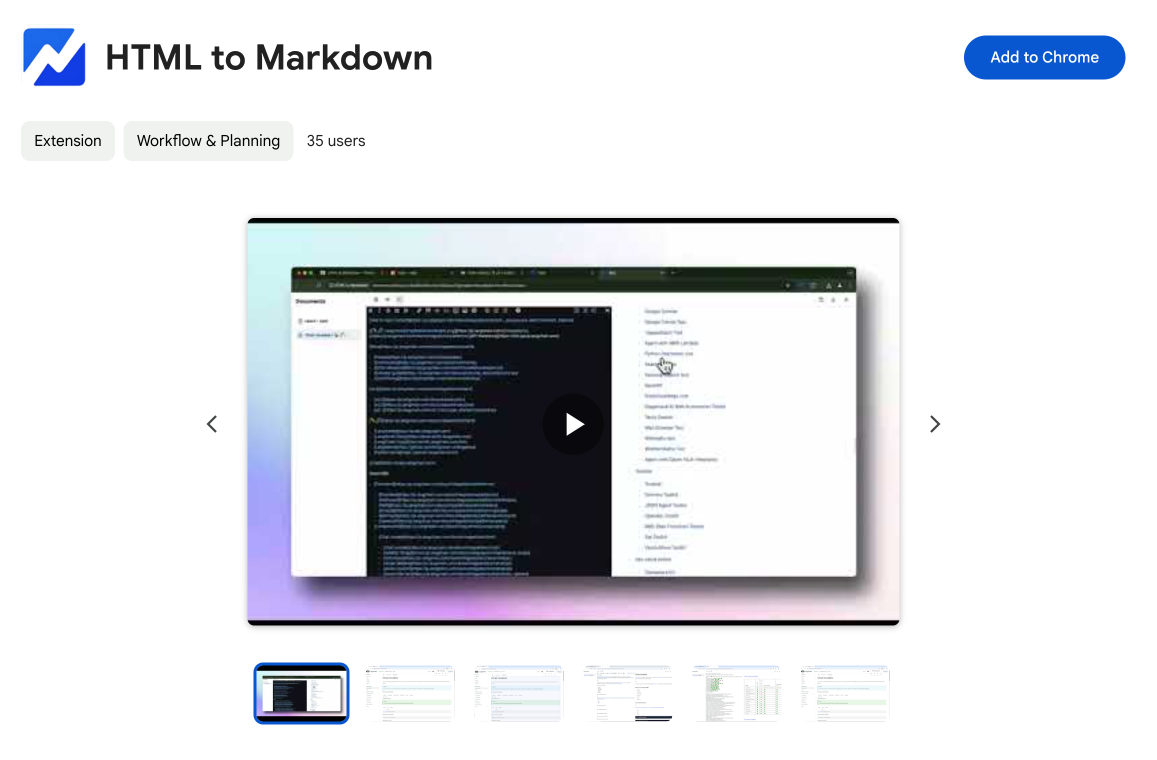
HTML to Markdown
Convert HTML to Markdown with ease, directly in your browser 📄
Dotallio
Personalized AI apps that automate research, data extraction, and content creation without code 🤖
Talk to Santa
Enjoy a magical live video chat or receive a unique AI-generated video greeting from Santa Claus 🎅
pozywka.pl
Scalable blog for food journalist, focused on performance and user experience 🌭
zagrodzki.me
Personal blog and portfolio of Bart Zagrodzki, where he shares his knowledge and work 💼
TurboStarter
Ship your startup everywhere. In minutes.
HTML to Markdown
Convert HTML to Markdown with ease, directly in your browser 📄
Dotallio
Personalized AI apps that automate research, data extraction, and content creation without code 🤖
Talk to Santa
Enjoy a magical live video chat or receive a unique AI-generated video greeting from Santa Claus 🎅
pozywka.pl
Scalable blog for food journalist, focused on performance and user experience 🌭
zagrodzki.me
Personal blog and portfolio of Bart Zagrodzki, where he shares his knowledge and work 💼
TurboStarter
Ship your startup everywhere. In minutes.
HTML to Markdown
Convert HTML to Markdown with ease, directly in your browser 📄
Dotallio
Personalized AI apps that automate research, data extraction, and content creation without code 🤖
Talk to Santa
Enjoy a magical live video chat or receive a unique AI-generated video greeting from Santa Claus 🎅
pozywka.pl
Scalable blog for food journalist, focused on performance and user experience 🌭
zagrodzki.me
Personal blog and portfolio of Bart Zagrodzki, where he shares his knowledge and work 💼
TurboStarter
Ship your startup everywhere. In minutes.
HTML to Markdown
Convert HTML to Markdown with ease, directly in your browser 📄
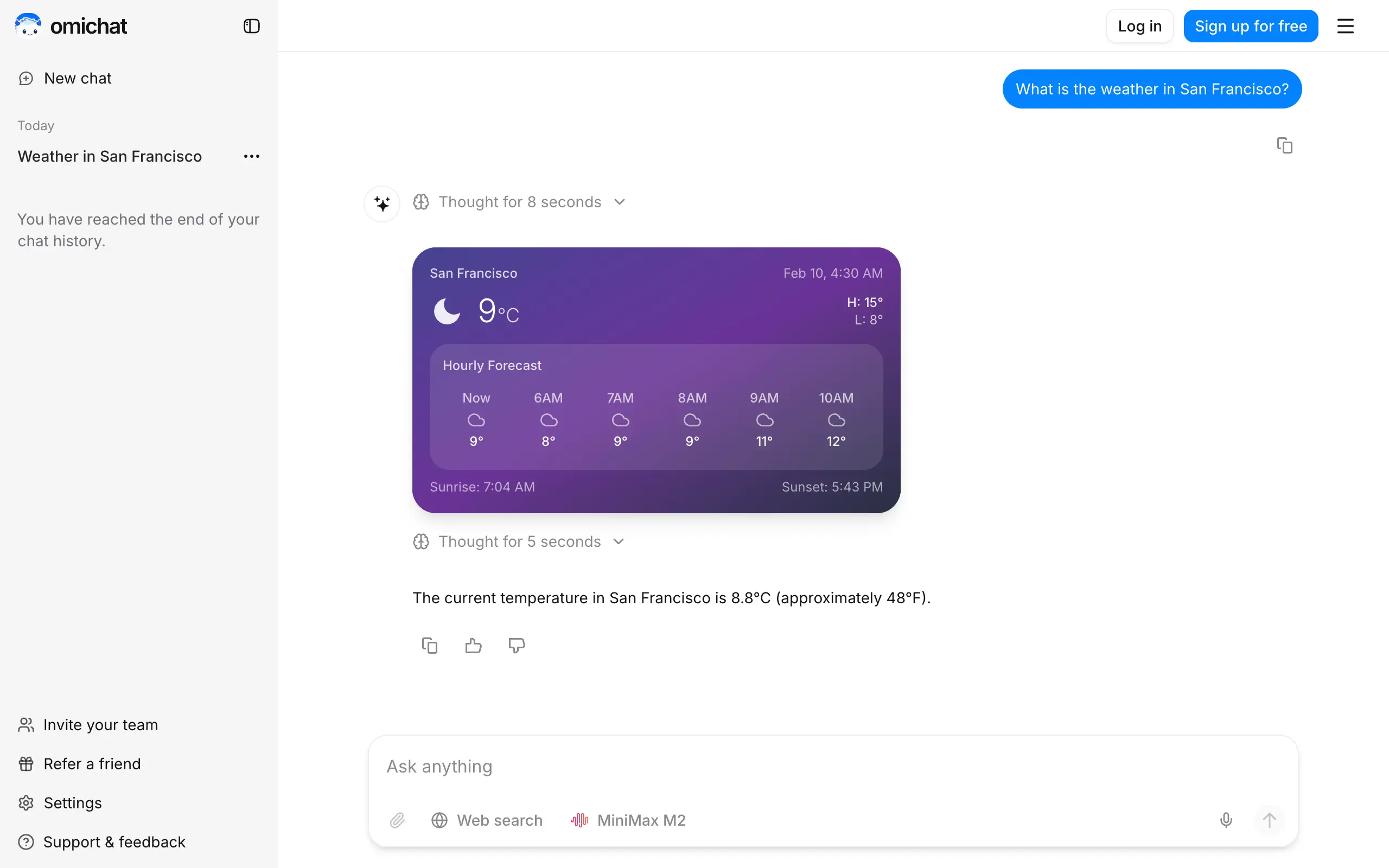
Omichat
Chat with 50+ AI models, including ChatGPT and Claude, in one place - switch models anytime without losing context 🤖
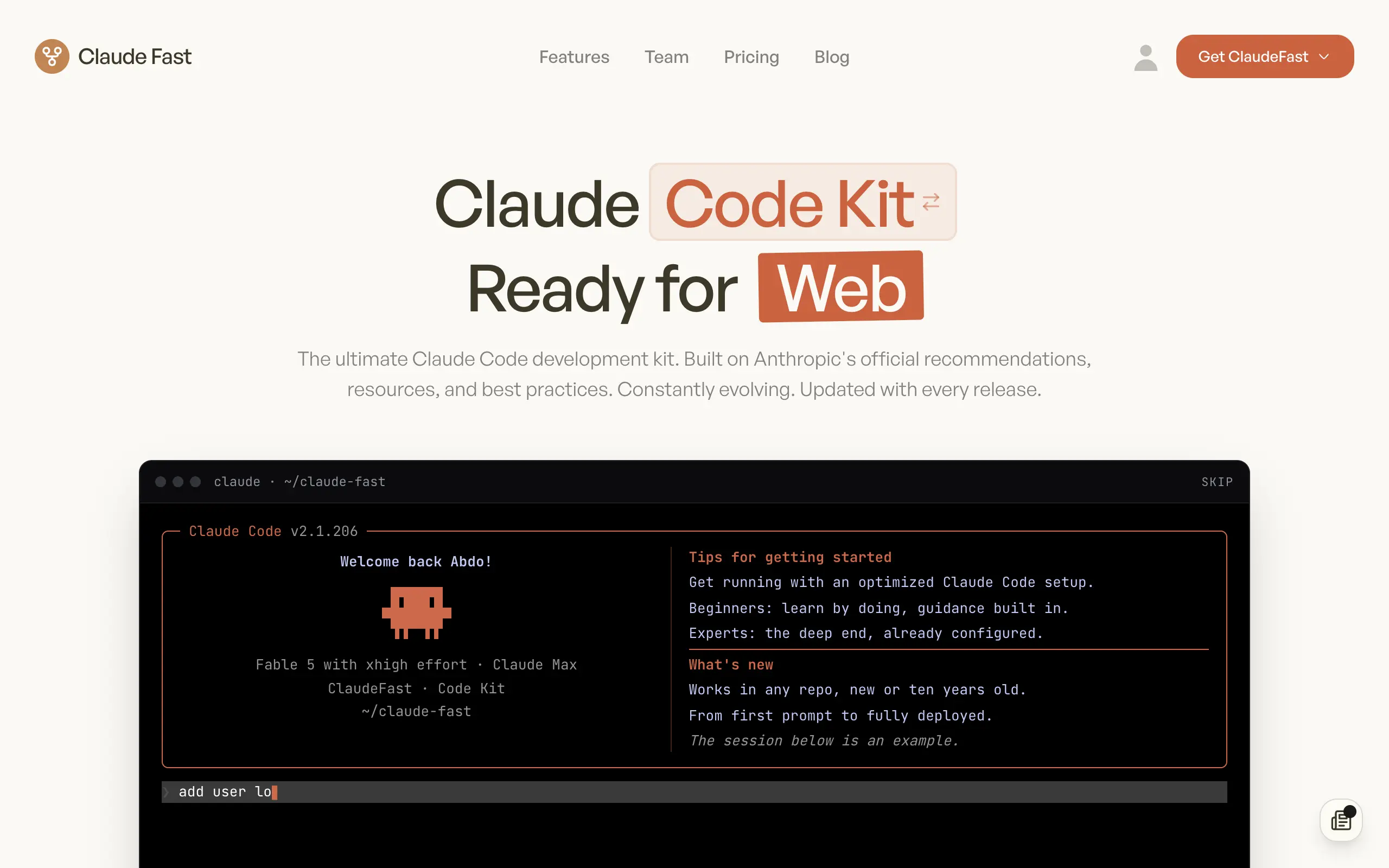
Claude Fast
Supercharge your Claude Code with 6x effective context window and specialized AI agents 🤖
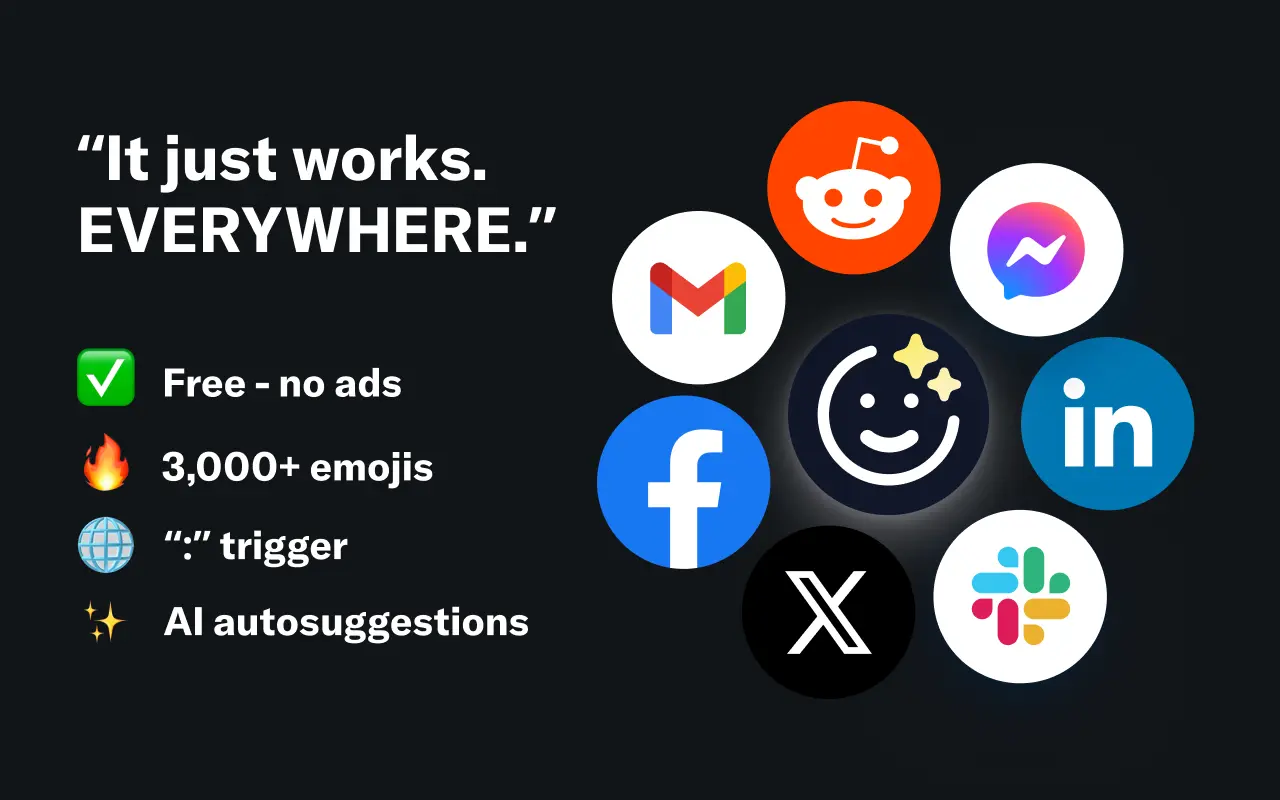
EmojAI
AI-powered emoji picker with smart, context-aware suggestions 🤖

Solohacker
Autonomous company launcher - AI agents work 24/7, escalate what matters, and you stay in control 🤖

BeRawi: Storytelling Coach
Practice storytelling daily with instant feedback to sound clearer, more engaging, and confident 🎤
Omichat
Chat with 50+ AI models, including ChatGPT and Claude, in one place - switch models anytime without losing context 🤖
Claude Fast
Supercharge your Claude Code with 6x effective context window and specialized AI agents 🤖
EmojAI
AI-powered emoji picker with smart, context-aware suggestions 🤖
Solohacker
Autonomous company launcher - AI agents work 24/7, escalate what matters, and you stay in control 🤖
BeRawi: Storytelling Coach
Practice storytelling daily with instant feedback to sound clearer, more engaging, and confident 🎤
Omichat
Chat with 50+ AI models, including ChatGPT and Claude, in one place - switch models anytime without losing context 🤖
Claude Fast
Supercharge your Claude Code with 6x effective context window and specialized AI agents 🤖
EmojAI
AI-powered emoji picker with smart, context-aware suggestions 🤖
Solohacker
Autonomous company launcher - AI agents work 24/7, escalate what matters, and you stay in control 🤖
BeRawi: Storytelling Coach
Practice storytelling daily with instant feedback to sound clearer, more engaging, and confident 🎤
Omichat
Chat with 50+ AI models, including ChatGPT and Claude, in one place - switch models anytime without losing context 🤖
Claude Fast
Supercharge your Claude Code with 6x effective context window and specialized AI agents 🤖
EmojAI
AI-powered emoji picker with smart, context-aware suggestions 🤖
Solohacker
Autonomous company launcher - AI agents work 24/7, escalate what matters, and you stay in control 🤖
BeRawi: Storytelling Coach
Practice storytelling daily with instant feedback to sound clearer, more engaging, and confident 🎤

Connect with like-minded people
Join our community to get feedback, support, and grow together with 1,000+ builders on board, let's ship it!
Join usShip your startup everywhere. In minutes.
Don't burn tokens on setup and start building features on day one.