ContextKit
A developer-first workspace for reusable AI context packs, prompt variables, environment configs, and traceable releases across apps and models.
Why ContextKit solves the AI context management problem
Building reliable AI-powered products is no longer just about choosing the right model or writing a clever prompt. The harder operational challenge is managing the context that surrounds every model call:
- System prompts and reusable prompt blocks
- Product rules and business policies
- Customer or workspace metadata
- Environment-specific configuration
- Retrieval instructions and tool definitions
- Model parameters and safety controls
- Release history, approvals, and rollback paths
As AI features move from prototypes into production, these assets become shared infrastructure. They are edited by engineers, product teams, AI specialists, support teams, and sometimes customers. Yet many teams still manage them through scattered source files, environment variables, spreadsheets, copy-pasted prompt strings, and chat messages.
ContextKit is a developer-first workspace for organizing reusable AI context packs, prompt variables, environment configurations, and traceable releases across applications and models. Its opportunity is to become the operational system of record for AI context.
The core value proposition is straightforward: teams should be able to define a reusable context once, compose it into multiple AI applications, test it safely, release it with confidence, and understand exactly which context version generated a production outcome.
This is more than prompt management. It is AI configuration management, with the governance, versioning, composition, and release workflows that modern teams already expect from code and infrastructure.
The key market insight
Most AI reliability failures are not purely model failures. They often come from incorrect, stale, incomplete, or untraceable context. A context management layer gives teams a practical way to reduce that risk.
Who needs an AI context management platform
ContextKit should not position itself as a generic productivity product for everyone experimenting with AI. Its strongest early-market fit is among teams that have moved beyond one-off prompts and now operate multiple AI features, models, environments, or customers.
Primary audience: AI product engineering teams
The highest-intent customer profile is a startup or software company with an AI product in production. These teams commonly use providers such as OpenAI, Anthropic, Google, AWS, or self-hosted models. They are shipping AI capabilities such as:
- Customer support assistants
- Internal knowledge copilots
- Document extraction workflows
- Coding assistants
- Sales enablement tools
- AI writing and content products
- Agentic workflows with tools and actions
- Industry-specific decision support systems
Their immediate pain is operational. They have prompts in repositories, configuration in deployment platforms, context assembled dynamically in application code, and limited visibility into what changed between model outputs.
For this audience, ContextKit should emphasize:
- Faster and safer iteration
- Prompt and context version control
- Environment-aware release management
- Cross-application reuse
- Production traceability
- Reduced configuration drift
Secondary audience: platform and developer experience teams
Larger engineering organizations often have multiple product squads independently adding AI features. Without a shared context platform, each team creates its own conventions for prompts, variables, model settings, evaluations, and releases.
Platform engineering and developer experience leaders care about:
- Standardized AI delivery workflows
- Access control and approval policies
- Shared company voice and policy packs
- Auditable changes
- Lower onboarding time for new teams
- Fewer duplicated prompt and configuration assets
This customer is especially valuable because a single platform team can introduce ContextKit across many internal applications.
Third audience: AI consultancies and agencies
AI implementation agencies often build similar systems for many clients. They need to reuse patterns while isolating client data, policies, branding, and environments.
A multi-workspace ContextKit model could help agencies maintain:
- Reusable starter context packs
- Client-specific overrides
- Approved prompt libraries
- Release records per customer
- Model portability across client deployments
This segment can also become an effective distribution channel. A consultancy that standardizes on ContextKit may introduce it to every client building production AI workflows.
Jobs to be done for ContextKit users
The product should be designed around concrete user jobs rather than abstract “prompt optimization” language.
Ship AI changes safely
Release updated prompts, variables, and model configurations without editing production code blindly.
Reuse trusted context
Package instructions, policies, examples, and schemas into composable assets that teams can share across applications.
Explain production behavior
Trace a response back to the exact context pack, variable values, model configuration, and release used.
Prevent configuration drift
Keep development, staging, and production settings intentionally distinct while maintaining a clear promotion workflow.
The market gap: prompt management is not enough
The AI tooling ecosystem already includes observability products, model gateways, vector databases, evaluation platforms, prompt libraries, and workflow orchestration systems. ContextKit needs a precise category definition to avoid becoming another undifferentiated “prompt engineering tool.”
The market gap is between a simple prompt registry and a production-grade context release management system.
A prompt registry may let a developer save prompt text and retrieve versions. That is useful, but insufficient for modern AI applications. A production AI request may depend on several additional inputs:
- A system instruction
- A role-specific policy pack
- A locale or customer segment variable
- A JSON response schema
- A set of few-shot examples
- Tool instructions
- A model provider configuration
- Temperature and token settings
- Retrieval formatting rules
- Feature flag state
- Environment-specific secrets or endpoint settings
If these components are managed separately, a team cannot confidently answer a basic production question: What exact AI configuration was active when this result was generated?
That question matters for quality assurance, customer escalations, security reviews, regressions, and compliance.
Why AI context is becoming a release artifact
In traditional software delivery, source code is versioned, reviewed, tested, deployed, and rolled back. Infrastructure is often managed through infrastructure-as-code. Product configuration increasingly has feature flags and controlled rollout systems.
AI context deserves the same operational maturity.
A change to a system prompt can alter product behavior as materially as a code change. A modified output schema can break downstream parsing. A forgotten production variable can expose the wrong policy, tone, locale, or retrieval instruction. Changing models without preserving the associated context can create hidden regressions.
ContextKit should treat an AI context release as an immutable artifact containing:
- A set of context packs and versions
- Resolved variables and defaults
- Model provider and model identifier
- Runtime parameters
- Environment configuration references
- Evaluation results or approval records
- Metadata about the author, reviewer, and release time
That definition gives the product a defensible, high-value center.
Relevant industry trends supporting the opportunity
Several AI trends make context management increasingly necessary:
- Multi-model architectures: teams use different models for cost, latency, reasoning quality, privacy, or regional availability.
- Agentic systems: tool instructions, task constraints, and state handling increase the number of configuration surfaces.
- Enterprise governance: buyers increasingly require access controls, audit logs, and change approval processes for AI behavior.
- Evaluation-driven development: teams need to compare AI changes against repeatable test datasets before release.
- AI personalization: customer, region, role, and product-tier variables make context assembly more dynamic.
- Model volatility: providers release new models and retire older ones, increasing migration and regression-testing needs.
When presenting market sizing, avoid unsupported claims. Instead, cite current research from credible sources such as Gartner, McKinsey, Deloitte, Stanford’s AI Index, or major cloud-provider reports, with publication dates and methodology noted clearly.
The ContextKit product architecture
ContextKit should be designed as a workspace where AI context is structured, reusable, testable, and releasable. The product should feel familiar to developers while remaining usable by technical product managers and AI operations specialists.
Context packs as the central primitive
A context pack is a versioned, composable package of AI instructions and configuration. It should support more than plain text.
A context pack can include:
- Prompt templates
- System and developer instructions
- Variable definitions
- Few-shot examples
- Output-format instructions
- JSON schemas
- Safety and compliance rules
- Tool-use guidance
- Model defaults
- Metadata and ownership
- Compatibility requirements
- Test fixtures
For example, a customer support company may define separate packs for brand voice, refund policy, identity verification, escalation rules, and response formatting. An application can compose these packs based on the request type and customer context.
This approach is more maintainable than embedding every instruction in one giant prompt.
Prompt variables with validation
Variables are essential because real AI context is dynamic. ContextKit should support typed variables rather than simple string replacement alone.
A variable definition could include:
- Variable name
- Data type
- Required or optional status
- Default value
- Allowed values
- Validation pattern
- Secret classification
- Description and usage examples
- Environment-specific override rules
For example:
type ContextVariables = {
  customer_name: string;
  locale: "en-US" | "en-GB" | "fr-FR";
  plan_tier: "free" | "pro" | "enterprise";
  escalation_enabled: boolean;
  maximum_refund_amount: number;
};
Typed variables reduce common runtime problems, such as missing placeholders, invalid policy values, malformed JSON fragments, or accidental insertion of sensitive fields.
ContextKit should also distinguish between:
- Template variables: values inserted into prompt or schema templates
- Runtime variables: values passed at invocation time
- Environment variables: deployment-specific configuration values
- Secret references: pointers to secrets managed externally rather than stored in plaintext
Context composition and inheritance
The product’s technical moat can emerge from thoughtful context composition.
A team should be able to define a base pack and safely extend it for specific products, tenants, markets, or experiments. This is similar to how configuration inheritance works in mature software systems, but it must be easy to reason about.
For example:
base-assistant
  ├── company-policy
  ├── response-schema
  └── safety-baseline

support-assistant
  ├── extends base-assistant
  ├── support-tone
  ├── refund-policy
  └── escalation-workflow

enterprise-support-assistant
  ├── extends support-assistant
  ├── enterprise-sla-policy
  └── dedicated-account-language
The workspace should display the final resolved context clearly. Users need to see inheritance order, overridden values, duplicated instructions, and conflicts before they release changes.
Environment configs without unsafe secret storage
Development, staging, and production configurations should be first-class objects in ContextKit. However, ContextKit should avoid becoming a casual secret vault.
A strong design separates configuration metadata from secret values:
- ContextKit stores variable names, schemas, references, and policies.
- A dedicated secrets manager stores actual secret values.
- The runtime resolves secrets through a secure integration.
Potential integrations can include cloud-native secrets managers and deployment platforms, depending on the initial customer segment. The product should provide secret references such as secret://production/openai-api-key rather than exposing credentials in workspace history.
This architecture improves security posture and supports enterprise procurement.
Traceable releases and immutable manifests
The release workflow is what transforms ContextKit from a content library into production infrastructure.
Every release should create an immutable manifest containing the resolved context configuration. The manifest should be identifiable by a stable release ID, content hash, semantic version, or all three.
A release record should answer:
- Which packs were included?
- Which version of every pack was used?
- Which variables and defaults were resolved?
- Which model and provider configuration was selected?
- Which environment received the release?
- Who approved it?
- Which evaluation suite ran?
- Did the release replace another active version?
- Can the team roll back immediately?
Do not rely on mutable production prompts
If a production application always fetches the latest prompt version, a seemingly harmless edit can change live behavior without a formal release. Production applications should resolve a pinned release or immutable manifest.
SDK-first runtime delivery
A developer-first AI context management product needs excellent SDKs. The developer should not have to manually reconstruct prompts or context trees in every application.
An ideal runtime experience looks like this:
import { ContextKit } from "@contextkit/sdk";

const contextkit = new ContextKit({
  apiKey: process.env.CONTEXTKIT_API_KEY,
});

const resolvedContext = await contextkit.resolve({
  release: "support-assistant@2025.04.0",
  environment: "production",
  variables: {
    customer_name: "Avery",
    locale: "en-US",
    plan_tier: "enterprise",
    escalation_enabled: true,
    maximum_refund_amount: 500,
  },
});

const completion = await aiClient.responses.create({
  model: resolvedContext.model,
  input: resolvedContext.messages,
  temperature: resolvedContext.parameters.temperature,
});
In practice, the SDK should support caching, local development, offline fallback behavior, telemetry hooks, typed variable generation, and compatibility with common AI application frameworks.
For web application teams, a TypeScript SDK should launch first. Later SDKs can support Python, Go, Java, and language-specific enterprise use cases.
Core ContextKit features for a compelling MVP
The first version should focus on the painful workflow that creates an immediate reason to switch: moving AI context out of scattered code and into a controlled release pipeline.
Essential MVP capabilities
| Capability | User value | MVP priority | Why it matters | Complexity |
|---|---|---|---|---|
| Versioned context packs | Safe reuse | High | Creates a reliable source of truth | Medium |
| Typed prompt variables | Fewer runtime mistakes | High | Supports dynamic context safely | Medium |
| Development and production environments | Controlled rollout | High | Prevents accidental live changes | Medium |
| Release manifests and rollback | Traceability | High | Defines the product category | Medium |
| TypeScript SDK | Fast adoption | High | Turns workspace assets into runtime context | Medium |
| Evaluation integration | Release confidence | Later | Important but can begin with webhooks | High |
What not to build in the first release
AI infrastructure is crowded, so discipline matters. ContextKit should avoid expanding into every adjacent category too early.
Do not initially attempt to become:
- A full large language model observability platform
- A vector database
- A general-purpose workflow automation platform
- A complete agent framework
- A hosted model provider
- A secrets manager
- A generic documentation wiki
- A full-featured experiment analytics suite
Integrations are better than replacement products. ContextKit’s focus should remain on the lifecycle of reusable AI context from authoring to production release.
Recommended tech stack for ContextKit
A developer-first SaaS platform needs a stack that enables rapid iteration while supporting strong auditability, API performance, and tenant isolation.
Application and frontend stack
A practical frontend stack includes:
- React for the application interface
- Next.js for full-stack rendering, routing, and API capabilities
- TypeScript for safer contracts across the dashboard and SDK
- Tailwind CSS for fast, consistent interface development
- TanStack Query for server-state caching and synchronization
- Zod for runtime schema validation
The interface should prioritize comparison, traceability, and clarity. That means a quality diff viewer, resolved-context preview, environment switcher, release timeline, and variable inspector are more important than decorative dashboards.
Backend and data model stack
For an early-stage product, PostgreSQL is a strong primary database choice. It offers mature relational modeling, transaction support, JSON capabilities, indexing, and a broad ecosystem.
A possible architecture includes:
- PostgreSQL for workspace data, versions, releases, access controls, and audit logs
- Object storage for large artifacts, test datasets, exported manifests, and attachments
- Redis for caching resolved contexts and handling rate limits
- A queue system for release processing, webhooks, synchronization, and evaluation jobs
- OpenTelemetry-compatible instrumentation for request traces and platform observability
The core data model should be relational because ContextKit has meaningful relationships between organizations, workspaces, applications, packs, versions, variables, environments, releases, approvals, and audit events.
SDK and API design
The public API should use predictable versioning and support both pull and push delivery modes.
- Pull mode: an application resolves a named release at runtime.
- Push mode: CI/CD pipelines export or deploy a signed release manifest.
- Hybrid mode: applications fetch a manifest with caching and fall back to the last known valid version.
A hybrid model is often best. It gives teams a centralized control plane without requiring every live request to depend on a remote configuration service.
For an MVP, REST is easier to document and adopt. GraphQL can be considered later if customers need highly flexible workspace querying. The API should include idempotency keys for release creation and a complete audit trail for write operations.
Build versus buy trade-offs
A common early-stage mistake is overbuilding infrastructure before validating workflow demand.
Use managed services initially for authentication, transactional email, logging, billing, and background job execution. Build the proprietary layer where it creates differentiation:
- Context-pack schema and composition engine
- Deterministic context resolver
- Release manifest system
- Environment promotion workflow
- Context diffing and provenance views
- SDK developer experience
Starting with a proven SaaS boilerplate can also reduce time spent on foundational work such as authentication, teams, billing, and account settings. TurboStarter is a useful option for teams that want to accelerate the initial SaaS foundation and focus engineering effort on ContextKit’s domain-specific workflow.
Competitive advantage: how ContextKit can stand out
ContextKit’s strongest competitive advantage is not simply storing prompts. It is making AI context composable, environment-aware, and provably traceable.
The ContextKit differentiation framework
Beyond prompt versioning
Manage the full context surface, including policies, variables, schemas, model parameters, and configuration references.
Release-centric workflow
Create immutable release manifests that can be approved, promoted, audited, and rolled back.
Context composition
Reuse trusted packs across applications while supporting controlled inheritance and overrides.
Developer-native adoption
Offer a typed SDK, API-first workflows, Git-friendly exports, and CI/CD integration.
Why traceability is a defensible wedge
Many products can add a prompt editor. Fewer can accurately represent the lineage of a production AI response.
A robust traceability graph connects:
Production request
  → application version
  → ContextKit release
  → resolved context manifest
  → pack versions
  → variable values or references
  → model configuration
  → evaluation and approval evidence
This provenance model is valuable when a customer asks why an AI assistant behaved a certain way. It is equally valuable when an engineering team needs to reproduce a bug or demonstrate governance controls during enterprise procurement.
The more applications depend on ContextKit releases, the more valuable the historical release graph becomes. That creates switching costs rooted in operational knowledge rather than artificial lock-in.
Open formats create trust
Developer tools benefit from avoiding unnecessary black boxes. ContextKit should support exportable, human-readable context definitions and release manifests, likely in JSON or YAML.
Open, portable formats can reduce buyer concerns about vendor lock-in while improving adoption. The proprietary value remains in the collaborative workspace, governance rules, release workflow, context resolver, integrations, and operational history.
Monetization strategies for ContextKit
The pricing model should match the value of safe AI delivery rather than charging primarily for raw prompt count. Prompts are cheap; reliable AI operations are not.
A practical tiered SaaS model
- Free developer tier: one workspace, a limited number of applications, basic version history, community support, and a development environment.
- Team tier: multiple environments, release workflows, role-based access, audit history, production SDK usage, and standard integrations.
- Business tier: advanced permissions, approval workflows, evaluation gates, service accounts, single sign-on options, and enhanced retention.
- Enterprise tier: custom data retention, dedicated support, private deployment options, advanced compliance controls, security review support, and negotiated usage limits.
Potential pricing metrics
ContextKit can combine seat pricing with platform usage. Suitable value metrics include:
- Number of active production applications
- Number of production release environments
- Monthly context-resolution requests
- Number of managed context packs
- Audit-log retention period
- Number of evaluation runs or release gates
- Enterprise governance features
Avoid pricing only by individual editor seats. The product’s value is shared across applications and runtime environments, so an application- or release-based component better captures value from engineering teams.
Expansion revenue opportunities
Once the core workflow is established, ContextKit can add paid modules:
- AI release approvals and policy gates
- Evaluation suite management
- Context quality analytics
- Model migration assistance
- Tenant-specific configuration management
- Enterprise audit exports
- Private cloud or virtual private cloud deployment
- Compliance pack templates for regulated industries
The product should earn expansion through deeper operational value, not by restricting essential safety features behind inaccessible pricing.
Risks and mitigation strategies
The opportunity is strong, but AI infrastructure products face real risks.
Risk: customers keep prompts in Git
Many developer teams will reasonably ask why they need another system if prompt templates already live in a repository.
The best answer is not “Git is bad.” Git is excellent for source control. The better argument is that ContextKit complements Git by handling runtime composition, environment promotion, access-controlled configuration, release manifests, resolved previews, and production provenance.
Mitigation actions include:
- Git sync and export workflows
- Pull request links from ContextKit releases
- CLI support for CI/CD
- Configuration-as-code support
- Clear ownership boundaries between source code and runtime context
Risk: the category is crowded
Prompt tooling, observability, and LLMOps are crowded categories. A generic positioning statement will disappear among competitors.
Mitigation is focus. ContextKit should lead with a crisp claim:
ContextKit is the release management workspace for reusable AI context across apps, models, and environments.
This is more specific than “prompt management” and more approachable than a broad LLMOps promise.
Risk: sensitive data enters context packs
Context may contain business policies, internal instructions, customer metadata, or potentially sensitive examples. That creates security and compliance obligations.
Mitigation priorities include:
- Encryption in transit and at rest
- Strict tenant isolation
- Role-based access control
- Detailed audit logs
- Secret references instead of plaintext secrets
- Data retention controls
- Redaction features for logs and previews
- Regional data hosting plans as enterprise demand grows
- Clear documentation on data processing boundaries
Risk: runtime latency or outages
If every AI request requires a call to ContextKit, the product can become a critical dependency.
Mitigation should include:
- Local SDK caching
- Configurable time-to-live values
- Last-known-good release fallback
- Signed manifest export
- High-availability control plane architecture
- Clear runtime service-level objectives
- Client-side circuit breakers
Risk: context packs become overcomplicated
Composable systems can become difficult to understand if inheritance is deep or overrides are uncontrolled.
Mitigation features should include:
- Maximum inheritance-depth recommendations
- Visual dependency graphs
- Resolved context previews
- Conflict warnings
- Context linting rules
- Ownership metadata
- Deprecation policies
- Release checks that block unresolved required variables
A go-to-market plan for ContextKit
The best initial go-to-market strategy is product-led developer adoption combined with focused content for AI engineering teams.
Start with a narrow, urgent use case
The initial message should target teams with multiple AI environments and a painful history of production prompt changes.
A strong landing-page problem statement could be:
Stop shipping AI behavior through scattered prompt strings and untracked environment variables. Build reusable context packs, test changes, and release AI configuration with full traceability.
Early use cases to target:
- Support copilot teams
- AI SaaS startups with multiple customers
- Internal enterprise AI platforms
- Agencies deploying similar AI workflows across clients
- Teams migrating between models or providers
Content strategy for high-intent SEO
ContextKit can build topical authority around AI context management, prompt version control, LLM configuration management, and AI release workflows.
High-intent article topics include:
- “Prompt version control for production AI applications”
- “How to manage system prompts across development and production”
- “AI context management best practices”
- “Prompt variables and configuration drift in LLM applications”
- “How to roll back an AI prompt release”
- “LLM release management for engineering teams”
- “Prompt management vs AI context management”
- “How to trace an AI response to a prompt version”
Each article should include implementation guidance, technical examples, risk analysis, and practical checklists. This builds trust with the developer audience and supports product discovery before a buyer searches directly for ContextKit.
Design partner program
Recruit a small group of design partners with real production AI workloads. The ideal partner has enough complexity to expose the product’s value but is still willing to provide fast feedback.
Offer:
- Hands-on migration support
- A dedicated shared communication channel
- Influence over the roadmap
- Favorable early pricing
- Permission to develop anonymized case studies where possible
The learning goal is to validate which release workflow is most painful: prompt editing, environment promotion, variable governance, model switching, approval flows, or post-incident traceability.
Implementation roadmap for launching ContextKit
A disciplined build plan protects the product from category sprawl.
Phase one: establish the context registry
Build the smallest complete workflow for a developer to create, version, resolve, and use context in an application.
Phase two: add releases and environment promotion
Once teams trust the registry, introduce the release workflow that creates the core differentiation.
Key deliverables include:
- Immutable release manifests
- Pack composition and inheritance
- Resolved context previews
- Release approvals and comments
- Development-to-production promotion
- Instant rollback to a previous release
- Webhooks for release lifecycle events
- CLI and CI/CD integration
Phase three: build quality and governance layers
After core adoption, add capabilities that increase enterprise value and retention:
- Evaluation run attachments
- Release gates based on evaluation results
- Prompt and policy linting
- PII detection and redaction checks
- Model compatibility tests
- Context performance comparisons
- Single sign-on and SCIM provisioning
- Advanced audit exports
- Fine-grained environment permissions
Focus on operational metrics before trying to score every aspect of AI quality. Measure active applications, context pack reuse, release frequency, rollback frequency, resolution latency, failed variable validation, and time from change to approved production release.
It should support both patterns. A hosted visual workspace makes collaboration and runtime releases easier, while Git synchronization and export preserve developer trust and fit existing engineering workflows.
Use provider-neutral abstractions for messages, variables, schemas, and runtime parameters while retaining provider-specific adapters. The product should show compatibility warnings when a context pack relies on model-specific features.
Final recommendation: build ContextKit as AI release infrastructure
ContextKit has a meaningful opportunity because production AI teams need more than a place to save prompts. They need a dependable way to manage the changing context that governs model behavior across applications, models, customers, and environments.
The winning product will make the complex parts of AI context operations feel routine:
- Create a reusable pack
- Define validated variables
- Compose trusted instructions
- Preview the final resolved context
- Test the change
- Approve a release
- Promote it to production
- Trace every outcome back to its configuration
- Roll back safely when necessary
That workflow is immediately understandable to engineering teams because it mirrors proven software delivery practices. It also creates a strong, differentiated category position: AI context release management.
The most important execution decision is to stay focused. Do not try to own all of LLMOps. Become exceptionally good at making AI context reusable, safe to change, and easy to trace. If ContextKit can become the trusted source of truth for the context behind production AI behavior, it can become foundational infrastructure for the next generation of AI software.
More ⚡ Productivity Tool SaaS ideas
Discover more innovative productivity tool SaaS ideas that are trending in 2026. Each idea is AI-generated with market validation and growth potential to help you find your next profitable venture faster than competitors.
Your competitors are building with TurboStarter
Below are some of the SaaS ideas that have been generated and built with our starter kit.
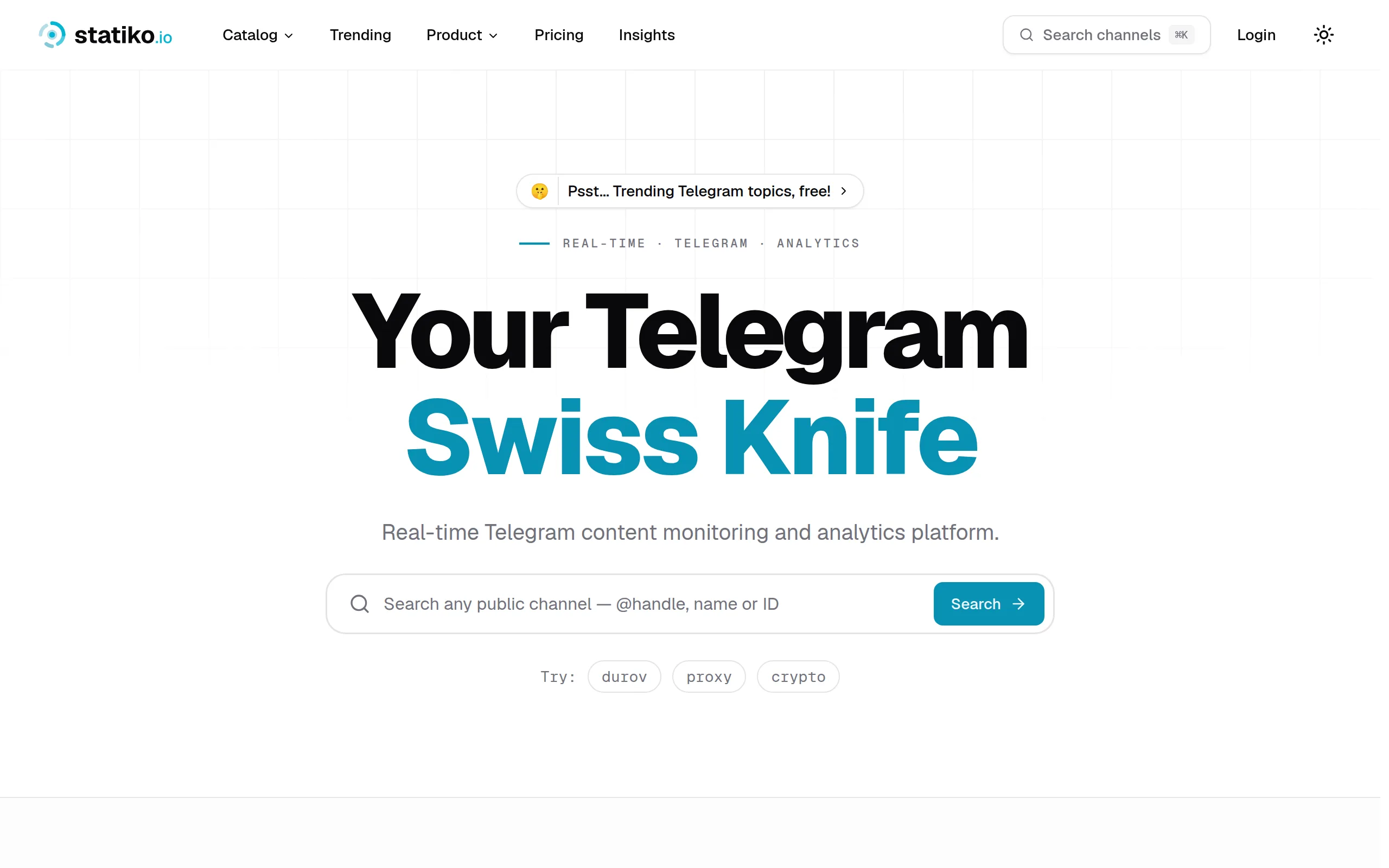
Statiko
Monitor any Telegram channel in real time - track posts, edits, deletions, and growth with AI recaps 📡

Shibui
AI website builder - describe your business, pick a niche template, edit by chatting, and publish instantly ✨

Pro Service
Find verified home service professionals, compare quotes, and pay securely through escrow - built for Brazilians across the US 🏠
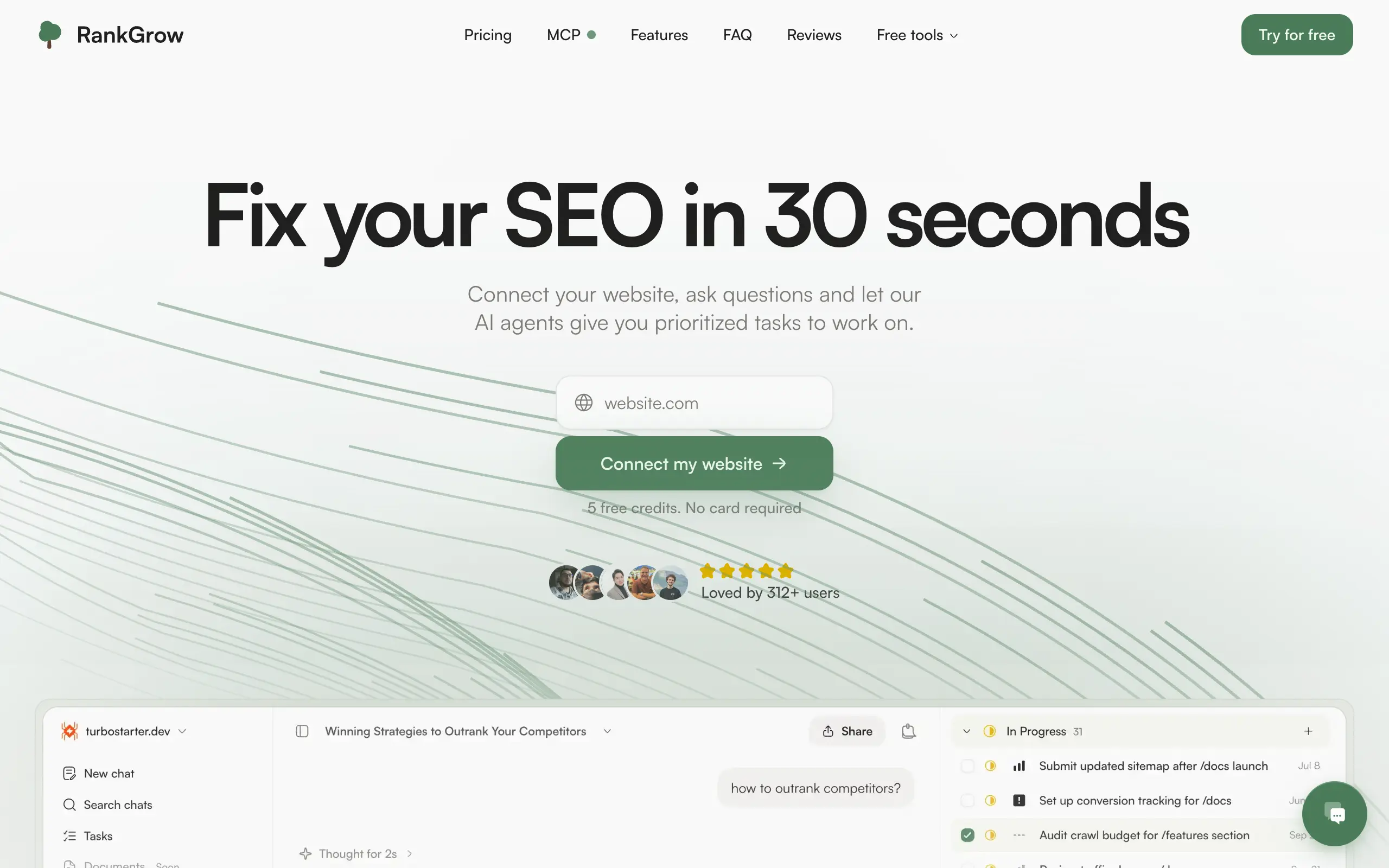
RankGrow
Fix your SEO with AI agents - connect Search Console, get prioritized tasks, and grow organic traffic 📈
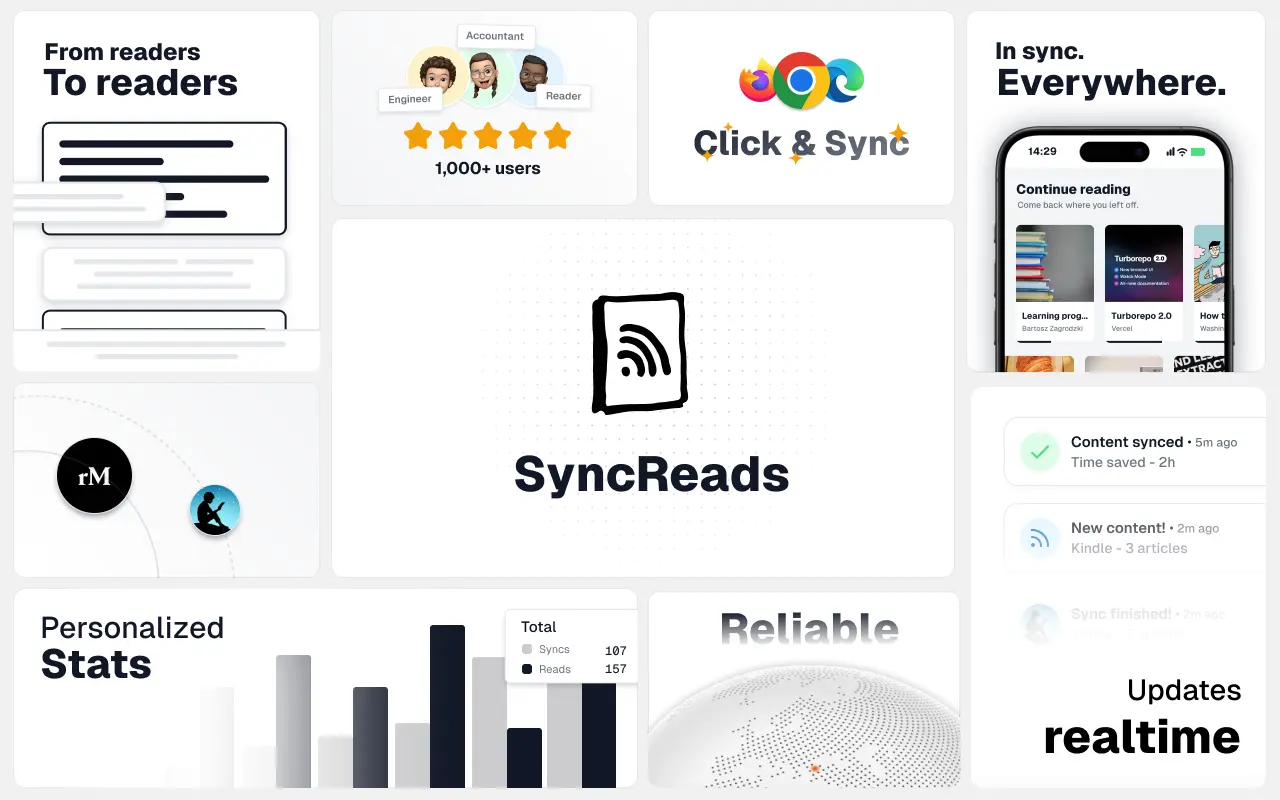
SyncReads
Sync your favorite content for distraction-free reading, save time and replace multiple apps. Anytime, anywhere 🔄
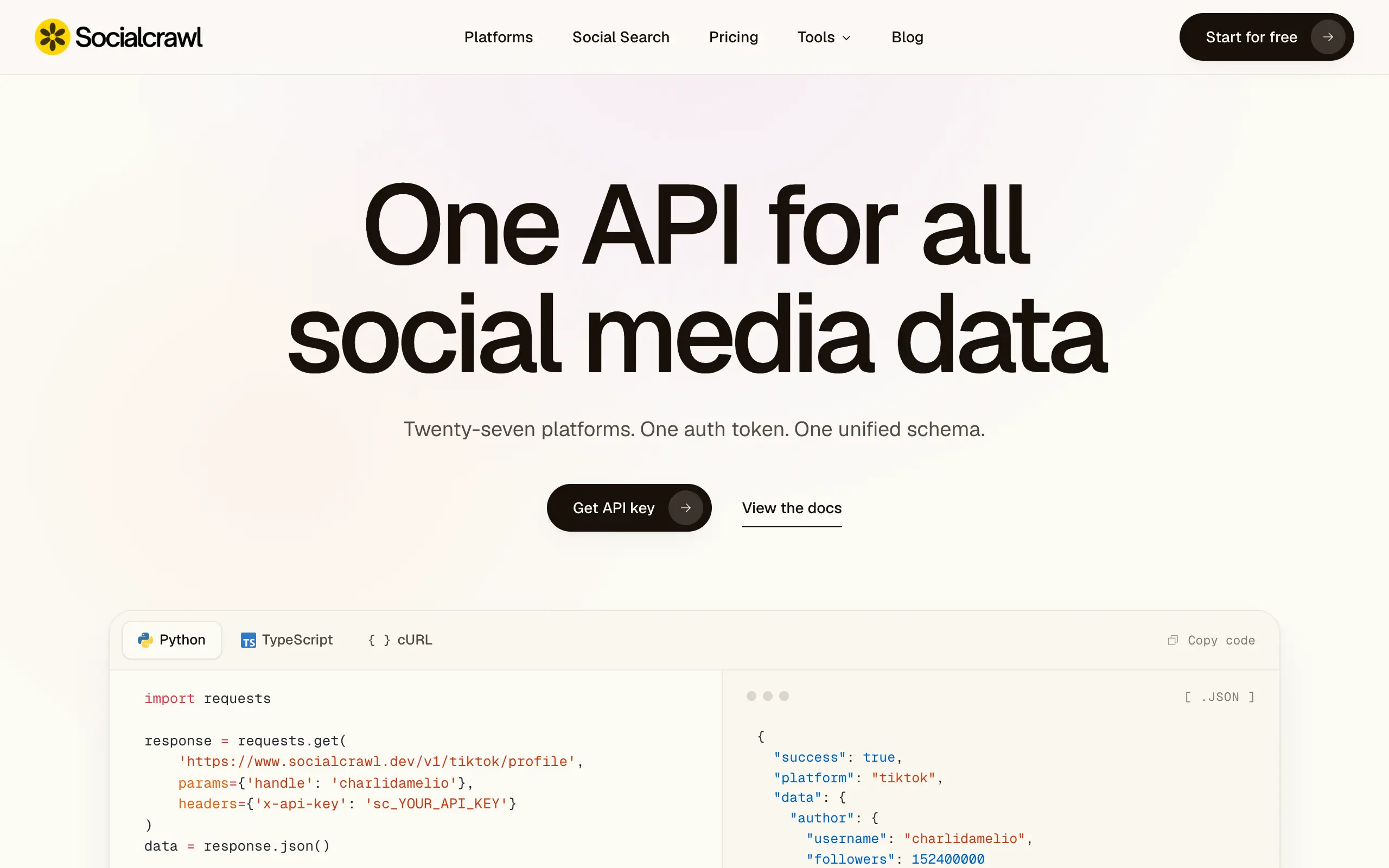
Socialcrawl
Get clean, structured data from 21 platforms like TikTok, Instagram, and YouTube with a single request 📊
Statiko
Monitor any Telegram channel in real time - track posts, edits, deletions, and growth with AI recaps 📡
Shibui
AI website builder - describe your business, pick a niche template, edit by chatting, and publish instantly ✨
Pro Service
Find verified home service professionals, compare quotes, and pay securely through escrow - built for Brazilians across the US 🏠
RankGrow
Fix your SEO with AI agents - connect Search Console, get prioritized tasks, and grow organic traffic 📈
SyncReads
Sync your favorite content for distraction-free reading, save time and replace multiple apps. Anytime, anywhere 🔄
Socialcrawl
Get clean, structured data from 21 platforms like TikTok, Instagram, and YouTube with a single request 📊
Statiko
Monitor any Telegram channel in real time - track posts, edits, deletions, and growth with AI recaps 📡
Shibui
AI website builder - describe your business, pick a niche template, edit by chatting, and publish instantly ✨
Pro Service
Find verified home service professionals, compare quotes, and pay securely through escrow - built for Brazilians across the US 🏠
RankGrow
Fix your SEO with AI agents - connect Search Console, get prioritized tasks, and grow organic traffic 📈
SyncReads
Sync your favorite content for distraction-free reading, save time and replace multiple apps. Anytime, anywhere 🔄
Socialcrawl
Get clean, structured data from 21 platforms like TikTok, Instagram, and YouTube with a single request 📊
Statiko
Monitor any Telegram channel in real time - track posts, edits, deletions, and growth with AI recaps 📡
Shibui
AI website builder - describe your business, pick a niche template, edit by chatting, and publish instantly ✨
Pro Service
Find verified home service professionals, compare quotes, and pay securely through escrow - built for Brazilians across the US 🏠
RankGrow
Fix your SEO with AI agents - connect Search Console, get prioritized tasks, and grow organic traffic 📈
SyncReads
Sync your favorite content for distraction-free reading, save time and replace multiple apps. Anytime, anywhere 🔄
Socialcrawl
Get clean, structured data from 21 platforms like TikTok, Instagram, and YouTube with a single request 📊
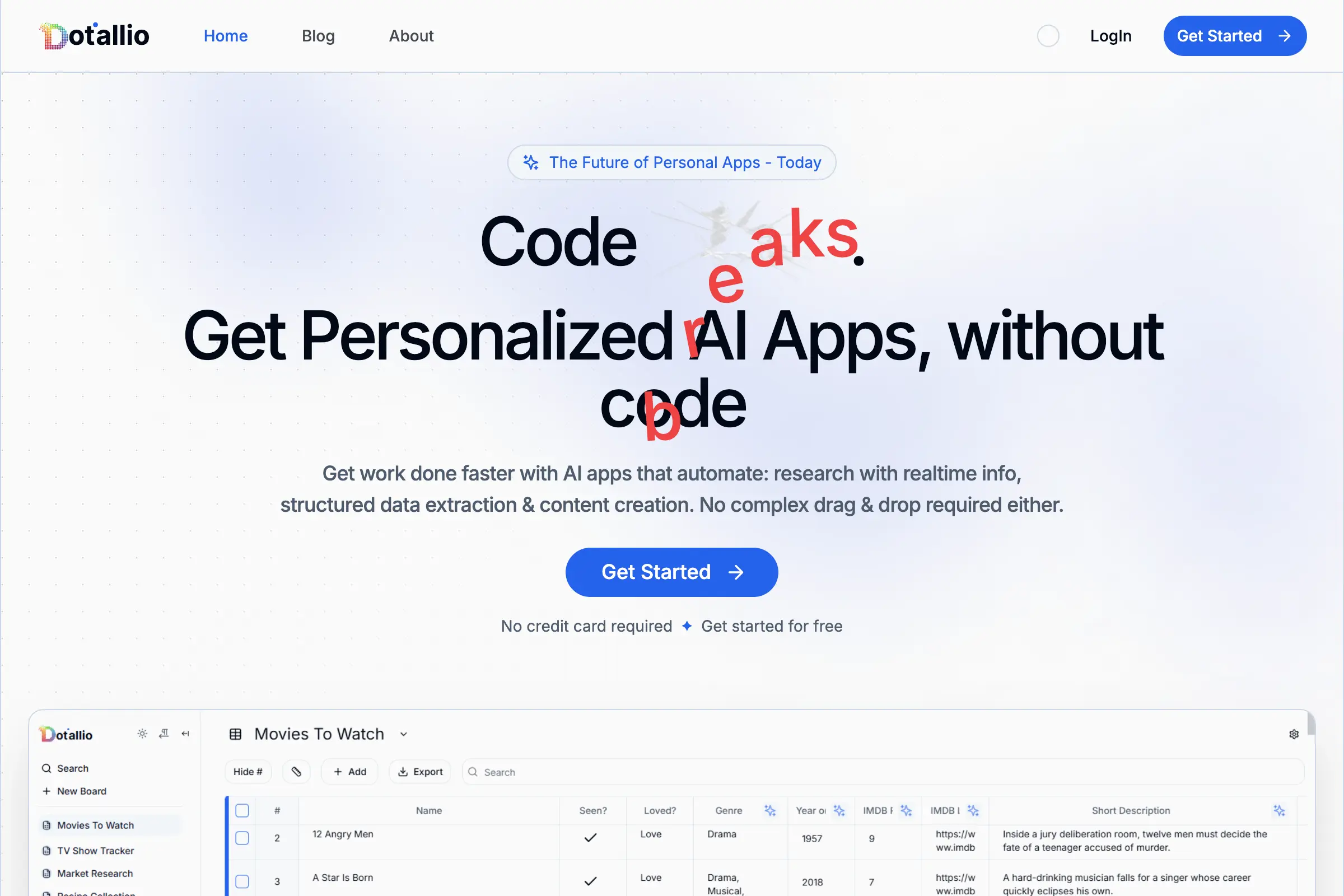
Dotallio
Personalized AI apps that automate research, data extraction, and content creation without code 🤖

Talk to Santa
Enjoy a magical live video chat or receive a unique AI-generated video greeting from Santa Claus 🎅
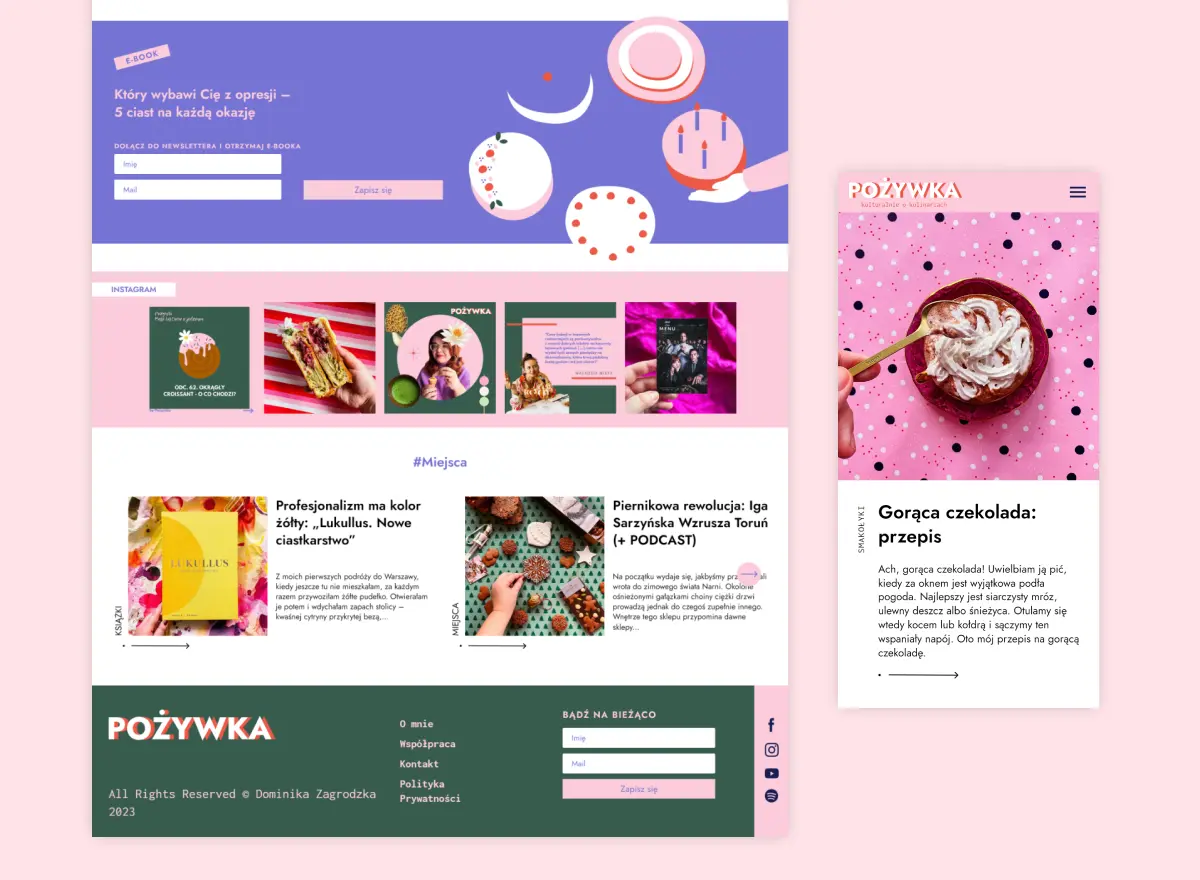
pozywka.pl
Scalable blog for food journalist, focused on performance and user experience 🌭
zagrodzki.me
Personal blog and portfolio of Bart Zagrodzki, where he shares his knowledge and work 💼
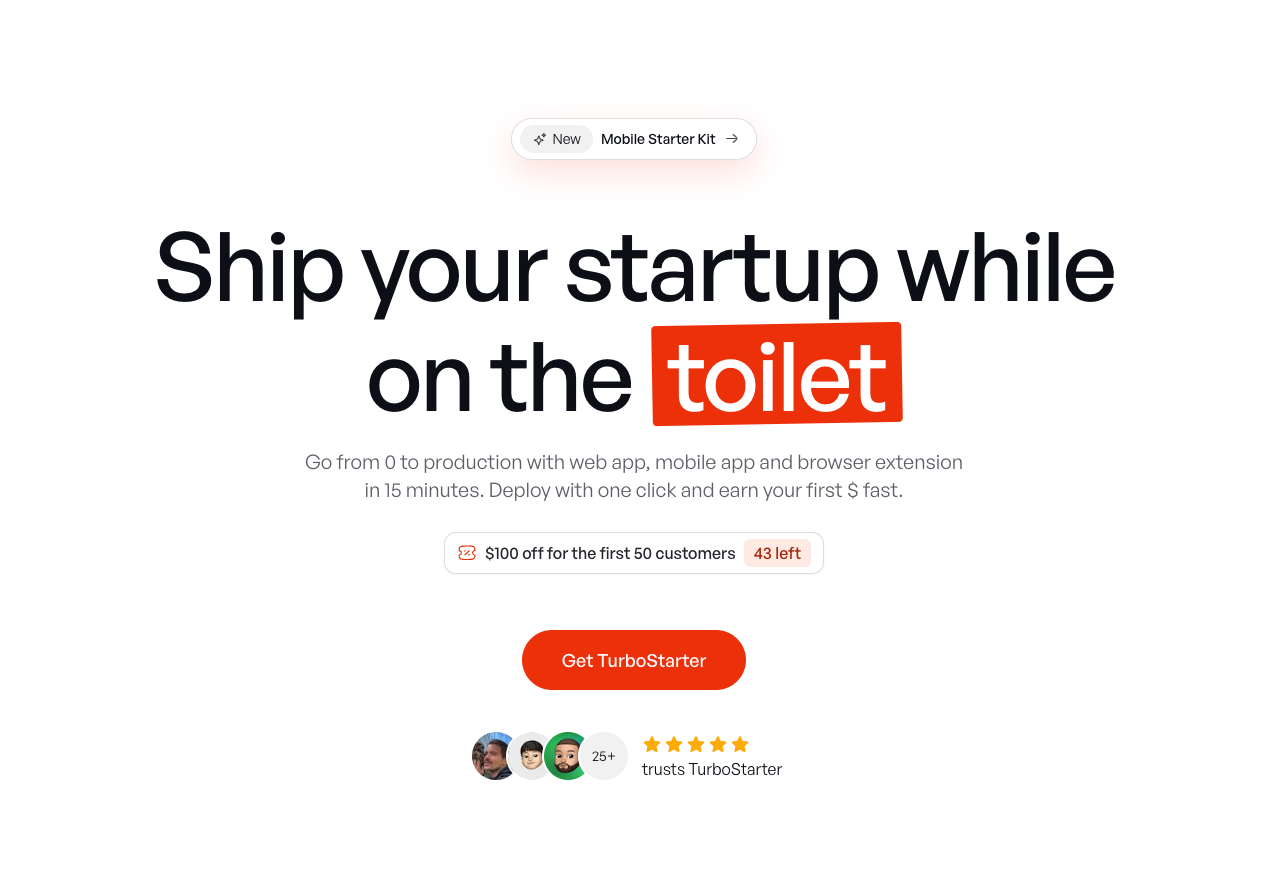
TurboStarter
Ship your startup everywhere. In minutes.
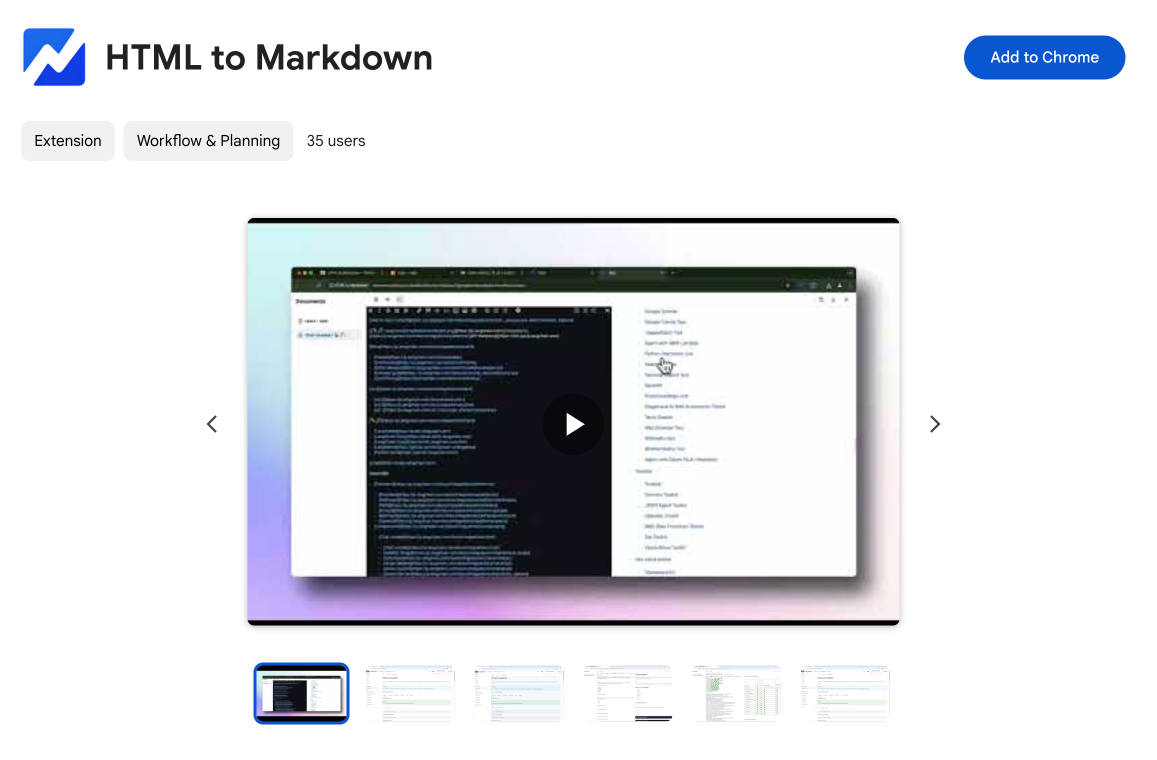
HTML to Markdown
Convert HTML to Markdown with ease, directly in your browser 📄
Dotallio
Personalized AI apps that automate research, data extraction, and content creation without code 🤖
Talk to Santa
Enjoy a magical live video chat or receive a unique AI-generated video greeting from Santa Claus 🎅
pozywka.pl
Scalable blog for food journalist, focused on performance and user experience 🌭
zagrodzki.me
Personal blog and portfolio of Bart Zagrodzki, where he shares his knowledge and work 💼
TurboStarter
Ship your startup everywhere. In minutes.
HTML to Markdown
Convert HTML to Markdown with ease, directly in your browser 📄
Dotallio
Personalized AI apps that automate research, data extraction, and content creation without code 🤖
Talk to Santa
Enjoy a magical live video chat or receive a unique AI-generated video greeting from Santa Claus 🎅
pozywka.pl
Scalable blog for food journalist, focused on performance and user experience 🌭
zagrodzki.me
Personal blog and portfolio of Bart Zagrodzki, where he shares his knowledge and work 💼
TurboStarter
Ship your startup everywhere. In minutes.
HTML to Markdown
Convert HTML to Markdown with ease, directly in your browser 📄
Dotallio
Personalized AI apps that automate research, data extraction, and content creation without code 🤖
Talk to Santa
Enjoy a magical live video chat or receive a unique AI-generated video greeting from Santa Claus 🎅
pozywka.pl
Scalable blog for food journalist, focused on performance and user experience 🌭
zagrodzki.me
Personal blog and portfolio of Bart Zagrodzki, where he shares his knowledge and work 💼
TurboStarter
Ship your startup everywhere. In minutes.
HTML to Markdown
Convert HTML to Markdown with ease, directly in your browser 📄
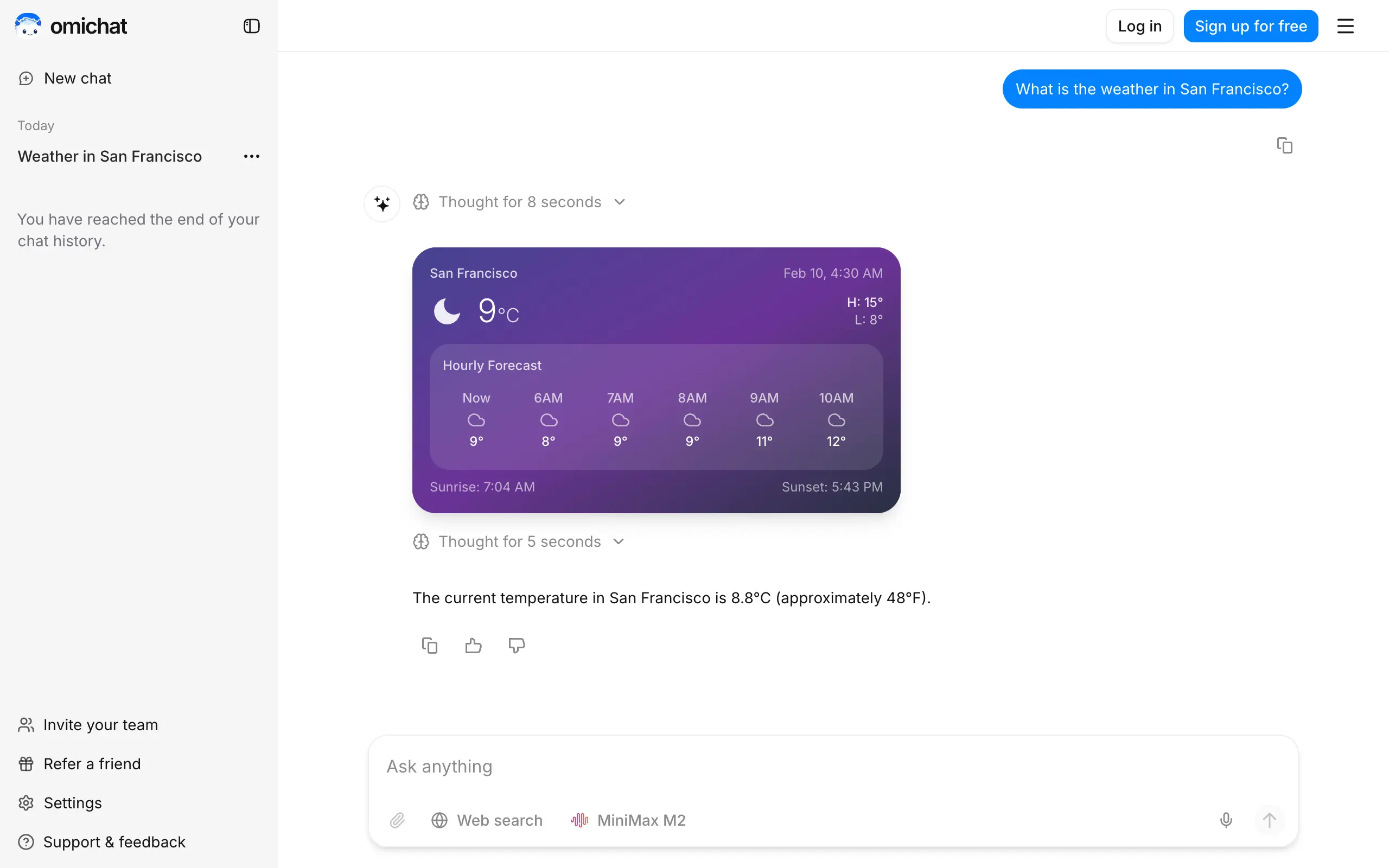
Omichat
Chat with 50+ AI models, including ChatGPT and Claude, in one place - switch models anytime without losing context 🤖
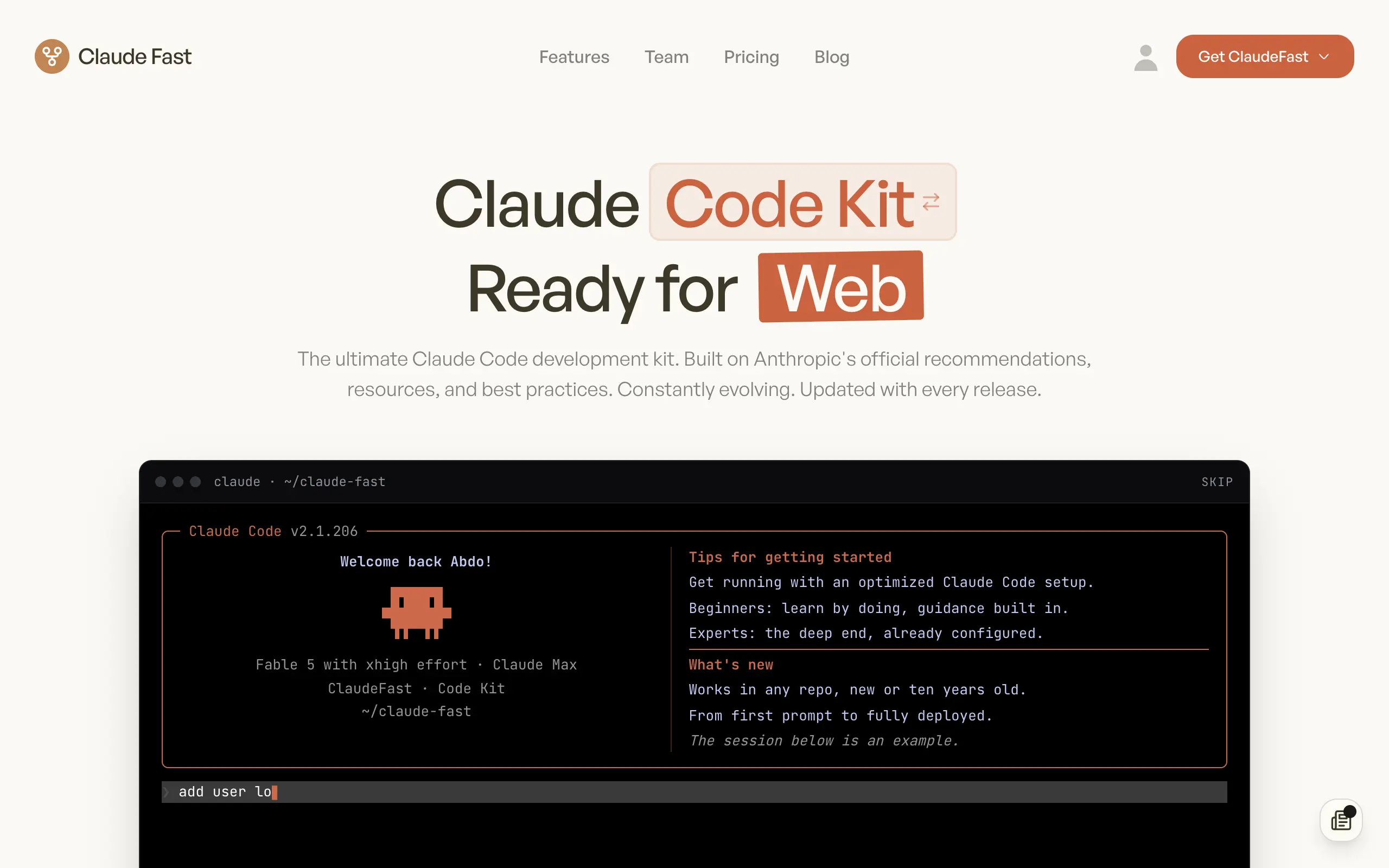
Claude Fast
Supercharge your Claude Code with 6x effective context window and specialized AI agents 🤖
EmojAI
AI-powered emoji picker with smart, context-aware suggestions 🤖
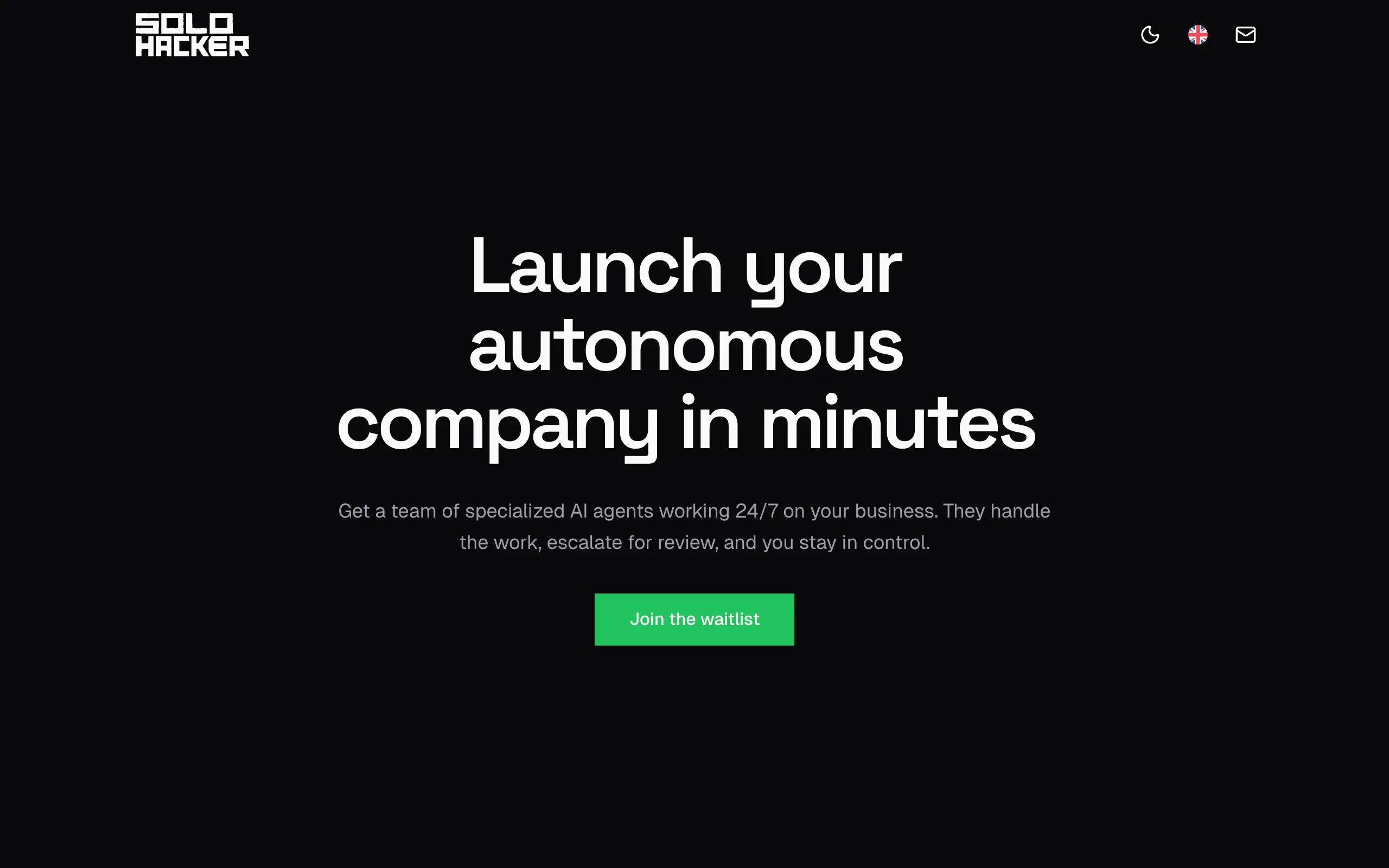
Solohacker
Autonomous company launcher - AI agents work 24/7, escalate what matters, and you stay in control 🤖

BeRawi: Storytelling Coach
Practice storytelling daily with instant feedback to sound clearer, more engaging, and confident 🎤
Omichat
Chat with 50+ AI models, including ChatGPT and Claude, in one place - switch models anytime without losing context 🤖
Claude Fast
Supercharge your Claude Code with 6x effective context window and specialized AI agents 🤖
EmojAI
AI-powered emoji picker with smart, context-aware suggestions 🤖
Solohacker
Autonomous company launcher - AI agents work 24/7, escalate what matters, and you stay in control 🤖
BeRawi: Storytelling Coach
Practice storytelling daily with instant feedback to sound clearer, more engaging, and confident 🎤
Omichat
Chat with 50+ AI models, including ChatGPT and Claude, in one place - switch models anytime without losing context 🤖
Claude Fast
Supercharge your Claude Code with 6x effective context window and specialized AI agents 🤖
EmojAI
AI-powered emoji picker with smart, context-aware suggestions 🤖
Solohacker
Autonomous company launcher - AI agents work 24/7, escalate what matters, and you stay in control 🤖
BeRawi: Storytelling Coach
Practice storytelling daily with instant feedback to sound clearer, more engaging, and confident 🎤
Omichat
Chat with 50+ AI models, including ChatGPT and Claude, in one place - switch models anytime without losing context 🤖
Claude Fast
Supercharge your Claude Code with 6x effective context window and specialized AI agents 🤖
EmojAI
AI-powered emoji picker with smart, context-aware suggestions 🤖
Solohacker
Autonomous company launcher - AI agents work 24/7, escalate what matters, and you stay in control 🤖
BeRawi: Storytelling Coach
Practice storytelling daily with instant feedback to sound clearer, more engaging, and confident 🎤

Connect with like-minded people
Join our community to get feedback, support, and grow together with 1,000+ builders on board, let's ship it!
Join usShip your startup everywhere. In minutes.
Don't burn tokens on setup and start building features on day one.