EvalForge
Build reliable AI features with a lightweight prompt studio for test datasets, side-by-side model evaluations, regression alerts, and approval workflows.
Why an AI evaluation platform is becoming essential for SaaS teams
Shipping an AI feature is not the same as shipping a deterministic software feature. Traditional applications generally produce predictable outputs from known inputs. Large language model features are probabilistic, sensitive to prompt changes, dependent on model provider behavior, and often affected by retrieval quality, tool calls, structured output constraints, and changing user inputs.
That creates a practical product-development problem. A prompt that appears excellent in a development playground can fail when it reaches real customers. A model upgrade can improve helpfulness while quietly reducing JSON reliability. A retrieval change can make answers more grounded for one customer segment and less useful for another.
EvalForge is an AI evaluation platform concept designed to solve that problem. It gives AI product teams a lightweight prompt studio for creating test datasets, comparing models side by side, catching regressions, and routing releases through approval workflows.
The primary opportunity is not another generic chatbot builder. It is a focused prompt evaluation and AI quality assurance platform for teams that need to turn experimental generative AI behavior into an accountable, repeatable release process.
For product managers, AI engineers, founders, and platform teams, the central question is straightforward:
How do we know an AI feature is safe, useful, and measurably better before customers experience it?
EvalForge answers that question by making evaluation a normal part of the development lifecycle rather than a last-minute manual task.
The core thesis
The winning AI products will not be defined only by which model they call. They will be defined by how reliably they evaluate prompts, retrieval, tools, model versions, and real-world outcomes over time.
The target audience for EvalForge
An AI evaluation platform has broad potential, but its early product positioning should remain sharp. EvalForge should focus first on teams already building customer-facing AI workflows and feeling the operational pain of inconsistent quality.
Primary audience: AI-native SaaS product teams
The strongest initial users are SaaS companies with a small but growing AI team. They may have one to five engineers working on retrieval-augmented generation, support automation, document processing, agent workflows, internal copilots, or AI-assisted content features.
These teams often share a recognizable workflow:
- They test prompts manually in provider playgrounds or local scripts.
- They save important examples in spreadsheets, issue trackers, or scattered JSON files.
- They compare model output informally in pull request comments.
- They discover regressions only after a customer reports a bad result.
- They lack a shared definition of what “good” means for an AI feature.
- They need product, engineering, and domain experts to approve risky changes.
EvalForge can become their system of record for AI quality. Instead of relying on memory, subjective review, or a collection of one-off scripts, teams get a consistent place to define datasets, run evaluations, review outputs, and approve releases.
Secondary audience: enterprise AI and platform teams
Larger companies present a higher-value expansion segment. These organizations frequently need auditability, role-based access, evaluation governance, compliance controls, and an internal platform that multiple product teams can use.
Their needs may include:
- Evaluating models across multiple business units
- Maintaining approved datasets with sensitive-data controls
- Tracking who approved a prompt or model change
- Enforcing release gates for high-impact workflows
- Reporting quality trends to risk, security, or leadership teams
- Integrating evaluations into existing CI/CD pipelines
Enterprise buyers are less likely to adopt a lightweight tool solely because it has a polished prompt editor. They buy governance, reliability, collaboration, and a credible path to scale.
Tertiary audience: AI consultancies and agencies
Consultancies that implement AI applications for clients can use EvalForge to standardize delivery and demonstrate rigor. A client-facing evaluation report can be substantially more persuasive than a claim that a solution “works well.”
For this segment, white-label reporting, multi-workspace organization, client access controls, and reusable evaluation templates could become valuable premium capabilities.
Jobs to be done
EvalForge should be designed around the specific jobs users are trying to accomplish, not around generic “AI observability” language.
Validate a change before release
Compare a new prompt, model, retrieval strategy, or tool definition against known examples before it affects production users.
Find hidden quality regressions
Detect when a release improves one metric but harms important edge cases such as safety, formatting, factuality, or task completion.
Align reviewers on quality
Give product, engineering, and domain experts a shared interface for reviewing outputs and recording approval decisions.
Create repeatable AI release gates
Turn informal prompt testing into a defined workflow that can run locally, in CI, and before production deployment.
The market gap in prompt testing and LLM evaluation
The AI developer tooling market is increasingly crowded. There are model provider consoles, tracing platforms, observability products, notebook environments, annotation tools, feature flag systems, and full-scale machine learning operations suites.
Yet a large gap remains between experimentation and reliable deployment.
Current approaches are fragmented
Many teams start with a model provider playground. It is useful for trying ideas, but it has major limitations:
- Results are hard to reproduce across a growing test corpus.
- Comparisons are often manual and subjective.
- Prompt versions may not be tied to a release or pull request.
- Business stakeholders cannot easily participate in review.
- The process rarely creates a durable audit trail.
- Teams can overlook failures that appear only in edge cases.
At the other extreme, enterprise machine learning platforms can be too complex for product-led SaaS teams. They may assume formal data science workflows, require extensive infrastructure, or demand a level of operational maturity that early AI product teams do not yet have.
EvalForge should occupy the middle ground: a purpose-built AI evaluation platform that is easier than building an internal framework and more operationally useful than a standalone prompt playground.
The real problem is evaluation discipline
The underlying issue is not only that models hallucinate or prompts are difficult. The deeper issue is that many companies lack an evaluation discipline.
Teams need to answer questions such as:
- Which customer scenarios must never fail?
- What does a correct answer look like for this workflow?
- Should a concise answer score better than a comprehensive one?
- Does the AI follow the required output schema?
- Is the answer grounded in approved source material?
- Did a new model version change tone, safety, cost, or latency?
- Who is authorized to approve a change to a high-impact AI workflow?
An effective LLM evaluation workflow makes those questions explicit and measurable.
Why this opportunity is timely
Several industry trends reinforce the demand for products like EvalForge:
-
Model choice is expanding. Teams can select between hosted frontier models, smaller fast models, open-weight models, and specialized providers. More options create more comparison work.
-
AI features are moving into core workflows. Generative AI is no longer limited to experimental chat interfaces. It is increasingly used for support, search, finance operations, sales assistance, legal review, knowledge management, and document automation.
-
Agentic workflows create new failure modes. When models use tools, access knowledge bases, or trigger downstream actions, teams must assess more than answer quality. They need to evaluate decisions, tool selection, permissions, and completion outcomes.
-
Governance expectations are rising. Customers, procurement teams, and regulators increasingly expect companies to show that AI systems are tested, monitored, and controlled appropriately.
-
Prompt engineering is becoming product engineering. Prompts, retrieval instructions, model settings, tool descriptions, and graders are now production assets. They need versioning, review, testing, and rollback procedures.
For market-sizing claims or adoption figures, use a current report from a credible research provider or an official standards body rather than relying on unverified figures. Sources such as NIST guidance, provider documentation, and reputable analyst research are appropriate references in a production article.
EvalForge’s unique value proposition
EvalForge should position itself around a crisp promise:
Build AI features with confidence by turning prompt and model changes into measurable, reviewable, release-ready evaluations.
This is more specific than “improve your prompts” and more accessible than “enterprise AI governance.” It speaks directly to the operational outcome users want: confidently releasing AI features without guessing whether a change helped or hurt.
A lightweight prompt studio with a production mindset
The defining product concept is a prompt studio that does more than generate sample outputs. Every experiment should be connected to a dataset, a configuration, evaluation criteria, results, and an approval state.
A user could create a prompt variant, choose a model, select a test suite, run an evaluation, compare outputs against the baseline, and request approval from the relevant reviewer. That workflow turns an isolated experiment into a controlled product change.
Differentiation through the evaluation loop
EvalForge can stand out by unifying the complete evaluation loop:
| Capability | Basic playground | Internal scripts | EvalForge | Heavy ML platform |
|---|---|---|---|---|
| Prompt experimentation | ✅ | ✅ | ✅ | ✅ |
| Shared test datasets | ❌ | ⚠️ | ✅ | ✅ |
| Side-by-side model comparison | ⚠️ | ⚠️ | ✅ | ✅ |
| Regression alerts | ❌ | ⚠️ | ✅ | ✅ |
| Fast adoption for SaaS teams | ✅ | ❌ | ✅ | ⚠️ |
| Approval workflow and audit history | ❌ | ❌ | ✅ | ✅ |
The strongest competitive advantage is not any single feature. It is the ability to make best-practice evaluation workflows easy enough that teams actually use them every time they change an AI feature.
Core EvalForge features and solution design
The product should launch with a tightly integrated feature set. Each capability needs to serve the central workflow rather than creating a broad, disconnected dashboard.
Prompt and configuration versioning
A prompt is rarely just a text field. A production AI configuration may include system instructions, user templates, model parameters, output schema, tool definitions, retrieval configuration, and fallback logic.
EvalForge should version these assets together as an immutable evaluation configuration.
Each version should capture:
- Prompt messages and variables
- Selected model and provider
- Temperature, token limits, and sampling settings
- Structured output schema
- Connected tools or function definitions
- Retrieval settings and knowledge source version
- Author, timestamp, change summary, and linked ticket
- Baseline or candidate release status
This makes comparison meaningful. If evaluation results change, users can see exactly what changed.
Test dataset builder for real AI scenarios
Test datasets are the foundation of reliable AI evaluation. EvalForge should make it easy to create, import, label, and organize examples without forcing users into a data science workflow.
A dataset record might include an input, expected outcome, metadata, reference answer, source citations, category, severity, and tags such as edge-case, enterprise-customer, safety, or json-output.
The product should support several dataset sources:
- Manual examples created in the studio
- CSV or JSONL import
- Production conversation samples with privacy filtering
- Support tickets and resolved cases
- Synthetic examples generated from templates
- API-based ingestion from internal systems
The key is to guide teams toward datasets that reflect their actual users. A polished benchmark is less valuable than a representative corpus of customer questions, messy documents, ambiguous instructions, and high-stakes edge cases.
Side-by-side model evaluation
Model comparison should be one of EvalForge’s most compelling visual experiences. Users should be able to run the same dataset against multiple configurations and inspect outputs in a synchronized comparison view.
Useful comparison dimensions include:
- Output quality and correctness
- Schema validity
- Hallucination or grounding indicators
- Latency
- Token consumption
- Estimated cost
- Safety classification
- Human preference votes
- Automated rubric scores
- Pass or fail status by test case
A reviewer needs more than an aggregate score. They need to see where a candidate model is better, where it is worse, and whether failures occur in important categories.
Compare prompt versions using the same model and dataset. This is ideal for testing instruction clarity, formatting rules, tone, examples, and guardrails.
Run the same prompt and test suite across providers or model versions. This reveals the practical quality, latency, and cost trade-offs behind a model migration.
Evaluate changes to chunking, search, reranking, context limits, and source filtering. This is especially useful for RAG applications where answer quality depends on context quality.
Flexible evaluation criteria and graders
AI quality is contextual. An email-writing assistant, a support-answering bot, and a document extraction workflow need different grading methods.
EvalForge should support a layered scoring approach.
Deterministic checks work well for objective requirements:
- Valid JSON or XML
- Required fields present
- Exact value or pattern match
- Maximum output length
- Forbidden phrases
- Citation presence
- Tool-call schema validity
Reference-based checks compare output to a known answer:
- Semantic similarity
- Key fact coverage
- Answer overlap
- Classification accuracy
- Extraction field accuracy
Rubric-based LLM judges can assess subjective dimensions:
- Helpfulness
- Groundedness
- Professional tone
- Completeness
- Policy compliance
- Faithfulness to source material
LLM-as-a-judge should not be treated as unquestionable truth. EvalForge should expose the rubric, judge model, judge prompt, and rationale. Users should be able to calibrate automated scores against human review, especially for high-risk workflows.
A well-designed evaluation rubric might look like this:
name: Support answer quality
pass_threshold: 0.8
criteria:
  - name: factual_accuracy
    weight: 0.35
    requirement: Answer only with facts supported by the provided knowledge base.
  - name: task_completion
    weight: 0.30
    requirement: Resolve the customer question or provide the correct next step.
  - name: clarity
    weight: 0.20
    requirement: Use direct language and avoid unnecessary technical jargon.
  - name: policy_compliance
    weight: 0.15
    requirement: Do not provide restricted advice or unsupported promises.
Regression detection and release alerts
The transition from manual experimentation to reliable operation happens when evaluation runs are automated.
EvalForge should let users establish a baseline and configure regression thresholds. For example, a team may allow minor latency variation but block a release if structured output validity falls below 99%, grounding quality declines in a critical dataset slice, or safety failures increase.
Alerts should support practical channels:
- Email for review requests and failed release gates
- Slack or Microsoft Teams notifications
- GitHub pull request checks
- Webhooks for internal deployment systems
- Issue creation in project management tools
An alert needs context, not just a red status. The notification should explain which dataset slice regressed, identify the affected test cases, show the previous and current result, and link directly to the comparison view.
Approval workflows for accountable releases
Approval workflows are a major opportunity to differentiate EvalForge from developer-only evaluation tools.
Not every AI change needs a formal sign-off. However, workflows that affect customer communications, regulated decisions, payments, healthcare information, legal guidance, or sensitive data benefit from review controls.
A release workflow could include the following states:
A contributor creates a candidate configuration and runs the required evaluation suite.
EvalForge compares the candidate against the approved baseline and checks release thresholds.
Assigned reviewers inspect failures, leave comments, and approve, reject, or request revisions.
The approved configuration receives a release identifier that deployment systems can reference.
EvalForge stores the evaluation evidence, approvals, and configuration snapshot for auditability.
This workflow serves both speed and trust. Teams can move quickly because expectations are explicit, while stakeholders gain confidence that important AI behavior changes are visible and reviewable.
Building reliable datasets for LLM evaluation
The quality of EvalForge’s results depends heavily on the quality of its test datasets. The product should educate users that evaluation is not a one-time benchmark exercise.
Start with high-value user journeys
The first test cases should cover tasks that create value or risk. For a support assistant, that could include password resets, billing questions, integration setup, cancellation requests, and escalation triggers. For document extraction, it could include clean documents, poor scans, missing fields, multilingual content, conflicting values, and unusual formats.
Prioritize examples by:
- Business importance
- Frequency in production
- Customer impact if wrong
- Compliance or safety risk
- Known historical failures
- Revenue or retention relevance
Include edge cases from production
Synthetic examples are useful, but they can make teams overconfident. Real production inputs reveal ambiguity, misspellings, incomplete context, contradictory instructions, long documents, adversarial attempts, and domain-specific language.
EvalForge should provide safe mechanisms for importing production samples while minimizing privacy risk. This may include redaction, token-level masking, retention controls, access policies, and configurable sampling.
Do not evaluate only the happy path
A test suite full of clean, obvious questions can make an AI feature look production-ready when it is not. The highest-value dataset rows are often the confusing, sensitive, incomplete, or historically failed inputs.
Slice results to discover meaningful regressions
Aggregate metrics can hide serious problems. A candidate configuration may improve the overall score while failing for a specific language, customer tier, document type, or high-risk category.
EvalForge should make it easy to filter and compare dataset slices such as:
- New versus returning customers
- Short versus long inputs
- English versus multilingual content
- Regulated versus low-risk use cases
- High-volume versus long-tail questions
- Retrieval available versus retrieval unavailable
- Standard cases versus adversarial cases
This capability makes the platform useful for diagnosis, not just reporting.
Recommended tech stack for an AI evaluation SaaS
EvalForge is a multi-tenant SaaS product with interactive comparison workflows, asynchronous evaluation jobs, provider integrations, sensitive customer data, and a need for strong auditability. The architecture should prioritize speed of iteration without compromising reliability.
Product application stack
For a modern web application, React and Next.js are a strong foundation. Next.js provides a practical full-stack framework for authenticated product experiences, server-side logic, API routes, and deployment workflows.
Tailwind CSS is well suited to a dense evaluation interface because it supports a consistent design system without requiring a large custom stylesheet. A side-by-side diff view, dataset table, run history, and approval panel all benefit from reusable visual primitives.
TypeScript should be non-negotiable. Evaluation data has many interconnected entities, including datasets, test cases, prompt versions, model configurations, scorecards, runs, review states, and audit events. Strong typing reduces costly integration mistakes.
Data and background processing
A relational database such as PostgreSQL is a natural fit for core transactional data. It handles workspace membership, permissions, prompt versions, dataset metadata, evaluations, comments, and audit records well.
For background evaluation workloads, use a durable job queue. Evaluation runs can take time, encounter provider rate limits, retry after transient errors, and produce partial results. The queue needs idempotency, retry policies, concurrency management, cancellation, and observability.
A practical architecture may include:
- PostgreSQL for transactional records and relational querying
- Object storage for large datasets, artifacts, and output snapshots
- Redis for caching, rate limiting, and queue coordination
- A workflow or queue system for durable evaluation jobs
- A vector-capable search layer only when semantic dataset search becomes a validated user need
- An event log for evaluation state transitions and audits
The trade-off is clear. A simple synchronous architecture may be faster to launch, but it will struggle once users evaluate hundreds or thousands of cases across several model configurations. Build asynchronous runs early, even if the first interface remains lightweight.
Model provider abstraction
EvalForge should support multiple providers without exposing unnecessary complexity to end users. Implement a provider abstraction that normalizes requests, responses, token usage, errors, tool calls, and structured output validation.
The application can initially prioritize the providers most commonly used by the target market, then expand based on customer demand. A normalized internal format helps the comparison interface remain consistent even when providers expose different capabilities.
Be careful not to erase meaningful provider differences. Users may need to inspect raw response metadata, finish reasons, safety flags, tool call payloads, or provider-specific token accounting when debugging a failure.
Authentication, tenancy, and permissions
Authentication should support individual users and organization workspaces from the beginning. For enterprise readiness, design the authorization model around roles and resource-level access rather than relying only on workspace membership.
Common roles include:
- Workspace administrator
- Evaluation editor
- Reviewer
- Read-only stakeholder
- Service account
- Compliance auditor
Approval permissions should be separately configurable. The person who writes a prompt should not always be able to approve their own release in higher-risk environments.
Security and privacy requirements
AI evaluation datasets can contain sensitive customer information, proprietary knowledge, and regulated data. Security cannot be an afterthought.
Key controls should include:
- Encryption in transit and at rest
- Tenant isolation
- Secret management for provider API keys
- Configurable data retention
- Audit logging for access and approvals
- Redaction options for imported production examples
- Role-based access controls
- Secure export and deletion processes
- Clear policies for whether customer data is retained or sent to third-party model providers
For enterprise sales, prepare a security architecture document, data processing documentation, incident response policies, and a clear description of subprocessors. Certifications may come later, but security evidence should be ready before large deals require it.
Monetization options for EvalForge
The best pricing model should match the value drivers of AI evaluation: team collaboration, evaluation scale, provider usage, governance needs, and enterprise controls.
A tiered SaaS pricing strategy
A product-led entry tier lowers adoption friction. Teams should be able to validate EvalForge on a small dataset before committing to a larger rollout.
Potential plans include:
- "Free or trial": limited workspaces, datasets, evaluation runs, and retained history
- "Team": collaborative prompt studio, scheduled evaluations, integrations, and a larger usage allowance
- "Business": approval workflows, advanced roles, audit logs, custom alerts, and higher limits
- "Enterprise": SSO, SCIM, private networking options, dedicated support, custom retention, security reviews, and negotiated usage
Pricing should avoid relying solely on seats. AI evaluation workloads can vary dramatically, and heavy usage may come from automated CI rather than many human users.
Hybrid pricing model
A strong approach is a platform subscription plus usage-based evaluation credits.
The subscription captures the value of collaboration, governance, datasets, and workflow. Usage-based pricing aligns with compute-intensive evaluation runs, especially when users run large test suites across multiple models.
However, usage pricing needs predictability. Teams dislike surprise bills caused by a runaway evaluation job. EvalForge should include budgets, usage caps, alerts, and clear estimates before execution.
Premium expansion opportunities
Over time, EvalForge can introduce high-value add-ons:
- Private or self-hosted deployment
- Bring-your-own-cloud data plane
- Advanced compliance controls
- Dedicated evaluation infrastructure
- Custom model and provider integrations
- Professional services for dataset design
- Industry-specific evaluation templates
- Enterprise reporting and governance dashboards
The most defensible revenue comes from becoming embedded in a customer’s AI release process. Once datasets, release gates, and approvals live in EvalForge, the platform becomes operational infrastructure rather than an optional experimentation tool.
Competitive advantage and defensibility
The evaluation tooling category has strong competition, so EvalForge should not attempt to win by claiming to support every possible AI workflow on day one.
Its defensibility should come from focus, workflow depth, and accumulated evaluation context.
Win with opinionated simplicity
A product can be technically powerful yet hard to adopt. EvalForge should make good practices feel natural through templates, defaults, and guided workflows.
For example, when a user creates an evaluation suite, the product can recommend:
- A baseline configuration
- Dataset tags for slicing
- Deterministic schema checks
- A human review sample
- Regression thresholds
- A release approval policy
This reduces the expertise required to get started while preserving flexibility for advanced teams.
Build a proprietary quality history
Over time, the product accumulates valuable context:
- Which test cases repeatedly fail
- Which prompts or models perform best for a task
- Which metrics predict production incidents
- Which dataset slices are most sensitive to changes
- How quality, latency, and cost evolve across releases
- Which approvals were associated with successful releases
That history creates switching costs and makes EvalForge increasingly useful as a team’s AI program matures.
Create collaboration beyond engineering
Many developer tools are designed primarily for engineers. EvalForge can create a meaningful advantage by making evaluation understandable to product managers, support leaders, legal reviewers, subject matter experts, and executives.
Plain-language scorecards, reviewer comments, approval histories, and evidence-based release summaries make it easier for non-engineering stakeholders to participate without needing to understand model APIs or evaluation code.
Risks and mitigation strategies
Every AI SaaS idea has execution risks. Addressing them directly improves the chance that EvalForge becomes a trusted product rather than another short-lived tool in a crowded category.
LLM judges can be inconsistent, biased toward verbose responses, or poorly calibrated to a company’s actual standards. Mitigate this by supporting deterministic checks, visible rubrics, judge versioning, human calibration sets, and reviewer overrides.
Large datasets multiplied across multiple candidate models can create substantial costs. Mitigate this with sampling, caching, budget controls, token estimates, incremental test runs, configurable concurrency, and clear cost reporting.
Customers may hesitate to upload production examples or proprietary documents. Mitigate this through redaction tools, retention controls, access policies, encryption, enterprise deployment options, and transparent data-handling documentation.
It is tempting to build observability, prompt management, agent orchestration, annotation, monitoring, and governance all at once. Mitigate this by focusing on the pre-release evaluation and approval workflow first, then expanding from validated customer demand.
Many teams have never written formal evaluation criteria. Mitigate this with templates, onboarding guidance, industry examples, scorecard recommendations, and professional services for high-value customers.
An actionable implementation plan for EvalForge
The best path to market is to launch a narrow but complete workflow rather than a broad collection of partial features.
Phase one: validate the evaluation workflow
Build the smallest useful version around a single user journey:
- Create a dataset with structured test cases.
- Save two prompt or model configurations.
- Run both configurations against the dataset.
- Compare outputs and basic metrics side by side.
- Mark a candidate as approved or rejected.
- Store the result history.
The goal is not sophisticated automation yet. The goal is proving that teams will replace spreadsheets and ad hoc prompt testing with EvalForge.
Interview design partners before and during development. Ask them to bring real prompts, real failed outputs, and real release scenarios. Their behavior matters more than generic feature requests.
Phase two: add automation and regression detection
Once teams trust the manual comparison experience, add automated evaluation runs, scorecards, scheduled checks, and CI integration.
The product should support a simple release-gate API concept:
const evaluation = await evalforge.run({
  suite: "support-critical-paths",
  candidate: "prompt-v24",
  baseline: "prompt-v23",
});

if (evaluation.regressionDetected) {
  process.exit(1);
}
This phase moves EvalForge from a collaborative workspace into the delivery pipeline.
Phase three: deepen governance and enterprise readiness
After the core workflow is validated, invest in approval policies, audit logging, advanced permissions, SSO, retention settings, private connectivity, and enterprise reporting.
Do not build every enterprise feature prematurely. Use active sales conversations to identify which controls consistently block adoption and prioritize those capabilities.
Phase four: expand into intelligent evaluation assistance
Once EvalForge has enough structured data, it can help customers improve their evaluation programs. Potential intelligence features include:
- Suggested test cases based on recent failures
- Automated clustering of failing outputs
- Recommendations for missing dataset coverage
- Regression summaries written for stakeholders
- Alert prioritization based on risk and historical impact
- Templates based on use case and industry
These features should augment human judgment, not obscure it. In AI quality assurance, explainability and reviewer control are essential to trust.
Launching EvalForge with speed and quality
A polished SaaS foundation can save weeks of non-differentiating engineering work. Authentication, payments, organizations, dashboards, transactional email, billing, and deployment should not delay validation of the core AI evaluation experience.
TurboStarter can provide a practical starting point for building the SaaS shell around EvalForge, allowing the product team to focus on the prompt studio, dataset workflows, comparison experience, and approval system that create the actual competitive advantage.
Final takeaway
EvalForge addresses a durable and increasingly urgent need in the AI software market. As more businesses rely on LLMs for customer-facing and operational workflows, informal prompt testing will no longer be enough.
The strongest version of EvalForge is a focused AI evaluation platform for prompt testing, model comparison, regression detection, and release approvals. It helps teams establish a repeatable answer to the question that matters most before every AI release:
Is this change measurably better, safe enough for its intended use, and approved by the people accountable for the outcome?
By starting with a lightweight, collaborative evaluation workflow and expanding toward automated release gates and enterprise governance, EvalForge can become an essential layer in the modern AI product development stack.
More ⚡ Productivity Tool SaaS ideas
Discover more innovative productivity tool SaaS ideas that are trending in 2026. Each idea is AI-generated with market validation and growth potential to help you find your next profitable venture faster than competitors.
Your competitors are building with TurboStarter
Below are some of the SaaS ideas that have been generated and built with our starter kit.

Statiko
Monitor any Telegram channel in real time - track posts, edits, deletions, and growth with AI recaps 📡

Shibui
AI website builder - describe your business, pick a niche template, edit by chatting, and publish instantly ✨

Pro Service
Find verified home service professionals, compare quotes, and pay securely through escrow - built for Brazilians across the US 🏠
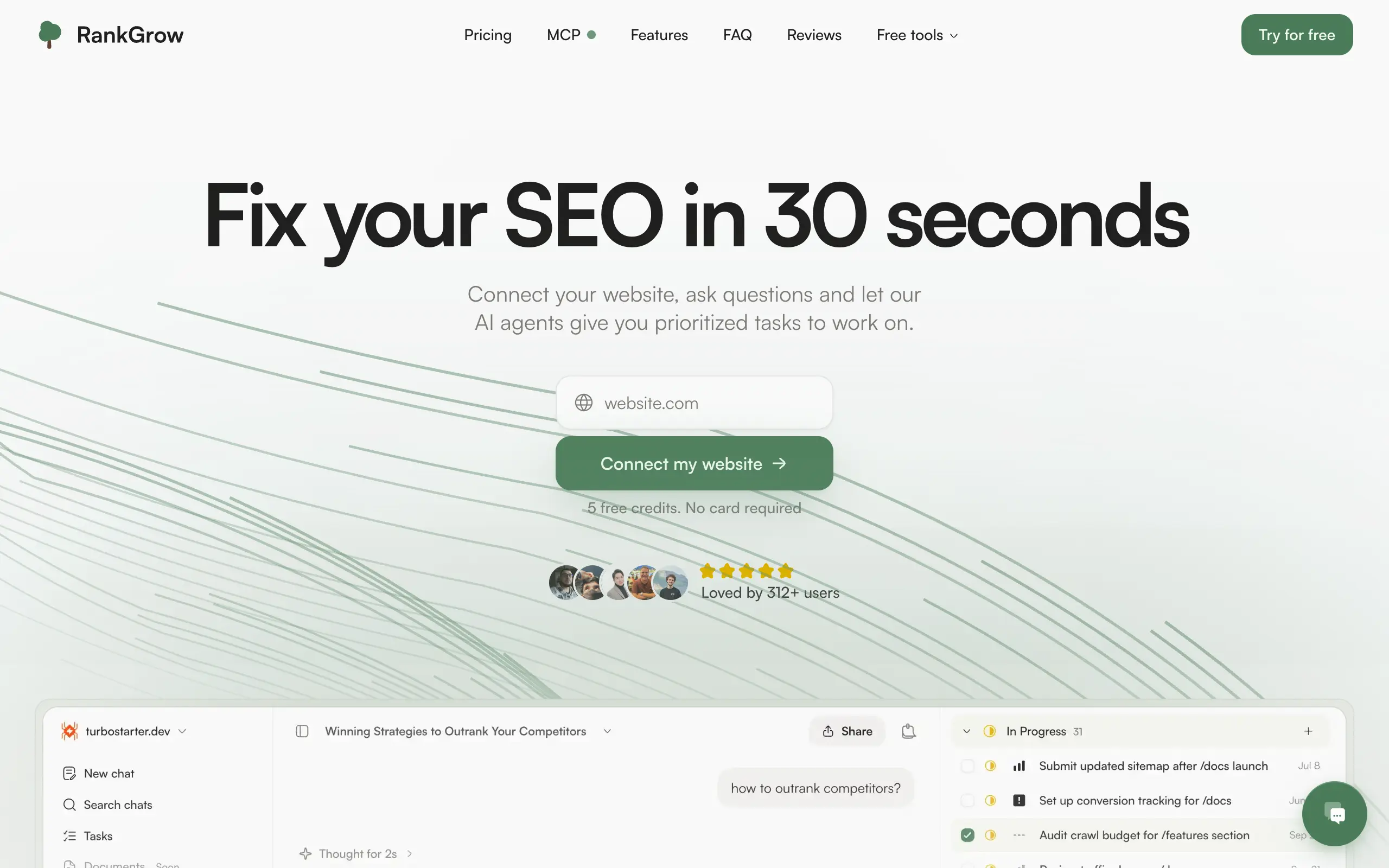
RankGrow
Fix your SEO with AI agents - connect Search Console, get prioritized tasks, and grow organic traffic 📈
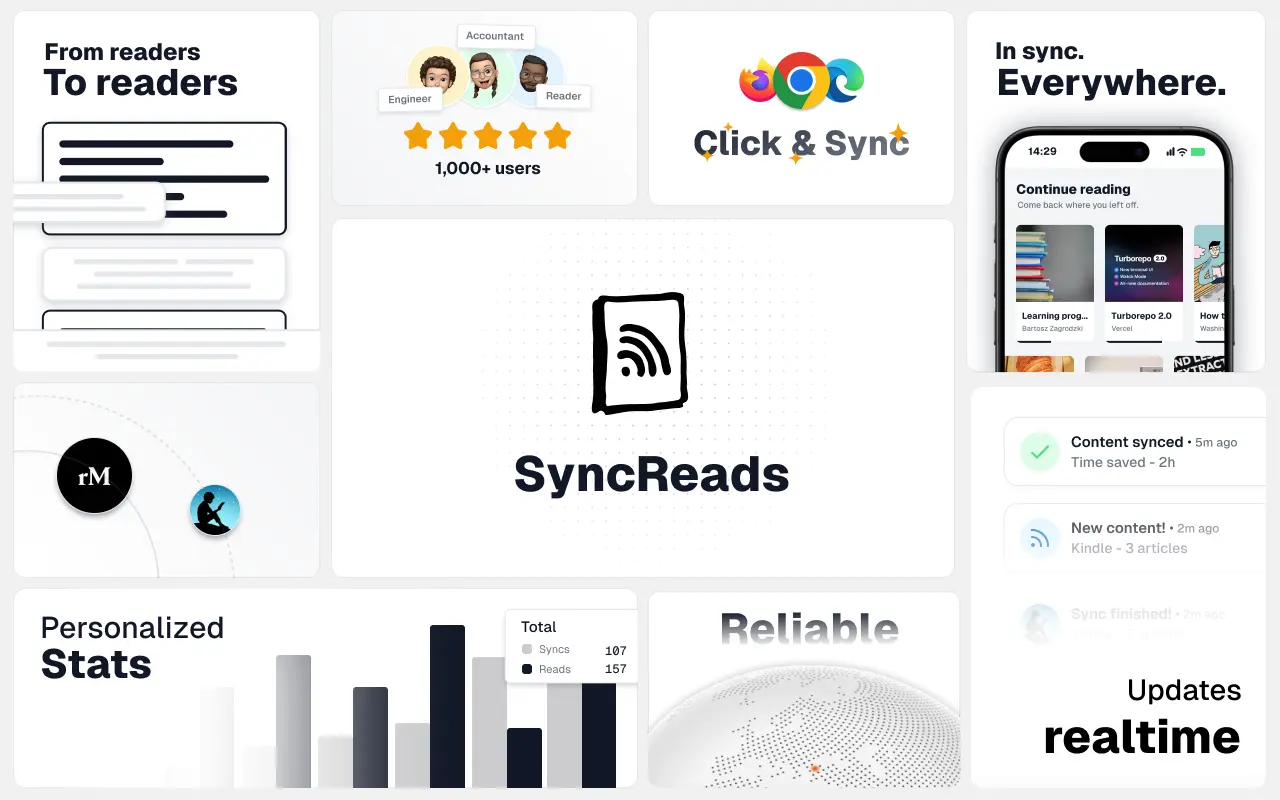
SyncReads
Sync your favorite content for distraction-free reading, save time and replace multiple apps. Anytime, anywhere 🔄
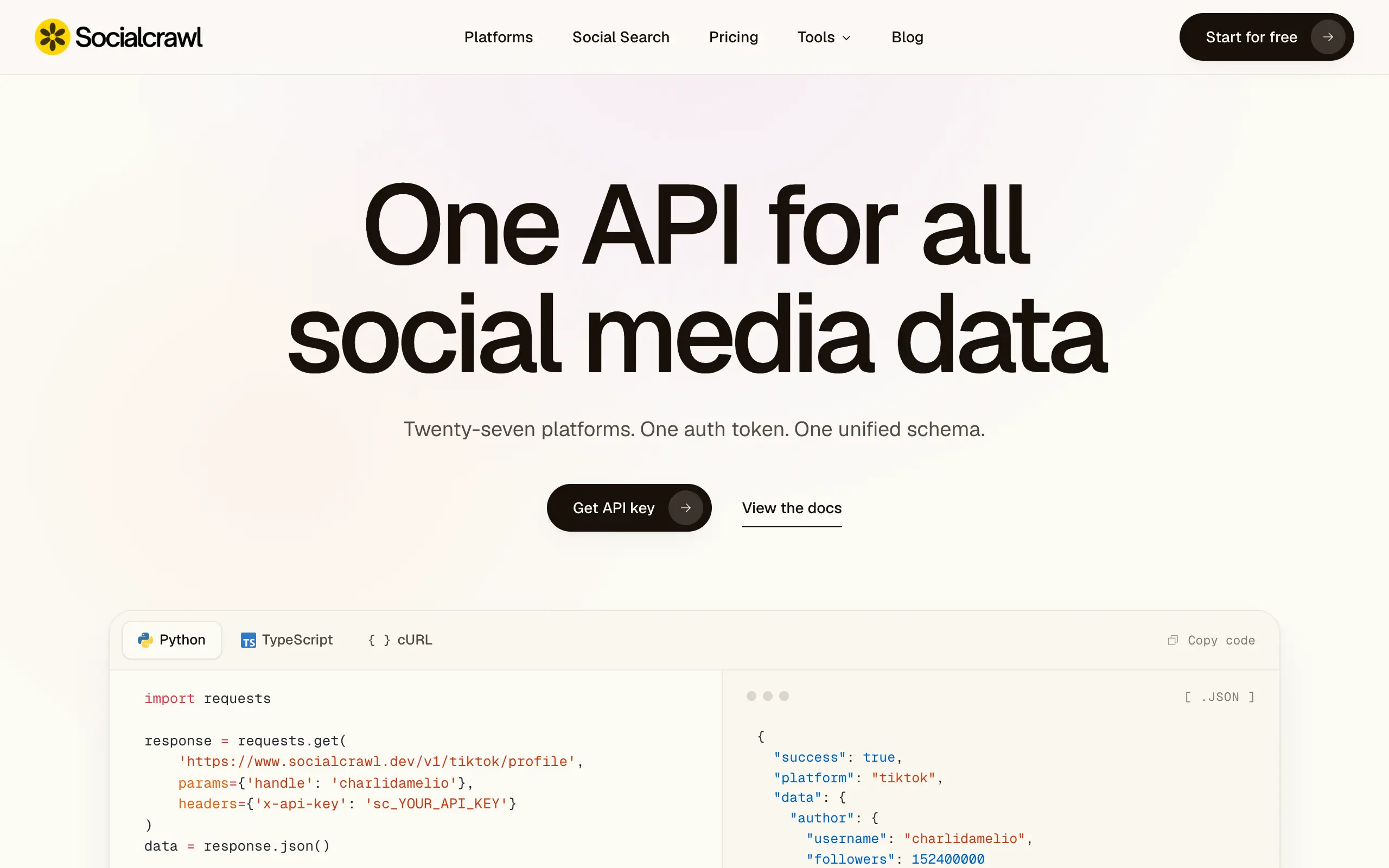
Socialcrawl
Get clean, structured data from 21 platforms like TikTok, Instagram, and YouTube with a single request 📊
Statiko
Monitor any Telegram channel in real time - track posts, edits, deletions, and growth with AI recaps 📡
Shibui
AI website builder - describe your business, pick a niche template, edit by chatting, and publish instantly ✨
Pro Service
Find verified home service professionals, compare quotes, and pay securely through escrow - built for Brazilians across the US 🏠
RankGrow
Fix your SEO with AI agents - connect Search Console, get prioritized tasks, and grow organic traffic 📈
SyncReads
Sync your favorite content for distraction-free reading, save time and replace multiple apps. Anytime, anywhere 🔄
Socialcrawl
Get clean, structured data from 21 platforms like TikTok, Instagram, and YouTube with a single request 📊
Statiko
Monitor any Telegram channel in real time - track posts, edits, deletions, and growth with AI recaps 📡
Shibui
AI website builder - describe your business, pick a niche template, edit by chatting, and publish instantly ✨
Pro Service
Find verified home service professionals, compare quotes, and pay securely through escrow - built for Brazilians across the US 🏠
RankGrow
Fix your SEO with AI agents - connect Search Console, get prioritized tasks, and grow organic traffic 📈
SyncReads
Sync your favorite content for distraction-free reading, save time and replace multiple apps. Anytime, anywhere 🔄
Socialcrawl
Get clean, structured data from 21 platforms like TikTok, Instagram, and YouTube with a single request 📊
Statiko
Monitor any Telegram channel in real time - track posts, edits, deletions, and growth with AI recaps 📡
Shibui
AI website builder - describe your business, pick a niche template, edit by chatting, and publish instantly ✨
Pro Service
Find verified home service professionals, compare quotes, and pay securely through escrow - built for Brazilians across the US 🏠
RankGrow
Fix your SEO with AI agents - connect Search Console, get prioritized tasks, and grow organic traffic 📈
SyncReads
Sync your favorite content for distraction-free reading, save time and replace multiple apps. Anytime, anywhere 🔄
Socialcrawl
Get clean, structured data from 21 platforms like TikTok, Instagram, and YouTube with a single request 📊
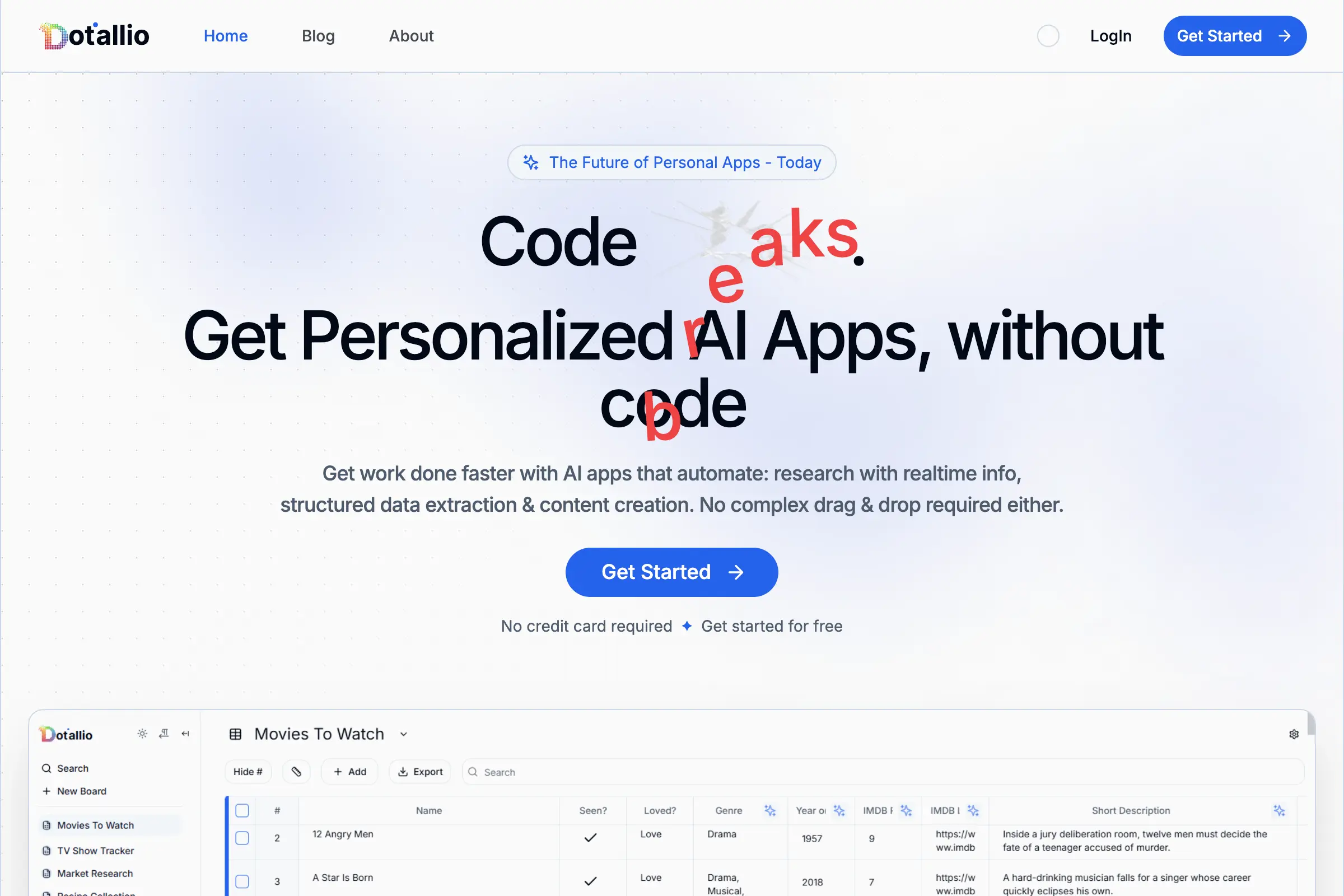
Dotallio
Personalized AI apps that automate research, data extraction, and content creation without code 🤖

Talk to Santa
Enjoy a magical live video chat or receive a unique AI-generated video greeting from Santa Claus 🎅

pozywka.pl
Scalable blog for food journalist, focused on performance and user experience 🌭
zagrodzki.me
Personal blog and portfolio of Bart Zagrodzki, where he shares his knowledge and work 💼

TurboStarter
Ship your startup everywhere. In minutes.
HTML to Markdown
Convert HTML to Markdown with ease, directly in your browser 📄
Dotallio
Personalized AI apps that automate research, data extraction, and content creation without code 🤖
Talk to Santa
Enjoy a magical live video chat or receive a unique AI-generated video greeting from Santa Claus 🎅
pozywka.pl
Scalable blog for food journalist, focused on performance and user experience 🌭
zagrodzki.me
Personal blog and portfolio of Bart Zagrodzki, where he shares his knowledge and work 💼
TurboStarter
Ship your startup everywhere. In minutes.
HTML to Markdown
Convert HTML to Markdown with ease, directly in your browser 📄
Dotallio
Personalized AI apps that automate research, data extraction, and content creation without code 🤖
Talk to Santa
Enjoy a magical live video chat or receive a unique AI-generated video greeting from Santa Claus 🎅
pozywka.pl
Scalable blog for food journalist, focused on performance and user experience 🌭
zagrodzki.me
Personal blog and portfolio of Bart Zagrodzki, where he shares his knowledge and work 💼
TurboStarter
Ship your startup everywhere. In minutes.
HTML to Markdown
Convert HTML to Markdown with ease, directly in your browser 📄
Dotallio
Personalized AI apps that automate research, data extraction, and content creation without code 🤖
Talk to Santa
Enjoy a magical live video chat or receive a unique AI-generated video greeting from Santa Claus 🎅
pozywka.pl
Scalable blog for food journalist, focused on performance and user experience 🌭
zagrodzki.me
Personal blog and portfolio of Bart Zagrodzki, where he shares his knowledge and work 💼
TurboStarter
Ship your startup everywhere. In minutes.
HTML to Markdown
Convert HTML to Markdown with ease, directly in your browser 📄
Omichat
Chat with 50+ AI models, including ChatGPT and Claude, in one place - switch models anytime without losing context 🤖
Claude Fast
Supercharge your Claude Code with 6x effective context window and specialized AI agents 🤖
EmojAI
AI-powered emoji picker with smart, context-aware suggestions 🤖
Solohacker
Autonomous company launcher - AI agents work 24/7, escalate what matters, and you stay in control 🤖

BeRawi: Storytelling Coach
Practice storytelling daily with instant feedback to sound clearer, more engaging, and confident 🎤
Omichat
Chat with 50+ AI models, including ChatGPT and Claude, in one place - switch models anytime without losing context 🤖
Claude Fast
Supercharge your Claude Code with 6x effective context window and specialized AI agents 🤖
EmojAI
AI-powered emoji picker with smart, context-aware suggestions 🤖
Solohacker
Autonomous company launcher - AI agents work 24/7, escalate what matters, and you stay in control 🤖
BeRawi: Storytelling Coach
Practice storytelling daily with instant feedback to sound clearer, more engaging, and confident 🎤
Omichat
Chat with 50+ AI models, including ChatGPT and Claude, in one place - switch models anytime without losing context 🤖
Claude Fast
Supercharge your Claude Code with 6x effective context window and specialized AI agents 🤖
EmojAI
AI-powered emoji picker with smart, context-aware suggestions 🤖
Solohacker
Autonomous company launcher - AI agents work 24/7, escalate what matters, and you stay in control 🤖
BeRawi: Storytelling Coach
Practice storytelling daily with instant feedback to sound clearer, more engaging, and confident 🎤
Omichat
Chat with 50+ AI models, including ChatGPT and Claude, in one place - switch models anytime without losing context 🤖
Claude Fast
Supercharge your Claude Code with 6x effective context window and specialized AI agents 🤖
EmojAI
AI-powered emoji picker with smart, context-aware suggestions 🤖
Solohacker
Autonomous company launcher - AI agents work 24/7, escalate what matters, and you stay in control 🤖
BeRawi: Storytelling Coach
Practice storytelling daily with instant feedback to sound clearer, more engaging, and confident 🎤

Connect with like-minded people
Join our community to get feedback, support, and grow together with 1,000+ builders on board, let's ship it!
Join usShip your startup everywhere. In minutes.
Don't burn tokens on setup and start building features on day one.