Askloom
A private social app for posting “I don’t know” moments, getting judgment-free crowd advice, and following how real decisions turn out.
Why a private social advice app solves a real online problem
People already ask strangers for advice every day. They post in group chats, anonymous forums, neighborhood communities, parenting groups, workplace channels, and large social platforms. Yet most existing spaces force an uncomfortable trade-off:
- "Public social networks": broad reach, but social exposure, performative replies, and a permanent-feeling record
- "Anonymous forums": candid answers, but weak trust signals, fragmented context, and little accountability
- "Private messaging": high trust, but a limited number of perspectives and concern about burdening friends
- "Search and AI tools": fast information, but limited lived experience and no emotionally supportive community feedback
Askloom can occupy the valuable middle ground. It is a private social advice app designed for the moments when people genuinely do not know what to do and want compassionate, practical input from others. Its defining loop is not simply asking a question. It is asking, receiving useful crowd advice, making a decision, and sharing what happened.
That final outcome creates an important differentiator. Most advice platforms end at opinions. Askloom can build a library of real decision journeys that helps future users understand not only what people recommended, but which approaches worked in practice.
Core positioning
Askloom should position itself as a private, judgment-free decision community where people can ask honestly, get perspective without social pressure, and learn from real outcomes.
The strongest search intent around this concept comes from founders, product teams, community builders, and potential users exploring questions such as:
- How do you build a safe social advice app?
- Is there market demand for anonymous or private advice communities?
- What features does a crowd advice platform need?
- How can a social app prevent harassment and bad advice?
- How do decision-tracking communities monetize responsibly?
This guide outlines the market opportunity, product strategy, technical architecture, monetization model, safety framework, and launch roadmap for Askloom.
The target audience for Askloom
A successful private advice platform cannot serve “everyone with a problem” on day one. Advice is deeply contextual. A first release should focus on users who need emotional safety, value diverse lived experiences, and have recurring decisions where community perspective is useful.
Primary user segments
The most promising early users are digitally comfortable adults who already seek peer advice but dislike being visible, judged, or overwhelmed by traditional social feeds.
Life-transition navigators
People making decisions about moving, dating, career changes, education, friendships, caregiving, or major purchases.
Early-career professionals
Users weighing job offers, salary conversations, manager issues, workplace boundaries, and skill investments.
Parents and caregivers
People seeking practical peer experience around routines, family logistics, school choices, and caregiving trade-offs.
Community-minded decision seekers
Users who want nuanced perspectives from people with similar constraints, values, or lived experience.
These groups share a common need. They do not necessarily need an expert consultation. They need perspective before commitment.
For example, a user may ask:
- “Should I take a lower-paying remote role to move closer to family?”
- “How do I tell my roommate I cannot renew the lease?”
- “Is it unreasonable to switch careers at 31?”
- “What did you wish you knew before relocating for a relationship?”
- “Should I repair this appliance or replace it?”
These are not always questions with one correct answer. They are decisions where hearing patterns, regrets, and outcomes can reduce uncertainty.
Jobs to be done
Askloom should be designed around user jobs rather than generic social engagement metrics.
- "Emotional job": Help me feel less alone and less ashamed about not knowing what to do.
- "Functional job": Help me compare options, identify blind spots, and take a next step.
- "Social job": Let me seek perspective without exposing my identity to people in my existing network.
- "Learning job": Show me what happened when people in situations like mine made similar choices.
- "Trust job": Give me confidence that the discussion is respectful, relevant, and not manipulated.
The product should continuously reduce three forms of friction: the friction of posting, the friction of evaluating replies, and the friction of acting on advice.
Who Askloom should not serve first
A broad “ask anything” product creates safety, quality, and retention challenges. In the initial stage, Askloom should avoid positioning itself as a source of professional medical, legal, financial, mental health crisis, or emergency advice.
It can allow adjacent discussions with careful guardrails, but should never imply professional authority where it does not exist. This is both a trust decision and a risk-management requirement.
High-stakes boundaries
Askloom should route imminent safety concerns, self-harm content, medical emergencies, legal emergencies, and urgent financial fraud reports toward appropriate professional or emergency resources. Crowd advice must not be framed as a replacement for qualified help.
The market gap in social advice and decision support
The online advice market is established, but its product experience is fragmented. Existing platforms generally optimize for one of the following:
- Reach and virality
- Topic-based discussion
- Pseudonymous posting
- Local recommendations
- Expert answers
- Private conversations
Few products combine all of these elements in a focused way:
- A low-pressure private posting experience
- Structured crowd advice rather than chaotic comment threads
- Context-sensitive matching
- Outcome tracking that closes the loop
- Safety systems designed for vulnerable “I don’t know” moments
That combination is Askloom’s market opportunity.
The problem with public advice feeds
Public feeds can make users feel exposed. Even when a platform supports pseudonyms, users may fear screenshots, discoverability, hostile comments, and long-term reputational damage. Algorithms that reward controversy can make honest uncertainty feel like content for others to consume rather than a need to be supported.
A private social advice app should optimize for psychological safety over public engagement. That means avoiding public follower counts, popularity contests, and engagement mechanics that turn difficult decisions into entertainment.
The problem with unstructured anonymous forums
Anonymous communities often provide candor, but may lack continuity. A user can receive dozens of replies without knowing which responders have relevant experience, whether the advice is well intentioned, or how to sort through conflicting viewpoints.
Askloom can improve this with structured response formats, lightweight credibility signals, topic context, and decision updates.
The outcome-data opportunity
The most defensible product asset is not a database of questions. It is a privacy-preserving repository of decision outcomes.
Imagine a user deciding whether to leave a job without another offer. Instead of only receiving opinions, they can browse similar decision stories filtered by:
- Career stage
- Industry or work arrangement
- Financial runway range
- Whether the user had dependents
- Time since the decision
- Reported satisfaction after three, six, or twelve months
- Lessons learned and unexpected trade-offs
This outcome layer turns Askloom from a social feed into a continuously improving decision-learning network.
Users have a reason to return after receiving advice because they can update their decision, see follow-up questions, reflect on what changed, and help the next person facing a similar choice. This creates a reciprocal community loop rather than a one-time question-and-answer transaction.
When responders know that an outcome may be shared later, they are more likely to give thoughtful context instead of overly confident, simplistic advice. It shifts the culture from “winning the comment section” toward helping someone make a considered choice.
A growing archive of anonymized real-world decisions, trade-offs, and longitudinal outcomes is difficult for a generic social platform to replicate quickly. The data must be earned through trust, participation, and careful consent design.
Askloom’s unique selling proposition
The clearest Askloom USP is:
A private place to ask for judgment-free crowd advice and learn how real decisions turn out.
This statement combines the emotional benefit, social mechanism, and long-term differentiator in one promise.
The product should avoid claiming that it always provides the “right” answer. Instead, it should help people make more informed, values-aligned decisions by exposing them to relevant perspectives and real-world outcomes.
How Askloom can stand apart from competitors
| Capability | Public social feeds | Anonymous forums | Expert marketplaces | Askloom |
|---|---|---|---|---|
| Private-by-default sharing | ❌ | ✅ | ✅ | ✅ |
| Structured peer perspectives | ❌ | ⚠️ | ✅ | ✅ |
| Decision outcome follow-up | ❌ | ❌ | ⚠️ | ✅ |
| Judgment-free community design | ⚠️ | ⚠️ | ✅ | ✅ |
| Scalable lived-experience library | ⚠️ | ✅ | ❌ | ✅ |
The private social app should emphasize a different success metric from conventional social products. The north-star metric should not be daily time spent. A stronger metric is meaningful decision support delivered, measured through signals such as:
- A question receiving several constructive perspectives
- The original poster saving or marking advice as helpful
- The original poster completing a decision update
- A future user finding an outcome story relevant to their situation
- A user returning to help another person after receiving help themselves
Core features for an MVP of Askloom
The minimum viable product should prove one thing: strangers can safely give useful, relevant advice, and users will return to share outcomes.
Avoid building every community feature at launch. Focus on the quality of the advice loop.
1. Private identity and pseudonymous profiles
Users need control over how they appear. Askloom can use account-level verification to reduce abuse while allowing a user-facing pseudonym for community participation.
A profile should reveal only voluntary, high-level context such as:
- Relevant life experience categories
- Topics the user can help with
- Response style preferences
- Community reputation based on helpfulness
- Optional broad location or life stage
Do not expose sensitive demographic data by default. The goal is relevant context, not social surveillance.
2. Guided “I don’t know” post creation
A blank text field often produces vague questions and lower-quality replies. Askloom should guide users through a compassionate posting flow.
A strong template includes:
- "What is happening": The situation in the user’s own words
- "What are you deciding": The choice or uncertainty
- "What matters most": Values, constraints, priorities, or fears
- "What options are you considering": Two to four possible paths
- "What kind of input would help": Experiences, practical tips, emotional support, or blind spots
- "Privacy preference": Who can view and respond to the post
This structure makes it easier for responders to help and makes outcome data more useful later.
3. Structured advice responses
Standard comment threads reward speed and certainty. Askloom should offer response prompts that encourage practical, empathetic contributions.
Useful response types include:
- “I faced something similar”
- “A trade-off you may want to consider”
- “A question to ask yourself”
- “A practical next step”
- “What I wish I had known”
- “A respectful alternative perspective”
Users should be able to write freeform responses too, but templates establish healthy norms from the first session.
4. Relevance-based matching
The app should not send every post to every user. Matching must balance relevance, privacy, and response diversity.
Early matching signals can include:
- Topics and subtopics
- Self-selected lived experience
- Location relevance when applicable
- Decision stage
- User language
- Response history and helpfulness ratings
- Preference for practical versus emotional advice
Avoid creating an echo chamber. A user deciding whether to relocate may benefit from people who made different choices, as long as the app labels context clearly.
5. Decision journals and outcome updates
Outcome updates are the core retention and moat feature. After a set time, Askloom can gently ask:
- Did you make a decision?
- Which option did you choose?
- How do you feel about it now?
- What turned out differently than expected?
- What would you tell someone in a similar situation?
- May this update be added to anonymized decision insights?
Users should be able to skip, edit, delay, or keep outcomes private. Consent must be explicit, granular, and reversible.
6. Helpful response signals instead of popularity signals
Likes alone are a weak proxy for advice quality. Better signals include:
- “This helped me think differently”
- “Practical and actionable”
- “Made me feel understood”
- “Relevant lived experience”
- “Helpful follow-up question”
These labels help train community behavior and improve ranking without turning sensitive posts into a popularity competition.
7. Safety, reporting, blocking, and moderation tools
Safety cannot be bolted on later. At a minimum, users need:
- One-tap reporting
- User blocking and muting
- Controls to limit replies
- Post editing and deletion
- Clear community guidelines
- Moderator review workflows
- Automated detection for abuse and urgent-risk content
- Appeals for moderation decisions
The experience should make safety controls discoverable without making every user feel they are entering a hostile environment.
Designing a judgment-free advice community
A safe community is not created only through rules. It is created through product mechanics, language, incentives, and moderation operations.
Establish behavioral norms before users post
The onboarding sequence should clearly state what good participation looks like:
- Speak from personal experience rather than presenting opinions as universal truth.
- Ask clarifying questions before making assumptions.
- Avoid shaming language, diagnoses, insults, and moral grandstanding.
- Respect the poster’s autonomy.
- Do not pressure users to disclose personally identifying details.
- Flag urgent situations rather than attempting to manage them in comments.
Microcopy matters. A button labeled “Give advice” can invite certainty. A button labeled “Share a perspective” better reinforces humility.
Use AI carefully for moderation, not authority
AI can support moderation by identifying likely harassment, threats, doxxing attempts, scams, repetitive spam, and crisis-related language. It can also suggest a kinder rewrite before a user submits a harsh response.
However, AI should not become the authority that decides complex interpersonal disputes without human review. Automated systems can misunderstand cultural context, humor, reclaimed language, or emotional nuance.
A practical model is:
- Automated systems identify potential risks.
- Clear policy violations receive immediate protective action.
- Ambiguous cases enter a human moderation queue.
- Users can appeal decisions.
- Moderation outcomes inform policy and model improvement.
For high-stakes topics, Askloom should show contextual notices that encourage professional support without interrupting ordinary peer discussion unnecessarily.
Build trust through transparent policies
Trust grows when users understand what happens to their content. Askloom should publish plain-language explanations for:
- Who can see a post
- How posts appear in search and recommendations
- What data supports personalization
- How outcome stories are anonymized
- How long deleted content is retained, if at all
- What moderators can access
- How users export or delete their data
For privacy and security guidance, the team should consult standards and regulators relevant to its operating regions. If the business handles users in the European Union, the product team should evaluate GDPR obligations with qualified counsel. Product teams can also use the OWASP resources as a baseline for application-security practices.
Recommended tech stack for a private social advice app
Askloom needs fast iteration, robust privacy controls, real-time interaction, and a reliable moderation pipeline. A TypeScript-based web stack is a strong starting point because it enables shared types across the product surface and supports a small product team.
Suggested architecture
Use React with Next.js for a fast, SEO-friendly web application. Tailwind CSS can accelerate consistent design-system work, while accessible component patterns should be tested with keyboard and screen-reader users.
Use Next.js route handlers or a dedicated Node.js service for early APIs. Add a typed API layer, background job processing, rate limiting, role-based access controls, and audit logs from the start. A modular monolith is usually more practical than microservices during MVP validation.
Use PostgreSQL for relational data, permissions, reports, and decision records. Use vector search only where it meaningfully improves semantic discovery and always apply permission filters before retrieval. Keep AI moderation events, human decisions, and model versions auditable.
Deploy on a managed platform with encryption in transit and at rest, environment separation, backups, monitoring, and incident-response procedures. Store media privately and serve it through signed access URLs when user-generated attachments are introduced.
Why a modular monolith is the right early trade-off
A modular monolith keeps deployment, debugging, authorization, and transactional consistency simpler when the team is small. Askloom’s core entities are tightly connected:
- Users and pseudonymous identities
- Posts and visibility rules
- Responses and moderation status
- Topic matching
- Reports and enforcement actions
- Decision updates
- Notifications
- Consent settings
Premature microservices would create unnecessary complexity around event consistency and access control. The platform can later extract services for search, notifications, media processing, and machine-learning workflows when scale justifies it.
A practical data model
A secure data model should separate account identity from public-facing participation identity. The key principle is that a database query should never accidentally join private account fields into a community-facing payload.
type DecisionPost = {
  id: string;
  authorPersonaId: string;
  visibility: "matched-community" | "private-circle" | "invite-only";
  topicIds: string[];
  situation: string;
  options: string[];
  helpRequested: "experience" | "next-steps" | "trade-offs" | "support";
  moderationStatus: "active" | "limited" | "review" | "removed";
  createdAt: Date;
};

type OutcomeUpdate = {
  id: string;
  decisionPostId: string;
  selectedOption?: string;
  reflection: string;
  followUpWindow: "one-month" | "three-months" | "six-months";
  consentToSurfaceAnonymized: boolean;
  createdAt: Date;
};
The important trade-off is between personalization and data minimization. Askloom should collect only the context required to match advice well, and it should make optional fields truly optional.
Authentication and privacy design
Authentication should support secure account recovery while preserving pseudonymity within the app. Core controls include:
- Passwordless sign-in or strong password requirements
- Multi-factor authentication for account protection
- Session management and device visibility
- Rate limits for posting, invitations, and direct contact attempts
- Encryption for sensitive data
- Permission checks at the database and API layers
- Audit records for moderator access to sensitive reports
- Secure deletion workflows
Do not treat privacy as a settings page. Privacy is an architectural property: it must exist in database design, API authorization, caching rules, analytics events, internal tooling, and support processes.
Monetization strategies that preserve user trust
The wrong monetization strategy can undermine a private advice community quickly. Selling sensitive audience data or targeting users based on vulnerable moments would conflict with Askloom’s core promise.
The best approach is a freemium model where paid features improve organization, reflection, and access without selling the user’s uncertainty.
Recommended revenue model
A free tier should allow users to ask for help, respond to others, view basic outcome stories, and use essential safety controls. These capabilities are central to community health and should not be paywalled.
A paid plan can offer value through deeper decision support:
- Private decision journals and templates
- Advanced filtering across anonymized outcome stories
- Personalized reflection summaries
- Longer-term decision tracking
- Private circles for trusted groups
- Saved decision frameworks
- Priority access to topic-specific events or facilitated discussions
- Data export and personal insights
Potential price testing can begin with a modest monthly plan and an annual option. The actual price should be validated through interviews and conversion tests rather than guessed from competitor pricing.
Additional monetization options
- "Private communities": Offer paid, moderated spaces for alumni groups, employee communities, professional associations, or membership organizations.
- "Facilitated sessions": Offer optional paid group decision workshops led by vetted facilitators.
- "Ethical partnerships": Partner with trusted educational or wellness organizations only when sponsorship is clearly labeled and never based on personal post content.
- "B2B wellbeing offering": Package private decision-support communities for organizations, while maintaining strict separation between employee data and employer access.
The B2B route has potential, but it introduces serious trust concerns. Employees must know that employers cannot read individual posts, infer personal issues, or access identifiable analytics.
Avoid surveillance-based monetization
Do not sell personal decision data, infer sensitive attributes for advertisers, or create advertising segments from user vulnerability. For Askloom, trust is not a brand layer. It is the product’s economic foundation.
Key risks and mitigation strategies
The social advice category carries real operational and ethical risks. A credible Askloom strategy should address these directly rather than treating moderation as a future problem.
Risk: harmful or confidently wrong advice
Crowd advice can be incomplete, biased, or dangerous, especially in health, legal, financial, and relationship contexts.
"Mitigation":
- Use contextual disclaimers for high-stakes categories.
- Encourage personal experience framing rather than directives.
- Rank nuanced, respectful answers over absolute claims.
- Provide reporting paths for harmful misinformation.
- Limit or redirect categories that require licensed expertise.
- Build human review for repeated harmful behavior.
Risk: harassment, dogpiling, and shame
Vulnerable posters may attract criticism, ideology-driven arguments, or unwanted attention.
"Mitigation":
- Make privacy-preserving visibility the default.
- Limit reply velocity for sensitive or newly posted questions.
- Offer poster controls to pause replies or approve responders.
- Detect pile-ons and coordinated abuse patterns.
- Train moderators in trauma-informed communication.
- Reward constructive participation rather than controversial engagement.
Risk: low-quality answers and cold-start failure
A new advice platform may have too few relevant responders, leading users to receive generic or no help.
"Mitigation":
- Launch with a narrow topic focus and a curated founding community.
- Recruit contributors with relevant lived experience.
- Seed high-quality, consented example decision journeys.
- Notify only well-matched responders.
- Set realistic response-time expectations.
- Use lightweight prompts that make quality answers easier to write.
Risk: privacy breaches and accidental re-identification
Even pseudonymous users can reveal identifying details through writing, photos, location, or unusual life circumstances.
"Mitigation":
- Prompt users to remove names, workplaces, addresses, and unique identifiers.
- Use automated PII detection as a warning layer.
- Strip metadata from uploaded files.
- Use granular sharing controls.
- Restrict internal access to sensitive data.
- Conduct regular security reviews and penetration testing.
Risk: addictive engagement patterns
A social product can accidentally incentivize compulsive checking or dependence on strangers’ approval.
"Mitigation":
- Avoid endless-feed defaults.
- Use digest notifications instead of constant interruptions.
- Encourage users to set a decision deadline or reflection point.
- Present advice as input, not consensus as a mandate.
- Measure whether users feel more capable, not just more engaged.
Competitive advantage and defensibility
Askloom’s long-term advantage will not come from having a question box or a comment feed. Those features are easy to copy. Defensibility comes from the integrated system around trust and outcomes.
The Askloom moat
-
Trust-centric community norms
A genuinely safe, well-moderated culture takes time and operational discipline to build. -
Structured decision and outcome graph
Decision context, advice patterns, and opt-in reflections create a proprietary learning asset. -
Relevance matching
Better routing of questions to people with applicable lived experience improves quality and retention. -
Privacy-first reputation
A brand known for protecting uncertainty can attract users who would never post publicly elsewhere. -
Compounding reciprocity
Users who receive meaningful help are more likely to return and help others, improving supply quality.
The product should measure the health of this advantage with metrics beyond growth:
- Median time to first constructive response
- Percentage of posts receiving multiple relevant perspectives
- Helpful-response rate
- Outcome-update completion rate
- Repeat contributor rate
- Report resolution time
- User-reported sense of safety
- Percentage of users who say advice helped them take a next step
An actionable launch plan for Askloom
The best launch approach is focused, community-led, and safety-first. Do not begin by trying to become the destination for every life decision.
Choose one launch wedge, such as career transitions, relocation decisions, or early parenthood. Interview at least 20 potential users about their current advice-seeking habits, privacy concerns, and decisions they struggle to share publicly.
Define a narrow MVP with pseudonymous posting, guided prompts, structured responses, topic matching, reporting, blocking, and a simple outcome-update flow. Do not launch direct messages until the moderation model is proven.
Recruit a founding cohort of thoughtful contributors before opening broad access. Set expectations clearly, reward helpful participation, and manually moderate closely during the first several weeks.
Instrument the advice loop. Track post completion, response relevance, poster satisfaction, outcome updates, reports, and retention by topic. Pair quantitative metrics with recurring user interviews.
Expand only after a launch cohort consistently receives useful responses within the expected time window and users report that the environment feels safe. Add adjacent topic communities gradually.
For founders building this type of SaaS product, speed matters, but trust architecture matters more. Starting with a production-ready foundation can reduce setup time while leaving more capacity for the hard work of user research, moderation operations, and community design. TurboStarter can help accelerate the initial SaaS build so the team can focus on Askloom’s differentiated advice and outcome experience.
Final recommendation
Askloom has a compelling opportunity because it addresses a universal yet underserved behavior: people need help making decisions, but often do not feel safe asking in public.
The winning product will not be the loudest social platform or the largest anonymous forum. It will be the platform that makes uncertainty feel acceptable, makes advice more useful, and turns private decision moments into opt-in shared learning.
To execute well, Askloom should:
- Start with a narrow, high-frequency decision category
- Build privacy and moderation into the architecture from day one
- Use guided prompts to improve question and response quality
- Match users by relevant experience without over-collecting personal data
- Make outcome updates a voluntary but central product loop
- Monetize helpful tools and communities rather than vulnerable user data
- Measure meaningful support, safety, and completed decision journeys
A private social advice app can become more than another place to post questions. With thoughtful product design, Askloom can become a trusted decision-support network where people learn from each other’s real lives, not just each other’s opinions.
More 🌐 Social Network SaaS ideas
Discover more innovative social network SaaS ideas that are trending in 2026. Each idea is AI-generated with market validation and growth potential to help you find your next profitable venture faster than competitors.
Your competitors are building with TurboStarter
Below are some of the SaaS ideas that have been generated and built with our starter kit.
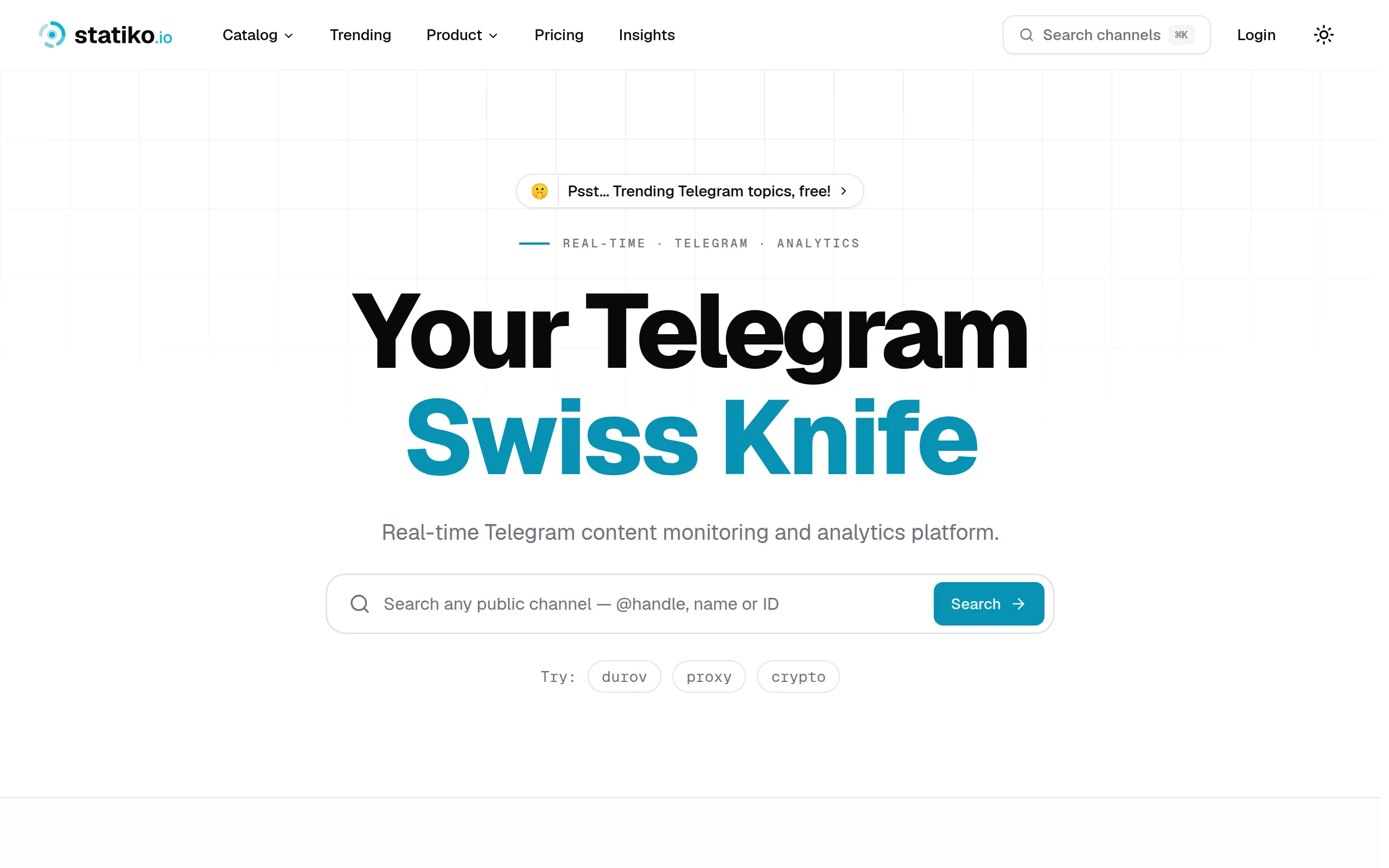
Statiko
Monitor any Telegram channel in real time - track posts, edits, deletions, and growth with AI recaps 📡

Shibui
AI website builder - describe your business, pick a niche template, edit by chatting, and publish instantly ✨

Pro Service
Find verified home service professionals, compare quotes, and pay securely through escrow - built for Brazilians across the US 🏠
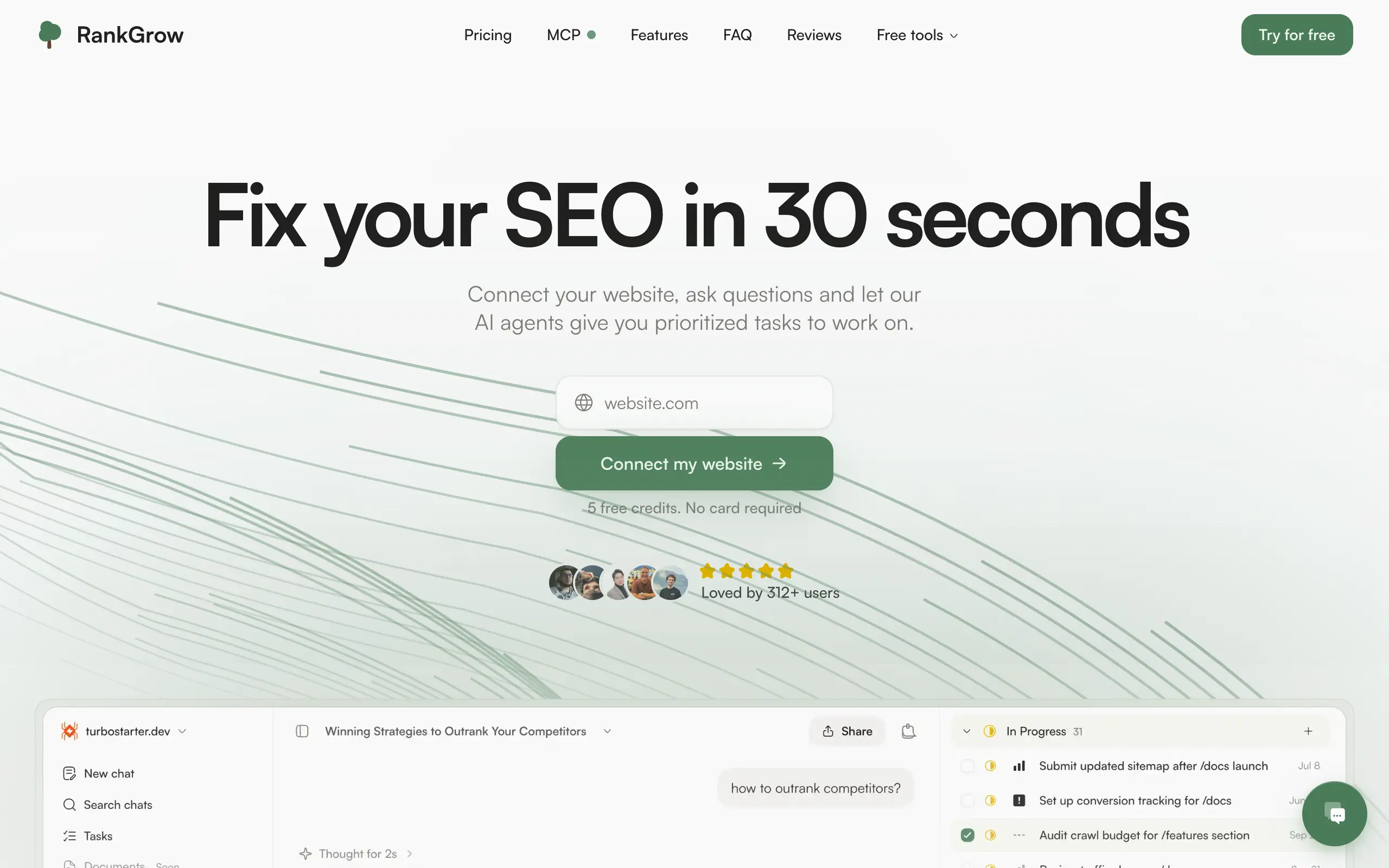
RankGrow
Fix your SEO with AI agents - connect Search Console, get prioritized tasks, and grow organic traffic 📈
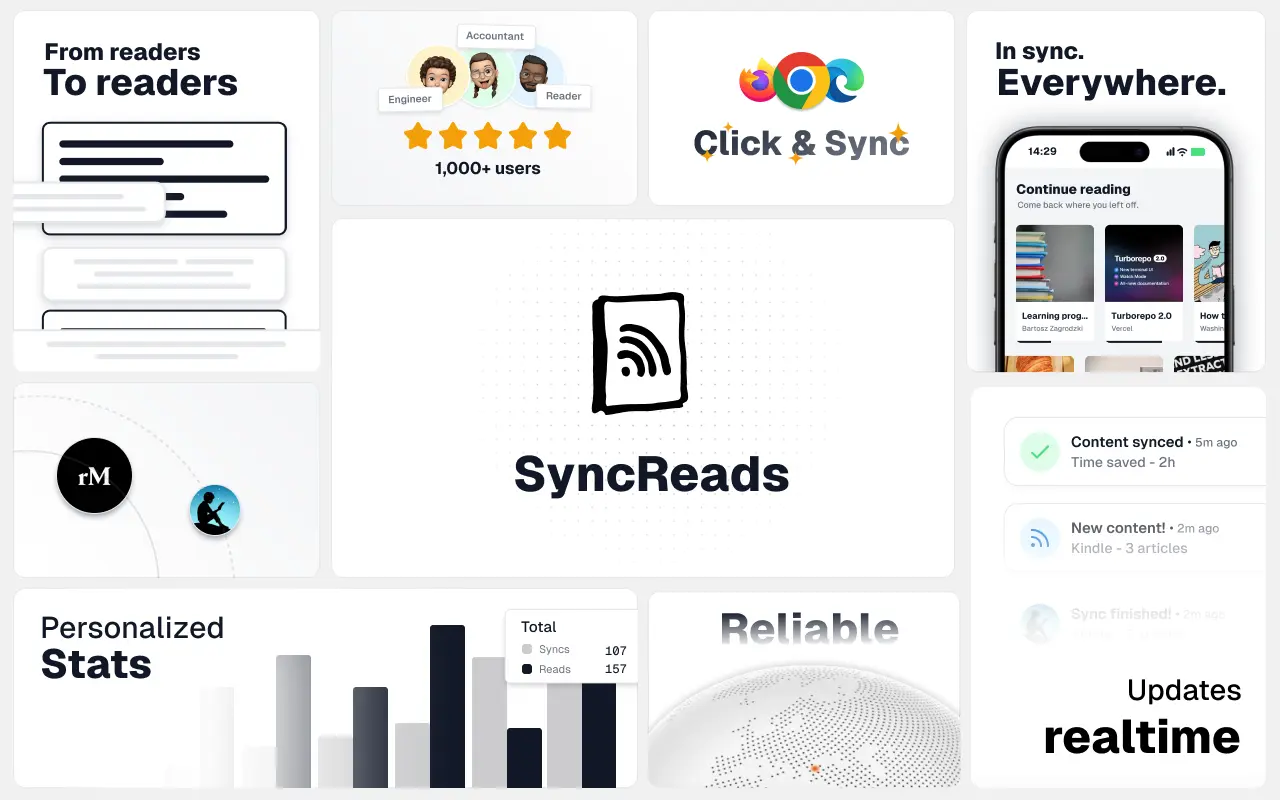
SyncReads
Sync your favorite content for distraction-free reading, save time and replace multiple apps. Anytime, anywhere 🔄
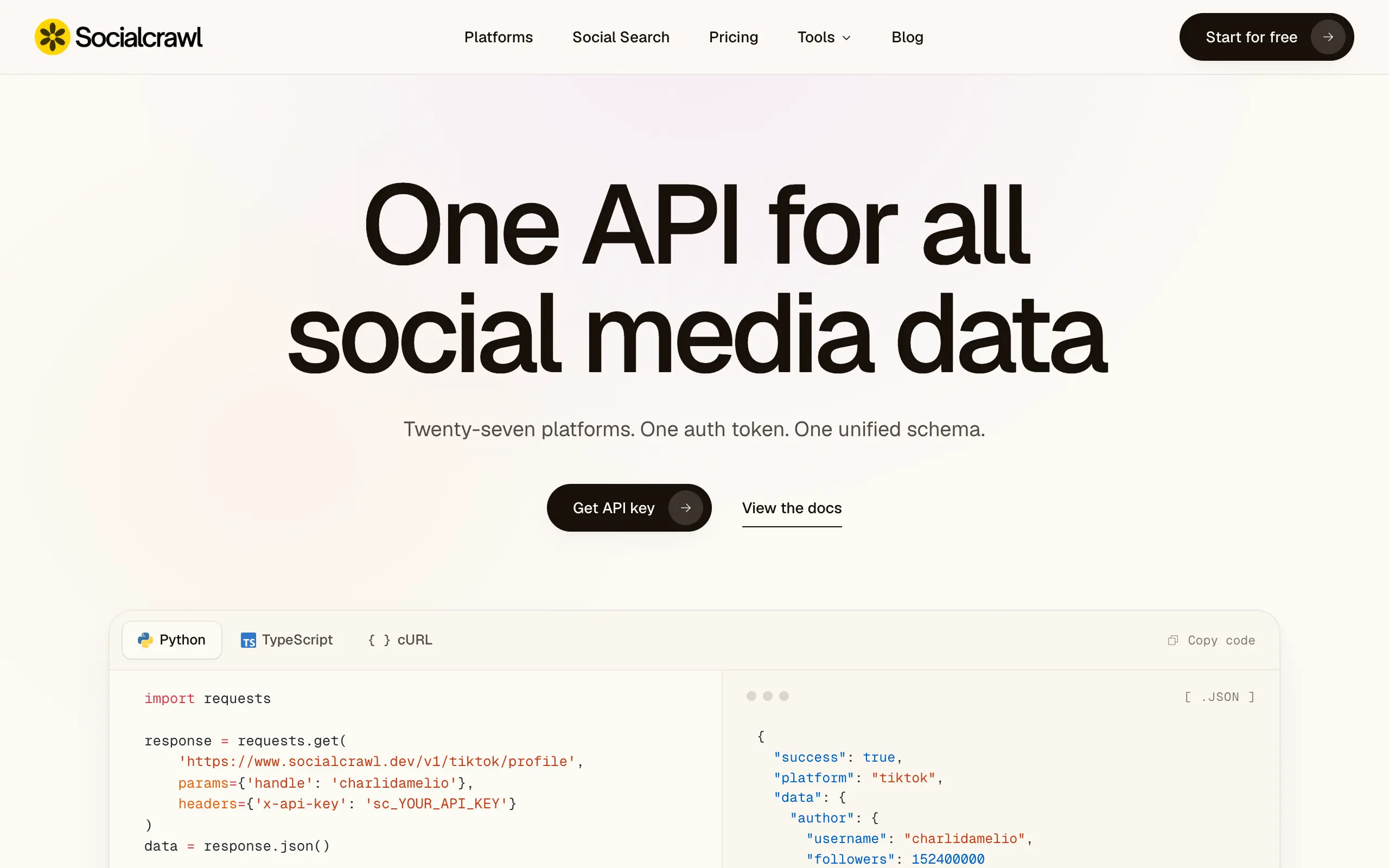
Socialcrawl
Get clean, structured data from 21 platforms like TikTok, Instagram, and YouTube with a single request 📊
Statiko
Monitor any Telegram channel in real time - track posts, edits, deletions, and growth with AI recaps 📡
Shibui
AI website builder - describe your business, pick a niche template, edit by chatting, and publish instantly ✨
Pro Service
Find verified home service professionals, compare quotes, and pay securely through escrow - built for Brazilians across the US 🏠
RankGrow
Fix your SEO with AI agents - connect Search Console, get prioritized tasks, and grow organic traffic 📈
SyncReads
Sync your favorite content for distraction-free reading, save time and replace multiple apps. Anytime, anywhere 🔄
Socialcrawl
Get clean, structured data from 21 platforms like TikTok, Instagram, and YouTube with a single request 📊
Statiko
Monitor any Telegram channel in real time - track posts, edits, deletions, and growth with AI recaps 📡
Shibui
AI website builder - describe your business, pick a niche template, edit by chatting, and publish instantly ✨
Pro Service
Find verified home service professionals, compare quotes, and pay securely through escrow - built for Brazilians across the US 🏠
RankGrow
Fix your SEO with AI agents - connect Search Console, get prioritized tasks, and grow organic traffic 📈
SyncReads
Sync your favorite content for distraction-free reading, save time and replace multiple apps. Anytime, anywhere 🔄
Socialcrawl
Get clean, structured data from 21 platforms like TikTok, Instagram, and YouTube with a single request 📊
Statiko
Monitor any Telegram channel in real time - track posts, edits, deletions, and growth with AI recaps 📡
Shibui
AI website builder - describe your business, pick a niche template, edit by chatting, and publish instantly ✨
Pro Service
Find verified home service professionals, compare quotes, and pay securely through escrow - built for Brazilians across the US 🏠
RankGrow
Fix your SEO with AI agents - connect Search Console, get prioritized tasks, and grow organic traffic 📈
SyncReads
Sync your favorite content for distraction-free reading, save time and replace multiple apps. Anytime, anywhere 🔄
Socialcrawl
Get clean, structured data from 21 platforms like TikTok, Instagram, and YouTube with a single request 📊
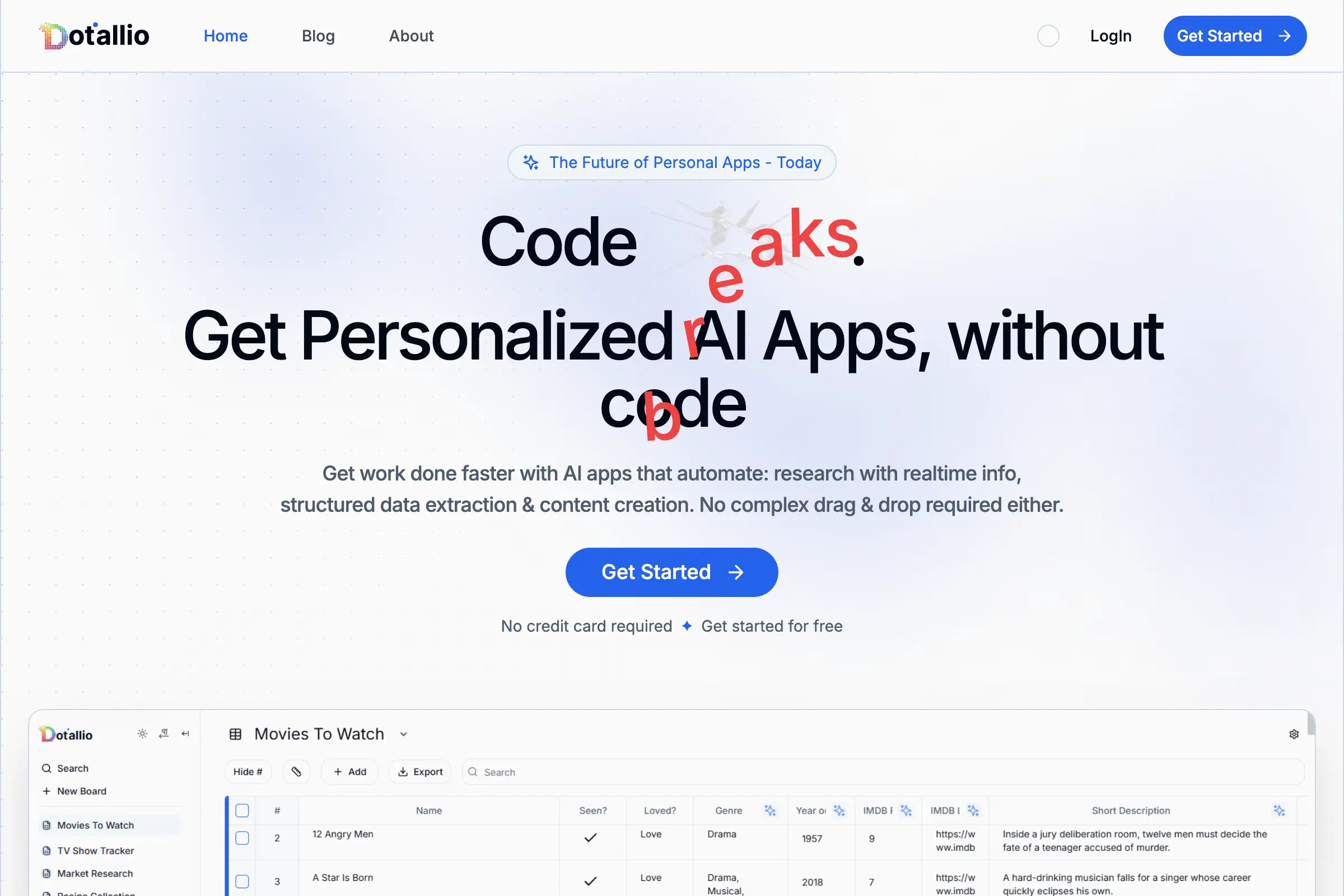
Dotallio
Personalized AI apps that automate research, data extraction, and content creation without code 🤖
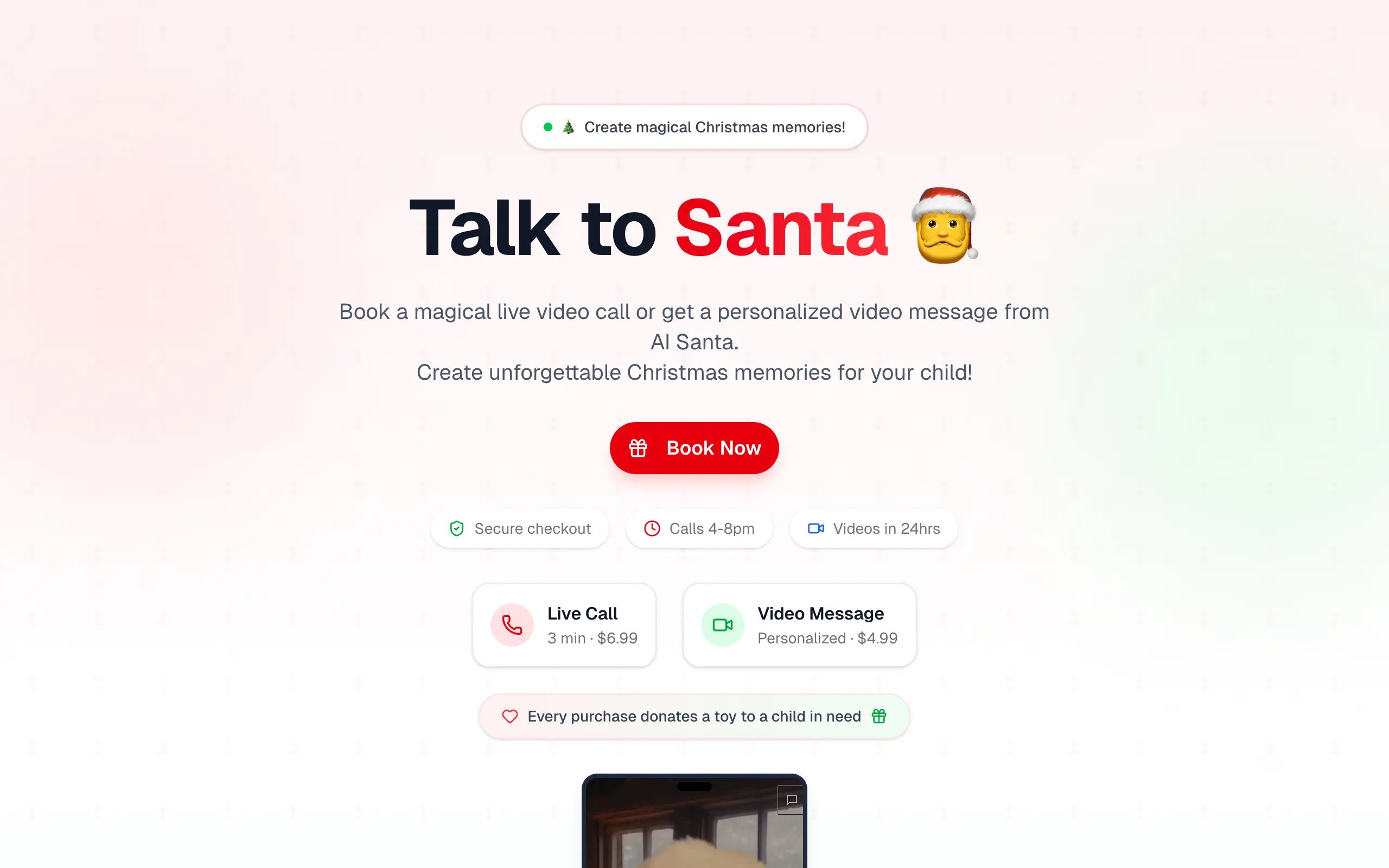
Talk to Santa
Enjoy a magical live video chat or receive a unique AI-generated video greeting from Santa Claus 🎅
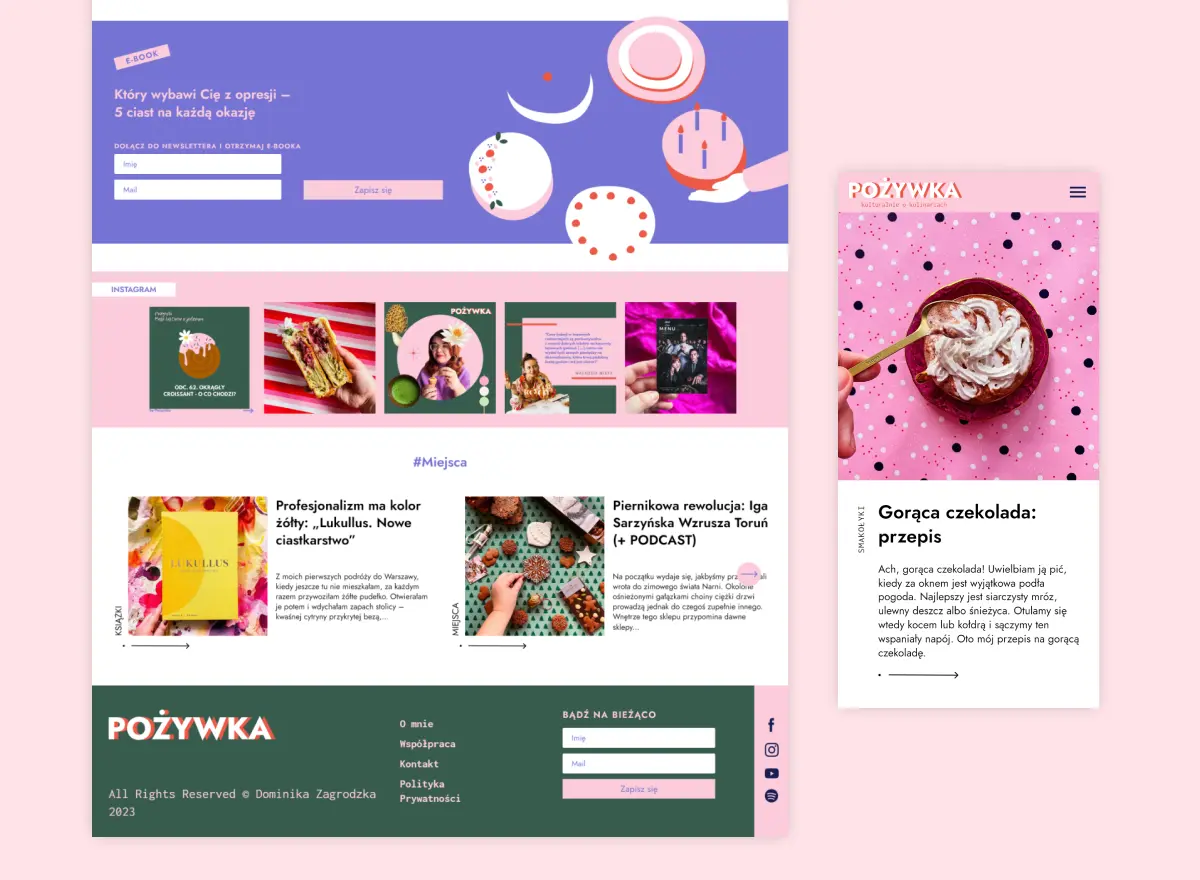
pozywka.pl
Scalable blog for food journalist, focused on performance and user experience 🌭
zagrodzki.me
Personal blog and portfolio of Bart Zagrodzki, where he shares his knowledge and work 💼
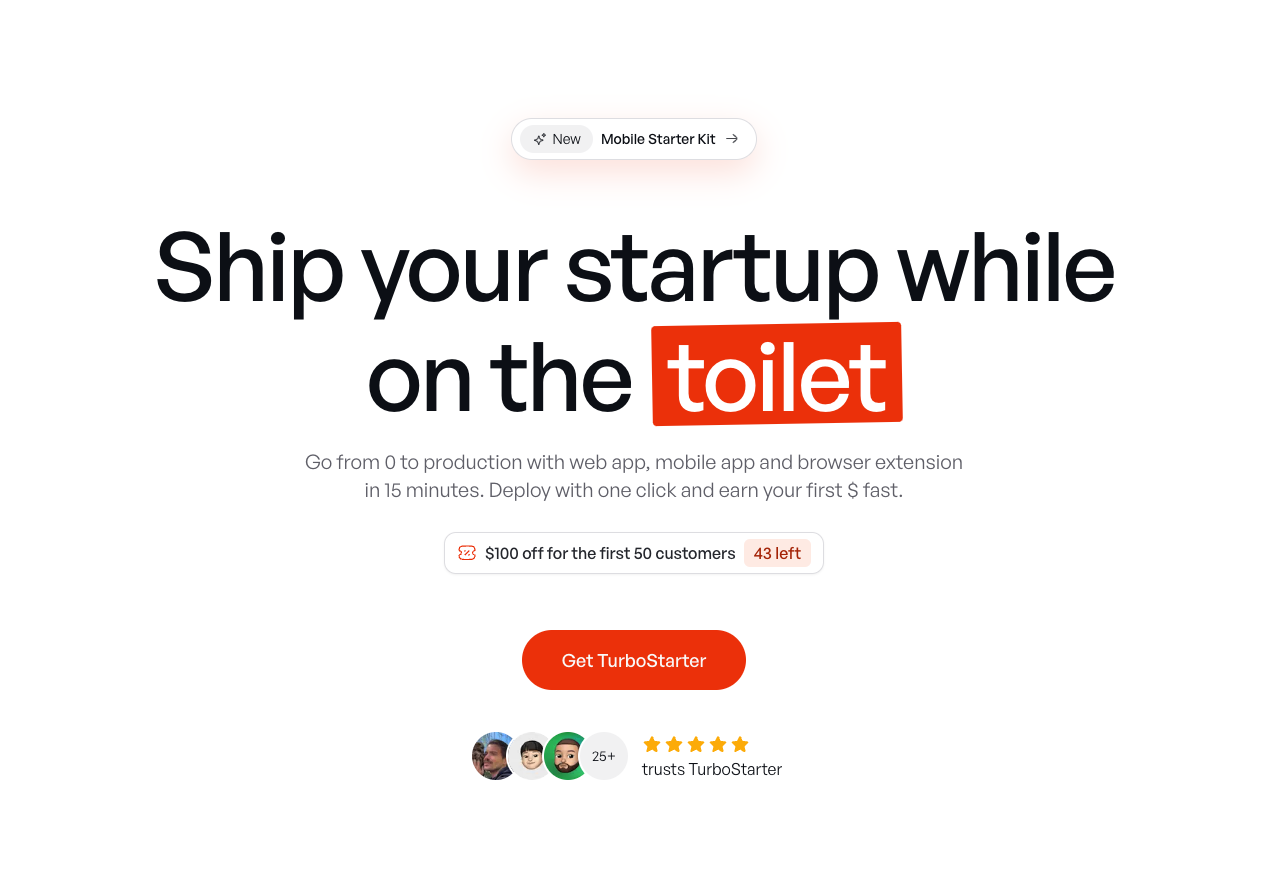
TurboStarter
Ship your startup everywhere. In minutes.
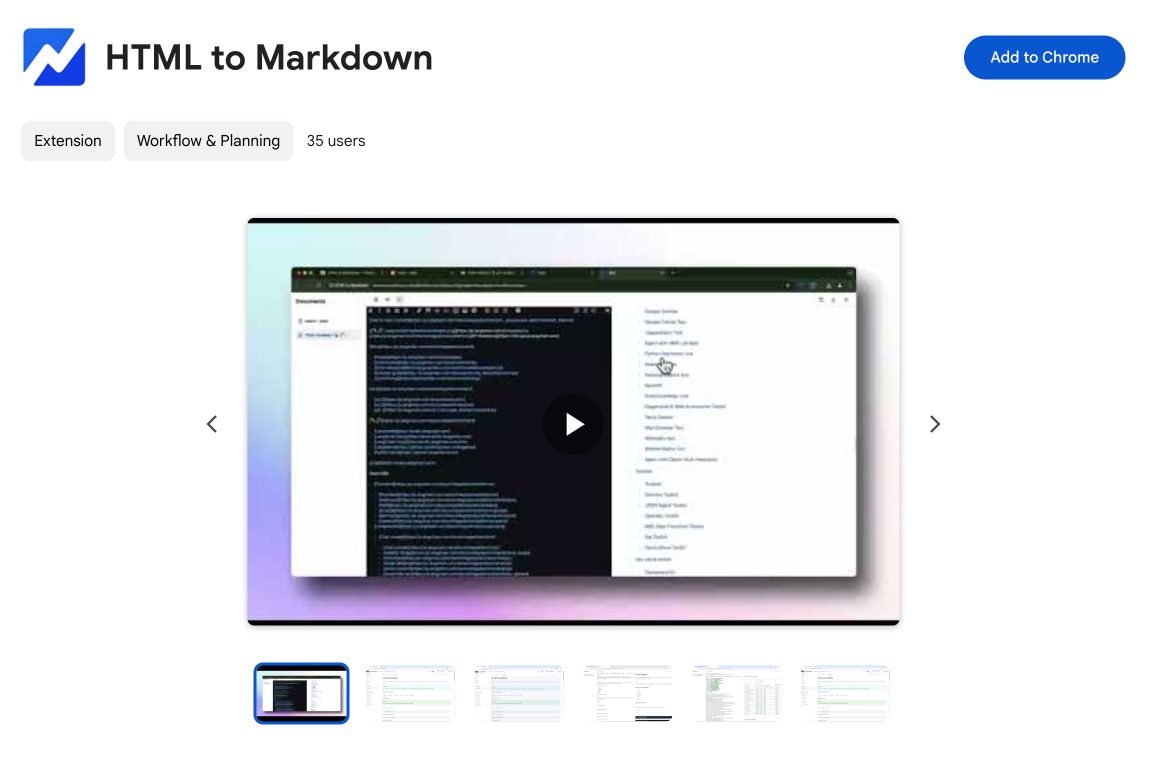
HTML to Markdown
Convert HTML to Markdown with ease, directly in your browser 📄
Dotallio
Personalized AI apps that automate research, data extraction, and content creation without code 🤖
Talk to Santa
Enjoy a magical live video chat or receive a unique AI-generated video greeting from Santa Claus 🎅
pozywka.pl
Scalable blog for food journalist, focused on performance and user experience 🌭
zagrodzki.me
Personal blog and portfolio of Bart Zagrodzki, where he shares his knowledge and work 💼
TurboStarter
Ship your startup everywhere. In minutes.
HTML to Markdown
Convert HTML to Markdown with ease, directly in your browser 📄
Dotallio
Personalized AI apps that automate research, data extraction, and content creation without code 🤖
Talk to Santa
Enjoy a magical live video chat or receive a unique AI-generated video greeting from Santa Claus 🎅
pozywka.pl
Scalable blog for food journalist, focused on performance and user experience 🌭
zagrodzki.me
Personal blog and portfolio of Bart Zagrodzki, where he shares his knowledge and work 💼
TurboStarter
Ship your startup everywhere. In minutes.
HTML to Markdown
Convert HTML to Markdown with ease, directly in your browser 📄
Dotallio
Personalized AI apps that automate research, data extraction, and content creation without code 🤖
Talk to Santa
Enjoy a magical live video chat or receive a unique AI-generated video greeting from Santa Claus 🎅
pozywka.pl
Scalable blog for food journalist, focused on performance and user experience 🌭
zagrodzki.me
Personal blog and portfolio of Bart Zagrodzki, where he shares his knowledge and work 💼
TurboStarter
Ship your startup everywhere. In minutes.
HTML to Markdown
Convert HTML to Markdown with ease, directly in your browser 📄
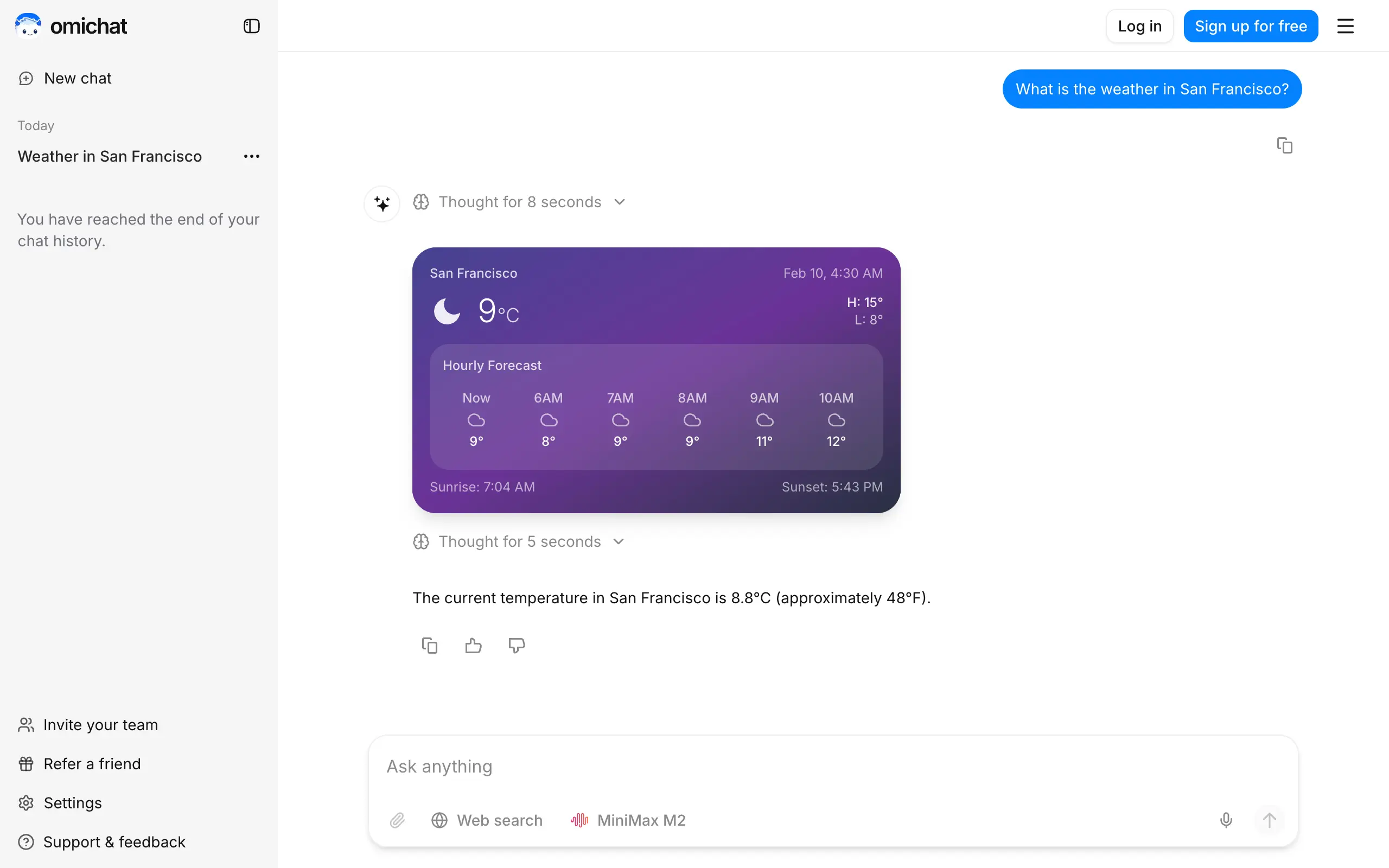
Omichat
Chat with 50+ AI models, including ChatGPT and Claude, in one place - switch models anytime without losing context 🤖
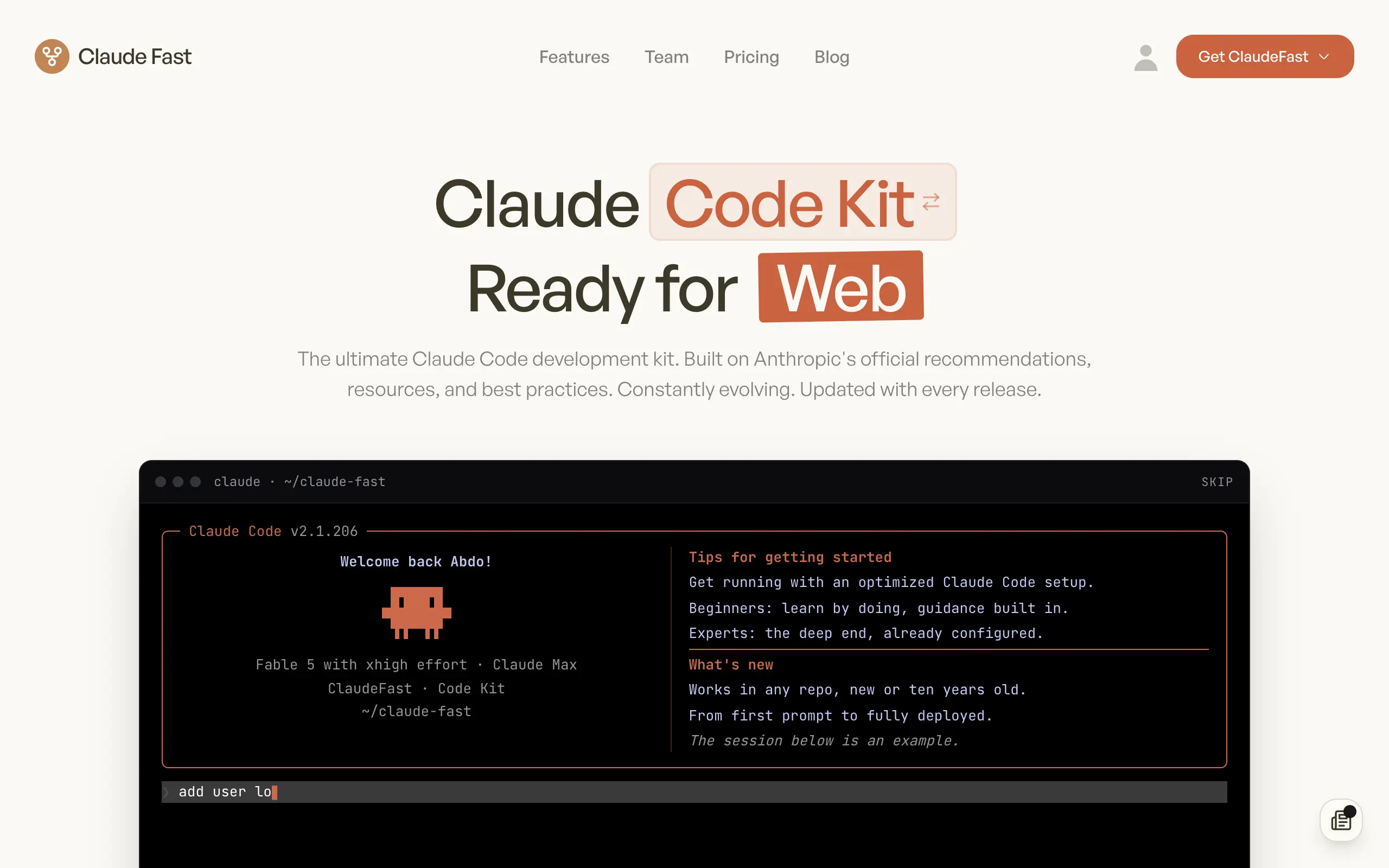
Claude Fast
Supercharge your Claude Code with 6x effective context window and specialized AI agents 🤖
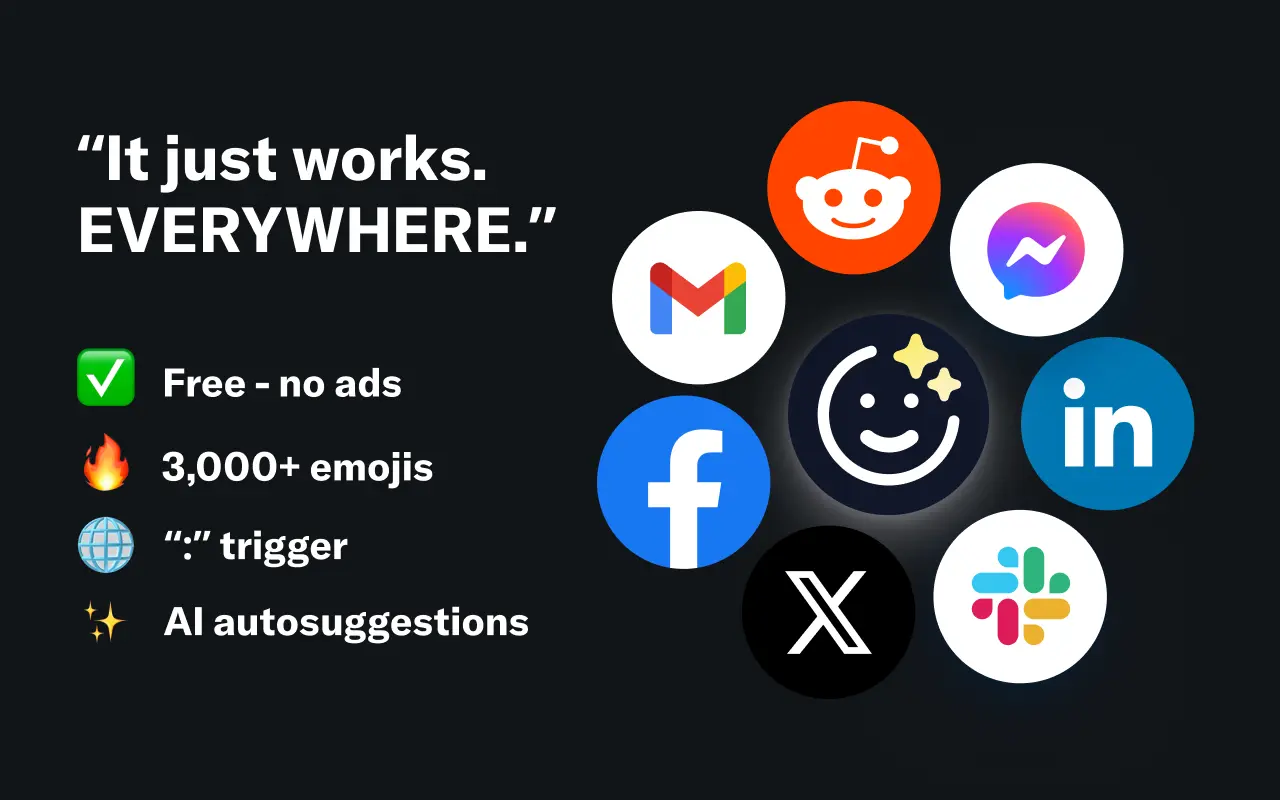
EmojAI
AI-powered emoji picker with smart, context-aware suggestions 🤖
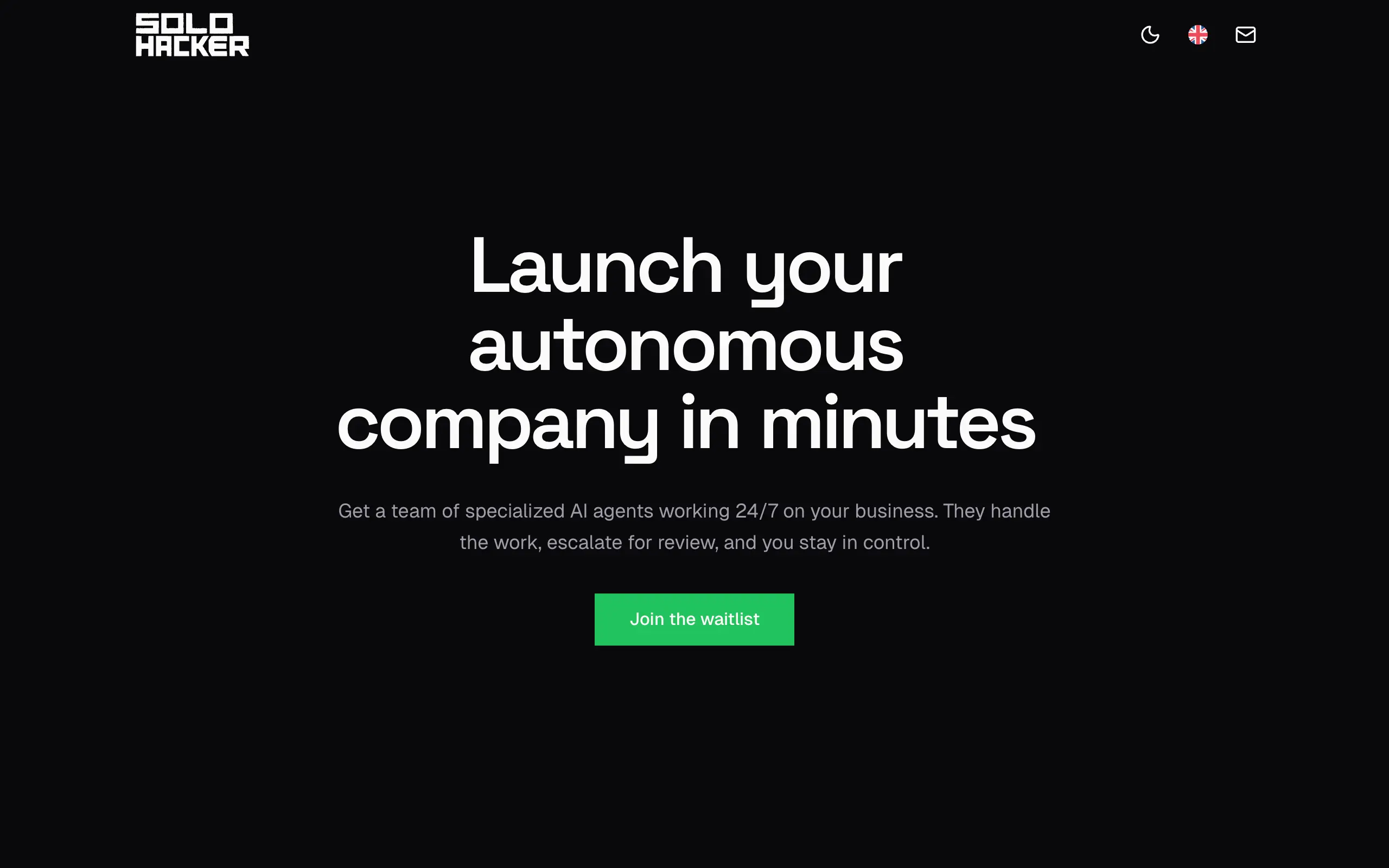
Solohacker
Autonomous company launcher - AI agents work 24/7, escalate what matters, and you stay in control 🤖
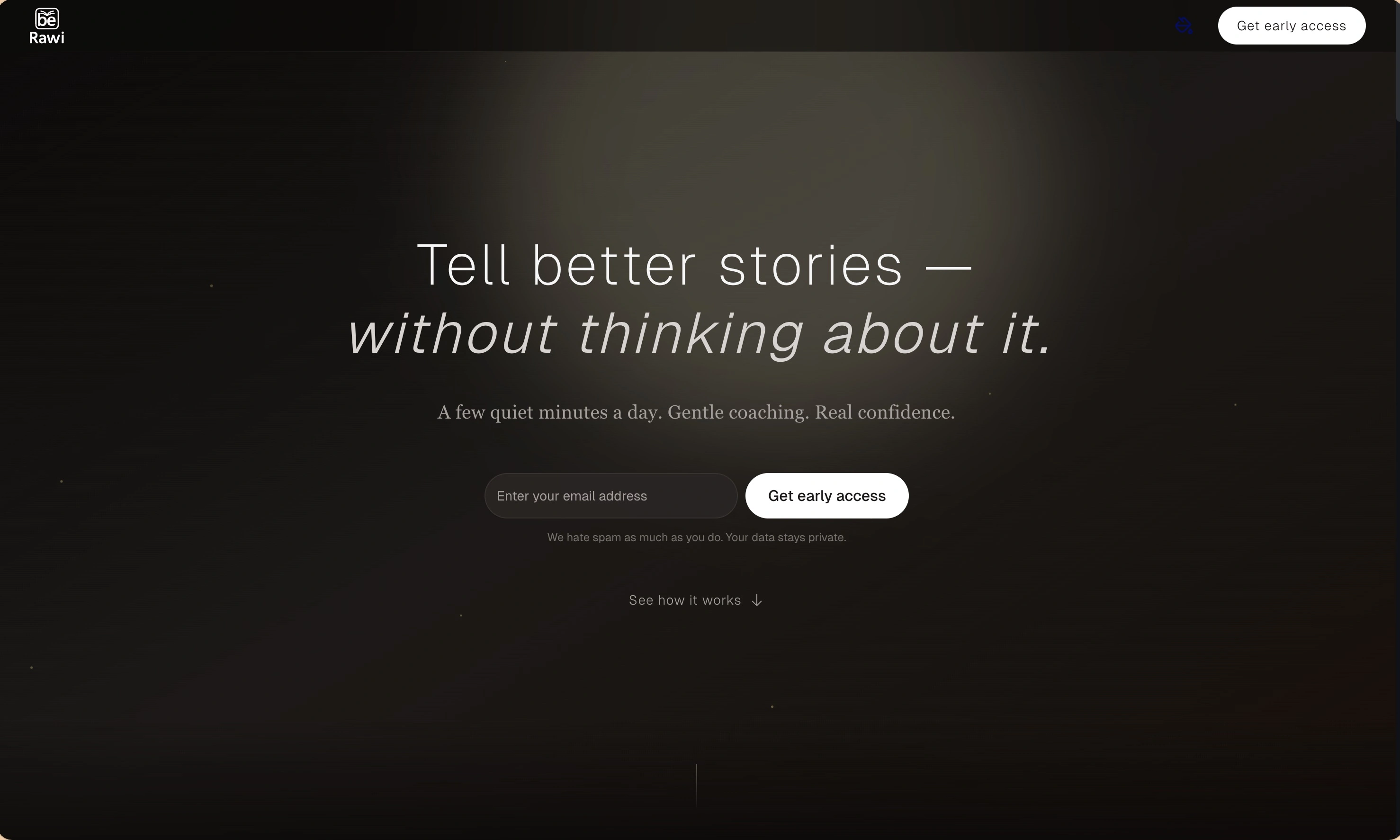
BeRawi: Storytelling Coach
Practice storytelling daily with instant feedback to sound clearer, more engaging, and confident 🎤
Omichat
Chat with 50+ AI models, including ChatGPT and Claude, in one place - switch models anytime without losing context 🤖
Claude Fast
Supercharge your Claude Code with 6x effective context window and specialized AI agents 🤖
EmojAI
AI-powered emoji picker with smart, context-aware suggestions 🤖
Solohacker
Autonomous company launcher - AI agents work 24/7, escalate what matters, and you stay in control 🤖
BeRawi: Storytelling Coach
Practice storytelling daily with instant feedback to sound clearer, more engaging, and confident 🎤
Omichat
Chat with 50+ AI models, including ChatGPT and Claude, in one place - switch models anytime without losing context 🤖
Claude Fast
Supercharge your Claude Code with 6x effective context window and specialized AI agents 🤖
EmojAI
AI-powered emoji picker with smart, context-aware suggestions 🤖
Solohacker
Autonomous company launcher - AI agents work 24/7, escalate what matters, and you stay in control 🤖
BeRawi: Storytelling Coach
Practice storytelling daily with instant feedback to sound clearer, more engaging, and confident 🎤
Omichat
Chat with 50+ AI models, including ChatGPT and Claude, in one place - switch models anytime without losing context 🤖
Claude Fast
Supercharge your Claude Code with 6x effective context window and specialized AI agents 🤖
EmojAI
AI-powered emoji picker with smart, context-aware suggestions 🤖
Solohacker
Autonomous company launcher - AI agents work 24/7, escalate what matters, and you stay in control 🤖
BeRawi: Storytelling Coach
Practice storytelling daily with instant feedback to sound clearer, more engaging, and confident 🎤

Connect with like-minded people
Join our community to get feedback, support, and grow together with 1,000+ builders on board, let's ship it!
Join usShip your startup everywhere. In minutes.
Don't burn tokens on setup and start building features on day one.