Atman Circle
A trusted community platform for seekers to discuss Upanishads, join guided circles, and receive AI-moderated wisdom prompts.
For people exploring the Upanishads, the internet offers abundance but not always belonging. A seeker can find translations, lectures, commentaries, podcasts, and social posts within minutes. What is harder to find is a thoughtful, trusted space for asking difficult questions, reflecting with others, and returning to a teaching over time without the noise, conflict, or performative pressure common on mainstream social platforms.
Atman Circle is positioned to solve that problem. It is a trusted Upanishad community platform where seekers can discuss foundational texts, join guided study circles, and receive AI-moderated wisdom prompts that encourage reflection rather than replace human understanding.
This is more than a niche social network. Done well, Atman Circle can become a digital sanctuary for contemplative learning: a place that supports serious study while staying welcoming to beginners, diaspora communities, spiritual-but-not-religious learners, yoga practitioners, and people seeking philosophical depth beyond algorithmic content feeds.
The opportunity is especially compelling because most existing spiritual communities optimize for broadcasting, content consumption, or generic social interaction. Few are designed specifically around slow learning, respectful dialogue, recurring reflection, and facilitator-led circles.
The central opportunity
Atman Circle should not position AI as an authority on spiritual truth. Its strongest role is as a gentle moderator, discussion organizer, source-aware study assistant, and reflection companion that helps people engage more deeply with human teachers, primary texts, and one another.
Why an Upanishad community platform has meaningful demand
The Upanishads have enduring relevance because they address questions that do not age out of culture:
- What is the nature of the self?
- What does freedom mean?
- How should a person relate to fear, desire, grief, and impermanence?
- Is knowledge merely intellectual, or must it transform how someone lives?
- What is the relationship between individual consciousness and ultimate reality?
These questions appeal to multiple audiences. Some arrive through Vedanta, Hindu philosophy, meditation, or yoga. Others come through comparative religion, academic study, non-dual philosophy, burnout, life transition, or a broader search for meaning.
Yet the typical online journey is fragmented. A learner might watch a short video about tat tvam asi, read an isolated quotation on social media, ask a question in a large forum, and then leave without context, continuity, or meaningful feedback. That experience encourages shallow consumption rather than sustained inquiry.
An Upanishad community platform can create a more coherent learning loop:
- A member encounters a passage, question, or theme.
- They receive accessible context and reliable source references.
- They reflect privately or discuss the idea with a circle.
- A facilitator helps maintain nuance and psychological safety.
- The member returns over weeks or months, connecting teachings to lived experience.
This loop is where Atman Circle can establish defensible value. The product is not just content access. It is structured spiritual study with community continuity.
Target audience for Atman Circle
Atman Circle should avoid treating all spiritually interested people as one homogeneous market. The platform will attract distinct groups with different motivations, levels of familiarity, and willingness to pay.
Curious beginners
People who are new to the Upanishads and want a safe, approachable entry point without feeling judged for basic questions.
Dedicated Vedanta learners
Students who already read commentaries, attend classes, or follow teachers and want regular peer discussion and accountability.
Yoga and meditation practitioners
Practitioners looking to connect philosophical ideas with meditation, ethics, self-inquiry, and daily life.
Diaspora and heritage learners
People reconnecting with Indian philosophical traditions while seeking thoughtful, non-tokenized community.
Facilitators and teachers
Qualified guides who need tools for managing study circles, prompts, discussions, attendance, and member care.
Curious beginners need clarity without oversimplification
Newcomers often encounter the Upanishads through inspirational fragments. They may recognize terms such as Atman, Brahman, moksha, maya, or neti neti, but lack confidence about what those terms mean across traditions and commentarial schools.
Their biggest needs include:
- Plain-language explanations without flattening philosophical nuance
- A reading sequence that does not assume prior Sanskrit knowledge
- Permission to ask basic questions
- Clear distinctions between primary texts, interpretations, and modern adaptations
- A welcoming community culture without gatekeeping
For this audience, Atman Circle should offer onboarding pathways such as “Your first 30 days with the Upanishads” or “Foundations of self-inquiry.” The emphasis should be on confidence, orientation, and participation.
Serious students need depth, reliability, and continuity
More experienced learners may already have translations, teachers, and reading habits. They will not join simply for generic inspiration. They will join if Atman Circle helps them sustain disciplined study and exposes them to high-quality dialogue.
Useful features for this segment include:
- Passage-level annotations
- Multiple translation comparisons
- Facilitator-led cohorts
- Reading accountability
- Theme-based discussion spaces
- Structured debate guidelines
- Saved notes and personal reflection archives
- Source citations that distinguish text from commentary
This audience can become the platform’s early credibility engine. Their contributions, questions, and study practices help prevent the community from drifting into vague motivational content.
Facilitators are a critical two-sided marketplace segment
Atman Circle should treat teachers, practitioners, scholars, and trained community hosts as core users rather than an afterthought. Guided circles are one of the clearest ways to make the product differentiated and monetizable.
A facilitator may need to:
- Create a recurring study circle
- Define the text, chapter, theme, and meeting cadence
- Set participant capacity and eligibility
- Share reading prompts before a session
- Moderate asynchronous discussion
- Record attendance and participation
- Publish follow-up practices or journal questions
- Protect the circle’s confidentiality and boundaries
If Atman Circle gives facilitators practical tools, they have a reason to bring their existing audiences onto the platform. That reduces customer acquisition costs while improving the quality of the member experience.
The market gap in spiritual community and contemplative learning
The broad spiritual wellness market is crowded, but the specific need for trusted contemplative communities remains underserved. Existing alternatives tend to fall into several categories, each with important limitations.
| Alternative | Primary strength | Common limitation | Atman Circle opportunity | Priority |
|---|---|---|---|---|
| General social networks | Large reach | Noise, conflict, weak context | Build slow, moderated dialogue | High |
| Video platforms | Accessible lectures | Passive learning and fragmented comments | Turn teachings into guided practice | High |
| Online course platforms | Structured lessons | Limited peer continuity after completion | Support ongoing circles and reflection | High |
| Generic meditation apps | Convenience and habit building | Often light on philosophy and community | Offer text-centered contemplative study | Medium |
| Private chat groups | Intimacy and immediacy | Hard to organize, search, or moderate | Provide durable knowledge and circle tools | High |
The market gap is not a lack of information about the Upanishads. It is a lack of digital environments that combine intellectual integrity, emotional safety, recurring practice, and relationship-based learning.
Atman Circle can occupy this position by making three commitments:
- Source-aware learning rather than quote-driven spirituality
- Facilitated community rather than an unmoderated content feed
- Reflective participation rather than engagement-maximizing algorithms
This positioning is increasingly valuable as users become more aware of low-quality AI content, misinformation, and algorithmic outrage. People who seek contemplative learning often want the opposite of an attention economy product.
The unique value proposition of Atman Circle
The strongest Atman Circle value proposition is simple:
A trusted digital home for studying the Upanishads through guided circles, thoughtful dialogue, and AI-assisted reflection.
The differentiation lies in how the product combines its parts. A reading library alone is easy to replicate. A discussion forum alone is easy to launch. An AI chatbot alone is increasingly commoditized. But a platform that carefully connects canonical texts, trained facilitators, member circles, moderated conversations, and source-grounded prompts can create a high-trust ecosystem.
What makes Atman Circle different
Atman Circle should be built around the principle that wisdom traditions require context. A quote, a translation, or an AI-generated explanation can be useful, but none should be treated as complete in isolation.
The product can stand out through the following design choices:
- Text-first architecture that connects discussions to specific passages, translations, and themes
- Circle-first participation that gives members smaller groups instead of one overwhelming public feed
- Human-in-the-loop AI moderation that detects risk and supports facilitators without impersonating a guru
- Pluralistic scholarship that acknowledges interpretive diversity across Vedanta traditions and modern scholarship
- Private reflection spaces where members can journal without turning personal insight into public performance
- Rituals of return such as weekly prompts, reflection recaps, and reading milestones
The brand should communicate humility. Atman Circle is not the final authority on the Upanishads. It is a platform that helps people engage responsibly with texts, teachers, traditions, and their own lived questions.
Core features for an MVP of Atman Circle
A strong MVP should focus on creating repeatable, high-quality circle experiences. Avoid launching with a massive public social feed, complex gamification, or an unrestricted AI teacher. Those features may increase surface activity while weakening trust.
Member profiles and intentional onboarding
Onboarding should establish each member’s goals, experience level, interests, and preferred mode of participation. A person should not need to disclose deeply personal information to begin, but they should be able to shape their experience.
Useful onboarding questions include:
- Which best describes your familiarity with the Upanishads?
- Are you looking for study, reflection, community, meditation support, or all of these?
- Do you prefer beginner-friendly, scholarly, devotional, comparative, or practice-oriented discussions?
- Are you interested in joining live circles, asynchronous groups, or both?
- What community norms help you participate openly?
The output can recommend a reading path, suggested circles, and initial prompts. This creates relevance from the first session without pretending the platform knows someone’s spiritual needs.
Guided study circles
Guided circles should be the heart of the product. A circle may be a small recurring group focused on one text, one philosophical question, or one practice theme.
Examples include:
- Isha Upanishad for beginners
- Self and consciousness in the Katha Upanishad
- Comparative readings on non-duality
- Women, translation, and interpretation in Indic philosophy
- Weekly self-inquiry circle for yoga practitioners
- Slow reading group for the Chandogya Upanishad
Each circle should support:
- Membership limits
- Clear facilitator identity and credentials
- Meeting schedules and time zone handling
- Reading assignments
- Discussion threads connected to a passage
- Shared agreements and conduct expectations
- Optional video meeting integrations
- Attendance and participation insights
- Private facilitator notes where appropriate
Small-group design improves safety and retention. It also gives members a reason to return, because the value is relational rather than purely informational.
Passage-based discussion and knowledge architecture
The discussion model should avoid a single endless timeline. Instead, each discussion can attach to:
- A specific Upanishad
- A chapter or section
- A translation
- A Sanskrit term
- A philosophical theme
- A circle session
- A guided prompt
This structure makes conversations easier to search and revisits easier to understand. It also helps moderators identify when a claim is disconnected from the source material.
For example, a user reading a passage from the Kena Upanishad could see relevant notes, a facilitator’s framing question, translation differences, and prior discussions from their circle. The user experience becomes closer to a living study companion than a conventional social network.
AI-moderated wisdom prompts
The phrase “AI-moderated wisdom prompts” is compelling, but it must be implemented carefully. The goal is not to produce spiritual pronouncements or simulate enlightenment. The goal is to help people pause, articulate their perspective, and engage respectfully.
Good AI-generated prompts might include:
- “What assumption about the self does this passage invite you to examine?”
- “Would you like to compare this interpretation with another translation?”
- “Can you distinguish what the text says from what you personally infer?”
- “This thread contains several viewpoints. Would a brief summary of agreements and open questions be useful?”
- “Before replying, consider whether you are asking for clarification, offering an interpretation, or sharing personal experience.”
The AI should be grounded in a curated knowledge base, cite source passages where possible, and visibly label generated content. It should not present contested interpretations as universally settled fact.
Avoid the AI guru trap
Do not market AI as a spiritual master, therapist, or authoritative interpreter of sacred texts. Use explicit product language such as “reflection assistant,” “discussion guide,” and “source-aware study support.” Escalate sensitive, harmful, or crisis-related messages to trained human review processes.
Reflection journals and personal knowledge capture
Private reflection is a natural complement to group discussion. Members need a place to explore thoughts that are unfinished, vulnerable, or not ready for public conversation.
A reflection journal could include:
- Private responses to weekly prompts
- Saved passages and annotations
- Mood-neutral check-in options
- Personal reading milestones
- Exportable notes
- The ability to selectively share an entry with a facilitator or circle
This feature supports long-term retention because it helps a member see their own learning over time. It also reduces pressure to perform wisdom publicly.
Trust, safety, and community moderation tools
In a spiritually oriented platform, moderation is not a back-office function. It is a product feature and a core brand promise.
Atman Circle needs:
- Clear community guidelines
- Reporting and blocking controls
- Rate limits for new accounts
- Moderator review queues
- Facilitator escalation workflows
- Audit logs for moderation actions
- Consent-based privacy settings
- Rules against coercion, harassment, discrimination, and financial exploitation
- Special policies for mental health crisis content
A respectful community does not appear automatically because the subject matter is spiritual. It needs visible norms, responsive stewardship, and product mechanics that reward care over virality.
Building responsible AI moderation for spiritual discussions
AI moderation is one of the most strategically valuable and highest-risk parts of Atman Circle. The product should treat it as an assistive system with explicit boundaries.
What the AI should do
The AI can add real operational value in several areas:
- Flag potentially abusive, threatening, or discriminatory language
- Detect possible spam, scams, and impersonation attempts
- Identify content that may need urgent human review
- Summarize long, respectful discussion threads
- Suggest source-grounded reflection prompts
- Help facilitators identify unanswered questions
- Encourage users to state uncertainty when discussing complex doctrine
- Recommend relevant passages from an approved corpus
What the AI should not do
The system should not:
- Diagnose mental health conditions
- Give emergency or clinical advice
- Claim spiritual attainment or privileged authority
- Pressure users toward a religious belief
- Invent quotations or textual references
- Present one school of interpretation as the only legitimate reading
- Replace qualified facilitators in sensitive conflict situations
- Train on private user reflections without clear, informed consent
A robust safety model needs a retrieval layer built from trusted and licensed materials, not only a general-purpose language model. Every AI answer about a text should ideally link internally to the passage, translation, or approved commentary that informed the response.
A practical moderation workflow
A simple early-stage workflow can use confidence-based routing:
type ModerationAction =
  | "allow"
  | "nudge"
  | "queue_for_review"
  | "restrict";

function routeDiscussionMessage(
  toxicityScore: number,
  crisisScore: number,
  sourceClaimScore: number
): ModerationAction {
  if (crisisScore >= 0.8 || toxicityScore >= 0.9) {
    return "restrict";
  }

  if (toxicityScore >= 0.55) {
    return "queue_for_review";
  }

  if (sourceClaimScore < 0.4) {
    return "nudge";
  }

  return "allow";
}
The nudge action should be supportive rather than punitive. For example, a member making a broad doctrinal claim could receive a private suggestion to add a source, clarify that the statement is personal interpretation, or invite another perspective.
Human moderators must retain final authority for meaningful enforcement decisions. Automated systems are imperfect, especially across cultural contexts, transliteration patterns, and nuanced philosophical debate.
Recommended tech stack for Atman Circle
The technical stack should prioritize speed of development, privacy, moderation observability, and the ability to evolve from an MVP into a durable community product.
For a modern SaaS build, a TypeScript-based architecture is a practical choice.
Frontend and application framework
Use Next.js with React and TypeScript.
Benefits include:
- Server-side rendering for discoverable public educational pages
- Strong routing and API capabilities
- A mature ecosystem for authentication, payments, and analytics
- Shared types across frontend and backend workflows
- Good performance for content-rich pages
For styling, Tailwind CSS is a strong fit because it enables a consistent, accessible design system without requiring a large custom CSS layer.
Database and backend services
A relational database is usually better than a document-first database for this product. Circles, memberships, roles, moderation cases, discussion threads, source references, and payment records have meaningful relationships.
Use PostgreSQL with an ORM such as Prisma.
A relational model supports:
- Clear authorization rules
- Reliable reporting
- Membership and role management
- Structured content relationships
- Transactional payment updates
- Auditable moderation records
For managed infrastructure, Supabase can accelerate early development by combining PostgreSQL, authentication, storage, and real-time features. The trade-off is that some teams may prefer more infrastructure control as they scale or develop complex authorization requirements.
Authentication and permissions
Authentication should support email sign-in first, with optional social login later. The most important requirement is not login convenience. It is a robust role and permission model.
Core roles may include:
- Member
- Circle participant
- Facilitator
- Moderator
- Content editor
- Administrator
Atman Circle should use server-enforced authorization rather than relying on hidden frontend UI controls. Private journals, closed circles, facilitator notes, and moderation queues need strict access boundaries.
AI and retrieval architecture
Use an LLM provider through a server-side API layer. Keep all prompts, safety instructions, source retrieval, and logging under application control.
For source-aware answers, build a retrieval-augmented generation workflow:
- Curate approved public-domain or properly licensed translations and study materials.
- Split texts into passage-level chunks with metadata.
- Generate embeddings and store them in a vector-capable database.
- Retrieve relevant passages before generating an AI response.
- Display citations and uncertainty where appropriate.
- Log outputs for quality review and incident investigation.
OpenAI can be used for language model capabilities, while pgvector is a practical option for vector search within PostgreSQL. Keeping structured product data and semantic retrieval close together can simplify an MVP.
The key trade-off is quality versus cost. More retrieval, citations, and safety checks improve trust but increase processing time and operational expense. Start with AI features that are clearly valuable and rate-limit high-cost actions.
Video and live circle integrations
For an MVP, avoid building proprietary video conferencing. Integrate with familiar meeting tools through calendar links or use an API provider when the experience requires in-product sessions.
Potential approaches include:
- Calendar invites with external meeting links for the fastest launch
- Daily for programmable video experiences
- Zoom integrations for facilitators who already use it
An external-link approach is cheaper and faster. An embedded video experience creates a more cohesive product but adds complexity around recordings, privacy, moderation, and support.
Monetization options for Atman Circle
The best monetization model should align with the platform’s ethical positioning. Users may accept paying for quality facilitation, structured learning, and trusted community infrastructure. They are less likely to trust a platform that aggressively monetizes vulnerability or spiritual aspiration.
Freemium membership with paid circles
A freemium model can offer:
- Public educational resources
- Limited discussion access
- One introductory circle experience
- Weekly reflection prompts
- A private journal with basic functionality
Paid membership can unlock:
- Full access to premium circles
- Advanced study paths
- Facilitator-led cohorts
- Expanded journals and personal knowledge tools
- Circle recordings where consent allows
- Member-only events
- Better search and annotation capabilities
This model builds a broad top-of-funnel while giving committed learners a clear upgrade path.
Revenue share with facilitators
Atman Circle can allow facilitators to price premium circles and take a platform fee. This creates marketplace incentives while preserving a diversified revenue stream.
A healthy model might include:
- A platform transaction fee
- Optional facilitator subscriptions for advanced management tools
- Payout controls and tax documentation
- Refund and cancellation policies
- Quality standards for paid offerings
The platform should verify facilitator identity and communicate qualifications transparently. “Teacher” and “guide” can mean very different things, so profile labeling matters.
Institutional and community partnerships
A later expansion path is a B2B or community partnership tier for:
- Yoga studios
- Retreat centers
- University religious studies programs
- Cultural organizations
- Meditation communities
- Book clubs and independent study groups
These organizations may need branded circles, admin controls, cohort analytics, and private learning spaces. This can raise average contract value without forcing the consumer product to become overly commercial.
Ethical monetization principles
Atman Circle should publish clear commitments:
- No sale of private reflection data
- No advertising based on sensitive spiritual or personal content
- Clear disclosure when AI features are used
- Transparent facilitator pricing
- Accessible or scholarship-supported options where feasible
- No promises of enlightenment, healing, or personal transformation in exchange for payment
Trust is not merely a compliance issue. It is a commercial advantage in a category where users are rightly cautious about exploitation.
Competitive advantage analysis
Atman Circle can build a moat through a combination of content structure, community quality, facilitator relationships, and trust infrastructure.
The defensible assets
The most valuable long-term assets may include:
- A curated, source-linked Upanishad knowledge graph
- High-quality facilitator networks
- Well-moderated discussion archives
- Member trust and recurring circle relationships
- Behavioral insight into which prompts and formats support meaningful participation
- Strong safety policies tailored to spiritual community contexts
- A recognizable brand associated with humility and depth
Unlike a generic community platform, Atman Circle can develop specialized workflows that are hard to recreate without subject-matter understanding. For example, linking commentary, translations, discussions, and reflection prompts to one passage is a domain-specific product capability.
Network effects without a toxic feed
Traditional social products often pursue network effects through public feeds and viral sharing. Atman Circle should pursue a healthier model based on circle density and facilitator quality.
The product becomes more valuable when:
- More trusted facilitators host circles
- More circles serve different learner levels and time zones
- More members contribute respectful, searchable discussion
- More curated resources improve AI grounding and study pathways
- More successful circles invite aligned friends and communities
This is a quality-based network effect. It may grow more slowly than a viral content platform, but it is more aligned with the product’s mission and likely to generate stronger retention.
Key risks and how to mitigate them
Every spiritual community platform faces distinctive risks. Addressing them early is essential to earning user trust and avoiding preventable harm.
Use passage-level citations, content review standards, multiple interpretive perspectives, and visible labels for personal opinion. Encourage facilitators to distinguish primary text, traditional commentary, and contemporary interpretation.
Publish strict conduct rules, verify paid facilitators, provide reporting channels, monitor repeat complaints, and remove users who manipulate, harass, or pressure others financially or emotionally.
Ground AI outputs in a curated corpus, require citations where possible, use refusal behavior when retrieval confidence is low, and maintain a human review process for flagged outputs.
Launch with a narrow set of scheduled circles and committed facilitators. A smaller active experience is better than a large empty platform with many inactive categories.
Work with scholars, practitioners, translators, and diverse community advisors. Avoid presenting the Upanishads as generic wellness content detached from their historical and philosophical contexts.
Legal, privacy, and governance considerations
Atman Circle should obtain professional legal advice before launch, especially around privacy, payments, facilitator agreements, user-generated content, and AI disclosures.
Important operating practices include:
- A plain-language privacy policy
- Data retention controls for sensitive journals and direct messages
- Consent mechanisms for recordings and shared reflections
- Clear terms for user-generated content
- A documented moderation and appeals process
- Incident response procedures
- Age restrictions or age-appropriate safeguards
- Regional data protection review for applicable markets
If the platform operates across jurisdictions, privacy and consumer protection requirements can vary significantly. Build with data minimization from day one rather than trying to retrofit privacy into a growing social graph.
A practical go-to-market strategy
The initial go-to-market strategy should prioritize trust and density over scale. Atman Circle does not need thousands of members on day one. It needs a small number of excellent circles that deliver a visibly better experience than a chat group or generic course.
Start with a focused wedge
A strong initial wedge could be:
Guided beginner and intermediate Upanishad study circles for English-speaking seekers who want thoughtful, source-aware discussion.
This focus makes product decisions easier. It also gives marketing a clear message and enables structured feedback from early members.
Potential early acquisition channels include:
- Partnerships with independent Vedanta teachers and yoga educators
- Guest essays and educational content optimized for Upanishad study searches
- Podcasts and newsletters focused on contemplative practice
- University and book-club partnerships
- Online events such as an introductory reading session
- Referral invitations from trusted facilitators
Search content should target genuine educational intent rather than broad spiritual buzzwords. Useful topics might include “how to start reading the Upanishads,” “Upanishads study group online,” “Atman and Brahman explained,” and “guided Vedanta discussion circle.”
Build authority through editorial standards
To demonstrate E-E-A-T, Atman Circle should clearly identify who creates and reviews educational material. Articles and study guides should include:
- Author names and relevant qualifications
- Editorial review notes where relevant
- Translation and source references
- Publication and update dates
- Clear separation between scholarship and personal reflection
- Corrections processes
For factual claims or historical context, cite reputable academic publishers, university resources, or recognized translations. When using statistics about spirituality, online learning, or wellness trends, reference the original report publisher and publication date rather than relying on unsourced summaries.
Actionable implementation roadmap
The best way to build Atman Circle is to validate the guided-circle experience before investing heavily in sophisticated AI or a broad content library.
Define the initial audience, editorial worldview, community guidelines, and facilitator qualification criteria. Write down what Atman Circle will not claim or offer, especially around spiritual authority and mental health support.
Recruit five to ten credible pilot facilitators with distinct but compatible approaches. Ask each facilitator to commit to a limited pilot cohort and provide structured feedback after every session.
Build the MVP around onboarding, circle discovery, memberships, passage-based discussion, basic private journaling, and moderator reporting. Do not begin with an open public feed.
Launch a curated text library with a small number of carefully selected passages, translations, context notes, and discussion prompts. Prioritize quality, licensing clarity, and source metadata.
Introduce AI only for low-risk use cases such as summaries, prompt suggestions, source retrieval, and moderator triage. Keep human review available and label AI-generated material clearly.
Measure retention by circle participation, return sessions, completed reading paths, meaningful replies, facilitator satisfaction, and safety outcomes rather than vanity metrics such as impressions.
Expand gradually into premium circles, facilitator tools, institutional partnerships, and more advanced personalization once the core study-circle experience consistently produces value.
For a faster SaaS foundation, TurboStarter can help teams begin with production-minded patterns for authentication, payments, application structure, and core product workflows, allowing more development time to go toward the community experience that makes Atman Circle distinctive.
Final perspective on building Atman Circle
Atman Circle has the potential to become a meaningful Upanishad community platform because it responds to a real digital need: people want more than content, but they do not want the chaos of mainstream social media or the impersonality of an AI-only experience.
Its success will depend on disciplined product choices. Build for small-group trust before scale. Treat facilitators as essential partners. Use AI to support attention, context, and safety rather than to manufacture authority. Preserve the intellectual and cultural integrity of the texts. Make privacy and moderation visible parts of the user experience.
The winning version of Atman Circle will not be the loudest spiritual platform online. It will be the one members return to when they want to read carefully, ask honestly, listen generously, and continue the work of inquiry with others.
More 🌐 Social Network SaaS ideas
Discover more innovative social network SaaS ideas that are trending in 2026. Each idea is AI-generated with market validation and growth potential to help you find your next profitable venture faster than competitors.
Your competitors are building with TurboStarter
Below are some of the SaaS ideas that have been generated and built with our starter kit.
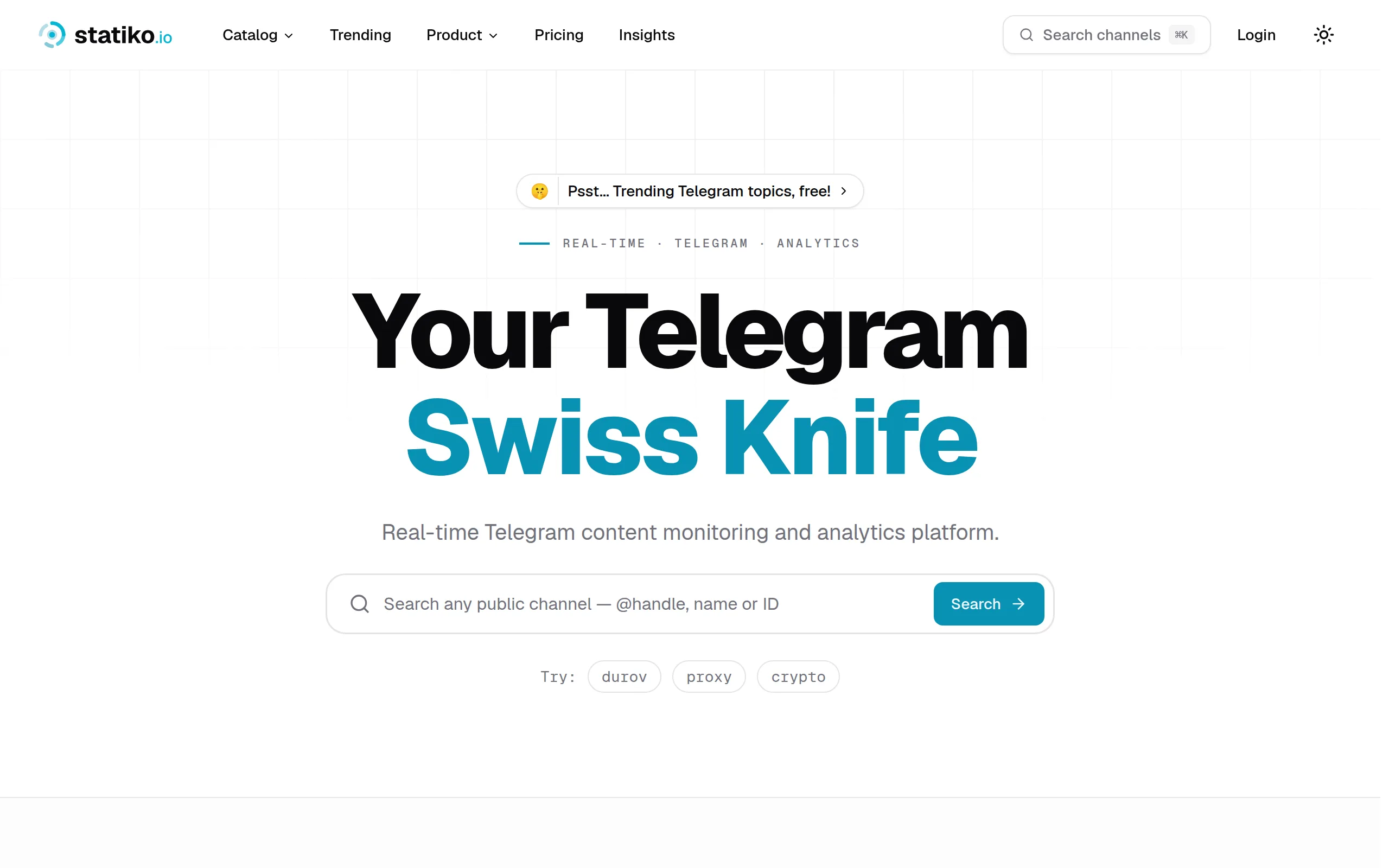
Statiko
Monitor any Telegram channel in real time - track posts, edits, deletions, and growth with AI recaps 📡

Shibui
AI website builder - describe your business, pick a niche template, edit by chatting, and publish instantly ✨

Pro Service
Find verified home service professionals, compare quotes, and pay securely through escrow - built for Brazilians across the US 🏠
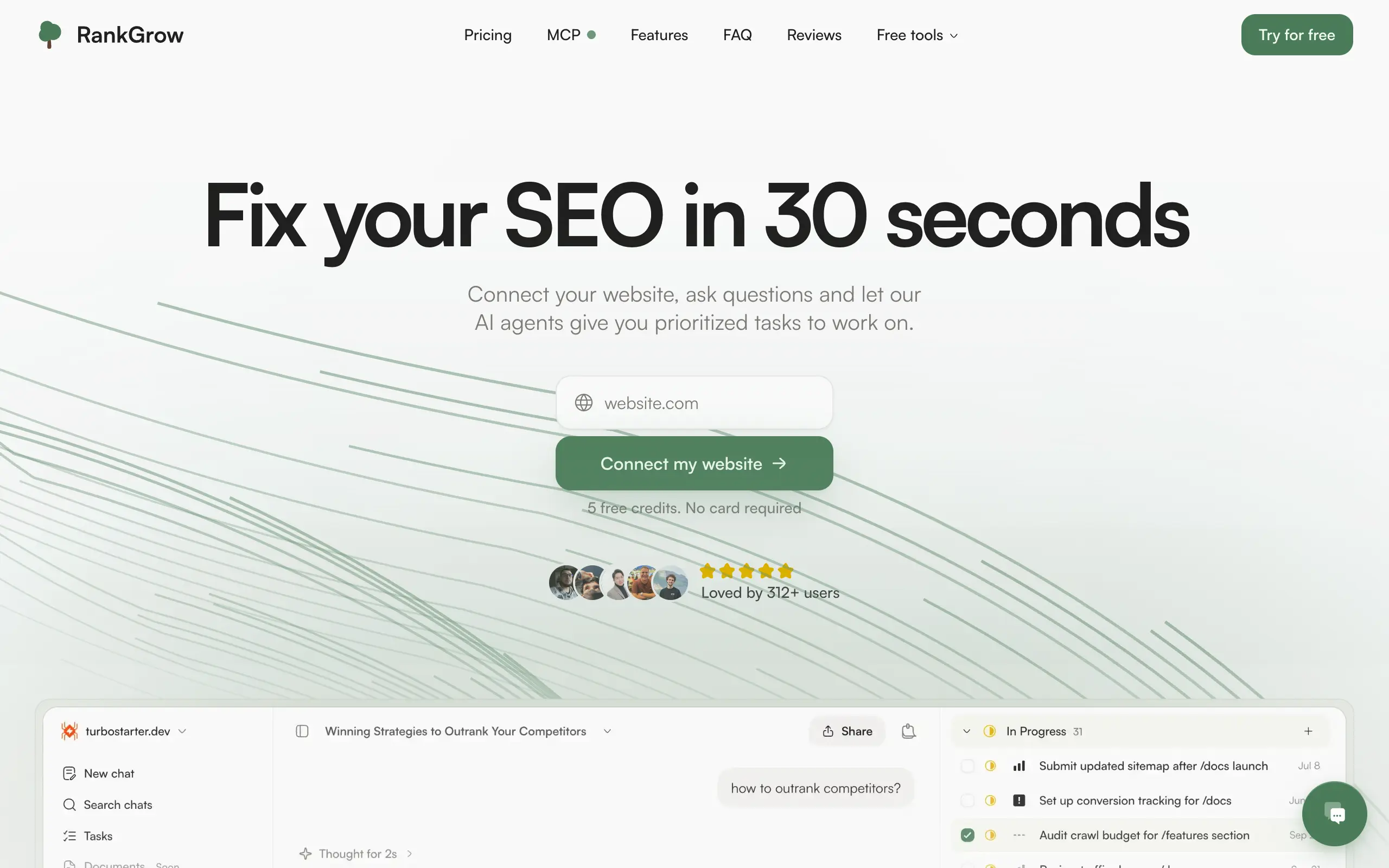
RankGrow
Fix your SEO with AI agents - connect Search Console, get prioritized tasks, and grow organic traffic 📈
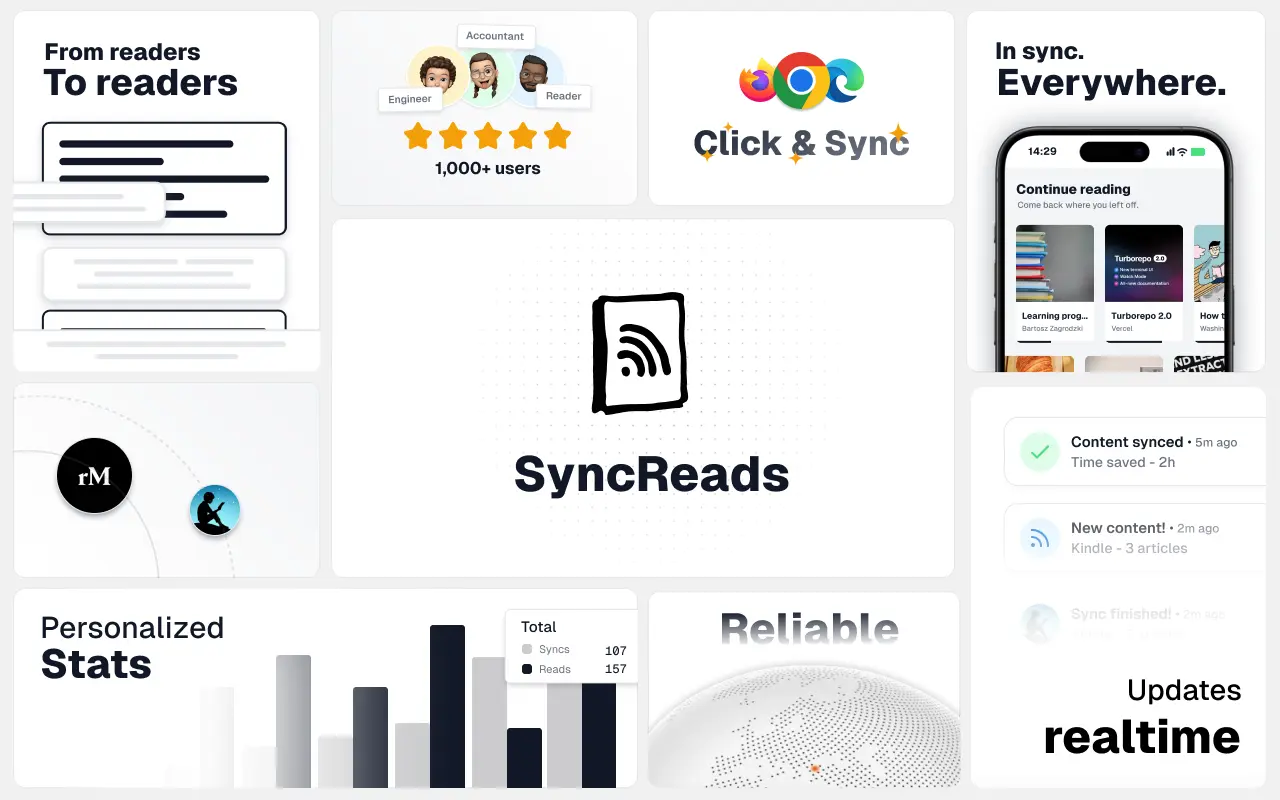
SyncReads
Sync your favorite content for distraction-free reading, save time and replace multiple apps. Anytime, anywhere 🔄
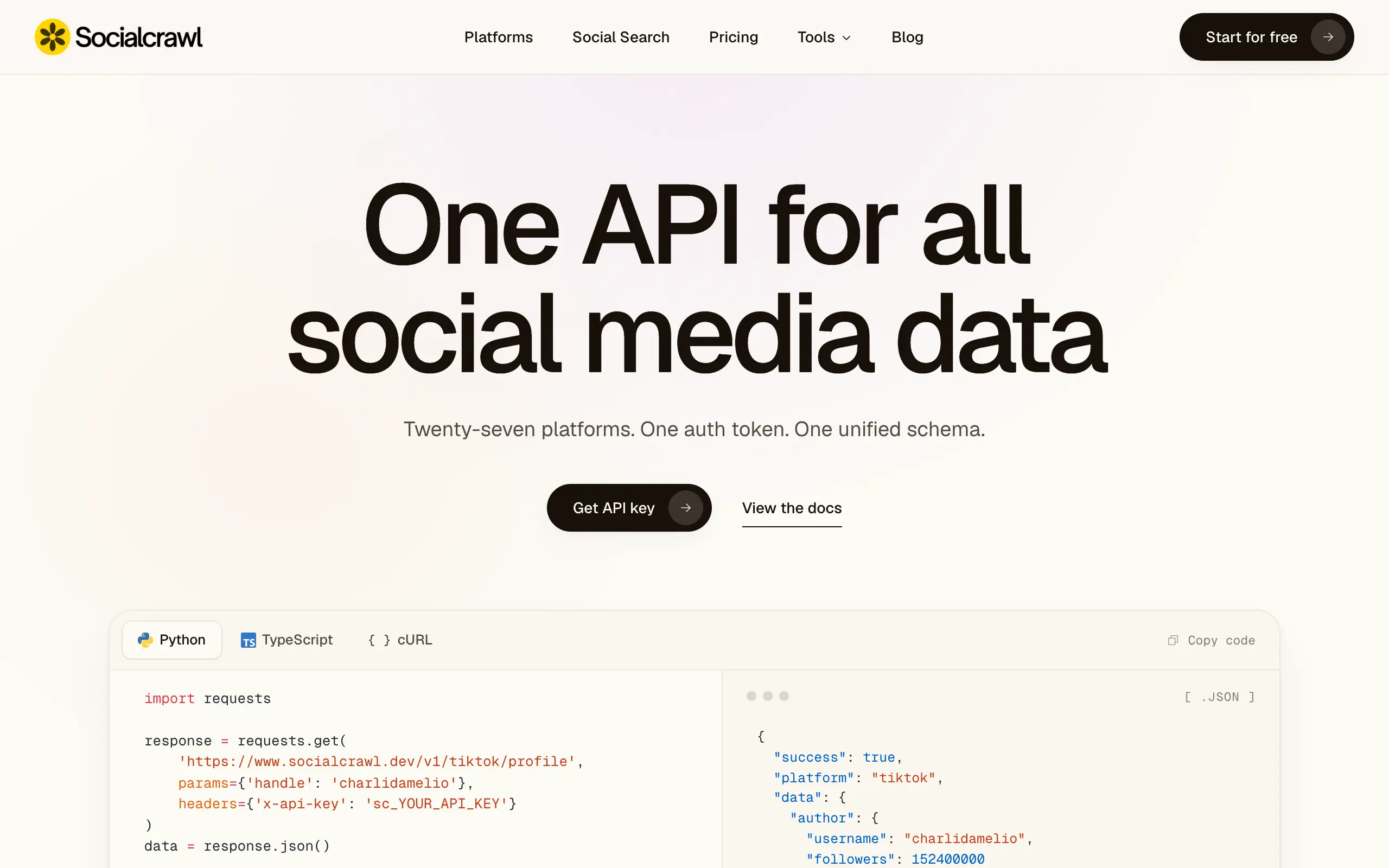
Socialcrawl
Get clean, structured data from 21 platforms like TikTok, Instagram, and YouTube with a single request 📊
Statiko
Monitor any Telegram channel in real time - track posts, edits, deletions, and growth with AI recaps 📡
Shibui
AI website builder - describe your business, pick a niche template, edit by chatting, and publish instantly ✨
Pro Service
Find verified home service professionals, compare quotes, and pay securely through escrow - built for Brazilians across the US 🏠
RankGrow
Fix your SEO with AI agents - connect Search Console, get prioritized tasks, and grow organic traffic 📈
SyncReads
Sync your favorite content for distraction-free reading, save time and replace multiple apps. Anytime, anywhere 🔄
Socialcrawl
Get clean, structured data from 21 platforms like TikTok, Instagram, and YouTube with a single request 📊
Statiko
Monitor any Telegram channel in real time - track posts, edits, deletions, and growth with AI recaps 📡
Shibui
AI website builder - describe your business, pick a niche template, edit by chatting, and publish instantly ✨
Pro Service
Find verified home service professionals, compare quotes, and pay securely through escrow - built for Brazilians across the US 🏠
RankGrow
Fix your SEO with AI agents - connect Search Console, get prioritized tasks, and grow organic traffic 📈
SyncReads
Sync your favorite content for distraction-free reading, save time and replace multiple apps. Anytime, anywhere 🔄
Socialcrawl
Get clean, structured data from 21 platforms like TikTok, Instagram, and YouTube with a single request 📊
Statiko
Monitor any Telegram channel in real time - track posts, edits, deletions, and growth with AI recaps 📡
Shibui
AI website builder - describe your business, pick a niche template, edit by chatting, and publish instantly ✨
Pro Service
Find verified home service professionals, compare quotes, and pay securely through escrow - built for Brazilians across the US 🏠
RankGrow
Fix your SEO with AI agents - connect Search Console, get prioritized tasks, and grow organic traffic 📈
SyncReads
Sync your favorite content for distraction-free reading, save time and replace multiple apps. Anytime, anywhere 🔄
Socialcrawl
Get clean, structured data from 21 platforms like TikTok, Instagram, and YouTube with a single request 📊
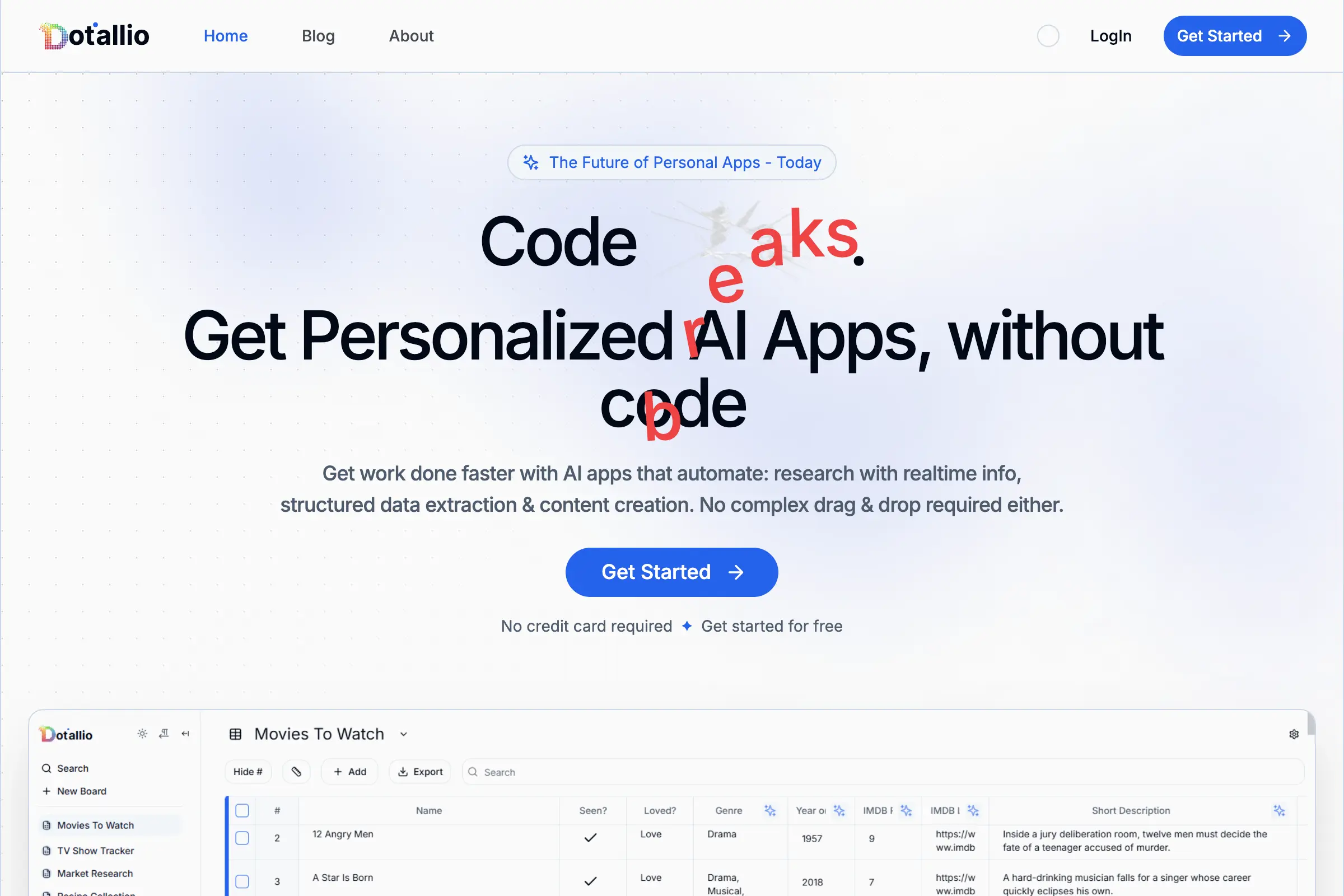
Dotallio
Personalized AI apps that automate research, data extraction, and content creation without code 🤖

Talk to Santa
Enjoy a magical live video chat or receive a unique AI-generated video greeting from Santa Claus 🎅
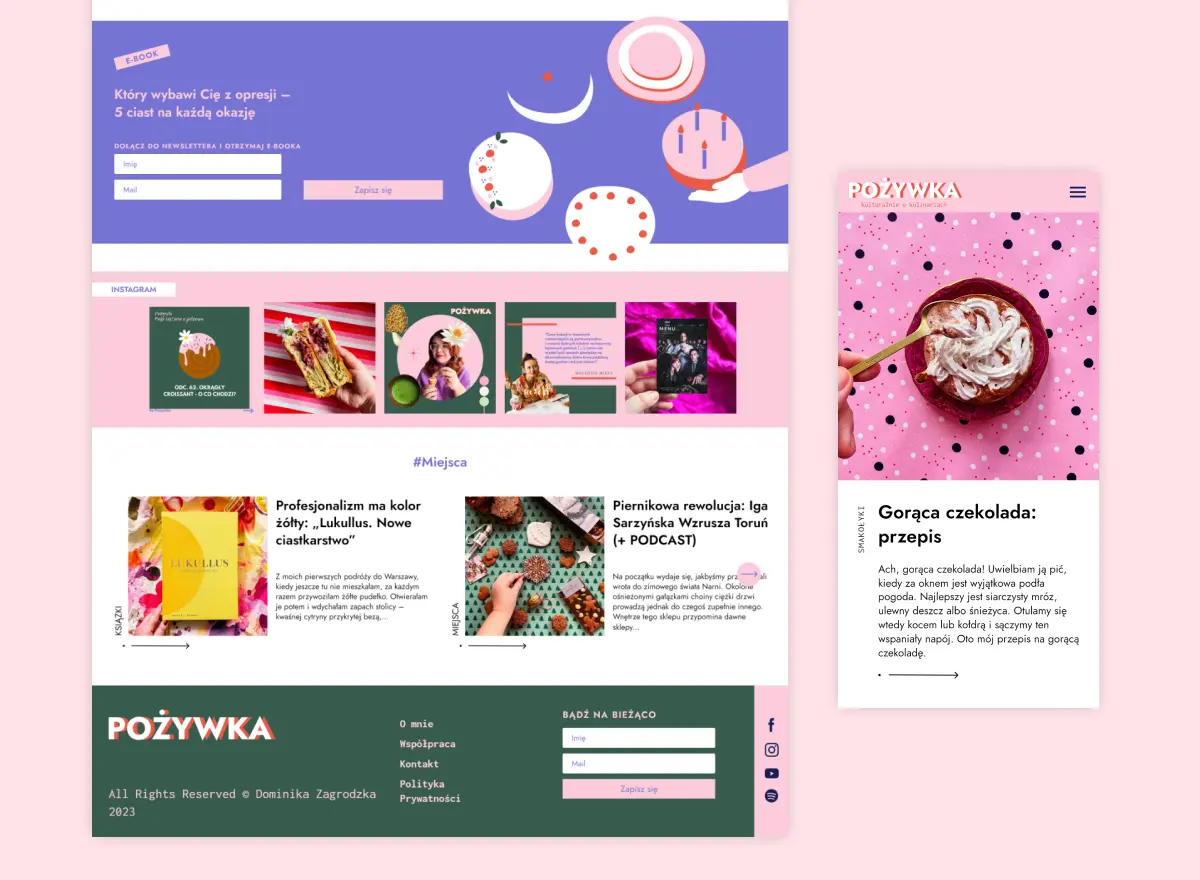
pozywka.pl
Scalable blog for food journalist, focused on performance and user experience 🌭
zagrodzki.me
Personal blog and portfolio of Bart Zagrodzki, where he shares his knowledge and work 💼
TurboStarter
Ship your startup everywhere. In minutes.
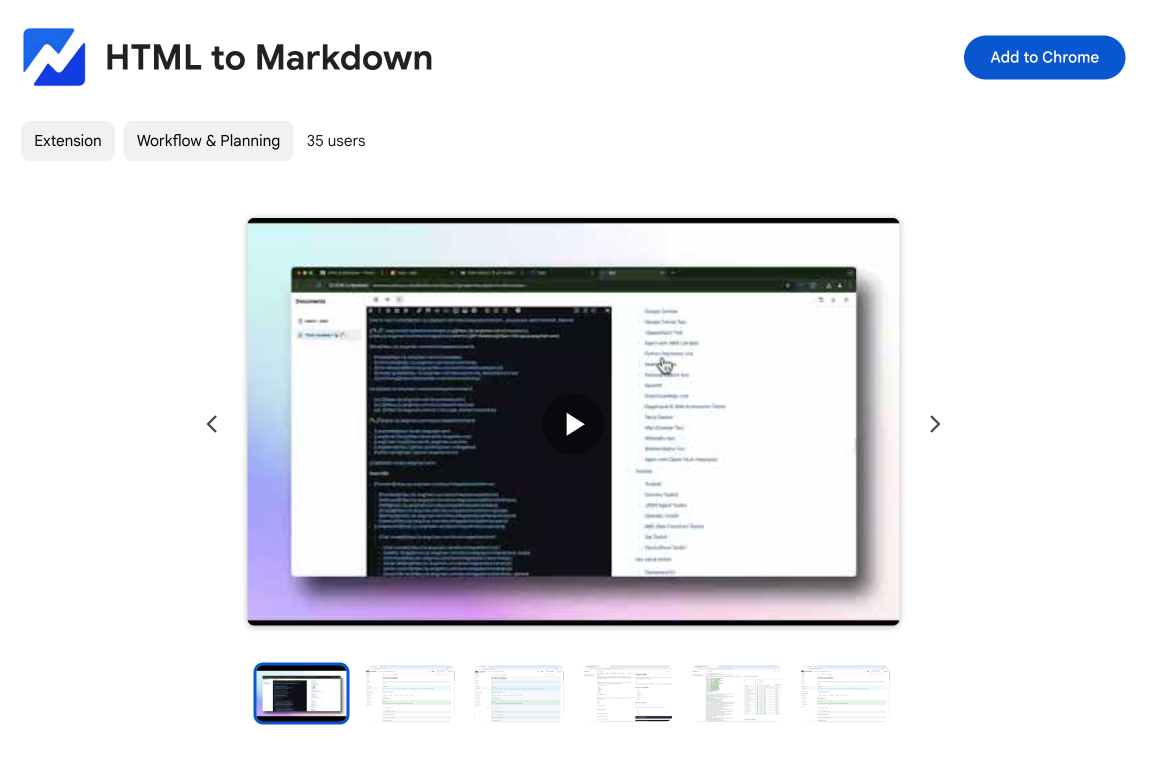
HTML to Markdown
Convert HTML to Markdown with ease, directly in your browser 📄
Dotallio
Personalized AI apps that automate research, data extraction, and content creation without code 🤖
Talk to Santa
Enjoy a magical live video chat or receive a unique AI-generated video greeting from Santa Claus 🎅
pozywka.pl
Scalable blog for food journalist, focused on performance and user experience 🌭
zagrodzki.me
Personal blog and portfolio of Bart Zagrodzki, where he shares his knowledge and work 💼
TurboStarter
Ship your startup everywhere. In minutes.
HTML to Markdown
Convert HTML to Markdown with ease, directly in your browser 📄
Dotallio
Personalized AI apps that automate research, data extraction, and content creation without code 🤖
Talk to Santa
Enjoy a magical live video chat or receive a unique AI-generated video greeting from Santa Claus 🎅
pozywka.pl
Scalable blog for food journalist, focused on performance and user experience 🌭
zagrodzki.me
Personal blog and portfolio of Bart Zagrodzki, where he shares his knowledge and work 💼
TurboStarter
Ship your startup everywhere. In minutes.
HTML to Markdown
Convert HTML to Markdown with ease, directly in your browser 📄
Dotallio
Personalized AI apps that automate research, data extraction, and content creation without code 🤖
Talk to Santa
Enjoy a magical live video chat or receive a unique AI-generated video greeting from Santa Claus 🎅
pozywka.pl
Scalable blog for food journalist, focused on performance and user experience 🌭
zagrodzki.me
Personal blog and portfolio of Bart Zagrodzki, where he shares his knowledge and work 💼
TurboStarter
Ship your startup everywhere. In minutes.
HTML to Markdown
Convert HTML to Markdown with ease, directly in your browser 📄
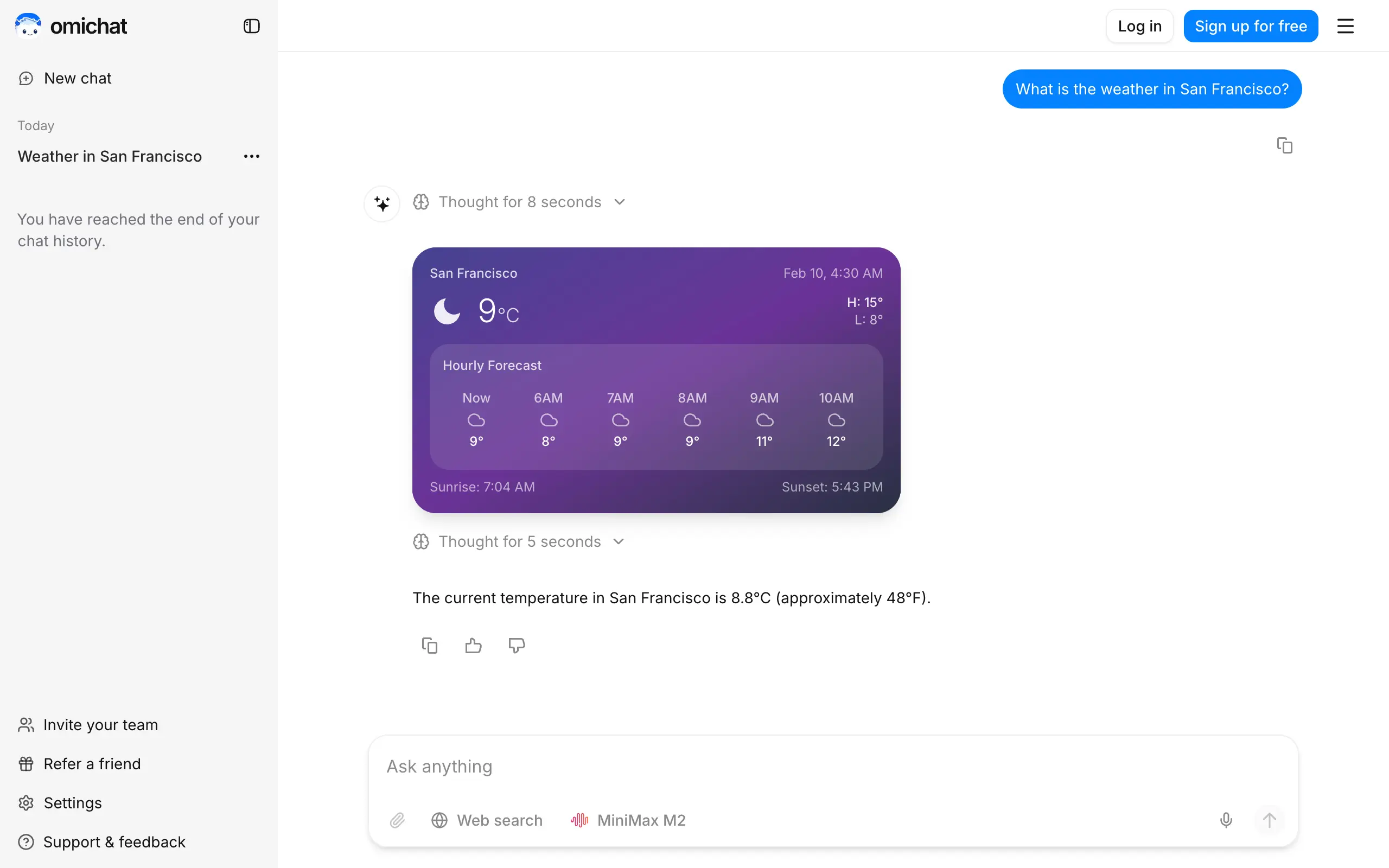
Omichat
Chat with 50+ AI models, including ChatGPT and Claude, in one place - switch models anytime without losing context 🤖
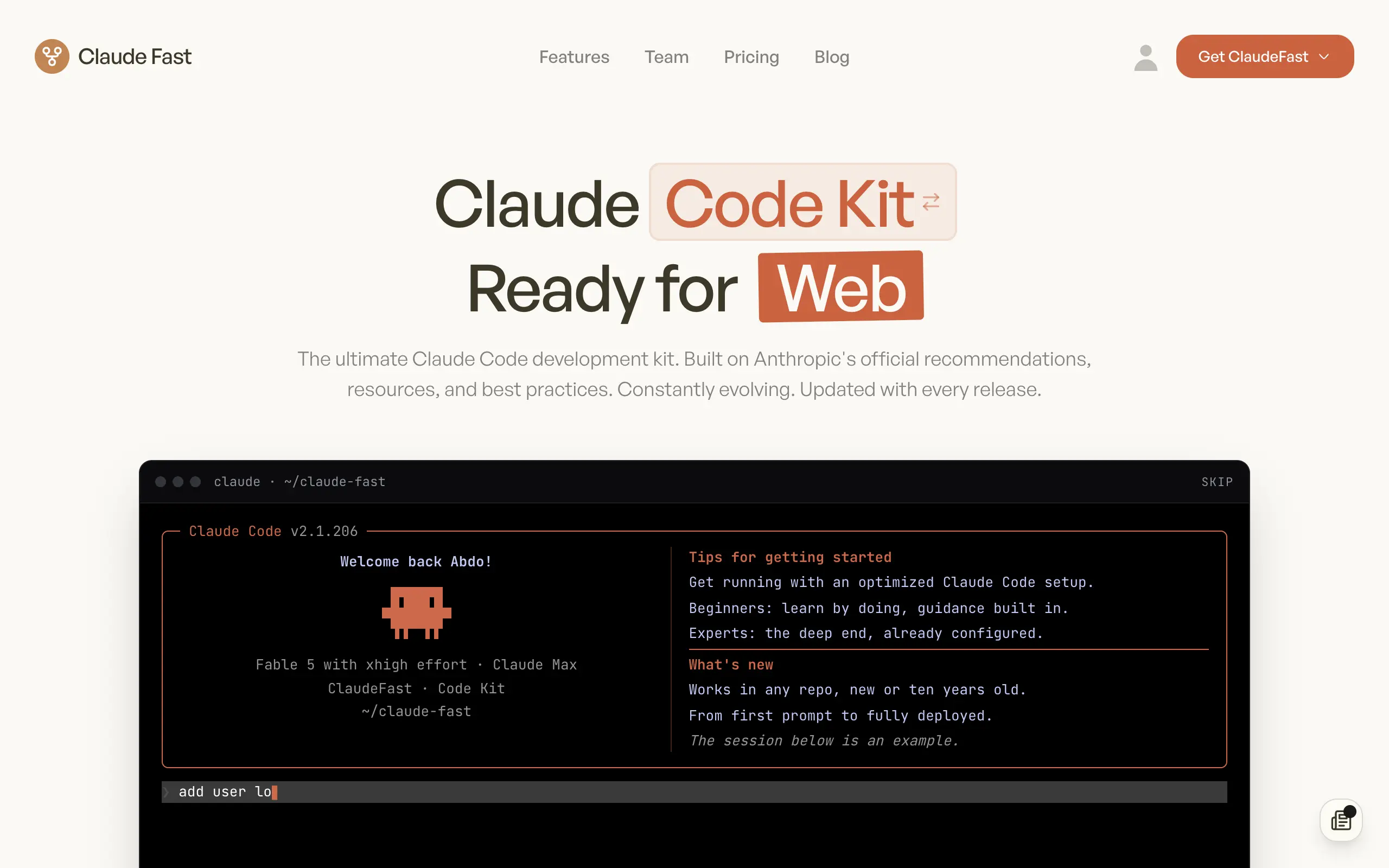
Claude Fast
Supercharge your Claude Code with 6x effective context window and specialized AI agents 🤖
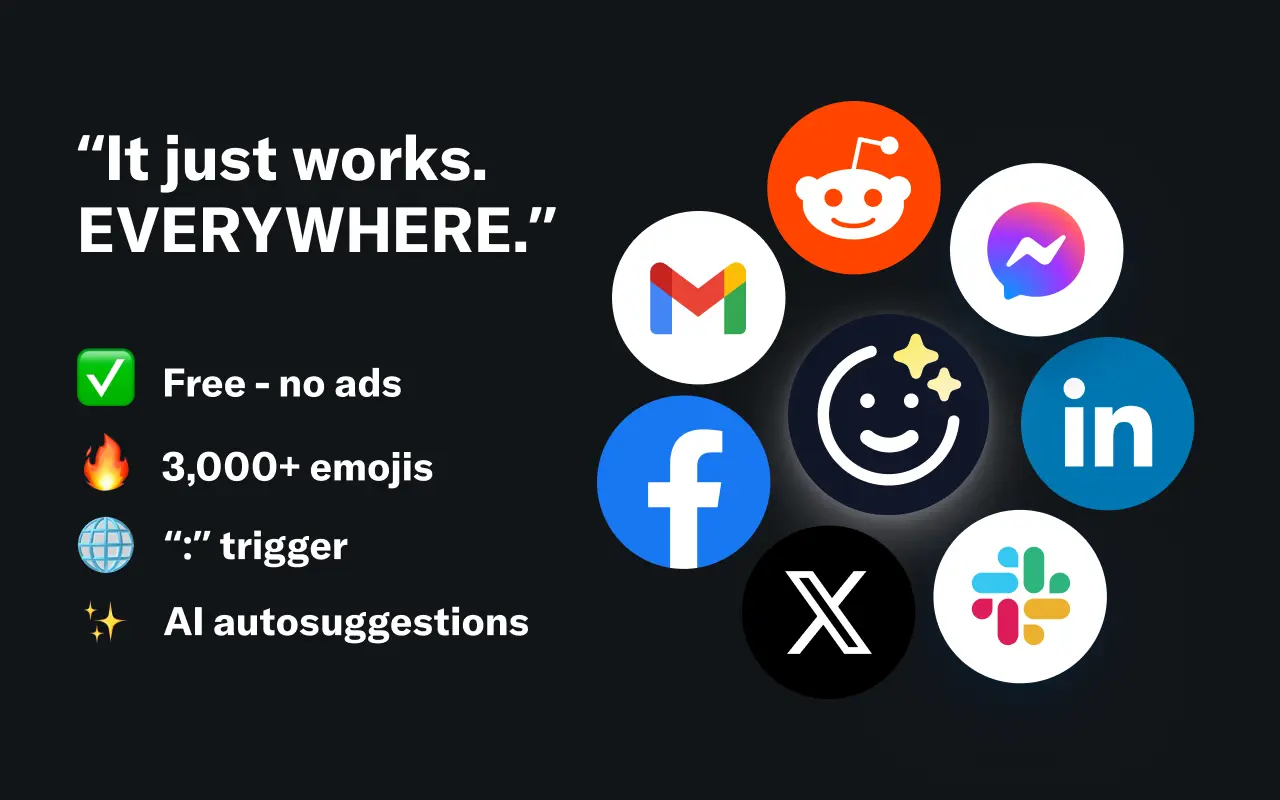
EmojAI
AI-powered emoji picker with smart, context-aware suggestions 🤖
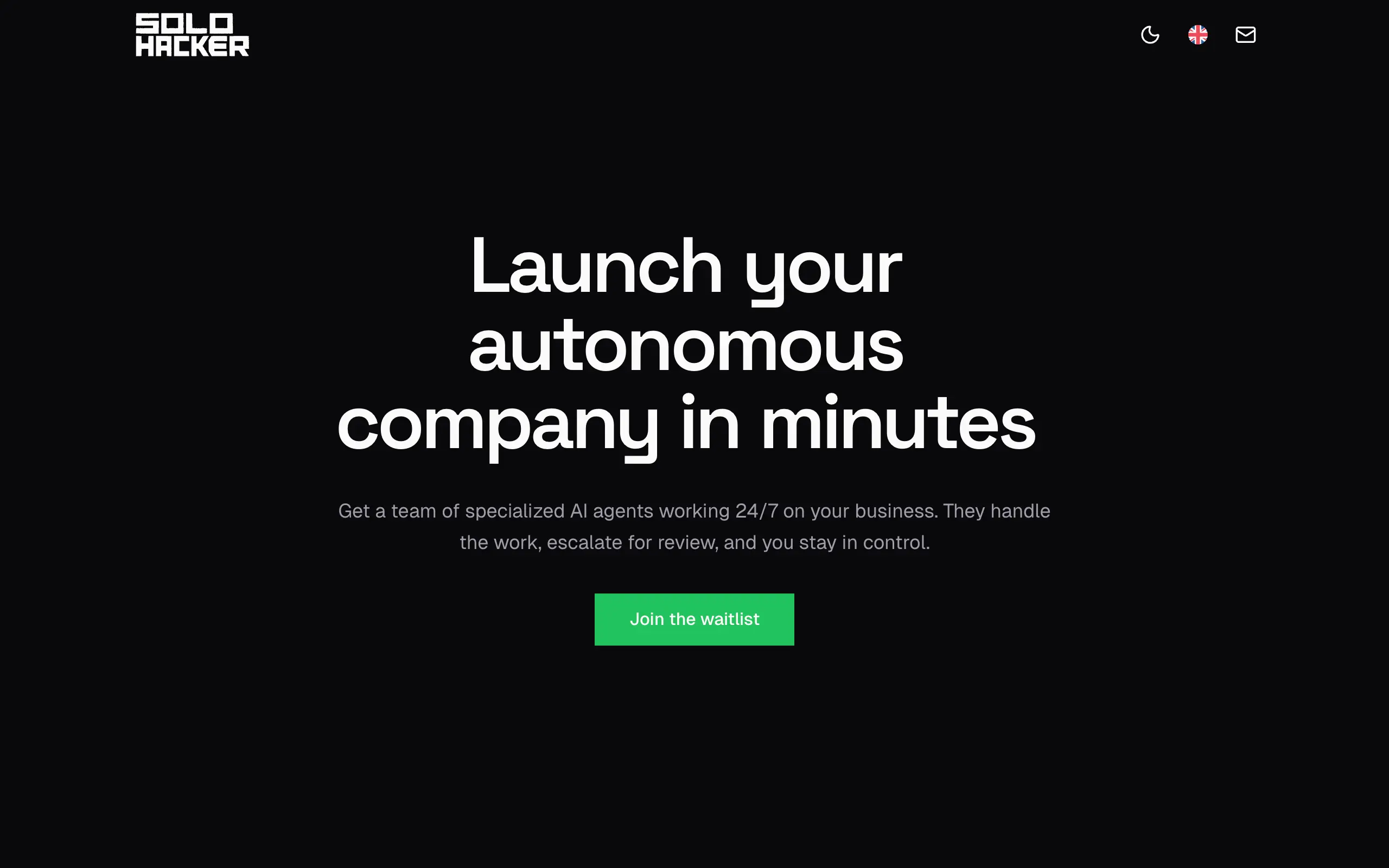
Solohacker
Autonomous company launcher - AI agents work 24/7, escalate what matters, and you stay in control 🤖
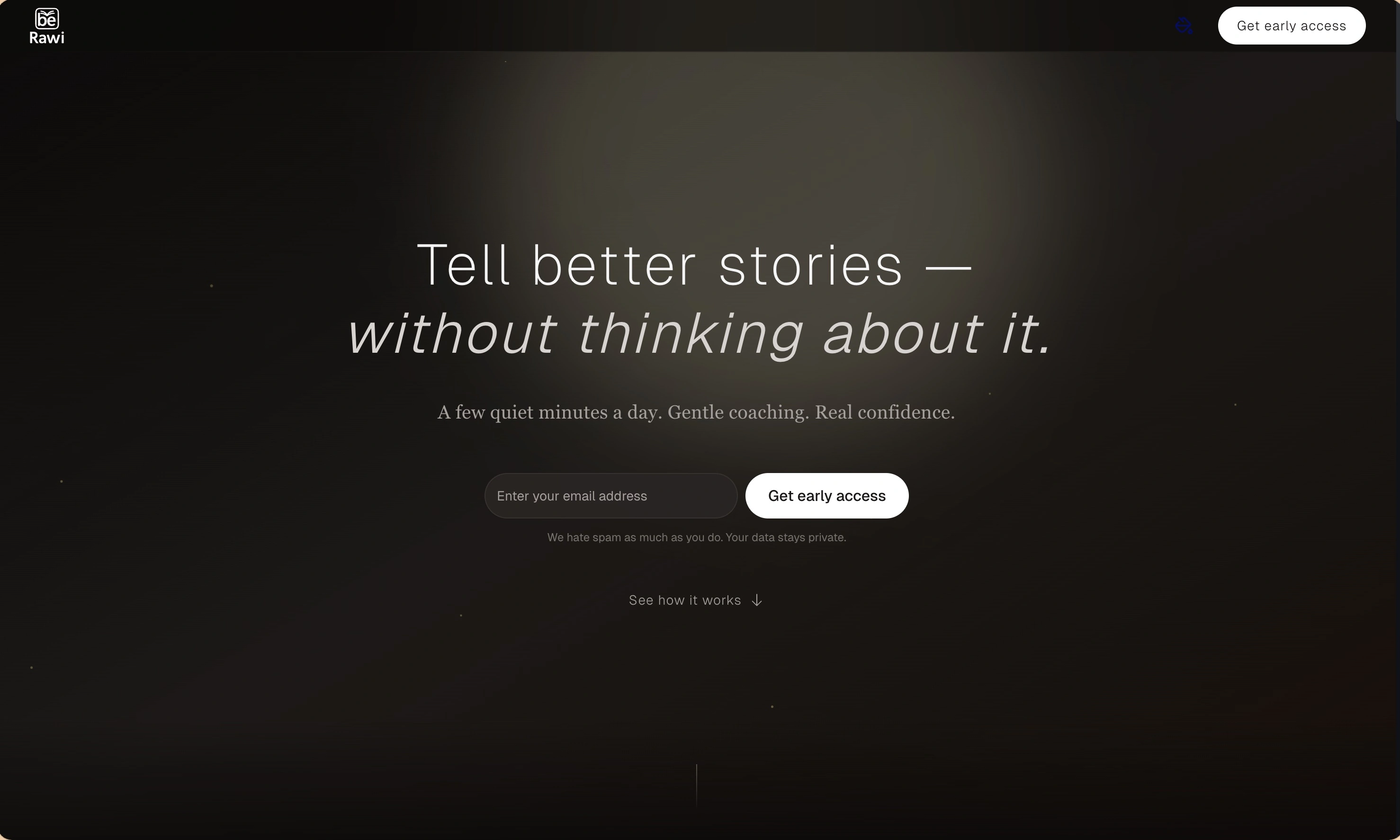
BeRawi: Storytelling Coach
Practice storytelling daily with instant feedback to sound clearer, more engaging, and confident 🎤
Omichat
Chat with 50+ AI models, including ChatGPT and Claude, in one place - switch models anytime without losing context 🤖
Claude Fast
Supercharge your Claude Code with 6x effective context window and specialized AI agents 🤖
EmojAI
AI-powered emoji picker with smart, context-aware suggestions 🤖
Solohacker
Autonomous company launcher - AI agents work 24/7, escalate what matters, and you stay in control 🤖
BeRawi: Storytelling Coach
Practice storytelling daily with instant feedback to sound clearer, more engaging, and confident 🎤
Omichat
Chat with 50+ AI models, including ChatGPT and Claude, in one place - switch models anytime without losing context 🤖
Claude Fast
Supercharge your Claude Code with 6x effective context window and specialized AI agents 🤖
EmojAI
AI-powered emoji picker with smart, context-aware suggestions 🤖
Solohacker
Autonomous company launcher - AI agents work 24/7, escalate what matters, and you stay in control 🤖
BeRawi: Storytelling Coach
Practice storytelling daily with instant feedback to sound clearer, more engaging, and confident 🎤
Omichat
Chat with 50+ AI models, including ChatGPT and Claude, in one place - switch models anytime without losing context 🤖
Claude Fast
Supercharge your Claude Code with 6x effective context window and specialized AI agents 🤖
EmojAI
AI-powered emoji picker with smart, context-aware suggestions 🤖
Solohacker
Autonomous company launcher - AI agents work 24/7, escalate what matters, and you stay in control 🤖
BeRawi: Storytelling Coach
Practice storytelling daily with instant feedback to sound clearer, more engaging, and confident 🎤

Connect with like-minded people
Join our community to get feedback, support, and grow together with 1,000+ builders on board, let's ship it!
Join usShip your startup everywhere. In minutes.
Don't burn tokens on setup and start building features on day one.