Uncertain
A social network for sharing unanswered questions, finding people exploring the same topic, and building collaborative answer trails over time.
Why an unanswered questions social network is needed now
Most social platforms are optimized for confidence. People share finished opinions, polished expertise, and answers that fit neatly into a feed. Search engines are optimized for retrieval. They help users locate information that already exists. Traditional Q&A communities are optimized for accepted answers, reputation points, and quick resolution.
But many of the most meaningful questions do not have a single answer. They evolve over months, years, or even generations.
Questions such as these need a different kind of home:
- How is artificial intelligence changing creative careers in practice?
- What does a sustainable city actually look like for renters, not just policymakers?
- Which personal knowledge-management methods still work after six months?
- How do people recover from professional burnout without simply changing jobs?
- What are researchers, makers, and communities learning about a new technology over time?
Uncertain is a social network for unanswered questions. Instead of pressuring people to publish definitive answers, it gives them a structured environment to share questions, find others exploring the same topic, contribute evidence, and create collaborative answer trails.
The core value proposition is simple: make uncertainty productive, social, and searchable.
This is not another generic forum, social feed, or AI answer engine. It is a collaborative question exploration platform where knowledge can remain open, nuanced, and continuously updated.
The key product insight
The most valuable online discussions are often not the ones with the fastest accepted answer. They are the ones that preserve context, competing perspectives, evidence, and the path people took to learn.
For founders evaluating this SaaS and community opportunity, the market potential lies in serving people who are tired of shallow engagement and fragmented research. For users, the appeal is a place where curiosity is a contribution rather than a sign of ignorance.
What is Uncertain?
Uncertain is an unanswered questions social network where members can post open questions, follow lines of inquiry, connect with people investigating related topics, and add updates to a shared answer trail.
A question on the platform is not treated as a one-time post. It is treated as a living knowledge object.
Each question can accumulate:
- Context about why the question matters
- Related questions and competing hypotheses
- Personal experiences and field notes
- Credible references and source links
- Expert contributions
- AI-assisted summaries with clear provenance
- Updates when the evidence or consensus changes
- A timeline showing how the community’s understanding evolved
The result is a product that sits between a thoughtful social network, a research notebook, a community knowledge base, and a long-form discussion platform.
The primary keyword opportunity
The primary SEO phrase for this product category is unanswered questions social network. Closely related semantic keywords include:
- Collaborative question platform
- Social learning community
- Question-based community
- Collective intelligence platform
- Open inquiry network
- Community research platform
- Collaborative knowledge building
- Persistent discussion platform
- Answer trail
- Knowledge discovery community
- Research discussion network
- Curiosity-driven social network
These terms map to several high-intent audience needs. Some visitors will be looking for a community to explore a difficult topic. Others will want software that helps an organization capture open questions. Founders may be searching for a social network idea with a differentiated engagement model. Researchers and educators may seek collaborative knowledge-building tools.
Uncertain can meet these needs through both its product experience and its content strategy.
The audience for a collaborative question platform
The strongest initial audience is not “everyone with a question.” That positioning is too broad and places the product in direct competition with search engines, general-purpose AI, and massive Q&A sites.
The better strategy is to begin with people whose questions are inherently complex, long-lived, or interdisciplinary.
| Audience segment | Primary need | Current workaround | Why Uncertain fits | Revenue potential |
|---|---|---|---|---|
| Independent researchers | Track evolving inquiry | Notes, bookmarks, private groups | Public trails and credible collaboration | High |
| Students and lifelong learners | Learn through exploration | Search, videos, fragmented forums | Find peers and see reasoning paths | Medium |
| Professional communities | Capture unresolved field knowledge | Slack, meetings, documents | Persistent questions with accountable updates | High |
| Educators and cohorts | Support inquiry-based learning | Learning management systems | Structured collaborative investigation | Medium |
| Creators and builders | Validate ideas with peers | Social feeds and Discord | Higher-quality, searchable discussion trails | Medium |
Independent researchers and serious learners
Independent researchers are a compelling early segment because they already live with unresolved questions. They may investigate climate, economics, health policy, technology, philosophy, culture, local history, or emerging scientific topics without belonging to a formal institution.
Their existing workflow is often fragmented:
- Browser tabs hold articles and papers.
- Notes apps hold personal observations.
- Social networks provide weak-signal discussion.
- Group chats contain useful but inaccessible conversation.
- Search tools return pages, not a shared record of inquiry.
An unanswered questions social network gives these users an external brain with a social layer. They can publish a question, invite collaborators, save sources, document uncertainty, and return when new information appears.
Communities of practice
Professional communities often have important questions that cannot be resolved by documentation alone. Product leaders, clinicians, designers, engineers, nonprofit operators, educators, and local organizers all face context-heavy problems.
For example, a product community may ask, “What does responsible AI feature disclosure look like in consumer software?” There is no universal answer. The right response depends on user expectations, risk, regulation, interface design, and the organization’s ability to support users after launch.
A collaborative question platform can hold the trade-offs rather than force a simplistic best practice.
Students and inquiry-based educators
Education is another strong use case, especially for instructors who use project-based or inquiry-based learning. A student should not only submit an answer. They should learn to frame a question, identify assumptions, find evidence, distinguish confidence from certainty, and revise a position.
Uncertain can become a digital inquiry journal for groups, classes, and learning cohorts. Private spaces are essential here, but public publishing options can create a powerful portfolio of learning.
Mission-driven and local communities
Many community questions are not adequately served by mainstream information systems:
- What public transit changes would improve access in a specific neighborhood?
- Which local resources are trustworthy for a particular need?
- What is changing in a watershed, park, school district, or housing market?
- How can a community measure whether a local program is helping?
These questions benefit from local knowledge, long-term observation, and respectful disagreement. They are ideal for answer trails because the answer changes as conditions change.
The market gap in social knowledge and online discussion
The market gap is not a lack of places to ask questions. It is a lack of systems designed for open-ended, durable, collaborative inquiry.
Existing product categories solve adjacent problems, but each has a structural limitation.
Search engines optimize for retrieval, not shared exploration
Search is excellent when users know what to look for and when reliable information is already indexed. It is less effective when someone is still defining the question, weighing conflicting evidence, or trying to learn from the experience of other people.
Search results also do not preserve the user’s learning journey. A person can collect links, but they cannot easily see who else explored the issue, which claims became less credible, or what new evidence altered the discussion.
General social networks optimize for attention
Feed-based networks reward fast reactions, novelty, and audience growth. They rarely reward the slow work of updating a view, citing sources, admitting uncertainty, or returning to an old thread with better evidence.
The problem is not that conversation happens on social media. The problem is that valuable conversation is quickly buried.
A question-based community should make revisiting a topic a first-class behavior. Recency should matter, but long-term relevance, evidence quality, and thoughtful synthesis should matter more.
Traditional Q&A sites optimize for resolution
Q&A platforms are useful for bounded problems:
- How do I fix a technical error?
- What is the definition of a concept?
- Which setting enables a feature?
- How do I complete a specific task?
They are less suitable for questions where several answers may be valid, where new evidence is expected, or where a definitive answer would be misleading.
Uncertain should not compete on speed-to-answer. Its differentiated promise is better questions, better context, and a transparent record of evolving understanding.
Private communities are valuable but hard to discover
Discord servers, Slack groups, private forums, and group chats contain rich insights. Yet their knowledge is difficult to search, often disappears in high-volume conversation, and is unavailable to people outside the group.
Uncertain can offer a middle ground:
- Public questions for discoverability
- Private circles for sensitive or member-only inquiry
- Structured artifacts that survive beyond a chat stream
- Permission controls for organizations and educators
The unique selling proposition of Uncertain
Uncertain’s USP is its answer trail.
An answer trail is not simply a comment thread. It is a structured, chronological, collaborative record of how a community investigates a question.
Each trail can include a question statement, assumptions, evidence, perspectives, updates, and a current synthesis. The platform makes uncertainty visible rather than treating it as a defect.
Questions stay alive
A question can be followed, revisited, and updated as conditions, research, and community experience change.
Evidence has context
Sources, claims, counterarguments, and personal experiences can be attached to the relevant part of a trail.
People find intellectual peers
Interest and inquiry matching helps members discover others exploring the same theme, not merely the same keyword.
This approach creates a defensible product identity. A generic forum can copy upvotes. A social network can copy topic tags. A knowledge base can copy citations. It is harder to replicate a well-designed system that combines social discovery, evidence-aware discussion, longitudinal history, and trust signals around unresolved questions.
Core features for an unanswered questions social network
The initial product should feel focused. Avoid building every social feature before validating whether users return to questions over time.
Question creation and framing
Question quality determines community quality. The composer should help members turn vague prompts into useful objects of inquiry.
A strong question form can include:
- The central question
- Why the question matters
- Current understanding or starting assumptions
- Desired perspectives or expertise
- Relevant location, time period, or community context
- Privacy level
- Related topics
- What would count as useful evidence
The product should encourage open but bounded questions. “What is the meaning of life?” can be welcome in the right context, but it needs framing to become a productive collaborative discussion.
Helpful prompts include:
- What have you already explored?
- What would change your current view?
- Is this a practical, empirical, ethical, or speculative question?
- Who is affected by the answer?
- What uncertainty should contributors preserve?
Collaborative answer trails
The answer trail is the core interaction model. Contributions should be typed rather than limited to generic comments.
Useful contribution types include:
- Evidence for studies, primary sources, credible articles, or data
- Experience for first-hand observations and case studies
- Hypothesis for a plausible but unproven explanation
- Counterpoint for a challenge to a claim or assumption
- Question for a narrower follow-up inquiry
- Update for new information that changes the trail
- Synthesis for a summary of where the discussion currently stands
Typed contributions improve readability and enable better filtering, moderation, and AI-assisted summarization later.
Topic graph and related question discovery
Tags alone are not enough. Uncertain should build a topic graph that connects questions based on concepts, contributors, evidence, and semantic similarity.
For users, this creates discovery paths such as:
- Questions related to a topic they follow
- Questions with similar assumptions but different contexts
- Nearby discussions with conflicting conclusions
- Emerging questions that deserve more contributors
- Questions being explored by people with complementary expertise
This is where the social graph and knowledge graph reinforce each other. Someone may follow “urban resilience,” but the product can also show questions around heat, public health, infrastructure, housing, and local governance.
Profiles built around inquiry, not performance
Most social profiles emphasize status markers. Uncertain profiles should emphasize what a person is genuinely exploring.
A profile can show:
- Topics the member is investigating
- Questions they follow or steward
- Contribution types they commonly make
- Relevant professional or lived experience
- Sources and collections they have curated
- Community endorsements for helpfulness and rigor
- A transparent history of updated viewpoints
Avoid reducing credibility to follower count. A smaller number of thoughtful, well-sourced contributions is a better signal than broad popularity.
AI-assisted synthesis with human oversight
AI can make a collaborative question platform dramatically more usable, but it must not pretend to resolve uncertainty.
The right role for AI is assistance:
- Summarize a long answer trail
- Identify repeated claims and unresolved disagreements
- Suggest related questions
- Extract key entities and topics
- Flag unsupported factual assertions for review
- Draft a “current state of inquiry” summary
- Help contributors improve question clarity
Every generated summary should show that it is AI-assisted and point readers back to the underlying contributions. Human editors, question stewards, or trusted community members should be able to correct and approve prominent syntheses.
Do not let AI become the authority
An AI-generated summary can be useful navigation, but it must never be presented as proof. Preserve source attribution, disclose generation, and make it easy to inspect the original trail.
Notifications designed for depth
Notification design determines whether Uncertain becomes a thoughtful product or another attention trap.
Prioritize meaningful events:
- A contributor added evidence to a followed question
- A synthesis changed because new information emerged
- Someone asked for a perspective matching the member’s stated experience
- A question the user follows reached a meaningful milestone
- A trusted contributor challenged or expanded a claim
Avoid excessive engagement prompts. The product should earn return visits through intellectual progress, not artificial urgency.
Trust, moderation, and community governance
An unanswered questions social network will inevitably host disagreement. That is not a failure. The goal is to distinguish productive disagreement from misinformation, harassment, manipulation, and low-effort noise.
Trust and safety must be part of the product architecture from the first release.
Build layered trust signals
Rather than one opaque reputation score, use several understandable signals:
- Source quality and source diversity
- Contributor experience disclosures
- Peer acknowledgments for helpful contributions
- Correction history
- Consistency with platform conduct standards
- Stewardship of a question over time
- Community or expert verification where appropriate
Do not treat credentials as the only valid form of expertise. Lived experience can be highly relevant, especially in local, health, accessibility, and social issues. At the same time, users must be able to distinguish lived experience from scientific evidence, professional guidance, and speculation.
Create explicit content policies
Policies should define expectations for:
- Harassment and personal attacks
- Hate speech and discriminatory content
- Medical, legal, financial, and safety-sensitive claims
- Misleading citations and fabricated sources
- Coordinated manipulation
- Impersonation
- Privacy violations and doxxing
- Copyrighted content
- AI-generated content disclosure
For sensitive topics, add interstitials, expert-reviewed resource panels, or limits on recommendation distribution. This is particularly important for health, self-harm, elections, and crisis-related discussions.
Support question stewards
The most promising governance model is a blend of platform moderation and community stewardship. A question steward can organize contributions, request clarification, merge duplicates, highlight evidence, and write a transparent synthesis.
Stewards should not have unchecked authority to determine truth. Their role is to improve process, representation, and legibility.
A strong steward is organized, fair with disagreement, transparent about conflicts of interest, and willing to update a synthesis when better evidence appears. They do not need to be the most credentialed person in the room.
Use labels, source context, reporting workflows, distribution limits, and qualified review for high-risk claims. Remove content that violates policy, but preserve legitimate disagreement when evidence is uncertain or evolving.
No. Public discovery is valuable, but private circles are necessary for classrooms, organizations, research groups, support communities, and sensitive personal exploration.
Recommended tech stack for Uncertain
The technical architecture should support fast iteration while leaving room for semantic search, real-time collaboration, moderation tooling, and privacy controls.
A practical modern stack is based on TypeScript across the application layer.
Application and interface layer
Use Next.js with React for the web application. Next.js supports server rendering, routing, metadata management, API endpoints, and strong SEO foundations, all of which matter for a public question discovery platform.
Use Tailwind CSS for a consistent design system and rapid interface iteration. The product will have many structured content states: contribution types, source cards, question timelines, trust labels, and moderation controls. Utility-first styling can speed up early product design if teams maintain reusable component conventions.
Use TypeScript to reduce errors in the domain model. A platform with permissions, contribution types, source metadata, and moderation state benefits from explicit types.
Data, authentication, and search
PostgreSQL is an excellent primary database because the core domain is relational:
- Users belong to circles.
- Questions have many contributors.
- Contributions connect to claims and sources.
- Topics relate to other topics.
- Permissions vary by content and workspace.
For semantic discovery, start with pgvector inside PostgreSQL. It reduces operational complexity by keeping vector embeddings near the application data. Later, a specialized vector database may be worthwhile if scale, retrieval latency, or hybrid search requirements justify the added infrastructure.
For full-text search, PostgreSQL search can serve an MVP. If search relevance becomes a core differentiator, evaluate Meilisearch or Algolia. The trade-off is clear:
- PostgreSQL search offers simplicity and lower operational overhead.
- Dedicated search platforms offer richer relevance tuning, typo tolerance, and faster faceting at scale.
- Vector search adds semantic matching but should not replace transparent keyword and filter-based search.
For authentication, choose a managed provider such as Clerk or build on Auth.js if greater control is needed. Managed identity reduces early security burden, while a self-managed approach may offer better flexibility for enterprise SSO and custom organizational membership flows.
Use Next.js, React, TypeScript, PostgreSQL, pgvector, object storage, managed authentication, and a transactional email provider. This combination is fast to build, cost-conscious, and capable of supporting the first community.
Add a background job system, dedicated search, analytics warehouse, moderation queue, observability tooling, rate limiting, and a feature flag platform as usage and operational requirements grow.
Do not introduce microservices before the product proves its core engagement loop. A modular monolith is easier to ship, test, secure, and understand. Split services only when a clear performance, ownership, or reliability constraint demands it.
Suggested core data model
At a minimum, model the following entities:
type ContributionKind =
  | "evidence"
  | "experience"
  | "hypothesis"
  | "counterpoint"
  | "follow_up_question"
  | "update"
  | "synthesis";

interface Question {
  id: string;
  title: string;
  context: string;
  visibility: "public" | "circle" | "private";
  status: "active" | "watching" | "archived";
  topicIds: string[];
  createdById: string;
  createdAt: Date;
}

interface Contribution {
  id: string;
  questionId: string;
  parentId?: string;
  kind: ContributionKind;
  body: string;
  confidence: "low" | "medium" | "high";
  sourceIds: string[];
  authorId: string;
  createdAt: Date;
}
The confidence field should describe the contributor’s confidence in the contribution, not an automatic truth score. This distinction reinforces intellectual honesty and gives readers a useful interpretive signal.
Security and privacy requirements
Privacy cannot be deferred. The platform should implement:
- Encryption in transit and at rest
- Role-based access control
- Private-circle authorization checks at the query layer
- Rate limiting for sign-up, posting, messaging, and API access
- Secure media upload workflows
- Audit logs for moderation and administrative actions
- Data export and deletion processes
- Clear retention policies
- Consent controls for email and product notifications
If Uncertain serves schools, workplaces, or regulated industries, seek legal counsel about the privacy and data-processing obligations applicable to target markets. Product teams should not casually claim compliance with frameworks unless they have completed the required operational and legal work.
Monetization options for a question-based community
The best monetization model protects the integrity of inquiry. Advertising models often reward outrage, volume, and time spent scrolling. Those incentives conflict with a platform built around trust, nuance, and long-term knowledge.
A freemium model with paid collaboration and governance features is a stronger fit.
Individual premium plans
A free tier should let individuals ask questions, contribute to public trails, follow topics, and build a basic profile.
A premium plan can include:
- Private question circles
- Advanced research collections
- Enhanced semantic search
- Personal knowledge exports
- AI synthesis credits
- Deeper notification controls
- Custom topic tracking
- Archive and version-history tools
The paid value should be about improving a serious inquiry workflow, not locking fundamental participation behind a paywall.
Community and organization workspaces
This is likely the highest-value revenue stream.
Teams, nonprofits, schools, research groups, and professional associations can pay for branded or private workspaces with:
- Organization-level access controls
- Admin dashboards
- SSO and SCIM provisioning
- Moderation workflows
- Analytics and engagement reporting
- Custom onboarding
- Private knowledge retention
- Data exports
- API access
- Dedicated support
Pricing should be based on active members, workspace capability, and security requirements rather than vague feature bundles.
Expert-led circles and cohorts
Uncertain can eventually support paid circles led by credible practitioners, educators, or researchers. The platform should take a transaction fee while setting clear standards for disclosures, moderation, and claims.
This model works best when the product avoids turning expertise into personality-driven broadcasting. The value should remain collaborative inquiry, not one-way content consumption.
Research and insight products
Aggregated, privacy-preserving trend insights may become valuable over time, but this should be approached carefully. Never sell identifiable user data or sensitive question content.
Potential ethical offerings include:
- Topic trend reports
- Public discourse maps
- Anonymized research panels with explicit opt-in
- Community-sponsored inquiry projects
Trust is a core asset. A short-term data monetization decision can permanently undermine it.
Competitive advantage and defensibility
The product’s strongest competitive advantage comes from the combination of structure, network effects, and accumulated context.
A compounding answer trail network
Every high-quality contribution makes a question more useful. Every well-organized question improves discovery. Every new related question strengthens the topic graph. Every trustworthy synthesis creates a reason for future contributors to begin from a higher baseline.
This is a data network effect, but not merely in the sense of collecting more content. The defensible asset is the relationship between questions, people, claims, sources, and changes over time.
A distinct social contract
Most platforms ask users to perform certainty or personality. Uncertain can establish a different social contract:
- It is acceptable to revise a view.
- It is valuable to state confidence and limitations.
- Good questions are contributions.
- Evidence should be inspectable.
- Disagreement should improve understanding rather than generate spectacle.
That culture is difficult to copy with interface features alone. It must be reinforced through onboarding, moderation, incentives, and community leadership.
Search visibility built around enduring questions
Public question pages can create strong organic search opportunities because people search for nuanced questions in natural language. A well-structured page can rank not by claiming a final answer, but by offering a clearly organized exploration of the topic.
Each public page should include:
- A descriptive title and concise question context
- A current synthesis
- Table-of-contents navigation
- Dated updates
- Clearly attributed sources
- Related questions
- Contributor and editorial transparency
- Structured metadata where appropriate
This supports both discoverability and trust. Search visitors should immediately understand what is known, what is disputed, and what remains uncertain.
Risks and mitigation strategies
A product built around open inquiry faces meaningful risks. Addressing them directly improves the chance of building a durable, trusted business.
| Risk | Why it matters | Mitigation | Early warning signal | Owner |
|---|---|---|---|---|
| Low-quality posts | Weakens trust and discovery | Guided prompts, rate limits, stewardship | Low save and follow rates | Community lead |
| Misinformation | Can cause real-world harm | Policies, labels, expert review paths | Repeated reports on source quality | Trust and safety |
| Cold-start problem | Empty questions lack value | Seed focused communities and stewards | Few contributions per question | Founder |
| AI overreach | False authority damages credibility | Human review and source-linked summaries | Summary corrections and complaints | Product lead |
| Overly broad positioning | Weak retention and vague messaging | Start with a defined vertical | High acquisition but low return rate | Growth lead |
The cold-start challenge
The biggest business risk is the cold-start problem. A new social platform with no existing answer trails can look empty, and an empty platform cannot demonstrate its core value.
The solution is to start narrow.
Choose one or two communities with recurring, high-value unresolved questions. Possible launch wedges include:
- Responsible AI practitioners
- Independent climate and urbanism researchers
- Product leaders exploring new workplace patterns
- Graduate student research cohorts
- Local civic innovation groups
- Educator communities using inquiry-based learning
Recruit founding stewards before opening broad sign-ups. Seed a set of high-quality questions with real context, credible sources, and clear invitations for contribution. The launch should feel like entering an active inquiry library, not an empty social feed.
The quality-versus-growth tension
Fast growth can reduce quality if new users do not understand the social norms. The platform should favor an intentional onboarding process over frictionless posting.
Require new members to complete a lightweight profile of interests and experience. Ask them to follow topics before publishing. Teach contribution types with examples. Consider contribution limits for brand-new accounts until they demonstrate constructive participation.
This creates friction, but it is the right kind of friction. It protects the community’s value.
Go-to-market strategy for Uncertain
The first go-to-market motion should be community-led, not mass-market paid acquisition.
Launch with a clear vertical narrative
Avoid leading with “a social network for every unanswered question.” Instead, launch with a specific message, such as:
A collaborative question platform for people investigating how AI is changing creative and knowledge work.
This positioning gives the team a defined audience, content strategy, partnership opportunity, and language model for early product development. Once engagement is proven, the product can expand to adjacent communities.
Build a founding contributor program
Invite a small group of credible, curious members who are willing to model the culture. They do not all need large audiences. In fact, thoughtful practitioners with lived experience may be more valuable than broad-reach influencers.
Offer founding contributors:
- A visible early-member identity
- Direct product feedback sessions
- Stewardship tools
- Invitations to curated circles
- Recognition for meaningful contributions
- A voice in community guidelines
The goal is not to manufacture exclusivity. It is to establish quality norms before scale.
Create SEO content around real questions
Content marketing should focus on question clusters, not generic thought leadership. Publish useful, evidence-aware guides around themes your target community already investigates.
Examples include:
- How to document uncertainty in collaborative research
- What makes a good open-ended question?
- How to evaluate sources in community knowledge projects
- A framework for productive disagreement online
- How to build an answer trail for a complex decision
Where statistics are included, cite primary research or established institutions. For example, use a clear reference format such as “Source: [Organization name], [report title], [publication year]” and verify the source before publication.
Actionable implementation plan
The fastest route to validation is not building a complete social network. It is proving that users return to a question because the collaborative trail became more valuable over time.
Define one launch community and interview at least 20 potential members. Focus on their current research, discussion, and knowledge-capture workflows. Listen for repeated pain around fragmented conversation, weak searchability, and unresolved questions.
Prototype the question page before building a feed. Test the question framing form, contribution types, source attachment, timeline, and current synthesis with clickable prototypes or a concierge workflow.
Build an MVP with authentication, profiles, public and private questions, typed contributions, topic following, source links, notifications, reporting, and basic moderation controls.
Recruit a small founding cohort of stewards and seed 30 to 50 high-quality questions. Aim for depth in one domain rather than breadth across unrelated subjects.
Measure whether questions gain useful contributions over time. Track question follow rate, contribution quality, contributor return rate, synthesis views, source attachment rate, and repeat participation.
Introduce AI summaries only after the underlying contribution workflow is healthy. Keep summaries source-linked, clearly labeled, and easy for humans to revise.
Add paid private circles and organization workspaces after the product demonstrates recurring value for serious communities.
For a production-ready SaaS foundation, TurboStarter can reduce setup time for the common building blocks around authentication, billing, application structure, and deployment workflows, leaving the team more time to focus on Uncertain’s differentiated question and answer-trail experience.
Final perspective
Uncertain has the potential to create a new category of social knowledge product: one that does not demand immediate certainty, reward shallow reactions, or bury useful discussion in a rapidly moving feed.
Its success will depend on disciplined focus.
The platform must make it easier to ask better questions, contribute useful evidence, find thoughtful collaborators, and understand how a collective view changes over time. It must also protect users from the predictable failure modes of online communities through strong moderation, transparent trust signals, and responsible AI design.
The opportunity is not to replace search engines, expert communities, or traditional Q&A sites. The opportunity is to serve the valuable space between them: the place where people are still learning, evidence is still emerging, and the right answer is a trail worth building together.
More 🌐 Social Network SaaS ideas
Discover more innovative social network SaaS ideas that are trending in 2026. Each idea is AI-generated with market validation and growth potential to help you find your next profitable venture faster than competitors.
Your competitors are building with TurboStarter
Below are some of the SaaS ideas that have been generated and built with our starter kit.
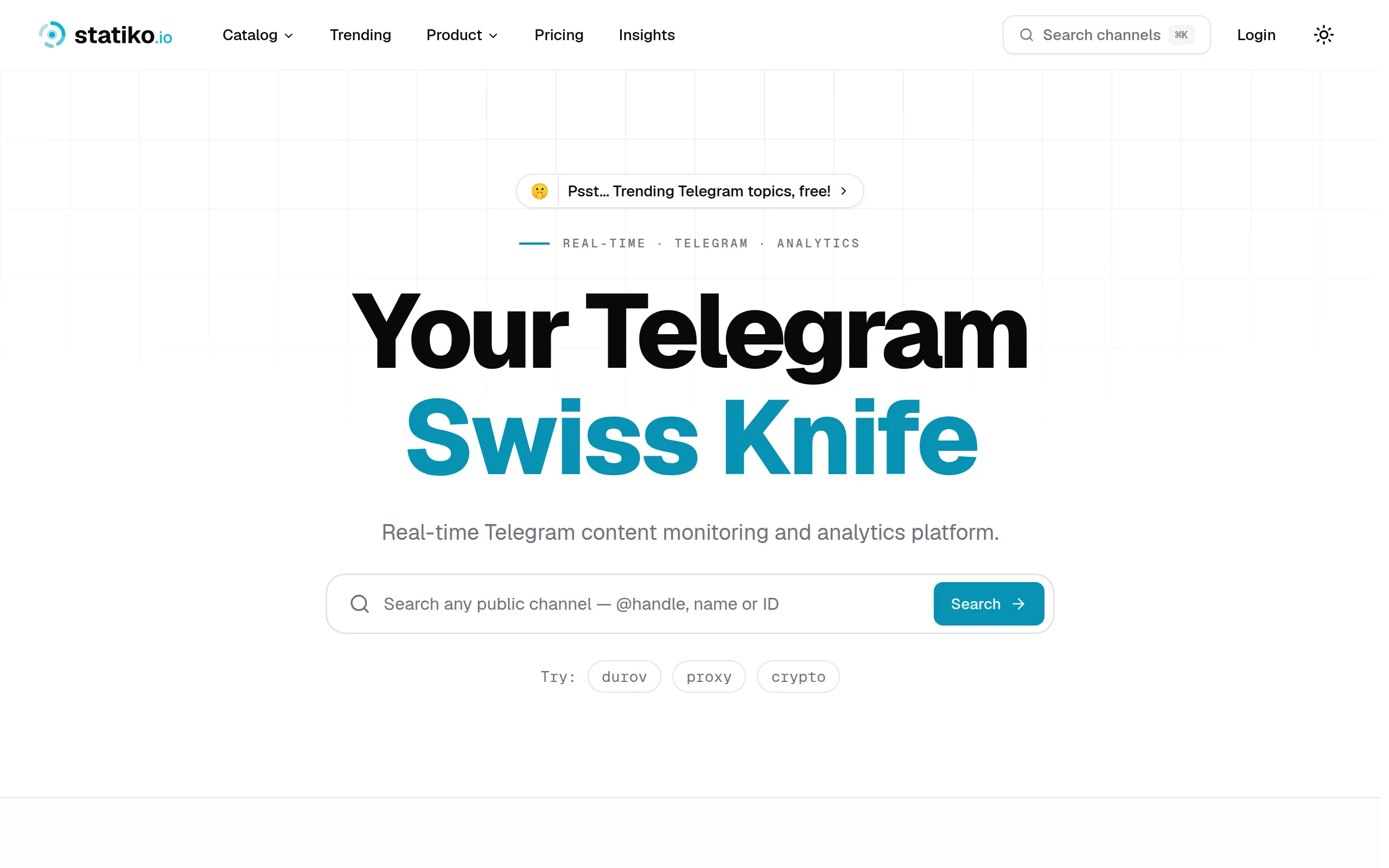
Statiko
Monitor any Telegram channel in real time - track posts, edits, deletions, and growth with AI recaps 📡

Shibui
AI website builder - describe your business, pick a niche template, edit by chatting, and publish instantly ✨

Pro Service
Find verified home service professionals, compare quotes, and pay securely through escrow - built for Brazilians across the US 🏠
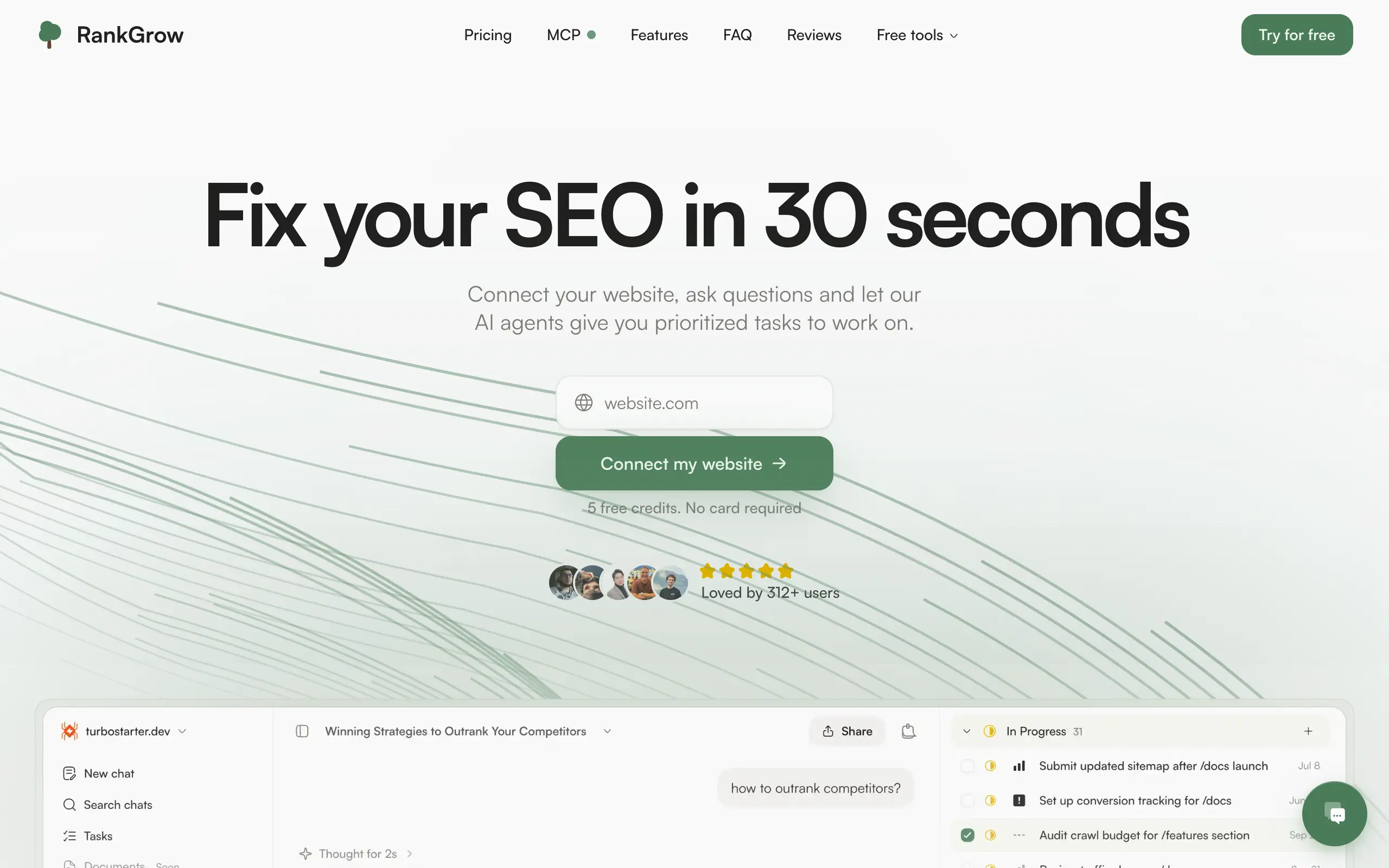
RankGrow
Fix your SEO with AI agents - connect Search Console, get prioritized tasks, and grow organic traffic 📈
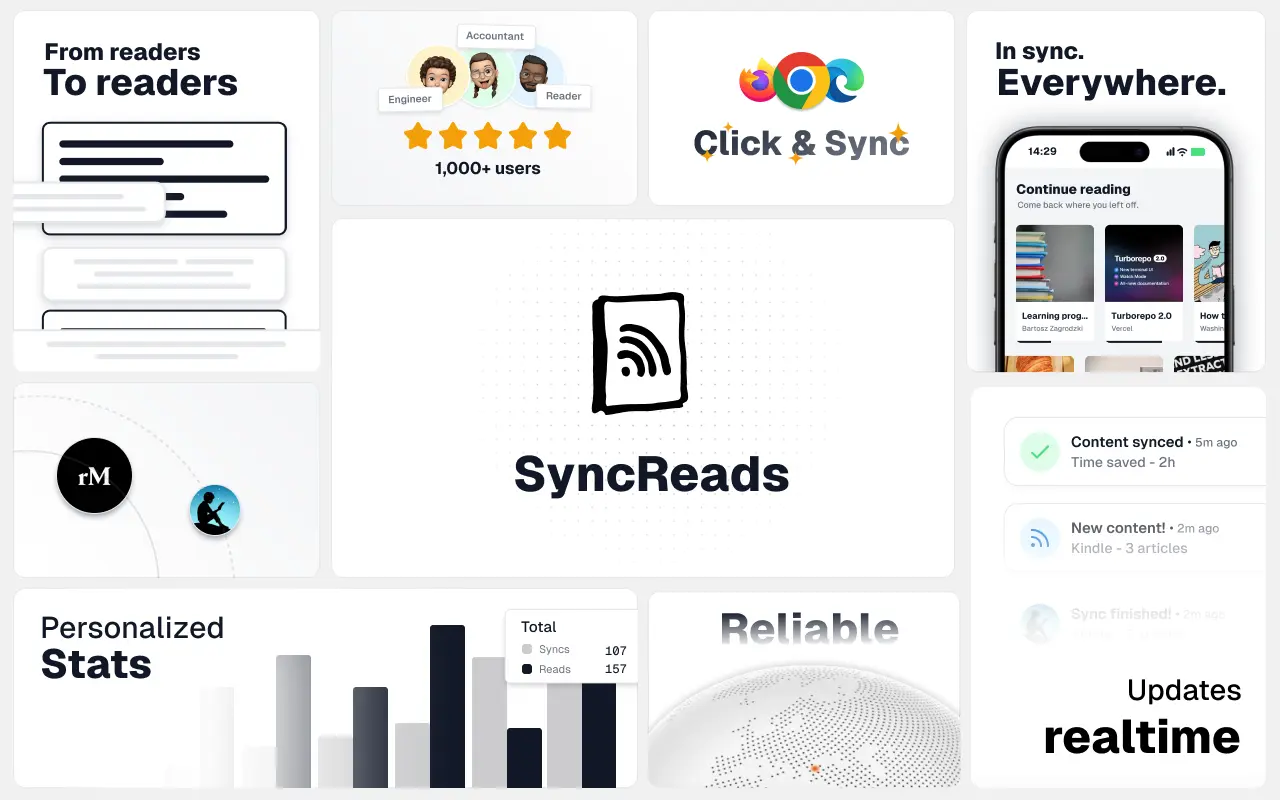
SyncReads
Sync your favorite content for distraction-free reading, save time and replace multiple apps. Anytime, anywhere 🔄
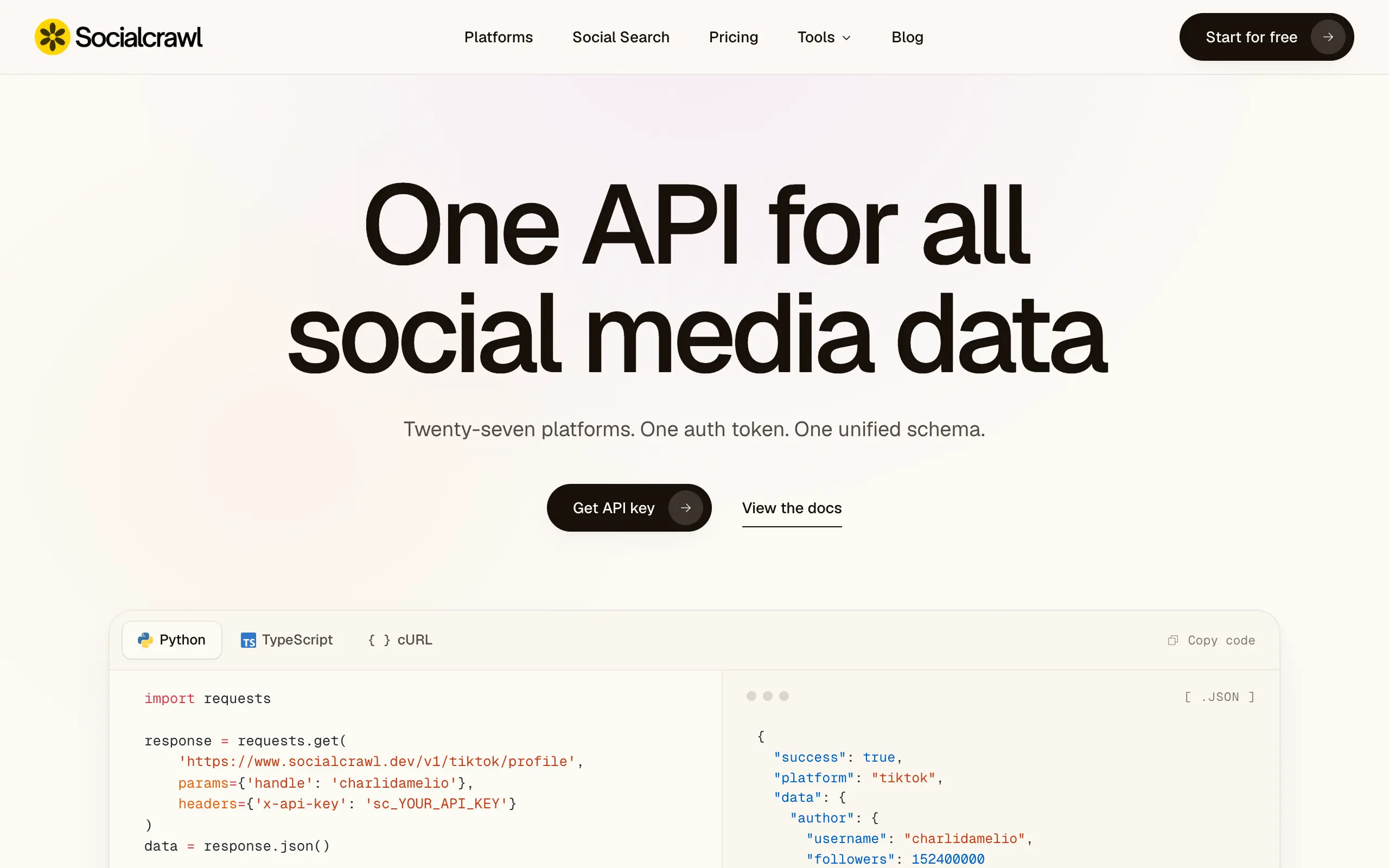
Socialcrawl
Get clean, structured data from 21 platforms like TikTok, Instagram, and YouTube with a single request 📊
Statiko
Monitor any Telegram channel in real time - track posts, edits, deletions, and growth with AI recaps 📡
Shibui
AI website builder - describe your business, pick a niche template, edit by chatting, and publish instantly ✨
Pro Service
Find verified home service professionals, compare quotes, and pay securely through escrow - built for Brazilians across the US 🏠
RankGrow
Fix your SEO with AI agents - connect Search Console, get prioritized tasks, and grow organic traffic 📈
SyncReads
Sync your favorite content for distraction-free reading, save time and replace multiple apps. Anytime, anywhere 🔄
Socialcrawl
Get clean, structured data from 21 platforms like TikTok, Instagram, and YouTube with a single request 📊
Statiko
Monitor any Telegram channel in real time - track posts, edits, deletions, and growth with AI recaps 📡
Shibui
AI website builder - describe your business, pick a niche template, edit by chatting, and publish instantly ✨
Pro Service
Find verified home service professionals, compare quotes, and pay securely through escrow - built for Brazilians across the US 🏠
RankGrow
Fix your SEO with AI agents - connect Search Console, get prioritized tasks, and grow organic traffic 📈
SyncReads
Sync your favorite content for distraction-free reading, save time and replace multiple apps. Anytime, anywhere 🔄
Socialcrawl
Get clean, structured data from 21 platforms like TikTok, Instagram, and YouTube with a single request 📊
Statiko
Monitor any Telegram channel in real time - track posts, edits, deletions, and growth with AI recaps 📡
Shibui
AI website builder - describe your business, pick a niche template, edit by chatting, and publish instantly ✨
Pro Service
Find verified home service professionals, compare quotes, and pay securely through escrow - built for Brazilians across the US 🏠
RankGrow
Fix your SEO with AI agents - connect Search Console, get prioritized tasks, and grow organic traffic 📈
SyncReads
Sync your favorite content for distraction-free reading, save time and replace multiple apps. Anytime, anywhere 🔄
Socialcrawl
Get clean, structured data from 21 platforms like TikTok, Instagram, and YouTube with a single request 📊
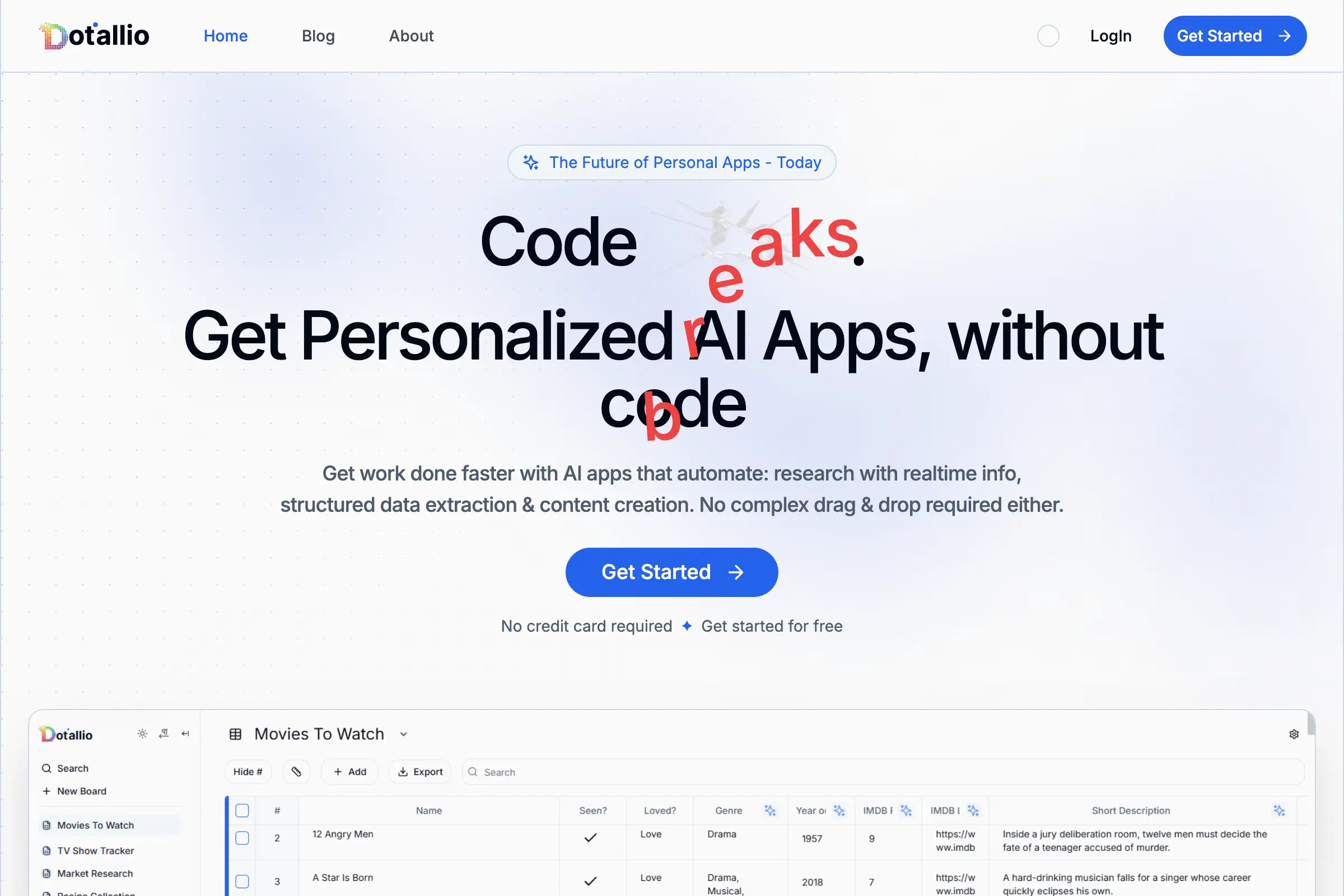
Dotallio
Personalized AI apps that automate research, data extraction, and content creation without code 🤖
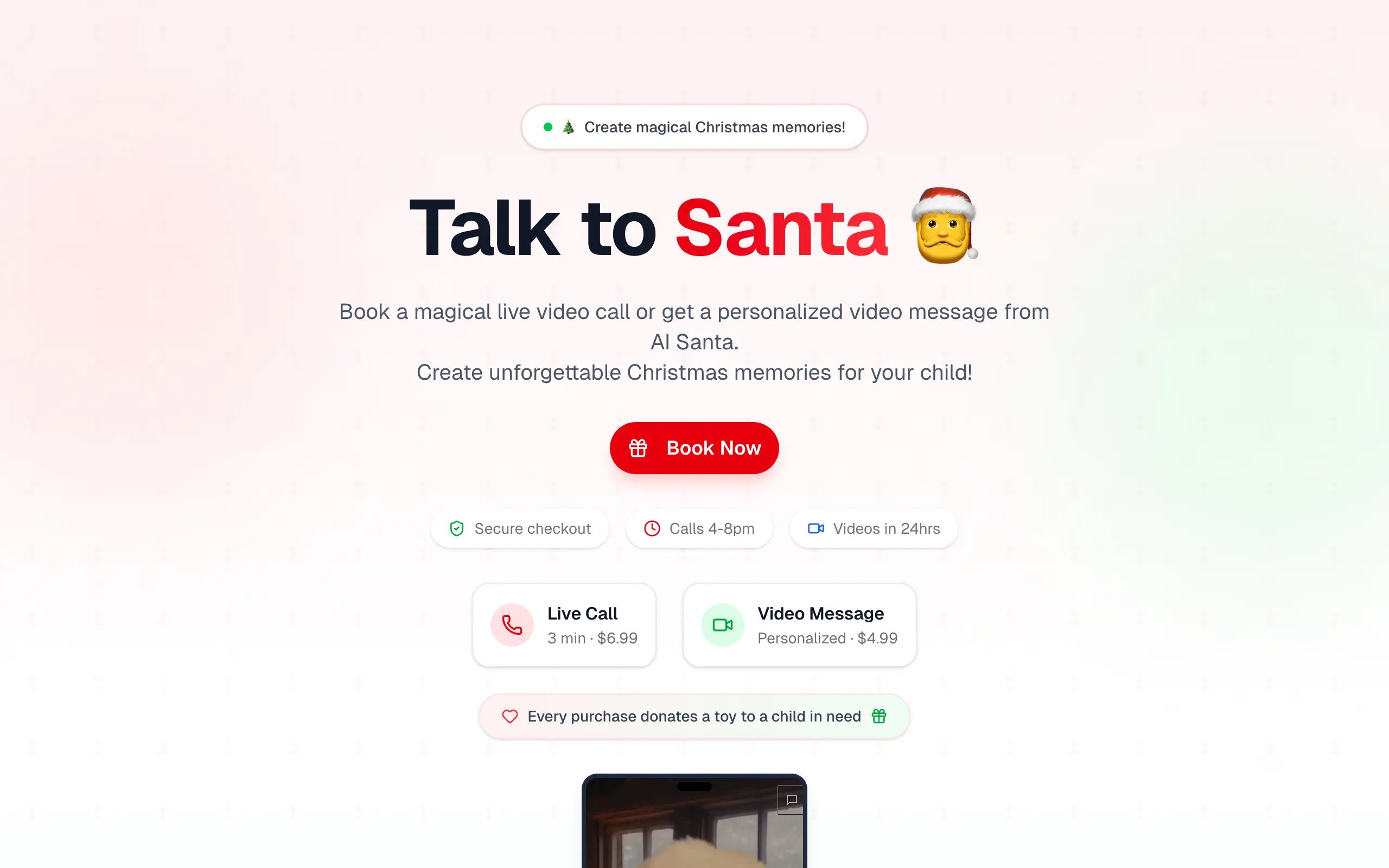
Talk to Santa
Enjoy a magical live video chat or receive a unique AI-generated video greeting from Santa Claus 🎅

pozywka.pl
Scalable blog for food journalist, focused on performance and user experience 🌭
zagrodzki.me
Personal blog and portfolio of Bart Zagrodzki, where he shares his knowledge and work 💼
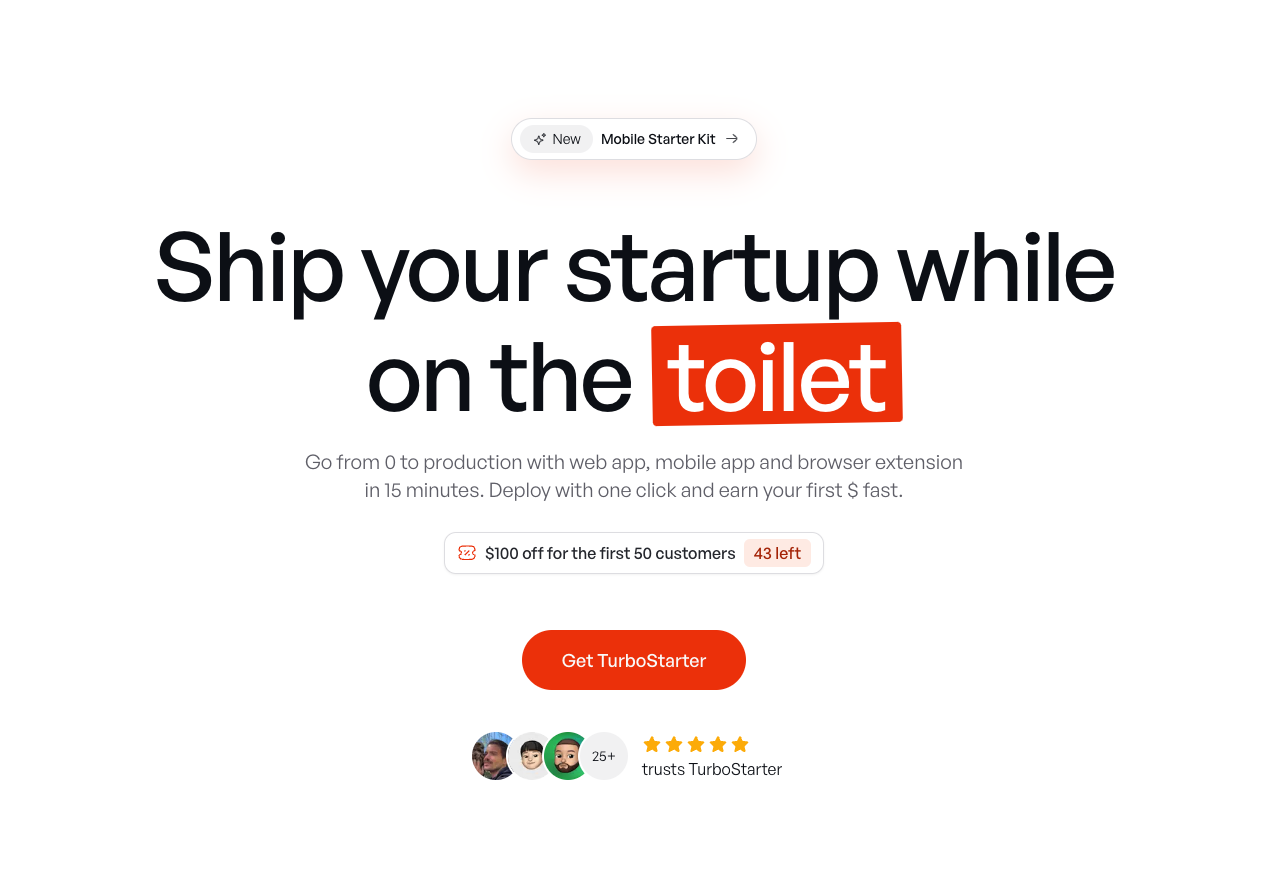
TurboStarter
Ship your startup everywhere. In minutes.
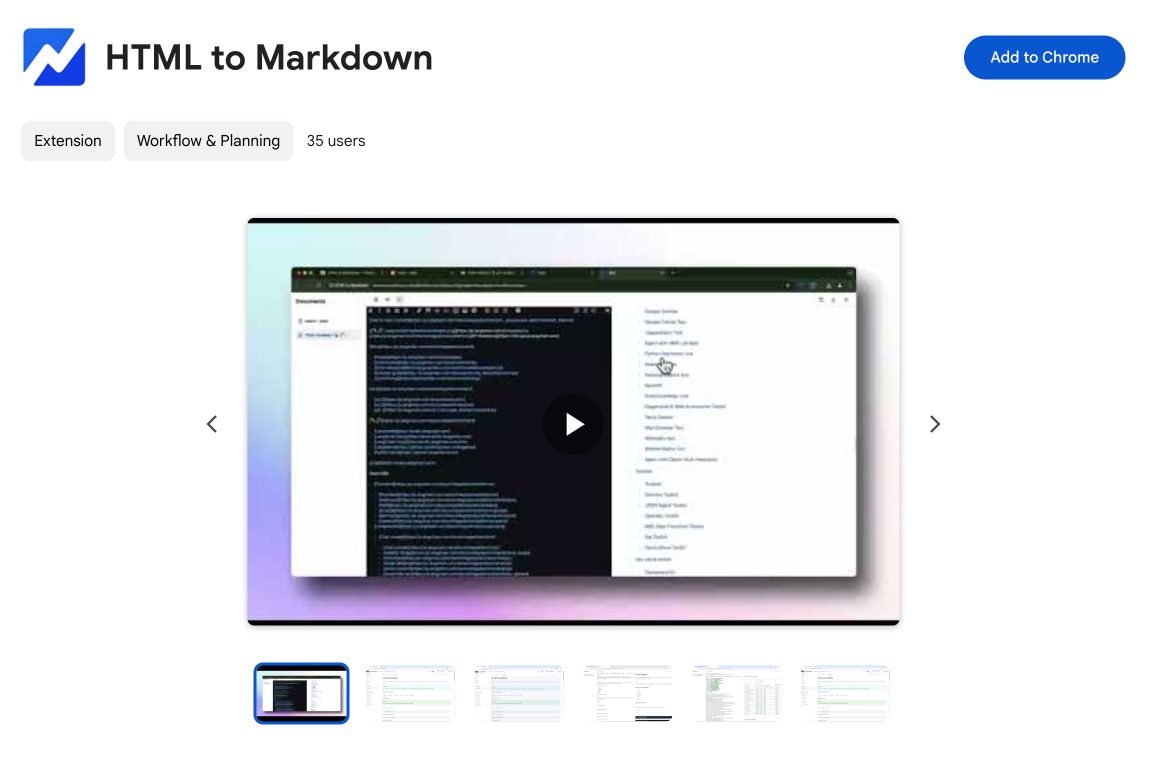
HTML to Markdown
Convert HTML to Markdown with ease, directly in your browser 📄
Dotallio
Personalized AI apps that automate research, data extraction, and content creation without code 🤖
Talk to Santa
Enjoy a magical live video chat or receive a unique AI-generated video greeting from Santa Claus 🎅
pozywka.pl
Scalable blog for food journalist, focused on performance and user experience 🌭
zagrodzki.me
Personal blog and portfolio of Bart Zagrodzki, where he shares his knowledge and work 💼
TurboStarter
Ship your startup everywhere. In minutes.
HTML to Markdown
Convert HTML to Markdown with ease, directly in your browser 📄
Dotallio
Personalized AI apps that automate research, data extraction, and content creation without code 🤖
Talk to Santa
Enjoy a magical live video chat or receive a unique AI-generated video greeting from Santa Claus 🎅
pozywka.pl
Scalable blog for food journalist, focused on performance and user experience 🌭
zagrodzki.me
Personal blog and portfolio of Bart Zagrodzki, where he shares his knowledge and work 💼
TurboStarter
Ship your startup everywhere. In minutes.
HTML to Markdown
Convert HTML to Markdown with ease, directly in your browser 📄
Dotallio
Personalized AI apps that automate research, data extraction, and content creation without code 🤖
Talk to Santa
Enjoy a magical live video chat or receive a unique AI-generated video greeting from Santa Claus 🎅
pozywka.pl
Scalable blog for food journalist, focused on performance and user experience 🌭
zagrodzki.me
Personal blog and portfolio of Bart Zagrodzki, where he shares his knowledge and work 💼
TurboStarter
Ship your startup everywhere. In minutes.
HTML to Markdown
Convert HTML to Markdown with ease, directly in your browser 📄
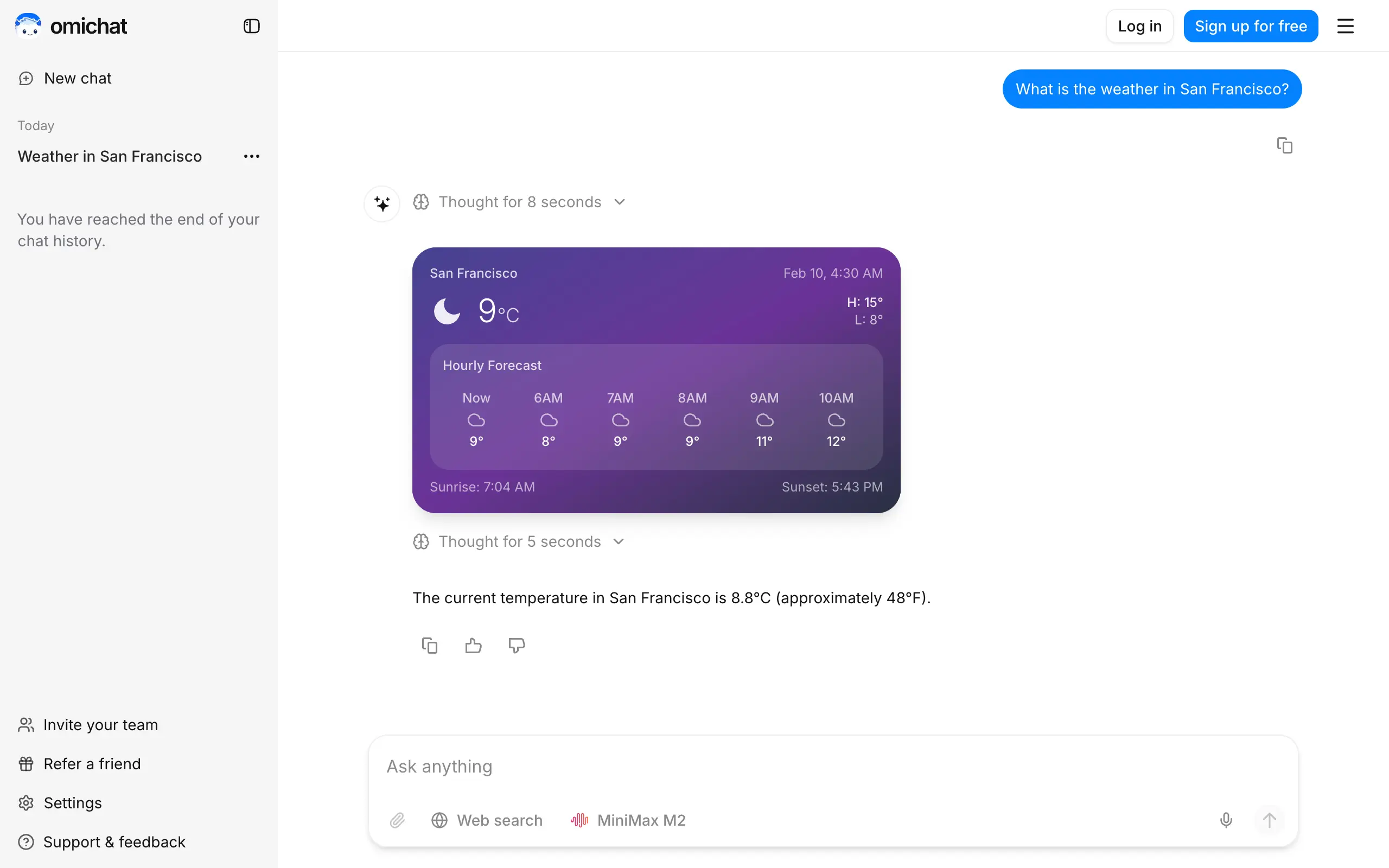
Omichat
Chat with 50+ AI models, including ChatGPT and Claude, in one place - switch models anytime without losing context 🤖
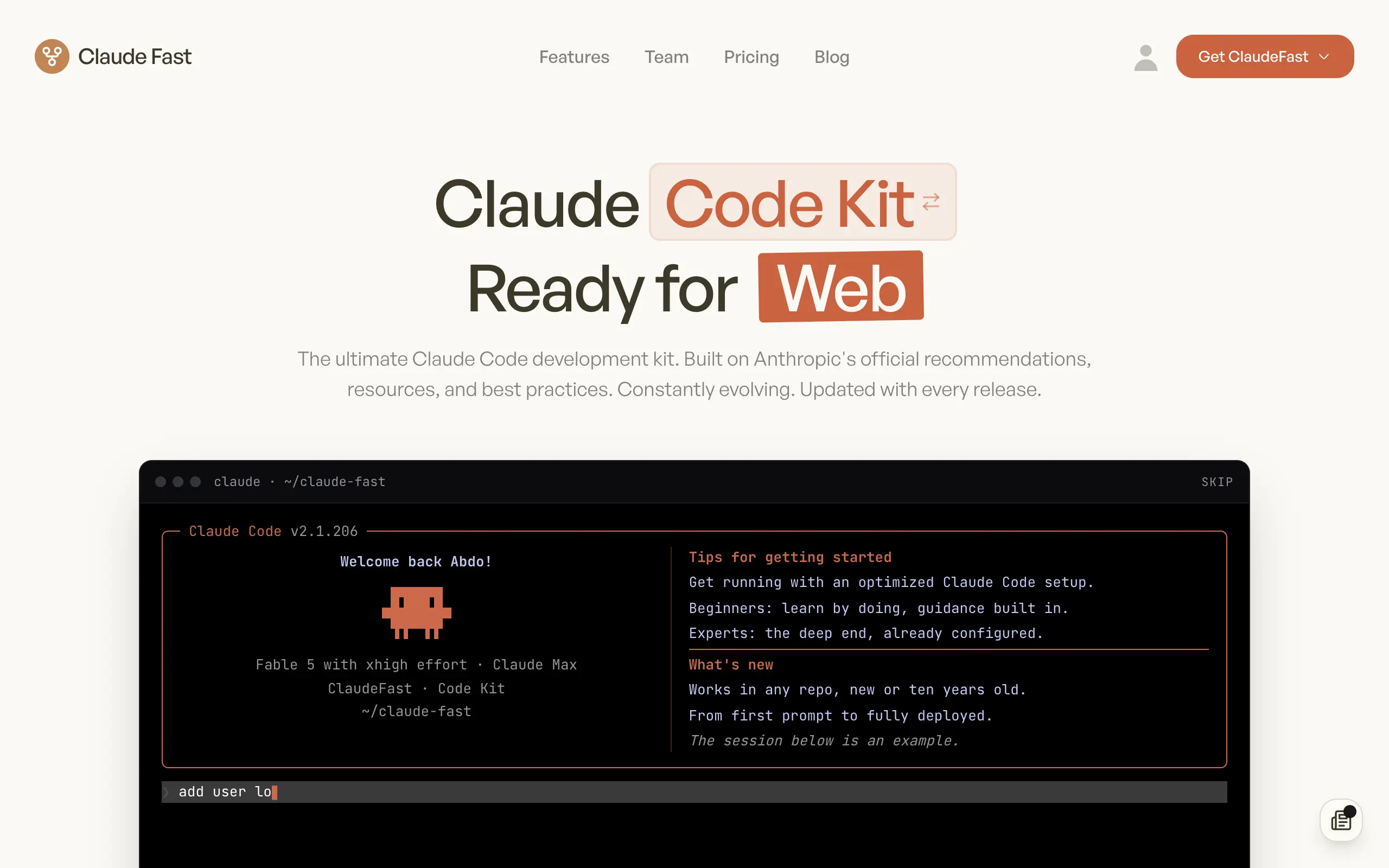
Claude Fast
Supercharge your Claude Code with 6x effective context window and specialized AI agents 🤖
EmojAI
AI-powered emoji picker with smart, context-aware suggestions 🤖
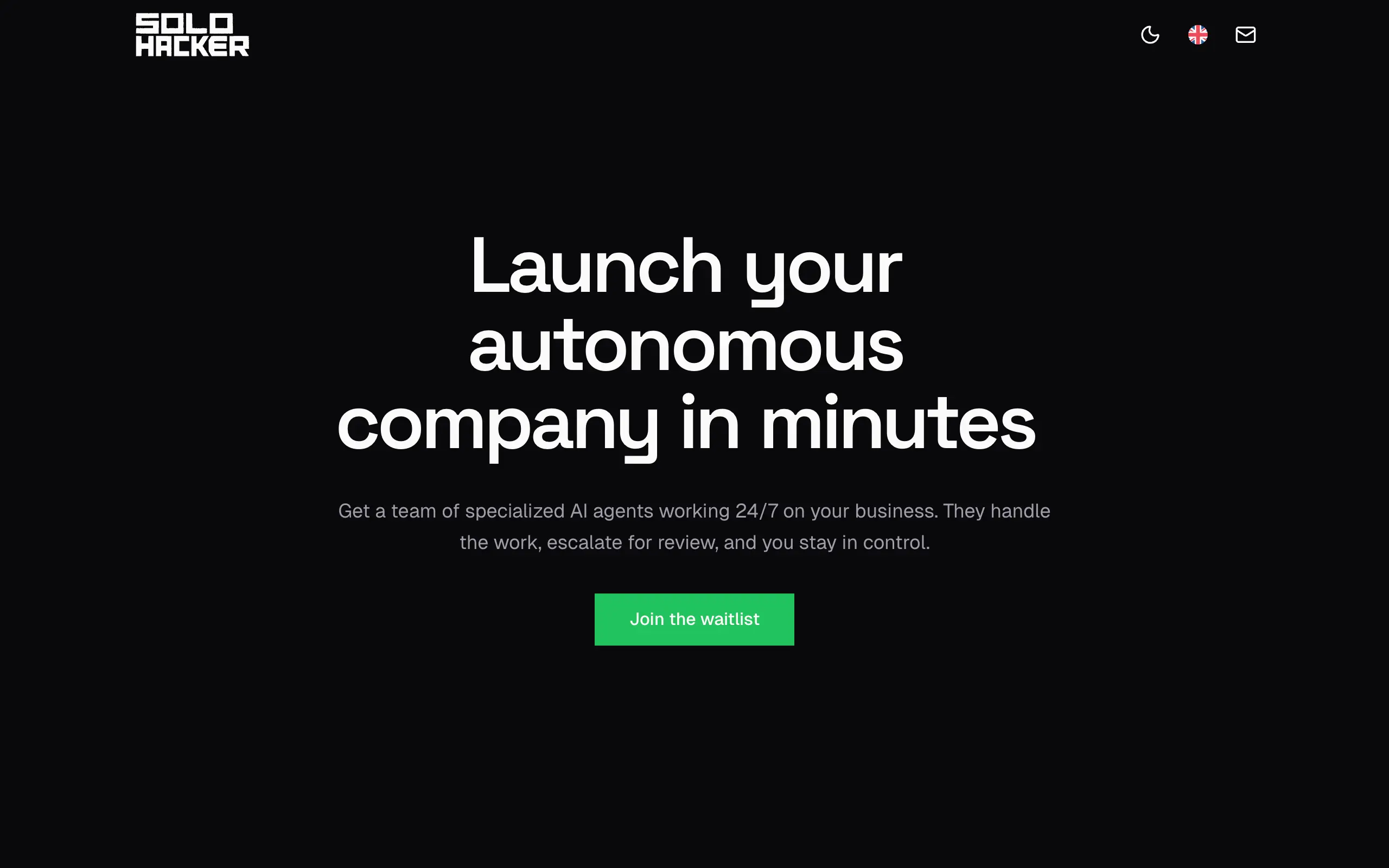
Solohacker
Autonomous company launcher - AI agents work 24/7, escalate what matters, and you stay in control 🤖
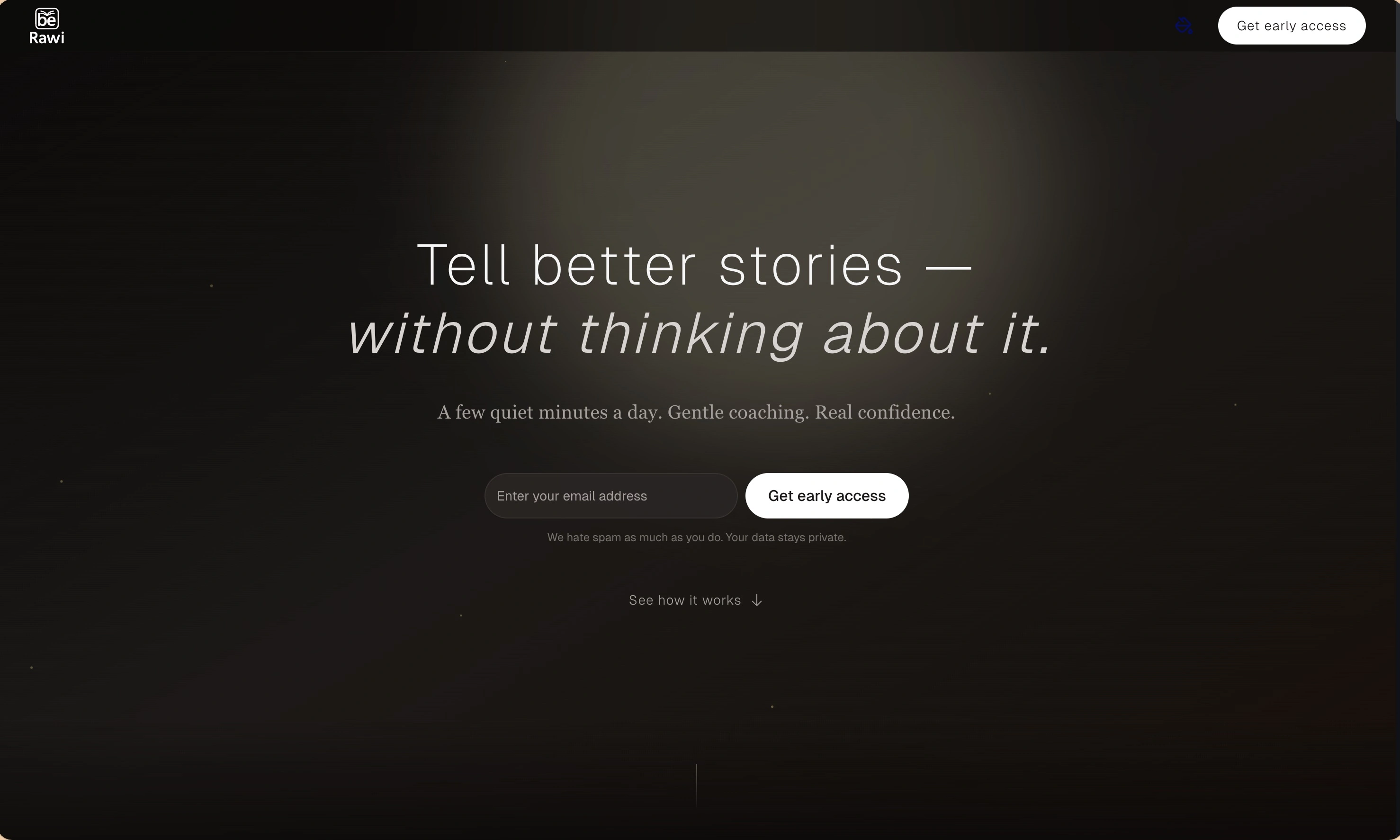
BeRawi: Storytelling Coach
Practice storytelling daily with instant feedback to sound clearer, more engaging, and confident 🎤
Omichat
Chat with 50+ AI models, including ChatGPT and Claude, in one place - switch models anytime without losing context 🤖
Claude Fast
Supercharge your Claude Code with 6x effective context window and specialized AI agents 🤖
EmojAI
AI-powered emoji picker with smart, context-aware suggestions 🤖
Solohacker
Autonomous company launcher - AI agents work 24/7, escalate what matters, and you stay in control 🤖
BeRawi: Storytelling Coach
Practice storytelling daily with instant feedback to sound clearer, more engaging, and confident 🎤
Omichat
Chat with 50+ AI models, including ChatGPT and Claude, in one place - switch models anytime without losing context 🤖
Claude Fast
Supercharge your Claude Code with 6x effective context window and specialized AI agents 🤖
EmojAI
AI-powered emoji picker with smart, context-aware suggestions 🤖
Solohacker
Autonomous company launcher - AI agents work 24/7, escalate what matters, and you stay in control 🤖
BeRawi: Storytelling Coach
Practice storytelling daily with instant feedback to sound clearer, more engaging, and confident 🎤
Omichat
Chat with 50+ AI models, including ChatGPT and Claude, in one place - switch models anytime without losing context 🤖
Claude Fast
Supercharge your Claude Code with 6x effective context window and specialized AI agents 🤖
EmojAI
AI-powered emoji picker with smart, context-aware suggestions 🤖
Solohacker
Autonomous company launcher - AI agents work 24/7, escalate what matters, and you stay in control 🤖
BeRawi: Storytelling Coach
Practice storytelling daily with instant feedback to sound clearer, more engaging, and confident 🎤

Connect with like-minded people
Join our community to get feedback, support, and grow together with 1,000+ builders on board, let's ship it!
Join usShip your startup everywhere. In minutes.
Don't burn tokens on setup and start building features on day one.