Coachloop
Helps L&D managers at mid-size companies turn manager feedback notes into weekly coaching prompts. Each manager gets a short plan for their next one-on-one.
Coachloop is an AI tool that turns the feedback notes managers already write (review comments, 360 snippets, one-on-one notes) into a short, weekly coaching plan for each manager's next one-on-one. It has potential in 2026 because mid-size companies have invested in manager training for years, yet the gap between a workshop and a better conversation on Tuesday morning is still unsolved. An AI manager coaching tool for L&D teams can close that gap without asking managers to learn another platform.
Key takeaways
- Target customer: L&D managers and People teams at companies with roughly 150 to 1,500 employees, who own manager effectiveness but have no coaching staff.
- Pricing angle: per-manager monthly pricing sold to L&D, with a minimum annual contract once pilots work.
- Biggest risk: privacy and trust. Feedback notes are sensitive, and one badly handled data issue ends the account.
- Time to MVP: about 4 to 6 weeks for a solo founder using a starter kit, assuming you validate with manual plans first.
What problem does an AI manager coaching tool solve?
Managers get feedback but rarely act on it. A manager hears "needs to delegate more" in a review, nods, and then walks into the next one-on-one with no plan. The L&D manager who owns the program sees completion rates for training, but has no view into whether anything changed.
Coachloop sits in the gap between insight and behavior. It takes what is already written down and produces a small, specific next step.
Who is Coachloop for?
The ideal customer profile is an L&D or People Development lead at a mid-size company, typically a team of one to three people serving 30 to 150 managers. They are too small for an enterprise coaching platform with human coaches, and too large to coach managers personally.
The buyer is the L&D lead. The users are managers, who must find the product useful within a minute or they will ignore it.
What do they do today, and why does it fail?
The current workaround is a mix of tools and habits:
- Workshops and e-learning: useful for concepts, but disconnected from a manager's actual team and the feedback they received.
- Spreadsheets and docs: the L&D lead manually summarizes review themes and emails tips. It works for ten managers and collapses at sixty.
- Generic AI chat: managers paste notes into a chatbot. Output is inconsistent, nobody tracks it, and pasting employee feedback into a personal account is a compliance headache.
- Reminders to "coach more": well meant, rarely specific, quickly ignored.
The failure pattern is the same everywhere: the advice is generic, arrives at the wrong time, and nobody can see whether it was used.
Why is now a good time for AI coaching for managers?
The opportunity comes from three shifts that overlap in 2026.
- Language models are good enough at structured summarization. Turning messy notes into themes and a short action plan is a task models handle well, provided you constrain the output.
- Companies already capture the raw material. Performance tools, HRIS systems, survey platforms and plain documents hold feedback. Few products convert it into weekly action.
- L&D teams are asked to prove impact with small headcount. Tools that show manager behavior moving, not just course completion, get attention.
Where the gap sits in existing solutions
Large performance management suites such as Lattice and Culture Amp collect feedback and run reviews. Coaching platforms such as BetterUp pair people with human coaches. Both are valuable, but the first tends to stop at the report and the second is expensive to roll out to every manager.
The gap is lightweight, weekly, note-driven coaching that costs far less than a human coach and is more specific than a course. Expect incumbents to add AI summaries, so your edge must be the workflow and trust, not the model.
What should the Coachloop MVP include?
Build the smallest loop that produces the aha moment: a manager opens a short plan an hour before a one-on-one and thinks, "this is exactly what I needed to bring up."
Note intake
Paste or upload feedback notes, or forward them by email, so managers and L&D never fill out a long form.
Weekly coaching prompt
A one-page plan per manager with one focus area, two suggested questions and one behavior to try.
Pre-meeting delivery
The plan arrives by email or in-app before each scheduled one-on-one, when it is most likely to be used.
L&D dashboard
A simple view of which managers received, opened and rated plans, so the buyer can show activity and follow up.
What to cut from version one
- Native integrations with every HR system. Start with paste, upload and email forwarding.
- Employee-facing features. The plan is for the manager only.
- Custom competency frameworks. Ship one sensible default, then let early customers push for more.
- Mobile apps. A well-formatted email and a responsive web view are enough to test the loop.
The aha moment
The aha is not the dashboard. It is the manager reading a plan that references a real theme from their own feedback and giving them one concrete sentence to say. Measure it with a one-tap "was this useful?" rating on every plan.
How is Coachloop different from other coaching tools?
The positioning is simple: Coachloop turns the feedback a manager already has into the next conversation they will have, weekly, at a price L&D can roll out to everyone.
| Option | Uses manager's own feedback | Weekly cadence | Scales to all managers | Visibility for L&D |
|---|---|---|---|---|
| Coachloop | ✅ | ✅ | ✅ | ✅ |
| Spreadsheets and email | Manual | ❌ | ❌ | Manual |
| Performance suites | ✅ | ❌ | ✅ | Reports only |
| Human coaching platforms | Partly | Session-based | Expensive | Varies |
| DIY with a general chatbot | Pasted by hand | ❌ | ❌ | ❌ |
The honest caveat: performance suites can copy the idea. Your defense is focus, speed of iteration and being the best at one narrow job.
How would Coachloop make money?
Sell to L&D, price per manager, and keep it simple.
Option 1: per-manager subscription
Charge a monthly fee per active manager. If you charge $12 per manager per month and a customer rolls out to 60 managers, that is $720 per month, or $8,640 per year. The number is an assumption to test, but the logic holds: it is far under the cost of human coaching and easy to justify from a training budget.
Option 2: platform fee plus managers
A flat base fee (for the dashboard, onboarding and support) plus a smaller per-manager rate. This protects revenue from small rollouts and fits companies that want a predictable invoice.
Option 3: paid pilot, then annual contract
Run a 60 to 90 day paid pilot with one department, then convert to annual. Mid-size buyers rarely sign annual deals blind, and a paid pilot filters out curiosity-only leads.
Which growth channel works first?
Direct outreach to L&D leaders, backed by a founder-led pilot. L&D communities, LinkedIn and referrals from HR consultants are typically the highest-signal places. Self-serve signup is unlikely to work early because the buyer needs to see a sample plan built from their own notes.
How do you validate Coachloop in two weeks?
Validate with manual output before writing much code. The goal is to learn whether managers use the plans and whether L&D will pay.
Interview eight to ten L&D leaders
Ask how they help managers act on feedback today, what they have tried and what budget owns the problem.
Produce manual plans for two volunteers
Take anonymized or consented feedback notes and write the weekly plans by hand, with AI assistance. Watch whether managers read them.
Launch a one-promise landing page
State the outcome, show a sample plan and collect waitlist emails from L&D titles only.
Ask for a paid pilot
Offer a discounted 60-day pilot for one team. Even two or three signed pilots are a stronger signal than a long waitlist.
Define your success metric
Decide in advance what counts as a pass, for example the share of plans rated useful and the share of managers opening them weekly.
How do you build Coachloop with TurboStarter?
The product is a standard multi-tenant web app with an AI pipeline. The unique work is the prompt design, privacy handling and delivery timing. Everything else is undifferentiated, which is where TurboStarter saves weeks: it ships with web and mobile apps, authentication, organizations and teams, billing, database, emails, file storage, AI, background tasks, an admin panel, analytics, internationalization and monitoring in a ready-made monorepo.
What maps to what
- Companies and managers: each customer is an organization, with L&D admins and managers as members. See the organizations docs.
- Subscriptions: per-seat or platform-plus-seat billing fits the billing module.
- Weekly plans: a scheduled job generates plans before meetings, which suits background tasks.
- Plan generation: the AI module gives you a starting point for model calls.
A minimal data model
type FeedbackNote = {
  id: string;
  organizationId: string;
  managerId: string;
  source: "paste" | "upload" | "email";
  body: string; // encrypt at rest
  createdAt: Date;
};

type CoachingPlan = {
  id: string;
  managerId: string;
  weekOf: Date;
  focusArea: string;
  questions: string[];
  behaviorToTry: string;
  rating?: 1 | 2 | 3 | 4 | 5;
};
Which AI approach should you pick?
Fastest to ship and usually the best output quality for summarization and tone. Choose a provider with a no-training data commitment and a data processing agreement. This is the right default for the MVP.
Gives you more control over data location, which some security teams ask for. It adds infrastructure work and typically lower quality at first. Consider it only when a real customer makes it a deal requirement.
What to build yourself
Spend your time on the prompt chain (theme extraction, then plan generation, then tone check), an evaluation set of real-style notes, and the one-tap rating loop. Everything else should come from the starter kit.
What could make Coachloop fail?
Biggest risk: trust and data privacy
Feedback notes about named employees are among the most sensitive data a company holds. If a buyer's security review fails, or a plan exposes something it should not, you lose the account and your reputation with L&D peers. Before launch: minimize stored data, encrypt notes, set a clear retention period, use a model provider that does not train on your data, restrict plans to the manager and be ready with a short security document.
Other real risks
- Generic output: if plans feel like horoscopes, managers stop reading. Mitigate with an evaluation set, specific quotes from notes, and the rating loop to catch weak plans.
- Incumbents add the feature: performance suites can ship AI summaries. Stay narrow, own the weekly delivery workflow and integrate rather than compete on review collection.
- Buyer without usage: L&D signs, managers ignore. Track open and rating rates from day one and give L&D a nudge tool for managers who go silent.
What should you do in the first 30 days?
Days 1 to 7: interviews and manual plans
Run the interviews and deliver hand-built plans to a few managers.
Days 8 to 14: landing page and pilot offers
Publish the page with a sample plan and pitch paid pilots to everyone you interviewed.
Days 15 to 24: build the loop
Set up the starter kit, then build note intake, plan generation, email delivery and ratings.
Days 25 to 30: onboard pilot customers
Load real notes, send the first weekly plans and review ratings with the L&D lead.
If you want to test an AI manager coaching tool for L&D teams without spending months on setup, start from TurboStarter and put your first week into customer conversations instead of boilerplate.
FAQ
The pain is real: L&D teams are asked to improve manager quality with few people. Whether they pay for a specific tool is what your interviews and paid pilots should answer. Treat signed pilots as the only strong signal.
Start with a per-manager monthly price in the low double digits and test it against what buyers currently spend on workshops or coaching. A paid pilot with a minimum fee protects you from tiny, unprofitable rollouts. Adjust once you see usage and willingness to pay.
Performance management suites such as Lattice and Culture Amp, and human coaching platforms such as BetterUp. Many teams also use spreadsheets and general chatbots. Your wedge is note-driven, weekly, low-cost coaching for every manager.
A web app with authentication, organizations, billing, a database, transactional email, scheduled jobs and an LLM API. A starter kit such as TurboStarter covers most of this, so you focus on prompts, evaluation and privacy.
Roughly 4 to 6 weeks for a solo technical founder, assuming you start from a starter kit and keep integrations out of scope. Costs are mostly your time plus modest hosting and model usage, which stay low at pilot scale.
More 🤖 AI Startup SaaS ideas
Discover more innovative ai startup SaaS ideas that are trending in 2026. Each idea is AI-generated with market validation and growth potential to help you find your next profitable venture faster than competitors.
Your competitors are building with TurboStarter
Below are some of the SaaS ideas that have been generated and built with our starter kit.

Monitor any Telegram channel in real time - track posts, edits, deletions, and growth with AI recaps 📡

AI website builder - describe your business, pick a niche template, edit by chatting, and publish instantly ✨

Find verified home service professionals, compare quotes, and pay securely through escrow - built for Brazilians across the US 🏠
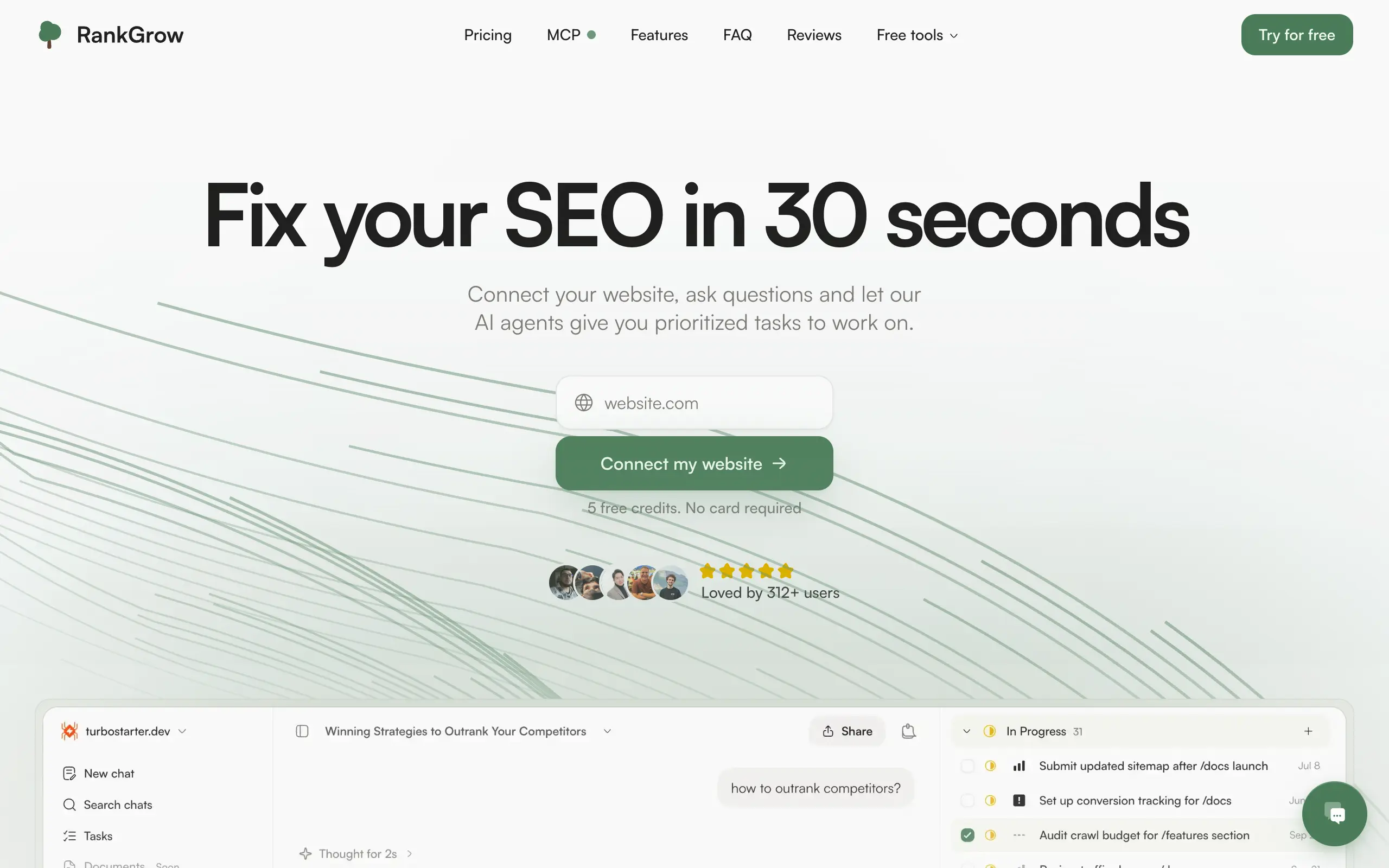
Fix your SEO with AI agents - connect Search Console, get prioritized tasks, and grow organic traffic 📈

Sync your favorite content for distraction-free reading, save time and replace multiple apps. Anytime, anywhere 🔄

Get clean, structured data from 21 platforms like TikTok, Instagram, and YouTube with a single request 📊
Monitor any Telegram channel in real time - track posts, edits, deletions, and growth with AI recaps 📡
AI website builder - describe your business, pick a niche template, edit by chatting, and publish instantly ✨
Find verified home service professionals, compare quotes, and pay securely through escrow - built for Brazilians across the US 🏠
Fix your SEO with AI agents - connect Search Console, get prioritized tasks, and grow organic traffic 📈
Sync your favorite content for distraction-free reading, save time and replace multiple apps. Anytime, anywhere 🔄
Get clean, structured data from 21 platforms like TikTok, Instagram, and YouTube with a single request 📊

Personalized AI apps that automate research, data extraction, and content creation without code 🤖

Enjoy a magical live video chat or receive a unique AI-generated video greeting from Santa Claus 🎅

Scalable blog for food journalist, focused on performance and user experience 🌭

Personal blog and portfolio of Bart Zagrodzki, where he shares his knowledge and work 💼

Ship your startup everywhere. In minutes.

Convert HTML to Markdown with ease, directly in your browser 📄
Personalized AI apps that automate research, data extraction, and content creation without code 🤖
Enjoy a magical live video chat or receive a unique AI-generated video greeting from Santa Claus 🎅
Scalable blog for food journalist, focused on performance and user experience 🌭
Personal blog and portfolio of Bart Zagrodzki, where he shares his knowledge and work 💼
Ship your startup everywhere. In minutes.
Convert HTML to Markdown with ease, directly in your browser 📄

Chat with 50+ AI models, including ChatGPT and Claude, in one place - switch models anytime without losing context 🤖

Supercharge your Claude Code with 6x effective context window and specialized AI agents 🤖

AI-powered emoji picker with smart, context-aware suggestions 🤖

Autonomous company launcher - AI agents work 24/7, escalate what matters, and you stay in control 🤖

Practice storytelling daily with instant feedback to sound clearer, more engaging, and confident 🎤
Chat with 50+ AI models, including ChatGPT and Claude, in one place - switch models anytime without losing context 🤖
Supercharge your Claude Code with 6x effective context window and specialized AI agents 🤖
AI-powered emoji picker with smart, context-aware suggestions 🤖
Autonomous company launcher - AI agents work 24/7, escalate what matters, and you stay in control 🤖
Practice storytelling daily with instant feedback to sound clearer, more engaging, and confident 🎤

Connect with like-minded people
Join our community to get feedback, support, and grow together with 1,000+ builders on board, let's ship it!
Join usShip your startup everywhere. In minutes.
Don't burn tokens on setup and start building features on day one.