Listingsmith
Generates accurate product descriptions and metadata for small Etsy sellers from photos and supplier sheets. Shop owners publish a full catalog in an afternoon rather than a week.
Listingsmith is an AI listing generator for small Etsy sellers: it reads product photos and supplier spreadsheets, then produces accurate titles, descriptions, tags and attributes ready to publish. The opportunity in 2026 is that vision models are now good enough to describe physical products reliably, while most sellers still write every listing by hand, which makes an AI product description generator for Etsy sellers a narrow, painful and buildable problem.
Key takeaways
- Target customer: Etsy shop owners with roughly 50 to 500 listings, including handmade makers, curated vintage sellers and small print-on-demand or resale shops.
- Pricing angle: a monthly subscription tied to listings generated, for example $19/month for a starter tier, with a one-time catalog import pack as an entry offer.
- Biggest risk: inaccurate output. One wrong material or dimension claim destroys trust, so the product must verify facts, not just write nicely.
- Time to MVP: about 3 to 5 weeks for one developer using a starter kit, assuming you skip direct Etsy publishing at first.
What problem does Listingsmith solve for Etsy sellers?
Small sellers lose days of unpaid time writing listings, and the result is usually thin, inconsistent and poorly optimized. A shop owner who adds a new collection of 80 items faces 80 titles, 80 descriptions, 13 tags each and a pile of attributes. The work is repetitive, but it still needs to be accurate.
Who feels it most
The ideal customer is a solo seller running a shop of 50 to 500 listings who also handles sourcing, photography, packing and customer messages. Think of a ceramics maker launching a seasonal line, a vintage dealer cataloging a estate haul, or a seller who buys from wholesale suppliers and receives a messy spreadsheet of SKUs.
These people are not writers. They know their products, but they dread the blank text box.
Current workarounds and why they fail
- Writing by hand: accurate but slow, and quality drops by listing number thirty.
- Copy and paste from supplier sheets: fast, but supplier text is generic, often badly translated and identical to every other reseller's.
- General chatbots: useful for drafts, but the seller must re-upload photos, re-explain the product and fix invented details every time.
- Spreadsheets with templates: consistent structure, but no real product detail and no search optimization.
The common failure is that none of these workflows connect the photo, the supplier data and the final listing format in one pass.
Is there a market gap for AI Etsy listing tools?
Yes, but it sits in accuracy and workflow, not in text generation. Etsy tooling today falls into a few categories: SEO research tools for keywords, general AI writing assistants, and bulk listing or inventory managers. Few combine image understanding, supplier data and bulk output into a single catalog workflow for non-technical sellers.
Why now
- Vision models can now read a photo and extract color, material cues, style and object type with decent reliability, especially when paired with structured data.
- Structured output from modern models makes it practical to return fields (title, tags, attributes) rather than a blob of prose.
- Marketplace saturation pushes small sellers to differentiate on listing quality, since photos alone no longer carry a shop.
- Cheaper inference means a per-listing cost low enough to price against a seller's hourly time.
Where the gap is honest and where it is not
Etsy is a platform you do not control. Its policies on AI-generated content and listing disclosures can change, and sellers of handmade goods must stay within its rules about how items are made. Treat the platform as a distribution channel and a dependency, and design your export so it works even without a deep API integration.
What should the Listingsmith MVP include?
Build the shortest path from "folder of photos plus a spreadsheet" to "reviewed CSV ready to upload". The aha moment is a seller importing 30 products and seeing 30 accurate, distinct drafts in minutes, with each fact traced to the photo or the sheet.
Photo and sheet import
Upload product photos and a supplier CSV or Excel file, then match each photo set to its row automatically, with manual fixes.
Fact-grounded generation
Create titles, descriptions, tags and attributes only from detected or supplied facts, and flag anything the model had to guess.
Review queue
Approve, edit or regenerate each listing quickly, with unverified claims highlighted so nothing risky gets published.
Bulk export
Download a CSV formatted for Etsy bulk upload, with a saved shop voice and tag preferences applied to every listing.
What to cut from version one
- Direct publishing through the Etsy API (start with export; add it after demand is proven).
- Keyword research dashboards and rank tracking.
- Multi-marketplace support for Shopify, Amazon or eBay.
- Image editing or generation.
Each of these is a separate product. The MVP wins by being trustworthy on one job.
How is Listingsmith different from other options?
The unique selling proposition is accurate, catalog-scale listings from the materials a seller already has. Competing on writing quality alone fails, because every chatbot writes fluent text. Competing on grounded facts and bulk workflow is harder to copy quickly.
| Option | Uses photos and supplier data together | Bulk catalog workflow | Flags unverified claims |
|---|---|---|---|
| Listingsmith | ✅ | ✅ | ✅ |
| Writing by hand | ✅ | ❌ | ✅ |
| General AI chatbot | Manual re-upload | ❌ | ❌ |
| Etsy SEO research tools | ❌ | Partial | ❌ |
| Supplier copy and paste | Sheet only | ✅ | ❌ |
The honest caveat: a general chatbot with a good prompt gets a technical seller most of the way for a handful of items. Your advantage appears when the catalog is large, the data is messy and the seller wants consistency without prompt engineering.
How would Listingsmith make money?
Subscription pricing based on listing volume fits the usage pattern best, since sellers work in bursts around new collections and seasons.
Option 1: tiered subscription
Charge by monthly listing allowance. Assume $19/month for 100 listings, $39/month for 400 and a higher tier for agencies or multi-shop owners. If your model cost per listing is a few cents (measure this early), margins stay healthy even with regeneration.
Option 2: one-time catalog pack
Offer a paid import, such as "convert up to 200 products for a flat fee". This reduces commitment, suits sellers with a single big backlog and tells you quickly who will pay. The downside is no recurring revenue, so pair it with a discounted subscription afterward.
Option 3: credits plus a free sample
Give 5 free listings, then sell credit bundles. This is simple to build, but credits tend to feel punitive when a seller regenerates. Use it only if subscriptions test poorly.
Which growth channel to try first
Start with Etsy seller communities: forums, groups and subreddits where sellers already ask how to write listings faster. Show real before and after drafts for a product category, not a pitch. Content for specific niches (candles, jewelry, vintage) also tends to rank because the searches are specific.
How do you validate a Listingsmith idea in two weeks?
Test whether sellers will hand over a real catalog and pay, before you write much code.
Interview 10 sellers
Find Etsy sellers with at least 50 listings and ask how they wrote their last batch, how long it took and what they dislike. Listen for hours spent and for errors they have already made.
Run a manual pilot
Take three sellers' photos and sheets and produce listings by hand with a model plus your own review. Ask them how many edits they needed and whether they would use the result.
Launch a landing page
State one promise, such as a full catalog drafted in an afternoon, and show a real sample output. Track how many visitors join the waitlist.
Ask for pre-payment
Offer a discounted founding-member plan or a flat-fee catalog conversion. Even five to ten paying sellers is a stronger signal than hundreds of signups.
Decide with a threshold
Before you start, write down your bar, for example a share of interviewees who agree to a paid pilot. If you miss it, narrow the niche rather than adding features.
What tech stack should you use to build an Etsy listing generator?
Use a typical TypeScript web stack with a queue for batch jobs. The unique work is the extraction, grounding and review pipeline, so avoid spending your first month on infrastructure. TurboStarter provides a monorepo with web and mobile apps, authentication, billing, database, emails, file storage, AI, background tasks, an admin panel, analytics, internationalization and monitoring, which covers most of the undifferentiated work.
What TurboStarter handles for you
- Accounts: sign-up and sessions through authentication.
- Payments: subscriptions and one-time catalog packs through billing.
- Photo uploads: product images stored via storage.
- Batch generation: long import jobs via background tasks, so a 200-product run never blocks a request.
That leaves you with the actual product: parsing, extraction, grounding and review.
Choosing your model approach
Send photos and sheet data to one model and request structured output. It is simpler to build and good enough for most products. The trade-off is less control over where a wrong claim came from.
First extract observed attributes from photos into JSON, then generate copy from that JSON plus the sheet. It costs a bit more and adds code, but each fact has a source, which makes the "unverified" flag reliable. This is the better choice if accuracy is your pitch.
A data model that supports grounding
Store each fact with its source so the review screen can show where it came from.
type Fact = {
  key: "material" | "color" | "dimensions" | "style";
  value: string;
  source: "photo" | "supplier_sheet" | "seller_input" | "model_guess";
  confidence: number;
};

type Listing = {
  id: string;
  title: string;
  description: string;
  tags: string[];
  facts: Fact[];
  status: "draft" | "needs_review" | "approved";
};
Any fact with source model_guess must block approval until the seller confirms it. That one rule is most of your accuracy promise.
What could make Listingsmith fail?
Biggest risk: inaccurate listings
If the tool states a wrong material, size or care instruction, sellers face refunds, bad reviews and possible policy trouble, and they will stop trusting every draft. Mitigate this by grounding copy in sourced facts, forcing confirmation of guessed attributes and never describing what the model cannot see, such as weight or whether an item is food safe.
Platform dependency
Etsy can change its rules on AI content, disclosure or bulk tools. Keep your product useful as a general catalog writer, with Etsy as the first export format, and read the current seller policies before launch.
Weak willingness to pay
Many small sellers have thin margins. Validate with real payments, focus on shops with enough listings that time saved is obvious, and price against hours saved, not against a free chatbot.
Commoditization
A larger seller platform or SEO tool could add a similar feature. Defend with niche depth (per-category templates, supplier sheet parsers, shop voice memory) and by being the fastest path from messy inputs to a finished catalog.
What should your first 30 days look like?
Week 1: interviews and manual pilot
Talk to sellers, collect real supplier sheets and run the manual pilot to learn what messy inputs look like.
Week 2: landing page and pre-sales
Publish a page with real sample output and offer founding-member pricing.
Week 3: build the core flow
Set up the starter kit, then build import, extraction, the fact model and the review queue.
Week 4: private beta
Onboard your pilot sellers, measure edits per listing and time saved, then fix the top three accuracy failures before opening up.
Pick one product category, prove accuracy there and expand only when sellers ask. If you want the shortest route from idea to a billing-ready first version, start with TurboStarter and spend your time on the extraction and review pipeline.
FAQ
Interview sellers with large catalogs, run a manual pilot with their real photos and sheets, then ask for a pre-payment. Paid commitments from a small group tell you more than a large waitlist.
A starting point is $19 to $39 per month tiered by listing volume, plus an optional flat-fee catalog conversion. Measure your real cost per listing, including regenerations, and keep gross margin comfortable.
Etsy SEO research tools, general AI chatbots and bulk listing managers cover parts of the workflow. Few handle photos, supplier sheets and fact verification together, which is where to differentiate.
A TypeScript web app with a relational database, file storage, a job queue and a multimodal AI model works well. A starter kit such as TurboStarter removes setup for authentication, billing and background jobs.
Assuming one developer and a starter kit, a usable MVP typically takes 3 to 5 weeks. Your main costs are model usage and your time, so keep early spend low by limiting free generations.
No. CSV export proves demand with far less work and fewer policy risks. Add direct publishing once sellers are paying and ask for it.
More 🤖 AI Startup SaaS ideas
Discover more innovative ai startup SaaS ideas that are trending in 2026. Each idea is AI-generated with market validation and growth potential to help you find your next profitable venture faster than competitors.
Your competitors are building with TurboStarter
Below are some of the SaaS ideas that have been generated and built with our starter kit.

Monitor any Telegram channel in real time - track posts, edits, deletions, and growth with AI recaps 📡

AI website builder - describe your business, pick a niche template, edit by chatting, and publish instantly ✨

Find verified home service professionals, compare quotes, and pay securely through escrow - built for Brazilians across the US 🏠
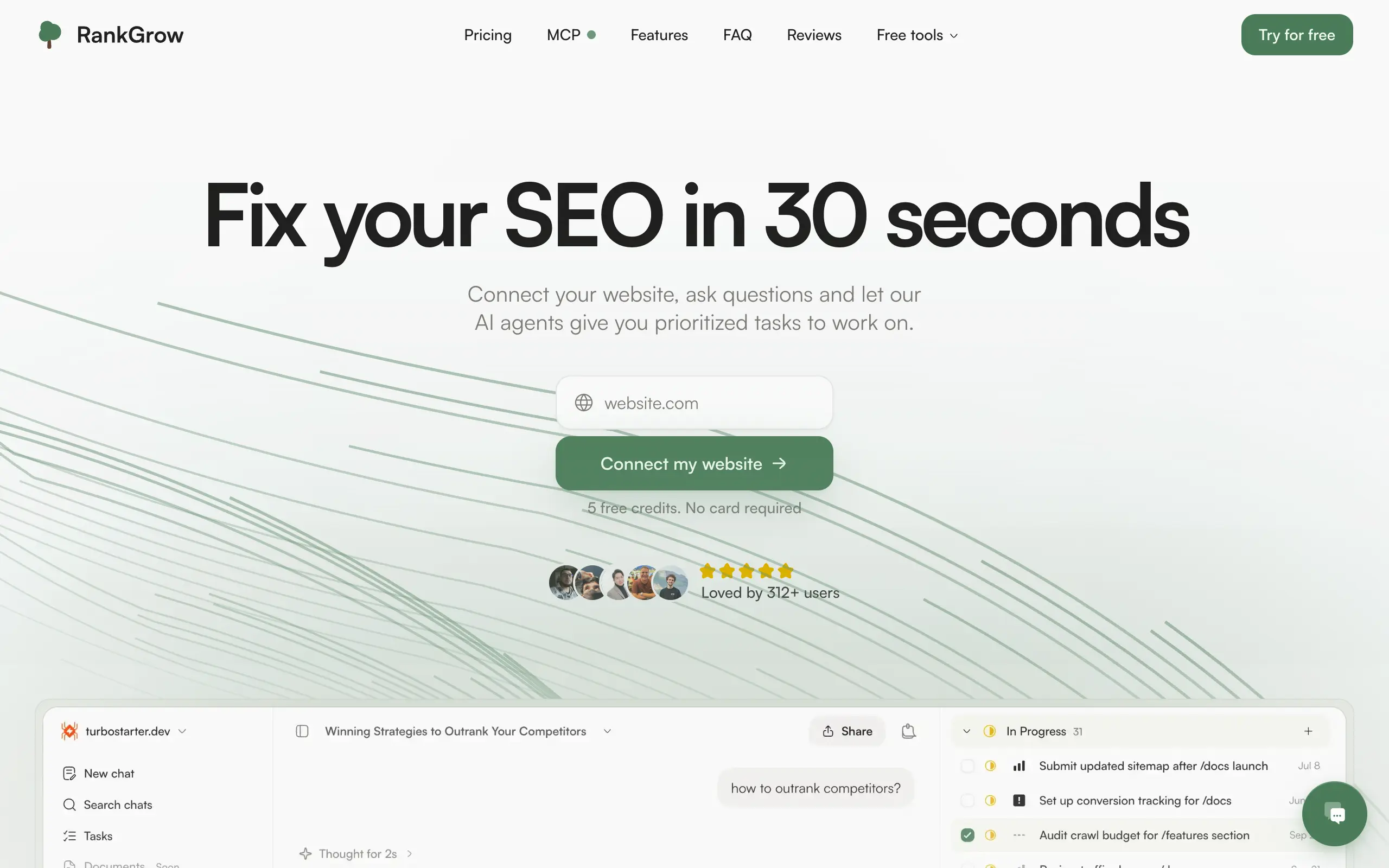
Fix your SEO with AI agents - connect Search Console, get prioritized tasks, and grow organic traffic 📈

Sync your favorite content for distraction-free reading, save time and replace multiple apps. Anytime, anywhere 🔄

Get clean, structured data from 21 platforms like TikTok, Instagram, and YouTube with a single request 📊
Monitor any Telegram channel in real time - track posts, edits, deletions, and growth with AI recaps 📡
AI website builder - describe your business, pick a niche template, edit by chatting, and publish instantly ✨
Find verified home service professionals, compare quotes, and pay securely through escrow - built for Brazilians across the US 🏠
Fix your SEO with AI agents - connect Search Console, get prioritized tasks, and grow organic traffic 📈
Sync your favorite content for distraction-free reading, save time and replace multiple apps. Anytime, anywhere 🔄
Get clean, structured data from 21 platforms like TikTok, Instagram, and YouTube with a single request 📊

Personalized AI apps that automate research, data extraction, and content creation without code 🤖

Enjoy a magical live video chat or receive a unique AI-generated video greeting from Santa Claus 🎅

Scalable blog for food journalist, focused on performance and user experience 🌭

Personal blog and portfolio of Bart Zagrodzki, where he shares his knowledge and work 💼

Ship your startup everywhere. In minutes.

Convert HTML to Markdown with ease, directly in your browser 📄
Personalized AI apps that automate research, data extraction, and content creation without code 🤖
Enjoy a magical live video chat or receive a unique AI-generated video greeting from Santa Claus 🎅
Scalable blog for food journalist, focused on performance and user experience 🌭
Personal blog and portfolio of Bart Zagrodzki, where he shares his knowledge and work 💼
Ship your startup everywhere. In minutes.
Convert HTML to Markdown with ease, directly in your browser 📄

Chat with 50+ AI models, including ChatGPT and Claude, in one place - switch models anytime without losing context 🤖

Supercharge your Claude Code with 6x effective context window and specialized AI agents 🤖

AI-powered emoji picker with smart, context-aware suggestions 🤖

Autonomous company launcher - AI agents work 24/7, escalate what matters, and you stay in control 🤖

Practice storytelling daily with instant feedback to sound clearer, more engaging, and confident 🎤
Chat with 50+ AI models, including ChatGPT and Claude, in one place - switch models anytime without losing context 🤖
Supercharge your Claude Code with 6x effective context window and specialized AI agents 🤖
AI-powered emoji picker with smart, context-aware suggestions 🤖
Autonomous company launcher - AI agents work 24/7, escalate what matters, and you stay in control 🤖
Practice storytelling daily with instant feedback to sound clearer, more engaging, and confident 🎤

Connect with like-minded people
Join our community to get feedback, support, and grow together with 1,000+ builders on board, let's ship it!
Join usShip your startup everywhere. In minutes.
Don't burn tokens on setup and start building features on day one.