Rampwise
Builds 90-day onboarding ramp plans for new engineers from their repo history and team docs. Engineering leads get a checklist of skills to verify each week.
Rampwise is an AI tool that reads a team's repository history and internal docs, then produces a 90-day onboarding ramp plan for each new engineer, with a weekly checklist of skills the engineering lead should verify. The opportunity in 2026 is that AI coding assistants have made code output faster, but the slow part of hiring (getting a new engineer to independent, trusted contribution) is still handled with stale wikis and a buddy's goodwill. An AI onboarding plan generator for new engineers targets that gap directly.
Key takeaways
- Target customer: engineering managers and leads at teams of 15 to 150 engineers who hire at least a few engineers per quarter.
- Pricing angle: per-team subscription or per-hire pricing, roughly in the range of one lunch-and-learn budget per new hire, not per-seat SaaS pricing.
- Biggest risk: access to private repos and docs is a security and trust hurdle that can stall every sale.
- Time to MVP: about 4 to 6 weeks for a solo founder using a starter kit, assuming GitHub-only integration first.
What problem does an AI onboarding plan generator solve?
New engineers take months to become productive, and most teams have no structured way to see how far along they are. Onboarding is usually a mix of a stale Notion page, a "good first issue" list and a weekly 1:1 where the lead guesses progress.
Rampwise replaces that guesswork with a plan grounded in the team's actual codebase and a weekly list of things to verify.
Who is Rampwise for?
The ideal customer is an engineering manager at a Series A to Series C company with 20 to 100 engineers, hiring steadily, with a codebase old enough that nobody remembers why things are the way they are. They are not a platform team of 500, which already has a dedicated developer experience group and custom tooling.
Secondary buyers are:
- Staff engineers who get stuck as the unofficial onboarding buddy.
- Heads of engineering who want to know whether a hire is on track before the probation decision.
- Agencies and consultancies that rotate engineers across client codebases.
What is the current workaround and why does it fail?
Most teams use one of three approaches:
- A wiki onboarding doc. It goes stale within a quarter, and it is the same for a senior backend hire and a junior frontend hire.
- A buddy system. It works when the buddy has time, which is exactly when they do not.
- A generic 30/60/90 template. It lists goals like "understand the architecture" with no way to check whether that happened.
The failure is the same in each case: the plan is not tied to the real code, and the lead has no concrete skills to verify. Rampwise ties both together.
Why is now the right time for AI onboarding tools?
The gap is that existing tools cover adjacent problems, not this one. HR platforms such as Workday and BambooHR handle paperwork and generic task lists. Learning platforms handle courses. Code search and AI assistants such as GitHub Copilot or Sourcegraph help a person answer questions about code, but they do not decide what a specific hire should learn in week three.
Several trends make 2026 a good moment:
- AI-assisted coding raised the bar for judgment. Writing code is cheaper, so the differentiator for a new hire is understanding the system, its conventions and its failure modes.
- Repo and docs data is accessible. Git history, pull request reviews, ownership files and architecture docs are structured enough for a language model to summarize reliably, assuming good retrieval.
- Remote and hybrid teams lost hallway learning. Knowledge that used to transfer by osmosis now needs to be written down or surfaced.
- Hiring is selective. When teams hire fewer people, each ramp matters more, and a slow ramp is expensive.
The honest caveat: this is a manager tool in a crowded "developer productivity" category. You win by being narrow, a plan plus a verification checklist, and not by trying to be a full engineering intelligence platform.
What should the MVP include?
Build the smallest loop that produces the aha moment: a lead connects a repo, enters a hire's role and start date, and gets a plan that references real modules, real recent pull requests and real owners. The aha is the first time the lead says, "that is exactly what I would have told them, and I would not have had time to write it."
Repo and docs ingestion
Connect GitHub and a docs source to build an index of modules, owners, hot paths and recent changes.
90-day ramp plan
Generate a week-by-week plan tailored to the hire's role and seniority, pointing to real files and pull requests.
Weekly skill checklist
Give the lead a short list of skills to verify each week, with suggested ways to check them in review or pairing.
Progress view
Let the lead mark items verified and see a simple on-track or behind status per hire.
What should you cut from version one?
- Slack, Jira and Confluence integrations. Start with GitHub plus markdown or Notion export.
- Automated assessment of the hire's code. It is tempting and sensitive. Keep verification human.
- Custom plan editors with complex templates. Allow simple edits to the generated plan and nothing more.
- Mobile apps. Leads will use this at a desk.
How is Rampwise different from wikis, templates and AI assistants?
The unique selling proposition is: a plan built from your actual code history, paired with a weekly checklist a lead can verify. Nothing in the current toolset combines both.
| Option | Grounded in your repo | Role-specific plan | Weekly verification checklist | Setup effort |
|---|---|---|---|---|
| Rampwise | ✅ | ✅ | ✅ | Connect repo |
| Wiki or Notion doc | ❌ | ❌ | ❌ | High, then stale |
| Generic 30/60/90 template | ❌ | Partly | ❌ | Low |
| HR onboarding suite | ❌ | ❌ | ❌ | Medium |
| AI code assistant | ✅ | ❌ | ❌ | Low, but manual prompting |
| DIY with an LLM and prompts | Depends | Depends | Depends | High, one-off |
The DIY route is your most realistic competitor. A strong lead can paste docs into a chat and get a decent plan once. Your answer is repeatability, structured tracking and not needing to rebuild the process for each hire.
How would Rampwise make money?
Price against the cost of a slow ramp, not against developer tool seat prices. A hire who reaches independence a few weeks sooner is worth far more than a monthly subscription, though you should have the customer's own estimate, not yours.
Pricing options
- Per-team subscription. For example, $99 to $299 per month per team for a set number of active ramps. Predictable revenue and simple to explain.
- Per-hire pricing. For example, $49 to $149 per generated and tracked ramp. It fits teams that hire in bursts and lowers the barrier to a first purchase.
- Annual org plan. A higher-priced plan with SSO, audit logs and self-hosted or private model options for security-sensitive buyers.
As an assumption: if you charge $149 per team monthly and 20 teams convert from a pilot cohort, that is roughly $3,000 in monthly recurring revenue. That is a validation signal, not a business yet, so measure retention between hiring waves.
Which growth channel works first?
Direct outreach to engineering managers is most likely to work first, because the buyer is identifiable and the pain is acute right after an offer is accepted. Post practical content such as sample ramp plans for common stacks, and offer a free plan for a first hire. Communities for engineering leaders are a secondary channel once you have a few referenceable teams.
How do you validate Rampwise before building it?
Spend one to two weeks proving that leads will give you repo access and pay for the output.
Interview ten engineering leads
Ask about their last two hires: how long to first meaningful contribution, what the plan was and how they knew the hire was ready. Listen for specific pain, not polite interest.
Hand-build three plans
Take a friendly team's public or shared repo and produce a ramp plan manually with an LLM and your own editing. Show it to the lead and ask what is wrong or missing.
Launch a landing page
State one promise, show a sample plan and collect waitlist emails. Drive traffic through direct outreach, not ads.
Ask for a paid pilot
Offer to produce plans for the next two hires at a fixed price or a refundable deposit. Even three paid pilots tell you more than a hundred waitlist signups.
Test the security conversation
Ask each lead what approval they would need to connect a repo. If the answer is a six-week review, plan for a read-only, metadata-first approach.
What tech stack should you use to build Rampwise?
A TypeScript web app with a relational database, a background job system for ingestion and an LLM provider is enough. The undifferentiated work is large: authentication, team accounts, billing, emails and admin. TurboStarter ships those in a ready-made monorepo for web and mobile, so you can spend the first weeks on ingestion quality and plan generation, which is where Rampwise wins or loses.
What does TurboStarter cover for this idea?
- Teams and access: engineering leads need workspaces with members, so organizations map directly to the product.
- Billing: per-team subscriptions or per-hire payments can run on billing.
- Long-running jobs: repo ingestion and plan generation should not run in a request, so use background tasks.
- LLM features: the AI setup gives you a starting point for model calls and streaming.
Which data model do you need?
Keep the core model small. Plans are generated from an index, and checklist items are the unit of progress.
type RampPlan = {
  id: string;
  organizationId: string;
  hireName: string;
  role: string;
  seniority: "junior" | "mid" | "senior" | "staff";
  startDate: string;
  repoIds: string[];
};

type ChecklistItem = {
  id: string;
  planId: string;
  week: number; // 1 to 13
  skill: string;
  evidenceHint: string; // how a lead can verify it
  sourceRefs: string[]; // files, PRs or docs that justify it
  verifiedAt: string | null;
};
The sourceRefs field matters. Every suggestion should point to evidence in the repo, which is how you build trust and catch hallucinations.
Which model provider should you choose?
Pick this for the MVP. You get strong long-context reasoning with minimal infrastructure, and you can ship quickly. The trade-off is that some customers will refuse to send code context to a third party, so plan for data-handling terms and retention controls early.
Pick this when security-sensitive buyers demand private deployment. Quality can trail hosted models on complex synthesis, and you take on hosting and evaluation work. Treat it as a later enterprise tier, not a day-one choice.
How should ingestion work?
Index metadata first: directory structure, code ownership, commit and pull request history, review comments and docs. Avoid storing full source where you can. Chunk and embed summaries, keep references back to the origin and regenerate on a schedule. Store the indexes in a Postgres database, using the database layer your starter provides, with a vector extension if you need similarity search.
What could make Rampwise fail?
Biggest risk: trust and security
Engineering leads will not connect private repos to an unknown startup without clear answers on data access, retention and model training. If your first ten conversations stall at security review, the product never reaches its aha moment. Start with read-only, metadata-first access, state plainly what is stored, offer a no-training guarantee in writing and be ready to support a private deployment later.
Other real failure modes:
- Generic output. If plans read like a template with file names sprinkled in, leads will drop it after one hire. Mitigate by requiring a source reference for every checklist item and testing plans with leads on real hires.
- Infrequent use. Teams hire in waves, so usage is spiky and churn between waves is a threat. Offer per-hire pricing, and add value between hires with a refreshed team map or a skills coverage view.
- The DIY alternative. A good lead with an LLM can approximate this. Compete on tracking, repeatability and time saved, and keep the first plan under ten minutes of setup.
What should you do in the first 30 days?
Follow a tight sequence, and cut scope before you cut the validation work.
- Days 1 to 7: run the interviews, hand-build three plans and write down the three most repeated complaints.
- Days 8 to 12: publish the landing page with a sample plan and start direct outreach to 50 engineering leads.
- Days 13 to 20: scaffold the app with TurboStarter, set up auth, organizations and billing, and connect GitHub with read-only access.
- Days 21 to 25: build ingestion and plan generation for one stack, then the weekly checklist view.
- Days 26 to 30: onboard two or three pilot teams, watch them use it and fix whatever confuses them.
If pilots will not pay by the end of the month, change the positioning or the buyer before adding features. If they will, you have the start of an AI onboarding plan generator for new engineers that managers rely on for each hire.
FAQ
Interview engineering leads about their last two hires, hand-build plans for a few real teams and ask for a paid pilot. Willingness to grant repo access and pay for the output is the signal that matters most.
Start with either a per-team subscription or a per-hire price, and test both with pilots. Anchor against the cost of a slow ramp for a salaried engineer, not against developer tool seat pricing.
Wikis and Notion docs, generic 30/60/90 templates, HR onboarding suites and AI code assistants each cover part of the problem. The most direct competitor is a lead doing it themselves with a general-purpose chat model.
A TypeScript web app, Postgres, a background job system for ingestion and a hosted LLM is a practical start. Using a starter kit like TurboStarter covers authentication, teams, billing and emails so you can focus on plan quality.
A focused MVP with GitHub-only ingestion typically takes a solo developer 4 to 6 weeks. Costs are mostly your time plus model usage, which scales with repo size and number of plans generated, so measure cost per plan early.
It can be, if you request read-only access, store metadata and summaries instead of full source, document retention and guarantee no training on customer data. Expect larger customers to ask for security reviews or a private deployment option.
More 🤖 AI Startup SaaS ideas
Discover more innovative ai startup SaaS ideas that are trending in 2026. Each idea is AI-generated with market validation and growth potential to help you find your next profitable venture faster than competitors.
Your competitors are building with TurboStarter
Below are some of the SaaS ideas that have been generated and built with our starter kit.

Monitor any Telegram channel in real time - track posts, edits, deletions, and growth with AI recaps 📡

AI website builder - describe your business, pick a niche template, edit by chatting, and publish instantly ✨

Find verified home service professionals, compare quotes, and pay securely through escrow - built for Brazilians across the US 🏠
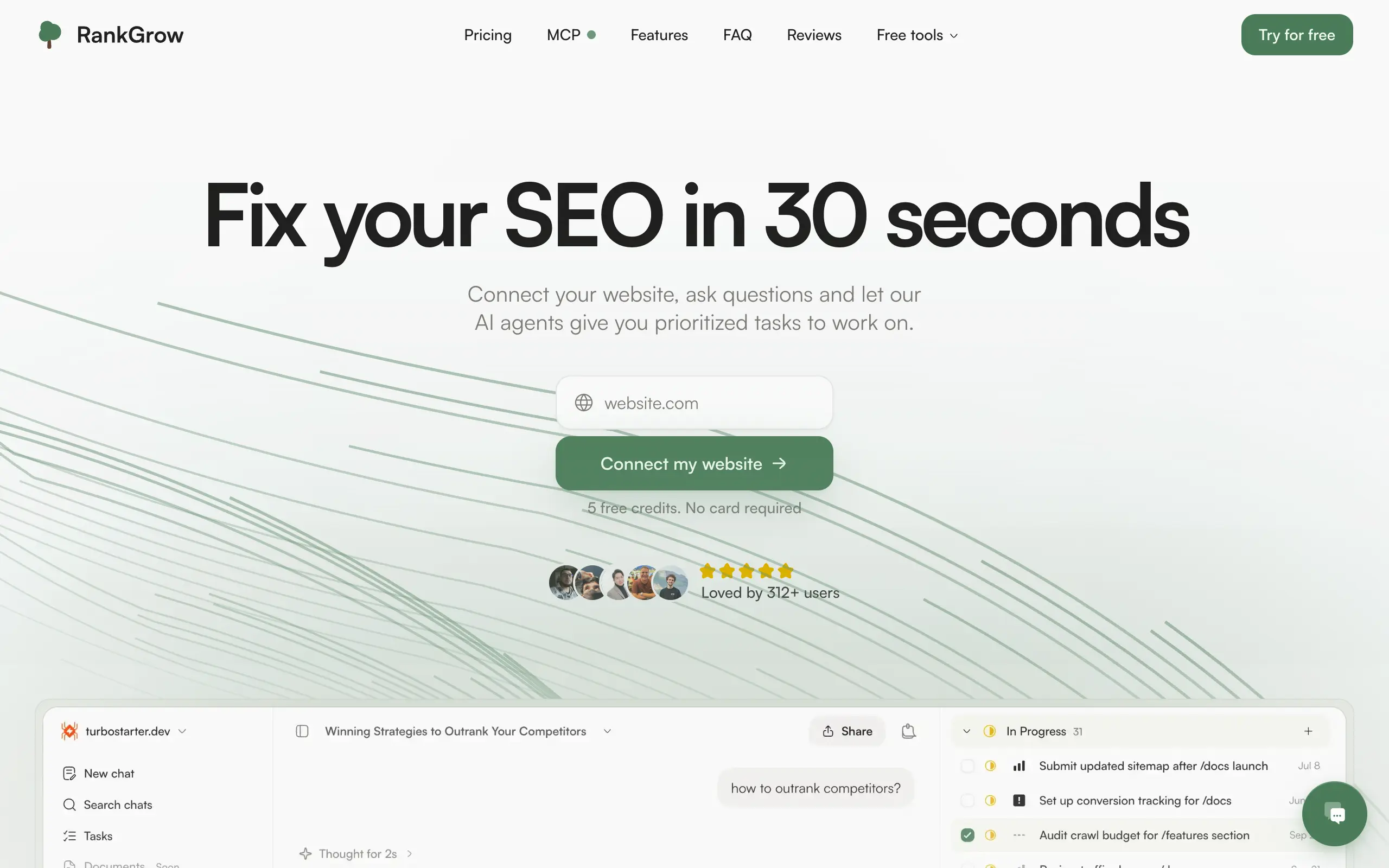
Fix your SEO with AI agents - connect Search Console, get prioritized tasks, and grow organic traffic 📈

Sync your favorite content for distraction-free reading, save time and replace multiple apps. Anytime, anywhere 🔄

Get clean, structured data from 21 platforms like TikTok, Instagram, and YouTube with a single request 📊
Monitor any Telegram channel in real time - track posts, edits, deletions, and growth with AI recaps 📡
AI website builder - describe your business, pick a niche template, edit by chatting, and publish instantly ✨
Find verified home service professionals, compare quotes, and pay securely through escrow - built for Brazilians across the US 🏠
Fix your SEO with AI agents - connect Search Console, get prioritized tasks, and grow organic traffic 📈
Sync your favorite content for distraction-free reading, save time and replace multiple apps. Anytime, anywhere 🔄
Get clean, structured data from 21 platforms like TikTok, Instagram, and YouTube with a single request 📊

Personalized AI apps that automate research, data extraction, and content creation without code 🤖

Enjoy a magical live video chat or receive a unique AI-generated video greeting from Santa Claus 🎅

Scalable blog for food journalist, focused on performance and user experience 🌭

Personal blog and portfolio of Bart Zagrodzki, where he shares his knowledge and work 💼

Ship your startup everywhere. In minutes.

Convert HTML to Markdown with ease, directly in your browser 📄
Personalized AI apps that automate research, data extraction, and content creation without code 🤖
Enjoy a magical live video chat or receive a unique AI-generated video greeting from Santa Claus 🎅
Scalable blog for food journalist, focused on performance and user experience 🌭
Personal blog and portfolio of Bart Zagrodzki, where he shares his knowledge and work 💼
Ship your startup everywhere. In minutes.
Convert HTML to Markdown with ease, directly in your browser 📄

Chat with 50+ AI models, including ChatGPT and Claude, in one place - switch models anytime without losing context 🤖

Supercharge your Claude Code with 6x effective context window and specialized AI agents 🤖

AI-powered emoji picker with smart, context-aware suggestions 🤖

Autonomous company launcher - AI agents work 24/7, escalate what matters, and you stay in control 🤖

Practice storytelling daily with instant feedback to sound clearer, more engaging, and confident 🎤
Chat with 50+ AI models, including ChatGPT and Claude, in one place - switch models anytime without losing context 🤖
Supercharge your Claude Code with 6x effective context window and specialized AI agents 🤖
AI-powered emoji picker with smart, context-aware suggestions 🤖
Autonomous company launcher - AI agents work 24/7, escalate what matters, and you stay in control 🤖
Practice storytelling daily with instant feedback to sound clearer, more engaging, and confident 🎤

Connect with like-minded people
Join our community to get feedback, support, and grow together with 1,000+ builders on board, let's ship it!
Join usShip your startup everywhere. In minutes.
Don't burn tokens on setup and start building features on day one.