Skillpath Notes
Gives corporate trainers a tool that converts recorded workshop sessions into practice exercises and quizzes. Facilitators cut post-session prep from hours to about twenty minutes.
Skillpath Notes is an AI tool that turns recorded workshop sessions into practice exercises, quizzes and follow-up material for corporate trainers. The potential in 2026 comes from a simple mismatch: transcription and summarization are now cheap and good, yet independent facilitators still spend hours after each session building the reinforcement material that makes training stick. If you want to build an AI workshop follow-up tool for corporate trainers, this is a narrow, buildable wedge with a clear buyer.
Key takeaways
- Target customer: independent corporate trainers and small training consultancies who run live workshops (in person or on video) and send follow-up material afterward.
- Pricing angle: a monthly subscription per facilitator, with a per-session credit option for occasional users. Assume $29 to $49 per month as a starting hypothesis.
- Biggest risk: trainers may like the output but not change their behavior, because follow-up work is often skipped rather than slow.
- Time to MVP: about 3 to 4 weeks for one developer using a starter kit, since the core loop is upload, transcribe, generate, edit, export.
What problem does Skillpath Notes solve for corporate trainers?
The problem is the unpaid hour after the workshop. A facilitator finishes a half-day session, then has to rewatch or skim the recording, pick the key concepts, write exercises, draft a quiz and format everything for the client. That work is rarely billed, so it either gets rushed or skipped.
Who feels it most
The ideal customer is an independent facilitator or a two-to-ten person training boutique that sells workshops on topics like sales skills, management basics, project delivery or compliance awareness. They run several sessions a month, often customized per client, which means they cannot reuse a single polished course.
Large learning and development teams have course authoring tools and instructional designers. Solo trainers have neither. They are the gap.
The current workaround and why it fails
Most trainers today use a mix of tools:
- Record the session in Zoom or Teams, then skim the transcript manually.
- Paste text into a general chatbot and ask for quiz questions.
- Build exercises by hand in slides or documents.
- Skip the follow-up and hope the client does not notice.
The chatbot route is the closest competitor, and it fails in predictable ways. The output is generic, not tied to what was actually said in the room. It ignores the facilitator's structure, the client's context and the learning objectives. Every session requires a fresh prompt, manual cleanup and reformatting, so the saving is smaller than it looks.
Is there a market for AI training content tools in 2026?
Yes, but the opening is specific. Plenty of tools generate courses from documents or topics. Far fewer start from what actually happened in a live session and produce reinforcement material anchored to it.
The gap in existing solutions
The market splits into a few categories:
- Meeting recorders and note takers such as Otter.ai and Fireflies summarize conversations, but their output is meeting notes, not pedagogy.
- Course authoring platforms such as Articulate and similar suites are built for instructional designers creating structured courses from scratch.
- Quiz and engagement tools such as Kahoot and Mentimeter run live interactions but do not mine a recording afterward.
- General AI assistants can do anything, which means they do nothing in a repeatable, formatted way.
Nobody owns the step between a recorded live session and a client-ready practice pack.
Why now
Three shifts make this feasible in 2026. Speech-to-text is accurate enough for most business English with light editing. Language models can follow a structured rubric (objectives, difficulty, question types) reliably when given good context. And more training is delivered over video, which means recordings already exist by default.
There is also a buyer-side trend worth testing: clients increasingly ask trainers for proof of learning, not just attendance. A quiz and practice pack is a cheap way to provide it.
What should the Skillpath Notes MVP include?
Build the shortest path from recording to a pack the trainer would actually send. The aha moment is opening a generated exercise set about 20 minutes after upload and realizing it references the examples their own participants gave.
Recording to transcript
Upload audio or video, or paste a transcript, and get a speaker-labeled text the trainer can quickly correct.
Objective-aware generation
The trainer states two or three learning objectives, and exercises and quizzes are generated against them, not just the transcript.
Edit and approve
A simple editor to reword, delete, reorder and regenerate individual questions so the trainer stays in control.
Client-ready export
Export to a formatted document, PDF or shareable link so the pack can go to participants without extra formatting.
What to cut from version one
Cut anything that makes this a learning management system. That means no learner accounts, no progress tracking, no gradebooks, no SCORM export and no live video integrations. Manual upload is fine. Participants receive a link or file, and that is it.
Also resist adding branded templates, multi-language support and analytics before ten trainers have used the core loop. Each is a reasonable request, and each can wait.
How is Skillpath Notes different from ChatGPT and course builders?
The unique selling proposition is: turn what your participants actually said and struggled with into practice material, in 20 minutes, without prompt engineering. It is a workflow product, not a model wrapper. The value is in the structure, the objective alignment and the export.
| Option | Anchored to the live session | Objective-aligned output | Client-ready export | Low setup effort |
|---|---|---|---|---|
| Skillpath Notes | ✅ | ✅ | ✅ | ✅ |
| General AI chatbot | Manual paste | Depends on prompt | ❌ | ✅ |
| Meeting note takers | ✅ | ❌ | ❌ | ✅ |
| Course authoring suites | ❌ | ✅ | ✅ | ❌ |
| Doing it by hand | ✅ | ✅ | Manual | ❌ |
The honest weakness: a skilled trainer with a good prompt library can get 70 percent of this from a chatbot. Your product has to win on repeatability, formatting and the saved hour, not on raw model quality.
How would Skillpath Notes make money?
Charge trainers directly, because they feel the pain and control their own tools budget. Start simple and let usage data guide changes.
Pricing options
- Monthly subscription per facilitator: for example $39 per month with a cap on processed hours. This is predictable and fits solo trainers who run regular workshops.
- Credit packs per session: useful for occasional users who balk at a subscription. The margin is usually higher per session, but retention is weaker.
- Team plan for boutiques: shared workspace, shared templates and a few seats at a higher price. Add this only when two or three small firms ask for it.
Run the math as an assumption: if you charge $39 per month and convert 5 percent of trial users, you need roughly 500 trials to land 25 paying customers, which is under $1,000 in monthly revenue. That is a validation milestone, not a business, so plan for a channel that can reach thousands of trainers.
Watch your cost per processed hour. Transcription and model calls are real costs, and a plan with unlimited uploads can turn unprofitable fast.
The first growth channel
The channel most likely to work first is direct outreach and community presence among independent trainers: LinkedIn conversations, facilitator communities and training association groups. Trainers trust peers, and a free sample pack generated from their own recording is a strong hook. Content like "how to write practice exercises from a session recording" supports this later, but outreach comes first.
How do I validate Skillpath Notes before building?
Spend one to two weeks proving that trainers will hand over a real recording and pay for the result. Interest in the idea is cheap, so test behavior.
Interview ten facilitators
Find independent trainers and ask them to walk through their last workshop follow-up, step by step. Note how long it took, what they skipped and what they paid for.
Run a manual concierge test
Ask three trainers for a recording or transcript and produce the exercise pack yourself using a chatbot and your own editing. Time it and ask whether they would send it to the client.
Launch a one-promise landing page
State the promise: workshop recording in, practice pack out in 20 minutes. Collect emails and ask one qualifying question, such as how many workshops they run per month.
Ask for a pre-sale
Offer a discounted founding plan to the people who liked the concierge pack. Even five committed payers or paid pilots is a stronger signal than a hundred signups.
Decide with a clear threshold
Before you start, write the bar: for example, three paid commitments and at least half of concierge users saying they would send the pack unchanged. If you miss it, narrow the niche or the format.
What tech stack should I use to build Skillpath Notes?
Use a conventional web stack and keep the AI pipeline simple and observable. The product is a queue of long-running jobs with an editor on top, so reliability and cost control matter more than novelty.
Recommended architecture
- Frontend and API: a React based web app with Tailwind CSS for the editor and dashboard.
- File storage: object storage for recordings, with short retention by default to reduce privacy exposure.
- Processing pipeline: upload, transcription, chunking by topic, generation against objectives, then validation of output format.
- Database: sessions, transcripts, objectives, generated items and edit history.
- Background jobs: transcription and generation can take minutes, so they must not run inside a request.
Most of that is undifferentiated work. TurboStarter gives you a monorepo with web and mobile apps, authentication, billing, database, emails, file storage, AI integration, background tasks, an admin panel and monitoring already wired together. That lets you spend your first weeks on the generation quality and the editor, which is where Skillpath Notes either wins or loses.
The pieces you will touch first are authentication for trainer accounts, billing for subscriptions and credit packs, storage for recordings and background tasks for the transcription and generation jobs.
Choosing the AI approach
Use one hosted model for both transcript cleanup and exercise generation. It is the fastest to build and gives strong quality, but cost per session is highest and you depend on one vendor. Pick this for the MVP.
Use a dedicated speech-to-text service, a cheaper model for chunking and tagging, and a stronger model only for final question writing. It lowers cost per session and gives you control, at the price of more moving parts. Move here once margins matter.
Run open models on your own infrastructure for privacy-sensitive clients. It can help with enterprise objections, but operations and quality tuning will consume time you do not have in the first months. Consider it only when buyers explicitly require it.
A minimal data model
Keep generated items structured so the editor and exports stay simple.
type GeneratedItem = {
  id: string;
  sessionId: string;
  objectiveId: string;
  kind: "exercise" | "multiple_choice" | "open_question";
  prompt: string;
  answerKey?: string;
  sourceQuote?: string; // transcript excerpt it was based on
  status: "draft" | "approved" | "rejected";
};
The sourceQuote field matters. It lets the trainer verify where a question came from, which is your main defense against hallucinated content.
What could make Skillpath Notes fail?
Four risks deserve real attention, and the first is the one that can end the business.
Biggest risk: trainers may not change their follow-up habits
Many facilitators skip follow-up because clients do not ask for it, not because it takes too long. If saving time does not translate into sending more packs, retention will be weak. Test this in the concierge phase by checking whether trainers actually send the packs to clients, and consider positioning the tool as a way to sell a paid follow-up add-on.
- Generic or inaccurate output: if questions feel generic or contain errors, trust drops quickly. Mitigate with objective inputs, source quotes, and a fast editing flow instead of promising full automation.
- Privacy and consent: recordings contain participant voices and sometimes confidential client information. Require trainers to confirm consent, offer deletion controls, keep retention short and be clear about which vendors process the data.
- Margin pressure: long recordings can be expensive to process. Cap hours per plan, measure cost per session from day one and compress or chunk inputs before generation.
What is the 30-day launch plan for Skillpath Notes?
Days 1 to 7: validate
Run interviews and three concierge packs. Write the go or no-go threshold before you start.
Days 8 to 12: set up the foundation
Start from a starter kit such as TurboStarter so authentication, billing, storage and jobs are ready. Define the data model and the generation prompts around objectives.
Days 13 to 21: build the core loop
Ship upload, transcript, objective input, generation, editor and export. Skip everything else, and run each concierge participant's recording through it.
Days 22 to 26: private beta
Invite your five to ten best interview contacts. Watch them use it and track time to first exported pack and how many items they edit.
Days 27 to 30: open paid access
Turn on billing, publish the landing page with a real sample pack and message your waitlist. Ask beta users for referrals to other facilitators.
If you can get a few trainers to send a real pack to a real client within 30 days, you have the start of a business. Begin with the validation interviews this week, and build only what the first ten users prove they need.
Frequently asked questions
Interview independent facilitators about their last follow-up, then produce a pack manually from one of their recordings. If they send it to a client or agree to pay for the next one, the problem is real. Signups alone are a weak signal.
Start with a hypothesis of $29 to $49 per month per facilitator and test it in pre-sales. Anchor the price against the billable hour the trainer saves. Adjust once you know your cost per processed session.
There is no single direct competitor. Meeting note takers like Otter.ai, course authoring suites like Articulate, quiz tools like Kahoot and general AI chatbots each cover part of the workflow. Your real competitor is the trainer's current habit of doing it by hand or skipping it.
A React web app, a relational database, object storage and a background job system for transcription and generation. Start with one hosted model and split the pipeline later for cost. A starter kit like TurboStarter covers the surrounding infrastructure.
One developer can typically ship a working core loop in 3 to 4 weeks when authentication, billing and storage are already in place. Your main costs afterward are transcription and model usage, which scale with the hours of recordings processed.
In most cases, yes. The trainer is usually responsible for informing participants and for client agreements, so the product should make consent confirmation explicit and offer easy deletion. Check local rules for the markets you sell into.
More 🤖 AI Startup SaaS ideas
Discover more innovative ai startup SaaS ideas that are trending in 2026. Each idea is AI-generated with market validation and growth potential to help you find your next profitable venture faster than competitors.
Your competitors are building with TurboStarter
Below are some of the SaaS ideas that have been generated and built with our starter kit.

Monitor any Telegram channel in real time - track posts, edits, deletions, and growth with AI recaps 📡

AI website builder - describe your business, pick a niche template, edit by chatting, and publish instantly ✨

Find verified home service professionals, compare quotes, and pay securely through escrow - built for Brazilians across the US 🏠
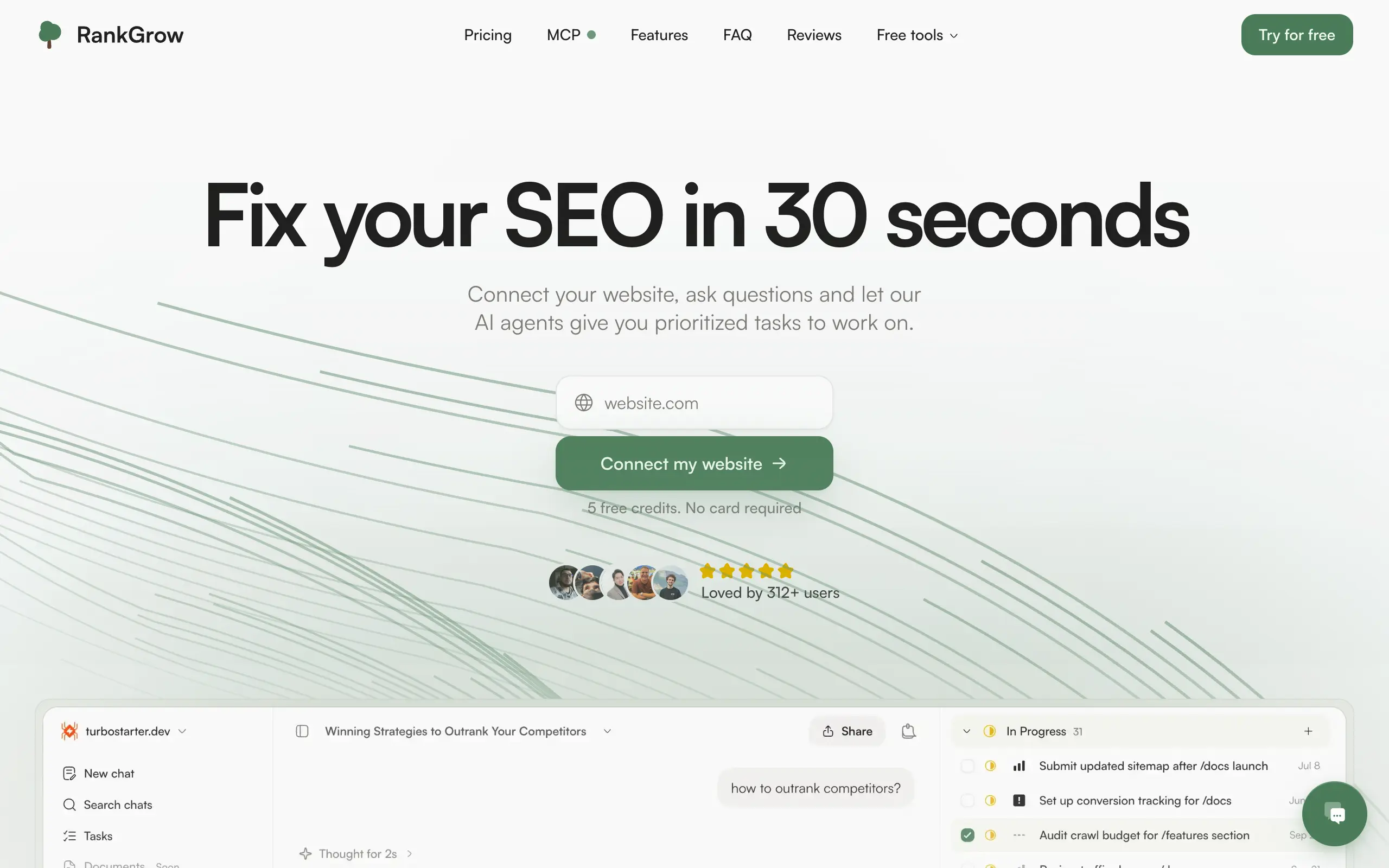
Fix your SEO with AI agents - connect Search Console, get prioritized tasks, and grow organic traffic 📈

Sync your favorite content for distraction-free reading, save time and replace multiple apps. Anytime, anywhere 🔄

Get clean, structured data from 21 platforms like TikTok, Instagram, and YouTube with a single request 📊
Monitor any Telegram channel in real time - track posts, edits, deletions, and growth with AI recaps 📡
AI website builder - describe your business, pick a niche template, edit by chatting, and publish instantly ✨
Find verified home service professionals, compare quotes, and pay securely through escrow - built for Brazilians across the US 🏠
Fix your SEO with AI agents - connect Search Console, get prioritized tasks, and grow organic traffic 📈
Sync your favorite content for distraction-free reading, save time and replace multiple apps. Anytime, anywhere 🔄
Get clean, structured data from 21 platforms like TikTok, Instagram, and YouTube with a single request 📊

Personalized AI apps that automate research, data extraction, and content creation without code 🤖

Enjoy a magical live video chat or receive a unique AI-generated video greeting from Santa Claus 🎅

Scalable blog for food journalist, focused on performance and user experience 🌭

Personal blog and portfolio of Bart Zagrodzki, where he shares his knowledge and work 💼

Ship your startup everywhere. In minutes.

Convert HTML to Markdown with ease, directly in your browser 📄
Personalized AI apps that automate research, data extraction, and content creation without code 🤖
Enjoy a magical live video chat or receive a unique AI-generated video greeting from Santa Claus 🎅
Scalable blog for food journalist, focused on performance and user experience 🌭
Personal blog and portfolio of Bart Zagrodzki, where he shares his knowledge and work 💼
Ship your startup everywhere. In minutes.
Convert HTML to Markdown with ease, directly in your browser 📄

Chat with 50+ AI models, including ChatGPT and Claude, in one place - switch models anytime without losing context 🤖

Supercharge your Claude Code with 6x effective context window and specialized AI agents 🤖

AI-powered emoji picker with smart, context-aware suggestions 🤖

Autonomous company launcher - AI agents work 24/7, escalate what matters, and you stay in control 🤖

Practice storytelling daily with instant feedback to sound clearer, more engaging, and confident 🎤
Chat with 50+ AI models, including ChatGPT and Claude, in one place - switch models anytime without losing context 🤖
Supercharge your Claude Code with 6x effective context window and specialized AI agents 🤖
AI-powered emoji picker with smart, context-aware suggestions 🤖
Autonomous company launcher - AI agents work 24/7, escalate what matters, and you stay in control 🤖
Practice storytelling daily with instant feedback to sound clearer, more engaging, and confident 🎤

Connect with like-minded people
Join our community to get feedback, support, and grow together with 1,000+ builders on board, let's ship it!
Join usShip your startup everywhere. In minutes.
Don't burn tokens on setup and start building features on day one.