Askholder
Lets microcap teams answer retail shareholder emails with compliant, counsel-approved drafts in minutes. Replaces ad hoc replies that risk selective disclosure.
Askholder is a B2B SaaS that helps microcap companies answer retail shareholder emails with compliant, counsel-approved drafts in minutes, instead of improvised replies that risk selective disclosure. It has potential in 2026 because retail investors can reach tiny public companies instantly, while those companies rarely have a dedicated investor relations (IR) team or a clear process for responding safely. If you are exploring b2b application SaaS ideas for 2026, this is a narrow, high-stakes workflow where software can replace a nervous CEO typing into Gmail.
Key takeaways
- Target customer: CEOs, CFOs and part-time IR or legal contacts at US-listed microcap companies who receive shareholder emails but have no IR department.
- Pricing angle: Flat monthly subscription per company, framed against the cost of outside counsel hours, with an optional higher tier for multi-reviewer approval.
- Biggest risk: Trust. A tool that touches disclosure compliance must never look like it gives legal advice or makes a bad draft easy to send.
- Time to MVP: Roughly 4 to 6 weeks for a single-founder build on a starter kit, assuming you scope out integrations.
What problem does Askholder solve?
Microcap executives get shareholder emails they cannot safely answer. A retail holder asks "when is the uplisting?" or "is the contract you hinted at still on track?", and any reply that shares something not yet public can become selective disclosure. The executive knows this, so they either stall, ignore the email, or write something vague and hope for the best.
None of these options is good. Silence breeds suspicion in the small, vocal retail communities that follow microcaps. Improvised replies create legal exposure. Sending every email to outside counsel is slow and expensive, so it happens only for the scary ones.
Who is Askholder for?
The ideal customer profile is specific: a US-listed company with a small team, no full-time IR person, and an active retail shareholder base. Typical signals include a CEO who also handles investor calls, a shareholder email address printed in press releases, and a social media presence that attracts questions.
The buyer is usually the CFO, general counsel (if any) or the CEO. The daily user is whoever opens the inbox, often a chief of staff or office manager. Your product has to work for both: the buyer cares about risk, the user cares about speed.
What do they do today, and why does it fail?
The current workaround is a mix of habits:
- The CEO replies personally from memory, with no review.
- A forwarded thread goes to outside counsel, who bills by the hour and answers days later.
- A shared doc of "approved answers" gets created once and goes stale after the next filing.
- Emails sit unanswered until the volume becomes a problem.
Each fails for the same reason: there is no source of truth for what is already public and no repeatable approval step. Speed and safety are traded off by hand, every time.
Why is now a good time for a shareholder email tool for microcaps?
The gap is a workflow tool for companies too small for enterprise IR platforms. Established IR vendors such as Q4 and Notified serve larger issuers with websites, webcasting and analytics. Generic helpdesks such as Zendesk or Front handle email volume but know nothing about disclosure rules. General AI assistants can draft text, but they have no memory of what the company has filed and no approval trail.
Several trends make this timely in 2026:
- Retail investors are organized and vocal. Social platforms and forums let small holders coordinate questions and amplify unanswered ones.
- AI drafting is cheap and good enough. The hard part is no longer writing a polite reply; it is grounding the reply in public information and gating it behind review.
- Counsel wants fewer ad hoc emails. Lawyers generally prefer a controlled process over executives improvising, so they can be allies in the sale rather than blockers.
The honest caveat: this is a small market by headcount. You are betting on a high-value niche, not a mass-market product.
What should the Askholder MVP include?
Build the shortest path from "email arrives" to "approved reply sent." Everything else waits.
Public-record knowledge base
Upload filings, press releases and approved FAQs so every draft is grounded in what is already public.
Draft with citations
AI drafts a reply that cites the exact public source for each claim and flags questions it cannot answer safely.
Counsel approval workflow
Route drafts to a reviewer who can edit, approve or reject, with a clear status before anything is sent.
Audit trail
Log the original email, draft, edits, approver and final reply so the company can show its process later.
What is the aha moment?
The aha moment is the first email where the tool says "this question touches non-public information, here is a safe holding reply" and the user realizes they almost answered it themselves. Aim to get a new customer there within the first session, using a real email from their inbox.
What should you cut from version one?
- Inbox integrations beyond simple forwarding or paste-in.
- Social media monitoring.
- Analytics dashboards and shareholder CRM features.
- Automatic sending. Keep a human in the loop, always.
How is Askholder different from existing options?
The unique selling proposition: every reply is grounded in public filings and gated by counsel approval, built for companies with no IR team. It is not an IR suite and not a generic AI writer.
| Option | Grounded in public filings | Approval workflow | Audit trail | Fits no-IR-team budget |
|---|---|---|---|---|
| Askholder | ✅ | ✅ | ✅ | ✅ |
| Spreadsheet of approved answers | Manual | ❌ | ❌ | ✅ |
| Enterprise IR platforms | Partly | Varies | Varies | ❌ |
| Generic AI assistant | ❌ | ❌ | ❌ | ✅ |
| Outside counsel only | ✅ | ✅ | Manual | ❌ |
Your real competitor is inertia: the habit of "I'll just reply myself." Positioning should make the safe path faster than the risky one.
How would Askholder make money?
Price against risk and time saved, not against software seats.
- Flat company plan: For example $149 to $299 per month per company, with a limited number of reviewers. Simple to buy, easy to expense.
- Tiered by volume and reviewers: A higher tier for more reviewers, custom approval chains and longer audit retention. Suits companies with both a CFO and outside counsel in the loop.
- Annual plan with onboarding: A discounted yearly price that includes setting up the knowledge base. Useful because the first setup is where customers get stuck.
As an assumption to test: if outside counsel charges several hundred dollars an hour and a company sends even a handful of emails through review each month, a flat plan can look cheap. Measure this in interviews rather than trusting it.
The growth channel most likely to work first is direct outreach to CFOs and securities lawyers, plus partnerships with small-cap law firms and fractional CFOs who can recommend you to several clients. Public company lists make targeting straightforward. Content works later, once you have compliance-minded credibility.
How do you validate Askholder before building?
Spend one to two weeks proving that buyers will talk about this problem and pay to fix it.
Interview ten microcap executives
Ask to see how they handled their last three shareholder emails and who reviewed them. Listen for fear, delay and cost, not feature requests.
Talk to three securities lawyers
Ask what they would need to see before they let a client use a drafting tool. Their objections become your product requirements.
Run a manual concierge test
Take two real emails and produce cited, reviewable drafts by hand. If the executive says "I would send this," you have found the aha moment.
Launch a landing page and waitlist
Promise one outcome: safe, approved replies to shareholder emails in minutes. Send targeted outreach and track replies, not page views.
Ask for a pre-sale or paid pilot
Offer a discounted founding-customer plan. Even two or three signed pilots tell you more than fifty waitlist emails.
What tech stack should you use to build Askholder?
Choose boring, reliable tools and spend your effort on the grounding and approval logic. The core architecture is a web app with a document store, a retrieval layer over public filings, an LLM drafting step, and a review workflow with an audit log.
TurboStarter removes the undifferentiated work: a ready-made monorepo for web and mobile, authentication, organizations and teams, billing, database, emails, file storage, AI, background tasks and an admin panel. That matters here because the product needs multi-user companies and role-based review from day one. Relevant docs: organizations for company workspaces and reviewer roles, AI for the drafting pipeline, storage for filings and attachments, and background tasks for ingesting and indexing documents.
Which AI approach fits?
The fastest route. Use a major provider's API with retrieval over the company's documents. Check the provider's data retention terms, because customers will ask. Best for the MVP.
Gives more control over where data lives, which some cautious customers may request. It adds infrastructure work and usually lower draft quality. Consider it only if early buyers make it a hard requirement.
What should the data model look like?
Keep drafts, approvals and sources linked so the audit trail is a by-product, not an add-on.
type Draft = {
  id: string;
  companyId: string;
  inboundEmail: string;
  body: string;
  citations: { documentId: string; excerpt: string }[];
  status: "needs_review" | "approved" | "rejected" | "sent";
  reviewedBy?: string;
  reviewedAt?: Date;
};
Add an append-only event table for every edit and status change. It is cheap to build now and painful to retrofit.
What are the biggest risks, and how do you reduce them?
Biggest risk: a wrong draft that looks approved
If a draft discloses non-public information or misstates a fact and a user sends it because the tool seemed authoritative, the customer bears the legal consequences and you lose their trust permanently. Mitigate by requiring a citation for every factual claim, refusing to draft when no public source exists, keeping a human approver mandatory, and stating plainly that the product is a drafting and workflow tool, not legal advice.
Other reasons this could fail:
- Lawyers block adoption. Involve securities counsel in design early, and give them a review role instead of treating them as an obstacle.
- The market is too small or slow. Sales cycles with cautious executives can drag. Keep pricing simple and use pilots to shorten decisions.
- Customers will not trust AI with disclosure. Lead with the approval workflow and audit trail, and position drafting as the assistant, not the decision maker.
What does a 30-day launch plan look like?
- Days 1 to 5: Interview executives and lawyers, and collect real (redacted) shareholder emails.
- Days 6 to 10: Run the manual concierge test and refine the safe-reply rules.
- Days 8 to 14: Set up the project on TurboStarter with auth, organizations and billing, so you start on product logic.
- Days 12 to 21: Build document ingestion, cited drafting and the approval step.
- Days 22 to 25: Add the audit log and email notifications for reviewers.
- Days 26 to 30: Onboard two or three pilot companies, load their filings yourself, and watch them handle real emails.
Pick one customer segment, get one counsel to vouch for the workflow, and ship the smallest version that makes answering shareholder emails safe and fast. That is the whole bet behind Askholder.
FAQ
Interview executives about their last real shareholder emails and who approved the replies. Then run a manual concierge test with cited drafts and ask for a paid pilot. Signed pilots are stronger evidence than waitlist signups.
Start with a flat monthly company plan and test it against what customers currently spend on counsel time. A range like $149 to $299 per month is a reasonable hypothesis to test, not a proven number. Adjust after pilot feedback.
Enterprise IR platforms such as Q4 and Notified serve larger issuers, and general helpdesks like Zendesk handle email without disclosure logic. Generic AI assistants can draft but lack grounding and approvals. The most common competitor is simply the executive replying alone.
A web app with authentication, organizations, a database, file storage, background jobs for document ingestion, and an LLM with retrieval. A starter kit like TurboStarter covers most of the non-differentiating pieces.
A focused solo founder can usually reach an MVP in four to six weeks if integrations are excluded. Main costs are LLM usage, hosting and legal review of your terms and disclaimers, which you should budget for early.
It should not be. Position it as a drafting and workflow tool that requires qualified human review, and have a securities lawyer review your terms and product language before launch.
More 🏢 B2B Application SaaS ideas
Discover more innovative b2b application SaaS ideas that are trending in 2026. Each idea is AI-generated with market validation and growth potential to help you find your next profitable venture faster than competitors.
Your competitors are building with TurboStarter
Below are some of the SaaS ideas that have been generated and built with our starter kit.

Monitor any Telegram channel in real time - track posts, edits, deletions, and growth with AI recaps 📡

AI website builder - describe your business, pick a niche template, edit by chatting, and publish instantly ✨

Find verified home service professionals, compare quotes, and pay securely through escrow - built for Brazilians across the US 🏠
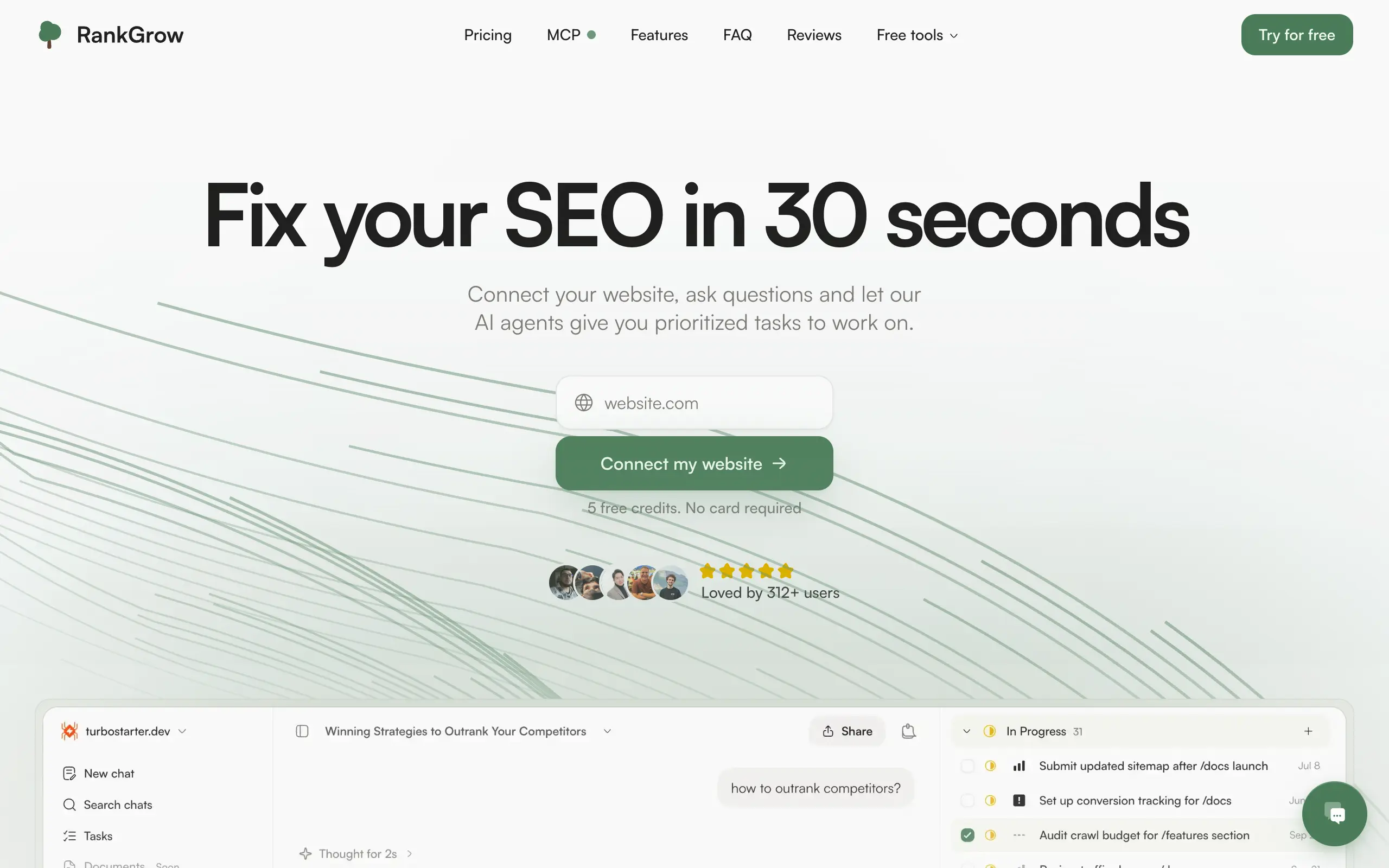
Fix your SEO with AI agents - connect Search Console, get prioritized tasks, and grow organic traffic 📈

Sync your favorite content for distraction-free reading, save time and replace multiple apps. Anytime, anywhere 🔄

Get clean, structured data from 21 platforms like TikTok, Instagram, and YouTube with a single request 📊
Monitor any Telegram channel in real time - track posts, edits, deletions, and growth with AI recaps 📡
AI website builder - describe your business, pick a niche template, edit by chatting, and publish instantly ✨
Find verified home service professionals, compare quotes, and pay securely through escrow - built for Brazilians across the US 🏠
Fix your SEO with AI agents - connect Search Console, get prioritized tasks, and grow organic traffic 📈
Sync your favorite content for distraction-free reading, save time and replace multiple apps. Anytime, anywhere 🔄
Get clean, structured data from 21 platforms like TikTok, Instagram, and YouTube with a single request 📊

Personalized AI apps that automate research, data extraction, and content creation without code 🤖

Enjoy a magical live video chat or receive a unique AI-generated video greeting from Santa Claus 🎅

Scalable blog for food journalist, focused on performance and user experience 🌭

Personal blog and portfolio of Bart Zagrodzki, where he shares his knowledge and work 💼

Ship your startup everywhere. In minutes.

Convert HTML to Markdown with ease, directly in your browser 📄
Personalized AI apps that automate research, data extraction, and content creation without code 🤖
Enjoy a magical live video chat or receive a unique AI-generated video greeting from Santa Claus 🎅
Scalable blog for food journalist, focused on performance and user experience 🌭
Personal blog and portfolio of Bart Zagrodzki, where he shares his knowledge and work 💼
Ship your startup everywhere. In minutes.
Convert HTML to Markdown with ease, directly in your browser 📄

Chat with 50+ AI models, including ChatGPT and Claude, in one place - switch models anytime without losing context 🤖

Supercharge your Claude Code with 6x effective context window and specialized AI agents 🤖

AI-powered emoji picker with smart, context-aware suggestions 🤖

Autonomous company launcher - AI agents work 24/7, escalate what matters, and you stay in control 🤖

Practice storytelling daily with instant feedback to sound clearer, more engaging, and confident 🎤
Chat with 50+ AI models, including ChatGPT and Claude, in one place - switch models anytime without losing context 🤖
Supercharge your Claude Code with 6x effective context window and specialized AI agents 🤖
AI-powered emoji picker with smart, context-aware suggestions 🤖
Autonomous company launcher - AI agents work 24/7, escalate what matters, and you stay in control 🤖
Practice storytelling daily with instant feedback to sound clearer, more engaging, and confident 🎤

Connect with like-minded people
Join our community to get feedback, support, and grow together with 1,000+ builders on board, let's ship it!
Join usShip your startup everywhere. In minutes.
Don't burn tokens on setup and start building features on day one.