Clinkrate
Gives dental clinics a simple way to flag unpaid insurance claims before they expire. Office managers recover revenue that otherwise gets written off.
Clinkrate is a claims follow-up tool for dental clinics: it tracks every submitted insurance claim, flags the ones that are stalling, and tells the office manager which to chase today before the payer's filing deadline passes. It has potential in 2026 because most small practices still track unpaid claims in practice-management reports and spreadsheets, and a narrow tool that prevents write-offs is a much easier sale than a broad platform. This is a dental insurance claims recovery software idea with an ROI that can be explained in one sentence: money that was owed, and was nearly lost.
Key takeaways
- Target customer: office managers and billing coordinators at independent dental practices and small groups (1-10 locations).
- Pricing angle: flat monthly fee per location, with an optional tier based on recovered revenue. Assume $99-$249 per location per month and test from there.
- Biggest risk: getting reliable claim data out of practice-management systems without a painful integration for each one.
- Time to MVP: about 4-6 weeks using CSV or report import first, with integrations coming after paying customers exist.
What problem does a dental claims recovery tool solve?
Dental clinics lose money on claims that are submitted, never paid, and never followed up. Each payer has a timely filing or appeal window, and once it closes the revenue is written off. The work was done, the patient was treated, and the clinic simply never collected.
The cause is usually not negligence. It is a workflow with no owner and no alarm.
Who is the ideal customer?
The sharpest starting profile is an office manager or billing coordinator at an independent practice with 2-6 providers. They submit claims daily, juggle front desk duties, and run an aging report when they find time. They are not a dedicated revenue cycle team.
Avoid starting with large dental service organizations. They have billing staff, internal tooling and procurement cycles that will slow you down for months.
What do they do today, and why does it fail?
The typical workarounds are:
- Aging reports exported from the practice-management system, reviewed weekly or monthly.
- Spreadsheets with manually tracked claim numbers and follow-up dates.
- Sticky notes and memory, which work until someone goes on leave.
- Outsourced billing, which costs a percentage of collections and still needs oversight.
Aging reports tell you what is old, not what is about to become unrecoverable. They rarely account for payer-specific deadlines, missing attachments, or whether someone already called about the claim. A report is a snapshot. The problem is a deadline.
Why is the market for dental claims software open in 2026?
The gap is between heavy revenue cycle platforms and the bare reports inside practice-management software. Established players such as Dentrix, Eaglesoft and Open Dental own the practice record. Clearinghouses and large revenue cycle vendors handle claim submission and enterprise billing. Very few tools focus on one narrow job for a small office: never let a claim expire unnoticed.
Why now?
Several shifts make a small, focused tool more viable than it was a few years ago:
- Staffing pressure: many practices struggle to hire and keep experienced billing staff, so the person doing the follow-up is often stretched thin or new.
- Cloud adoption: more practice-management systems offer cloud hosting, reports and APIs, which lowers the cost of getting data out.
- AI-assisted work: language models can read payer explanation-of-benefits documents and draft appeal or status-check scripts, which was impractical to build cheaply before.
- Margin awareness: rising costs make practice owners pay more attention to leakage than to new patient acquisition alone.
None of this guarantees demand. It means a two-person team can now build something that used to require a large integration department.
What should the first version include?
Build the smallest product that delivers a daily list of claims to act on. Everything else waits.
Claim import
Upload a claims or aging report as CSV, map the columns once, and refresh it daily or weekly without re-mapping.
Deadline engine
Calculate a recovery deadline per claim from payer-specific filing and appeal windows that the clinic can edit.
Today's chase list
A ranked list of claims to follow up on, ordered by dollars at risk and days left.
Follow-up log
Record who was contacted, what the payer said, and the next action, so work survives staff changes.
What should you cut?
Skip claim submission, eligibility checks, patient billing, a payer portal scraper and a full analytics suite. Also skip native mobile apps for the first release. Office managers work at a desk and the web is enough.
What is the aha moment?
It is the first import. The office manager uploads a report and within minutes sees a number like "these 14 claims expire within 30 days and total $X". If that number is meaningful, the customer is sold. Design the entire onboarding to reach it in under 10 minutes.
How is Clinkrate different from spreadsheets and billing platforms?
The positioning is simple: Clinkrate is an alarm for expiring money, not a billing system. It does one job, sits beside the software the clinic already uses, and needs no migration.
| Option | Deadline-aware alerts | Works beside existing software | Follow-up history | Setup effort |
|---|---|---|---|---|
| Clinkrate | ✅ | ✅ | ✅ | Low |
| Spreadsheets | ❌ | ✅ | Manual | Medium |
| Practice-management reports | Partial | ✅ | ❌ | Low |
| Outsourced billing | Depends | ✅ | Depends | Medium, plus a revenue share |
| Enterprise revenue cycle platforms | ✅ | Depends | ✅ | High |
The weak spot in this table is integration. Competitors that sit inside the practice-management system have easier data access. Your advantage must come from clarity and speed of setup.
How would Clinkrate make money?
Charge per location with a flat monthly fee, because office managers can get that approved without a procurement process. The price should be small compared with a single recovered claim.
Pricing options
- Flat per location: for example $149 per month. If a practice recovers even a handful of claims a year, the ROI is easy to explain. This is the best starting model.
- Tiered by claim volume: a lower price for small offices and a higher one for busy ones. Useful once you see real usage patterns.
- Success fee on recovered revenue: aligned with the value, but hard to measure and audit, and it complicates accounting. Treat it as an experiment, not a launch model.
As an assumption, if you charge $149 per month and keep 60 locations, that is about $8,940 in monthly recurring revenue. Whether you can reach that depends on churn and acquisition cost, both of which you need to measure.
Which growth channel works first?
Direct outreach to office managers, supported by dental office manager communities, local dental society events and billing-focused groups. Cold email and LinkedIn to practice managers works when the message is specific: "Which of your claims will expire next month?" Offer a free expiring-claims audit from their own report as the hook.
How do you validate a dental claims tool before building it?
Spend one to two weeks proving that office managers will hand over a report and pay for the result.
Interview eight to ten office managers
Ask how they track unpaid claims, when they last wrote one off, and what that cost. Listen for specifics, not enthusiasm.
Run a manual audit
Ask three practices for an anonymized aging report and send back a spreadsheet of at-risk claims. If they act on it, you have found the aha moment without writing code.
Publish a landing page
Promise one outcome: find expiring claims before they are written off. Collect waitlist emails and a practice-management system name.
Ask for a pre-sale
Offer a discounted founding-customer rate for the first five practices. A paid commitment is stronger evidence than a waitlist.
Check data handling
Confirm what patient information is in the reports and whether you can work with exports that exclude it. This shapes your compliance plan.
What tech stack should you use to build it?
Use a standard web stack with a relational database, a background job runner and a thin AI layer. The product is mostly data import, date logic and notifications, so boring technology is the right call.
TurboStarter removes the undifferentiated setup: it ships with a monorepo for web and mobile, authentication, organizations and teams, billing, database, emails, file storage, AI, background tasks, an admin panel, analytics, internationalization and monitoring. That lets you spend your first weeks on the import mapper and deadline engine instead of login screens and invoices.
Which parts map to TurboStarter?
- Multi-user clinics: each practice is an organization with staff members, handled by organizations.
- Subscriptions: per-location plans through billing.
- Daily recalculation and alerts: scheduled jobs through background tasks.
- Report uploads: CSV storage and parsing flow through storage.
Core data model
A minimal schema keeps the deadline logic explicit and editable:
create table claims (
  id uuid primary key,
  organization_id uuid not null,
  external_claim_id text not null,
  payer text not null,
  service_date date not null,
  submitted_date date not null,
  amount_cents integer not null,
  status text not null default 'open',
  recovery_deadline date not null,
  last_action_at timestamp,
  unique (organization_id, external_claim_id)
);
The unique constraint matters: repeated imports must update existing claims, not duplicate them.
How should you ingest claim data?
Start here. It works with every system that can export a report, ships in days and lets you learn which columns matter. The downside is manual effort for the customer, which you can reduce with saved column mappings.
Build this only after paying customers ask for it, and only for the one or two systems most of them use. It removes the manual upload, but each integration is a maintenance burden and may depend on vendor approval or partner programs.
Where does AI fit?
Use it for secondary tasks: drafting a payer follow-up script, summarizing a denial reason, or extracting fields from a messy PDF. Keep deadlines and dollar totals as deterministic code, never model output. For setup details, see the AI docs.
What could make Clinkrate fail?
Most failure modes are about data access and trust, not features.
Biggest risk: patient data and compliance
Claims data usually contains protected health information. In the United States that brings HIPAA obligations, including business associate agreements, access controls, audit logging and breach procedures. Get qualified legal and security advice before handling real data, and design the MVP to minimize what you store, for example by importing only the fields you need.
Other risks and mitigations
- Integration cost: every practice-management system exports differently. Start with CSV, support one system well, and charge for setup if needed.
- Weak urgency: if a practice rarely loses claims, it will not pay. Qualify prospects with the manual audit before onboarding them.
- Incumbents adding the feature: a practice-management vendor could build deadline alerts. Your defense is focus, speed, and being useful across several systems.
- Wrong deadline rules: payer windows vary by contract. Let clinics edit rules and show the source of each deadline.
What should the first 30 days look like?
Aim for a working import-to-chase-list flow and five design partners by day 30.
- Days 1-5: run interviews and manual audits, and choose the one practice-management export format to support first.
- Days 6-10: set up the project from TurboStarter with auth, organizations and billing, and create the claims schema.
- Days 11-18: build the CSV import, column mapping and deadline engine.
- Days 19-23: ship the chase list, follow-up log and a daily email digest.
- Days 24-27: onboard three to five design partners and watch them use it live.
- Days 28-30: set pricing, turn on billing, and ask each partner to convert.
Start with the audit offer this week. If three practices act on what you find, you have a business worth building.
FAQ
Run a manual audit for two or three practices using their own aging report and see if they act on your findings. Pair it with interviews and a pre-sale ask. Real behavior beats survey answers.
Per-location pricing between roughly $99 and $249 per month is a sensible range to test, assuming the tool surfaces recoverable claims quickly. The right number depends on claim volume and what the practice would otherwise lose. Adjust after your first ten customers.
Practice-management systems with built-in reports, revenue cycle management vendors, outsourced billing companies and plain spreadsheets. Most small practices use a mix of the first and last. Your competition is usually the habit of checking a report occasionally.
A TypeScript web app with Postgres, scheduled background jobs and transactional email covers the MVP. A starter kit such as TurboStarter handles auth, teams, billing and emails so you can focus on import and deadline logic.
With CSV import and a starter kit, a solo developer can typically reach a usable MVP in four to six weeks. Direct costs are mostly hosting, email and legal or security review. Compliance work is likely the largest cost, so budget for it early.
If you handle real patient data on behalf of covered entities, yes in practice. Minimize stored data, sign business associate agreements, and get qualified advice before onboarding customers.
More 🏢 B2B Application SaaS ideas
Discover more innovative b2b application SaaS ideas that are trending in 2026. Each idea is AI-generated with market validation and growth potential to help you find your next profitable venture faster than competitors.
Your competitors are building with TurboStarter
Below are some of the SaaS ideas that have been generated and built with our starter kit.

Monitor any Telegram channel in real time - track posts, edits, deletions, and growth with AI recaps 📡

AI website builder - describe your business, pick a niche template, edit by chatting, and publish instantly ✨
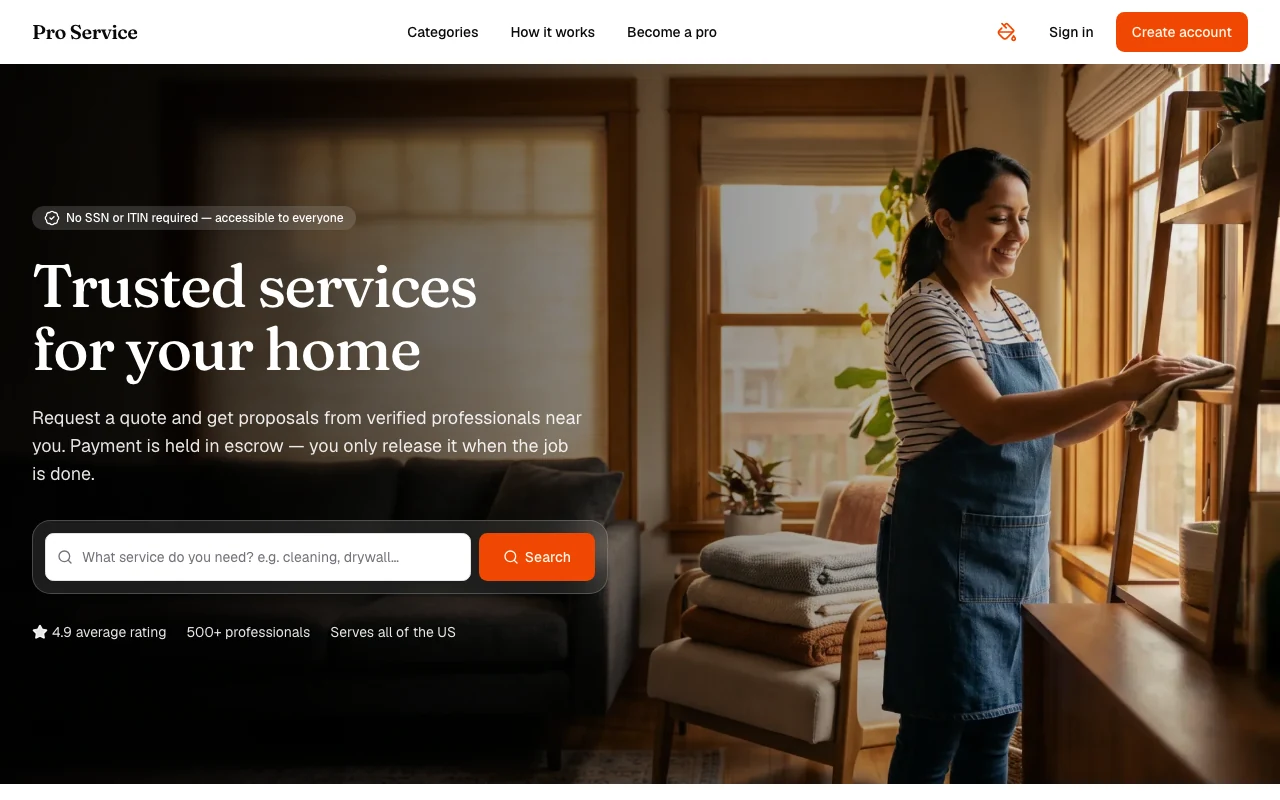
Find verified home service professionals, compare quotes, and pay securely through escrow - built for Brazilians across the US 🏠
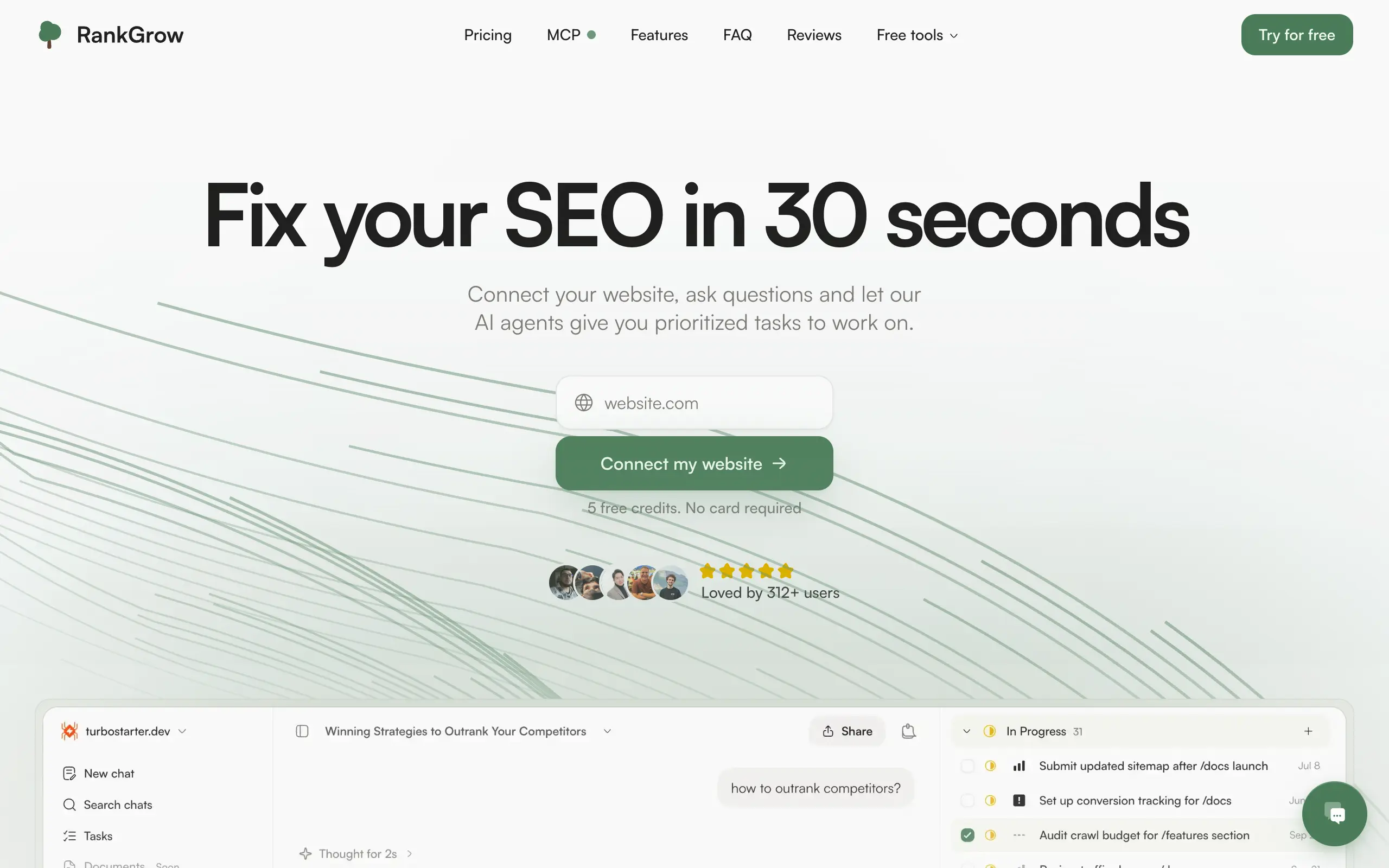
Fix your SEO with AI agents - connect Search Console, get prioritized tasks, and grow organic traffic 📈

Sync your favorite content for distraction-free reading, save time and replace multiple apps. Anytime, anywhere 🔄

Get clean, structured data from 21 platforms like TikTok, Instagram, and YouTube with a single request 📊
Monitor any Telegram channel in real time - track posts, edits, deletions, and growth with AI recaps 📡
AI website builder - describe your business, pick a niche template, edit by chatting, and publish instantly ✨
Find verified home service professionals, compare quotes, and pay securely through escrow - built for Brazilians across the US 🏠
Fix your SEO with AI agents - connect Search Console, get prioritized tasks, and grow organic traffic 📈
Sync your favorite content for distraction-free reading, save time and replace multiple apps. Anytime, anywhere 🔄
Get clean, structured data from 21 platforms like TikTok, Instagram, and YouTube with a single request 📊

Personalized AI apps that automate research, data extraction, and content creation without code 🤖

Enjoy a magical live video chat or receive a unique AI-generated video greeting from Santa Claus 🎅

Scalable blog for food journalist, focused on performance and user experience 🌭

Personal blog and portfolio of Bart Zagrodzki, where he shares his knowledge and work 💼

Ship your startup everywhere. In minutes.

Convert HTML to Markdown with ease, directly in your browser 📄
Personalized AI apps that automate research, data extraction, and content creation without code 🤖
Enjoy a magical live video chat or receive a unique AI-generated video greeting from Santa Claus 🎅
Scalable blog for food journalist, focused on performance and user experience 🌭
Personal blog and portfolio of Bart Zagrodzki, where he shares his knowledge and work 💼
Ship your startup everywhere. In minutes.
Convert HTML to Markdown with ease, directly in your browser 📄

Chat with 50+ AI models, including ChatGPT and Claude, in one place - switch models anytime without losing context 🤖

Supercharge your Claude Code with 6x effective context window and specialized AI agents 🤖

AI-powered emoji picker with smart, context-aware suggestions 🤖

Autonomous company launcher - AI agents work 24/7, escalate what matters, and you stay in control 🤖

Practice storytelling daily with instant feedback to sound clearer, more engaging, and confident 🎤
Chat with 50+ AI models, including ChatGPT and Claude, in one place - switch models anytime without losing context 🤖
Supercharge your Claude Code with 6x effective context window and specialized AI agents 🤖
AI-powered emoji picker with smart, context-aware suggestions 🤖
Autonomous company launcher - AI agents work 24/7, escalate what matters, and you stay in control 🤖
Practice storytelling daily with instant feedback to sound clearer, more engaging, and confident 🎤

Connect with like-minded people
Join our community to get feedback, support, and grow together with 1,000+ builders on board, let's ship it!
Join usShip your startup everywhere. In minutes.
Don't burn tokens on setup and start building features on day one.