Earnings Ready
Gives private-to-public founders a script and Q&A bank built from their own filings and past calls. Finance teams can draft a clean earnings release in hours instead of weeks.
The primary angle is an earnings call preparation tool for newly public companies. Earnings Ready is an AI workspace that turns a company's own filings, prior calls and board materials into a draft earnings release, a call script and a bank of likely analyst questions with sourced answers. It has potential in 2026 because the IPO window keeps producing first-time public finance teams who must run a disciplined quarterly cycle with small teams, and general-purpose AI is now good enough to draft from source documents if you constrain it properly.
Key takeaways
- Target customer: CFOs, heads of investor relations and controllers at recently public or pre-IPO companies with lean finance teams.
- Pricing angle: per-company annual subscription, with a higher tier for pre-IPO "mock earnings" preparation.
- Biggest risk: trust. A wrong number or an unvetted forward-looking statement in a draft is a serious problem for a public company.
- Time to MVP: roughly 4 to 6 weeks for a single-user draft and Q&A workflow, assuming you start from a starter kit.
Who is Earnings Ready for?
The ideal customer is a finance leader at a company that went public in the last two years, or is within two quarters of listing. Think of a team with a CFO, a controller, one investor relations lead (sometimes the CFO doubles as IR) and an outside law firm. They own the quarterly cycle and have never run it at scale.
What they do today
The current workaround is a Word document and a spreadsheet passed around by email. Someone copies last quarter's release, swaps numbers, and rewrites the narrative. Q&A prep is a meeting where executives brainstorm hard questions, often from memory.
Why the workaround fails
- Version chaos: five reviewers edit different copies, and numbers drift between the release, the script and the 10-Q.
- Narrative inconsistency: language used on the last call, in the filing risk factors and in the new release can quietly contradict each other.
- Thin Q&A prep: teams rehearse the questions they expect, not the ones analysts actually ask after reading the filings closely.
- Time: the drafting phase often consumes weeks of senior attention that should go to the business.
Why is an earnings call preparation tool timely in 2026?
The answer is a mix of supply and capability. More companies are entering public markets with finance teams built for private-company reporting, and the cost of a messy first few quarters is high: guidance credibility is set early.
The existing options sit in distinct categories. Large investor relations platforms such as Q4 and Workiva cover disclosure management, reporting workflows and IR websites, and are built for established teams. Consultancies and IR advisors provide bespoke prep at a high price per engagement. General AI assistants can draft text, but they have no memory of your filings, no source tracing and no review workflow.
The gap is a focused tool that does one job: take your own documents and produce a consistent, sourced first draft plus rehearsal material. It does not need to replace the reporting system of record. It sits upstream, where the writing and rehearsal happen.
Two trends help. Retrieval over private documents is now reliable enough for drafting with citations, and finance teams are under pressure to do more with fewer people. Expect buyers to be cautious, but the pain of the first few earnings cycles is real enough to open budgets.
What should the MVP of Earnings Ready include?
Build the narrowest workflow that reaches the aha moment: a finance lead uploads last quarter's materials and this quarter's numbers, and ten minutes later reads a draft release where every sentence links back to a source.
Source library
Upload filings, prior transcripts, releases and board decks, then index them so every generated claim can cite its origin.
Release and script drafter
Generates a draft earnings release and prepared remarks in the company's own prior tone, using the numbers you supply.
Q&A bank
Produces likely analyst questions from filings and past calls, with suggested answers linked to source passages.
Consistency check
Flags wording or figures that conflict with prior filings, earlier guidance or other sections of the draft.
What to cut at first
- Direct integrations with ERP or consolidation systems. Accept a pasted table or CSV of results.
- Live call transcription and real-time coaching.
- Investor relations websites, distribution and webcast hosting.
- Multi-language and non-US disclosure regimes.
The aha moment is the consistency check. Drafting is easy to imitate, but catching that the new release contradicts a sentence in last quarter's risk factors is what a CFO remembers.
How is Earnings Ready different from spreadsheets and incumbents?
The unique selling proposition is simple: a sourced first draft and rehearsal pack built from your own disclosures, in hours, without replacing your reporting stack. The product is a drafting and preparation layer, not a disclosure system of record.
| Option | Built from your own filings | Source citations | Analyst Q&A prep | Fits a lean team |
|---|---|---|---|---|
| Earnings Ready | ✅ | ✅ | ✅ | ✅ |
| Word and spreadsheets | ❌ | ❌ | Manual | ✅ |
| Enterprise IR and disclosure platforms | Partly | Varies | Rarely | Often heavy |
| IR consultants | ✅ | Manual | ✅ | Expensive per cycle |
| General AI chat | ❌ | ❌ | Generic | ✅ |
Be honest about the limit: incumbents may add similar drafting features. Your defense is depth in the earnings cycle workflow and trust built through citations and review trails, not model access.
How would Earnings Ready make money?
Pricing should reflect the stakes and the small number of buyers. A public company will pay real money for a tool used four times a year, as long as it feels like insurance rather than a toy.
- Annual company subscription: a flat yearly fee per company, for example a few thousand dollars as a starting assumption. Simple to buy, easy to justify against consultant fees.
- Per-cycle pricing: a fee for each quarterly earnings cycle. It matches usage but makes revenue lumpy and invites churn between quarters.
- Pre-IPO readiness package: a one-time or short-term engagement for mock earnings cycles, priced higher, which also feeds the subscription funnel.
If you charge $6,000 per year and win 20 companies, that is $120,000 in annual recurring revenue. Treat those figures as assumptions to test in interviews, not benchmarks.
The growth channel most likely to work first is direct outreach and referrals: IR advisors, IPO-focused law firms and fractional CFOs all see newly public companies struggle and can introduce you. Content aimed at first-time public finance teams supports that.
How do you validate Earnings Ready before building it?
Aim for two weeks and a clear go or no-go rule, such as three design partners willing to pay or commit.
Interview ten finance and IR leaders
Target recently public CFOs, controllers and IR heads. Ask them to walk through their last earnings cycle, where time went and what scared them.
Run a manual concierge draft
Take one friendly company's public filings and produce a sample release and Q&A pack by hand with AI assistance. Ask what they would change and whether they would pay for it.
Publish a focused landing page
State one promise, such as a sourced first draft in hours, and collect waitlist emails from finance and IR titles.
Ask for a pre-sale or paid pilot
Offer a discounted design-partner price for the first two quarters. A signed pilot tells you more than ten positive conversations.
What tech stack should you use to build it?
You need a web app with document ingestion, retrieval over private text, a drafting workflow with review, and strict tenant isolation. Authentication, billing and team management are necessary but do not differentiate you, so use a starter kit. TurboStarter provides a monorepo with web and mobile apps, organizations and teams, billing, emails, file storage, AI, background tasks and an admin panel, which lets you spend your first weeks on retrieval quality and the consistency check.
Relevant pieces for this product:
- Authentication and organizations so each company workspace and reviewer role is separated.
- Storage for uploaded filings and decks.
- Background tasks for parsing and indexing long PDFs outside the request cycle.
- AI for wiring model calls into the drafting flow.
Choosing a vector and retrieval approach
Keeps documents, chunks and embeddings in one database with one set of access rules. This is usually the right start: simpler tenant isolation and fewer moving parts. Revisit only if retrieval volume becomes a bottleneck.
Offers specialized search features and scaling, but adds another system to secure and another place where customer data lives. For sensitive pre-release financials, that extra surface area is a real cost.
A minimal data model for citations
Every generated sentence should point to the chunk it came from. A sketch:
create table source_chunk (
  id uuid primary key,
  organization_id uuid not null,
  document_id uuid not null,
  page int,
  content text not null
);

create table draft_claim (
  id uuid primary key,
  draft_id uuid not null,
  text text not null,
  source_chunk_id uuid references source_chunk(id),
  reviewed_by uuid
);
Claims with no source chunk should be visibly marked, and numbers should come from the user's supplied results table rather than from model generation. For model choice, test a frontier hosted model against your own prior releases, and check the provider's data retention terms before onboarding any customer.
What could make Earnings Ready fail?
Biggest risk: trust in material disclosures
A draft that misstates a figure or implies unapproved forward-looking guidance can create legal exposure for a public company. If buyers believe the tool might do this, they will not use it. Keep numbers user-supplied, require reviewer sign-off on every claim, log all edits and never position the product as legal or compliance advice.
- Data security objections: unreleased financials are among the most sensitive data a company has. Plan for strong tenant isolation, clear model data policies and a security questionnaire answer pack early. Formal certifications may be required by larger buyers.
- Small, slow market: few buyers and long sales cycles. Mitigate by starting with pre-IPO and recently listed companies, and by adding adjacent documents like investor letters later.
- Incumbent response: large platforms can bolt on drafting. Stay ahead with workflow depth, the consistency check and faster iteration.
- Seasonality: usage clusters around quarter ends. Annual contracts and pre-IPO work smooth revenue.
What should you do in the next 30 days?
Week 1: interviews and sample
Complete the interviews and produce one manual sample pack from public filings.
Week 2: landing page and pilots
Publish the page, reach out through advisors and law firms, and ask for two paid design partners.
Week 3: build the core flow
Set up the stack, then build upload, indexing, a draft with citations and the Q&A bank.
Week 4: add review and consistency checks
Ship reviewer sign-off, the consistency check and an audit log, then run a real draft with a design partner.
Start from a starter kit so the first commit is on the product, not on login screens. Pick your first design partner this week and put a date on their next earnings cycle.
FAQ
Interview recently public finance and IR leaders, then produce a manual sample from their public filings. The strongest signal is a paid pilot tied to an upcoming earnings date, not enthusiasm in a call.
Start with an annual per-company price in the low thousands of dollars as a hypothesis, and compare it with what a company spends on advisors per cycle. Test two price points in your pilot conversations.
Enterprise IR and disclosure platforms such as Q4 and Workiva, IR consultancies, and general AI assistants used ad hoc. None is focused on a sourced drafting and rehearsal workflow for lean, newly public teams, though incumbents could move that way.
A TypeScript web app with Postgres, pgvector, background jobs for document parsing and a hosted language model. Using a starter kit for auth, organizations, billing and storage saves the most time.
A solo technical founder can typically reach a usable draft and Q&A workflow in four to six weeks. Costs are mainly your time, model usage and hosting, which stay modest until you onboard several companies.
Only with clear controls: tenant isolation, a model provider that does not train on customer data, access logs and a documented retention policy. Expect to answer security questionnaires before any serious company signs.
An earnings call preparation tool for newly public companies is a narrow, high-stakes product. If you earn trust with citations and review trails, a small number of customers can support a real business.
More 🏢 B2B Application SaaS ideas
Discover more innovative b2b application SaaS ideas that are trending in 2026. Each idea is AI-generated with market validation and growth potential to help you find your next profitable venture faster than competitors.
Your competitors are building with TurboStarter
Below are some of the SaaS ideas that have been generated and built with our starter kit.

Monitor any Telegram channel in real time - track posts, edits, deletions, and growth with AI recaps 📡

AI website builder - describe your business, pick a niche template, edit by chatting, and publish instantly ✨

Find verified home service professionals, compare quotes, and pay securely through escrow - built for Brazilians across the US 🏠
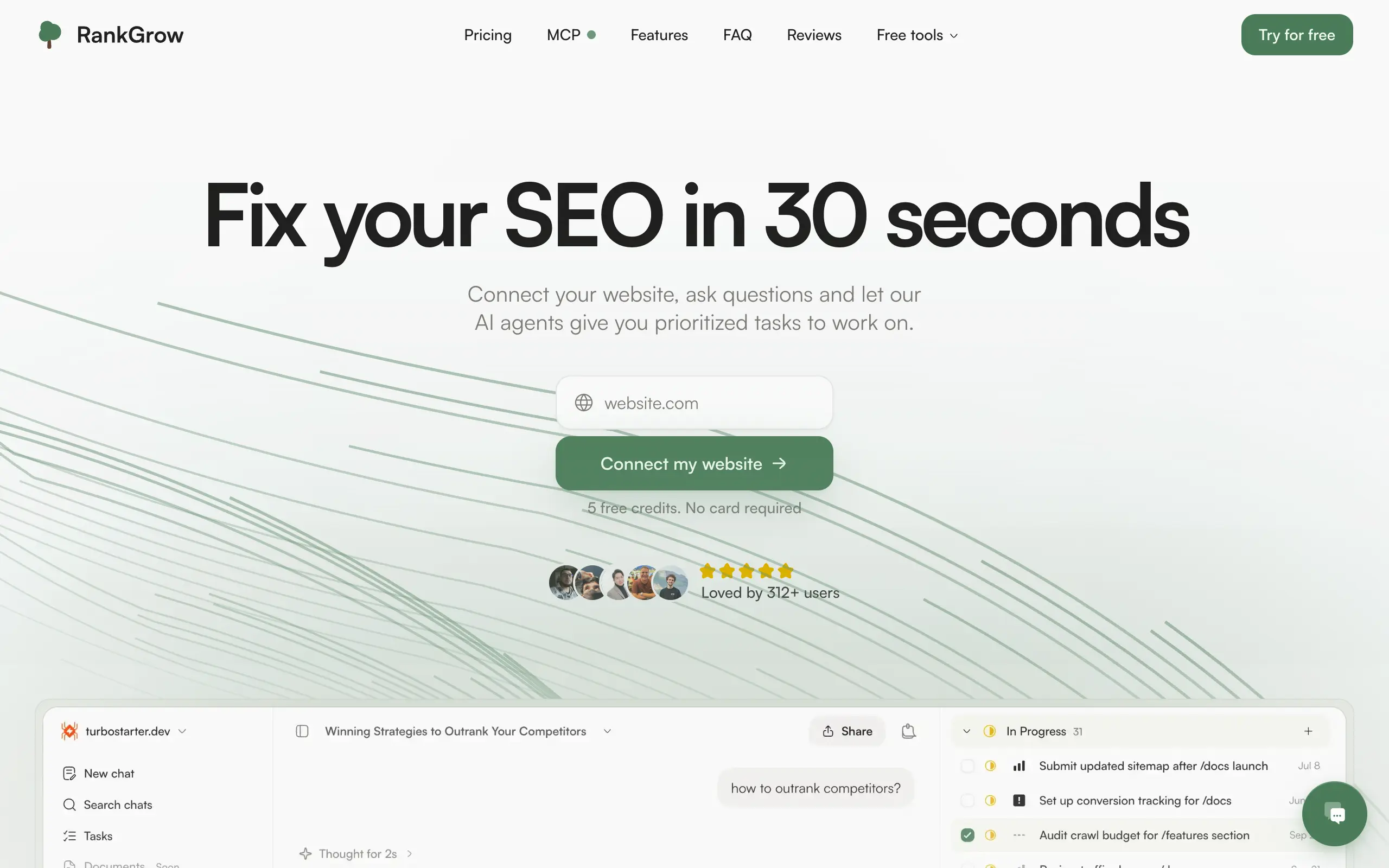
Fix your SEO with AI agents - connect Search Console, get prioritized tasks, and grow organic traffic 📈

Sync your favorite content for distraction-free reading, save time and replace multiple apps. Anytime, anywhere 🔄

Get clean, structured data from 21 platforms like TikTok, Instagram, and YouTube with a single request 📊
Monitor any Telegram channel in real time - track posts, edits, deletions, and growth with AI recaps 📡
AI website builder - describe your business, pick a niche template, edit by chatting, and publish instantly ✨
Find verified home service professionals, compare quotes, and pay securely through escrow - built for Brazilians across the US 🏠
Fix your SEO with AI agents - connect Search Console, get prioritized tasks, and grow organic traffic 📈
Sync your favorite content for distraction-free reading, save time and replace multiple apps. Anytime, anywhere 🔄
Get clean, structured data from 21 platforms like TikTok, Instagram, and YouTube with a single request 📊

Personalized AI apps that automate research, data extraction, and content creation without code 🤖

Enjoy a magical live video chat or receive a unique AI-generated video greeting from Santa Claus 🎅

Scalable blog for food journalist, focused on performance and user experience 🌭

Personal blog and portfolio of Bart Zagrodzki, where he shares his knowledge and work 💼

Ship your startup everywhere. In minutes.

Convert HTML to Markdown with ease, directly in your browser 📄
Personalized AI apps that automate research, data extraction, and content creation without code 🤖
Enjoy a magical live video chat or receive a unique AI-generated video greeting from Santa Claus 🎅
Scalable blog for food journalist, focused on performance and user experience 🌭
Personal blog and portfolio of Bart Zagrodzki, where he shares his knowledge and work 💼
Ship your startup everywhere. In minutes.
Convert HTML to Markdown with ease, directly in your browser 📄

Chat with 50+ AI models, including ChatGPT and Claude, in one place - switch models anytime without losing context 🤖

Supercharge your Claude Code with 6x effective context window and specialized AI agents 🤖

AI-powered emoji picker with smart, context-aware suggestions 🤖

Autonomous company launcher - AI agents work 24/7, escalate what matters, and you stay in control 🤖

Practice storytelling daily with instant feedback to sound clearer, more engaging, and confident 🎤
Chat with 50+ AI models, including ChatGPT and Claude, in one place - switch models anytime without losing context 🤖
Supercharge your Claude Code with 6x effective context window and specialized AI agents 🤖
AI-powered emoji picker with smart, context-aware suggestions 🤖
Autonomous company launcher - AI agents work 24/7, escalate what matters, and you stay in control 🤖
Practice storytelling daily with instant feedback to sound clearer, more engaging, and confident 🎤

Connect with like-minded people
Join our community to get feedback, support, and grow together with 1,000+ builders on board, let's ship it!
Join usShip your startup everywhere. In minutes.
Don't burn tokens on setup and start building features on day one.