Float Notice
Tracks shareholder meeting dates, proxy deadlines, and dividend notices across jurisdictions for private companies with many shareholders. Corporate secretaries get automatic reminders and filed proof of delivery.
Float Notice is a B2B SaaS that tracks shareholder meeting dates, proxy deadlines and dividend notices across jurisdictions for private companies with many shareholders, then sends the notices and stores proof of delivery. It has potential in 2026 because private companies keep accumulating shareholders (employees, angels, crowdfunding and secondary buyers), while the people responsible for compliance still run on spreadsheets, calendar reminders and email. Statutory notice compliance is a narrow, unglamorous problem, which is exactly why a focused product can win it.
Key takeaways
- Target customer: corporate secretaries, in-house legal teams and company administrators at private companies with roughly 100 to several thousand shareholders in more than one jurisdiction.
- Pricing angle: per-entity subscription with a shareholder-count tier, plus optional pay-per-notice fees for postal or registered delivery.
- Biggest risk: legal accuracy. A wrong deadline rule for one jurisdiction can invalidate a meeting, so trust matters more than features.
- Time to MVP: about 6 to 8 weeks for one or two jurisdictions with email delivery and an audit trail, assuming you start from a starter kit.
What problem does Float Notice solve for corporate secretaries?
The core problem is missing or unprovable statutory notices to shareholders. When a company has hundreds of holders, each meeting, proxy cut-off and dividend announcement has its own deadline, delivery method and evidence requirement. Miss one, and you may have to reschedule a meeting or defend a resolution.
Who feels it most
The ideal customer is a corporate secretary or company administrator at a private company with a long shareholder register. Think of a late-stage startup with a large employee option pool that has exercised, a cooperative-style company, a family-owned group with many heirs, or a company that ran an equity crowdfunding round. They often work alone or in a team of two, and legal counsel is external and billed by the hour.
Their current workaround
Most use a mix of:
- A spreadsheet of shareholders, addresses and notice periods.
- Calendar reminders set by hand from the articles of association.
- Mail merge for letters and emails, sent from a personal inbox.
- A shared folder where proof (sent emails, postal receipts) is saved, or not.
Why the workaround fails
Spreadsheets do not know that a notice period changes with the meeting type or the jurisdiction. Reminders depend on one person remembering to create them. And when a shareholder disputes that they were notified, a folder of screenshots is weak evidence compared with a timestamped delivery log tied to a specific version of the notice.
Why is shareholder notice management a good SaaS opportunity in 2026?
The gap sits between two categories of tools. Cap table and equity platforms such as Carta and Pulley focus on ownership, option grants and valuations. Board portals such as Diligent and Computershare-style registrar services focus on board packs or listed-company shareholder services. Neither is built around the recurring notice workflow for a mid-sized private company.
Why now
- More shareholders in private companies. Longer time to exit, employee equity, crowdfunding and secondary sales mean registers keep growing.
- Cross-border registers. Remote-first companies have holders in many countries, and each can mean different rules.
- Electronic delivery is widely accepted in many jurisdictions, but usually with conditions such as prior consent, which makes recording consent a real feature.
- Audit pressure. Investors, lenders and acquirers increasingly ask for clean corporate records during due diligence.
The honest caveat
The market is small per customer and the buyer is cautious. You are selling a compliance product, so sales cycles can be slow and word of mouth through law firms and company secretarial providers matters. That is also why incumbents rarely bother with the niche.
What features should the Float Notice MVP include?
Build the smallest product that turns a shareholder register and a meeting date into a sent, tracked and archived notice. The aha moment is the first time a secretary enters a meeting date and sees a generated timeline: which notices are due, by when, to whom, and by which method.
Deadline engine
Given a jurisdiction, meeting type and date, it calculates notice, proxy and record dates, with the rule source shown.
Shareholder register import
CSV import with addresses, share class, preferred delivery method and electronic consent status.
Notice delivery and proof
Send by email with open and delivery tracking, and log postal sends, storing a timestamped record per recipient.
Reminders and audit trail
Automatic reminders to the secretary before each deadline and an exportable evidence pack per meeting.
What to cut from version one
- Voting and proxy collection. Track proxy deadlines first, do not run the vote.
- Full cap table management. Import the register instead.
- Support for more than two jurisdictions. Pick the ones your first customers actually need.
- Integrated physical mail. Start by logging manual postal sends, add a print partner later.
- Template libraries for every document type. Ship a few editable templates.
How is Float Notice different from spreadsheets and cap table tools?
The unique selling proposition is simple: every notice has a deadline you can trust and evidence you can defend. It does not try to be your cap table or your board portal. It integrates with them through imports and exports.
| Option | Jurisdiction-aware deadlines | Proof of delivery | Reminders | Built for private companies with many holders |
|---|---|---|---|---|
| Float Notice | ✅ | ✅ | ✅ | ✅ |
| Spreadsheets and calendars | ❌ | ❌ | Manual | Depends |
| Cap table platforms | ❌ | Limited | Limited | ✅ |
| Board portals | ❌ | ❌ | Limited | ❌ |
| External law firm or agent | ✅ | ✅ | Depends | ✅ |
The external agent is the real competitor. It is reliable but expensive per event, so your pitch to a secretary is: keep the agent for edge cases and handle the routine notices yourself with a system that documents everything.
How would Float Notice make money?
Price per legal entity, because that is how compliance work is budgeted, and use shareholder count as the tier driver because it tracks the value delivered.
Pricing options
- Per-entity subscription with shareholder tiers. For example, assume $99/month up to 250 holders and $249/month up to 1,000. It is predictable and easy for finance to approve.
- Per-meeting or per-event pricing. Lower commitment and a good fit for companies with one annual general meeting, but revenue is lumpy and churn is high between events.
- Subscription plus delivery fees. Add pass-through charges for registered post or couriers once you integrate a print partner. Margins are thin, so treat this as a convenience feature.
If you charge $249/month and sign 40 entities, that is about $10,000 in monthly recurring revenue. The point is that a small number of customers can sustain the business, so retention and trust matter more than volume.
First growth channel
Start with company secretarial firms and corporate lawyers who manage many entities. One firm can bring dozens of companies, and a white-label or multi-entity plan fits them. Direct outreach to corporate secretaries on professional networks is the second option, backed by content on specific notice rules per jurisdiction.
How do you validate Float Notice in two weeks?
You need proof that secretaries will pay for this before you encode any legal rules.
Interview eight to ten secretaries
Ask them to walk through their last shareholder meeting from first reminder to filed evidence. Note where they used spreadsheets, who they paid and what nearly went wrong.
Pick two jurisdictions
Choose the ones that appear most in your interviews. Confirm the rules with a lawyer who will review your deadline logic, even if it costs a few hours of their time.
Ship a landing page with one promise
Something like "Never miss a shareholder notice deadline, and prove every delivery." Add a waitlist form and a short question about register size.
Offer a manual pilot
Run one real meeting timeline for a friendly company using a spreadsheet and email tooling behind the scenes. If they would not pay for that, software will not fix it.
Ask for a pre-sale or letter of intent
Request a discounted annual commitment from two or three prospects. Even one paid pilot tells you more than fifty waitlist signups.
What tech stack do you need to build Float Notice?
Float Notice is a conventional multi-tenant web app with a rules engine, a job scheduler and an evidence store. The differentiated work is the deadline logic and the audit trail. Everything else should come off the shelf, and TurboStarter covers most of it in a ready-made monorepo for web and mobile.
What the starter kit removes
- Accounts and access: authentication and organizations and teams, so each company entity and its secretaries and counsel have the right roles.
- Money: billing with subscriptions and one-time payments for the per-entity plans and any add-ons.
- Data: a typed database layer for registers, meetings and notice logs.
- Async work: background tasks for scheduled reminders and delivery jobs, along with emails, file storage, an admin panel and monitoring.
Core data model
Keep notices immutable once sent, so the evidence is trustworthy. A simplified sketch:
create table notice (
  id uuid primary key,
  meeting_id uuid not null,
  version int not null,
  body_hash text not null,
  due_at timestamptz not null,
  created_at timestamptz default now()
);

create table notice_delivery (
  id uuid primary key,
  notice_id uuid not null references notice(id),
  shareholder_id uuid not null,
  method text not null,
  status text not null,
  provider_message_id text,
  delivered_at timestamptz
);
Rules engine choices
Write each jurisdiction as a tested TypeScript module with fixtures from real examples. It is the best option for the MVP: easy to unit test, easy for a lawyer to review in a diff, and no admin UI to build.
Store rules as configuration that non-developers can edit. It scales better to many jurisdictions, but you need versioning, validation and review workflows, which is too much for the first release.
Delivery and storage
Use a transactional email provider that exposes delivery webhooks, and store the raw events and the rendered notice as a PDF in file storage. Hash each stored notice so you can show it was not altered. For a deeper look at the structure, start from the docs.
What could make Float Notice fail?
Biggest risk: legal accuracy and liability
If your deadline engine is wrong for a jurisdiction, a customer could hold a defective meeting and blame you. Limit the launch to jurisdictions reviewed by a qualified lawyer, show the rule source and last review date beside every calculation, and state clearly in your terms that the product supports, but does not replace, legal advice. Consider professional liability insurance before onboarding paying customers.
Other risks
- Slow, cautious buyers. Reduce friction with a free first meeting setup, security documentation and a clear data processing agreement.
- Narrow market. Prove demand in one segment, such as companies with large employee shareholder bases, before widening. Law firms and secretarial providers can multiply reach.
- Shareholder data sensitivity. Registers contain personal data. Use encryption, strict access roles, audit logs and region-aware hosting where customers require it.
- Incumbent response. Cap table platforms could add notices. Your defense is depth in jurisdictions and evidence quality, which they have little reason to prioritize.
What is a 30-day plan to launch Float Notice?
Week 1: interviews and scope
Complete the interviews, choose two jurisdictions and write the rule specifications with a lawyer.
Week 2: scaffold and core flow
Set up the project from TurboStarter, model shareholders, meetings and notices, and build the register import.
Week 3: deadlines, delivery and proof
Implement the rules engine, reminders, email delivery with webhooks and the evidence export.
Week 4: pilot and pricing
Run a real meeting with one or two pilot customers, fix what breaks and switch on paid plans.
Start with the manual pilot this week. If a secretary will pay for a reliable notice timeline, you have a business worth building.
FAQ
Interview corporate secretaries about their last meeting, then run a manual pilot for one company. Ask for a paid commitment, because waitlist signups alone say little about a compliance purchase.
Per-entity pricing tiered by shareholder count is the most natural fit. As an assumption, $99 to $249 per month per entity is a reasonable range to test, then adjust based on what customers compare it to, usually external agent fees and staff time.
Indirect competitors include cap table platforms, board portals, registrar services and law firms that handle notices manually. Most do not focus on multi-jurisdiction notice scheduling with proof of delivery for private companies, though you should confirm this in your interviews.
A TypeScript web app with a relational database, a job scheduler and a transactional email provider fits well. Relational data suits registers and audit records, and a starter kit handles authentication, billing and organizations so you can spend time on the rules engine.
Expect roughly 6 to 8 weeks for one developer with two jurisdictions, email delivery and an evidence export. The largest costs are usually legal review of the rules rather than infrastructure.
No, but you need a lawyer or experienced corporate secretary reviewing every rule you encode. Treat that review as part of the product, and show the review date to customers.
More 🏢 B2B Application SaaS ideas
Discover more innovative b2b application SaaS ideas that are trending in 2026. Each idea is AI-generated with market validation and growth potential to help you find your next profitable venture faster than competitors.
Your competitors are building with TurboStarter
Below are some of the SaaS ideas that have been generated and built with our starter kit.

Monitor any Telegram channel in real time - track posts, edits, deletions, and growth with AI recaps 📡

AI website builder - describe your business, pick a niche template, edit by chatting, and publish instantly ✨

Find verified home service professionals, compare quotes, and pay securely through escrow - built for Brazilians across the US 🏠
Fix your SEO with AI agents - connect Search Console, get prioritized tasks, and grow organic traffic 📈
Sync your favorite content for distraction-free reading, save time and replace multiple apps. Anytime, anywhere 🔄
Get clean, structured data from 21 platforms like TikTok, Instagram, and YouTube with a single request 📊
Monitor any Telegram channel in real time - track posts, edits, deletions, and growth with AI recaps 📡
AI website builder - describe your business, pick a niche template, edit by chatting, and publish instantly ✨
Find verified home service professionals, compare quotes, and pay securely through escrow - built for Brazilians across the US 🏠
Fix your SEO with AI agents - connect Search Console, get prioritized tasks, and grow organic traffic 📈
Sync your favorite content for distraction-free reading, save time and replace multiple apps. Anytime, anywhere 🔄
Get clean, structured data from 21 platforms like TikTok, Instagram, and YouTube with a single request 📊
Personalized AI apps that automate research, data extraction, and content creation without code 🤖

Enjoy a magical live video chat or receive a unique AI-generated video greeting from Santa Claus 🎅

Scalable blog for food journalist, focused on performance and user experience 🌭
Personal blog and portfolio of Bart Zagrodzki, where he shares his knowledge and work 💼
Ship your startup everywhere. In minutes.
Convert HTML to Markdown with ease, directly in your browser 📄
Personalized AI apps that automate research, data extraction, and content creation without code 🤖
Enjoy a magical live video chat or receive a unique AI-generated video greeting from Santa Claus 🎅
Scalable blog for food journalist, focused on performance and user experience 🌭
Personal blog and portfolio of Bart Zagrodzki, where he shares his knowledge and work 💼
Ship your startup everywhere. In minutes.
Convert HTML to Markdown with ease, directly in your browser 📄
Chat with 50+ AI models, including ChatGPT and Claude, in one place - switch models anytime without losing context 🤖
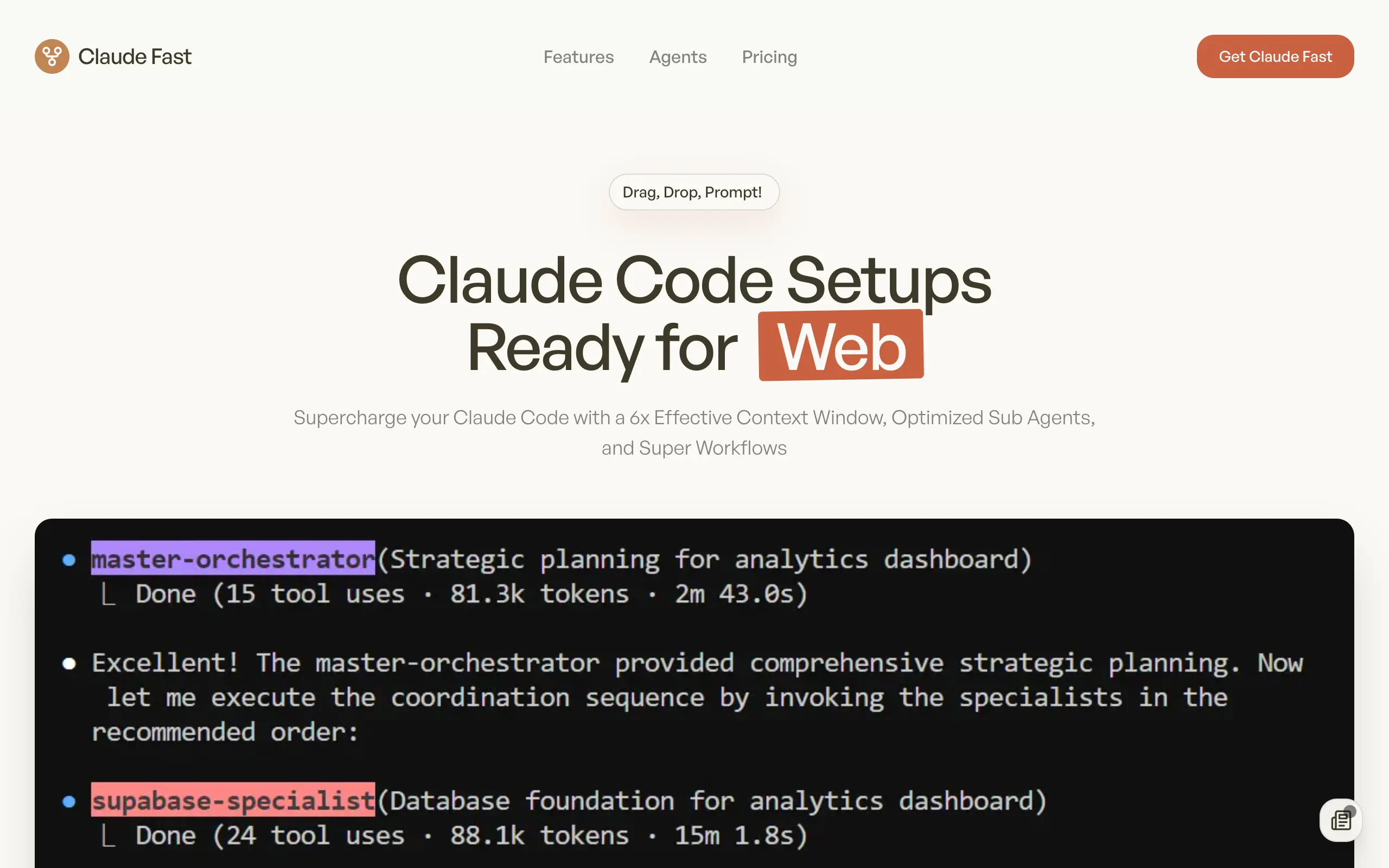
Supercharge your Claude Code with 6x effective context window and specialized AI agents 🤖

AI-powered emoji picker with smart, context-aware suggestions 🤖
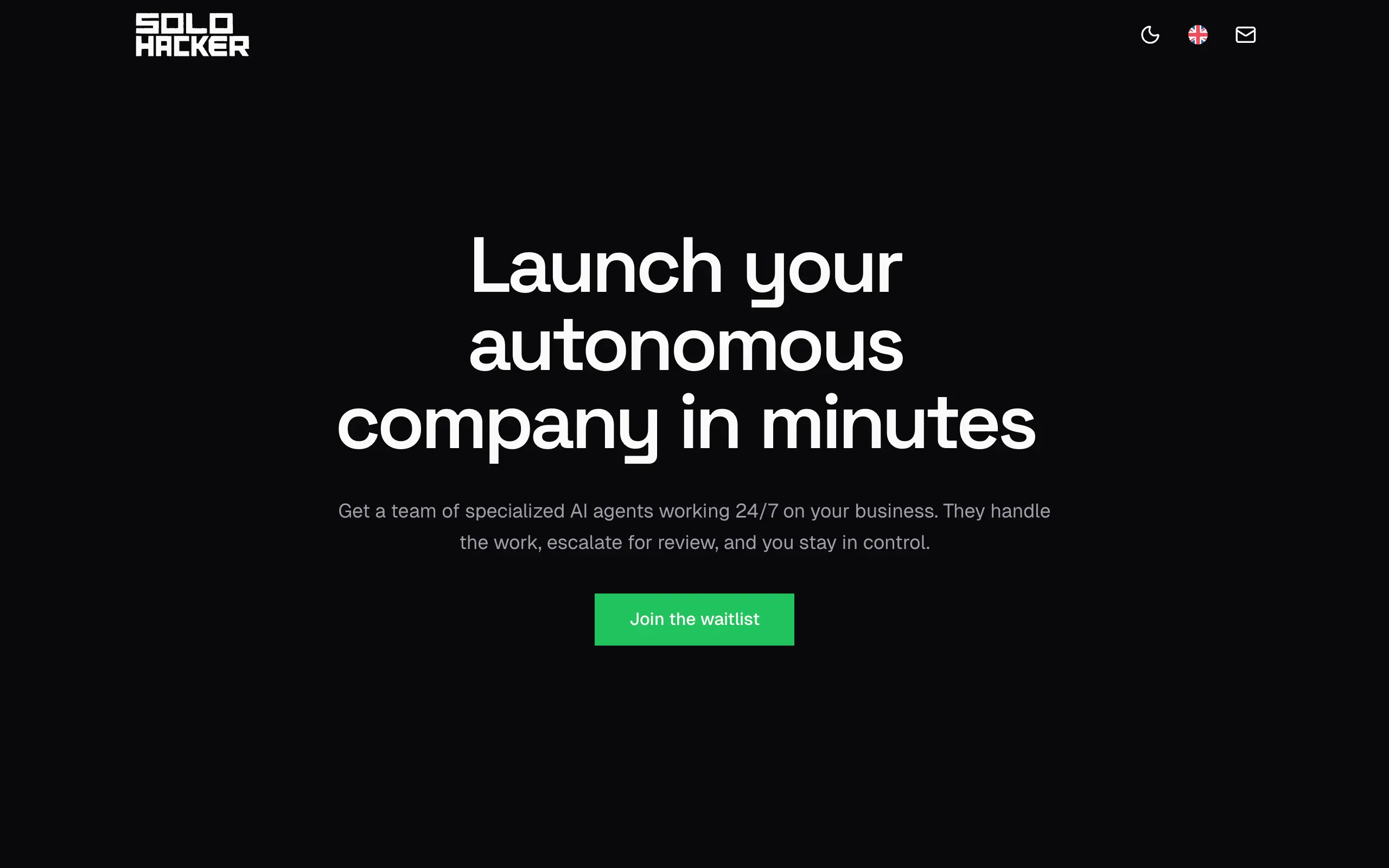
Autonomous company launcher - AI agents work 24/7, escalate what matters, and you stay in control 🤖

Practice storytelling daily with instant feedback to sound clearer, more engaging, and confident 🎤
Chat with 50+ AI models, including ChatGPT and Claude, in one place - switch models anytime without losing context 🤖
Supercharge your Claude Code with 6x effective context window and specialized AI agents 🤖
AI-powered emoji picker with smart, context-aware suggestions 🤖
Autonomous company launcher - AI agents work 24/7, escalate what matters, and you stay in control 🤖
Practice storytelling daily with instant feedback to sound clearer, more engaging, and confident 🎤

Connect with like-minded people
Join our community to get feedback, support, and grow together with 1,000+ builders on board, let's ship it!
Join usShip your startup everywhere. In minutes.
Don't burn tokens on setup and start building features on day one.