Ledger Notify
Sends personalized update emails and alerts to shareholders from one dashboard, handling lists and opt-outs. Companies with a few thousand retail holders replace costly mailing vendors with one tool.
Ledger Notify is a shareholder communication tool that lets small and mid-sized public companies send personalized update emails and alerts to retail holders from one dashboard, with list management and opt-outs handled for them. In 2026, the opportunity is shareholder communications software for companies with a few thousand retail holders: too small for enterprise investor relations platforms, too regulated for a generic newsletter tool.
Key takeaways
- Target customer: investor relations leads, CFOs or company secretaries at listed or crowdfunded companies with roughly 1,000 to 10,000 retail shareholders.
- Pricing angle: flat monthly tiers by number of holders, for example $149 to $499 per month, positioned against agency retainers and mailing vendor invoices.
- Biggest risk: getting trusted with shareholder data and deliverability, since a single leaked list or a blocked send ends the relationship.
- Time to MVP: about 4 to 6 weeks for a solo founder using a starter kit, assuming you skip registrar integrations at first.
What problem does shareholder communication software solve?
Small companies with a few thousand retail holders still send shareholder updates through clumsy channels. The pain is not writing the update. It is getting the right message to the right holders, proving who received it and honoring opt-outs without a mistake.
Who is Ledger Notify for?
The ideal customer is a one-person or two-person investor relations function at a company with a small cap or a crowdfunded cap table. Typical examples are a listed microcap, a company that ran an equity crowdfunding round, a cooperative or a community-owned business. The buyer is often a CFO, a company secretary or a head of finance who also owns investor relations as a side duty.
They send maybe 4 to 12 communications a year: quarterly updates, AGM notices, dividend announcements, trading updates and the occasional urgent alert.
What do they do today, and why does it fail?
Current workarounds usually fall into three buckets:
- Spreadsheet plus a mass mailing tool: the holder list lives in a CSV, gets pasted into a newsletter product and drifts out of date within a quarter.
- Registrar or agency mailings: reliable but slow, expensive per send and hard to personalize.
- Enterprise IR platforms: feature-rich, but priced and scoped for companies with a dedicated team and a much larger holder base.
The failures are consistent. Opt-outs get lost between systems. Personalization stops at a first name. Nobody can answer the question "who actually received the dividend notice?" without a manual export. Each of these is a compliance headache, not just an annoyance.
Why is there a market for shareholder email tools in 2026?
The gap is between generic email platforms and heavyweight investor relations suites. Generic tools do not understand holders, share classes or holding-based segmentation. Enterprise suites do, but bundle IR websites, earnings tooling and analytics that a small company never uses.
The gap in existing solutions
Well-known email platforms such as Mailchimp and Constant Contact handle sending and unsubscribes, but treat every recipient as a marketing contact. Investor relations suites from established vendors cover far more, at a price and onboarding effort aimed at larger issuers. Between them sits a company that needs reliable, auditable, personalized email and nothing else.
Why now
Several trends make the timing reasonable, though you should confirm each in interviews:
- More retail holders on small caps: brokerage apps and equity crowdfunding have widened direct retail ownership, so small issuers have more individuals to reach.
- Pressure on cost: small companies scrutinize every vendor line, so replacing an agency retainer with a flat subscription is an easy conversation.
- Better transactional email infrastructure: sending, bounce handling and event webhooks are now cheap commodities, so the product value moves to data, segmentation and audit trails.
- AI drafting: a first draft of a trading update from a few bullet points removes the blank-page problem for a solo IR person.
The honest caveat: this is a narrow niche. Your market is tens of thousands of companies at best, so you win by being the obvious tool for a specific slice, not by chasing everyone.
What features should the Ledger Notify MVP include?
Build the smallest workflow that takes a holder list and gets a compliant, personalized update delivered with proof. Everything else waits.
Holder list import and sync
Upload a CSV from your registrar, dedupe holders and keep share counts and classes attached to each contact.
Personalized sends
Merge fields such as holding size, holder name and class, plus segments like all holders or holders above a threshold.
Opt-out and preference handling
One-click unsubscribe, per-topic preferences and a suppression list that is respected on every send.
Delivery log and audit trail
Per-holder status for sent, delivered, bounced and opened, exportable as a record of who was notified and when.
The aha moment
The aha moment is importing a messy CSV and seeing a clean, deduplicated, segmented list in minutes, then sending a test to yourself with the holder's own numbers merged in. The second one comes later: opening the delivery log after a real send and seeing exactly who got it.
What to cut from version one
- Registrar API integrations (CSV first).
- An IR website builder or public investor pages.
- Postal mail, SMS and proxy voting.
- Advanced analytics beyond delivery and basic engagement.
- Multi-language templates, unless your first customers need them.
How is Ledger Notify different from spreadsheets and IR suites?
The unique selling proposition: holder-aware email with an audit trail, priced for companies with thousands, not hundreds of thousands, of holders. It does one job and proves it was done.
| Option | Holder-aware personalization | Opt-out handling across sends | Delivery proof per holder | Fits a small budget |
|---|---|---|---|---|
| Ledger Notify | ✅ | ✅ | ✅ | ✅ |
| Spreadsheet plus mass mailer | ❌ | Manual | Partial | ✅ |
| Registrar or agency mailing | Limited | Depends | Depends | ❌ |
| Enterprise IR suite | ✅ | ✅ | ✅ | ❌ |
The table is directional. Individual vendors differ, so use your customer interviews to learn which column matters most, which is usually delivery proof.
How would Ledger Notify make money?
Recurring subscriptions priced by holder count are the most natural fit, because cost and value both scale with list size.
Option 1: tiered subscription by holders
Example tiers: up to 2,500 holders, up to 10,000 holders and a custom tier above that. If you charge $199 per month and land 50 companies, that is roughly $9,950 in monthly recurring revenue. Treat the numbers as assumptions to test, not forecasts.
Option 2: per-send pricing
A usage model charges per campaign. It suits companies that send two or three times a year, but it makes revenue lumpy and invites churn between sends. A hybrid works better: a low base fee plus included sends.
Option 3: onboarding and migration fee
A one-off paid setup that cleans the holder list and imports history. It improves cash flow early and raises switching costs.
Which growth channel works first?
Direct outreach. Your buyers are findable: company filings list officers, and communities of company secretaries and IR professionals exist. Cold, specific emails that reference a company's last shareholder update tend to outperform broad content in niches this small. Content on topics like AGM notice checklists can support it over time.
How do you validate Ledger Notify before building?
Spend one to two weeks proving that people with the pain will talk to you and pay.
Interview eight to ten IR owners
Ask them to walk through their last shareholder email, step by step, and where it went wrong. Listen for opt-out errors, agency costs and list maintenance.
Collect real artifacts
Ask for an anonymized holder CSV and a past update. This shows how messy the data is, which determines how hard import really is.
Launch a single-promise landing page
State one outcome, such as "send personalized shareholder updates with proof of delivery," and add a waitlist form. Drive traffic only through your interview contacts and direct outreach.
Ask for a paid pilot
Offer three to five companies a discounted founding-customer plan before the product exists. Even two signed commitments tell you more than a hundred waitlist signups.
What tech stack should you use to build Ledger Notify?
Use a conventional web stack and spend your effort on data import, segmentation and deliverability. Authentication, billing, teams and emails are table stakes your customers expect but do not buy you for.
TurboStarter covers that undifferentiated layer: a monorepo with a web app, plus authentication, organizations for company workspaces and team roles, billing for subscriptions, and background tasks for queued sends. It also ships a database layer, emails, file storage, AI, an admin panel, analytics and monitoring, so your first weeks go into the holder model rather than login screens.
Suggested data model
Keep holders, holdings and consent separate, so one person with several holdings or a changed email address does not break your records.
create table holders (
  id uuid primary key,
  organization_id uuid not null,
  email text not null,
  full_name text,
  status text not null default 'active'
);

create table holdings (
  id uuid primary key,
  holder_id uuid references holders(id),
  share_class text,
  quantity numeric not null
);

create table deliveries (
  id uuid primary key,
  campaign_id uuid not null,
  holder_id uuid references holders(id),
  status text not null,
  updated_at timestamptz default now()
);
Choosing an email delivery provider
A hosted transactional email service gives you bounce webhooks, reputation management and dedicated IP options with little setup. Choose this for the MVP. The trade-off is per-message cost and dependence on the provider's policies.
Running your own mail servers lowers marginal cost at high volume but puts deliverability, warming and blocklists on you. It rarely makes sense before you have thousands of paying holders' worth of volume and someone who understands mail operations.
Add an AI step later only for draft assistance. The audit trail and opt-out logic should stay deterministic code, never model output. If you want the full list of what ships in the starter, the docs are the place to check.
What could make Ledger Notify fail?
Most failure modes here are trust and compliance problems, not engineering ones.
Biggest risk: trust and data protection
Shareholder lists are sensitive personal data, and companies may be bound by securities and privacy rules that differ by country. A breach, a wrong send or a lost opt-out can end a customer relationship and create legal exposure. Get a lawyer's view on your data processing terms, encrypt data at rest, restrict access by role and log every export before you onboard a real list.
Other risks and mitigations
- Deliverability problems: large bursts from a new domain can land in spam. Warm up sending domains, authenticate with SPF, DKIM and DMARC, and send in batches.
- Small, slow market: sales cycles can follow the corporate calendar, such as reporting season. Mitigate with annual plans and a pipeline built on multiple verticals, like crowdfunded companies and co-ops.
- Registrar lock-in: if your customers depend on a registrar that controls the holder data, you may need integrations sooner than planned. Start with CSV, then build the one integration your first five customers ask for.
What should you do in the first 30 days?
Days 1 to 7: interviews and pilot offers
Complete your interviews, collect sample data and make the paid pilot offer.
Days 8 to 14: scaffold and import
Set up the app with TurboStarter, model holders and holdings, and build CSV import with deduplication.
Days 15 to 21: sends and opt-outs
Build segmentation, merge fields, the send queue, unsubscribe handling and the suppression list.
Days 22 to 26: delivery log
Wire provider webhooks into per-holder status and add an export.
Days 27 to 30: pilot send
Run a real send with one pilot customer, watch deliverability and collect feedback before opening up.
Pick the narrowest customer type you can reach this week, book the first interview and start. The idea is only worth building if those conversations confirm the pain.
FAQ
Interview people who actually send shareholder updates, and ask to see a recent one with its list handling. Then secure at least a couple of paid pilot commitments before writing much code.
A flat monthly fee tiered by holder count is typical, and the right level depends on what customers currently pay agencies or registrars. Use their existing invoices as the anchor and aim to be clearly cheaper while still funding support.
General email platforms like Mailchimp, registrar mailing services and enterprise investor relations suites. Your edge is a narrow, holder-aware workflow with delivery proof at a small-company price.
A TypeScript web app, a relational database such as Postgres, a queue for sends and a transactional email provider. A starter kit like TurboStarter covers auth, billing, organizations and background tasks so you only build the holder logic.
Assuming CSV import and one email provider, a solo developer can ship a usable first version in roughly four to six weeks. Integrations with registrars and advanced reporting should wait until customers ask for them.
More 🏢 B2B Application SaaS ideas
Discover more innovative b2b application SaaS ideas that are trending in 2026. Each idea is AI-generated with market validation and growth potential to help you find your next profitable venture faster than competitors.
Your competitors are building with TurboStarter
Below are some of the SaaS ideas that have been generated and built with our starter kit.

Monitor any Telegram channel in real time - track posts, edits, deletions, and growth with AI recaps 📡

AI website builder - describe your business, pick a niche template, edit by chatting, and publish instantly ✨

Find verified home service professionals, compare quotes, and pay securely through escrow - built for Brazilians across the US 🏠
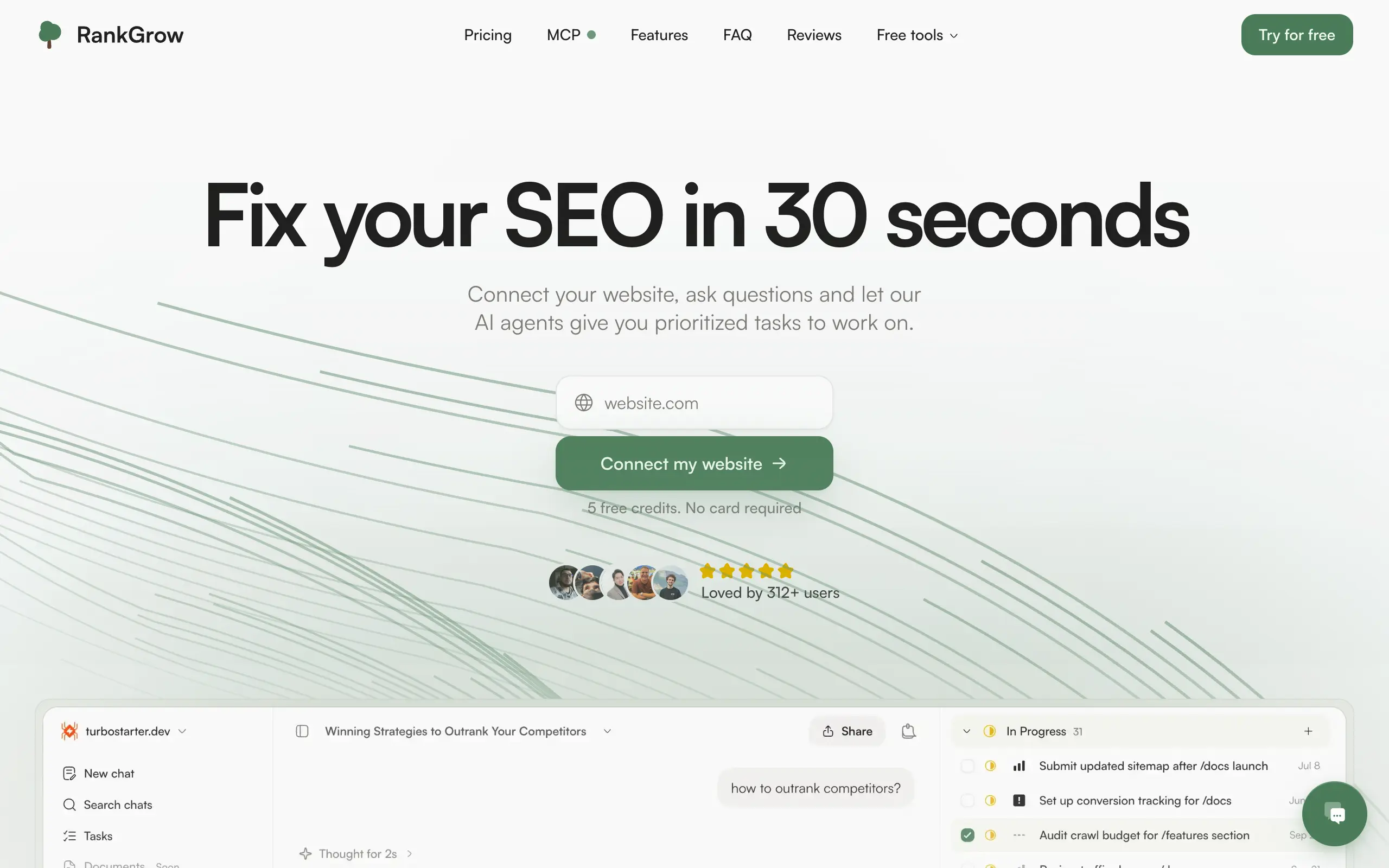
Fix your SEO with AI agents - connect Search Console, get prioritized tasks, and grow organic traffic 📈

Sync your favorite content for distraction-free reading, save time and replace multiple apps. Anytime, anywhere 🔄

Get clean, structured data from 21 platforms like TikTok, Instagram, and YouTube with a single request 📊
Monitor any Telegram channel in real time - track posts, edits, deletions, and growth with AI recaps 📡
AI website builder - describe your business, pick a niche template, edit by chatting, and publish instantly ✨
Find verified home service professionals, compare quotes, and pay securely through escrow - built for Brazilians across the US 🏠
Fix your SEO with AI agents - connect Search Console, get prioritized tasks, and grow organic traffic 📈
Sync your favorite content for distraction-free reading, save time and replace multiple apps. Anytime, anywhere 🔄
Get clean, structured data from 21 platforms like TikTok, Instagram, and YouTube with a single request 📊

Personalized AI apps that automate research, data extraction, and content creation without code 🤖

Enjoy a magical live video chat or receive a unique AI-generated video greeting from Santa Claus 🎅

Scalable blog for food journalist, focused on performance and user experience 🌭

Personal blog and portfolio of Bart Zagrodzki, where he shares his knowledge and work 💼

Ship your startup everywhere. In minutes.

Convert HTML to Markdown with ease, directly in your browser 📄
Personalized AI apps that automate research, data extraction, and content creation without code 🤖
Enjoy a magical live video chat or receive a unique AI-generated video greeting from Santa Claus 🎅
Scalable blog for food journalist, focused on performance and user experience 🌭
Personal blog and portfolio of Bart Zagrodzki, where he shares his knowledge and work 💼
Ship your startup everywhere. In minutes.
Convert HTML to Markdown with ease, directly in your browser 📄

Chat with 50+ AI models, including ChatGPT and Claude, in one place - switch models anytime without losing context 🤖

Supercharge your Claude Code with 6x effective context window and specialized AI agents 🤖

AI-powered emoji picker with smart, context-aware suggestions 🤖

Autonomous company launcher - AI agents work 24/7, escalate what matters, and you stay in control 🤖

Practice storytelling daily with instant feedback to sound clearer, more engaging, and confident 🎤
Chat with 50+ AI models, including ChatGPT and Claude, in one place - switch models anytime without losing context 🤖
Supercharge your Claude Code with 6x effective context window and specialized AI agents 🤖
AI-powered emoji picker with smart, context-aware suggestions 🤖
Autonomous company launcher - AI agents work 24/7, escalate what matters, and you stay in control 🤖
Practice storytelling daily with instant feedback to sound clearer, more engaging, and confident 🎤

Connect with like-minded people
Join our community to get feedback, support, and grow together with 1,000+ builders on board, let's ship it!
Join usShip your startup everywhere. In minutes.
Don't burn tokens on setup and start building features on day one.