Ledgerline
Gives independent dental practices a daily report of unpaid insurance claims and who to call. Office managers recover lost revenue without chasing paperwork by hand.
Ledgerline is a daily worklist for independent dental practices that turns unpaid insurance claims into a short list of who to call, in what order, and what to say. Most small practices still track claims by hand across a practice management system, payer portals and a spreadsheet, so aging claims quietly expire past filing and appeal windows. In 2026, a focused tool that cuts unpaid dental insurance claims recovery down to a 20-minute morning routine is a realistic, buildable B2B SaaS business.
Key takeaways
- Target customer: office managers and billing coordinators at independent dental practices with one to five providers, who do not have a dedicated revenue cycle team.
- Pricing angle: flat monthly subscription per location, anchored to recovered revenue (for example $149 to $299 per month), with an optional annual discount.
- Biggest risk: getting reliable claim data out of fragmented practice management systems without a painful integration for every customer.
- Time to MVP: about 4 to 6 weeks for a CSV and report-based version, assuming you start from a ready-made SaaS starter kit.
What problem does Ledgerline solve for dental practices?
Independent dental practices lose revenue on claims that were submitted but never followed up. The work is dull, scattered and always loses to the patient standing at the front desk. Nobody decides to leave money on the table; the claim just ages until it is no longer worth the effort or is past the payer's deadline.
Who is Ledgerline for?
The ideal customer is the office manager at a practice with one to five dentists, usually in a single location. They run the front desk, schedule, verify benefits, post payments and chase claims, often in the same afternoon. There is typically no billing specialist, and an outsourced billing service is either too expensive or was tried and dropped.
Secondary buyers are the practice owner (who signs the card) and part-time billers who handle several small offices. The owner cares about collections. The office manager cares about not drowning.
What is the current workaround, and why does it fail?
The common workaround is an aging report exported from the practice management system, sometimes pasted into a spreadsheet with manual notes. Someone looks at it when things feel slow, which is rarely.
It fails for predictable reasons:
- Aging reports show data, not decisions. A list of 140 open claims does not say which five matter today.
- Notes live in people's heads. Who called Delta Dental last Tuesday, and what did the rep say?
- No deadline awareness. Timely filing and appeal windows vary by payer, and manual tracking misses them.
- Turnover resets everything. When the office manager leaves, the follow-up history leaves too.
Why is now a good time for dental claims follow-up software?
The gap is between heavy revenue cycle platforms built for groups and the spreadsheet a solo practice actually uses. Incumbent practice management software such as Dentrix, Eaglesoft and Open Dental stores the claims but is rarely designed around a daily action list. Dental service organizations buy enterprise billing tools, and clearinghouses focus on submission and status rather than the human follow-up.
Several trends make 2026 a reasonable window, assuming you stay narrow:
- Staffing pressure on front offices. Small practices commonly report difficulty hiring and keeping administrative staff, which makes anything that saves hours attractive.
- Better document and data extraction. Language models can read explanation of benefits (EOB) documents and denial reasons far more reliably than a few years ago, so you can summarize why a claim stalled.
- More cloud-based practice software. Cloud systems and exports are easier to work with than the on-premise installs of a decade ago, though coverage is still uneven.
- Owners watching margins. Rising supply and labor costs make recovered revenue a more urgent line item.
The honest caveat: this is a crowded adjacent space. Revenue cycle management vendors and outsourced billing companies already serve dental. Your wedge is the independent practice that wants software, not a service contract.
What should the Ledgerline MVP include?
Build the smallest product that produces one morning list people actually act on. The aha moment is opening Ledgerline on day one and seeing a ranked list of claims with a dollar amount, a payer phone number and a suggested call script, then recovering the first payment within a week.
Claim import
Upload a practice management aging report as CSV or Excel and map columns once, so no deep integration is needed to start.
Daily call list
A ranked worklist of claims to chase today, ordered by dollar value, age and payer deadline.
Call notes and follow-up dates
Log the rep, outcome and reference number, then schedule the next touch so history survives staff turnover.
Recovery report
A weekly summary of claims resolved and dollars collected, which the owner can read in under a minute.
What should you cut from version one?
Cut claim submission, eligibility checks, patient statements, payment posting and any direct clearinghouse integration. Skip a mobile app and multi-location roll-ups. Every one of these is a real product on its own, and none is required to prove that a daily list recovers money.
If you later add an AI step, keep it small: summarize a denial reason from an uploaded EOB and suggest the next action. Treat it as an assistant the office manager can override.
How is Ledgerline different from spreadsheets and billing software?
Ledgerline's positioning is simple: it tells you who to call today, not how your accounts receivable looks in aggregate. It is built for one person with limited time, not for a billing department.
| Option | Daily prioritized action list | Tracks payer deadlines | Call history kept | Fits a 1-3 dentist practice |
|---|---|---|---|---|
| Ledgerline | ✅ | ✅ | ✅ | ✅ |
| Spreadsheet plus aging report | ❌ | Manual | Manual | ✅ |
| Practice management software | Partial | Limited | Limited | ✅ |
| Outsourced billing service | Done for you | Varies | Varies | Often too costly |
| Enterprise RCM platform | ✅ | ✅ | ✅ | ❌ |
The moat is not the list itself, which is copyable. It is the accumulated payer knowledge: which numbers actually reach a human, typical turnaround per payer and which denial reasons recur. Over time that data makes the worklist better than anything a spreadsheet can offer.
How would Ledgerline make money?
Charge per location, flat, because office managers dislike usage-based billing they cannot predict. Tie the price to recovered revenue in your sales message, not in the billing mechanics.
Pricing options
- Flat monthly plan: for example $149 per month per location. If the average practice recovers even a modest amount of stalled revenue each month, the subscription pays for itself quickly. This is the simplest to sell and the one to start with.
- Tiered by claim volume: a lower tier for small practices and a higher one for busy ones. It aligns price with value, but adds a decision to the buying process.
- Success fee on recovered claims: a percentage of collected dollars. It is easy to pitch but hard to attribute, and it can create disputes about what Ledgerline actually caused. Treat it as a later experiment, not a launch model.
Assume you charge $149 per month and convert 20% of 100 demo-qualified practices. That is 20 customers and roughly $3,000 in monthly recurring revenue. It is a modest base, which is why churn and referrals matter more than top-of-funnel volume.
Which growth channel works first?
Start with direct outreach and dental communities. Practice owners and office managers gather in study clubs, Facebook groups, state dental association events and consultant networks. Dental practice consultants and bookkeepers who serve many small offices are a strong referral channel, since one relationship can bring several customers.
How do you validate Ledgerline before building it?
Spend one to two weeks proving that office managers will hand over a real report and pay for a list. Do not write production code yet.
Interview eight to ten office managers
Ask them to walk you through the last time they chased a denied claim, what they used and what got dropped. Listen for time spent and missed deadlines, not feature requests.
Run a manual concierge test
Ask two or three practices for an anonymized aging report and send back a prioritized call list in a spreadsheet. If they use it and recover money, you have your aha moment without software.
Publish a landing page
State one promise: a daily list of unpaid claims and who to call. Drive dental community traffic to a waitlist form that also asks which practice software they use.
Ask for pre-sales
Offer a discounted founding-customer annual plan to the practices that responded well. Even three or four paid commitments are a stronger signal than a long waitlist.
Record which practice management systems appear most often. That list decides which export format you support first.
What tech stack should you use to build Ledgerline?
Use a conventional web stack and spend your effort on claim data modeling and the prioritization logic. Everything around that is undifferentiated: accounts, billing, emails and file uploads. A starter kit such as TurboStarter covers authentication, organizations and teams, billing, database, emails, file storage, AI, background tasks, an admin panel, analytics and monitoring in a ready-made monorepo for web and mobile, so version one is mostly your own domain logic.
How does TurboStarter map to Ledgerline's needs?
- Accounts and practices: practices map naturally to organizations, with the owner and office manager as members.
- Subscriptions: per-location pricing runs through billing.
- Report uploads: CSV and EOB files go through storage.
- Nightly work: recalculating priorities and sending the morning digest fits background tasks.
A minimal data model
type Claim = {
  id: string;
  organizationId: string;
  payer: string;
  patientRef: string; // internal reference, avoid storing full identity if possible
  amountCents: number;
  submittedAt: Date;
  filingDeadline: Date | null;
  status: "open" | "denied" | "appealed" | "paid" | "written_off";
  priorityScore: number;
  nextFollowUpAt: Date | null;
};
Keep patient identifiers minimal. The less protected health information you store, the smaller your compliance burden.
Which AI approach should you pick for EOB summaries?
Fastest to ship and usually the most accurate for reading messy documents. The trade-off is sending sensitive documents to a third party, so you need a business associate agreement in place and should redact identifiers before sending where possible.
Keeps data under your control, which can ease customer concerns. It costs more engineering time and infrastructure, and quality on messy scans may lag. Consider it only after customers demand it.
For the first version, skip AI entirely if you can. A rules-based priority score (amount, age, deadline) already produces the daily list.
What could make Ledgerline fail?
Biggest risk: data access and healthcare compliance
Claim data is protected health information in practice, and each practice management system exports it differently. If you cannot get clean data in without manual work, or you mishandle patient information, you will stall on onboarding or lose trust. Plan for HIPAA obligations, including business associate agreements, access controls and audit logging, and get qualified legal advice before handling real patient data.
Other realistic failure modes:
- Integration sprawl. Supporting every system's export is expensive. Mitigate by picking the one or two most common systems among your first customers and refusing the rest for now.
- Low perceived urgency. Office managers are busy and may not adopt a new tool. Mitigate with a first-week win: a concierge-built list that recovers real money before they have to learn anything.
- Incumbent bundling. A practice management vendor could add a similar worklist. Mitigate by serving multiple systems, which a single vendor will not do, and by building payer-level knowledge.
- Small account size. Low price points need low churn and low support cost. Keep onboarding self-serve and track time-to-first-recovery.
What are the next steps? A 30-day launch plan
- Days 1 to 7: interview eight to ten office managers and collect two or three sample aging reports.
- Days 8 to 12: deliver manual call lists to those practices and measure what they recover.
- Days 13 to 18: publish the landing page, post in dental communities and ask for founding-customer commitments.
- Days 19 to 26: start from TurboStarter, build CSV import, the daily list and call notes, and send a morning email digest.
- Days 27 to 30: onboard your first paying practices, watch them use it live and fix the top three friction points.
If you want the fastest path from idea to a working first version of Ledgerline, start with the starter kit and spend your time on the worklist logic that practices will pay for.
FAQ
Interview office managers, then run a manual concierge test by turning a real aging report into a prioritized call list. If practices use the list and recover money, and a few pre-pay, you have stronger evidence than any survey.
A flat monthly price per location, for example $149 to $299, is a sensible starting range to test. Anchor it to the revenue the practice recovers, and adjust based on how quickly customers see their first payment.
Practice management systems such as Dentrix, Eaglesoft and Open Dental, enterprise revenue cycle platforms, outsourced billing services and plain spreadsheets. Your angle is a lightweight daily action list for small practices that those options underserve.
A standard web app with a relational database, file uploads, scheduled jobs for nightly prioritization and transactional email. A starter kit like TurboStarter provides the surrounding infrastructure so you can focus on claim logic.
A CSV-based MVP typically takes four to six weeks for one developer using a starter kit. The main costs are your time, hosting, email and any legal review for healthcare data handling, which you should budget for early.
If you handle real patient data, yes, you should treat it seriously from the start. Minimize the data you store, sign business associate agreements with vendors, use access controls and consult a qualified professional before onboarding customers.
More 🏢 B2B Application SaaS ideas
Discover more innovative b2b application SaaS ideas that are trending in 2026. Each idea is AI-generated with market validation and growth potential to help you find your next profitable venture faster than competitors.
Your competitors are building with TurboStarter
Below are some of the SaaS ideas that have been generated and built with our starter kit.

Monitor any Telegram channel in real time - track posts, edits, deletions, and growth with AI recaps 📡

AI website builder - describe your business, pick a niche template, edit by chatting, and publish instantly ✨

Find verified home service professionals, compare quotes, and pay securely through escrow - built for Brazilians across the US 🏠
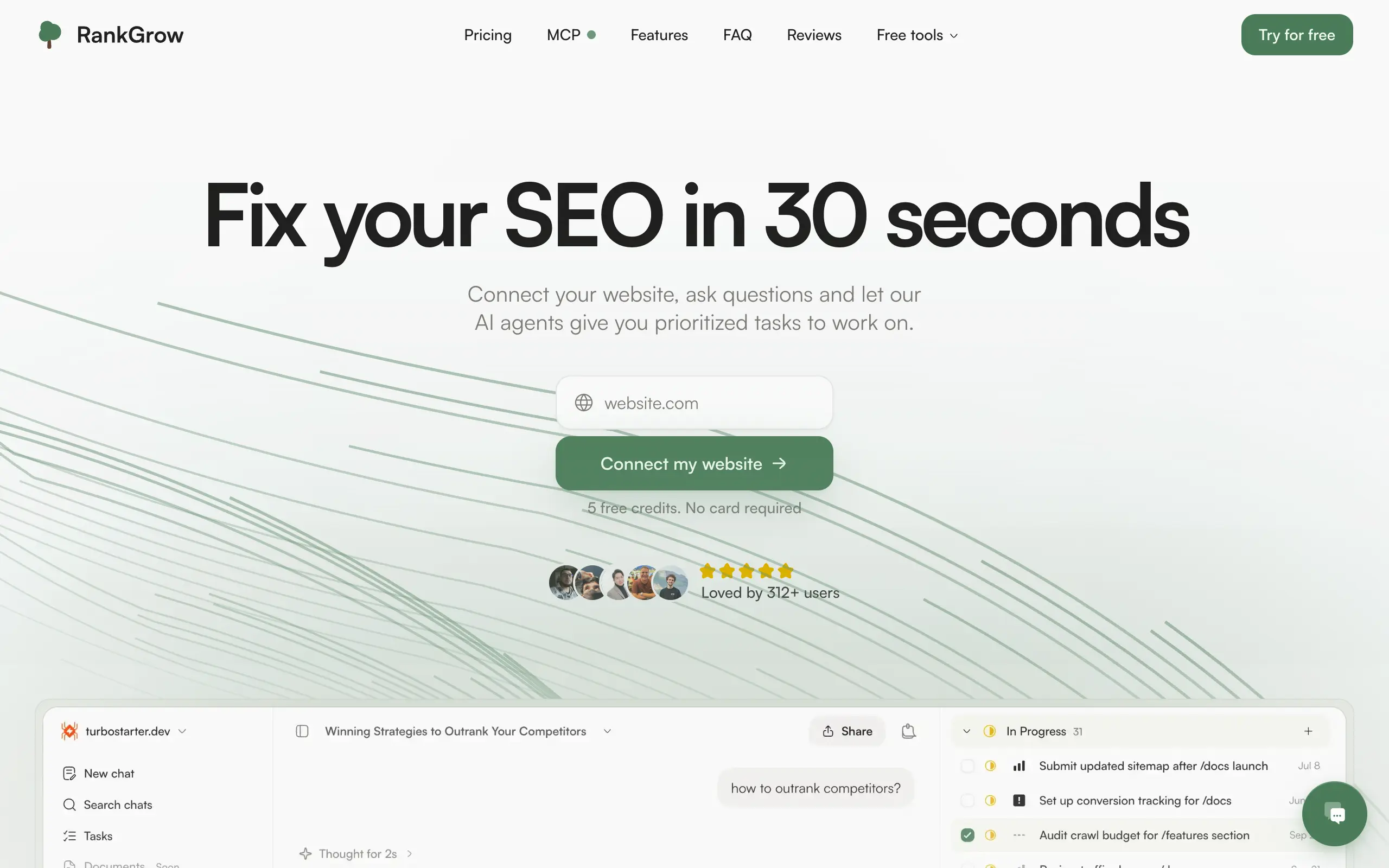
Fix your SEO with AI agents - connect Search Console, get prioritized tasks, and grow organic traffic 📈

Sync your favorite content for distraction-free reading, save time and replace multiple apps. Anytime, anywhere 🔄

Get clean, structured data from 21 platforms like TikTok, Instagram, and YouTube with a single request 📊
Monitor any Telegram channel in real time - track posts, edits, deletions, and growth with AI recaps 📡
AI website builder - describe your business, pick a niche template, edit by chatting, and publish instantly ✨
Find verified home service professionals, compare quotes, and pay securely through escrow - built for Brazilians across the US 🏠
Fix your SEO with AI agents - connect Search Console, get prioritized tasks, and grow organic traffic 📈
Sync your favorite content for distraction-free reading, save time and replace multiple apps. Anytime, anywhere 🔄
Get clean, structured data from 21 platforms like TikTok, Instagram, and YouTube with a single request 📊

Personalized AI apps that automate research, data extraction, and content creation without code 🤖

Enjoy a magical live video chat or receive a unique AI-generated video greeting from Santa Claus 🎅

Scalable blog for food journalist, focused on performance and user experience 🌭

Personal blog and portfolio of Bart Zagrodzki, where he shares his knowledge and work 💼

Ship your startup everywhere. In minutes.

Convert HTML to Markdown with ease, directly in your browser 📄
Personalized AI apps that automate research, data extraction, and content creation without code 🤖
Enjoy a magical live video chat or receive a unique AI-generated video greeting from Santa Claus 🎅
Scalable blog for food journalist, focused on performance and user experience 🌭
Personal blog and portfolio of Bart Zagrodzki, where he shares his knowledge and work 💼
Ship your startup everywhere. In minutes.
Convert HTML to Markdown with ease, directly in your browser 📄

Chat with 50+ AI models, including ChatGPT and Claude, in one place - switch models anytime without losing context 🤖

Supercharge your Claude Code with 6x effective context window and specialized AI agents 🤖

AI-powered emoji picker with smart, context-aware suggestions 🤖

Autonomous company launcher - AI agents work 24/7, escalate what matters, and you stay in control 🤖

Practice storytelling daily with instant feedback to sound clearer, more engaging, and confident 🎤
Chat with 50+ AI models, including ChatGPT and Claude, in one place - switch models anytime without losing context 🤖
Supercharge your Claude Code with 6x effective context window and specialized AI agents 🤖
AI-powered emoji picker with smart, context-aware suggestions 🤖
Autonomous company launcher - AI agents work 24/7, escalate what matters, and you stay in control 🤖
Practice storytelling daily with instant feedback to sound clearer, more engaging, and confident 🎤

Connect with like-minded people
Join our community to get feedback, support, and grow together with 1,000+ builders on board, let's ship it!
Join usShip your startup everywhere. In minutes.
Don't burn tokens on setup and start building features on day one.