Pawcount
Per-visit billing and boarding ledger for mobile dog groomers who run from van to van across a single county. It sends itemized invoices and payment reminders so groomers get paid the same day instead of chasing balances.
Pawcount is a per-visit billing and boarding ledger for mobile dog groomers who work out of a van across one county. It sends itemized invoices and payment reminders right after each appointment, so groomers get paid the same day instead of chasing balances at the end of the week. In 2026, with card-on-file habits and text-first communication now normal for local services, billing software for mobile groomers is a narrow but buildable business.
Key takeaways
- Target customer: solo and two-van mobile dog groomers serving a single county, typically 6 to 10 appointments a day.
- Pricing angle: a flat monthly subscription (for example $19 to $39 per van) instead of a percentage of revenue, since groomers resent fees on tips and payments.
- Biggest risk: groomers already take payments through Square, Venmo or Cash App, so Pawcount must prove that itemized invoicing and automated reminders recover real money.
- Time to MVP: about 3 to 5 weeks for a solo founder using a starter kit for auth, billing and emails.
What problem does a billing ledger for mobile dog groomers solve?
Mobile groomers do the work in a driveway, hand the dog back, and then leave without a clean record of what was owed and paid. Billing becomes an evening chore done from memory, a notes app or a paper calendar. The result is late payments, forgotten add-ons and awkward text messages to clients.
Who is Pawcount for?
The ideal customer is a solo groomer or a two-van operator working one county, charging per visit, with a mix of recurring clients (every 4 to 8 weeks) and a few boarding or day-stay add-ons. They are good with dogs and bad with admin. They probably have 40 to 150 active clients and no office staff.
Groomers who run a salon with a front desk are a different customer. They already have a point of sale system and reception habits. Pawcount is for people who work alone and bill from a phone.
What do they do today, and why does it fail?
The common workarounds are a paper notebook, a spreadsheet, a general scheduling app, or a payment app where they type in an amount by hand. Each fails in a specific way:
- Notebooks and spreadsheets: nothing sends a reminder, and itemization (de-matting fee, nail grind, travel surcharge) lives in the groomer's head.
- Payment apps: they collect money well but do not track who still owes, so balances vanish into a text thread.
- Scheduling apps: they handle the calendar but treat billing as an afterthought, and often assume a salon workflow.
- Boarding on the side: a few groomers take dogs for a night or weekend, and those charges get tracked on a separate scrap of paper or not at all.
The cost is not dramatic per client. It is the slow leak of a $10 balance here and an unbilled add-on there, plus the mental load of remembering who owes what.
Is there a market for mobile groomer billing software in 2026?
Yes, but it is a niche inside a niche, and that is the point. The broad pet business software category already exists, with well-known tools for grooming salons, kennels and daycares. Most are designed around a physical location, a front desk and a staff roster, so a solo van operator pays for features they never touch.
Why now?
Several shifts make a narrow product viable:
- Text-first clients: customers expect a payment link by text, not a paper invoice or a phone call.
- Card-on-file and tap-to-pay are normal: clients are used to paying from a phone right at the door.
- Cheap infrastructure: payments, email, SMS and hosting are available as APIs, so a small team can build what once needed a bigger one.
- Mobile service growth: more groomers choose a van over a salon lease, which creates a customer group underserved by salon-centric tools.
Where is the gap?
The gap is a billing-first product shaped around the visit, not the shop. Incumbents add invoicing as one module among many. Pawcount makes the visit record the center: what was done, what it cost, who paid, and what is still open. That framing is simple, and simple is easier to sell to someone who hates software.
What should the Pawcount MVP include?
Build the smallest thing that gets a groomer from "appointment finished" to "paid" in under two minutes. Everything else waits. The aha moment is the first time a groomer finishes a visit, taps once, and the client's phone shows an itemized invoice with a pay button, then a reminder fires on its own when the client does not pay.
The four core features
Per-visit ledger
Log each visit with services, add-ons, travel fee and tip, building a running balance per client and per dog.
Itemized invoices by text and email
Send a clean breakdown with a payment link the moment the visit ends, with no typing at the door.
Automatic payment reminders
Schedule polite follow-ups at set intervals so unpaid balances get chased without the groomer writing a single message.
Boarding and stay tracking
Record overnight or day stays as ledger entries with nightly rates, so boarding lands on the same invoice as grooming.
What to cut from version one
- Full calendar and route optimization: groomers already have a calendar, and building a good one is a separate company.
- Staff payroll and commissions.
- Inventory and retail sales.
- A native mobile app. A responsive web app that works well on a phone is enough to test the idea.
- Custom branding beyond a logo and a business name.
How is Pawcount different from other pet business software?
The unique selling proposition is narrow: get paid the same day, from the van, with no admin evening. Pawcount is not a scheduling suite or a salon system. It is the billing and balance layer for people who work from a vehicle.
| Option | Built for van-based groomers | Itemized per-visit invoices | Automatic reminders | Boarding on same ledger |
|---|---|---|---|---|
| Pawcount | ✅ | ✅ | ✅ | ✅ |
| Notebook or spreadsheet | ✅ | Manual | ❌ | Manual |
| Payment apps (Square, Venmo, Cash App) | ✅ | Limited | ❌ | ❌ |
| Salon and kennel suites | Often ❌ | ✅ | Varies | ✅ |
| General invoicing tools | Partly | ✅ | ✅ | ❌ |
General invoicing tools are the toughest alternative, because they already send invoices and reminders. Pawcount wins only if its data model (dogs, visits, add-ons, stays) saves enough setup time that a groomer prefers it over a blank invoice template.
How would Pawcount make money?
Charge a flat subscription. Groomers see percentage fees on every payment as a tax on their work, and a flat price is easy to compare with the hours saved.
Pricing options
- Per-van subscription: for example $19 per month for one van and $34 for two. If you convert 3% of trial users, you need roughly 35 trials per paying customer, so plan acquisition around that math.
- Free tier with limits: up to 15 active clients free, paid beyond that. This helps word of mouth but costs support time, so only use it if activation is strong.
- Add-on for text messages: include a monthly SMS allowance and charge for overage, since SMS has a real per-message cost. Assume this cost when setting your price.
Avoid taking a percentage of payments in version one. It adds compliance and payout complexity, and it reads badly to price-sensitive solo operators. Let clients pay through a processor connected to the groomer's own account.
Which growth channel works first?
Start with local and community channels where groomers already gather: regional groomer Facebook groups, grooming supply stores, and mobile grooming van upfitters. A direct, personal approach beats ads at this size. Ask each early customer to introduce one other groomer in their county.
How do you validate the Pawcount idea before building?
Spend one to two weeks proving that groomers feel the pain and will pay. Do not write production code yet.
Interview ten mobile groomers
Ask how they billed their last five clients, who still owes them money, and how long billing takes each week. Listen for specific unpaid amounts and workarounds, not opinions about software.
Ship a one-page site
State one promise: itemized invoices and automatic reminders from the van. Add a waitlist form and share it in two or three groomer communities.
Run a manual concierge test
For three groomers, take their visit notes and send the invoices and reminders yourself by text or email. Track how many get paid faster and whether they would miss it if you stopped.
Ask for a pre-sale
Offer a discounted founding price for three to six months, paid upfront or with a card on file. Five paying groomers is a stronger signal than a hundred waitlist signups.
What tech stack should you use to build Pawcount?
Keep it boring: a web app with a relational database, a payment processor, transactional email, an SMS provider and a job queue for reminders. Groomers will use it on a phone in a driveway, so mobile-first layout and fast loads matter more than clever architecture.
How does TurboStarter speed this up?
Authentication, subscriptions, database setup, emails and file storage are undifferentiated work that eats the first month. TurboStarter ships these in a ready-made monorepo for web and mobile, so you can spend your time on the ledger, invoice flow and reminder logic. The relevant pieces are authentication for groomer accounts, billing for your own subscriptions, database for the data model, and background tasks for scheduled reminders.
Core data model
A minimal schema keeps the ledger honest. Each visit is a record, each line item belongs to a visit, and the balance is derived from invoices minus payments.
create table clients (
  id uuid primary key,
  groomer_id uuid not null,
  name text not null,
  phone text,
  email text
);

create table visits (
  id uuid primary key,
  client_id uuid not null references clients(id),
  dog_name text not null,
  visited_at timestamptz not null,
  kind text not null check (kind in ('grooming', 'boarding'))
);

create table line_items (
  id uuid primary key,
  visit_id uuid not null references visits(id),
  label text not null,
  amount_cents integer not null
);

create table payments (
  id uuid primary key,
  visit_id uuid not null references visits(id),
  amount_cents integer not null,
  paid_at timestamptz
);
Store money as integer cents and compute balances in queries, not in a mutable column.
Which reminder delivery channel should you choose?
Text messages get seen quickly and match how groomers already talk to clients. The trade-off is per-message cost and consent rules, so track opt-ins and build the cost into your pricing.
Email is nearly free and easy to ship, which makes it a good default for the MVP. The trade-off is slower response, so expect payment times to lag behind text.
A sensible path is email at launch, with SMS as a paid add-on once you see which reminders actually get invoices paid.
What could make Pawcount fail?
Biggest risk: groomers may not feel the pain enough to switch
Many solo groomers already get paid on the spot with a card reader or a payment app, so the leak may be smaller than it looks. If your interviews show that most clients pay at the door and balances are rare, Pawcount becomes a nice-to-have. Test this first by asking for real unpaid amounts, and only build if a clear group of groomers carries open balances every month.
Other reasons it can fail:
- Low willingness to pay: a solo groomer may balk at $19 per month. Mitigate by anchoring on recovered revenue and offering an annual discount.
- Incumbents add the feature: a salon suite could ship a van mode. Stay narrow, move quickly, and build relationships in local groomer communities that large vendors ignore.
- SMS and payment compliance: messaging consent rules and payment handling vary by region. Use established providers, store opt-ins, and avoid holding client funds yourself.
- Churn from seasonality or small customer base: a one-county focus can cap growth. Plan to expand county by county through referrals before building for other trades like mobile pet sitters.
What are the next steps to launch in 30 days?
Week 1: validate
Run the interviews, publish the landing page and start the concierge test with three groomers.
Week 2: scaffold
Set up the project from TurboStarter, configure auth and billing, and create the client, visit and payment tables.
Week 3: build the core loop
Ship visit logging, itemized invoices with payment links, and one automatic reminder sequence.
Week 4: onboard five groomers
Import their client lists, sit with them for their first real workday, and fix whatever slows them down in the driveway.
Start with one county, five paying groomers and one clear promise: paid the same day. If those groomers keep using it after the first month, you have the beginning of a real business.
FAQ
Interview ten groomers about their unpaid balances and weekly admin time, then run a manual concierge test for three of them. Ask for a pre-sale at a founding price. Paying customers matter more than waitlist signups.
A flat monthly price per van, in the range of $19 to $39, is a reasonable starting assumption. Test it against the money a groomer recovers each month. Avoid percentage fees early, since they feel punitive to small operators.
Pet business suites for salons, kennels and daycares, general invoicing tools, and payment apps like Square. Most are either built around a physical shop or lack dog-specific records. Your edge is a billing-first workflow designed for van-based work.
A web app with a relational database such as Postgres, a payment processor, an email provider, an SMS provider and a background job system for reminders. A starter kit like TurboStarter covers auth, billing, database, emails and background tasks so you can focus on the ledger.
Plan for roughly 3 to 5 weeks of focused work for a solo developer using a starter kit. Cash costs are mostly hosting, email and SMS usage, which stay small until you have real customers. The main expense is your time spent with groomers.
Not at the start. A responsive web app that works well on a phone is enough to test the core loop. Add a native app later if groomers ask for offline access or tap-to-pay inside the app.
More 🏢 B2B Application SaaS ideas
Discover more innovative b2b application SaaS ideas that are trending in 2026. Each idea is AI-generated with market validation and growth potential to help you find your next profitable venture faster than competitors.
Your competitors are building with TurboStarter
Below are some of the SaaS ideas that have been generated and built with our starter kit.

Monitor any Telegram channel in real time - track posts, edits, deletions, and growth with AI recaps 📡

AI website builder - describe your business, pick a niche template, edit by chatting, and publish instantly ✨
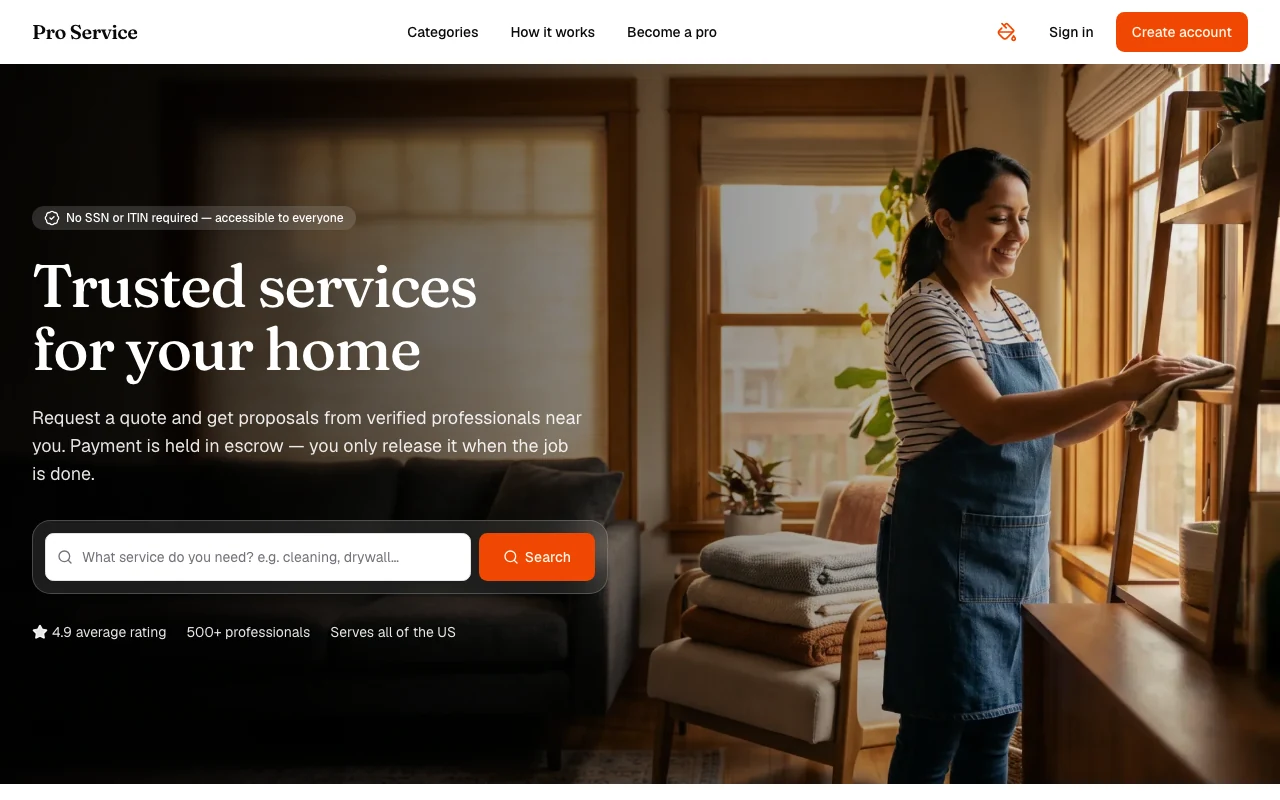
Find verified home service professionals, compare quotes, and pay securely through escrow - built for Brazilians across the US 🏠
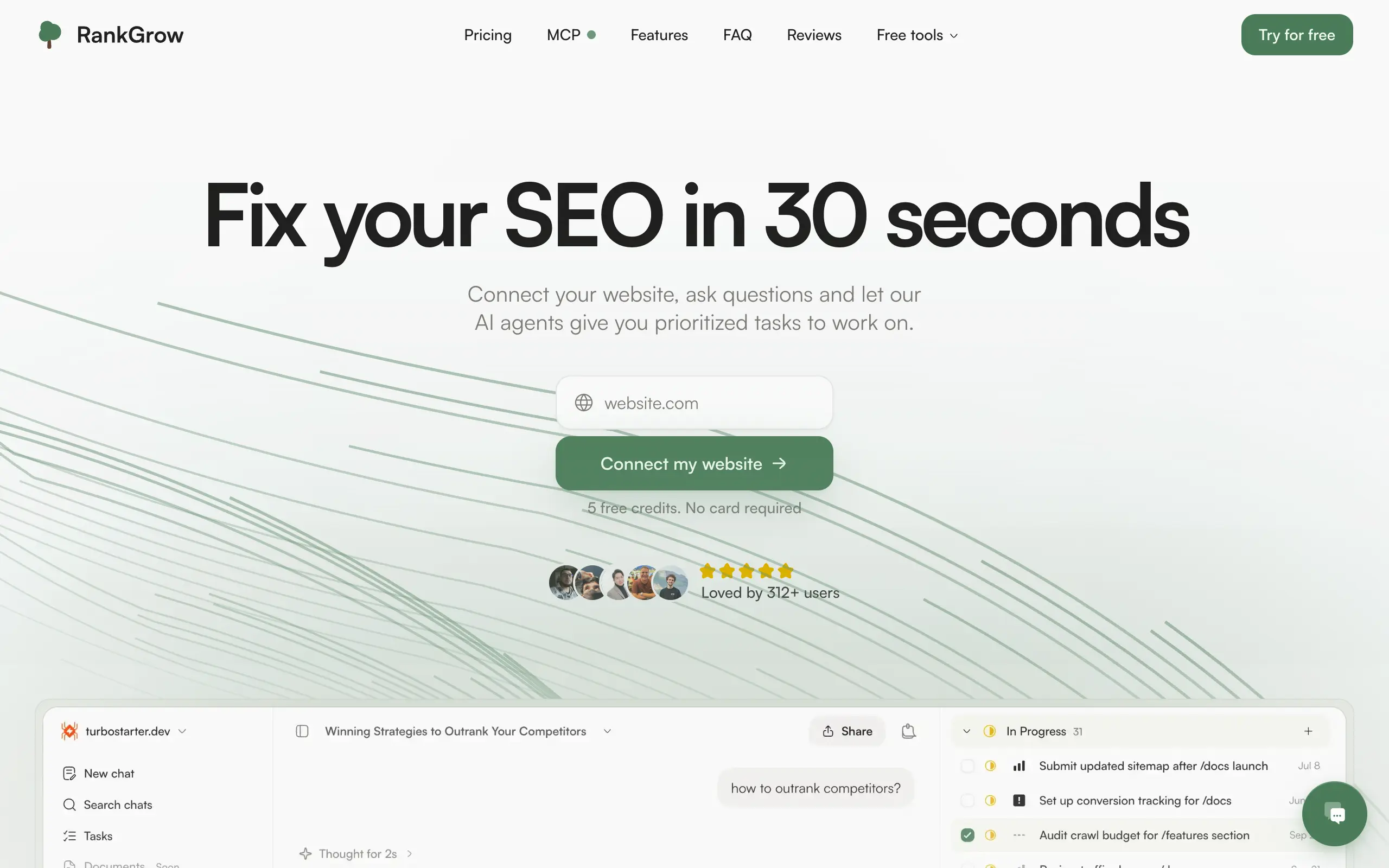
Fix your SEO with AI agents - connect Search Console, get prioritized tasks, and grow organic traffic 📈

Sync your favorite content for distraction-free reading, save time and replace multiple apps. Anytime, anywhere 🔄

Get clean, structured data from 21 platforms like TikTok, Instagram, and YouTube with a single request 📊
Monitor any Telegram channel in real time - track posts, edits, deletions, and growth with AI recaps 📡
AI website builder - describe your business, pick a niche template, edit by chatting, and publish instantly ✨
Find verified home service professionals, compare quotes, and pay securely through escrow - built for Brazilians across the US 🏠
Fix your SEO with AI agents - connect Search Console, get prioritized tasks, and grow organic traffic 📈
Sync your favorite content for distraction-free reading, save time and replace multiple apps. Anytime, anywhere 🔄
Get clean, structured data from 21 platforms like TikTok, Instagram, and YouTube with a single request 📊

Personalized AI apps that automate research, data extraction, and content creation without code 🤖

Enjoy a magical live video chat or receive a unique AI-generated video greeting from Santa Claus 🎅

Scalable blog for food journalist, focused on performance and user experience 🌭

Personal blog and portfolio of Bart Zagrodzki, where he shares his knowledge and work 💼

Ship your startup everywhere. In minutes.

Convert HTML to Markdown with ease, directly in your browser 📄
Personalized AI apps that automate research, data extraction, and content creation without code 🤖
Enjoy a magical live video chat or receive a unique AI-generated video greeting from Santa Claus 🎅
Scalable blog for food journalist, focused on performance and user experience 🌭
Personal blog and portfolio of Bart Zagrodzki, where he shares his knowledge and work 💼
Ship your startup everywhere. In minutes.
Convert HTML to Markdown with ease, directly in your browser 📄

Chat with 50+ AI models, including ChatGPT and Claude, in one place - switch models anytime without losing context 🤖

Supercharge your Claude Code with 6x effective context window and specialized AI agents 🤖

AI-powered emoji picker with smart, context-aware suggestions 🤖

Autonomous company launcher - AI agents work 24/7, escalate what matters, and you stay in control 🤖

Practice storytelling daily with instant feedback to sound clearer, more engaging, and confident 🎤
Chat with 50+ AI models, including ChatGPT and Claude, in one place - switch models anytime without losing context 🤖
Supercharge your Claude Code with 6x effective context window and specialized AI agents 🤖
AI-powered emoji picker with smart, context-aware suggestions 🤖
Autonomous company launcher - AI agents work 24/7, escalate what matters, and you stay in control 🤖
Practice storytelling daily with instant feedback to sound clearer, more engaging, and confident 🎤

Connect with like-minded people
Join our community to get feedback, support, and grow together with 1,000+ builders on board, let's ship it!
Join usShip your startup everywhere. In minutes.
Don't burn tokens on setup and start building features on day one.