Pitchbale
Gives regional mobile car detailing franchises a shared booking and supply reorder tool. Owners cut double-booked bays and running out of wax and towels mid-week.
Pitchbale is a shared booking and supply reorder tool for regional mobile car detailing franchises. It stops two expensive mistakes: double-booked bays and vans, and running out of wax, towels and chemicals mid-week. The opportunity in 2026 is that franchise-style service operators have outgrown spreadsheets and group chats, but generic field service software was not built for shared bays, shared stock and multi-location supply. If you are looking for b2b application SaaS ideas 2026 with a narrow, reachable buyer, this is a concrete one.
Key takeaways
- Target customer: owners and operations managers of regional mobile car detailing franchises with roughly 3 to 15 vans or bays across several territories.
- Pricing angle: per-location monthly subscription, with a small add-on for supply reordering and supplier integrations.
- Biggest risk: the buyer pool is small and niche, so you must prove franchise-level retention before expanding to adjacent trades.
- Time to MVP: about 4 to 6 weeks for a solo founder using a starter kit, assuming you skip native mobile at first.
Who is Pitchbale for?
Pitchbale is for the owner or operations lead of a regional mobile car detailing franchise: a business with several territories, a handful of vans or hosted bays, and a central person who currently untangles scheduling and stock by hand. Think of someone running 6 vans across a metro area plus two satellite towns, with part-time detailers and a shared storage unit.
What do they do today?
The typical workaround is a mix of a generic calendar, a booking form on the website, a group chat and a spreadsheet of supplies. Someone texts the owner when a detailer is low on microfiber towels. Someone else notices a customer was booked into a bay that another team had already reserved.
Why does the workaround fail?
It fails because bookings and supplies are linked, but the tools are not. A calendar knows nothing about how much ceramic coating is left. A spreadsheet cannot stop two franchisees from reserving the same shared bay.
- Double bookings: shared bays, vans and detailers are scheduled in separate places.
- Stockouts mid-week: reorders happen when someone complains, not when usage predicts a shortage.
- No usage visibility: nobody knows which job types burn the most product.
- Owner as the glue: the owner becomes the human sync layer, which does not scale past a few vans.
Why is there a gap for franchise detailing software in 2026?
The gap exists because the tools around this niche are either too generic or aimed at a different buyer. Field service platforms such as Jobber or Housecall Pro handle scheduling and invoicing well, but they treat supplies as an afterthought. Inventory tools handle stock but know nothing about bookings. Few products connect the two for a multi-location mobile service business.
Why now?
Several shifts make the timing reasonable, though you should verify each with your own interviews:
- Mobile and on-site services keep growing as customers expect the service to come to them.
- Small franchise groups are professionalizing and expect software, not group chats.
- Supplier ordering is increasingly online, which makes reorder automation feasible.
- AI-assisted forecasting is now cheap enough to run on a small usage dataset.
How big is the market?
Do not rely on a top-down number. Count real franchise groups and multi-van operators in two or three regions, then multiply by a realistic price. If you find 200 reachable operators and charge an average of $150/month, that is a $360,000 annual revenue ceiling in that slice, which is a decent first business but not a venture-scale one. Adjacent trades such as mobile pet grooming, window cleaning or pressure washing share the same booking-plus-supplies problem and are the natural expansion path.
What should the Pitchbale MVP include?
The MVP should do four things well and cut everything else. The aha moment is the first time Pitchbale blocks a double booking or warns the owner that towels will run out on Thursday, before anyone complains.
Shared resource calendar
One schedule for vans, bays and detailers that rejects conflicting bookings across locations.
Supply tracking per location
Simple stock counts for wax, towels, chemicals and pads, updated when a job is completed.
Usage-based reorder alerts
Estimates when each item runs out from booked job types and suggests a reorder quantity.
Franchise owner dashboard
One view of upcoming bookings, conflicts and low-stock items across every territory.
What should you cut at first?
- Customer-facing payment processing and invoicing, since existing tools already do this.
- Native mobile apps, because a responsive web app is enough for detailers checking a schedule.
- Automatic supplier purchasing. Start with a prefilled order email or a shareable list.
- Route optimization and GPS tracking.
How do jobs link to supplies?
The key design decision is a simple mapping: each service type consumes a set amount of each supply. A full interior detail might use a known number of towels and a measured amount of cleaner. Owners can edit these defaults, and the system learns from corrections over time.
How is Pitchbale different from existing tools?
Pitchbale's unique selling proposition is that bookings and stock are one system, built for multi-location mobile detailing. A booking consumes supplies, and a supply shortage affects what can be booked. Generic tools solve one half of this.
| Option | Shared bay and van conflicts | Supply forecasting | Multi-location view | Niche fit |
|---|---|---|---|---|
| Pitchbale | ✅ | ✅ | ✅ | Detailing |
| Spreadsheets and group chat | ❌ | Manual | ❌ | Flexible but fragile |
| General field service software | Partly | ❌ | Depends on plan | Generic |
| Standalone inventory tools | ❌ | Basic | Depends | Generic |
| DIY with calendar plus forms | ❌ | ❌ | ❌ | Custom but brittle |
The honest caveat is that incumbents could add basic stock tracking. Your defense is depth in the niche: default supply usage per detailing service, supplier lists that match what detailers actually buy, and templates for franchise onboarding.
How would Pitchbale make money?
The simplest model is a per-location subscription, because the value scales with the number of territories and vans. Three realistic options:
- Per-location flat fee: for example $59 to $99 per location per month. Easy to explain and aligned with franchise structure.
- Base plan plus supply add-on: a lower booking plan, with reorder forecasting and supplier features as a paid upgrade. This helps you learn which half customers value more.
- Franchisor-level contract: if a franchisor wants every franchisee on the same tool, sell an annual agreement with onboarding. Slower to close, but retention is much stronger.
As an assumption, if you charge $79 per location and a typical customer has 5 locations, each account is roughly $395/month. Thirty such accounts would be about $11,850 monthly recurring revenue. Test whether owners accept this before building billing complexity.
What growth channel works first?
Direct outreach to franchise owners, supported by franchisor relationships. Join detailing trade groups and supplier communities, then offer a free setup for the first handful of operators. Partnerships with detailing supply distributors are a strong second channel, since they already know who runs out of product.
How do you validate Pitchbale before building it?
Spend one to two weeks proving that owners feel the pain and will pay. Do this before writing production code.
Interview ten operators
Talk to franchise owners and ops managers about their last double booking and last stockout. Ask what it cost them in lost jobs, wasted travel or rush shipping.
Map their current process
Ask to see the spreadsheet, calendar or chat thread they use. The messiness of it tells you how urgent the problem is.
Publish a focused landing page
State one promise: no more double-booked bays or mid-week stockouts. Collect waitlist emails and ask for the number of vans and locations in the form.
Offer a paid pilot
Ask three or four operators to pre-pay a discounted first quarter, or commit to a pilot with a clear price. A verbal "sounds great" is not validation, a payment or signed commitment is.
Set a go or no-go threshold
Before you start, decide what counts as success, for example several pilots committed and a majority of interviewees describing the problem unprompted. If you miss it, narrow the niche or change the angle.
What tech stack should you use to build Pitchbale?
Use a typed full-stack web setup with a relational database, because bookings, resources and stock are strongly relational. The scheduling conflict check is the technical heart, and it is much easier to enforce in SQL than in a document store.
The undifferentiated work is large: accounts, teams, billing, emails and file uploads. TurboStarter provides a ready-made monorepo for web apps (with mobile available later), so you can spend your first weeks on the booking and reorder logic. Relevant pieces for this product:
- Authentication and organizations: each franchise group is an organization with owners, managers and detailers. See the organizations docs.
- Billing: per-location subscriptions and add-ons. See the billing docs.
- Emails: booking confirmations and low-stock alerts. See the emails docs.
- Background tasks: nightly stock forecasts and reorder reminders. See the background tasks docs.
How should you model bookings and stock?
A minimal data model looks like this:
create table resources (
  id uuid primary key,
  location_id uuid not null,
  kind text not null, -- 'van' | 'bay' | 'detailer'
  name text not null
);

create table bookings (
  id uuid primary key,
  resource_id uuid not null references resources(id),
  service_type_id uuid not null,
  starts_at timestamptz not null,
  ends_at timestamptz not null,
  exclude using gist (
    resource_id with =,
    tstzrange(starts_at, ends_at) with &&
  )
);

create table supply_usage (
  service_type_id uuid not null,
  supply_id uuid not null,
  quantity numeric not null
);
The exclusion constraint lets Postgres itself reject overlapping bookings for the same resource (it requires the btree_gist extension). That is a strong guarantee against double bookings, even with concurrent requests.
Which database and forecasting approach should you pick?
Pick Postgres if you want database-level conflict protection through exclusion constraints, multi-tenant data and room to grow. It is the better default for this product, since double-booking prevention is your core promise.
SQLite is simpler to run and fine for a prototype, but it lacks range exclusion constraints, so you must enforce conflicts in application code with transactions. Choose it only for a throwaway demo, not a product you will sell on reliability.
For forecasting, start with simple rules: average usage per service type times upcoming bookings. Add AI only where it helps, such as parsing supplier price lists or explaining why a reorder is suggested. The AI docs cover the integration if you go that route.
What could make Pitchbale fail?
Biggest risk: a small, slow-moving buyer pool
Regional detailing franchises are a narrow market, and owners often resist new software. If you cannot reach a meaningful number of paying locations within the first few months, the business stays a side project. Mitigate this by validating with pre-paid pilots, keeping infrastructure costs low, and planning an expansion path to adjacent mobile trades from the start.
Other risks to plan for:
- Incumbents add stock features: go deeper on niche defaults and supplier workflows, and build relationships with franchisors.
- Data entry fatigue: if detailers must log supplies manually, they will not. Deduct stock automatically from completed jobs and make corrections one tap.
- Inaccurate forecasts: early estimates will be off. Show the reasoning, let owners adjust, and treat suggestions as prompts rather than automatic orders.
What are the next steps to launch Pitchbale in 30 days?
Days 1 to 7: validate
Run the interviews, publish the landing page and ask for pilot commitments.
Days 8 to 14: scaffold the product
Set up the monorepo, auth, organizations and billing with TurboStarter, then model resources, bookings and supplies.
Days 15 to 21: build the core loop
Ship the shared calendar with conflict prevention and manual stock counts. Onboard one pilot customer by hand.
Days 22 to 27: add reorder alerts
Implement usage mappings and low-stock emails. Watch how the pilot uses them and fix confusing steps.
Days 28 to 30: charge and iterate
Turn on billing for pilot customers, collect feedback and decide which half of the product to deepen.
The fastest way to learn whether shared booking and supply reordering for franchise detailing is a real business is to put a working version in front of paying operators. Start with the validation plan this week, then build the first version on a starter kit so the time goes into the product.
FAQ
Interview at least ten operators, then ask for a paid pilot or pre-payment. Interest alone is weak evidence. A committed payment, even a small one, tells you the pain is worth solving.
Start with a per-location price in the range of tens of dollars per month and test upward during pilots. Anchor against the cost of a lost job or rush supply order. If one prevented double booking pays for a month, the price is easy to defend.
General field service tools like Jobber and Housecall Pro, plus standalone inventory apps and spreadsheets. Most are either generic or cover only half of the problem. Your edge is connecting bookings and supplies for multi-location detailing.
A TypeScript full-stack app with Postgres is a strong default, because conflict prevention benefits from relational constraints. Add background jobs for forecasts and email for alerts. A starter kit like TurboStarter covers auth, billing, teams and emails.
A solo developer can usually ship a usable MVP in about 4 to 6 weeks when starting from a starter kit. Costs are mostly your time plus modest hosting and email fees. Native mobile apps and automatic supplier ordering are the main things that would extend that timeline.
More 🏢 B2B Application SaaS ideas
Discover more innovative b2b application SaaS ideas that are trending in 2026. Each idea is AI-generated with market validation and growth potential to help you find your next profitable venture faster than competitors.
Your competitors are building with TurboStarter
Below are some of the SaaS ideas that have been generated and built with our starter kit.

Monitor any Telegram channel in real time - track posts, edits, deletions, and growth with AI recaps 📡

AI website builder - describe your business, pick a niche template, edit by chatting, and publish instantly ✨
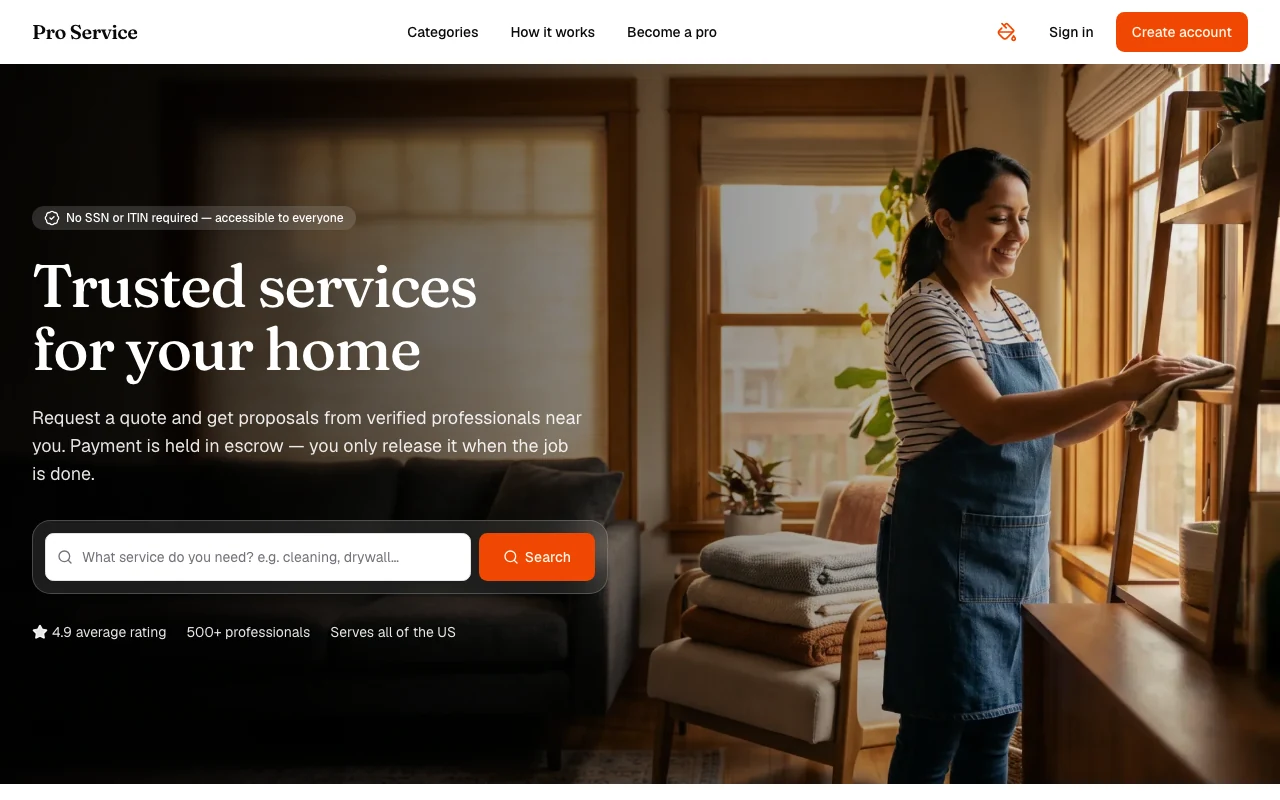
Find verified home service professionals, compare quotes, and pay securely through escrow - built for Brazilians across the US 🏠
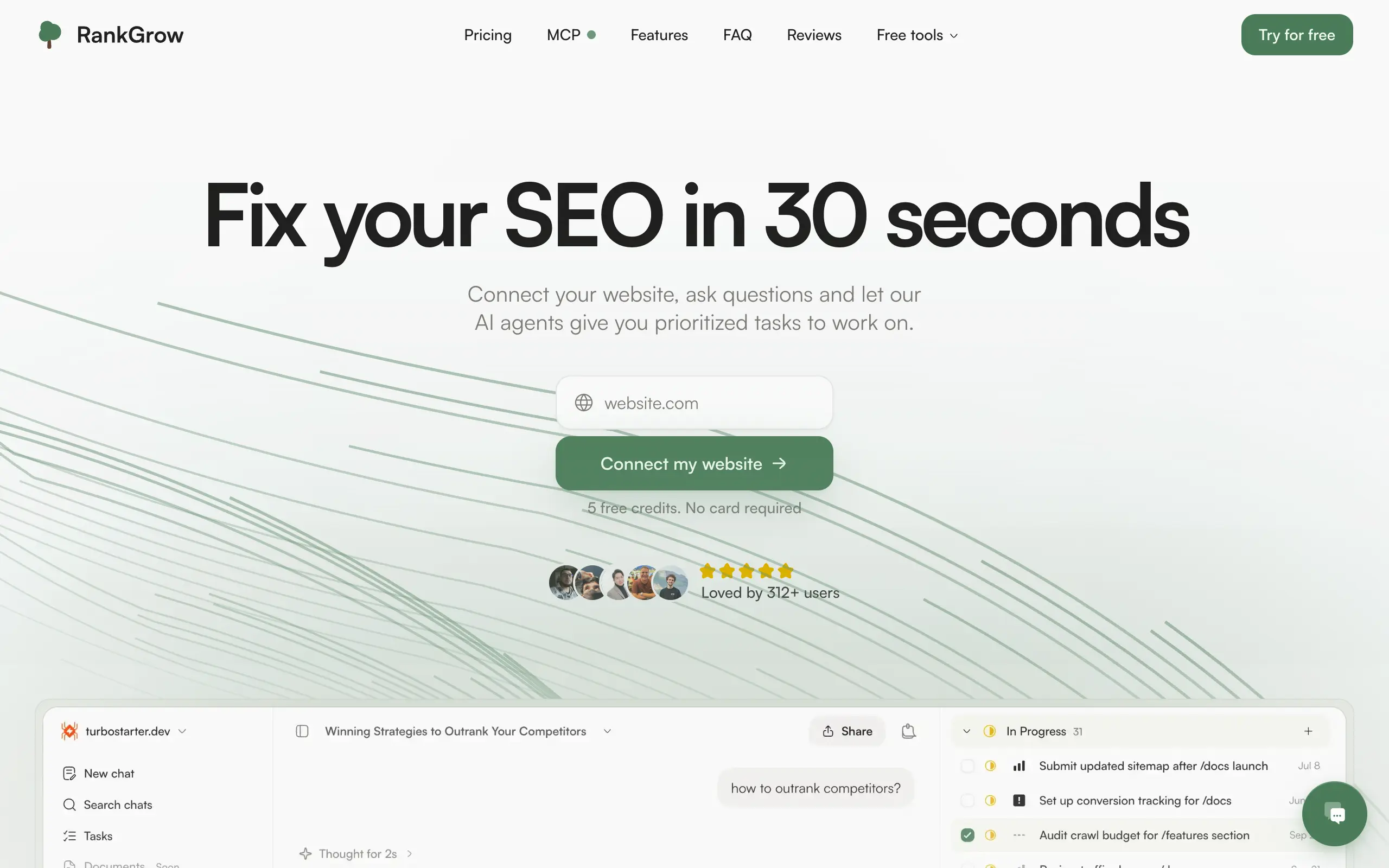
Fix your SEO with AI agents - connect Search Console, get prioritized tasks, and grow organic traffic 📈

Sync your favorite content for distraction-free reading, save time and replace multiple apps. Anytime, anywhere 🔄

Get clean, structured data from 21 platforms like TikTok, Instagram, and YouTube with a single request 📊
Monitor any Telegram channel in real time - track posts, edits, deletions, and growth with AI recaps 📡
AI website builder - describe your business, pick a niche template, edit by chatting, and publish instantly ✨
Find verified home service professionals, compare quotes, and pay securely through escrow - built for Brazilians across the US 🏠
Fix your SEO with AI agents - connect Search Console, get prioritized tasks, and grow organic traffic 📈
Sync your favorite content for distraction-free reading, save time and replace multiple apps. Anytime, anywhere 🔄
Get clean, structured data from 21 platforms like TikTok, Instagram, and YouTube with a single request 📊

Personalized AI apps that automate research, data extraction, and content creation without code 🤖

Enjoy a magical live video chat or receive a unique AI-generated video greeting from Santa Claus 🎅

Scalable blog for food journalist, focused on performance and user experience 🌭

Personal blog and portfolio of Bart Zagrodzki, where he shares his knowledge and work 💼

Ship your startup everywhere. In minutes.

Convert HTML to Markdown with ease, directly in your browser 📄
Personalized AI apps that automate research, data extraction, and content creation without code 🤖
Enjoy a magical live video chat or receive a unique AI-generated video greeting from Santa Claus 🎅
Scalable blog for food journalist, focused on performance and user experience 🌭
Personal blog and portfolio of Bart Zagrodzki, where he shares his knowledge and work 💼
Ship your startup everywhere. In minutes.
Convert HTML to Markdown with ease, directly in your browser 📄

Chat with 50+ AI models, including ChatGPT and Claude, in one place - switch models anytime without losing context 🤖

Supercharge your Claude Code with 6x effective context window and specialized AI agents 🤖

AI-powered emoji picker with smart, context-aware suggestions 🤖

Autonomous company launcher - AI agents work 24/7, escalate what matters, and you stay in control 🤖

Practice storytelling daily with instant feedback to sound clearer, more engaging, and confident 🎤
Chat with 50+ AI models, including ChatGPT and Claude, in one place - switch models anytime without losing context 🤖
Supercharge your Claude Code with 6x effective context window and specialized AI agents 🤖
AI-powered emoji picker with smart, context-aware suggestions 🤖
Autonomous company launcher - AI agents work 24/7, escalate what matters, and you stay in control 🤖
Practice storytelling daily with instant feedback to sound clearer, more engaging, and confident 🎤

Connect with like-minded people
Join our community to get feedback, support, and grow together with 1,000+ builders on board, let's ship it!
Join usShip your startup everywhere. In minutes.
Don't burn tokens on setup and start building features on day one.