Yacht Crewlist
Lets private yacht captains and crew managers match certified deckhands to charter dates in minutes. Owners cut the weeks they spend chasing references and certificates.
Yacht Crewlist is a crew matching tool for private yachts: captains and crew managers post a charter date and role, and the platform returns deckhands whose certificates, references and availability are already verified. The opportunity in 2026 is that yacht crew hiring still runs on WhatsApp groups, agency phone calls and PDF certificates, so the weeks lost chasing paperwork are a real, billable pain. If you are looking at b2b application SaaS ideas for 2026, a yacht crew matching platform is a narrow vertical with clear buyers and a workflow that generic job boards do not handle.
Key takeaways
- Target customer: captains and crew managers of private and charter yachts, typically in the 30 to 80 metre range, who hire seasonal or day-rate deckhands.
- Pricing angle: a monthly subscription per vessel or management company, optionally plus a small fee per verified placement.
- Biggest risk: the cold start. Without enough verified crew in one region, captains will not return.
- Time to MVP: about 4 to 6 weeks for a web app if you start from a starter kit and limit launch to one region.
What problem does a yacht crew matching platform solve?
Hiring a deckhand for a specific charter window is slow because availability, certification validity and references live in different places. A captain with a charter starting in nine days cannot wait for an agency to call back, and cannot easily tell whether a crew member's certificate is still valid.
Who feels it most
The ideal customer is a captain or crew manager on a private motor yacht or charter yacht who needs to fill one to three deck positions per season, often at short notice. A close second is a yacht management company that handles crew for several vessels and repeats the same admin for each one.
Their pain shows up in three places:
- Last-minute gaps when a crew member leaves or a charter is added.
- Reviewing certificates such as STCW basic safety training, ENG1 medical certificates and licences, each with its own expiry date.
- Calling references who may be on another vessel or in another time zone.
The current workaround and why it fails
Most captains use a mix of crewing agencies, WhatsApp and Facebook groups, personal networks and a spreadsheet or folder of PDFs. Agencies work but charge a placement fee and still pass along unverified claims. Groups are fast but noisy and carry no verification.
The failure is not finding candidates. It is trusting and documenting them quickly. Every hire restarts the same loop of requesting scans, checking dates and chasing referees, and none of that effort is reusable the next time.
Is there a market gap for yacht crew hiring software?
Yes, mostly because the tools that exist are either general or agency-shaped. Generic job boards and professional networks like LinkedIn do not understand certificate types, charter dates or day-rate work. Traditional crewing agencies are relationship businesses, not software, and their databases are typically closed.
There are also yacht-specific job boards and crew agencies that already serve the industry, so you should expect to meet them in every conversation. The gap is not "no one lists yacht jobs". It is verified, date-based matching with reusable documents.
Why now
- Document handling is cheap. Modern OCR and AI extraction can read a certificate scan and pull out the type and expiry date for a human to confirm. This was expensive and unreliable a few years ago.
- Crew expect mobile-first tools. Younger deckhands already live in messaging apps and are comfortable uploading documents from a phone.
- Charter operations are tightening admin. Management companies are under steady pressure to show records for compliance, which favours digital, auditable files over folders of PDFs.
Treat these as directional trends to test in interviews, not guarantees.
What should the MVP include?
Build the shortest path from "I need a deckhand on these dates" to "here are three verified people who can start". Everything else waits.
Verified crew profiles
Each deckhand uploads certificates and references once, with expiry dates extracted and confirmed so captains see what is valid at a glance.
Date-based availability
Crew mark when they are free, and captains search by charter dates, role and required certificates instead of scrolling a feed.
One-click reference requests
Send a short reference form to a previous captain by email link, no account needed, and attach the answer to the profile.
Shortlist and offer flow
Captains shortlist candidates, message them and send a simple offer with dates and day rate, tracked in one place.
What to cut at first
Skip payroll, contracts, crew travel booking, ratings and a native mobile app. Skip multi-language support until a second region demands it. Do not build a public job board either, because it dilutes the verification promise.
The aha moment
The aha moment is a captain entering charter dates and seeing a shortlist of people who are free, certified and referenced within a minute. If that takes longer, or the shortlist is empty, nothing else matters.
How is Yacht Crewlist different from agencies and job boards?
The positioning is simple: verified and available, not just listed. Crew own a reusable, verified file, and captains search by dates and certificates instead of posting a job and waiting.
| Option | Date-based availability | Verified certificates | Reusable crew file | Low fee per hire |
|---|---|---|---|---|
| Yacht Crewlist | ✅ | ✅ | ✅ | ✅ |
| Spreadsheet and PDFs | ❌ | Manual | ❌ | ✅ |
| Crewing agency | Partial | Varies | Closed | ❌ |
| Social groups and chats | ❌ | ❌ | ❌ | ✅ |
| General job boards | ❌ | ❌ | ❌ | Varies |
The honest caveat: agencies hold trust and relationships, and some captains will never leave them. Your wedge is the captain who already hires directly and hates the admin, not the one who outsources everything.
How would Yacht Crewlist make money?
Pick the model that matches who gets value. Captains and managers feel the pain, so they pay.
Option 1: vessel or company subscription
Charge a monthly fee per vessel, or a tier for management companies with several vessels. For example, if you charge $49 per vessel per month and 40 vessels subscribe, that is about $1,960 monthly. Treat those numbers as assumptions to test, not benchmarks.
Option 2: per-placement fee
A flat fee when a hire is confirmed through the platform aligns with value and undercuts agency fees. The downside is leakage: once two people meet, they can take the deal off-platform. Use it only alongside a subscription.
Option 3: free for crew, paid extras
Keep crew free so supply grows. Later, consider optional paid features such as priority document verification, but be careful: charging crew early slows the supply side you need most.
The growth channel most likely to work first
Start with one port or region and recruit supply directly: marinas, crew houses, and captain and crew communities in places like the Mediterranean or Florida. Supply density in one place beats thin coverage everywhere. Your first 100 verified crew in a single region are worth more than 1,000 scattered ones.
How do you validate the idea before building?
Spend one to two weeks proving that captains will change behaviour and that crew will upload documents.
Interview ten captains and managers
Ask about their last three hires: how they found people, how long verification took and what went wrong. Listen for specific numbers of days lost, not opinions about software.
Interview ten deckhands
Ask what they would upload, what they would refuse to share and how they hear about short gigs today. If they will not upload certificates to a new platform, the supply side is in trouble.
Ship a single-page waitlist
State one promise, such as "Find certified deckhands free on your charter dates", with separate sign-ups for captains and crew. Share it in the communities where you did interviews.
Run a manual concierge test
Take two or three real charter requests and fill them by hand from your waitlist crew, using a spreadsheet. Measure how long a verified shortlist takes and whether the captain would pay for it.
Ask for a pre-sale
Offer a founding price for a few vessels, even a small refundable payment. A pre-sale from even three captains tells you more than 300 waitlist emails.
What tech stack do you need to build it?
This is a standard multi-tenant web app with document uploads, search and email. The differentiating work is the availability search, certificate extraction and verification workflow. Almost everything else is undifferentiated.
TurboStarter covers the common parts: web and mobile apps in one monorepo, authentication, organizations and teams, billing, database, emails, file storage, AI, background tasks and an admin panel. That lets you spend your first weeks on matching and verification instead of sign-in screens and invoices.
Relevant pieces for this product:
- Accounts and roles: captains, managers and crew need different permissions, and management companies need teams. See the authentication and organizations docs.
- Certificate files: scans and photos need private storage with signed access. See the storage docs.
- Subscriptions: per-vessel pricing needs a billing model that supports quantities. See the billing docs.
- Expiry reminders and extraction jobs: these run best as scheduled work, covered by background tasks.
Note that the docs links above are the only ones needed to start; a mobile app for crew can come later.
Data model sketch
The core idea is that availability and certificates are separate records, so search can filter by both.
create table crew_certificate (
  id uuid primary key,
  crew_id uuid not null,
  type text not null,          -- e.g. 'STCW_BASIC', 'ENG1'
  expires_on date not null,
  file_key text not null,
  verified_at timestamptz
);

create table crew_availability (
  id uuid primary key,
  crew_id uuid not null,
  start_date date not null,
  end_date date not null,
  min_day_rate integer
);
A search joins availability that covers the charter dates with certificates that are verified and still valid on the last charter day.
Choosing a database and extraction approach
Postgres handles date range queries well and keeps availability, certificates and teams in one relational model. For an MVP it is the default choice, since the matching query is a join with date filters, not a search-engine problem.
Use an AI model to read certificate scans and suggest the type and expiry date, then require a human or the crew member to confirm. Do not auto-verify based on extraction alone, because errors on safety certificates damage trust fast. Start with confirmed extraction and move toward more automation as accuracy proves out.
What could make Yacht Crewlist fail?
Four risks matter, in order of severity.
Biggest risk: the cold start
A captain who searches and finds nothing will not come back, and crew who upload documents but get no offers will stop updating availability. Launch in one region, recruit crew before you sell to captains, and do concierge matching by hand until supply is dense enough that searches return real results.
Other risks
- Verification liability: if you label a certificate "verified" and it is not, a captain could be exposed. Define exactly what verified means (document seen, dates confirmed, issuer not independently checked) and state it plainly in the product.
- Off-platform leakage: captains may rehire the same crew directly. Lean on subscription value such as reusable files and reminders, not just introductions.
- Seasonality: demand spikes before charter seasons and drops after. Plan cash flow around it and consider annual plans.
- Agency resistance: agencies may see you as a threat. Consider offering them a white-labelled team plan instead of fighting them.
What should you do in the first 30 days?
Days 1 to 5: interviews and region choice
Complete the captain and crew interviews and pick one region to launch in. Decide your exact definition of "verified".
Days 6 to 10: waitlist and concierge
Publish the waitlist page and fill two or three real requests manually. Record time to shortlist.
Days 11 to 20: build the core loop
Set up the starter kit, crew profiles, certificate upload with confirmed expiry, availability and date-based search. Keep the UI plain.
Days 21 to 25: reference requests and offers
Add emailed reference forms and the shortlist and offer flow. Invite your first 30 to 50 crew to complete their files.
Days 26 to 30: onboard paying captains
Bring in five to ten captains from your interviews, charge a founding price and watch every search. Fix the cases where results come back empty.
If you can get three captains to fill a real charter gap through the product in month one, you have a business worth continuing. Start with the interviews this week and set up your first build with TurboStarter so the first working version is in captains' hands as soon as possible.
FAQ
Interview captains and deckhands in one region, then fill a few real charter requests by hand from a waitlist. If captains pay for or commit to that manual service, the software has a clear job to automate.
A per-vessel monthly subscription is the simplest starting point, and the right number depends on what a captain currently pays in agency fees and lost days. Test two price points in your pre-sale conversations rather than guessing.
Crewing agencies, yacht-specific job boards, social media groups and general networks like LinkedIn. Few combine date-based availability with reusable verified documents, which is where you should compete.
A TypeScript web app with Postgres, private file storage, email and background jobs is enough. A starter kit like TurboStarter covers authentication, teams, billing and storage so you can focus on search and verification.
Roughly 4 to 6 weeks for one developer using a starter kit, assuming you skip payroll, contracts and a native app. Main costs are your time, hosting, email and storage, plus AI usage if you add document extraction.
Not at first. Supply density drives everything, so keep crew free and charge the captains and managers who feel the cost of slow hiring.
More 🏢 B2B Application SaaS ideas
Discover more innovative b2b application SaaS ideas that are trending in 2026. Each idea is AI-generated with market validation and growth potential to help you find your next profitable venture faster than competitors.
Your competitors are building with TurboStarter
Below are some of the SaaS ideas that have been generated and built with our starter kit.

Monitor any Telegram channel in real time - track posts, edits, deletions, and growth with AI recaps 📡

AI website builder - describe your business, pick a niche template, edit by chatting, and publish instantly ✨

Find verified home service professionals, compare quotes, and pay securely through escrow - built for Brazilians across the US 🏠
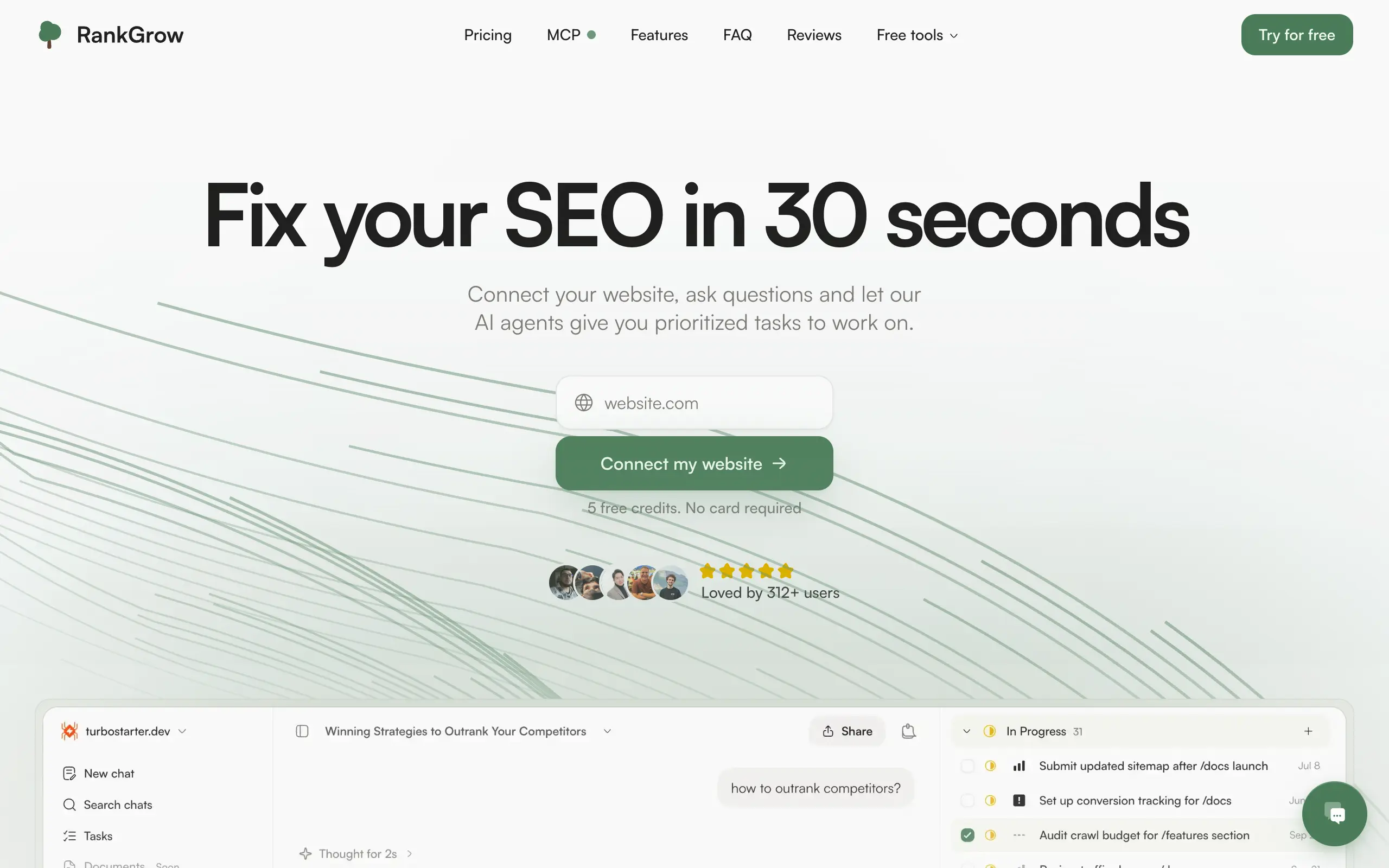
Fix your SEO with AI agents - connect Search Console, get prioritized tasks, and grow organic traffic 📈

Sync your favorite content for distraction-free reading, save time and replace multiple apps. Anytime, anywhere 🔄

Get clean, structured data from 21 platforms like TikTok, Instagram, and YouTube with a single request 📊
Monitor any Telegram channel in real time - track posts, edits, deletions, and growth with AI recaps 📡
AI website builder - describe your business, pick a niche template, edit by chatting, and publish instantly ✨
Find verified home service professionals, compare quotes, and pay securely through escrow - built for Brazilians across the US 🏠
Fix your SEO with AI agents - connect Search Console, get prioritized tasks, and grow organic traffic 📈
Sync your favorite content for distraction-free reading, save time and replace multiple apps. Anytime, anywhere 🔄
Get clean, structured data from 21 platforms like TikTok, Instagram, and YouTube with a single request 📊

Personalized AI apps that automate research, data extraction, and content creation without code 🤖

Enjoy a magical live video chat or receive a unique AI-generated video greeting from Santa Claus 🎅

Scalable blog for food journalist, focused on performance and user experience 🌭

Personal blog and portfolio of Bart Zagrodzki, where he shares his knowledge and work 💼

Ship your startup everywhere. In minutes.

Convert HTML to Markdown with ease, directly in your browser 📄
Personalized AI apps that automate research, data extraction, and content creation without code 🤖
Enjoy a magical live video chat or receive a unique AI-generated video greeting from Santa Claus 🎅
Scalable blog for food journalist, focused on performance and user experience 🌭
Personal blog and portfolio of Bart Zagrodzki, where he shares his knowledge and work 💼
Ship your startup everywhere. In minutes.
Convert HTML to Markdown with ease, directly in your browser 📄

Chat with 50+ AI models, including ChatGPT and Claude, in one place - switch models anytime without losing context 🤖

Supercharge your Claude Code with 6x effective context window and specialized AI agents 🤖

AI-powered emoji picker with smart, context-aware suggestions 🤖

Autonomous company launcher - AI agents work 24/7, escalate what matters, and you stay in control 🤖

Practice storytelling daily with instant feedback to sound clearer, more engaging, and confident 🎤
Chat with 50+ AI models, including ChatGPT and Claude, in one place - switch models anytime without losing context 🤖
Supercharge your Claude Code with 6x effective context window and specialized AI agents 🤖
AI-powered emoji picker with smart, context-aware suggestions 🤖
Autonomous company launcher - AI agents work 24/7, escalate what matters, and you stay in control 🤖
Practice storytelling daily with instant feedback to sound clearer, more engaging, and confident 🎤

Connect with like-minded people
Join our community to get feedback, support, and grow together with 1,000+ builders on board, let's ship it!
Join usShip your startup everywhere. In minutes.
Don't burn tokens on setup and start building features on day one.