Leakscan
Connects to bank and card feeds for freelancers and finds recurring charges they no longer use. Each result shows the monthly cost and a one-click cancel link.
Leakscan is a subscription audit tool for freelancers: it connects to bank and card feeds, detects recurring charges, flags the ones that look unused, and shows the monthly cost next to a cancel link. The opportunity in 2026 is that freelancers carry a messy mix of tools, trials and renewals across personal and business cards, and no one reviews them. A subscription audit tool for freelancers can pay for itself in the first session, which is rare for software.
Key takeaways
- Target customer: solo freelancers and tiny studios (designers, developers, writers, consultants) who pay for 15 or more tools across mixed personal and business cards.
- Pricing angle: a free scan that shows the total "leak", then a low monthly plan for ongoing monitoring, or a one-time rescue fee.
- Biggest risk: trust and data access. Users must connect bank accounts to a product from an unknown brand, and aggregator costs eat margin.
- Time to MVP: about 3 to 4 weeks for a solo founder using a starter kit and a bank aggregator.
What problem does a subscription audit tool for freelancers solve?
Freelancers lose money to small recurring charges they forgot about. Each one is too small to chase, but together they add up to a real line item. The problem is not that people can't cancel; it's that they never see the full list in one place.
Who is Leakscan for?
The ideal customer is a solo freelancer with irregular income who has been working independently for at least a year. Think of a freelance designer who tried three AI tools, two stock asset libraries, a font service, a project tracker, a domain they never launched, and a client-specific tool that outlived the client.
They typically mix business and personal cards, so no single statement tells the story. Their cash flow is lumpy, which makes a forgotten $29 charge more painful in a slow month.
What do they do today, and why does it fail?
The common workarounds are all manual:
- Scanning bank statements once a year. It happens around tax time, takes an hour, and misses annual renewals that fall outside the window reviewed.
- Spreadsheets. They go stale the week after they are built because nobody updates them when a trial converts.
- Accounting software. Tools like QuickBooks or Xero categorize expenses but don't tell you which ones you stopped using.
- Email searches for "receipt" or "renewal". Useful, but incomplete and slow.
Every one of these relies on discipline at the moment when the freelancer has the least time. A tool that does the first pass automatically removes the part people skip.
Why is now a good time to build this?
Three shifts make the gap wider in 2026. Software pricing has moved heavily toward subscriptions, including per-seat AI tools that freelancers sample constantly. Open banking and aggregator APIs are mature enough that a small team can ship a bank connection without negotiating with banks. And freelancers are increasingly a deliberate, large segment of workers who buy their own tools.
What does the competition look like?
The category exists, which is both validation and a warning. Consumer apps like Rocket Money and Trim focus on general household subscriptions and bill negotiation. Budgeting apps such as YNAB and Monarch show recurring charges as part of a broader budget. Accounting tools handle business expenses but not "do you still use this?"
The gap is a freelancer-specific tool that understands business software, mixed personal and business spending, and the question of usage rather than just recurrence. Broad apps treat a Figma charge and a gym membership the same way. A freelancer knows one of them can be deducted and the other can't.
What should the Leakscan MVP include?
Build the shortest path from "connect a card" to "cancel something". Everything else waits. The aha moment is the total: "You are paying $214 a month for 9 charges that look unused." If the first screen doesn't produce that number in under two minutes, the product has failed.
Bank and card connection
Read-only access through an aggregator so the user can connect accounts in a few clicks without uploading files.
Recurring charge detection
Group transactions by merchant and cadence to find monthly, quarterly and annual charges, including price changes.
Unused flag with monthly cost
Score each charge by signals like age, price increases, and overlap with similar tools, then show the monthly and yearly cost.
One-click cancel link
A curated link to each vendor's cancellation or billing page, plus a note on how the cancellation works.
What to cut from version one
Skip automatic cancellation on the user's behalf, bill negotiation, mobile apps, and tax categorization. Automatic cancellation sounds appealing but is a maintenance trap, because every vendor changes its flow. Start with a curated directory of cancel links for the 100 or so tools freelancers use most, and let users submit missing ones.
How does the tool decide a charge is "unused"?
Bank data can't tell you whether someone logged in. Be honest about that. Use proxies instead: a charge that started after a free trial, a merchant in a category with many overlapping tools, a price increase, or a subscription the user marks as "not sure". Then let the user confirm with one tap. Over time those confirmations become your best data.
How is Leakscan different from existing tools?
The positioning is simple: built for freelancers' mixed spending, focused on one outcome, which is cancelling what you don't use. It isn't a budgeting app and it doesn't try to become one.
| Option | Freelancer-specific | Shows "unused" candidates | Cancel links | Ongoing monitoring |
|---|---|---|---|---|
| Leakscan | ✅ | ✅ | ✅ | ✅ |
| Spreadsheet | ❌ | ❌ | ❌ | Manual |
| Accounting software | Partly | ❌ | ❌ | ✅ |
| General budgeting apps | ❌ | Partly | Varies | ✅ |
| Bank statement review | ❌ | ❌ | ❌ | ❌ |
The honest caveat: big apps can add a freelancer mode. Your defense is depth, such as a better vendor directory, business versus personal handling, and a brand freelancers recognize.
How would Leakscan make money?
Pick a model that matches how the value shows up. The value is largest on the first scan, then small and steady.
Option 1: free scan, paid monitoring
Show the total leak for free and charge a monthly plan for alerts on new charges, price increases and renewals. If you charge $9/month and convert 4% of users who finish a scan, 1,000 scans yield about 40 paying users and roughly $360 in monthly recurring revenue. Treat those figures as assumptions to test, not forecasts.
Option 2: one-time rescue fee
Charge $19 to $29 for a full audit and a cancel checklist. It fits the "I'll do this once" mindset and avoids churn, but it caps lifetime value.
Option 3: savings-based pricing
Take a share of the first year's savings. It aligns incentives but is hard to verify, since you can't always confirm someone cancelled. Consider it later, not at launch.
The channel most likely to work first is content and communities where freelancers already talk about tools: design and developer forums, newsletters, and search for "find forgotten subscriptions". A shareable result card ("I found $187 a month") can add a lightweight loop, as long as users choose what to reveal.
How do you validate Leakscan before building it?
You can test the core promise in two weeks without touching a bank API.
Interview ten freelancers
Ask them to open their last two card statements and count the subscriptions they have not used in 60 days. Note how many they find and how they feel about it.
Run a manual audit for five of them
Offer to review a statement export by hand and send back a list with costs and cancel links. If they act on it, the value is real.
Ship a landing page
State one promise, such as "Find the subscriptions you forgot you pay for", and collect waitlist emails. Track how many visitors join.
Ask about bank connection
During interviews and on the waitlist form, ask directly whether they would connect a bank account. Their reluctance is the single most useful data point.
Try a pre-sale
Offer a founding-member price for the first cohort. Even five or ten paid commitments say more than a hundred emails.
What tech stack do you need to build a freelancer subscription tracker?
The product is a standard web app with three unusual pieces: a bank data connection, a recurring-charge detection engine, and a vendor directory. Everything else is commodity, which is where TurboStarter saves time. It ships a monorepo with web and mobile apps, plus authentication, billing, database, emails, storage, AI, background tasks, an admin panel, analytics and monitoring, so you spend your first weeks on detection quality instead of login screens.
Useful pieces for this idea:
- Accounts: the authentication setup covers sign-up and sessions, which matters because users will judge trust at this step.
- Payments: billing supports subscriptions and one-time payments, so you can test both the monitoring plan and the rescue fee.
- Recurring jobs: background tasks handle nightly transaction syncs and renewal alerts.
- Data: the database layer holds merchants, transactions and detected subscriptions.
Which bank data provider should you use?
Strong coverage in North America and good documentation. Costs rise per connected account, so model unit economics early. Best if your first users are in the US or Canada.
A common choice for European open banking coverage. Fits if your first market is the UK or EU, though coverage and terms vary by country and change over time.
No aggregator cost and no bank credentials at all. It's the fastest MVP and a good trust-building fallback, but users must export files, which lowers conversion.
My suggestion for a first release: start with CSV upload to test detection quality, then add one aggregator for your main market once people ask for it.
What does the core data model look like?
create table detected_subscription (
  id uuid primary key,
  user_id uuid not null,
  merchant text not null,
  cadence text not null, -- monthly, quarterly, annual
  amount_cents integer not null,
  last_charged_at date not null,
  status text not null default 'active', -- active, flagged, cancelled
  cancel_url text
);
Keep the detection logic simple at first: group by normalized merchant name, check for repeated amounts at regular intervals, and allow a tolerance for price changes. AI can help normalize messy merchant strings like "SQ *COFFEE 4421", but keep a rules-based fallback so results are explainable.
What could make Leakscan fail?
Four risks are real. The first is the one most likely to end the business.
Biggest risk: trust in bank access
Users must hand read-only access to their finances to an unknown brand. If they hesitate, the funnel collapses before the aha moment. Mitigate with a CSV option, clear read-only language, no storage of bank credentials, minimal data retention, and a visible explanation of what you do and don't see. Depending on your market, check aggregator terms and data protection rules such as GDPR before launch.
- Aggregator costs squeeze margin. Per-connection fees can exceed the revenue from a low-paying free user. Mitigate by gating the connection behind email signup, disconnecting after the scan unless monitoring is on, and pricing against measured costs.
- One-time value, high churn. Users clean up and leave. Mitigate with renewal alerts, price-increase warnings, and a one-time pricing option so you don't depend on retention alone.
- Detection errors. A wrong "unused" flag damages credibility. Keep the user in control with confirm and dismiss actions, and show why each charge was flagged.
- Incumbents add the feature. Differentiate through freelancer-specific vendor knowledge and a tighter, faster experience.
What should you do in the first 30 days?
- Days 1 to 5: run interviews and manual audits, and write down every tool freelancers mention.
- Days 6 to 8: publish the landing page and start posting in two freelancer communities you already belong to.
- Days 9 to 12: set up the app on TurboStarter, with authentication, billing and the database ready.
- Days 13 to 20: build CSV import, recurring detection and the results screen with monthly cost totals.
- Days 21 to 24: seed the cancel-link directory with 100 common tools and test it by hand.
- Days 25 to 27: invite waitlist users, watch them use it, and fix the confusing steps.
- Days 28 to 30: turn on paid plans, add one aggregator if demand is clear, and ask early users for a public result or a review.
Start with the manual audit this week. If five freelancers find money they didn't know they were losing, you have a product worth building, and the starter kit means the build itself takes weeks, not months.
FAQ
General subscription trackers exist and have users, which shows the problem is real. The open question is whether freelancers will pay for a focused tool. Test it with manual audits and a pre-sale before writing code.
Anchor on the savings shown in the first scan. A low monthly plan in the range of $5 to $12, or a one-time fee around $20 to $30, is a reasonable starting test. Adjust based on how much users actually find and how many convert.
Consumer apps like Rocket Money, budgeting tools like YNAB and Monarch, and accounting software like QuickBooks and Xero overlap partially. None is built around freelancers' mixed spending and the "do I still use this?" question, which is your opening.
A TypeScript web app with a Postgres database, a bank aggregator or CSV import, and background jobs for syncing is enough. Using a starter kit like TurboStarter covers authentication, billing and emails so you can focus on detection and the cancel directory.
A solo founder can usually ship a CSV-based MVP in 3 to 4 weeks with a starter kit. Costs are mostly your time, hosting, and aggregator fees once you add live bank connections, which you should model per connected user.
No. Start with curated cancel links and instructions. Automated cancellation is fragile because vendors change their flows often, and it adds support and legal complexity you don't need for validation.
More 💡 Other SaaS ideas
Discover more innovative other SaaS ideas that are trending in 2026. Each idea is AI-generated with market validation and growth potential to help you find your next profitable venture faster than competitors.
Your competitors are building with TurboStarter
Below are some of the SaaS ideas that have been generated and built with our starter kit.

Monitor any Telegram channel in real time - track posts, edits, deletions, and growth with AI recaps 📡

AI website builder - describe your business, pick a niche template, edit by chatting, and publish instantly ✨

Find verified home service professionals, compare quotes, and pay securely through escrow - built for Brazilians across the US 🏠
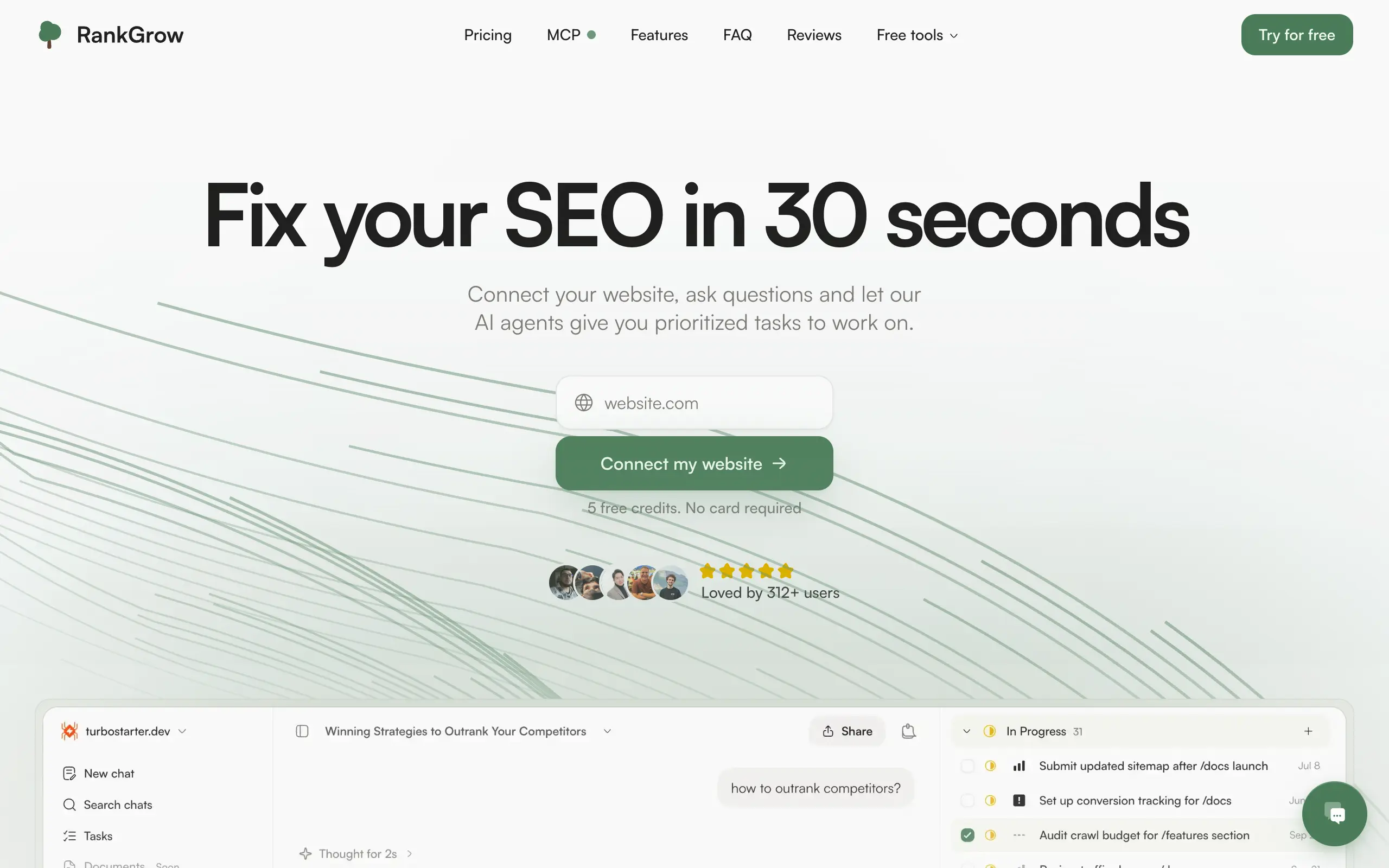
Fix your SEO with AI agents - connect Search Console, get prioritized tasks, and grow organic traffic 📈

Sync your favorite content for distraction-free reading, save time and replace multiple apps. Anytime, anywhere 🔄

Get clean, structured data from 21 platforms like TikTok, Instagram, and YouTube with a single request 📊
Monitor any Telegram channel in real time - track posts, edits, deletions, and growth with AI recaps 📡
AI website builder - describe your business, pick a niche template, edit by chatting, and publish instantly ✨
Find verified home service professionals, compare quotes, and pay securely through escrow - built for Brazilians across the US 🏠
Fix your SEO with AI agents - connect Search Console, get prioritized tasks, and grow organic traffic 📈
Sync your favorite content for distraction-free reading, save time and replace multiple apps. Anytime, anywhere 🔄
Get clean, structured data from 21 platforms like TikTok, Instagram, and YouTube with a single request 📊

Personalized AI apps that automate research, data extraction, and content creation without code 🤖

Enjoy a magical live video chat or receive a unique AI-generated video greeting from Santa Claus 🎅

Scalable blog for food journalist, focused on performance and user experience 🌭

Personal blog and portfolio of Bart Zagrodzki, where he shares his knowledge and work 💼

Ship your startup everywhere. In minutes.

Convert HTML to Markdown with ease, directly in your browser 📄
Personalized AI apps that automate research, data extraction, and content creation without code 🤖
Enjoy a magical live video chat or receive a unique AI-generated video greeting from Santa Claus 🎅
Scalable blog for food journalist, focused on performance and user experience 🌭
Personal blog and portfolio of Bart Zagrodzki, where he shares his knowledge and work 💼
Ship your startup everywhere. In minutes.
Convert HTML to Markdown with ease, directly in your browser 📄

Chat with 50+ AI models, including ChatGPT and Claude, in one place - switch models anytime without losing context 🤖

Supercharge your Claude Code with 6x effective context window and specialized AI agents 🤖

AI-powered emoji picker with smart, context-aware suggestions 🤖

Autonomous company launcher - AI agents work 24/7, escalate what matters, and you stay in control 🤖

Practice storytelling daily with instant feedback to sound clearer, more engaging, and confident 🎤
Chat with 50+ AI models, including ChatGPT and Claude, in one place - switch models anytime without losing context 🤖
Supercharge your Claude Code with 6x effective context window and specialized AI agents 🤖
AI-powered emoji picker with smart, context-aware suggestions 🤖
Autonomous company launcher - AI agents work 24/7, escalate what matters, and you stay in control 🤖
Practice storytelling daily with instant feedback to sound clearer, more engaging, and confident 🎤

Connect with like-minded people
Join our community to get feedback, support, and grow together with 1,000+ builders on board, let's ship it!
Join usShip your startup everywhere. In minutes.
Don't burn tokens on setup and start building features on day one.